Category: Event Bidding

  • The safest pair of hands

    The safest pair of hands

    The race to host the 2020 Summer Olympic and Paralympic Games was a tightly fought campaign, right until the allimportant secret ballot in Buenos Aires.

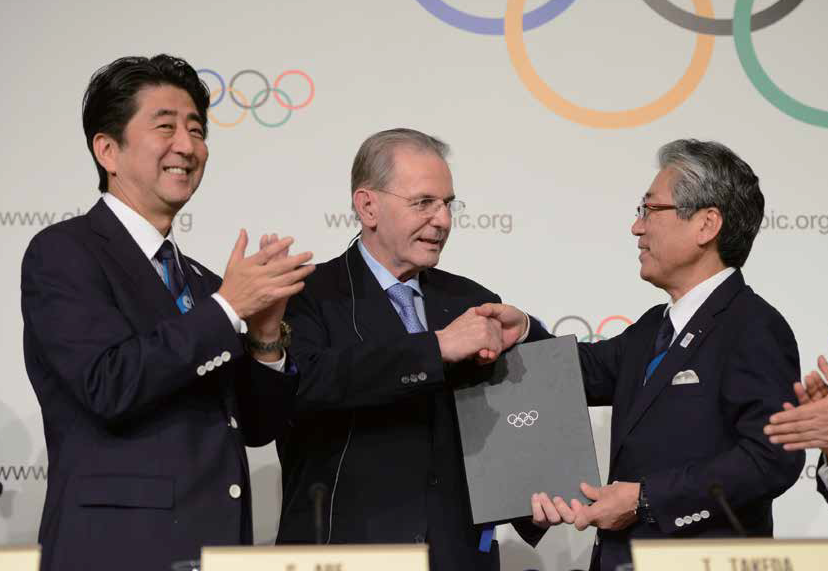
    In the first round of voting no clear frontrunner emerged: Tokyo fell just short of a majority, with the remainder of votes split evenly between Istanbul and Madrid. In the run-off round that followed, a slender four vote lead enabled Istanbul to progress to a final round of voting, in which Tokyo garnered 60 votes to Istanbul’s 36. Scenes of jubilation from Japanese delegates ensued. After the initial elation of winning the bid, Tokyo is now faced with the reality of preparing for the biggest event in the world. “It is a huge task to host the Olympic and Paralympic Games, but it is also an incredible honour as well as extremely exciting,” bid CEO Masato Mizuno tells HOST CITY.

    “This post-election phase is a period of transition, during which time we must create the Organising Committee. Our primary job is to now establish the committee in collaboration with the Tokyo Metropolitan Government, the Japanese Olympic Committee and the central government. The entire nation, or ‘Team Japan,’ will work together in a unified effort to deliver the Games in 2020.

    “Our promise to the IOC is to deliver a superb Games in 2020. Delivering early will allow us to focus on the extras that will make the difference between the Games being good or fantastic.”

    Different degrees of risk
    IOC Vice-President and IOC member in Great Britain, Sir Craig Reedie chaired the Evaluation Committee that assesses the bid cities’ capacity to hold the Games. “The three cities that remained in the race all put together very coherent and first class candidatures,” he reminds HOST CITY. “The Games could be run in any one of these three cities, but they all presented different projects with different degrees of risk.”

    Each city faced its own challenges, from the badly damaged Fukushima nuclear plant in Japan and the plight of the Spanish economy to the Turkish authorities’ reaction to the Gezi Park protests in Istanbul.

    “It’s interesting that the questions marks featuring in all of the three cities were issues over which the bid committee had absolutely no control. This is the story of Olympic bids; bid committees have to be able to deal with situations that arise over which they have no control.”

    If the promise of opportunities in new regions was the defining feature of Rio and PyeongChang’s winning bids for the 2016 and 2018 Games, this time it was guarantees of stability that would clinch the matter. With Spain floundering in a turbulent global economy and with public protests disrupting Istanbul’s bid, Tokyo was considered to be the safest bet.

    The Tokyo 2020 team highlighted the commercial potential of holding the games in Asia and Tokyo’s USD 932m sponsorship revenue forecast. “Tokyo had its funding in place, it had a pretty compact plan using reclaimed land in Tokyo Bay and they benefitted from the fact that they still have a number of the splendid buildings that were built for the 1964 Games,” says Reedie.

    The destruction caused by the 2011 tsunami in Japan and the leaks that followed at the Fukushima nuclear plant became a major focus, which Prime Minister Shinzo Abe tackled head on in Buenos Aires. Describing Tokyo as “one of the safest cities in the world,” Abe told IOC members: “Some may have concerns about Fukushima. Let me assure you, the situation is under control. It has never done and will never do any damage to Tokyo.”

    At the same time as representing a risk factor, the disaster also created a powerful emotional aspect to the bid. Paralympian Mami Sato, whose home town was devastated by the Tsunami, emphasised the point that sport and the Olympics had the potential to reinvigorate and rebuild Japan following the disaster.

    “They were very grateful to the rest of the world for the sympathy and help they had when they suffered the tsunami,” says Reedie. “The IOC contributed to the fund and the Olympic movement rallied round. So to that extent they were grateful and therefore it was emotional.”

    Public support was another challenge that Tokyo faced throughout the bid process. “In early 2012, the first IOC figures suggested that only 47 per cent of the population was behind us,” says Mizuno. “We worked intensively to improve support for the Tokyo 2020 Games, and indeed it grew steadily, especially once people celebrated Japan’s medal success at London 2012. A halfmillion spectators turned out to cheer our national heroes during Japan’s first-ever parade for Olympic medallists.

    “We were pleased that the IOC survey in March confirmed 70 per cent support and that the most recent figures are around 90 per cent, according to a survey by the Ministry of Education, Culture, Sports, Science and Technology.”

    Keep it compact
    Fifth-time bidder Istanbul was viewed by many as the frontrunner for much of the campaign. But as well as the controversies surrounding the Gezi Park protests and recent doping scandals involving several Turkish athletes, Istanbul’s bid was also hindered by the wide scope of its concept.

    “Quite clearly the transportation issue was the one that concerned the Evaluation Commission and there was no doubt, despite claims made, that some venues would involve a considerably longer travel time than some of the other cities,” said Reedie. “The larger amounts of money that were being spent weren’t being spent simply for the Games; they were being spent to keep the city moving.”

    Reedie points out that hosting the Games can leave a lasting legacy without the need for the huge amounts of capital spending proposed for Istanbul and seen in London.

    “London chose to develop the most deprived part of the capital and that’s been the most wonderful legacy – but it’s not a condition of bidding for the Games. The IOC doesn’t say we need you to spend billions of dollars. It’s your call as a city; and in fact we go out of the way to separate the organising committee budget and the non-organising committee budget. What cities frequently do is use either the bidding for the Games or the winning of the Games as a catalyst to do things they might not otherwise.”

    Could you host the Games?
    There can be only one winner, but Reedie says the strength of all three bids and the commitment put into each one is testament to how important the Olympic Games is to cities and nations around the world.

    “At the end of the day all three cities presented wonderfully well. It’s not often the IOC is blessed with three Prime Ministers, from three candidates, all coming from the G20 summit in St Petersburg all the way to Buenos Aires to make their presentations. It just gives you some idea of the regard in which hosting the Olympic Games is held and the importance of it to the cities and the countries who support them.”

    The newly elected IOC President Thomas Bach recently revealed he wanted a far greater range of countries and cities to bid for future Games. Baku in Azerbaijan and Doha in Qatar were the two other applicant cities that failed to make it to the candidature stage of bidding for 2020 and the likes of Nairobi, Casablanca and Taipei are considering bids for the 2024 Summer Games.

    Reedie says the success of London 2012 is stimulating interest the world over. “The Olympic brand and the Games are now at a very high level after the success of the London Games and it would be a very good thing if more cities applied in future years to host summer, winter and youth Games. “There is a feeling out there that you have to spend vast amounts of money to do it; I don’t believe that to be the case. There are many cities with lots of sports facilities which could be used to host the Games.”
  • Bubka calls for Olympic Truce on “terrible scenes” in Ukraine

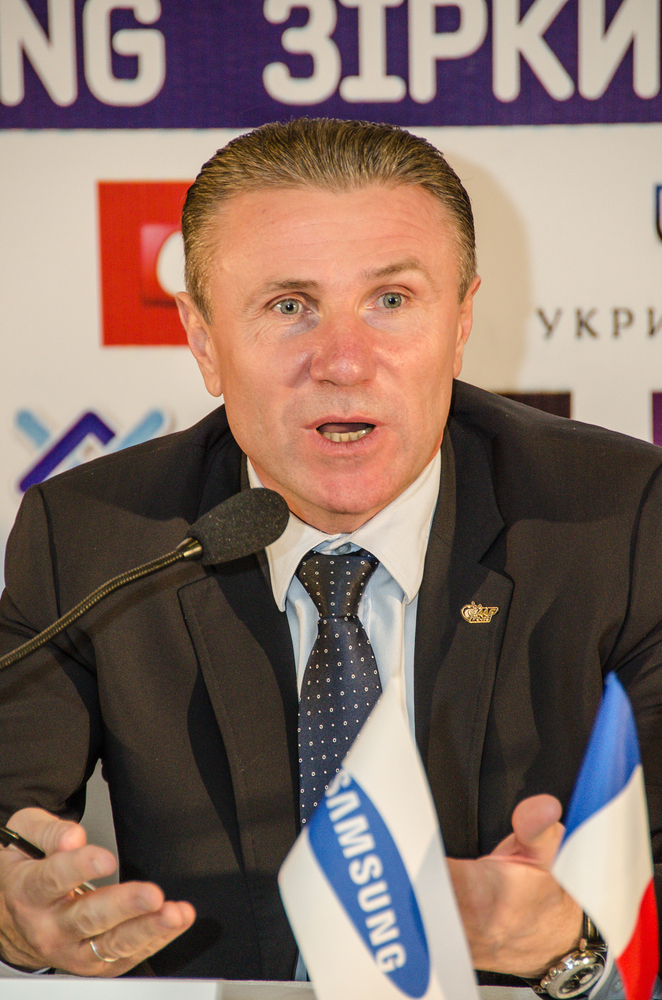
    Bubka calls for Olympic Truce on “terrible scenes” in Ukraine

    As violence between protesters and government forces escalated in Kiev, police stated on Thursday that protesters had taken over regional administration headquarters including Lviv, which is bidding to host the 2022 Winter Olympic Games.
    Speaking at a press conference in Sochi, IOC communications director Mark Adams said of the conflict, “Those are terrible scenes. The Olympic Truce is an important symbolic thing for us.”
    The Olympic Truce was established in antiquity between the host city state and its neighbours to ensure safe delivery of the Olympic Games. It was revived in 1993 by a UN resolution and in 1998 the IOC called upon all nations to observe the Truce.
    “I’m not sure it plays much part in what’s going on there [in Ukraine]. But clearly we hope the situation will be solved as quickly and with as little bloodshed as possible,” said Adams.
    As the ceasefire broke, Bubka tweeted: “I want to bring Olympic Truce to my country. Our athletes are competing hard in Sochi, but peacefully and with honor. Violence has no place in the world.”
    Bubka, whose 21-year-old pole vault world record was broken in the Ukrainian city of Donetsk on 16 February by Renaud Lavillenie, is a crucial figurehead of Lviv’s bid for the 2022 Games.
    He announced on his website: “I’m shocked by what is happening in my native country – especially because the violence is taking place during the Olympic Games – the world’s most peaceful and democratic event. 
    “I am once again urging all parties to stop the violence! There is no ‘their’ Ukraine, or ‘your’ Ukraine. It is OUR Ukraine. For the sake of the future of our kids let’s do everything possible to get back to negotiations and make a compromise.
    “I am now in Sochi and I know that our Olympic athletes who compete for the glory of Ukraine fully support me.”
    A total 45 athletes from the Ukraine travelled to Sochi 2014. However, BBC journalist Richard Conway tweeted on Thursday that up to half of these Olympians had returned home because of “unrest in their country.”
    Several media outlets reported that Ukrainian skier Bogdana Matsotka pulled out of the Games in protest at the use of force in Kiev. On Thursday, the Ukrainian Health Ministry said 28 people had died and 287 had been hospitalised during the standoff between police and protesters in Kiev. Ukraine’s Interior ministry confirmed that security forces had opened fire on protesters.
     
    Black armbands in the Olympic Village
    Meanwhile, a request from the Ukrainian Olympic Committee for their athletes to wear black armbands in memory of those killed was rejected by the IOC. 
    A statement on the Ukrainian Olympic Committee website said: “Sharing deep pain over the loss of fellow countrymen, the Ukrainian Olympic Committee appealed to the International Olympic Committee to allow Ukrainian athletes to wear black armbands as a sign of mourning, an expression of sorrow and sympathy.
    “The answer was received from the IOC that in accordance with the Olympic charter it is not possible to do this.”
    Instead, Ukrainian athletes attached black armbands to the national flags hanging from their balconies in the Olympic Village.
    IOC President Thomas Bach expressed his sympathy for the Ukraine and his admiration for its Olympians. “I would like to offer my condolences to those who have lost loved ones in these tragic events,” he said.
    “Our thoughts and sympathy are with the Ukrainian team at what must be a very difficult time. The way they have continued to represent their nation with great dignity is a credit to them and their country. 
    “Their presence here is a symbol that sport can build bridges and help to bring people from different backgrounds together in peace.”

  • The joy of five

    The joy of five

    The formal bidding process for the 24th IOC Winter Olympic and Paralympics Games is now well underway with the International Olympic Committee receiving six official applications by its deadline of 14 November 2013.

    The International Olympic Committee (IOC)’s recently appointed President Thomas Bach expressed his delight with the applicants. He said “These cities and their supporters clearly understand the benefits that hosting the Games can have and the long lasting legacy that a Games can bring to a region.”

    In December 2013, representatives of the six potential host nations attended an orientation seminar at the IOC headquarters in Lausanne. The event, held over three days, served to introduce the would-be hosts to what hosting a modern Games would involve. The applicant cities learned the key criteria against which their applicant files will be judged.

    The bidding parties are a mix of traditional and developing winter destinations, with four European cities and two in Asia.

    Almaty
    azakhstan’s biggest city and the host of the 2017 Winter Universiade was one of the first cities to officially put its name forward, back in August 2013. Almaty had previously applied for the Games in 2014 but did not get past the applicant phase; it also expressed interest for 2018 but did not apply.

    Kazakhstan is the largest landlocked country in the world and it is in a region of the world – Central Asia – that has not yet hosted an Olympic Games. It would also be the first former Soviet state to host an Olympics Games.

    Beijing
    The host city of the 2008 Summer Olympic and Paralympics will bid to host the indoor events for the 2022 Winter Olympic and Paralympics. The outdoor events would be hosted in the city of Zhangjiakou which is nicknamed “Beijing’s Northern door”; the two cities are 200 kilometres apart.

    If successful, this would be the first time China has hosted the Winter Games. The country does have previous experience of bidding for the winter edition, but has not yet got past the application stage. The city of Harbin, which hosted the 2009 Winter Universiade, declared an interest in 2010, 2014 and 2018 but weak infrastructure hampered their progress.

    Krakow
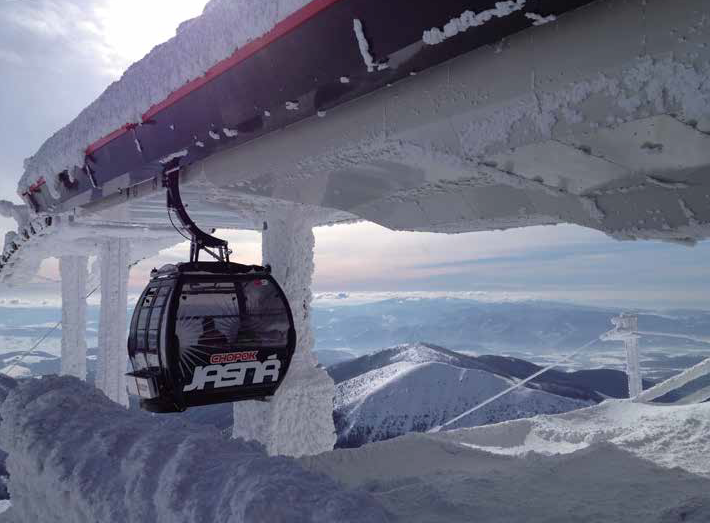
    The Polish city of Krakow is proposing to bid for the Games jointly with the Slovak ski resort of Jasná.

    The Polish Olympic Committee has used experience from Zakapane’s 2006 winter games bid and issues to the alpine events being held in Poland. For this reason the Polish OC will apply together with its Slovak counterpart to deliver the proposed bid with the Alpine events on the Tatra Mountain range.

    Every season, Jasná holds FIS (International Ski Federation) alpine events. The 2014 events will take place from the end of February until mid to late March.

    Former Winter Snowboarding Olympian Jagna Marczułajtis- Walczak, who is leading the Krakow bid, has asserted that hosting events in neighbouring Slovakia is not in breach of IOC rules.

    IOC Rule 35.2 reads that “for the Olympic Winter Games, when for geographical or topographical reasons it is impossible to organise certain events or disciplines of a sport in the country of the host city, the IOC may, on an exceptional basis, authorise the holding of them in a bordering country.”

    Lviv
    The cultural capital of the Ukraine will also bid for the 2022 Winter Olympics and Paralympics. The city has experience of mega-events, having hosted high profile group-stage matches involving Germany and Portugal at Euro 2012.

    If the bid were to be successful, the alpine events would take place 160 kilometres from Lviv in the Carpathian Mountains.

    The Ukrainian Olympic Committee member and pole vaulting legend Sergi Bubka is certain to be a key figure in this bid. He came in fifth place in the race for the IOC presidency.

    Oslo
    The Norwegian capital is the only applicant city from this list that has a previous Winter Olympic hosting pedigree. In 1952 Oslo hosted the sixth Winter Olympic Games, where 30 countries participated in 22 events.

    Norway last held the Winter Olympic and Paralympics in 1994 in Lillehammer. For the 2018 Winter Olympics Games, Oslo expressed an interest to host the games with Lillehammer; however, the bid was not progressed for a number of reasons including public support.

    The Oslo bidding committee proposes to utilise Oslo’s current infrastructure and produce a “low-cost and very compact games.”

    A referendum saw a slim majority of Oslo’s inhabitants vote in favour of bidding for the 2022 winter Olympic and Paralympics games.

    What next?
    The next major milestone in the race to host the 2022 Winter Olympic and Paralympics is the 14th March 2014. By this date, each of the six applicant cities will hand in their application files to the International Olympic Committee. In July 2014, the successful applicants will then be named as official candidate cities for the 2022 Winter Olympic and Paralympics. The winning bid will be announced in Malaysia at the Kuala Lumpur convention centre at the 127th IOC session on the 31st July 2015. But winning isn’t everything. As Bach said: “While recent Games have left an array of sporting, social, economic and other legacies for the local population, many cities that did not go on to win the right to host the Games have also noted benefits as a result of their bids.”

  • Doha to host 2015 Asian Youth Athletics Championships

    Doha to host 2015 Asian Youth Athletics Championships

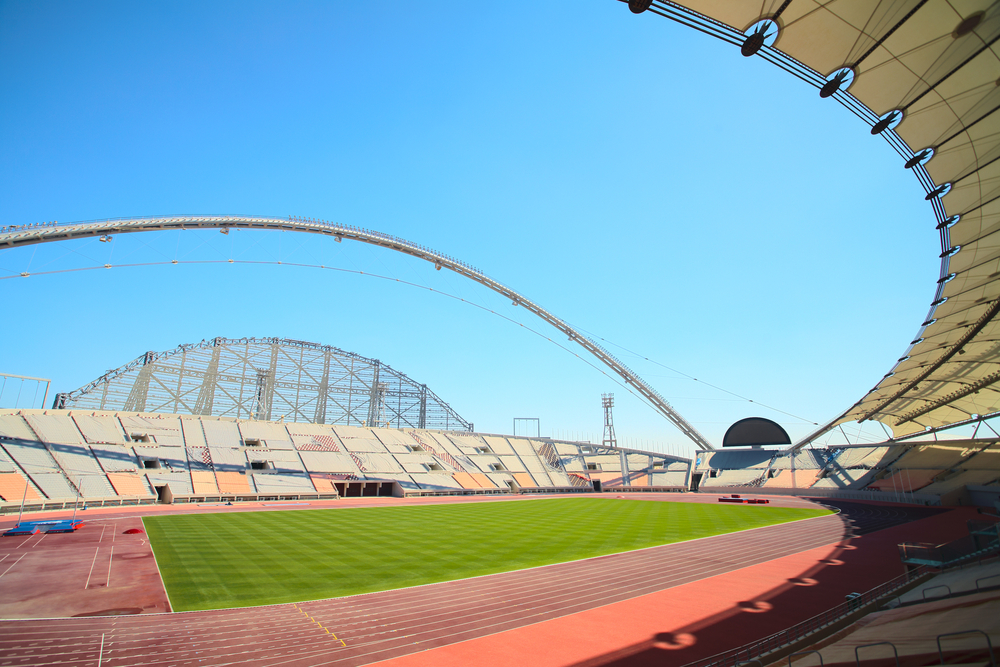
    The inaugural edition of the Asian Youth Athletic Championships will be hosted in Doha in 2015. The news, reported by the Gulf Times, was announced at the 78th council meeting of the Asian Athletics Association (AAA) in Doha. 
    Youth Athletics Championships are open to athletes aged 17 or under, unlike Junior Athletics Championships, which are open to participants aged 19 or younger.
    “Long-term planning and grass-root level development should be our focus and we need to find ways to encourage the youth. That’s why we have decided to have an Asian Youth Athletic Championships next year,” AAA President General Dahlan Jumaan al-Hamad told reporters at the close of the event on Sunday.
    The dates of the event have yet to be determined but it is likely to be hosted in May or June, as the IAAF World Athletics Championships take place in Beijing from 22-30 August. “It would be held before the World Championships so as to give our athletes the incentive to qualify,” Dahlan said. 
    The aim of the Asian Youth Athletics Championships is to boost the sport in the continent.
    “Asia should change. We need to improve. We need to raise our level. The continent should be at the pinnacle of everything. We are working towards it, and it involves a lot of hard work and commitment. But we are confident we shall reach there,” said Dahlan.
    In addition to the leaders of AAA member federations, the meeting was attended by former pole vault world champion and IAAF Vice-President Sergei Bubka.
    It was also announced that selection trials for the 2014 Youth Olympic Games (YOG) would be held in the Thailand capital of Bangkok from 21-22 May. The YOG takes place in the Chinese city of Nanjing in August 2014.
    The 2015 Asian Youth Athletics Championships event adds to Qatar’s growing programme of sports events. The Gulf nation will be hosting the World Men’s Handball Championship in January and February 2015. The UCI Road World Championships is scheduled to take place in 2016, with a potential shift from September to October due to the climate.

  • Olympic effect triggers interest in hosting Rugby Sevens

    Olympic effect triggers interest in hosting Rugby Sevens

    The International Rugby Board (IRB)’s elite international Rugby Sevens events have attracted an unprecedented level of interest from potential host nations. 
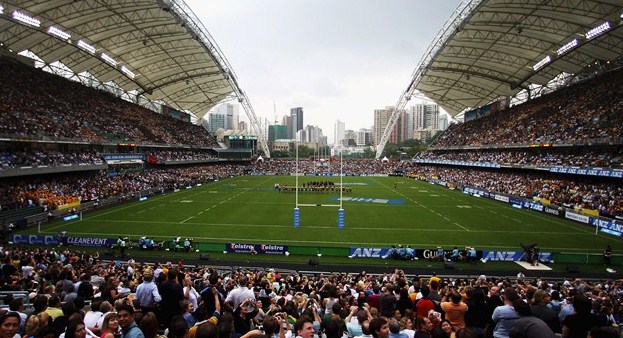
    As the expression of interest deadline closed on February 28, 25 Unions formally confirmed their interest in hosting a round of the HSBC Sevens World Series from the 2015/16 season. Fourteen Unions are also interested in hosting the men’s and women’s Rugby World Cup Sevens in 2018.
    The level of interest underlines the global appeal of the newest Olympic sport. IRB Chairman Bernard Lapasset said: “This unprecedented response truly reflects the enormous prestige and appeal of Rugby Sevens in the global sporting market place ahead of our Rio 2016 Olympic Games debut.
    “The submission features a blend of interest from every continent and includes existing and emerging Rugby markets. It reaffirms Rugby Sevens as a young, exciting and thriving sport that is reaching out, engaging and inspiring new audiences around the world.
    “International Rugby Sevens is truly competitive, showcasing great skill and speed to full, vibrant stadia and strong and ever-growing global broadcast audiences and that is why we believe that Rugby Sevens will be a great fit for the Olympic Games and also why the Olympic Games will be great for Rugby.
    “We look forward to collaborating with each interested party as we look ahead to the next phase of the process.”
    The deadline for tender submissions for Unions interested in hosting Rugby World Cup Sevens 2018 need to submit tenders by 5 December 5 2014, with the IRB Council selecting the winning bid at its May 2015 meeting.
    The deadline for formal tender submissions for hosting a Sevens World Series tournament is set for 27 June, 2014 and the 2015/16 Series hosts will be selected by IRB EXCO in October 2014.
    The dual process follows a detailed strategic review of Rugby World Cup Sevens and the Sevens World Series hosting models and key overall considerations include growing hosting and participation opportunities for the 119 IRB Member Unions, tournament format, increasing Sevens-related global commercial model values, and for the series specifically, the number of events in the calendar. 
    The full list of Unions that have expressed an interest to tender for IRB Sevens World Series 2015/16 is: Argentina, Australia, Brazil, Canada, Chile, China, England, Fiji, France, Germany, Hong Kong, Japan, Kenya, Netherlands, New Zealand, Portugal, Russia, Scotland, Singapore, South Africa, Spain, Switzerland, United Arab Emirates, USA, Wales. 
    The list of Unions that have expressed an interest to tender for Rugby World Cup Sevens 2018 is: England, Fiji, France, Hong Kong, Netherlands, New Zealand, Portugal, Scotland, Singapore, South Africa, Spain, United Arab Emirates, USA, Wales.

  • Madrid to host World ATM Congress until 2017

    Madrid to host World ATM Congress until 2017

    Following a second successful event in Madrid, the World Air Traffic Management (ATM) Congress has announced that event will remain in the Spanish capital until 2017.
    The 2014 World ATM Congress, which took place at the IFEMA exhibition centre last week, attracted more than 6,000 aviation and air traffic management professionals – up by more than 1,000 on the inaugural event in 2013.
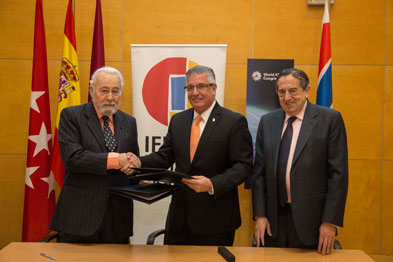
    President and CEO of the Air Traffic Control Association (ATCA), Peter Dumont and the executive chairman of IFEMA, Luis Eduardo Cortes, signed an agreement confirming Madrid as the host city of the World ATM Congress, which will be held at IFEMA for the next three years.
     “This year’s World ATM Congress was a tremendous success,” said Dumont. “This was further evidenced by the wide variety of attendees from around the world and from all aspects of the industry. Not only was the event larger – it was better. With 190 exhibitors and visitors from 128 countries, the exhibition floor was rich for business. 
    “There was clearly a demand for access to the ATM community in an environment that encourages innovation, and we have provided it.”
    Jeff Poole, director general CANSO, said: “Once again, World ATM Congress has successfully provided an important and truly global forum for the air traffic management industry and its partners not just in terms of the numbers but also in quality. The success of World ATM Congress reaffirms the strong need and support for a single global ATM forum by the industry for the industry.” 
    This endorsement from the international aviation industry will be a welcome boost for Madrid’s important hospitality and event sectors. Madrid was placed fourth in the International Congress and Convention Association (ICCA)’s most recent ranking in 2012, just ahead of Barcelona – making Spain the world’s third most popular destination for meetings.
    The next World ATM Congress will take place on 10–12 March 2015, bringing together all sectors of the air traffic community.

  • FIFA seeks single host for two Women’s World Cups

    FIFA seeks single host for two Women’s World Cups

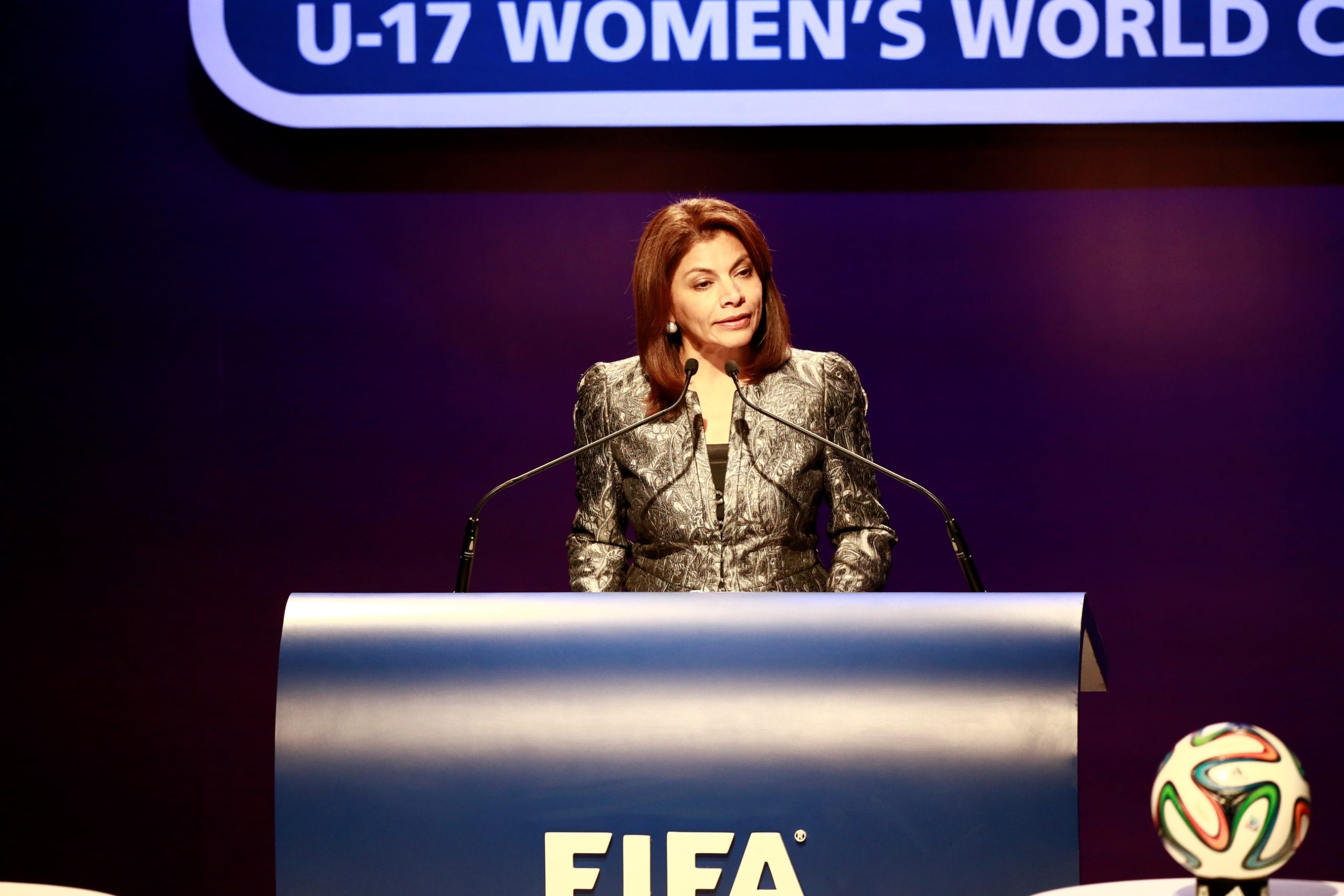
    Countries interested in hosting a FIFA event are now spoilt for choice. FIFA has invited its 209 member associations to register their interest in the Women’s World Cup 2019, Club World Cups from 2015 to 2018, Beach Soccer World Cup 2017, U-17 Women’s World Cup 2018 and the U-20 Women’s World Cup 2018.
    With women’s football growing in popularity in recent years, FIFA will be particularly hopeful of a large number of members applying to host the Women’s events. “The development of football for girls and women remains one of FIFA’s top priorities,” it said in a statement on Thursday.
    FIFA said it would prefer the Women’s World Cup and U-20s World Cup events to be hosted in one country. “In principle, FIFA would prefer the FIFA Women’s World Cup 2019 and the FIFA U-20 Women’s World Cup 2018 to be hosted and organised by the same member association.”
    The Women’s World Cup 2019 will involve 24 teams, while 16 teams will compete in the U-20 Women’s World Cup 2018. 
    “The FIFA Women’s World Cup has grown significantly in stature and significance over the last few editions. Now with 24 teams, it enjoys the second-biggest profile of all FIFA’s flagship events,” FIFA said.
    “The FIFA U-20 Women’s World Cup is the second most important women’s FIFA event. The so-called ‘springboard for the stars’ tournament serves as a staging post towards the FIFA Women’s World Cup, not only for players but also for the hosts.” 
    The Women’s World Cup 2010 in Germany holds the attendance record of 395,295 spectators, achieving an average global in-home audience per live match of 2.8 million. 
    The bidding timeline for these women’s competitions requires the member associations that wish to host these events to submit a declaration of interest by 15 April 2014. The deadline for delivery of the hosting agreement together with all the signed bidding documents is 31 October 2014, with the final decision on the hosts currently scheduled to take place at the first FIFA Executive Committee meeting in 2015.
     
    Club World Cups
    After successful editions of the Club World Cup in the United Arab Emirates, Japan and Morocco – which will also host the 2014 edition– FIFA has also opened the bidding processes for the 2015-2016 and 2017-2018 editions. Two host nations will host the events for two years.
    Member associations that are interested in hosting the event are invited to submit a declaration of interest by 30 March 2014. The complete set of bidding documents has to be provided by 25 August 2014 and the Executive Committee will select the host in September 2014.
     
    Beach Soccer World Cup
    2017 will mark the ninth edition of the biennial Beach Soccer World Cup. Sixteen teams will participate in the ten to 12 day final competition, which requires just one stadium. “The location of the venue should reflect the sun, sea and sand of the Copacabana beach, the birthplace of beach soccer,” said FIFA.
    Member associations should declare their interest in the Beach Soccer World Cup by 15 April 2014 and submit their definitive bids, including all signed bidding and hosting documents, by 1 October 2014. The host will be appointed by the Executive Committee at its meeting in December 2014.
     

  • 2022 Games host must be “unique” – IOC

    2022 Games host must be “unique” – IOC

    Five cities have submitted their application files for the Winter Olympic Games by the deadline of Friday 14 March. The IOC Executive Board has until 9 July to select the successful candidate cities.
    While safety concerns have exerted a major influence on recent hosting decisions, individuality will the critical factor for future host cities, IOC Executive Board member Prof. Dr. Ugur Erdener told HOST CITY.
    The pool of applicants – Krakow, Oslo and Almaty, Lviv and Beijing – presents a strong emphasis on growth markets, with only one Western European city and none from America. This is particularly notable given that the 2022 Winter Olympic Games will be preceded by two editions in new territories.
    “There was a very successful organisation in Sochi and everybody was very happy being there,” Erdener told HOST CITY. “It was one of the very best Olympic Games organised. The next Winter Games will be held in PyeongChang, and now we have potential candidates from Europe and Asia again.
    “We will have to see their applicant files, their projects and some of their explanations and then we can have some ideas. At the moment we don’t have any idea of the projects details, budget et cetera.”
    Under the new leadership of Dr Thomas Bach and his revitalised top table, the IOC is keen to uphold the value of its flagship events. “The Olympic Games is the top priority for the IOC and the Olympic Movement,” Erdener said.
    However, this does not necessarily give an established, known host like Oslo an advantage. The IOC will always be interested in something new to promote.
    “It should be a unique activity; it is very important that all Winter, Summer and Youth Olympic Games should be unique – this is very important for the IOC,” said Erdener. 
    “We have to be more attractive, especially for TV – because TV is the most important factor for all kinds of sports facilities, especially for the Olympic Games.”
    As President of the Turkish Olympic Committee, Erdener led Istanbul’s bid for the 2020 Olympic Games. “I congratulated my friends in the Tokyo team; it was a very fair competition and there was only one place for the winner for 2020.
    “After having seen some delays in Rio 2016 project, probably some of our colleagues thought that a safe city would be better. As we all know, still there are some discussions about Rio project.”
    IOC members will vote for the host city of the 2022 Olympic and Paralympic Winter Games during the IOC Session in Kuala Lumpur on 31 July 2015.
    Prof. Dr. Erdener is also president of the World Archery Federation and president of the Organising Committee for SportAccord Convention, which takes place in Belek, Turkey from 6-10 April.
    For the full exclusive interview with Prof. Dr. Erdener, register for HOST CITY and make sure you get the next issue.

  • IRB delighted by interest in 2023 Rugby World Cup

    IRB delighted by interest in 2023 Rugby World Cup

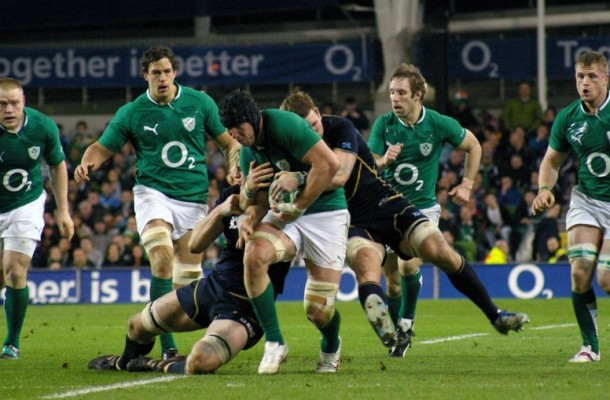
    The bidding process for the 2023 Rugby World Cup has yet to be announced but several countries have already expressed an interest, with key figures in Ireland and Argentina speaking out on the subject over the course of the week. 
    Leo Varadkar, Minister for Transport, Tourism and Sport said in an interview with Newstalk that hosting the World Cup would be an achievable target for Ireland, with “at least 50/50” chance of winning a bid.
    “It’s probably the biggest thing that Ireland can do, as a small country. You could never really have the Olympics in Dublin; we wouldn’t be able to do the Euros, but we could do the Rugby World Cup.
    “New Zealand, which has inferior infrastructure, fewer people and is further away from the big rugby markets did really well.”
    Varadkar also stressed that an Irish Rugby World Cup would be a profitable one. “There is a cost of upgrading some of the stadiums… and you do have to pay the IRB a big fee to host it – somewhere in the region of EUR 120m. If we can get more people than came to New Zealand then we can bring in the region of EUR 200m in tax revenues.”
    The International Rugby Board (IRB) has not yet set its fees and the bid process is not expected to be launched until later in the year. Nonetheless, countries are positioning themselves early to bid for the event. 
    Argentina’s IRB Council Representative Agustin Pichot confirmed in December 2013 that his country would bid for the 2023 event. England player Paul Tait is another longstanding proponent of an Argentinian Rugby World Cup as a way of internationalising the sport.
    “With growth comes progress and for international rugby this has seen an increased awareness outside of the traditional strongholds,” Tait wrote on his blog this week. “The landscape will continue to evolve and having Argentina host Rugby World Cup 2023 would contribute to this by directly rewarding excellence and encouraging progress.”
    Recent editions of the Rugby World Cup have loosely alternated between Southern and Northern hemispheres. The 2023 edition will follow two northern editions: England 2015 and Japan 2019. 
    Whether the IRB will consider a FIFA-style continental rotation policy remains to be seen. The Rugby World Cup is the IRB’s main breadwinner, accounting for more than 90 per cent of revenues. 
    And with the IRB investing more than £330m worldwide between 2009 and 2016, a solid financial return from the World Cup will be seen as a major priority to enable the development of the sport internationally – wherever the event is hosted.
    Other nations interested in hosting the 2023 World Cup include South Africa, France, Australia and Italy. 
     
    “Enormous prestige”
    Speaking to HOST CITY from the IRB’s Dublin headquarters, head of communications Dominic Rumbles said “We are delighted that there is such a strong level of initial interest in hosting Rugby World Cup 2023.”
    “To see such interest before the tender process has been launched further underscores the enormous prestige of the Rugby World Cup brand in the global marketplace.”
    Explaining why there is such interest, he said: “Increasingly, governments and local agencies are seeing the event as a strong economic, trade, tourism, profile and feel-good platform and a means to inspire young people to get active, which is great.”
    This view is backed up by Varadkar. “The most important thing from a government point of view is participation,” he said.
    “More people are participating in sport than in the past – it’s around 47 per cent now, which is a big improvement. There are health benefits, psychological benefits and there are social benefits, and that’s why governments get involved in sports.”
    Speaking to delegates at a Bandon Rugby Football Club event on Thursday, MEP Sean Kelly said a Rugby World Cup bid is “an opportunity for Ireland and we should do all we can to seize it.
    “It could be a hugely historical all-island event, with massive economic and tourism benefits.”
    The former president of the Gaelic Athletic Association emphasised the strength of the country’s infrastructure – a key consideration in evaluating bids for major sports events. 
    “Ireland has excellent sporting facilities and proven ability to successfully host major sporting events, such as the Special Olympics,” said Kelly. 
    “Ireland could easily accommodate the 377,000 or more visitors that the Rugby World Cup would bring to the country.”

  • IOC to make bidding process work better for cities

    IOC to make bidding process work better for cities

    The International Olympic Committee is reviewing its bidding procedure, with a renewed emphasis on the social, environmental and developmental goals of the bidding city and its country, Gilbert Felli confirmed on Thursday.
    Speaking at the SportAccord Convention in Belek, the IOC’s Director of Olympic Games said: “The idea is that we want to shift the focus a little bit, in a way that we encourage potential candidate cities to tell us how they see the Olympic Games fitting best in their social environment, their long term development plans, with regard to sports and general infrastructure, to environmental protection – to get more diversity into the bidding procedure.”
    Felli’s comments expand on the “Olympic Agenda 2020”, a key theme of which is to communicate the value of bidding for and hosting the Olympic Games.
    The current two-phase procedure is being reviewed “to make sure the IOC does not ask too much too soon”. Concerns have been raised that too much information is requested at the applicant phase, deterring potential applicants. 
    The reviewed process will also mean that information requested will be more focussed on the long term goals of the applicant, rather than on the event itself. “And in the end, to have it less a tender for a franchise and more an invitation to Olympic Games on the background of the culture and the perception of a sustainable development in the future host country,” said Felli.
    Other proposals to broaden the appeal of bidding include reducing and controlling costs for bid cities, the possibility of joint bids from several cities in two or more countries, and reviewing the IOC’s requirements “to see how the Olympic Games could be awarded to cities in new territories and emerging economies”.