Blog

  • Moving the Games

    Moving the Games

    Between July and September last year, the Olympic and Paralympic Games brought competitions in 26 sports across 34 venues and 10,500 athletes from 204 countries to London. A total workforce of around 200,000 people, including more than 6,000 staff, 70,000 volunteers and 100,000 contractors, were involved in the Games.

    Effective transport had long been recognised as an essential factor for a successful London 2012 Games. Before the Games began, some critics argued that London’s transport system was already strained and would not cope with the extra demands associated with hosting the Olympic and Paralympic Games.

    However, as a result of a comprehensive programme of transport upgrades and detailed planning in advance of the Games, excellent operational performance during the Games, and changes in travel behaviour by regular travellers, transport performed very well and made a vital contribution to the success of the Games.

    Faster, higher, stronger
    Almost GBP 6.5 billion was invested in transport improvements around the Olympic Park and across London, all delivered well before the Games began. The upgrades were well needed: London 2012 saw record attendance at events.

    During the Olympic Games, there were 7.4 million ticketed spectators (6.25 million in London), including 2.8 million spectators at Olympic Park venues alone. The Paralympic Games sold out for the first time in their history, with 2.7 million ticket sales, including 100,000 non-event tickets. Record numbers of spectators also viewed the road events across London and the South East, with a total of 1.8 million estimated to have attended.

    During London 2012 London’s public transport delivered 62 million journeys on London Underground – up 35 per cent on normal levels. Tuesday, 7 August was the busiest day in the Tube’s history, with 4.57 million passengers, while Sunday 5 August saw 78 per cent more passengers than a normal Sunday in 2011. There was a 27 per cent reduction in the impact of service disruption during the Olympic Games, measured in terms of lost customer hours.

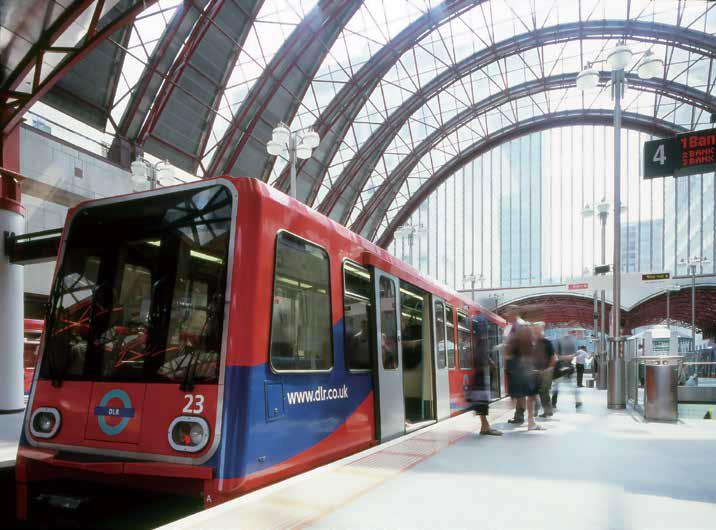
    The Docklands Light Railway (DLR) saw almost 6.9 million journeys over the Olympic Games – up by over 100 per cent on normal levels. Over 500,000 journeys on a single day were made for the first time on Friday 3 August. During both the Olympic and Paralympic Games, reliability on the DLR was 99 per cent.

    London Overground saw around 6.4 million journeys during the Olympic Games – up 26 per cent on normal 2012 levels and up 54 per cent on 2011 levels. Reliability on the London Overground was 98 per cent.

    London Buses carried 92 million passenger trips across the 17 days of the Olympic Games, running 23.2 million km during the Olympic Games, 98 per cent of schedule.

    Traffic flows in central and inner London were down by 16.3 per cent in the AM peak and 9.4 per cent in the PM peak on normal levels during the Olympic Games. Serious and severe disruption was also down by 20 per cent during the Games.

    VIPs go public
    One of the areas that caused the most concern before the Games was the Olympic Route Network (ORN) and the proposed ‘VIP’ lanes or ‘Games lanes’ for athletes and officials. These Games lanes were in effect temporary priority routes to enable athletes and officials to get to the Games swiftly. They were only implemented when and where required and were strictly enforced.

    But because officials and athletes used public transport much more than expected, the flow of Olympic family vehicles were typically 30-40 per cent below LOCOG’s pre-Games predictions. As a result, TfL was able to actively manage the ORN using roadside variable-messaging signs, with around 60 per cent of Games lanes remaining open to general traffic during the Olympic Games and around 70 per cent during the Paralympic Games.

    People power
    The transportation system was not all about vehicular movements. TfL provided a network of new cycling and walking routes, especially in East London; 15,000 free cycle parking spaces at competition venues; a further 1,500 free cycle parking spaces in central London for commuters; and free cycle maintenance at venues for spectators.

    At sites across London, the number of pedestrians counted was 7 per cent higher during the Olympic Games and 18 per cent higher during the Paralympic Games, compared with the same period in 2011. Measurements on bridges over the Thames during the Olympic Games indicated 20 per cent more cyclists and 22 per cent more people on foot, compared with the previous fortnight.

    In central London the figures showed 29 per cent more cyclists, and in east London 62 per cent more cyclists and 158 per cent more pedestrians, indicating large increases in the areas most affected by the Games. Barclays Cycle Hire had 642,000 hires over the Olympic Games – 44 per cent more than the first two weeks of July – and a further 442,000 hires over the Paralympic Games. Over the whole of July, Barclays Cycle Hire saw more than 1 million hires for the first time, while the highest ever daily total of 47,000 hires was achieved on 26 July.
  • The safest pair of hands

    The safest pair of hands

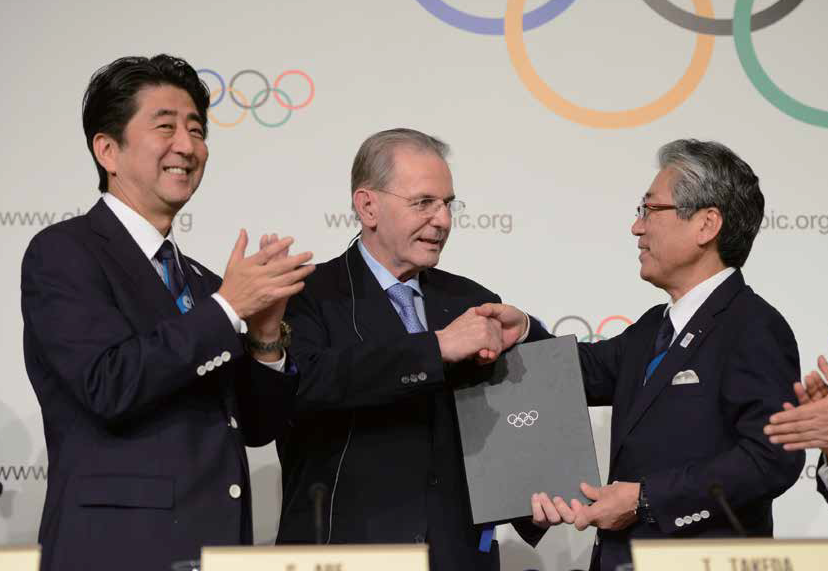
    The race to host the 2020 Summer Olympic and Paralympic Games was a tightly fought campaign, right until the allimportant secret ballot in Buenos Aires.

    In the first round of voting no clear frontrunner emerged: Tokyo fell just short of a majority, with the remainder of votes split evenly between Istanbul and Madrid. In the run-off round that followed, a slender four vote lead enabled Istanbul to progress to a final round of voting, in which Tokyo garnered 60 votes to Istanbul’s 36. Scenes of jubilation from Japanese delegates ensued. After the initial elation of winning the bid, Tokyo is now faced with the reality of preparing for the biggest event in the world. “It is a huge task to host the Olympic and Paralympic Games, but it is also an incredible honour as well as extremely exciting,” bid CEO Masato Mizuno tells HOST CITY.

    “This post-election phase is a period of transition, during which time we must create the Organising Committee. Our primary job is to now establish the committee in collaboration with the Tokyo Metropolitan Government, the Japanese Olympic Committee and the central government. The entire nation, or ‘Team Japan,’ will work together in a unified effort to deliver the Games in 2020.

    “Our promise to the IOC is to deliver a superb Games in 2020. Delivering early will allow us to focus on the extras that will make the difference between the Games being good or fantastic.”

    Different degrees of risk
    IOC Vice-President and IOC member in Great Britain, Sir Craig Reedie chaired the Evaluation Committee that assesses the bid cities’ capacity to hold the Games. “The three cities that remained in the race all put together very coherent and first class candidatures,” he reminds HOST CITY. “The Games could be run in any one of these three cities, but they all presented different projects with different degrees of risk.”

    Each city faced its own challenges, from the badly damaged Fukushima nuclear plant in Japan and the plight of the Spanish economy to the Turkish authorities’ reaction to the Gezi Park protests in Istanbul.

    “It’s interesting that the questions marks featuring in all of the three cities were issues over which the bid committee had absolutely no control. This is the story of Olympic bids; bid committees have to be able to deal with situations that arise over which they have no control.”

    If the promise of opportunities in new regions was the defining feature of Rio and PyeongChang’s winning bids for the 2016 and 2018 Games, this time it was guarantees of stability that would clinch the matter. With Spain floundering in a turbulent global economy and with public protests disrupting Istanbul’s bid, Tokyo was considered to be the safest bet.

    The Tokyo 2020 team highlighted the commercial potential of holding the games in Asia and Tokyo’s USD 932m sponsorship revenue forecast. “Tokyo had its funding in place, it had a pretty compact plan using reclaimed land in Tokyo Bay and they benefitted from the fact that they still have a number of the splendid buildings that were built for the 1964 Games,” says Reedie.

    The destruction caused by the 2011 tsunami in Japan and the leaks that followed at the Fukushima nuclear plant became a major focus, which Prime Minister Shinzo Abe tackled head on in Buenos Aires. Describing Tokyo as “one of the safest cities in the world,” Abe told IOC members: “Some may have concerns about Fukushima. Let me assure you, the situation is under control. It has never done and will never do any damage to Tokyo.”

    At the same time as representing a risk factor, the disaster also created a powerful emotional aspect to the bid. Paralympian Mami Sato, whose home town was devastated by the Tsunami, emphasised the point that sport and the Olympics had the potential to reinvigorate and rebuild Japan following the disaster.

    “They were very grateful to the rest of the world for the sympathy and help they had when they suffered the tsunami,” says Reedie. “The IOC contributed to the fund and the Olympic movement rallied round. So to that extent they were grateful and therefore it was emotional.”

    Public support was another challenge that Tokyo faced throughout the bid process. “In early 2012, the first IOC figures suggested that only 47 per cent of the population was behind us,” says Mizuno. “We worked intensively to improve support for the Tokyo 2020 Games, and indeed it grew steadily, especially once people celebrated Japan’s medal success at London 2012. A halfmillion spectators turned out to cheer our national heroes during Japan’s first-ever parade for Olympic medallists.

    “We were pleased that the IOC survey in March confirmed 70 per cent support and that the most recent figures are around 90 per cent, according to a survey by the Ministry of Education, Culture, Sports, Science and Technology.”

    Keep it compact
    Fifth-time bidder Istanbul was viewed by many as the frontrunner for much of the campaign. But as well as the controversies surrounding the Gezi Park protests and recent doping scandals involving several Turkish athletes, Istanbul’s bid was also hindered by the wide scope of its concept.

    “Quite clearly the transportation issue was the one that concerned the Evaluation Commission and there was no doubt, despite claims made, that some venues would involve a considerably longer travel time than some of the other cities,” said Reedie. “The larger amounts of money that were being spent weren’t being spent simply for the Games; they were being spent to keep the city moving.”

    Reedie points out that hosting the Games can leave a lasting legacy without the need for the huge amounts of capital spending proposed for Istanbul and seen in London.

    “London chose to develop the most deprived part of the capital and that’s been the most wonderful legacy – but it’s not a condition of bidding for the Games. The IOC doesn’t say we need you to spend billions of dollars. It’s your call as a city; and in fact we go out of the way to separate the organising committee budget and the non-organising committee budget. What cities frequently do is use either the bidding for the Games or the winning of the Games as a catalyst to do things they might not otherwise.”

    Could you host the Games?
    There can be only one winner, but Reedie says the strength of all three bids and the commitment put into each one is testament to how important the Olympic Games is to cities and nations around the world.

    “At the end of the day all three cities presented wonderfully well. It’s not often the IOC is blessed with three Prime Ministers, from three candidates, all coming from the G20 summit in St Petersburg all the way to Buenos Aires to make their presentations. It just gives you some idea of the regard in which hosting the Olympic Games is held and the importance of it to the cities and the countries who support them.”

    The newly elected IOC President Thomas Bach recently revealed he wanted a far greater range of countries and cities to bid for future Games. Baku in Azerbaijan and Doha in Qatar were the two other applicant cities that failed to make it to the candidature stage of bidding for 2020 and the likes of Nairobi, Casablanca and Taipei are considering bids for the 2024 Summer Games.

    Reedie says the success of London 2012 is stimulating interest the world over. “The Olympic brand and the Games are now at a very high level after the success of the London Games and it would be a very good thing if more cities applied in future years to host summer, winter and youth Games. “There is a feeling out there that you have to spend vast amounts of money to do it; I don’t believe that to be the case. There are many cities with lots of sports facilities which could be used to host the Games.”

  • Lighting the way

    Lighting the way

    You’ve got tickets for the big game. Like the 25,000 other spectators, you’ve successfully navigated your way through the host city’s traffic and, with just over half an hour left before kick-off, the last thing you want is to lose time finding a parking spot before you find your seats.

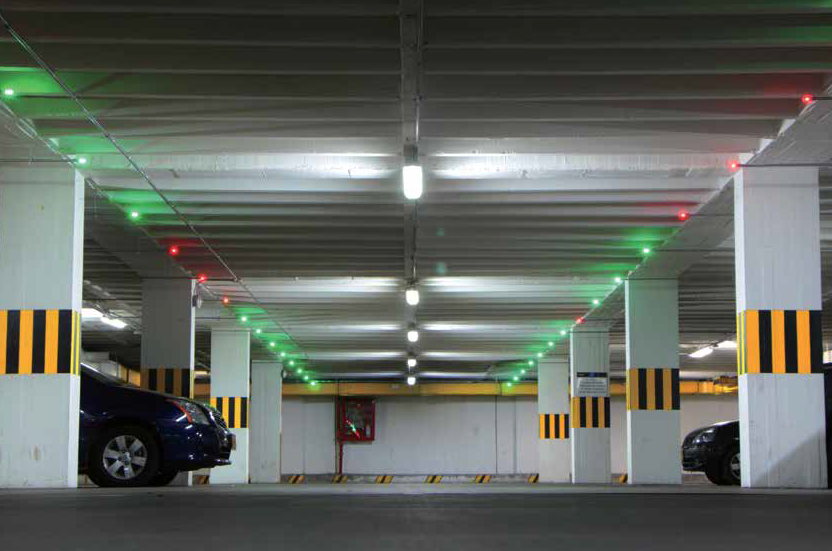
    Thankfully help is at hand, in the form of a parking guidance system that takes the frustration out of parking. With Schick electronic’s Signal-Park system, an ultrasonic sensor detects whether a spot is vacant or occupied. Dynamic LED arrows indicate the way to go, as soon as the customer is faced with a choice of deciding which level, zone, or lane to take.

    “The whole system brings a significant benefit by lowering the operating costs and by providing a bigger profit to parking owners. It results also a gain in customer loyalty,” says Philippe Schick, Director of Schick electronic. The system also incorporates a special device, indicating cars that have overstayed with a special orange LED.

    After establishing itself through 35 years of experience in the European market, Schick electronic went on to install its system in the Middle East and in North America. “All this has led us to enter the very interesting and fast moving Latin American market,” says Schick. “After several installations in Chile, we installed our first parking in Colombia, a shopping centre in Bogotá. It was a very interesting and motivating project in cooperation with our agent in Colombia.”

    Schick electronic’s products are imported to Brazil by its agent Bra-tec, a company located in Fortaleza. “We are really getting to know the amazing Brazilian market. Regarding the major events coming to Brazil, the system is a perfect fit for big structures like airports and stadia.”

    In order to keep the system at the cutting edge of technology, Schick electronic continues to develop the system according to feedback from clients. A web service was top of the list of recent customer demands, so the company devised a remote control option compatible with all smartphones available on the market for more comfortable and practical use for managers of all car parking facilities. It is compatible with TCP/ IP, BACnet protocol and SQL server.

    Another request was for both outdoor surface type and indoor parking guidance system. Because Signal-Park is compatible with other systems, Schick electronic is able to fulfil this by collaborating with partners – while the client only has to deal with one company.

    A survey by the Global Parking Association Leaders found that employing a parking guidance system appears to have the “greatest potential to improve sustainability”.

    “These days, users appreciate spending less time parking and more time in venues. This is why the parking guidance system industry is moving very fast to ease this experience worldwide,” says Schick. A new detection and signalling technology using the latest innovations has been developed within the company and will be publicly launched soon.

    With headquarters and manufacturing facilities in Switzerland, Schick electronic handles 450,000 car places in projects around the world, from small installations in city centres to the largest shopping malls and most demanding customers, such as airports, stadiums with 25,000 parking spaces.

  • How the Games set London on track

    How the Games set London on track

    Hosting a major sports event inevitably places huge additional strain on a city’s transport network. While this can act as a catalyst to upgrade systems, the long term value of any such investment is always subject to scrutiny. Transport is a major component of the organising city’s capital budget and rightly the focus is on the post-event deliverables.

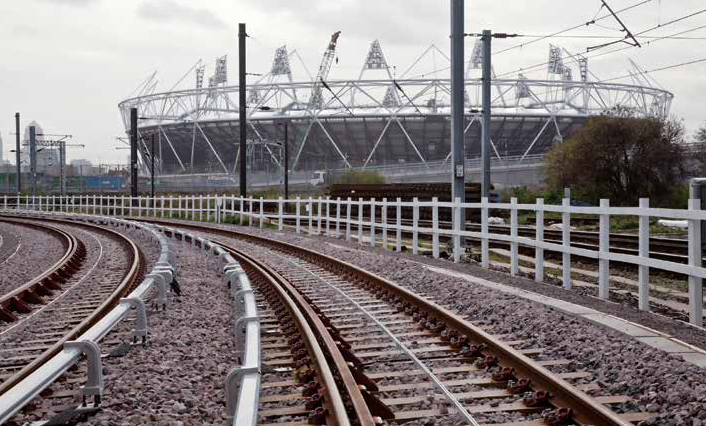
    In the case of London 2012, the transport investment came in at just above USD 10bn. And despite that hefty price tag, Transport for London (TfL) considers this investment to be the main legacy of the Games. Perhaps the most palpable effects are the upgraded Jubilee Line, Docklands Light Rail and Overground, with their extended services and increased capacity.

    However, a report published in February 2013 by the Greater London Authority’s Transport Committee in expressed frustration that infrastructure developed for the Games being underutilised – in particular, Stratford International Station.

    “We want all new transport infrastructure installed for the 2012 Games fully utilised including Stratford International Station. To date, there is little indication that Eurostar or any other international rail operator will use this station in future. Alongside improved use of Stratford International, we want to see long-term changes in rail timetabling,” the GLA report stated.

    Other, less high-profile, legacy transport benefits include the increase in step-free access, additional audio and visual information displays, hearing aid induction loops, wide-aisle gates, tactile paving and additional help points. All delivered for the Games, these are now providing both Londoners and visitors alike a more accessible transport system for the city.

    Aside from investments in infrastructure, hosting the Games brought many lessons about transport management that will be of value to London and other host cities in the future.

    Politicians and commentators have praised London’s transport management during the Games. Hugh Sumner, Director of Transport for the ODA, put the success down to an integrated approach to transport delivery. He said: “By anyone’s measure we delivered”.

    Road and rail operators managed the transport system in realtime during the 2012 Games. They kept travellers informed on a daily basis about the best ways to make journeys to help spread demand more evenly.

    Train operating companies operated more flexible timetables on certain routes so they could alter services at short notice to better suit demand. TfL and Network Rail deployed new measures to respond more quickly to any incidents of disruption. This helped to minimise the impact of any service failures including at key 2012 travel hotspots such as London Bridge.

    On the roads, following lower demand from Games family vehicles than predicted, TfL reduced the extent and hours of operation of the Olympic Route Network (ORN).

    “We want ‘One Team Transport’ to continue,” a spokesman for TfL says. “Transport operators have told us this will happen. They suggest the Transport Co-ordination Centre (TCC) and travel ambassadors could be used for future special events or during periods of disruptions.

    According to TfL, public transport and road networks now operate much more smoothly and efficiently as a result of plans and procedures put in place before the Games. The 2012 active traffic management programme, which resulted in changes to 1,300 traffic signals, was a major driver behind this change.

    However, some issues have been raised about the active traffic management programme. Lobbying group London Councils suggests the implementation was heavy-handed, resulting in significant delays and congestion in some parts of outer London. In addition, London Councils says, TfL failed to consult boroughs before making changes to traffic signals.

    Keep on trucking
    The increased level of freight during the Games was handled by the 2012 freight management programme. At a cost of USD 6m, this established a freight forum, a dedicated freight website and an online freight journey planner. A spokesperson for TfL said “Around 57 per cent of freight operators made adaptations during the 2012 Games, with most reducing their transport activity and retiming deliveries.”

    The freight transport association supports the continuation of these measures and suggests its members could make permanent changes to their usual delivery hours following the 2012 Games. TfL is also keen for the improvements brought by the programme to continue; the spokesperson said “We want long-term changes in the scale and timing of road freight deliveries”.

    One notable operational success during London 2012 was the use of travel ambassadors. Resplendent in their purple uniforms, these volunteers were located at all the major transport hubs, guiding and advising visitors. Such was the positive feedback on their use that London Underground continued their use through the busy festive period four months after the conclusion of the games.

    The volunteers, who have been celebrated along with the Olympic Games Makers since the Games, were on hand to provide travel information at some of the capital’s busiest Tube stations.

    “Our travel ambassadors were heralded as a fantastic success during the Games for the warm welcome they gave to visitors from across the globe and their breadth of knowledge about London’s transport system,” says Nigel Holness, director of operational change and upgrades at London Underground.

    “Our front-line staff work really hard to ensure that customers are given all the information they need to make their journeys quickly and easily, but having some extra help from the travel ambassadors during the busy festive period gave visitors an even better level of service and demonstrates our commitment to providing excellent customer care.”

    Another lesson that was taken to heart from the build-up to and during the Games was that preparation and effective communications can often forestall any travel complications, allowing effective alternatives to be provided. The lessons learned from the Get Ahead of the Games campaign, when it comes to travel demand management and communications, will be implemented in TfL’s future communication strategies.

    There are also plans to build on the extensive use of social media platforms that proved so effective. Behavioural changes like this may well prove to have a wider reaching impact than the investments in infrastructure needed to host the Games

  • The moveable feast

    The moveable feast

    “Nothing had really been done on this scale before,” Tom Jones, principal of Populous, the practice that designed London 2012’s temporary venues, told delegates at International Sport Event Management Conference in London.

    “There was a significant amount of temporary venue work going on at golf championships, temporary music festivals and those sorts of things, but this was quite unique.”

    London 2012’s venue masterplan was not just unique; it was nothing short of revolutionary. Historically, the majority of Olympic Games venues would be built to last, but designed with the requirements of the short-term event in mind. This meant a relatively small amount of temporary overlay was required; it also resulted in a legacy of underused venues.

    London 2012 subverted this norm. Only six of London 2012’s venues were new and permanent. The remainder consisted of existing world-class venues like Wembley Stadium, Wimbledon and Lords, supplemented by more than 20 temporary venues.

    “We had a very high dependence on temporary structures because of the ‘no white elephants’ approach – not building where there was no legacy use,” explains James Bulley, CEO of Trivandi and former director of venues and infrastructure at the London Organising Committee of the Olympic and Paralympic Games (LOCOG).

    While this was clearly a revolution in terms of sustainability, it transferred huge responsibility onto the organising committee. “London delivered more temporary structures that Sydney, Athens and Beijing put together. That is a big shift; it puts massive onus on the organising committee to deliver substantial temporary structures.”

    LOCOG delivered more than 250,000 temporary seats for the London Games, all of which now have been taken down. A 23,000 seat arena was built in Greenwich Park for the equestrian events, plus a 15,000 seat arena in Horse Guards. The basketball arena in the Olympic Park was also completely temporary.

    While temporary overlay traditionally fell under the watch of the organising committee, it tended to be a much smaller project. Major infrastructure works would be handled by a separate authority, while the organising committee would focus primarily on selling tickets, running the sports events and overall operations.

    In the case of London 2012, the Olympic Delivery Authority (ODA) delivered the permanent structures, but LOCOG also had a major build on its hands. According to Bulley, “it became very much focused and dependent on the very high risk elements of delivering construction.”

    He questioned whether the split of work was reasonable. “We had the ODA delivering the permanent construction. Should they also have taken on the temporary construction? When you are looking at a city delivering immense infrastructure on this scale, whether that sits within the organising committee or outside it is something that should be thought through.”

    The temporary nature of the structures meant that they had to be built quickly, and the elements were not on LOCOG’s side in the weeks running up to London 2012. “One of the key challenges was delivering temporary structures in greenfield sites in torrential weather,” said Bulley.

    It wasn’t just the organising committee that was under strain. The temporary event commodity market was under pressure to deliver seats, tents, cabins, fences, temporary power supplies, barriers and much more.

    “Under extreme pressure, the event supplier commodity market had to deliver huge amounts of infrastructure, which it perhaps wasn’t geared up to do so at the volume at which we needed to do it.”

    Nonetheless, London 2012 raised the bar and the result is a faster, higher and stronger temporary infrastructure sector. Bulley points to advances in the seating industry in particular.

    “We put in new standards for designs, because the market couldn’t supply what we were looking to achieve. A lot of the seating in London 2012 was new; it was manufactured for the event. We set new standards for safety and comfort, for example the 800mm seat-row depth, rather than the 720mm which you sometimes see in temporary stands.”

    Jones adds: “We were keen to make the experience of going to a temporary venue as close as going to a permanent venue as possible, both in terms of comfort and quality.”

    London 2012 also pushed the envelope when it came to sports surfaces. “We worked incredibly hard with the governing bodies and sports surface companies to deliver the fastest possible tracks and highest quality fields of play,” said Bulley.

    Despite the large volumes and short timeframes, the local industry responded well to these demands. Bulley questions whether mega events in the immediate future will have the same resources to hand. “We had a very sophisticated event supply industry within Europe to tap into. For Brazil, it’s much more challenging.”

    The big scale-down
    Some of the permanent venues also had temporary aspects to them, with modular construction techniques being deployed to make them scalable. For example, the two “wings” that were plugged in to the aquatics centre to provide extra capacity during the Games are now being removed to leave the 1,500 to 2,000-seat community pool, in line with legacy plans.

    Jones said: “The reduction in size of the aquatic centre, the opening of the copper box have all pretty much followed plan. The Olympic stadium is clearly different.”

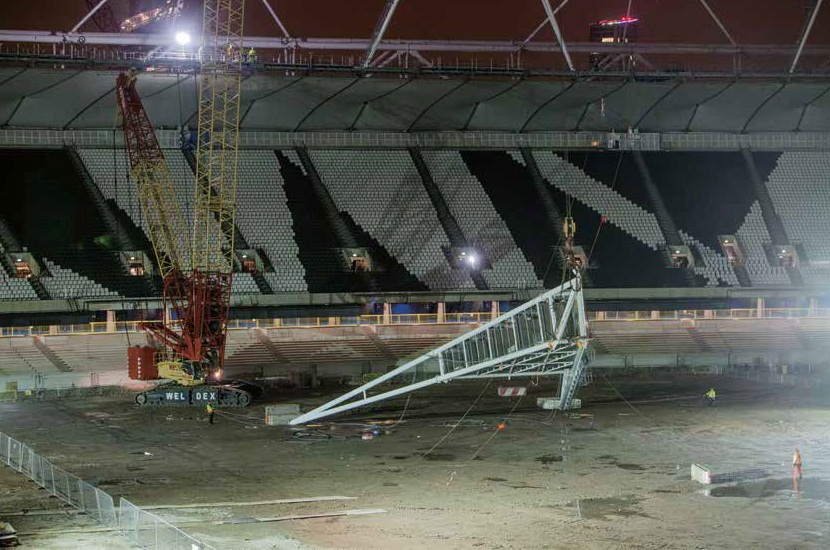
    The 80,000 seat stadium used in Games time was originally planned to be reduced to 25,000 seats, with a permanent athletics track. Bulley said: “We went to the market and said would a Premiership football club be prepared to take the stadium on? That was not the case at the time, so we followed the athletics legacy.”

    After much wrangling, the stadium has been determined as the home ground of West Ham United. Having a top flight football club as a tenant will help to ensure regular custom in the Queen Elizabeth Park, as the Olympic Park will be known. “If you can retain it as a large facility it’s a much preferable solution,” said Bulley.

    However, it does necessitate major changes. “We are managing to keep a significant amount of the structure,” said Jones. “When we were doing the original design we were trying to keep as much flexibility as possible. But clearly if the legacy use changes, then that is going to create challenges afterwards.”

    These challenges include removing seating in the lower tier and extending the roof. The promise of an athletics legacy is also being honoured alongside the West Ham tenancy. “As the Olympic stadium, it will have to serve other uses than football,” said Bulley.

    The revised designs for the stadium include a retractable lower tier that reveals will reveal the athletics track for events such as the World Athletics Championships, which the venue will host in 2017.

  • Modernising Brazil’s transport infrastructure

    Modernising Brazil’s transport infrastructure

    As the fifth biggest country in the world by both area and population, transport is a huge issue for Brazil. Developments in transport infrastructure have lagged behind the recent acceleration of the country’s economy, but the government is now investing heavily in building networks that will enable economic growth to continue unhindered.

    “Brazil, due to its continental dimensions with its 8.5m sq km in area, needs to integrate its several regions and therefore afford mobility to its population,” says César Borges, Brazil’s Minister of Transport. “This is why we are gathering together public and private resources in partnerships to make sure that we allow better logistics throughout our different transportation modalities, including roads, railways, and waterways, in order to meet the demand that we have and to reduce logistics complexities and costs, and therefore add competiveness to our industries.”

    In the air
    The World Cup in 2014 will feature 12 host cities that straddle this vast expanse of land. Due to the large distances between host cities, large numbers of fans will have to travel by air between games. This is where Brazil faces some of its biggest challenges.

    “We are increasing the number of flights available. We are reinforcing the capacity of Brazilian airlines to offer more seats during the World Cup. And we are ensuring that airports are ready to meet this increased demand during the Games, particularly those in the host cities, to receive passengers quickly to allow for expedited check-in and check-out for all passengers,” says Borges.

    Brazil is in the process of renovating its airports. “There are currently five airports under concession being modernized, including the Galeão Airport in Rio, which I expect to be completed or near completion by 2016.”

    All the other airports are being renovated, expanded, managed, or improved by Infraero, the Brazilian Airport Infrastructure Company, instead of being awarded under concession. “Infraero will open its capital to attract operators from all over the world that can come and bring expertise to Infraero, improving the operation of the airports that Infraero currently works on – either recovering, expanding, or managing their operations.”

    On the road 
    Journeys between some of the host cities will be possible by road. It is only 184 miles from Natal to Recife, for instance. From Rio de Janeiro, it is 266 miles to São Paulo and 269 miles to Belo Horizonte.

    “Brazil already has a very extensive highway network with more than 55,000 km of paved highways in extension. These roads, under the federal government’s responsibility, are in a very good state,” says Borges.

    Duplication – the creation of dual carriageways – is an important area of development. “We have recently awarded about 5,520 km of highway under concession schemes and approximately 5,000 km of highway have already been duplicated. Therefore, mobility through Brazilian highways has its safety and expediency guaranteed during the World Cup.

    “There are 2,500 km of road duplications planned for the near future and we also need new roads in new areas of the country, particularly in the Midwest and the North. We are identifying new highway passages or highway stretches that are attractive for investment, both due to their vehicle movement, to the cargo movement, or to the passenger movement.”

    Railroad revolution
    Today, rail transport in Brazil is virtually non-existent, with just a few routes available. This is all about to change. “We want to have a new, a completely new railroad network for the country that is 11,000 km long, which unless I’m mistaken is something unforeseen in the world,” says Borges.

    The Superior Court of Audits (TCU) is currently evaluating contracts for two major stretches of railway. One is for the Açailândia-Barcarena passage, which would complete a major route called the North-South Railroad. “It will connect the port of Rio Grande in the very deep south of Brazil to the city of Barcarena in the mouth of the Amazon River up in the north – approximately 7,000 km of railroad – which will become a very large spinal cord of a railroad system.”

    The North-South Railroad will intersect with an East-West Railroad. This network will be open access, which means that several operators will be able to use it. “The federal government has taken measures to show that the open access model is the one that will best serve this new infrastructure being built with these largegauge railroads, which will run at 80 km per hour and are very efficient.”

    The primary motivation for the rail network is to enable the transport of materials and commodities. Passenger services are not planned on these routes.

    High speed rail delays
    A high speed rail (HSR) link between Rio de Janeiro and São Paulo was originally planned to be operational in time for the 2014 World Cup. However, the tendering process has not gone according to plan and the line is unlikely to be in service before even the Olympic Games in 2016.

    “We need to build a model that attracts the most bidders possible who want to invest in the sector,” says Borges. “The model we considered this year and proposed for market evaluation only attracted one company, Alstom. And since this one company was under queries or investigations by the Government of Sao Paulo, the federal government decided to refine the model to make sure that it was more attractive to more bidders.

    “The obstacles here for attraction of companies particularly include demonstrating that we have cargo movement and passenger movement demands that are sufficient for a high-speed rail system. We need to demonstrate that we have very high levels of cargo in Campinas, Sao Paulo, and Rio de Janeiro, which are the main city centres or urban centres to be served by the high-speed rail system. These centres have very strong passenger flows and it is certain that only a high-speed rail can prevent the need for building of new airports and new roads to serve these city areas in the future.

    “This is why the Ministry of Transports is working hard to implement a high-speed rail system. And we expect by the end of 2014, after the elections, or by 2015, to begin having our HSR or high-speed rail auctions.

    “We need the high-speed rail model and the federal government believes in implementing the high-speed rail model. It is of course complex and subject to debate, but it is a model that pays for itself due to the passenger demand that it creates. And I am sure that we can implement it. It is a necessary stage in the country’s development path, which we will pursue staunchly.”

    Rio 2016
    Host City asked Borges about whether the success of London 2012 is influencing Rio de Janeiro’s plans for transport networks during the Olympic Games. “As a Minister working closely with the federal government, I can say that I believe Brazil is doing everything to make sure that we make good use of all successful experiences from all Olympic Games organizers throughout the world, including London, which had a very well organized and successful Olympics, to help organize ours,” he said.

    “We have some structural issues, but the city of Rio de Janeiro and the federal government have been working together to ensure that all sectors involved can be correctly contemplated in the organization of the Olympics, and transportation is certainly one of the sectors that deserves the most attention amongst those.”

    “Rio is also doing renovation work to its urban mobility network in general, and to its road network, to allow all of those visiting the Olympic Games to be able to move to and fro appropriately and adequately.”

    Public finance, overseas capital
    Brazil’s transport plans are being realised through a combination of public and private finance. With road and rail plans are all scheduled to be executed within five years, a period of intense investment is underway.

    “The Ministry of Transports is investing about 15 billion reais per year, and that number is growing through the growth exploration programme, or the PAC, as it is called in Portuguese.”

    This programme started in 2007. “Since then, very strong investments have been made in the area and in budget terms, they were decoupled from government expenses – which means that these investments do not influence the country’s primary surplus. We were able to spend and are able to spend on our infrastructure without affecting other areas of the government.”

    The participation of global businesses will be crucial in delivering these projects. “We would like to have participation from international capital in this process. We want to have companies come in who want to join the country and be partners of the federal government, and of the private initiative, including through joint ventures and special representatives. We are planning investments of above 250 billion reais and we want the international private sector as well – logistics operators, large construction companies, and others to come and work here.

    “We already have two Spanish companies in the railroad sector and would like to have more companies work on the road and railroad sectors with Brazil. We already have Chinese companies interested in coming. We have already received authorities from the UK, from the US and from other countries who are interested in investing in these sectors and we are more than open to receive them as partners.

    “We want to make sure that what matters most is that Brazilian logistics can overcome this large period we have had in the past, during which our infrastructure system was neglected and stayed in the last century. We want to bring true 21st century logistics infrastructure to Brazil.”

  • The joy of five

    The joy of five

    The formal bidding process for the 24th IOC Winter Olympic and Paralympics Games is now well underway with the International Olympic Committee receiving six official applications by its deadline of 14 November 2013.

    The International Olympic Committee (IOC)’s recently appointed President Thomas Bach expressed his delight with the applicants. He said “These cities and their supporters clearly understand the benefits that hosting the Games can have and the long lasting legacy that a Games can bring to a region.”

    In December 2013, representatives of the six potential host nations attended an orientation seminar at the IOC headquarters in Lausanne. The event, held over three days, served to introduce the would-be hosts to what hosting a modern Games would involve. The applicant cities learned the key criteria against which their applicant files will be judged.

    The bidding parties are a mix of traditional and developing winter destinations, with four European cities and two in Asia.

    Almaty
    azakhstan’s biggest city and the host of the 2017 Winter Universiade was one of the first cities to officially put its name forward, back in August 2013. Almaty had previously applied for the Games in 2014 but did not get past the applicant phase; it also expressed interest for 2018 but did not apply.

    Kazakhstan is the largest landlocked country in the world and it is in a region of the world – Central Asia – that has not yet hosted an Olympic Games. It would also be the first former Soviet state to host an Olympics Games.

    Beijing
    The host city of the 2008 Summer Olympic and Paralympics will bid to host the indoor events for the 2022 Winter Olympic and Paralympics. The outdoor events would be hosted in the city of Zhangjiakou which is nicknamed “Beijing’s Northern door”; the two cities are 200 kilometres apart.

    If successful, this would be the first time China has hosted the Winter Games. The country does have previous experience of bidding for the winter edition, but has not yet got past the application stage. The city of Harbin, which hosted the 2009 Winter Universiade, declared an interest in 2010, 2014 and 2018 but weak infrastructure hampered their progress.

    Krakow
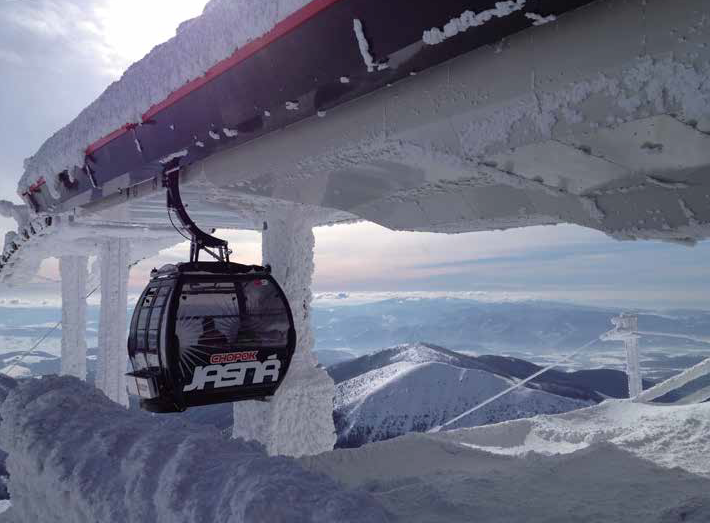
    The Polish city of Krakow is proposing to bid for the Games jointly with the Slovak ski resort of Jasná.

    The Polish Olympic Committee has used experience from Zakapane’s 2006 winter games bid and issues to the alpine events being held in Poland. For this reason the Polish OC will apply together with its Slovak counterpart to deliver the proposed bid with the Alpine events on the Tatra Mountain range.

    Every season, Jasná holds FIS (International Ski Federation) alpine events. The 2014 events will take place from the end of February until mid to late March.

    Former Winter Snowboarding Olympian Jagna Marczułajtis- Walczak, who is leading the Krakow bid, has asserted that hosting events in neighbouring Slovakia is not in breach of IOC rules.

    IOC Rule 35.2 reads that “for the Olympic Winter Games, when for geographical or topographical reasons it is impossible to organise certain events or disciplines of a sport in the country of the host city, the IOC may, on an exceptional basis, authorise the holding of them in a bordering country.”

    Lviv
    The cultural capital of the Ukraine will also bid for the 2022 Winter Olympics and Paralympics. The city has experience of mega-events, having hosted high profile group-stage matches involving Germany and Portugal at Euro 2012.

    If the bid were to be successful, the alpine events would take place 160 kilometres from Lviv in the Carpathian Mountains.

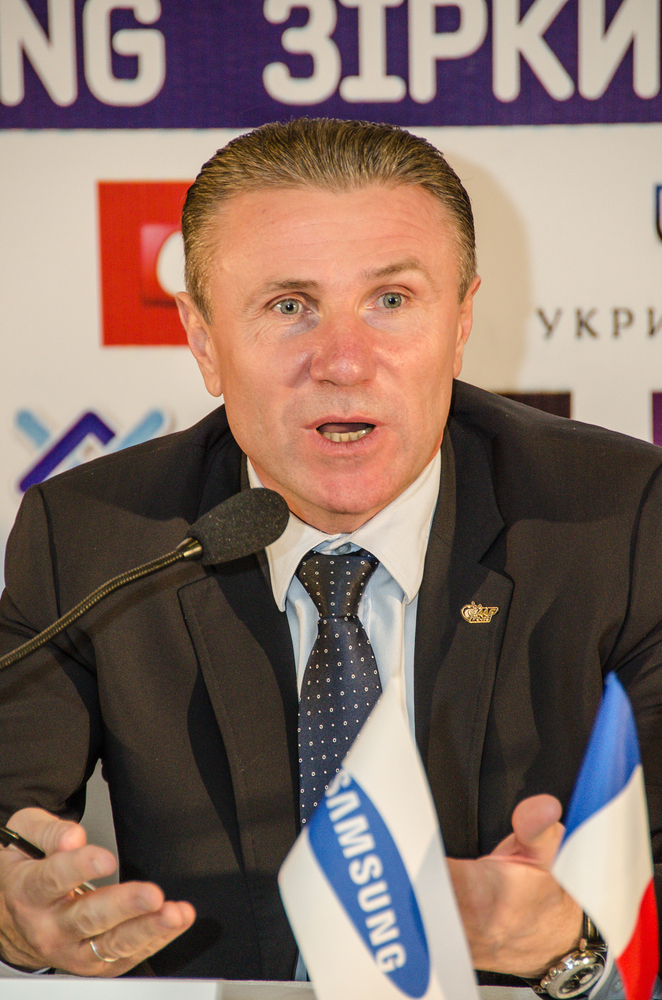
    The Ukrainian Olympic Committee member and pole vaulting legend Sergi Bubka is certain to be a key figure in this bid. He came in fifth place in the race for the IOC presidency.

    Oslo
    The Norwegian capital is the only applicant city from this list that has a previous Winter Olympic hosting pedigree. In 1952 Oslo hosted the sixth Winter Olympic Games, where 30 countries participated in 22 events.

    Norway last held the Winter Olympic and Paralympics in 1994 in Lillehammer. For the 2018 Winter Olympics Games, Oslo expressed an interest to host the games with Lillehammer; however, the bid was not progressed for a number of reasons including public support.

    The Oslo bidding committee proposes to utilise Oslo’s current infrastructure and produce a “low-cost and very compact games.”

    A referendum saw a slim majority of Oslo’s inhabitants vote in favour of bidding for the 2022 winter Olympic and Paralympics games.

    What next?
    The next major milestone in the race to host the 2022 Winter Olympic and Paralympics is the 14th March 2014. By this date, each of the six applicant cities will hand in their application files to the International Olympic Committee. In July 2014, the successful applicants will then be named as official candidate cities for the 2022 Winter Olympic and Paralympics. The winning bid will be announced in Malaysia at the Kuala Lumpur convention centre at the 127th IOC session on the 31st July 2015. But winning isn’t everything. As Bach said: “While recent Games have left an array of sporting, social, economic and other legacies for the local population, many cities that did not go on to win the right to host the Games have also noted benefits as a result of their bids.”

  • A fine balancing act

    A fine balancing act

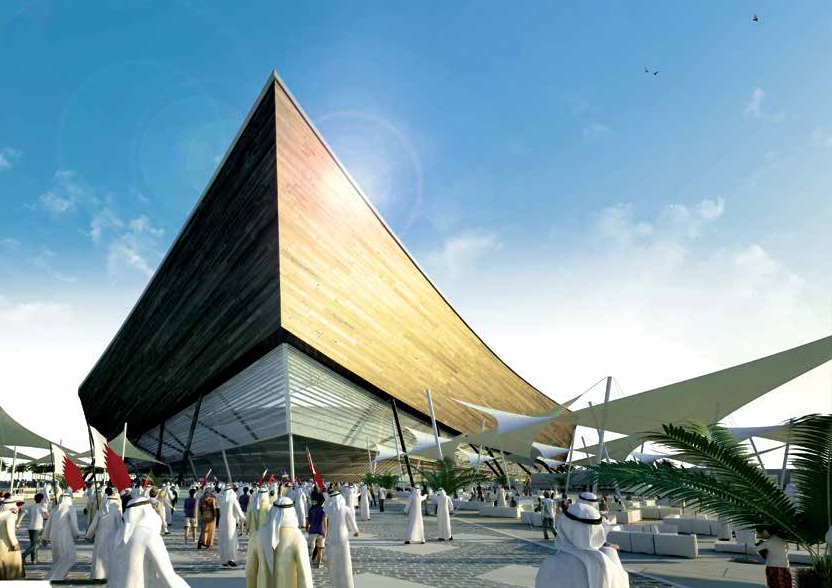
    HOST CITY: The entire Qatar 2022 project requires more construction work than any other sports event in history. How do you feel about the challenges ahead?

    Al Khater: The heavy lifting is not the stadiums; it is the rest of the infrastructure. We do not see it as a challenge – we see it as a significant amount of work.

    There is a fine balancing act and the next nine years are exactly like that. We are putting into place a decision-making process, up and down the supply chain, that is quick and efficient.

    HOST CITY: What are the most important criteria for selecting main contractors for the construction work?

    Al Khater: One of the most important attributes will be the ability to understand the local requirements and dynamics of major programmes within Qatar. Whilst there is such a large amount of activity taking place within a relatively short timescale, it is vital that our delivery contractors understand the landscape they will be operating in with the challenges and opportunities that this presents.

    Another attribute would be the open dialogue that we would expect throughout our supply chain and the early communication of risks and issues as well as the recommended options for resolution. We want to work closely with our partners within an approach that has a “no surprises” mentality.

  • Plastic fantastic

    Plastic fantastic

    The German company Melos GmbH is one of the world’s leading producers of coloured synthetic and EPDM rubber granules. Granules from Melos GmbH are used in particular in running tracks in sports stadiums, as fall protection surfaces for children’s playgrounds, as infill granules on artificial turf pitches as well as for non-slip surfacing at swimming pools.

    Breaking records
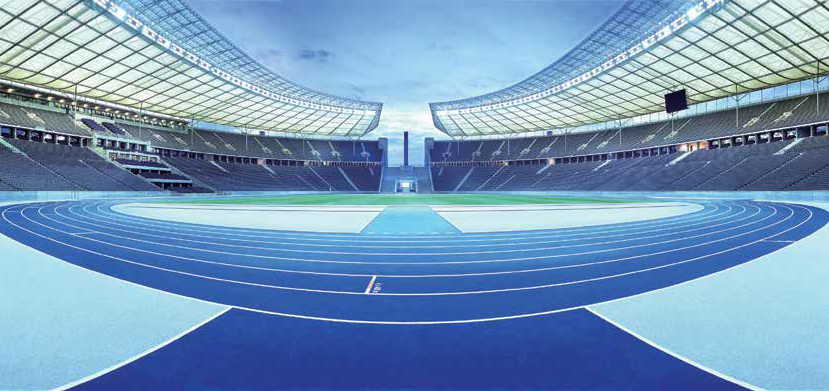
    Melos products have been used in many projects in recent years. The company’s portfolio includes both national and international installations, such as the running track at Berlin’s Olympic Stadium. The granule for this project was developed specially on request in the club colour of the German Bundesliga football + Hertha BSC Berlin, i.e. “Hertha Blue”. The track covers an area of approximately 9,200 m², of which around 5,250 m² is designed in the Hertha blue colour tone and adjacent areas of around 3,950 m² in grey. Around 40 tonnes of EPDM granules were used in the project.

    Melos granules enabled a new world record for then 22-yearold Usain Bolt from Jamaica, who ran the announced world record in the 100 metres discipline on the blue track. His strongest rival, Tyson Gay, got the shock of his life at the 12th IAAF World Championships in Berlin’s Olympic Stadium when Usain Bolt not only set a world record for the 100 m but also for the 200 m. Recording times of 9.58 and 19.19 seconds respectively, the fastest man in the world outran the competition on the blue granules supplied by Melos.

    Arabian light
    In addition to high colour stability, enormous abrasion resistance and strong resistance to weathering, Melos granules also impress with their excellent resistance to UV light. These factors led to Melos granules being chosen for another major project in 2009, when the world’s longest circular horse racecourse, measuring 2,400 m, was constructed in Meydan City, a new district of Dubai.

    Because of the considerable stress the horses endure during the race, it is all the more important that they receive special care beforehand and afterwards. For this reason, coloured EPDM granules from Melos were used to manufacture a floor covering fitted in a tunnel leading to the racecourse.

    To reduce noise, granulated material from Melos was even applied to the tunnel walls and coloured surfaces constructed with Melos granules were installed as a pre-race warm-up area for the thoroughbreds. Adjacent tracks as well as grooming and wash areas for the valuable horses were equipped with the resilient non-slip Melos granules.

    The medium-sized enterprise completed production and shipment of 500 tonnes of granules in just three months from the start of September to the end of November, with different grain sizes being mixed and then installed on site. This posed a real challenge, owing to the special requirement to supply a specially adapted blend of granule colours and properties. As well as a red granule for the outdoor surfaces, a blend made up of special shades of brown, beige and yellow was used for the tunnel and access passage to the arena.

    The state of Qatar also uses Melos for its construction works. The world’s largest installed area of 175,000m² was installed on the “Emir Walkway” as a personal project of the Emir of Qatar. The Emir Walkway is a multi-purpose track that runs 9 km on both sides of a road at a width of 9.75 m on each side. Melos produced and supplied round about 1,000 tonnes of material for this project in a turnaround time of just eleven weeks. Similar to the tunnel leading to the Meydan race court, the walkway was also fitted with a colour blend of granules made up in this case of brown, eggshell and beige.

    Cool head on hot days In addition to the many applications of the granules as floor covering, infill granules from Melos are used as a component of high-quality artificial turf systems for sports including football.

    Melos launched a new granule on the market in 2011, Infill Cool Plus, with the motto “Cool head on hot days”. The new material is based on the proven EPDM material group, but with special components that reduce heat absorption.

    FC Bayern Munich, the German football league championship record holder, opted for Infill Cool Plus in 2011. The Cool Plus effect, which encourages top performances by achieving low surface temperatures on hot summer days, convinced the football club to use the product in its modern training grounds.

    The Cool Plus effect can be demonstrated in a direct comparison with different infill granules. In an experiment conducted with long-term exposure under laboratory conditions, the surface temperature was reduced by 25 per cent by using the light-green Melos Infill Cool Plus, compared with SBR rubber granules.

    Long-term tests of Cool Plus – up to four hours of sunshine simulations in the irradiation chamber – also show reduced heat build-up and lower maximum temperature of the surface. This difference is palpable underfoot for the players and improves playing comfort considerably, as surface temperatures can reach up to 60°C in German summers.

    The in-house laboratory at Melos works continuously to deliver product innovations. Melos recently launched a new product on the market: Infill Bionic Fibre, which provides an economically attractive and sustainable alternative to traditional granules on artificial turf pitches. In comparison with other granules on the market, Infill Bionic Fibre is characterised in particular by its fibrous, irregular and near-natural structure.

    “Our new product is an especially resilient, durable, weatherproof, stable and near-natural infill material”, says Jörg Siekmann, Managing Director of Melos GmbH. “In addition, the material offers players a natural playing experience – almost like on natural turf. Pitch operators benefit from the low maintenance overhead and reduced use of resources.”

    Melos is constantly researching improvements to its infill granules in its in-house laboratory. The focus here is on sport functionality: in addition to the recommendation of the German Football Association (DFB), sports associations and sports physicians also support the view that the use of modern artificial turf pitches protects joints and ensures a high quality of play. The infill granule plays an important role in this respect, offering distinct quality differences that can impact health and playing performance.

    Jörg Siekmann says: “The soft and natural structure of “Infill Bionic Fibre” provides pleasant felling while running, gentler on the skin and increases natural playing performance. Even the DFB has commented positively on rubber-filled synthetic turf surfaces, stressing both the economic and sports-related functional benefits.

    The company has its entire product range reviewed regularly by independent institutes and certified in accordance with current standards in the areas of environment, energy and sustainability. Strict attention is paid in production and development to optimal properties in terms of the environment, utilization and health.

    The infill granules from Melos all feature basic properties such as weather resistance and durability. The quality of the products is reviewed on an ongoing basis and the granules are also ideally adapted with respect to human health and the environment. In terms of sportsrelated functional properties, such as traction and rotation, the players experience a playing performance that is comparable to a good natural grass pitch – but consistently stable under all climatic conditions.

  • Bubka calls for Olympic Truce on “terrible scenes” in Ukraine

    Bubka calls for Olympic Truce on “terrible scenes” in Ukraine

    As violence between protesters and government forces escalated in Kiev, police stated on Thursday that protesters had taken over regional administration headquarters including Lviv, which is bidding to host the 2022 Winter Olympic Games.
    Speaking at a press conference in Sochi, IOC communications director Mark Adams said of the conflict, “Those are terrible scenes. The Olympic Truce is an important symbolic thing for us.”
    The Olympic Truce was established in antiquity between the host city state and its neighbours to ensure safe delivery of the Olympic Games. It was revived in 1993 by a UN resolution and in 1998 the IOC called upon all nations to observe the Truce.
    “I’m not sure it plays much part in what’s going on there [in Ukraine]. But clearly we hope the situation will be solved as quickly and with as little bloodshed as possible,” said Adams.
    As the ceasefire broke, Bubka tweeted: “I want to bring Olympic Truce to my country. Our athletes are competing hard in Sochi, but peacefully and with honor. Violence has no place in the world.”
    Bubka, whose 21-year-old pole vault world record was broken in the Ukrainian city of Donetsk on 16 February by Renaud Lavillenie, is a crucial figurehead of Lviv’s bid for the 2022 Games.
    He announced on his website: “I’m shocked by what is happening in my native country – especially because the violence is taking place during the Olympic Games – the world’s most peaceful and democratic event. 
    “I am once again urging all parties to stop the violence! There is no ‘their’ Ukraine, or ‘your’ Ukraine. It is OUR Ukraine. For the sake of the future of our kids let’s do everything possible to get back to negotiations and make a compromise.
    “I am now in Sochi and I know that our Olympic athletes who compete for the glory of Ukraine fully support me.”
    A total 45 athletes from the Ukraine travelled to Sochi 2014. However, BBC journalist Richard Conway tweeted on Thursday that up to half of these Olympians had returned home because of “unrest in their country.”
    Several media outlets reported that Ukrainian skier Bogdana Matsotka pulled out of the Games in protest at the use of force in Kiev. On Thursday, the Ukrainian Health Ministry said 28 people had died and 287 had been hospitalised during the standoff between police and protesters in Kiev. Ukraine’s Interior ministry confirmed that security forces had opened fire on protesters.
     
    Black armbands in the Olympic Village
    Meanwhile, a request from the Ukrainian Olympic Committee for their athletes to wear black armbands in memory of those killed was rejected by the IOC. 
    A statement on the Ukrainian Olympic Committee website said: “Sharing deep pain over the loss of fellow countrymen, the Ukrainian Olympic Committee appealed to the International Olympic Committee to allow Ukrainian athletes to wear black armbands as a sign of mourning, an expression of sorrow and sympathy.
    “The answer was received from the IOC that in accordance with the Olympic charter it is not possible to do this.”
    Instead, Ukrainian athletes attached black armbands to the national flags hanging from their balconies in the Olympic Village.
    IOC President Thomas Bach expressed his sympathy for the Ukraine and his admiration for its Olympians. “I would like to offer my condolences to those who have lost loved ones in these tragic events,” he said.
    “Our thoughts and sympathy are with the Ukrainian team at what must be a very difficult time. The way they have continued to represent their nation with great dignity is a credit to them and their country. 
    “Their presence here is a symbol that sport can build bridges and help to bring people from different backgrounds together in peace.”