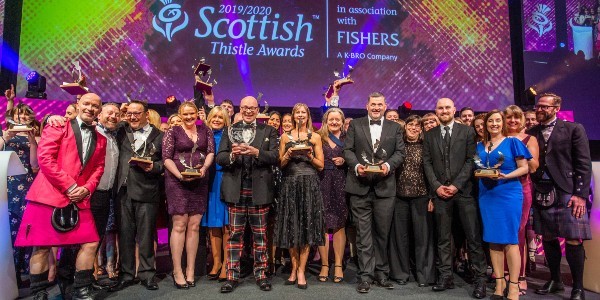
[Source: EventScotland] Taking place at the Edinburgh International Conference Centre on 5 March, guests gathered to see 18 individuals, businesses and events honoured for their contribution to the tourism sector.
Paisley Halloween Festival took home the Best Cultural Event or Festival award, while Salomon Skyline Scotland 2018 was named Best Sporting Event. The business events sector was also recognised, with The All-Energy Exhibition & Conference 2019, which took place at the Scottish Event Campus lifting the trophy for Best Business Event.
Edinburgh Festival Fringe 2018 was also recognised with the inaugural Inclusive Tourism accolade while Brigadier David Allfrey received the prestigious Johnstons of Elgin Silver Thistle Award for his exemplary work as Director of the Royal Edinburgh Military Tattoo and his wider contributions to Scotland’s tourism and events industry.
There was also a special award for The 2019 Solheim Cup. The special recognition award was accepted by European Solheim Cup Director for the Ladies European Tour, Polly Clark with a video message from Team Europe Captain, Catriona Matthew.
Paul Bush OBE, Director of Events, said: “The Scottish Thistle Awards are a fantastic celebration of our vibrant tourism and events industry. Last night’s final was as always a special event, congratulations to all the nominees and winners. For the events industry I was delighted to see Paisley Halloween Festival, Salomon Skyline Scotland 2018 and The All-Energy Exhibition & Conference 2019 all come away winners as well as the special recognition for The Solheim Cup and Silver Thistle for Brigadier David Alfrey. All were truly deserving.”
[Source: VisitScotland] The award for Innovation in Tourism, sponsored by Geotourist, went to Invisible Cities in recognition of their use of innovation to commit to the future of tourism in Scotland. Invisible Cities is a social enterprise that trains people who have experienced homelessness to become walking tour guides of their own city. Judges commended the business for playing a major part in social tourism, as well as the role the business plays in supporting staff to gain transferrable skills to move onto other roles.
“On behalf of the industry panel, I would like to extend a huge congratulations to all of the national winners of the 2019/20 Scottish Thistle Awards. These awards are firmly established within the tourism industry in Scotland and these winners should feel very proud to join the prestigious roll of honour that celebrates innovation, success and excellence in the Scottish hospitality and tourism sector,” said Rebecca Brooks, Chair of the Scottish Thistle Awards Industry Panel and VisitScotland Board Member.
The Scottish Thistle Awards are led by a panel of industry experts from several organisations including VisitScotland, Aberdeen City and Shire Tourism Awards, Highlands & Islands Tourism Awards, the Hospitality Industry Trust Scotland, the Association of Scottish Visitor Attractions, Scotland Food and Drink, Scottish Tourism Alliance, the Scottish Licensed Trade Association, sportscotland and Wild Scotland.
For the full list of winners from the Scottish Thistle Awards national final visit www.scottishthistleawards.co.uk.
Entries and nominations for 2020/2021 awards are now live! Could your business or event join this prestigious role of honour? To be in with a chance click here to enter free today.
Blog
-
The events industry dazzles at the Scottish Thistle Awards National Final
-
Economic impact of Cricket World Cup 2019 revealed
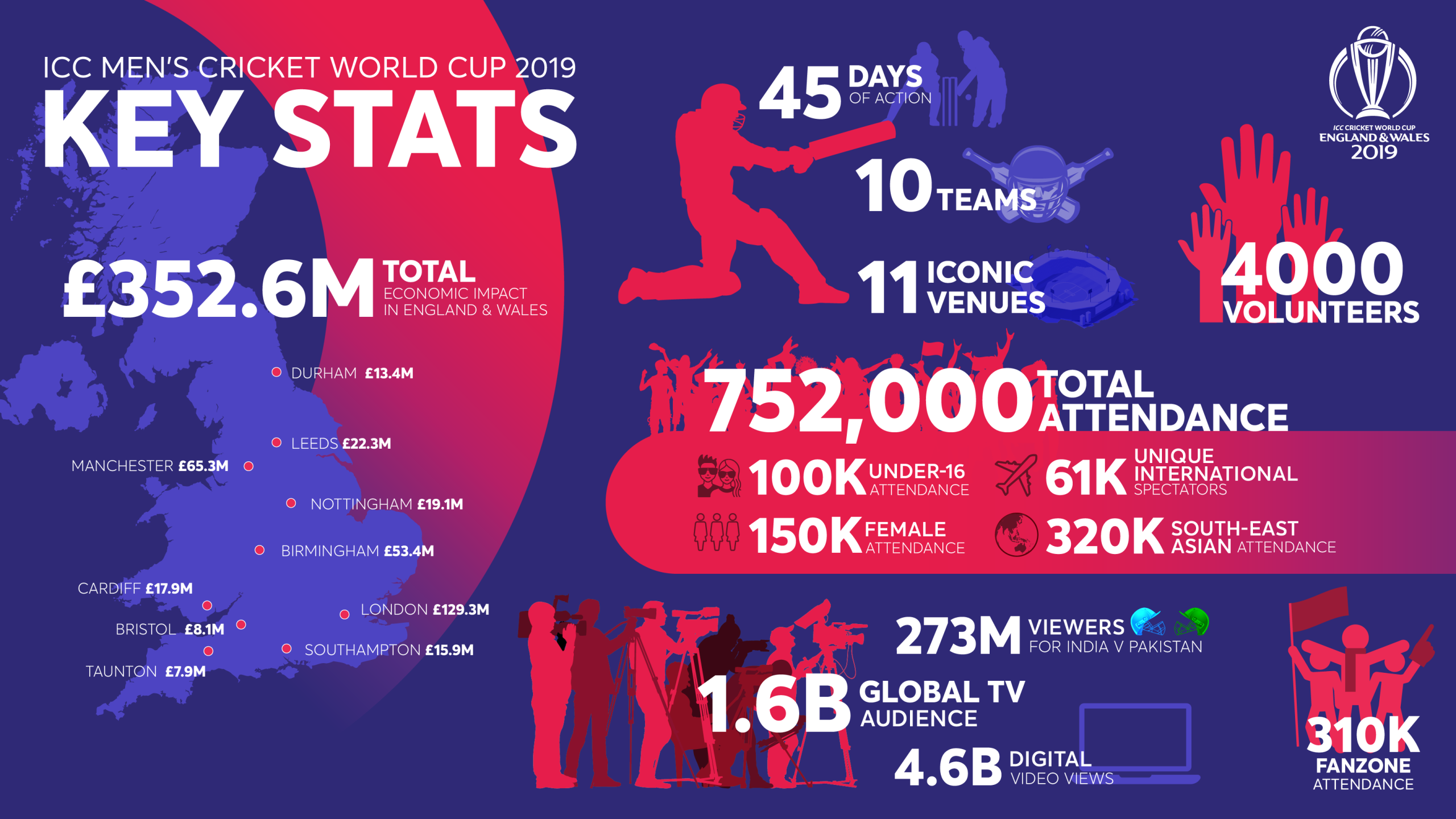
[Source: The Sports Consultancy] The findings of an economic impact and benefits analysis carried out on behalf of the ICC by The Sports Consultancy show that the tournament generated almost GBP 350 million of economic impact through additional money spent in the host economy by event visitors and organisers as well as business to business supplier contracts and broader consumer spend.
More than half a million bed nights were generated with an income of GBP 46.5 million thanks to almost 650,000 out of town spectators, 128,385 of whom were international ticket buyers.
London attracted the most direct economic impact of almost GBP 65 million, whilst semi-final venues Manchester and Birmingham attracted a direct economic impact of GBP 36.3 million and GBP 29.7 million respectively.
The live coverage of the event reached a global cumulative average audience of 1.6 billion viewers whilst digital video content netted over 4.6 billion views confirming the event’s position as one of the world’s most watched sporting events.
ICC Chief Executive Manu Sawhney said: “The ICC Men’s Cricket World Cup 2019 was an outstanding success across all measures which is further underlined by this report and the significant contribution of GBP 350 million it has brought to the UK economy. This makes it one of the biggest sporting events in the UK in recent history.
“ICC events provide a wonderful platform to connect more deeply with a diverse audience of hundreds of millions of fans and to aggregate audiences like never before even in our increasingly fragmented world.
“The rise of cricket tourism is clearly demonstrated with almost 20% of attendees coming from overseas and a total of 85% of ticket buyers coming from out of town with cricket fans increasingly prepared to travel to support their team. We expect this trend to continue to rise as the Asian sub-continent continues rapid economic growth.
“We are currently in the process of getting expressions of interest from our Members to host future events post 2023 as part of our ambitions to grow the game globally. This report clearly demonstrates staging ICC events not only provides our host countries with the opportunity to showcase the very best they have to offer to an enormous global audience they are also a major global driver for social, cultural and economic impact.” -
SailGP – going faster than the wind
SailGP was launched just last year, but already the event is moving as fast as the catamarans that fly through the waters of its growing number of host cities.
From the off, SailGP co-founder and Oracle CTO Larry Ellison made a decision that he wanted to go to great cities. SailGP co-founder and CEO Sir Russell Coutts KNZM CBE tells Host City: “That was the right move. We needed to establish ourselves in our first year, so we went to San Francisco, Sydney, New York, Cowes – which is an iconic sailing venue – and Marseilles. These are iconic cities with great waterfronts. You are showing the city in a way that doesn’t normally get shown.”
After a successful opening season, SailGP commissioned Deloitte to do an economic impact study. “We looked at the data and we returned an average of USD 23m per event last year, which is a great starting point. That’s creating value.”
With this information, the event owner started to attract prospective hosts. “We approached them last year to go there; and now it’s a different story. we’ve got venues approaching us”
Two new nations have already joined the programme: Denmark and Spain. “Spain’s exciting because Spanish is widely spoken, and also they are going through a purple patch in their Olympic sailing programme, with a huge pool of talent. So we know that team will be very competitive almost from the word go.
“We are also looking to partner with venues that fit with our sustainability messaging too. Copenhagen is fantastic in that regard. They have a huge focus on clean energy, and where we are racing you are going to see some wind farms right there.
“Sailing is powered by nature. Our boats can go three or four times faster than the wind, as strange as that sounds! If you sent out a helium balloon, one of our boats would be get there at least two and a half times faster.”
SailGP aims to link each venue with a team, with a single team per nation. “There are a lot of logistical challenges we need to solve to do that, but I can confidently say that we’ll get to eight teams very quickly.”
“Beyond that we are going to have to address some hurdles. If I look way ahead, which might be five years’ time, I can see the potential to have two groups – let’s say we get 12 franchises, two groups of six with a grand final at the end where the top teams of each group meet each other.”
The fact that the teams are national is important to the appeal of the event. “We’ve got to build national pride in these teams and a following. For a start off we’ve made a commercial decision, which some may say us a compromise, that we are not selling a title to any of the teams. We could get money if we sold a title, but the affiliation with the country is the main thing.”
“If you look at events like the Olympics, people follow them and they may not even know of any of the athletes – they just want their country to win. That’s an association you can create. Our branding is very much focussed around that.
Another key motivating factor for audiences is personality. “If we can get one personality in each country that becomes well known as a personality – the Ben Ainslie type connection – then we’re winning, were giving people a reason to connect.”
This exclusive Host City interview was conducted at Global Sports Week Paris in February 2020 -
SportAccord 2020 cancelled amid COVID-19 outbreak
[Source: SportAccord] On 28 February, the Swiss Federal Government imposed a ban on large-scale events involving more than 1000 people. The ban came into immediate effect and was set to apply until at least 15 March 2020. On 11 March 2020, the World Health Organization (WHO) moved to declare the COVID-19 outbreak as an official Pandemic. On 14 March at 14:30 CET in a press conference, the Canton of Vaud under emergency measures imposed a ban on events involving more than 50 people until 30 April 2020. SportAccord, which brings together nearly 2,000 delegates, has taken the necessary step of cancelling SportAccord 2020 to give International Sport Federations, stakeholders, partners and attendees as much time as possible to make arrangements in light of the cancellation.
“Our priority is the health and welfare of our International Federations and delegates attending our event, so this decision has been taken with the utmost consideration for those who were planning to attend SportAccord 2020 in Lausanne.” SportAccord President Raffaele Chiulli said.
“This is obviously an extremely unfortunate situation and we are saddened that our community will not be able to attend our annual gathering, but we wanted to announce this decision at the earliest opportunity to enable plans to be adapted accordingly for all concerned.”
SportAccord Managing Director Nis Hatt said: “Following the COVID-19 outbreak, SportAccord has made every effort to find a viable solution for the staging of the SportAccord World Sport & Business Summit 2020.“
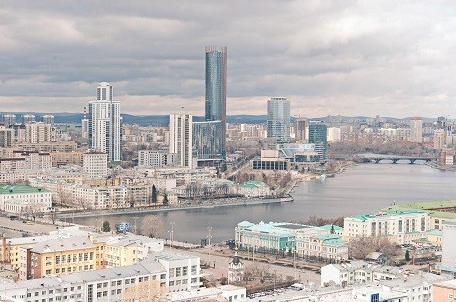
“We apologise for any inconvenience caused, but in taking the decision to cancel the event at this stage, we have endeavoured to minimise the potential disruption to our delegates’ plans. SportAccord is very grateful for the support of the City of Lausanne, Canton of Vaud, International Olympic Committee, partners, exhibitors, and delegates in recent weeks. We are now focusing on the delivery of what promises to be a superb SportAccord World Sport & Business Summit 2021 in Ekaterinburg and we look forward to welcoming our friends from around the world to Russia from 23-28 May 2021.”
Partners, exhibitors and delegates who had registered to attend SportAccord 2020 in Lausanne will be contacted shortly with further information.
Follow developments and updates via Twitter @sportaccord or keep up to date via LinkedIn and Facebook. For enquiries, email info@sportaccord.sport. -

BIE expresses confidence in Expo 2020 Dubai despite coronavirus outbreak
There is still work to do in the most challenging of times, but Expo 2020 Dubai is on schedule to open in October thanks to measures taken by the host nation.
“Putting on a World Expo, against the backdrop of the COVID-19 pandemic requires a global effort from the 192 countries taking part in Expo 2020 Dubai,” BIE Secretary General Dimitri Kerkentzes was reported as saying in Egyptian newspaper al-Ahram on 19 March.
“We continue working with the organisers and are confident in the steps that the UAE has taken to manage the spread of the virus and protect all those involved in the Expo. Expo 2020 Dubai’s pragmatic approach offers both reassurance and assistance to those who need it, and will, I believe, contribute to the successful delivery of this mega event.”
A steering committee of representatives of countries taking part in Expo 2020 Dubai met virtually on 19 March to discuss the impact of the coronavirus outbreak on preparations.
“As hosts of the next World Expo, due to open in seven months’ time, we always knew that 2020 was going to be demanding. What we could not predict is that we would be doing so in the midst of the biggest global health crisis in generations,” UAE Minister of State for International Cooperation and Director General of Expo 2020 Dubai Reem Al Hashimy is reported as saying in al-Ahram.
“These are difficult, uncertain times, which makes it even more heartening to see communities around the world facing this challenge together and to witness the incredible resilience of the human spirit against a menace that does not recognise international borders or timelines.
“Our immediate priority is the health and well-being of everyone involved in Expo 2020 Dubai, and this will not be compromised. Our monitoring of ongoing developments means we will take all sensible precautions to manage and mitigate risk to all those involved.”
The UAE has taken a range of measures to control the spread of COVID-19. Sheikh Mohamed bin Zayed, the Crown Prince of Abu Dhabi and Deputy Supreme Commander of the Armed Forces told government news agency Wam: “In the UAE, we have adopted rational and early advanced precautionary measures before other countries around us to stand up to the challenge… Therefore, the infection tally in the UAE is less thanks to our early response to contain the virus at its onset”
Construction by the organising committee is complete, with International Participant Pavilions being completed.
The value of World Expos cannot be understated. “For almost 170 years they have brought countries and people together to celebrate the best of humanity, and the fruits of our innovation and collaboration, around a theme addressing global challenges,” said Kerkentzes. -

Glastonbury 2020 cancelled with “severe financial implications”
The organisers of Glastonbury 2020 have announced the cancellation of the 2020 edition of the festival.
“This will be an enforced fallow year for the Festival,” Michael and Emily Eavis said in a statement published on their website and shared on social media.
“Clearly this was not a course of action we hoped to take for our 50th anniversary event, but following the new government measures announced this week – and in times of such unprecedented uncertainty – this is now our only viable option.
“We very much hope that the situation in the UK will have improved enormously by the end of June. But even if it has, we are no longer able to spend the next three months with thousands of crew here on the farm, helping us with the enormous job of building the infrastructure and attractions needed to welcome more than 200,000 people to a temporary city in these fields.”
Ticket holders will have the opportunity to roll their £50 deposit over to next year, and be guaranteed the opportunity to buy a ticket for Glastonbury 2021.
The organisers added: “The cancellation of this year’s Festival will no doubt come as a terrible blow to our incredible crew and volunteers who work so hard to make this event happen. There will also inevitably be severe financial implications as a result of this cancellation – not just for us, but also the Festival’s charity partners, suppliers, traders, local landowners and our community.
“We were so looking forward to welcoming you all for our 50th anniversary with a line-up full of fantastic artists and performers that we were incredibly proud to have booked. Again, we’re so sorry that this decision has been made. It was not through choice. But we look forward to welcoming you back to these fields next year and until then, we send our love and support to all of you.” -
Ten truths for the sports industry during the COVID-19 pandemic
The coronavirus pandemic is the defining crisis in the modern sports event industry.
Like me, you will have had the conversations with colleagues, clients and assorted sector experts, where you go in search of precedents. We want to gauge how bad this is, to put some sort of order on the chaos as it unfolds.
That list probably that starts at the 2007 banking crisis, then 9/11, and on through a catalogue of natural, human and economic disasters until you get to the Second World War.
So, make no mistake, this is a massive moment, the implications of which we’ll be living with for years, probably decades.
We are all waiting for the heroes of the medical and science community to do their work and report back. So anyone trying to offer solutions or predict the new normal for the sports market is not to be trusted.
But here are some things that are true:
1. Sport is important
Economically, culturally, socially. Sometimes we take it for granted or argue over attempts to quantify its importance. But even the anti-sport brigade can see and feel the impact of its absence. Its roots in communities are broad and deep.
2. Host cities are under appreciated
Most of the early industry conversation has been about the second level impacts on sports rights holders’ relationship with broadcasters and sponsors. Do not forget that government money drives the sports economy.
The sector’s biggest financial investor is not the media, corporate sponsorship nor the fans who buy the tickets. The single biggest contributor to the sports economy is the public sector, which pays out tens of billions of dollars every year globally, mainly via city and national governments which pay hosting fees and associated costs to put on major events.
3. The sports event market is oversupplied
An uncomfortable truth, but there will be a shakeout in the event sector. The calendar will be different. The market will look anew at which events really matter and which are ‘nice to have’.
4. There will be huge losses
Across the sports event sector, small and medium sized supply businesses will cease to exist. People will suffer real hardship at every level. We must act as a community to help in any way we can. We are interconnected.
5. Economics is not fair
Events that do not deserve to go under will vanish. Others will get lucky and survive, even thrive. Success and failure will be allocated in an inefficient way. We are conditioned to think in narrative stories that suggest a logical chain of cause and effect. But the reality is closer to messy chaos. It always is.
6. There will be those who suffer more and those who suffer less
The next few months are an opportunity. That is how capitalism works, it is brutal and simple. As businesses fail their assets will be feasted upon by others. There will be people whose careers will be made over the next few months. Amid the debris there will be some very undervalued events, relationships, rights and brands going for a song.
7. Radical ideas will become mainstream
Virtual sports events, esports, remote fans. Some of the stuff we have been talking about as ‘future gazing’ will make commercial sense for the first time.
8. Governments will make expensive mistakes
Government money is the engine of the event sector. Those in charge of the public purse will allocate funds to try to help. This process is inexact and unreliable and it will make some of us angry. Who will they choose to bail out, who will they leave alone?
9. Trust takes time
Some rights holders enjoy long-term relationships with their host cities, broadcasters and commercial partners that have reaped broad and real mutual benefit for years, even decades. Others are short-term, transactional relationships of convenience.
10. Number one cannot be repeated enough – sport is important
In our 14 years as an active player in the sports industry, The Sports Consultancy and TSC Legal have worked throughout some of the biggest shifts the industry has seen, some of which have been seismic in scale. It is true that we’re in new territory and there are few precedents to compare to where we are today.
Yet our experience has taught us that global sport is a resilient, endlessly creative and supportive community, and we’ll come out of this stronger. -

How isolation can make us even better connected
As sponsorship professionals, we put relationships, be they brand-to-brand or with our audiences, at the heart of everything we do. Central to these relationships is humanity: knowing what people need, why they need it and how to fulfil that need in a genuine way.
With mass sport and entertainment event cancellations and businesses across Europe moving to work from home, now more than ever, we need to find ways to stay connected and do what human beings do best: adapt.
Over the last week, we’ve seen wholesale changes from automotive manufacturers working with the government to repurpose factories and tool up to produce ventilators to LVMH’s perfume arm using their skills to make hand sanitisers.
We’ve seen sports brands changing to fit the new needs of their customers, as Peloton and the Nike Training Club extend free trials and add at-home workouts to their apps or Borussia Dortmund livestreamed ‘digital fan viewing party’ allowing them and their partners to keep in touch with fans.
We’ve also seen media tastemakers like The Drum, shifting with impressive agility, as their usual SXSW commentary from the Soho-based Drum Arms shifted to a web-based festival on the apposite topic of digital transformation. In true Drum style, they also managed to recreate their intimate, almost conspiratorial, heard-it-here-first vibe, despite only being connected to their audience through a screen: https://www.thedrum.com/digital-transformation-festival
In times like these, in work as in life, relationships come first, so influencers not brands are the likely first port of call for consumers (also known as people, including me) to seek advice, find solace and relatability, so to survive we, as organisations, more than ever need to humanise the way we communicate.
My particular interest this week has been how small, medium and even large multinational organisations are changing the way they communicate with one another, starting with LinkedIn. There’s a big shift from me to we, which, to my mind, is good news exactly when we need it!
My bet is that those who cooperate with, support and talk to one another will thrive. Now is a time for community building and collaboration, not putting your arm round your homework or selling on toilet rolls to the elderly at a mind-blowing mark up (shame on you!)
Below are some examples I enjoyed over the course of last week.
1. Make confident moves, your way. Independent Record label Defected Records, known for bringing people together through music in their own unique way, stayed true to form and didn’t wait for government mandates. They regrouped, worked out what was best for their long-term business, culture and staff and took positive action postponing all events and sending their team to work from home. Not only did they take this bold move, they proudly announced their decision and reasons to shut up shop in a public statement: https://www.linkedin.com/posts/jameskirkham_defected-have-called-it-early-were-taking-activity-6644201765761888256-pM4x
They even showed their team set up and ready for business as usual in their new settings (https://www.linkedin.com/posts/jameskirkham_the-defected-records-insta-stories-right-activity-6644321106369097728-6yQe) before launching their Defected Virtual Festival: https://www.nme.com/news/music/defected-records-announces-virtual-music-festival-in-wake-of-coronavirus-outbreak-2627828
2. Support and inspire through new communities. Start-up skincare brand By Sarah whose purpose is “to empower conscious living” were straight out of the starting blocks sharing a link to a WhatsApp community that anyone could join that would provide constant company, tips for your new home-based lifestyle and stability at this time of change: https://www.linkedin.com/posts/lauren-murrell_covid19-community-helpeachother-activity-6645285039691182080-9UEY
3. Embrace the blank slate. With no live football taking place, League Two football club Leyton Orient FC seized the chance to be on a level playing field with the largest clubs in the land and kicked off a global call to join an inter-club, inter-league FIFA tournament: https://www.linkedin.com/posts/josh-stephens-b940855a_leyton-orient-on-twitter-activity-6645294744324845568-qHMm
With well over 100 teams signing up, 3.9k retweets and 17.7k likes on Twitter (when they regularly get only one or two) they even used the popularity to call for new partners on LinkedIn and in the last week have announced both a renewal and a new deal! Go the Os.
4. Put a human face on it. Energy giant BP isn’t known for being the most accessible organisation and takes its share of flak (not always fairly), but their new CEO (who is also active on Instagram @bernardlooney_bp) has put his head above the parapet and not only to highlight the good deeds BP is doing.
He’s been discussing the current situation in the first-person, showing his personal set up, casual work gear and even used an emoji! A shout-out to both the BP workers who can’t decamp home and the wider everyday heroes in society – doctors, nurses, police, teachers shows a human quality and awareness that we should all keep front of mind: https://www.linkedin.com/posts/bernardlooneybp_last-week-i-explained-that-everyone-at-bp-activity-6645634611365982209-KgQc
5. Help us understand. A personal favourite when it comes to comms thought leadership for their Trust Barometer, Earned Brands report and crystal ball amongst others, is always global PR leader Edelman. Finger on the pulse, they started releasing easily digestible blogs week ago to handle crisis comms, specifically relating to the COVID-19 situation.
However, they surpassed themselves in my eyes two days ago when they released their 10-country Trust Barometer Special Report, acknowledging that the annual thought leadership piece they release at the start of each calendar year and dine out on for the next twelve months may no longer be accurate in these unprecedented times, yet now more than ever we need to know how to build trust among uncertainty:
https://www.linkedin.com/posts/edelman_edelman-trust-barometer-special-report-on-activity-6646049798766108672-S04z
As the global situation continues to evolve, it’ll be interesting to see how they stay on top of the crisis, but I’ve no doubt that with their insight and experience they’ll help us all to make better informed choices as it unfolds.
Needless to say, WeAreFearless are doing everything we can to ensure business as (or better than) usual, as well as cultural and commercial continuity, all of which can be followed here: https://www.linkedin.com/company/wearefearless/. If you have other examples, share them in the comments section, or with katie@wearefearless.com
European Sponsorship Association is a Strategic Partner of Host City -
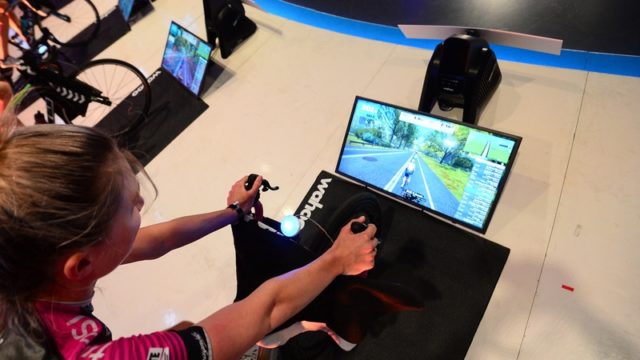
Virtual British Cycling Race Series launched on Zwift
[Source: British Cycling] The British Cycling Race Series – an eight-week series of races and workouts on popular online training platform Zwift – has been designed for people to have fun and stay active during the global uncertainty around the coronavirus pandemic.
Those wanting to pit their form against the best of British won’t have long to wait as group rides led by the Great Britain Cycling Team, including with women’s academy squad Team Breeze, are set to be introduced.
Great Britain Cycling Team women’s endurance academy coach, Emma Trott, said: “We’re in an entirely unique situation that means there’ll be no racing for a while, but it’s important that we try to find some sense of normality in all this. For us, that’s training and staying connected not just with each other, but the cycling community.
“Moving things online is a really fun way of keeping that connection and we’re all looking forward to people joining us over the next few weeks.”
All races are 30 minutes long and will be hosted on different courses, running from 24 March to 14 May.
To join a British Cycling Race Series virtual road race or time trial on Zwift, click here. Follow this link to join a workout. Visit the Zwift website to sign up for a seven-day trial. After your trial period ends Zwift costs £12.99 per month and is free for under-16s -
Tokyo Olympics likely to be postponed to 2021
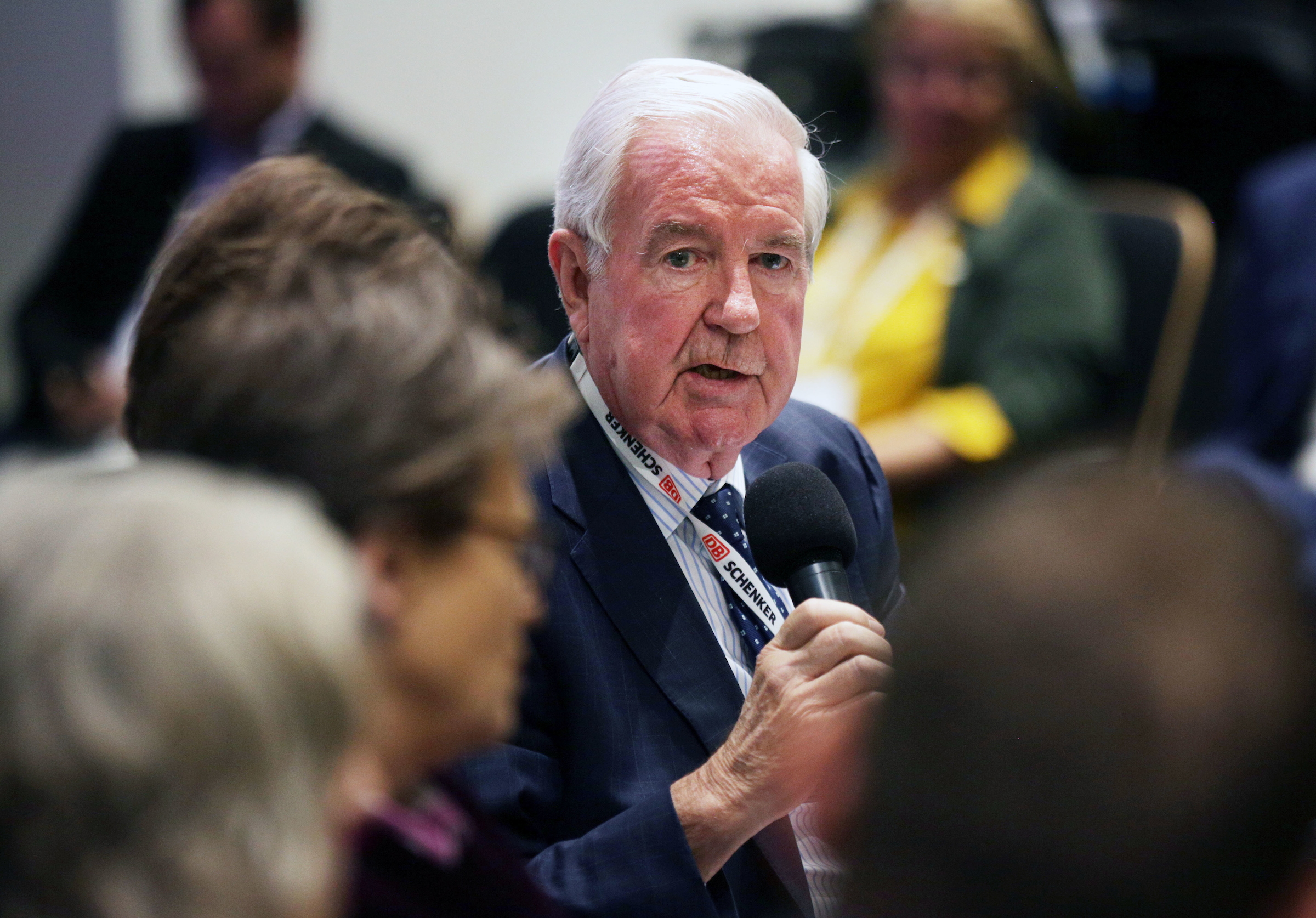
Following the International Olympic Committee’s announcement over the weekend that it is scenario planning for postponing the Games, the IOC’s former head of marketing said that the mostly likely outcome is to move by a year to summer 2021, while IOC member Sir Craig Reedie warns that this could take up to four weeks to confirm.
The comments were made on BBC Radio 4’s Today programme.
“Everyone clearly wants clarity as soon as possible. The IOC would like to announce a definitive new date as soon as they can. But they can’t do that until they’ve worked through some of the mind-boggling complexity with the Japanese,” said Michael Payne, who as IOC head of marketing launched the TOP sponsor programme that transformed the fortunes of the Games.
“I think until recently the Japanese were desperately hoping the Games would still be taking place this July. Only now are the Japanese seriously looking at plan B. The main issue is looking at all the logistics within Japan, of the venues, as to how can they effectively mothball them for whatever period of time necessary.
“And the international sporting calendar – I think it’s becoming increasingly clear that a short delay wouldn’t solve the problem. You have to look at a one-year delay, and I think that will come sooner rather than later.”
“The IOC President Thomas Bach and the Japanese Prime Minister have said cancellation is off the table. Japan has invested billions of dollars and they obviously still want to proceed, albeit with a different date.
“For the IOC they want to do everything possible to avoid disenfranchising the 10,000 athletes. Postponement is clearly where this is now going, and most likely for one year.”
Sir Craig Reedie has served as vice president of the IOC and Executive Board member. Asked what advice he would give to Japanese President Abe and IOC president Bach now, he said: “I’d be saying to them, is it possible that the contractual situation that you will have with a whole range of suppliers – it’s venues, particularly it’s accommodation, it’s with various people – can these contracts be amended to a postpone the Games to a later date? I suspect that’s why a suggested period of four weeks is required, to see if that is possible.”
“Thereafter the issue seems to be clearly twofold. Firstly, will Japan be sufficiently clear of the virus? And secondly will the rest of the world have moved on to such a stage that athletes will no longer be afraid of travelling and taking part?
“The whole region has been massively infected by the spread of the virus. Everybody is saying athletes cannot prepare properly, there is danger in asking them to do so.
“So the balance of probability is that Japan have to be asked if they can change their logistical arrangements, particularly I think in the area of accommodation.
“And if that can be done then the IOC, I think, will look at postponing the Games.”
National Olympic Committees are beginning to prepare their teams for a 2021 event, with Canada having already pulled out of 2020.