Credited with the design of some of the world’s most iconic stadiums, specialist sports architectural firm Populous continues to build upon its impressive record this year.
Populous has worked on nine Olympic Games to date and most recently played a significant role in the Sochi Winter Olympic Games, including the design of the 40,000 capacity Fisht Olympic Stadium and the Arena das Dunas stadium in Natal for the 2014 FIFA World Cup in Brazil. Later this year, the Nanjing Youth Olympic Games and the Incheon Asian Games will be hosted in spaces designed by Populous.
So it comes as little surprise that Populous were awarded the prestigious AJ100 International Practice of the Year award this year, beating seven other global architecture practices in the process. The expert panel mentioned the firm’s work in Sochi and Brazil as particular highlights.
Senior Principal Ben Vickery says “We are delighted to be recognised in this way for designing stadiums and temporary installations for major events around the world. Each country and event is different and Populous has a great deal of experience designing venues and events that relate to the culture of the club, location and host country.”
Populous divide their activities between the design of individual sports facilities and the masterplanning of mega events. Their expertise ranges from supporting the bid for an event, to site masterplans, overlays using temporary installations and world class stadiums. In Sochi, they took on the challenge of designing a masterplan for the Winter Olympic Games in a city that had never previously hosted any major sporting events.
Tom Jones, Principal of the architectural practice, says “In Sochi there was no existing sporting infrastructure. This meant the Winter Park master plan required a much more extensive arrangement of new builds, as well as having all the usual functional requirements in terms of ease of access for spectators, athletes and visiting dignitaries.”
New territories
These masterplan projects have become more frequent for Populous in recent years with the trend of sporting mega events being awarded to areas of the world not previously used to hosting them. With international governing bodies becoming more inclined to take their sporting properties to cities in South America, the Middle East, Eastern Europe and Far East Asia, Populous has had to face a whole new set of challenges and opportunities.
“In some of the territories which lack any sort of significant sporting infrastructure, you need to look at creating the entire infrastructure from the beginning, which is often not needed in cities that are more traditional hosts,” says Jones.
“On the other hand, this does give you the ability to produce a very comprehensive design that includes the transport, venue and residential requirements and assist in a regeneration of a precinct for the long term.”
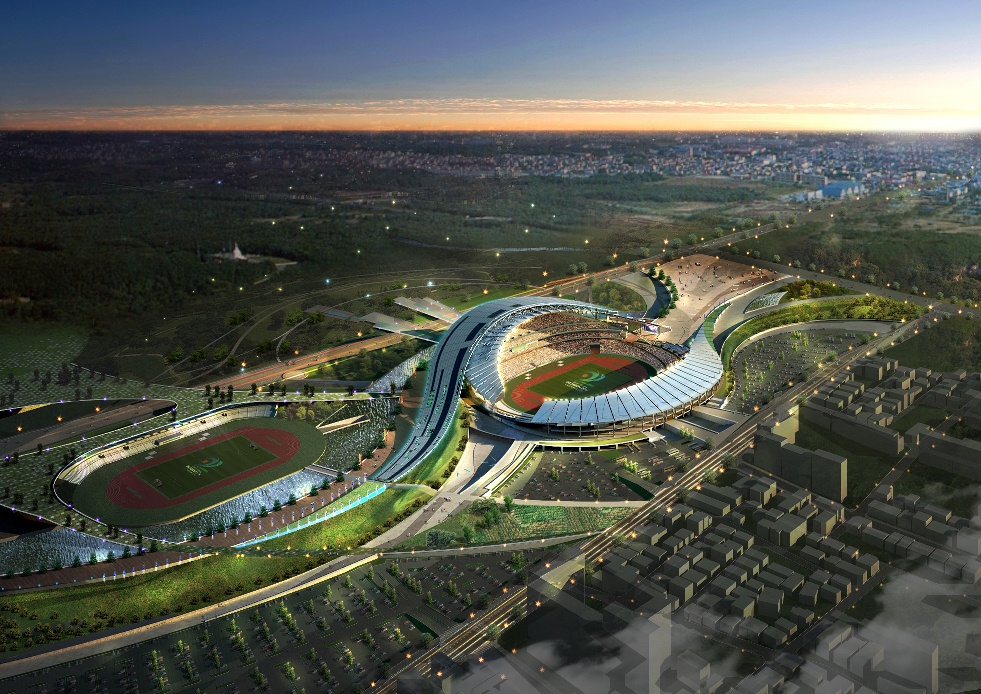
Populous was involved in the design of the Incheon Asiad Main Stadium, which is set to host the opening and closing ceremonies and athletics competitions of the 2014 Asian Games. For the purpose of the Games, the stadium will have a capacity of 61,074, yet this will reduced down to 30,000 post-Games.
“When we look ahead to the legacy we want to ensure that the venues have a long term use and that is where the balance of permanent and temporary design comes into play,” says Jones.
“There needs to be consideration of how much is built initially and the flexibility in the master plan to allow for further phases of development after the event.”
With the Incheon stadium, Populous further developed its innovative modular construction methodology, showcased at London 2012, designing just the west stand as permanent and leaving the other three sides as temporary seating built into the landscaping of park.
“Those temporary seating elements can be very easily and quickly removed, but you’re left with a sculpted landscape bowl that people can still go and sit on and watch events. Therefore, it would be quite easy to scale back up again if you had another major event.”
New or existing; temporary or permanent?
As every city is different, Populous studies each host individually to understand its requirements and formulate the best balance between building new facilities and refurbishing existing venues, as well as the balance between permanent and temporary structures.
“Some states want to construct entirely new venues for major events whilst others might want the balance of permanent and temporary installations. Either way the long term viability and ability for ongoing revenue generation is critical and needs to be judged for each event and location,” says Vickery.
“With the right mix of temporary and permanent venues, an event will be more sustainable: economically, by only constructing venues that will have a long-term life, and environmentally by using less resources for construction. It is the development of new ideas, like these, in venue design that will be the motors of improvements in the design for sports.”
With more major events on the horizon, Populous will be working on them in a variety of capacities. In the case of the Nanjing Youth Olympic Games, much of the sporting facilities are already built, so Populous’ role has been to design a master plan for the residential and transport requirements.
In the case of next year’s inaugural European Games in Baku, Azerbaijan, the firm is working on the overlay (temporary installation) design for two of the venues.
“The European Games is a new event and we have not worked in Baku before, so it is exciting to develop ideas for a new location, building on the experience of designing for the London 2012 Olympics,” says Vickery.
Blog
-
A big year for Populous
-
IRB embraces World Rugby with rebrand
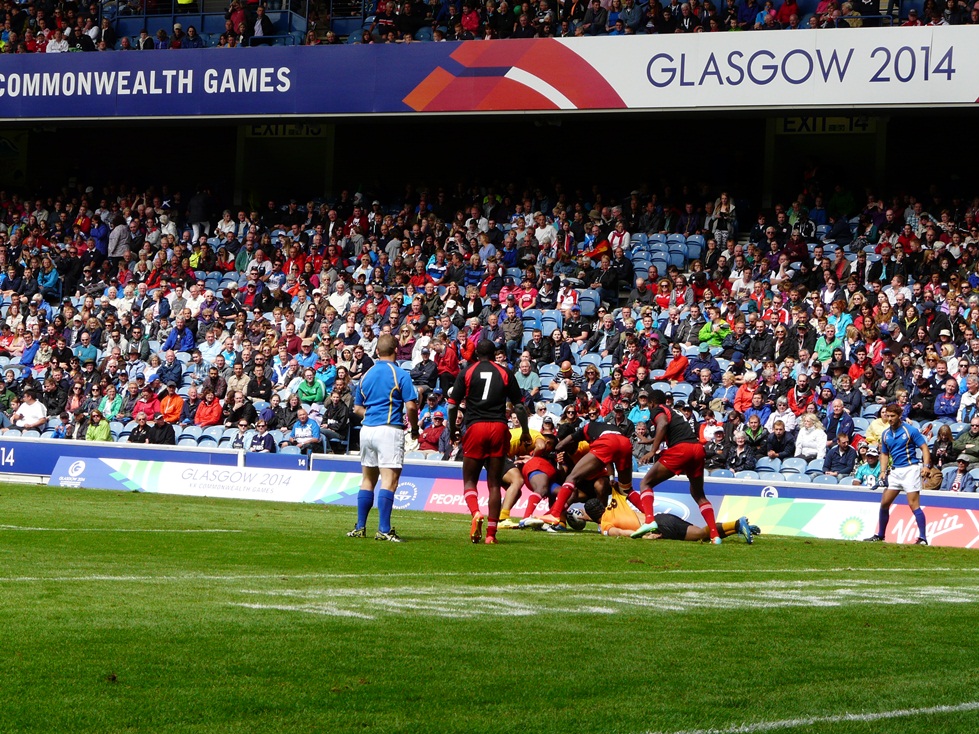
The International Rugby Board, which has governed Rugby Union under that name since 1886, is to be known as World Rugby from 19 November as part of a rebrand that underlines the organisation’s commitment to global inclusivity.
The rebrand is linked to the governing body’s stated mission “to build a stronger connection with fans, players and new audiences worldwide.”
“In a crowded global entertainment and sporting marketplace, the role of the IRB has evolved from Game regulator to Game inspirer,” said IRB Chief Executive Brett Gosper.
“With this we must continue to appeal to those who know and love the sport and its heritage, while attracting, engaging and inspiring those who have no connection with the sport across multiple cultures and languages around the world.
“World Rugby collectively has the ingredients and tools to do just that. Rugby’s global appeal is founded and positioned on its unique character-building values and inclusive ethos and we want everyone to feel connected with the sport and Rugby’s ongoing success story.”
Further details of the new brand, including the new logo, will be revealed at the IRB World Rugby Conference and Exhibition, which takes place in London on November 17-18.
“This move is more than just a name change, it is a mission statement,” said IRB Chairman Bernard Lapasset.
“Rugby continues to thrive, reach out and engage new audiences and participants in record numbers and the IRB has been at the heart of that growth. We are committed to furthering that growth beyond our traditional family and fan base with a public that expects to be entertained, informed and interacted with.”
Worldwide participation in rugby is has tripled to reach 6.6 million players over the past four years. The IRB cites the Rugby World Cup and the inclusion of rugby sevens in the Olympic Games as contributing factors, coupled with development strategies and record investment.
The rebrand also opens the opportunity for launching new event properties. “World Rugby clearly aligns our name with our mission and allows us to organise new and existing consumer facing properties in a way that they will be more impactful and more appealing to the sport’s growing global fan base,” said Lapasset.
The branding and positioning of Rugby World Cup 2015 will remain unchanged.
To read an exclusive interview with IRB / World Rugby CEO Brett Gosper, register to receive the next issue of HOST CITY magazine for free.
To register for the 2014 World Rugby Conference and Exhibition at the Hilton Metropole, London, visit www.irb.com/confex
-
Berlin and Hamburg outline compact visions for Olympic bids
Under the capital city’s proposals, Berlin would utilise its Olympiastadion – the centrepiece when it last hosted the Games in 1936. Elsewhere, plans focus on the use of land at the still-operational Tegel airport, which will close down when Berlin’s new international airport opens.
Tefel is about a 15-minute drive from the north-west of Berlin city centre, while land at the centrally located and defunct Tempelhof airport would be used alongside a selection of existing sports venues.
Hamburg’s proposal focuses on the Kleiner Grasbrook area, roughly a 10-minute walking distance from the city centre. A newly-built Olympic stadium would be downsized to a 20,000 capacity after the Games and the Athlete’s Village would serve to address Hamburg’s housing shortage.
DOSB president Alfons Hörmann said that the decision to pursue the Olympic Games would have to accommodate any possible bid by the German Football Association (DFB) to host the Uefa Euro 2024 national team championship.
“Following the discussion process we will decide if we apply with Berlin or Hamburg and, where appropriate, at what time for the Olympic Games,” he said. “This will be done in close coordination with our affiliates, for example because of the possible application of the DFB for the European Championship in 2024. It is important to again be aware that we are at the beginning of a long process, whose clear aim is to bring the Olympic Games to Germany. But the crucial prerequisite for this is clear approval of the affected citizens and all social groups.”
A bid from Germany would join a potentially strong field for the 2024 Olympic Games, with Paris, Rome, Baku, Doha, Dubai and Istanbul primed to enter the race alongside a South African bid. The US Olympic Committee is set to put forward one of Boston, Los Angeles, San Francisco or Washington D.C. from its candidate cities.
Munich hosted Germany’s last summer Olympics in 1972, with Berlin having previously hosted in 1936. Berlin entered a bid for the 2000 Games, but was eliminated in the second round of voting with Sydney eventually awarded the event. Hamburg had put itself forward for the 2012 Games only for Leipzig to be chosen as Germany’s candidate. Leipzig was then defeated as the event went to London.
The DOSB has yet to announce a deadline over a decision on which city to back or if Germany will target the 2024 Games or the next edition in 2028. -
England targets Euro 2028 as Wembley closes in on 2020 finale
Uefa, football’s European governing body, will announce the host cities for the Euro 2020 tournament following a meeting on September 18 in Geneva, Switzerland.
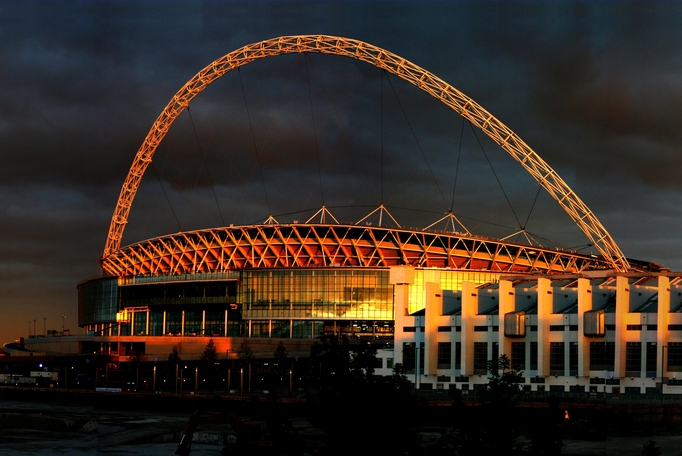
The tournament will be staged in multiple cities across Europe, with widespread reports indicating that Wembley will be allocated the most prestigious package comprising the competition’s three biggest games.
England’s main rival for the top package had been Germany, but the latter is reportedly considering dropping its attempt to secure the top games at Euro 2020 in favour of launching a bid to host the Euro 2024 edition in its entirety.
Now Horne has suggested that England would be interested in following up hosting the finale of Euro 2020 by staging the full tournament in 2028 for the first time since 1996.
“We’re really confident with our bid,” Horne said, according to the Daily Mail newspaper.
“We know what the Germans have been saying. We know that they’re thinking about 2024, but nothing has been confirmed.
“I’m not going to dwell on their politics. I’m expecting that they’re not going to push very hard for 2020. They’ve made it very clear they want 2024.“I wouldn’t rule out looking at Euro 2028 for a full tournament bid.”
Wolfgang Niersbach, the head of the DFB, the sport’s governing body in Germany, said: “We still have the two options – to host the final rounds or four matches in the group stage. Our decision is open.
“We have a wonderful relationship with the England FA, but I am totally convinced that we will have both Wembley and Munich on the land map for Euro 2020.”
England lost out to Germany in bidding to host the 2006 Fifa World Cup and then crashed out in the first round of voting for the hosting rights to the 2018 World Cup, which was ultimately secured by Russia.
Germany’s anticipated bid for Euro 2024 is likely to be challenged by Turkey, which withdrew its bid for Euro 2020 games in April and announced that it would focus on the following edition of the event in 10 years’ time. -
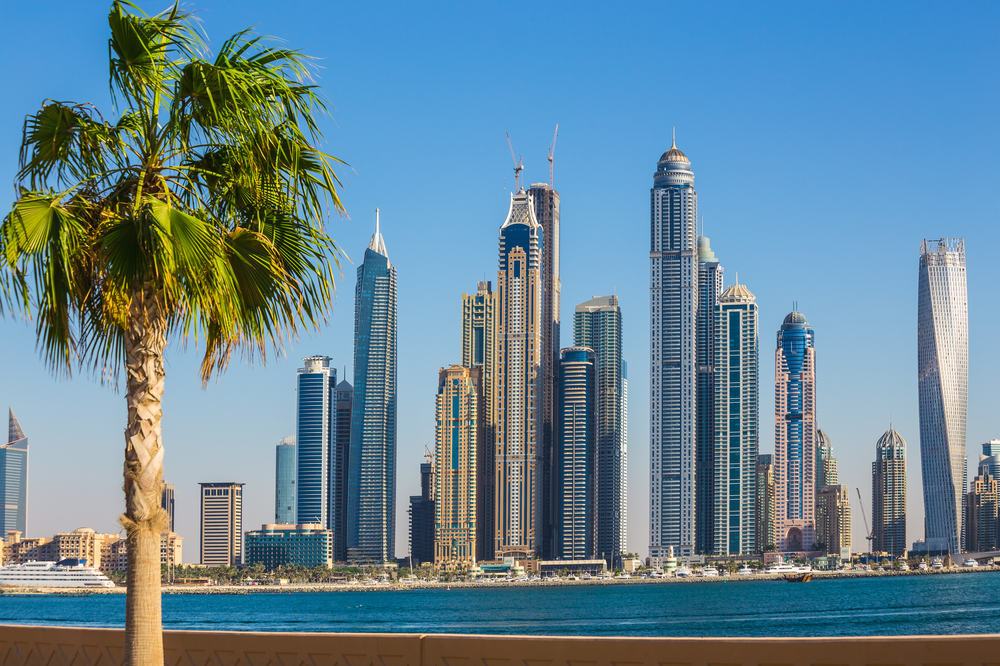
HOK and Arup secure key roles in Dubai Expo 2020
The companies, which were involved in the UAE’s bid to host the historic exhibition, are currently undertaking site readiness activities, and will advise the Dubai Expo 2020 Higher Preparatory Committee in a number of areas.
The Committee said that the two companies had been appointed due to their “successful involvement” with the original masterplan, their detailed knowledge of the project and experience of working on other major events.
The host location will be a 438-hectare site that stretches from Dubai Trade Centre to Jebel Ali and comprises a 150-hectare Expo area plus hospitality, logistics and accommodation facilities.
HOK and Arup will work on the Expo masterplan comprising the urban design and engineering, landscaping, signage, overlay, sustainability, transportation, logistics, facility management and event operations.
Construction work will begin when the Bureau of International Expositions, the governing body of the World Expo, approves the plan, with a decision expected by November 2015.
The plans will correlate with Dubai’s ‘Smart City’ agenda, with the Expo site being designed to serve as a prototype for information and communications technology innovations, particularly in education and entertainment.
The exhibition site is designed to accommodate up to 300,000 visitors, with average week-day attendance expected at 153,000.
“Expos have been home to some of the world’s most landmark structures, from the Crystal Palace in London to the Eiffel Tower in Paris,” the Committee’s Managing Director, Reem Al Hashimy, said, according to Gulf Business.
“Dubai is committed to building on this tradition and making the entire site an experiential environment that fully embodies the essence of our theme ‘connecting minds, creating the future’.”
Committee Member Helal Almarri added: “The masterplan design and execution is driven by a clear vision for its legacy, integrating sustainable urban development with opportunities to foster economic and social development for the emirate, for the country and for our region.”
Dubai overcame Ekaterinburg (Russia), Izmir (Turkey) and Sao Paulo (Brazil) to secure the hosting rights in November last year.
The exhibition site will be designed to accommodate up to 300,000 visitors, with average weekday attendance at the six-month event, which will run from October 2020 to April 2021, likely to be about 150,000.
Cities around the world are currently expressing their interest in hosting future World Expos, with the hosts of the International Exposition in 2023 and Universal Exposition in 2025 expected to be determined over the next two to three years. -
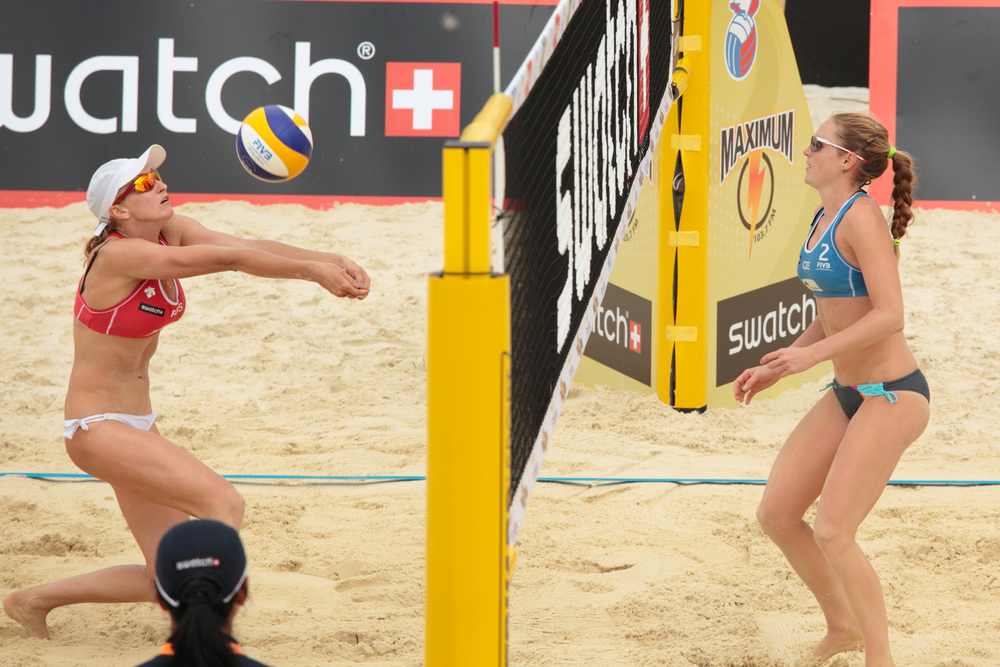
Brazil named as host of first FISU Beach Games
The first edition of the International University Beach Games will take place from November 30 to December 8 and feature athletes from across the world.
The CBDU national university body in Brazil will work alongside FISU in helping to organise the event, which will attract athletes between the ages of 17 and 28 years old.
The event will feature six sports – beach volleyball, beach football, beach handball, beach rugby, beach triathlon and surfing – with some places reserved for Brazil-based students. Other places will be awarded on a first-come, first-served basis and the organisers will accept more than one application per country.
All participants and guests will be accommodated at the Hotel Ritz Lagoa da Anta. Maceio is situated about 100km south of Recife and is the capital and the largest city of the coastal state of Alagoas.
FISU is a member of SportAccord, the umbrella organisation for more than 100 international sports federations and bodies.
SportAccord is planning to launch a beach event of its own next year as part of its strategy to expand its multi-sport events division. Brazil is also understood to be in the running to host the inaugural SportAccord World Beach Games next year, with the United States and United Arab Emirates also interested.
Earlier this week, FISU launched the bidding process for the 2021 Winter and Summer editions of the Universiade, the governing body’s flagship biennial event.
Interested parties have until March 1, 2015 to submit their bidding forms and bidding fees before working sessions are held with the applicant cities from April 1 to September 30 and the final bid books are delivered to FISU next autumn.
The summer edition of the Universiade will take place in Gwangju, Korea in 2015, Taipei City in Chinese Taipei in 2017 and Brasilia in Brazil in 2019. The Winter Universiade will be held in Granada, Spain in 2015, Almaty, Kazakhstan in 2017 and Krasnoyarsk, Russia in 2019. -
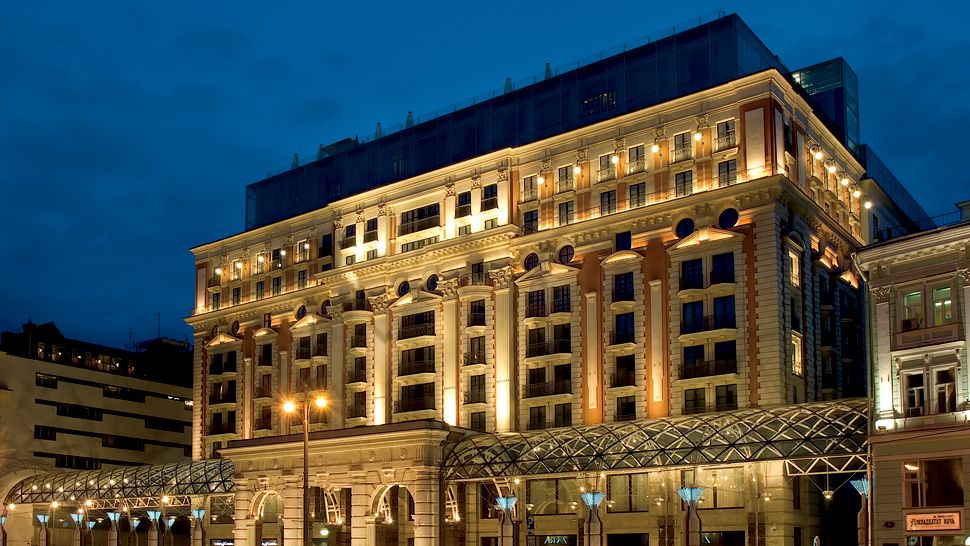
Brazil 2014 and Chelsea FC CEOs to address World Football Forum
Two of football’s most influential figures are to speak at the World Football Forum in Moscow on 13th November 2014, with successful event hosting and financial fair play on the agenda
Ricardo Trade, CEO of the local organising committee of Brazil 2014 will tell the World Football Forum audience about his experience of organising the world’s biggest single-sport event.
After playing as goalkeeper of the Brazilian handball team, Ricardo Trade became team trainer and supervisor for the Brazilian Volleyball Federation, participating in the 1988 Olympic Games in Seoul. Trade was operations director of the 2007 Rio de Janeiro Pan-American Games and participated in the Rio 2016 Olympic Games’ victorious bid campaign.
Ron Gourlay, Chief Executive of Chelsea Football Club will lead a discussion of UEFA financial fair play (FFP) regulations. Since the introduction of FFP in 2011, clubs that have qualified for UEFA competitions have to prove they do not have overdue payments towards other clubs, their players and social/tax authorities from throughout the season.
Through this initiative, UEFA aims to prevent clubs going into debt, even applying sanctions that include exclusion from European competitions between 2014 and 2015. The World Football Forum 2014 provides the platform for one of the world’s most successful football clubs, Chelsea FC, to explain how they are tackling this current and fundamental issue in European club football, from the commercialisation of the stadium assets to grass root youth development.
The World Football Forum in Moscow, which takes place on 13th November 2014, is a partner event of HOST CITY
-
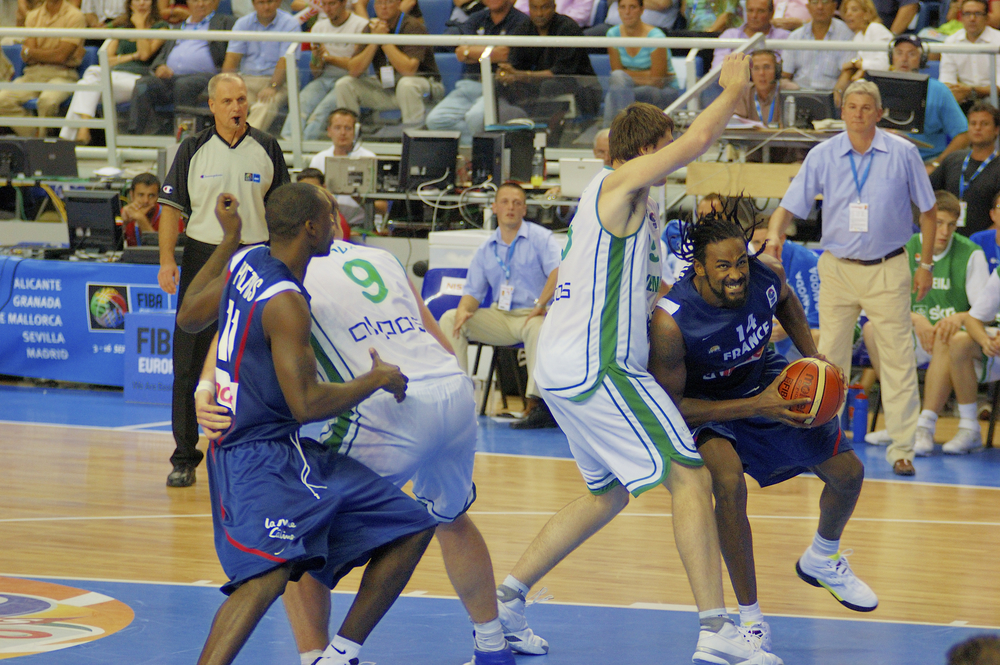
Four countries share hosting rights to EuroBasket 2015
The showpiece conclusion to the men’s tournament will be staged at the multi-purpose Lille Arena, which will have a capacity of 27,000 for the EuroBasket.
For the first time, the group phase of the competition will be shared between four countries, with Zagreb (Croatia), Berlin (Germany) and Riga (Latvia) joining Montpellier in France as host cities.
“This is an important moment in the history of European basketball, as we have voted not only for the hosts of next year’s event but also on pioneering a new concept, with four hosts,” Fiba Europe president Turgay Demirel said. “All bids were of the highest quality and it was not easy to choose between them. I would like to thank all bidders for their commitment and their excellent preparation work, coming up to the vote.”
A total of 16 national bodies expressed an interest in hosting the tournament, leading to eight formal bids. Finland, Israel, Poland and Turkey were the countries to miss out in the bidding process. Croatia, France and Turkey tabled bids to host one of the four group phase pools and the final phase knock-out round, while Turkey bid to organise the final phase only. All other bids were solely for pool-phase hosting.
France was left as the only candidate to host the final phase after Turkey shelved its bid and Poland and Croatia withdrew their pitches for the showpiece stage before the Fiba Europe board met to finalise hosting arrangements.
EuroBasket 2015 was originally slated to take place in the Ukrainian cities of Kyiv, Donetsk, Lviv, Odessa, Kharkiv and Dnipropetrovsk before the ongoing political unrest in the eastern European country persuaded Fiba Europe into a June re-think. After removing the tournament from Ukraine, Fiba Europe said it would seek to determine whether the country could host the 2017 edition of the biennial event.
EuroBasket 2015 will take place from September 5-20 next year and the tournament will serve as a qualifying competition for the Rio 2016 summer Olympic Games. -
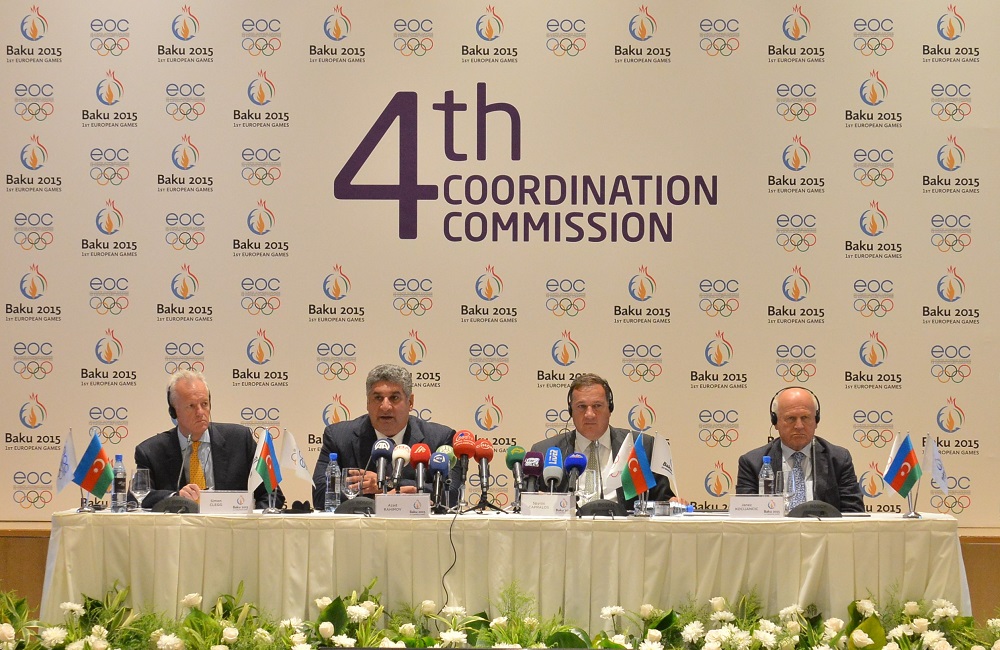
Baku 2015 progress praised by European Olympic Committees
Members of the Commission recently completed a visit to the country to check on progress ahead of the event. In addition to touring competition venues, the visiting party also observed presentations from a number of BEGOC representatives.
“There is a fantastic team here in Baku and this visit has given us an opportunity to meet many of the new members of staff who are all working hard to make the inaugural European Games a world-class event,” Commission chairman Spyros Capralos said.
“Significant work has been achieved over the past year and a half and the continued efforts to innovate, particularly with regards the sports programme, is very impressive.”
The programme for the Games has been wrapped up, with the martial art of sambo being added to complete the 20-sport schedule.
Capralos added: “The European Games will make history for European sport and it is vital that BEGOC continues its excellent progress in preparing for Europe’s first continental multi-sport Games.”
During the visit, BEGOC chief executive Azad Rahimov, who is also Azerbaijan’s Minister of Youth and Sports, officially opened the new Baku 2015 headquarters.
“We can sense the growing levels of excitement and anticipation here in Baku,” he said. “We are confident that each and every venue at next year’s Games will host enthusiastic fans enjoying the experience of elite European sport.”
In June, the European Olympic Committees’ president, Patrick Hickey, described the “scale and pace of development” in Baku as “remarkable”.
The European Olympic Committees Coordination Commission will make its final visit to Baku to check on preparations in February 2015.
The Games will run from June 12 to June 28 next year. -
Arena Seating chosen for English FA’s national centre
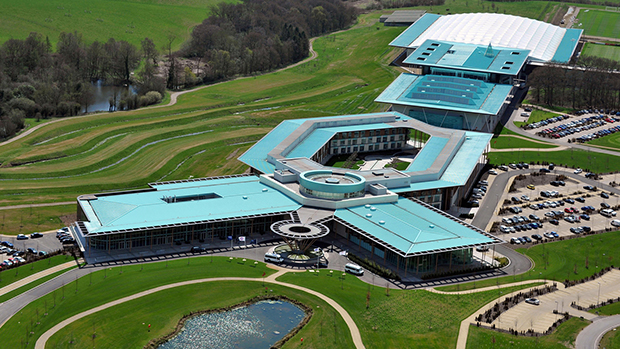
A modular solution from Arena Seating – part of global event supply company Arena Group – has been selected for St George’s Park, the English FA’s national football centre.
Five uncovered demountable grandstands, consisting of four tiers each, will be located along a covered, elevated walkway overlooking the elite training pitch and reconfigured as required by the venue’s event programme.
Speaking at Soccerex Global Convention in Manchester, Dave Withey, Arena UK & Europe’s sales and marketing director, said: “It will essentially be a permanent installation to begin with, but the modular nature of the system means that the grandstands can quickly and easily be reconfigured and moved elsewhere when needed; such as the indoor Futsal hall or any of the 12 outdoor pitches.
“St George’s Park hosts a variety of different events, in various locations across the site, so the ability to do this was a vital part of the FA’s brief. They can then be moved back to the elite training pitch, negating the need for any additional storage facilities.”
The grandstands will be installed on the 15th October by six crew in a single day. Arena Seating will train St George’s Park on how to reconfigure and extend the grandstand for larger events, using Arena’s rental stock.
“There is no need for permanent construction work, making it extremely cost effective,” said Withey. “This is achieved without compromising on spectator comfort and viewing angles, which is very important for a world class facility like this.”
St George’s Park, based in Burton-upon-Trent in Staffordshire, is the preparation ground for all of the England national football teams and home to the FA’s coaching and development work.
Arena Group is exhibiting at Soccerex Global Convention at stand 219. The company will also be exhibiting at HOST CITY: BID TO WIN conference, which takes place in London on 28th October 2014. For more information visit www.bidtowin-hostcity.net