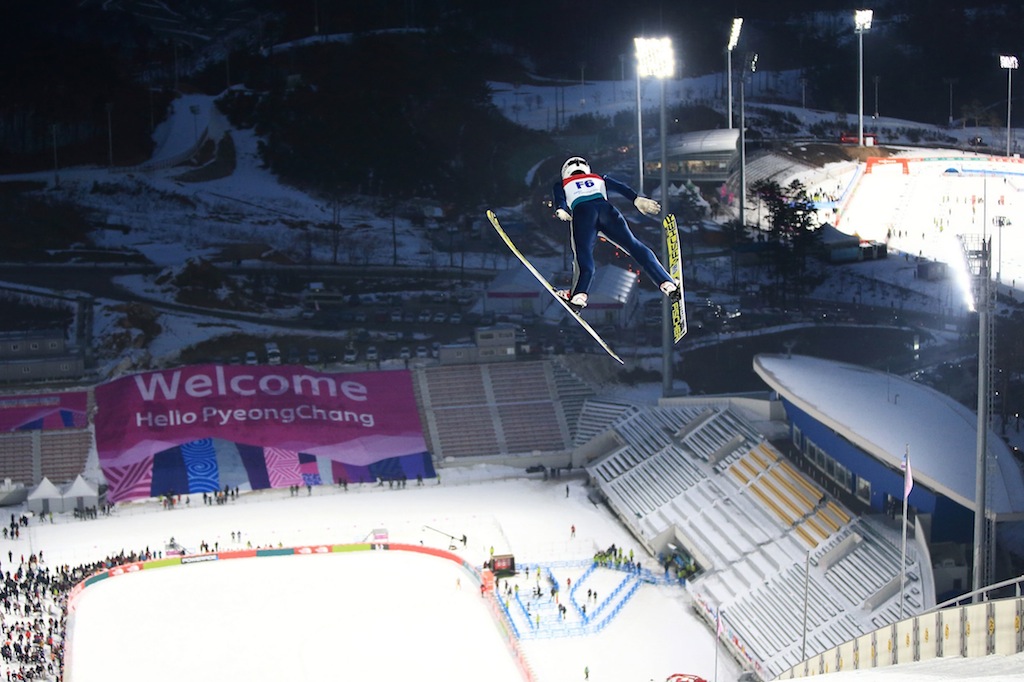
The PyeongChang 2018 Winter Olympic Games organising committee is working to enhance and develop accommodation after concerns were raised over a shortage of rooms.
At February’s PyeongChang 2018 Chef de Mission Seminar, it was reported that while construction and planning for the Games venues were impressive, accommodation and transport links were an issue.
Because of a potential lack of rooms in the mountain and coastal clusters, spectators may be forced to book accommodation outside of the Olympic areas. Some may even have to travel from the capital city Seoul, which is more than an hour away by high-speed rail and more than two hours away via the expressway.
At a PyeongChang 2018 roadshow organised by the Korea Tourism Organization in London, officials were asked what is being done to allay the fears of a shortage in rooms. Hyung Koo Yeo, secretary general of the PyeongChang Organising Committee for the 2018 Olympic and Paralympic Winter Games (POCOG), told media that adjustments were being made for accommodation.
He said: “Regarding the client groups there are 21,000 rooms accredited by the IOC. The accommodation development plan is in progress regarding the contracts with various stakeholders and there are some changes such as cancellations, some additional reservations. We are in the process where we adjust these type of things.
“Regarding the spectators the host cities are preparing for this. We are in the process where we enhance and develop the quality and environment of these accommodations.”
During the 2018 Winter Olympic Games 12 competition venues will be used, with six new venues purpose-built for the event. Four of the six venues – Gangneung Oval, Gangneung Ice Arena, Gangneung Hockey Centre and the Kwandong Hockey Centre – are 100% complete. The Jeongseon Alpine Centre and Alpensia Sliding Centre are 86.7% and 94.15% completed respectively.
According to POCOG overall construction progress of venues is at 96.8% as of April 17.
Blog
-
Accommodation upgrades taking place for PyeongChang 2018
-
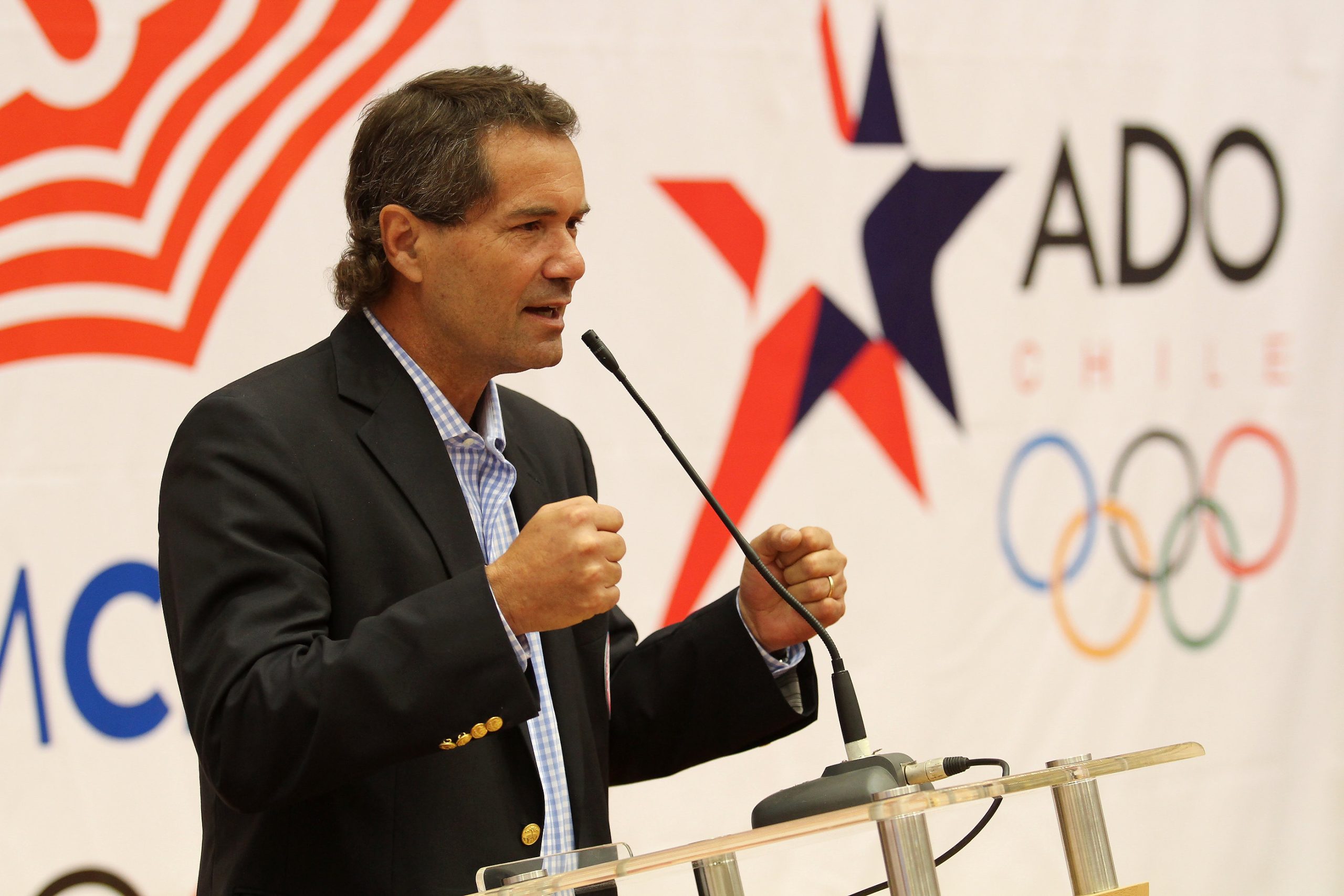
New PASO president Neven Ilic to meet with Lima 2019 organising committee
Neven Ilic, the newly-elected president of the Pan American Sports Organization (PASO), is travelling to Lima to discuss preparations for the Lima 2019 Pan American Games with president of Peru Pedro Pablo Kuczynski and the Lima 2019 organising committee.
On his first international trip as PASO President, Neven Ilic will meet President Kuczynski at the Lima Government Palace on Tuesday at 10:00 local time.
President Kuczynski and the Lima 2019 Organising Committee will use the senior PASO delegation’s visit to the Peruvian capital as an opportunity to present the preparations underway for delivering a world-class event that leaves a positive legacy for Peru and the PASO region.
Lima 2019 president Carlos Neuhaus said: “We very much look forward to welcoming President Ilic to Lima. The new president has made it clear the Pan American Games is a strategic priority for PASO and that is a responsibility all of us here at Lima 2019 take very seriously. We are grateful for the opportunity to show him our progress to date and our plan of action for the coming months.
“We are confident that this is the beginning of strong relationship between Lima 2019 and the new PASO leadership as we work together to deliver a Games that PASO and Peru can be proud of, a great experience for every participant, and a meaningful legacy for the people of Peru and beyond.”
Following his meetings at the Lima Government Palace, President Ilic will travel to the Lima 2019 offices where he will receive presentations on the current status of preparations before being taken on tour of Lima 2019 venues and construction sites.
-
Four countries express interest in hosting 2022 Commonwealth Games
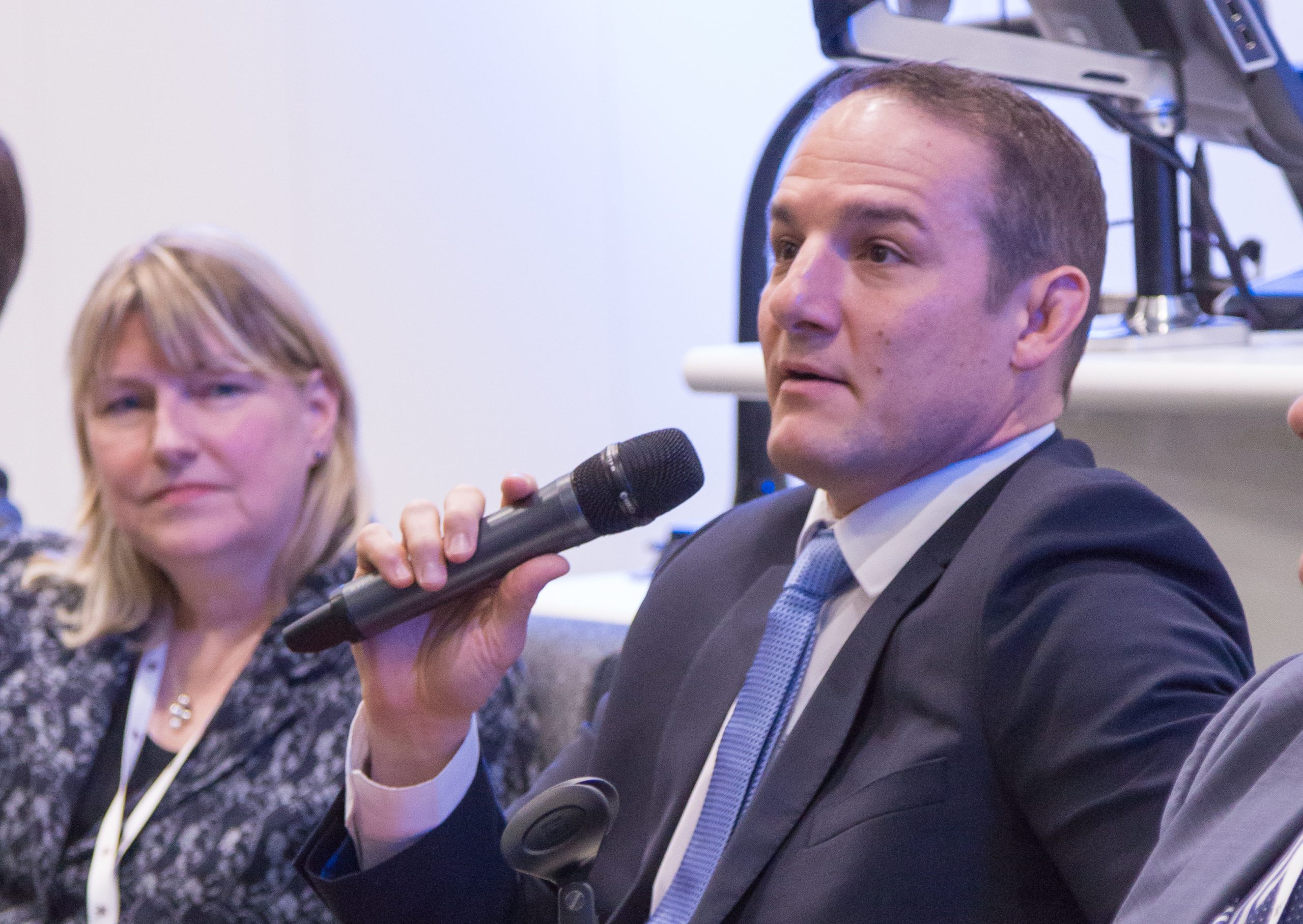
The Commonwealth Games Federation has received expressions of interest in hosting the 2022 Commonwealth Games from Australia, Canada, Malaysia and the United Kingdom.
The bidding process for 2022 was reopened after Durban was unable to fulfil financial obligations. Durban had been awarded the Games when it became the sole bidder after Edmonton pulled out.
But with four countries having expressed interest by the 28 April deadline, the CGF is now set to have a strong pool of cities bidding for the major multi-sport event.
“We are delighted with the level of initial interest expressed by nations across the Commonwealth and look forward to working with all parties as plans develop for a Games to be proud of in 2022,” David Grevemberg CBE, CEO of the CGF said in a statement.
“This is the first step in a collaborative process that will see a clear and detailed set of criteria applied to any Games hosting ambitions. The process has been streamlined to be as agile as possible given the time available and to minimise costs for potential hosts, whilst maintaining the transformative ambitions of the Commonwealth Sports Movement.
“An expert CGF Review Team will work with each country in the evaluation of proposals of potential host cities. This will include a rigorous on-the-ground feasibility assessment and dialogue regarding hosting capacity and capability, resourcing and legacy ambitions, before a recommendation is made to the CGF Executive Board for final review and decision. Based on the number of interested parties it is not expected that the process will finally conclude until early Autumn.”
It has not been specified at this stage in the process which cities are proposed to host the Games. Cities connected with possible bids include Liverpool, Manchester and Birmingham in England; Sydney, Melbourne, Perth and Adelaide in Australia; and Kuala Lumpur in Malaysia and Victoria, Edmonton and Toronto.
The CGF has not ruled out the possibility of cities sharing hosting duties. -
Exclusive: Can La La Land win the biggest prize of all – the 2024 Olympic Games?
After the film La La Land won six Oscars, seven Golden Globes and five BAFTAs you would have thought that Los Angeles is getting bored in 2017 celebrating the success of its city and famous residents.
Don’t believe that for one Hollywood minute. That’s because the US city is still in the running for perhaps the year’s biggest prize of all – the hosting rights to the 2024 Olympic Games.
The race to host the 2024 Games is down to two candidate cities and in September the International Olympic Committee (IOC) session in Lima, Peru, will decide whether it’s LA or Paris that gets the nomination.
With the 130th IOC session fast approaching, the LA and Paris bid committees have been busy putting together the final touches of their showreel in order to garner votes for the 2024 election.
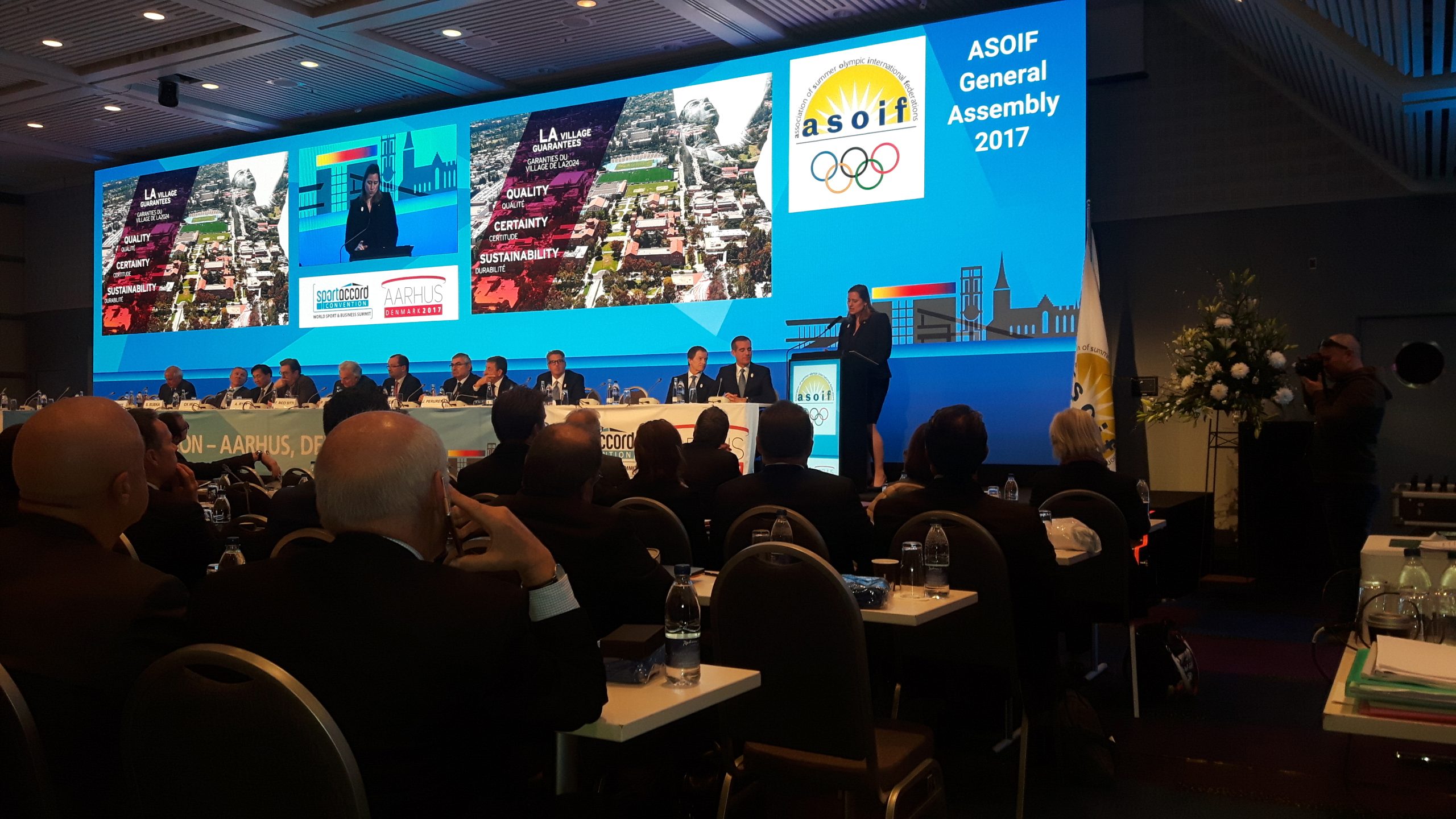
One major showcase for both bids was the 2017 SportAccord Convention (SAC) in Aarhus, Denmark in April.
Vive la difference
The French capital put forward its bid of being ‘the right city, with the right vision at the right moment’. It also promised international federations and the Olympic movement that it would host the “most spectacular Games ever”.
The Paris presentation revealed that 95% of venues were already existing or temporary and the city’s ultra-compact plan would ensure that 85% of venues will be within 30 minutes of the athletes’ village.
Strong stuff from the “City of Light”, which is hoping to mark 100 years since it last hosted the Olympics in 1924.
And during LA’s 15 minutes in the spotlight at SAC, Los Angeles mayor Eric Garcetti told delegates: “It’s important we draw a distinction in our vision, because although many believe the two bids in this race are quite similar… they are, in fact, very different.”
Privately-financed bid
With the heart of the film industry within its boundaries, it comes as no surprise that the Californians presented a strong narrative. When Host City asked LA 2024 Candidature Committee chairman Casey Wasserman if the entertainment industry could be drawn on for a potential LA 2024 Games, he replied: “We are very proud of our storytelling community, that’s what Hollywood is all about. When people want to speak to the world they come to LA. We think our ability of leverage that and bring that to the Olympic Games will be tremendous.”
While LA will bring some razzmatazz to the Olympic Games, the city’s bid has another very big USP regarding the bid’s funding.
“We are a privately-financed bid,” Angela Ruggiero, chief strategy officer for the LA 2024 Candidature Committee, former ice hockey star and IOC executive board member told Host City.
“That’s very different from a government-financed project where you are sort of at the whim of the government. We’ve made that one of our key focal points as a bid is to have the lowest-risk approach with the most sound budget.”
LA will require federal support for security matters, but the operations and management overlay is financed through the individual projects. “That’s a distinguishing factor between the two bids and we wanted to highlight that because we do things differently in regards to hosting events,” added Ruggiero.
“We don’t have sports ministers for example. The way that we promote sport is through the private sector. Budgets can’t be slashed, therefore it’s a different kind of model.”
For venues, LA has adopted a low-risk approach of utlising the city’s extensive existing sports assets. This tactic has helped grow public support in the Olympic bid to 88%.
One asset, for example, is the LA Memorial Coliseum, which is planned to host the medal ceremonies and track-and-field events in 2024. On May 3 it was announced that the University of Southern California had secured approval from the Coliseum Commission to proceed with its $270 million privately funded upgrade of the LA Memorial Coliseum.
The elephant in the room at SAC
With two very strong and well-supported bids, one major city is going to miss out when the IOC makes its big decision in September. Or will it?
The IOC Session in Lima could in fact name the host city for both 2024 and 2028 – meaning both Paris and LA win the right to host a summer games. A working group composed of the IOC’s four vice presidents is currently evaluating this possibility.
Juan Antonio Samaranch, IOC vice-president, told a select group of journalists at SAC: “Basically what we are doing is not talking about 2024, internally we are thinking of how we can be more flexible to have a selection system that better suits our interests and the interests of the Olympic movement. The ideas that we might have for 2024 and 2028 are serious ones, but there is a process and both cities know what the process is.”
Paris’ committee has said it only wants to host in 2024 while LA chairman Wasserman was also straight with his answer. He told Host City: “We are bidding for 2024. There should be no confusion about that. I applaud the IOC for their thinking because it’s strategic and timely, but it’s also hypothetical. We’re bidding for 2024. Hypotheticals are not interesting.”
Next on the agenda for the IOC and the LA and Paris committees is the 2024 candidate briefing for IOC members and Summer Olympic IFs in July.
Once that’s complete it will be back to the drawing board for both cities to put the finishing touches to their candidature bids.
Will LA’s bid script see that big Hollywood ending? We will wait and see in September. -
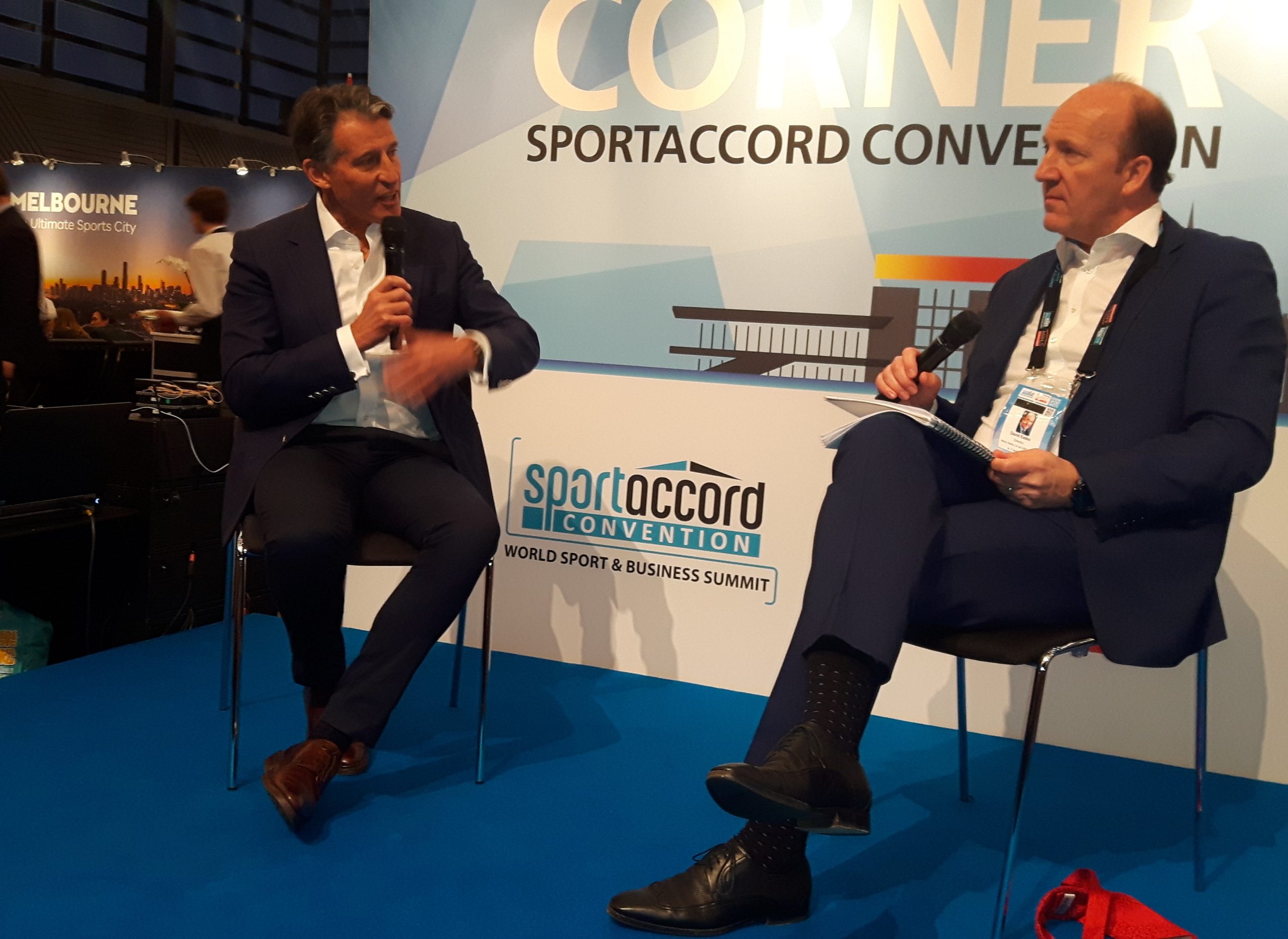
Sebastian Coe confident the IAAF Athletics Integrity Unit can safeguard the sport’s future
IAAF president Sebastian Coe believes the creation of the new independent Athletics Integrity Unit (AIU) will not just benefit competitors but also puts policies in place to combat any threat to the sport’s ethics.
Launched at the SportAccord Convention, the AIU will be chaired by David Howman and replaces the IAAF’s former anti-doping department. It will manage activities including education/prevention, testing, intelligence gathering, investigations, results management, prosecutions and appeals.
The AIU’s focus will not only be on anti-doping but will also address integrity breaches in other areas of concern such as bribery and corruption, betting, the manipulation of competition results, age manipulation and misconduct around transfers of allegiance.
Coe said that from now on athletes must be the centre of the sport and the framework for the AIU will provide them with a “safer ecosystem”.
“At the heart of the governance reform is the creation of the Athletics Integrity Unit,” said Coe. “So often the athlete has been the first thought, but actually in reality the last consideration. This will place the athlete absolutely at the centre of that ecosystem. So they are the first thought and also the first consideration.
“It [the AIU] will have a very different approach to anti-doping. It will be independent, will remove national interest and will speed up the process. We need to resolve these issues quickly, we need to resolve them in an independent way and we need to do them so we don’t have national interest obscuring that process.”
Coe added: “It’s really important in a sport that has 214 federations that the ultimate goal is not just to make your headquarters safer or the academic process of putting corporate governances in place. They have to have practical applications through area associations, in our case the continental associations, and then it’s got to have an alignment, an impact and practical support to the 214 federations.
“This will take time but we needed a constitution that was both fit for purpose and can deal with not just one or two issues but for the first time we will have a unit that can deal with all these problems.
“Yes there is a disciplinary element to it, yes there is a sanctioning element to it, there will be investigative powers – but it is fundamentally there to help the athlete make the right decisions throughout their career.”
With the launch of the AIU, the sport is putting systems in place to safeguard its future off the track. But with the introduction of events such as Nitro Athletics, Coe says that innovation must also happen on the track if the sport is to survive.
Not seen as an event for the purists, Nitro Athletics was headlined by sprint king Usain Bolt and is a team-based competition that combines strength, endurance, power and extreme energy.
What did Coe think about the Nitro Athletics spectacle held in Melbourne in February? “It’s very simple, you innovate or you die,” he said. “If sport is our activity then our business is entertainment. We haven’t adapted [to the modern world] as well as we should have done.
“What I liked about Nitro is it’s not that you are suddenly in the World Championships in London or the [Olympic] Games in Tokyo going to see elimination miles, power plays or mixed relays, but there were clues there as to why young people felt more engaged in what they were watching.
“I did throw down the challenge when I became president to ‘do things differently’. It’s important that we evolve and it’s important that we engage young people.
“Yes, sometimes that will be uncomfortable for the purists.” -
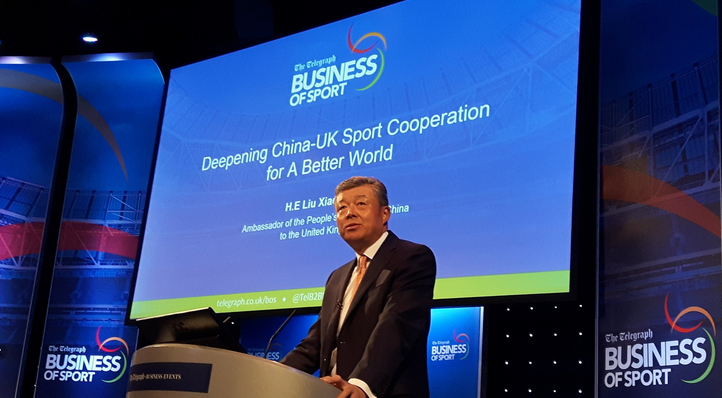
China’s ‘gold mine’ sports industry presents huge opportunities
The boom in China’s sports industry presents huge potential for foreign investment, especially from the UK.
Speaking at the Telegraph Business of Sport conference in London, Liu Xiaoming, the ambassador of the People’s Republic of China to the UK, said that sport has become one of the country’s new economic highlights and a national strategy for business.
From sports events and venues to retail and sponsorship, China has major opportunities for collaboration said Liu.
“There’s no doubt China is a big sports nation, but China is not yet a strong sports nation,” he said. “There are challenges. But in the long run China’s sports sector has a huge market to offer.
“Many compare China’s sports industry to a huge gold mine.
“The sport sector is fast emerging as a new growth point. By 2020 the total output will exceed US$450 billion. All this indicates a growing demand for domestic and foreign investment. [China’s] sport industry is booming.
“[There is] great potential for China and the UK to collaborate in many aspects of the sports industry.”
When asked about China’s potential of hosting the 2030 FIFA World Cup, Liu added that it is a dream for the Asian superpower.
“Chinese people have three dreams for football,” he said. “Dream one is to be a champion of Asian Games. They want to see the Chinese team perform better.
“Second dream is to host the World Cup. Maybe not 2030 but looking down the road we hope Chinese will host the World Cup.
“Third dream is to win the World Cup.”
To discover more opportunities in China’s sports, business and cultural events market visit Host City Asia in Beijing on 18 October.
-
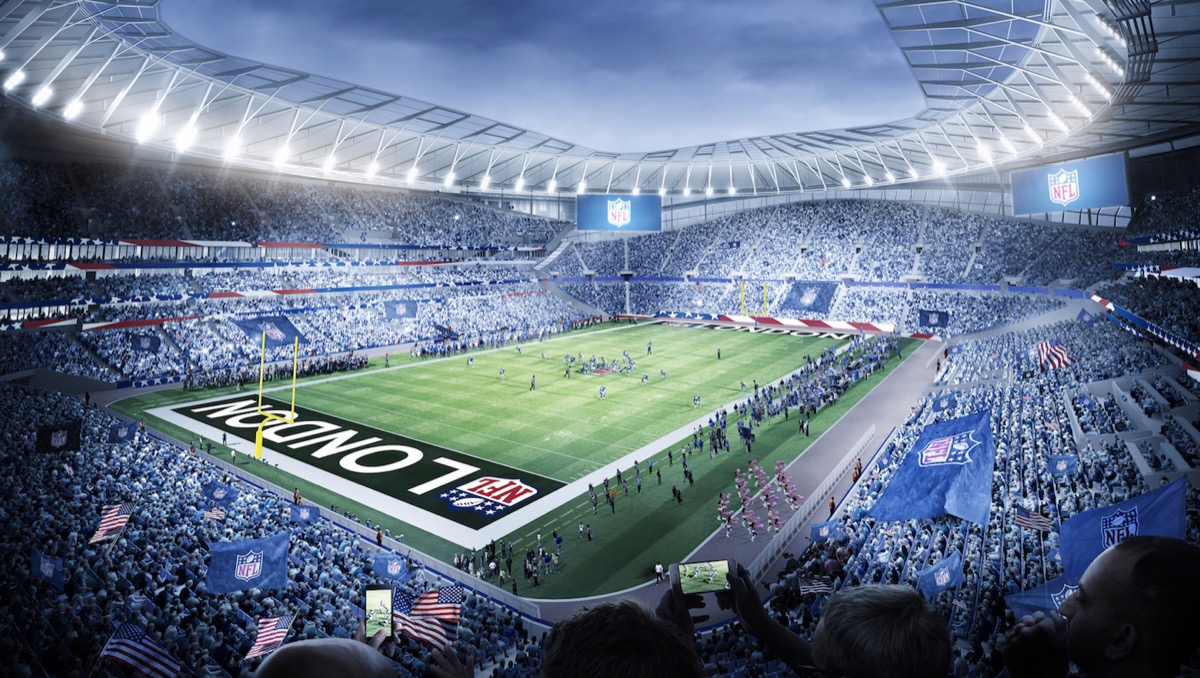
NFL partnership helps ‘drive up standards’ for Tottenham’s new stadium
Tottenham Hotspur’s new stadium partnership with the NFL has been described as a “visionary moment” by a director of the club.
With 61,559 seats, Spurs’ new home will be largest capacity football club stadium in London and will feature a single-tier South Stand able to accommodate 17,500 spectators.
Expected to be complete for the beginning of the 2018-19 season, the multi-use stadium will include a fully retractable football pitch that can be replaced by a synthetic grass surface to be used for NFL games and other events.
The NFL signed a 10-year deal with the English Premier League club to use the stadium as its dedicated home for American football games in the UK.
Tottenham executive director Donna-Maria Cullen believes the NFL deal has improved standards in the design and technological aspects of the new facility.
Speaking at the Telegraph Business of Sport conference in London, Cullen said of the NFL partnership: “It was a visionary moment by Daniel [Levy, Tottenham chairman].
“One of the reasons we looked at the NFL was to create something different in Tottenham. You have to deliver more than a Premier League football club.
“The NFL will be a very different sport. But it has driven up standards in stadium. It’s a whole new audience.”
Construction of the new stadium means Tottenham will play their home games next season at Wembley. -
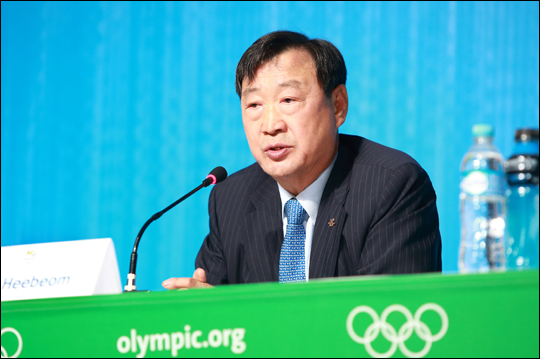
“Hello PyeongChang” – Exclusive interview, Hee-beom Lee, CEO, POCOG
Ask any elite athlete what it takes to win an Olympic title and you will probably hear an answer including words such “hard work”, “lots of training” and “perseverance”.
Well, the same thing can be said for any city or country bidding to host a summer or winter Olympic Games.
After missing out on both the 2010 and 2014 events, the Korean county of PyeongChang finally won the bid for the 2018 Winter Olympic Games when it secured 63 votes compared to Munich (Germany) 25 votes and Annecy (France) seven votes in the 2011 IOC election.
In both the 2010 and 2014 bids, PyeongChang actually won the first stage of voting but lost out in the final rounds to Vancouver and Sochi by three and four votes respectively.
Losing once may be tough, losing twice may be soul destroying, but the Korean Sport & Olympic Committee were not going to give up on its Olympic dream easily. So once PyeongChang finally secured the bidding rights the organising committee was going to make sure that the “third time is a charm” – especially for its long-term sporting and social legacy plans.
A major test for Korea
Thirty years since the capital city Seoul held the Summer Olympic Games of 1988, Korea is preparing to welcome back the Olympic movement in February.
PyeongChang 2018 will see 102 events in 15 sport disciplines taking place at various locations, including six new venues purposely built for the winter games.
In order to be ready for 2018, a rigorous testing schedule under the “Hello PyeongChang” banner has seen the delivery of 25 test events (20 Olympic and five Paralympic) since February 2016 with thousands of athletes competing at 12 competition venues.
Speaking to Host City, Hee-beom Lee, the president and CEO of the PyeongChang Organising Committee for the 2018 Olympic & Paralympic Winter Games (POCOG), explained the importance of learning from the test events.
He said: “Overall the hardware [venues and infrastructure] and software [operational know-how, sponsorship and promotion] preparations are progressing as the POCOG team, Gangwon Province and the Central Government continue to work closely together.
“The average completion rate for six of our new competition venues is 97%. For our non-competition venues, construction is also well underway and we expect them to be completed by September 2017.
“Even with the end of the test events, our team will still use opportunities from milestone events and other activities to further fine-tune the Games preparations to ensure we can deliver the best Olympic and Paralympic Winter Games in 2018.”
Thirty years after Seoul 1988 put Korea on the global sporting map, PyeongChang 2018 has the potential to do the same again for winter sports. Lee added: “We saw the impact of the Summer Games back in 1988 on Korea and the perception of Korea by the outside world and we know that 30 years on the Winter Games can do the same for the country.”
Progress and legacy of the venues
The 2018 Winter Olympic Games will see events held in two main clusters in the Gangwon-do province – the PyeongChang Mountain and Gangneung Coastal clusters.
Located in the north-east of the country, the mountainous Gangwon-do province has multiple ski resorts and national parks. A key factor to the hosting bid was that all PyeongChang 2018 competition venues are within 30 minutes’ driving distance from the PyeongChang Olympic Stadium.
POCOG’s president Lee said: “Out of the six brand-new competition facilities, four have been completed and two are still on-going. As for the non-competition venues, they are well on track for completion.”
In the long-term, the 2018 venues will have a lasting legacy for Korea’s elite level sportsmen and woman and also its residents. “We have developed a post-Games venue legacy plan to keep the Olympic spirit alive,” said Lee. “The venues for PyeongChang 2018 have been designed as much around what happens after the Games as during it. These world-class facilities will serve communities and athletes for years to come.
“Many of the competition venues will continue to be used by athletes from Korea and all around Asia. The Sliding Centre [will be used] by the Korea National Sports University, Gangneung Hockey Centre by the new Daemyung ice hockey team and Alpensia Sports Park for Nordic skiing.
“Other venues will be open to the public and benefit the local residents. Ice arena as a multi-use sport-for-all facility and the Kwandong Hockey Centre used by the university.”
Accessibility is key
While the sporting venues are either complete or in the final stages of construction, there’s also much work being done to make sure athletes, officials and visitors can easily access the games.
Transport links between Seoul and the games clusters have had huge upgrades and improvements as part of PyeongChang 2018’s long-term legacy plan. New motorways and high-speed railway are among the major projects.
“Looking at transport, the constructions of the high-speed railway, expressways and the road networks are on schedule,” said Lee. “The 2nd Yeongdong Express Highways was completed last year. We have seen great improvements in the traffic flow from Seoul to PyeongChang as congestions have been reduced. There is also an increase in traffic with more people driving into PyeongChang.
“The high-speed railway will be completed in June this year and it will undergo thorough testing throughout the rest of the year. Once completed, people can travel easily from Incheon Airport to PyeongChang and Gangneung in just 98 minutes and 113 minutes respectively.
“This is great news for those travelling from Seoul who can now reach PyeongChang with ease and at a much shorter time – around 70 minutes via train and within two hours by car. The transport system will make the Games very accessible to many people.”
Transportation within the venue clusters is also high on the agenda for POCOG and the host locations. The transportation system in host cities comprises of two categories – the one provided by POCOG, and the other provided by host cities.
The POCOG transportation system for spectators includes a total of three transport malls (Jinbu and Hoenggye Mall in the Mountain Cluster and North Gangneung Mall in the Coastal Cluster) and 10 parking lots with a total 11,170-car capacity.
Dedicated free shuttle buses will be also provided to the public from the transport malls in the mountain and coastal clusters to the various Olympic venues.
Sporting legacy
The PyeongChang 2018 Winter Olympic Games marks the start of a memorable six years for Asian sport as the first of three Olympic events scheduled for the region, with Tokyo 2020 and then Beijing 2022 taking over the baton.
But while the 2018 games will again put Korea in the spotlight, the event is as much for Asia as it is for the republic.
“We have realised our dream by being given the honour of hosting the 2018 Games and we are now working hard to bring that dream to life,” said Lee. “We want to create many more life-changing experiences and open up new horizons for everyone that will be touched by the Games.”
Grassroots sport is one sector that POCOG and the local authorities have focused on since winning the bid. Schools have been engaged by the POCOG education department to create lesson plans and multi-media materials for teachers to deliver to students so they are given the opportunity to take part in the Olympic movement by participating in competitions and try out different sports. This education programme will grow in the months leading up to the 2018 Winter Olympics.
Another initiative launched by POCOG is its ‘Dream Programme’, which began in 2004. POCOG’s aim with the programme is to promote winter sports at grassroots level but on an international scale.
Lee said: “The aim of this programme is to offer young people from countries that lack the natural environment for winter sports, the opportunity to experience winter sports and advance the Olympic and Paralympic movement worldwide.
“A total of more than 1,500 people from 83 countries have participate in this programme by this year. We want to engage the younger generation and get more of them involved and excited by winter sports.”
Long-term tourism
With sporting and social legacy plans now in place one of the major industries that is looking to capitalise on the 2018 Winter Olympics is Korea’s tourism sector.
From the upgrades in venues and facilities to the new transport links, POCOG is working with government departments such as the Korea Tourism Organization to promote the country as a winter sports destination – not just in the run-up to next year, but also in the years after the event is held.
Lee said: “With the ‘New Horizons’ vision, we aim to develop winter sports and relevant industries in Asia, leaving a lasting legacy in the host region by transforming PyeongChang and Gangwon Province into an Asian winter sports hub and year-round tourist destination. This is part of the sporting legacy of POCOG 2018.
“The Gangwon province has the potential to go from a small region in Korea into a hub of winter sports. Its proximity to Seoul is a really strong selling point making the slopes and snow more accessible for everyone, especially with the new transport links that are currently being developed.”
Seunghyun Hwang, director of the Korea Tourism Organization in London, agreed that PyeongChang and the Gangwon-do province have the potential to be a winter sports hub. But Korea can also, according to Hwang, play a huge part in the run-up to the 2022 Winter Olympics in Beijing.
“North Asia is quite lucky that in the two years after PC2018 there will be the Tokyo summer Olympics and then Beijing 2022, which gives our region a huge opportunity to solidify North Asia as a winter and summer sporting hub,” said Hwang. “The 12 venues and the Gangwondo province as a whole will become ideal training camps for athletes ahead of 2022. Asia is likely to see a major winter sport increase over the coming years with both 2018 and 2022 putting spotlight on region.
“The fact that Korea tried to get the Winter Olympics in 2010, 2014 and was successful for 2018 means there has been much time to create such things as a ‘ski school’ to encourage the best young Asian ski athletes from across South East Asia to get involved in elite [and amateur] and encourage a new generation to these type of sports.”
Factbox: PyeongChang 2018 Olympic and Paralympic Winter Games
When: February 9-28, 2018 (Winter Olympics); March 9-18, 2018 (Paralympic Winter Games)
Where: PyeongChang will host the opening and closing ceremonies and most snow sports. Alpine speed events will take place in Jeongseon, and all ice sports will be competed in the coastal city of Gangneung
Number of events/sports: 102 events in 15 sport disciplines
Venues:PyeongChang Mountain Cluster: PyeongChang Olympic Stadium, Alpensia Ski Jumping Centre, Alpensia Biathlon Centre, Alpensia Cross-Country Skiing Centre, Alpensia Sliding Centre, Yongpyong Alpine Centre, Jeongseon Alpine Centre, Bokwang Snow Park
Gangneung Coastal Cluster: Gangneung Hockey Centre, Gangneung Oval, Gangneung Ice Arena, Gangneung Curling Centre, Kwandong Hockey CentreDid you know? The 2018 Olympic Winter Games will be held in Korea 30 years after the Seoul Summer Olympic Games of 1988
Venue readiness
Progress of competition venues (as of May 2017)
Gangneung Oval (Speed skating): 100%
Gangneung Ice Arena (Short track): 100%
Gangneung Hockey Centre: 100%
Kwandong Hockey Centre: 100%
Jeongseon Alpine Centre: 86.7%
Alpensia Sliding Centre: 94.2%
Progress of non-competition venuesOlympic Plaza: 54%
International Broadcasting Centre: 92.8%
PyeongChang Athlete’s Village: 61.95%
Gangneung Athlete’s Village: 76.78%
Gangneung Media Village: 80.9%
New high-speed rail (Wonju to Gangeung): 88%
PyeongChang 2018 venue legacy plans
Kwandong Hockey Centre (main stadium, training venue)
Legacy operator: Catholic Kwandong University
Legacy plan: Multi-purpose sports facility
Gangneung Ice ArenaLegacy operator: Gangneung
Legacy plan: Gym and indoor sports stadium; theme parks and entertainment plaza (ice rink, outlet mall)
Gangneung Ice Arena (short track training venue)Legacy operator: Yeongdong University
Legacy plan: Multi-purpose sports facility
Gangneung Curling CentreLegacy operator: Gangneung
Legacy plan: Multi-purpose sports facility
Bokwang Snow ParkLegacy operator: Bokwang Co., Ltd
Legacy plan: Existing Ski Resort
Olympic StadiumLegacy operator: Gangwon Province
Legacy plan: Olympic History Museum
Alpensia Sliding CentreLegacy operator: Korea National Sport University
Legacy plan: Training facility for athletes; gyms, educational facilities
Gangneung Hockey Centre (main stadium, training venue)Legacy operator: Daemyung Holdings
Legacy plan: Stadium for a new professional ice hockey team (Daemyung)
Pending legacy plans: Jeongseon Alpine Centre, Gangneung Oval -

Exclusive Q&A: Why is sustainability so important for major events?
Why is sustainability so important for major events?
Gary Meador (GM): Organising committees and bid cities are always weighing up the cost benefit of permanent versus temporary infrastructure; and creating a lasting legacy versus leaving things as the way you found them. A lot of the LOCs (local organising committees) are considering, along with the public consciousness, the most efficient and sustainable way to host major events, whether it is an international sporting event or music festival.
What a lot of the events are looking at now is they don’t necessarily need to build everything as a legacy. Not every city has the need for a permanent velodrome or a rowing venue. One of the things that Aggreko is really good at is working with customers to find innovative solutions to challenges around temporary power, air-conditioning and heating, or whatever their needs may be – to come in and help them make as little impact on the venue. At the end of the event we pick our stuff up and go away.
On the other hand, we also work with event organisers to help design what are meant to be legacy venues. We use our experience and key learnings during the planning phases, acting as a strategic partner as early as possible, to contribute to ideas on how infrastructure can be built or where it will have a fair use afterwards for example.
The benefit of adopting temporary power and cooling systems means you don’t have to build a venue to meet its peak requirements. You can build it to be somewhat less than that and supplement with on-site services to meet the additional capacity demand during the event.
For example, for a building that would normally seat 20,000 for a regular sporting event but has to seat 30,000 for a major event, you don’t have to put in an air-conditioning system that will cool 30,000 people, just one for 20,000 people that can be supplemented.
There’s all kinds of different ways we can work with LOCs to help them meet those goals.
You mentioned LOCs, do you work with them at this stage when they become an organising committee or is this something that potential event bidders can be thinking about earlier in the game?
GM: I think it’s definitely beneficial to think about sustainability earlier because a lot of people don’t have a great deal of experience with the temporary. Their only base of knowledge is working with a design-engineering firm, for example, that have only ever designed permanent structures. The earlier we can get involved the greater the opportunity is to improve efficiency and help create lasting benefits for the organising committees as they move forward.
It doesn’t have to be an organising committee, it could be the PGA of America, the US Golf Association or Formula 1, that’s just something we have developed a special niche for in the past 30 years.
Do you think that the rights holders and event organisers are fully aware of the possibilities of how solutions, like your temporary power solutions for instance, can make an event more sustainable?
GM: We are trying our level best to raise awareness of the benefits of temporary systems, but no I think that knowledge is still low. We have a lot of work to do moving in that direction. It’s not just our discipline; it’s the tent companies, the bleacher companies, the restroom trailer companies, everyone. We have mastered the ‘art of the temporary’ and either supplement or fully provide services for an event from start to finish but need to spread the word on the benefits of this approach.
Which particular events have you been working on recently to enable these sustainable solutions?
GM: We have supported quite a few major events on the world’s stage lately: the Ryder Cup in Minneapolis, Minnesota and the Trump inauguration in Washington DC. We didn’t have a huge amount of time to think about sustainable solutions for the inauguration as it comes together virtually in a week after the election, but at the Ryder Cup we were able to do some neat things.
We introduced some LED lighted balloons that replaced standard diesel-generated light towers. We took some of those to the site, plugged into the on-site power source we were already providing, and helped the PGA of America eliminate the need for 20 light towers they would have had to rent. I think this saved about 40,000 tonnes of carbon across the length of the job.
We are trying to find innovative ways to work with event organisers and help them to meet their sustainability goals too. We are looking at battery technology to come in and maybe take over a small load at night, so the generator can shut off and the load can run on battery. Then when the load grows larger than the battery system, the generators start back up during the day.
We are continuing to look at new innovations likes these to really help events lower their carbon profile and meet their sustainability goals as well as cost savings. We owe it to our customers to help them find better and economical ways to do things. That’s part of our mission.
Energy storage is becoming increasingly important for a whole range of industries, but you can see why in the major events sector…
GM: Yes, we are waiting for that magic battery to be built that makes it ultra-efficient to store this power too. The technology isn’t quite there on the batteries, but it’s getting better. -

Partners and sponsors are signing up for Host City 2017
The global conference and exhibition of cities and sports, business and cultural events is off to a flying start with 19 partners and sponsors already on board this year.
Launched in 2014, the annual Host City conference and exhibition is the first and largest meeting of cities and sports, business and cultural events
EventScotland is Supporting Organiser for the 2017 event that is taking place in Glasgow on 28-29 November.
Paul Bush OBE, Director of Events, said: “EventScotland has a strong heritage with the Host City conference and exhibition and we are delighted to be supporting them to bring leading events professionals together for what promises to be an insightful and informative two days.
“Scotland is the perfect stage for events and Host City 2017 will really set the tone ahead of some amazing world-class events including the Glasgow 2018 European Championships, the 2019 European Athletics indoor Championships and the 2019 Solheim Cup.”
Host City is a unique event combining high-level panel discussions featuring renowned industry figures with an effective marketplace where cities of all sizes can meet with rights holders, event suppliers, event organisers and their procurement officials.
Host City 2017 is backed by
Supporting Organiser: EventScotland
Supporting Partners: Glasgow Convention Bureau and Glasgow 2018
Silver Sponsors: Aggreko, FarrPoint, Marsh and Red Bull Air Race
Branding Sponsors: Arena Group and De Boer
Host City 2017 also enjoys the support of Media Partners signed up so far, including: Exhibition World; fcbusiness; isportconnect; Major Events International; Orange Sports Forum; Sportcal; SportBusiness; World Academy of Sport; Yutang Sports.
“We are immensely grateful for the support of all the fantastic organisations that make Host City the great event it is today,” said Host City’s Editorial and Conference Director Ben Avison. “In particular we are delighted with the renewed support from Event Scotland as Supporting Organiser and Glasgow Convention Bureau and Glasgow 2018 as Supporting Partners.”
Many more sponsors and partners are set to join in the coming months.
To find out more about the opportunities visit www.hostcity.com or contact Adam Soroka on adam.soroka@cavendishgroup.co.uk or +44(0) 203 675 9531.
For information on the conference agenda or speaking opportunities contact ben.avison@hostcity.com