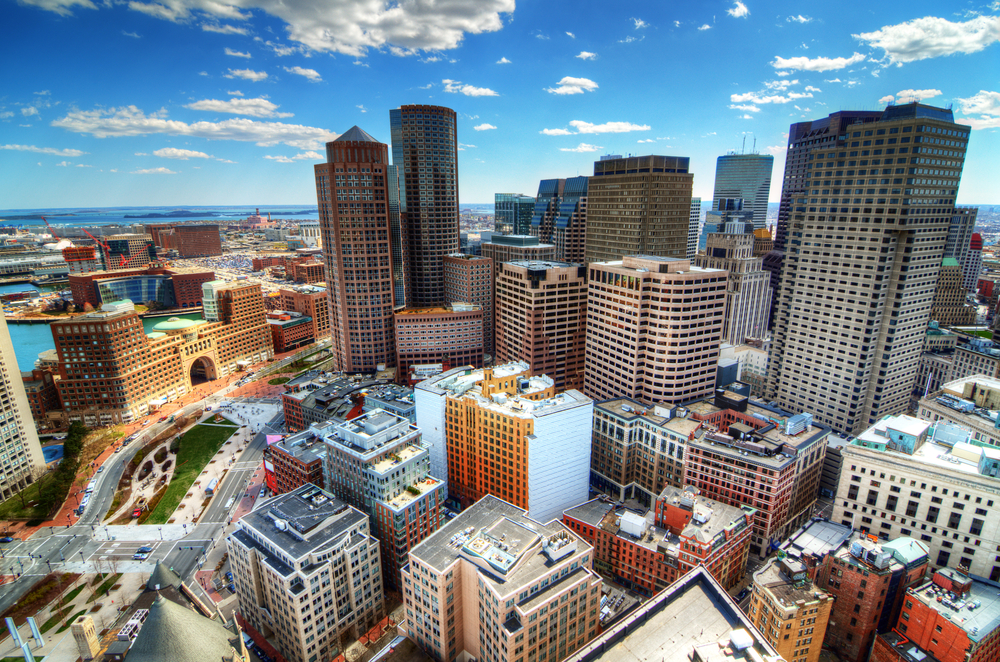
The majority of Massachusetts residents support Boston’s bid for the 2024 Olympic and Paralympic Games, as long as the bid comes at no cost to the taxpayer.
This is the finding of an independent poll conducted by Sage Consulting on just over 1,600 people in the state of Massachusetts.
While the results of the poll showed overall support for the Games bid, at 55 per cent, it also revealed that a more pronounced majority of 61 per cent are opposed to public spending on the project.
The poll also showed that more people were sceptical about the economic legacy of the Games than those who believed it would bring lasting benefit.
Majority support
The most popular response to the question “how strongly do you support or oppose the bid” was “strongly support”, with 35 per cent ticking this box. With 20 per cent saying they “somewhat support” the bid, the poll showed an overall majority of 55 per cent supporting the bid.
Support for the bid would not necessarily translate into ticket sales, however. Just 45 per cent of respondents said they would either “definitely” or “probably” attend the Games in person.
Economic benefit
Slightly more people believed that Games expenditure was “unlikely” to produce lasting benefit for Boston (46 per cent) than those who said this was “likely” (49 per cent).
In answer to the question about “lasting economic benefit for Boston”, the largest group of respondents (29 per cent) said that this was “very unlikely” while 19 per cent thought it “somewhat unlikely”.
This means 48 per cent of people thought economic benefit was unlikely, as compared to 44 per cent that deemed it to be likely.
“Taxpayer dollars”
The strongest opinions revealed by the poll were in response to questions about the financing of bidding for and hosting the Games.
43 per cent of respondents would “strongly oppose” the use of “taxpayer dollars” to fund the bid. Coupled with the 18 per cent who “somewhat oppose” this, the poll reveals that a clear majority of 61 per cent are opposed to public finance of the project.
Boston’s bid is planned to be financed privately and, if successful, the bid committee has pledged that any infrastructure projects relating specifically to the Games will be entirely privately financed, However, the poll indicated that 55 per cent believe that “financial support for the Olympics will come at the expense of other worthwhile causes,” as compared with the 23 per cent who believe “most costs will be carried by business”.
Positive start
Public support for the Olympic Games is an important metric on which the bid will be evaluated and the overall support for the bid at this early stage will be seen as a positive.
A recent gathering of opponents to Boston’s bid, organised by “No Boston Olympics”, attracted little more than a hundred people.
The US Olympic Committee has been quick off the blocks in announcing Boston as its contender for the 2024 Games, with only Rome the only confirmed competitor.
Germany is expected to put forward either Berlin or Hamburg. A number of other cities and countries are said to be contemplating bidding, including Baku, Budapest, Doha, Istanbul, Paris and South Africa.
Tag: 2024 Olympic Games
-

Boston 2024’s public support depends on private finance
-

Boston 2024 appoints transport expert as bid CEO
The Boston 2024 bid committee has appointed Richard Davey, former Massachusetts Transportation Secretary, as its new CEO.
He succeeds Dan O’Connell, who successfully led the group that was selected as the US Olympic Committee (USOC)’s contender for the 2024 Olympic Games, against competition from Los Angeles, San Francisco and Washington D.C.
“This is a terrific opportunity to build upon all the great work and planning that has already been done,” Davey said in a statement.
“But in many ways this is just the beginning. Over the next year we will be in every community in Boston —and in every region of the state—to get the thoughts and input of the public on what a 2024 Games would look like and the kind of legacy it could and should leave for Massachusetts.”
Davey was appointed Transportation Secretary of Massachusetts Department of Transport (MassDOT) in 2011, a position he held until stepping down in October 2014.
Before this, he worked for the Massachusetts Bay Commuter Railroad Company, where he rose to the position of general manager and went on to manage the Massachusetts Bay Transportation Authority.
The effectiveness of the city’s transport system was a central component of Boston 2024’s submission to the USOC, which highlighted the fact that most venues are within walking distance of public transport.
Boston’s USOC submission also outlines US$5.2bn of public investment in “existing transport infrastructure” and US$10bn of public investment in “planned transport infrastructure”.
Dan O’Connell, the outgoing leader of Boston 2024 who previously served as Housing and Economic Development Secretary for Massachusetts, will remain on the bid’s executive committee.
“Dan O’Connell was integral in making the case over the last year that Boston could host a Games that was sustainable, cost-effective, and that would leave a lasting legacy for Boston and Massachusetts,” said John Fish, chairman of Boston 2024 in a statement.
-

Hamburg chosen as German contender for 2024 Olympic Games
German Olympic Sports Confederation (DOSB) has selected Hamburg instead of Berlin as the city it will take forward to bid for the 2024 Olympic Games, citing public support as the decisive factor.
Subject to ratification by the DOSB board on 21 March, the northern port city of Hamburg will join Rome and Boston in the race to host the 2024 Olympic Games.
The vote was cast by the executive board of the DOSB.
“We agreed by majority for the city of Hamburg and that is why we are standing here today, united, with this recommendation,” said Alfons Hörmann, the DOSB president, who chose not take part in the vote himself for “reasons of neutrality”.
Recent opinion polls have demonstrated that public support for a Games bid is significantly higher in Hamburg than in Berlin. 64 per cent of Hamburgers support the bid, compared to just 55 per cent of Berliners.
“There were various points that helped us make our decision,” Hörmann said.
“We had to consider the prevailing support in the cities, and the result of the survey was one of the things that played a role here.”
Hamburg’s compact venue plan was also cited as an influencing factor. Unlike Berlin, Hamburg has no existing Olympic Stadium and plans to build a new one in an island in the city.
Despite this, the DOSB determined Hamburg’s venue plan to be sustainable.
“The city fits exactly to the Agenda 2020 reform of the IOC,” said Hörmann.
The city of Hamburg will hold a referendum on whether to bid for the Games before 15 September, by which time all interested cities must apply to the IOC.
The German city of Munich pulled out of bidding for the 2022 Winter Games after a residents voted against bidding in a referendum.
Munich hosted the Summer Olympic Games in 1972. Berlin hosted the Olympic Games in 1936, while Hamburg has never hosted an Olympic Games.
The host city of the 2024 Games will be announced in Lima in mid-2017. -

Paris city council approves 2024 Olympic bid
A bid from Paris for the 2024 Olympic Games overcame a significant hurdle today as the city’s councillors voted in its favour.
The next step will be a public consultation before a final decision on the bid will be made in June.
A recent national opinion poll found that 61 per cent of the French public would be in favour of Paris hosting the Games.
“Now we are off on an Olympic adventure,” said Anne Hidalgo, Mayor of Paris.
According to local sources, 163 city councillors voted overwhelmingly in favour of bidding for the 2024 Olympic Games, with support coming from the majority of political parties.
President Francois Hollande, who publically backed the bid in November, is due to meet with IOC president Thomas Bach on in Lausanne on Thursday to discuss Paris’s potential candidacy.
Paris last hosted the Olympic Games in 1924, which would make 2024 a centenary event for the city.
It last bid for the Olympic Games in 2012, which went to London despite Paris being the early favourite.
Bernard Lapasset, vice president of the French National Olympic Committee, presented a report to Hildago and the government on Thursday.
“France has the qualities to win,” he said.
If the public consultation works out in favour of the bid, Paris would join Rome, Hamburg and Boston in a competitive race.
The Indian Olympic Committee is also said to be considering a bid for the 2024 Olympic Games.
Once a city has announced a bid, it can work with the IOC through its new “invitation phase” of the Olympic bidding procedure. The deadline for applying to bid for the Games is September 15th 2015.
-

Paris aims for unanimous support for Olympic bid
Paris officially launched its long anticipated bid for the 2024 Games on Tuesday, with a message of strong backing from the state and the public.
The leaders of the bid also said a referendum was unlikely to be required.
In its bid to host the Games, Paris is competing against Boston and Hamburg, which both face public referendums in order to progress their bids, as well as Rome and a likely bid from Budapest and other potential contenders including Baku and Doha.
“We are all very much motivated and enthusiastic to be able to achieve unanimity in this ambition to make Paris an Olympic and Paralympic city in 2024,” said bid committee chairman Bernard Lapasset.
“Bidding for the Games is a unique and exciting project for a country. This is an ambitious project that goes beyond sport, as its reach is global and significant impact at all levels and for the whole country.
“As we move forward with our bid, it is very pleasing to see today that we already have the full support of the city, regional and national governments as well as the CNOSF and the French sports movement – it is wonderful to also receive significant public support and real backing from our athletes.”
Lapasset added that the bid would “excite, unite and enthuse the people of Paris, our entire nation and lovers of Olympic and Paralympic sport all over the world.”
Asked by Le Monde after the launch if there would be a referendum on the bid, Lapasset said “I don’t think there will be one.”
This position was backed up by Etienne Thobois, chief executive of Paris 2024 bid committee who told media: “As of today there is no plan for a referendum at this stage.”
Lapasset and Thobois reportedly both stressed that public consultation will be crucial as the bid progresses.
The bid committee drew attention to France’s current form in hosting major sports events, which includes the World Rowing Championships and the Basketball European Championships in 2015, EURO 2016, the World Handball Championships in 2017 and the Ryder Cup in 2018.
2024 marks the centenary of the last and only time Paris has hosted the Olympic Games, in 1924. The city unsuccessfully bid for the Games in 1992, 2008 and 2012.
But Thobois said “We are looking forward, we are not looking backwards… we are into Agenda 2020, not Agenda 1920.”
The mayor of Paris, Anne Hidalgo, said Paris was “looking forward to an exciting and bold future whilst remaining true to its rich sporting and cultural traditions.
“We aim to highlight the unity and the solidarity of a cosmopolitan city, which I am sure will be one of the key strengths to win.”
The host city of the 2024 Olympic and Paralympic Games will be elected by IOC members in a secret ballot at the body’s 130th Session in the Peruvian capital of Lima in September 2017.
-

Boston faces same issues as any US bid – OC advisor
The US Olympic Committee is due to speak with Boston’s bid team today to re-evaluate whether they should remain the US city of choice to bid for the 2024 Olympics Games – but comments made to Host City earlier this month by the USOC’s lead advisor indicate that the choice of city is not the critical issue.
“I think the biggest challenge that any US city faces has to do with the host city agreements and being able to provide the appropriate guarantees to the IOC. It’s no secret that that’s a challenge for any US city.” USOC advisor Doug Arnot told Host City in early July.
“Being able to put together a programme that is risk-averse, that minimises and mitigates risk to the extent that it can be acceptable to fitting in state government is always going to be a challenge for any US city, not only Boston.
“Boston has responded very well to what I would call democratic pressures. They have had to take a look at their plan and make sure that it made sense from a financial perspective, from a legacy perspective – they’ve had to examine it much more carefully than a lot of bids would at this time.
“They’ve been under the gun, it’s definitely been a challenge but they’re responding very well to the challenge.”
Asked whether the USOC chose the right city in Boston, Arnot said: “We had four great cities to choose from. There were some very good reasons to pick Boston and there were some very good reasons that we could have gone with the other cities. We have all put our energy behind Boston and are trying to help them to continue to advance the plans.”
National Olympic Committees interested in bidding for the 2024 Olympic Games must present a city to the IOC by 15 September.
Budapest, Hamburg, Paris and Rome have so far been announced as bidding cities, with Toronto said to be considering applying. The Russian city of Kazan has also recently been linked to a possible bid.
-

IOC draws five strong candidates for 2024 Olympic Games
The International Olympic Committee has welcomed an “outstanding” pool of candidate cities bidding for the 2024 Games.
Budapest, Hamburg, Los Angeles, Paris and Rome all submitted applications to host the 2024 Olympic Games before the IOC’s deadline of midnight on Tuesday.
“We are welcoming five outstanding and highly qualified Candidate Cities,” said IOC President Thomas Bach.
With four major European cities and the biggest city in North America in the running, the profile of the cities is a marked change from recent Olympic Games bidding, which has been dominated by, and awarded to, cities from outside these regions.
The most recent IOC bidding process, for the 2022 Winter Olympic Games, began with six applicant cities but only Beijing and Almaty proceeded to the candidature stage.
Since then, the bidding procedure has been changed with the implementation of Olympic Agenda 2020, the programme of reform introduced by IOC president Thomas Bach.
One of the changes brought in is the removal of the “applicant phase” – so the five cities that have applied to host the Games are immediately considered to be candidates, after an “invitation phase” that has been taking place in recent months.
“Olympic Agenda 2020 has shaped the Candidature Process more as an invitation and the cities have responded by engaging with the IOC through dialogue and cooperation,” said Bach.
The removal of the applicant phase means that the five bidding cities will remain in the race until the host city election until 2017.
The central focus of Agenda 2020 is reducing the financial burden of hosting the Olympic Games and making sure that hosting the event fits with the city development plans.
“In the new invitation process the IOC learnt that all the candidates are embracing Olympic Agenda 2020 from their respective vision for the future of their city,” said Bach.
“Sustainability and legacy are the cornerstones of each candidature.”
A number of other cities and regions had been discussing the possibility of bidding for the 2024 Games.
A possible bid from Toronto, which hosted a successful Pan American Games earlier this year, was said to be on the cards but ruled out at the last minute.
Speaking at a press conference on Tuesday, Toronto mayor John Tory said that an Olympic bid would form part of the city’s future plans.
“I can’t look people in the eye at this point in our city’s development and tell them that an Olympic bid is the best use of our time, our energy or our investment,” he said.
“But now I can look in the eyes of my colleagues at other levels of government and say this, together we should be making the investment talked about in the context of the Olympics.”
Commitments to good governance, transparency and ethics were also key features of Agenda 2020 and the IOC has published all the documents related to the candidature, including online for the first time at this stage in the process.
Changes to the host city contract include: reference to sexual orientation in the non-discrimination clause; the freedom of media to report on the Games; and a stipulation for organisers to comply with applicable local, regional and national legislation and international agreements “with regard to planning, construction, protection of the environment, health and safety, labour and anti-corruption laws”.
The IOC has also reduced the cost of bidding, with candidate cities expected to make just three presentations instead of nine, with the travel cost for these presentations and the cost of visiting IOC evaluation commissions to be covered by the IOC.
The IOC has also committed to contributing USD 1.7 billion in cash and services to the organising committee for the 2024 Olympic Games.
The host city of the 2024 Olympic Games will be elected by all IOC members at the 130th IOC Session in Lima, Peru in 2017.
-

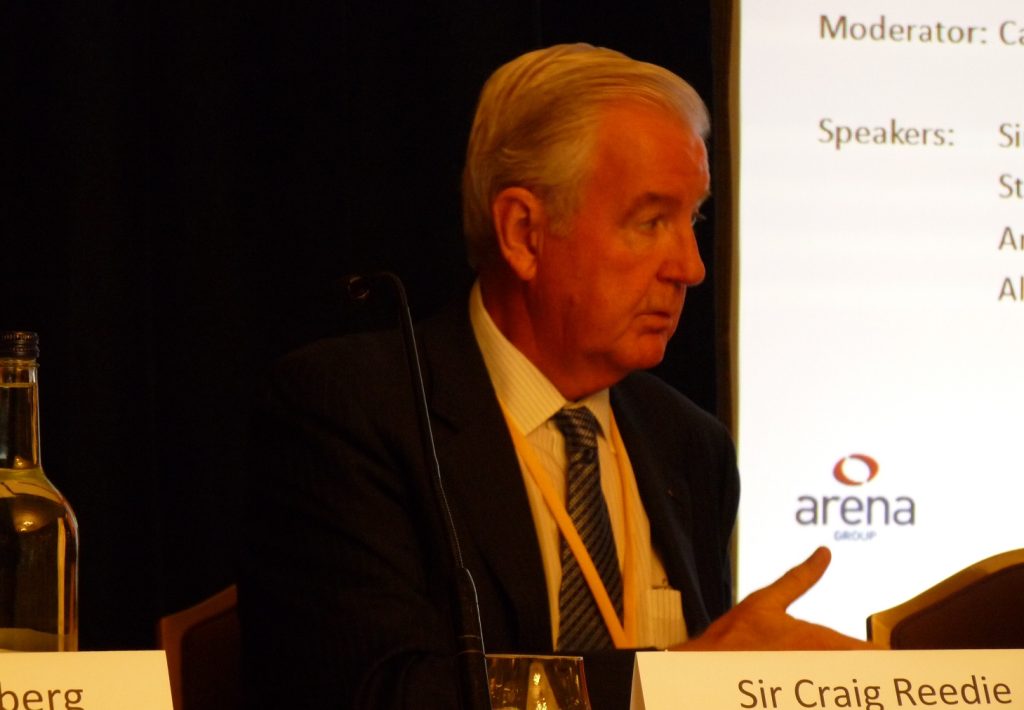
2024 bid cities “highly unlikely” to withdraw – Sir Craig Reedie
Changes to the IOC’s bidding procedure have attracted a “very considerable field” of five candidate cities, all of which are expected to stay the course until the host city election in September 2017, IOC Vice President Sir Craig Reedie CBE told HOST CITY in an exclusive interview.
“The change in the candidature rules, which came out of the whole reform process called Agenda 2020, seems to have attracted a very considerable field of really good cities,” he said.
“The big addition has been the invitation phase before a National Olympic Committee decides finally to put a city into the candidature role.”
This new invitation phase ended on 15 September. “For several months before that, cities that were thinking of bidding for the Games, and the National Olympic Committees, came to meet the relevant people in the Olympic Games department and the candidate cities department of the IOC to sit down and work out exactly how the Games would fit into their city; how it would provide legacy; how it would be sustainable; how it would fit into city plans.
“That’s a complete change from the previous process, where the IOC had a very detailed list of requirements and cities bid against that list.
“So there is a major change there and I understand that it has been welcomed by the cities,” said Sir Craig Reedie, who is delivering a keynote speech at HOST CITY 2015, which takes place in Glasgow on 9th and 10th November under the theme of “Creative Innovation Connecting Cities with Sports, Business and Culture Events.”
The five bidding cities – Budapest, Hamburg, Los Angeles, Paris and Rome – have all progressed to the candidature phase, rather than going through the previous applicant city phase, and will now submit their candidature files in three sections.
“So rather than one huge bid book being required at a set date, it’s divided into three sections. There are workshops planned; there are assistances planned to the cities throughout.”
In the previous round of bids for the 2022 Winter Olympic Games, three cities pulled out of bidding during the applicant phase while Olso withdrew in the candidature phase.
The IOC’s new and more consultative adopted now means that such a fallout is unlikely to happen, Sir Craig Reedie said.
“It is not beyond the bounds of possibility that a city could come back and say we’re not taking it any further – I think that’s unlikely in the sense that a lot of work will have gone into this, a lot of discussions have gone on through the invitation phase. And since it’s going on through a stage by stage basis I think it’s highly unlikely that people will withdraw.
“The end result of that is that we will have five cities presenting to the Session on the ultimate decision to be taken in Lima in Peru in 2017.”
Asked if it was a relief when Los Angeles stepped forward to take the place of Boston’s abandoned bid, Sir Craig Reedie said: “Yes, I think the USOC have all but admitted that their process might not have worked in the selection of Boston.
“But, with Boston’s withdrawal, they were fortunate in many ways that the Los Angeles people were so able to come to the party very quickly and in a relatively tight timeframe.
“Los Angeles has an Olympic record – if they win they will be like London, hosting the third time. The city has changed dramatically over the last few years and I am sure they will come forward with a very good bid.”
The IOC is very pleased to have five cities bidding, Reedie said. “It’s an interesting mix. Paris is looking to celebrate the 100th anniversary of the 1924 Games in Paris and has clear bidding experience.
“Rome hosted outstanding Games in 1960 and there seems to be considerable enthusiasm in Italy and in Rome behind the Rome bid, so they are impressive.
“Budapest has come quite late to the party but again a splendid city and Hungary has a terrific Olympic record.
“It’s interesting that when the German Olympic Committee decided to choose Hamburg as opposed to Berlin, who I suppose before that decision would have been seen to be favourite, immediately there was strong support from Berlin for the Hamburg choice. So again there seems to be a great deal of unity there.
“So it’s a really good field.”
-

2024 Olympic bids and the changing Games
HOST CITY: The IOC must be very pleased with the pool of cities bidding for the 2024 Olympic Games?
Sir Craig Reedie: Yes I think we are. It’s quite interesting that the change in the candidature rules, which came out of the whole reform process called Agenda 2020, seems to have attracted a very considerable field of really good cities.
We are now waiting for further information from Paris, from Hamburg, from Rome, from Budapest and from a North American city – eventually, Los Angeles.
HOST CITY: It must have been a relief when Los Angeles stepped forward – was that anticipated?
Sir Craig Reedie: Yes, I think the USOC have all but admitted that their process might not have worked in the selection of Boston. But, with Boston’s withdrawal, they were fortunate in many ways that the Los Angeles people were so able to come to the party very quickly and in a relatively tight timeframe, because they had a number of things to agree with Los Angeles city before the necessity of putting in a formal bid on the 15th of September.
Los Angeles has an Olympic record – if they win they will be like London, hosting the third time. The city has changed dramatically over the last few years and I am sure they will come forward with a very good bid.
HOST CITY: And the other cities represent a different spread to what we’ve seen in recent bidding procedures.
Sir Craig Reedie: Yes, it’s an interesting mix. Paris is looking to celebrate the 100th anniversary of the 1924 Games in Paris and has clear bidding experience.
Rome hosted outstanding Games in 1960 and there seems to be considerable enthusiasm in Italy and in Rome behind the Rome bid, so they are impressive.
Budapest has come quite late to the party but again a splendid city and Hungary has a terrific Olympic record.
It’s interesting that when the German Olympic Committee decided to choose Hamburg as opposed to Berlin, who I suppose before that decision would have been seen to be favourite, immediately there was strong support from Berlin for the Hamburg choice. So again there seems to be a great deal of unity there.
So it’s a really good field.
HOST CITY: The Olympic bidding process has changed, hasn’t it – after the new invitation phase, we are now straight into the candidature phase.
Sir Craig Reedie: You have to go back a few years to when the system changed from one bidding system into a two phase system – applicant and then candidate. That has now been refined and the big addition has been the invitation phase before a National Olympic Committee decides finally to put a city into the candidature role.
The closing date was 15 September. So for several months before that, cities that were thinking of bidding for the Games, and the National Olympic Committees, came to meet the relevant people in the Olympic Games department and the candidate cities department of the IOC to sit down and work out exactly how the Games would fit into their city; how it would provide legacy; how it would be sustainable; how it would fit into city plans. And the cities were given a great deal of information from the IOC, as it does have a great deal of information from previous bidding processes.
That’s a complete change from the previous process, where the IOC had a very detailed list of requirements and cities bid against that list.
So there is a major change there and I understand that it has been welcomed by the cities, all of whom have been to see the IOC in the invitation phase, and by other cities who went and subsequently decided not to bid but learned a great deal from the exercise and may do so in the future.
And then we come to the candidature phase, which is divided into three parts.
The first part, which runs until June 2016, is the Vision, Games Concept and Strategy and the candidate city’s “bid book” will be submitted electronically. There will be consultation with the IOC throughout and at the end of that first phase the Executive Board will decide whether the cities will move to the second phase, which runs from June to December 2016 and deals with governments, legal matters and venue funding.
Again, the presentations will be made through the IOC with a great deal of assistance and the Executive Board will again make a decision on moving people forward to the third phase, which is Games Delivery, Experience and Venue Legacy and runs from December 2016 through to the selection in September 2017.
So rather than one huge bid book being required at a set date, it’s divided into three sections. There are workshops planned; there are assistances planned to the cities throughout.
HOST CITY: is there any possibility that any of the cities might not proceed beyond each of these particular stages?
Sir Craig Reedie: The whole point of the exercise with the IOC is to help them to get presentations and plans submitted that actually fit not only what the IOC wants for good Games but also what the cities want themselves. There’s an element of skill and discretion needed in doing that; the IOC have to deal with information from one city on a confidential basis and they have to be fair with all five cities. And if they do that, the system will work.
It is not beyond the bounds of possibility that a city could come back and say we’re not taking it any further – I think that’s unlikely in the sense that a lot of work will have gone into this, a lot of discussions have gone on through the invitation phase. And since it’s going on through a stage by stage basis I think it’s highly unlikely that people will withdraw.
The end result of that is that we will have five cities presenting to the Session on the ultimate decision to be taken in Lima in Peru in 2017.
HOST CITY: Five is a very good number of cities.
Sir Craig Reedie: It’s a very good number. I have very warm memories of five cities presenting in 2005 in Singapore.
HOST CITY: And this is all the result of a process of change initiated by IOC President Thomas Bach, which is reflected by the broad theme of the HOST CITY 2015 conference, “Creative Innovation”. Why the need for change in the IOC?
Sir Craig Reedie: I think the principle that Thomas Bach enunciated, to change or change will be forced upon you, is a good one.
People forget that the previous bidding process was certainly the gold standard in sport the world over. If you find that there is a reluctance to bid – and clearly there was an element of that in the 2022 Winter Games situation – then perhaps you should be prepared to do a little bit of out of the box thinking.
And the whole Agenda 2020 process started with two long four or five day meetings of the Executive Board which were effectively a think tank. We ranged all over the place and at the end of the day came up with a coordinated and sensible view of how we wanted to run the Games but also to promote the Olympic movement for the future.
There were some fairly dramatic discussions on the bidding process of the Games. We wanted to make it more inclusive, we wanted to make it more cooperative, we wanted to make it cheaper, we wanted to make it encouraging to more cities to become involved.
In the process of bidding for sporting events, it’s a competitive field. The Olympic Games are the greatest show on earth; it’s important that they maintain this status. It’s important that the athletes regard them as the greatest show on earth and something they really want to take part in.
So therefore a process of change is a perfectly reasonable thing to undertake.
HOST CITY: What are your expectations of HOST CITY 2015 in Glasgow?
Sir Craig Reedie: From my point of view of being involved in HOST CITY 2015, I am delighted that the event is coming to Glasgow, because Glasgow has shown that it is a sporting city with the way it has developed its facilities, the way it ran a major multi-sport event, the Commonwealth Games in 2014, and what it’s been doing since then – not least a couple of hugely successful Davis Cup tennis ties.
So if you look at the excitement that generates locally, and the promotion that it gives the city on a worldwide basis, then I think this indicates that the market out there is a buoyant one.
Cities should be very well prepared to become involved and therefore they should be thinking ahead; they should be innovative – and with a bit of luck they will reap the benefits that Glasgow has.
-

LA 2024 delighted with Host City 2015 attendance
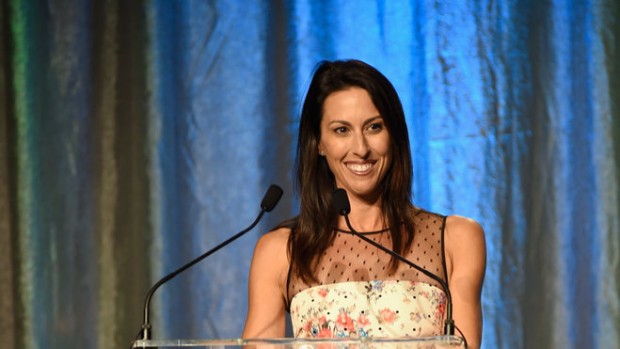
LA 2024 Vice Chair and four-time Olympic swimming champion Janet Evans attended Host City 2015 conference in Glasgow this week, marking the start of a busy period for the LA 2024 Candidature Committee which includes attending the IOC 2024 Candidate City workshops in Lausanne (November 19-20) and the European Olympic Committees (EOC) General Assembly in Prague (November 20-21).
The Host City 2015 conference, which took place in Glasgow on November 9-10, offered Evans, who is also LA 2024 Director of Athlete Relations, the chance to learn from the experiences of a range of leaders from across the Olympic Movement.
LA 2024 Chairman Casey Wasserman said: “We are delighted that Janet is attending the Host City conference in Glasgow with so many Olympic experts present. We are very much in our ‘looking, listening and learning’ phase and these types of events are an invaluable part of this process.
“We will also send a significant LA 2024 delegation to Lausanne for the IOC 2024 Candidate City workshops; which will provide the ideal opportunity to engage and interact with the IOC on the path ahead.
“The EOC General Assembly in Prague represents a further opportunity, after the ANOC General Assembly in Washington, D.C., to consult with the NOC family. Their athletes are at the very heart of the Olympic Movement and IOC President Thomas Bach’s visionary Olympic Agenda 2020. The NOCs have a critical role in preparing and supporting athletes, so it is vital that we consult with them whenever possible.”