Tag: Brisbane 2032

  • IOC Members caution against awarding Games too far ahead

    IOC Members caution against awarding Games too far ahead

    • Brisbane moved to “targeted dialogue” as the first project to meet feasibility criteria
    • This doesn’t mean a host has been elected now
    • If targeted dialogue is unsuccessful, “continuous dialogue” with Brisbane and other interested parties could resume
    • New approach to selecting hosts enables long term strategic outlook
    • Expert advice is to “seize solid existing opportunities” due to impact of Covid crisis
    • No double award with 2036 due to uncertain outlook beyond 2032
    The IOC progressed Brisbane to the “targeted dialogue” stage of candidature for the 2032 Olympic Games following “expert advice” to “seize solid existing opportunities and secure the future” – but planning even further ahead is not recommended by IOC Members addressing the 137th IOC Session.

    Joe
    Berchtold
    President


    Live Nation Entertainment

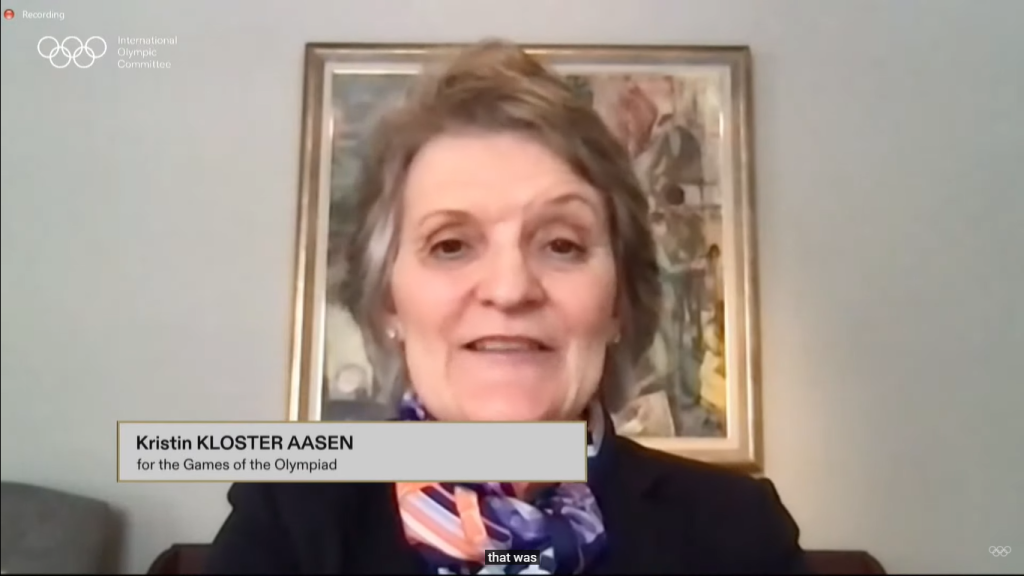
    , Chair of the Future Hosts Commission for the Summer Games addressed the question of whether to consider a double award for 2032 and 2036, akin to the dual awarding of Paris and Los Angeles.
    “The 2024 and 2028 double award was a very different situation for many reasons, not least because it was an election 11 years ahead, while 2036 would represent 15 years before the Games,” she said.
    “In addition the Olympic Games will evolve tremendously during this period. The Games are a reflection of society and there is going to be an evolution in national and individual priorities on sustainability, human development and other topics.
    “The UN Sustainable Development Goals are expected to be concluded by the early 2030s and there will certainly be new, more ambitious objectives with which the Olympic movement will want to align. 
    “The Games should also reflect the fast-evolving sports landscape. In addition there can also be many changes to the political landscape over such a long period, which adds to the uncertainty.”
    IOC Member and Austrian Olympic Committee President Karl Stoss also highlighted the importance of keeping future Games bids open to other prospective hosts.
    “It is great to have a long perspective of our host cities and regions,” he said. “With 2032 Brisbane and Queensland we have a long-term strategy about our hosts of our [Summer Olympic] Games after Tokyo, Paris, Los Angeles and hopefully Brisbane Australia,” he said.
    “But it is also our responsibility, and from the perspective of good governance and fairness, not to go too far in the future, because there may be some other interested parties and cities and regions.
    “We have a good choice if we do it for 2032, but in the mind of good governance and fairness for all – maybe all other interested cities and regions – we have not to go too far in the future.”
    The IOC elected in January 2019 to take a new dialogue-based approach to selecting Olympic hosts.
    “The non-committal and confidential nature of the approach, with no financial commitment, benefits both interested parties and the IOC,” said Kloster Aasen.
    “It has encouraged interested parties to come to the table to test ideas and concepts and explore a vision or a potential for hosting future games or ask for information.”
    The process begins with a phase known as “continuous dialogue”.
    “Since there is no submission required in continuous dialogue, as opposed to the past, interested parties spend very little money and benefit from up to date information and expertise from the IOC at no cost to them. They can test plans and assumptions without public debate and see how to best align their Olympic planning with their own development plans for their communities.
    “This flexibility also benefits the Olympic movement to have a long-term strategic outlook across editions of the Games.”
    Through the new procedure, a candidate’s hosting plan is moved from continuous dialogue to targeted dialogue when it meets certain criteria, as has now happened with Brisbane.
    “It became clear that one project, and only one project met all the opportunities we have seen in the public feasibility assessment, and that project was Brisbane.
    “Moving to a targeted dialogue means that we are moving a project to a second stage for a detailed development and assessment…. [it] does not mean that we are electing an Olympic host now.
    “Once a preferred host has been selected for a particular edition of the games, no other interested party can enter into targeted dialogue for the same Games, unless the first targeted dialogue has been unsuccessfully concluded.”
    Brisbane will now develop its plans in more detail.
    “If Brisbane delivers, the Executive Board would be in a position to put Brisbane 2032 forward to the Session to a vote. If not, despite best efforts by both parties, the IOC and Brisbane, the Executive Board could advise the Future Host Commission to go back to continuous dialogue with Brisbane and other interested parties.”
     
    Global economic repercussions
    The impact of Covid 19 has been felt by National Olympic Committees and interested parties in continuous dialogue. “Many projects were put on hold while governments were concentrating on protecting the health of their cities and trying to shore up their economies,” Kloster Aasen said.
    And the impact will be felt for years to come. “Once the health crisis is over, it is going to have global economic repercussions. The world economy is going through an unprecedented crisis. The current health crisis will have wider global consequences especially with respect to the labour market and the risk of increased inequality.
    “While the impact of the crisis can be witnessed now, experts forecast that the world economy is likely to be most impacted over the next 5 years, during the period when we would have expected to elect a host for 2032 under the previous candidature system.
    “The expert advice that we have been given is that we should seize solid existing opportunities and secure the future for a next generation of athletes who are facing an uncertain future.”

  • ASOIF General Assembly focuses on strategy, governance and Olympic Games preparations
    ASOIF General Assembly focuses on strategy, governance and Olympic Games preparations

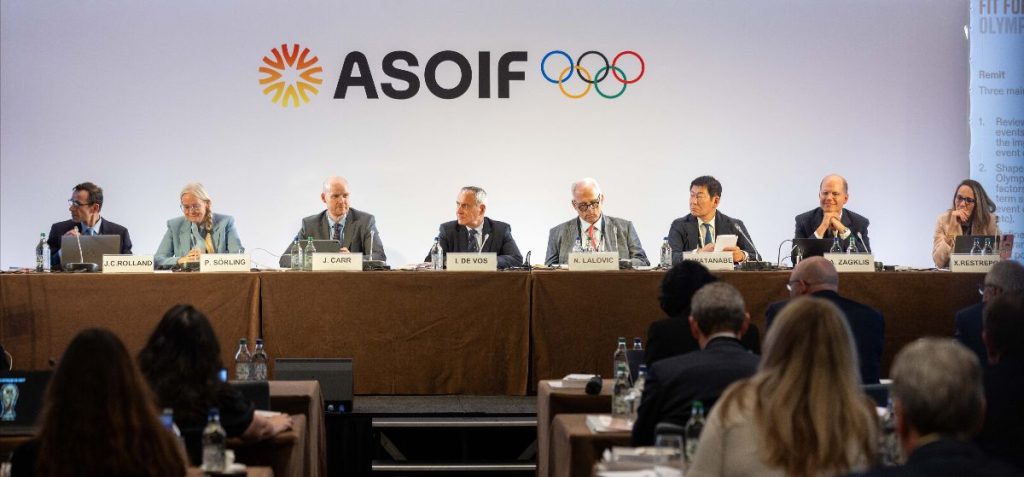
    [Source: ASOIF] The 36 Full and Associate member federations of the Association of Summer Olympic International Federations (ASOIF) gathered today in Lausanne, Switzerland, for the organisation’s 50th General Assembly, with discussions centred on the implementation of the new ASOIF Strategy 2026-2032, the Sixth Review of International Federation (IF) Governance, and preparations for upcoming Olympic Games and Youth Olympic Games.
    The General Assembly was officially opened by ASOIF President Ingmar De Vos before International Olympic Committee (IOC) President Kirsty Coventry addressed the member federations.
    The IOC President highlighted the power of sport and emphasised that all stakeholders within the Olympic Movement must work closely together to fully unlock its potential. She also underlined the vital role played by the IFs and the importance of their continued development and ambition, stating: “If you are not strong and striving, neither are we.”
     
    Implementing the ASOIF Strategy 2026–2032
    ASOIF presented the implementation roadmap for its new Strategy 2026–2032, which is built around three strategic pillars: Advocacy, Influence and Representation; Olympic Games Excellence; and Collaboration and Knowledge Sharing.
    During the meeting, ASOIF also highlighted its refreshed brand identity which was launched in April and is aligned closely with the organisation’s strategic direction and future ambitions. The new visual identity reflects ASOIF’s commitment to innovation, collaboration and a strong partnership with the IOC.
    Reflecting on the new strategy during his opening remarks, ASOIF President Ingmar De Vos said: “Importantly, the strategy recognises that collective action matters more than ever. No single IF can navigate every challenge alone. The strength of ASOIF ultimately comes from the willingness of IFs to collaborate, to share expertise and to act collectively where it matters.”
     
    Governance remains a priority
    Governance continues to be a central focus for ASOIF and its members. The General Assembly received an update on the Sixth Review of International Federation Governance, the outcomes of which will be published in June.
    All 36 Full and Associate Members participated in the review process, which is overseen by ASOIF’s Governance Task Force and supported by an independent governance consultancy. The review is based on a comprehensive framework of governance principles and indicators tailored specifically to the needs of international sport federations.
     
    Olympic Games and Youth Olympic Games preparations
    The General Assembly also received in-person updates from the Organising Committees of LA28, Brisbane 2032 and the Dakar 2026 Youth Olympic Games.
    Representatives from LA28 presented how they are planning to deliver the largest sports programme in Olympic history and outlined planned testing and readiness activities. They also highlighted accelerated recruitment across key operational areas as preparations move increasingly toward Games delivery and test event planning.
    The Organising Committee reported strong public interest following the launch of the ticket draw, with more than four million tickets sold across 85 countries and all 50 states in the first drop.
    The seventh LA28 Coordination Commission meeting with ASOIF representation will take place in Los Angeles from 2-4 June 2026.
    Preparations for Brisbane 2032 continue to progress, with the Queensland Government’s Delivery Plan now in place and venue development and procurement processes under way.
    The Organising Committee confirmed ongoing engagement with the IOC and IFs regarding the development of the sports programme, with the initial programme expected to be finalised in late 2026 or early 2027. Additional milestones foreseen in 2026 include further venue delivery developments, sustainability strategy confirmation, commercial announcements and the unveiling of the Games emblems. Brisbane 2032 has also set up an Athlete and Sport Advisory Group to ensure structured athlete engagement and input.
    Taking place from 31 October to 13 November 2026, the Dakar 2026 Youth Olympic Games will be the next Olympic sports event and the first one on African soil. The Organising Committee presented progress updates across key operational areas, while highlighting continued collaboration with IFs to support sport planning and delivery.
    The eighth Coordination Commission meeting with ASOIF participation took place in Dakar in March 2026 and marked the transition from planning to operational readiness.
     
    Updates from the IOC, WADA and ITA
    The General Assembly also received updates from the IOC on matters relating to IFs and the Olympic Games, especially in the context of the IOC’s “Fit for the Future” process and the related Working Group discussions. Meanwhile, the World Anti-Doping Agency (WADA) and the International Testing Agency (ITA) delivered reports on their anti-doping efforts and collaboration with IFs.