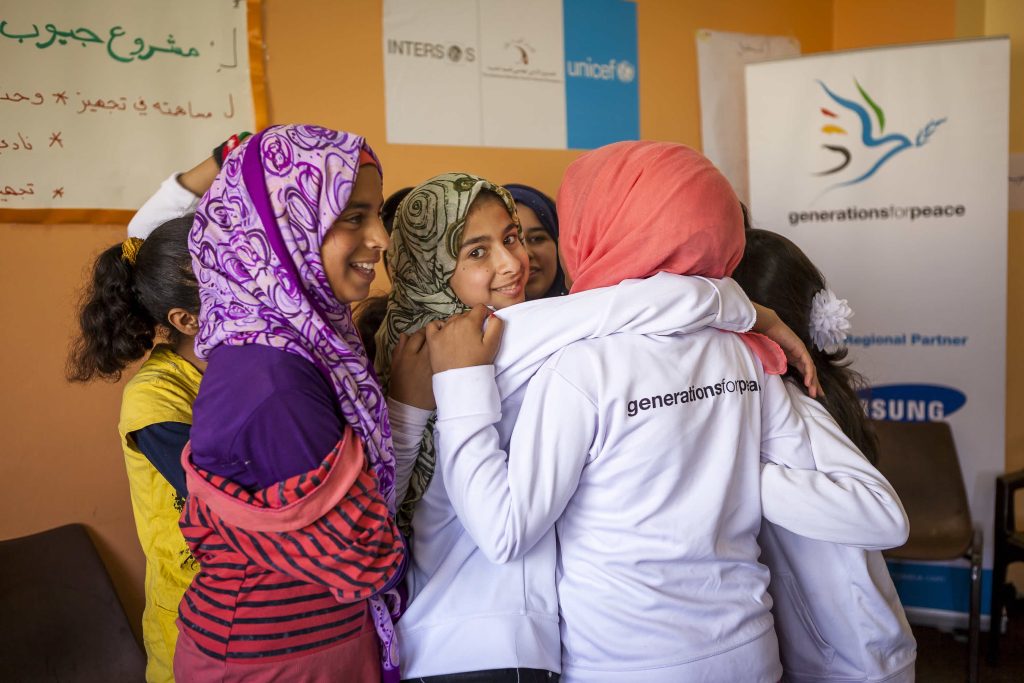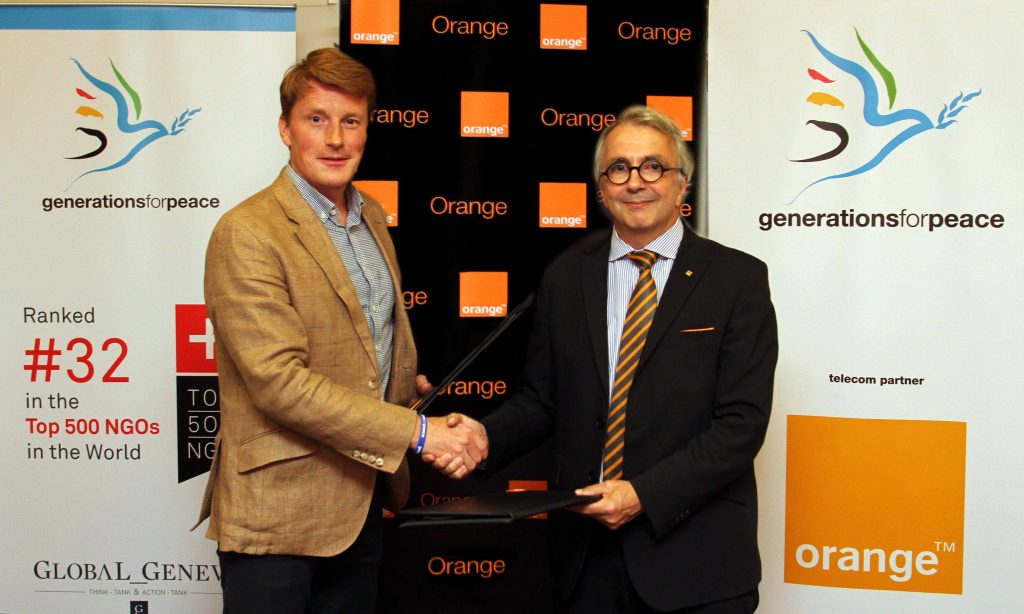
Generations For Peace, a charity that uses sport to promote peace, has been ranked 32nd in the “Top 500 NGOs” list for 2015.
The NGO, founded by IOC member for Jordan Prince Feisal Al Hussein, has climbed 62 places since the last ranking in 2014, making it the second fastest riser on the 2015 list.
The ranking, published by third sector media company Global Geneva, also places Generations For Peace second highest of any peace-building charity on the list.
NGOs are evaluated on their innovation, impact and sustainability.
“Generations For Peace has walked the walk in a very, very short period of time. We were just so impressed,” said Jean-Christophe Nothias, Editor of the ‘Top 500 NGOs’ list.
“Many NGOs previously ranked have gone down the ladder. Generations For Peace has moved up, from #94 to #32; the second-biggest progress of all.
“This ranking recognises Generations For Peace’s management, relative size, expansion and impact, and the overall philosophy of the very local anchoring approach.”
HRH Prince Feisal Al Hussein, Founder and Chairman of Generations For Peace said “I am extremely proud that the impact of our programmes in Jordan and around the world is receiving such global recognition.
“This outstanding ranking has been achieved through the extraordinary dedication of our Generations For Peace volunteers, inspiring and leading change through their efforts to promote peace, tolerance and respect in their own communities. And their success is shared by all our partners who are supporting us every step of the way.”
Generation For Peace also cited its strong relationships with key partners including the Olympic Movement, United Nations agencies (UNICEF and UNESCO), governmental donors including the Norwegian Ministry of Foreign Affairs, the U.S. Department of State and USAID as well as commercial partners like Samsung as a key factor in achieving this ranking.
Since its launch in 2007, Generations For Peace has trained and mentored more than 8,500 volunteer leaders of youth in 50 countries in the Middle East, Africa, Asia, and Europe, with programmes impacting more than 216,000 children, youth and adults.
“Less than eight years after being founded, it is moments like this which help us to recognise how far Generations For Peace has come,” said Sarah Kabbani, Co-Founder and President of Generations For Peace.
“This recognition motivates us all – our staff, our volunteers and our partners – to build on our success and expand our reach to more communities, in response to growing global demand for our programmes.”
Tag: Charity
-

Generations For Peace soars up to 32 in NGO world ranking
-

International sport community in mourning
It was with profound sorrow that I learnt of the tragic helicopter crash yesterday which claimed the lives of three of France’s sport icons, swimmer Camille Muffat, 25, sailor Florence Arthaud, 57, and boxer Alexis Vastine, 28.
Two of them were Olympians. All three of them, just like all athletes around the world, embodied the values of peace. Each of them has moved us, thrilled us and made us proud. They have filled our hearts with emotion. Beyond their sporting performances, they were committed to giving back to society what sport had given them.
We will never forget the youthful vitality of Camille Muffat, 400m freestyle Champion at the London Olympics, the accomplishments of Florence Arthaud, winner of the 1990 Route du Rhum transatlantic race, and the passion of Alexis Vastine, Beijing Bronze Medallist who was looking to win Gold in Rio.
The entire sports community mourns this great loss. Along with the teams of the World Olympians Association and Peace and Sport, our thoughts are with the families and loved ones of the victims.
Joël Bouzou
President of World Olympians Association
President and founder of Peace and Sport -

IOC sponsor Samsung and Generations For Peace renew partnership
Global technology giant and International Olympic Committee TOP Partner Samsung has renewed its regional partnership with Generations For Peace for the eighth year running.
Samsung’s partnership with the NGO is based on shared values. The decision to renew the partnership was influenced by the success of Generation’s for Peace’s programmes and its recent strong performance in a global ranking.
“Since 2008, our partnership with Generations For Peace has been driven by our shared interest in social development through sport and education, and our shared focus on innovation, quality, impact and sustainability,” said Mr. Bumsuk Hong, President of Samsung Electronics Levant.
“We have been especially impressed with Generations For Peace’s recent ranking at #32 in the ‘Top 500 NGOs in the World’, and the results being achieved by empowering youth leaders and teachers to reduce violence, promoting tolerance and responsible citizenship in their communities and schools.”
Samsung’s support is part of its Corporate Social Responsibility (CSR) programme “Hope For Children”.
Generations For Peace, the only peace-through-sport organisation officially recognised by the IOC, runs programmes in the Levant region that use sport to educate, develop and influence the behaviour of young people.
The programmes in Iraq, Jordan, Lebanon and Palestine empower volunteers to address local issues of conflict and violence in their own communities.
HRH Prince Feisal Al Hussein, IOC Member and the Founder and Chairman of Generations For Peace, said: “As our longest-serving partner, Samsung’s support is a wonderful example of an Olympic TOP Partner supporting our work at a regional level. In communities and schools, we are using sport to transform conflict and empower children, youth, and teachers.
“We are also using Samsung’s technology to benefit our programmes. Samsung and Generations For Peace are combining our passion and expertise together, to inspire the world and create a better future.”
-

Pope and Prince Ali discuss football’s power to develop
With just over a month to go before the FIFA presidential election, candidate HRH Prince Ali Bin Al Hussein met with His Holiness Pope Francis at The Vatican on Thursday to discuss the global development of football and how to promote peace and social responsibility through sport.
In the private meeting, Pope Francis and Prince Ali discussed the challenges and opportunities around developing football globally. They also talked about how sport and football can help to promote peace and social responsibility.
“I have been greatly inspired by Pope Francis’s work to use sport to build bridges between people of differing faiths and cultures,” said Prince Ali.
“Pope Francis is a true innovator in this regard; it was a great honour to meet with him not only in his capacity as the leader of one of the largest faiths in the world, but also in his capacity as a much-admired champion for peace, tolerance and inter-faith dialogue and understanding. Our discussions were very fruitful and we share a common vision of using sport as a force for good in the world.”
Pope Francis is a football lover and supporter of Buenos Aires-based team the Saints of San Lorenzo. Before the 2014 FIFA World Cup, he published a video message in which he described football as “a game and at the same time an opportunity for dialogue, understanding and reciprocal human enrichment”.
Last year, the Vatican hosted an interfaith charity football match to promote peace, in which he welcomed past and present greats of the football world for the high-profile game at the Vatican.
Prince Ali is said to be a direct descendant of the prophet Mohammed.
The development of football is a key concern of Prince Ali, who has been vice president of FIFA since 2011. In January 2012, he founded the Asian Football Development Project (AFDP), a non-profit youth commission headquartered in Amman, Jordan.
The AFDP works to develop football across Asia with a focus on youth development, empowering women, social responsibility and the protection and evolution of the game. AFDP led the successful campaign to lift the ban on head scarves in football.
Prince Ali has worked to promote unity and develop football since becoming President of the Jordan Football Association in 1999. In 2000, he founded the West Asian Football Federation (WAFF), of which he is president. WAFF’s members are Iran, Iraq, Jordan, Lebanon, Palestine, Syria, Qatar, United Arab Emirates, Yemen, Bahrain, Kuwait, Oman and Saudi Arabia.
The president of FIFA will be elected on May 29th.
-

Orange Jordan partners with Generations For Peace
Generations For Peace and Orange Jordan on Tuesday announced a new phase in their partnership, which will benefit Generations For Peace programmes in schools and community centres across Jordan.
Under the new partnership, Orange Jordan will provide direct and in-kind support for the Jordan Schools Programme, which addresses violence in schools, and the Social Cohesion Programme, which builds “conflict transformation skills” at community level.
Orange Jordan will also continue to support the telecommunications needs of GFP’s Amman-based headquarters.
“Both Orange Jordan and Generations For Peace share the same goal: to change lives by connecting people and improving communications,” said HRH Prince Feisal Al Hussein, founder and chairman of Generations For Peace.
“This is at the heart of Orange Jordan’s service offering to businesses and communities; it is also at the heart of GFP’s work to transform conflict and reduce violence through dialogue in communities around the world.
“We are proud to call Orange Jordan our exclusive telecoms partner for our programmes in Jordan.”
The “in-kind” support includes marketing activities. The two organisations will work together to awareness and support amongst Orange Jordan customers for Generations For Peace programmes.
Programme participants will have opportunities to engage in Orange Foundation vocational skills training, while Orange Jordan employees will also be able to participate in Generations For Peace-led volunteer activities in communities.
The new agreement builds on the successful partnership between Generations For Peace and Orange Jordan which started in 2012.
“We are thrilled to be able to extend our partnership with Generations For Peace, and demonstrate our commitment to improving local communities in Jordan,” said Jean-Francois Thomas, Group CEO of Orange Jordan.
“GFP’s mission aligns directly with our corporate social responsibility to serve our customers and their wider communities.”
-

DHL increases support package for Generations For Peace
DHL Express, Jordan has extended its support for Generations For Peace to increase the sustainability and impact of the Jordan Schools Programme.
The two organisations share an understanding of the fundamental importance of education, youth leadership and community empowerment. Generations For Peace focuses on empowering teachers and students to address local issues of conflict within schools, which compliments and aligns with DHL’s own “Go Teach” corporate social responsibility goals.
“Whilst hailing from different enterprise sectors, we share the common objectives and values that true partnership requires; we both believe that in working together we can achieve more positive impact,” said HRH Prince Feisal Al Hussein, Founder and Chairman of Generations For Peace.
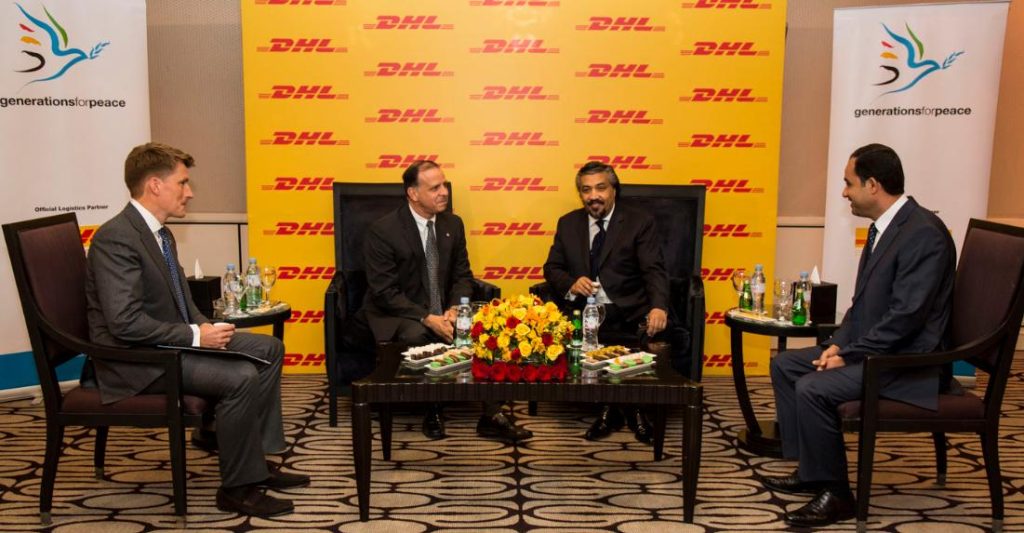
To mark this important milestone in the partnership, HRH Prince Feisal Al Hussein attended a special DHL event on 26 May celebrating Jordan Independence Day, in the presence of Mr Mahmoud Haj Hussein and his fellow DHL Express senior management team.
“Ours is a relationship that has been nurtured over three years and we are delighted to be able to further build on our commitment to Generations For Peace,” said Mahmoud Haj Hussein, Country Manager for DHL Express Jordan.
“At the heart of our highly valued collaboration is the promise that we are both dedicated to delivering excellence, a brighter future and significant improvements to many people’s lives.”
DHL will continue to support global shipments to Generations For Peace programmes across the Middle East, Africa, Europe, and Asia.
-

Belgium backs Generations For Peace refugee youth project
The Belgian Ministry of Foreign Affairs has agreed to work Generations For Peace in a partnership that will boost the impact and sustainability of the NGO’s Jordan Schools Programme, it was announced on Monday.
The partnership will benefit 5,000 young people living in vulnerable refugee host communities in Jordan, Generations for Peace said.
Population pressures and tensions are growing in schools in Jordan’s refugee host communities, due to the intake of a high number of Syrian refugees. The programme focuses on reducing violence and the potential for violence in these schools through sports and art leadership projects.
“This partnership will provide significant support for our Generations For Peace programmes in Jordan at a time when we must continue to reduce the tension and risk of violence among children and young people in schools and communities most in need,” said HRH Prince Feisal Al Hussein, Founder and Chairman of Generations For Peace.
Through the partnership, Generations For Peace Clubs will be created in 12 schools in host communities across Jordan.
Generations For Peace will select and train 100 students who demonstrate commitment and leadership, and equip them with the skills and knowledge they need to begin facilitating sport and art for peace activities in their schools. These young people will also lead on initiatives in their surrounding community that are designed to strengthen social cohesion, resilience and social capital.
“We are delighted to pledge our commitment to this important programme,” said Didier Reynders, Belgium’s Deputy Prime Minister and Minister for Foreign Affairs and European Affairs.
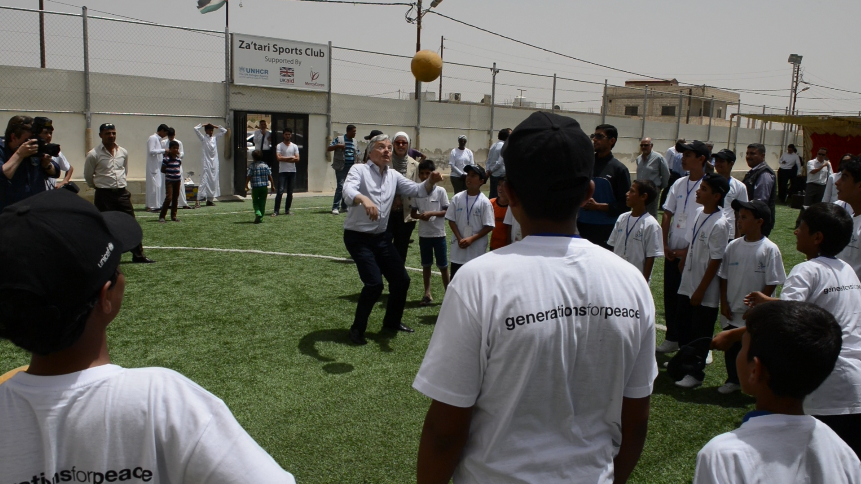
“Our recent visit to see the work of Generations For Peace in Za’atari Village host community demonstrated the power of sport and its ability to break down stereotypes and bring young people from Jordan and Syria together.”
Belgium’s Ambassador to Jordan, Thomas Baekelandt, said “These young people have enormous potential and we are delighted to support them in their role as change-makers who can ensure a brighter future for their communities.” -

EU conference addresses child trafficking through sport
At a conference hosted by ICSS Europe and the European Commission, international experts and leading policy-makers gathered in Brussels on Tuesday to call for sports bodies and governments to act against the trafficking of young people through sport.
The international movement of young athletes has risen dramatically in recent years.
“According to the United Nations, human trafficking is the third largest criminal enterprise in the world. However, trafficking of young athletes through sport, particularly football, is still a taboo in the industry,” said Emanuel Macedo de Medeiros, CEO of ICSS EUROPE.
“As an international organisation working to protect sport, the ICSS is committed to protecting young athletes and raising awareness about the growing issue of child trafficking in sport. Young athletes are not commodities. They are human beings and must be treated as such.
“As a week-long initiative of the European Commission that celebrates sport and physical activity and the positive role it can play in society, the EU Week of Sport was an important platform to raise awareness of the issue and place the topic in the minds of influential decision-makers.”
“Today also reinforces the ICSS’s commitment to safeguarding young people and I would like to encourage governments, law enforcement agencies and other experts in child protection to ensure that clear, practical and effective standards on recruitment, training, education and protection of children and young people are applied across all sports.”
The conference, which took place during the EU Week of Sport, brought together leading figures from sport, child protection and youth development and education.
“There is definitely a link between mobility of young athletes and trafficking. It is important that we put the issue of the child trafficking through sport, particularly from Africa to sports clubs in Europe, on the agenda of leading organisations in government and sport,” said Pascal Reyntjens, Chief of Mission, International Organisation for Migration (IOM) – Belgium & Luxembourg.
“Despite the clear progress made in the protection of minors and young athletes recently, further discussion between sports organisations and other bodies working in this area must take place.”
The conference also highlighted several themes underling the role of sport in education and how it can enhance economic and social development.
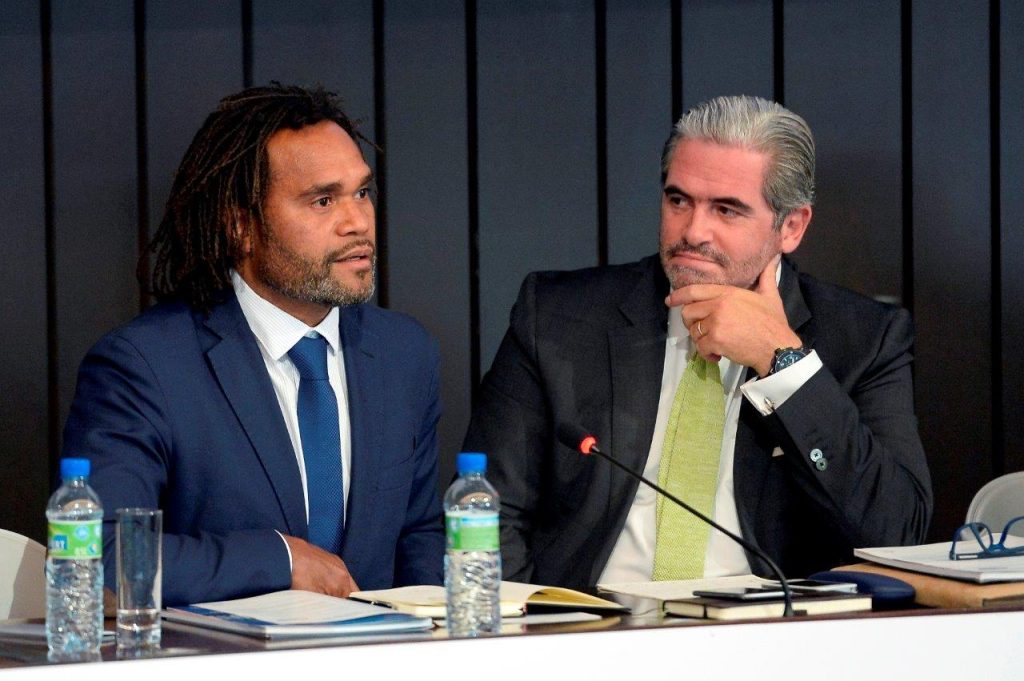
“Sport has the aim to bring people together. It is has the power to change the world and to unite people beyond regions, beyond colours. Sport has no borders and is universal,” said football superstar and UEFA Global Ambassador, Christian Karembeu.
“Through sport, we speak the same language. In sport, we have the same rules, the same life and have the same opportunities. Sport is also a powerful tool for integration and inclusion in wider society.
“I am very proud to be here today and have a strong interest in the topics discussed. Education through sport is very important and through it, we can have balance.”
International organisations attending the conference included: the European Commission, the Council of Europe, UNESCO, United Nations, International Labour Organisation, government organisations, UEFA and other representatives from the sport and Olympic movement, as well leading NGOs.
-

UNICEF boosts Generations For Peace refugee host programme
Generations For Peace (GFP) has been awarded additional funding from UNICEF to expand a successful programme engaging volunteer youth leaders to strengthen social cohesion and resilience, and reduce the potential for violence in refugee host communities.
The programme has seen impressive positive impact in 10 communities over the last year. Building on this success, UNICEF is increasing its support, to expand the programme to 16 communities in 2016. To power the expansion, from 9-14 January, 80 Jordanian and Syrian youth leaders completed six days of intensive training, gaining the capacity and confidence to assess local conflict issues, identify a target group, and design, organize, run, and sustain an ongoing series of activities with youth in their communities.
The youth leaders work in Community Development Centres run by the JOHUD, and Youth Centres run by the Higher Council for Youth, in Ajloun, Amman, Irbid, Karak and Mafraq. The Generations For Peace training helps to empower youth leaders as peer educators, as they learn to design and facilitate activities using a unique conflict transformation curriculum. Following the training this month, Generations For Peace will continue to mentor and support the youth leaders as they organize weekly sessions for youth in their communities. A total of 22 weekly sessions helps to ensure that long-term behaviour change and conflict transformation impacts are secured. To expand the positive impact still further, the youth participants and trained volunteers will also design and conduct local community social cohesion initiatives, reaching an even wider audience with what they have learned.
HRH Prince Feisal Al Hussein of Jordan, Founder and Chairman of Generations For Peace, thanked UNICEF, noting: “We are grateful for the support of UNICEF and others who see the positive impacts of our work and are helping us to build on our strengths and successes to benefit the most vulnerable communities in Jordan. Our programmes over the past few years have demonstrated the effectiveness of empowering Jordanian and Syrian youth to lead activities in their own communities to break down stereotypes and barriers, build strong friendships with one another, and manage conflicts without violence.”
Robert Jenkins, UNICEF Country Representative for Jordan, said: “UNICEF is proud to increase our support to the ongoing work of Generations For Peace in improving the lives of children and youth affected by the Syrian refugee crisis in Jordan. In Jordanian communities hosting large numbers of Syrian refugees, youth-led activities that strengthen social cohesion and resilience are critical to ensuring youth can successfully participate and engage in society, and draw upon support networks when facing extreme challenges.”
Omar Alharaki, a volunteer who participated in the training, said: “I have to be an active member in this community; whatever I can offer, I will offer. We have to make sure that our community is a safe place, and this is why I volunteer. I also volunteer so I that can contribute to building a socially conscious generation. Even if we go back to Syria, we will have concepts and principles to take with us, and we will work hard to pass them on from generation to generation.”
Since the conflict in Syria began, more than 633,000 Syrians have registered as refugees in neighbouring Jordan (UNHCR 2015), 52% of whom are youth under the age of 18, and with 82% residing in host communities rather than refugee camps.
The work of Generations For Peace towards improving social cohesion among Jordanian and Syrian youth in host communities is also supported by the Norwegian Ministry of Foreign Affairs, the Inti Raymi Fund, Samsung, Orange, and DHL.
Source: Generations For Peace
-

Ten refugees to compete at Rio 2016 under Olympic flag
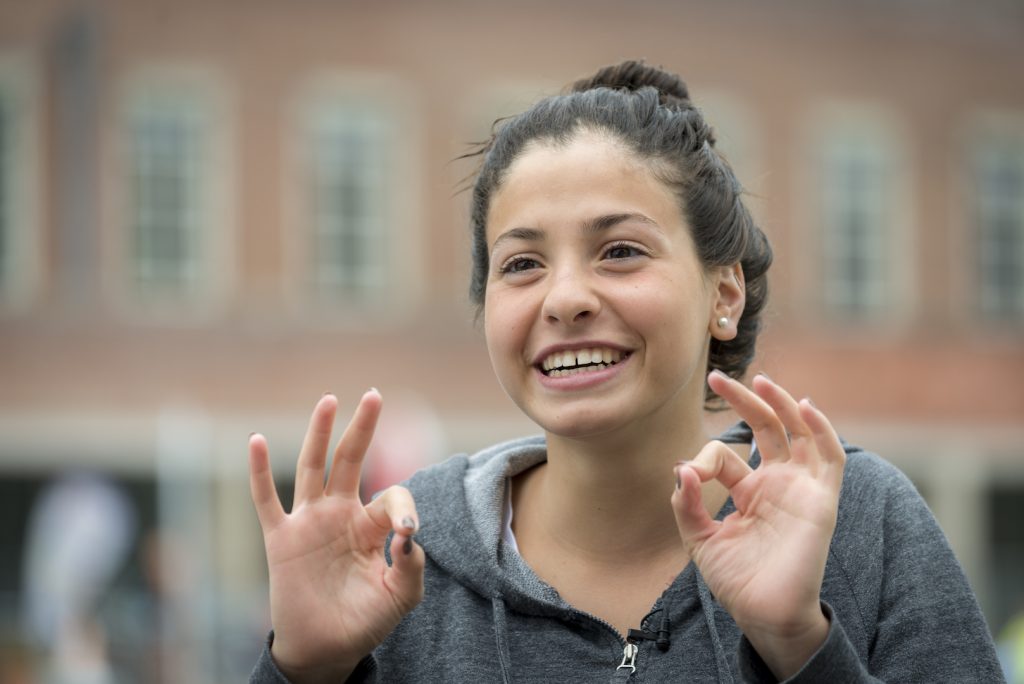
Ten refugee athletes will take part in the Olympic Games Rio 2016 this summer in the first ever Refugee Olympic Team (ROT), the International Olympic Committee announced on 3 June.
Rami Anis, Yiech Pur Biel, James Chiengjiek, Yonas Kinde, Anjelina Lohalith, Rose Lokonyen, Paulo Lokoro, Yolande Mabika, Yusra Mardini and Popole Misenga will march with the Olympic flag immediately before host nation Brazil during the Opening Ceremony.
“These refugees have no home, no team, no flag, no national anthem. We will offer them a home in the Olympic Village together with all the athletes of the word. The Olympic anthem will be played in their honour and the Olympic flag will lead them into the Olympic Stadium,” said IOC President Thomas Bach.
”This will be a symbol of hope for all the refugees in our world, and will make the world better aware of the magnitude of this crisis. It is also a signal to the international community that refugees are our fellow human beings and are an enrichment to society. These refugee athletes will show the world that despite the unimaginable tragedies that they have faced, anyone can contribute to society through their talent, skills and strength of the human spirit.”
As part of the IOC’s pledge to aid potential elite athletes affected by the worldwide refugee crisis, NOCs around the world were asked to identify any refugee athlete with the potential to qualify for the Olympic Games Rio 2016. Such candidates could then receive funding from Olympic Solidarity to assist with their preparations and qualification efforts.
Forty-three promising candidates were initially identified. Selection of the ten athletes was based on consultation with their host National Olympic Committees (NOCs), International Federations, the UNHCR and the NOCs of their countries of origin. Nomination criteria included sporting level, official refugee status verified by the United Nations, and personal situation and background.
Five of the athletes originate from South Sudan, two from Syria, two from the Democratic Republic of the Congo and one from Ethiopia. Five are hosted by the National Olympic Committee of Kenya, two by Brazil, one by Germany, one by Luxembourg and one by Belgium.
Six of the athletes will compete in athletics running events, two in swimming and two in judo.
Like all teams at the Olympic Games, the ROT will have its own entourage to meet all the required technical needs of the athletes. Olympian and former marathon world record-holder Tegla Loroupe (Kenya) was named the team’s Chef de Mission, while Isabela Mazão (Brazil), who was proposed by the UNHCR, will act as the Deputy Chef de Mission. They will lead a crew of five coaches and five other team officials.
The team will be housed in the Olympic Village like all the other teams and will get its own welcome ceremony at the Olympic Village, like all other teams. Team uniforms will be provided by the IOC.
For all official representations of the team (including possible medal ceremonies), the Olympic flag will be raised and the Olympic Anthem will be played.
A proper doping control process will be introduced through the World Anti-Doping Agency (WADA). Olympic Solidarity will cover preparation, travel and other participation expenses for the team and will continue to support the athletes of the team after the Olympic Games.
The IOC will also continue to support the refugee athletes after the Games.
Through Olympic Solidarity and its Olympic Scholarships for Athletes programme, the IOC aims to help smaller NOCs prepare and qualify their athletes for the Olympic Games. The IOC’s priority is to focus primarily on athletes who need the assistance the most and to place them on an equal footing with their competitors from more developed regions of the world. In the lead-up to London 2012, for example, 1,264 Olympic scholarships were allocated to athletes from 171 NOCs in 21 sports. 657 ‘scholars’ eventually took part in the Games. They won a total of 72 medals.
Following the approval of Olympic Agenda 2020, the IOC’s strategic roadmap for the future of the Olympic Movement, and in light of the current global refugee crisis, the IOC also created a special fund of USD 2 million to develop relief projects through sport in collaboration with NOCs around the world. Over 15 NOCs have already made use of this fund.
The IOC already works with a number of United Nations agencies to help refugees around the world. For the last 20 years, the IOC and UNHCR in particular have been using sport to support healing and development among young refugees in many camps and settlements around the world. They have consequently seen thousands of refugees benefit from sports programmes and equipment donated by the IOC.
The biographies of all athletes and their entourage are available here.