Dame Tessa Jowell MP, former Secretary of State for the Olympic Games has proposed that a one per cent tax on hotel stays should be brought in to fund events, culture and youth development in London.
The tax could raise GB£50m per year, London newspaper the Evening Standard reported.
These funds would be used to stage events such as the New Year’s Eve Fireworks, as well as creating a culture fund for local boroughs, enabling town halls to apply for funds to host free community events.
The revenues would also be diverted to helping create equal access to cultural and leisure activities for children in London. According to the Department for Work and Pensions, the families of 200,000 London children can’t afford leisure equipment such as bicycles, while 100,000 can’t afford extra-curricular activities such as music lessons.
Other major world cities such as Paris and Rome already tax tourists on their hotel stays. In New York City, non-residents are charged more than 14 per cent on their hotel bills to contribute to city’s finances.
The tax could only be introduced in London if the government grants new powers to the Mayor and London’s boroughs.
Dame Tessa Jowell is the pollster’s favourite to be Labour’s candidate for the Mayor of London. The Mayor will be elected in May 2017.
The former Secretary of State responsible for all planning of Olympic bid and implementation was a member of the London Olympic Board from 2010 to 2012. During the Games, she was Deputy Mayor of the Olympic Village
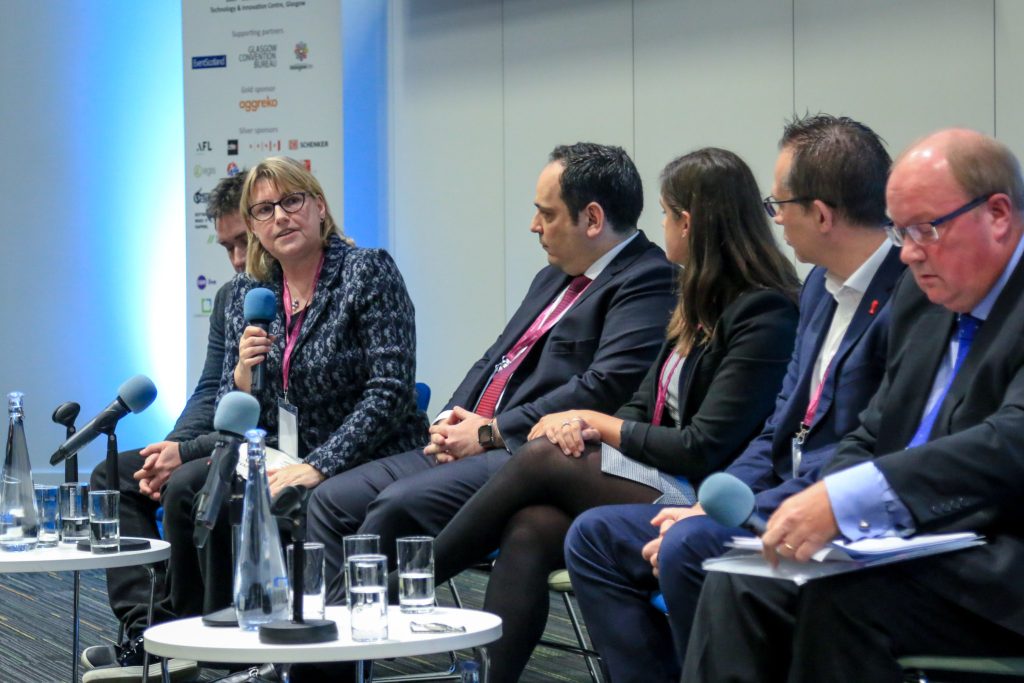
She is speaking in the opening panel discussion on “Why Events Matter to Cities” at HOST CITY 2015: The Largest Meeting of Cities and Sports, Culture and Business Events on 27 and 28 October.
Tag: Culture
-

Tessa Jowell: boost events and culture through visitor tax
-

The next stage for Scotland
2014 was a momentous year for Scotland and major events were at the heart of the excitement. The great success of the “best ever” Commonwealth Games in 2014 was followed by an acclaimed Ryder Cup.
“We’ve been putting Scotland forward as the perfect stage for events for a number of years,” Paul Bush OBE, chief operating officer of EventScotland told HOST CITY magazine. “What came out of last year is that it was a step change for us.”
The successes of 2014 have provided a platform for future hosting successes, building on proven strengths that EventScotland refers to as the “four Cs”: capacity, capability, credibility and confidence.
“Our capacity, in terms of number of volunteers, transport, infrastructure and accommodation, is now recognised around the world,” says Bush. “As for capability, all the events were delivered as the best ever or recognised some of the best.
“Credibility is about reputation; the experience of people coming to our events was high. And the feedback we had from the local population was extremely positive – they didn’t see the events as an impediment; they saw them as something to be proud of.
“And that’s given us the confidence to look bigger and better in the future. The international federations now have great confidence in bringing their events back to Scotland this year.”
Glasgow is hosting the IPC Swimming World Championships and the World Gymnastics Championships in 2015.
Outside the cities, Scotland is hosting seven golf tournaments back to back this year. The Open Championships takes place in St. Andrews this year while the Women’s British Open takes place in Turnberry in Ayrshire.
The World Orienteering Championships, which has record number of entries already this year, takes place in Speyside, the countryside around Aberdeenshire.
And the UCI Mountain Bike World Cup is taking place in Fort William again in what has become an annual Scottish fixture.
“We’re really cognisant of the fact that we’ve got to spread the benefit as much as we can across the country,” says Bush.
“That’s not always possible because the facilities and the infrastructure are often the driver, but using our natural landscape is really important to us.
The European Eventing Championships, the final qualifying event for Rio 2016, is in the tiny village of Blair Atholl in Perthshire. “The infrastructure that will be needed to put up around that will be huge, and that will really showcase the landscape of that area.”
The 2014 Ryder Cup was hosted on a greenfield site at Gleneagles. Despite the influx of 50,000 people a day, there were no problems in getting people to and from the event – thanks to a transport infrastructure group set up by the Scottish government to look after major events. Initially set up for the Commonwealth Games and the Ryder Cup, this group has since maintained its position within Transport Scotland to ensure the smooth operation of all major events.
Beyond sport
Major cultural events are also an invaluable part of Scotland’s hosting portfolio. Glasgow was the European City of Culture in 1990, hosted the MOBOs in 2009, 2011 and 2013, the MTV Awards in 2014 and is hosting the Turner Prize in 2015.
“Glasgow is recognised as one of the cultural gems of Europe; it has a huge history and heritage within contemporary arts,” says Bush, pointing out that three of the last five Turner Prize winners were educated at the Glasgow School of Art.
“The MTV Awards got to a totally different demographic in terms of young people. MTV communicates through social media –their ticket sales for Glasgow were activated through Facebook, they don’t rely on traditional routes at all.”
Scotland nurtures its own cultural events that are incredibly valuable to the economy. The Edinburgh Festivals bring in around £262m each year, while Hogmanay alone brings in over £30m each year.
“We’ve got some great gems in the cultural portfolio that we want to sustain and grow,” says Bush.
Business events are also an increasingly important feature of Scotland’s event strategy. “Meetings, corporate events, incentives, associations – these have now become part of our portfolio and we are looking to see how the synergies work between these different types of events,” says Bush.
Mass participation is another area where Scotland is keen to grow and diversify. Bush cites the London Prudential Ride and Melbourne’s Ride the Night, which attracted a quarter of a million people into the city centre between dusk and dawn, as examples.
“We are looking at pressing different buttons, accepting the fact that we are not going to get the Ryder Cup or the Commonwealth Games every year, or even every lifetime. “The big thing for us is to ensure that people who come to events become repeat visitors in the future.
“Last year, most people’s perceptions of Glasgow were changed and they realised what a great city it was to come to. A lot of cities have stigmas attached to them. But people thought this is a great city, it’s a really fun place to come to and the people are really welcoming.”
How to become a world class host
So, how can other cities and countries around the world follow this example build themselves into world-leading event destinations?
“The most important thing is you’ve got to have a very clear strategy and you’ve got to stick to that. It’s quite easy to buy events, as certain places in the world have successfully achieved. But you’ve got to work out your USPs, your strategy and your vision.
“You’ve got to invest in good people and you’ve got to give those people the time, the ability and the confidence. In Scotland we started this in 2001 – that’s 14 years ago. “But probably the most important thing in terms of long term success is your ability to deliver and the reputation that comes from that.”
International conventions for the event hosting industry are precious few, but make the most of these, says Bush. “They are really important because they provide that ideal opportunity to get everybody in one place in the world to rekindle those relationships.”
This interview was first published in the Winter 2014/15 Issue of HOST CITY magazine. Since then, Glasgow has been awarded the hosting rights to the new 2018 European Sports Championship.
-

Dublin launches bid for European Capital of Culture 2020
The race to host the European Capital of Culture 2020 shifted up a gear on Saturday, when Dublin announced its bid and Galway revealed a new website for its bid. Limerick, which was City of Culture in 2014, is also in contention.
There are two European Capitals of Culture every year. The bid process starts when the European Commission calls for applications from the relevant national authorities, such as the ministry of culture.
Ireland and Croatia, which joined the EU in 2013, have been designated the hosts of the 2020 edition and the process is underway to select a host city from each of these countries.
Christy Burke, Lord Mayor of Dublin on Saturday welcomed 28 young Dubliners to present their hopes for Dublin2020 in a “wishing tree ceremony”.
“I am thrilled to join these young visionaries on Europe Day and to officially launch Dublin2020, our bid to be European Capital of Culture in 2020,” he said
“Dubliners are proud Europeans and these young people, who will all be young adults in 2020, are the city’s future.”
The cities will now prepare candidature files that will be judged on six criteria: contribution to the long-term cultural strategy; European dimension; cultural and artistic content; capacity to deliver; outreach; and management.
The title is awarded on the basis of a specific programme over and above the normal cultural activity of a city.
According to the European Commission, the size of a city is not a factor and surrounding areas may be incorporated into bids. Cities with fewer than 25,000 inhabitants have hosted the European Capital of Culture.
The European Commission says success factors are: acting as a catalyst for a step-change in the city, or an area of a city; a measurable increase in the self-esteem of citizens and pride in the city; an increased engagement with the cultural offers of the city, especially with audiences less likely to attend or participate; development of new cultural offers, new skills, new opportunities for artists and cultural organisations; and a greater international understanding and profile, often seen in increased tourism and reputation.
Periodically, a third European Capital of Culture is awarded from a candidate or potential candidate to EU membership. The Serbian city of Novi Sad announced in March that it would make an official application for European Capital of Culture 2020 in autumn 2015.
The host cities of the European Capital of Culture 2020 will be announced next year.
-

How to be a European Capital of Culture
The European Capitals of Culture programme has grown immeasurably since its launch in 1985.
“We started modestly 30 years ago and now we are typically having cities spend up to EUR 70-100m for a yearly programme being a European Capital of Culture,” says Karel Bartak, Head of the Creative Europe Coordination Unit at DG Education and Culture, European Commission.
“So it is very prestigious from the point of view that there is a huge interest in every country.”
Initiated by Greek culture minister Melina Mercouri and originally called “European City of Culture”, the programme was renamed “European Capitals of Culture” in 1999. Two hosts are now appointed each year, enabling a wider range of destinations to benefit.
“In the past most of the bidding and winning cities were capital or very big cities, but now many of these have already been European Capitals of Culture, so now we are seeing smaller cities bidding and it brings a new and very interesting edge”.
“If you have a smaller place of 100-200,000 inhabitants, the impact is much, much bigger and also much more visible for the city’s inhabitants than if you have a European Capital of Culture in say Paris or Athens.”
In 2013 the medium-sized Slovakian city of Kosice was a European Capital of Culture.
“Everyone who comes from there says the city has been changed beyond recognition by the year, and it has really become a cultural hub including Ukraine, Hungary, Poland and so on,” says Bartak.
“In Umea last year in Sweden it was similar case; and this year the town of Mons in Belgium, which has only 80,000 inhabitants, is having a huge impact and the whole country is celebrating.”
Mons is joined by Pilsen in the Czech Republic as a European Capital of Culture for 2015.
How to bid
The bidding procedure is based on a “Decision” of the European Parliament and the Council of the European Union, which is the legal basis for the selection and monitoring processes.
“This legal basis determines which countries are concerned with European Capital of Culture for the next eighteen years, so we all know well in advance which countries are going to be concerned,” says Bartak.
The country concerned typically issues a call for applications six years in advance of the title year. Interested candidates submit a bid book of 80-100 pages and present it to a panel that pre-selects a shortlist of candidates.
The pre-selected candidates then have another seven to eight months to prepare the final bid.
The panel is now composed of 10 members who are selected by European Commission, Parliament, Council and Committee of the Regions, plus two selected by the governments of bidding country. This international jury of experts is renewed by a third every year.
The process is democratic. “The chairperson, who is always chosen by the jury from among its members, is always trying to have a consensus. But if there is no consensus then there is a vote,” says Bartak.
“It is always tense as the responsibility is huge, cities investing a lot of energy, hope and financial resources in their bid.”
Once selected, the host cities have four years to prepare their programme for the year. During this phase, the Commission convenes monitoring meetings during which the panel give cities advice and guidance and take stock of their preparations.
How are the bids evaluated?
The international jury judges the bid on criteria specified in the Decision of the European Union.
One of these criteria is the European dimension of the programme: how it brings to the fore the cultural diversity in Europe and our common cultural features, how it leads to new or reinforced cultural partnerships and cooperation at EU level. Another is the participation of the citizens and of the various cultural, social and economic stakeholders of the city in the design and implementation of the yearly programme. The jury also looks at sustainability and legacy issues as the project must be embedded into the longer term cultural development strategy of the city.
“They make sure that once the year is over the overall level of cultural life and the investment in culture has long lasting effect, and the level of cultural life stays much higher than it was before the year,” says Bartak.
“Besides that, the jury is looking into the financial sustainability – the composition of the package of money that is available. We are always keen on having a good mix between private and public funding and so on.”
The financial contribution of the European Commission is relatively small.
“The Melina Mercouri prize which is given to each city which has won the title is 1.5m Euros, so it is just a kind of symbolic contribution; otherwise the city has to find the budget. Many hosting cities however use the money coming from the EU Structural Funds.”
Future hosts
The selection process for 2020 European Capitals of Culture is now underway. Ireland and Croatia are currently running their competitions for 2020 and the bidding process is set to change slightly.
“The current situation is that the Commission is monitoring the process, but is not at all interfering in it. This is run by the independent panel, the jury. Until now, the national governments and then the institutions of the EU (European Parliament, Commission and Council) would then take on board the recommendation of the jury,” says Bartak.
“As of the 2020 titles, this will be done differently; the jury will recommend the city to the government concerned, so the institutions of the European Union will be left out of the process – to make it simpler and less bureaucratic.”
The pre-selection process in Croatia was completed in May 2015. “We had nine cities competing and four were preselected. The recommendation for the final selection will happen in January of next year.”
By October, it will be clear which cities in Ireland are competing to host the 2020 European Capital of Culture. “I think all bidding cities have a chance. Each application is judged on its merits,” says Bartak.
Creating a network of cities
There is a great opportunity for the European Commission and its network of European Capitals of Culture to share experiences.
“As previous title-holders, Mons and Pilsen have organised a gathering of previous and future European Capitals of Culture, which was an interesting moment of brainstorming and bringing together their experiences and stories of preparation and implementation.
“We feel that with our thirty years of experience, we have more and more knowledge and advice to give and, with the lessons learned it becomes easier for cities to avoid mistakes made in the past.”
The European Commission will discuss these issues and opportunities in greater detail at HOST CITY 2015 on 9th and 10th November in Glasgow.
To find out more about the bidding process for European Capital of Culture visit http://ec.europa.eu/programmes/creative-europe/actions/documents/ecoc-candidates-guide_en.pdf or register to attend HOST CITY 2015
-

London’s light fantastic
London’s first Lumiere light festival closed on Sunday 17th January at 10.30pm, having transformed the city’s streets and buildings with 30 spectacular artworks. First estimates put the numbers of visitors at over 1 million attending the festival over four evenings.
Developed by creative producers Artichoke and supported by the Mayor of London, Lumiere London turned King’s Cross and London’s West End, including Leicester Square, Piccadilly, Regent Street, St James’s and Carnaby into a magical pedestrian playground and encouraged Londoners and tourists alike to explore the heart of the capital and view it in a new light.
“I am thrilled by the success of Lumiere London, which has brought a wonderful burst of imagination, colour and creativity to our city’s streets in the middle of cold, dark January. It could not have happened without the input and support of the many businesses and agencies who helped to make it happen,” said the Mayor of London Boris Johnson.
“We have been astounded by the crowds, which exceeded all our expectations and brought a boost to the West End and King’s Cross and are delighted by the response, not just from Londoners, but visitors from around the world.”
Lumiere was created by Artichoke in Durham in 2009, and has been recommissioned by Durham County Council every two years since then. In 2013, Artichoke also produced Lumiere in Derry~Londonderry UK City of Culture, commissioned by Culture Company 2013. In November 2015, the festival returned to Durham for the fourth time, attracting an estimated 200,000 visitors to the city.
“It’s been an unprecedented four nights for London and the turnout has been extraordinary,” said Helen Marriage, Director of Artichoke.
“Over a million people came to experience something truly magical and unusual: this great world city turned into a temporary pedestrian playground.
“While the success of the festival did mean that contingency measures had to be put into place occasionally to help keep the crowds moving, the atmosphere has always been amazing. This festival has been about more than seeing the art. It’s about people sharing public space and re-discovering the city’.”
Over 200 volunteers from across the capital were recruited to support the festival through Team London, the Mayor’s volunteering programme for London.
Business boost
The festival is said to have brought a significant year-on-year uplift in food and beverage sales to businesses in London’s West End and King’s Cross, with anecdotal reports of double digit growth from restaurants, cafes and bars.
With founding support from Atom Bank, Bloomberg Philanthropies, Heart of London Business Alliance, London & Partners and King’s Cross, plus additional support from a host of partners and sponsors, including Westminster City Council, Lumiere London presented installations by 30 international artists, at some of the city’s most iconic locations.
The creative power of Lumiere was accompanied by a boost to business in the city. Karen Baines, Heart of London Business Alliance representing over 500 businesses and 100 property owners in Leicester Square, Piccadilly and St James’s said “The atmosphere in Leicester Square, Piccadilly and St James’s has been absolutely electric with footfall increasing by 18% year on year on Thursday and Friday from 6pm to 11pm, as visitors flocked from far and wide to see our globally renowned cultural landmarks transformed.
“Our vibrant evening economy saw a significant boost with West End restaurants, cafes and bars reporting double digit growth in sales as visitors made the most of what was on offer to make it a night out and an evening to remember.”
How London came to life
Audiences from across the world were enthralled by artworks including a glowing tropical garden filled with giant plants in Leicester Square Gardens and a technicolour animation featuring the faces of some of the UK’s best-loved TV and film stars, projected onto BAFTA, 195 Piccadilly. At Oxford Circus, which was closed to traffic during the festival, people lay on their backs gazing up at 1.8 London, Janet Echelman’s beautifully illuminated aerial sculpture strung between buildings at Oxford Circus.
Along Regent Street, pedestrianised for the event, crowds gathered to see Elephantastic!, a 3D, larger-than-life projected elephant stomping through the Air Street arch, while in St James’s visitors gazed at the ethereal Les Voyageurs – sculpted human forms flying high above the buildings. At Westminster Abbey, audiences stood mesmerized by The Light of the Spirit, a digital painting by French artist Patrice Warrener, who had bathed the Abbey’s West Gate in an electric riot of colour.
In Carnaby, on Broadwick Street, visitors gathered around Julian Opie’s animated LED monolith – Shaida Walking. The piece has been commissioned as a permanent installation and will be illuminated during the day as well as at night.
Aquarium, Benedetto Bufalino & Benoit Deseille’s iconic red telephone box filled with exotic fish at Grosvenor Square, was a firm festival favourite, drawing audiences to the leafy garden square in Mayfair. The square was also a temporary home to Elaine Buckholtz’s abstract digital painting, which uses light and music to re-imagine Van Gogh’s painting All Night Café.
Hundreds of Londoners of all ages played their part in the festival: from donating a recycled plastic bottle to the glowing Plastic Islands installation by Luzinterruptus in the Trafalgar Square fountains, to appearing on film in the spectacular Circus of Light projected onto the Granary Building at King’s Cross. 500 children also took part in workshops at schools in the area to help make Joining the Dots and Litre of Light, both also at King’s Cross.
Founding Partner Bloomberg Philanthropies and Artichoke also hosted a sold-out Lumiere London Symposium, “The Heart and Soul of the City”. Speakers including Lumiere London artists, cultural pioneers and leading policy makers, shared their visions for the public realm, and how artists and communities can transform it. -

Eventful cities combine culture and technology
The spring EUROCITIES Culture Forum, held on 16-18 March in Eindhoven and ‘s-Hertogenbosch, focussed on “Technologies as a game changer for culture” and the concept of “eventfulness”.
The forum examined the links between art, science and technology, and explored through practical experiments how the “triple helix” concept applies to culture in cities.
Through the discussions and work sessions, city delegates learned about Eindhoven’s transformation through a combination of technology and creativity.
The founding of the Philips company in 1892 positioned Eindhoven as a major technological, industrial and design hub. When Philips closed down in 2000, the 270,000m2 Strijp industrial area, formerly home to the Philips offices, was turned into an art and technology hub dedicated to everything from research and development to cultural production and display.
Strijp-S has become the high-tech creative and cultural centre of Eindhoven. Since 2008 ‘Cultuurfonds Strijp-S’, a public-private fund, has been supporting initiatives, events and programmes in the Strijp-S area and contributes to its national and international reputation.
“Experiments” and “experiences” are key words for culture in Eindhoven. Culture is understood in its broad sense. In Eindhoven there is a focus on living laboratories where creatives, businesses and education work together intensively on innovative products and projects, in which new technological applications are tested.
Using the concept of “Eventfulness”, the city of ‘s-Hertogenbosch deployed an integrated model to set-up world class events.
A team of restoration experts was convened to convince museums around the world to lend their paintings for a unique retrospective celebrating the 500th anniversary of the death of local painter Hieronymus Bosch.
Tickets for the exhibition have all sold out and Bosch’s works are inspiring many other activities throughout 2016 with music festivals, art, dance performances in public space and light projections.
“If you invest €1 in culture you get €5 into the city and €20 into the country” said Anton Rombouts, mayor of ‘s-Hertogenbosch.
Delegates also learned that failed bids for European Capitals of Culture can bring new opportunities.
After an unsuccessful joint bid for European Capital of Culture 2018, the cities of Eindhoven and ‘s-Hertogenbosch, together with other cities from the Brabantstad network of cities and the Brabant province, continued working together, joined forces and created a fund for culture called ‘Brabant C’. The aim is to boost the national and international attraction of the Brabant area by strengthening art and culture.
Culture and the arts also play a key role in the integration process of newcomers in cities. Getting involved in cultural projects activates a sense of community and belonging and cultural projects give migrants and refugees the chance to make a contribution to their host societies.
Delegates learned how cities’ cultural administrations can create situations for mutual learning and intercultural dialogue; develop bottom-up programmes; and train their staff to better address the needs of a diversified society.
The next EUROCITIES culture forum will take place in Oulu, Finland from 5-7 October, and will focus on cultural education and culture for children.
Source: EUROCITIES
-

How Nussli created Bern’s temporary theatre
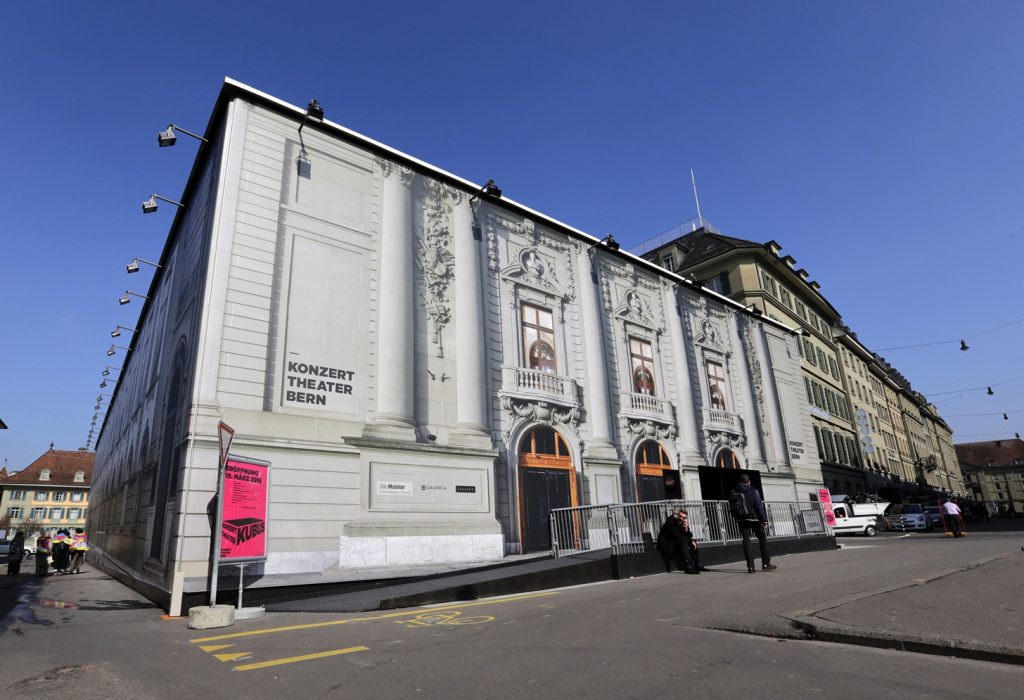
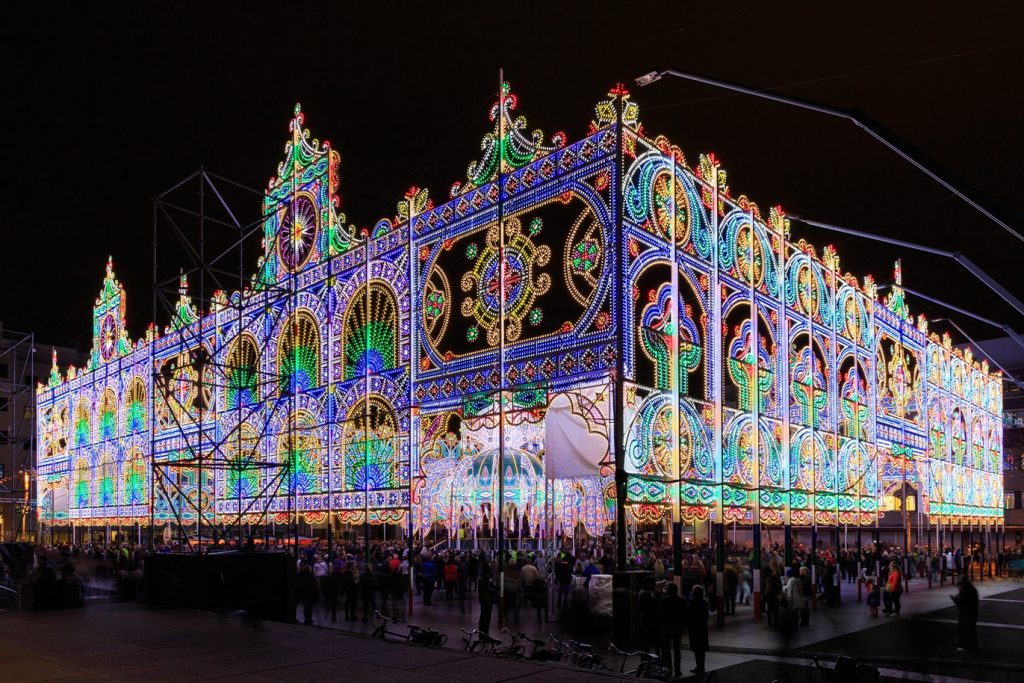
Theatre lovers in Bern are being offered something very special. Performances for the 2016 season take place not in the usual venerable municipal theatre, but in the middle of Bern’s Old Town. NUSSLI has installed a temporary theatre cube, with a historical appearance, in record time on Waisenhausplatz.
The theatre opened on March 19 with a programme of exciting, impassioned and fascinating performances that runs until October 2016.
“If the restoration work at the municipal theatre is delayed again, we can easily leave the cube standing for another season during the winter or even adjust the building to changing needs at a later date,” says NUSSLI Project Manager, Christian Frei.
For a year and a half, Frei and his team worked on the development of the system with which the halls can be constructed within a very short time, even at the most unusual locations, in any size and with column-free spans of up to 40m.
Efficient and Easy to Build
Frei was often on site during construction on Waisenhausplatz and lent a hand time and again, because the assembly of the modular hall system is almost as thrilling as its unlimited applications.
At the very beginning, the assembly crew installs the external structure with the flexible NUSSLI construction system. Then, they completely assemble the roof structure, including the sound and lighting fixtures, on the ground at a comfortable working height within the designated construction area. Finally, the entire roof structure is moved to its final height.
This construction method reduces the required installation space to a minimum and enables installation even on sensitive ground while increasing the safety of the crew. All the streets around the cube on Bern’s Waisenhausplatz were able to remain open to traffic throughout the construction, and the crane-free assembly did not stress the underlying parking garage structure in any way.
Central Location Opens up Possibilities
The idea of bringing the theatre cube to the audience instead of bringing the audience to an existing provisional arrangement opens up new possibilities for the Bern Theatre.
The program was therefore put together with a conscious effort to include events which reflect the central position in the public square and appeal to various interests. So, a tango milonga, a public viewing of the European Football Championship and a James Bond evening are scheduled in addition to ballet, opera and drama.
The modular hall system offers some important advantages, especially for construction projects in public places, on sensitive ground, or with limited access. The construction system requires no foundations, there is significantly less point loading than with construction using conventional steel supports, and the total load is evenly distributed over the entire ground surface.
Because Waisenhausplatz sits directly atop a parking garage which is subject to special static requirements, there were no problems for the theatre cube despite its 1000sq m size and 200-ton weight. No heavy crane equipment is needed, especially for assembly work in modular hall system.
“We could have set the theatre cube up on the Pilatus or on a golf course,” laughs Project Manager Frei. “That would work.”
Plan Today, Build Tomorrow
The planning of the Bern Theatre cube with 480 seats, catering, backstage and technical areas as well as a cloakroom took less than a year.
“A month after the first truck rolled out with its material, the cube was already cladded, equipped, and ready to go,” recounts Christian Frei.
He is looking forward to the reactions after the first performance, but adds quite calmly: “If the theatre organisation still wants modifications, it can be quickly and easily adjusted. The walls of the cube are also made of system material. They have just the exact thickness so that the entire installation can be accommodated in them and still remain easily accessible.”
Plans for the next projects with the modular hall system are already underway. Besides other theatre constructions, NUSSLI is planning a double-decker bridge for the IndyCar race in Boston in September. A bridge that has it all, because it crosses over the racetrack to the South Boston waterfront and will be equipped as a VIP lounge.
The sophisticated structure consists entirely of system material. Therefore, it is possible to start construction one day after approval of the construction concept on the part of the client or the authorities – which is unparalleled.
This article was written by NUSSLI
-

How to create a music tourism hotspot
Host City: We are very much looking forward to your participation in Host City 2016. What do you think is most interesting about the conference agenda?
John Langford: I think it’s a much needed conversation piece, realising the economic impact that big events can deliver. In particular I think there’s a growing focus on cultural events.
Host City: Are we seeing a greater convergence of sport and entertainment?
John Langford: Yes we are definitely seeing more of that and I think there are two reasons. The first is that the lines between sport and non-sport entertainment are becoming blurred. We are expecting it to be integrated: whether it’s a Super Bowl half time show or an opening or closing ceremony of Formula 1 Rocks, it’s becoming expected.
The second reason is that it adds value to sponsors and consumers. It brings in additional people and additional money. My wife will come with me to sport events if she knows there is going to be some kind of entertainment that she is going to be interested in. That brings in more eyeballs and more sponsors.
Host City: In relation to your experiences as a promoter and venue manager, what do you think are the critical issues for customer experiences?
John Langford: The first thing is truly understanding what the customer experience is. In our case, the customer experience begins the moment the person starts looking for tickets, not when they arrive at the venue.
And if you take that to a city context, it’s the whole experience that someone has. If they are a music tourist, it’s not just seeing Coldplay at the arena or the stadium; it’s the whole experience that leads up to that: the travel, the hotel, the food, the whole lot.
Secondly, we are all striving to exceed expectation and for me that’s a measure of great customer experience – we need to truly understand what the customer is expecting and then exceed that.
Thirdly, this really means that all the players need to work in a synchronised approached and that is a real challenge for cities – how do we work better with transport hosts, airports, hotels etc. to deliver a city-wide customer experience?
Host City: How does SECC work with the city of Glasgow to achieve this?
John Langford: Fortunately, the city of Glasgow is quite progressive in the way it approaches big events, more so than most other cities around the world. It’s always had a big drive to lead on hosting events, whether that’s conferences – they’ve got a very successful conference team at the city marketing bureau – or the major events team, who we worked with very closely on events like the MTV European Music Awards and Radio 1’s Big Weekend. We’ve got the MOBO awards coming up at the end of the year – those are driven by the city as opposed to promoters.
The real benefit of Glasgow is that there is a city strategy to drive cultural tourism. And it works both ways: the city can drive things to us, and if we have an idea we can drive it back to the city. A good example is the Ignition Motoring Festival in August, which is a concept that we came up with and the city bought into it and essentially it’s a whole campus-wide festival of motoring.
Host City: How do you go about programming content at SECC and SSE?
John Langford: We are quite fortunate in a way in that we don’t have major competition for our size in a good 200 mile radius. And Glasgow audiences are great; they are some of the best audiences in the world and we know from the research we’ve seen that they buy about 50 per cent more tickets that the UK average for live music events.
Typically anything that comes to the SSE Hydro is booked in the same way that the O2 is booked in London: a big artist like Madonna, U2 or Timberlake will typically book the O2 and the Hydro and then fill in the rest of UK and Europe on the back of that. So we are very fortunate in that we get a lot of proactive bookings; promoters will come to us.
We do however have challenges outside those busy periods where we try and create our own content and that requires working with promoters and artists and festival organisers to create events.
We are very cautious not to be promoters. Some venues feel differently but we feel we are not in the business of promoting. We would rather be in the business of coming up with concepts, taking a share of the risk, but we’d rather work with an established promoter to actually deliver the event.
We work very closely with AEG that owns the O2 in London on a country music festival called Country to Country. We are working on another music festival, the genre of which I can’t share just yet.
Host City: So you are moving towards “festivalisation” as well?
John Langford: Yes, I think that’s an audience trend. People are expecting bang for their buck. Way Out West in Gothenburg is an example of an urban festival, or the Great Escape in Brighton – those are examples of things that we would certainly like to see more of in Glasgow, not just on our campus. We feel that we are part of the fabric of Glasgow, just as much as Barrowlands or Hampden Park stadium.
Host City: How important is nurturing local talent for cities to develop themselves as cultural hubs?
John Langford: I think it’s all part of the same ecosystem. You need record labels, promoters, managers, recording studios; you need a whole ecosystem that creatively feeds itself.
Some of the research that I’ve seen on developing music cities is that it’s important to have all of the aspects working together; and ideally that it’s driven by the city and I think that’s probably the biggest challenge for a lot of cities.
It’s a bit like herding cats, particularly in the creative industries; there are a lot of entrepreneurs and independent thinkers and I think the challenge is creating an environment within which they can work. You need to lead without pushing and I think that’s a real challenge for cities.
Host City: How important is venue planning in creating entertainment hubs – not just physical venues but also using open spaces?
John Langford: Glasgow has a good range of venues, indoor and outdoor, sports and entertainment. I think it’s key that cities have that.
Secondly it’s licensing and I think a lot of cities need to work harder on this. You need to get all the city structures working together if the object is to bring more events into the city. Whether its occasional licenses for drinking, food or capacity, everything needs to work together.
You need a progressive planning regime in the city. In the UK there are a lot of traditional music venues that are being squeezed by pressure from residents. The gentrification of areas is causing a lot of venues to shut down, so there is a big drive, certainly from the music industry, to protect those venues.
But what you’re talking about is going that extra step. It takes a liberal, forward thinking city to recognise that there is going to be a bit of pain sometimes, whether it’s noise or hundreds of thousands of people coming to your city for an event – the progressive cities realise that’s where the economic impact comes from. You need to take a bit of pain sometimes to get the gain.
*UK Music report “Wish You Were Here 2016”
John Langford, Director of Live Entertainment at SECC and SSE Hydro, is speaking on 22nd November at Host City 2016 conference and exhibition on the subject of “Creating Entertaining Experiences for Visitors”. -

£750,000 of funding launched for arts at Glasgow 2018
[Source: Glasgow 2018] A fund of up to £750,000 has opened to artists, arts organisations and groups who want to apply to be part of the Glasgow 2018 European Championships’ cultural festival.
Festival 2018 is part of the biggest sporting event hosted in Scotland since the Glasgow 2014 Commonwealth Games. Co-hosted with Berlin, Glasgow 2018 is multi-sport event to be staged from 2 to 12 August 2018. It brings together the existing European Championships for Aquatics, Cycling, Gymnastics, Rowing and Triathlon along with a new Golf team championships. Berlin will host Athletics.
More than 3,000 of the best athletes on the continent will compete in 12 venues across Scotland including Glasgow, Edinburgh, Loch Lomond and The Trossachs, North Lanarkshire and Perth & Kinross.
The Festival 2018 Fund aims to deliver a programme of broad cultural expression ranging from grassroots initiatives to large scale international projects to involve talent from across Scotland and deliver a programme with something for everyone.
Applications are invited from all art-forms including music, visual art, theatre, dance, film, literature and performance to showcase the best of Scotland’s cultural offer. Glasgow’s George Square and the Merchant City Festival will be at the heart of Festival 2018 alongside communities close to the venue areas.
The fund opened on Tuesday 25 July 2017 and closes on 6 September 2017. Applications can be made at www.glasgow2018.com/festival2018/fund. Applications will be considered in terms of quality and impact and how they reflect the European context and Glasgow’s close collaboration with co-host Berlin, the 2018 Year of Young People and the way in which arts and culture can reference and link to sport through physical movement.
The Glasgow 2018 European Championships is delivered in partnership with several leading European sports federations with support from the Scottish Government and Glasgow City Council.
Culture Secretary Fiona Hyslop said: “The European Championships 2018 Cultural Festival offers an excellent platform to strengthen connections both at home and internationally. Scotland has a reputation for being a vibrant and culturally-rich nation and everyone here for the Championships will be able to sample some of this for themselves.
“As we look towards 2018 and the Year of Young People, there will also be a programme of events and activities celebrating Scotland’s many unique qualities as a great place to grow up and mark our young people’s important contribution to society. This Festival Fund will help to create new and valuable experiences for visitors and those who live here and I’m delighted to welcome this important part of the European Championships 2018.”
Leader of Glasgow City Council Susan Aitken said: “Festival 2018 will showcase and celebrate the very best of Glaswegian and Scottish culture.
“Our city has the greatest concentration of creative industries in Scotland, with more than 5,000 people employed in the cultural sector directly and more than 25,000 employed in the arts and creative industries more widely.
“This fund reflects our commitment to that sector and will help deliver a programme of activities at Glasgow’s iconic George Square; the Merchant City Festival, and many more venues across the city next year.”
Tickets for sporting events are now on sale and can be purchased from www.glasgow2018.com/tickets. Tickets are being sold on a first come first served basis, with fans encouraged to book early to avoid disappointment. -

Creating entertainment hubs and cultural meccas with Cirque du Soleil
This article follows our involvement on a panel discussing the topic of “Creating entertainment hubs and cultural meccas” at the Host City conference and exhibition in November 2017.
The debate at the conference emphasised the importance of location integrity and matching strategic local cultural goals to event goals in the creation of successful “go to” events, wherever they are located in the world.
Our experience in all we do proves these conclusions. First up, Cirque was formed from within the long-established Montreal creative street entertainment community. This gave us artistic credibility and sector integrity from day one for our Circus inspired shows. This allegiance to Montreal and the strong “alternative street-scene” there has been core to our offer as we expanded and grew.
Our Head Office is still based in Montreal. As an Englishman when visiting this HQ, it also helps when immigration officials ask, “reason for your visit”. When replying I always mention, “work with Cirque”, which causes the officials to visibly swell with pride and wave me through!
Cirque has definitely added to Montreal’s cultural reputation. It often appears on lists of ‘the World’s most reputable cities’, vying for top 10 positions with cities that are far larger.
All Canadians, (not just those handling immigration,) now see the city as what Forbes magazine has termed the “cultural epicentre of the country.”
This claim for culture may not be so easy to extend to our other important entertainment hub– Las Vegas!
We have over 3,000 staff located there, running up to eight shows more suited to the unique “local cultural goals” that only Vegas can deliver. Our ‘Michael Jackson One’ musical plays to packed houses twice a day at the Mandalay Resort & Casino.
In the decade we have been in Vegas, Cirque has definitely contributed to the city’s long established “Big Show” entertainment reputation, even if this may seem at odds with the more bohemian Montreal hub.
Another core part of the Cirque offer is our touring shows. We have between six and eight shows on the road, at any time, performing shows all over the globe.
According to our twitter feed today (January 2018) we have shows in Rio, Beijing, London, Los Angeles, Pittsburgh, Dubai and Panama City. They will remain in a city for between one week and six months and continually tour the globe for up to eight years.
These are a mixture of arena-based shows, such as the Albert Hall when in London, and performances under the big top. We have recently added ice skating arenas to this roster with our newest show based on ice, “Crystal”.
Every show is a self-contained mini village – a mobile entertainment hub, if you will.
Most recently Cirque has added a new provision to our offer – one that builds on our ability to create, stage and sell entertainment that is relevant to today’s media savvy and entertainment hungry consumers.
We are developing partnerships with locations, entertainment organisations or rights holders who wish to develop their own experiences, whether branded or not.
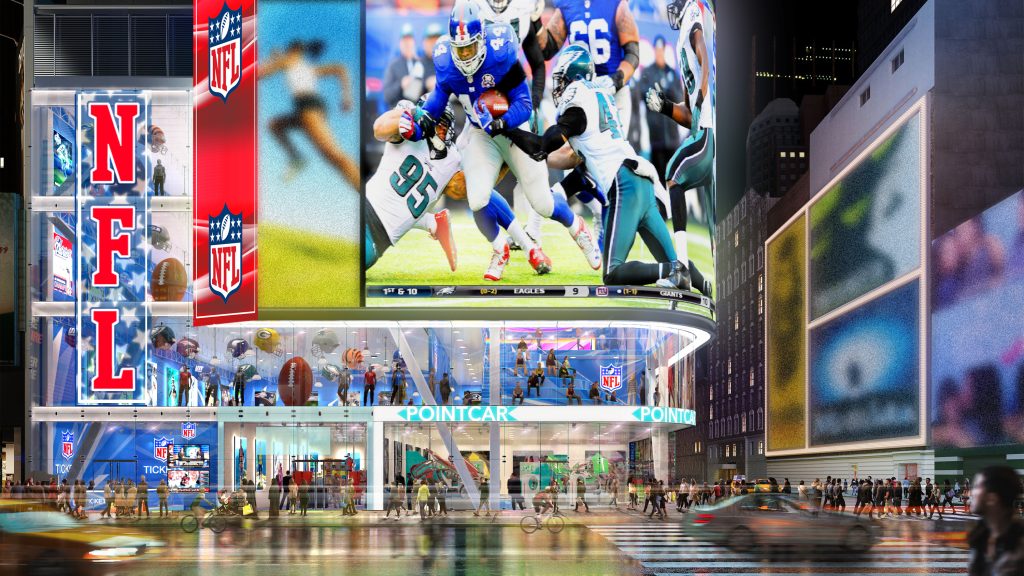
The NFL X on Times Square in New York is our most recent example of this offer. We have developed, in close co-operation with the NFL a four story, 40,000sq foot, interactive and immersive series of exhibits. Check out https://www.nflexperience.com
NFL X confirms those panel discussion conclusions. Firstly, the importance of location integrity and secondly, matching strategic local cultural goals to event goals.
The NFL X adds to the Times Square integrity by adding to its status as a “must-see” destination within one of the World’s most famous cities. It also fits within New York’s unique cultural offer – being brash, loud and original.
Nick Prichard is part of the Cirque du Soleil Global Alliances team. He is currently developing the new Experiential provision with a number of Host Cities, Sports Rights Holders and Brands. To find out more please contact him on nick.prichard@cirquedusoleil.com