Tag: Digital

  • China’s e-brands buy into global sports

    China’s e-brands buy into global sports

    The worldwide rise of digital media is concurrent with the growth of the middle class – and nowhere is this more evident than in China. Millennials are consuming content primarily through digital media, and their appetite for sport is immense. China’s investments in sports and entertainment will be a key theme of Host City 2016, the largest meeting of cities and cross-sector events, which takes place in Glasgow on 21 and 22 November.
    The distribution of sports content in China is being driven largely by internet companies. The long and growing list of online companies in China involved in the sports market includes Wanda Group, Tencent, Sina Sports, and PPTV. Two of the most recent and nimblest arrivals on the scene are Alisports and LeSports, the leaders of which shared their ideas with Host City at World Football Forum.
    Alisports’ disruptive innovation 
    Alibaba Group amassed a US$200bn fortune primarily by connecting global buyers with the Chinese supply chain. But the company realised there was a large missing piece from its giant online jigsaw. 
    Wang Dong, Vice President of Alisports says, “In order to complete its ecosystem, sports is one of the elements initially they missed and they want to put this last puzzle piece right there to complete this whole situation.” 
    In December 2015, Alibaba’s newly formed “E-Auto” connected car brand signed an eight-year Presenting Partnership with the FIFA Club World Cup. 
    “This nine month old company signed a deal with the FIFA Club World Cup as really part of the way to make its presence felt,” Wang Dong tells Host City. 
    “By aggressively being involved in the world sports arena, the presence of China will be strongly felt.”
    In April 2016, Alibaba Group launched its dedicated sports brand, Alisports, to tap into the growing market opportunity. 
    “I think the overall environment of the sports industry is getting stronger and stronger. And overall we see that, given the boost of economy of China and around the world, the sports industry is certainly a way to reach out more,” says Wang Dong.
    Private sector investment in China is running in tandem with a massive government drive to boost sports. “I think that given that we have a very football-loving President Mr Xi, showing leadership there, all the elements are on the table – and this is a way to really find out more business opportunities.”
    Alisports will use its online platform and connections not only to broadcast existing events but also to launch new innovative formats. 
    “We are acting as a service provider, with the eplatform for everybody to launch their business on. And also we do our own sports activities as well by operating events, by running events and by actually being closely in touch with associations around the world to, if you will, be a little bit disruptive, to create some new events, formats and leagues and regulations, to attract the younger crowd. 
    “It could be three-a-side or five-a-side street football or basketball – a bit different to the traditional leagues that include more people.” 
    LeSports – accessing users through sports
    LeSports is the sports brand of China’s largest online video company LeEco, broadcasting online for mobile, for OTT (over-the-top) TV and laptop.
    “LeSports is maybe the most ambitious sports company in China,” Ma Guoli, Deputy Chairman of LeSports tells Host City. “We are concentrating not only on the media but also events and products – everything related to sports.” 
    LeSports won the broadcasting rights in China for three matches of the International Champions Cup, including a match between Manchester United and Manchester City in the National “Bird’s Nest” Stadium on 25 July. 
    LeSports owns the online broadcasting rights in China to the qualifying rounds of 2018 World Cup. The company is also investing in businesses outside the People’s Republic of China, having bought the media rights in Hong Kong for the Premier League and the World Cup in 2018. 
    “We have our own platform in Hong Kong – so we telecast it ourselves and also sublicense some rights to local TV platforms. And we have subsidiaries in the US but we are just getting started there.”
    More than 40 sports disciplines are broadcast on LeSports. “We’ve got a joint venture with Lagardere Sports Asia; for the future we would like to do more partnerships.
    “In terms of investment, at the stage mostly we prefer to buy. To get a joint venture with an existing sport organisation is not easy. Because if you are the organiser you like to sell the rights – it’s better than to joint venture.”
    Competition between digital platforms in China is strong, he says. “For the new media platform, a view means a user and a user means a potential consumer. The key point for the digital platform is to get more and more users. And they need media rights to get more users.” 
    Why digital is booming in China
    Ma Guoli says China presents immediate opportunities for internet broadcasting that do not exist in the western world. “In Europe and the US, I believe traditional TV has no competition from online in the next ten years, mainly because they own many rights until 2030. 
    Digital media companies are growing much more quickly in China, Ma Guoli says, because there is no competition for TV from commercial broadcasters. 
    “In China we lost the opportunity to develop the pay TV business. It is such an important source of revenue for sports organisations. 
    “Because in China there is only one TV network for sports, people need more – then online companies have a chance. If people want to watch golf but they can’t get it on traditional TV, now the online companies own rights. 
    “The technology is developing so quickly today, so new media platforms can provide more content to the people, who can then choose a platform to select an event that would like to watch. It’s a combination of traditional TV and new media platform – that’s the role that digital platforms play in China. 
    “And the technology is so good now; with the OTT TV set, the quality of the picture is better than cable TV.”
    According to Cai Yanjiang, Director ABU Sports, Asia-Pacific Broadcasting Union, the rise of new media is an incentive for broadcasters to develop their own digital media broadcasting. 
    “CCTV started their new media before 2000, but unfortunately CNTV – the digital media platform for sports broadcasting – didn’t work very well. CCTV can develop to make better digital broadcasting of sports events on their own platforms,” he tells Host City.
    The national broadcaster is aware of the changing consumer demands. Zhang Xing, Deputy Controller of CCTV Sports says, “We are seeing that the older generation of viewers still uses television sets, but younger views use their phones. We need to guarantee that we still broadcast events on TV but we need to give more importance to social media.”
    Disruption across Asia
    Of course, the phenomenon of digital media transformation is not restricted to China. “Disruption is happening everywhere,” says Cai Yanjiang.
    “For me it is good when western companies rush into the Asia Pacific region with new technology and help broadcasters in a new way through the internet and internet plus – that is something that the Chinese broadcasters are adopting. 
    “And more and more internet companies are taking over the dominant role. In the past it was CCTV dominating, but it’s actually changing now in China. That will also happen in surrounding countries, in south Asia, it has already happened in Japan and Korea, where traditional TV is facing a great challenge from internet companies. 
    “So from my perspective, serving for the Asian broadcasting union, we’ve got a lot of underdeveloped nations and they don’t have enough facilities or logistic support and telecom standard won’t support them to do internet broadcasting at the moment. 
    “But they are building up, so I would advise our members, the broadcasters in Asia Pacific region, to go forward, to take up the new way of internet broadcasting, because we all know that digital is the trend in the broadcasting world – not only in football but in everything. 
    “That is good; that will set a model for our members in underdeveloped countries and state broadcasters to follow. That’s undergoing now in countries like Malaysia, Singapore and Thailand – everywhere they are developing new digital broadcasting solutions.”
    However, Asian broadcasters need investment to undergo digital transformation. “What they don’t possess is funds, because in the past traditional television got government funding. Now they need to find a new way to develop their own digital broadcasting. At the same time, telecom companies and digital media companies – especially international ones – are trying to enter the market.
    “There is huge potential for example in Myanmar, in the Philippines – everything is changing fast. So although at the moment it’s not really developed, but we can see in the future they have potential.
    “In some countries traditional television and new media work together very well; in other countries they are trying to kill each other.”
    According to Dong Wang of Alisports, digital media companies have the potential to overtake domestic broadcasters within five years. 
    “The faster the domestic broadcasters realise how important digital media and platforms are to them and their government and local companies, if they invest in digital media then they can win over in the future because they have government support. 
    “But if they are not doing anything on this, when the foreign investors, telecom companies or digital broadcasters enter the market, there will be no room for domestic broadcasters any more. 
    “It can be a great leap to transform from the traditional broadcasting way to the digital way. It will just take five years or so and the whole thing will be changed – so it’s like a race.”
    The question is – who’s going to win? “It’s really hard to say. It depends on the vision and understanding of governments,” he says. 
    “Governments must support their own domestic broadcasters by setting up some regulations – even state laws to protect broadcasting. It’s quite important for the improvement of local companies. Otherwise they will be taken over by all those internationals.”
    This article was based on exclusive interviews with Host City and panel discussions at World Football Forum 2016
     

  • Paralympics: Taking inclusion to the summit through social media

    Paralympics: Taking inclusion to the summit through social media

    The International Paralympic Committee (IPC) Academy Campus will take place in Rio de Janeiro from 6-17 September 2016. The Social Media Partner of the Inclusion Summit at the IPC Academy Campus is AXSChat, an open online community of individuals dedicated to creating an inclusive world. Here, IPC Academy Campus speaks to AXSChat’s Co-Founder Neil Milliken, about how the community has leveraged social media to grow awareness of inclusivity issues.
    Why did you launch AXSChat?
    “We believe that accessibility is for everyone. Social media has a great power to connect people and we hope to accomplish and encourage in-depth discussions and spread knowledge about the work people are doing to enable greater access and inclusion through whatever means. We believe that AXSChat is a great example of how social media and communication tools allow people to come together and break down silos. We host weekly video interviews and twitter chats with people who are contributing to making the world a more inclusive place through technology or innovating to enable wider participation in society for people with disabilities.

    “We created AXSChat because we wanted to broaden the conversation about ways society can benefit from accessibility and inclusion of persons with impairments. In the beginning, myself and my fellow AXSChat co-founder Antonio Santos reached out to Debra Ruh to propose a partnership to create a weekly chat to help engage all stakeholders in conversations with a goal being to help break down barriers. People often consider accessibility to be a narrow technical issue and we know that it is much wider. Our goal was also to give persons with impairments a bigger voice on social media.
    “Each of the founders has personal stories that connect us to the community of persons with impairments, either physical or learning. Debra has a daughter with Down’s syndrome, parents that acquired physical impairments and two nephews with autism. I am dyslexic and have parents with acquired physical impairments. Meanwhile, Antonio has a wife with fibromyalgia. 

    “Consequently, we are personally connected with the community of persons with impairments and dedicated to raising the profile of talented individuals to ensure that their voices are heard all over the world. 
    “We pride ourselves on the fact that the inclusivity topics that we cover on AXSChat are very diverse, ranging from talks about innovation, employment, ICT accessibility, built barriers, digital divide, different types of impairments, accommodations and adaptions, laws, litigation, trends, media, marketing, politics and empowerment of all persons with impairments.”
    Why did AXSChat want to become the Social Media Partner of the IPC Academy Campus?
    “We know that the Paralympics puts a global focus on the capabilities of persons with physical impairments in a way that no other event can. We believe that participating in the IPC Academy Campus will help kick-start more great conversations that lead to collaborations and partnerships that result in a more inclusive world.”
    What will AXSChat be doing during the Inclusion Summit at the Campus to encourage debate?
    “We will be tweeting the proceedings and asking topic-related questions of the speakers which we will then share with a global audience using the #inclusionsummit hashtag.”
    How important is the subject of inclusivity to the sports industry and indeed other sectors?
    “Inclusivity has always been important, but awareness of its importance is growing. The London 2012 Paralympic Games were a watershed moment in terms of improving and increasing public perception and I hope that the Rio 2016 Games will build on that legacy.”
     
    Do you think people are getting better at embracing inclusivity generally? Is the sports industry better at being inclusive than other industry sectors in your opinion?
    “I think that sport is doing better than the mass media in some respects, there is a significant amount of sporting activity that is designed to be inclusive from grassroots to elite events. There is still work to be done in terms of access to stadia and understanding the widest variety of needs, but the situation is improving.”
    What would be your advice to organisations in any industry looking to improve their inclusivity policies and procedures?
    “Dialogue is important. Talk to customers with impairments and consult widely. Don’t think that accessibility and inclusion is a one-time deal, it’s a journey that we are all travelling on and one where even the most inclusive of us still have much to learn.”
    Neil Milliken is Co-Founder of AXSChat and also Head of Accessibility & Digital Inclusion at Atos
    About IPC Academy Campus
    The IPC Academy Campus will take place in Rio de Janeiro from 6-17 September 2016, giving stakeholders of major sports events the chance to learn from their peers during the Paralympic Games. Delivered by the IPC Academy – the educational division created in 2009 as a partnership between the International Paralympic Committee (IPC) and the World Academy of Sport (WAoS) – the 2016 IPC Academy Campus is a unique event-based learning initiative that will include an Observers’ Programme, Games Experience Programme, Inclusion Summit and Closing Cocktail Reception. 
    The IPC Academy Campus’ Event Partners include the Adecco Group and the UK’s Department for International Trade. Its Media Partners are Sportcal (Intelligence Partner), Major Events International (Digest Partner), Around the Rings (Online Partner), Host City (Magazine Partner) and AXS Chat (Social Media Partner).
    For further information about the the IPC Academy Campus, please visit www.ipcacademycampus.com or contact Claire Bennett, Project Coordinator, World Academy of Sport cbennett@worldacademysport.com 
    Tweets can be shared using: #CampusRio2016  and/or #inclusionsummit

  • Olympic Channel launches with Toyota and Bridgestone as Founding Partners

    Olympic Channel launches with Toyota and Bridgestone as Founding Partners

    Worldwide Olympic Partner Toyota Motor Corporation and Bridgestone Corporation have this week become the first Founding Partners of the Olympic Channel – the IOC’s a new digital platform that launches on Sunday 21 August following the Closing Ceremony of the Olympic Games Rio 2016.
    The Founding Partner agreements have a four-year term extending through to the end of 2020.
    Bridgestone, the world’s largest tyre and rubber company, became the first Founding Partner of the Olympic Channel on Monday, having been a Worldwide TOP Partner since 2014.
    “Bridgestone has demonstrated its support for the Olympic Movement and belief in the Olympic values through its long-term commitment as a Worldwide TOP Partner, and through this new agreement we look forward to working closely with them to bring the Olympic Channel to fans around the world,” said IOC President Thomas Bach.
    Toyota signed as a Worldwide TOP Partner in 2015 and the IOC announced company as a Founding Partner of the Olympic Channel on Friday.
    “We are delighted that Toyota, our newest Worldwide TOP Partner, will also support the Olympic Channel as a Founding Partner,” said Bach. “We look forward to strengthening our partnership through the Olympic Channel.”
    The Founding Partners will support the development of the Olympic Channel to put content into the hands of fans anytime, anywhere, and on any device, according the IOC.
    Through the relationship, Toyota will receive exclusive advertising opportunities and will work with the Olympic Channel team to co-develop inspiring and exciting content, the IOC said.
    Bridgestone will serve as the presenting partner of the Olympic Channel’s “Against All Odds”, an eight-episode documentary series that demonstrates the very embodiment of the Olympic spirit and follows eight athletes. Each half-hour episode will focus on one athlete, offering a first-person account of a key turning point, and how personal will and determination helped them to overcome adversity and reach their goals. The first episode in the series will premiere on 21 August, when the Olympic Channel launches.
    “This is a very exciting time for Bridgestone as our Worldwide Olympic Partnership marks the first truly global marketing platform in our company’s history, and the Olympic Games Rio 2016 – the first ever in South America – are our first as a Worldwide TOP Partner. It is fitting that we also are the first Founding Partner of the Olympic Channel,” said Masaaki Tsuya, CEO and Representative Executive Officer, Bridgestone Corporation.
    “The Olympic Movement is universal and we continue to reaffirm Bridgestone’s longstanding support for sport and our belief that the core principles of Olympism – and the world’s greatest athletes – should be celebrated every day of the year.”
    As a TOP Partner, Bridgestone is strengthening its commitment to the Olympic Movement and the Olympic Channel mission, outlined in Olympic Agenda 2020, to reach audiences around the world, beyond the Olympic Games period, 365 days a year.
    TOP Partner Toyota will support the organisers of future Olympic Games, the IOC and National Olympic Committees and their Olympic teams around the world. In line with Olympic Agenda 2020, with sustainability as one of its key pillars, Toyota will work with the Organising Committees through to 2024 to provide sustainable mobility solutions for the Games to help with safer, more efficient mobility, including intelligent transport systems, urban traffic systems and vehicle-to-vehicle communications systems.
    The partnership will help deliver a mobility legacy in the host cities and countries, the IOC said.
     
    About the Olympic Channel
    The Olympic Channel is a digital-first, multiplatform global Olympic media entity, which aims to broadcast the Olympic Movement and its inherent values all year round, especially in the periods between the Olympic Games.  The primary objectives of the Olympic Channel are to provide a platform for the continuous exposure of Olympic sports and athletes beyond the Olympic Games period and to help create anticipation while providing opportunities to “re-live the experience” after the Games; continuously highlight the relevance of the Olympic Movement’s ideals to the challenges of today’s world; provide a platform for sharing the IOC’s very rich patrimonial assets and archives with the world and create additional value and content for the IOC archives; and engage the young generations around the world using methods that are relevant to them, building understanding, entertainment and education. At launch, the Olympic Channel will be a digital platform, with on-demand content available across the web, mobile, tablet and other connected devices where fans can experience the power of sport and Olympism 24 hours per day, 365 days a year. Audiences will also be able to access content and engage through a variety of social media platforms as part of the Olympic Channel network. For more info, please visit olympicchannel.com.

  • Simpleview opens EU office to digitise convention bureaus and DMOs

    Simpleview opens EU office to digitise convention bureaus and DMOs

    Simpleview, the US-based provider of digital strategy and technological sales and marketing solutions for destination marketing organisations (DMOs), has added a European office to address the needs of the company’s expanding international clientele. 
    “We are excited about our business prospects in Europe and we also recognise the importance of establishing an office to serve our current clients in the region” said Rich Reasons, President of Simpleview. 
    The new office in Oslo, Norway is the first to open outside the US for Simpleview, which has offices in Arizona, Pennsylvania, North Carolina, and California.
    The move will support the company’s growing customer base in Europe, which includes existing clients Prague Convention Bureau, The Hague Convention Bureau, Edinburgh Convention Bureau and Innovation Norway.
    The new office will be led by Rolf Senstad as Simpleview’s General Manager in Europe. His first task will be to collaborate with European DMOs, Regional Tourist Boards (RTBs), National Tourist Boards (NTBs) and Convention Bureaus (CBs) to determine what technology, training, support and marketing tools they need to succeed.
    “With Rolf leading the way, we will be able to identify the unique needs and requirements of European Convention Bureaus and Destination Marketing Organizations so we can continue to innovate and evolve our business models and industry best practices in the areas of sales, marketing, research, bidding, reporting and other mission critical disciplines,”  said Seasons.
    Senstad previously worked with Innovation Norway as project leader when Simpleview was awarded a contract to deploy a Content Management System, Customer Relationship Management platform and supporting technologies for VisitNorway.com, a website that reaches more than 20 million visitors annually.
    Simpleview provides client relationship management (CRM) and content management systems (CMS), website design, search marketing, revenue generation, and mobile technologies for destination marketing organisations.
    Opening the European office will support the company’s growth worldwide. Of the more than 400 DMOs that Simpleview works with, more than 50 are outside the US, including Melbourne, Australia, Dubai, United Arab Emirates, Macau, China, South Africa Tourism, Sarawak, Malaysia, Guadalajara, Mexico and Meet in Reykjavik.
    For more information visit www.simpleviewinc.com

  • Ten sports join Olympic Channel

    Ten sports join Olympic Channel

    Ten international sports federations (IFs) have agreed to broadcast their events on the IOC’s new Olympic Channel. 35 events hosted in all regions of the world will be broadcast in 2016, ranging from Olympic qualifiers, world championships, world cups, grand prix and more.
    Racket sports feature prominently on the schedule, which includes 18 badminton and six table tennis events. The other eight sports represented are basketball, fencing, canoe, ice hockey, shooting, triathlon, wrestling and archery.
    “We have received excellent feedback from broadcasters on archery’s coverage at Rio 2016,” said Tom Dielen, Secretary General of World Archery.
    “The Olympic Channel gives an opportunity to build on the wide exposure Rio offered, even though the Olympics are over.”
    According to the International Sports Press Association, such collaborations aim to complement the IFs’ current broadcast and distribution arrangements.
    The Odense 2016 Hyundai Archery World Cup Final, for example, will also be broadcast on World Archery’s YouTube Channel and via selected broadcasters worldwide.
    The Olympic Channel is working with the IFs to create innovative partnerships including event coverage, highlights, magazine shows, news coverage and original programming, with further announcements expected in the autumn.
    “We look forward to working with our IF partners to help distribute their events and extend their reach to fans around the world. Placing a spotlight on Olympic sports and athletes outside of the Games themselves is one of the key priorities of the Olympic Channel,” said Mark Parkman, General Manager of the Olympic Channel.
    “Launching the Olympic Channel with this event programming already in place ensures that fans will be able to continue their excitement of Rio and the Olympic Games all year long.”
    The Olympic Channel is a new digital platform where fans can engage with Olympic sports all year round via mobile apps for Android and iOS devices and at olympicchannel.com. The channel launched on 21 August following the Closing Ceremony of the Rio 2016 Olympic Games.

  • China’s PPTV pays most ever for Premier League TV rights

    China’s PPTV pays most ever for Premier League TV rights

    The English Premier League has sold its broadcasting rights in China for a record sum to online streaming service PPTV.
    The Chinese internet broadcaster is paying US$700m for the rights to screen the 2019-20 season, according to an anonymous Associated Press source.
    The figure dwarfs the US$145m reportedly paid by Super Sports Media Group for the broadcast rights to the Premier League for six years from the 2012/13 to 2017/2019 seasons.
    “We were successful in our bid, but it hasn’t formally been signed yet,” PPTV spokesman Sun Xiaobo told Reuters.
    PPTV is the media division of Suning retail group, which also owns Italian club Inter Milan and the broadcast rights to Spain’s La Liga games live in China .
    China is investing $850bn in sports by 2025 and is looking for global partners to develop its entertainment and cultural sectors.
    The rapid development of sports, entertainment and digital media in China is high on the agenda at Host City 2016, which kicks off in Glasgow on Monday 21st November.
    Speakers from China include Wang Dong, Vice President of Alisports – which has the online broadcasting rights from World Rugby – and Olivier Glauser, CFO and co-founder of Shankai Sports.

  • Are online retailers a data resource or a threat to sports and entertainment sectors?

    Are online retailers a data resource or a threat to sports and entertainment sectors?

    Knowing your customer is essential for any business, whether that’s a sports or entertainment organisation staying attuned to the feelings of fans or a media organisation understanding the mindset of its viewers, readers and listeners.
    In the digital age, customer data has grown exponentially. But who owns the most data? The retailer is the first port of call for most customers, so online retailers are sitting on a massive digital resource that has the potential to expand the reach of any content-producing organisation – particularly when sports and entertainment is increasingly distributed globally via a single channel: the internet.
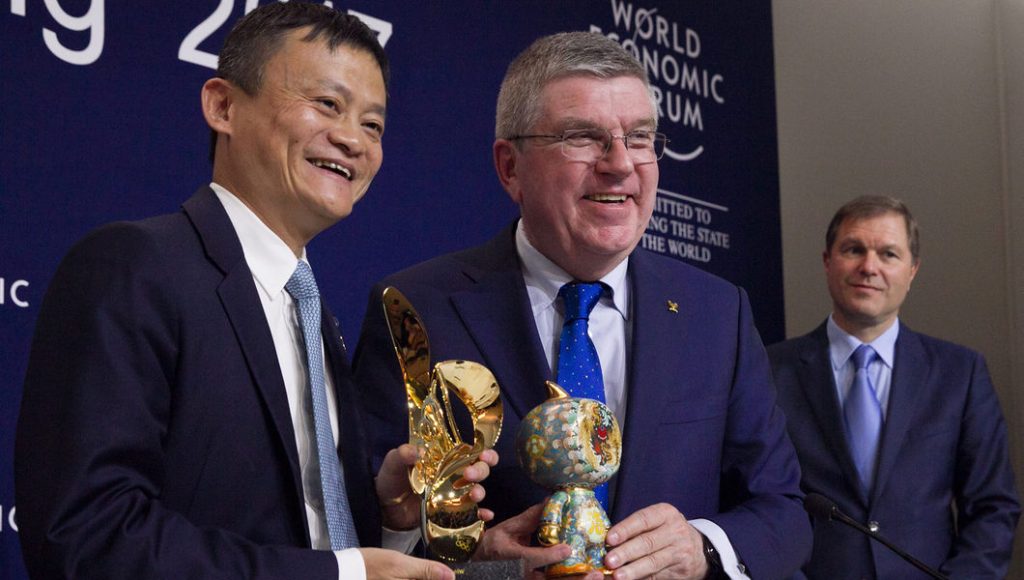
    The agreement between the International Olympic Committee and Chinese e-commerce giant Alibaba is a perfect example of a partnership between an organisation dedicated to world-class content and another dedicated to reaching customers, in the world’s biggest and fastest growing market.
    The deal, announced at the World Economic Forum in Davos and negotiated by Shankai Sports and Michael Payne, who set up the IOC’s TOP sponsorship programme in the 1980s, is highly innovative. In joining as the latest TOP Sponsor, Alibaba is said to be providing around US$1bn of financial support to the IOC over the next six Olympic Games. Alibaba becomes the IOC’s official provider of Cloud and e-commerce services as well as partnering with the IOC’s online Olympic Channel.
    The sponsorship deal is said to have been conducted independently of Alisports, which already partners with a number of other sports organisations to deliver sports directly to fans via Alibaba’s own online channels.
    Retailers are traditionally not producers of content, but they are starting to occupying this space. Amazon is already distributing online television direct to its customers – and if the e-commerce giants do start to launch their own sports events, the pressure on traditional sports organisations to assert the authenticity and integrity of their own properties will get even more intense.

  • SportAccord unveils new ‘DotSport’ domain – sportaccord.sport

    [Source: SportAccord] SportAccord today announced it has been awarded exclusive use of the ‘DotSport’ domain extension ‘sportaccord.sport’ following the successful launch of the new .sport digital ecosystem, managed and delivered by GAISF.
    A .sport domain name is seen as a positive endorsement of any organisation operating in the world of sport. GAISF’s ownership of the domain protects the integrity of .sport by ensuring that only properly qualified organisations and individuals can use it. These include sports governing bodies to events, companies and clubs.
    Nis Hatt, Managing Director of SportAccord, World Sport & Business Summit commented:
    “We are delighted to take advantage of this new opportunity and have applied the SportAccord.sport domain extension to key digital platforms and collateral. This will further help to enhance the SportAccord brand across the global sports and business sectors.
    “We are proud to be part of this community-led initiative and fully support the values, culture and principles it represents for sport.”
    SportAccord joins other organisations who have been awarded the .sport extension including several of the international sports federations, Lausanne 2020 Youth Olympic Games and the
    International Testing Agency.
    GAISF Head of Digital Pierre Germeau said:
    “This digital transformation is proving to be a game-changer, not just for IFs but for all reputable sports stakeholders that work hard to promote the best image of sport. Each domain offers stakeholders a significant and respected online presence, tailored specifically to their individual needs.”
    SportAccord is host to the annual general assemblies and official meetings for event stakeholders, with representation from all the GAISF international sports federations, associates and observers in attendance.
    SportAccord 2019 will take place in Gold Coast, Australia from 5-10 May 2019 at the Gold Coast Convention and Exhibition Centre and will welcome the sporting business community for the 17th edition of the World Sport & Business Summit.

  • Integrity, collaboration and digital top concerns of Olympic sports

    Integrity, collaboration and digital top concerns of Olympic sports

    [Source: ASOIF] After almost 12 months’ work, the Association of Summer Olympic International Federations (ASOIF) today launched its report on the “Future of Global Sport”. The document aggregates the views of thought leaders and decision-makers from sport, business and government. It addresses political, social, technological, legal and economic influences, all of which are impacting International Federation (IF) decision-making and the model under which sport will be managed going forward. It also provides a historical overview of the foundations that underpin organised sport as we know it today and delves into the challenges currently being faced. The report concludes by laying out a vision for the future of sport over the next 20 years including key recommendations for the IFs and for ASOIF itself.
    ASOIF President Francesco Ricci Bitti said on the occasion of today’s launch: “ASOIF has invested significant resources in this project and we believe the results will help IFs to better understand, anticipate and react to the changes and trends confronting them. In fact, some of the outlined future scenarios may serve as a wake-up call. This report invites us all to challenge our thinking at ASOIF and encourage our members to challenge their own.”
    Key findings of the Future of Global Sport report include:

    IFs must demonstrate an exemplary standard of governance in order to maintain the confidence of the media, governments, business and the public at large while also protecting the integrity of their sports;

    IFs will need to develop a more proactive, creative, commercially driven and collaborative mind set, re-evaluating their role and strategies in favour of increased partnership with the private sector;

    IFs will need to embrace “digital” in earnest, transforming their business models, organisational designs and operational cultures;

    Today’s sporting event model will evolve so that true partnerships entailing closer cooperation and balanced risk-sharing among and between stakeholders, including business and government agencies will be a requirement;

    Athletes with sufficient following are gaining influence in today’s disintermediated media landscape and will need to be offered greater incentives to compete in established events;

    In order to attract new people to participate in and consume their sports, IFs must adapt their strategies to a changing society and to how, in future, people will discover and consume content;

    If they adapt, IFs will remain widely accepted as unique bodies effectively capable of governing and administrating their sports on a worldwide basis as custodians of the rules, training of judges, managing the events calendar and coordinating and funding global development initiatives etc; and

    It will become increasingly important to have an effective “umbrella” organisation working to promote and defend the Olympic IFs’ collective common interests given the range of major common challenges that IFs share but can never be expected to address individually.

    Following-up on these findings, the report concludes with a blueprint for IFs to adapt and take advantage of the opportunities presented by today’s disrupted and competitive sporting landscape. This consists of ten recommendations for IFs related to two equally important themes of governance and entrepreneurialism.
    The report will also provide ASOIF with guidance and a basis for prioritisation, particularly in relation to its work on establishing a solid future role for IFs, as the involvement of both public authorities (governments) and private business interests in sport continues to grow.
    Click here to read the full report.

  • Virtual British Cycling Race Series launched on Zwift
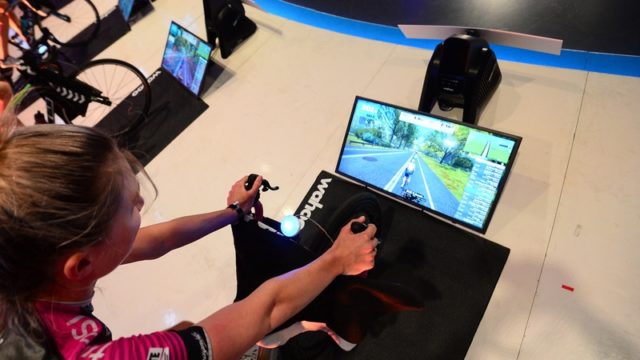
    Virtual British Cycling Race Series launched on Zwift

    [Source: British Cycling] The British Cycling Race Series – an eight-week series of races and workouts on popular online training platform Zwift – has been designed for people to have fun and stay active during the global uncertainty around the coronavirus pandemic.
    Those wanting to pit their form against the best of British won’t have long to wait as group rides led by the Great Britain Cycling Team, including with women’s academy squad Team Breeze, are set to be introduced.
    Great Britain Cycling Team women’s endurance academy coach, Emma Trott, said: “We’re in an entirely unique situation that means there’ll be no racing for a while, but it’s important that we try to find some sense of normality in all this. For us, that’s training and staying connected not just with each other, but the cycling community. 
    “Moving things online is a really fun way of keeping that connection and we’re all looking forward to people joining us over the next few weeks.”
    All races are 30 minutes long and will be hosted on different courses, running from 24 March to 14 May.
    To join a British Cycling Race Series virtual road race or time trial on Zwift, click here. Follow this link to join a workout. Visit the Zwift website to sign up for a seven-day trial. After your trial period ends Zwift costs £12.99 per month and is free for under-16s