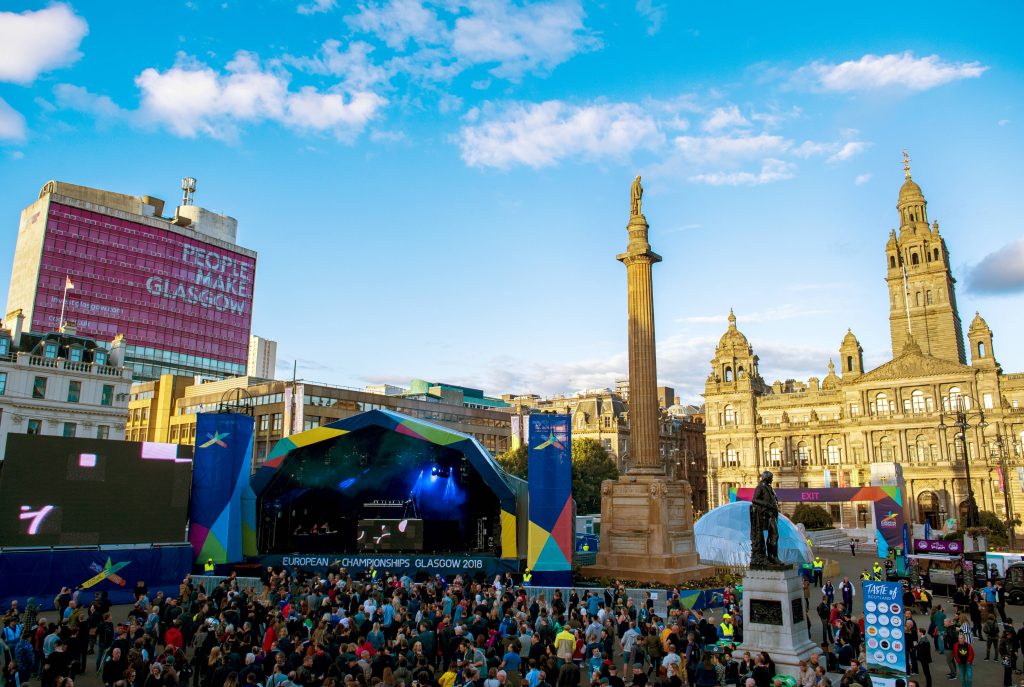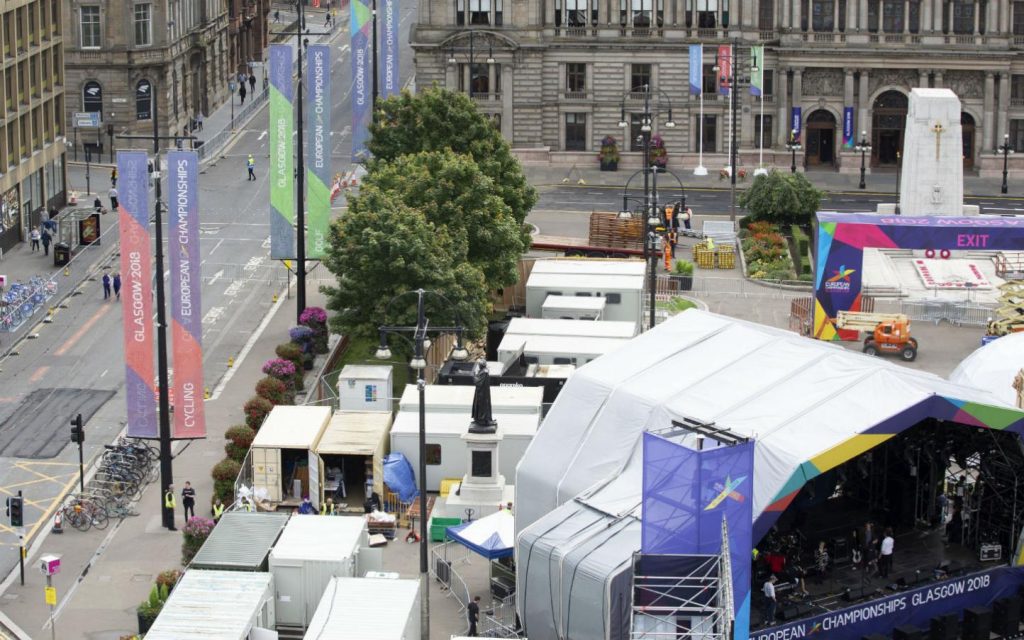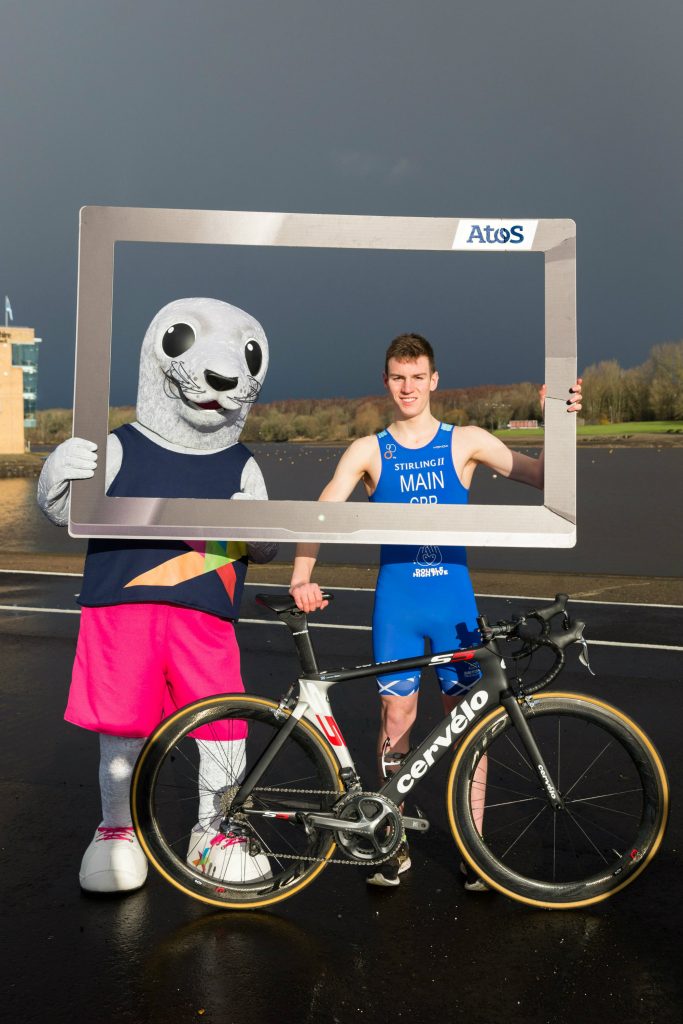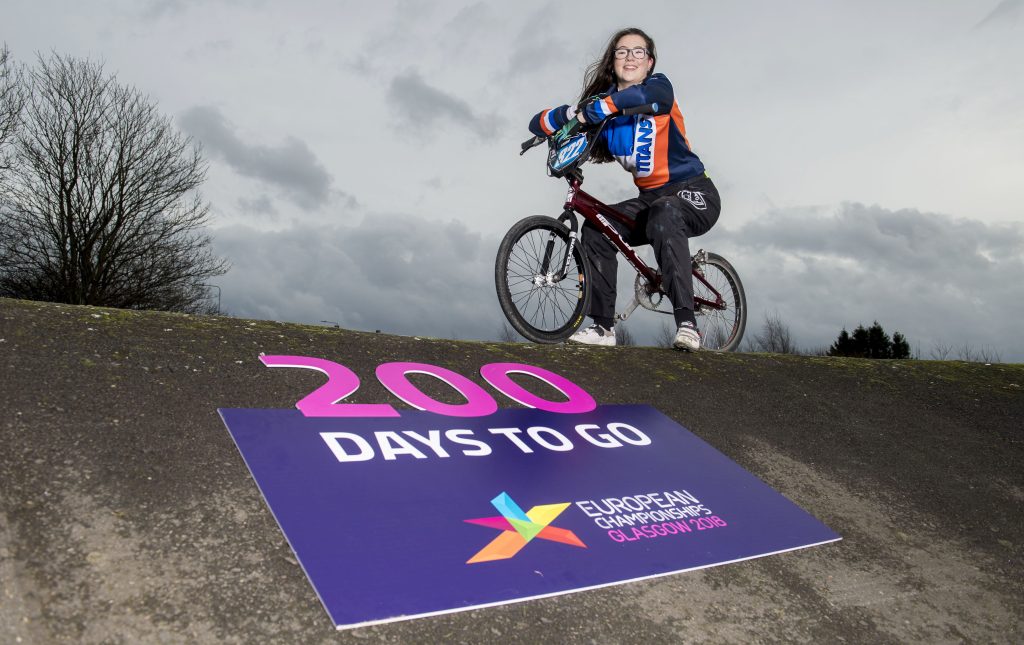
Another mega event emerged on the European sports calendar today with the announcement that Glasgow and Berlin will be hosting a new multi-sports championship in the summer of 2018.
The European federations of athletics, swimming, cycling, rowing and triathlon have decided to coordinate their European Championships into a quadrennial 10-12 day event to maximise exposure.
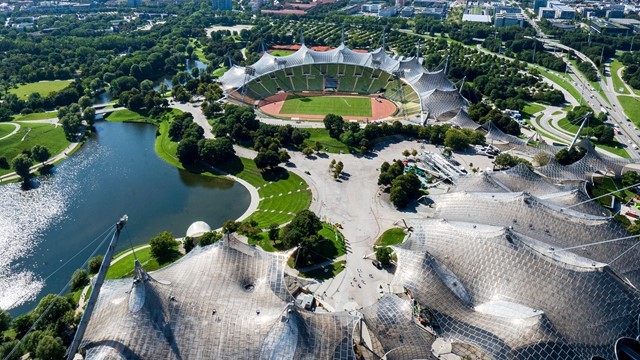
The 2018 European Athletics Championship will take place in Berlin’s Olympic Stadium as already planned, but it will now coincide with swimming, cycling, rowing and triathlon events in Glasgow.
“We are excited to be organising our European Championships in 2018 in Berlin in a coordinated way together with other leading sports in Glasgow,” said Hansjörg Wirz, president of European Athletics.
“Our aim is to build further on the heritage, profile and awareness of our existing prestigious European Athletic Championships.”
Glasgow will host all other sports and the Opening Ceremony, and there are plans to include golf in the event following the success of last year’s Ryder Cup at Gleneagles.
“Major events have become part of the bread and butter of our city’s economy and we can now look forward with tremendous excitement and focus to the next big thing on the Glasgow calendar,” said councillor Gordon Matheson, leader of Glasgow City Council.
The new mega event will be seen as a competitor to the European Olympic Committees’ European Games, which takes place for the first time this year in Baku.
The combined championships are expected to generate more than 2,700 hours of programming and reach a live television audience of more than 850 million television viewers.
“We are delighted to be associated with this ground-breaking project that will encompass the rich diversity of European sports in a competitive event of the highest quality, which we will bring to the largest audience possible in all of Europe on a free-to air basis,” said Jean-Paul Philippot, president of the European Broadcast Union.
Paolo Barelli, president of the Ligue Européenne de Natation (swimming) said: “With the support and commitment of the major free-to-air broadcasters around the continent, the European Sports Championships will further build the prestige of becoming a champion of Europe and act as a powerful inspiration for youngsters to participate in our sports.”
The event will receive funding from the Scottish Government and Glasgow City Council as it is seen as a major opportunity to boost culture, tourism and business as well as sports in the host city.
Jamie Hepburn, Minister for Sport, Health Improvement and Mental Health, said: “Last summer Scotland showed the world what a tremendous job it can do when it comes to staging major sporting events, with the Commonwealth Games and the Ryder Cup both hugely successful.
“As part of the legacy of those events, we want to attract even more top class sport to Scotland, and the European Sports Championships is certainly in that category.
“The European Sports Championships will be another chance for Scotland to prove it’s the perfect stage for top class events. Not only will this be a fantastic opportunity for Scottish sports fans to see some of Europe’s top athletes competing in our world-class venues, it will also be attract visitors from around the continent, providing a great boost to the economy.”
Around 2900 athletes are expected to come to Scotland as part of a total delegation of around 8200 people involved in the event. A further 1500 athletes will compete in Berlin.
Swimming, involving nearly 900 athletes, will be staged at three venues with the main swimming event at Tollcross International Swimming Centre in Glasgow and the diving and synchronised swimming at the Royal Commonwealth Pool in Edinburgh. The open water swimming competition is to be staged at Loch Lomond.
The new event marks the first time four cycling championships – track, road race, mountain-biking and BMX – have been staged together. 650 cyclists will compete in the Sir Chris Hoy Velodrome, the Cathkin Braes Mountain Bike Trails, the streets of Glasgow and a new BMX track.
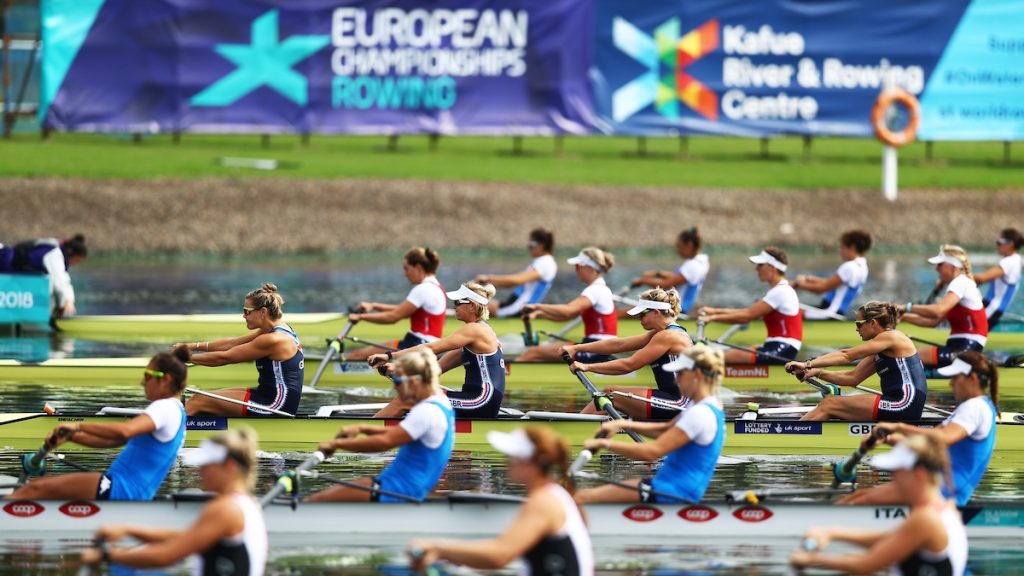
The world-class Strathclyde Country Park in North Lanarkshire will see 760 athletes compete in rowing and triathlon.
Hosting triathlon events will be one of the hot topics at HOST CITY 2015, with Antonio Fernandez Arimany, director general of the International Triathlon Union (ITU) to speak there again after the great success of HOST CITY Bid to Win in 2014.
Tag: European Championships
-

Glasgow and Berlin to co-host mega sports championships in 2018
-

Glasgow 2018 European Sports Championships to boost triathlon “at a stroke”
The European Sports Championships, which will bring together triathlon, swimming, rowing and cycling for the first time in Glasgow in 2018, is set to be a major boost to the profile of the sport due to the broadcast reach of the new multi-sports event, the leaders of the International and European Triathlon Unions told HOST CITY.
Expectations are also high of the host city of Glasgow.
“The reason we the ETU are so excited about Triathlon being part of the ESC in Glasgow 2018 is the opportunity it gives our sport to reach a much wider audience than we can possibly achieve on our own,”Renato Bertrandi, president of the European Triathlon Federation told HOST CITY.
“Joining up with other major sports like swimming, rowing and athletics means that we can benefit from the power of aggregation. Collectively we become attractive to the EBU and their support means that we will be able to reach the living rooms of television viewers in all European countries.
“At a stroke this event will dramatically increase the profile of triathlon. In particular the screening of our innovative mixed team relay event will serve to enhance its credibility and help to cement its place in future Olympic Games programmes.”
Hosting triathlon events will be one of many hot topics at HOST CITY 2015, with Antonio Fernandez Arimany, director general of the International Triathlon Union (ITU) to speak there again after the great success of HOST CITY Bid to Win in 2014.
“ITU, together with our European Continental Confederation, are supporting this 2018 EU Championships because triathlon is a growing sport and our strategy is to be present in all important multisport competitions,” Arimany told HOST CITY.
“Also the 2018 EU Championships will provide the sport of triathlon an important promotional platform of the sport, since TV broadcasting will be done around all the EU.”
The European Sports Championships also features athletics, which will take place in Berlin’s Olympic Stadium at the same time as the multi-sports events in Glasgow. The opening ceremony will also take place in Glasgow.
Arimany said he expects the event to be organised very well by its Glasgow hosts.
“Regarding our expectations with Glasgow, we are very confident that the organisation will be on a very high level, because of the experience of Glasgow with the Commonwealth Games in 2014 and also because the British Triathlon Federation is involved in the delivery of the event in Glasgow.” -

European Athletics launches new marketing company
European Athletics, the rights holder for events including the biennial European Athletics Championship, has created a new company to market its activities, through a joint venture with Tridem Sports.
European Athletics Marketing, based in Switzerland, will act as a service company for commercial strategies and sales activities, including sponsor account management and rights delivery.
Its first priority will be to develop the sponsorship programmes of European Athletics’ major events and work with local organising committees to optimise event revenues.
The company will also actively look for partnerships for European Athletics’ other activities and programmes, including the European Athletics Convention, Young Leaders programme and a new “Running for All” initiative to position European Athletics as the natural authority for running on the continent.
The new company is a joint venture with Swiss-based sports marketing agency Tridem Sports. European Athletics is the main shareholder of the new company and will maintain ownership and control of its commercial properties.
“We are confident that this new company will help us create additional values and revenues from our events and activities,” said European Athletics president Svein Arne Hansen.
“Tridem brings to the table expertise and know-how in sales, marketing and event implementation, and has the experience in networking and developing relationships with business companies.”
Tridem founder and CEO Christian Pirzer said, “We are pleased about this new joint venture with European Athletics, our first big project outside of winter sports. It will help to develop the commercial programme of athletics in Europe. It is our second joint-venture company with a major Olympic sport after the successful implementation six years ago of FIS Marketing AG with the International Ski Federation.”
The 2016 European Athletics Championships takes place in Amsterdam from 6 to 10 July and tickets are now on sale.
The 2018 European Athletics Championships will take place in Berlin to coincide with swimming, cycling, rowing and triathlon events in Glasgow as part of the 2018 European Sports Championships.
-

Martin Kallen: How to kit out UEFA events
HOST CITY: Does the location of an event have a big impact on infrastructure requirements?
Martin Kallen: We would like it to be similar all the time – that would be easier for us, but wherever you go it’s different.
Of course we have our criteria and documents we provide to stadiums and organisers to ensure that they meet certain standards. The standards are getting more even.
However they are still different in terms of the size and quality of infrastructure. Some have better broadcasting facilities, better hospitality facilities or better technical facilities.
HOST CITY: How does France compare with Poland and Ukraine in terms of event infrastructure?
Martin Kallen: We have 10 stadiums in France, four of which are brand new, 1 existing Stade de France and five refurbished stadiums. If you go to Parc de Princes, they have rebuilt all the hospitality zones, business seats, kiosks, technical area and refreshed the sanitary areas. The remaining seats will be soon replaced.
Lyon is a completely new stadium. Lens is in principle a rebuild, with the construction of a new roof, hospitality and technical area, replacement of seats, etc. Saint-Etienne is a rebuild as well – it’s almost a new stadium on the old foundations.
Bordeaux is a new stadium and Toulouse made an upgrade of the existing facilities as seating area, kiosks and access control system.
If you compare this to Poland and Ukraine, most of the stadiums there were new buildings, with one or two exceptions.
In Poland, Poznan was a rebuild, but almost the whole stadium was rebuilt. All the other stadiums – Warsaw, Gdansk, Wroclaw – were new.
In Ukraine you had three new stadiums: Donetsk was finished two years earlier for the club FC Shakhtar Donetsk. Kharkiv was similar to Saint-Etienne, where they rebuilt the stadium on old foundations.
France is further ahead at this stage in terms of finishing – the infrastructure of most of the stadiums is now delivered. The last one Lyon, will be finished by the end of this year, whereas in Ukraine and Poland a lot of the stadiums were delivered in the last year and two close to the start of the tournament.
In terms of quality, a brand new stadium is much more modern than the one already existing. New stadiums in Ukraine and Poland are similar to the new stadiums in France.
It is difficult to compare a rebuilding with a new stadium. You always have some challenges because there is a link to the foundations of the stadium, access and so on. If they were built in the seventies, eighties, it’s not the same as today.
HOST CITY: What opportunities are there for event infrastructure suppliers in France?
Martin Kallen: On the overlay side, we are now doing the last tenders. All the suppliers have put their tenders in. It’s now coming almost to an end, because the work will start next year but the tendering process is taking place now.
On the stadium side, all the suppliers were chosen by the stadiums because, except Lyon, the last ones will be delivered by this summer.
HOST CITY: What are the main criteria in choosing a supplier for a UEFA event?
Martin Kallen: One is of course their knowledge – they need to have experience. Secondly, they need to have state of the art, products and services.
They also need to be sustainable. This means that what they are putting in also needs to be taken away and recycled, or ideally reused in a different form; and when it comes to waste management, that it’s not all going in the garbage – it needs to be sorted or treated. The more it can be reused, the better is the sustainability of the product.
What is also important is the price. It doesn’t always need to be the cheapest price, but it needs to be a good balance between quality and cost.
Taxes in different countries are always a challenge for suppliers, because they have to establish daughter companies, to recover VAT etc.
For us, the suppliers are very important for the events, as they are in principle specialists in many areas.
Through the Association of Global Event Suppliers (AGES), they can exchange their knowledge, information, issues, problems, challenges and best practice – this is a very good initiative.
HOST CITY: How will EURO 2020 differ in terms of event infrastructure?
Martin Kallen: The first big difference is that infrastructure in most of the countries is already ready.
We have only two locations where a new stadium will be built; one in Budapest and one in Brussels.
The other stadiums are already state of the art. We have to put on the EURO overlay; we will start working heavily with the stadium from approximatively 2018.
The overlay required for a big event is mainly for broadcasting and media facilities; then it’s hospitality, commercial facilities and all areas which will be either inside existing stadium premises or temporary facilities built outside. But it’s too early to give further information on that, because we have started the project not long time ago.
HOST CITY: What’s the biggest challenge for EURO 2020?
Martin Kallen: We have different challenges. The biggest one is surely to have a good EURO atmosphere in all the 13 countries as each one has 4 matches in only one host city of the country.
The other challenge is to ensure easy transport access. Or to have back to back matches in a host city, so fans can remain in the city until the next match – these are all important points to look at.
Of course you have 13 different countries with 13 different legislations, so you have to analyse how you can build a unified ticketing concept which is the same for a supporter in London, Munich and Baku.
HOST CITY: Will ticket prices be different in different countries?
Martin Kallen: That is a good question. That will be decided at a later stage, whether you can have a set price or a different price category that depends on the purchasing power of the people in the country to buy tickets. -

HOST CITY 2015 experts predict rise in multi-city events
HOST CITY 2015 Conference and Exhibition drew to a close in Glasgow on Tuesday following two days of open discussions exploring the challenges and benefits of bidding for and hosting major global events.
Now in its second year, Host City has firmly established itself as the leading EU-based meeting of cities and sports, business and cultural events. Under the theme ‘Creative Innovation’ HOST CITY 2015 brought together a unique collection of city leaders and cross-sector rights holders, event owners, suppliers and world class-speakers in the business of major international events.
High on the agenda on the final day of the conference was the issue of sustainability and how a multi-city approach to hosting could allow events of the future to remain viable and grow by increasing their reach.
Speaking on the UEFA EURO 2020 Championships, Stewart Regan, Chief Executive of the Scottish Football Association, host of four matches within the tournament, said: “As you can imagine it’s a huge logistical exercise – trying to plan for one country and several stadia is a big exercise but imagine doing that across 13 countries.
“Planning the security, planning the logistics of moving sponsors, fans, and broadcasters around Europe – it’s a massive exercise. But the benefits of involving 13 countries, including some of the smaller countries who couldn’t host an event on their own, outweigh the challenges that the logistics present.”
Hampden Park in Glasgow will stage three UEFA Euro 2020 group stage games and one last 16 match.
Paul Bristow, Director of European Sports Championships Management argued that a multi-city approach could have sustainability benefits for future events.
“The key word here is sustainability. We have too many white elephants,” he said.
“We can be smarter in the way that we use existing facilities but at the same time still use major events to promote investment in sustainable new facilities that cities need. And if we can combine existing facilities in cities that will work together in partnership then I think that is a sustainable model.”
Paul Dunphy, Major Events Consultant for SportBusiness Intelligence and former Manager Event Prospecting and Bidding at Auckland Tourism Events & Economic Development said: “I think it is a long-term innovative approach. We had the Cricket World Cup in New Zealand and Australia recently and when you’re a small nation with minimal resources you need to be innovative. The [2015] Cricket World Cup was a great example of how multi-city, multi-national events are the future.”
Also under discussion was the critical question of how transport and security strategies contribute to the success of bidding for and hosting major events, including creating positive post-event legacies for cities. Malcolm Tarbitt, Executive Director – Safety and Security for the International Centre for Sport Security (ICSS), said: “Major sporting events are short-term initiatives that have major long-term impact and they pose a tremendous challenge to host nations in terms of their image, sovereignty and integrity.
“In the past few years the cost of hosting major sporting events has increased astoundingly, including cost of security strategies and operations plans. The threat landscape is ever changing, ever evolving and the responsibility on bidding nations and organising committees is becoming ever greater to determine, manage and defend their security plans and budgets. To mitigate this you need to involve security upfront, as early as possible and apply a holistic and integrated approach to planning.”
Other leading speakers across the two-day conference included: Sir Craig Reedie CBE, Vice President, International Olympic Committee; Louise Martin CBE, President, Commonwealth Games Federation; David Grevemberg CBE, CEO, Commonwealth Games Federation; Brian Cookson OBE, President of the Union Cycliste Internationale (UCI); Sarah Lewis, Secretary General of the International Ski Federation (FIS) and the Association of International Winter Sports Federations; Alexander Koch, Corporate Communications Manager for FIFA; Hidetoshi Fujisawa, Executive Director of Communication and Engagement, Tokyo 2020; Simon Clegg CBE, former COO, Baku 2015 European Games; and Ali Russell, Director of Media and Strategic Partnerships, Formula E.
-

Gymnastics and Golf join 2018 European Sports Championships
Gymnastics and Golf are to join the prestigious line up of leading sports who will stage their European Championships together in 2018 for the first time in their history, the sports’ European associations announced on Friday.
The dates of the inaugural Championships were also confirmed as the 1st to 12th August 2018.
The two new sports join Athletics, Aquatics, Cycling, Rowing and Triathlon, who have decided to come together for the first time for the European Sports Championships which will be staged in the Host Cities of Glasgow and Berlin.
“One of the challenges this project had to face was to create a programme that could offer the best conditions for athletes to express themselves while also creating interest for the main TV networks in Europe. The result of very fruitful discussions allow me to express my satisfaction that Glasgow and Berlin will showcase one of the best events of all time,” said Paolo Barelli, President of the Ligue Européenne de Natation (European Aquatics.
“Each individual European Federation will create a fantastic programme that will maximise interest and LEN is proud to be a pioneering partner of such an ambitious project that will contribute significantly to the development of sport.”
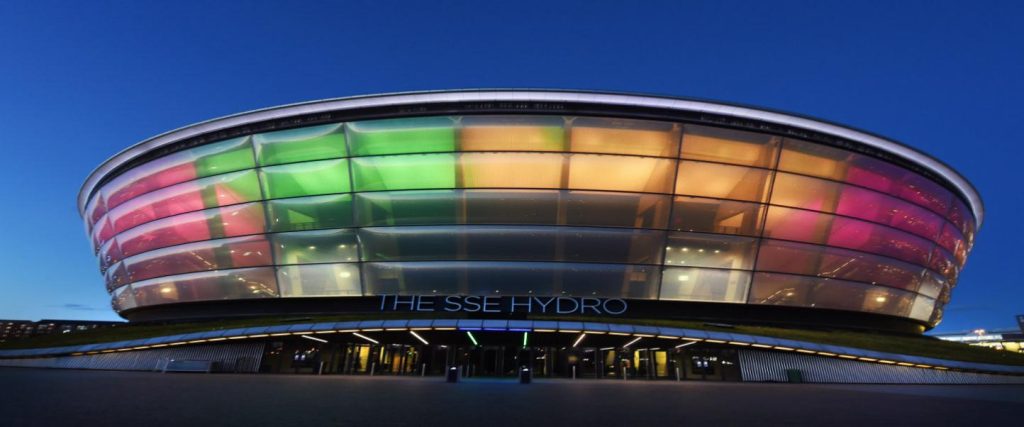
The European Artistic Gymnastics Championships will be staged in Glasgow at the SSE Hydro while the brand new European Golf team championships will take place at Scotland’s prestigious Gleneagles course.
“It is very exciting for Golf Europe to be invited to join some of Europe’s leading sports in the inaugural European Sports Championships, with three new European Golf Team Championships for female, male and mixed teams,” said Keith Waters, The European Tour’s Chief Operating Officer and Director of International Policy.
“This is part of our vision of encouraging all European nations to participate in golf, and it is fitting that Gleneagles will host the first staging of this event, having been the venue for last year’s Ryder Cup, when Europe memorably united through team golf.”
Berlin will host the 2018 European Athletics Championships from the 7th to 12th August, with Glasgow hosting the six other European Championships over the 12 days.
“As one of the key sports, European Athletics has been happy to lead the process in the creation of the principles of good governance for the inaugural European Sports Championships, and we are pleased to move forward with this strong framework in place,” said European Athletics President Svein Arne Hansen.
“We are looking forward to a fantastic European Athletics Championships in Berlin in 2018 as part of this exciting multi-sport concept. We are sure the European Sports Championships will bring additional values and benefits to athletics in Europe and to the Berlin championships.”
The partnership between European Athletics, Aquatics (LEN), Cycling (UEC), Rowing (FISA) and Triathlon (ETU) welcomed European Gymnastics (UEG) and Golf Europe is set to create a major new multi-sport event on the world stage, attracting a projected television audience of around 850 million and an even wider audience via multiple digital platforms.
The newly-formed European Sports Championships 2018 Board 2018 Board also ratified the organisational rules and decision-making processes to ensure strong governance going forward.
This innovative new approach by the governing bodies, who announced their plans earlier this year, brings the existing European Championships together from seven sports in a sustainable format once every four years in order to continue building their prestige, profile and media exposure.
Around 1,500 athletes will compete in Berlin as part of the European Athletics Championships while approximately 3,025 athletes will visit Scotland for the other six events.
All seven Championships will be staged within the agreed date window.
“With all the sports now confirmed for 2018 Glasgow is again ready to show the excellence and innovation with which it can stage world class events on the global stage,” said Councillor Frank McAveety, Leader of Glasgow City Council.
“Major events have become a crucial part of our city’s economy and we can now look forward with tremendous excitement and focus to partnering with this fantastic group of sports to continue to create opportunity and help improve health and well-being outcomes for our citizens.”
The European Broadcasting Union (EBU), the consortium for the continent’s public service free-to-air broadcasters, will be the broadcast partner for the combined championships, which are expected to generate more than 2750 hours of programming across Europe’s biggest broadcasters.
EBU President Jean-Paul Philippot, said: “With seven sports now part of the first edition, the European Sports Championships will be the centrepiece of the sports season in Europe and public service media is proud to participate in the promotion of European sports and its athletes through extensive free-to air coverage across television, digital and radio.”
The Golf event will be staged over 5 days and include men’s team, women’s team and mixed team competition.
Two male and female athletes per nation will participate, with the top 16 European nations included.
The Gymnastics event will include both the Men’s and Women’s Artistic Championships, with around 600 athletes competing in Glasgow over six days.
“We are really excited to be included in the 2018 European Sports Championships as it represents a huge opportunity for Gymnastics to further raise its profile right across Europe,” , said Georges Guelzec, President of European Gymnastics.
“We can also think of no better city than Glasgow to host our 600 competitors who will compete in the men’s and women’s European Artistic Championships.”
Innovative event hosting formats is a key theme of Host City 2015, which takes place in Glasgow on 9th to 10th November. Register your attendance at www.bidtowin-hostcity.net -

Scotland hosts international sports bodies as European Athletics evaluates Glasgow bid
A delegation representing European Athletics arrived in Glasgow on Monday to spend two days in Scotland as part of evaluation visits to cities bidding for the 2019 European Athletics Indoor Championships.
And this is just one of a series of important meetings with international sports bodies scheduled for the year.
Further visits from international federations will take place over the next two to three weeks, an EventScotland spokesperson told Host City, as Scotland continues to bid for and secure the right to stage some of the world’s most prestigious events.
Glasgow is hosting the 2018 European Sports Championship with Berlin. And Glasgow will also welcome the world of sports, business and cultural events to Host City 2016 on 16 and 17 November.
Glasgow is one of four potential hosts of the 2019 Indoor Athletics Championships and, if successful, would be the first Scottish destination for a European Athletics event in 15 years.
The other cities competing to host the 2019 European Athletics Indoor Championships are Apeldoorn (Netherlands), Minsk (Belarus) and Torun (Poland).
Evaluation site visits are underway during February and March, before the Evaluation Commission files a report to the European Athletics Council.
The 2017 European Athletics Indoor Championships will take place in Belgrade, Serbia.
The Council will vote on which city will host the 2019 championships on 23 April at its meeting in Amsterdam after presentations by the bidders that meet the requirements of the evaluation process.
The Evaluation Commission consists of Karel Pilný (Evaluation Chair); Célia Mendes, Marcel Wakim and Bernadette Brun.
“In recent years Glasgow has established itself as one of the world’s top sporting cities thanks to our investment in new facilities and our international sporting events programme,” said Depute Leader of Glasgow City Council and Chair of Glasgow Life, Councillor Archie Graham OBE.
“Athletics has been at the very heart of our rise as a world-leading sporting city. This weekend’s Glasgow Indoor Grand Prix will take the sport to a new level and we hope to build on that success with the 2019 European Athletics Indoor Championships, which would see Europe’s top athletes return to the Emirates Arena. Our aim is to deliver a world-class event with athletes and spectators at its very heart.”
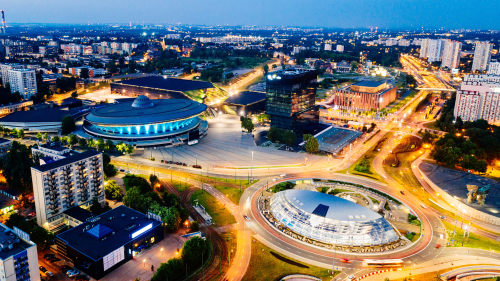
As well as meeting with bid partners, including the Scottish Government, EventScotland, Glasgow City Council, Scottish Athletics and British Athletics, the group toured the Emirates Arena.
The itinerary also includes a visit to proposed training venue Scotstoun Sports Campus, and an assessment of Glasgow’s ability to accommodate hundreds of athletes and, potentially, thousands of tourists.
“This weekend’s 2016 Glasgow Indoor Grand Prix has sold out months in advance, demonstrating the huge support for elite athletics there is within the Scottish public,” said Niels de Vos, Chief Executive of British Athletics.
“I’m delighted that Glasgow City and EventScotland decided to build on the success of the 2014 Commonwealth Games and previous British Athletics events held in the city by bidding to host European Athletics’ flagship indoor event at the Emirates Arena in 2019.”
-

Glasgow and Berlin unite under new European Championships brand
The hosts and rights holders of the innovative event taking place in Glasgow and Berlin in 2018 have unveiled a new, unifying brand identity under the name “European Championships” – shortened from the previous title of “European Sports Championships”.
The multi-sport event in August 2018 brings together the existing European Championships of athletics, aquatics, cycling, gymnastics, rowing and triathlon, and also introduces a new golf team championship onto the European stage.
The brand is represented by a new logo, the star-like “Mark of a Champion” said to represent the vision at the heart of the new multi-sport championships, the aim of which is said to “create a must-attend, must-watch experience that elevates the status of European Champions”.
The logo was created in partnership by the sports federations, Host Cities Glasgow and Berlin and broadcast partner the European Broadcasting Union (EBU).
“The launch of this impressive brand is the starting gun for a European Championships concept that will help elevate the Berlin 2018 European Athletics Championships to a scale we have never seen before,” said European Athletics President Svein Arne Hansen, co-chair of the 2018 European Championships Board.
“In Berlin we have a fantastic host city for our Championships, and in the German athletics federation, we have a committed partner who have produced a great generation of athletes. We are all committed to delivering the best-ever European Athletics Championships.”
The organising partners said the event will take place every four years, anticipating a television audience of around 1 billion, plus multiple digital and radio platforms in 2018.
Around 1500 athletes are expected to compete in Berlin from 7-12 August as part of the European Athletics Championships, while approximately 3025 athletes are set to visit Scotland for the other six events between 1 and 12 August.
“I am delighted that Glasgow’s vibrant personality shines through this new brand,” said Councillor Frank McAveety, Leader of Glasgow City Council.
“We have worked together with these amazing sports to create something that reflects all of our values by embracing our ambition, our strength in unity and our ongoing journey to provide opportunities for all of our citizens through the power of sport and culture.”
Senator Frank Henkel, City of Berlin, said: “We are really pleased to see the unveiling of the umbrella brand for the European Championships of which we are part. Our city is well underway in its preparations for the European Athletics Championships, and our own Berlin 2018 mark will be unveiled soon.”
Each of the participating sports are due to unveil their own event logos in the coming months.
-

European Championships – challenger or champion of Olympic sports?
A new fixture has appeared on the calendar of international multi-sports events. The European Championships, taking place for the first time on 1-12 August 2018, has been described by observers as either a repackaging of existing championships or a serious challenger to the European Games – the continental mega event initiated by the European Olympic Committees (EOC) at Baku in 2015.
The organisers themselves describe the event as a “coming together of existing championships”. Six sports – aquatics, cycling, golf, gymnastics, rowing and triathlon – will be hosted in Glasgow, with athletics taking place in Berlin from 7-12 August.
The concept is run by and on behalf of the European Federations: European Athletics; Ligue Européenne de Natation (LEN, or European Aquatics); the European Cycling Union (UEC); World Rowing (FISA), the European Triathlon Union (ETU); the European Union of Gymnastics (UEG); and the European Tour and the Ladies European Tour as Golf Europe combined.
The broadcast partners for the event are the European Broadcasting Union (EBU)’s free to air members.
“We were very happy to see that Glasgow and Berlin were supporting the idea and particularly that the federations took this major step forward to agree to this concept of having their European championships under one umbrella in the two cities,” says Stefan Kürten, Director of Eurovision Services & Sports Rights at the EBU.
Elevating sports together
“For us, this is a milestone in the development of sports in Europe. This concept will clearly contribute to maintaining European sports on this level where it belongs,” says Kürten.
“We want the public in Europe to focus on the top Olympic sports in Europe. We want to show to the public the top athletes in these sports that are already visible on free to air, and we want to centralise that.
“By centralising them we are not creating an additional event; it is bundling existing events. We as broadcasters are not interested in more events. There is sometimes the belief that the more you create, the more interest you generate. I can say from a broadcaster’s perspective this is wrong. You have to focus on the top events and make them even more valuable.
“Therefore we think there will be an increase in audience by these multi-sports events so that will be to the benefit of the sports and of the host cities and clearly also to our benefit.
“On top of that, we think by putting these events together we also want to emphasise the relevance and importance of European sports, because the cradle of the Olympic sports is Europe and we are afraid that if that part falls, gets weaker, that has an impact on world sports and we don’t want that. We think as broadcasters: let’s promote the strongest, push it further, and be creative and innovative.
“The message that we got back from the members was that the broadcasters were extremely pleased with such a milestone event. We have 23 broadcasters with us already – the top broadcasters – and they will be all the main channels.”
Frank Kowalski, Managing Director of the Berlin 2018 local organising committee says: “Working together with Glasgow, we are really proud to be in the first move of this European project.
“For the city and for us it wasn’t easy because the situation came after awarding the 2018 European Athletics championships to Berlin. But we are totally convinced that this is the right step for the summer sports to get the power against other sports like football.
“We all have to learn not to produce what we like to produce, but what our clients like to have. I am convinced that we will have a lot of synergies and will take every opportunity we have for us, for the European Athletics Championships and for the city of Berlin. We have strong partners and we are getting closer and closer through the collaboration – and it makes sense.”
Scheduling around the crown jewels
“In athletics it’s very important that our time schedule is respected,” says European Athletics President Svein Arne Hansen. “We have a long tradition in having our biennial Championships in this week and we made very sure from the beginning that our prime time had to be protected. We agreed that with LEN and with our Glasgow friends.
“This is the jewel in the crown for European Athletics and we have to protect that jewel and I think we have achieved this – we’ll soon be ready to give out the timetable.”
Paolo Barelli, President of LEN says: “What we are doing is very easy, it is not so complicated. The first period, the first part of the Championships, is for aquatics. The second part is for track and field, with one day of overlapping.”
“It is a coordinated approach,” says Kürten. “The idea is to have as few overlaps as possible but to have a natural flow of medal ceremonies and heats so we have on-going interest that is well coordinated.”
Colin Hartley, Championships Director of Glasgow 2018 says: “The collaboration to create a schedule that works for as many reasons as possible is already at version one. When we unveil that schedule it will be as good as we can achieve in terms of city, sport and of course for the broadcast viewers.”
The challenge of selling tickets
Tickets go on sale on 22 August 2016 – the day after the Rio 2016 Olympic Games finishes. Berlin has the biggest sales challenge, in filling the 74,475 seat Olympiastadion.
“For us it’s a very big task to fill the Olympic stadium in Berlin,” says Arne Hansen. “But I hope that all the excitement of what’s happening up in Glasgow will carry over to people in Berlin, so people will see next week we are in Berlin to see the athletics.
“We have gone into it with open eyes, even if this contract was signed before my election, which was one year ago. I am fully enthusiastic and behind it.
“We all remember Berlin 2009 and that incredible atmosphere. It was really something, because of one thing; you had the local athletes plus some superstars from Jamaica. But local athletes are what you need.
“I am sure that the German federation will bring the best out in this Championships. 74,000 is a very big thing to sell, but if somebody can do it in Europe, Berlin can do it. We hope that they will have bigger viewership and more people coming to the stadium than ever.”
In Glasgow, the organisers are looking into possibilities for ticketing across the different sports.
“On the back of the Commonwealth Games in Glasgow, the appetite for sports is very much there,” says Colin Hartley, Championships Director of Glasgow 2018.
“People going to sports they haven’t seen before is a proven thing that they are interested. So on the back of that, we will definitely bring ticketing together. And we’ll be promoting the events in Berlin as they will in Glasgow. For the spectators, online and social media will be very much a seamless experience.”
A threat to the European Games?
The next European Games is due to take place in 2019, with EOC President Patrick Hickey having stated in November 2015 that Russia would be the preferred host.
However, Russia’s Sports Minister Vitaly Mutko is reported to have said that Russia never applied to host the Games and would be too busy to host any other major events until 2020. And with Russia’s participation in athletics at the Rio 2016 Olympic Games under threat from doping revelations, the country’s suitability to host the European Games is also under scrutiny.
Hickey and EOC Vice President Janez Kocijancic both contacted Host City to say the EOC would not be making a statement on this matter “for the moment”.
Hickey also referred Host City to a letter he sent to the European Federations in which he stated that their contract with the European Championships management company would violate EU competition law, as it seeks to restrict them from “competing in another multi-sport continental event within a year of the conclusion of the 2018 European Sport Championships”.
“I haven’t spoken with Patrick Hickey since the latest news about Russian internal things going on there,” said Arne Hansen at SportAccord. “We have an agreement with the EBU; our best athletes will be in Berlin. And if the conditions are right we will also be in the European Games.
“There will not be a European Athletics Championships of any kind in the European Games – no youth, junior, under 23, or senior. But I don’t say it will be low level. Athletics is a big sport; hopefully we can find other interesting things to put in the Games. I am not saying no to new competitions; that would be against my nature.”
It is also uncertain whether the EBU will put its weight behind the European Games. “We have had discussions, we have looked into it,” says Kürten. “It was difficult to follow the European Games on TV, there was not such broad interest in Europe. We think this is a bit of a different event, so for us it was clearly relevant to focus on the top sports.”
Barelli is keen to stress that the European Championships is not a threat to the activities of the European Olympic Committees or the other European Federations. “We are not creating any European Games. I know that someone tried to make some misunderstanding about that. Track and field manages its own championship; I don’t want to interfere with its championship, and track and field is not permitted to interfere with my championship.
“What we are doing is putting together seven sports, with the help of EBU, with the help of the family, with the help of Glasgow, just to have something more to add to the value of each discipline. It was very difficult to create but when someone put their mind to this project is was easy to answer the question why. We think this is going to be a good format for the future.”
Big host city sought for 2022
No additional sports are being considered for the 2018 event, says Kürten. “We didn’t want to overcharge; the idea was to go with specific group of sports that couldn’t clash; it couldn’t be too long. If you have the first edition of such an event it’s good to start with quality and not to overload it.”
If 2018 is successful, the European Championships will take place again in 2022. Arne Hansen says: “We have, together with EBU, together with other partners, set criteria for 2018. I that is fulfilled, we will go along with 2022.”
European Athletics already has 11 countries bidding for their 2022 Championships, in a process that was launched before the possibility of the combined event arose.
“It is a huge thing that we already have 11 countries in Europe bidding for the 2022 European Athletics Championships. We will go out to them, together with the other sports, to find potential bidders from the 11,” says Arne Hansen. “We have already started a bidding process, so it would be very hard to go outside those 11 countries to find the next organiser for the next European Athletics Championships.”
Kürten says the aim is to award the 2022 European Championships to a major European city. “The interest when looking at host cities is clearly there; in this respect we expect this to materialise in a big city – that’s what we are trying to achieve.
Asked if the next edition will take place in just one city next time, Kürten said “It’s too early to say. That’s open; probably one city”.
This article is Host City’s coverage of a European Championships media roundtable at SportAccord Convention, with further input from the EOC. -

Sports federations confirm joint 2022 European Championships
The European Sports Federation members of the European Championships Board have confirmed their intentions to take part in the 2022 edition of the new “European Championships” multi-sport event, which takes place for the first time in Glasgow and Berlin in August 2018.
The Board members of the European sports federations of athletics, swimming, cycling, gymnastics, rowing, triathlon and golf all committed in principle to participating in 2022 after preliminary discussions on the host venue selection process for future editions of the championships.
European Athletics President Svein Arne Hansen, co-chair of the European Championships Board, said there is already great interest from cities, regions and countries in hosting the 2022 European Championships following Berlin-Glasgow in 2018.
“This shows the value of our innovative concept – for the sports and the future bidding cities,” said President Hansen. “It is obvious why all the participating sports want to carry on in 2022 as the European Championships is a sustainable event that brings together our existing championships without adding to a crowded calendar, and this is very attractive and affordable to a wide range of host cities.”
Fellow co-chair Paolo Barelli, President of the Ligue Europe?enne de Natation (European Aquatics), said: “The inaugural edition in 2018 will deliver to the participating sports huge benefits in terms of aggregation, through a higher profile and reach through our media agreements with the European Broadcasting Union. This will ensure our long-term financial security as we are confident the championships will go from strength-to-strength through 2022 and beyond.”
In 2018, the existing senior European Championships of athletics, aquatics, cycling, gymnastics, rowing and triathlon will be brought together for the first time in Berlin and Glasgow, with a new Golf Team Championships also being introduced onto the European stage.
Around 1,500 athletes will compete in Berlin through 7-12 August 2018 as part of the European Athletics Championships. Approximately 3,025 athletes will compete in Glasgow in the other six events between 1-12 August.
The European Championships is collectively run by the participating European Sports Federations and all decisions are made by the European Championships Board, which is jointly chaired by European Athletics and LEN. Each Federation is independently responsible for their own sport within the concept and all decisions to participate are taken in full compliance with the decision-making processes and governance rules of each Federation.
The European Broadcasting Union (EBU), which holds the broadcast rights on all platforms, has already confirmed coverage across the top five markets for 2018, with BBC in the United Kingdom, ARD/ZDF in Germany, France Televisions in France, RAI in Italy and TVE in Spain. These countries represent a major part of the potential television audience of 1.03 billion.
Meanwhile, a dispute between the European Championships organisers and the European Olympic Committees (EOC) continues. In response to a request for information from Host City, the EOC issued a statement on 31 May in which it cited a clause in a contract issued to the European Federations by the European Sports Championship Management (ESCM) which said: “EF shall not enter into any agreement for the integration of the Event and/or any other official EF competition requiring the participation of national federations and elite athletes in any other multisport event during the term of this Agreement and until one (1) year after the end of ESC 2018”.
In the statement, the EOC said “our stance is taken to ensure that new commercial entities cannot be allowed to erode the longstanding right of Olympic Movement stakeholders to stage their own established events.”
The support of the federations for the 2022 edition was announced at the European Championships Board meeting in Berlin on Monday. The Board also received updates from 2018 hosts Berlin and Glasgow and Working Groups related to the overall timetable, brand, and ceremonies, celebrations and shared experiences. The next Board meeting will be in Rome on 27 October 2016.