Tag: European Games

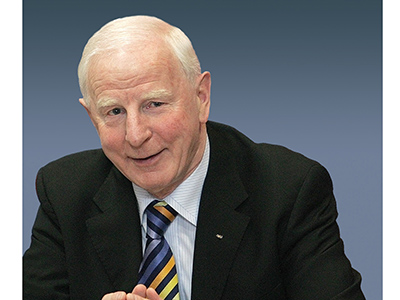
  • A New Year message from European Olympic Committees president Patrick Hickey

    A New Year message from European Olympic Committees president Patrick Hickey

    “How do you follow a year like 2015?” is something we will all be asking ourselves at the EOC head office in Rome this week.
    My answer is to go back to basics and to revisit the EOC’s primary purpose as an organisation: to focus on the specific needs of Europe’s NOCs. 
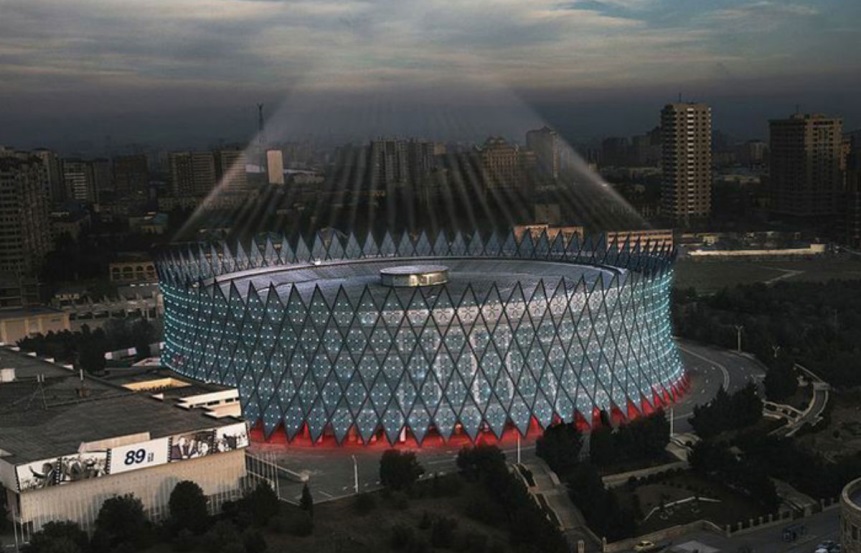
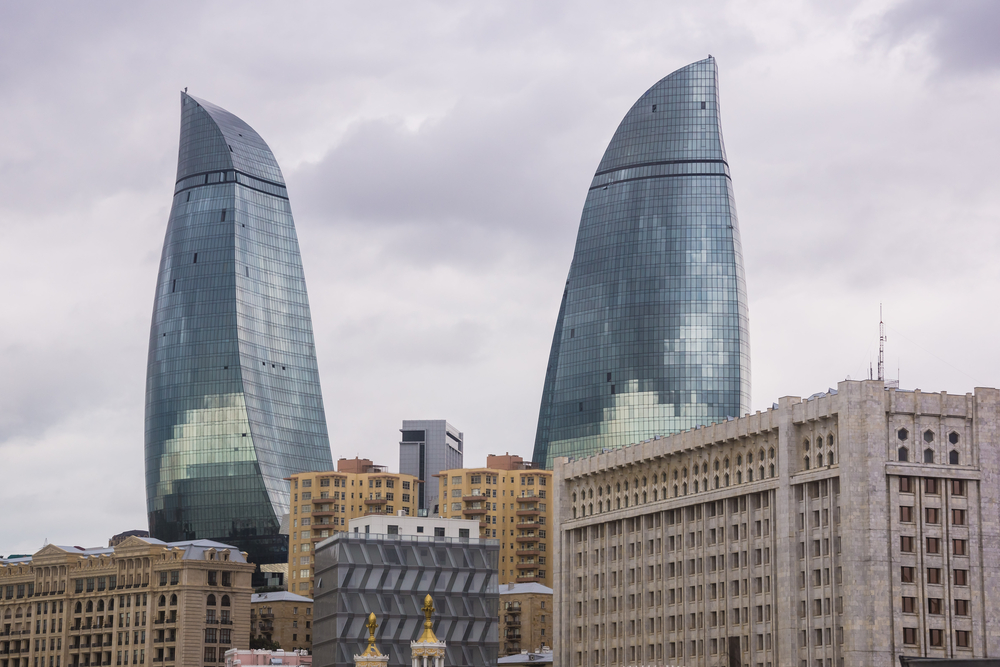
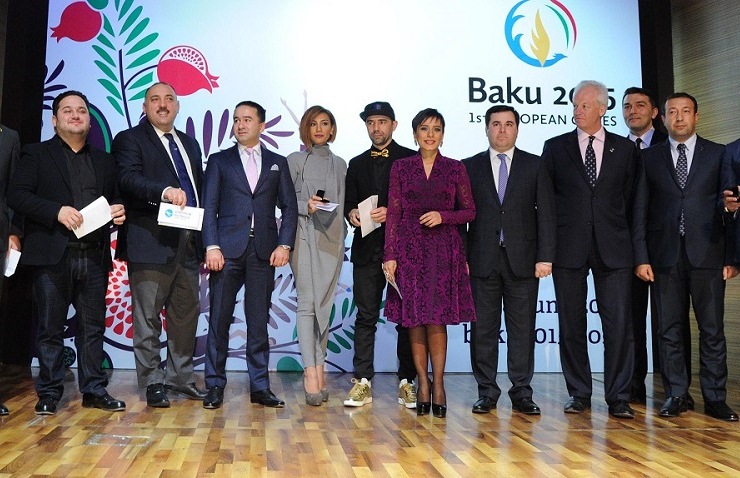
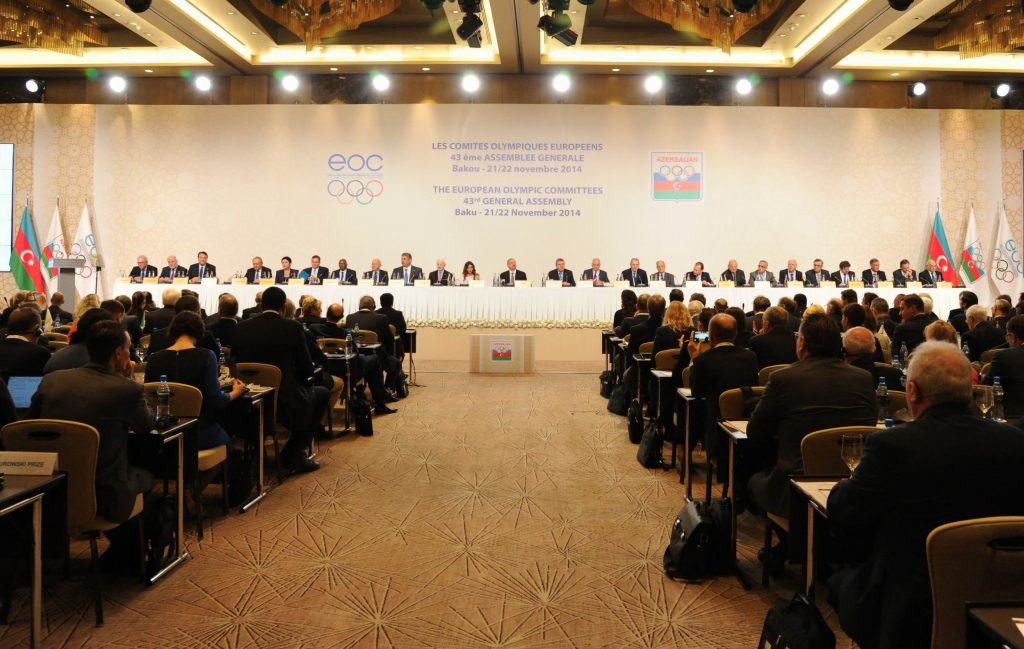
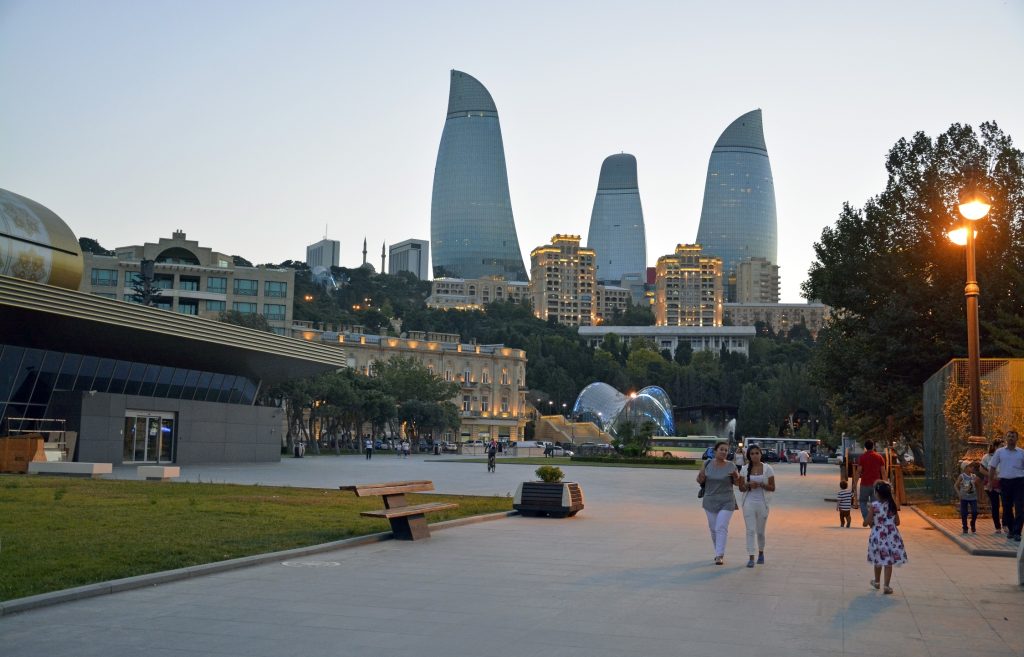
    Last year was of course the year that Europe added the missing fifth ring to the continental games of the world by staging our inaugural European Games in Baku, Azerbaijan. Those wonderful 17 days of Games created more headlines and interest in the work of the European Olympic Committees than any previous initiative or programme in our history. It was a magnificent event and a great milestone for the EOC and the Olympic Committee of Azerbaijan. But it’s important to remember that the work of all 50 of our NOCs and affiliated organisations continued unabated before, during, and after the Games. 
    In 2015 our NOCs scaled great heights. To highlight a few for example: the NOCs of Austria, Liechtenstein and Georgia all showed expert teamwork, innovation and organisational capacity in staging the 2015 European Youth Olympic Festivals whilst the Czech Olympic Committee staged a hugely professional EOC General Assembly in Prague that exhibited the perfect balance of private support from partners and public support from volunteers. I highlight these examples not for praise above others but to give a small snapshot of the hard work, cooperation and innovative thinking that characterised the activities of all 50 European NOCs in 2015. 
    Last year, the sports industry as a whole started a process of important and necessary change to its collective governance to make transparency and accountability an absolute priority. These changes were, rightly, front and centre of everyone’s thinking. Yet it’s important to train our eyes to see the enormous amount of great work that was done in the background. This helps remind me why making these changes as soon as possible is so important: because sport is so important to people’s lives. If we govern our organisations better we will attract more participation in what we do, from corporate sponsors, from governments, from fans and from young people. 
    To ensure the changes take root, it is up to every single person in the sports world to shoulder more responsibility in defending the integrity of sport. It starts with the good governance of sports organisations and the individual honesty of sports administrators, but from here it must run through every strand of the sports world, touch every affiliate, every fan, and every athlete. 
    I echo Thomas Bach’s words for 2016 when he says “as the role and relevance of sport in society continues to grow, so do the expectations of the public vis-à-vis the integrity of athletes and sports organisations. It is our shared responsibility in the Olympic Movement to provide new answers to new questions.” 
    2016 is, of course, an Olympic year. And it is incredibly exciting that for the first time ever the Olympic Games will be staged in South America. It shows that the Olympic family is a truly global family and it is a wholly positive milestone for the Olympic Movement. 
    Europe has staged 30 editions of the summer and winter Games but must fight hard now to maintain its pre-eminence, which is why it is so pleasing to see three of the four 2024 Candidate Cities coming from Europe. In addition, as the most developed sports continent, we have a vital role to play in establishing the models of, not just good governance, but exceptional governance, which the whole Olympic family can benefit from. 
    I wish you all a great year in sport in 2016. 
     
    Patrick Hickey, President of the European Olympic Committees
     

  • FIBA Europe to address policy challenges with EOC EU Office
    FIBA Europe to address policy challenges with EOC EU Office

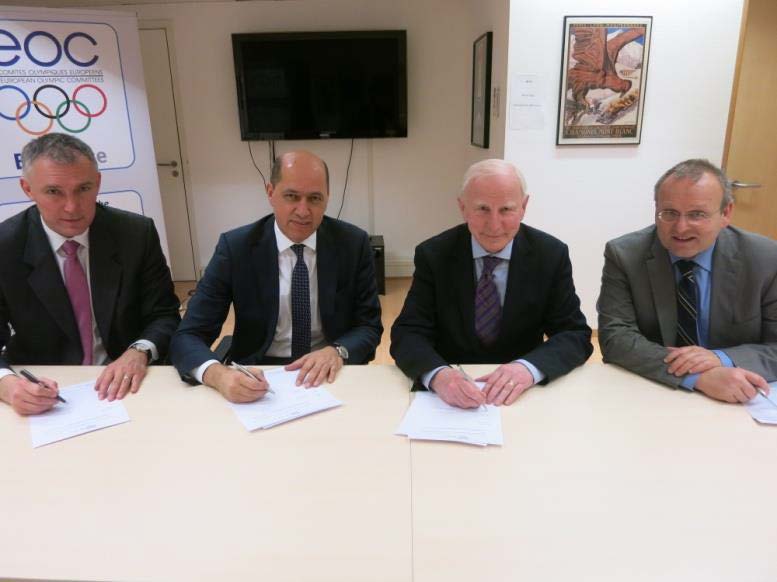
    FIBA Europe, the European governing body for basketball, has joined seven other sports federations by becoming a partner of the European Olympic Committees (EOC) EU Office in Brussels. 
    The EOC EU Office represents the EOC to European institutions, working with towards a European Sports policy. It also represents the interests of the International Olympic Committee (IOC) at national, European and international level. 
    “I am extremely pleased to welcome the prestigious organisation of FIBA Europe as our latest partner. When we established the EOC EU Office, it was organisations such as FIBA Europe that we wanted to target in order to build a strong network of Olympic Movement sports’ organisations to partner with the EU’s institutions,” said EOC President Patrick Hickey. 
    “The European Union brings a number of challenges as well as opportunities for the field of sport. The EOC EU Office is our answer to facing these challenges and to taking full advantage of these opportunities. With basketball being one of the major team sports in Europe, I am sure that this partnership will be of mutual benefit to FIBA Europe and to the EOC in many EU policy areas, but also beyond the EU institutions.” 
    FIBA Europe is the sixth European Federation to partner with the EOC EU Office, following European Athletics, European Aquatics, the European Handball Federation, the European Volleyball Confederation and Rugby Europe. The EOC EU Office has also partnered with two International Federations: FIFA and the International Ice Hockey Federation (IIHF). 
    “At FIBA Europe, we are always looking to build partnerships with institutions that share our commitment to sport and the positive impact it has on young people and our societies,” said FIBA Europe President Turgay Demirel.
    “The EOC EU Office is one such institution. Basketball is one of Europe’s leading sports, and this relationship will allow us to work more effectively towards our goal of strengthening the game in each of our member countries and beyond.”
    Basketball has been featured in every edition of the European Youth Olympic Festival, dating back to the inaugural games in 1991. 
     “FIBA Europe’s commitment to the European Olympic family grew last summer in Baku when our exciting new format, 3×3, proved to be one of the biggest hits with fans at the inaugural European Games,” said FIBA Executive Director Europe Kamil Novak.
    “Now, becoming a partner of the EOC EU Office is the next logical step in our mutually beneficial relationship.”
    A full list of the EOC EU Office’s partners can be found at http://www.euoffice.eurolympic.org/partners
     

  • European Championships – challenger or champion of Olympic sports?

    European Championships – challenger or champion of Olympic sports?

    A new fixture has appeared on the calendar of international multi-sports events. The European Championships, taking place for the first time on 1-12 August 2018, has been described by observers as either a repackaging of existing championships or a serious challenger to the European Games – the continental mega event initiated by the European Olympic Committees (EOC) at Baku in 2015. 
    The organisers themselves describe the event as a “coming together of existing championships”. Six sports – aquatics, cycling, golf, gymnastics, rowing and triathlon – will be hosted in Glasgow, with athletics taking place in Berlin from 7-12 August. 
    The concept is run by and on behalf of the European Federations: European Athletics; Ligue Européenne de Natation (LEN, or European Aquatics); the European Cycling Union (UEC); World Rowing (FISA), the European Triathlon Union (ETU); the European Union of Gymnastics (UEG); and the European Tour and the Ladies European Tour as Golf Europe combined. 
    The broadcast partners for the event are the European Broadcasting Union (EBU)’s free to air members.  
    “We were very happy to see that Glasgow and Berlin were supporting the idea and particularly that the federations took this major step forward to agree to this concept of having their European championships under one umbrella in the two cities,” says Stefan Kürten, Director of Eurovision Services & Sports Rights at the EBU.
    Elevating sports together
    “For us, this is a milestone in the development of sports in Europe. This concept will clearly contribute to maintaining European sports on this level where it belongs,” says Kürten.
    “We want the public in Europe to focus on the top Olympic sports in Europe. We want to show to the public the top athletes in these sports that are already visible on free to air, and we want to centralise that. 
    “By centralising them we are not creating an additional event; it is bundling existing events. We as broadcasters are not interested in more events. There is sometimes the belief that the more you create, the more interest you generate. I can say from a broadcaster’s perspective this is wrong. You have to focus on the top events and make them even more valuable. 
    “Therefore we think there will be an increase in audience by these multi-sports events so that will be to the benefit of the sports and of the host cities and clearly also to our benefit.
    “On top of that, we think by putting these events together we also want to emphasise the relevance and importance of European sports, because the cradle of the Olympic sports is Europe and we are afraid that if that part falls, gets weaker, that has an impact on world sports and we don’t want that. We think as broadcasters: let’s promote the strongest, push it further, and be creative and innovative. 
    “The message that we got back from the members was that the broadcasters were extremely pleased with such a milestone event. We have 23 broadcasters with us already – the top broadcasters – and they will be all the main channels.”
    Frank Kowalski, Managing Director of the Berlin 2018 local organising committee says: “Working together with Glasgow, we are really proud to be in the first move of this European project. 
    “For the city and for us it wasn’t easy because the situation came after awarding the 2018 European Athletics championships to Berlin. But we are totally convinced that this is the right step for the summer sports to get the power against other sports like football. 
    “We all have to learn not to produce what we like to produce, but what our clients like to have. I am convinced that we will have a lot of synergies and will take every opportunity we have for us, for the European Athletics Championships and for the city of Berlin. We have strong partners and we are getting closer and closer through the collaboration – and it makes sense.”
    Scheduling around the crown jewels
    “In athletics it’s very important that our time schedule is respected,” says European Athletics President Svein Arne Hansen. “We have a long tradition in having our biennial Championships in this week and we made very sure from the beginning that our prime time had to be protected. We agreed that with LEN and with our Glasgow friends.
    “This is the jewel in the crown for European Athletics and we have to protect that jewel and I think we have achieved this – we’ll soon be ready to give out the timetable.”
    Paolo Barelli, President of LEN says: “What we are doing is very easy, it is not so complicated. The first period, the first part of the Championships, is for aquatics. The second part is for track and field, with one day of overlapping.”
    “It is a coordinated approach,” says Kürten. “The idea is to have as few overlaps as possible but to have a natural flow of medal ceremonies and heats so we have on-going interest that is well coordinated.”
    Colin Hartley, Championships Director of Glasgow 2018 says: “The collaboration to create a schedule that works for as many reasons as possible is already at version one. When we unveil that schedule it will be as good as we can achieve in terms of city, sport and of course for the broadcast viewers.”
    The challenge of selling tickets
    Tickets go on sale on 22 August 2016 – the day after the Rio 2016 Olympic Games finishes. Berlin has the biggest sales challenge, in filling the 74,475 seat Olympiastadion.
    “For us it’s a very big task to fill the Olympic stadium in Berlin,” says Arne Hansen. “But I hope that all the excitement of what’s happening up in Glasgow will carry over to people in Berlin, so people will see next week we are in Berlin to see the athletics.
    “We have gone into it with open eyes, even if this contract was signed before my election, which was one year ago. I am fully enthusiastic and behind it.
    “We all remember Berlin 2009 and that incredible atmosphere. It was really something, because of one thing; you had the local athletes plus some superstars from Jamaica. But local athletes are what you need. 
    “I am sure that the German federation will bring the best out in this Championships. 74,000 is a very big thing to sell, but if somebody can do it in Europe, Berlin can do it. We hope that they will have bigger viewership and more people coming to the stadium than ever.”
    In Glasgow, the organisers are looking into possibilities for ticketing across the different sports. 
    “On the back of the Commonwealth Games in Glasgow, the appetite for sports is very much there,” says Colin Hartley, Championships Director of Glasgow 2018.
    “People going to sports they haven’t seen before is a proven thing that they are interested. So on the back of that, we will definitely bring ticketing together. And we’ll be promoting the events in Berlin as they will in Glasgow. For the spectators, online and social media will be very much a seamless experience.”
    A threat to the European Games?
    The next European Games is due to take place in 2019, with EOC President Patrick Hickey having stated in November 2015 that Russia would be the preferred host. 
    However, Russia’s Sports Minister Vitaly Mutko is reported to have said that Russia never applied to host the Games and would be too busy to host any other major events until 2020. And with Russia’s participation in athletics at the Rio 2016 Olympic Games under threat from doping revelations, the country’s suitability to host the European Games is also under scrutiny.
    Hickey and EOC Vice President Janez Kocijancic both contacted Host City to say the EOC would not be making a statement on this matter “for the moment”. 
    Hickey also referred Host City to a letter he sent to the European Federations in which he stated that their contract with the European Championships management company would violate EU competition law, as it seeks to restrict them from “competing in another multi-sport continental event within a year of the conclusion of the 2018 European Sport Championships”.
    “I haven’t spoken with Patrick Hickey since the latest news about Russian internal things going on there,” said Arne Hansen at SportAccord. “We have an agreement with the EBU; our best athletes will be in Berlin. And if the conditions are right we will also be in the European Games.
    “There will not be a European Athletics Championships of any kind in the European Games – no youth, junior, under 23, or senior. But I don’t say it will be low level. Athletics is a big sport; hopefully we can find other interesting things to put in the Games. I am not saying no to new competitions; that would be against my nature.”
    It is also uncertain whether the EBU will put its weight behind the European Games. “We have had discussions, we have looked into it,” says Kürten. “It was difficult to follow the European Games on TV, there was not such broad interest in Europe. We think this is a bit of a different event, so for us it was clearly relevant to focus on the top sports.”
    Barelli is keen to stress that the European Championships is not a threat to the activities of the European Olympic Committees or the other European Federations. “We are not creating any European Games. I know that someone tried to make some misunderstanding about that. Track and field manages its own championship; I don’t want to interfere with its championship, and track and field is not permitted to interfere with my championship.
    “What we are doing is putting together seven sports, with the help of EBU, with the help of the family, with the help of Glasgow, just to have something more to add to the value of each discipline. It was very difficult to create but when someone put their mind to this project is was easy to answer the question why. We think this is going to be a good format for the future.”
    Big host city sought for 2022
    No additional sports are being considered for the 2018 event, says Kürten. “We didn’t want to overcharge; the idea was to go with specific group of sports that couldn’t clash; it couldn’t be too long. If you have the first edition of such an event it’s good to start with quality and not to overload it.”
    If 2018 is successful, the European Championships will take place again in 2022. Arne Hansen says: “We have, together with EBU, together with other partners, set criteria for 2018. I that is fulfilled, we will go along with 2022.”
    European Athletics already has 11 countries bidding for their 2022 Championships, in a process that was launched before the possibility of the combined event arose. 
    “It is a huge thing that we already have 11 countries in Europe bidding for the 2022 European Athletics Championships. We will go out to them, together with the other sports, to find potential bidders from the 11,” says Arne Hansen. “We have already started a bidding process, so it would be very hard to go outside those 11 countries to find the next organiser for the next European Athletics Championships.”
    Kürten says the aim is to award the 2022 European Championships to a major European city. “The interest when looking at host cities is clearly there; in this respect we expect this to materialise in a big city – that’s what we are trying to achieve.
    Asked if the next edition will take place in just one city next time, Kürten said “It’s too early to say. That’s open; probably one city”.
    This article is Host City’s coverage of a European Championships media roundtable at SportAccord Convention, with further input from the EOC.

  • Sports federations confirm joint 2022 European Championships

    Sports federations confirm joint 2022 European Championships

    The European Sports Federation members of the European Championships Board have confirmed their intentions to take part in the 2022 edition of the new “European Championships” multi-sport event, which takes place for the first time in Glasgow and Berlin in August 2018.
    The Board members of the European sports federations of athletics, swimming, cycling, gymnastics, rowing, triathlon and golf all committed in principle to participating in 2022 after preliminary discussions on the host venue selection process for future editions of the championships.
    European Athletics President Svein Arne Hansen, co-chair of the European Championships Board, said there is already great interest from cities, regions and countries in hosting the 2022 European Championships following Berlin-Glasgow in 2018.
    “This shows the value of our innovative concept – for the sports and the future bidding cities,” said President Hansen. “It is obvious why all the participating sports want to carry on in 2022 as the European Championships is a sustainable event that brings together our existing championships without adding to a crowded calendar, and this is very attractive and affordable to a wide range of host cities.”
    Fellow co-chair Paolo Barelli, President of the Ligue Europe?enne de Natation (European Aquatics), said: “The inaugural edition in 2018 will deliver to the participating sports huge benefits in terms of aggregation, through a higher profile and reach through our media agreements with the European Broadcasting Union. This will ensure our long-term financial security as we are confident the championships will go from strength-to-strength through 2022 and beyond.”
    In 2018, the existing senior European Championships of athletics, aquatics, cycling, gymnastics, rowing and triathlon will be brought together for the first time in Berlin and Glasgow, with a new Golf Team Championships also being introduced onto the European stage.
    Around 1,500 athletes will compete in Berlin through 7-12 August 2018 as part of the European Athletics Championships. Approximately 3,025 athletes will compete in Glasgow in the other six events between 1-12 August.
    The European Championships is collectively run by the participating European Sports Federations and all decisions are made by the European Championships Board, which is jointly chaired by European Athletics and LEN. Each Federation is independently responsible for their own sport within the concept and all decisions to participate are taken in full compliance with the decision-making processes and governance rules of each Federation.
    The European Broadcasting Union (EBU), which holds the broadcast rights on all platforms, has already confirmed coverage across the top five markets for 2018, with BBC in the United Kingdom, ARD/ZDF in Germany, France Televisions in France, RAI in Italy and TVE in Spain. These countries represent a major part of the potential television audience of 1.03 billion. 
    Meanwhile, a dispute between the European Championships organisers and the European Olympic Committees (EOC) continues. In response to a request for information from Host City, the EOC issued a statement on 31 May in which it cited a clause in a contract issued to the European Federations by the European Sports Championship Management (ESCM) which said: “EF shall not enter into any agreement for the integration of the Event and/or any other official EF competition requiring the participation of national federations and elite athletes in any other multisport event during the term of this Agreement and until one (1) year after the end of ESC 2018”.
    In the statement, the EOC said “our stance is taken to ensure that new commercial entities cannot be allowed to erode the longstanding right of Olympic Movement stakeholders to stage their own established events.”
    The support of the federations for the 2022 edition was announced at the European Championships Board meeting in Berlin on Monday. The Board also received updates from 2018 hosts Berlin and Glasgow and Working Groups related to the overall timetable, brand, and ceremonies, celebrations and shared experiences. The next Board meeting will be in Rome on 27 October 2016. 
     

  • IOC asks sports federations to take events out of Russia

    IOC asks sports federations to take events out of Russia

    The IOC Executive Board on Tuesday said it will no longer back the 2019 European Games, set to take place in Russia, and has asked all Winter Olympic Sports Federations to find alternative host nations for any upcoming events. 
    These immediate decisions are part of a number of IOC responses to the World Anti-Doping Association (WADA)’s “Independent Person” report into doping in Russia. 
    “The IOC will not organise or give patronage to any sports event or meeting in Russia. This includes plans for the European Games 2019 organised by the European Olympic Committees (EOC),” the IOC Executive Board said in a statement. 
    “Because of the detailed references to the manipulation of samples during the Olympic Winter Games Sochi 2014 the IOC asks all International Olympic Winter Sports Federations to freeze their preparations for major events in Russia, such as World Championships, World Cups or other major international competitions under their responsibility, and to actively look for alternative organisers,” it added.
    “The findings of the report show a shocking and unprecedented attack on the integrity of sports and on the Olympic Games,” said IOC President Thomas Bach. “Therefore, the IOC will not hesitate to take the toughest sanctions available against any individual or organisation implicated.”
    The report, by “independent person” Richard McLaren was instigated after Grigory Rodchenkov, former director of Russia’s Moscow and Sochi antidoping laboratories, blew the whistle on cover-ups.
    “WADA is grateful to Richard McLaren, his team, and other contributors that, together, helped provide us with a fact-based path forward today as it relates to allegations and other information provided by Dr. Rodchenkov,” said Sir Craig Reedie, President of WADA said in a statement.
    “Shamefully, the McLaren Report corroborates the allegations, exposing a modus operandi of serious manipulation of the doping control process in the satellite laboratory set up in Sochi for the 2014 Games; and, the Moscow laboratory since 2011 and after the Sochi Games.
    “Not only does the evidence implicate the Russian Ministry of Sport in running a doping system that’s sole aim was to subvert the doping control process, it also states that there was active participation and assistance of the Federal Security Service and the Center of Sports Preparation of National Teams of Russia.”
    The IOC has now started “disciplinary actions related to the involvement of officials within the Russian Ministry of Sports and other persons mentioned in the report because of violations of the Olympic Charter and the World Anti-Doping Code”.
    The Report could result in a complete ban on Russian athletes participating in the 2016 Olympic Games, due to start in Rio de Janeiro on 5 August. 
    In the statement, the IOC said it will “carefully evaluate the IP Report. It will explore the legal options with regard to a collective ban of all Russian athletes for the Olympic Games 2016 versus the right to individual justice. In this respect, the IOC will have to take the CAS decision on 21 July 2016 concerning the IAAF rules into consideration, as well as the World Anti-Doping Code and the Olympic Charter.”
    For the full IOC Executive Board statement click here. 
     

  • Spyros Capralos to chair Minsk 2019 European Games Coordination Commission

    Spyros Capralos to chair Minsk 2019 European Games Coordination Commission

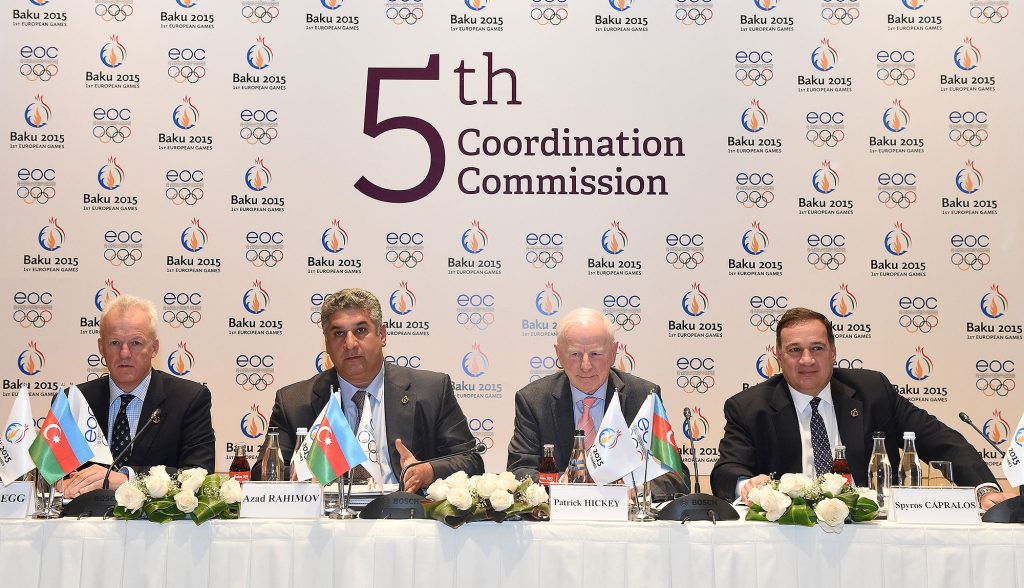
    [Source: EOC] The European Olympic Committees (EOC) on 26th January held its first meeting of the year, with IOC President Thomas Bach in attendance. The meeting’s key outcome was the appointment of Spyros Capralos as Chair of the EOC Coordination Commission for the second edition of the European Games in 2019 in Minsk, Belarus.
    EOC Acting President Janez Kocijan?i? opened the day’s proceedings in Lausanne by welcoming President Bach and thanking him for his guidance of the Olympic Movement throughout 2016. President Bach then gave an update on the IOC’s latest activities, especially in the area of anti-doping, and answered questions from Executive Committee members.
    EOC Acting President Janez Kocijan?i? said: “It was a great honour to have IOC President Bach attend our first meeting of 2017 in the Olympic capital. President Bach provided a full update on all current key issues from across the Olympic Movement and, in response, the EOC Executive Committee expressed our unanimous support for the IOC’s handling of the completed McLaren Report concerning doping in Russia.
    “The IOC’s approach on this matter – which was consistent with its approach towards Russia’s participation in the Olympic Games in Rio – respects the rule of law in a fair and objective way and the EOC fully supports this.”
    Following President Bach’s departure, the Executive Committee received reports from Secretary General Raffaele Pagnozzi, Treasurer Kikis Lazarides, and European Games Senior Consultant Pierce O’Callaghan.
    Capralos’s appointment as Coordination Commission Chair for Minsk 2019 was then confirmed by unanimous approval from Executive Committee members. Capralos, the President of the Hellenic Olympic Committee, is taking on the same role he occupied from 2013-2015 for the inaugural European Games in Baku, Azerbaijan.
    On Capralos’s appointment, Kocijan?i? said: “Spyros’s chairing of the Baku 2015 Coordination Commission was very impressive and we are delighted that he is able to continue in this role for Minsk 2019. We are very excited that preparations for the second European Games are gathering speed in Minsk.”
    The first Coordination Commission visit to Minsk is expected in the spring.
    EOC Coordination Commission Chair for Minsk 2019, Spyros Capralos, said: “I am very happy to be taking on this responsibility once again. The Coordination Commission has a vital role to play in shaping the final concept of the European Games and my work starts with immediate effect. My commission members will make sure that the EOC’s experience of delivering Baku 2015 is passed on to the Minsk 2019 European Games Organising Committee in the best possible way.”
    The Executive Committee also received positive progress updates about the upcoming Winter European Youth Olympic Festival in Erzurum, Turkey, which is taking place from 11-18 February.
    EOC Acting President Kocijan?i? praised the Turkish Olympic Committee and the Erzurum 2017 Organising Committee for their hard work in staging the event just two years after agreeing that Erzurum would host the event in 2017 rather than in 2019, as had been originally agreed.

  • EOC Leaders Satisfied that Minsk 2019 Preparations are on Track

    Minsk, Belarus; 4 March 2018: European Olympic Committees (EOC) President Janez Kocijan?i? led a successful three-day visit to Minsk and was satisfied with the progress of preparations for the second edition of the European Games, which are to be held in the Belarussian capital from 21-30 June 2019.
    President Kocijan?i? was joined by the EOC’s Minsk 2019 European Games Coordination Commission (CoCom), led by Chair Spyros Capralos and Vice Chair Zlatko Mateša, as well as a group of EOC experts. The EOC team also included EOC Vice-President Niels Nygaard and EOC Secretary General Raffaele Pagnozzi.
    Over the three days, President Kocijan?i? led the EOC team at a number of meetings to receive an update on the EOC’s flagship event, including one with President of Belarus Alexander Lukashenko.
    Speaking after this meeting, President Kocijan?i? said he that he is eagerly awaiting the start of the second European Games: “The European Olympic Committees is fully satisfied with the preparations that have been made so far, and we are looking forward to the future with optimism and confidence. The Minsk 2019 European Games Organising Committee (MEGOC) has highly-qualified, welltrained, professional staff working hard to deliver an excellent second edition of the Games.”
    President Kocijan?i? also congratulated President Lukashenko on the results of the Belarusian athletes at the PyeongChang 2018 Olympic Winter Games, where they won two gold medals and one silver: “I would like to congratulate the Belarusian team for finishing 15th in the PyeongChang 2018 medal table. This was a great effort and reflects the high level of sporting competence here in Belarus. Belarus is not only a country that performs well on the field of play, it is also a country with world-class sporting infrastructure and organisation. Because of this, we are very confident that the European Games will be a resounding success.” 

  • Minsk 2019 European Games set to “reverse negative discourse” on major sports events

    Minsk 2019 European Games set to “reverse negative discourse” on major sports events

    Host City: The theme of Host City 2018 is “The Future of Major Events”. What do you see as the biggest challenge and opportunity for the future of major events?
    Niels Nygaard: It is clear that one of the biggest challenges facing any major sports event is overcoming the negative perception in the media and among the public that they are intrinsically financially unsound.
    A lot has already been done in recent years to make improvements in all aspects of event delivery, but it will require more time and effort to reverse the negative discourse. The European Olympic Committees is fully aligned with the International Olympic Committee, Olympic Agenda 2020 and The New Norm, meaning that we are absolutely committed to lowering the costs and complexity of our events while improving their efficiency and sustainability. The onus is definitely on us to not only talk the talk but walk the walk when it comes to delivering the best possible events without gigantism, overspending and leaving white elephants behind.
    Of course, one of the best ways we can do this is to host sustainable events that leave many positive and long-lasting benefits for the local communities – something we can then use as tangible proof in the debate. We hope that Minsk 2019 will become a touchstone for future discussions on the issue.
     
    Host City: What impact do you expect the 2019 European Games in Minsk to have on the city and region?
    Niels Nygaard: We certainly expect that there will be some level of cultural and socioeconomic impact on Minsk and Belarus as a result of the European Games. We see the Games as being a watershed moment in the opening up of Belarus to the rest of Europe and vice versa.
    I think for many Europeans, not a great deal is known about the country – it hasn’t traditionally been on the shortlist of travel destinations on our continent. But that could very well change – in fact, Belarus was recently named by Lonely Planet as one of the top 10 destinations globally to travel to in 2019. I think anyone who visits Minsk for the first time cannot help to be impressed by how beautiful the city is, how green, clean and safe it is, and how friendly the people are.
    Fortunately, there will be next to no environmental impact on the city as these Games will be one of the most sustainable multi-sports events in history. This is because 11 of 12 venues used at next June’s Games are existing structures. The single venue that had to be built was that for beach soccer – an open-air facility seating 1,500 people that took only two months to construct.
    And for sports fans it can’t get much better – the venues are state-of-the-art and are all within 30 minutes’ drive of the Athletes Village. It means that you can take in a number of different sports in the same day if you are so inclined, all in great comfort surrounded by passionate and knowledgeable local sports enthusiasts.
    We believe Minsk 2019 can set an example for other multi-sports competitions in the future. There has been a lot of talk lately about how Games should be moulded around the host city and not the other way around. Well, look no further than Minsk 2019, which should become a prime example of how to host a major sports event without spending a lot of money.
     
    Host City: Are there any areas of Games preparation that need particular attention right now?
    Niels Nygaard: We are quite pleased with the way things are progressing so far, and get regular updates from our Coordination Commission and from the local organisers themselves. With 11 of the 12 facilities already existing, we have no issues with venue preparation – Minsk could hold the Games tomorrow if need be.
    But in the lead-up to the Games we are asking our counterparts in Belarus to step everything up a notch in terms of organisation. In total, Minsk will host 22 test events ahead of the Games on 21 June, which will be a critical learning curve. They have proven to be excellent hosts in the past, but the European Games will be the largest event they have ever staged and it will require a great deal of flexibility and quick decision-making at all levels to be hosted successfully.
     
    Host City: How is the candidature process for 2023 progressing?
    Niels Nygaard: We had a good deal of interest in the 2023 European Games prior to our bid launch in September this year. This is why we were confident that even though our window for bid submissions is only 6 months, we are likely to have a strong pool of candidates from which to choose come 28 February.
    By naming the 2023 Host City on the eve of Minsk 2019, we wanted to ensure that the 2023 Host City would have a full four years to prepare for their edition of the European Games.
    The interest being shown in the 2023 European Games signals that this event is regarded as Europe’s premier sporting event. I believe it has a bright future and we look forward to seeing the Games evolve and improve over time.
     
    Host City: With the European Championships having been successfully hosted in Glasgow this summer and another edition due to take place in 2022, how do you envisage the European Games coexisting alongside this new model?
    Niels Nygaard: The two competitions complement each other well, with the European Games remaining Europe’s only continental Games, bringing together the best athletes from Olympic and non-Olympic sports and serving as qualifiers for the Olympic Games.
    At the European Olympic Committees, it is our job to promote sport at all levels across the continent. We are pleased at the success of both our European Games and the recent European Championships, which are clear indications that sport is alive and well in Europe. If these events help to inspire people, especially young people, to take up a sport or get active then we can say that we are successfully delivering our mandate.
     
    Host City: During the World Sailing Championships this year, IOC President Thomas Bach said that Denmark could organise a fantastic Olympic Games. Obviously 2032 is a long way away but can you envisage Denmark bidding and how might this work?
    Niels Nygaard: We are of course flattered that the IOC President believes Denmark could organise Olympic Summer Games sometime in the future. I do not see it feasible for Denmark to host the Games alone, since we would have to build to many new facilities in sports where we are not strong today.
    With reference to Olympic Agenda 2020, I could see Sweden, Norway and Denmark together could host the Games. This would require that the Governments and the people of Sweden, Norway and Denmark would like the three countries to have a much closer cooperation in political, business and cultural matters. In this case hosting the Olympic Games together could be a strong catalyst for such a stronger cooperation.
     
    Niels Nygaard, President, National Olympic Committee and Sports Confederation of Denmark and Vice President, European Olympic Committees is speaking at Host City 2018 in Glasgow on 20-21 November. Register here today.

  • Minsk 2019 European Games targets 120 broadcast deals

    Minsk 2019 European Games targets 120 broadcast deals

    International Sports Broadcasting (ISB), the host broadcaster for the Minsk 2019 European Games, said it had reached agreements in more than 106 territories on 28th January, with 150 days to go to the Games.
    The organisers of the multisport megaevent say the agreements with top broadcasters in Europe, sub-Saharan Africa and New Zealand will enable them to reach more than 500 million viewers.
    “This is excellent news not only for the success and longevity of the European Games, but especially for the athletes, who deserve to have the biggest possible viewership while competing at Europe’s premier multi-sport event,” said European Olympic Committees (EOC) President Janez Kocijan?i?.
    “We look forward to welcoming the world to Minsk this summer, be it in person or via our strong network of broadcasters.”
    The second edition of the European Games runs from 21-30 June in the capital city of Belarus.
    More than 4,000 athletes will participate in 15 sports: 3×3 basketball, archery, athletics, badminton, beach soccer, boxing, canoe sprint, cycling, gymnastics, judo, karate, sambo, shooting, table tennis and wrestling. Eight of these will act as qualifiers for the Tokyo 2020 Olympic Games, while four sports will also count the Games as their official European championships.
    ISB is set to produce an estimated 500 hours of live coverage and daily highlights over ten days of competitions plus Opening and Closing Ceremonies.
    The company was established in 1996 by Manolo Romero, former Managing Director of the IOC’s host broadcaster, Olympic Broadcasting Services (OBS) and has served as the host broadcaster for seven Olympic Games, six Paralympic Games, numerous World Championships, World Cups and continental Games.
    “We are very pleased with the agreements reached so far and expect to announce a number of other key deals soon,” Romero said. “Our ultimate target is more than 120 rights holding broadcasters and we are confident that we will achieve it.”

  • Global Esports Federation and European Olympic Committees form Strategic Partnership

    Global Esports Federation and European Olympic Committees form Strategic Partnership

    [Source: Global Esports Federation] The Global Esports Federation confirmed a strategic partnership with the European Olympic Committees (EOC). In line with the growing convergence of sport and esports, this partnership will further amplify the GEF’s efforts to promote, expand and develop esports across Europe. The partnership also forms part of the EOC’s initiatives to explore new ways of engaging with young people across the continent. 
    Europe represents a large number of countries and cultures – each remarkable and unique, and each with its own National Olympic Committee. This partnership presents a powerful opportunity to connect across borders through the GEF’s #worldconnected community.
    “The European Olympic Committees looks forward to this strategic partnership with the Global Esports Federation as we explore the significant growth of esports across our European family. Through this partnership we also focus on promoting sport and the Olympic values, while establishing links with all EOC activities and exploring new forms for fan engagement. Europe is one of the growing regions in the development of esports. The partnership with the GEF will help to evolve, build, and shape our strategy around esports,” said Spyros Capralos, President of the European Olympic Committees.
    The GEF and the EOC expect to jointly develop new opportunities to make the connection between sport and esports. The European Games, with the third edition in preparation in Kraków-Ma?opolska, Poland 2023, can be a great example that demonstrates the convergence of sport and esports. 
    “Together, we are committed to expanding esports, creating new modes of entertainment that engage new audiences, and offering inspiring and innovative formats for esports. The success of the recent Commonwealth Esports Championships at Birmingham 2022, demonstrated these opportunities in service to youth and we are looking forward to adding to this through our partnership with the European Olympic Committees,” said Chris Chan, President of the Global Esports Federation.