Next year Glasgow will once again take centre stage and make history when it hosts the inaugural 2018 European Championships in partnership with Berlin.
The opportunity to host this exciting multi-sport event for the first time is a direct legacy of Scotland hosting the XX Commonwealth Games and The 2014 Ryder Cup.
We knew heading into these two landmark events that we had a unique opportunity to establish Scotland as the perfect stage for events. The planning, delivery and ultimately successes of 2014 gave us the springboard to establish Scotland as a world leading international events destination.
The facilities and expertise gained from both of these events, along with the events Scotland has hosted since, will now play a crucial role in the successful delivery of next year’s event. Six of the seven sports – Aquatics, Cycling, Golf, Gymnastics, Rowing, and Triathlon – will be in Glasgow and Scotland while Berlin will host the Athletics.
The Sir Chris Hoy Velodrome at Emirates Arena, The SSE Hydro, Tollcross International Swimming Centre and Cathkin Braes Mountain Bike Trails are just some of the venues to make a return, while a new World Championship and Olympic standard BMX track will be built in the city, providing future opportunities for major events as well as grassroots development for the sport. A few of the sports will head out of city. Edinburgh’s Royal Commonwealth Pool will host the Diving and the Open Water Swim will take place at the picturesque Loch Lomond, while Rowing and Triathlon will take place in Strathclyde Country Park.
For spectators and athletes alike, the Glasgow 2018 European Championships will create a new highlight on the international sporting calendar. It creates the opportunity for us to reach beyond the dedicated fans of the individual sports and to connect to a much broader audience, just as we saw through the legacy of the XX Commonwealth Games. It is a chance for sports to use Glasgow 2018 as a shop window to connect with people beyond the event and with some of our biggest participation sports taking part, it again allows us to inspire more people to take part in sport, get involved in coaching and establish more teams and places within sports clubs.
The success of and the legacies from the XX Commonwealth Games and The 2014 Ryder Cup have been the catalysts for Scotland’s winning bids to stage internationally significant events in recent times. They set the bar by which Scottish events are judged. Glasgow 2018 will build on this and help create a legacy going into the two major events taking place in 2019.
As the sporting capital of Scotland, Glasgow will again play host to some of the world’s best athletes’ as it hosts the 2019 European Athletics Indoor Championships, while at Gleneagles – which will also host the golf event for Glasgow 2018 – the magic of The 2014 Ryder Cup will be recreated when it welcomes the women’s equivalent, The 2019 Solheim Cup.
Just like the XX Commonwealth Games and The 2014 Ryder Cup, the images from the 2018 Glasgow European Championships will define Scotland and it is the far-reaching legacies of these occasions that will continue to define Scotland’s event industry.
Coupled with our stunning natural environment, outstanding build facilities, rich culture and heritage and passionate people, Scotland’s capability, credibility, capacity and confidence to deliver innovative and pioneering events will see us maintain our position amongst global elite event destinations.
At EventScotland we are proud of our role in bringing the legacy to life by identifying, developing and utilising Scotland’s unique selling points to bring the world’s best events to our shores.
Tag: EventScotland
-

EventScotland: helping bring legacy to life
-

Sky Sports wins BAFTA for coverage of The 145th Open at Royal Troon in Scotland
Sky Sports’ innovative coverage of The 145th Open at Royal Troon in July 2016 has earned them a BAFTA after being named best sports production during the awards ceremony in London.
The Sky Sports team won the award for best sports production for their enhanced coverage of the championships, including the thrilling climax when Henrik Stenson and Phil Mickelson were embroiled in a sensational final-day battle watched by hundreds of millions of people around the world.
The Open was named the winner ahead of BBC’s coverage of the Rio Olympics and the Six Nations clash between England and Wales, while the Paralympics on Channel 4 was also nominated.
Paul Bush OBE, EventScotland director of events, said: “This is a tremendous accolade, not only for the team at Sky Sports but for golf in general to have beaten off competition from so many top-class sporting productions. It is also a triumph for the stunning Ayrshire coastline which provided the perfect backdrop for the high-class drama that unfolded on the course.
“I’m especially delighted for our golf events executive Katy Mathieson, who was part of the Sky Sports team producing coverage from Royal Troon before joining EventScotland last year. We have a great relationship with Sky Sports through the world-class portfolio of golf events taking place in Scotland and we look forward to working with them on many more in the coming years.”
The EventScotland team work across Scotland’s extensive golf portfolio, which includes the men’s and ladies Scottish Opens at Dundonald Links in Ayrshire and the RICOH Women’s British Open at Kingsbarns in Fife among others this summer. The Open also returns to Scotland in 2018 at Carnoustie.
-

The special DNA of High Impact Events
I’d like to welcome you all to Glasgow and Scotland for Host City 2017.
This is the third consecutive year that Host City has been held in Glasgow and I am delighted to see how it has grown.
EventScotland has a strong heritage with this conference and, with so much happening in Scotland over the coming years; it is fitting to have so many of the world’s foremost event practitioners meeting in this great city ready to discuss high-impact events
International context
Having spent the last few weeks at home recovering from a new hip I have had lots of time to think, reflect and cogitate about the world sporting events landscape.
Unfortunately, several key words and phrases have stood out on more than one occasion:Governance – lack of leadership
Transparency
Athlete welfare
The lack of desire to move with the times
Doping
Corruption
Geo political instability
A fragile world economy
Terrorism
Global warming
Brexit
Lack of bids for Olympics
Bidding confusion over Rugby World Cup 2023to name but a few.
I find all of this very sad and, whilst it may well be a reflection of where we are, the lack of positive dialogue in terms of what high impact events can achieve is woeful.
Challenges
Whilst we have many challenges I genuinely believe that we need to celebrate success much more and ensure that we articulate and communicate to the public, politicians, media and more importantly athletes and fans how important this sector is for the world’s economy.
Take this city, Glasgow. On the back of the 2014 Commonwealth Games, the Hydro entertainment venue is ranked second or third in the world and the local vicinity is a contemporary and vibrant place to work, live and play, supporting 2,500 new jobs with some of the finest restaurants and cafes in Scotland.
I hope that the next two days gives us all the opportunity to both share our wisdom, and also reinvigorate and celebrate all that is great about our global events industry – one that, if we are not careful, is in my view at risk.
We need to articulate the special DNA of High Impact Events:Create moments no one can ever take away
Inspires others to achieve, perform and learn
Create impact across global governments that no other sector can, from a 360-degree perspective such as sport, creativity, health, education, economy, tourism, young people, etc.
And more importantly than ever contributes to the wellbeing of the community, the city, the country and our global wellbeing; and last but not least, makes people smile and have fun!!
Thank you for coming to Scotland and enjoy the conference. I am delighted to announce that we are working with Host City to further grow the event in Glasgow and Scotland next year and see this city as future the home of a world class conference for global event cities and events.
Thank you and enjoy the two days.
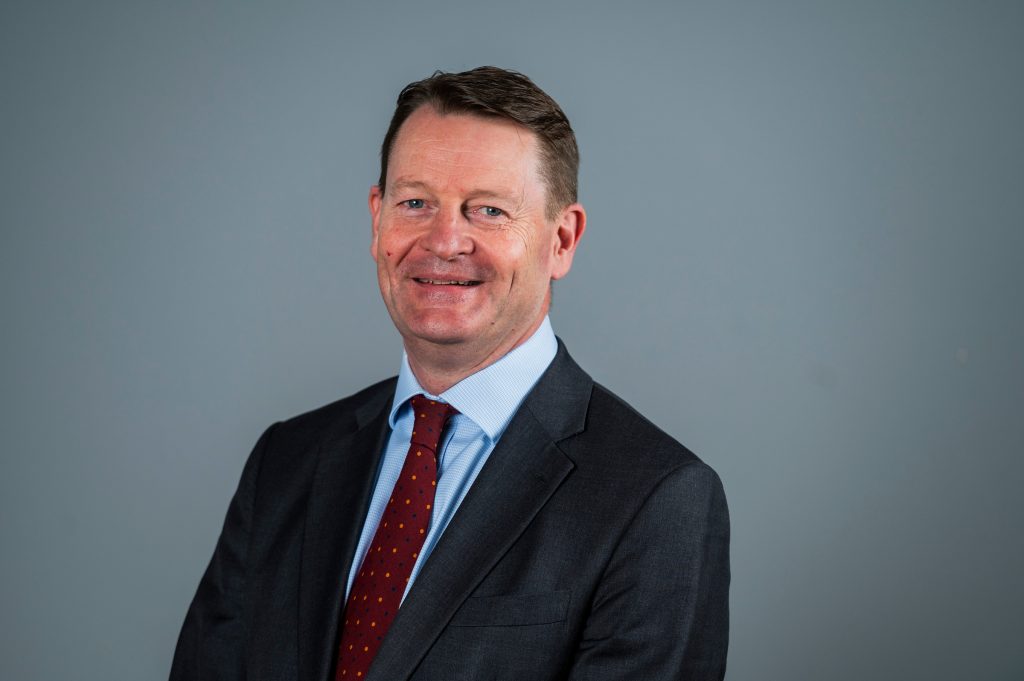
Paul Bush OBE is VisitScotland’s Director of Events, leading the EventScotland Team, Business Events and Industry Development. EventScotland takes a strategic lead in the Scottish events industry and is responsible for working with partners to attract, bid for and secure major sporting, cultural and business events.
Over the past decade this has brought some of the world’s biggest event properties to the country, including The Ryder Cup and Commonwealth Games in 2014, World Gymnastics Championships 2015, World Orienteering Championships 2015 the MTV Music Awards on two occasions and future events such as European Championships 2018, Solheim Cup 2019 and Euro 2020 Football.
Having been on the Commonwealth Games Scotland Board for four years as an independent non-executive Director, he was appointed Chairman in May 2015.
Paul was Chef De Mission for The 2006 Scottish Commonwealth Games team of 245 athletes and officials who secured a total of 29 medals. He was awarded an OBE in the 2007 Queen’s New Year Honours List for Services to Commonwealth Sport.
Paul Bush OBE is Chairman of Host City 2017, the largest meeting of cities and sports, business and cultural events, which took place in Glasgow on 27-28 November. -

Conference audience learn how ‘experiential obsessed generation’ are the future for Scotland’s events industry
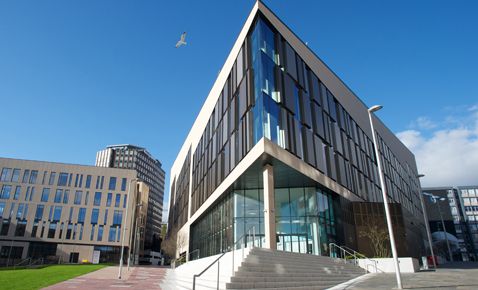
Hosted by sports broadcaster, Eilidh Barbour, and held at Glasgow’s Technology & Innovation Centre, 42 expert speakers and a capacity audience gathered for the flagship industry conference to share best practice and discuss the challenges and opportunities facing Scotland’s events industry.
David Coletto from Abacus Data delivered a timely and thought provoking keynote speech, providing invaluable insight on understanding the future of events through the eyes of a millennial during his presentation ‘Disruption and Generational Change’; part of the opening plenary session, ‘The Changing Audience for Events’.
He gave the 300 strong audience three things to take away from his talk when thinking about millennials around events. Firstly they are a ‘do’ generation not a ‘have’ generation. They prefer experiences over owning goods. Secondly, it’s all about the experience. Millennials want a quality experience that is authentic, natural and value for money. And lastly, they want to be told a story but they want it to be authentic.
He said: “This generation is a product of their environment and they have been shaped with entirely new skill sets, opinions and values. The more you learn about millennials the more you can comprehend and appreciate the significance of the economic, political and social change happening around us.
“The needs of the millennial generation compared to those of previous generations are so different. We are often described as the experiential obsessed generation and it is this generational change that is disrupting so many markets, including the events and festivals sector. With millennials currently representing a quarter of the population in countries across the world, whether it be Scotland, the UK, American or Canada, it is a key market that represents great opportunity for the industry, so understanding the change and harnessing it to your advantage is vital if you want to succeed in attracting and retaining a millennial audience for your event.
“From my perspective, there’s never been a better time to be in the events and festivals business.”
The day’s 11 break-out sessions also provided further opportunities for the industry to delve into the latest trends and issues facing the sector, with EventImpacts, the National Culture Strategy Consultation, Event Tech, Social Media as well as Security, Stewarding and Policing among the popular topics delegates engaged in.
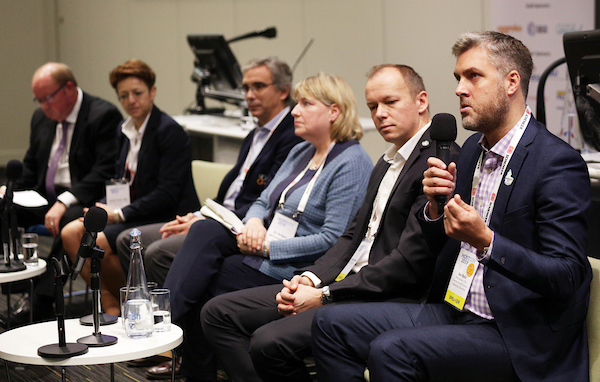
Following the break-out sessions, the delegates came together for the closing plenary session ‘‘Scotland’s Assets & The Perfect Stage’, with five of the industry’s leading professionals discussing the assets that are the cornerstone of the country’s event strategy – our people, our cultural identify and heritage, our natural environment, our built facilities, and our signature events – and providing their perspective on the opportunities and challenges of continuing to deliver a strong portfolio of events that maximise these key assets to ensure sustainable impact and international profile for Scotland.
Building on the success of the previous conference in 2015, the 2017 event provided the industry with a forum to learn, share knowledge and network, allowing event practitioners to remain up-to-date and ensuring Scotland maintains its reputation as a world-leader in event development and delivery.
Paul Bush OBE, VisitScotland’s Director of Events, said: “The National Events Conference has been a great opportunity for our industry to come together and review the progress we’ve made so far with our national events strategy, Scotland the Perfect Stage, as well as discuss the challenges and opportunities we’re currently facing. The level of debate and discussion that has taken place throughout the day has been truly outstanding.
“As an industry we are doing some amazing work, with a great portfolio of annual events as well as continually attracting some of the biggest events in the world from the Commonwealth Games, The Ryder Cup to the MTV Music Awards. Our work is the envy of many, however, as an industry we need to be better at articulating more clearly the wider benefits of events, especially as we face the challenges ahead.”
Immediately following the National Events Conference has been another leading events conference, Host City 2017, the world’s largest meeting of cities and sports, business and cultural events. Also taking place at Glasgow’s Technology & Innovation Centre from 28 to 29 November, attendees included 30 event owners and 20 organising committees as well as 200 delegates.
Using his opening remarks as co-chair of the conference, Paul, further addressed the challenges facing the events and festivals industry but this time on a global scale.
He said: “While it is an exciting time for the industry with all the technological advancements and the rise in social media allowing events and audiences to be more engaged, it is also a very challenging time. The current security climate, the transparency and governance around the bid process, as well doping and corruption in sport, are adversely affecting the confidence the public has in bidding for and delivering of major events. As a global industry we must be willing to tackle it head on if we are to maintain public support for major events around the world.
“This was an area of great debate by the Scottish events industry at the National Events Conference and one I’m sure will be continued by delegates over the two days at Host City 2017.” -

A policy-led process is the future for major events
Opening the 2-day Host City 2018 conference, Paul Bush OBE, VisitScotland’s Director of Events, reflected on the busy year it has been for the global events and festivals sector as well as looking at the opportunities and challenges facing the industry going forward.
He said: “The last 12 months has seen a packed calendar of major events across the world, kicking off with the Winter Olympic and Paralympic Games, followed by the Gold Coast Commonwealth Games, the FIFA World Cup in Russia and most recently the Youth Olympic Games in Buenos Aires.
“It has also been pretty historic year for Scotland. We saw the opening of V&A Dundee, Scotland’s first ever dedicated design museum and the only other V&A museum anywhere in the world outside of London.
“We’ve also had our first themed year dedicated entirely to Scotland’s young people off the back of our bid to host the Youth Olympics that were recently held in Buenos Aires. As a legacy of that bid, and by putting our young people at the heart of Scottish society, the themed year has been one of the most successful things we’ve done.
“And one of the shining lights of the year was the inaugural European Championships with co-hosts Berlin. Those 11 days in Glasgow and Berlin were quite spectacular. There were many doubters and many doomsayers but it reached an estimated audience of 1.03 billion viewers and its success has created real momentum for the future that international federations need to look at.
“As a new event we didn’t have a manual on how the Championships should be delivered, giving us the opportunity to be innovative and find new ways of working. And while there were undoubtedly some challenges as we navigated our way down this new path with our co-host and the seven sports federations, overall the sector really responded, creating a delivery model that has caused real disruption within the events market.”
It is this delivery model that Paul believes we will see more of in the future.
“Already we’ve seen the 2026 FIFA World Cup awarded to the Unites States, Canada and Mexico as part of a joint bid and in 2020 the UEFA EURO 2020 will be hosted by 12 countries.
“In line with Agenda 2020, I think the International Olympic Committee need to be brave and give the Games to two or three countries. For me, it is the only way it will be sustainable in the future by spreading the benefit but also spreading and mitigating the risk.”
“Co-hosting across cities, regions or countries is an important trend for the future. It allows for more sustainable impact by using existing infrastructure as well as developing those social and cultural benefits across a much greater geographical area.
As well as new delivery models, technology was another area Paul believes will continue to have a big impact on major events in the future.
“Digital integration will also play a big part in the future of how major events are presented. We need to think how technology plays a part not only for the audience sitting in the stadium or concert hall but sitting at home whether that’s down the road from the venue or in a living room on the other side of the world.
“From augmented reality, live streaming to the availability of real-time data, all these tools are now at our fingertips to enhance the fan experience and drive greater engagement with an event.
“We’ve also seen the evolution of new events thanks to technology. The growth in esports and with it major live esport events, represents a massive opportunity for the sector. With an estimated 130 million competitive gamers who watch games online, and the huge growth market of esports, the alignment between traditional major events alongside an esport equivalent is massive.”
While it is an exciting time to be involved in the events and festivals industry, Paul strongly believes the sector still has more to do to ensure it articulates the short and long term legacy benefits if we are to continue to have meaningful impact.
“I know I said this at last year’s conference but I still believe we have a lot of work to do to truly showcase the impact hosting major events can have on a city and a country to our politicians.
“As an industry we can create impact across global governments like no other sector can. It is about ensuring a 360-degree holistic model approach to the planning and delivery of events, ensuring they are that are enshrined in policy whether its health, education, transport or sustainability. It is quite a change in mind-set moving forward.”
Concluding his opening remarks, Paul took a moment to remember two titans of the international sporting world – Mike Lee OBE and Patrick Baumann.
He said: “Their recent passing has come as a great shock to everyone. Over their careers they both made huge contributions towards the Olympic movement and they will be greatly missed.”
Host City is Europe’s largest meeting of cities and sports, business and cultural events, attracting a large number of senior representatives of cities and destinations from around the world, who are interested in sharing strategic and sustainable approaches to hosting the world’s greatest sports, cultural, business, science and entertainment events.
[Source: EventScotland] -

Scotland and Queensland sign events MOU at Host City 2019
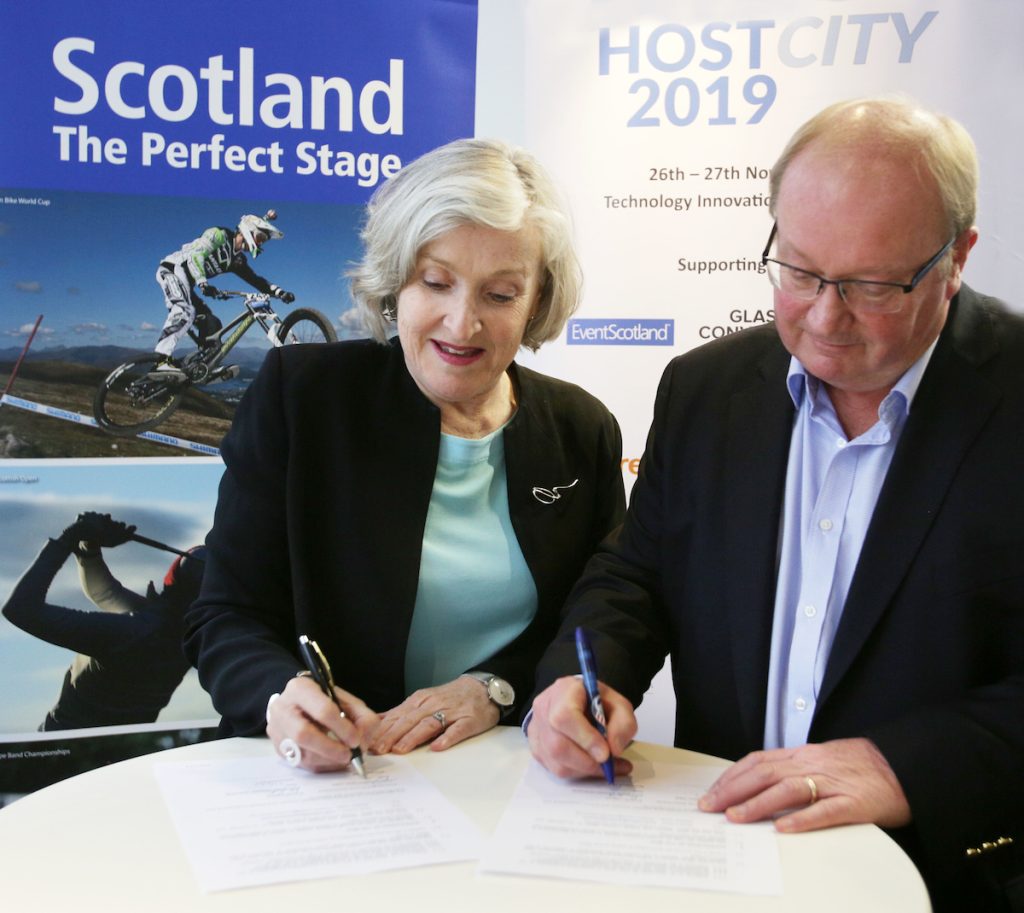
[Source: EventScotland] EventScotland and Tourism and Events Queensland (TEQ) have signed a Memorandum of Understanding (MOU) during a meeting between the two organisations at Host City 2019.
The sixth Host City Conference and Exhibition was the ideal place for the signing of the agreement as 300 representatives from some of the world’s leading event cities, destination marketing organisations, cross-sector rightsholders, organising committees and suppliers gathered together for two days. The conference and exhibition included plenary presentations, panels, VIP dialogues and workshops on how to attract, bid for and host secure and engaging events with positive long-term legacies. The MOU will see EventScotland, part of VisitScotland’s Events Directorate, and TEQ work in collaboration over the next three years, sharing information and insights into the securing and delivering of major sporting, cultural and business events.
It will also build on the strong relationship both Scotland and Queensland developed during their respective hosting of the Commonwealth Games in 2014 and 2018 as both organisations look to build meaningful social and economic impacts for their country and region through event tourism.
Areas of collaboration outlined in the MOU include information sharing, event bidding and prospecting, impact measurement, delivery capability, and strategy development.
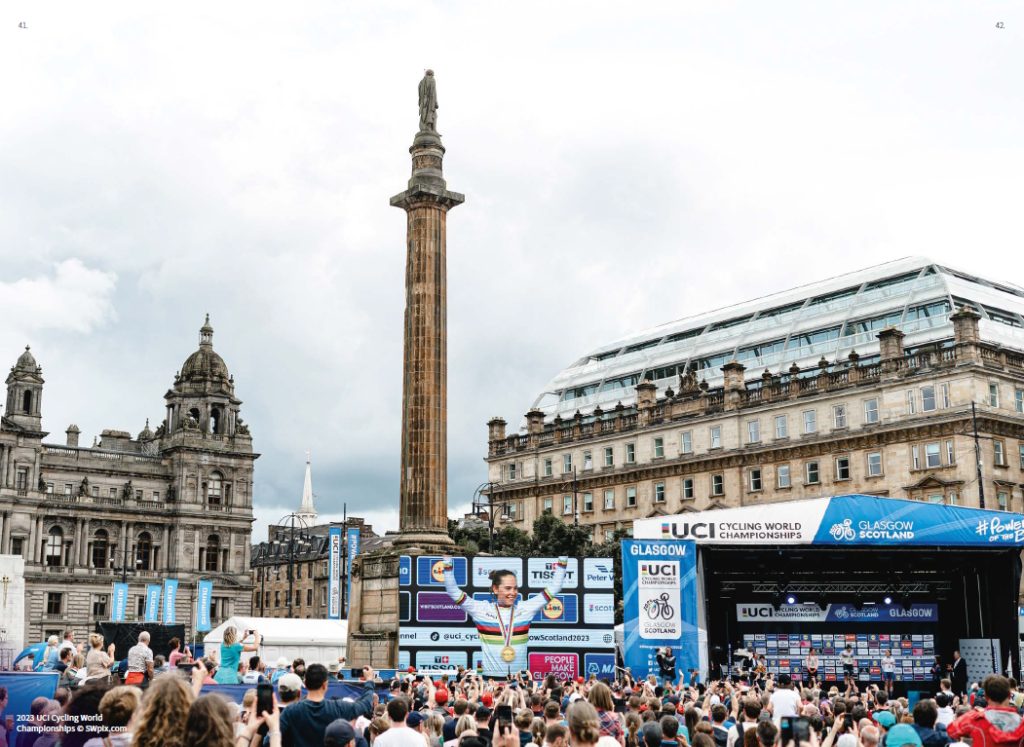
Paul Bush OBE, VisitScotland’s Director of Events, said: “Scotland is the perfect stage for events and our reputation as a world-leader in event delivery has seen us secure and deliver some of the world’s biggest events, including The 2019 Solheim Cup and the inaugural UCI Cycling World Championships in 2023.
“Events play a key role in our society by helping to bring strong social and economic benefits to the whole country. We are delighted to be signing this MOU with TEQ that will allow both organisations to flourish through the regular sharing of knowledge and insights into this incredibly dynamic and exciting industry.”
TEQ CEO Leanne Coddington said the partnership would prove beneficial to both parties.
“We’ve worked incredibly hard over the past decade to build Australia’s most diverse events calendar that sees unique events held in Australia’s best destinations from the Gold Coast to Cape York and the Outback,” Ms Coddington said.
“Events not only drive visitors to Queensland but also contribute strongly to the economy in their own right, whether they be large-scale sporting events, business events, cultural events or community events.
“We look forward to collaborating with EventScotland in the coming years as we continue to build the value of the It’s Live! in Queensland calendar.”
The signing of the MOU also comes at an exciting time as recruitment for key positions to oversee and deliver the 2023 Cycling World Championships will shortly commence.
Paul Bush added: “It has been an exciting year for the events industry, especially for us here in Scotland. During my opening keynote address on day one of Host City 2019 I touched on the impact of three aspects on the events landscape this year – the growth of women’s sport and women’s events; contingency planning; and audience engagement.
“Unlike any other year I believe we have seen the tectonic plates of the world sporting events shift, collide and indeed, totally reshape. We have seen record crowds and TV audiences for major international events including The 2019 Solheim Cup at Gleneagles and the Women’s World Cup in France.
“We’ve also seen pay parity and equality and diversity continue to be topical subjects and while we’ve seen great strides in the last 12 months, there is still much work to be done within the equality and diversity agenda as sport still lags society. As an events industry we can and should take a lead whether its gender balance, LGBTQ, BAME or disabled representation; providing the platform for all people from the field of play right up to the boardroom.
“The year has also raised a number of interesting scenarios within the area of contingency planning. While some organisers like the Cricket World Cup got it spot on, others did not, and it is an area we need to focus our minds and give further consideration to ensure we are not left wanting.
“We have also seen a seismic change in audience and fan engagement, with some events like World Athletics Championships failing to ignite the interest of locals, leaving stadiums unfilled while others like the Women’s Netball World Cup in Liverpool and England women’s football team’s recent match against Germany playing to sell-out crowds.
“With the world changing at a rate of knots, as an industry we need to respond at the same pace to the many variables that now exist.” -

Major event leaders resolve to innovate and cocreate at Host City 2019
Around 300 delegates heard high-profile figures, including David Lappartient, President of the Union Cycliste Internationale (UCI), Sir Craig Reedie GBE of the International Olympic Committee (IOC) and Ian Reid, CEO of the Birmingham 2022 Commonwealth Games Organising Committee, outline their vision around the theme “Innovate; Reformulate; Co-Create” on the first day of the conference.
In his keynote address, Paul Bush OBE, Director of Events at VisitScotland, spoke about the three topics that he felt had left their mark on the events landscape this year: the growth of women’s sport, contingency planning and audience engagement.
He said: “The Women’s World Cup in France had 1.12bn TV viewers with an average audience of 8.1m for the final. Megan Rapinoe, the USA star, shone a light on equal pay, equality and diversity issues in sport.
“Are the Tectonic plates of world sporting event shifting, colliding or being totally reshaped? In my humble opinion the answer to all three is ‘yes’.
“The events industry can and should take the lead on gender balance, LGBTQ, BAME and disabled representation to provide that platform for more people, from the field of play to the boardroom.”
Speaking on the opening panel of the conference, Dr Bridget McConnell CBE, chief executive of Glasgow Life, said that event planners need to keep working with and consulting with their local communities.
She said: “Our watchword has always been ‘engage’ and that underpins the whole approach in Glasgow. That is crucial to our future success. And that includes not only with event organisers, but also with decision-makers, influencers, politicians and our communities.
“It’s usually taxpayers’ money that pays for a lot that we deliver. So if they don’t see the relevance, embrace it, volunteer at events, or be inspired to take up sport then in times of increased pressure on spending of public funds there will be a big question mark over how relevant we can continue to be.”
Ian Reid echoed that sentiment as the organisers reach out to find out what their local community wants from a Commonwealth Games.
He said: “We are really focusing on youth as Birmingham is the youngest city in Europe. So our sports programme will have beach volleyball and three-on-three basketball, while we want to introduce city centre hubs that work around that with DJs and live site programmes to resonate with a demographic that perhaps hasn’t always engaged with the Commonwealth’s sports programme in the past.”
Sarah Lewis OBE, Secretary General of the International Ski Federation (FIS) and the Association of Winter Olympic International Federations (AIOWF) said: “From the context of co-creation in the six FIS ski and snowboard disciplines which are on the Olympic Winter Games programme, they have diverse characteristics and wide range of cities, resorts and venues. Co-creation and partnerships are different depending on locations. Some events take place in important capital cities.
“For example the next Winter Olympics is in Beijing. But we also have important events at small mountain resorts where there are more people organising them than live there. So the model can’t be one size fits all. You have to find different ways of working together to achieve successful events. That’s the key.”
David Lappartient delivered insight into co-creating the 2023 UCI Cycling World Championships in Glasgow, the first to include all cycling disciplines competing together.
He said: “Having strong partnerships is fundamental. If you want to be a huge success everyone has to be on board. And we have been working together with Glasgow to really co-create this.
“Cycling has reacted well to this new vision. We have disciplines that are totally different. But all of them use a bicycle and they are proud to be part of the same event.”
Sir Craig Reedie GBE spoke about the London 2012 Olympic Games and the legacy that it left behind.
He said: “Figures produced six months ago showed that within the six boroughs surrounding the London Stadium since the end of the Olympic Games there have been 125,000 new jobs. I don’t know what the definition of legacy is but that’s pretty high in my book.” -

World event leaders line up for “even bigger and better” Host City 2021
Taking place on an AI-enabled digital platform, this free-to-register conference is a fantastic opportunity for the major events sector to “Refresh, Regenerate and Reconnect”.
Following welcome addresses from Paul Bush OBE, Director of Events, VisitScotland, Bridget McConnell CBE, Chief Executive, Glasgow Life and Sir Craig Reedie KBE, Honorary Member, International Olympic Committee (IOC), delegates will be treated to an enticing programme of speakers and discussion.
Lord Sebastian Coe KBE, President, World Athletics and IOC Member gives a Keynote Address on the successful hosting of Tokyo 2020 and future trends in major events.
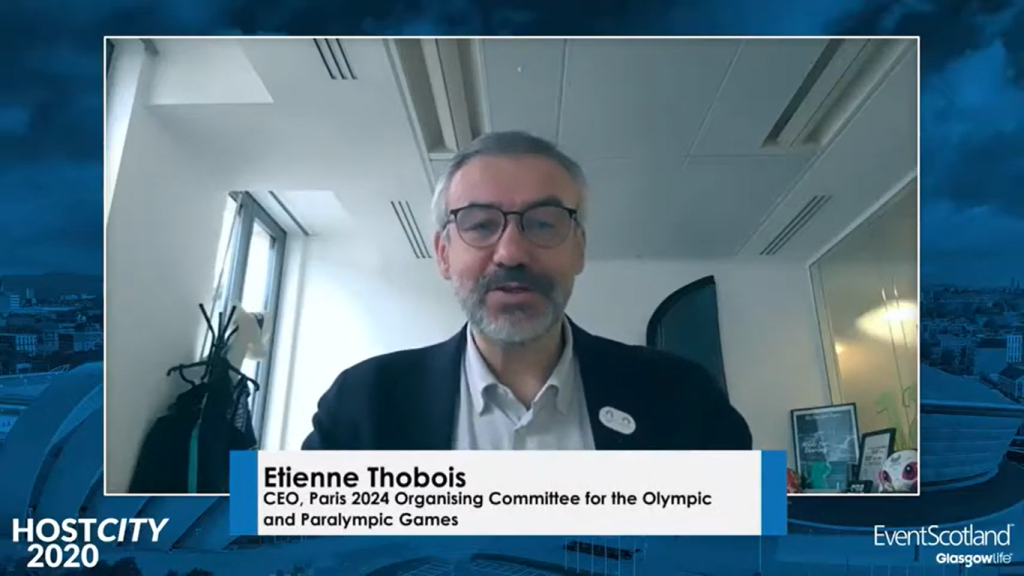
Etienne Thobois, CEO, Paris 2024 Organising Committee for the Olympic and Paralympic Games brings a Keynote Presentation on “Paris 2024 Games: a new model bringing people around sustainable Games with creativity”.
His counterpart at Milano Cortina 2026, Chief Executive Vincenzo Novari also gives a keynote update on preparations for the Winter Olympic Games.
Looking further ahead, Octavian Morariu, IOC Member, Chair, Future Host Commission for the Olympic Winter Games, IOC and President, Rugby Europe gives an exclusive insight into the process of engaging with future Olympic hosts.
Katie Sadleir, Chief Executive, Commonwealth Games Federation also gives a Keynote Address on Birmingham 2022 and beyond.
Host City 2021 also features Q&A sessions: IOC Executive Board Member Mikaela Cojuangco Jaworski speaks to Host City on engaging with next generation audiences; IOC Member Anita DeFrantz and LA28 Board Member talks about the Games coming to her city and the power of sports and events to break barriers; and Jamaican swimming champion Michael Gunning shares his own experiences of “Turning the tide of prejudice”.
Panel discussions at Host City 2021 feature extremely engaging speakers and topics. Dagmawit Girmay Berhane, Member, IOC, Andrew Ryan, Executive Director, ASOIF, Paul J. Foster, CEO, Global Esports Federation and Jon Dutton, Chief Executive, Rugby League World Cup 2021 consider “How has the pandemic changed the events sector?”.
Sam Ramsamy, Vice President, FINA – and close friend of Nelson Mandela – joins the IPC’s Rita van Driel, the CGF’s Brendan Williams and David Grevemberg CBE to discuss “Diversity and integrity in leadership”.
Trudy Lindblade, Chief Executive Officer, 2023 UCI Cycling World Championships and Martin Green CBE, Chief Creative Officer, Birmingham 2022 Commonwealth Games and UNBOXED: Creativity in the UK join on “Partnership approaches to event hosting”.
The question of “Broader casting – who owns the rights?” is taken on by Jamie Hindhaugh, Chief Operating Officer, BT Sport, Peter Hutton, Director of Sports Partnerships, Meta, Facebook and Jeff Foulser, Chairman, Sunset+Vine.
It’s not just about sports events either. Geoff Ellis CEO, DF Concerts, Francesca Hegyi OBE, Executive Director, Edinburgh International Festival and Susan Sawbridge, Manager, New Zealand Major Events share outlooks on “The return of live audiences, travel and tourism”.
Laura Lopez, Director, Conference Affairs, United Nations Framework Convention on Climate Change (UNFCCC) and Aileen Crawford, Head of Conventions, Glasgow Convention Bureau speak on “The meetings industry in the post-pandemic world”.
Andrew Dixon, Chief Executive, Culture, Creativity, Place chairs a workshop on “Cities of Culture – changing places forever” with Shona McCarthy, Chief Executive, Edinburgh Festival Fringe Society, Prof. Jonothan Neelands, Academic Director for Cultural Partnerships, University of Warwick and Angus Farquhar, Creative Director, Dandelion.
Iain Edmondson, Director, Legacy Delivery chairs a workshop of event hosts and rights holders on “Defining event impacts and promoting positive outcomes” in relation to ASOIF’s “Common Indicators for Measuring the Impact of Events”.
Other great speakers at Host City 2021 include: Shiny Fang, Secretary General, UIPM; Clare Briegal, Chief Executive Officer, World Netball; Jason Ferguson, Chairman, World Professional Billiards and Snooker Association; Sarah Lewis OBE OLY, Global Sports Leader; Billy Garrett, Director of Sport and Events, Glasgow Life; David de Behr, Head of Sales Aggreko Event Services, Aggreko plc; Tim Briercliffe, Secretary General, AIPH – International Association of Horticultural Producers; Katie Traxton, Board Director, European Sponsorship Association; Daniel Cordey, Chair, Association of Global Event Suppliers and more to be announced.
Host City 2020 welcomed 1,000 registrants from 60 countries and, with such a stellar speaker line-up, Host City 2021 is set to exceed expectations.
Paul Bush OBE, Director of Events, VisitScotland, said: “EventScotland has a strong partnership with Host City, having been a supporter of the conference since its inception in 2014, and we are delighted to be welcoming it back to Scotland and Glasgow for the 7th consecutive year.
“As we continue to navigate the return of events in this new normal, the conference is great opportunity for the global events industry to come together and learn from one another while also looking ahead to what the future holds for major events under the theme of refresh, regenerate and reconnect.
“We look forward to working with the Host City team to deliver a conference that ensures a bright future for all events.”
Dr Bridget McConnell CBE, Chief Executive of Glasgow Life, said: “As a proud supporter of Host City, we’re delighted to welcome the event back to Glasgow for the seventh year in a row.
“As one of the world’s leading host cities for festivals and major events, Glasgow has keenly felt the impact of Covid-19. As we begin to recover and rebuild from the pandemic, we know this event will be a key milestone for many of our colleagues across the world, and seeing how well last year’s Host City event was delivered on a digital platform was hugely encouraging and the global feedback was fantastic.
“We look forward to working with the Host City team once again in just a few weeks’ time to ensure that 2021’s event is even bigger and better than previous iterations, and to share best practice with our colleagues across the world as we all work to create the best possible future for events.”
Etienne Thobois, CEO, Paris 2024 Organising Committee for the Olympic and Paralympic Games said: “I am very pleased to be invited to speak once again at the Host City conference, to share with inspiring personalities my experience of organising the Olympic and Paralympic Games, the biggest sporting event on the planet. In a world of rapid changes and high expectations from citizens, we must succeed in organising an event that is both spectacular and sustainable, that monitor its impact while leaving a positive legacy on society. To achieve this, at Paris 2024, we have one watchword: creativity.”
Host City 2021 is delivered with supporting partners EventScotland, Glasgow Life and Glasgow Convention Bureau.
Event supporters include Headline Sponsor, Aggreko; Gold Sponsor, Sport Event Denmark; Silver Sponsors, the International Association of Horticultural Producers (AIPH), DB Schenker and Sunset+Vine; Strategic Partners, The Association of Global Event Suppliers (AGES) and Global Esports Federation.
For more information visit www.hostcity.com or email ben.avison@hostcity.com -

“Like nothing the world has ever seen before”
Host City: Thank you Paul for your support of Host City 2021, we are really looking forward to hearing you speak again as the host of this important conference. The opening panel, which you are chairing, is called “The impact of, and lessons from, the pandemic”. Obviously, the impact has been devastating on the events industry, but are there any positives to be drawn from the last 19 months?
Paul Bush: The last 19 months have been difficult especially as 2021 did not unfold the way many of us were hoping for with restrictions in place for longer than we’d anticipated, economic uncertainty, and travel adaptations. However, amongst this climate of consistent uncertainty, the events industry continued to adapt and innovate, developing a range of resilient responses that allowed sporting, cultural and business events to take place. Here is Scotland that has included the continuation of online and hybrid events; proof of negative tests and the introduction of the COVID vaccine verification scheme for entry into events; and adapting performances so audiences have the choice between social distanced and non-socially distanced shows.
Host City: Event hosts have for obvious reasons had to focus much more on supporting domestic events and become more localised in their activities. Do you think this will be a lasting effect of the pandemic, or as travel restrictions continue to ease will you become just as focused on international events as before?
Paul Bush: Domestic events have always been an important part of our events portfolio alongside international events. Through our National Events Strategy, Scotland the Perfect Stage, we have always carefully selected a mix of events of various types and categories that are staged throughout the country and throughout the year in order to bring social and economic impact.
For the last 19 months, our main focus has been on supporting the events industry, particularly the events supply chain, to survive the pandemic. Through Scotland’s Events Recovery Fund, which we established in conjunction with the Scottish Government, we have been helping Scotland’s events sector plan and deliver events and supported them to adapt to the effects of COVID-19. This has included supporting community events as well as events that drive domestic tourism.
As we move forward, domestic events will play an important part of in Scotland’s recovery from the pandemic alongside international events, however, what I do see coming into the mix more will be community events as they will help us to rebuild the industry as well has creating opportunities for communities to come together, which is especially important given the opportunity to interact with those close to us has been limited over the last 19 months.
Host City: Scotland has just hosted a huge international event, COP26. What impact has hosting this had on the nation, and what impact do you think the outcomes might have on the events industry?
Paul Bush: COP26 was another opportunity to show why Scotland is the perfect stage of events to both a domestic and global audience. Welcoming world leaders, climate experts and activists to Glasgow and Scotland for two weeks whilst still dealing with a pandemic took great coordination and cooperate across multiple agencies at a local, national and international level.
In October we published The Contribution of Events to Scotland’s Wellbeing, a piece of research commissioned alongside the Event Industry Advisory Group to further understand and examine how events contribute to Scotland’s wellbeing.
One of the key findings showed that major events have the potential to enhance the reputation of our cities and communities internationally as well as help build civic pride. So, like other major events that have been held in Scotland, including the 2014 Commonwealth Games, the 2015 FIG World Artistic Gymnastics and the 2019 Solheim Cup, I believe COP26 has helped further build a sense of pride and confidence both within the community and within the events industry.
Host City: The biggest international event Scotland is hosting in the future is the UCI 2023 World Cycling Championships – a new event that was very much created in partnership between host, rights owner and broadcaster. What are your expectations of this innovative event?
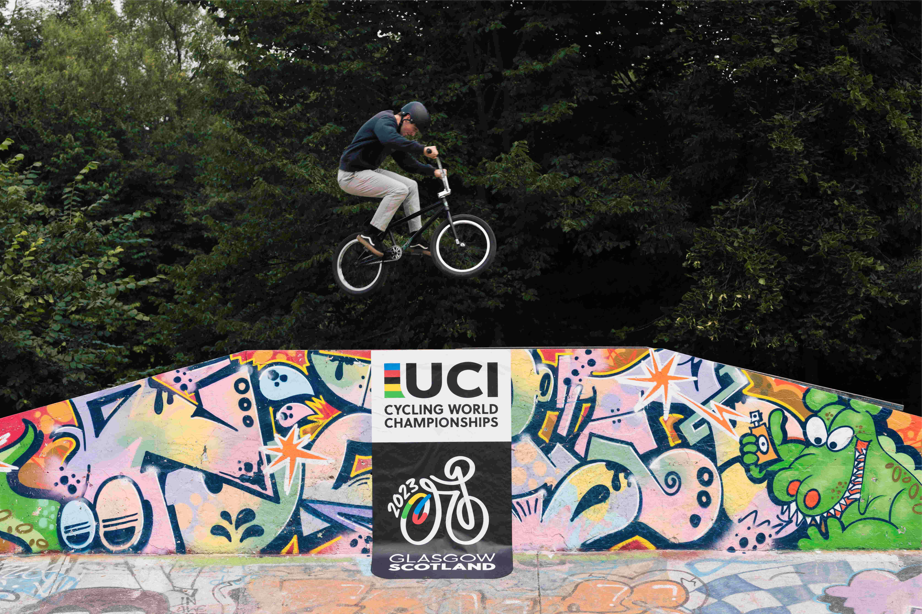
Paul Bush: Simply put, it will be like nothing Scotland and the world has ever seen before. By combining 13 UCI World Championships together in one mega event we are doing something that has never been done before and something that will deliver lasting benefits not just for cycling as a sport but for its impact across society in Scotland.
As well as a world-class sporting spectacle featuring more than 8,000 elite and amateur athletes from more than 120 countries, the Championships are being delivered as a purpose-led event with key policy objectives at the core. There is no doubt the Championships gives us a unique opportunity to encourage more people to cycle for sport, transport and for tourism as well as helping combat key issues such as climate change. The timing of the Championships could not be better.
It is hugely exciting that the UCI has entrusted us with the opportunity of delivering the inaugural UCI Cycling World Championships and we are looking forward to cementing our reputation as an innovative and forward-thinking event host with a Championships that exceeds all expectations.
Host City: Similarly you have teamed up with European Athletics to deliver the Dynamic New Athletics Indoor (DNA) in Glasgow in February 2022. This sounds like a format that’s just right for the times we live in – can you tell us a bit about what we can expect?
Paul Bush: We’re delighted Glasgow and Scotland have been chosen to host the very first DNA indoors. The event concept is aimed at engaging new audiences with an exciting, easy to follow, short format whilst creating a lively atmosphere with music and fun event presentation.
The innovative, team-based competition will see mixed teams of 18 athletes from Scotland, England, Wales, Ireland, Spain and Turkey compete in 11 events across both track and field over two hours at Emirates Arena in Glasgow on 5 February. Everything counts with two to 12 points awarded each event, with the last event – the Hunt – deciding the winning team.
Securing this event for one of Scotland’s flagship venues reinforces Scotland’s reputation as the perfect stage for events and as a world leader in the delivery of innovative new events.
Host City: The good news keeps coming for Scotland, with Glasgow having just been awarded the 2024 World Athletics Indoor Championships. Why – and how – was Scotland selected to host this event?
Paul Bush: We are absolutely delighted Glasgow and Scotland has been chosen to host the 2024 World Athletics Indoor Championships. Our success is routed in our partnership approach and we worked with Glasgow Life, UK Sport and UK Athletics to complete World Athletics bid process to secure this major event.
In our bid we set out our vision to work with them to set a new benchmark in event hosting and demonstrated our experience in achieving this for other events, including the 2014 Commonwealth Games and the 2018 European Championships. We also demonstrated our policy-led approach to delivering events, ensuring we deliver positive impacts that are sustainable and last well beyond the event.
The Championships joins a portfolio of major events to be taking place in Scotland over the coming years and reinforces our reputation as a global leader in the delivery of innovative and world class events.
Host City: Thank you very much for your time Paul. One last question: what are your expectations of Host City 2021?
Paul Bush: My expectations for Host City 2021 are for another great two days filled with lively debate, discussion and knowledge sharing as we all look to refresh, regenerate and reconnect across a number of topics, including the pandemic and the climate emergency, impacting events now and into the future. I look forward to seeing everyone there.
Register for Host City here now -

Taking a lead role on the event sector’s big issues
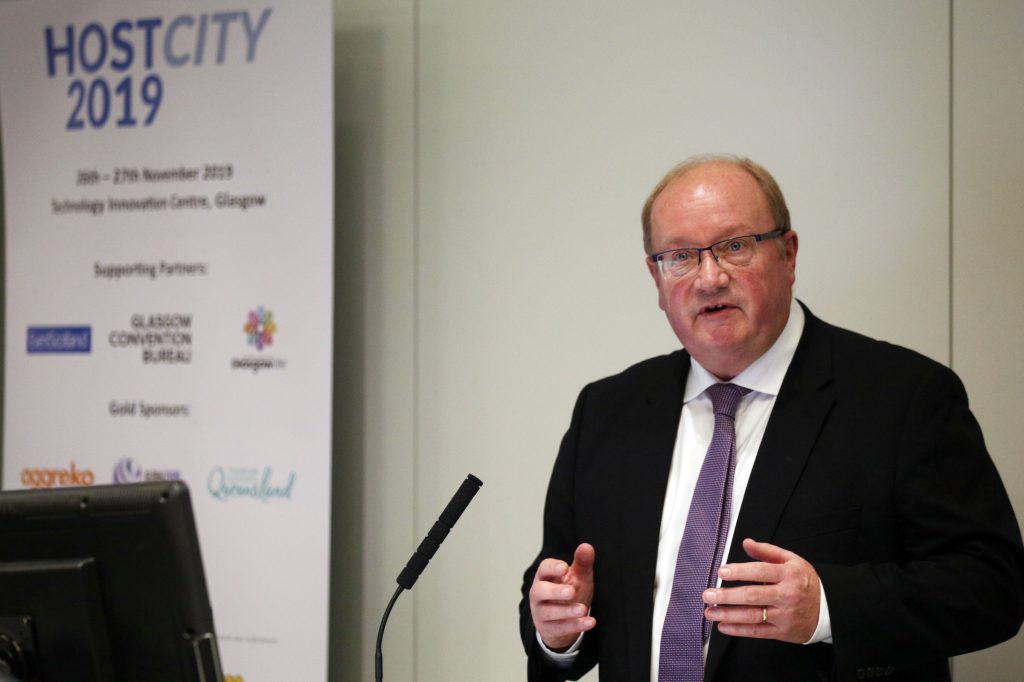
Host City: Hi Paul, we’re really excited about bringing Host City back to Glasgow in person on 15-16 November. How are you feeling about Host City returning to Scotland after 2 years hosting in the virtual world?
Paul Bush: I’m looking forward to the return of the first in-person Host City to Glasgow and Scotland where we look forward to welcoming so many international event owners, organisers and hosts together in the first time in two years. Virtual events have played an important role in that time, allowing us to all stay connected and share key learnings as we navigated our way through uncertain times, however, for me, nothing beats the experience of an in-person event and being able to meet face-to-face allows for great relationship building and networking in a more fun and social way.
Host City: The theme of the conference is “Face to Face with New Realities”. The world has certainly changed a lot since last year’s Host City event – what are the big issues facing you right now?
Paul Bush: Last time we met, we were operating in a climate of consistent uncertainty which had continued to push us all to work in different ways, developing a range of resilient responses, innovation, spirit and adaptation. While the last 12 months has seen the start of a return to a more consistent operating environment with the removal of Covid restrictions, other challenges remain. The increasing financial challenges now facing the sector, including reduced government budgets, rise in inflation and its affects on both the supply chain and on individuals facing the cost-of-living crisis as well as recruitment – both retaining and attracting staff to the industry, addressing sustainability and the role of events in supporting our health and wellbeing are the big issues facing the events sector right now.
Host City: On the sustainability question – for such an international industry, it’s tricky isn’t it, but perhaps we do have an opportunity to show leadership here?
Paul Bush: In our ever-changing world, the need to address our environmental impact is becoming more and more prevalent, and we all have a part to play both individually and as a sector. From an events perspective, the whole events eco-system is increasingly aware of its impact, including eventgoers, who expect events to be ‘walking the talk’ when it comes to socially and environmentally responsible practices in the planning, organisation and delivery of events. Creating sustainable events is no longer a nice ‘to-do’, it’s a necessity.
So, I do think the events industry across the world can take a lead role on addressing the environmental question as events themselves are hugely powerful in engaging the public in climate change through their programming, helping inspire and motivate people to make changes in their own lives.
Host City: And when it comes to wellbeing, how can event hosts make sure that their events really do help to improve their physical and mental health?
Paul Bush: Over the last few years, the social benefits of events of have become even more recognised, especially the sense of pride they help build, and the valuable contribution they make towards our health and wellbeing. The Contribution to Events to Scotland’s Wellbeing research that we commissioned in collaboration with the Event Industry Advisory Group and published last October highlighted how attending or regularly taking part, either as a participant or as a volunteer at an event, can help improve wellbeing while the chance to interact with friends and family is a key driver for supporting mental health. Therefore having a diverse portfolio of events that engages a wide range of people will ensure as an industry we are helping support peoples wellbeing and providing opportunities for shared experiences. Articulating this benefit is particularly important, especially in the current financial climate, if want to retain investment from both the public and private sector.
Host City: Our events sector has faced a range of challenges to say the least. What are you doing to support its recovery, and what role do you think events play in the economic mix these days?
Paul Bush: The economic benefits of events are widely recognised and now more than ever it’s important we continue to highlight them. Events support thousands of jobs, both directly within the industry itself as well as wider sectors including hospitality and tourism. Pre-covid, the 2020 UK Event Report highlighted a direct spend of £70bn in 2019 through live events and it is estimated that over £6bn of this could be attributed to Scotland.
Highlighting the value of the events industry in Scotland at government level as well as supporting the industry in Scotland to ensure its strong return has been a key focus for us. We have done this through working in collaboration with the Event Industry Advisory Group, through the Covid relief funding we have delivered over the last two years and through our regular funding programmes that have supported a range of major, national, local and community events this year, including The 150th Open, the Edinburgh International Festival and IEEE Engineering in Medicine & Biology Society Annual International Conference.
Despite the current economic challenges we are all facing, I do believe events play a vitally important role in our recovery.
Host City: On the bright side, it’s amazing to be able to stage face to face events again. After Host City you’ve got some great events coming to Scotland, not least the UCI Cycling World Championships next year. What are your expectations?
Paul Bush: Scotland is the perfect stage for events and in additional to our great range of annual events, we all have a number of exciting major events in the pipeline including The Tall Ships Races in Lerwick, Shetland, next July, 2024 World Athletics Indoor Championships at Emirates Arena here in Glasgow, the World Orienteering Championships 2024 in Edinburgh, and the Orkney 2025 Island Games in addition to the biggest cycling event ever, the 2023 UCI Cycling World Championships.
We cannot wait to welcome the world’s best riders from across 13 UCI Cycling World Championships to Glasgow and across Scotland next year. It will be truly memorable not just for what happens across the 13 days in August next year, but also for our wider vision to inspire people to ride bikes and be a catalyst for change across Scotland, before, during and after the event. Whether it is for health, sport, transport, tourism, industry or events, we want everyone to be able to experience the freedom and joy riding a bike can bring to our lives. Our policy led approach to delivering the event ensures participation, inclusion and accessibility, and sustainability is the focus of our Hub and Spoke delivery model, and I look forward to sharing more on this and our preparations on day two of the conference when I will be joined UCI President, David Lappartient, for the panel session on new event concepts.
Thank you very much for your time and your support Paul; we’re really looking forward to Host City and the exciting times ahead for events in Scotland.
Paul Bush: Thank you. I look forward to once again catching up in person with colleagues from across the events sector for a great two days of discussion and debate at the Technology and Innovation Centre in Glasgow on the 15th to 16th November.
Register for Host City 2022 here: https://www.hostcity.com/events/host-city-2022/register