Tag: FIFA

  • 31 countries declare interest in FIFA World Cup events

    31 countries declare interest in FIFA World Cup events

    FIFA has sent bidding documents to 31 member associations that have declared their interest in hosting eight tournaments. 
    The relevant member associations now have to sign and return the documents before the FIFA Executive Committee begins the process of assigning the hosting rights.
    The available events include the 2019 Women’s World Cup, the 2018 U-20 Women’s World Cup, the 2018 U-17 Women’s World Cup and the 2015-2019 Club World Cups. An unprecedented 12 countries have put themselves forward for the 2017 Beach Soccer World Cup.
    FIFA has made it clear that it would prefer the 2019 Women’s World Cup and the 2018 U-20 Women’s World Cup to take place in the same country. Four countries have put themselves forward for these two events, namely England, France, Korea Republic, New Zealand and South Africa. 
    South Africa has also declared an interest in the 2019 Women’s World Cup, hopeful that its hosting of the FIFA U-20 Women’s World Cup in 2016 will enable it to qualify to host the 2019 Women’s World Cup. 
    For the 2018 U-17 Women’s World Cup, FIFA has received five declarations of interest, from Bosnia and Herzegovina, Egypt, Finland, Northern Ireland and Sweden. 
    The deadline for submitting the hosting agreement together with all the signed bidding documents for all of the women’s events is 31 October 2014. The election of the host nations is scheduled to take place at the first FIFA Executive Committee meeting in 2015.
    The 2017 FIFA Beach Soccer World Cup has attracted a particularly large pool of associations, with 12 countries hoping to host the tournament: Argentina, Bahamas, Brazil, Cayman Islands, Costa Rica, Ecuador, Egypt, El Salvador, Germany, Trinidad and Tobago, UAE and USA. 
    All bidding and hosting documents for the 2017 FIFA Beach Soccer World Cup must be signed and submitted by 1 October 2014. The FIFA Executive Committee will appoint the host at its meeting in December 2014.
    FIFA has also opened the bidding process for four editions of the FIFA Club World Cup. India and Japan have put themselves forward for the tournament in 2015 and 2016, while Brazil, Japan and UAE are aiming for 2017 and 2018. 
    The deadline for submitting the bidding documents is 25 August 2014 and the host will be selected by the Executive Committee in September 2014.
    “FIFA is delighted to see the impressive interest from its member associations in hosting a FIFA competition,” football’s world governing body said in a statement.
     

  • Blatter takes high ground and aims for interplanetary World Cup

    Blatter takes high ground and aims for interplanetary World Cup

    FIFA’s embattled president Sepp Blatter took the opportunity of addressing his organisation’s congress in Sao Paulo on Wednesday to speak up for integrity in football and highlight the universal reach of the sport. 
    Standing firm in the eye of a storm over alleged corruption, Blatter said “These are important times for FIFA.
    “We must lead by example and we must listen to all voices; we must be responsible and upright in all that we do; we must do the right thing even if that comes at a cost.
    “We must carry the flame of responsibility and honesty and always with respect. If not, we will be a traitor to this game we all love.”
    Calling on FIFA’s members to unite against prejudice, he said “We can defeat it and we have to do it. 
    “Suspension and empty stadiums are not enough,” he said, warning that FIFA could expel, relegate or dock points from teams that are linked to discriminatory behaviour. 
    Blatter’s hard line rhetoric on discrimination echoes remarks he made to the Confederation of African Football on Monday, when he described the latest wave of allegations of corruption as a “storm against FIFA”.
    His response to allegations made by the UK’s Sunday Times that FIFA Executive Committee members were bribed into voting was to say that the western media is prejudiced. 
    “Sadly there’s a great deal of discrimination and racism and this hurts me. It really makes me sad,” he told the Confederation of African Football on Monday. 
    This accusation riled the European football community further still, with UEFA executive committee members Michael van Praag and David Gill having called for Blatter’s resignation. 
    However, Blatter is expected to announce later in the FIFA Congress that he will not step down in 2015, as he once stated, but that he will stand for a fifth term as president.
    “Football is not just a game; it is a multi-billion dollar business. I don’t know if that is good or not. It creates controversial situations and then some difficulties. In this changing world little is beyond the reach of politics and economics,” he said.
    As for future of football, the boundaries are limitless. “We shall wonder if one day our game is played on another planet. Then we will have not only a World Cup we will have inter-planetary competitions. Why not?”
     

  • Blatter to open Soccerex as FIFA ethics report lands

    Blatter to open Soccerex as FIFA ethics report lands

    President Blatter, the head of world football’s governing body FIFA, will deliver a formal address to Soccerex delegates on Monday 8th September, the organisers have confirmed. This will be Blatter’s ninth Soccerex appearance over the past 19 years. 
    His appearance at Soccerex Global Convention comes at a significant time in relation to the investigation by FIFA prosecutor Michael Garcia into the bidding process for the Russia 2018 and Qatar 2022 FIFA World Cups, with the investigatory chamber of the FIFA Ethics Committee recently stating that “we expect to deliver our report to the adjudicatory chamber by the first week of September 2014”. 
    In a one-to-one interview with Jeff Powell of the Daily Mail, Blatter will also address the latest issues affecting the global game and looking back on a fantastic FIFA World Cup in Brazil.
    “FIFA and their President have always been enthusiastic supporters of Soccerex, but welcoming President Blatter to another event is always a huge honour for me,” said Soccerex CEO Duncan Revie. 
    “The interview is set to be one of the most important sessions in the history of Soccerex and will command a huge media presence all over the world.”
    The Soccerex Global Convention kicks off with the Football Festival on 6-7th September, with the conference starting on Monday 8th September. A packed international exhibition and a programme of networking and social events complete the schedule for the world leading football business event.
    For more information about Soccerex please visit http://www.soccerex.com/global or call +44 (0)20 8987 5522 or email enquiry@soccerex.com

  • Time a concern as work starts on World Cup stadium

    Time a concern as work starts on World Cup stadium

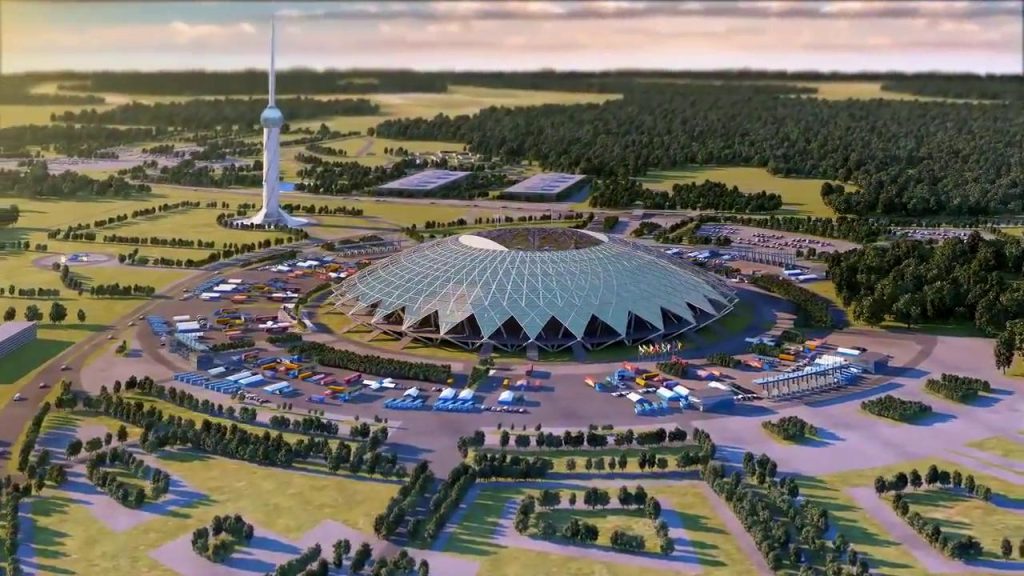
    The new stadium in Samara is set to have a capacity of 45,000 and will become the home of local club side Krylia Sovetov following the 2018 World Cup. Construction work on the stadium is expected to be completed in summer 2017 and will be linked to the city and wider region with new local infrastructure development. 
    Also in attendance at the ceremony was sports minister Vitaly Mutko. “All technical and administrative issues have been resolved and today we are starting to build the stadium” he said. “There are still key questions concerning the city’s development… but first and foremost is the sporting infrastructure that will be built here. Samara is football’s capital on the Volga. We are looking forward to all the necessary conditions being created for footballers and teams, as well as for fans to be welcomed.”
    Three of the planned 12 World Cup stadiums are currently completed, with two of them requiring reconfiguration in order to host football games. Whilst the Russian Government is insisting that all the stadiums will be completed on time, previous delays have raised alarm.
    Organizing committee head Alexei Sorokin told the Associated Press: ”That is a normal working concern. That does not mean we are lying down calmly and waiting for things to happen. It suggests that we are … attentive to it.”
    Whilst some of Russia’s World Cup plans appear to be on time and on budget, delays and rising building material costs are a cause for concern. The St. Petersburg stadium, for example, was due for completion in 2008 but is now unlikely to open before 2016 and at a hugely inflated cost of $1.1 billion.
    There have also been a number of concerns over infrastructure spending and logistical challenges associated with holding the World Cup in Russia but officials have maintained that these issues can be resolved on time.
    FIFA have said the design work for all the other stadiums is now completed and construction work is expected to begin this autumn. 
     

  • FIFA asks Russia to drop two World Cup cities

    FIFA asks Russia to drop two World Cup cities

    FIFA President Sepp Blatter recently visited Russia and met with President Vladimir Putin as well as Vitaly Mutko and Alexet Sorokin, the Chairman and the CEO of the 2018 FIFA World Cup Local Organising Committee respectively, to discuss the plans.
    The Interfax news agency quoted Mutko as saying: “The existing conception of the 2018 World Cup provides the staging of the event at 12 stadiums in 11 cities. FIFA recommended staging the World Cup at 10 venues in nine cities.”
    “We will once again tour the 11 cities, and then a decision will most likely be made. Everything will depend on how things move along and how the cities view the post-tournament program.”
    “We’ll finalise our decision taking into consideration the progress of the host cities in their World Cup preparations.”
    Blatter first revealed the reduction plans at the final press conference of the 2014 Brazil World Cup in July. He said: “We are not going to be in a situation, as is the case of one, two or even three stadiums in South Africa, where it is a problem of what you do with these stadiums.”
    Issues with stadium construction and underdeveloped infrastructure have also been cited as the reasoning behind FIFA’s demands, with several sites facing huge delays. Russian daily newspaper Kommersant recently suggested the cities of Volgograd, Kaliningrad and Yekaterinburg were the most likely to be excluded from the World Cup.
    However, other cities also face uncertainty. The construction of the 45,000 seated Rostov-on-Don Stadium is still yet to commence whilst in Saint Petersburg, the $1.1 billion New Zenit Stadium has faced massive delays. Construction work on the new home of Zenit Saint Petersburg began in 2006 but by 2012 was only half built and facing a complete redesign of the stands. The stadium may now not open until 2017, nine years past the original deadline.
    On the other hand, some Russian cities have fared much better with their World Cup developments. For example, the new Kazan Arena recently hosted its first football match after being completed in record breaking time last year. 


  • FIFA: We must counter damaging allegations

    FIFA: We must counter damaging allegations

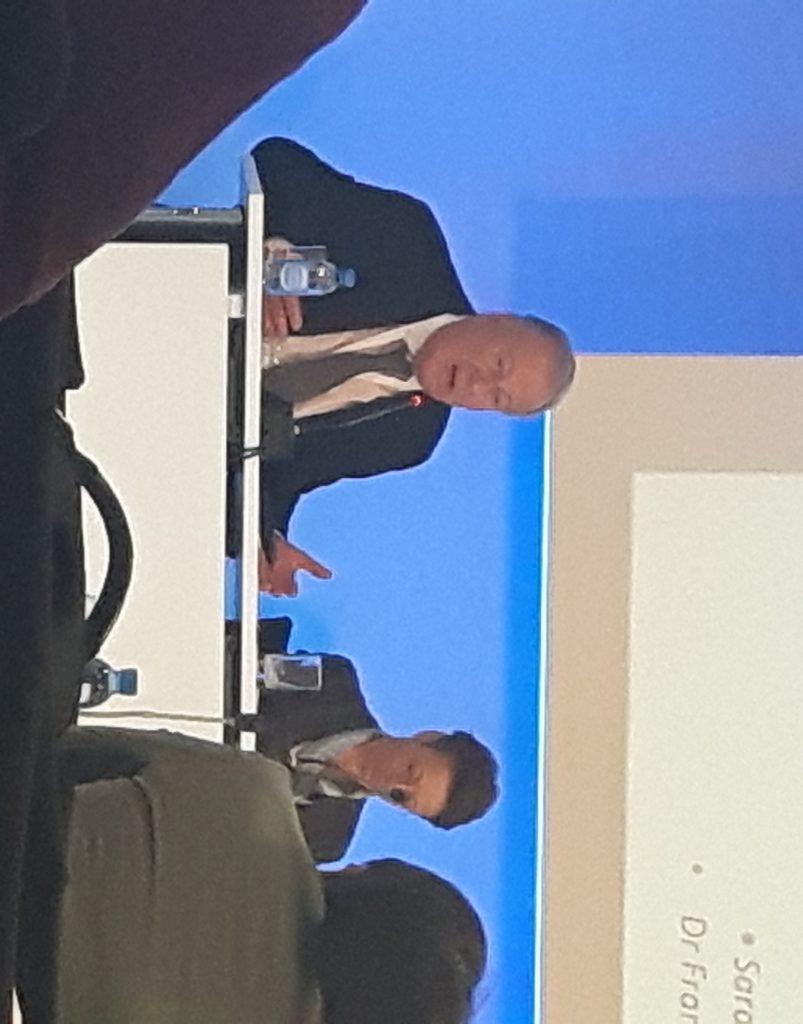
    Three of FIFA’s most influential figures voiced concerns at Soccerex Global Convention about the media crisis that has engulfed football’s governing body in recent times, expressing a need for action to counter negative perceptions. 
    Quizzed by Soccerex consultant David Davies about the impact of the ongoing media allegations about FIFA’s affairs, in a panel discussion entitled “A Word from the Wise”, FIFA Executive Committee Member Michel D’Hooghe said “I think we must be very honest and say that this has been very damaging for the reputation of FIFA.
    “Although FIFA does many good things, these things never appear in the media. It’s the bad things that give, for the moment, FIFA a bad reputation.”
    And according to Jim Boyce, Vice President of FIFA, the press is not the only source of negative attacks. “We are not only talking about the English press – the FA have come out and made certain statements regarding FIFA” said the Northern Irish ExCo member.
    “There is a perception that when England lost the bid, that’s when most of the adverse criticism started. Some of the criticism is entirely justified, but an awful lot is not entirely justified.
    “There are a lot of good people in FIFA – they shouldn’t all be tarnished with the same image. I am proud to finish my career as being Vice President of FIFA.”
    The challenge for FIFA is to communicate its positive contributions to the world. “I am not blaming the media; I think we have to blame ourselves,” said D’Hooghe. 
    “We need to have better communication of the good things that FIFA is doing. Do you hear about 20 centres for hope? Do you hear about restoration of sports facilities after the tsunami? 75 per cent of all FIFA funding goes back into infrastructure.
    “Whoever is or will be president, this will be one of his first obligations: to restore confidence in FIFA, to prove to the world that FIFA wants to good for people all over the world. We are promoting football for health to youth in many countries. 
    Another major priority is to tackle the issue of transparency. “We are challenging transparency and integrity, to restore confidence in FIFA, to prove to people that FIFA wants to good,” said D’Hooghe.
    Also on the panel was Moya Dodd, who joined FIFA’s Executive Committee in 2013. “I get people asking me how it feels to be part of the problem now I’ve joined the FIFA ExCo,” she said. “It’s difficult for people from outside it to understand how it works.
    “What’s important is that the leadership of any organisation at board level is independent from the day-to-day flow of interests that tend to make decision-making difficult.”

  • Drop the secret ballot says FIFA ExCo Moya Dodd

    Drop the secret ballot says FIFA ExCo Moya Dodd

    The influential ExCo member Moya Dodd, told HOST CITY that FIFA needs to make its host city election process more transparent by removing the secrecy around voting.
    And in the wake of Sepp Blatter’s confirmation that he will stand for a fifth term as FIFA president, more executive committee members have publicly backed suggestions that limits should be imposed on terms of office. 
    Asked by HOST CITY at Soccerex Global Convention whether increasing the number of people with the right to vote would improve perceptions of FIFA, Dodd said “The more important measure would be to make voting open. 
    “If people are answerable for how they voted, it’s visible, it’s clear who they supported, then there’s no suggestion that there are multiple promises for a single vote. I think it would do a lot to rid the process of those sort of suspicions, if it was open voting.”
    FIFA’s 27 executive committee members currently have the right to vote on the issues that govern world football. Just 22 people were eligible to cast votes for the 2018 and 2022 FIFA World Cups, as compared to the 94 IOC members that elected the host city of the 2020 Olympic Games. 
    Another concern is that football’s world leaders are able to govern for an indefinite length of time. On Monday, FIFA’s 78-year old president Sepp Blatter confirmed in a video presentation to Soccerex Global Convention that he would stand for a historic fifth term. 
    On the same day, FIFA Vice President Prince Ali Bin Al-Hussein told the press that he supports time limits on terms of office – while stressing that Blatter has every right to stand again under the current rules. 
    “The process of reform within FIFA needs to continue and eventually we should look at instigating term limits and maybe not just for the FIFA president but also for executive committee members as well, including myself,” Prince Ali said.
    Speaking at Soccerex on Tuesday, Moya Dodd, who is vice president of the Asian Football Confederation as well as a FIFA ExCo member, said “In Asia we have a limit on age and terms. I think term limits are healthy. Age limits are discriminatory and not the best way to ensure turnover anyway.”
    Jim Boyce, who at 70 is eight years younger than Sepp Blatter, said “I am in favour of an age limit and a time limit. I honestly feel that if someone has three terms – that’s 12 years – or an age of 75, then they have made a good contribution and it’s time for someone else to contribute.”
    As well as the issues of age and tenure, FIFA is tackling a gender imbalance – a drive that began with Dodd’s appointment last year.
    “It’s inevitable that more women become involved in the game and will be a strong part of the management of sporting enterprises,” said Dodd. 
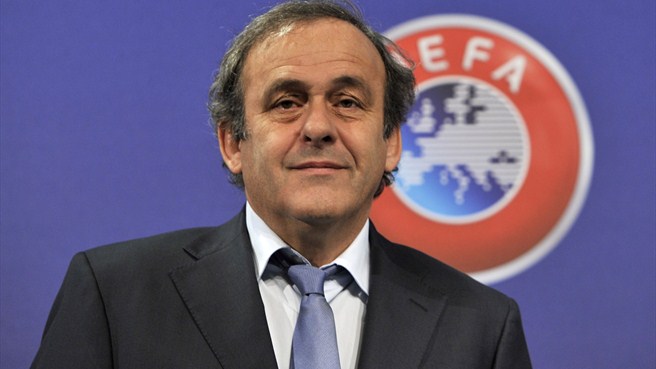
    Uefa president Michel Platini has decided not to stand against Sepp Blatter and it is not clear who might challenge Sepp Blatter to the presidency. Michele D’Hooghe, FIFA ExCo Member, told delegates at Soccerex “Michel Platini gave a very positive message to the last meeting of the presidential general secretaries of FIFA in Monaco at end of August. He didn’t say ‘I don’t go for FIFA’; he said ‘I choose for UEFA’.”
    To find out more about potential changes to bidding procedures for major events including the FIFA World Cup, register for HOST CITY: BID TO WIN, which takes place in London on 28th October 2014

  • Fifa stands firm on Canada 2015 artificial turf dispute

    Fifa stands firm on Canada 2015 artificial turf dispute

    A group of 40 female footballers, including some of the biggest names in the women’s game such as the US’s Abby Wambach, Germany’s Nadine Angerer and Brazil’s Fabiana Da Silva Simoes, will file a lawsuit against Fifa and the Canadian Soccer Association on the decision to stage the tournament on the surface.
    The players have claimed that the decision to force the teams to play on artificial turf is discriminatory as the men’s World Cup has always been played on grass. The complainants have also suggested that artificial turf can increase the risk of injuries and, on a basic playing level, can alter the traditional bounce and trajectory of the football.
    Hampton Dellinger, the US law firm representing the group of players, set a deadline of September 26 for Fifa to open a dialogue with the complainants on the issue, but the governing body appears to be determined to press ahead with its plans.
    “We play on artificial turf and there’s no Plan B,” Tatjana Haenni, Fifa’s deputy director of the competitions division and head of women’s competitions, told the Associated Press news agency.
    “(There are) no plans to change that decision. I can’t answer if that is fair but that is the way it is going to be. It is according to the competition regulations. It is according to laws of the game so all matches will be on artificial turf.”
    Haenni is part of a Fifa delegation on a tour of the host cities of Ottawa, Edmonton, Montreal, Vancouver, Winnipeg and Moncton.
    Hampton Dellinger said earlier this week: “A lawsuit is a last resort but one that unfortunately appears necessary and will be initiated in coming days. As the already drafted legal papers demonstrate, the players and their attorneys are prepared to put before a judge what we believe is a clear – and very unfortunate – case of gender discrimination.
    “The discriminatory proposal of Fifa and the Canadian Soccer Association (CSA) to stage the 2015 Women’s World Cup on artificial turf, coupled with their refusal to discuss ways to fix the mistake, have left the players with no choice. It is now time to ask the courts to stop Fifa and CSA from forcing elite athletes to compete under game-changing, dangerous and demeaning conditions. World-class games cannot take place on second-class surfaces.”
    Speaking at last month’s Soccerex Global Convention in Manchester, Fifa Executive Committee members acknowledged that the governing body must become more communicative, to help improve its reputation.
    Canada will host an expanded Women’s World Cup next year, with the number of teams growing from 16 to 24, increasing the number of matches from 32 to 52.

  • FIFA should publish corruption investigation

    FIFA should publish corruption investigation

    Speaking at Securing Sport 2014 in London on Tuesday, Franz Beckenbauer told a select group of the press including HOST CITY that FIFA should make the findings of its investigations into alleged corruption public.
    Beckenbauer was on the FIFA Executive Committee during the controversial bidding procedure for the 2018 and 2022 World Cups. Asked to reveal who he voted for, he said he had to respect the rules of the secret ballot. He also categorically stated that he did not accept, or receive any offers of, lavish gifts in attempts to influence votes. 
    But he did say “I was surprised that Qatar won. It was a good bid like all the others, but it’s not possible to play football there in the summer. You have to put a lot of effort into cooling the stadiums. My suggestion would be to host in the winter.” 
    In June 2014 Beckenbauer was suspended by FIFA from all football related activities for failing to help with the investigations of FIFA’s ethics prosecutor Michael Garcia. 
    Beckenbauer then agreed to take part in the investigation and the ban was lifted. 
    He told Securing Sport that he did not initially complete Garcia’s questionnaire because it was in complex legal English and he would have preferred to have answered such questions in German. 
    FIFA has indicated that the ethics report, which should now be in its final stages, will not be made public. But Beckenbauer said the report should be made public as soon as it is finished. 
    “Rumours are going round and that is very negative,” he said. “If the recent report has been finalised, it should be published. It’s up to FIFA – there is an Executive Committee to make these decisions, but personally, there is nothing to hide.”
     
    Winning bid was my best achievement
    Beckenbauer told delegates at Securing Sport that winning the bid to host the 2006 World Cup exceeded all of his many sporting and professional achievements.
    Franz Beckenbauer led his national team to world cup victory as captain in 1974 and as manager in 1990. Yet asked by moderator David Walsh of the Sunday Times to name his greatest achievement, Beckenbauer said “Winning the bid for 2006 was the greatest moment of my sporting career.”
    The greatest effect of winning the bid was the effect it had on sport in the country, he said. “German football has never been better than now; that is down to the World Cup. We have great infrastructure and full capacities. 
    “The way football has developed is fantastic. I feel sorry for other sports: you switch on the television and all you see is football.”
    Beckenbauer told delegates in London that hosting the World Cup could have a similar positive effect in England. “It is surprising that England hasn’t won the World Cup since 1966. There is so much talent, such great stadiums and fans, financially there is no problem.
    “If England won a bid to host a World Cup, perhaps that might be an incentive for improving the standard of football.”
    To find out more about bidding procedures for major events, register for HOST CITY Bid to Win on 28th October
     

  • Host City: Bid to Win to put spotlight on bidding for major events

    Host City: Bid to Win to put spotlight on bidding for major events

    Host City: Bid to Win, a conference which will be held at the St James’ Court, A Taj Hotel, London on 28 October 2014, is set to bring together experts and decision makers to explore the challenges and benefits of bidding for major global events. At a time when the bidding process for events has never been more highly scrutinised, Host City: Bid to Win promises place further expert insight into the heart of the ongoing debate. 
    The conference will examine engaging themes central to the debate including the IOC’s proposed Agenda 2020 reforms and emerging trends in the bidding for and hosting of large-scale, multi-sport and cultural events.   
    Keynote speaker Sir Craig Reedie, International Olympic Committee (IOC) Vice-President, believes there has never been a more important time for rights holders to engage with cities.
    Speaking about Host City: Bid to Win, he said: “I am supporting Host City: Bid to Win as it is a great opportunity to get rights holders and cities together debating the key issues. Rights holders and cities are both seeking new ways to showcase their unique qualities, attract new audiences and enhance their reputations – I’m looking forward to sharing insights and opinions with experts from across the global landscape.”
    Mario Andrada, Rio 2016 Director of Communications, said: “Host City: Bid to Win will be a great arena for debate on major event bidding and hosting. I am looking forward to sharing my experiences and insights into the bid and delivery of Rio 2016 and this is a great opportunity to connect, learn and share ideas about how cities and countries can truly benefit from hosting a major sports event.”
    Sir Martin Sorrell, founder and CEO of marketing communications giant WPP and an advisor to the IOC sees the conference as an important platform for furthering the debate on major event hosting in the current climate. 
    “We clearly need to articulate more effectively the tangible, intangible and legacy benefits of sporting, cultural and business events.” Sorrell said.
    Alexander Koch, Corporate Communications Manager at FIFA, said: “This is an important time for all stakeholders involved in bidding and hosting and I’m looking forward to what should be an engaging debate between bidding cities and rights holders at Host City: Bid to Win.”
    Host City: Bid to Win will host various structured and informal networking opportunities, as well as a series of thought provoking panel sessions on what cities need to do to win sporting, cultural and business events. 
    Topics to be covered include: 
    •How Event Owners and Cities Can Benefit From Improving Their Dialogue
    •Emerging Trends in Large Scale Events
    •Olympic Agenda 2020: Overview of Proposed Changes to the Bidding Process
    •Attracting International Events to Cities
    •Bidding for the Right Event
    •Evaluating Bidding & Hosting
    •Successes and Failures
    •Meeting the Evaluation Criteria: Planning, Infrastructure, Transport & Security Strategies
    •Campaigning to Win the Bid
    •Beyond the Bid: Winning for the Future 
    For further information on the engaging panel sessions and other top class speakers confirmed for Host City: Bid to Win, please visit: http://www.bidtowin-hostcity.net/
    Join the conversation on social media by using the #HostCity hashtag.
    For media enquiries, please contact: Robert Fawdon, VERO Communications, rfawdon@verocom.co.uk, m: +44 (0)7769 216649, t: +44 (0)20 7812 6589