Tag: Good Governance

  • “Blind bidding” adieu?

    “Blind bidding” adieu?

    I listened on recently as a member of the Scottish parliament described the transformation effect sport has had on his city, Glasgow, over the course of his relatively short adulthood. While, as a child, being subjected to pervasive messaging which labelled Scotland’s largest city ‘the sick man of Europe’, he now takes particular delight in the continued regeneration on our west coast. 
    This renaissance owes much to the foresight and subsequent effort of those who have successfully secured events like the 2014 Commonwealth Games, FIG World Artistic Gymnastics Championships and 2018 European Championships for the city, amongst many others. 
    Accordingly, the catalyst for this revolution of sorts has been sport. A great love of sport, has, in the words of this MSP, driven and irreversibly altered how his constituents experience the city in which they reside: be it in the evolving cityscape, the upgraded infrastructure or prevalent belief among citizens that Glasgow is, once again, a powerhouse. No longer in an industrial sense, of course, but as the eighth greatest sporting city on earth. 
    As a slight aside, I would argue that these events have altered the consciousness of the Scottish nation as a whole, not only in a sporting sense. Scotland now recognises that its sons and daughters are capable of shining on the world stage and that our investment in sport has engendered invaluable social impacts, as well as numerous medals and new records. 
    Aside from partisan praise for Glasgow and Scotland, this anecdote serves a very simple purpose in this wider narrative; it demonstrates the potential created by events governed well. 
    And as all of those involved in the process of attempting to secure events for their respective municipalities will know, good governance starts from the initiation of the bidding process.  
    Now, I cite Glasgow as a recent example in which, through rigorous care and procedural best practice, the city has reaped myriad benefits which were successfully sown many years previously. There are many others, however, that do not realise such prosperous outcomes, the reasons for which are both too numerous and complex to discuss herein. The solution for the unpredictable nature of results in an industry where, at least on the pitch/track/court, results are the only thing of any consequence, is, fortunately, less obscure. It is the more transparent governance around the process of event bidding. 
    Technical evaluations are, in principle, an excellent means towards this end. However, controversy arises when they inform the choice of candidates, rather than underpin their decisions. Of course, factors not taken in to account in the process of a technical evaluation have to be considered, not least political climate. But to those unacquainted with event bidding as it presently stands, the fact that the, apparently, most accomplished bid often loses out in the final reveal, bears further scrutiny. And probably rightly so. 
    It begs the question over whether there is scope for a standardised stable of tools to be provided to federations and governing bodies to help inform their decisions. Objective criteria, consistently adhered to across all sports and all major events, would help better gauge the competency of competing bids and help to eradicate votes potentially cast on instinctive or misguided judgement. 
    In support of this line of argument, it has even been reasoned that completed technical evaluations should be published to encourage stricter adherence to their recommendations, or at least to elicit an explanation as to why any departure from the recommendations of a technical evaluation is selected as the chosen course. 
    Leaving aside any insinuations of wrongdoing, more must also be done to encourage economic transparency in order to eradicate the ramifications experienced by host cities who fail to predict difficulties some way down the line. 
    At present, a situation often arises where, in an effort to impress, candidates overpromise only to, ultimately, under-deliver. To give one example, the Olympic Games are seemingly beset by a perennial sprint finish, whereby, only aware of shortcomings all-too-late, infrastructure projects are rushed or pared-back by the host city. At best, this erodes confidence in the potentially profound social impacts mega-events should guarantee; at worst, it risks dereliction of duty and gives rise to social unrest.
    For those familiar with game theory, the competitive nature of bidding must be of the greatest interest. Lacking definitive criteria to meet, cities and states must simply seek to outshine their nearest competitors. Or, more accurately, seek to outshine what capacity they imagine their nearest competitor may have. The result of this ‘blind bidding’ is a less than ideal outcome for all involved, including the winner. 
    With more strongly defined and widely publicised benchmarks upon which bids are judged, one can claim with some confidence that capability and credibility, rather cash, will become the foundations upon which successful bids are constructed. The result? Greater likelihood of well-placed investment, improved legacy benefits and less empty stadia as the circus leaves town. 
    While it is not for me to pass judgement on the current health of global sporting governance, I am more than willing to indicate the current circumstances, while regrettable, present an invaluable opportunity. 
    In the course of numerous allegations, withdrawal of support and widespread condemnation in recent months, we have learned in no uncertain terms that the forces behind the extraordinary commercial success of sport will no longer endure dubiety. Due to the extent of its own success, all of sport, particularly its governance, is being called to account, and it must reform. 
    Emboldened by the voice offered by social media and the internet age, the public can no longer be categorised as homogenous factions of brand advocates. Today, the consumer more fluidly elects those it wishes to trust, and brands with a sponsors’ stake in sport will no longer tolerate its flaws. 
    That being said, it should not be forgotten that, by the same token, the consumer of today is now open to more routes of engagement than ever before thanks to those same technologies. As such, the potential is more people, more enthused by a greater diversity of sporting pursuits. For the general health of the sector, that can only be an exciting prospect. But it can only be realised through change. That change being excellent governance from the ground-up. 
    And, if we agree with the assertion above that good governance is established from the outset of the bidding process, what better area for us to concentrate those initial efforts towards reform. 
     
    This opinion piece was written by Paul Bush OBE, VisitScotland’s Director of Events and Chairman of Commonwealth Games Scotland

  • FIFA still needs to change culture, says reform chair

    FIFA still needs to change culture, says reform chair

    Appointing a new president and amending statutes are important steps for FIFA but a change of culture will be essential for significant transformation, the independent chairman of the 2016 FIFA reform committee Dr François Carrard told HOST CITY.
    “By passing the reform of its statutes at the Congress in February in Zurich, I think FIFA has achieved a very important step towards substantial reform. In my opinion, together with the election of the new president, this it is to be considered as the starting point of a reform process,” Carrard told HOST CITY at SportAccord Convention in Lausanne.
    “But I think it’s a starting point also for what is essential in my opinion, which is a change of culture.”
    Carrard also spoke on a panel with FIS Secretary General Sarah Lewis at the LawAccord conference during SportAccord Convention, where he shared his experiences of working with FIFA throughout criminal investigations. 
    “I have been observing from inside in the last months the ‘schizophrenic’ work of the various institutions involved in the FIFA scandals. There were the internal institutions – I started working under president Blatter, when I wanted to report to him the police were there, then I had Ayatou, then I finished with Infantino.”
    HOST CITY asked Carrard if he believed FIFA members had voted the right way in electing UEFA secretary general Gianni Infantino as president. 
    “As independent chairman I haven’t been involved deeply in FIFA organisational structures before, but my personal experience of president Infantino is such that he is the right man,” he told HOST CITY.
    “I think with a new leadership, with adjusted statutes, the path is now there to achieve but any reform process takes time. 
    “You cannot expect that in a couple of months you solve everything. But at least now the door is open for progress.”
     

  • When to mediate or litigate in sports events

    When to mediate or litigate in sports events

    “It’s important to draw a distinction where you actually can use mediation or an alternative dispute resolution method other than litigation. 
    “Competition rules and doping offences are not areas where you can mediate, negotiate and so on; these have clear rules and they have to be respected for the integrity of the sport. 
    “What you do need, when it comes to competition rules, is a solid internal procedure to have the possibility to appeal to a higher instance than the competition jury – they can make mistakes, so that needs to be verifiable.
    “And then you also need the commitment that there will be an appeal possibility to the Centre for Arbitration of Sport (CAS), as the overall instance to check externally that your internal regulatory procedures are working in the correct way.
    “From my perspective, as far as anti-doping offences are concerned, it’s a similar situation: an International Federation has to uphold the WADA rules. Then you have to defend those in an internal doping panel procedure and if there is an appeal, again can be appealed externally to CAS; that’s what is given in the code. 
    “Then the areas where we have a certain experience where there could be room for negotiation concerns disputes – we’ve had dealings in two particular areas. One has been with a couple of serious accidents that have taken place in international competitions, which are organised under the FIS rules, that are overseen by the technical delegate appointed for the assignment by FIS. 
    “Then there have been out of court discussions and negotiations, of course together with the insurance company who plays an important role there. In the one case we found a very good solution that involved supporting a foundation set up by the family in the athlete’s memory dedicated to supporting youngsters in his sport and improving safety measures. 
    “The other area has been with non-competition regulations: interpretation of regulations connected to commercial branding and visibility; is a manufacturer a manufacturer or is it a commercial entity; what’s allowed and what isn’t allowed? That is also quite closely connected to Olympic rules.”
     
    This exclusive interview was conducted by HOST CITY at LawAccord during the 2016 SportAccord Convention
     

  • Anti-Corruption Summit welcomes International Sports Integrity Partnership

    Anti-Corruption Summit welcomes International Sports Integrity Partnership

    The International Anti-Corruption Summit, hosted by UK Prime Minister Cameron on Thursday in London, welcomed the efforts of sports organisations in the fight against corruption.
    The conference issued a communiqué that said: “We welcome the work of the international sports organisations to strengthen openness and improve governance so that they meet global best practice. We urge them to achieve the highest global standards and regain public trust through a culture of good governance. We recognise the autonomy of international sports organisations conferred under national laws. We believe this must be exercised responsibly and be earned by continually demonstrating good governance in a spirit of openness.” 
    The conference specifically welcomed the initiative of the IOC to launch “an International Sport Integrity Partnership in the margins of a meeting of the International Forum for Sport Integrity in Lausanne in early 2017.” 
    IOC President Thomas Bach said: “We appreciate that this summit has acknowledged the efforts of the IOC and sports organisations. The IOC has all the instruments in place and the resolution to fight effectively against corruption. But like any other organisation we are not immune to wrongdoing. In such cases we have a proven record of swift action. The reforms of Olympic Agenda 2020 have strengthened our position to implement our zero tolerance policy in this respect. As welcomed by the Summit, we will take the fight against corruption further by launching the International Sports Integrity Partnership.”
    The Summit coincided with confirmation from French financial prosecutors that they are investigating allegations that payments exceeding $2m connected to the Tokyo 2020 Olympic bid were made to a bank account linked to the son of former IOC member and IAAF President Lamine Diack.
    IOC Chief Ethics and Compliance Officer Paquerette Girard-Zappelli spoke at the conference. In an IOC-issued statement she said: “We used this opportunity to present all the measures undertaken by the IOC in the fight against corruption. 
    “Through Olympic Agenda 2020 the position of the IOC Ethics Commission has been strengthened and transparency has been increased. This includes a Consultants Register for the Olympic Games Bid Process and many other measures. 
    “We have proven that we are actively fighting against corruption. For instance, the IOC took immediate action against Lamine Diack already in November 2015 when the first allegation arose against him. As a result of our action he no longer has any position in the IOC. Nevertheless, we continue to actively look into the matter and have become a civil party to the French investigation.”
    IOC Member and President of the International Paralympic Committee Sir Philip Craven chaired a panel on sport at the summit. Girard-Zappelli was joined on the panel by Angel Gurria, Secretary-General of the OECD, Jaimie Fuller of Australian sportwear brand SKINS, and Isha Johansen, president of the Sierra Leone Football Association and FIFA board member.
    “I have a mission and a vision, to force good governance into football. Because I believe it can help with the growth and prosperity of that nation,” said Johansen.
    “Corruption is a deadly killer disease. Having lived in Sierra Leone through the ebola crisis, I know the destruction a disease can cause in a society, it can rip through it, it can kill a society.”
    After the summit, Sir Philip Craven said: “Sport is under greater scrutiny than ever before and rightly so; sport is a multi-billion Euro industry that reaches and impacts billions of people around the world on a daily basis.
    “There are absolutely no doubts that recent scandals involving some international sport federations have greatly tarnished the image and reputation of sport. This has led sport to quickly realise that it is not immune from being accountable for its actions, just like any other industry.
    “It should not take a high profile scandal however to act as the catalyst to organisational reform. Sport organisations must be proactive in improving their athlete centred governance. They must seek out corruption and deal with it swiftly and effectively. It cannot be brushed under the carpet in the hope it will go undiscovered.
    “Eliminating corruption in sport needs to be a real team effort. That is why the IPC fully supports the work of the IOC, the reforms of Olympic Agenda 2020, the launching of International Sports Integrity Partnership in early 2017 and the recommendations of the Association of Summer Olympic International Federations (ASOIF) Governance Task Force.”
    The conference also dealt with issues such as corporate secrecy, government transparency, the enforcement of international anti-corruption laws, and the strengthening of international institutions. 
    The summit adopted a “Global Declaration Against Corruption”, which reads: “Corruption is at the heart of so many of the world’s problems. We must overcome it if our efforts to end poverty, promote prosperity and defeat terrorism and extremism are to succeed. 
    “Today’s Summit has demonstrated the deep commitment of a significant number of countries, businesses and members of civil society to work together to tackle this scourge.”
     

  • “How life should be” – Sir Philip Craven MBE

    “How life should be” – Sir Philip Craven MBE

    Host City: Having experienced Paralympic Games since 1972, both as an athlete and administrator, what major changes have you seen in terms of participation and audience engagement?
    Sir Philip Craven: My first Paralympics were in Heidelberg in ‘72. It was a relatively small affair but with an incredible passion for sport that has always been at the centre of the Paralympic movement.
    Really the Games that made the biggest difference for me, despite the amazing London Games, was Barcelona in ’92. That was the first time that there were masses of spectators. It took a bit of time for athletes to get used to having packed stadia. That was a major moment. We again had an amazing Games in Sydney and things have just moved on from there. 
    What we had to do as an organisation was to develop our organisation so we had sufficient competent and motivated staff that could work with organising committees and ensure that the Games would be of a very good standard and occasionally, when the planets came into total alignment, it would be amazing, like in Beijing and in London. 
    When I came in I never used the “D-word”. It’s nothing to do with disability sports – this is international sport. We are an international sports organisation and therefore that’s been the emphasis all along. When you talk about sports, then you all get along far better together. That’s one of the reasons for the major rise, along with our capacity to work with organising committees, but always with athletes at the centre.  
    These Games in Rio are going to be the greatest Games ever in terms of athletic performance. It’s amazing what’s been done in all of the sports; the amount of training that goes into being an international player is quite outstanding. 
    Host City: Would you say London 2012 was the big step change in terms of public engagement and TV audience?
    Sir Philip Craven: Definitely with regard to TV audiences. Channel 4 really got the ball and ran with it two years prior to the Games; there was an amazing transformation and that has been really infectious moving forward from London. They used former athletes as commentators, and they have become a totally integrated employer now.
    In Rio there will be over a hundred nations taking a live feed of the Games from Rio around the world. We’ve signed our biggest deal ever with NHK in Japan going forward to the Tokyo Games in 2020 and beyond, to 2024. 
    People love the Paralympics and the first place to be is at the Games. The unique sporting spirit there is something that I felt when I was playing wheelchair basketball because I loved the sport; I loved playing for the team. This spirit of the principles of what sport should be about has never been stronger with me. 
    Host City: The motto of the Olympic Games is “faster, higher, stronger”; how does that differ to the Paralympics, in terms of the underlying principles of sport?
    Sir Philip Craven: Our vision is “to enable Para athletes to achieve sporting excellence and to inspire and excite the world”. “Achieving sporting excellence” for me is at any level – it doesn’t have to be a Paralympic medal. 
    And then “to inspire and excite the world”. But what happens before people are inspired and excited? They’re surprised, normally – I don’t know if they were expecting the basketball players to drop the ball – but they are surprised, then they are inspired, then they’re excited. Once that happens we can change the world. 
    We know that the Paralympic Games has the greatest effect of any international sports competition in really delivering societal change – realising that we are all members of one planet and one society, and that we can all have a good time. 
    Host City: It’s interesting what you say about the big societal impact of the Paralympic Games – we saw that in Beijing and London. But it seems the Olympic Games needs to assert its value now, with some of the big Olympic sports facing wave upon wave of doping allegations. Having recently chaired a panel discussion at the International Anti-Corruption Summit, what’s your view of that?
    Sir Philip Craven: On what we have heard about in the media, it’s seen to have been denied by certain international federations. On the one hand I am saddened, on the other hand I am angered – because that is not what sport should be about. 
    But I have to say, the IOC – of which I’ve been a member since 2003 – has done a lot of work to root out corruption from their own organisation and that’s going back now 15 or 16 years. And I think they continue to do that good work, taking an enlightened view of keeping samples from the Beijing Games and then retesting them. 
    The IOC, IPC and WADA and all international sports federations are working very hard now, with increasing support from national governments and other international bodies. Corruption, as David Cameron said, is a cancer and we have to root it out. And that’s what we will work together to do. The change has to come from the inside of sport, and they have to be supported by people from other walks of life, from governments and it’s something we are going to fight with all our might. 
    Host City: How optimistic are you that that this fight will be won?
    Sir Philip Craven: I’m an eternal optimist; I can tell you that. It will be won. The key is it’s not just about bringing in rules and regulations that stop the corrupt; it’s bringing in methods where the non-corrupt are elected in the first place. 
    If you look at the majority of international federations, you would find that that is the case. But of course when you find difficulties from certain federations, then they can influence the general view of what’s going on in all international sports federations. 
    You can’t change cultures overnight, no matter what anybody says, no matter how much money you’ve got. Because normally those cultures have built up over many years so it takes time to change it. But there’s got to be a fundamental clear out and to start again. 
    Host City: It strikes me these threats facing sports governance today are the polar opposite of the principles of sport, which should be about team play and rewarding endeavour.
    Sir Philip Craven: The principles of what sport are really about are right at the centre of what we do. We’ve just had recent discussions in our governing board about this and we’ve brought in new controls on conflicts of interest, divulging whether you are involved with other organisations other than the International Paralympic Committee etc. – and we are very keen to bring these in. 
    Fundamentally we are an absolutely transparent organisation; you can look at our accounts online whenever you wish to. If you are a transparent organisation then those sort of corrupt practices don’t have a chance to get going. 
    I would say the high honour of Thomas Bach inviting me to chair the new Olympic Education Commission shows the clear intent of what you put very well when you talked about the principles of sport. It’s an absolute intent that there is a great strengthening of this, and that’s what sport needs. 
    In fact that’s what the world needs – principles and common sense regulations – not things that are brought up by overpaid lawyers, but things that come out of how life should be and how people should get on with each other. That’s what I’m about!

  • IOC asks sports federations to take events out of Russia

    IOC asks sports federations to take events out of Russia

    The IOC Executive Board on Tuesday said it will no longer back the 2019 European Games, set to take place in Russia, and has asked all Winter Olympic Sports Federations to find alternative host nations for any upcoming events. 
    These immediate decisions are part of a number of IOC responses to the World Anti-Doping Association (WADA)’s “Independent Person” report into doping in Russia. 
    “The IOC will not organise or give patronage to any sports event or meeting in Russia. This includes plans for the European Games 2019 organised by the European Olympic Committees (EOC),” the IOC Executive Board said in a statement. 
    “Because of the detailed references to the manipulation of samples during the Olympic Winter Games Sochi 2014 the IOC asks all International Olympic Winter Sports Federations to freeze their preparations for major events in Russia, such as World Championships, World Cups or other major international competitions under their responsibility, and to actively look for alternative organisers,” it added.
    “The findings of the report show a shocking and unprecedented attack on the integrity of sports and on the Olympic Games,” said IOC President Thomas Bach. “Therefore, the IOC will not hesitate to take the toughest sanctions available against any individual or organisation implicated.”
    The report, by “independent person” Richard McLaren was instigated after Grigory Rodchenkov, former director of Russia’s Moscow and Sochi antidoping laboratories, blew the whistle on cover-ups.
    “WADA is grateful to Richard McLaren, his team, and other contributors that, together, helped provide us with a fact-based path forward today as it relates to allegations and other information provided by Dr. Rodchenkov,” said Sir Craig Reedie, President of WADA said in a statement.
    “Shamefully, the McLaren Report corroborates the allegations, exposing a modus operandi of serious manipulation of the doping control process in the satellite laboratory set up in Sochi for the 2014 Games; and, the Moscow laboratory since 2011 and after the Sochi Games.
    “Not only does the evidence implicate the Russian Ministry of Sport in running a doping system that’s sole aim was to subvert the doping control process, it also states that there was active participation and assistance of the Federal Security Service and the Center of Sports Preparation of National Teams of Russia.”
    The IOC has now started “disciplinary actions related to the involvement of officials within the Russian Ministry of Sports and other persons mentioned in the report because of violations of the Olympic Charter and the World Anti-Doping Code”.
    The Report could result in a complete ban on Russian athletes participating in the 2016 Olympic Games, due to start in Rio de Janeiro on 5 August. 
    In the statement, the IOC said it will “carefully evaluate the IP Report. It will explore the legal options with regard to a collective ban of all Russian athletes for the Olympic Games 2016 versus the right to individual justice. In this respect, the IOC will have to take the CAS decision on 21 July 2016 concerning the IAAF rules into consideration, as well as the World Anti-Doping Code and the Olympic Charter.”
    For the full IOC Executive Board statement click here. 
     

  • Russia doping report “had to be published” before Rio Games – WADA

    Russia doping report “had to be published” before Rio Games – WADA

    The World Anti-Doping Agency (WADA) has taken note of the views expressed by some concerning the timing of publication of the Agency’s independent McLaren Investigation Report, which was published by Professor Richard H. McLaren on 18 July, exposing Russian State manipulation of the doping control process; and, the Agency’s subsequent recommendations – both that led to the International Olympic Committee’s (IOC) decision of 24 July.
    WADA understands that the timing of the McLaren Investigation Report has been destabilizing for a number of organizations as they prepare for the Rio Olympic and Paralympic Games. However, WADA wishes to factually clarify that the Agency acted immediately on allegations concerning Russia when it had corroborated evidence and the power to do so under the World Anti-Doping Code (Code).
    When German-based ARD released their first documentary in December 2014 that contained corroborated evidence, WADA quickly initiated its Independent Commission. The Commission, which was chaired by Richard W. Pound, commenced its investigation in January 2015 when WADA acquired its new powers of investigation under the 2015 Code.
    “While our Independent Commission’s Report suggested that doping in Russia was likely not restricted to athletics, and that the Russian secret services (FSB) were present within the Sochi and Moscow laboratories, the Commission did not uncover concrete evidence to the effect that the Russian state was manipulating the doping control process,” said Richard W. Pound. “The Pound Commission leveraged all information that the whistleblowers had provided; and yet, there was no concrete evidence to support State manipulation.”
    On 9 November 2015, the Pound Commission reported and exposed wide-spread doping in Russian athletics; and, on 10 November 2015, WADA took quick and decisive action on the Commission’s recommendations.
    “It was only when CBS 60 Minutes and the New York Times, on 8 and 12 May 2016 respectively, published the allegations from the former director of the Moscow and Sochi laboratories, Dr. Grigory Rodchenkov, that WADA had concrete evidence suggesting Russian state involvement that could be investigated by initiating the McLaren Investigation, which we did immediately,” said Craig Reedie, WADA President. “This decision was endorsed by WADA’s Executive Committee and WADA’s Athlete Committee,” he continued. “It must be understood that Dr. Rodchenkov was heard several times by the Pound Commission in 2015; and that, he never provided the information that he later revealed to the New York Times in May 2016. This information was subsequently corroborated by the McLaren Investigation, which also unveiled a wider implication of the Moscow laboratory.”
    “WADA’s Executive Committee – composed in equal parts by representatives of the Olympic Movement and Governments of the world – supported Professor McLaren’s independent mandate, which was to obtain evidence as quickly as possible in the interest of clean athletes,” said Reedie. “While it is destabilizing in the lead up to the Games, it is obvious, given the seriousness of the revelations that he uncovered, that they had to be published and acted upon without delay.”
    “Further to the International Olympic Committee’s criteria being outlined on 24 July, WADA has facilitated the transfer of relevant information that is available to date, concerning individual athletes, from the McLaren Investigation team to International Federations,” said Olivier Niggli, Director General, WADA. “It should be noted however that Professor McLaren’s focus thus far was on establishing involvement of the Russian State and not regarding individual athletes that may have benefitted,” Niggli continued. “WADA will continue supporting anti-doping organizations by providing information as and when it becomes available via McLaren’s ongoing Investigation.”
    As it relates to WADA’s process of accreditation and proficiency testing of anti-doping laboratories, it focuses on the technical abilities of laboratories. In the case of the Moscow laboratory, WADA suspended the laboratory in 2015 as soon as breaches were identified via the Pound Commission. Addressing corruption within the anti-doping system – including state or secret service interference in laboratory operations – will be one of the topics discussed during the first in a series of multi-stakeholder Think Tanks that WADA will hold in September 2016.
    Source: WADA

  • U?ur Erdener and Juan Antonio Samaranch elected IOC Vice Presidents

    U?ur Erdener and Juan Antonio Samaranch elected IOC Vice Presidents

    The International Olympic Committee has elected to change the composition of its Executive Board, promoting Prof. U?ur Erdener and Juan Antonio Samaranch to Vice Presidents.
    Three new Executive Board members have been elected in  Gian Franco Kasper (SUI), Angela Ruggiero (USA) and Ser Miang Ng (SIN).
    The new Vice Presidents U?ur Erdener and Juan Antonio Samaranch now replace Sir Craig Reedie CBE and Nawal El Moutawakel who have served their terms, having made immense contributions to Olympism.
    Sir Craig Reedie and U?ur Erdener are both set to speak at Host City 2016 alongside several other key figures from the Olympic Movement and the wider event hosting world. 
    A Professor of Ophthalmology, U?ur Erdener is the President of the Turkish National Olympic Committee, President of World Archery and Chair of the IOC Medical and Scientific Commission.  
    “I am honoured to have been elected to the position of IOC Vice President,” said Prof Dr Erdener.
    “The principles of Olympism are ever-more relevant in the modern world, and I am committed to supporting the goal of the IOC in building a peaceful and better world through sport.”
    Prof Dr Erdener is the second World Archery President to have become an IOC Vice President. Jim Easton served in the role from 2002 to 2006.
    Juan Antonio Samaranch is Vice President of the UIPM and Chair of the Board of directors of Olympic Channel Services. His father, of the same name, was IOC President from 1980 to 2001.
    The changes to the Executive Board see the departure of René Fasel, Claudia Bokel, Anita Defrantz and Gunilla Lindberg.
    Ching-Kuo Wu and Patrick Hickey are resuming their seats as representatives of the Association of Summer Olympic International Federations (ASOIF) and the Association of National Olympic Committees (ANOC) respectively. Also remaining on the Executive Board are Sergey Bubka and Willi Kaltschmitt.
    The US ice hockey player Angela Ruggiero replaces outgoing German fencer Claudia Bokel on both the Executive Board and the IOC Athletes’ Commission. She joins the Executive Board at the same time René Fasel, IIHF president, leaves.
    “René’s leadership has been inspiring, and I hope I can represent hockey with the same pride now that he is leaving,” she said.
    These changes, as well as the election of eight new IOC members, were confirmed at the IOC Executive Board meeting at the outset of the Rio 2016 Olympic Games. The newly composed Executive Board will begin its work after the Games.
     

  • Japanese Olympic Committee clears Tokyo bid of breaking law
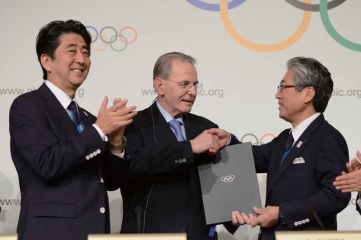
    Japanese Olympic Committee clears Tokyo bid of breaking law

    The Tokyo 2020 Olympic bid committee did nothing wrong in making payments to the Black Tidings consulting company during its campaign, the Japanese Olympic Committee (JOC) has concluded after an investigation into allegations of illegal activities.  
    The Guardian newspaper in the UK revealed in May that the Tokyo 2020 Olympic bid committee had made a payment of GB£1m to Black Tidings – a company headed by Singaporean consultant Ian Tan Tong Han.
    Tan has since the 2008 Beijing Olympic Games been a close associate of Papa Massata Diack, the son of Lamine Diack – who himself resigned from the IOC amid claims that he accepted bribes to cover up positive drugs tests when he was president of the International Association of Athletics Federation.
    The payment to Black Tidings, reportedly signed off by JOC President Tsunekazu Takeda, was the subject of an investigation by French police into whether the money was connected to votes in the host city election.
    But the report by the JOC, released on Thursday, said there was no evidence that the relationship between the Tokyo 2020 bid committee and Tan was “illegal or invalid under the civil laws or criminal laws of Japan, and there is no doubt that it is lawful”.
    The JOC also said the payment did not break French laws or violate any IOC ethical guidelines.
    “I believe that Tokyo has been cleared of any suspicion of bribery”, said Yoshihisa Hayakawa, a lawyer who led the three-member panel told the Guardian.
    The news comes shortly after the recently elected Yuriko Koike governor of Tokyo hit out against the spiralling cost of hosting the 2020 Olympic Games, saying that the plan needs to become sustainable and credible again.
    In a video interview with the Wall Street Journal, Koike said: “The budget for Tokyo Olympic and Paralympic games is currently increasing.
    “I think we need to go back to our original plan of sustainability and credibility, and make a plan once again. This is what I have come to believe.”
    Since Tokyo won the bid to host the Games, Zaha Hadid’s initial designs for the main stadium have been rejected due to cost concerns. The Games logo also had to be redesigned due to allegations of plagiarism.
    And the former Tokyo Governor Yoichi Masuzoe resigned in June 2016 over a scandal relating to public funds for personal use.
    The new Governor Koike, appointed at the end of July, has highlighted sustainability as an area of focus for the Games. “Spending money does not necessarily lead to improved result,” she said. “The keyword is the three Rs: reduce reuse and recycle.”

  • UNODC and ICSS launch guide to tackling “crooked practices” in sport
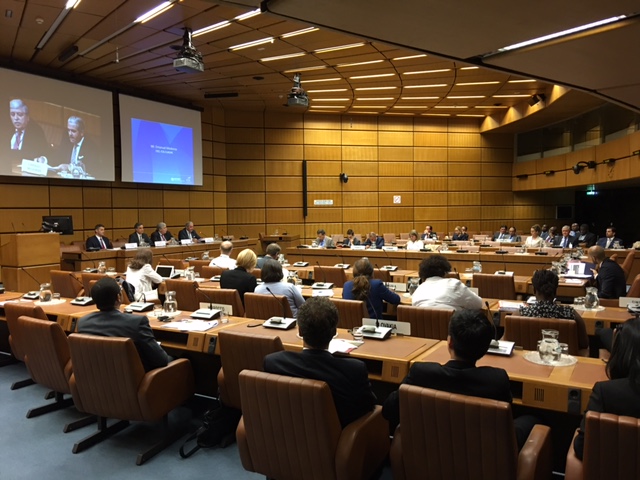
    UNODC and ICSS launch guide to tackling “crooked practices” in sport

    The United Nations Office on Drugs and Crime (ONODC) and the International Centre for Sports Security (ICSS) have launched a new resource guide to help law enforcement and sports organisations better detect and investigate match-fixing and cases of sports-results manipulation.
    “The joy that sports bring to billions of fans around the world can so easily be marred by crooked practices such as match-fixing,” writes Yuri Fedotov, Executive Director of the UNODC in the foreword to the guide. “The best way to tackle these threats is through a multi stakeholder approach.”
    The Resource Guide on Good Practices in the Investigation of Match-Fixing was launched on Tuesday alongside a meeting of the Open-ended Intergovernmental Working Group on the Prevention of Corruption, attended by representatives of the 178 States parties to the United Nations Convention against corruption.
    “The problem of match-fixing is such that it undermines integrity in sport with the significant illicit profits it generates allowing organized crime and corruption to thrive,” John Brandolino, UNODC Director for Treaty Affairs said at the launch of the resource guide.
    “In addition, the investigative skills of both law enforcement agencies and sports organizations around the world which are needed to identify and apprehend those responsible, are relatively underdeveloped.
    “The Resource Guide represents UNODC’s and ICSS’s efforts to address this shortage in skill among investigators in both law enforcement and sports organizations and to raise awareness among policy makers about the threat of match-fixing. It serves as an important tool for those seeking to understand the problem and to learn how to effectively investigate it.”
    More than 40 experts contributed to the development of the resource guide, including officials from FIFA, the International Olympic Committee, INTERPOL, the European Commission, Hong Kong Jockey Club, World Snooker, Council of Europe, Ministries of Justice from France and the Republic of Korea, and EUROPOL.
    “This handbook provides a comprehensive range of case studies, investigation techniques and approaches to combat match-fixing as well as providing valuable guidance on how to disrupt the international organized crime syndicates that now operate in sport,” said Mohammed Hanzab, President of ICSS.
    “As the ICSS looks to build on this launch and work alongside the UNODC to develop a series of workshops and training courses in this area, this handbook will hopefully provide sport federations and law enforcement agencies with an important go-to-guide to detecting, investigating and prosecuting match-fixers and organized crime.”
    The full Resource Guide can be read and downloaded on the UNODC website.