Host City 2021, the world’s largest meeting of cities and sports business events, will take place on 7-8 December in Glasgow with a global, hybrid format that will maximise participation from all regions of the world.
Scotland and Glasgow will host the global event for the 7th consecutive year. Host City 2021 will build on the phenomenal success of last year’s first digital edition, combining face-to-face action at Glasgow’s Technology & Innovation Centre with online connectivity.
The global, hybrid Host City 2021 will be preceded by two regional, digital events: Host City Americas and Host City Asia, set for 30 June and 14 April respectively.
Host City 2021 will also feature online sessions timed for Asian and American participation. The combination of physical and digital elements over an expanded timeframe will take Host City to more of the world than ever before, while enabling the physical content and networking in Glasgow for which Host City is renowned.
Host City 2021 is supported by EventScotland, Glasgow Life and Glasgow City Council.
Paul Bush OBE, VisitScotland Director of Events, said: “EventScotland has a strong connection with Host City, having been a supporter of the conference since its inception in 2014, and we are delighted to be welcoming it back to Scotland and Glasgow for the 7th consecutive year.
“Host City is always a great opportunity for the major events sector to come together and share best practice, and the global hybrid format for this year’s conference will ensure attendees, whether they are there in person or online, are able to learn and share knowledge as we continue to navigate through the new normal.
“Events are a force for good and we look forward to working with the Host City team to deliver a conference that ensures a bright future for all events.”
Councillor David McDonald, Chair of Glasgow Life and Depute Leader of Glasgow City Council, said: “As a proud supporter of Host City, we’re delighted to welcome the event back to Glasgow for the seventh year in a row.
“As a leading host city for festivals and events, Glasgow has keenly felt the impact of Covid-19, and seeing how well last year’s Host City event was delivered on a digital platform was hugely encouraging and the global feedback was fantastic.
“We look forward to working with the Host City team once again to ensure that 2021’s event is even bigger and better than previous iterations, and to share best practice with our colleagues across the world as we all work to create the best possible future for events.”
Ben Avison, Editorial and Conference Director of Host City said: “Since the first Host City event in 2014, we have staged continually growing physical events, two Asian editions, and last December we reached our biggest ever audience by going online for the first time.
“2021 represents a tremendous opportunity to combine all these elements and present the greatest platform for of cities and sports, business and cultural events to participate in a way that works best for them, whether that is meeting in person in Glasgow or participating online on the other side of the world.
“The digital regional events – the third Host City Asia and the first Host City Americas – will also play a huge part in bringing our community together, enabling stakeholders in major events the world over to share best practice and set the global agenda.”
For more information contact ben.avison@hostcity.com or adam.soroka@cavendishgroup.co.uk
Tag: Host City Americas
-

Host City’s global event series to climax in Glasgow on 7-8 December 2021
-

Vaccination important for communities, not just Olympic athletes – Prof. Erdener
As Pfizer and BioNTech donate vaccines to athletes and their delegations attending Tokyo 2020, Prof. U?ur Erdener, Chair of the IOC Medical and Scientific Commission highlights the wider value of vaccination globally.
“We see the importance of vaccination all around the world,” Prof. Erdener said in an IOC release. “We encourage the athletes and Games participants to take the vaccine whenever possible. Vaccination is an important tool to protect not only themselves, but also their communities.”
Prof. Erderner, who is also President of the Turkish National Olympic Committee and President of World Archery, is speaking at Host City Americas, taking place online on 29-30 June.
Following a meeting with Japanese government, the IOC signed a Memorandum of Understanding (MoU) with Pfizer and BioNTech to donate doses of the companies’ COVID-19 vaccine to Games participants from National Olympic and Paralympic Committees around the world.
“This donation of the vaccine is another tool in our toolbox of measures to help make the Olympic and Paralympic Games Tokyo 2020 safe and secure for all participants, and to show solidarity with our gracious Japanese hosts,” said IOC President Thomas Bach.
“We are inviting the athletes and participating delegations of the upcoming Olympic and Paralympic Games to lead by example and accept the vaccine where and when possible. By taking the vaccine, they can send a powerful message that vaccination is not only about personal health, but also about solidarity and consideration of the wellbeing of others in their communities. We would like to thank Pfizer and BioNTech for this very generous donation to support the vaccination of athletes and Games participants ahead of the Olympic and Paralympic Games Tokyo 2020.”
Any doses delivered by Pfizer and BioNTech under the agreement will not be taken out of existing vaccination programmes but will be in addition to existing quotas and planned deliveries around the world.
The IOC and the International Paralympic Committee (IPC) are working with the NOCs and National Paralympic Committees (NPCs) to encourage and assist their athletes, officials and Games stakeholders to get vaccinated in their home countries in line with national immunisation guidelines, before they go to Japan.
The offer to donate the Pfizer-BioNTech COVID-19 to athletes and their delegations participating in the Tokyo 2020 Games came about during a conversation between Albert Bourla, Chairman and Chief Executive Officer, Pfizer, and Suga Yoshihide, Prime Minister of Japan.
“With hundreds of millions of vaccines already administered, and hundreds of millions more to go, Pfizer is committed, together with BioNTech, to doing all we can to help end this pandemic and help return the world to a sense of normalcy,” said Bourla.
“The return of the Olympic and Paralympic Games represents a monumental moment of world unity and peace after a gruelling year of isolation and devastation. We are proud to play a role in providing vaccines to athletes and their national Olympic delegations where possible.”
The IOC has also recently released the second edition of its Playbooks, which give detailed information and guidelines to the various stakeholder groups participating in the Olympic and Paralympic Games Tokyo 2020. -

Facebook, Olympics, Esports, Investors and Leagues star in Host City Americas debut
The elite of the international events sector is completing the line-up for the inaugural Host City Americas conference, taking place online on 29-30 June.
Recent additions include IOC Members and IF Presidents Ingmar De Vos and Prof. Ugur Erdener on the opening session, during which Prof. Erdener will address the safe staging of the Tokyo Olympic Games during the pandemic.
Peter Hutton, Director of Sports Partnerships at Facebook, Yiannis Exarchos, CEO of Olympic Broadcasting Services and Brian Sullivan, CEO of NEP Group join to discuss The Changing Media Landscape.
Paul J. Foster, CEO, Global Esports Federation, Dr. Melita N. Moore, Board Member and Chair of Health & Wellness Commission, Global Esports Federation and Beng Choo Low, Secretary General, World Baseball-Softball Confederation tackle conversations about leadership in Esports and its role in health.
American event hosts are showing up in force, including Monica Paul, Executive Director, Dallas Sports Commission, Nick Sellers, CEO, The World Games 2022 Organizing Committee and Chris Carroll of the Lake Placid 2023 Winter World University Games, joined by Gary Meador, Director of Event Services Team at Aggreko North America.
Jim Mercurio, Executive Vice President & General Manager at San Francisco 49ers – Levi’s Stadium, Russ Simons, Owner and Managing Partner at Venue Solutions Group, LLC, Tad Bowman, Venue Director, Red Rocks Amphitheatre and Denver Coliseum, City and County of Denver and Jeremiah Yolkut, Director, Major League Baseball go “Back to the Future” with Jeff Keas, Senior Principal, Populous to question the impact of Covid-19, on a panel co-produced with the Association of Global Event Suppliers.
Sabrina Ibanez, Secretary General, FEI and Tom Dielen, Secretary General, World Archery join the Workshop on Hosting Events with International Federations, along with Paul Bush OBE, Director of Events, VisitScotland and the International Association of Event Hosts.
In keeping with the conference theme of Investing in Events, Host City Americas welcomes Gareth Balch, CEO, Two Circles and David Goldberg, Senior Advisor, TPG and Board Member, GAN.
OnePlan Founder Paul Foster brings expertise and solutions from the frontier of major event planning technology.
Simon Johnson, Chair, Rugby Football League joins Iventis CEO and founder Joe Cusdin to present on event mapping.
And David Grevemberg CBE, Chief Innovation and Partnerships Officer, Centre for Sports and Human Rights moderates the conversation on How Important are ESG Criteria to Event Audiences.
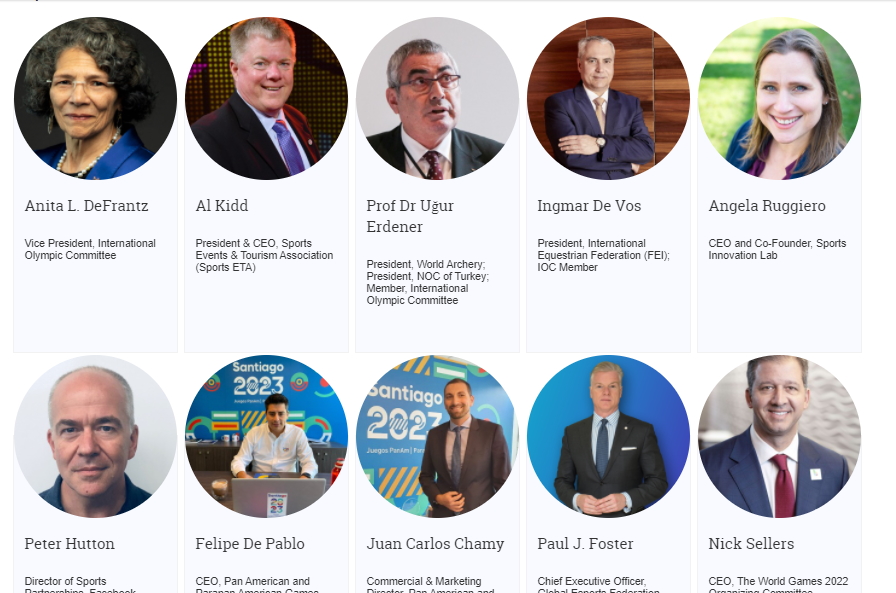
These speakers join other great experts already announced: IOC VP and LA28 Board Member Anita DeFrantz; Sports ETA President & CEO Al Kidd; UNESCO Asst DG Gabriela Ramos; Santiago 2023 chiefs Felipe de Pablo and Juan Carlos Chamy; World Athletics Championships Oregon22’s Niels de Vos; Sports Innovation Lab CEO Angela Ruggiero; World Rugby CEO Alan Gilpin; Matt Archambault of Riot Games; Finn Taylor, CEO, Volleyball World; Matt Pound, Director, World Table Tennis; Sarah Lewis OBE; Emily Blitz of the Inter-Parliamentary Union; Mexican Olympic Committee VP Jimena Saldaña; Paralympian Karin Korb; Trinidad and Tobago Olympic Committee President Brian Lewis; Brazilian Basketball Federation CEO Ricardo Trade and World Lacrosse CEO Jim Scherr.
Host City Americas is supported by: Official Sustainability Partner Aggreko; Event Delivery Partner NEP Group; Gold Sponsors OnePlan and Orange Sports Forum; and Silver Sponsors Dallas Sports Commission and Iventis.
Global Esports Federation is a Strategic Partner of Host City Americas.
The conference is delivered on the Eden platform by Creative Technology, as part of NEP Group.
Join 1,000+ participants at Host City Americas to discover the opportunities ahead as we emerge from the pandemic to a landscape defined by digitalisation and large-scale investment. -

Final Agenda and Speakers revealed for Host City Americas, 29-30 June
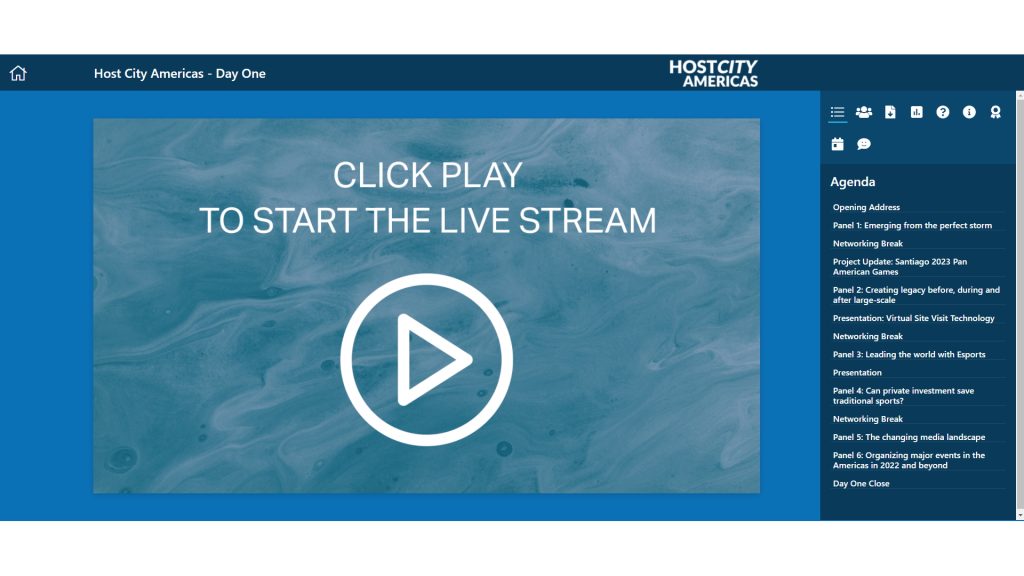
The first Host City Americas takes place one week today – on 29-30 June – with the greatest figures in sports, business and entertainment events tackling a highly topical agenda finalised today.
Host City Americas is broadcast from NEP Group’s Creative Technology studio, with 65 speakers joining from three continents and with an interactive online global audience (register here).
The online conference opens with a Keynote Address from Anita DeFrantz, Vice President, International Olympic Committee and Board Member, LA28. She addresses the sporting, societal, and economic opportunities in the Americas and bring into focus her expertise concerning LA28.
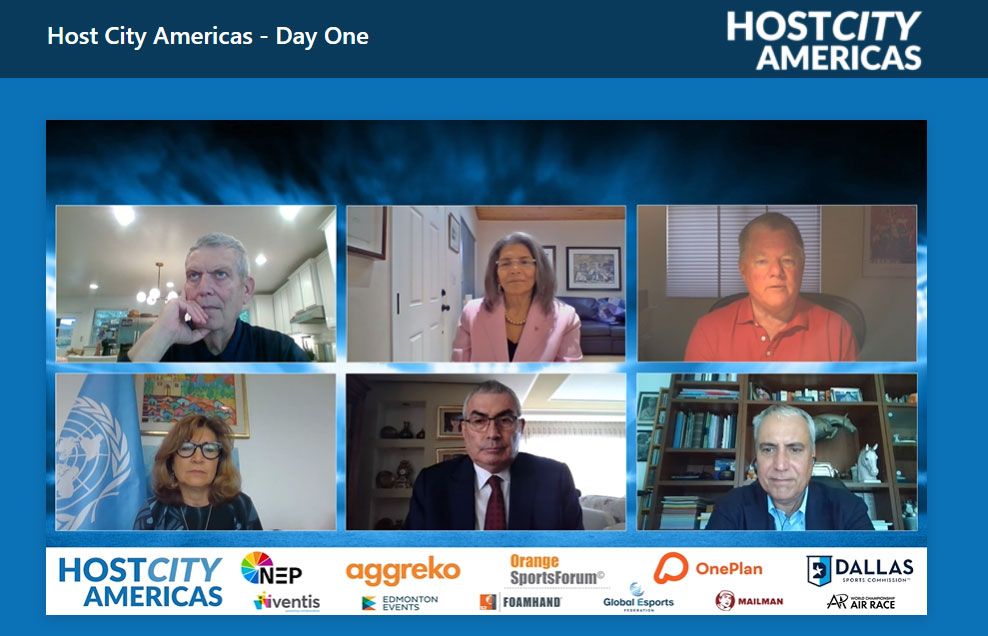
The panel that follows, Emerging from the Perfect Storm, opens with a special update from Prof. U?ur Erdener, Chair of the IOC’s Medical and Scientific Commission on preparations for a safe Olympics in Tokyo. He’s joined on the panel by Gabriela Ramos, Assistant Director-General, UNESCO, Al Kidd, CEO & President, Sports Events & Tourism Association and fellow IOC Members Ingmar De Vos, President, International Equestrian Federation (FEI) and Anita DeFrantz.
The Santiago 2023 Pan American Games Organizing Committee’s CEO Felipe de Pablo, and CCO & CMO Juan Carlos Chamy then give a Project Update. Later in the day, they chair a workshop where international experts ask about opportunities to get involved in the project.
Erin Bromaghim, Director of Olympic and Paralympic Development, Office of the Mayor of Los Angeles and David Siegel, President and Chief Executive Officer, Los Angeles Sports Council and Southern California Committee speak on the panel “Creating legacy before, during and after large-scale events”, joined by Mickel Beckers, Director of Sports, Culture and Education, City of Rotterdam and Rick Sleegers, International Affairs at Orange Sports Forum, which is co-producing the panel.
After a presentation on “Creating Digital Twins for Major Events to Unlock Operational and Commercial Value” from Paul Foster, CEO & Founder, OnePlan, the third panel, “Leading the World with Esports”, stars Beng Choo Low, Secretary General, World Baseball-Softball Confederation, Paul J. Foster, Chief Executive Officer, Global Esports Federation, Matt Archambault, Head of Partnerships & Business Development I Esports I North America & Oceania, Riot Games.
This is followed by a presentation from Monica Paul, Executive Director, Dallas Sports Commission
Panel 4 asks the question “Can Private Investment Save Traditional Sports?”, with Finn Taylor, CEO, Volleyball World, Matt Pound, Director, World Table Tennis and Gareth Balch, CEO, Two Circles.
The following panel, coproduced with NEP Group, explores “The Changing Media Landscape” with Peter Hutton, Director of Sports Partnerships, Facebook, Yiannis Exarchos, CEO, Olympic Broadcasting Services and Brian Sullivan, Chief Executive Officer of NEP Group, with Katie Traxton, Chief Communications Officer of Formula E sharing insights on working with influencers.
Three more organising committee leaders: Niels de Vos, Executive Director, World Athletics Championships Oregon22; Nick Sellers, CEO, The World Games 2022 Organizing Committee and Chris Carroll of Lake Placid 2023 Winter World University Games; join Gary Meador, Director of Event Services Team at Aggreko North America to discuss the challenges and opportunities of “Organizing major events in the Americas in 2022 and beyond”.
Day Two opens with a workshop on Hosting Events with International Federations, in which Event Hosts and International Federations exchange hosting plans, priorities and requirements. Coproduced with the International Association of Event Hosts (IAEH), the speakers are: Paul Bush OBE, Director of Events, VisitScotland; Janelle Janis, Director, Edmonton Events; Nichapa Yoswee, Senior Vice President in Business Development of Thailand Convention and Exhibition Bureau (TCEB); Sabrina Ibanez, Secretary General, FEI; Jim Scherr, CEO, World Lacrosse and Tom Dielen, Secretary General, World Archery.
This is followed by a presentation, Digital Transformation in Major Event Planning from Simon Johnson, Chair, Rugby Football League and Joe Cusdin, CEO & Founder, Iventis.
The topic of “How to Capture and Retain Audience Attention” is tackled by panellists: Emily Blitz, Digital Event Strategist, Inter-Parliamentary Union; Tom Andrus, COO, AXS; Sarah Lewis OBE OLY, Global Sports Leader, Presidential Candidate FIS 2021; and Sara Kvarfordh, Communication Manager, Stora Enso – presenting sponsor of the FIS Nordic World Ski Championships.
The next panel, sponsored by Aggreko, asks “How Important are ESG Criteria to Event Audiences?”, with expert views from Jimena Saldaña, Vice President, Mexican Olympic Committee, Brian Lewis, President, Trinidad and Tobago Olympic Committee and Karin Korb, Paralympian and Para-Sport Consultant.
The theme of sustainability continues in a presentation on “Racing for the future, racing for purpose” from Willie Cruickshank, Race Series Director, World Championship Air Race.
In Panel 9, Alan Gilpin, CEO, World Rugby, Angela Ruggiero, Co-Founder & CEO, Sports Innovation Lab and Ricardo Fort, Founder, Sport by Fort Consulting bring tips on “Expanding the Frontiers of an Event’s Commercial Ecosystem” before Gideon Clark, Business Director, Mailman Group USA presents on “The Next Age of the Global Sports Tourist”.
For Panel 10, coproduced with the Association of Global Event Suppliers, we go “Back to the Future” to find out “How COVID-19 Has (and Hasn’t) Changed Live Events” with Jim Mercurio, Executive Vice President & General Manager at San Francisco 49ers – Levi’s Stadium, Jeremiah Yolkut, Director, Major League Baseball, Russ Simons, Owner and Managing Partner at Venue Solutions Group, LLC and Tad Bowman, Venue Director, Red Rocks Amphitheatre and Denver Coliseum, City and County of Denver.
Eoghan Gill, Director of Strategy at S2|FOAMHAND gives a presentation on safe and secure event hosting.
Host City Americas closes with a panel on how all stakeholders in the events industry can “Get fit for the future”, with David Goldberg, Senior Advisor, TPG and Board Member, GAN, Dr. Melita N. Moore, Board Member and Chair of Health & Wellness Commission, Global Esports Federation and Ricardo Trade, CEO, Brazilian Basketball Federation and former CEO of the Brazil 2014 FIFA World Cup.
Host City Americas is supported by:
Event Delivery Partner NEP Group; Official Sustainability Partner Aggreko; Gold Sponsor Orange Sports Forum; Preferred Events Technology Partner OnePlan and Silver Sponsors Dallas Sports Commission and Iventis.
Edmonton Events, S2|FOAMHAND, Mailman, Global Esports Federation and World Championship Air Race are Strategic Partners to Host City Americas.
The conference is delivered on the Eden platform by Creative Technology, as part of NEP Group.
Join 1,000+ participants at Host City Americas to discover the opportunities ahead as we emerge from the pandemic to a landscape defined by digitalisation and large-scale investment.For more information visit www.hostcity.com or email ben.avison@hostcity.com
-
NEP joins Host City Americas as Event Delivery Partner
[Source: NEP Group] NEP Group, the world’s leading technical production partner for premier content producers of live sports and entertainment, is proud to support the Host City Americas Digital Conference, June 29th through 30th. This event will welcome 1000+ participants including, IOC Members, Sports Ministers, Mayors, International Federations and Organizing Committee leaders to showcase the opportunities ahead as we emerge from the pandemic to a landscape defined by digitalization and private investment.
As official Event Delivery Partner, NEP’s robust live virtual event and online conferencing platform, developed by the Creative Technology division of NEP, will power the event, providing two days of insightful sessions on the main stage, plus opportunities for delegates to ask questions and chat about main stage content. Networking opportunities will also be available for delegates to meet with each other throughout the event.
NEP CEO Brian Sullivan will be speaking along with other expert panelists in the June 29th session
“The Changing Media Landscape”. Topics covered will include:What are the new opportunities for media and content rights?
How is social media using its power to connect fans with content?
How are TV production processes changing and what is enabling the shift and what is the impact of this transformation on LOC infrastructure and legacy?For more information and to register for this free event, visit https://www.hostcity.com/events/host-city-americas/register.
# # #
About Host City
Host City is the largest meeting of sports, business and cultural events. Host City events are renowned for the highest level of speakers, content and networking with the owners, hosts and organisers of major events. Host City Americas follows the great success of previous Host City events held in Glasgow, Beijing, London and online. The first Host City Americas takes place online on 29-30 June 2021, followed by the global Host City 2021 in Glasgow on 7-8 December. For more information visit www.hostcity.com.
About NEP
For over 30 years, NEP has been the leading worldwide outsourced technical production partner helping premier content producers bring live sports and entertainment to life. Our services include centralized and remote production, specialty capture, RF and wireless video/audio, virtual and in-studio production, audio visual solutions, host broadcast support, post production, connectivity and transmission, premium playout and innovative software-based media management solutions. NEP’s 4,000+ employees are driven by a passion for superior service and a focus on technical innovation. Together, we have supported productions in 88 countries on all seven continents.
NEP is headquartered in the United States and has operations in 25 countries. Learn more at nepgroup.com. -

Host City Americas Day One: event organizers rise to pandemic challenges
Under the conference theme of “Investing in Events”, speakers at the inaugural Host City Americas digital conference voiced optimism about the post-Covid recovery for the events industry and offered fresh ideas and solutions to global challenges.
With FIFA soon to select the 23 host cities for the 2026 World Cup and Santiago staging the 2023 Pan and Parapan American Games ahead of the much-anticipated 2028 Los Angeles Olympics and Paralympics, the two-day conference debated the hot-button issues affecting them.
A global audience of close to a thousand, including IOC members, sports ministers and leaders of event organizing committees and international federations, registered for the first meeting of cities and sports, business and cultural events for the Americas.
The themes of post-Covid recovery, digitalization, sustainability, private investment, esports and the changing media landscape all resonated with those in attendance.
The two-day conference opened on Tuesday with a keynote address from Anita DeFrantz, an IOC vice president. Speaking of a world ravaged by the coronavirus, she said the sports industry was forced “to examine everything” as events took a financial hit. But through virtual offices, new visions of how to produce and present sports had emerged.
Three weeks before the postponed Tokyo Olympics get underway, she said the execution of Games planning for event organizers and athletes had been hugely challenging against the backdrop of the pandemic. Preparing to host 11,000 athletes from 206 countries to compete in 33 sports was a tough undertaking for the IOC and Tokyo organizers.
“We may face similar issues with Beijing 2022. The good news is we will have the experience of Tokyo to make certain things go well. The Olympics and Paralympics can bring back the joy,” she told delegates.
The first panel, ‘Emerging from the perfect storm’, brought pandemic recovery issues front and centre.
Prof. U?ur Erdener, president of the Turkish NOC, head of World Archery and Chair of the IOC’s Medical and Scientific Commission, said the global vaccination program led him to believe “we are approaching the exit of the dark tunnel”.
Through measures to combat the virus, the chair of the IOC’s medical commission insisted the Olympic governing body and Games stakeholders in Japan had worked hard to create a “safe and secure environment for athletes and participants in the Games, but also the people of Japan”.
Ingmar De Vos, president of the International Equestrian Federation and an IOC member, revealed that the FEI has suffered like all sports due to the pandemic, with 1,200 international events cancelled and revenues down 60 per cent.
The federation responded by cutting costs and rethinking travel for sporting events and meetings on governance.
“For future events I think we learnt a lot… to have other ways to engage with fans by introducing new technologies and new ways to follow the sport by explaining it better,” he added, raising the prospect of innovations to deliver shorter formats for FEI events to grow appeal to mass audiences.
Al Kidd, CEO and president of the Sports Events & Tourism Association, also spoke about a shift in the consumption of live events via multiple platforms as new technologies are adopted. Evaluation metrics are widening from economic impact to traction on digital and social media.
Gabriela Ramos, assistant director general of UNESCO, said it was vital for sport to be part of policies to help countries, cities and communities emerge from the pandemic.
Santiago 2023 Pan American Games organizing committee CEO Felipe de Pablo and Juan Carlos Chamy, CCO and CMO, gave an update on what is billed as “the most important event in the history of our country”.
Progress was sustained through the pandemic, Chamy said. The 1,300-apartment Games Village was a significant infrastructure project, while work on new and renovated venues was hitting deadlines. Tenders are still to be awarded for services including food and beverage, broadcasting, ticketing and merchandising. A workshop later in the day, chaired by Dave Crump, CEO of Creative Technology – from whose studio Host City Americas was broadcast – enabled international suppliers to address questions to Chamy about these opportunities.
De Pablo said the Games for over 8,000 athletes from 41 countries will leave a positive legacy for Chilean sports. “We have a lot of tasks but we are confident in delivering and meeting the expectations of visitors, he said.
Another panel, co-produced with Orange Sports Forum, explored how to create legacies for large-scale events. Speakers included Erin Bromaghim, director of Olympic and Paralympic development for the Mayor of Los Angeles office, David Siegel, president and CEO of Los Angeles Sports Council, and Mickel Beckers, director of sports, culture and education for the Dutch city Rotterdam.
Rick Sleegers, head of international affairs for Orange Sports Forum, a platform for internationally promoting companies, organizations and institutes that have a connection with Dutch sport, spoke about creating a footballing legacy in China through the development of 50 Cruyff Courts over the next five years.
He also highlighted a grassroots football plan for India that involved a partnership between the country’s football federation and PSV Eindhoven and included “an exchange of coaches and sharing of knowledge expertise”. The FIFA U-17 World Cup in 2017 was part of the “masterplan for youth” to help generate potential football players.
With 13 professional sports teams in Los Angeles, more than any city in world, and the Olympics, Superbowl, FIFA World Cup hosting and MLB’s 2022 All-Star Game coming, Siegel said the city is “uniquely positioned to capitalize on this” from an economic, sustainability and accessibility standpoint.
Bromaghim said LA had been a game-changer for the Olympic movement in 1984 and was poised to do so again. “Sustainability and reuse are baked into our hosting model,” she said, adding that LA Mayor Eric Garcetti had pulled forward an Olympic legacy program to make sport and fitness more accessible.
The presentation by Paul Foster, CEO and founder of OnePlan provided interesting insights into how the company’s digital technologies for major events can unlock operational and commercial value.
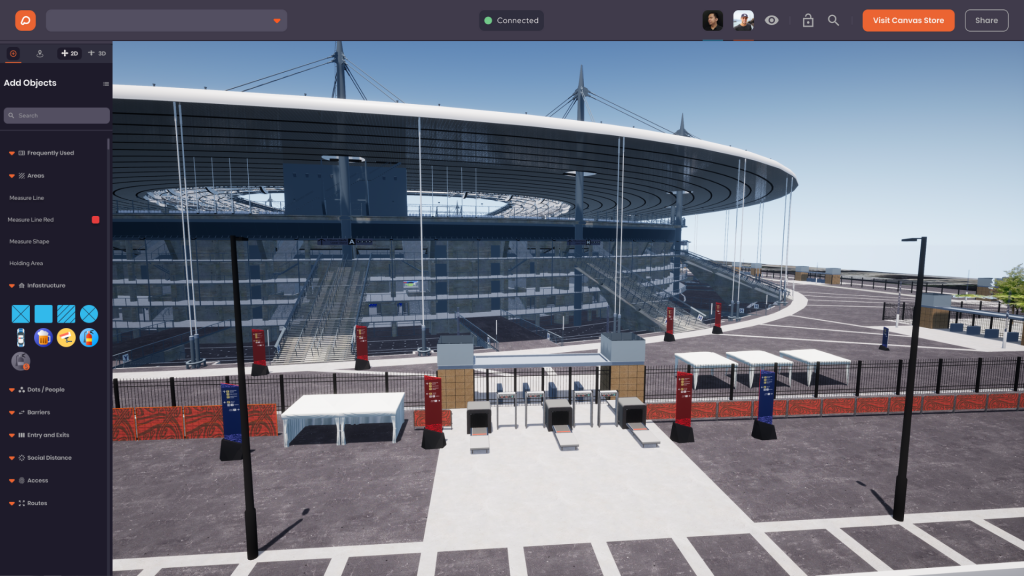
Used by events and venues in over 50 countries and by the likes of Arsenal FC, FIBA and World Triathlon, the technology simplifies and improves event planning and management. “What excel is to an accountant, OnePlan is to an event planner,” Foster said, going on to explain how the fully interactive “digital twin of your venue” offers scenario planning, with 3D digital assets helping to sell commercial space.
World Baseball-Softball Confederation secretary general Beng Choo Low joined Paul J. Foster, CEO of the Global Esports Federation and Matt Archambault of Riot Games to examine esports leadership issues and how gaming fits into the Olympic Movement.
Discussing the results of an audience poll that revealed divided opinions over what kind of electronic sports should be considered for inclusion in the Olympic Games, Archambault revealed that Riot was in dialogue with the IOC about this possibility, while Low said only virtual sports with physical activity could be included and Foster wisely said such matters should be left to the Olympic Movement to decide.
Monica Paul, executive director of the Dallas Sports Commission, gave a presentation on how the city had been transformed into a premier international sports destination from its hosting of the FIFA World Cup in 1994 to the Concacaf Gold Cup kicking off in July.
In a fascinating session on ‘The changing media landscape’, co-produced in partnership with NEP Group, Peter Hutton, Facebook’s director of sports partnerships, talked about how social media could harness the power to connect rights holders with fans in authentic ways. “Live sports need to be on platforms where younger audiences are… to create interesting experiences. It can really grow the sports for the future.”
Yiannis Exarchos, CEO of Olympic Broadcasting Services, said there was a shift among traditional broadcasters to embrace opportunities for ongoing engagement and interactivity with fans, which had led the IOC to create its own digital platform – the Olympic Channel. “It’s a great opportunity for all rights holders.”
Brian Sullivan, CEO of NEP Group, said technology had to catch up with changing consumer desires and trends and talked about the company’s cloud-based production aiding facilities in the US, Australia and The Netherlands. “It’s a very exciting time. There’s a huge amount of innovation coming in the next 5-10 years. The lesson is ‘try to reinvent yourself before you need to’.”
Day one of the conference wrapped with a session focused on organizing major events in the Americas in 2022 and beyond.
Niels de Vos, executive director of the World Athletics Championships Oregon22, said state support didn’t waver when the event was postponed a year: “They stood behind us because, like most people, they see events as a great celebration”.
Gary Meador, director of event services at Aggreko North America, a conference partner, said the pandemic challenges led the company to develop technologies to raise air quality. “We have spent a lot of time thinking how we can emerge stronger and help our host city partners and federations,” he said. “We have developed a significant amount of different power options for customers, different ways of helping event organizers meet their sustainability goals.”
Join Host City Americas now for a thrilling second day with speakers leading VisitScotland, Edmonton Events, Thailand Convention and Exhibition Bureau (TCEB), World Lacrosse, IAEH, Rugby Football League, Iventis, Inter-Parliamentary Union, AXS, Stora Enso, Mexican Olympic Committee, Trinidad and Tobago Olympic Committee, World Championship Air Race, Sports Innovation Lab, World Rugby, Mailman Group, San Francisco 49ers – Levi’s Stadium, Major League Baseball, City and County of Denver, Populous, S2|FOAMHAND, Concacaf and more.
Host City Americas is brought to you in partnership with Event Delivery Partners NEP Group and Creative Technology, Official Sustainability Partner Aggreko; Gold Sponsor Orange Sports Forum; Preferred Event Technology Partner OnePlan, Silver Sponsors Dallas Sports Commission and Iventis; Strategic Partners Edmonton Events, Global Esports Federation, Mailman, S2|FOAMHAND and World Championship Air Race. -

Venue Twin by OnePlan: The hyper-realistic new way to plan major events
Host City: As you know from working on six Olympic Games, major events are extremely complex projects. What are the common pain points that you have seen appearing across the event planning process?
Paul Foster: Major events are complex operations to manage. With many stakeholders across different functional areas, partners, suppliers, broadcasters, government and more, it can be a real challenge to collaborate and co-ordinate the plan effectively. It’s easy to rely on legacy tools that don’t have the right functionality, or CAD solutions that require costly specialists to update. OnePlan answers these pain points and more – it combines the best characteristics of CAD and mapping in one easy-to-use solution that enables real-time collaboration across all stakeholders.
In our hybrid world, stakeholders now expect more from event organisers and their technologies. A good example of this is the ability to visualise, at any moment, a hyper-realistic view of the stadiums, arenas, athlete villages and entire city. This is what our Venue Twin solution enables – a fully interactive 3D digital twin of your entire event. Virtual site visits 24/7 from any angle, meaning huge cost and sustainability benefits.
Host City: With so many different venues and items involved in events like these, a single planning tool sounds like the holy grail for organisers. How does OnePlan make it possible to plan and track all these variables on one platform?
Paul Foster: OnePlan and Venue Twin seamlessly integrate, so any change made is instantly reflected in the hyper-realistic 3D world, and vice versa.
Our platform is built for real-time collaboration – we know how important that is for event planning. It’s easy to control the admin rights so any team member or stakeholder can make updates based on their access – including adding comments to be reviewed. The dashboard makes it easy to select from any map type, analyse your event data, procure from suppliers, and so much more.
Ultimately, it’s all possible because that’s what our customers – including LA Clippers, Brooklyn Nets, World Triathlon and 2,000 events worldwide – are asking for! A good example is being able to plan independently on separate floor levels of a venue. We built that feature based on customer feedback.
Host City: The pandemic has forced us all to rely more on technology to communicate and monitor projects. How has OnePlan helped event planners over this period – for example, enabling virtual site visits?
Paul Foster: The pandemic has fast-tracked how venue owners and major event organisers realise the opportunities that innovative technology gives them. Venue Twin massively reduces the need for site visits – because you can now visit your venue 24/7 virtually, from any angle and any scenario. It means a huge cost and time saving – directly reducing travel expenses – as well as significant sustainability benefits.
Our customers are telling us this is a fundamental shift in how they plan their events and venues. Commonwealth Stadium in Edmonton have told us it’s a ‘game-changer’ for them – they’ve switched to OnePlan as an integrated solution, and can now use Venue Twin to improve fan experiences and sell better to sponsors and advertisers with the hyper-realistic brand visualisations. OnePlan’s technology enables centimeter-accurate planning and the instant ability to visualise exactly how your venues will look in real-life.
Host City: Your background is in crowd management – how is OnePlan helping venues to manage flow of people and capacity during this time of social distancing?
Paul Foster: That’s right, my background is in event security and operations, including crowd management. I’ve worked on six Olympic and Paralympic Games, and was responsible for last-mile operations at London 2012, for example. During the last year or so, this has been valuable in how we’ve created a Social Distancing Toolkit that any OnePlan user can easily incorporate into their event plans. It includes modelling crowd flow – inside and outside venues – as well as ensuring government regulations are adhered to.
We’ve had a number of sports teams in the NBA and English Premier League – including Brooklyn Nets, Arsenal and Chelsea – use OnePlan to model crowd flow so their venues can stage safe events when fans have returned.
Host City: What impact do you think the pandemic will have on the events industry and your work in the longer term?
Paul Foster: As vaccinations help us come out of the pandemic, I believe the events industry will bounce back stronger than ever. People love live experiences – nothing beats being in a stadium enjoying the sport or music you idolise as a fan – and as a technology platform, we love helping our customers plan incredible events.
We’re already seeing customers switch to Venue Twin as a way of reducing their site visits and improving sustainability of their events. Having a hyper-realistic – and fully interactive – version of your venues makes planning events simpler and better. It delivers long-term benefits today – Venue Twin is already being used to plan events and venues in 4-5 years’ time.
Beyond this, the impact of the pandemic is making event organisers and venue owners race towards the commercial opportunities that now exist. The events industry is hybrid, and with Venue Twin major events can now engage international fans in incredible new ways. OnePlan connects together the operational and commercial opportunities that now exist.
Host City: We’re really looking forward to hearing you speak at Host City Americas – what are your expectation of the event and the opportunities for staging events in the Americas?
Paul Foster: We’re delighted to be the Preferred Event Technology Partner at Host City Americas this year! We’re expecting a great energy around the major events happening soon in the Americas, and the opportunities that new technology enables – both operationally and commercially. We’re at the start of an exciting few years for American sport and events on the international stage, and our US team is looking forward to helping your delegates unlock these huge operational and commercial opportunities.
Paul Foster is speaking at Host City Americas on day one, June 29. To find out more about OnePlan visit their website. -

Host City Americas: events unite to embrace change and “bring back the joy”
A global audience, including IOC members, FIFA, sports ministers and leaders of event organizing committees and international federations, united for the first meeting of cities and sports, business and cultural events for the Americas on 29-30 June.
The two-day conference opened with a keynote address from IOC vice president Anita DeFrantz. Speaking of a world ravaged by the coronavirus, she said the sports industry was forced “to examine everything” as events took a financial hit. But through virtual offices, new visions of how to produce and present sports had emerged.
Three weeks before the postponed Tokyo Olympics get underway, she said the execution of Games planning for event organizers and athletes had been hugely challenging against the backdrop of the pandemic.
“We may face similar issues with Beijing 2022. The good news is we will have the experience of Tokyo to make certain things go well. The Olympics and Paralympics can bring back the joy,” she told delegates.
Prof. U?ur Erdener, head of World Archery and Chair of the IOC’s Medical and Scientific Commission, said the global vaccination program led him to believe “we are approaching the exit of the dark tunnel”.
Gabriela Ramos, assistant director general of UNESCO, said it was vital for sport to be part of policies to help countries, cities and communities emerge from the pandemic.
Erin Bromaghim, director of Olympic and Paralympic development for the Mayor of Los Angeles office, said LA had been a game-changer for the Olympic movement in 1984 and was poised to do so again in 2028. “Sustainability and reuse are baked into our hosting model,” she said.
David Siegel, president and CEO of Los Angeles Sports Council, pointed out that with more professional sports teams than any city in world, and the Olympics, Superbowl, FIFA World Cup and MLB’s 2022 All-Star Game on the horizon, LA is “uniquely positioned to capitalize on this.”
Among several organizing committees present was Santiago 2023, who gave an update on what they described as “the most important event in the history of our country”, with CEO Felipe de Pablo saying “We have a lot of tasks but we are confident in delivering and meeting the expectations of visitors.”
Peter Hutton, Facebook’s director of sports partnerships, talked about how social media could harness the power to connect rights holders with fans in authentic ways. “Live sports need to be on platforms where younger audiences are… to create interesting experiences. It can really grow the sports for the future.”
Yiannis Exarchos, CEO of Olympic Broadcasting Services, said there was a shift among traditional broadcasters to embrace opportunities for ongoing engagement and interactivity with fans, which had led the IOC to create its own digital platform – the Olympic Channel. “It’s a great opportunity for all rights holders.”
Brian Sullivan, CEO of NEP Group, said technology had to catch up with changing consumer desires and trends. “It’s a very exciting time. There’s a huge amount of innovation coming in the next 5-10 years. The lesson is ‘try to reinvent yourself before you need to’.”
Karin Korb, Paralympian and a Para-Sport consultant, urged event planners and rights holders to bring Gen Zers and millennials to the decision-making table to get their perspectives on environmental, social and governance questions.
Angela Ruggiero, co-founder and CEO of Sports Innovation Lab suggested that gambling presented host cities with interesting possibilities to grow revenue streams. “The question is how federations and sport grapple with the sensitivities around it.”
On NFTs, she said: “It’s definitely the shiny new object right now. If you’re getting into it, be very thoughtful. It’s a big opportunity to allow fans to own something wherever they are in the world.
In his closing remarks, conference director Ben Avison said: “According to our audience polls, all the changes we’ve been discussing here over the last two days – managing the pandemic, digitalization, private investment, ESG criteria – are having a positive impact on live events.”
Host City Americas was staged in partnership with Event Delivery Partner NEP Group, Official Sustainability Partner Aggreko; Gold Sponsor Orange Sports Forum; Preferred Event Technology Partner OnePlan, Silver Sponsors Dallas Sports Commission and Iventis; Strategic Partners Edmonton Events, Global Esports Federation, Mailman, S2|FOAMHAND and World Championship Air Race.
Following the first Host City Americas, the eight global Host City 2021 event takes place in Glasgow on 7-8 December. Follow www.hostcity.com for updates. -

Host City Americas Day Two: event hosting innovations and technologies mark way forward
Speakers on day two talked about how Covid-19 has forced event organizers and stakeholders to explore new ways of securing and delivering events. They also debated shifting trends in technologies, commercial ecosystems, how to capture and retain new audiences and the importance of environmental, social and governance criteria to Gen Zers and rights holders.
The inaugural event reached a combined global audience of close to 1,000 registrants.
The opening panel discussed changes in ‘Hosting events with international federations’.
Paul Bush OBE, director of events at VisitScotland, said it was crucial for rights holders and host cities to collaborate effectively, but the financial impacts of Covid-19 and what it means for return on investment in events would be “pretty challenging” in the short term.
“We’re seeing a sea change in the way events are constructed and developed – we’re now into negotiations and not bids,” he added. “It’s about the symbiotic relationship between the rights owner and the host. Traditionally they sat in different camps; they now sit in the same camp, working collegiately, because everyone’s realized that’s the best way forward.
“We’re entering an exciting and very different period for the events world.”
Darryl Siebel, CEO of World Lacrosse, said the federation was “not just looking for hosts but event partners” who shared its values.
Tom Dielen, secretary general of World Archery, said Covid-19 had added another layer of complexity to hosting events. But the pandemic had accelerated plans to use remote production in broadcasting its global events.
Janelle Janis, director of Edmonton Events, said the pandemic “made people realize how much they love and value events and the vibrancy they bring to our city”.
She said Edmonton Events was “aggressively going after events to recover our economy”, dedicating more resources to that mission.
Janis made an interesting point about working with LOCs and rights holders to leave sporting and social benefits behind, not simply creating memorable experiences and economic impact assessments. She suggested the one-size fits all mentality had been abandoned in favour of a more flexible approach on sustainability: “it’s not about the money”.
Event bidding was “more a negotiation or conversation with rights holders, determining what outcomes we want to achieve together”.
A presentation on digital transformation in major event planning followed. Rugby Football League chair Simon Johnson and Joe Cusdin, CEO and founder of Iventis, gave an overview of the digital collaborative mapping tool.
Johnson said ways of delivering bids and events had traditionally been labour intensive, costly and inefficient particularly from a management perspective. “But digital tools now exist to enable faster, more efficient, more cost-effective and better managed collaboration.”
Referencing his involvement in England’s FIFA 2018 World Cup bid, he said that had digital planning and collaboration tools been available, “it would have saved us, in my estimation, about three months of management time and tens of thousands of pounds in costs”.
Cusdin spoke about the difficulties in coordinating and integrating plans between various event teams, adding: “What we are trying to do is digitize that planning process, to provide a collaborative visual platform available to everybody involved in planning a major event where they can interactively produce, manage, update and share their plans covering every aspect of operations.”
Another panel evaluated how technology trends were shifting how audiences engage with events and brands and what sports, entertainment and business events can learn from each other in the battle for attention.
Sarah Lewis OBE, Global Sports Leader and a presidential candidate for the International Ski Federation, said there was a shift from passive fans to greater engagement. Fans were being empowered to follow events on their mobile devices and AR technologies and virtual reality sport gaming were “ways to satisfy the interests of audiences and come closer to experience what athletes experience”.
In a session on the role of environmental, social and governance criteria and progress being made in the Americas in diversity and inclusion, Jimena Saldaña, vice president of the Mexican Olympic Committee, said there was a demand from millennials and Gen Zers for event organizers and rights holders to be much smarter about sustainability and climate change issues. Good governance and transparency in sport and from sponsors was also important.
Brian Lewis, president, Trinidad and Tobago Olympic Committee, said ESG criteria depended on the sport, the event and the target audience: “Some audiences may have different interests, climate change or racial and social justice.
“I think events and rights holders bidding for an event must be very clear what their objectives are and what is their target audience. You will then be very clear on what elements of ESG will resonate with your audience.”
Karin Korb, Paralympian and a Para-Sport consultant, said “a lot of progress” was being made in the Americas in diversity and inclusion – but not quickly enough. She applauded organizers of the World Games 2022 in Birmingham, Alabama for efforts to leave a legacy of disability inclusion in a multisports event by staging wheelchair rugby.
Korb urged event planners and rights holders to bring Gen Zers and millennials to the decision-making table to get their perspectives.
A presentation by Willie Cruickshank, race series director of World Championship Air Race, focused on the evolution of the sport and how it was gearing up to be staged on city centre tracks and creating fun family experiences.
Cruickshank spoke of innovations in aviation performance and a move to greener technologies to minimize environmental impacts. The new series starts next year, and host cities are sought for 2023 and beyond. “We have flexible business models to suit all locations and budgets,” he said.
Angela Ruggiero, co-founder and CEO of Sports Innovation Lab, World Rugby CEO Alan Gilpin and Coca Cola’s former head of sponsorship Ricardo Fort were among speakers in a panel looking at opportunities to generate revenues from non-fungible tokens (NFTs), gambling and CBD.
Gilpin said rugby’s governing body was taking a cautious approach to the commercial opportunities, highlighting ethical and moral issues around gambling. “The World Rugby policy for our owned properties is no partnerships with gambling companies,” he added.
Ruggiero suggested that gambling presented host cities with interesting possibilities to grow revenue streams. “The question is how federations and sport grapple with the sensitivities around it.”
On NFTs, she said: “It’s definitely the shiny new object right now. If you’re getting into it, be very thoughtful. It’s a big opportunity to allow fans to own something wherever they are in the world.” She suggested there was also lot more revenue potential to come in ecommerce merchandising and licensing.
Commenting on sponsorship and revenue generation, Ruggiero said athletes would play a greater role: “I truly believe the pie will be bigger for everyone. The athlete is the voice, the influence… empower athletes to tell their story and your story and increase interest in your event.”
Fort added: “Broadcasting and all the different forms of OTT distribution of content will continue to pay the vast majority of the bills for rights holders. The good rights holders are bringing it all together, and making offers to sponsors in which they can package the live experience with the content being produced in the ‘off event’ time – that’s what makes a proposition for a sponsor more compelling.”
A presentation by Gideon Clark, business director, Mailman Group USA focused on ‘The Next Age of the Global Sports Tourist. He said the global sports tourism industry represented $800bn and 10% of the international tourism industry.
Forecasting strong growth, he said the driving forces were pent-up demand post-Covid, demand for experiential, continuing globalization and the many major sporting events on the horizon. The profile of the global sport tourist was: a millennial, high value spender, adventurous, multicultural, eco-conscious, socially aware and principled, digital and tech savvy.
How Covid-19 has reshaped the outlook for live sporting and entertainment events was the subject of a fascinating panel debate. There was talk of events and venues getting more savvy with mobile ticketing and contactless concessions to maintain social distancing and reduce queues and having to work hard to ensure the safety and security of fans and athletes as coronavirus restrictions are removed.
Jim Mercurio, executive vice president and general manager at San Francisco 49ers – Levi’s Stadium, said: “The jury is still out about the anxieties of people coming to all of our facilities and the tolerances they are going to have [for crowds and fans eating, making a noise nearby etc].
“I have a strong suspicion that it’s not going to go over very well with a subset of people. Additional spacing for folks may be the answer.”
Jeremiah Yolkut, director, Major League Baseball, said the league was focused on the welfare of fan’s game-day experiences and keeping staff and players safe. Best practices have been shared across teams and guidelines created.
After a pandemic-hit year, “things have normalized fairly quickly” said Tad Bowman, venue director of the Red Rocks Amphitheatre and Denver Coliseum. The venues were back to full capacity by the middle of June, but backstage areas had fewer people, “less hectic, more of a bubble”.
Speaking about security issues, Andrew Lynch, senior director of S2|FOAMHAND, talked to delegates about the company’s CertScan Prism technology and how it delivers a secondary layer of security by providing a direct line from X-ray machines to professional X-ray detection technicians on demand.
He said the benefits included reducing potential for single point failures in the security screening operation during an event and the fact it can network multiple systems/ venues.
Wrapping up the conference was a session called ‘Get fit for the future’.
Dr. Melita N. Moore, board member and chair of the health and wellness commission of the Global Esports Federation, said live esports events were opening up again. With the first Global Esports Games to be held in Singapore in December, she said uncertainties remained but was hopeful the event will go off with a bang.
“I don’t know exactly what it’s going to look like. I hope fans, players and stakeholders get to see more of what we had in 2019, not in 2020.”
Moore said this year was more about esports unifying and telling its story, while a partnership with football legend Ronaldo had launched a wellness initiative for esports athletes.
“It’s about promoting healthy digital lifestyles. It’s so important to engage everyone,” she said, noting that there are 3 billion gamers worldwide and 130 million-plus gamers in US aged 18-34.
Host City Americas is brought to you in partnership with Event Delivery Partners NEP Group and Creative Technology, Official Sustainability Partner Aggreko; Gold Sponsor Orange Sports Forum; Preferred Event Technology Partner OnePlan, Silver Sponsors Dallas Sports Commission and Iventis; Strategic Partners Edmonton Events, Global Esports Federation, Mailman, S2|FOAMHAND and World Championship Air Race.
Following the first Host City Americas, the eight global Host City 2021 event – the largest annual meeting of cities and sports, business and cultural events – takes place in Glasgow on 7-8 December. Follow www.hostcity.com for updates. -

16 cities revealed to host FIFA World Cup 2026

[Source: FIFA] A significant milestone on the road to the FIFA World Cup 2026™ was reached tonight as the 16 Host Cities that are due to stage matches at the first edition of football’s showpiece to feature 48 teams were unveiled by FIFA. The highly anticipated announcement was made on a TV show produced in cooperation with FOX and Telemundo from New York and broadcast live to host countries Canada, Mexico and the USA, as well as the whole world via FIFA+.
Today’s announcement follows the most transparent and comprehensive bidding process in football history, with FIFA’s decision having been made in the best interests of the game, taking into consideration the needs of all stakeholders involved in the FIFA World Cup 2026.
“We congratulate the 16 FIFA World Cup Host Cities on their outstanding commitment and passion. Today is a historic day – for everyone in those cities and states, for FIFA, for Canada, the USA and Mexico who will put on the greatest show on Earth. We look forward to working together with them to deliver what will be an unprecedented FIFA World Cup and a game-changer as we strive to make football truly global,” said FIFA President Gianni Infantino.
“We were delighted by the unparalleled competitiveness of this selection process. We are extremely grateful not only to the 16 cities that have been selected, but also to the other six – with whom we look forward to continuing to engage and explore additional opportunities to welcome fans and participating teams. This has always been a FIFA World Cup of three countries, and that undoubtedly will have a tremendous impact on the whole region and the wider football community,” added FIFA Vice President and Concacaf President Victor Montagliani.
FIFA World Cup 2026 Host Ciites:
Atlanta
Boston
Dallas
Guadalajara
Houston
Kansas City
Los Angeles
Mexico City
Miami
Monterrey
New York / New Jersey
Philadelphia
San Francisco Bay Area
Seattle
Toronto
Vancouver