Host City: Thank you for hosting us again in Glasgow. What are your expectations for this year’s Host City, and the outcome of this 12th iteration of the conference?
Kay Morrison: We’re delighted to be welcoming Host City back to Glasgow. Bringing together influential events industry professionals and destination partners, the conference provides a hugely important platform for collaboration – enabling decision-makers to come together and strengthen the connections that help us join forces to turn ideas into action so we can realise our shared ambitions for the future success of world-class events.
This year’s theme, Getting on with the Business of Events, captures the mood across the industry – one of determination to address challenges, grasp opportunities, and work in close partnership to develop innovative, practical solutions for hosting and delivering exceptional sports, cultural and business events. The dynamic programme and outstanding line-up of international speakers that Host City 2025 has in store for us will, I’m sure, generate lots of debate on current issues facing the events industry and global destinations.
I’m looking forward to the conference enabling and encouraging delegates to share a wealth of information, insights, and ideas – and to the event really delivering positive benefits that will support us in achieving our collective goals. Glasgow really values the conference being held here – as it offers a valuable opportunity for us to showcase how our city continues to evolve as a world-class events destination with a clear focus on collaboration, innovation, and long-term impact.
Events shine a global spotlight on our city. They not only highlight Glasgow’s expertise as a capable, welcoming host, but also its rich wealth of assets as a visitor destination that boosts tourism and contributes significantly to our local and national economy. So, we are very appreciative that this important events conference is being staged here once again.
HC: What would you say are key to Glasgow’s success as a host city for major events?
KM: Glasgow is a world-leading, innovative events destination of great vibrancy and diversity. Over the past couple of decades, the city has really focussed on building an enviable annual portfolio of major events and festivals – complemented by many exceptional, one-off events. The international reputation we’ve been able to build as a bold, capable and trusted host city really is down to our commitment to excellence, and to constantly evolving to reflect and respond to change.
We’ve deliberately invested in building capability – developing strong relationships across government agencies, sports and cultural bodies, and with industry partners at home and overseas, so that we can jointly fulfil our ambitions for delivering exceptional events that deliver real economic and social impact. That joined-up approach has allowed us to keep delivering major international events with confidence and creativity. We’ve built a track record that speaks for itself — from COP26 and the 2014 Commonwealth Games to the 2023 UCI Cycling World Championships, and 2024 World Athletics Indoor Championships. All of these events demonstrate not only what Glasgow can host, but how we host — with collaboration at the core and community at the heart.
We take pride in delivering events that are more than one-off occasions – they’re catalysts for participation, growth and legacy. And of course, our city’s personality remains a key strength. Glasgow is renowned for its warm welcome and can-do attitude – which is central to our city’s ‘People Make Glasgow’ brand that continues to resonate globally. That’s at the heart of what ‘getting on with the business of events’ means to us: working together to deliver meaningful outcomes that last long after events’ closing ceremonies.
HC: How important is sustainability to Glasgow in terms of ‘getting on with the business of events’?
KM: The global events industry is no longer just about staging great moments – it’s about creating them responsibly. As climate crisis awareness continues to grow globally, the green credentials of host cities are being scrutinised more closely – and rightly so. Sustainability is an increasingly important factor influencing the destination choices of events’ organisers and attendees alike. Cities worldwide are recognising the importance of embedding sustainable practices into every aspect of their destination’s total visitor experience – including events they stage. And as a result, they are having to ramp up their environmental efforts.
Glasgow’s commitment to embedding the principles of sustainability into the planning and delivery of events hosted in the city is reflected in our very positive rating in the Global Destination Sustainability Index – the world’s most trusted environmental performance improvement programme. We are proud to be the only Scottish city, and one of only two UK destinations, to be recognised for our ongoing commitment and actions. So, sustainability is definitely not viewed as just an ‘add-on’ for Glasgow; we see it as a priority and it’s very much central to how we operate.
The 2024 World Athletics Indoor Championships provide a prime example of our work to ensure sustainability is an integral factor in the success of city events – both during and after their delivery. The Championships became the first-ever event to achieve World Athletics’ Athletics for a Better World Platinum Standard for sustainable delivery. That achievement resulted from a dedicated approach and strong collaboration between city partners – and it’s an industry benchmark we’re carrying forward into future events.
HC: How does Glasgow ensure its communities are involved in the ‘business of events’?
KM: Our city’s Events Strategy places community engagement and local participation at its core. We want events here to have relevance to people across the city, and to encourage and enable them to become actively involved – by attending, participating in activation projects or helping support them as part of our volunteer community – so they can enjoy genuine benefits, economically, socially and culturally. We developed our Events Strategy in consultation with local people to ensure it reflects our diverse communities, broadens engagement, and meets their needs and expectations to generate positive long- term impacts.
Our aim is to keep developing and extending our events portfolio, so it encompasses a broad range of events of various genres and scale, and really resonates with the people of Glasgow – creating opportunities that not only boost their involvement but also really benefit them. Over the past few years, we’ve concentrated on ensuring events in the city build a lasting legacy. We’ve particularly focused on initiatives that encourage social inclusion locally, and support physical and mental well-being.
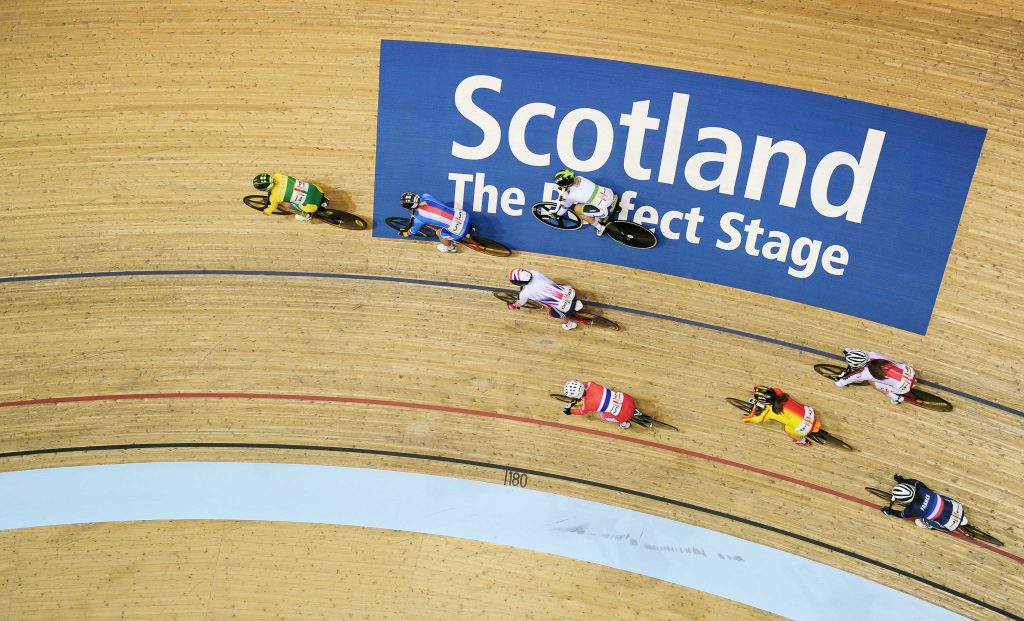
One event that really provides an example of how legacy planning and community engagement turn global moments into local gains was the UCI Cycling World Championships. We capitalised on that as a catalyst for promoting active lifestyles. And through various developments – such as our Go Cycle Glasgow Fund which supported community projects, particularly targeting under-represented groups – we were able to encourage and help many hundreds of local people, regardless of their ability or background, to take up cycling for life.
Our work to ensure community involvement in events, either by attending or supporting them as volunteers, is underpinned by close relationships and joint-working with local industry partners. ‘Getting on with the Business of Events’ means aligning city-wide effort so every event contributes to Glasgow’s shared success. So, our events are not just designed for our city, but have the interests of our communities at their heart. We want every event in Glasgow to connect meaningfully with local people – creating pride, participation, and positive impact. We’re very conscious of the fact thatcreating long-term value for our local communities is beneficial to the city as a whole, enhancing Glasgow’s reputation as a destination and its visitor experience– which in turn increases the economic impact of tourism and events.
HC: What role will the 2026 Commonwealth Games play in Glasgow’s story — and in the future of the event itself?
KM: The 2014 Commonwealth Games in Glasgow set a benchmark for excellence. It was such a success that the Chief Executive of the Commonwealth Games Federation hailed it as ‘the standout Games in the history of the movement’ due to its quality, organisation and atmosphere. So, we’re incredibly proud to welcome the Games back in 2026. This time, we’re focused on delivering amore streamlined, sustainable model — one that reflects the realities of our time and demonstrates how major events can adapt responsibly.
Twelve years to the day that the 2014 Glasgow Games kicked off, the new- format event will start on 23 July and run to 2 August. Featuring 10 sports, it will welcome around 3,000 athletes from up to 74 Commonwealth nations and territories to compete at four of our city venues. Glasgow’s proven ability to deliver world-class events efficiently is exactly why the Commonwealth Games Federation approached us to re-imagine the event. It will not only again showcase Glasgow’s expertise, energy, and warmth as a host. It’s also an opportunity to help shape the future of major events – creating a model that other cities and nations can learn from.
HC: This year, how has Glasgow been ‘Getting on with the Business of Events’- and what’s ahead?
KM: We’re committed to continue building on Glasgow’s robust track record for delivering world-class events – and we’re very much looking forward to what’s in the pipeline! This year – during Glasgow’s 850th anniversary celebrations – the city has hosted some major one-off highlights such as the Michelin Guide Awards at our much loved Kelvingrove Art Gallery and Museum. That was a first for Scotland that really signalled the city’s growing international profile as a fabulous food and hospitality destination.
Our calendar of annual events has continued to attract global audiences this year, with successes ranging from our world-famous Celtic Connections – the world’s largest winter music festival – to events as diverse as the Glasgow Film Festival and the ever-popular, prestigious World Pipe Band Championships. Equally important has been our business events sector. Voted the best in the UK for 19 consecutive years, our Convention Bureau has achieved a record-breaking performance this year that demonstrates Glasgow remains one of the most trusted, dynamic destinations for conferences and conventions worldwide.
Working hand-in-hand with our city’s universities and research community to attract prestigious international events, Glasgow Convention Bureau is recognised as an industry powerhouse. With 80 conferences already confirmed for next year – with around 82,000 delegates expected to attend and just under £150million in economic benefit to the city forecast as a result – 2026 is set to be another strong year. In addition to that, as I’ve highlighted, we have a host of reasons to look forward to 2026, with the Commonwealth Games set to shine the global spotlight on the city once again, and some wonderful cultural highlights ahead too, including a unique Barbie design exhibition that’s set to be a show-stopper attraction for visitors from near and far.
Looking further ahead, we’ve lots in the pipeline too, with the UEFA European Football Championships coming to the city in 2028 and much more. So, our focus for the future is to keep delivering. To keep collaborating with partners so we build an international events eco-system that enables us to achieve our collective goals. And to keep ‘getting on with the business of events’, ensuring Glasgow remains at the forefront of innovation, inclusion, and sustainable growth in our global industry.
Tag: Host City
-

Interview: With Kay Morrison, Chief Executive of Glasgow Life
-

VisitScotland: Driving Sustainable Growth Through World-Class Events
The global events sector is a cornerstone of cultural exchange, economic development, and innovation, bringing millions of people together every year. From international sporting championships and world-class conferences to music festivals and trade shows, events create shared experiences that connect people and industries in meaningful ways. They are uniquely positioned to respond to society’s changing needs creating opportunities for connection, driving innovation in technology and sustainability, and fostering inclusive experiences, and despite a challenging operating environment, the events sector around the world continues to adapt and thrive.
The role of VisitScotland in driving the visitor economy
In Scotland, we recognise the important role that events play in our visitor economy As global leaders in event delivery, we leverage cultural, sporting, and business events, to attract visitors and showcase Scotland as a world-class destination. These events in turn stimulate local economies through increased visitor spend, job creation, and investment.
As an economic growth agency, we are steadfast in our support of tourism and events. Our core purpose is to grow the visitor economy and maximise its value for Scotland.
In 2024, there was a total of 92 million tourism visits to Scotland, including domestic and international overnight trips and day visits, delivering a record £11.4 billion to Scotland’s economy, in visitor spend. To deliver on our purpose, vision, and mission, our Corporate Plan sets out four priority areas of activity for us to focus on – organisation development, market development, place development and business and experience development. Place and destination development, alongside market development, are central to supporting Scotland’s events sector.
Through place and destination development, we work collaboratively with industry, communities, and partners to leverage major events and deliver on key policy objectives at local and national levels. This includes creating vibrant, welcoming destinations where communities feel the benefits of tourism and events, and ensuring Scotland is recognised globally as a leading sustainable tourism destination.
The events sector in Scotland, through the delivery of the national events strategy Scotland the Perfect Stage 2024–2035, is building a destination rooted in purpose that is underpinned by values of sustainability, inclusion, and legacy. Our role is to support this ambition by harnessing the power of events to strengthen communities, attract investment, and help Scottish businesses internationalise while rebuilding domestic demand.
This work supports the aspirations of Scotland Outlook 2030, as well as the national tourism strategy, and aligns with our commitment to collaborative working that maximises benefits for communities, sustains local services, and delivers long-term growth.
Unlocking impact through partnerships
Partnership working is at the heart of Scotland’s success in events. The sector thrives on collaboration between public bodies, private enterprises, and third-sector organisations. Strategic relationships enable us to deliver events that not only attract visitors but also leave lasting legacies for communities. This collaborative approach is strengthened by a unique Team Scotland model, bringing together partners across sport, culture, tourism, and the economy. Our EventScotland team, part of VisitScotland’s Industry and Events Directorate, provides a coordinated sector voice and ensures clear strategic alignment with national priorities.
Our national events strategy underpins this approach, ensuring that events contribute to economic, social, and environmental goals. Working together, we tackle shared challenges such as reducing environmental impact, improving accessibility, and developing a skilled workforce for the future. Innovation and adaptability are central to this approach, as demonstrated by the new model for Glasgow 2026 Commonwealth Games, an inclusive, right-sized event that makes smarter use of existing infrastructure and sets a benchmark for sustainable delivery. #
The importance of strategic relationships is also demonstrated by our partnership with The R&A. The eleven-year partnership between ourselves, The R&A and Scottish Government sees the staging of The Open, AIG Women’s Open, and the Senior Open in Scotland between 2024 and 2034. It ensures that fourteen championships will be held in Scotland across various venues during the term of the partnership.
This investment in the championships will drive tourism and showcase Scotland as a world-class stage for major events. It will also deliver significant economic and social benefits to the country and the host regions.
Looking ahead to what’s next
Scotland’s pipeline of world-class events demonstrates the strength of our collaborative approach and our commitment to market development. Working with the Scottish Government, local authorities, and key partners, we secure major cultural, sporting, and business events that reinforce Scotland’s position as a leading global destination.
Upcoming one-off events such as the Glasgow 2026 Commonwealth Games, 2027 Tour de France Grand Départ, and UEFA EURO 2028, will sit alongside annual fixtures such as the world-leading Edinburgh Festivals, Celtic Connections, and the Royal Highland Show. These events showcase Scotland’s cultural vibrancy and sporting excellence, reinforcing our position as a leading global destination for tourism and events.
A destination rooted in purpose
Scotland stands proud as a welcoming, responsible, and world-class host for events of every scale. With the capacity and experience to deliver unforgettable event experiences, we ensure that every occasion provides exceptional economic, social, and cultural benefits for our communities and visitors alike. Events in Scotland are more than moments in time, they are catalysts for positive change. Through their profile and influence, they drive sustainable, responsible growth and help shape a destination rooted in purpose.
As we come together for Host City 2025 in Glasgow, a city that has proven time and again to be a world-class host of major and mega events, we look forward to two days of insight, discussion and debate on how we can continue to harness the power of events to strengthen communities, attract investment, and showcase Scotland as the perfect stage.