Tag: Legacy

  • IOC hails “human legacy” of Sochi 2014

    IOC hails “human legacy” of Sochi 2014

    Sochi 2014 will create a significant “human” legacy of experience gained by those working to successfully deliver the Winter Games, according to leading figures in the IOC and the Organising Committee.
    “The Games will leave a tremendous human legacy,” said Jean-Claude Killy, Chairman of the IOC Coordination Commission for Sochi 2014 on Friday. 
    “The highly trained professionals and volunteers from the Games will no doubt play a key role in the success of the World Cup and other major sporting events that Russia will host in the future.”
    Sochi 2014 marks the first time that the Olympic Winter Games have been held in Russia and signals the first of many major sporting events being held in the country, with the inaugural Russian Grand Prix due to take place in Sochi in October 2014 and the FIFA World Cup coming to cities all over Russia – including Sochi – in 2018. 
    “There will be tremendous synergies for the country in a number of areas as it strives to put on these great sporting events,” said Killy.
     
    Olympic University
    Hosting the 2014 Olympic Winter Games has also led to the establishment of the Russian International Olympic University (RIOU), which opened in Sochi earlier this year to train the next generation of sports management professionals, catering to the demand in Russia and around the world for highly qualified specialists in the international sport industry. Topics of study will include venue management, event management, media management, governance and sport diplomacy, and talent management. 
    “Currently, not just in Russia but all over the world, there is a lack of qualified specialists in sports management,” said RIOU Rector Professor Lev Belousov. “RIOU’s task is to set up a mechanism for leading Russian and international practising specialists to pass on practical knowledge to students and to train a new generation of highly qualified sports managers in specialisms needed by the Olympic and Paralympic movement and by the international sports industry.” 
    During Sochi 2014, students participated in an observation programme allowing them to assess in detail the complex logistical operations behind the organisation of the Winter Games. “This is a once-in-a-lifetime opportunity,” said Aleksander Bryantsev, head of education at Sochi 2014. 
    IOC President Thomas Bach also hailed the success of the RIOU, saying “There will be many lasting legacies from Sochi 2014, including the RIOU. The Olympic Movement as a whole will benefit from the establishment of the university, as, of course, will Russian sport.”
    Dmitry Chernyshenko, President of the Sochi 2014 Organising Committee added “The Russian International Olympic University serves as an example of the significant lasting legacy for Russia after the Games have been hosted in Sochi,” he explains. “It will become the key centre for training a new generation of highly-qualified sports managers in Russia.”

  • London Olympic Park opens to the public

    London Olympic Park opens to the public

    The redevelopment of the south section of the Queen Elizabeth Olympic Park is now complete, enabling the park to fully open to the public for the first time since the London 2012 Olympic Games. 
    “In the 18 months since the end of the Games, we have created a magnificent new park for London with beautiful parklands and waterways and world-class sporting facilities,” said Dennis Hone, Chief Executive of the London Legacy Development Corporation, which led the post-Games transformation of the park.
    “We want people to come and enjoy this new destination, whether they are reliving the memories of the golden summer of 2012 or experiencing it for the first time.”
    At 560 acres, or 2.2sq km, the park is the largest to open in London for more than 100 years. Newly landscaped parklands, waterways and an action-packed adventure playground featuring swings, a rope bridge and activity zones have transformed the site.
    Sir John Armitt, chairman of the Olympic Delivery Authority said: “The Olympic Park was a huge hit with spectators in 2012, but now countless thousands more will get a chance to see how it has been transformed for generations to come to use and enjoy – walking, relaxing, seeing the sights, or having a picnic, as well as playing and watching sport in four world-class venues.
    “This, and the work we are doing to complete 2,818 new homes in East Village, is proof that the legacy we all talked so much about is very real.”
    The park also features a new tree-lined promenade with a unique globe lighting system, interactive water fountains, four themed walking trails and miniature gardens that represent different climatic regions including South Africa, the Americas and the Mediterranean.
    The northern section of the park, which began to reopen in July 2013 with concerts and other major events, has already attracted more than a million visitors. The Copper Box Arena, the first former Olympic venue to open to the public, has already had more than 100,000 visitors. The Aquatics Centre, which reopened on 1 March 2014, has already received over 55,000 visitors.
    The Lee Valley VeloPark opened its doors for public use for the first time on 31 March 2014, while the Lee Valley Hockey and Tennis Centre will open in June 2014. 
    Meanwhile, the Olympic Stadium is being transformed into a multi-use venue. A major new arts and cultural centre is also set to be built within the park.
    Planning permission has also been granted for up to 10,000 new homes, including more than 2,800 in the former Olympic Village, which has now been renamed East Village.
    “The opening of Queen Elizabeth Olympic Park is not the end of the transformation story,” said Hone. “We are building a new heart of east London creating jobs, building new homes, and bringing in investment, culture and education with partners like the Victoria and Albert Museum and University College London. It is a truly exciting time for all Londoners and we encourage people to come and see Queen Elizabeth Olympic Park for themselves.”
     

  • Brazil 2014 World Cup visitors to offset carbon

    Brazil 2014 World Cup visitors to offset carbon

    Fans holding tickets for the World Cup in Brazil are being encouraged to offset the carbon emissions caused by their travel to the tournament.
    A programme launched by FIFA on Thursday allows successful ticket applicants to sign up on a carbon offsetting page on FIFA.com, where they can enter a prize draw to win two tickets for the World Cup final.
    FIFA is bearing the cost of the carbon offsetting; all that is required is a FIFA.com Club account and a successful ticket request reference ID.
    The owner of the flagship event of the world’s most popular sport will be keen to generate a positive legacy, given the problems Brazil is encountering in the construction and delivery phases.
    “FIFA takes its environmental responsibility very seriously,” said Federico Addiechi, FIFA’s head of corporate social responsibility.
    “As part of our two-fold strategy with the non-profit carbon management programme BP Target Neutral, FIFA and the Local Organising Committee will offset 100 per cent of their own operational emissions and through the campaign launched today, we are encouraging fans to neutralise the carbon emissions resulting from their travel to Brazil.
    “At the same time we use the FIFA World Cup as an opportunity to engage with millions of people and raise awareness of the environmental impact of our journeys and the ways to mitigate it.”
    In a press release, FIFA acknowledged that “staging a tournament of this scale inevitably has an impact on the environment. Offsetting is one way of limiting this impact.”
    The programme is supported by Cafu, the world’s only player to have appeared in three World Cup finals. “It just makes sense”, he said. “Supporting your team and supporting low carbon development in Brazil at the same time is a win-win for all. I am offsetting my travels related to the FIFA World Cup Brazil 2014 and encouraging everyone to do the same. It’s really easy to do and only takes a minute”.
    The emissions will be offset through a portfolio of low carbon projects in Brazil, chosen by BP Target Neutral. 
    “Each project is selected through a rigorous tender process and adhering to the standards set by the International Carbon Reduction and Offsetting Alliance with final selection made by an independent panel of environmental NGOs. The list of the exact offsetting projects selected, all of which result in social and economic benefits to local Brazilian communities, will be announced in June,” says FIFA.

  • Glasgow City Council reveals Games impact on city regeneration

    Glasgow City Council reveals Games impact on city regeneration

    The council claim the ‘Glasgow Legacy Story’ has already made impacts on Glasgow’s economy and infrastructure as well as boosting sports participation in the city. 550 jobs have been created directly through the Games and 4,500 young people have been put into work or training due to Games related investment, according to the council.
    The development of Glasgow’s East End was also highlighted by the council and the 700 houses and flats that have been built as part of it as well as the £700 million invested in the city’s transport infrastructure. 
    As well as the effects on the local economy the Games have brought with them a participation legacy to Glasgow. The council boasts an 130% increase in cycling in the last 5 years thanks to a £10 million spend on 13.6km of walking and cycle networks as well as a city-wide mass cycle hire scheme. 
    “The Games have undoubtedly seen a huge surge in Glaswegians taking part in sport and we’re fortunate to have some outstanding clubs, offering a wide range of sports and activities for all ages and abilities,” said Councillor Gordon Matheson, Leader of Glasgow City Council.
    “To further build on this success, we have invested £198 million in sports facilities across the city including those currently serving as Games venues since 2009. During this time, attendances across all of Glasgow Life’s sports facilities have surged to 6.6 million.”
    “We want to host the best ever Games, but I’ve always said we will have failed if we don’t leave a lasting legacy for Glaswegians.”
     

  • Glasgow looks ahead after “best ever” Games

    Glasgow looks ahead after “best ever” Games

    According to Glasgow 2014, 96% of tickets for the Games were sold and a 91% satisfaction rate was recorded from Games spectators who watched on as 142 Commonwealth records and nine world records were broken over 261 events in 18 sports.
    Organisers also released figures demonstrating the social media buzz around the event with 3.5million public mentions of the Games, 500,000 social media followers and 450,000 downloads of the Games app.
    A number of the athletes who took part in the Games have also praised the event. Talking to HOST CITY at Ibrox stadium, Trinidad and Tobago rugby sevens star David Gokool said: “Glasgow is like my home now, I’m comfortable, everything is fine and I love the people. Everything is comfortable, I can’t complain at all.”
    Gokool also praised the high turnout at the rugby sevens tournament and the atmosphere inside Ibrox stadium, saying: “I’m very happy to be playing in front of such a loud crowd, it’s a big thing for me. I love the crowd, they make me feel energised.”
    Commonwealth Games Scotland Chairman, Michael Cavanagh, praised the way in which the Organising Committee was able to fill every venue whilst Glasgow 2014 Chief Executive, David Grevemberg, said: “The Glasgow 2014 Commonwealth Games has made history as the best Commonwealth Games ever, setting a new Gold Standard for the Commonwealth sports movement, new benchmarks for event delivery and receiving universal accolades for a proud Host City and its people for the joyous enthusiasm with which they embraced athletes and visitors during Scotland’s biggest-ever sporting and cultural festival.”
    Now the Games has come to close organisers will be focusing on the legacy of the Games. “The Games may be over, but the story of the Games most certainly is not,” said Cabinet Secretary for Commonwealth Games and Sport Shona. “We must continue to work to ensure that a lasting legacy is created from the Games and is something all of Scotland benefits from.”
     

  • New Commonwealth Games CEO to address Bid to Win

    New Commonwealth Games CEO to address Bid to Win

    HOST CITY Bid to Win conference, which takes place on 28th October 2014, is attracting the most influential figures in major events.
    David Grevemberg, who oversaw what was widely hailed as the “greatest Games ever” in Glasgow, is to speak at HOST CITY Bid to Win just six days before he takes on his new role as CEO of the Commonwealth Games Federation. 
    Grevemberg is set to close the conference with a panel discussion entitled “Beyond the Bid: Winning for the Future,” joined by Wang Wei, vice president of the Beijing Olympic City Development Association, Jordy Joli, CEO of finance at Barcelona City Council and Ali Kiremitcioglu, CEO of Istanbul’s bid to host the 2020 Olympic Games. 
    The panel will discuss whether the visibility gained from bidding justifies the cost, how to ensuring that event delivery reflects promises made in a bid, and how to use a bid to attract investment that works for the future of the city.
    Grevemberg’s appointment as CEO of the Commonwealth Games Federation was announced in June but he had intimated to HOST CITY readers earlier in the year that he was committed to the long term development of the Commonwealth Games as an event property. 
    “One of the biggest challenges is to continue to make sure that the Games represent quality, quantity and universality,” he told HOST CITY. “As the Commonwealth Games Federation moves forwards and future hosts come down, it’s about really making sure that the Games can manage all of that and perpetuate itself further by ensuring that it is continually relevant.”
    Grevemberg joins a long list of distinguished and influential speakers, including Sir Craig Reedie (Vice President, IOC); Jürgen Müller (Head of FIFA World Cup); Wang Wei (Vice Chairman, Beijing Olympic City Development Association); Janez Kocijancic (Vice President, International Ski Federation; Dimitri Kerkentzes, (Chief of Staff, BIE); Panos Protopsaltis (Director of Transport, Baku 2015); ROCK IN RIO; Joe O’Neill (International Business Development Director, ARENA GROUP); Peter Tindemans (Secretary-General, EUROSCIENCE); Ali Kiremitc?ioglu (CEO, Istanbul 2020 Bid Committee); Antonio Fernandez Arimany (DG,  International Triathlon Union); Iain Edmondson (Head of Major Events, London & Partners); Jordi Joly, (CEO, Barcelona City Council); Georg Spazier (CEO, Innsbruck Tirol Sports); Emanuel Macedo de Medeiros (CEO, ICSS Europe); Mike Lee OBE (Chairman, VERO); Helen Rowbotham (Director of Consulting, CSM); Robert Datnow (Managing Director, The Sports Consultancy); Lars Haue-Pedersen (Managing Director, TSE Consulting); Ben Avison, (Editorial Director, HOST CITY); Koos Tesselaar (Vice-Chairman, NIBC Bank).
    “The momentum around Bid to Win has built up so quickly and we are thrilled to have such a distinguished array of speakers confirmed at this stage,” said Ben Avison, Editorial Director of HOST CITY and Chairman of Bid to Win.

  • Handball Arena will be made into schools in Rio

    Handball Arena will be made into schools in Rio

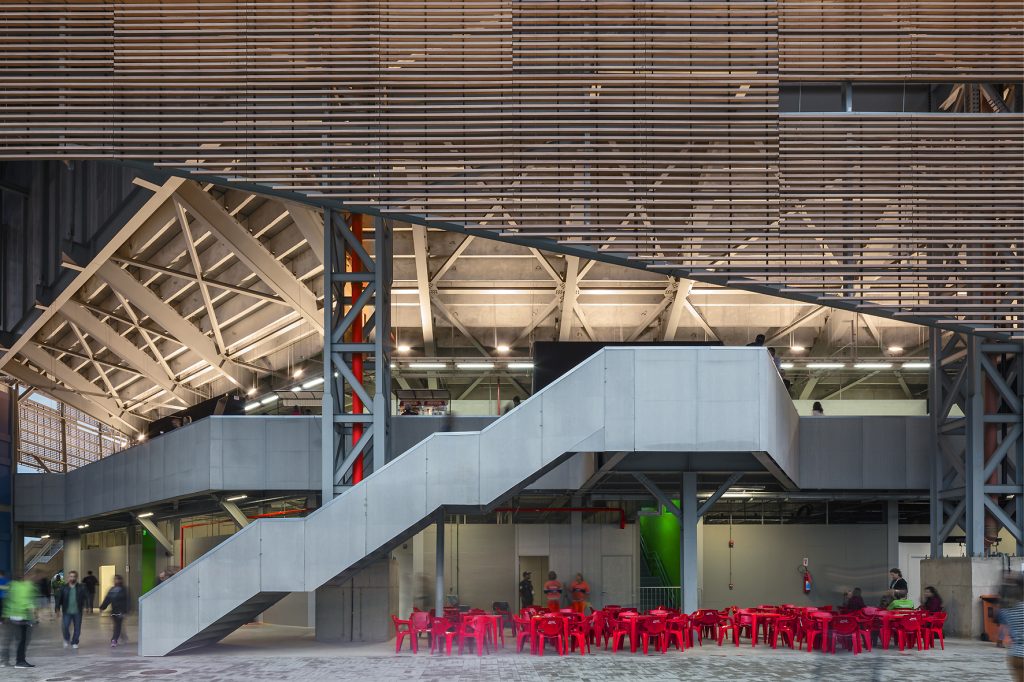
    During the Rio 2016 Olympic and Paralympic Games the Future Arena will host the handball events and be packed with 12,000 spectators. When the Games are over its structure will be dismantled and used in the construction of four state schools for two thousand children in the city of Rio de Janeiro. 
    Three schools will be constructed in Barra da Tijuca and one in Maracanã – each accommodating 500 students – as part of a US$77m legacy project.
    The brief for the handball arena was to build something that would contribute to the city of Rio beyond the 2016 Olympic Games. A first for the Olympics, the venue will make use of an innovative technique called “nomadic architecture”, thus ensuring that even a temporary structure can leave a lasting legacy. 
    The arena will be dismantled and the components transported to four separate locations to be rebuilt into state schools. The main elements that will be reused are the roof, rainscreen cladding, main structural steel elements and disabled ramps, which will form the shells of the four schools. The open nature of the rainscreen and external ramp that create the distinctive architecture of the arena will be recognisable in the new schools. 
    UK-based firm AndArchitects led by Rio-based practice Lopes, Santos & Ferreira Gomes provided the design for the handball arena. AndArchitects’ experience with six temporary buildings at London 2012 helped them jointly win the bid for this ground-breaking project. 
    Careful thought was given to what materials and systems of construction would allow this transition with minimal wasted material. The schools were designed simultaneously with the arena. The grid for the floor plates and the roof were all designed from the outset for both buildings so that the panels on the façade and on the floor and roof could be easily relocated in order for the modules to work for both buildings.
    After the Games, once the arena has been converted into schools, the students will be reminded of their schools’ role in the Olympic Games. One idea that is being reviewed is that the names of the stars of the Brazilian team are engraved onto the cladding of the building and these names will remain on the walls of the classroom to inspire students. 
     

  • Arup’s three agendas of event feasibility

    Arup’s three agendas of event feasibility

    Agenda One: Event Delivery
    The first agenda is to deliver the Games; that is non-discretionary and something you have to do. The cost is given and it’s mandatory, because it’s the IOC requirements and there’s national pride involved and a number of other considerations. 
    The cost of this has been remarkably constant over the last 15 years – around US$2.5bn to US$3bn. But that’s covered by income from IOC contributions, local sponsorship, ticket sales and merchandise so there is no net cost.  
    Agenda Two: Sporting Legacy
    The second agenda is leaving a sporting legacy. That is partly mandated by the IOC requirement, but you have some leeway on how you do that. So you have a choice of whether your stadiums and arenas are permanent structures, which always runs the risk of being white elephants, or temporary or demountable structures – or even, according to Agenda 2020, you can move it to another city. 
    For example, if you don’t have a velodrome you have to deliver one somehow. And if you do it correctly, that can be a legacy – but there are lots of examples of not being a legacy: The Athens 2004 Games is the prime example of white elephants and a complete horror story.
    The main issue with this second agenda is that venues should be designed for legacy and enabled for Games. Most people do it the other way round and then there’s a rush to modify it for legacy.
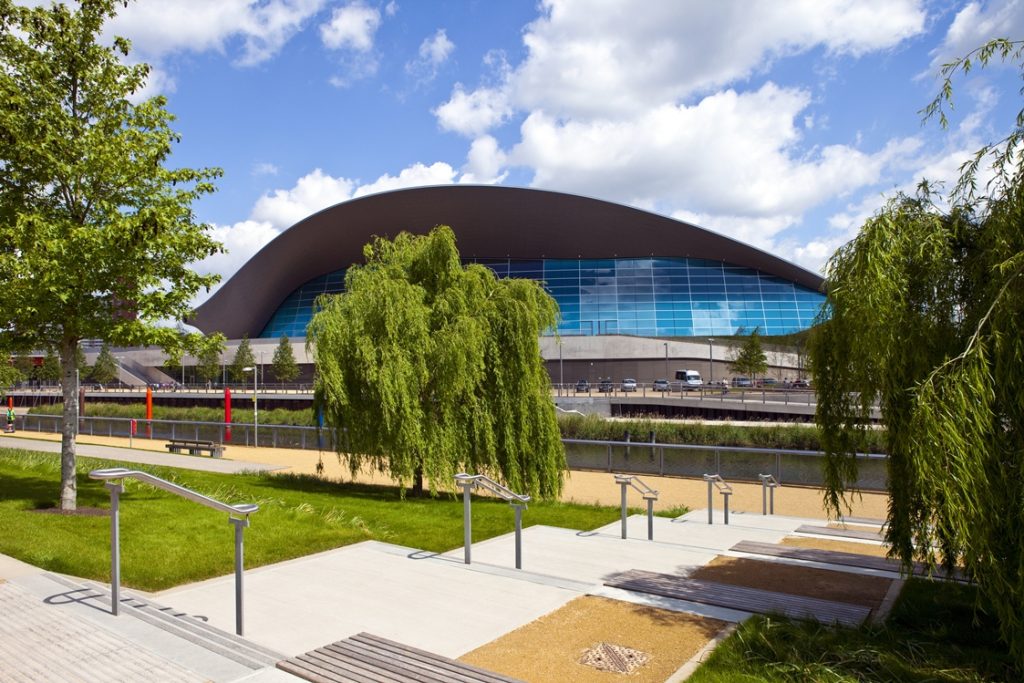
    A positive example is the aquatics centre in London; we worked very closely with Zaha Hadid on that. It was designed to be a community swimming pool with 2,500 seats. Temporarily, those wings were built – they looked absolutely awful, but they were functional and it ended up being an Olympic-compliant aquatics centre of 17,500 seats. It was designed for legacy and enabled for the Games temporarily. 
    Agenda Three: City Legacy
    The third agenda is what you want to use the Olympics for and our advice to any city or region that wants to host the Games is that you first have to decide what you are going to use the Olympics for. And if you don’t get that right, you run into a lot of problems about public acceptance of the Olympics as a project.
    This is where discretion comes into play. It cost London GB£1.8bn just to make the Olympic park into a building site. London made that call because it wanted to use the Olympics to regenerate part of East London. The city didn’t have to do it; they chose to do it because otherwise it would never happen; it would still be a dump with remnants from the blitz, asbestos, oil and corpses.
    A bad example is Sochi. A lot of what happened in Sochi had nothing to do with the Olympics. It cost US$55bn, but only a fraction of that was Olympic costs. They wanted Sochi to be a tourist destination and they also wanted to be able to build for the football World Cup in 2018. So they wanted to use it for something completely different from the Winter Olympics. That was their choice and that has poisoned the bidding process for a number of other cities, including my home town of Oslo where the population got a backlash going against bidding for the 2022 Winter Games. 
    Our advice to cities or regions who want to stage Olympic Games is to first of all to get the third agenda right, because that is what you need to sell it to the population, to get a yes vote on a possible referendum. It has to be something more tangible than a velodrome. 
    What we like to do very early in the process is to make the city or region able to make an informed decision whether to bid or not. To do that they need to cost out all the three agendas. What we usually recommend is to do a number of technical and financial feasibility studies, cost-benefit analyses over 20 to 30 years. 
    One city we have recently worked with is Amsterdam, who will probably not bid for the 2028 Olympic Games. And way back in 2002-2003 we wrote the original feasibility study that made a business case for London to bid for the Games. 
    Beyond the Bid – Tokyo and Qatar
    We also see our role to be the trusted technical advisor for a host city. We like to work in tandem with the communications agencies, because if you give them a free rein you need a lot of engineers and technical consultants to clean things up in the back room.
    We have been working for two and half years on Tokyo 2020 for Tokyo Metropolitan Government; we are currently negotiating for a third year. When we started work on Tokyo, we looked at some of the things that they proposed and advised that they weren’t going to work. The stadium was one of those things, and some of the temporary venues they wanted to put on the island out in the bay.
    And we have been working for about five years on the 2022 World Cup in Qatar. From our side it’s going well; we have been working on technical assurance of the stadiums: sitting client-side and advising the design consultants based on FIFA compliance and other criteria. 
    The thing I am a little bit concerned about is that I don’t think they’d gone far enough on planning what they wanted. I think they sold it on the basis of demountable stadiums, so they basically said we are going to build a number of 40,000 seater stadiums and send 20,000 seats off to Africa. It is feasible, but it hasn’t been designed yet. Somebody calculated that you need 178 containers to dispatch the 20,000 seats. Apart from that, everything is deliverable, no doubt about that.
    This article is based on a Host City interview with Erik G Andersen, Special Advisor of Arup’s Host Cities Advisory Service. Andersen has worked on 10 Olympic Games over 25 years
     

  • Candidates shortlisted for Expo 2020 Dubai apprenticeship programme

    Candidates shortlisted for Expo 2020 Dubai apprenticeship programme

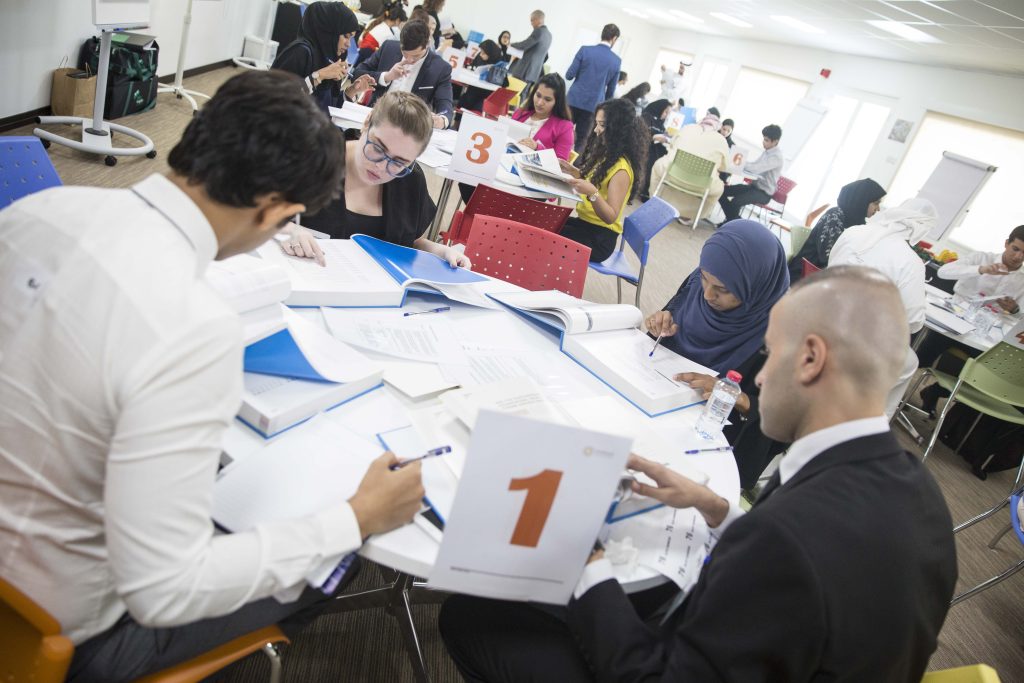
    Following its launch in April 2016, the programme attracted in excess of 2,700 applications, reflecting the high level of interest in Expo 2020 amongst the nation’s young people. From these, 150 candidates were invited to assessment days that began last month at the Expo site in Dubai South. Expo 2020 Dubai took an innovative approach to these workshops, using a series of engaging challenges and tasks to evaluate candidates on criteria that included leadership, teamwork and their ability to identify and solve problems under pressure. 
    Ila Kuntum, an Indonesian engineering student currently completing her Masters of Science at the Masdar Institute of Science and Technology, said, “I really enjoyed the fact that the assessment included group-based activities. It showed us how real-life, quick decision scenarios play out, and highlighted our strengths and weaknesses.”
    Emirati Marketing graduate, Ayesha Sharaf, and Farshied Jabarkhyl, who has studied in both the UK and UAE, described the day as “very challenging and unlike any other assessment I have ever taken part in. It taught us the importance of being open minded to other people’s opinions and ideas and was a great chance to meet new people.” 
    Candidates were then scored on their performance and around 50 were invited to attend a further round of one-to-one interviews with senior members of the Expo 2020 team, including the heads of the 19 departments offering work placements.
    Commenting on the programme, Manal AlBayat, Vice President of Engagement, Expo 2020 Dubai, said: “The Apprenticeship Programme is an important part of our commitment to engage and empower young people through our journey leading up to Expo 2020 Dubai. We were heartened to see such a high demand from a diverse group of applicants and particularly impressed by the high quality of applications received.”
    “The feedback from candidates that have taken part at the various stages of this process demonstrates the value of this experience. Those that are selected for the programme will develop useful competencies for their future career development, and will be important contributors to Expo 2020 Dubai’s educational and economic legacy. We are all looking forward to welcoming the first cohort later this year.”
    The Apprenticeship Programme is aligned with the UAE Government’s Youth Empowerment Strategy. It also reflects Expo 2020 Dubai’s theme, “Connecting Minds, Creating the Future”, and addresses one of the Expo’s subthemes, “Opportunity”, by providing practical opportunities for young people to develop a skillset that positions them for future employment across a range of industries. 
    Successful candidates will be informed in mid-July with the programme commencing at the end of August.
    Source: Expo 2020 Dubai
     

  • eventIMPACTS measuring tool enhanced to further benefit events industry
    eventIMPACTS measuring tool enhanced to further benefit events industry

    Events have the power to inspire and change people’s lives in a number of different ways. They can generate economic growth, international and domestic profile as well as a wide range of social and cultural benefits for their hosts, both through their immediate impact and through any subsequent legacy or long term development.
    Measuring and reporting the impact of an event are fundamental when evaluating the success of an event, and is vital for any future planning.
    Recognising the importance for the need for a good evaluation tool for the UK events industry, partner organisations worked together to develop eventIMPACTS.
    Launched in 2010, the online toolkit comprises of key guidance and good practice principles to help event organisers improve their evaluation of the outcomes – attendance, economic, environmental, social and media impacts – associated with staging sporting and cultural events. It caters for events of all sizes and categorises impacts into groups based on their potential complexity and cost to measure.
    eventIMPACTS was created out of the belief that no event should be staged without an accompanying commitment to measure its success against the objectives initially set and since its launch it has proven itself to be a leading resource for the events industry. Through the use of the tool, consistent evaluation methods, measures and impact assessments provide the ability to model event outcomes and make better forecasts, which in turn improve the industry.
    However, just like events must evolve and respond to customers’ needs and changes in technology, so too must the way they evaluate them. Recognising this need, eventIMPACTS has further been developed and now includes updated guidelines relating to social and media impacts. The new guidelines now allow organisers to measure how events positively impact peoples’ behaviour and quantify exposure across a range of media platforms.
    These additional resources will allow event organisers to measure social impacts in areas of satisfaction, identity and image, participation and volunteering and skills. Advice on how to measure the media impacts has been extended to include volume of coverage, engagement and tone and value.
    These improvements mean organisers across the UK are now better equipped to calculate the overall impact of their events and we know they agree. A survey on the new resources has revealed overwhelmingly positive feedback from the events industry. In particular, it was widely agreed that eventIMPACTS provides a clear structure for assessing the benefits from events.
    The co-founder of FOCUS Wales Festival, Neal Thompson, said “eventIMPACTS is now easier to use and reveals much more information on the actual overall contribution our events make. It is such an important resource for highlighting how integral events are, both to the economy and society itself in the UK as a whole.”
    The positive response from the industry shows the toolkit fulfils a need in the market and is helping ensure event organisers can see if they achieve the level of impact they desire from their event. 
    Just as advances in technology will continue to impact on event delivery, so too will it impact what we measure. Going forward, eventIMPACTS will continue to evolve with the changes within the industry, technology and society, to ensure it continues to be a tool that allows best practice.
    To see the toolkit and find out more, visit www.eventimpacts.com