Tag: London

  • How Lee Valley inspires generations

    How Lee Valley inspires generations

    Lee Valley Regional Park is a unique 10,000 acre destination for sport, leisure and nature, stretching 26 miles from the banks of the River Thames in east London into the counties Essex and Hertfordshire.
    There are almost 7 million visits to the Regional Park each year, with people taking part in a variety of activities; from sport in inspirational world class venues to enjoying open spaces that are home to a variety of British wildlife.
    The park, which is run by Lee Valley Regional Park Authority, was created by a 1967 Act of Parliament for the “development, preservation and management for recreation, sport, entertainment and the enjoyment of leisure” for the people of London, Essex and Hertfordshire.
    Large scale sports venues have always been part of the Regional Park and today the Authority owns three London 2012 Olympic venues. Two of these are located on Queen Elizabeth Olympic Park: Lee Valley VeloPark, which offers the four Olympic cycling disciplines; track in the iconic London 2012 velodrome, BMX on a modified version of the Olympic track, road on a one mile circuit and mountain biking on a set of graded trails; and Lee Valley Hockey and Tennis Centre which has two state-of-the art hockey pitches and four indoor and six outdoor tennis courts. The third, Lee Valley White Water Centre is 10 miles north of Queen Elizabeth Olympic Park. It staged the London 2012 Canoe Slalom competition and has two separate white water courses for training, rafting and paddling activities as well as cafes, viewing areas and meeting rooms.
    The Authority raises 65 per cent of its £29 million gross budget from commercial and other operations while the remainder comes from a levy on households in London, Essex and Hertfordshire – around 88 pence per person annually. It has many years’ experience of running sports venues that are community focused and commercially driven, where comprehensive community programmes are run alongside income generating activities and elite competitions. This same business model has been adopted at its three London 2012 venues, which offer a range of events and programmes for all abilities.
    “Our venues have brought some of the world’s top sporting events to London, providing great entertainment and excitement and allowing Londoners and sports fans from across the UK to experience the very best in sporting competition,” says Shaun Dawson, Chief Executive of Lee Valley Regional Park Authority.
    “The hosting of major international events is a central 2012 legacy objective which sees these venues continue to inspire future generations.”
    Established venues that predate the Games include Lee Valley Riding Centre, which specialises in catering for disabled riders, children and a range of horse enthusiasts, and Lee Valley Ice Centre – one of the UK’s leading ice rinks which attracts 300,000 visits a year.
     
    Hosting grassroots and elite
    Since opening, the Authority’s three London 2012 venues have staged 17 top international level sporting events. They also hosted more than a quarter of the Every Road to Rio London events, which brought the world’s leading athletes to the capital.
    In June 2015, eight times Olympic medallist Sir Bradley Wiggins broke the one hour world track record in Lee Valley VeloPark’s velodrome before a sell-out crowd of 6,000. In March 2016, the venue hosted the UCI Track Cycling World Championships and also regularly hosts the Revolution Series, Britain’s top commercial track cycling competition.
    Lee Valley Hockey and Tennis Centre has staged the Champions Trophy in June 2016 between the best 10 men’s and women’s teams. In 2015 it staged the Unibet EuroHockey Championships, which was the sport’s biggest event of the year.
    In September 2015, Lee Valley White Water Centre was home to the ICF Canoe Slalom World Championships, the largest international canoeing event outside of the Olympic Games.
    These major events dovetail with extensive activities – more than 80% of programming – which is reserved for community, clubs and school groups, a key part of the Authority’s Olympic legacy drive. More than 5,000 children from over 400 schools from across London and further afield have enjoyed free paddling, tennis, hockey and cycling in these inspirational London 2012 venues thanks to the Authority’s Schools Festival outreach programme.
    Events already secured for 2017 include Revolution Cycling Champions League, Six Day London and cycling events of the London Youth Games, Europe’s largest youth sports festival comprising 30 different sports. 
    In June, Lee Valley Hockey and Tennis Centre will stage the Men’s World Hockey League with some of the sport’s leading international men’s teams. In November it will host the NEC Wheelchair Tennis Masters for the fourth time, with the top eight seeded international men’s and women’s players playing for the title.

  • UK government helps sports sector go for gold in exporting expertise

    UK government helps sports sector go for gold in exporting expertise

    On Thursday 16 March the UK’s sports industry is teaming up with the Department for International Trade (DIT) to take advantage of future global sporting events, taking the success and expertise of the London 2012 Games overseas.
    DIT’s annual Global Sports Projects Conference, in London, offers UK companies advice and shared insight into working overseas on sporting projects, and gives tips on best practice, potential pitfalls and the support available.
    The UK has long established a worldwide reputation for organising first-class sporting events across the country and overseas. These events have helped to boost economic growth and in 2015, the sport sector contributed £35 billion to the UK economy, increasing by 2.2 per cent since 2014.
    International Trade Minister Mark Garnier said: “From Wimbledon to the Grand National, the United Kingdom is renowned for its love of sport and we can use our first-class expertise to help deliver of some of the world’s most exciting major sporting events.
    “It’s an open goal for UK companies as there is a global demand for UK goods and services across the sporting world. My department is committed to helping businesses realise their exporting potential and we even want more companies to take full advantage of the opportunities that open up to them.”
    The UK has a major sports legacy and the London 2012 Olympic and Paralympic Games is widely recognised as one of the most successful Games in history. By 2020, it’s expected to have contributed between £28 billion and £41 billion to the UK economy.
    Since 2012 the UK has successfully staged more than 70 major sporting events including the Glasgow 2014 Commonwealth Games and World Track Championships in 2016. The UK also hosted the most economically successful Rugby World Cup ever in 2015.
    Last summer, DIT also directly helped over 40 companies secure business in excess of £150 million for Rio 2016. Looking ahead to future events, the UK has also secured the right to host over 20 Olympic and Paralympic events at European or World level, including 15 World and European Championships.
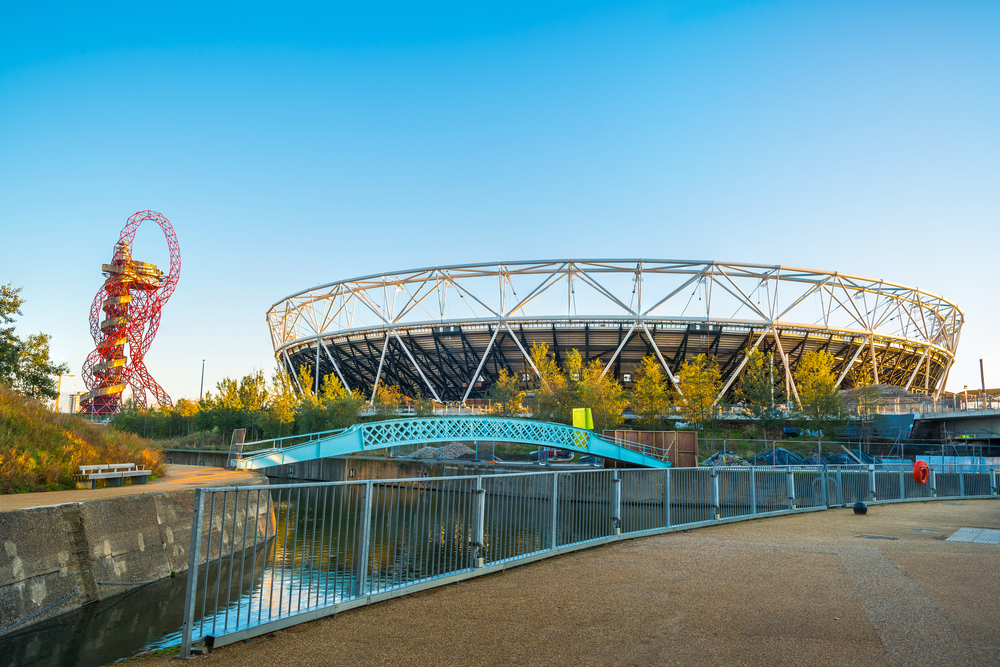
    The Global Sports Projects Conference takes place at Plexal on the Queen Elizabeth Olympic Park where more than 140 businesses are expected to attend to hear about their exporting opportunities.
    It’s a day of panel discussions, presentations and networking; with DIT offering specialist advice to helping UK companies export to their respective markets.
    Businesses will be given expert help to capitalise on export opportunities for major sporting events like the Japan 2019 Rugby World Cup and the Tokyo 2020 Olympic & Paralympic Games and the growing football sector in China and India.

  • Populous-designed Warner Stand opens at Lord’s Cricket Ground

    Populous-designed Warner Stand opens at Lord’s Cricket Ground

    Populous, the global architecture and design practice, has completed work on the redevelopment of the Warner Stand at Lord’s Cricket Ground in London – the UK’s largest cricket ground and host of matches in the upcoming 2017 Women’s Cricket World Cup and 2019 Men’s Cricket World Cup.
    Venue owner Marylebone Cricket Club (MCC)’s Assistant Secretary (Estates) Robert Ebdon said, “MCC is very proud of its history of commissioning individual stands and buildings at Lord’s, each with their own character. With their vision for the new Warner Stand, Populous has designed an architecturally distinctive and pioneering building which has enhanced the aesthetics of the ground while delivering world-class functionality.”
    The new stand replaces the original 1950s Warner Stand, which was considered unfit for purpose. What was once one of the worst stands in world Cricket is now leading the way.
    “It is a privilege for the practice to add to the wonderful heritage of the ‘Home of Cricket’,” said Philip Johnson, Populous Senior Principal and Project Lead.
    “The new Warner Stand has been designed to complement the existing campus of buildings at Lord’s, providing excellent views of the action, world-class match control facilities, a number of bars, and a new restaurant with fantastic views overlooking the ground. Lord’s has a special place in the hearts of cricketers and fans, and this new stand will help cement its position as the finest cricket ground in the world.”
    Located between the Grade II listed Pavilion and the Grand Stand, the new Warner Stand has been designed to deliver an enhanced spectator experience and a significant upgrade to facilities.
    Views and accessibility have been improved while the time taken to travel between the seats and amenities has been decreased.
    A new “futureproof” Match Control Suite exceeds ICC (International Cricket Council) and ECB (England and Wales Cricket Board) standards.
    The venue has 100 days on non-cricket events each year and income from these events will be boosted by revitalised hospitality facilities, including a restaurant, bars at all levels and catering outlets. The enlarged, 135-cover restaurant occupies features a glazed wall with impressive large sash windows along the side of the room facing the pitch, offering stunning views over Lord’s.
    The project team included consulting engineers Arup and contractor BAM Construct Ltd, who selected a white, translucent insulating tensile fabric membrane from Tayo for the roof over the restaurant – the first use in Europe of this aerogel-coated fabric.
    In addition to Tayo’s roof, other subcontracted elements included glazing from Fleetwood, in-situ concrete from GCL, precast concrete from Creagh of Northern Ireland, and staircases and glass balustrading from Structural Stairways.
    The fabric roof is supported by American White Oak beams that form a series of structural ‘ribs’, which cantilever over the seating tier, radiating from the corner of the Ground in a form reminiscent of a spreading palm leaf. Rainwater runs back to the rear where it is collected at basement level and stored to flush lavatories.
    In addition to rainwater recycling, a green roof over the rear part of the building and green walls on the garden facade, solar thermal and photovoltaic roof panels have been incorporated into the roof to generate hot water and electricity. Boreholes and ground source heat pumps are also an integral part of the energy system, making the heating and cooling system carbon neutral.
    Populous will continue to work with MCC developing its masterplan for the venue as a whole. According to MCC, the overall redevelopment plan is scheduled to continue through to 2029 and will cost a total £180-200m.
    The future development of the ground will further boost its ability to host non-cricket events, including a £42m new East Gate building including a multi-function hall scheduled for completion by 2024.

  • Are you ready to host?

    Are you ready to host?

    FOAMHAND has a reputation for successfully planning and delivering major event projects on the global stage as seen through recent major events such as the London 2017 IAAF World Championships, Glasgow 2014 Commonwealth Games, America’s Cup Bermuda 2017 and even NFL’s Super Bowl 50. With on-going projects for the next Commonwealth Games host city Gold Coast 2018 and the Winter Olympics in PyeongChang 2018 FOAMHAND are helping to ensure you, your teams, contractors and event partners are ready.
     
    Being Operationally Prepared – Case Study: London 2017
    At the start of 2017, FOAMHAND were commissioned by the local organising committee for the World Para Athletics Championships and IAAF World Championships in 2017. Our main objective to review the anticipated event-time operations, facilitate operational readiness desktop exercises, and develop an appropriate Command, Coordination and Communication (C3) architecture that would support the safe running and coordination of the event.
    With 24 weeks to go before the event started to receive its first arrivals there was a significant time pressure to ensure functional areas were familiar with their operational plans and were appropriately tested. Our team’s aim was to quickly evaluate the level of preparedness of all functional areas, highlight areas of potential risk and identify opportunities prior to the ‘Summer of World Athletics’.
    Adam Down FOAMHAND CEO said “Readiness is not just a box on the organisational chart to give comfort to executives, nor is it something that can be purchased. For teams to ‘be ready’ is a state of preparedness that takes time, effort and commitment from everyone involved.”
    Building on our team’s existing relationships with local partners, combined with our international event operations experience, enabled our team to quickly establish a Readiness Road Map for London 2017. The readiness programme provided direction to the functional areas and highlighted the touch points for interoperability, whilst reassuring senior management and financial investors.
    As is often the case in major events, time and resource constraints meant that functional areas focus on their own operating plan and fail to discover the reliance placed upon them in other operating plans being developed across the organising committee. This gap becomes far more difficult to bridge the closer you are to the event.
    In parallel, the FOAMHAND team was tasked to design and build a trusted Central Operations Management Centre that could support functional area operations and coordinate the Organising Committee event-time delivery. A key challenge balancing the expectations of external partners, many of whom had significant involvement with London 2012 Olympics only five years earlier in the same venue. This balancing act needed to meet the available budget and resources in comparison to the “greatest show on earth” as the Olympics is often referred to. Events smaller in scale but in many cases no less complex do not have the financial flexibility to over-scope facilities as a risk mitigation measure – which is usually central to any business case justification and is regularly discussed in post event lessons learned sessions.
    FOAMHAND used their team’s delivery of the Readiness Programme for London 2017 to illustrate the importance of readiness at all levels to the functional areas, showcasing best practice for Venue based workshops and understanding the ‘Client Journeys’. Our readiness desktop exercises provided a platform to evaluate multiple scenarios in a safe environment to support learning, process improvement and ensure plans were deliverable. The most valuable outcome was taking staff and partners on the journey to becoming operationally ready to assist in the creation of what became the Championship Coordination Centre (CCC); a compact but agile C3 centre specifically designed for the event by FOAMHAND. During the event, the CCC was carefully resourced by the right mixture of event professionals, planning oversight, communications specialists, volunteer radio loggists, and all managed by FOAMHAND. The CCC enabled London 2017 to engage and respond to external partners, coordinate its own operations beyond the main venue footprint, and seamlessly integrate with the existing operations of both the London Stadium and the Queen Elizabeth Olympic Park.
    Cherry Alexander MBE, Managing Director for London 2017 and Major Events Director for UK Athletics, said: “FOAMHAND were flexible and accommodating of our programme and broader needs. They were able to use their experience to quickly enhance the deliverables and understand our constraints. Their team also had the capability to assist with our response to evolving challenges arising from the recent terror attacks within the UK in the run up to the Championships. This helped to ensure our LOC felt confident and ready to deliver two successful World Championships”.
    The World Para Athletics Championships and IAAF World Athletics Championships were held in July and August 2017 at the London Stadium on the Queen Elizabeth Olympic Park. This was the first time both events have been held in the same summer in the same host city. With 20 days of sporting drama and 3,300 athletes from around the globe competing in 245 events and almost 1 million ticket spectators it truly was a ‘Summer of World Athletics’.
     
    City Operations & Precision Planning 
    FOAMHAND is a global major events consultancy specialising in four critical event planning disciplines with a focus on core themes of integration, seamless spectator journeys and event readiness.
    We use specialist online tools to enhance collaboration; and have world class experts in crowd modelling and dynamics. FOAMHAND are currently engaged by the PyeongChang 2018 Winter Olympics and Paralympic Committee to provide crowd flow modelling and management across all competition venues and were engaged by the Rio 2016 Organising Committee to support crowd and transport management operations for the Rio 2016 Opening ceremony.
    With offices in the UK, New Zealand and Australia, we work with city planners, event organisers around the world to ensure a safe and enjoyable event for all, offering expert knowledge from our team’s major event experience which is founded on the planning and delivery of over 40 global events over the last decade.
    All our team have first-hand experience of event day delivery and use this valuable knowledge to support clients by providing ‘real world’ practical solutions. For an event to be successful for strategic supporters, funders and governments, a city needs to keep working. Our ‘one team, one plan’ approach to event planning considers a broad range of factors, identifies partner agencies and influential stakeholders, and engages them in the process as early as possible. FOAMHAND bring this all together in the run up to a major event with functional area engagement workshops and various readiness activities to ensure confidence is high, teams and functions are integrated, and clients receive the levels of service as planned.
    This article was written by FOAMHAND. For further information please visit www.foamhand.com or contact the team on +44 (0) 207 205 4105, info@foamhand.com or @foam_hand

  • Olympic hosts Paris and London lead together on sustainability

    Olympic hosts Paris and London lead together on sustainability

    With the IOC’s coordination commission for Paris giving a ringing endorsement to the city’s Olympic project on their first inspection visit in June, organisers are maximising efforts to use the Games as a platform for major developments at the city, regional and national levels.
    Amid reports of rising costs, IOC inspectors’ concerns were alleviated by a joint financing deal between Paris 2024, the city and French government guaranteeing €1.4 billion ($1.63bn) of funding for Olympic-related infrastructure. The agreement provides more certainty for two of the most controversial projects, channelling extra money to build a permanent aquatics centre with a redefined legacy concept and enhancing value for local residents around the Olympic Village site.
    The post-Games plan for the aquatics venue will see the region of Seine-Saint-Denis receive nine swimming pools after the Games rather than the five initially planned, to plug a shortage of community sports facilities in the area. While the Olympic Village remains in its originally planned location, residents living nearby will benefit from the undergrounding of power lines, new housing and the creation of new green spaces.
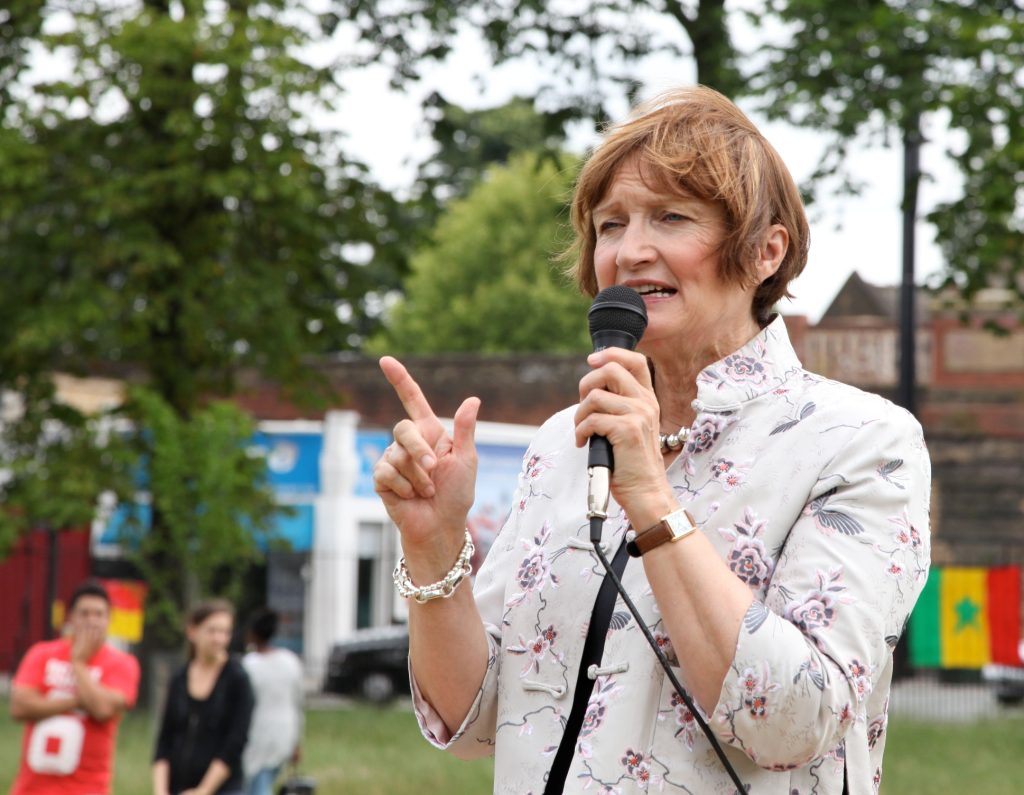
    Jean-François Martins, deputy mayor of Paris, says the city and Games officials are delivering on their ambitions thanks to the help of an agreement between the mayors of London and Paris.
    “After Brexit [vote in 2016] Mayor Anne Hidalgo and Mayor Sadiq Khan decided not to be competitors but to have really strong relations between London and Paris and to create together, at the heart of Europe, cities that will shine on a worldwide scale,” he told Host City at SportAccord.
    “So they decided to work together especially with the Olympics where the learnings, skills and experience of London will be precious for us and maybe as well we can share what we can do 12 years after London and to inspire each other.”
    In addition to collaborating to combat societal issues, Hidalgo and Khan are undertaking huge efforts to tackle the global climate crisis. “Both of them are really committed in the fight against climate change… so we are putting the Olympics at the heart of the Paris agreement on climate change which will help us deliver an environmentally-friendly Games,” Martins added.
    The two mayors are scheduling a conference in 2019 to discuss climate issues. “I am pretty optimistic about this cooperation,” he said.
    Hidalgo is also chair of C40 Cities, which connects 96 cities to take climate action, and represents 700-plus million citizens and one quarter of the global economy. Organisers of the next four Olympics – in Tokyo, Beijing, Paris and Los Angeles – are supporting a new IOC partnership on climate issues inked with the C40 group at the end of June. They are working with interested cities, candidate cities and Olympic hosts to help them reach their sustainability goals.
    C40 chair Hidalgo, who also heads Olympic delivery partner SOLIDEO, emphasised that hosting the Olympics “is a unique privilege for any city, and provides an amazing opportunity to accelerate the climate and air quality initiatives that mayors need to implement for the future of their citizens.”
    It’s so far, so good for Paris 2024. The IOC coordination commission chair Pierre-Olivier Beckers-Vieujant was gushing with praise after the inspection visit.
    “Paris 2024 is delivering on its commitment to host pioneering Olympic Games fully in line with Agenda 2020, the IOC’s strategic roadmap,” he said.
    “I have been particularly impressed by the ambition of all of the stakeholders involved in this project to take advantage of the opportunity of the Games to create a springboard for the city, region and nation.”
     
    This article first appeared in the Summer 2018 issue of Host City magazine. Jean-Francois Martins will be speaking on legacy planning for Paris 2024 at Host City 2018 in Glasgow on 20-21 November

  • Host cities of SLT Arena Games revealed

    Host cities of SLT Arena Games revealed

    [Source: Super League Triathlon] London and Rotterdam will play host to two cutting edge professional triathlon events as the SLT Arena Games Powered by Zwift heads to Queen Elizabeth Olympic Park on March 27 before a spectacular return to the Netherlands on April 18.
    British Olympic medal hopefuls Jonathan Brownlee, Georgia Taylor-Brown and Alex Yee are already confirmed to take on the unique blend of real life and virtual racing in London, with more star names to be announced for both events in the coming weeks.
    The SLT Arena Games Powered by Zwift took the triathlon world by storm on its debut in Rotterdam last year, drawing a huge audience thanks to its innovative and exciting indoor race concept, and leading to the 2021 events securing global broadcast deals that cover more than 100 territories.
    Athletes complete three rounds of fast and furious action. The swim takes place in an Olympic sized pool and the bike and run legs on static equipment with the racing realised in the virtual world of Zwift, the world’s leading online training and racing platform, providing detailed data insights and up close and personal emotions of the competitors.
    Super League Triathlon CEO, Michael D’hulst, said: “We are continuing to grow the SLT Arena Games Powered by Zwift and make it part of Super League’s yearly offering of exciting professional triathlon. Bringing an event to London is a big step for Super League and in line with our objectives for 2021 as we look to grow rapidly into key triathlon markets. We are also delighted to return to Rotterdam, which is where the SLT Arena Games Powered by Zwift started with a spectacular debut event.
    “Broadcasters have recognised the success of the concept and the partnership between Super League Triathlon and Zwift, which has led to a major expansion of our global distribution so sport fans can watch live wherever they are in the world.
    “We will make a few small tweaks to the format to improve the events further and have put together some fantastic line-ups. I can’t wait to see so many Olympic hopefuls racing at full throttle.”
    “The first SLT Arena games was a true spectacle, and an ideal broadcast and spectator event,” says Eric Min, CEO & Co-Founder of Zwift.
    “It’s great that the series will return, supported by Zwift. As a resident of London for many years, I’m particularly looking forward to seeing the next round in March in the beautiful Olympic pool in Stratford.
    “Super League is today announcing the first athletes that will be competing in London, with a further eleven, plus the field for Rotterdam, to be released in the coming weeks.”
    The  announcement focusses on a wave of British stars taking part in a home event, with World Champion Georgia Taylor-Brown and double Olympic medallist Jonathan Brownlee taking on a host of big names, including stars of longer distance triathlon such as Ruth Astle and George Goodwin.
    The first edition of the SLT Arena Games was held in Rotterdam in August 2020 with more than 600,000 fans watching across Super League’s digital channels alone as Jessica Learmonth and Justus Nieschlag secured the inaugural titles.
    The athletes face three stages of swim, bike and run, with the order of the legs shuffled every round. Each swim is 200m, bike 4km and run 1km.
    The events will also be supported by Garmin, who will integrate the use of the Forerunner 945, HRM Pro and Tacx NEO 2T smart trainer to deliver even more data and insight to fans.

  • Dancing for Power: Pavegen electrifies Rudimental show at UEFA Champions Festival

    Dancing for Power: Pavegen electrifies Rudimental show at UEFA Champions Festival

    Pavegen, a UK-based tech company renowned for its kinetic energy-generating floor tiles, turned dance moves into electricity, engaging the audience in the sold-out UEFA Champions Festival Friday Night Show in Trafalgar Square on May 31.
    The event, held in collaboration with the Champions Innovate Programme and Rockstar Energy Drink, marked the first time a music performance in Trafalgar Square was powered by the kinetic energy of the audience.
    The highlight of the festival, the Friday Night Show, headlined by BRIT Award-winning band Rudimental, blended the excitement of football and music, drawing a diverse crowd. Over 6,300 attendees danced on Pavegen’s kinetic tiles, generating energy that powered Rudimental’s DJ booth and microphone during their electrifying set.
    Festival-goer Daniel, a Londoner, said, “I really like this dance floor, it’s great, it feels so responsive – it’s cool that it’s the first time ever something like this has been done in Trafalgar Square!” Amir from Surrey added, “It’s amazing how the floor is making electricity for the show. It makes me want to dance more!”
    “Our participation in the UEFA Champions Festival has been a phenomenal success,” said Laurence Kemball-Cook, CEO of Pavegen. “It’s so simple, you just need to dance to generate power on our technology. Feeling the energy and enthusiasm from the crowd and seeing Pavegen in action, powering such an iconic event, was truly inspiring. We’re proud to partner with UEFA and Rockstar Energy to demonstrate how innovative solutions can drive sustainability and community engagement.”
    Bart LaCount, Vice President of International Beverages Marketing at PepsiCo, highlighted the collaborative effort. “The collaboration between Rockstar Energy Drink and Pavegen allowed us to take energy to another level,” he said. “Fans danced the night away while also contributing to power the event – thanks to the kinetic dance floor.”
    Looking ahead, Pavegen plans to continue its partnership with Rockstar Energy Drink, repurposing the kinetic energy dance floor for future events to sustainably fuel a summer of music experiences.
    The UEFA Champions Festival welcomed attendees from over 100 countries.