Tag: Paris 2024

  • Paris promotes more access to sport for 275,000 students

    Paris promotes more access to sport for 275,000 students

    The City of Paris, the Paris Academy and the French National Olympic and Sports Committee (CNOSF), have launched a new initiative to promote sport and the purpose of Olympism to up to 275,000 Parisian students.
    Ten measures were unveiled to encourage the practice of sport, a powerful legacy for younger generations that is fully in line with the bid’s vision for the 2024 Olympic and Paralympic Games.
    Speaking from Francois Villon School in central Paris, Paris Mayor Anne Hidalgo said: “This initiative is a further demonstration of the importance we place on the Olympic and Paralympic Games.
    “We want the Games to benefit Parisians and the entire French population, leaving a strong legacy for young people and future generations to have positive Olympic values embedded into their daily lives. I welcome the action of the Ministry of Education, which is committed to joining the City of Paris and the sporting world in this ambition.”
    The 10 measures that will be implemented from 2017 onwards by the City of Paris, the Paris Academy and the CNOSF are as follows:

    1. To share and develop resources for the promotion of the values ??of Olympism and the development of sporting practice among the school community and young people in Paris.
    2. To expand access to schools and educational courses for young athletes, with flexible schedules that allow them to reconcile their studies and their training.
    3. To develop meetings between Olympic and Paralympic athletes and the school and university community. This includes a focus on women’s sport and access to less commonly practised sports.
    4. To strengthen partnerships between municipal and school sports facilities, encouraging and facilitating the use of school sports facilities outside school hours.
    5. To introduce the history and values ??of Olympism through the programme “On your marks, get set, Paris! Living the history and values ??of Olympism”. Developed by the League of Education, with support from the CNOSF, the Ministry of Education and the French Paralympic Committee, it will be broadcast to 15,000 pupils, 614 Parisian fifth grade classes and 150 middle schools in the capital.
    6. To support all initiatives promoted by the educational community on the organisation of sports events, in particular the initiatives in favour of para-sport, adapted sport, shared sport and women’s sport.
    7. To develop a programme of extra-curricular, out-of-school activities for students dedicated to the discovery of Olympic sports and the promotion of Olympic values.
    8. To promote initiatives in schools that can be used in the context of school sports competitions.
    9. To place sport at the heart of the Paris Participatory Budget, a city initiative that allows Parisians to propose investment projects for their communities, so that children and teenagers can vote to choose the projects that best meet their expectations.
    10. Include sport in international school exchanges by developing interactions and correspondence between Parisian pupils and students from cities that have already hosted the Olympic and Paralympic Games.

    Tony Estanguet, co-chair of Paris 2024, said: “This great initiative by the City of Paris, Paris Academy and the CNOSF will increase the opportunities for young Parisians to get involved in sport. It is also a great pathway for our Generation 2024 athletes to achieve their goals.
    “These measures are a further example of the strong unity that exists between the bid, the city, our NOC and our partners, and our common purpose to deliver a Games that not only benefits the local population but leaves a significant and lasting legacy on future generations.”
     

  • Using major events as a springboard for sustainable urban innovation

    Using major events as a springboard for sustainable urban innovation

    Public scepticism about the value of major events such as the Olympic Games is at an all-time high. A continued era of austerity, economic and political uncertainty means that the parties driving such events have to work even harder to justify their value.
    While this may sound daunting for some, when cities step back and look at the bigger picture they will realise that major events like this are more relevant than they have ever been. They represent the very confidence in our urban futures that we need to pull us through challenging times. They’re expressions of multi-cultural unity, open-mindedness, acceptance and cooperation. Their successful delivery has the power to re-invent the image of a country, accelerate and transform cities at a record-breaking pace.
    To deliver this potential it is imperative that these events are seen as being primarily for the hosts’ and their citizens’ benefit, and align perfectly with their longer-term ambitions. In this context they can be presented to host citizens as accelerants to pre-existing ambitions and expressions of their hosts’ confidence and clarity of purpose.
    Recent Arup-led research conducted for the Cities Alive: Rethinking legacy for host cities report, highlighted three tactics that are likely to have greatest impact in achieving this:

    ‘Urban overlay’: mapping the city’s ambitions and accelerating change through its neighbourhoods and streets. At its heart the approach takes the event as an accelerant in realising a city’s longer-term ambitions. In the same way that overlay design is used to create the ‘look and feel’ of an event, the event itself is used to create the ‘look, feel and function’ of the future city.
    Operational excellence: transforming city management and embedding highly efficient Games time organisational models to increase future resilience
    Cleaner and greener infrastructure: inspiring and accelerating action to tackle climate change by developing hard and soft ‘climate ready’ infrastructure

    With eyes turning to Paris and LA as the hosts of the 2024 and 2028 Olympic Games, its time to consider how cities may evolve their approach to hosting, to ensure Games are delivered cost effectively, while leaving a lasting, positive legacy for their communities. 
     
    Closer to the action through virtual reality and live sites
    The London 2012 Live Sites generated real excitement and enabled more people to get into the spirit of the Games. Advances in hand-held technology, virtual reality and streaming media will enable spectators to tune into any number of live sports, get guided tours of venues or experience being at the virtual trackside with their favourite athletes.  Formula-e Motor Racing is a great example, with the use of 360-degree cameras, live streaming of races, almost instant highlights and even the opportunity for fans to ‘vote’ to give their favourite drivers an additional boost of power.  
     
    Flexible, temporary venues
    Most major event venues will be temporary in the future, allowing land to be swiftly released for redevelopment after the Games. More affordable – off-the-shelf or pre-engineered sporting venues will significantly reduce cost. Reduced venue capacities can also bring significant savings, with smaller facilities resulting in fuller capacities and a better atmosphere for fans.
     
    New financial models
    Cities are cautious about bidding for major sporting events, with Boston, Hamburg, Rome and Budapest pulling out of the running for the Olympics and Los Angeles seeking an advance from the International Olympic Committee.  New ‘value’ focussed financial models are emerging, which should be encouraged. Investment in regeneration can drive huge increases in surrounding land values. This model would see a percentage of this increased land value returned and put towards the cost of infrastructure.  Another approach is tax increment financing (TIFs), which diverts future property tax revenues towards upfront infrastructure investment. 
     
    Streamlined transport
    The greatest single risk to the successful legacy of a major event is the potential disruption it can bring to the daily life of a host city.  A combination of new technologies, greater use of data and more effective management will reduce cost, improve experiences for residents and visitors and strengthen the long-term resilience of host cities.  Examples include the idea of ‘logistics hubs’ outside city centres, where deliveries can be consolidated so that they minimise the number of trips required, reduce emissions and congestion and load packages onto smaller, electric vehicles.  London 2012 also saw the adoption of a highly efficient multimodal ‘transport coordination centre’, as well as greater use of travel planning apps. Arup expects most host cities to explore ways of using predictive modelling tools, data analysis, mobile apps and live updates to deliver smooth running transport and logistics. 
     
    Creating a resilient legacy
    Cities should see the Games as a catalyst to help them tackle the major challenges they are facing – such as rising air pollution; energy shortages; housing shortages and an increasing number of extreme weather events.  Rather than focusing on event related sustainability outcomes, such as reducing energy use during sporting events – the report recommends it is used as an opportunity to scale up and accelerate ambitions having a long-term impact. For example, this could involve helping cities establish their own localised energy, cooling and water systems.     
    Large scale sporting events have huge potential to act as change catalysts for cities, helping them to tackle the major challenges facing them – from rising air pollution and carbon reduction, to housing shortages. For too long legacy has been viewed narrowly, with the emphasis on the physical structures left behind. We need to think about how we build institutional muscle power – able to deliver benefits before, during and after the events. The real prize of the games should be the opportunity for cities to scale up and accelerate ambitions that have a long-term impact.
    The above presents a distillation of Arup’s Cities Alive: Rethinking legacy for host cities report.  

  • Populous, the event designers

    Populous, the event designers

    Host City: What to you is the most exciting thing currently going on in the world of major events?
    Soaad Stott: Honestly, it’s an incredibly exciting time for the world of overlay – we seem to be at the threshold of some really big changes. The Olympic & Paralympics are obviously the gold standard in our industry, but for good reason. Everything that we do in overlay is on view in this magnificent showcase.
    With the approval of Olympic Agenda 2020 in 2014, it became very clear that the Olympic Movement is fully behind the use of existing and temporary venues wherever possible, with the goal of reducing costs, improving sustainability and allowing the hosting of global events to become accessible to a greater number of nations and communities. This is starting to come to fruition – with the forthcoming Games in Tokyo, we’re going to see the first Games designed without an Olympic Park, which will be really exciting.
    While the Olympic and Paralympic Games are leading the way on the global scale, this design approach is becoming increasingly adopted by events at all levels. The opportunities that event and overlay design affords for regeneration, activation and innovative design can have a fantastic influence on everyone involved, whether visitors to the events, or residents in legacy. Anyone who saw 2015 The Rugby World Cup at alternative sporting venues across the UK can attest to our industry’s ability to really change the existing conversation or perceived identity around existing venues for major events. The London Stadium and stadiummk were prime examples of new rugby audiences experiencing a venue and having a fantastic experience.
    Of course, some sports have a completely unique character, such as the party nature of the beach volleyball tournament, but that is also embraced by temporary design, particularly when the temporary venues chosen are in such spectacular locations like the beach volleyball in the heart of London. During the beach volleyball at both London 2012 and at Baku 2015, dancers would emerge between matches in cheerleader style and energise the audience. Though an elite sport was being played, putting on a spectacular show was also a key part of this event. Temporary overlay design can have a truly special character, all of its own, and that’s what we really aim for at Populous.
    Host City: A really exciting project you are working on is Paris 2024, following on from your successful work on London 2012.
    Soaad Stott: It seems that Paris 2024 is taking the lead from London on how to do overlay better. As I said, the huge amount of temporary overlay and facilities in London set a real precedent.
    Paris is the Park and the design of every venue has some legacy and sustainable content. There were so many meetings; not just with the International Federations, but also with the city and its residents.
    A large number of the drawings we produced during the bid phase are actually to demonstrate the plans the stakeholders, local councillors and residents, making sure that everyone was informed and on board with the plans for the Games and for legacy, which forms a major component of the bid we created with Paris 2024.
    Most of the venues are already there – we were just making sure the plans were feasible and genuinely workable and what people wanted.
    Host City: How does the design of the Olympic Games fit in with the city of Paris?
    Soaad Stott: Because there is no Olympic Park in the bid, Paris itself really is the park. It’s very much part of philosophy of these Games, that it’s for Paris as a whole and not just pockets of Paris.
    In somewhere as compact as Paris where space is such a premium, there are challenges but definite benefits. There’s an energy and charm that you get from having all the landmarks close together.
    As well as historic beauty, Paris also has a modern urban side. We wanted to make sure all these aspects were incorporated and all represented in the designs. One of the brilliant things was being able to locate some of the new Olympic sports in ancient monuments and sites and have the juxtaposing of the modern with the old, beautiful Paris.
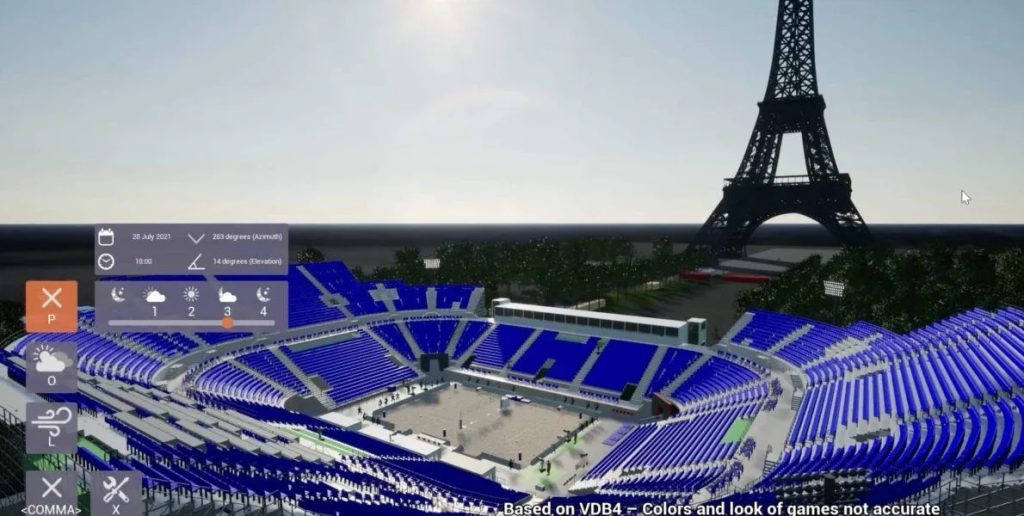
    We designed it so that every venue would have a similar feel. Everywhere you go you will have the same Olympic experience. The streets and boulevards will also be part of the whole experience of excitement people moving around the city, with parks becoming community activation sites and fan fests. It will be an incredible experience, with the most beautiful and iconic spaces within Paris, such as the Eiffel Tower and the Palace of Versailles, being infused with a sporting identity through the Olympic and Paralympic Games.
    This exclusive interview first appeared in the Winter 2017 edition of Host City magazine. Sooad Stott spoke at Host City 2017, the largest meeting of sports, business and cultural events

  • Olympic hosts Paris and London lead together on sustainability

    Olympic hosts Paris and London lead together on sustainability

    With the IOC’s coordination commission for Paris giving a ringing endorsement to the city’s Olympic project on their first inspection visit in June, organisers are maximising efforts to use the Games as a platform for major developments at the city, regional and national levels.
    Amid reports of rising costs, IOC inspectors’ concerns were alleviated by a joint financing deal between Paris 2024, the city and French government guaranteeing €1.4 billion ($1.63bn) of funding for Olympic-related infrastructure. The agreement provides more certainty for two of the most controversial projects, channelling extra money to build a permanent aquatics centre with a redefined legacy concept and enhancing value for local residents around the Olympic Village site.
    The post-Games plan for the aquatics venue will see the region of Seine-Saint-Denis receive nine swimming pools after the Games rather than the five initially planned, to plug a shortage of community sports facilities in the area. While the Olympic Village remains in its originally planned location, residents living nearby will benefit from the undergrounding of power lines, new housing and the creation of new green spaces.
    Jean-François Martins, deputy mayor of Paris, says the city and Games officials are delivering on their ambitions thanks to the help of an agreement between the mayors of London and Paris.
    “After Brexit [vote in 2016] Mayor Anne Hidalgo and Mayor Sadiq Khan decided not to be competitors but to have really strong relations between London and Paris and to create together, at the heart of Europe, cities that will shine on a worldwide scale,” he told Host City at SportAccord.
    “So they decided to work together especially with the Olympics where the learnings, skills and experience of London will be precious for us and maybe as well we can share what we can do 12 years after London and to inspire each other.”
    In addition to collaborating to combat societal issues, Hidalgo and Khan are undertaking huge efforts to tackle the global climate crisis. “Both of them are really committed in the fight against climate change… so we are putting the Olympics at the heart of the Paris agreement on climate change which will help us deliver an environmentally-friendly Games,” Martins added.
    The two mayors are scheduling a conference in 2019 to discuss climate issues. “I am pretty optimistic about this cooperation,” he said.
    Hidalgo is also chair of C40 Cities, which connects 96 cities to take climate action, and represents 700-plus million citizens and one quarter of the global economy. Organisers of the next four Olympics – in Tokyo, Beijing, Paris and Los Angeles – are supporting a new IOC partnership on climate issues inked with the C40 group at the end of June. They are working with interested cities, candidate cities and Olympic hosts to help them reach their sustainability goals.
    C40 chair Hidalgo, who also heads Olympic delivery partner SOLIDEO, emphasised that hosting the Olympics “is a unique privilege for any city, and provides an amazing opportunity to accelerate the climate and air quality initiatives that mayors need to implement for the future of their citizens.”
    It’s so far, so good for Paris 2024. The IOC coordination commission chair Pierre-Olivier Beckers-Vieujant was gushing with praise after the inspection visit.
    “Paris 2024 is delivering on its commitment to host pioneering Olympic Games fully in line with Agenda 2020, the IOC’s strategic roadmap,” he said.
    “I have been particularly impressed by the ambition of all of the stakeholders involved in this project to take advantage of the opportunity of the Games to create a springboard for the city, region and nation.”
     
    This article first appeared in the Summer 2018 issue of Host City magazine. Jean-Francois Martins will be speaking on legacy planning for Paris 2024 at Host City 2018 in Glasgow on 20-21 November

  • Exclusive: “Working closely with cities brings enormous mutual benefits” – Marisol Casado

    Exclusive: “Working closely with cities brings enormous mutual benefits” – Marisol Casado

    Host City: IOC president Thomas Bach recently praised your leadership of the International Triathlon Union (ITU), particularly in relation to good governance. How would you describe your leadership priorities in this area?
    Marisol Casado: Any self-respecting organization should be judged by its governance policies, its commitment to operational transparency and the way that it is run and operates, both in the long and short-term.
    My priorities are to ensure that the entire triathlon family adheres to that commitment and that ITU as an organization serves our athletes and National Federations fairly, openly and justly, so that we can rightfully expect the same consideration from them. It is our duty as a world governing body to set the example.
    Thomas Bach was absolutely correct when he said at our recent Congress that you can be 99 per cent solid in how you are run, but if that 1 per cent lets you down, then that is what you will be remembered by. We strive for good governance across the board and have found that as a positive habit and a priority to share and to follow with our members, it is contagious.
     
    Host City: How do you see recent and future progress in the prominence of women in sport and sports administration?
    Marisol Casado: This is an ongoing battle, but one that continues to provide new examples of thriving individuals to show we are on the right track and have every reason to be optimistic about the future.
    If you look back just 20 years you can see how much progress has been made towards gender equity, even though there is of course still much work to be done. But I am proud to say that our sport can certainly be held up as an example of this effort, where men and women share equal prize money, prominence and every drop of the spotlight.
    The fact that Tokyo 2020 will bring us to the brink of gender equality both in terms of the overall athletes and officials’ ratios is testament to the effectiveness of the IOC Agenda 2020.
     
    Host City: As a member of the IOC Coordination Commission for the Games of the XXXIII Olympiad in Paris 2024, what are your expectations of these Games?
    Marisol Casado: Paris is one of the world’s great cities and will provide the kind of Olympic and Paralympic venues that have an innate wow factor and that, coupled with an expert LOC looking to innovate and engage more than ever, will see it undoubtedly deliver a truly great Games. During our Coordination Commission visit in June we saw first-hand the commitment to a sustainable Games that will bring the people together both for mass-participation events and the legacy projects that will benefit France and the French public for years to come.
     
    Host City: How is the ITU leading the way and innovating to ensure the continued rise in popularity of triathlon – both for participants and fans?
    Marisol Casado: ITU seeks out and works with incredible local organising committees (LOCs) all around the world to stage events that are not only able to bring the very best out of the elite athletes but that, in many cases, are also opened up to the public to take part in, through Age-Group races and family events.
    This mass participation aspect has always been an integral part of this sport; that it demands a high level of endurance and determination, but that it also manages to not be overly intimidating to those coming new to it.
    The fact that we are a relatively young sport also helps and we reflect that as a dynamic, forward-thinking organization working effectively with incredible partners to promote and govern a growing, aspirational sport.
    It is also filled with amazing role models. From the World Series to World Cups and beyond, their incredible achievements and the manner of their performances have always brought them closer to the fans and been a source of encouragement to newcomers. That means our development of the TriathlonLIVE streaming platform and huge social media presence can be backed up by not just their big-race performances but honest, revealing interviews and features that really convey their personalities.
    We all do what we do for the love of triathlon, so the hard work never feels too much like hard work. I think that is important.
     
    Host City: We are delighted you will be speaking at Host City 2019, with the conference theme “Innovate; Reformulate; Co-create”. What are your expectations of this important gathering?
    Marisol Casado: Thank you, I’m very happy to be able to attend and honoured to have been asked to speak at the event. ITU is privileged to have worked with some incredible host cities over the past thirty years as triathlon’s world governing body, delivering iconic race venues all around the world.
    Now, with our TriathlonLIVE platform showing more races than ever to ever-growing audiences in tandem with ITU social media channels, those host cities are also able to reach vast new horizons, so I think it is important that these kinds of opportunities are made explicit.
    The benefits for cities are rich and varied, from engaging the population in healthy pursuits and the positive association and inspiration of hosting world-class sports, to boosts for tourism, infrastructure and experience. We have seen time and time again that working closely with cities brings enormous mutual benefits and that is the message that I hope will be underpinning the conference.
     
    Marisol Casado is speaking at Host City 2019, the largest meeting of cities and sports, business and cultural events, taking place in Glasgow on 26-27 November

  • Paris 2024 and IPC confident Tokyo 2020 won’t be hit by coronavirus

    Paris 2024 and IPC confident Tokyo 2020 won’t be hit by coronavirus

    The role of sports in dealing with climate change may have been the most prominent on-stage theme at Global Sports Week Paris – largely thanks to the challenging presence of “Young Sports Makers” – but it was another threat to humanity that dominated conversations amongst participants. One insider told Host City that the novel coronavirus, which is currently forcing the cancellation of several major events in China including Olympic qualifiers, could even lead to the cancellation of the Tokyo 2020 Olympic Games.
    But Tony Estanguet, president of the Paris 2024 Organising Committee of the Olympic Games, is confident that the show will go in Tokyo.
    “We are following this closely at the moment,” he said. “We don’t have an impact on what’s happening in Asia with the coronavirus, but we will learn from how Tokyo 2020 put in place good measures and actions to protect the security of athletes and spectators.
    “Tokyo 2020 have declared that they are very involved in this topic. It’s good that, with the Japanese culture, when they decide to do something they will always deliver very carefully and effectively. We can all be very confident that Tokyo 2020 won’t be affected by this.”
    This view was echoed by Andrew Parsons, president of the International Olympic Committee. “We are concerned but trust that the health authorities on a national and global level are able to control it,” he said.
    While epidemics could become more prevalent in the future, the organisers of Paris 2024 are confident that they would be well equipped to react if an outbreak were to happen in their own Olympic year.
    “Of course, as an organising committee it is something you want to avoid, so we have good relations with the state and the minister to make sure that if something like that were to happen, we would have a good response,” said Estanguet.
    Paris is also watching and learning from Tokyo in many other areas. “Our team has been associated with the preparations of Tokyo 2020 over the last two years through the Coordination Commission meetings. All our directors went to Tokyo to have special exchanges in terms of venues, technology, sport communication – I’d like to thank Tokyo 2020 for sharing their expertise.
    Games-time will be the key moment, he said. “We’ll go there to observe and learn. It will be very important for us to follow the event itself backstage. Many of my team have never organized an Olympic Games, so for them it will be very useful to go there.”
     
    Half the carbon of London
    London 2012 was a great step forward in sustainability for the Olympic Games and 12 years on, Paris is aiming for a new benchmark.
    “We have no choice. This is a challenge the whole of humanity is facing and events need to be part of the solution,” Estanguet said.
    “Our ambition is to divide by two the carbon footprint of the Games. Compared to London it’s less than half the footprint.”
    The biggest contributor to carbon emissions is facilities, followed by transport. Paris’s ambition is all the more impressive considering that the target includes transport to – not just within – the host city.
    “For the first time we will take into consideration all transport, including planes and spectators coming here, which is 1.5n tonnes of carbon. And within Paris our objective it to make sure people use public transport,” he told Host City.
    The third biggest contributor to carbon emissions is energy, which provider EDF is mitigating by using 100 per cent renewables for the Games.
     
    Control the budget
    Staying in step with project milestones is not easy for any Olympic Games organiser. “We have many challenges,” said Estanguet. “We will start the first construction over the next months. It’s key to start as early as possible, to keep to the timeline.”
    “We are still on track to deliver the first element of the buildings in January 2021. We have good commissions to choose who will build the aquatics centre.”
    Using 95 per cent existing or temporary venues reduces much of the capital expenditure for Paris, but the Games will still require 6.8 billion euros of funding, including 1.2 billion of sponsorship.
    “The commercial programme is on track,” he said. “It’s not as fast as Tokyo 2020, but their budget is much higher. With Paris 2024 we are in a situation where we can limit the budget to make sure we can deliver without having big exposure in terms of budget as has happened in recent Games, including Tokyo, where the budget has really increased since they have been elected.
    “My first objective is to control the budget. We are confident we will find this money from the sponsorship programme, which is 1.2 billion euros. So far, we have good contact with companies and I’m very confident.
    “We’ll also engage with the population; we’ll launch a big programme with Club 2024 open to everyone to participate in 2024. That’s crucial for us this coming year, to engage at a national and international level.”
     
    The perfect wave
    Paris had the choice of four sports to add to the programme for 2024 and appealing to young audiences was central to the decision. “We decided to choose two nature sports: surfing and climbing, and two more urban sports, breakdancing and skateboarding, to make sure youth who are really engaged on social media will be attracted by the 2024 programme,” said Estanguet.
    This will be the first time that breakdancing features in the in the Olympic Games. “It is a good combination with the values of Paris 2024 because of the creativity and the link with culture – and it’s very technical, physical and spectacular. We believe it will add something new and different from the 28 current sports.”
    He also revealed why the organising committee chose Tahiti as the venue for the surfing: “Because at this time of year there is a 95 per cent chance of the perfect wave.”
     
    Sport as a service
    The younger generation also exemplify the rise of everything-as-a-service, as highlighted by French sports minister Roxana Maracineanu.
    “Right now we are at a crucial time for the sport movement. People want sport but the they want it differently – they expect it as service. We have to be more aware of what people want from us and what they need.
    “Young people are waiting on us before, during and after the Games – we have to ready to bring them more facilities, more sports, more education in sports.”
    And sport is not just for its own sake or for entertainment – it has a big role to play in tackling the big threats to humanity. “Sports can be the solution for better public health and environment. Sport can be a big solution for all politics and what society is facing right now.”

  • Paris 2024 announces first-of-its-kind partnership at Global Sports Week Paris

    Paris 2024 announces first-of-its-kind partnership at Global Sports Week Paris

    [Source: Global Sports Week] The French Development Agency has become the first non-commercial Olympic Games partner with rights to the Olympic Rings. The unprecedented announcement was made at the opening of the first Global Sports Week Paris at the Carrousel du Louvre. The partnership will provide for a concrete financing programme to support projects aimed at fostering development through sport around the world.  
    Tony Estanguet, President of the Paris 2024 Organising Committee, said: “Sport can change everything. And we want this ambition to go beyond the French borders through this new strong cooperation between Paris 2024 and the French Development Agency.”
    Remi Rioux, Executive Director of AFD, also commented: “This partnership is unique. We have never connected the power of sport and the power of development projects funding. The Olympic and Paralympic Movements are a universal initiative and it is only natural to unite them with the international development programmes.”
     
    Flash quotes from the Global Sports Week Arena Stage
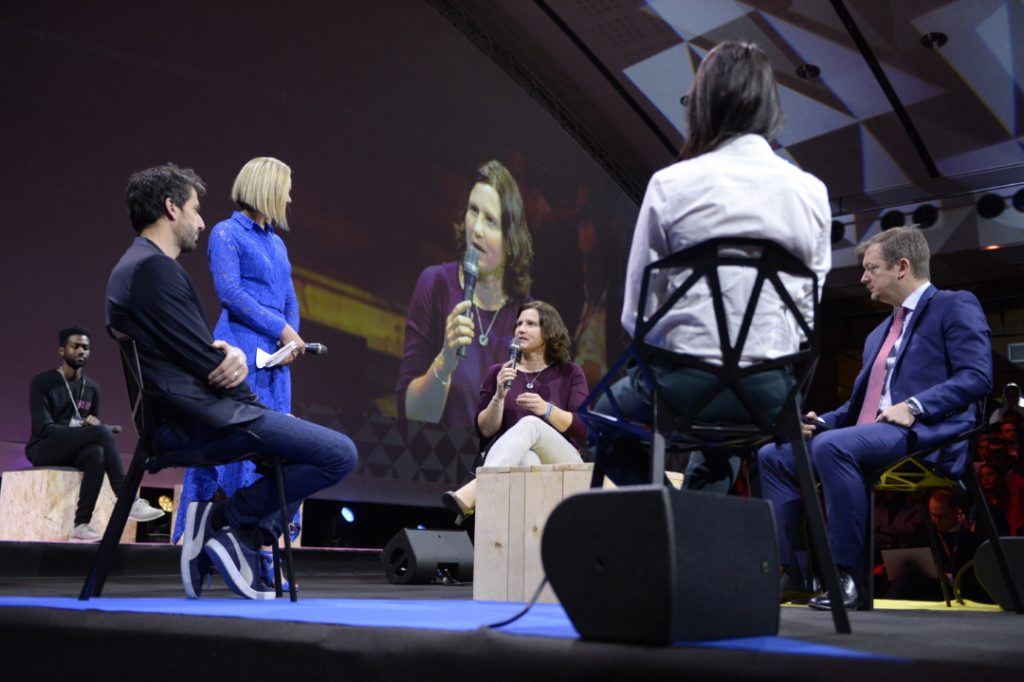
    In the Opening Session, Tony Estanguet, Roxana Maracineanu, Andrew Parsons, and  Nadia Nadim were challenged by four young international leaders about the role of sport around key social issues.
    Andrew Parsons, International Paralympic Committee President, said: “The first thing the international sport movement has to do is stop sweeping issues like doping or abuse under the carpet. We need to face them, otherwise young people don’t buy it, they don’t have trust to engage with us.”
    He added: “Yes, international sport has joined the party too late on climate change. But the strength we have is the athletes. It’s important they understand their power to drive change with the right messages.”
    Roxana Maracineanu, French Minister of Sports, said: “Athlete welfare has been at the heart of my mandate as a Minister from the very start. This is one of the key reasons why the Sports Ministry wants to take place in the debates happening here this week.”
    “There is never one day, in my conversations with other government ministers, when I don’t see a way for sport to help provide solutions for other policy issues, such as health, environment or education.”
    Nadia Nadim, professional football player, PSG, and Champion for girls’ and women’s education, UNESCO, said: “Access is the biggest barrier for young people to get in sport. It’s easy for young people to be on their digital platforms at home, but to play sports they have to drive an extra mile.”
    Guillaume de Monplanet, SVP, General Manager, adidas France, said:  “adidas saw the sport evolve and we evolved and changed with it. We noticed that our business impacted a lot of people around the world. Our core belief is that through sport WE can change lives (not only see sport change lives). This is a real mind shift.”
    He added: “Textile industry is one of the 5 worst industries in terms of the environmental impact. We have a big responsibility. By 2024 we will be at 0 virgin plastic in our products. Today we are at 50%, it is a long way to go, but we are moving in this direction.”
    Danone announced on stage at Global Sports Week that the company-run sport event Danone Nations Cup will be the first international competition to join Common Goal, an organisation putting the good at the heart of sport. 1% of the Danone Nations Cup revenues will be given to Common Goal.
    Mathias Vicherat, SVP, General Secretary, Danone, said: “Kids represent 30% of the population and 100% of the future. For 20 years we at Danone have been organising a competition for kids to play soccer in 30 countries. By joining the Common Goal, we will be able to further promote the Sustainable Development Goals such as diversity and gender equality around the world.”

  • The chemistry of sustainable Games

    The chemistry of sustainable Games

    Dow has been a partner of the International Olympic Committee (IOC) since 2010, initially working on providing technologies and solutions for the Games.
    “Our products are everywhere and so they can also be enabling of and supporting the Games,” says Dr. Nicoletta Piccolrovazzi, Global Technology & Sustainability Director, Dow Olympic & Sports Solutions.
    “We wanted to understand how we could use this partnership to go beyond and to integrate more our experiences and expertise of sustainability. That’s why we became the Carbon Partner of the Sochi Games.
    “We are using sport to create an acceleration, to help us bring businesses to the table and to collaborate on CO2 reduction projects.”
    Following its first tenure as Carbon Partner for the Sochi 2014, Dow went on to become Carbon Partner of Rio 2016 – during which Host City ran a digital communications campaign with Dow. And then in 2017, Dow became Carbon Partner of the IOC.
    “We have taken this platform from a Games focus and a host country focus to now a global focus. It’s our global platform of collaboration on climate change that utilises our technologies, our customers’ technologies and engages the entire value chain on projects.”
    95 to 96 per cent of products are enabled by chemistry, much of which enables reductions in CO2. For instance, Dow’s products go into insulation.
    “What we have seen is the benefits that we deliver in terms of CO2 reductions from our products far outweigh the carbon footprint of when they are being manufactured. It’s a ratio of three or four to one of CO2 reduction benefits that we enable through our products.”
    Paris 2024 is already talking of reducing its carbon footprint by 50 per cent, and there is much work to be done to establish how to achieve this.
    “It’s really good that Paris focusses on how to reduce their emissions,” says Piccolrovazzi. “It’s very important for us to focus on understanding the impact and then reducing the emissions.
    “Every Games needs to define an effective mitigation strategy. That is still being developed by Paris. Every Games needs to do something that is relevant for their own emission reality.”
     
    5 million tonne CO2e reduction
    [Source: Dow] By 7 February 2020, the cumulative greenhouse gas (GHG) reductions from Dow’s carbon programs with Sochi 2014, Rio 2016 and the IOC had reached more than 5 million tonnes of carbon dioxide equivalent (CO2e), according to third-party verification by Environmental Resources Management (ERM). This compares to an amount of CO2 sequestered by 6.5 million acres of U.S. forests in one year.
    In 2019 alone, Dow’s carbon program with the IOC reduced 655,000 tonnes CO2e of greenhouse gas (GHG) emissions, the equivalent of 139,026 vehicles driven for one year. By 2026 – the end of the monitoring period agreed to by the IOC – the carbon benefits are expected to reach more than 7 million tonnes of CO2e.
    As a part of the carbon partnership program with the IOC, Dow announced several new projects in 2019 with collaborators, including PETRONAS Chemicals Group, the U.S. Green Building Council, the AIA International Region, Firestone Building Products and Restore the Earth Foundation. These greenhouse gas reduction projects are part of Dow’s Sustainable Future Program, which harnesses the power of sport and science to accelerate the adoption of more sustainable technologies across value chains and upgrade business-as-usual practices locally. The project portfolio has been developed to address a wide range of applications, such as high performance buildings and infrastructure, reforestation, improvements in packaging and industrial efficiency.
    “In line with our strong commitment to sustainability, the IOC measures its annual carbon footprint and implements various measures to reduce them. Thanks to our Official Carbon Partnership with Dow we have also been able to offset our unavoidable emissions for the period between 2017 and 2020,” said Marie Sallois, IOC director of corporate & sustainable development. “The results that Dow continues to deliver are now exceeding our operational emissions, creating a tangible, positive legacy.”
    With a joint vision of accelerating climate action across the Olympic Movement, Dow and the IOC also announced in 2019 a new program to encourage and incentivize International Sports Federations (IFs) and National Olympic Committees (NOCs) to measure, reduce and mitigate the carbon emissions related to their operations and events. As part of the program, carbon offsets are offered to IFs and NOCs that have joined the United Nations Framework Convention on Climate Change’s Sports for Climate Action Framework and implemented tangible action to reduce GHG emissions within their respective operations and events. Ten IFs benefitted from the program in 2019. In 2020, the initiative will be expanded to include submissions from NOCs in addition to IFs.
    For more information about Dow’s more than 35 years of support of the Olympic Movement and commitment to sustainability through sports, visit https://www.dow.com/en-us/sports/partnerships/olympics.

  • Sport takes climate action at COP26

    Sport takes climate action at COP26

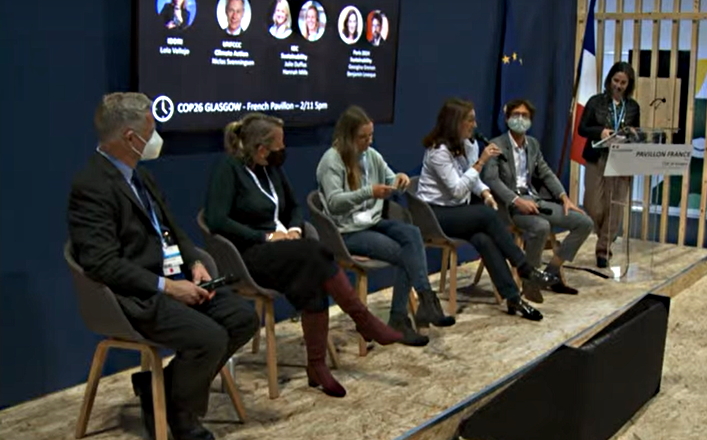
    Representatives of the United Nations, the International Olympic Committee (IOC) and the Paris 2024 Organising Committee of the Olympic and Paralympic Games spoke out at COP26 in Glasgow to highlight sport’s capacity for action on climate change.
    The speakers are all involved in the Sports for Climate Action Framework, which was launched at COP24 Katowice in 2018 as a collaboration between the United Nations Framework Convention on Climate Change (UNFCCC) and sports organisations from all over the world.
    The aims are dual: firstly to get the sports sector to move together towards a climate neutral world, and secondly to use its enormous reach to educate, inspire and raise awareness for climate action.
    “Sport has a big climate footprint,” Niclas Svenningsen, Manager for the Global Climate Action team at UNFCCC told delegates at COP26 in Glasgow.
    But sport also has a huge power to influence. “Not everyone might have a favourite politician, but everyone has a favourite athlete or club,” he pointed out.
    Since its launch, the Sports for Climate Action Framework has grown to encompass 300 sports organisations including IOC, FIFA, Paris 2024 and many others. As one of the first sectoral partnerships, the sports framework has also led the way for other sectors to follow suit.
    “We want to promote sustainable consumption and advocate more climate action towards athletes, fans, suppliers and everyone else.”
    The Sports for Climate Action Framework aligns the sports sector with the UNFCCC Paris agreement to reduce carbon emissions by 50% by 2030 and achieve net zero by at least 2050 – including emissions by suppliers. The Sports for Climate Action Framework has set its own target to surpass this goal and achieve net zero by 2040.
    “Almost everyone says we have to do this,” said Svenningsen.
    One of the first organisations to get involved in Sports for Climate Action with the UNFCCC was the IOC.
    Julie Duffus, Sustainability Senior Manager at the IOC confirmed that the organisation is on track with these goals. And in addition to the UNFCCC targets, the IOC has added an interim goal of reducing the carbon footprint of the Games by 30% by 2024, beyond which all future Games will have to be climate positive.
    When it “walks the talk” on climate change, sports can use its power to influence others to change.
    “We have such an opportunity to reach so many people,” Duffus said. “We also work with the Olympic movement – international federations, National Olympic Committees and Organising Committees – to reduce their carbon footprint and to use their agency to reach people.
    “The athletes are great advocates to reach so many people. If we can give them a voice, we can reach a lot more people to take action individually and within their communities.”
     
    Engaging everyone on earth
    Hannah Mills MBE, the most successful female Olympic sailor of all time, is a sustainability ambassador for IOC. Her interest in sustainability began at Rio 2016 where she saw the scale of the problem of plastic pollution.
    “What I’m really passionate about is using my voice, but also encouraging other athletes to lend their voice to these massive challenges,” she said.
    “Nothing brings people together as much as sport or the Olympic Games does. It’s an amazing coming together of the human race in one place.
    “I’m here to say to the politicians: Tokyo delivered a Games that no one that no one thought would happen – now it’s over to you to lead and deliver for us at COP26.
    “We need every single person on earth to be engaged with it and doing their bit.”
    “Everyone here is really committed to giving sport the platform and the opportunity to put forward the agenda for climate change and the sustainable development goals.
    “Athletes have a key role. I appreciate we have a footprint as well, through sports events. But sport has a positive impact in so many areas and if we can harness that, then we stand a really good chance of tackling this crisis in the way that we need to.”
     
    Team spirit
    As Director of Sustainability at the Paris 2024 Organising Committee of the Olympic and Paralympic Games, Georgina Grenon is responsible for achieving climate action.
    “The Olympic and Paralympic Games is the biggest event in the world, and we are facing mankind’s biggest challenge.
    “We couldn’t stage the Games like we used to. That’s why we’re fully aligned with the Paris agreement, to be the first Games to leave a positive impact on the environment.
    “It is not easy. This is a race we have to win, and this is where athletes inspire us. We all have to become climate athletes, to be inspired by their resilience, to be objective and to go beyond what was done before.”
    The carbon footprint of previous Summer Olympic Games has been estimated to be around 3.5m tons of CO2. The biggest component of this is travel, followed by construction, and then operations.
    Using guidelines from the IOC, the Paris 2024 organisers have assessed the carbon footprint of their Games to be 1.5m tonnes of CO2. This major reduction is being achieved using 100% renewable energy, by building in a more efficient way, and by using existing buildings.
    “This is how you start slashing emissions in a pragmatic way. It takes team spirit with international organisations like the IOC and all our suppliers to make this happen,” says Grenon.
    “We are trying to progress in our way and want to get all of you in Paris in 2024 to celebrate this win as well.”
     
    Positive brand affiliations
    Hannah Mills highlighted another important responsibility of athletes and sports organisations – their affiliation with brands.
    “As an athlete what’s not talked about enough is sponsorship in sport – who athletes choose to partner with and the messages they send.
    “We have audiences, including young people who are influenced. We want to send positive messages from brands who want to do the right thing.
    “Sport events have the ability showcase many solutions that wouldn’t have the platform otherwise.
    “We can give sponsors the opportunity to show their best in these sport events,” Grenon added. “Most of the solutions are not there and we can’t bring them up on our own.”
    “Sport has to come together with academia to find these solutions,” said Duffus. “It’s only by working together that we are going to solve this crisis.”
    As well as decarbonising, Paris 2024 is also working across all 17 UN Sustainable Development goals “The social aspects are extremely important,” said Grenon. “This is how you build a sustainable legacy for the Games.”
    The Olympic movement might be ahead of some sectors in decarbonisation, but there is still no time to lose.
    “We have known about climate change for 100 years. We have to change now,” said Svenningsen.
    “Sports is such an important part of raising awareness – it’s like the oil in the machinery. I’m positive we are going to reach a goal.”
    To find out more from UNFCCC, IOC, Paris 2024 and how events can contribute to the environmental bottom line, register now for Host City 2021, taking place online from Glasgow on 7-8 December

  • Paris 2024 board approves optimised masterplan with competitions in new host territory
    Paris 2024 board approves optimised masterplan with competitions in new host territory

    [Source: Paris 2024] Following initial validation by the Executive Board on 23 June, Paris 2024 is continuing its efforts to optimise the Olympic and Paralympic venues master plan, which ensures enhanced competition conditions, helps keep control of the budget, and preserves the legacy of the Games for local residents and regional authorities. The Board of Directors of Paris 2024 has approved the potential solutions identified, and granted a mandate to the organisation to continue working with the stakeholders involved, before the propositions are  officially presented to the IOC and IPC for final validation.
     
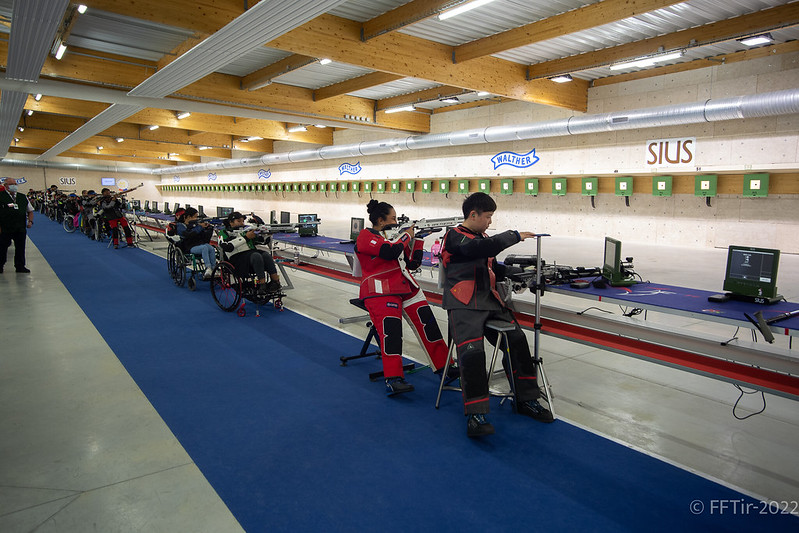
    Châteauroux identified as a venue for shooting and shooting Para sport
    The Board of Directors of Paris 2024 has confirmed that the shooting and shooting Para sport events are to be moved and the venue in Châteauroux as the favoured option offering the best conditions for the organisation of the competitions in 2024. Drawing upon the positive exchanges with the Fédération Nationale de Tir (National Shooting Federation), and the enthusiasm of the elected regional authorities, Paris 2024 is continuing discussions with the actors involved to finalise the technical and financial matters relating to this new host territory.
    The “Terrain des Essences”, in La Courneuve, which was initially identified to host the shooting and shooting Para sport, will remain a competition venue. It will serve as the starting point for the Para marathon and the Mass Event Road cycling; there is less temporary infrastructure required for these two events. The large-scale decontamination and renaturing work will continue on the 13-hectare site, meaning the Games leave a lasting legacy that will benefit the area and its residents.
     
    With Villepinte, new competitions will be hosted in Seine-Saint-Denis
    The Board of Directors has approved the site of Villepinte, in Seine-Saint-Denis, to host the boxing preliminaries, the fencing ranking round of modern pentathlon and sitting volleyball during the Paralympic Games. The venue is subject to validation by the relevant international federations. The final stages of the boxing events will be held in Roland Garros, on the Philippe-Chatrier court, after the Tennis competition.
    With Villepinte, and with the para cycling events being held at Clichy-Sous-Bois, in addition to all the sites that are already on the venues master plan, Seine-Saint-Denis is, even more than before, at the very heart of the Paris 2024 Olympic and Paralympic Games.
     
    Stade Pierre-Mauroy in Lille has been selected to host the basketball preliminary rounds
    Following discussions with the International Basketball Federation (FIBA) and the IOC, the Board of Directors has mandated Paris 2024 to propose the Pierre-Mauroy stadium in Lille for the organisation of the preliminary phase of the basketball events.
    Stade Pierre Mauroy has a history of hosting major international competitions. The record attendance for a basketball match in Europe was broken at Stade Pierre-Mauroy at the EuroBasket final in 2015 (27,372 spectators).
    This new arrangement has the benefit of providing greater coherence between different team sports. With the basketball preliminaries being held in Lille, the handball preliminaries can be staged in Paris, in Hall 6 of the Parc des Expositions at Porte de Versailles. Thus, handball players will have the possibility of competing in Paris. From the quarterfinals onwards, the basketball competition will take place at Arena Bercy in the heart of Paris. This option also helps optimise the use of existing competition venues and keeps the budget under control thanks to the exceptional capacity of the competition site in Lille.
     
    Next step
    The IOC will  provide a final approval of these venues after full completion of the technical assessments as to the Pierre Mauroy Stadium’s compliance with FIBA’s requirements.
     
    Opening Ceremony of the Paris 2024 Paralympic Games planned to take place in the very heart of the city
    The Board of Directors has officially mandated Paris 2024 to present to the International Paralympic Committee (IPC) the alternative concept of a Paralympic Games Opening Ceremony in the heart of the host city, Paris. Organised on the iconic Place De La Concorde, the Ceremony would be offering Paralympic athletes a unique experience.
    Discussions will be held in the coming weeks with the IPC to agree on areas such as spectator capacity, accessibility, athletes’ experience and budget, to define the most appropriate scenario for the Paralympics Games Opening Ceremony.
    The two closing ceremonies of the Olympic and Paralympic Games will take place at the Stade De France, in Saint-Denis.