Tag: Power

  • Genset demand surges as Qatar 2022 approaches

    Genset demand surges as Qatar 2022 approaches

    The power rental market in Qatar is set to grow at a compound annual growth rate of 23.3 per cent until 2020, according to research by 6Wresearch.
    “Upcoming FIFA World Cup 2022, rising public and private infrastructure, construction of hotels and stadiums and increasing flow of investments in the country are exhibited to fuel the growth of Qatar’s power rental market,” the researchers said.
    The majority of this growth will be accounted for by diesel gensets, but environmental concerns and the local abundance of natural gas will also drive growth in non-diesel gensets. Gas generators are expected to rise in prominence. 
    International suppliers such as Aggreko, RSS, JTC, Byrne Investments, Hertz are cited as key players in the Qatar power rental market, alongside domestic players such as Qatar Building Co., Al Reyami and Qatar Industrial Equipment.
    American multinational Cat Entertainment Services is another big player in major event power generation with the potential to tap into the growing market in Qatar.
    More than US$200bn is being invested in infrastructure developments in the run up to the 2022 FIFA World Cup. 
    The temporary power supply industry is in huge demand on projects such as Lusail City, the Doha Metro Rail, construction of expressways, hotels and other facilities, as well as nine new stadiums and major renovations to three existing stadiums. 
     

  • Power networks upgraded for Baku 2015, Aggreko contracted

    Power networks upgraded for Baku 2015, Aggreko contracted

    Aggreko will provide temporary power to the inaugural European Games to be hosted in Baku, Azerbaijan in June 2015, the company informed HOST CITY.
    The leading supplier of temporary power and temperature control services will supply 34 MW of power for the opening and closing ceremonies, International Broadcast Centre (IBC) and 13 competition venues.
    The announcement comes as Baku’s state energy operator, Bakielektrikshebeke, pledged to upgrade its infrastructure to cope with the demands of hosting the Games. 
    “Baku will host the first European Games in 2015. This is a historic event for our country, and we are carefully preparing for it,” Tanriverdi Mustafayev Bakielektrikshebeke’s head of press, told local media.
    “Old transformers will be replaced with those with large capacity wherever necessary, including stadiums and hotels.”
    Power outages were commonplace in Baku until recently and the city still suffers from occasional outages. 
    “Baku develops year by year, and the number of subscribers increases as well. It means that we should continue increasing the capacity of the power grid. In the past eight years, it increased by 90 percent,” Mustafayev said.
    “Recently we have established three substations each with a capacity of 110 kW and nine substations each with a capacity of 35 kW. In general, Bakielektrikshebeke has established 26 substations each with a capacity of 110 kW and 70 substations each with a capacity of 35 kW since 2006.”
    The news follows a successful year in the major events sector for Aggreko in 2014, when they provided services to the FIFA World Cup, Glasgow Commonwealth Games and the Ryder Cup.
    At the FIFA World Cup in Brazil, Aggreko supplied temperature control services and 50 MW of temporary power for the IBC and 12 stadiums.
    The Scottish-headquartered company also provided 103 gensets for the 2014 Commonwealth Games and a further 17 MW of power for the 2014 Ryder Cup.
    For London 2012, Aggreko provided 260 MW of power using over 500 gensets.

  • The three “power pillars” of major events

    The three “power pillars” of major events

    The fact is that events themselves are getting bigger. The Olympics, for example, continues to increase the number of sports contested and this year’s Rugby World Cup was the largest ever staged – official fan zone attendance alone broke the one million mark.
    The conference industry, too, is booming – many attract tens of thousands of people and require the kind of infrastructure you might normally associate with a football match. 
    As events get more ambitious, the sporting and entertainment industries are constantly evolving to meet consumers’ expectations: larger screens, faster Wi-Fi connections, brighter or more interactive lighting and, more recently, the convenience of electronic ticketing. 
    The power needs of events, and therefore energy strategies, have to adapt to meet these challenges. A reliable power source (or several) has become a critical factor in event planning and there has also never been greater emphasis on organisers to meet energy efficiencies in this process. 
     
    Power Pillars
    There has been significant investment in energy strategies across the events industry in recent years and typically we see that investment across three “power pillars”: reliability, cost & sustainability.
    The show must go on. Every event planner works to this mantra and power reliability is usually first on the list of influencing factors. Unplanned disruptions can be catastrophic, especially if the issue is not resolved instantly. Losing broadcast or stadium power even for a minute could cost the event millions – and decimate its reputation. The effects spread across spectators and viewers to the experience of corporate partners, the exposure received by advertisers and, worst of all, the performance of the events’ protagonists themselves – sportsmen and women, artists and actors.
    A large amount of our strategic preparation with event organisers is therefore spent on contingency planning, and rightly so. The earlier a power provider is involved in the planning process, the easier it will be to identify issues and create solutions. When we plan an event, we focus on pre-empting possible issues and creating flexibility in the way we deliver power. 
    Both mobile and grid-connected energy can be advantageous for the event organiser, with the latter particularly popular when the host expects to stage its event repeatedly over several years. Modern, modular power technology also brings great benefits – from having the flexibility to operate in different environments to reducing waste by managing redundancy more effectively. And while no two events are the same, each one requires a back-up power plan. 
    What does this mean in practice? Early stage reliability planning would include ensuring steps can be taken to synchronise and switch over from grid power to mobile power stations as well as verifying connection points for electrical distribution.
    Of course, guaranteeing reliable power is only half the battle. Once an event is confident in its energy supply, it needs to deliver efficiencies both to reduce carbon emissions and manage its cost base.
    This is where mobile, modular power comes into its own as it tends to be preferred for its relatively low capital cost. By virtue of being temporary, the host does not have long-term financial or environmental commitments in place either. 
    The scalability of modular power systems can also help event organisers to flex power levels to suit changing needs. This already happens across many industries – in mining, for example, developers will front-load power resource to construct the mine and its surrounding infrastructure, but then downgrade power resources and focus on fuel efficiencies when operational. 
    The events industry faces similar challenges: from the construction of permanent and temporary sites to the creation of supporting infrastructure, preparation for major events is a long-term process. However, once operational, events’ power needs fluctuate dramatically. Modular power is the ideal solution in this instance – for example, we can just as easily install fifty 1 MW generators across many sites as we can fewer, more powerful generators in a smaller area.
    But it’s not just how many generators you install, and where. Power technology has made great strides and our technicians at our manufacturing plant in Scotland have made advancements in efficiencies and smart monitoring, too. 
    We can monitor power and fuel use of any of our power stations remotely, and can very easily synchronise our generators back to the grid without affecting the supply of power to the events themselves. These advancements can all dramatically reduce energy costs. Of course, individual generators can also be turned on and off as needed, reducing emissions and saving energy.
    A final component to delivering a sustainable event is minimising noise emissions. Either the organizer can adopt technology specifically designed to operate quietly; or it can improve the event’s energy efficiency in order to reduce the number and size of generators or coolers in situ.
    For instance, we provided temporary power to The 2014 Ryder Cup, where tournament golf requires a discreet audience and an even quieter built environment. We used a new set of innovative “Super Silent” generators that produce very low noise emissions (48-55 dBA at 50 feet). 
    However, noise levels also cause a significant challenge for city centre events and sometimes innovative ideas need to be explored in order to minimise disruption to residents. In planning for The 2012 London Olympics, we took this challenge on and placed generators on floating platforms on the River Lea, moving the noise out of the built-up area.
    The events industry is growing, evolving and modernising. Power suppliers have to follow suit.
     

  • How Aggreko powers high flying events

    How Aggreko powers high flying events

    Some of the most prestigious sports events in the world take place not in city centres or in purpose built stadiums, but on beautiful beaches, harbours and green field sites. 
    The host location of the America’s Cup is determined by sporting factors rather than the availability of electricity. Red Bull Air Race, one of world’s fastest growing international sporting events, also makes use of non-urban locations. 
    But thanks to modern technology, events like these can now provide the same level of broadcasting and hospitality as any city-based event. 
    Giving Red Bull consistency
    According to David de Behr, Head of Global Events at Aggreko – the leading provider of mobile, modular power – the Red Bull Air Race was identified as a growing flagship event where there was an opportunity to integrate early and provide support. 
    Discussions between Aggreko and Red Bull Air Race began in 2014 and the companies quickly found a lot of connection points. By 2015, Aggreko was working on four races with Red Bull, one of which was on a beautiful beach site at Rovinj in Croatia. 
    “This was not easy, because they put giant screens on pontoons on the water for people on the beach to watch,” de Behr tells Host City.
    “It was also a very large area to cope with, because the temporary airport is always quite a long way from the public.”
    Organisers needed to be able to rely on the power supply but the local grid couldn’t meet the high capacity and reliability needed for the event.
    “It’s all about consistency and reliability,” says Kevin Brownhill, Head of Partnership and Sponsorship at Aggreko Global Events. 
    “We worked closely with Red Bull Air Race to provide the consistency they need. Not in terms of deliverables – because that is a given with us, regardless of what we are powering whether over water or in an isolated green field site, or a small or large event – it’s about giving them peace of mind. They know we are there for them.”
    Mike Hoeshl, Head of Production at Red Bull Air Race tells Host City why Aggreko was selected to power the series.
    “The Red Bull Air Race World Championship is a fast-paced, low altitude race travelling all over the world to thousands of fans. Aggreko helps us to get to this point by supplying all of special energy solutions in a high quality and professional way.”
    “We are guaranteed the same level of service for all of our temporary power solutions all over the world, which is the reason why we have selected Aggreko as official power supplier of the Red Bull Air Race.”
    Powering new markets
    After successfully partnering on four events in 2015, Red Bull Air Race has renewed its agreement with Aggreko for 2016 and the company is now providing power for the whole tour.
    “We have major power projects in various places around the world, some supporting the national grid and some providing emergency power,” says David.
    “Japan, where we provide industrial power after the Fukushima disaster, is a relatively young market for us, but it provided an ideal opportunity to power Red Bull using the local businesses. Red Bull in Japan gets a turnkey design package, which Aggreko in Japan can prepare well in advance. This is where local expertise comes into its own, like bringing equipment through customs, for instance.”
    The advantages for Aggreko of taking its events business to new markets outweigh any difficulties. “Although we currently don’t have a large events business in Japan, what we do have provides great opportunities for the events that are coming up there, such as the Olympic Games, the Rugby World Cup and the Japan leg of the America’s Cup,” said Brownhill.
    “The events market is growing throughout Asia, so our experience of major events elsewhere, together with the power projects we are doing in Asia, lets everyone see that we know what we’re doing and what it’s like to work with us.”
    One of the challenges in Asia is changing the mind-set from buying power assets to renting, says de Behr. “Renting is a win-win solution for all concerned, and Red Bull helps us get that message across”.
    Cirque du Soleil
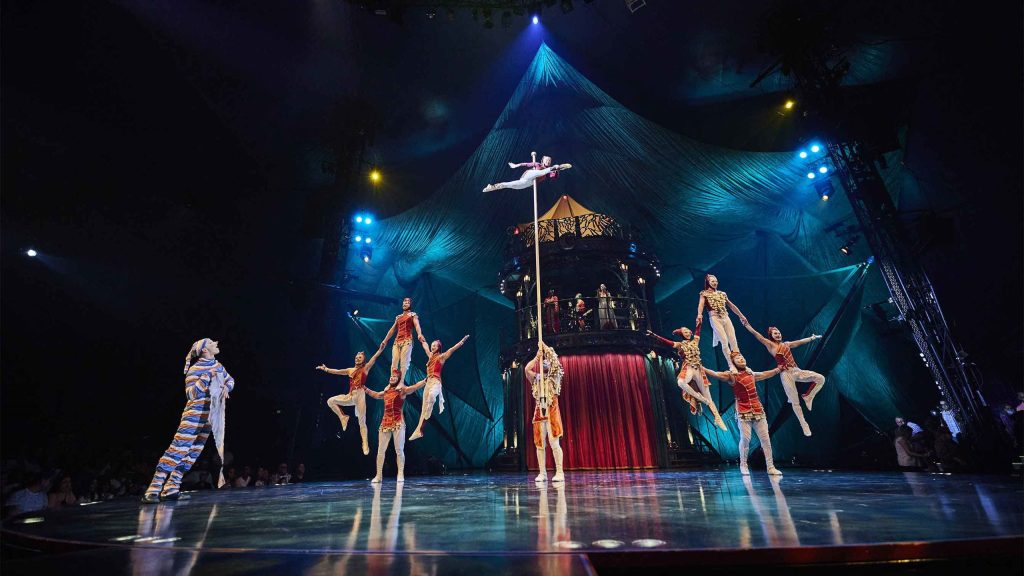
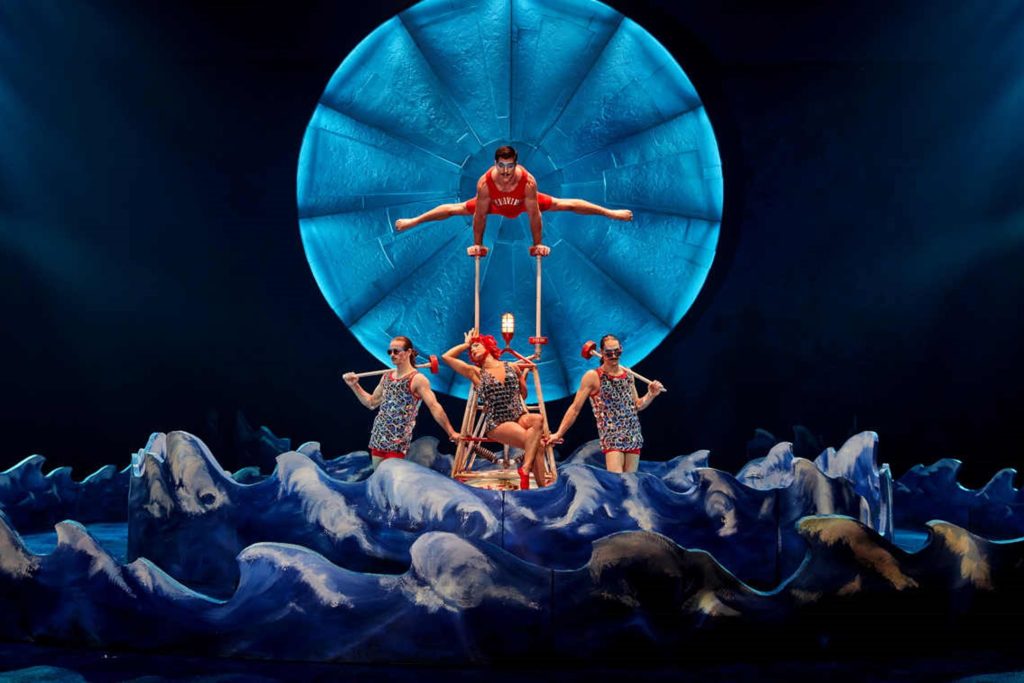
    Aggreko also provides power and HVAC for the world’s largest touring circus.
    “When looking for power solutions, we look to obtain highest standard of quality at the lowest operational cost,” says Janick Wolput, Vice President of Touring Shows at Cirque du Soleil. 
    “The comfort of our patrons and the efficiency of our operations are at the heart of our approach. Cirque du Soleil believes that Aggreko is able to deliver the best global rental power and HVAC solution for its touring shows.”
    Sailing towards Bermuda
    Aggreko has been involved in another high profile event, the America’s Cup, since it was held in San Francisco in 2013. Aggreko also delivered an America’s Cup World Series event for the organiser TEAMORIGIN in Portsmouth in 2015 and has signed a contract to do this again in 2016. 
    “When it was announced that Portsmouth was going to stage it in 2016 and when Ben Ainslie became involved, as a UK company we were keen to be involved,” says Brownhill.
    Jeremy Troughton, Operations Director, Louis Vuitton America’s Cup World Series Portsmouth tells Host City: “This will be our second year working with Aggreko as the official supplier of power and temperature control for the Louis Vuitton America’s Cup World Series Portsmouth.
    “Their pre-event planning, working with us and every supplier that required power on site, is unrivalled and their delivery when it came to the event itself took the pressure of the event team in delivering these essential services. Aggreko are essential to enable us to deliver a successful event and it great to know we are in safe hands once again and we are looking forward to building on the great relationship we started at last year’s event”. 
    Aggreko now is now looking ahead to the America’s Cup in 2017 in Bermuda. “It’s not just about power though. The teams need air conditioning, as well as power, for the old naval base where they are based for 18 months leading up to the final set of races in 2017,” says Brownhill.
    High flying hospitality
    The high level of hospitality at Red Bull Air Race and America’s Cup is another benefit of partnering with these events. 
    “The hospitality the Red Bull Air Race offers is very similar to Formula One type level of hospitality, with some very well-known faces there,” says Brownhill.
    “We can bring guests from other parts of our events business that we are looking to try and do business with; and part of our relationship with Red Bull is that we can take them back of house and show them what we do.” 
    The America’s Cup offers an incredibly high level of hospitality. “It was really quite spectacular; you are literally on the sea front facing the racing; it’s a great thing for us to be involved in and very high profile.”
    The power to engage audiences
    And when there is no immediate action taking place, a reliable power supply enables constant audience engagement. “People tend to think just of the centrepiece action at events, but there is so much more besides,” says Brownhill.
    “The America’s Cup hosted evening concerts last year, and there are stunt performances that take place right over the crowd in the Red Bull Air Race that also need power.”
    Ensuring broadcasters have the power capacity they need is also a crucial part of Aggreko’s remit. “Social media is becoming ever more important and broadcasters now cover events in a variety of different ways,” said de Behr.
    “We provide broadcast power to ensure all types of media are catered for. Red Bull is especially creative and strong in this area.”

  • Major events: overcoming common challenges and meeting criteria

    Major events: overcoming common challenges and meeting criteria

    With millions of global spectators, and thousands on location, organisers and hosts of major sporting events are under constant pressure to deliver a successful event on time, on budget and to the highest possible quality.
    There is also usually common ground shared between events – from health and safety requirements to energy supply, media management and coordinating local infrastructure. Inevitably, however, the diversity of modern major events means there are always specific challenges to overcome.
    In those circumstances, suppliers have to be at their most innovative to satisfy an event’s needs.
    Aggreko has been supplying power to major event organisers and hosts for decades and we have encountered our fair share of complexities along the way.
    Two of our most consistent strategic requirements are to plan ahead in order to meet high capacity demand (for example during opening ceremonies or at peak viewing times); and being prepared for unexpected power disruptions, particularly if we are working closely with a local electricity grid.
    Two increasingly frequent criteria are managing space constraints and reducing noise pollution – these are particular concerns for events in city locations.
    Noise levels are now addressed in the very early stages of planning a major event, typically because of the risk of disrupting athletes or performers. In multi-venue events, each location could come with local issues, requiring an organiser to prevent disruption to residents nearby. Every event is different; each requires detailed planning from layout and installation to maintenance and project management.
    Some events even promote their community spirit – the city of Glasgow adopted the slogan “people make Glasgow” in the lead up to and during the XX Commonwealth Games, which made it imperative for suppliers like us to ensure the Games worked for residents. No doubt the same will be true when we supply our power solutions for the Gold Coast Games in 2018. Yes, it’s important that the actual events are a success, but it is equally important that our equipment does not interfere with the sound and quality of the production, which includes the customer experience in and around venues.
    There are several proven strategies for minimising noise emissions linked to power generation at events. Driving them all has to be a focus on energy efficiency, as an efficient use of power allows us to reduce the actual number and size of generators in situ. When space is limited or your equipment is likely to be close to the action, being efficient can really help to reduce noise emissions.
    Noise barriers are another great way to minimise disruption for city centre events, reducing noise levels in areas overlooked by residents and businesses. Under typical installation conditions, our Generator Set Enclosure Barrier, for example, can reduce noise levels by 90% (10dB) for residents on the 6th floor of an overlooking building and by 84% (8dB) on the ground floor.   
    Golf events like The Ryder Cup are a particular challenge. Not only are they typically set on courses some distance from mainstream infrastructure, but also they require a discreet audience and an even quieter built environment, even at the most critical moments of excitement. As a result, we take further steps to reduce noise during Ryder Cups, as doing so is critical to the event’s integrity and success. At Hazeltine earlier this year we provided 24MW of power to the event using our innovative “Super Silent” generators that produce very low noise emissions (48-55dBA at 50 feet).
    Athletes, spectators and local people’s demands must be front of mind at all time, both for organisers and suppliers, in order to protect an event’s reputation. With future investment at stake, a smooth (and quiet) operation is crucial.
     

  • Aggreko wins PyeongChang 2018 power contract

    Aggreko wins PyeongChang 2018 power contract

    Temporary power provider Aggreko has been awarded the contract to deliver electricity to the 2018 Winter Olympic Games in PyeongChang.
    The deal is valued at approximately US$40m and Aggreko will also have sponsorship of the Games.
    The company will generate electricity for all 15 competition venues in the mountainous resort county of PyeongChang.
    Aggreko will also power three competition venues in the coastal city of Gangneung, where figure skating, curling, ice hockey, speed and short-track skating events will take place.
    The International Broadcast Centre in PyeongChang will also be powered by Aggreko.
    “I am delighted that Aggreko has been appointed the official power provider for the Olympic Winter Games PyeongChang 2018,” said Chris Weston, chief executive officer of Aggreko.
    “We look forward to helping the organising committee deliver another successful Games.”
    A major part of the company’s business is providing power and temperature control solutions for sports events, such as the Olympic Games, cricket, football and rugby world cups, Pan American/Parapan American Games, PGA Tour, Tour de France, Ryder Cup,Red Bull Air Race and Formula One.
    In August 2016 Aggreko announced that it had won the contract to provide power for the 2018 Commonwealth Games in Gold Coast, Australia, having powered the 2014 Commonwealth Games in Glasgow, where the company has its headquarters.
    Aggreko also has a long track record of providing power to entertainment shows, such as I’m a Celebrity, Cirque du Soleil and music festivals including Glastonbury, as well as high profile events like the US Presidential Inauguration.

  • Exclusive Q&A: Why is sustainability so important for major events?

    Exclusive Q&A: Why is sustainability so important for major events?

    Why is sustainability so important for major events?
    Gary Meador (GM): Organising committees and bid cities are always weighing up the cost benefit of permanent versus temporary infrastructure; and creating a lasting legacy versus leaving things as the way you found them. A lot of the LOCs (local organising committees) are considering, along with the public consciousness, the most efficient and sustainable way to host major events, whether it is an international sporting event or music festival.
    What a lot of the events are looking at now is they don’t necessarily need to build everything as a legacy. Not every city has the need for a permanent velodrome or a rowing venue. One of the things that Aggreko is really good at is working with customers to find innovative solutions to challenges around temporary power, air-conditioning and heating, or whatever their needs may be – to come in and help them make as little impact on the venue. At the end of the event we pick our stuff up and go away.
    On the other hand, we also work with event organisers to help design what are meant to be legacy venues. We use our experience and key learnings during the planning phases, acting as a strategic partner as early as possible, to contribute to ideas on how infrastructure can be built or where it will have a fair use afterwards for example.
    The benefit of adopting temporary power and cooling systems means you don’t have to build a venue to meet its peak requirements. You can build it to be somewhat less than that and supplement with on-site services to meet the additional capacity demand during the event.
    For example, for a building that would normally seat 20,000 for a regular sporting event but has to seat 30,000 for a major event, you don’t have to put in an air-conditioning system that will cool 30,000 people, just one for 20,000 people that can be supplemented.
    There’s all kinds of different ways we can work with LOCs to help them meet those goals.
     
    You mentioned LOCs, do you work with them at this stage when they become an organising committee or is this something that potential event bidders can be thinking about earlier in the game?
    GM: I think it’s definitely beneficial to think about sustainability earlier because a lot of people don’t have a great deal of experience with the temporary. Their only base of knowledge is working with a design-engineering firm, for example, that have only ever designed permanent structures. The earlier we can get involved the greater the opportunity is to improve efficiency and help create lasting benefits for the organising committees as they move forward.
    It doesn’t have to be an organising committee, it could be the PGA of America, the US Golf Association or Formula 1, that’s just something we have developed a special niche for in the past 30 years.
     
    Do you think that the rights holders and event organisers are fully aware of the possibilities of how solutions, like your temporary power solutions for instance, can make an event more sustainable?
    GM: We are trying our level best to raise awareness of the benefits of temporary systems, but no I think that knowledge is still low. We have a lot of work to do moving in that direction. It’s not just our discipline; it’s the tent companies, the bleacher companies, the restroom trailer companies, everyone. We have mastered the ‘art of the temporary’ and either supplement or fully provide services for an event from start to finish but need to spread the word on the benefits of this approach.
     
    Which particular events have you been working on recently to enable these sustainable solutions?
    GM: We have supported quite a few major events on the world’s stage lately: the Ryder Cup in Minneapolis, Minnesota and the Trump inauguration in Washington DC. We didn’t have a huge amount of time to think about sustainable solutions for the inauguration as it comes together virtually in a week after the election, but at the Ryder Cup we were able to do some neat things.
    We introduced some LED lighted balloons that replaced standard diesel-generated light towers. We took some of those to the site, plugged into the on-site power source we were already providing, and helped the PGA of America eliminate the need for 20 light towers they would have had to rent. I think this saved about 40,000 tonnes of carbon across the length of the job.
    We are trying to find innovative ways to work with event organisers and help them to meet their sustainability goals too. We are looking at battery technology to come in and maybe take over a small load at night, so the generator can shut off and the load can run on battery. Then when the load grows larger than the battery system, the generators start back up during the day.
    We are continuing to look at new innovations likes these to really help events lower their carbon profile and meet their sustainability goals as well as cost savings. We owe it to our customers to help them find better and economical ways to do things. That’s part of our mission.
     
    Energy storage is becoming increasingly important for a whole range of industries, but you can see why in the major events sector…
    GM: Yes, we are waiting for that magic battery to be built that makes it ultra-efficient to store this power too. The technology isn’t quite there on the batteries, but it’s getting better.

  • Aggreko to power the Glasgow 2018 European Championships

    Aggreko to power the Glasgow 2018 European Championships

    Scotland-based Aggreko has today been announced as OfficialTemporary Power Supporter for the Glasgow 2018 European Championships.
    A global leader in mobile, modular power generation, the firm will provide both temporary and continuous prime power across the Championships’ competition and non-competition venues.
    Aggreko will provide around 60 generators supplying more than 10 Mega Volt Amp (MVA) of energy, distributed through more than 240 panels and 26 km of cable to ensure the successful delivery of 84 thrilling sessions of sport including Open Water Swimming at Loch Lomond and Mountain Biking at Cathkin Braes.
    The firm will also help power Festival 2018 – a dynamic cultural programme which will showcase the best in music, visual art, street art, dance, theatre and digital art across the city, with Glasgow’s iconic George Square at its heart.
    Temporary power will be used in conjunction with existing venue infrastructure to meet all of the Championship’s power requirements over the 11-day celebration of sport and culture in August 2018.
    Having supplied temporary power to the Glasgow 2014 Commonwealth Games, 2014 Ryder Cup and London 2012 Olympic Games, Aggreko boasts an excellent reputation for powering the biggest global multi-sport events.
    2018 will see the firm support PyeongChang Olympic and Paralympic Winter Games and the Gold Coast Commonwealth Games.
    Aileen Campbell, Minister for Public Health and Sport, said: “The Glasgow 2018 European Championships provides a fantastic opportunity for Scotland to demonstrate why we have an impeccable reputation for hosting major sporting events. By working with businesses who know exactly what it takes to put on successful international events, we can ensure Glasgow 2018 is a memorable occasion for athletes, officials and fans alike.”
    Leader of Glasgow City Council, Councillor Susan Aitken, said: “The latest addition to the Glasgow 2018 sponsor family, Aggreko has helped deliver excellent multi-sport events around the world. Working with a well-known brand with its roots in Scotland will help guarantee the success of the inaugural European Championships.”
    Robert Wells, Managing Director, Aggreko Major Events Services, said: “Aggreko is proud to support the first staging of the prestigious Glasgow 2018 European Championships. We look forward to working with the team and Glasgow city to ensure the faultless delivery of power to the Championships. There is no better place to do this than in Scotland.”
    In a world first, Glasgow 2018 will bring together some of the continent’s leading sports including the existing European Championships for Aquatics, Cycling, Gymnastics, Rowing and Triathlon with a new Golf Team Championships between 2 – 12 August 2018.
     

  • Aggreko announces joint venture with Shanghai Yude in China

    Aggreko announces joint venture with Shanghai Yude in China

    [Source: Aggreko] The new company starts trading immediately as Shanghai Yude AggrekoEnergy Equipment Rental Co Ltd. The move is part of Aggreko’s long-term strategy to grow its business in China with an experienced and respected local partner.
    Aggreko takes 21.5 percent equity in the new company and operations will be managed by Shanghai Yude in line with Aggreko’s class-leading standards and procedures. 
    Aggreko is the global leader in mobile, modular power and heating and cooling, and will initially provide diesel generators and associated range of ancillaries to supplement Shanghai Yude existing power equipment and UPS rental business.
    “This mutually beneficial partnership with Shanghai Yude means we can bring reliable power and joint expertise to a rapidly growing market,” said Stephen Beynon, Managing Director, Aggreko Power Solutions.
    “The UK and China have strong commercial ties that go way back, and we are delighted to be able to work with a local partner that has extensive local experience and expertise. We look forward to continuing to provide reliable, uninterrupted and cost-effective power to China in collaboration with a company that shares our values of making a difference and supporting growth in communities and industries across the globe.”
    Yude was established in Shanghai in 2005 and has 45 employees. The company currently has more than 40 MW of power generation capacity and supports local industries, including events and construction. Aggreko is based in UK and has more than 7,300 employees globally. It has been operating in China since 2008, and has a depot, and offices in Shanghai, which will be one of two facilities supporting the new company.
    China currently is the world’s largest producer and consumer of electrical power.
    The Yude Aggreko joint venture will initially provide power generation equipment in Shanghai, with scope to provide loadbank equipment and services as demand increases.
     

  • A triumphant year for Aggreko

    A triumphant year for Aggreko

    Host City: 2018 has been a big year for Aggreko powering major events, starting with the Winter Olympics in PyeongChang – what were the biggest challenges there?
    David de Behr: As with any winter event we do, the weather conditions are always the biggest challenge – and with the magnitude of the Olympics, the volume of equipment, processes and people needed to execute promptly are key.
    We faced extreme cold temperatures and winds while building up the temporary power services requested to run the Games smoothly in PyeongChang – and this required a lot of endurance from our equipment and a lot of energy from our specialist engineers.
    We adapted to meet these challenges head on. We modified all our fuel tanks by adding heat elements, generators were equipped to run in the cold climate and the project team had to plan all operations very tightly to meet the client deadlines.
    The endurance level of our people deserves to be recognised; they never lost sight of the objective and their dedication in the face of some incredible obstacles was key to our success.
     
    Host City: Your next project in 2018 was the Commonwealth Games in the Gold Coast – how did this compare as a project for Aggreko?
    David de Behr: The Gold Coast Games were special as they were not located within one city but held in a region. Australia has always been very special to Aggreko as it is one of our oldest markets and so it was fantastic to see the synergy between Aggreko Australia and our experienced Major Events team putting together this project.
    We worked with a very experienced organising committee (GOLDOC), which had a very clear view on how they wanted to deliver the Games, and the partnership with our experienced project team meant we had a very fluent build up towards the Games.
    Using our design program to give financial transparency throughout the contract was appreciated by the organising committee and the rest is history: great Games in a beautiful region with enthusiastic engagement from the public – a job well done!
     
    Host City: The European Championships in Glasgow was a new format of event, combining multiple sports – what were your perceptions of this and how did Aggreko contribute to its success?
    David de Behr: Glasgow is and always will be special to Aggreko – our roots and our manufacturing plant are located in Glasgow.
    This new format of event coming to our town, and being able to harness a lot of the infrastructure from the 2014 Commonwealth Games, made it a perfect match for us.
    We were very impressed by the enthusiasm around the Championships and strongly believe it will grow as an event in the future.
    For our teams on the ground it was a pleasant return to the venues we powered in 2014. Working very closely with the organising committee, we were able to tailor and deliver the event within everyone’s expectations.
     
    Host City: After all those multi-sports projects, you also powered the Ryder Cup in France – what are the requirements there?
    David de Behr: The difference with the other 2018 events is that the Ryder Cup is a massive single venue event.
    It forms part of our long-term relationship with the European Tour. The exciting part this time, unlike our previous involvement with Ryder Cups, was that the 2018 incarnation was held outside of the UK, near Paris.
    150 lorries packed full of equipment were delivered to install all temporary power and HVAC systems on the massive site. It was project managed by an English-French Aggreko project team with the first members of our team on the ground in May.
    The beauty of such golf tournaments is also the main challenge – the players and public can walk almost everywhere – and so planning and design are key to the success of the event for us.
    Another challenge is the seasonal weather – the climate could be very unpredictable and so we had to prepare for all temperature control eventualities. Our temperature control systems are designed to be able to cope with this changing environment.
    The outcome was really impressive and the Ryder Cup week was one that many will not forget for a long time!
     
    David de Behr is speaking at Host City 2018 on the topic of “Reimagining Major Event Delivery”. Host City 2018 takes place in Glasgow on 20-21 November