Tag: Qatar 2022

  • A fine balancing act

    A fine balancing act

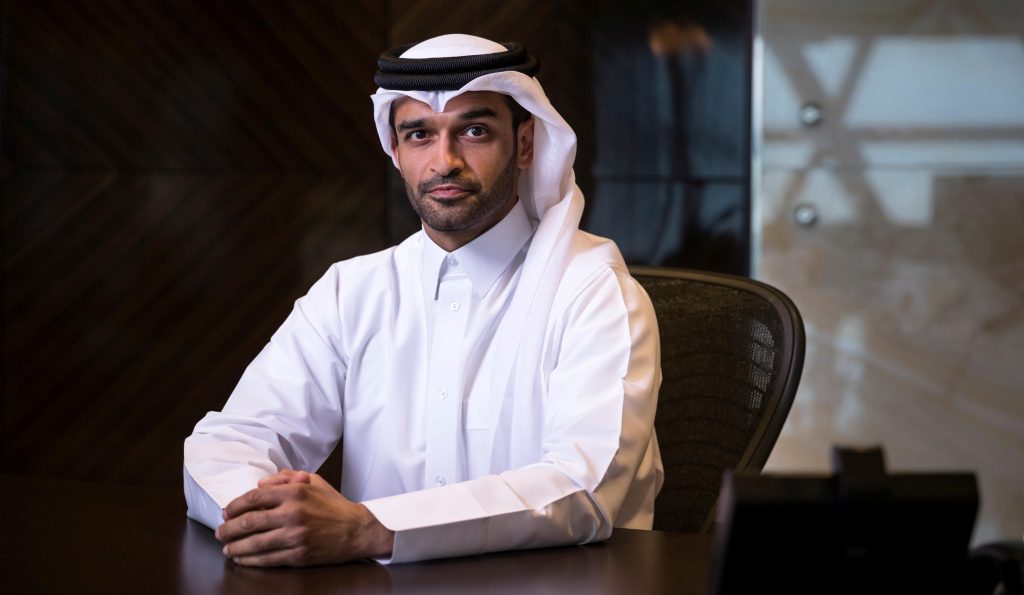
    HOST CITY: The entire Qatar 2022 project requires more construction work than any other sports event in history. How do you feel about the challenges ahead?

    Al Khater: The heavy lifting is not the stadiums; it is the rest of the infrastructure. We do not see it as a challenge – we see it as a significant amount of work.

    There is a fine balancing act and the next nine years are exactly like that. We are putting into place a decision-making process, up and down the supply chain, that is quick and efficient.

    HOST CITY: What are the most important criteria for selecting main contractors for the construction work?

    Al Khater: One of the most important attributes will be the ability to understand the local requirements and dynamics of major programmes within Qatar. Whilst there is such a large amount of activity taking place within a relatively short timescale, it is vital that our delivery contractors understand the landscape they will be operating in with the challenges and opportunities that this presents.

    Another attribute would be the open dialogue that we would expect throughout our supply chain and the early communication of risks and issues as well as the recommended options for resolution. We want to work closely with our partners within an approach that has a “no surprises” mentality.

  • Qatar to invest $45bn in tourism beyond World Cup

    Qatar to invest $45bn in tourism beyond World Cup

    Qatar aims to almost double tourism’s share of GDP over the next 16 years through investments from government and business. The bold vision was announced at the launch of the Qatar National Tourism Sector Strategy 2030 on Monday.
    “Our aim is to have the tourism industry contribute a total of 5.1 per cent of GDP by 2030, up from 2.6 per cent today,” said Hassan Al Ibrahim, director of strategy at the Qatar Tourism Authority. 
    “USD 40 to 45 billion of investments by the government and the private sector will make this vision a reality.”
    The FIFA World Cup in 2022 will be a phenomenal showcase for Qatar and the country is under pressure to deliver a legacy for the tourism and events sectors.
    “The strategy strives to fully capitalise on Qatar’s tourism potential and represents the aspirations of the Qatari people for the future of their country,” said His Excellency Issa bin Mohammed Al Mohannadi, chairman of the Qatar Tourism Authority.
    The strategy envisions Qatar as “a world class hub with deep cultural roots”, further placing the country on the world tourism map and allowing people from around the world to recognize and appreciate what it has to offer via its unique culture and heritage.
    “Tourism is a vital pillar in Qatar’s development efforts and a key driver of socio-economic growth in the country” said Al Mohannadi.
    1.2 million people visited Qatar in 2012, mainly from Saudi Arabia and other Gulf nations. The tourism authority is seeking to widen the range of markets of origin by setting up eight new satellite offices in key outbound markets, in addition to existing offices in London and Paris. 
    “Our target is to attract 7 million visitors to Qatar from all over the world by 2030,” said Al Ibrahim. 
    With a target of USD 10.7bn to be generated from tourism in 2030, the strategy places much greater emphasis on the private sector in the economy with an increased role for entrepreneurship and SMEs. 
    It is hoped that investments in infrastructure already underway will bring rewards. The new Doha Exhibition and Convention Centre (DECC), described by the tourism authority as a “game-changer for the MICE sector,” is scheduled to open in 2014. Also opening in 2014 is Hamad International Airport, which promises to become an important hub for transit passengers.

  • London 2012 infrastructure boss to address Middle East

    London 2012 infrastructure boss to address Middle East

    The UK-based Institution of Civil Engineers (ICE) has announced that its first lecture tour of the Middle East will take place on 13-17 March. Sir John Armitt, Vice President International of ICE and Chairman of the London Olympic Delivery Authority (ODA) is to speak in Abu Dhabi, Doha and Dubai. 
    The series of evening lectures, entitled “Developing Modern Infrastructure”, will specifically address the challenges of planning and executing large-scale infrastructure projects.
    The chairman of the London 2012 ODA and former chief executive of Network Rail, Sir John will share his knowledge and insight into the challenges of planning and delivering large-scale infrastructure projects. 
    The lectures will make particular reference to the London 2012 Olympic Games in the light of the many new and ongoing infrastructure projects in the Middle East, such as World Expo 2020 Dubai, Qatar 2022.
    Sir John will speak in Abu Dhabi at 6:30PM on 13 March, Doha at 6:30PM on 16 March and Dubai at 6PM on 17 March. For more information about these free lectures, contact melanie.hill@ice.org.uk

  • Qatar’s annual budget breaks records

    Qatar’s annual budget breaks records

    The Emir of Qatar has approved the country’s biggest ever national budget, with expenditure on infrastructure scheduled to rise faster this year. 
    An unprecedented total annual expenditure of US$60bn, based on projected national revenues of US$62bn, was endorsed on Sunday by Emir Sheikh Tamim bin Hamad Al Thani. The spending plan for the 2014-2015 fiscal year is up 3.7 per cent on the previous year. 
    The increase in expenditure is accounted for by a major ramp-up of infrastructure projects prioritised for national development, which include venues for the 2022 FIFA World Cup.
    The Minister of Finance, His Excellency Ali Sharif Al Emadi, announced that US$24bn has been allocated for key projects. This figure, 16 per cent higher than the US$20bn set aside for such works in the previous fiscal year, represents a major step change in the pace of infrastructure work.
    Al Emadi also stated that spending on key projects would reach US$182.35bn over the next five years.
    The investment is necessary to start construction of new stadiums for the 2022 World Cup, with work set to begin on stadiums in Al Khor, Al Rayyan, Al Whakra, Khalifa and Lusail. 
    Other areas of development include education, health and transportation. Qatar’s new airport was originally due to open in December 2012 but is not expected to start operating until the middle of 2014. 

  • Qatar 2022 confirms attendance at Soccerex

    Qatar 2022 confirms attendance at Soccerex

    The Qatar 2022 Supreme Committee for Delivery and Legacy has confirmed that it will send a delegation to the Soccerex Asian Forum, which takes place on 13 -14 May in Jordan. 
    Secretary general Hassan Al Thawadi is to speak on the “Major Events Panel” and deliver an exclusive presentation on Qatar’s plans to host football’s biggest event. The 2022 FIFA World Cup hosts will also welcome delegates to the VIP Lounge and an exhibition stand that will highlight the various projects that Qatar is undertaking over the next eight years. 
    “It is a huge honour to welcome back Mr. Al Thawadi and the Supreme Committee for Delivery and Legacy to another Soccerex event,” said Soccerex Chairman Tony Martin.
    “The positive investment being made by Qatar for the World Cup represents the commitment and passion shown for football within this thriving continent.”
    With an unprecedented number of stadiums and infrastructure projects to be built, training facilities to be supplied and sponsorships to be agreed on, the Qatar 2022 World Cup represents a unique opportunity for the international major events industry. The Soccerex Asian Forum is a rare occasion for the industry to meet decision makers from the Supreme Committee for Delivery and Legacy.
    A record number of senior industry figures from FIFA and the AFC are set to attend this year’s Soccerex Asian Forum. Leading dignitaries will also attend from La Liga, Real Madrid, Liverpool, the United States Soccer Federation, Manchester United, the Australia Football Federation, the Qatar Football Association, Barcelona, the Japan Football Association, the All India Football Federation and Galatasaray. 
    The Forum, held in partnership with the AFDP founded and chaired by HRH Prince Ali Bin Al Hussein, will bring together the leading figures from the world of Asian football as well as other international football experts to discuss the development of the game across Asia. The conference agenda will include a review of the opportunities for growth and the challenges facing Asian football.
    For more details about the Soccerex Asian Forum please contact Soccerex on +44 208 987 5522 or visit www.soccerex.com/events/asia/
     

  • Qatar construction event attracts growth market exhibitors

    Qatar construction event attracts growth market exhibitors

    As Qatar works towards the FIFA World Cup in 2022 and the Qatar National Vision 2030, international interest in the country continues to grow. This is reflected by Project Qatar 2014, to which 2,100 companies from 47 countries expected to attend. 
    A total of 24 countries are setting up international pavilions at Project Qatar 2014, the International Construction Technology & Building Materials Exhibition, which takes place on 12-15 May at the Qatar National Convention Centre. 
    Three of these countries – Indonesia, Palestine and Romania – are taking pavilions to the event for the first time, reflecting the desire of growing markets to get involved in the construction industry in Qatar. 
    More established countries taking international pavilions include major event hosts Austria, Canada, China, France, Germany, Greece, India, Italy, Korea, Spain, Turkey and the United Kingdom.
    “The international pavilions have been fundamental to the success of Project Qatar, which has a long history of attracting many global exhibitors and visitors. The pavilions offer international exhibitors a central platform to showcase their expertise, products and services,” said Rawad Sleem, Project Manager, Project Qatar.
    “The participation of all these international pavilions demonstrates their recognition of the importance and commercial value of partnering with Project Qatar 2014, positioning their nations in Qatar amongst key global leaders in a market experiencing world leading exponential growth in infrastructure, building and construction.”
    Francois Sporrer, French Trade Commissioner, Director of UBIFRANCE Middle East said, “There are many construction and infrastructure projects in Qatar, in preparation for the FIFA World Cup in 2022. In 2014, US$40 billion are going to be invested in various projects in this booming market. Project Qatar 2014 is definitely the place to be which is why the French pavilion, organised by UBIFRANCE, will gather nearly 30 French companies offering various state of the art technologies and French know-how for the building industry. Some of these companies are already active in the Qatari market and a number of others are looking forward to Project Qatar 2014 to network with partners and distributors.

  • Qatar World Cup could be hosted in three cities

    Qatar World Cup could be hosted in three cities

    The number of host cities and venues scheduled to host World Cup matches in 2022 is under review and may not be confirmed until September, a spokesperson for the Supreme Committee Delivery and Legacy told HOST CITY. 
    “In due course, the final proposal for stadia will be submitted to the FIFA Executive Committee for approval. The requirement is a minimum of eight and a maximum of 12 stadia,” the Supreme Committee for Delivery and Legacy said in a statement emailed to HOST CITY.
    Qatar’s World Cup bid originally proposed an event with 12 venues encompassing all seven municipalities in Qatar. Four venues were planned for Doha, three for Al Rayyan and five for each of the other municipalities. 
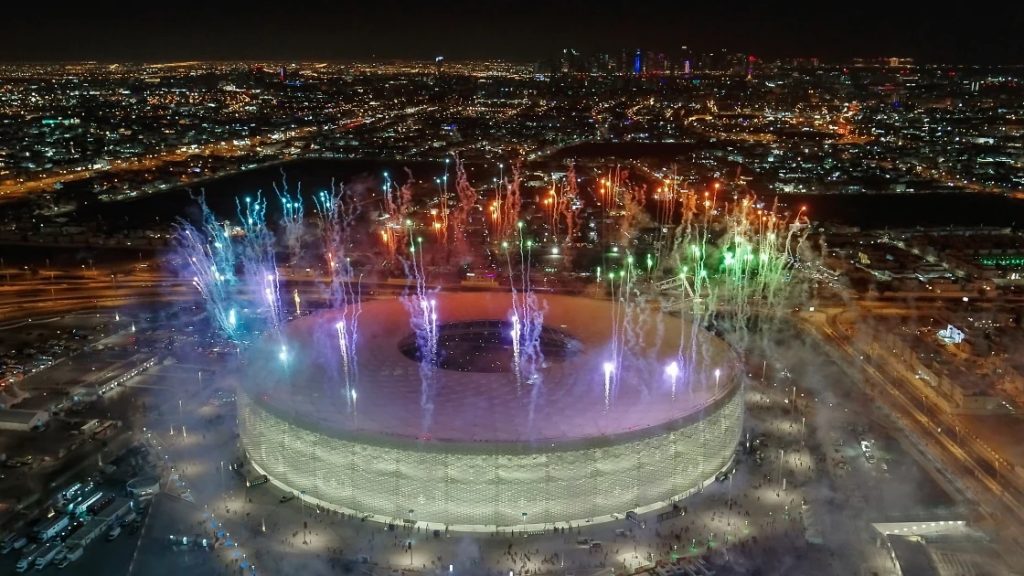
    One possible outcome of the review would be to only use four venues in Doha, three in Al Rayyan and one in Al Wakrah – where the first new stadium is for the World Cup is already being built. This would mean that just three of Qatar’s seven municipalities could host World Cup matches. 
    “Once a country is chosen as host, a review of the bid plans is made with the organisers to propose the final host cities and stadia projects, which then need to be approved by the FIFA Executive Committee,” the Committee’s statement said. 
    “For Qatar, the process of selecting the final proposed line-up of host venues is ongoing.”
    Asked when the venue selection would take place, the spokesperson said “It is logical to assume that the decision by the FIFA Executive Committee will occur after the 2014 FIFA World Cup in Brazil. In comparison, Russia’s Host City Selection occurred on 29 September 2012.”
    Russia’s bid for the 2018 World Cup originally proposed 16 stadiums in 14 host cities, which was reduced to 12 stadiums in 11 cities. 
    The spokesperson declined to comment on what factors might influence a decision to reduce the number of host cities. Possible reasons include the time and investment required for venue construction, coupled with the scale of civic infrastructure work scheduled for Qatar over the next decade.
    The need to safeguard legacy use for all World Cup stadiums after 2022 is also likely to influence the review. 

  • Qatar’s size is a factor in reducing number of venues

    Qatar’s size is a factor in reducing number of venues

    The Supreme Committee for Delivery & Legacy for the 2022 FIFA World Cup in Qatar has confirmed that the size of the host nation is a factor in the decision to consider reducing the number of host venues to as few as eight.
    “The process of selecting the final proposed line-up of host venues is ongoing in consultation with FIFA,” the Supreme Committee for Delivery & Legacy said in a statement. 
    “Given the size of our country, FIFA and the Local Organising Committee decided to look into reducing the originally proposed 12 venues to fit the country’s specifications while ensuring best playing conditions for all 64 matches. ”
    The statement reiterated the fact that eight is the minimum of number of stadiums generally requested by FIFA for a World Cup.
    “The 2022 Local Organising Committee will submit by December 2014 a proposal for an appropriate number of host venues, whilst ensuring a suitable legacy for the country and the national league after the tournament. The approval of the final number of stadiums is envisaged by the FIFA Executive Committee by March 2015.”
     

  • Qatar World Cup stadiums to be confirmed in 2015

    Qatar World Cup stadiums to be confirmed in 2015

    The number of stadiums that will feature in the 2022 World Cup still hangs in the balance and will not be finalised until next year, according to Nasser Al Khater, executive director for marketing at the Supreme Committee for Delivery & Legacy.
    It has been widely reported that Qatar plans to drastically scale down its ambitious venue plans for the 2022 World Cup. These reports were sparked by comments made by the Supreme Committee’s senior manager for projects at a conference on 23rd April, who stated that only eight stadiums would be used. 
    With the Supreme Committee having neither discounted this possibility nor given reasons why cutting back to eight stadiums might be an option, the international sports event community has come up with its own suggestions, with cost control being considered to be a possible motivation.
    Addressing such “speculation”, Al Khater said “That’s not true actually.”
    Speaking to delegates at Soccerex Asian Forum on Tuesday, he said “In our bid, as FIFA stipulates, we proposed a minimum of 12 and a maximum of 18.”
    The minimum number of stadiums required by FIFA is eight and this figure remains a possibility. 
    “In 2015, will decide alongside FIFA how many need for the World Cup,” he said.
    Al Khater was speaking in place of Hasan Al Thawadi, Secretary General of the Supreme Committee for Delivery & Legacy, who was unable to attend the event.
    Al Khater also took the opportunity to set the record straight on reports of poor workers’ welfare on World Cup construction projects. 
    “Contrary to what international media says, there is no single injury or death on World Cup projects,” he said.
    “However, from the very beginning we have taken the issue of workers’ welfare very seriously,”
    Although civic infrastructure developments are progressing rapidly in Qatar, construction has not started on World Cup sites. Only one of the new stadiums, Al Wakrah, is under construction.
    By the end of 2014, five World Cup stadiums will be under construction, Al Khater told delegates.