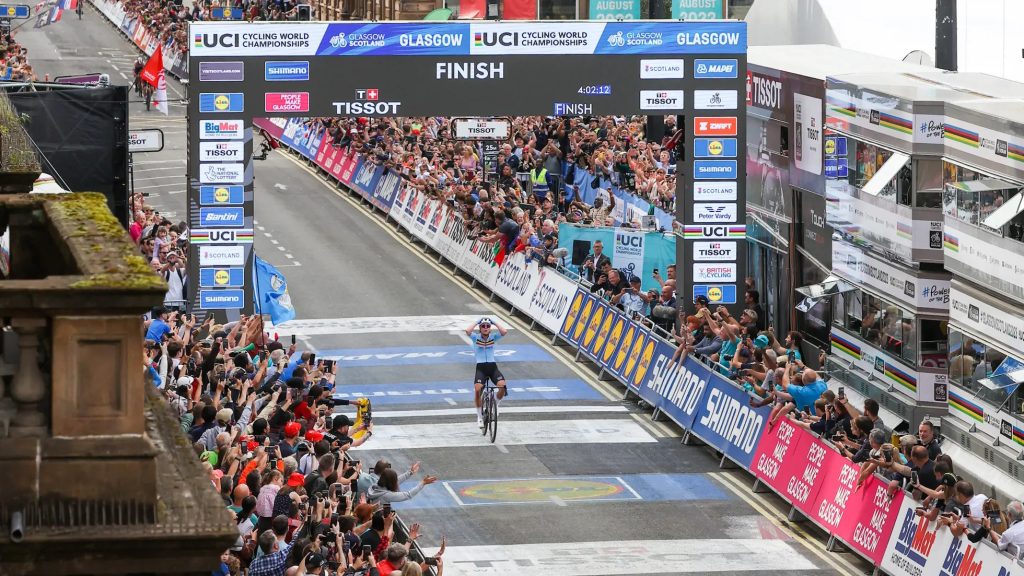
2014 was a momentous year for Scotland and major events were at the heart of the excitement. The great success of the “best ever” Commonwealth Games in 2014 was followed by an acclaimed Ryder Cup.
“We’ve been putting Scotland forward as the perfect stage for events for a number of years,” Paul Bush OBE, chief operating officer of EventScotland told HOST CITY magazine. “What came out of last year is that it was a step change for us.”
The successes of 2014 have provided a platform for future hosting successes, building on proven strengths that EventScotland refers to as the “four Cs”: capacity, capability, credibility and confidence.
“Our capacity, in terms of number of volunteers, transport, infrastructure and accommodation, is now recognised around the world,” says Bush. “As for capability, all the events were delivered as the best ever or recognised some of the best.
“Credibility is about reputation; the experience of people coming to our events was high. And the feedback we had from the local population was extremely positive – they didn’t see the events as an impediment; they saw them as something to be proud of.
“And that’s given us the confidence to look bigger and better in the future. The international federations now have great confidence in bringing their events back to Scotland this year.”
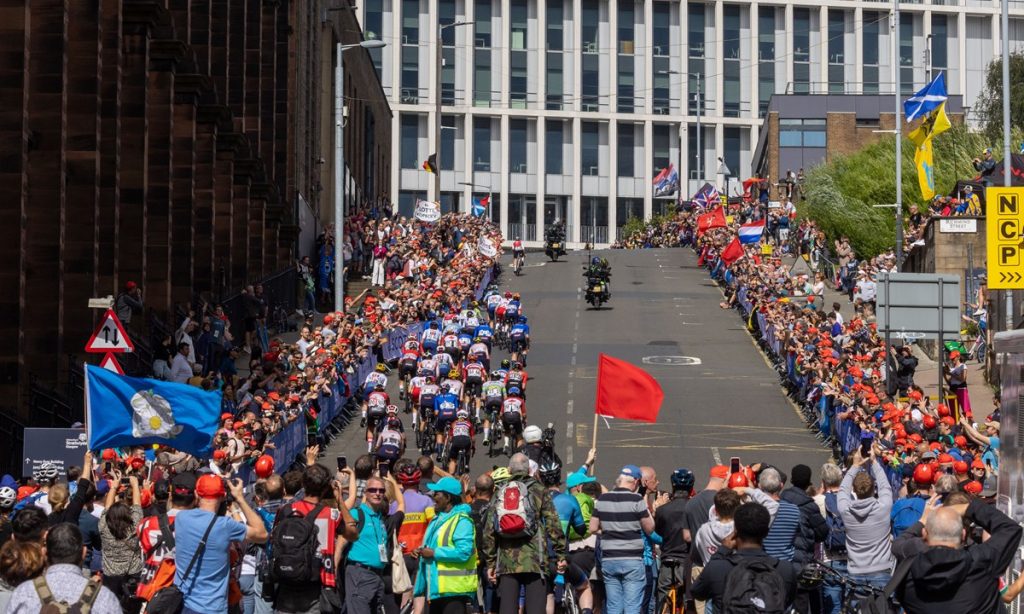
Glasgow is hosting the IPC Swimming World Championships and the World Gymnastics Championships in 2015.
Outside the cities, Scotland is hosting seven golf tournaments back to back this year. The Open Championships takes place in St. Andrews this year while the Women’s British Open takes place in Turnberry in Ayrshire.
The World Orienteering Championships, which has record number of entries already this year, takes place in Speyside, the countryside around Aberdeenshire.
And the UCI Mountain Bike World Cup is taking place in Fort William again in what has become an annual Scottish fixture.
“We’re really cognisant of the fact that we’ve got to spread the benefit as much as we can across the country,” says Bush.
“That’s not always possible because the facilities and the infrastructure are often the driver, but using our natural landscape is really important to us.
The European Eventing Championships, the final qualifying event for Rio 2016, is in the tiny village of Blair Atholl in Perthshire. “The infrastructure that will be needed to put up around that will be huge, and that will really showcase the landscape of that area.”
The 2014 Ryder Cup was hosted on a greenfield site at Gleneagles. Despite the influx of 50,000 people a day, there were no problems in getting people to and from the event – thanks to a transport infrastructure group set up by the Scottish government to look after major events. Initially set up for the Commonwealth Games and the Ryder Cup, this group has since maintained its position within Transport Scotland to ensure the smooth operation of all major events.
Beyond sport
Major cultural events are also an invaluable part of Scotland’s hosting portfolio. Glasgow was the European City of Culture in 1990, hosted the MOBOs in 2009, 2011 and 2013, the MTV Awards in 2014 and is hosting the Turner Prize in 2015.
“Glasgow is recognised as one of the cultural gems of Europe; it has a huge history and heritage within contemporary arts,” says Bush, pointing out that three of the last five Turner Prize winners were educated at the Glasgow School of Art.
“The MTV Awards got to a totally different demographic in terms of young people. MTV communicates through social media –their ticket sales for Glasgow were activated through Facebook, they don’t rely on traditional routes at all.”
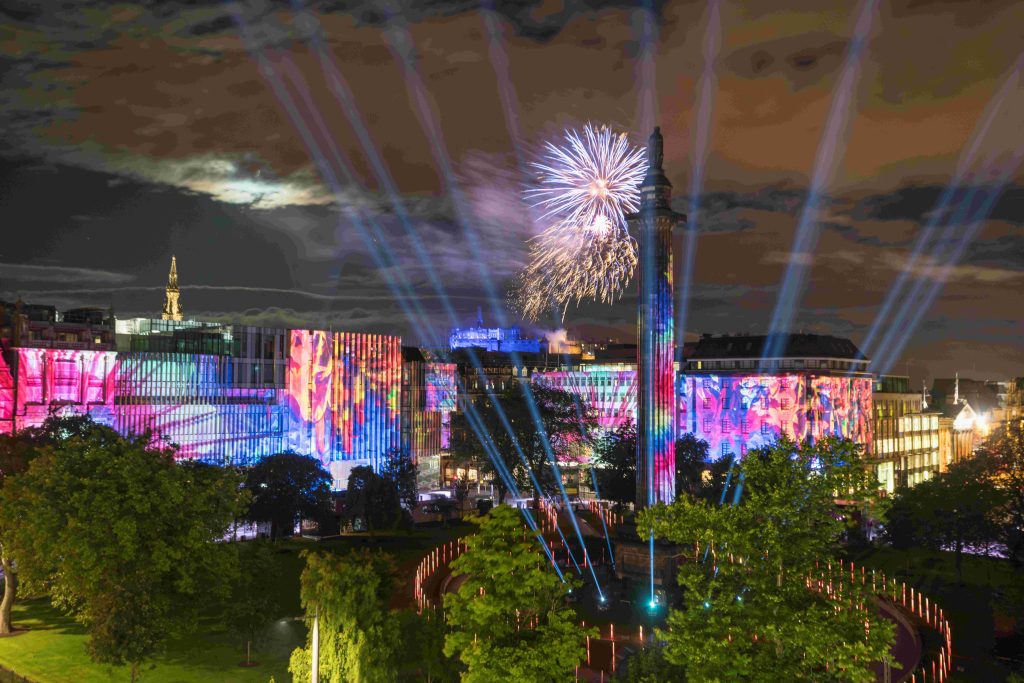
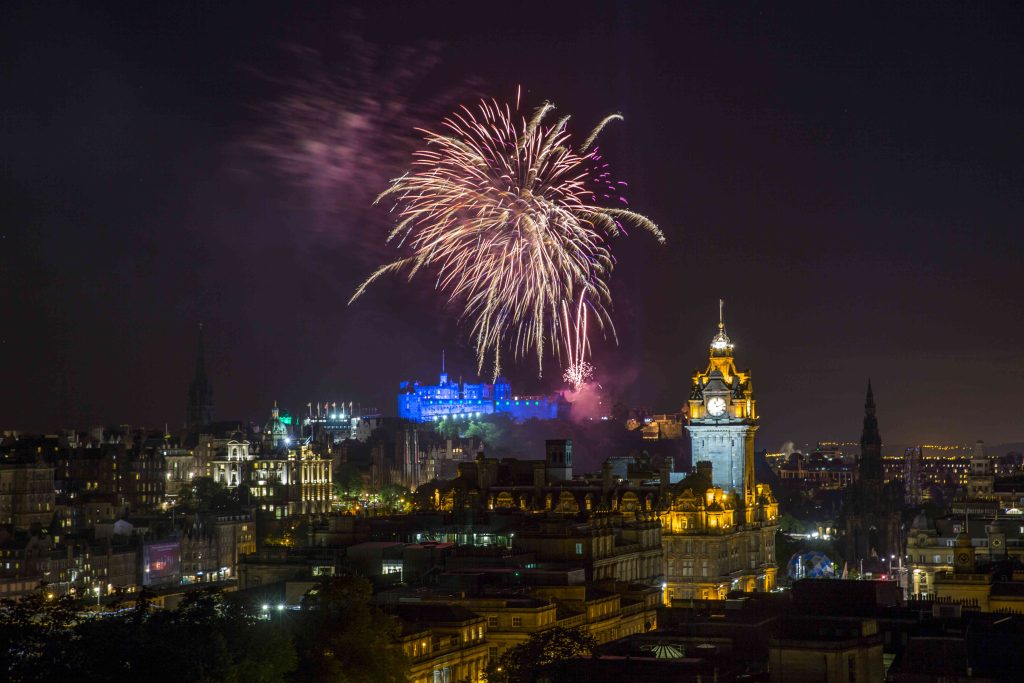
Scotland nurtures its own cultural events that are incredibly valuable to the economy. The Edinburgh Festivals bring in around £262m each year, while Hogmanay alone brings in over £30m each year.
“We’ve got some great gems in the cultural portfolio that we want to sustain and grow,” says Bush.
Business events are also an increasingly important feature of Scotland’s event strategy. “Meetings, corporate events, incentives, associations – these have now become part of our portfolio and we are looking to see how the synergies work between these different types of events,” says Bush.
Mass participation is another area where Scotland is keen to grow and diversify. Bush cites the London Prudential Ride and Melbourne’s Ride the Night, which attracted a quarter of a million people into the city centre between dusk and dawn, as examples.
“We are looking at pressing different buttons, accepting the fact that we are not going to get the Ryder Cup or the Commonwealth Games every year, or even every lifetime. “The big thing for us is to ensure that people who come to events become repeat visitors in the future.
“Last year, most people’s perceptions of Glasgow were changed and they realised what a great city it was to come to. A lot of cities have stigmas attached to them. But people thought this is a great city, it’s a really fun place to come to and the people are really welcoming.”
How to become a world class host
So, how can other cities and countries around the world follow this example build themselves into world-leading event destinations?
“The most important thing is you’ve got to have a very clear strategy and you’ve got to stick to that. It’s quite easy to buy events, as certain places in the world have successfully achieved. But you’ve got to work out your USPs, your strategy and your vision.
“You’ve got to invest in good people and you’ve got to give those people the time, the ability and the confidence. In Scotland we started this in 2001 – that’s 14 years ago. “But probably the most important thing in terms of long term success is your ability to deliver and the reputation that comes from that.”
International conventions for the event hosting industry are precious few, but make the most of these, says Bush. “They are really important because they provide that ideal opportunity to get everybody in one place in the world to rekindle those relationships.”
This interview was first published in the Winter 2014/15 Issue of HOST CITY magazine. Since then, Glasgow has been awarded the hosting rights to the new 2018 European Sports Championship.
Tag: Scotland
-

The next stage for Scotland
-

Glasgow to host 2015 Davis Cup semi-final
Glasgow’s Emirates Arena is to host the Davis Cup by BNP Paribas World Group semifinal between Great Britain and Australia on 18 – 20 September, the Lawn Tennis Association announced on Tuesday.
“We are delighted that Glasgow has been selected to host the Aegon GB Davis Cup Team once again for the semi-final against Australia in September,” said Paul Bush OBE, VisitScotland’s Director of Events.
“Scotland is the perfect stage for events and we are certain that fans from all across the country will turn out in force to show their support at the Emirates Arena.”
Andy Murray, who won both of his singles matches against USA at the Emirates Arena in March, said “It’s exciting for the team to be going back to Glasgow. It’s always special to play in front of a home crowd and we are fortunate to have played our last three ties at home.
“We had a unique atmosphere in Glasgow, the crowd was unbelievable. It’s going to be a huge week for our team and we’ll be doing everything we can to get GB through to the final.”
The indoor arena in Glasgow’s East End was built to host badminton events at the 2014 Commonwealth Games and now hosts basketball on a regular basis. It will have its capacity extended to 8,200 and a hard court laid down for the Davis Cup event.
The Great Britain vs. Australia semi-final coincides with the meeting between Belgium and Argentina at Forest National in Belgium.
The winner of the semi-final in Glasgow will either travel to Belgium or welcome Argentina for the final in November. -

Good partnerships win, say global event leaders
Strong partnerships are the key to delivering a flourishing events and festivals portfolio, according to Brendan McClements, Chief Executive of Australia’s Victorian Major Events Company and Paul Bush OBE, VisitScotland’s Director of Events.
The driving forces of two of the world’s most successful event destinations spoke to Host City at the National Events Conference on 3 December 2015 at the Edinburgh International Conference Centre. The conference focused on “Scotland the Perfect Stage”, the recently refreshed National Events Strategy for 2015-2025.
“You can’t do this by yourself, you need people to help. When I was reading through ‘The Perfect Stage’ strategy it was the first time I’d seen another nation highlight so clearly that we need this as a fundamental component of building success and how to use it to our advantage,” Brendan McClements, Chief Executive of Australia’s Victorian Major Events Company told Host City during the conference.
“Victoria has learned from Scotland’s approach. That’s something that’s helped drive success in Victoria.”
After an unprecedented year for major events in Scotland in 2014, which included the Ryder Cup and Commonwealth Games, the nation is now looking forward to hosting the 2018 European Sports Championships, 2019 Solheim Cup and UEFA EURO 2020.
McClements has been responsible for attracting some of the world’s most prestigious events properties to the state of Victoria, including the 2015 Cricket World Cup, Formula 1 Australian Grand Prix and the incredibly popular artistic and cultural celebration, White Night Melbourne.
In his keynote speech at the conference, McClements emphasised Scotland’s pre-eminent position in encouraging and facilitating the public, private and third sectors to work in unison in the delivery of its events and festivals portfolio, valued at £3.5bn per year to the Scottish economy.
“Major international events, and indeed small-scale events that support local communities, all of which have a number of stakeholders, can only achieve successful outcomes for all parties if everyone buys into the same plan. Sustainable events cannot survive on a command and control model,” he said.
“Events are complicated; you need to build a coalition of people who want to work with you,” he told Host City. “You are talking about governments, councils, local authorities, local services, industry, venues, airports, transport authorities, rights holders and so on,”
Paul Bush OBE, VisitScotland’s Director of Events, explained how partnership working drove one of Scotland’s most recent successful bids, for the 2019 Solheim Cup at Gleneagles.
“We had 23 partners as part of our Solheim Cup bid including local bodies such as Creative Scotland and the Edinburgh International Festival. Bringing these bodies together you really see the value of working together; it’s broken down the silo mentality,” he told Host City.
“It’s brokered by people trusting each other, but ultimately you’ve got to put a system in place that maintains the momentum. It’s really an organic process that needs to become systemic; it needs to maintain its integrity when people leave.”
The Scotland’s First Minister and Victoria’s Premier established a Memorandum of Understanding during the 2014 Commonwealth Games in Glasgow in relation to securing major events.
“We share a lot of things in confidence. They are not a competitor, as they are on the other side of the world, but it’s good to share intelligence about how you work with rights holders and which new cultural products to launch,” Bush told Host City.
Cultural events is a key area where Scotland has inspired Victoria. “The Edinburgh International Festival is outstanding example of what can be achieved in the cultural space. Any city in the world would look at this and think, how can we achieve this,” said McClements.
“It’s certainly informed our thinking of what’s possible. We have an event called White Night that’s drawn on models from all over the world. The Edinburgh experience helped inform what we wanted to do with that event. Edinburgh is the gold standard.”
This strategic, coordinated approach is not exclusive to Scotland and Victoria. Bush cites Copenhagen as a “fantastic example”, and also points to Auckland, London and “pockets in North America”.
Strong international relations can in some cases lead to shared hosting rights. Australia co-hosted the 2015 Cricket World Cup with New Zealand.
“Having multiple hosts is a natural outcome. New Zealand are our siblings, so there is a high level of cooperation.
“Hosting the 2015 Cricket World Cup with New Zealand was no more complicated than any other major event that takes place in two locations. The organising committees made sure there was investment in communications.
“The plan was well coordinated – this was delivered seamlessly, all the way through the public and private sectors. The government piece of the puzzle was well sorted out. Time spent getting that right really paid off for Victoria.”
Victoria hosted a disproportionately large number of big games during the Cricket World Cup, including the opening as well as the final match. 350,000 people attended World Cup matches in Victoria in total, 153,000 of whom were from outside the state and 75,000 from outside the country, resulting in AU$300m of spending in the state.
In 2015 Melbourne also hosted Rugby League State of Origin series, one of Australia’s biggest sporting events. 92,000 people attended, 40,000 of whom were from outside Victoria.
“It’s been an extraordinary fiscal year for Victoria, where you can see and taste the benefits that major events can bring. We’ve set a new benchmark for what major events are capable of,” said McClements.
The National Events Conference was opened by Fiona Hyslop MSP, the Cabinet Secretary for Europe, Culture and External Affairs and Dr Mike Cantlay OBE, Chairman of VisitScotland. Cantlay emphasised the need for continued investments in infrastructure, digital connectivity and air connectivity for Scotland to continue securing and delivering the next generation of events.
The conference also focussed on operating outstanding smaller events, delivering safer events and addressing the opportunities provided to the sector by Scotland’s Year of Innovation, Architecture and Design. Speakers and delegates also discussed potential applications for 3D 360° video displays, gathering and interpreting real-time event insights and the TEDx phenomenon.
The conference followed the hugely successful Host City 2015 in November, which saw global cities, rights holders and experts converge in Glasgow.
-

“Blind bidding” adieu?
I listened on recently as a member of the Scottish parliament described the transformation effect sport has had on his city, Glasgow, over the course of his relatively short adulthood. While, as a child, being subjected to pervasive messaging which labelled Scotland’s largest city ‘the sick man of Europe’, he now takes particular delight in the continued regeneration on our west coast.
This renaissance owes much to the foresight and subsequent effort of those who have successfully secured events like the 2014 Commonwealth Games, FIG World Artistic Gymnastics Championships and 2018 European Championships for the city, amongst many others.
Accordingly, the catalyst for this revolution of sorts has been sport. A great love of sport, has, in the words of this MSP, driven and irreversibly altered how his constituents experience the city in which they reside: be it in the evolving cityscape, the upgraded infrastructure or prevalent belief among citizens that Glasgow is, once again, a powerhouse. No longer in an industrial sense, of course, but as the eighth greatest sporting city on earth.
As a slight aside, I would argue that these events have altered the consciousness of the Scottish nation as a whole, not only in a sporting sense. Scotland now recognises that its sons and daughters are capable of shining on the world stage and that our investment in sport has engendered invaluable social impacts, as well as numerous medals and new records.
Aside from partisan praise for Glasgow and Scotland, this anecdote serves a very simple purpose in this wider narrative; it demonstrates the potential created by events governed well.
And as all of those involved in the process of attempting to secure events for their respective municipalities will know, good governance starts from the initiation of the bidding process.
Now, I cite Glasgow as a recent example in which, through rigorous care and procedural best practice, the city has reaped myriad benefits which were successfully sown many years previously. There are many others, however, that do not realise such prosperous outcomes, the reasons for which are both too numerous and complex to discuss herein. The solution for the unpredictable nature of results in an industry where, at least on the pitch/track/court, results are the only thing of any consequence, is, fortunately, less obscure. It is the more transparent governance around the process of event bidding.
Technical evaluations are, in principle, an excellent means towards this end. However, controversy arises when they inform the choice of candidates, rather than underpin their decisions. Of course, factors not taken in to account in the process of a technical evaluation have to be considered, not least political climate. But to those unacquainted with event bidding as it presently stands, the fact that the, apparently, most accomplished bid often loses out in the final reveal, bears further scrutiny. And probably rightly so.
It begs the question over whether there is scope for a standardised stable of tools to be provided to federations and governing bodies to help inform their decisions. Objective criteria, consistently adhered to across all sports and all major events, would help better gauge the competency of competing bids and help to eradicate votes potentially cast on instinctive or misguided judgement.
In support of this line of argument, it has even been reasoned that completed technical evaluations should be published to encourage stricter adherence to their recommendations, or at least to elicit an explanation as to why any departure from the recommendations of a technical evaluation is selected as the chosen course.
Leaving aside any insinuations of wrongdoing, more must also be done to encourage economic transparency in order to eradicate the ramifications experienced by host cities who fail to predict difficulties some way down the line.
At present, a situation often arises where, in an effort to impress, candidates overpromise only to, ultimately, under-deliver. To give one example, the Olympic Games are seemingly beset by a perennial sprint finish, whereby, only aware of shortcomings all-too-late, infrastructure projects are rushed or pared-back by the host city. At best, this erodes confidence in the potentially profound social impacts mega-events should guarantee; at worst, it risks dereliction of duty and gives rise to social unrest.
For those familiar with game theory, the competitive nature of bidding must be of the greatest interest. Lacking definitive criteria to meet, cities and states must simply seek to outshine their nearest competitors. Or, more accurately, seek to outshine what capacity they imagine their nearest competitor may have. The result of this ‘blind bidding’ is a less than ideal outcome for all involved, including the winner.
With more strongly defined and widely publicised benchmarks upon which bids are judged, one can claim with some confidence that capability and credibility, rather cash, will become the foundations upon which successful bids are constructed. The result? Greater likelihood of well-placed investment, improved legacy benefits and less empty stadia as the circus leaves town.
While it is not for me to pass judgement on the current health of global sporting governance, I am more than willing to indicate the current circumstances, while regrettable, present an invaluable opportunity.
In the course of numerous allegations, withdrawal of support and widespread condemnation in recent months, we have learned in no uncertain terms that the forces behind the extraordinary commercial success of sport will no longer endure dubiety. Due to the extent of its own success, all of sport, particularly its governance, is being called to account, and it must reform.
Emboldened by the voice offered by social media and the internet age, the public can no longer be categorised as homogenous factions of brand advocates. Today, the consumer more fluidly elects those it wishes to trust, and brands with a sponsors’ stake in sport will no longer tolerate its flaws.
That being said, it should not be forgotten that, by the same token, the consumer of today is now open to more routes of engagement than ever before thanks to those same technologies. As such, the potential is more people, more enthused by a greater diversity of sporting pursuits. For the general health of the sector, that can only be an exciting prospect. But it can only be realised through change. That change being excellent governance from the ground-up.
And, if we agree with the assertion above that good governance is established from the outset of the bidding process, what better area for us to concentrate those initial efforts towards reform.
This opinion piece was written by Paul Bush OBE, VisitScotland’s Director of Events and Chairman of Commonwealth Games Scotland -

IMG appointed to stage 2019 Solheim Cup at Gleneagles
Scotland has agreed a unique partnership with global sports, media and events organisation IMG to stage the 2019 Solheim Cup at Gleneagles, ensuring the country hosts a world-class spectacle and delivers on its key principles of equality, experience and innovation.
Appointed by VisitScotland on behalf of The Scottish Government, IMG will bring its vast expertise and experience to ensure the competition will be one of the best in the tournament’s history.
“This partnership brings together two of the world-leading brands within the global golf industry and will allow Scotland to realise the many benefits of hosting one of the most prestigious sporting events on the planet,” said First Minister Nicola Sturgeon, announcing the partnership during the Aberdeen Asset Management Ladies Scottish Open at Dundonald Links.
“IMG’s vast experience in staging major events will ensure that Scotland stages the best-ever Solheim Cup when it visits Gleneagles in 2019 and delivers a spectator experience that is second to none.
“They share our vision of an open and inclusive event and will work alongside us to show that in Scotland golf is a family-orientated game that is open to everyone. We want to use The 2019 Solheim Cup to encourage greater participation among women, young people and families and IMG’s strong track record in the women’s game will help us to achieve this.”
The Solheim Cup is the biggest event in women’s golf, pitting European and US teams against each other in a team format which mirrors that of The Ryder Cup. Scotland was awarded the right to host The 2019 Solheim Cup in October 2015 following a successful bid led by VisitScotland. Responsibility for delivering the event on behalf of The Scottish Government will sit with the EventScotland team within VisitScotland’s events directorate.
“IMG is one of the most experienced sports events organisations in the world and, having worked with them over the years on various projects, we are confident their professional and innovative approach will help us to deliver the best Solheim Cup to date and one of the best sporting occasions to be hosted in Scotland,” said Paul Bush OBE, Director of Events at VisitScotland.
“We are proud to have played a role in enhancing the Ryder Cup brand with the 2014 staging in Scotland and look forward to doing the same with the Solheim Cup through this partnership with IMG.
“After a thorough procurement process, IMG stood head and shoulders above the other candidates in terms of their experience, in-house resources and their standing and experience within the golf industry. They share our key principles in the bid of equality, experience and innovation and we are very much looking forward to working together.”
IMG operate in more than 30 countries with unrivaled experience in event delivery. IMG’s Golf Division has staged more than 750 golf events and their current portfolio includes over thirty tournaments staged annually around the globe. The organisation has previous experience of delivering major golf events in Scotland through their work with the Ricoh Women’s British Open and the Johnnie Walker Championship over many years.
“We are delighted to have been chosen to partner with VisitScotland to deliver the 2019 Solheim Cup,” said Guy Kinnings, Global Head of IMG Golf.
“It is a fantastic challenge to deliver a Solheim Cup in Scotland following the success of the 2014 Ryder Cup. Our team can’t wait to get started on this exciting project and we look forward wholeheartedly to working with the considerable resources within the Scottish government to ensure that this Solheim Cup delivers in every aspect.”
The event is regarded as the biggest tournament in women’s golf and sees the best female professional golfers in Europe competing against their United States counterparts, attracting a huge worldwide audience and media profile for the host country.
“We welcome the appointment of IMG to partner with Scotland on the staging of the 2019 Solheim Cup,” said Ivan Khodabakhsh, Chief Executive of the Ladies European Tour.
“We are confident it is in excellent hands and look forward to an event that will continue to enhance the reputation of the women’s game on an international stage and inspire many more women and juniors to get involved in the sport.”
-

Scotland expects major boost from 2016 Davis Cup
The semi-final of the 2016 Davis Cup by BNP Paribas World Group between will take place at Glasgow’s Emirates Arena from 16-18 September 2016 – and the host nation is upbeat about the benefits the event will bring.
The decision by the Lawn Tennis Association to host the tie between the Aegon GB team and Argentina follows Scotland’s successful hosting of Davis Cup matches last year.
“Scotland was delighted to host the Davis Cup first round and semi-final in 2015 and, on both occasions, the support at The Emirates proved why Scotland is the perfect stage for events of this magnitude,” Paul Bush OBE, VisitScotland’s Director of Events tells Host City.
“I have no doubt that this year’s semi-final against Argentina, which we are supporting through EventScotland’s International Programme, will be no different and expect tennis fans from across the UK and further afield to travel to Glasgow as Great Britain attempts to retain its Davis Cup title.”
The international appeal of the event is particularly attractive proposition for the host nation.
“For Scotland as host nation, and Glasgow at a local level, major occasions such as this are hugely valuable. The sell-out matches in 2015 saw a total attendance of more than 47,000, with a significant proportion of those people, 31% and 42% respectively, travelling from outside of Scotland. We expect similar interest in September’s fixture, meaning, again, Scotland is set to benefit from the associated economic impact that this influx of visitors brings.
“Additionally, for both Scotland and Glasgow, the prospect of staging such an important match means an increase in exposure across all media formats both at home and abroad. In terms of reinforcing Scotland’s capability in staging world-leading events and promoting Scotland as a tourist destination, raising the nation’s profile in this way is critical.”
Tennis, along with cricket golf, basketball and athletics, is attracting more participants. According to statistics released in July by SportScotland, sports participation has risen over the last two years, with sports club membership rising from 706,764 to 768,212 since 2013/14.
Scotland hosting the Davis Cup is set to increase this trend – particularly given that last year’s winners and Scottish brothers Andy and James Murray are currently on top form.
“The timing of the match lends itself to generating further legacy benefits by encouraging more young people to become involved in sport,” says Bush.
“After Andy Murray’s second victory at Wimbledon, Jamie Murray’s continued success as one of the world’s best doubles players and shortly following tennis in the Rio Olympics, we are confident the Davis Cup can further inspire youngsters to take up tennis and become more active. This is vital for the development of the sport in Scotland and in encouraging young Scots to lead healthier lifestyles.”
-

intu Braehead Arena to host European Curling Championships
Tickets went on sale on Friday 9 September for the Le Gruyère European Curling Championships, which will see the home ground of ice hockey team Braehead Clan transformed into a five sheet curling rink.
More than 25 nations are descending on Scotland for one of the biggest sporting events of the year, which takes place in Renfrewshire on the outskirts of Glasgow from 19-26 November.
“We can’t wait to bring the European Curling Championships to this venue with its great reputation for spectator ice sports,” said Susan Murrin, Event Manager for the 2016 European Curling Championships.
“Braehead Clan are renowned for their passionate following and exciting on ice displays and curling is no different with its intense competition and precision play. We look forward to staging an event here to remember and hope that everyone will enjoy a week of top flight sporting action.”
The Le Gruyère European Curling Championships will form part of EventScotland’s International Events Programme and UK Sport’s Major Event Programme and is supported by funding partners Renfrewshire Council, Glasgow City Marketing Bureau and The Royal Caledonian Curling Club.
“The European Curling Championships will see the finest players from across the continent and some of the world’s highest-ranked nations visit Scotland in November, providing a fantastic spectacle for fans at the intu Braehead Arena,” said Paul Bush OBE, VisitScotland’s Director of Events.
“We are delighted to support the event through EventScotland’s International Funding Programme and, following the success of both our men’s and women’s teams in recent years, we are confident there will be strong interest in tickets across the country for what promises to be a thrilling week of action on the ice.”
As well as crowning the European Champions in curling for both men and women, the event will determine qualification for the World Curling Championships in 2017, forming the pathway to Olympic qualification and the 2018 Winter Olympics in PyeongChang, South Korea.
Scotland’s representatives for the 2016 championships will be decided in October. Elite curlers vying for a place in Team Scotland include former European Champions and Olympic medallists Eve Muirhead and David Murdoch.
“We have regular sell-out crowds for our home games and the atmosphere in the arena is electric,” said Gareth Chalmers, Hockey & Operations Director at Braehead Clan.
“We’re sure that sports fans will enjoy watching the curling action up close and wish the European Championships every success.” -

Find your USP like Scotland, The Home of Golf
Over the years I have listened to dozens of marketing experts talk about how to effectively promote and sell your product or brand in the face of stiff competition. Undoubtedly there are various techniques and tactics that marketeers can deploy but for me, the conversation has always seemed to end up back at one place – the unique selling point.
Working out what it is that differentiates your product from all others on the market is the key to not only standing out from the crowd but maintaining credibility in an environment where everyone is trying to shout louder than you.
In Scotland, our golfing USP was forged many centuries ago when the humblest beginnings of a game now played by more than 60 million people worldwide first took root. Few countries in the world have such a close association with a single sport than Scotland does with golf.
It is known around the world as the birthplace of the game, where every legend of the sport has played, where the rules were first established and where the game’s greatest championships were first played.
It is the place where golf clubhouses are the hubs of local communities, where a love of the game is celebrated in families and passed down through generations and where the finite elements of the game are regularly dissected over a few drinks in the 19th hole. In short, Scotland is the Home of Golf.
This USP represents the basis of all Scotland’s activities in golf, from promoting the country globally as a golf tourism destination to instilling it into the minds of Scotland’s schoolchildren as a game for everyone.
It has also been a catalyst for Scotland’s success in bidding for and securing the world’s most prestigious golf events. Don’t get me wrong, there are many factors that go into securing major events, not least past experience and an engaged and supportive Government, which we also have in abundance in Scotland.
But there is no doubt that when it comes to hosting a major golf event in Scotland, event organisers are drawn to the Scotland, the Home of Golf message and the added value it can bring to events.
A key example was The 2014 Ryder Cup, an event which was undoubtedly a huge success for Scotland, delivering economic impact, legacy and huge media profile in our key markets. But what was also apparent was the benefits that The Ryder Cup derived from being hosted in a country synonymous with the game and respected worldwide. Record numbers of overseas spectators at Gleneagles, including a larger proportion from the US than previous Ryder Cups, is indicative of that.
I don’t believe any other golf tourism brand can stand alongside that of The Ryder Cup and add value in the way that Scotland, the Home of Golf did in 2014. And in the current market with global golf sponsors and government support in shorter supply, in traditional markets at least, there is an even greater premium on a country being able to add brand value in this way.
When hosting a major event in Scotland, we endeavour to hand it back to organisers in a stronger position than when it came. This was a key element of our bid for The 2019 Solheim Cup and we firmly believe that Scotland, the Home of Golf can play its part in continuing to elevate the profile of not only The Solheim Cup but the women’s game globally.
There is an obvious quid pro quo in this equation. Our ultimate objective is to encourage more visitors to Scotland and we use our hosting of major golf events as a vehicle for achieving that. This event-led marketing strategy allows us to reach more potential visitors than we could through traditional marketing techniques and a limited budget, while adding further credibility to Scotland’s golfing proposition.
If you look closely at the golf events we support and the golf marketing we undertake, you’ll rarely see a VisitScotland logo when targeting golfing consumers. Instead, you’ll see the Scotland, the Home of Golf message because we know this resonates strongly with golfers around the globe.
This event-led technique also allows us to be innovative in the types of event we target, while also supporting the Scottish Government’s social inclusion and equality agenda. The 2019 Solheim Cup and the European Golf Team Championships – the world’s first mixed men’s and ladies professional event – in 2018 is further testament to that.
The golf tourism market is more competitive than it has ever been with golf tourists presented with more choice than ever before. Each destination has its proposition whether that be warm weather, cost, ease of access, new courses or luxury resorts. But among them Scotland continues to stand unique, as the only Home of Golf.
Paul Bush is speaking at Host City 2016, the largest meeting of cities and sports, business and cultural events. For more information visit www.hostcity.com/events/host-city-2016 -

Partners and sponsors are signing up for Host City 2017
The global conference and exhibition of cities and sports, business and cultural events is off to a flying start with 19 partners and sponsors already on board this year.
Launched in 2014, the annual Host City conference and exhibition is the first and largest meeting of cities and sports, business and cultural events
EventScotland is Supporting Organiser for the 2017 event that is taking place in Glasgow on 28-29 November.
Paul Bush OBE, Director of Events, said: “EventScotland has a strong heritage with the Host City conference and exhibition and we are delighted to be supporting them to bring leading events professionals together for what promises to be an insightful and informative two days.
“Scotland is the perfect stage for events and Host City 2017 will really set the tone ahead of some amazing world-class events including the Glasgow 2018 European Championships, the 2019 European Athletics indoor Championships and the 2019 Solheim Cup.”
Host City is a unique event combining high-level panel discussions featuring renowned industry figures with an effective marketplace where cities of all sizes can meet with rights holders, event suppliers, event organisers and their procurement officials.
Host City 2017 is backed by
Supporting Organiser: EventScotland
Supporting Partners: Glasgow Convention Bureau and Glasgow 2018
Silver Sponsors: Aggreko, FarrPoint, Marsh and Red Bull Air Race
Branding Sponsors: Arena Group and De Boer
Host City 2017 also enjoys the support of Media Partners signed up so far, including: Exhibition World; fcbusiness; isportconnect; Major Events International; Orange Sports Forum; Sportcal; SportBusiness; World Academy of Sport; Yutang Sports.
“We are immensely grateful for the support of all the fantastic organisations that make Host City the great event it is today,” said Host City’s Editorial and Conference Director Ben Avison. “In particular we are delighted with the renewed support from Event Scotland as Supporting Organiser and Glasgow Convention Bureau and Glasgow 2018 as Supporting Partners.”
Many more sponsors and partners are set to join in the coming months.
To find out more about the opportunities visit www.hostcity.com or contact Adam Soroka on adam.soroka@cavendishgroup.co.uk or +44(0) 203 675 9531.
For information on the conference agenda or speaking opportunities contact ben.avison@hostcity.com -

Sky Sports wins BAFTA for coverage of The 145th Open at Royal Troon in Scotland
Sky Sports’ innovative coverage of The 145th Open at Royal Troon in July 2016 has earned them a BAFTA after being named best sports production during the awards ceremony in London.
The Sky Sports team won the award for best sports production for their enhanced coverage of the championships, including the thrilling climax when Henrik Stenson and Phil Mickelson were embroiled in a sensational final-day battle watched by hundreds of millions of people around the world.
The Open was named the winner ahead of BBC’s coverage of the Rio Olympics and the Six Nations clash between England and Wales, while the Paralympics on Channel 4 was also nominated.
Paul Bush OBE, EventScotland director of events, said: “This is a tremendous accolade, not only for the team at Sky Sports but for golf in general to have beaten off competition from so many top-class sporting productions. It is also a triumph for the stunning Ayrshire coastline which provided the perfect backdrop for the high-class drama that unfolded on the course.
“I’m especially delighted for our golf events executive Katy Mathieson, who was part of the Sky Sports team producing coverage from Royal Troon before joining EventScotland last year. We have a great relationship with Sky Sports through the world-class portfolio of golf events taking place in Scotland and we look forward to working with them on many more in the coming years.”
The EventScotland team work across Scotland’s extensive golf portfolio, which includes the men’s and ladies Scottish Opens at Dundonald Links in Ayrshire and the RICOH Women’s British Open at Kingsbarns in Fife among others this summer. The Open also returns to Scotland in 2018 at Carnoustie.