Tag: Security

  • Violent demonstration a “major concern” for Brazil World Cup

    Violent demonstration a “major concern” for Brazil World Cup

    Security at the 2014 World Cup was high on the agenda at FIFA’s National Teams Workshop in Florianopolis on Thursday, with Brazilian officials announcing the deployment of 170,000 security professionals to ensure the safe hosting of the event.

    The majority of these security personnel will come from the police and armed forces. Speaking at a FIFA press conference, Andrei Rodrigues, of the Brazilian Ministry of Justice’s special secretariat for security at major events (SESGE) said “150,000 public-security and armed-forces professionals will be involved, with SESGE investing BRL1.17b [USD 500m] and the Ministry of Defence some BRL708m [USD 300m].

    “These are resources deployed solely for the purposes of providing security to the population on an everyday basis.”

    In addition to this investment, the Local Organising Committee (LOC) announced that a further 20,000 workers from the private sector will be engaged in delivering event security. The LOC’s head of security Hilario Medeiros said “It is very clear that Brazil is ready in terms of its various organisations and private security, with some 20,000 men being trained in event security.”

    With the 2013 Confederations Cup having taken place amid scenes of serious civil unrest, the security secretariat is understandably worried about the potential for violence. Rodrigues said “We do have one major concern, which is not the fact that people might demonstrate, as they are just exercising their democratic right in doing so. Our concern is with any violence that occurs as part of those demonstrations.

    “The Confederations Cup was an example of that. There was one day in June when there were more than one million people on the streets and we had more than 50,000 officers working. Even so, the competition schedule was not affected, the demonstrations did not impact on the delegations and there were no injuries caused by the actions of the officers.”

    FIFA proud to be in Brazil
    FIFA’s director of security Ralf Mutschke denied that last year’s protests were directed at the sports federation. “We saw some social unrest and vandalism at the FIFA Confederations Cup in 2013, but that does not mean to say that we are going to reduce our presence, hide ourselves away or keep our symbols under cover.

    “We do not feel, in fact, that we are the main target of the demonstrators. Obviously the protests had something to do with the Confederations Cup and the fact that Brazil and the whole world was watching the competition. We don’t feel that we are the targets, though. Far from it: we are proud to be here in Brazil.”

  • Brazil government fears for World Cup security

    Brazil government fears for World Cup security

    A secret report by the Brazilian government specifies security risks in half of Brazil’s 12 host cities. 
    The concerns outlined in the report, which is based on consultation with members of the public and was leaked to O Globo, include the risk of strikes and protest.
    Rio de Janeiro suffers from “a difficult relationship between public authorities and society”, the report says. And in Sao Paulo, a “potential problem” identified is a $25m budget cut for the military police.
    The government is also concerned that civil servants could strike in Belo Horizonte, which might “fuel protests”.  In the northeast, unrest between farm workers and indigenous groups is mentioned as another area of concern. 
    The report also says “opposition parties are attempting to wreck the image” of the Governor of Brasilia, Agnelo Queiroz. Concerns are also raised over the safety of teams and visitors, according to O Globo.
    President Dilma Rousseff’s office described the report as preliminary and inconclusive, saying that the information published in O Globo was neither official nor verified. 
    Brazil’s sports minister Aldo Rebelo has also played down such concerns. “The possibility of protest during the World Cup is very limited,” he told The Guardian on Monday. 
    “People are more interested in celebrating the World Cup. Peaceful protests are protected by the constitution. Violent protests are forbidden by law and they are matters for the police to deal with.”
    Nonetheless, Brazilian authorities will be keen to pre-empt and avoid any potential for further civil unrest, in the wake of the striking and protesting that took place in several cities during last year’s Confederations Cup.
    Security concerns are also highlighted by the announcement earlier this week that Brazil is to establish “no fly zones” of a 7km radius over each stadium on World Cup match days, despite major disruption to travel.

  • Olympic host Tokyo ranked world’s riskiest city

    Olympic host Tokyo ranked world’s riskiest city

    A ranking of cities under threat from natural disasters, “Mind the Risk” by reinsurance company Swiss Re, has placed Tokyo top of the list. 
    The International Olympic Committee nonetheless told HOST CITY that it stands by the findings of its Evaluation Commission, which highlighted Tokyo’s “well thought-out proposals for the successful planning and delivery of security operations, which would deliver safe and secure Games.”
    Tokyo successfully dispelled safety concerns during its bid to host the 2020 Olympic and Paralympic Games. Speaking to IOC members during the bid presentation in September, Prime Minister Shinzo Abe described Tokyo as “one of the safest cities in the world.”
    The IOC on Wednesday reaffirmed its confidence in Tokyo’s ability to respond to potential seismic events. “It goes without saying that we cannot predict natural disasters, but Tokyo is known for having some of the most comprehensive construction practices to help protect buildings against the effects of earthquakes,” an IOC spokesperson told HOST CITY.
    “The local authorities are also very well prepared to handle these types of emergency situations and we have complete confidence in them, as the Evaluation Commission noted in its report.”
    Matthias Weber, Swiss Re’s Group Chief Underwriting Officer said in the report: “We know from past events that physical prevention measures alone do not suffice to build a resilient city, since damage from the most severe catastrophes cannot be fully averted.
    “An important part of resilience is how well urban societies are able to cope with the financial consequences of a disaster, which includes access to the requisite funding for relief, recovery and reconstruction.”
    HOST CITY also contacted Tokyo 2020, which was unavailable for comment at time of writing.
    Seven of the ten cities found to be at highest risk are in East Asia, due to their combination of high seismic activity and large populations. 
    Los Angeles, which is taking steps towards a highly anticipated bid to host the 2024 Olympic Games, has the seventh largest number of people at risk of natural disaster, according to the Swiss Re report.

  • Brazil World Cup host cities hit by police strikes

    Brazil World Cup host cities hit by police strikes

    In a major blow to the organisers of the World Cup, police strikes have led to Salvador being run by armed forces. Meanwhile in Rio de Janeiro, federal police officers have threatened to strike during the World Cup. 
    The Brazilian government sent 5,000 troops to of Salvador on Wednesday after the world cup host city was hit by police strikes and civil unrest. According to the Defence ministry, the military operation was authorised by President Dilma Rousseff based on a request from the Jaques Wagner, governor of the state of Bahia.
    And on Sunday, a group of 300 people including federal police officers marched through Rio’s Avenida Atlântica carrying white elephants. “We have the same proposal colleagues of Brasilia and other states: Stopping during the World Cup,” said André Vaz de Mello, president of the federal police’s union.
    The workers include forensics professionals, crucial for security control at airports. Such strike action could paralyse the World Cup.
    Describing the World Cup as “an important moment for the country,” President Rousseff has committed the government to ensuring security during the World Cup in all host cities. 
    “The federal government will not agree with any kind of violence and we will not let the World Cup be contaminated,” she told a meeting of the council for economic and social development in Brasilia on Wednesday. “The armed forces will participate, we will use the Federal Police and the Federal Highway Police and we have partnerships with all state governors.”
    Meanwhile, construction workers continue to strike on Rio’s Olympic Park. The widespread strike action coincides with a period of intense scrutiny on the progress of these hugely important mega events.
     

  • World sports ministers tackle unprecedented corruption threat

    World sports ministers tackle unprecedented corruption threat

    At Securing Sport 2014 on Monday, the International Centre for Sports Security (ICSS) hosted a special closed doors meeting attended by sports ministers and leaders of international organisations, who agreed to take steps to prevent the growing threat of corruption in sports.
    The ICSS also announced a partnership with UNESCO the United Nations Educational, Scientific and Cultural Organization (UNESCO) to safeguard sport against the “unprecedented threat” from corruption, match-fixing and sport betting fraud. 
    Ministers at the private meeting came from Portugal, Singapore, Cape Verde and Angola, joined by representatives of UNESCO, the Council of Europe, WADA, Commonwealth Secretariat and OECD.
    The participants agreed on the importance of following up on and implementing international conventions and instruments such as the Declaration of Berlin and the Council of Europe’s Convention on the Manipulation of Sports Competitions.
    “Sport is now under threat in a way unprecedented in its history and the response to these threats must be united, international, and bold,” said ICSS president Mohammed Hanzab. 
    “This special ministerial forum was another important step in engaging key countries and regions, international experts and sport ministers and ensuring that protecting the integrity of sport continues to stay high on the agenda.
    “Securing Sport 2014 has today gathered individuals with the power, will, and determination to see that international sport moves in the right direction in the future.”
    According to the ICSS, the ministerial meeting highlighted a desire to implement education programs and capacity building initiatives, to support countries and regions to assist them in creating national integrity platforms, and to work together to create programmes to preserve the integrity of sport.
    Under the agreement with UNESCO, ICSS will host around around 100 government officials, technical experts and leaders in sport at a “special technical meeting” in Doha in the first half of 2015. This will be the first time international experts have met to implement the detailed recommendations on the manipulation of sport competitions outlined within the ‘Declaration of Berlin’.
    “This meeting of international experts will play an important part in the ICSS’s drive to mobilise international efforts and enhance the integrity and credibility of sport,” said Hanzab.
    Hailed as a ‘beacon for future national and international sports policy’, the Declaration of Berlin was adopted by 600 participants from 121 countries at the 5th UNESCO World Sport Ministers Conference (MINEPS V) in May 2013. It seeks to improve and enhance international cooperation between governments and all other sport stakeholders on issues of access, investment and integrity of sport.
    In particular, the Declaration of Berlin calls for better sports governance and a zero-tolerance policy against doping and the manipulation of sports competitions, as well as greater collaboration to detect, prevent and monitor such manipulation.
    “We are all custodians of sport and we owe it to every athlete and sport fan to protect its integrity and credibility so we can nurture the next generation of sports leaders,” said Hanzab.
    Security and good governance are key themes of HOST CITY Bid to Win conference. To find out more about best practice in major events, register for HOST CITY Bid to Win and join ICSS director general Helmut Spahn and many more experts on 28th October.
     

  • Rio 2016 announces business opportunities

    Rio 2016 announces business opportunities

    The organising committee of the 2016 Olympic and Paralympic Games in Rio de Janeiro has announced nine tenders. 
    The work covers a range of specialisms, with application deadlines ranging from November 2014 to February 2015. 
    Rio 2016 wishes to hire companies in the following fields and timeframes:
    IT Outsourcing. Application deadline: 13th November. 
    Barriers and Fences. Application deadline: 27th November.
    Temporary Arena with Overlay. Application deadline: 28th November.
    Medical Supplies and Products. Application deadline: 4th December.
    Commentators Positions & Tribunes. Application deadline: 4th December.
    Venue Hospitality. Application deadline: 4th December.
    Stands and Seating. Application deadline: 10th December.
    Cleaning and Waste Services. Application deadline: 22nd January 2015.
    Waste Services. Application deadline: 21 February 2015.
    UK companies interested in bidding should contact fabio.alves@fco.gov.uk 

  • Security threats grow but football does not learn enough – ICSS

    Security threats grow but football does not learn enough – ICSS

    New security threats are emerging, but football is failing to take on board the experiences of other major events.
    To tackle this growing problem, international standards are needed to train and educate sport safety and major event security managers, according to Helmut Spahn, director general of the International Centre for Sport Security (ICSS). 
    “Training and educating those who look after our safety and security in sport is a major responsibility for any major event organiser or sport venue operator. However, at the moment, it is clear that many clubs, leagues and associations do not provide enough opportunities for their safety and security managers to learn from other sports and major events,” he told delegates at the European Stadium and Safety Management Association (ESSMA) Summit.
    To encourage the development of an international standard in training and educating within the sport safety and security management industry, the ICSS has developed the first International Advanced Studies Programme on Sport Safety and Security Management with SRH University Heidelberg.
    “With many new and emerging threats now facing sport, as good practice the ICSS would encourage clubs, leagues and associations across all sports to enrol on courses like this and provide more opportunities for their safety and security workforce to learn about emerging trends and techniques developing within the industry.”
    The ESSMA Summit, hosted in Munich on 27th and 28th January 2015, was supported by the European Professional Football Leagues (EPFL), European Club Association (ECA) and the ICSS. 
    The conference attracted delegates from FC Barcelona, FIFA, Paris Saint-Germain, Real Madrid CF, Arsenal FC, Wembley, Manchester United, Liga de Futbol Profesional, ACF Fiorentina, AS Monaco FC and Dallas Cowboys.
    “The challenge of securing major sport events and international venues has never been greater and once again the ICSS has added considerable knowledge and experience to the event, as well as their cutting-edge expertise in sport safety and security. This has been of enormous benefit to our members,” said Dimitri Huygen, managing director of ESSMA.
    “The ICSS is continuing to play an important and active role in leading the development of the sport safety and security industry. On behalf of ESSMA, I look forward to continuing our work with the ICSS, as well as other organisations including the ECA and EPFL.”

  • Securing major events has never been more challenging

    Securing major events has never been more challenging

    The challenge of bidding for and hosting major international sport events is one that no city or country should take lightly. Significant time, effort and most importantly, resources, are required to host any major sport event successfully and the need to invest heavily in these precious commodities, even when planning to bid for an event, should not be underestimated.
    The IOC’s proposals put forward as part of the ‘Olympic Agenda 2020’ process, as well as the ongoing questions surrounding 2018/2022 FIFA World Cup bidding process, have thrust the issue of how international federations and major events rights holders manage their bid process firmly into the public consciousness.
    And as the demand from sponsors and commercial investors to reach out to new markets increases and more events are being created and hosted in more countries, it is clear that the demands of hosting a safe, secure and successful major sport event are growing in scale and complexity.
    But what does this mean though for one of the most fundamental areas of hosting a major event – safety and security? As sport enters what is arguably a golden era for innovation and creativity, is the approach to safety and security moving at the same pace? What exactly do cities and countries need to consider when preparing themselves to bid for or host an event?
    These are important questions that sport, as well as many cities and countries, have to ask themselves over the next few years and at the ICSS, we have committed ourselves to answer the questions currently being asked about how to effectively safeguard events, as well as identifying new innovative ways to protect them.
    When bidding for an event like a FIFA World Cup or Olympic Games, one of the main challenges to safety and security is that the bidding phase usually covers a two year period, with these events normally awarded seven years before the event even takes place.
    As a result, this presents a number of challenges when it comes to security. Throughout an event lifecycle, the length of time between bidding and delivery could see one – or even two – changes in government, not to mention significant changes in the threats facing the event or region. And with the lifespan of new technology usually lasting around three years, what may seem ‘innovative’ or new when planning security in the bid phase could be severely outdated by the time the event comes round.
    As a result, the changing environment, particularly when it comes to security issues, can have a severe impact on the way major events are planned and budgeted for. Despite many in the industry recognising these challenges, whilst security is considered a fundamental area to host a successful event, all too often safety and security is introduced at the later stages of an event life cycle.
    Over any event life cycle, new risks and threats emerge which must be planned and mitigated for at the earliest possible stage into planning competition and non-competition venues, as well as transport and infrastructure around these venues. This is an approach that we apply at the ICSS and strongly advise our partners and clients to incorporate security at the earliest possible stage into their bidding and hosting plan.
    For any city or country looking to host an event, it is also essential to ensure a thorough due diligence process when it comes to securing their event and to allow some flexibility in your concept to adapt to any new threats that may emerge. At the same time, it is essential to ensure that proper contingencies are put in place to address the more immediate threats to your event.
    One of the other emerging areas that cities and countries should consider is the way social media and digital technology is now used to safeguard major events. Platforms like Facebook and Twitter have not only changed the way people consume sport and communicate with each other at major events but have also revolutionised the way intelligence is gathered and investigations are conducted around an event.
    I also expect that over the next few years, the influence of technology on how major events are secured will only become stronger and predict that consumer and retail technology like google glasses, retina scanning and mobile apps will revolutionise the way we interact with security professionals at events.
    The challenge of securing major international events has never been greater and the demands of hosting a safe, secure and successful major sport event are growing in scale and complexity.
    At the ICSS, we believe first and foremost that safety and security at a major event should be a spectator service, whilst at the same time ensuring maximum security with minimum restrictions to the end user.
     
    We also believe strongly that there is now clear need to develop a more global approach to safeguarding sport and major events and, whilst it is impossible to guarantee 100% security, a well-thought through security concept introduced right from the start of planning can save time, effort, finance and most importantly help to safeguard spectators.

  • Qatar official to meet London cybersecurity experts

    Qatar official to meet London cybersecurity experts

    British minister for the Cabinet Office and paymaster general Francis Maude this week met with senior Qatari officials, one of whom is to visit London next week to meet with experts on cybersecurity. 
    Maude was in Qatar to discuss transparency, “open government” and cybersecurity – a critical issue for the hosts of major events. 
    “I chaired the cabinet committee in Britain on the 2012 Olympics and cyber security was a big concern,” Maude told the Gulf Times. 
    “We want to work very closely with the Qatar government in preparing for the 2022 FIFA World Cup. The lessons of how and what we did and all of that, we are very keen to share it with our friends,” he said, adding that Qatar and the UK have “a huge amount of common ground.”
    The UK signed a security pact with Qatar last year, under which the two countries security agencies are sharing intelligence. 
    Information sharing between countries is crucial to maintain the security of data, as the internet transcends national boundaries. 
    “Governments need to work together in real time, with business and other organisations to share knowledge, information and capability quickly and effectively. Building those close relationships on these matters with our governments is of first importance.”
    Bilateral trade between Qatar and the UK is valued at about GB£5.4bn (QAR30bn/US$8.2bn) annually. A British Chamber of Commerce was established in Qatar last month to boost cooperation between Qatari and British small to medium sized enterprises.
    “There is a lot of Qatari investment in London and elsewhere in Britain, and we are busy building that up,” said Maude. 
    “We want Britain to be the best place in the world for companies to do business and we want to work with our friends and colleagues in Qatar for the benefit of both countries.”
     

  • AFC partners with ICSS to keep football safe
    AFC partners with ICSS to keep football safe

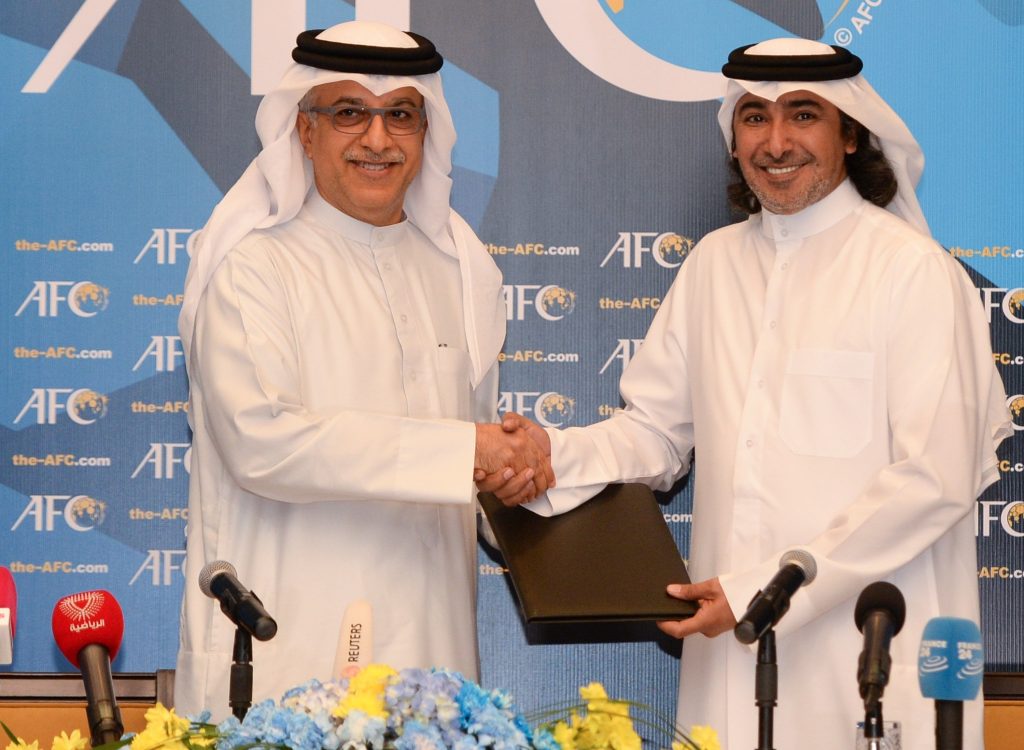
    The Asian Football Confederation and the International Centre for Sport Security (ICSS) on Friday signed a wide-ranging partnership agreement to strengthen safety and security in Asian football.
    The agreement will strengthen existing safety and security regulations, develop training programmes and help assess safety and security within the AFC Member Associations.
    The partnership agreement was signed by the presidents of the two organisations after the AFC Congress in Bahrain. 
    “Safety and security is a top priority for the AFC, a basic requirement for any football match to take place. The AFC does everything within its powers to protect players, officials, coaches and spectators across Asia,” said Shaikh Salman bin Ebrahim Al Khalifa, who was reelected as AFC president on Thursday.
    “The ICSS is at the forefront of safeguarding sport and this agreement is a significant step forward in enhancing safety and security practices within the AFC and our Member Associations.”
    ICSS president Mohammed Hanzab said: “As sport and major events continue to increase in size and complexity, I would encourage other football associations and confederations to show the same proactive leadership as the AFC in sport safety and security to confront the new threats that sport now faces.
    “This partnership with the AFC represents a significant milestone for the ICSS and builds on our growing portfolio with various sports organisations and other major events rights-holders around the world.
    “As one of the fastest growing and most diverse football regions in the world, Asia is an important platform for the ICSS to showcase our expertise, as well as providing us with a unique opportunity to work on some of the world’s largest major sport events and venues.”
    As part of the agreement, the ICSS and AFC will develop safety and security regulations within the framework of FIFA international guidelines. 
    The partners will also deliver training programmes educate security officers within AFC Member Associations, including ‘Train the Trainer’ programmes.
    They will also develop key requirements for the security design of sport infrastructure, security operations for clubs and international matches and tournaments taking place in AFC Member Associations
    The growth of a professional network of security personnel will be supported, to ensure the appointment of qualified staff for clubs, international matches and tournaments.
    Current safety and security documentation and reporting tools for clubs, international matches and tournaments taking place within the AFC will be reviewed.
    ICSS will also provide safety and security assessments in collaboration with or on behalf of the AFC.