Tag: sports surfaces

  • Made for all sports

    Made for all sports

    Launched at FSB Cologne under the title “Made for Sports”, a new range of adhesives from Stauf is the end result of a comprehensive research programme on technology for sports flooring.

    Stauf researched suitable bonding technologies for various sports flooring, for indoor and outdoor use. The focus was on the durability, safety and resilience of composite systems, combining special adhesives and sports flooring.

    In a number of different tests, Stauf’s sports flooring adhesives were subjected to varying thermal and climatic conditions and extreme mechanical stress in order to be optimised accordingly.

    The end result is not a “one-size-fits-all” recipe for sports flooring, but a line of products adapted to suit the specific characteristics and demands of differing indoor and outdoor sports flooring systems. In conjunction with professional technical consulting, Stauf can also match and modify adhesive systems for specific on-site conditions.

    “Made for Sports” is not without precedent: STAUF synthetic turf bonding has already proven its safety and reliability credentials in leading global stadiums. The company has simply developed a complete range of products based on this successful predecessor.

    The new range comprises adhesive systems and accessories for installing various types of flooring for indoor and outdoor sports facilities and for synthetic turf. Stauf is also extending its product range in the indoor sports sector with special adhesives for impact protection walls and ceiling liners.

    “Very low emission”
    The Siegerland family-owned company sets high standards for all its product developments. As well as quality and lasting reliability, a primary concern for Stauf is protecting health and environment.

    For this reason, most of Stauf’s products are classified as “very low emission” under Emicode (EC I or EC I PLUS) – the trademarkprotected mark for the classification of low emission flooring installation products. The mark is awarded by the Association for the Control of Emissions in Products for Flooring Installation, Adhesives and Building Materials (GEV) for solvent-free, low emission products.

  • Plastic fantastic

    Plastic fantastic

    The German company Melos GmbH is one of the world’s leading producers of coloured synthetic and EPDM rubber granules. Granules from Melos GmbH are used in particular in running tracks in sports stadiums, as fall protection surfaces for children’s playgrounds, as infill granules on artificial turf pitches as well as for non-slip surfacing at swimming pools.

    Breaking records
    Melos products have been used in many projects in recent years. The company’s portfolio includes both national and international installations, such as the running track at Berlin’s Olympic Stadium. The granule for this project was developed specially on request in the club colour of the German Bundesliga football + Hertha BSC Berlin, i.e. “Hertha Blue”. The track covers an area of approximately 9,200 m², of which around 5,250 m² is designed in the Hertha blue colour tone and adjacent areas of around 3,950 m² in grey. Around 40 tonnes of EPDM granules were used in the project.

    Melos granules enabled a new world record for then 22-yearold Usain Bolt from Jamaica, who ran the announced world record in the 100 metres discipline on the blue track. His strongest rival, Tyson Gay, got the shock of his life at the 12th IAAF World Championships in Berlin’s Olympic Stadium when Usain Bolt not only set a world record for the 100 m but also for the 200 m. Recording times of 9.58 and 19.19 seconds respectively, the fastest man in the world outran the competition on the blue granules supplied by Melos.

    Arabian light
    In addition to high colour stability, enormous abrasion resistance and strong resistance to weathering, Melos granules also impress with their excellent resistance to UV light. These factors led to Melos granules being chosen for another major project in 2009, when the world’s longest circular horse racecourse, measuring 2,400 m, was constructed in Meydan City, a new district of Dubai.

    Because of the considerable stress the horses endure during the race, it is all the more important that they receive special care beforehand and afterwards. For this reason, coloured EPDM granules from Melos were used to manufacture a floor covering fitted in a tunnel leading to the racecourse.

    To reduce noise, granulated material from Melos was even applied to the tunnel walls and coloured surfaces constructed with Melos granules were installed as a pre-race warm-up area for the thoroughbreds. Adjacent tracks as well as grooming and wash areas for the valuable horses were equipped with the resilient non-slip Melos granules.

    The medium-sized enterprise completed production and shipment of 500 tonnes of granules in just three months from the start of September to the end of November, with different grain sizes being mixed and then installed on site. This posed a real challenge, owing to the special requirement to supply a specially adapted blend of granule colours and properties. As well as a red granule for the outdoor surfaces, a blend made up of special shades of brown, beige and yellow was used for the tunnel and access passage to the arena.

    The state of Qatar also uses Melos for its construction works. The world’s largest installed area of 175,000m² was installed on the “Emir Walkway” as a personal project of the Emir of Qatar. The Emir Walkway is a multi-purpose track that runs 9 km on both sides of a road at a width of 9.75 m on each side. Melos produced and supplied round about 1,000 tonnes of material for this project in a turnaround time of just eleven weeks. Similar to the tunnel leading to the Meydan race court, the walkway was also fitted with a colour blend of granules made up in this case of brown, eggshell and beige.

    Cool head on hot days In addition to the many applications of the granules as floor covering, infill granules from Melos are used as a component of high-quality artificial turf systems for sports including football.

    Melos launched a new granule on the market in 2011, Infill Cool Plus, with the motto “Cool head on hot days”. The new material is based on the proven EPDM material group, but with special components that reduce heat absorption.

    FC Bayern Munich, the German football league championship record holder, opted for Infill Cool Plus in 2011. The Cool Plus effect, which encourages top performances by achieving low surface temperatures on hot summer days, convinced the football club to use the product in its modern training grounds.

    The Cool Plus effect can be demonstrated in a direct comparison with different infill granules. In an experiment conducted with long-term exposure under laboratory conditions, the surface temperature was reduced by 25 per cent by using the light-green Melos Infill Cool Plus, compared with SBR rubber granules.

    Long-term tests of Cool Plus – up to four hours of sunshine simulations in the irradiation chamber – also show reduced heat build-up and lower maximum temperature of the surface. This difference is palpable underfoot for the players and improves playing comfort considerably, as surface temperatures can reach up to 60°C in German summers.

    The in-house laboratory at Melos works continuously to deliver product innovations. Melos recently launched a new product on the market: Infill Bionic Fibre, which provides an economically attractive and sustainable alternative to traditional granules on artificial turf pitches. In comparison with other granules on the market, Infill Bionic Fibre is characterised in particular by its fibrous, irregular and near-natural structure.

    “Our new product is an especially resilient, durable, weatherproof, stable and near-natural infill material”, says Jörg Siekmann, Managing Director of Melos GmbH. “In addition, the material offers players a natural playing experience – almost like on natural turf. Pitch operators benefit from the low maintenance overhead and reduced use of resources.”

    Melos is constantly researching improvements to its infill granules in its in-house laboratory. The focus here is on sport functionality: in addition to the recommendation of the German Football Association (DFB), sports associations and sports physicians also support the view that the use of modern artificial turf pitches protects joints and ensures a high quality of play. The infill granule plays an important role in this respect, offering distinct quality differences that can impact health and playing performance.

    Jörg Siekmann says: “The soft and natural structure of “Infill Bionic Fibre” provides pleasant felling while running, gentler on the skin and increases natural playing performance. Even the DFB has commented positively on rubber-filled synthetic turf surfaces, stressing both the economic and sports-related functional benefits.

    The company has its entire product range reviewed regularly by independent institutes and certified in accordance with current standards in the areas of environment, energy and sustainability. Strict attention is paid in production and development to optimal properties in terms of the environment, utilization and health.

    The infill granules from Melos all feature basic properties such as weather resistance and durability. The quality of the products is reviewed on an ongoing basis and the granules are also ideally adapted with respect to human health and the environment. In terms of sportsrelated functional properties, such as traction and rotation, the players experience a playing performance that is comparable to a good natural grass pitch – but consistently stable under all climatic conditions.

  • Olympic Stadium gets new surface

    Olympic Stadium gets new surface

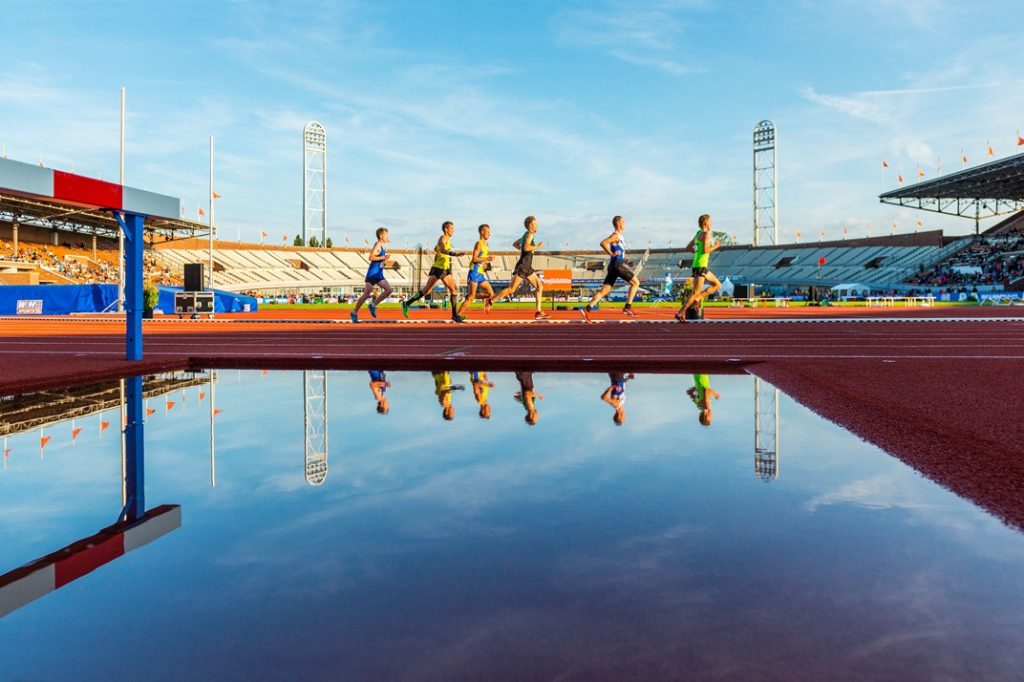
    From 6 to 10 July 2016, Amsterdam’s venerable Olympic Stadium will host the 23rd European Athletics Championships – the first time the event has been held in the Netherlands.
    Around 1,300 athletes from 50 countries will be there for the launch. As this international sports meeting will be held immediately before the Olympic Games in Rio, the programme has been reduced from the usual 47 disciplines to just 42. The marathons and the walking races will not take place.
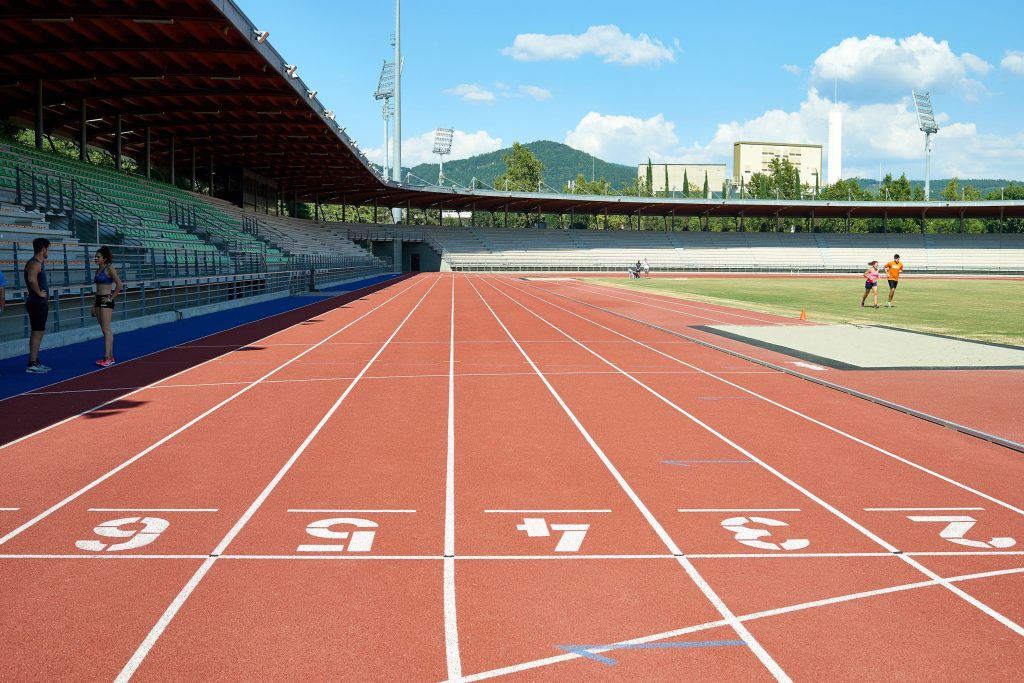
    The running track was given a new synthetic surface from Polytan in June 2015 in order to prepare the best possible surface for peak performances by all the other track and field athletes. The premium Polytan PUR coating in brick red – a standard Polytan colour – was chosen.
    The surface in Amsterdam is 17 mm thick and complies with the requirements of the International Association of Athletics Federations (IAAF), making it suitable for international competitions with officially recognised personal bests and records. 
    The first “litmus test” for the new synthetic surface from Polytan was the national Dutch Athletics Championships in July 2015 – immediately after its installation – and the important “IAAF Class 1” certification of the stadium. 
    The facility is unusual in that the water jump for the steeplechase is the outside of the running track. This means that more events can be held simultaneously than is normally the case. 
     
    Gold medal for sports architecture
    Now a listed monument, the stadium was built in the Stadionbuurt district of Amsterdam for the Summer Olympics in 1928. It was designed by the Dutch architect Jan Wils, who was awarded a gold medal for the building in the art competition held as part of the Games. 
    Historically speaking, the stadium belongs to the “Amsterdam School” of architecture, the famous Dutch classic Modern style, which is also described as Brick Expressionism. 
    The competition arena has a closed brick facade on the outside that looks neither dark nor heavy in spite of its large size. This is down to the varied division of the external envelope – a characteristic feature of this architectural style. 
    In contrast to the facade, the only thing visible inside the stadium is the reinforced concrete frame in the style of the architecture of Frank Lloyd Wright, which was popular at the time. 
    A narrow tower on which the first ever Olympic flame was set alight marks the main entrance. It was and still is the ground’s emblem. 
     
    Restoration to glory
    The stadium was heavily used in the decades following the Olympic Games – it was the home ground of the well-known football club Ajax Amsterdam for a long time, for instance. It deteriorated visibly during the 1990s, however, until expensive renovations breathed new life into it from 1996 onwards. 
    The stadium was restored as far as possible to its original condition, with the demolition of a grandstand extension dating back to 1937. Numerous sporting and cultural events are held there now and it is the base of Amsterdam athletics club Phanos.
     
    Polytan PUR – the faster surface
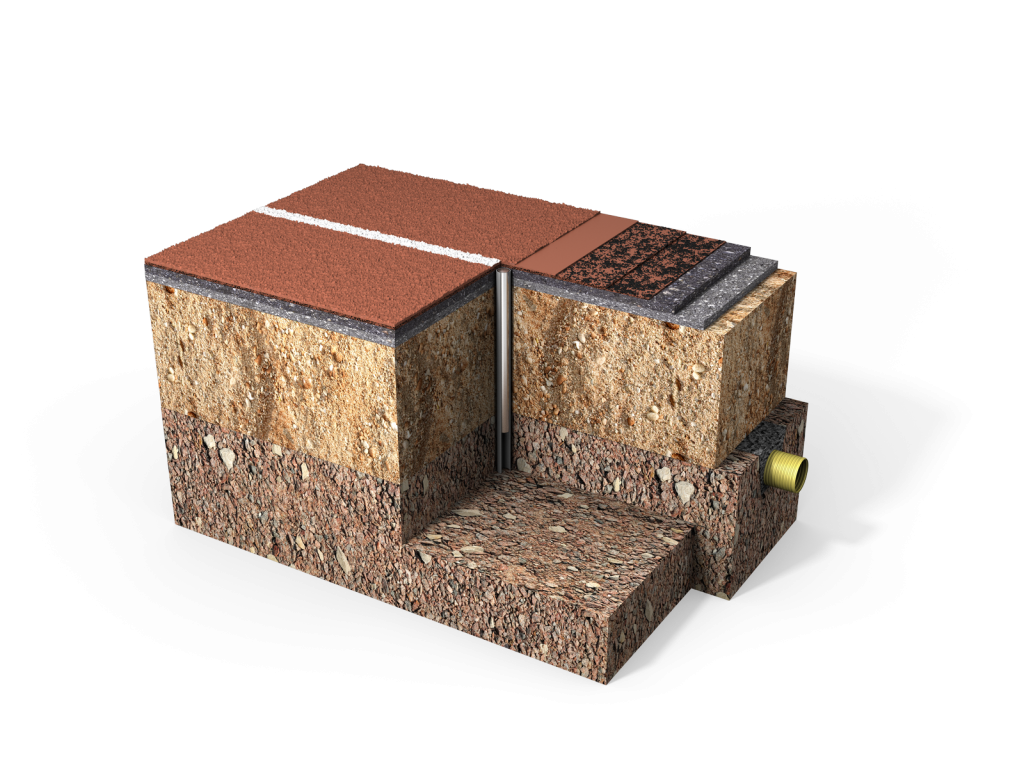
    By opting for the Polytan PUR sports surface, the organisers in Amsterdam decided on a water-impermeable, extremely durable solid synthetic surface consisting of a continuous blend of PUR and elastic rubber granules all the way from the base to the top layer. Polytan employees used the in-situ construction method to install it directly on site. 
    Not only does the solid structure make the surface extremely durable, it also greatly enhances the tread elasticity of athletes and thus their acceleration. The track is significantly faster than conventional multi-layered synthetic surfaces. In addition, the top layer of the sports surface is interspersed with EPDM granules, which means that it is suitable for sports shoes with spikes. 
    This article was contributed by Polytan. For more information visit www.polytan.com
     

  • Turf technology put to test in Rio

    Turf technology put to test in Rio

    The stage for hockey’s most anticipated competition is set. Four men’s and four women’s national teams gathered at the Deodoro Olympic Park, in Rio de Janeiro, from November 24th through the 28th for the test event called “Aquece Rio” – the most important technical rehearsal for the Rio 2016 Olympic Games.
    The Dow Chemical Company is contributing with its resins to ensure a world?class, high?performing surface for the Olympic hockey tournament in Rio. Dow is a Worldwide Olympic Partner and the Official Chemistry Partner of the Olympic Games.
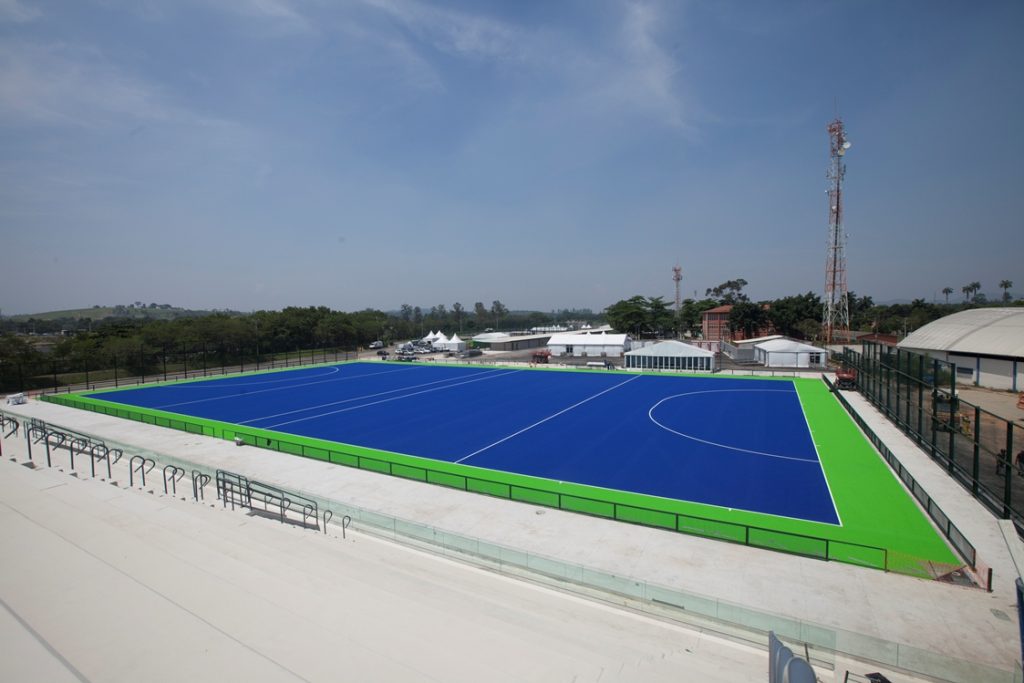
    The warm-up also marked the unveiling of an important component of Rio 2016’s “Look of the Games” visual identity: the colours of the field?of?play, a much?anticipated feature since the success of London 2012’s Riverbank Arena and its eye?catching blue and pink pitch.
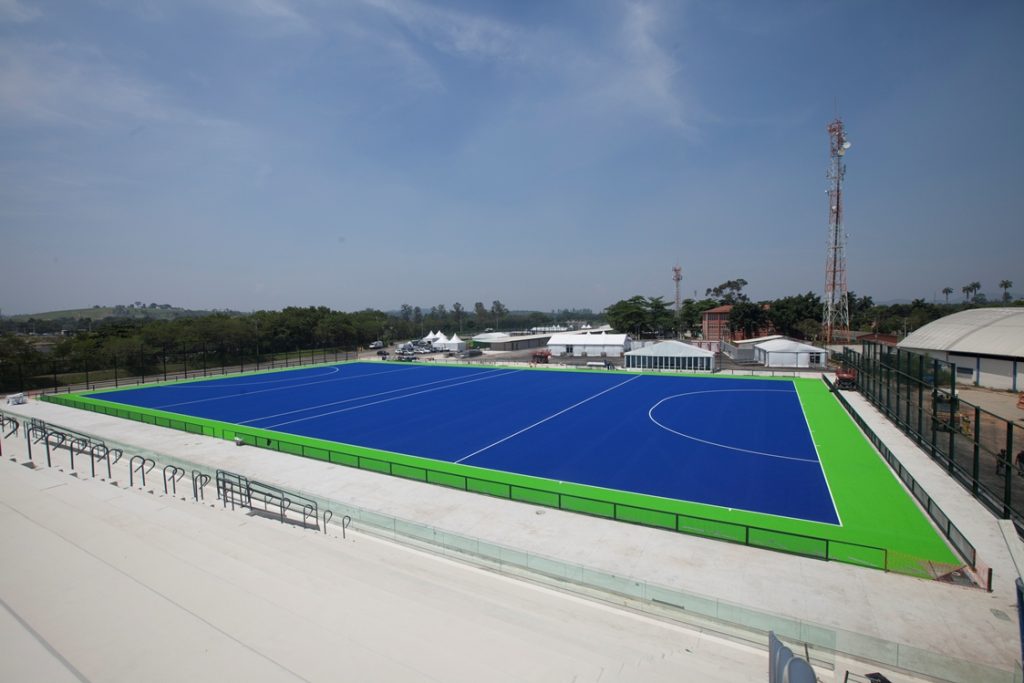
    For Rio, the Rio 2016 Organizing Committee and the International Hockey Federation (FIH) decided for a blue pitch with green sidelines – a colour pattern that matches Rio 2016’s visual identity and reflects the vivid spirit of the first?ever Brazilian Olympic Games.
     
    World?class playing conditions
    Rio 2016’s hockey competition will be played on an innovative synthetic turf system which uses Dow’s linear low density “DOWLEX” Polyethylene Resins in the yarn component as well as Dow’s polyurethanes technologies. The system is designed to deliver enhanced durability for increased pitch life, and a higher?performing and consistent field?of?play throughout the busy Olympic competition schedule.
    Colourability is a key attribute of the yarn component, enabling customised aesthetics and design for the playing surface.
    The playing performance and quality of the pitch were a primary concern when developing the hockey turf system for Rio 2016. The tufted samples were inspected by the Rio 2016’s Venues Management and Look of the Games teams, as well as the FIH and the Olympic Broadcast Service (OBS), to ensure the selected colours met the specific requirements for players, officials, spectators and broadcasters alike.
    “We are thrilled that Dow’s solutions and experience in supplying materials for world?class playing surfaces are setting the stage for one of the world’s most anticipated competitions in Rio,” said Nathan Wiker, global marketing director for Dow Packaging & Specialty Plastics.
    “Hockey is a fast game. The colours of the pitch will allow the spectators in the stadium and on television to follow the action more clearly because of the deeper contrast between the ball and the pitch.”
    The Olympic hockey competition is scheduled to take place at the Olympic Hockey Centre in the Deodoro Olympic Park from August 6 to 19, 2016. It will feature the 12 best men and women’s teams from around the globe. The complex will include two competition pitches and one warm?up area.
     
    This article was contributed by Dow. For more information on their artificial turf at the Rio 2016 Olympic Games, visit www.dow.com/artificialturfsolutions/rio 

  • 2018 World Cup breaks new ground with SIS Pitches reinforced turf

    2018 World Cup breaks new ground with SIS Pitches reinforced turf

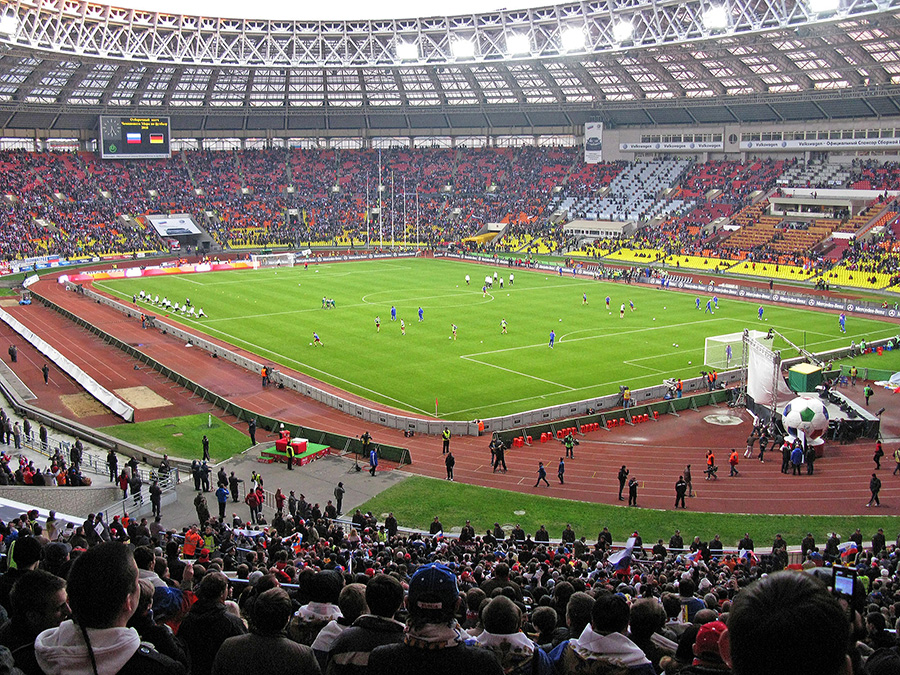
    The FIFA World Cup final will be played on a surface incorporating artificial grass for the first time ever, after Russia 2018 organisers selected an innovative surface called SISGRASS from SIS Pitches.
    A surface of 95 per cent natural grass impregnated with more than 150 miles of specially developed synthetic yarn will be installed at Moscow’s historic Luzhniki Stadium. 
    The pitch is scheduled to be ready in time for the Confederations Cup in May 2017.
    SIS Pitches said its SISGRASS surface offers a safer, softer surface that protects players from injury, but with three times the playing time of natural grass alone. 
    “It’s the first time a World Cup final has been played on anything but all-natural grass and it’s like a dream for us as a company and a community,” said SIS CEO George Mullan. 
    “We have come so far to get this system to the pinnacle of world sport.”
    The patented system was created after SIS Pitches approached Dutch engineers to design a ‘giant sewing machine on tracks’. This machine crawls across a pitch, implanting, or ‘stitching’, more than 240 million precise lengths of two-tone green synthetic yarn 180mm deep into the sub-surface.
    “We didn’t want to simply improve on existing machinery. We chose a challenge to create the perfect hybrid pitch of natural and synthetic grass and start from scratch,” said Mr Mullan.
    “It strengthens the structure of the natural grass, making it stronger and more resistant to damage which means more games can be played on a pitch. It also drains more effectively. For a busy tournament like the World Cup it is perfect.
    “At the same time it is player-friendly. Our polyethylene construction actually gives it a softer feel, with more consistency and greater traction than natural grass alone. That reduces injury risk and the bounce and roll is always even, so the players love all these features,” adds Mr Mullan.
    SIS Pitches says the durable surface is also visually indistinguishable from natural grass. 
    “TV Companies also love it because the surface stays looking beautiful at all times,” said Ilyas Kobal, SIS division managing director.
    “It was a long tender process but in the end our advantages meant even the local Russian companies could not match us.”
    SIS Pitches had to convince the FA, FIFA and a host of international testing bodies that its new system worked better than alternatives. This involved stringent accelerated wear trials by rigorous independent testing consultants STRI. 
    In these trials the new surface beat unreinforced grass for damage resistance, traction, grass cover and sheer strength, SIS said, claiming that the surface can be used three times longer in all weathers without damage and can be laid in just one week.
    Construction work to transform Luzhniki Stadium is underway, due for completion in early 2017. A system of undersoil aeration, drainage, irrigation and heating is being installed to allow the pitch to be used all year.  A custom designed rootzone will be laid, stitched with yarn and then seeded to be ready in time for the Confederations Cup.
    During the 2018 World Cup the stadium will host the opening and final matches. SIS Pitches has also signed a two-year deal to maintain the pitch after the World Cup, when Luzhniki will be the home of the Russian national team.
    Since its launch in summer 2015, SISGRASS has also been selected for Chelsea, Besiktas, Hull City FC and the English FA’s centre of excellence at St. George’s Park.
     

  • Turn your track into a coaching assistant

    Turn your track into a coaching assistant

    A precision data logging system for track and field athletes that facilitates daily training diagnostics without costly technical installations – that’s Polytan SmarTracks, the new addition to the Polytan product range. 
    The system consists in the interplay of three components: magnetic timing gates built invisibly into the track; a waist-belt with sensor; and tried-and-tested analysis software. 
    Not only can this special technology be used to record the movement data of several athletes simultaneously, its diagnostic capabilities also go far beyond simple time measurement. 
    In conjunction with the fast and optimally cushioned Polytan synthetic sports surface, the sophisticated sensor technology lays the foundation for optimal training conditions in all performance classes, from school and recreational sports to elite sports. 
    The technology has been developed by humotion, a company specialising in the capture and analysis of human movement data. The easy-to-operate data logging system is suitable for all outdoor synthetic surfaces from Polytan and can also be retrospectively incorporated into existing athletics facilities with ease. 
    Its use in sports halls is currently in the development phase as components made of iron and steel may interfere with the magnetic field of timing gates in certain circumstances. The properties of the subsoil should also be tested prior to outdoor installation for the same reason. 
    Compared with other time recording systems such as photoelectric sensors, GPS analysis and video analysis, the winning features of Polytan SmarTracks are low measuring tolerances, full protection against vandalism, a complete lack of dependence on weather conditions and no time-consuming setup and dismantling of technical equipment. 
    Polytan provides “Professional”, “Performance”, “Basic”, “Sprint” and “School” standard facility concepts in order to simplify training diagnostics, although individual training plans can of course also be taken into account. 
    The Polytan SmarTracks solution gives clubs and organisations an opportunity to provide professional training conditions – and thus make their sports facilities more attractive to members and sponsors. The advantages for coaches and athletes are twofold: a comprehensive training analysis with a diagnostic procedure but without the need for a diagnostician, and the ability to compare their performance with that of other athletes in competition conditions. 
    The movement data are captured by the timing gates in the ground and the sensor, which weighs just 24 g, worn on the body. Speed, step length, step frequency and jump height are recorded as well as running time. This is made possible by humotion’s highly developed sensor technology with three-dimensional data capture, which actually consists of a number of intelligent individual sensors rather than a single one. 
    Two round magnetic elements (600 mm long and 25 mm thick) are sunk into the ground at intervals of 1.0-1.30 m to form a timing gate. The upper end of the magnetic elements lies no more than 25 mm beneath the upper edge of the synthetic surface. One track needs two magnetic elements, two tracks need three, three tracks four and so on. Polytan recommends a minimum distance of 3 m between the photoelectric sensors in the running direction. 
    Versatility in action
    The first reference project with SmarTracks technology was implemented in Osnabrück in August 2008. A system on the site of the Westfälische Wilhelms-Universität Münster has likewise been in daily use for a few years. 
    Andreas Klose, who is a research associate at the Institute of Sport Sciences at WWU Münster, a physiotherapist and a high-jumper, says of his experience with the facility: “For me, Polytan SmarTracks has proven its worth in everyday use. The technology does not depend on the weather; it is versatile and can be activated in no time at all. The small and manageable sensor delivers all the data I need in order to diagnose performance as a basis for training recommendations. I also use the system to log my own performances.” 
    The third athletics facility with Polytan SmarTracks is due for completion at the training ground of the TSV GutsMuths Berlin 1861 e.V. sports club in early 2016. Like the one in Münster, it has magnetic timing gates built into the fast and optimally cushioned Polytan M sports surface. The fourth one is planned for Hamburg.
    This article appeared in the Spring 2016 issue of Host City magazine

  • The chemistry behind the Rio 2016 Olympics

    The chemistry behind the Rio 2016 Olympics

    As the world convenes in Brazil for the excitement of the Rio 2016 Olympic Games, The Dow Chemical Company (NYSE: Dow), the Official Chemistry Company of the Olympic Games and Official Carbon Partner of Rio 2016, is proud to provide innovative, science-based solutions for one of the most respected and prestigious global events. Celebrating 60 years of presence in the region, Dow is involved in more than 20 projects connected to the Games, spanning from field-of-play technologies to venue construction, transportation, city infrastructure, and carbon mitigation.
    “With our knowledge and broad portfolio of solutions, Dow is demonstrating how science can power the world of sports,” said Louis A. Vega, Dow global vice president of Olympic & Sports Solutions. “Our technologies are present in all key competition clusters for the Rio 2016 Games, as well as the city’s extended infrastructure. As the Official Chemistry Company of the Olympic Games, we are able to address the needs of organizers, athletes, media and spectators in order to help make the Rio 2016 Games a success.”
    With solutions incorporated throughout numerous Olympic venues, Dow is proud to mark 60 years of operation in Brazil and further expand its business in a highly strategic and important region.
    Field-of-Play Technologies

    Rio 2016’s hockey competition at the Deodoro Park is being played on a high performance innovative synthetic turf system which uses DOWLEX™ linear low density polyethylene resins in the yarns as well as Dow’s polyurethanes technologies for the backing of the carpet.
    Dow Plastic resins were utilized in the pipes from the draining and irrigation system underneath the natural grass pitch of Maracanã stadium, venue of the Opening and Closing ceremonies and key football matches. Additionally, Dow technologies were used in flooring applications and waterproofing systems for concrete and metal structures within the stadium.

    Athletes’ Village

    Construction chemicals and paints formulated with coating technologies from Dow were used in buildings in the Athletes’ Village to provide beautiful, long-lasting protection and finishing.
    The 28 modular water tanks will help provide a reliable water supply system for athletes, coaches, officials and referees participating in the Games were manufactured with resins from Dow’s Propylene Glycol.
    More sustainable waterborne acrylic epoxy road markings were applied on bike lanes inside and around the Village in the neighborhood of Barra da Tijuca, as well as at the iconic Copacabana beach.
    Athletes from 200+ countries competing in Rio will sleep on comfortable, mattresses made with polyurethane technology from Dow.

    Olympic Park

    Dow Wire and Cable technologies provide protection and durability to the energy and data cables installed at venues including the Olympic Tennis Centre, Olympic Aquatics Stadium and the Main Press Centre/International Broadcast Centre (MPC/IBC) complex, where media tell the stories of Rio 2016 to billions of fans.
    The IBC building also features Dow technologies in the Exterior Insulation and Finishing Systems (EIFS) panels of the building façade. This innovative system enabled completion of the façade in 30 days, while standard technologies take up to six months to be installed.

    Infrastructure solutions in and around Rio

    The roof at the city’s novel Museum of Tomorrow (Museu do Amanhã) is protected with 100% acrylic resin to provide waterproofing and exterior durability to this iconic structure. In addition, the reflective roof helps keep the building up to five degrees cooler.
    Flooring solutions and polyurethane insulation panels from Dow were utilized in the major renovation that took place at Viracopos International Airport in Campinas, São Paulo, one of the main cargo transportation hubs for the Games.
    On the most important road connecting Rio to São Paulo, Rodovia Presidente Dutra, road marking solutions based on Dow’s FASTRACK™ coatings technologies provide reliable pavement markings.
    DLP™ and WALOCEL™ solutions for adhesive mortar were utilized in some of Rio’s new hotels, as well as in the Olympic Park and Athletes’ Village.

    “From infrastructure solutions to an innovative carbon mitigation program, we are excited to showcase our technologies in Brazil and share our successes with our customers and partners on a global stage,” said Fabian Gil, president of Dow Latin America. “Rio 2016 marks the 60th anniversary of Dow Brazil and also inaugurates a new chapter of meaningful collaborations and business success for the Company across the region.”

    This article was contributed by Dow. For more information on their artificial turf at the Rio 2016 Olympic Games, visit www.dow.com/artificialturfsolutions/rio

  • How Polytan takes the ice and snow out of winter

    How Polytan takes the ice and snow out of winter

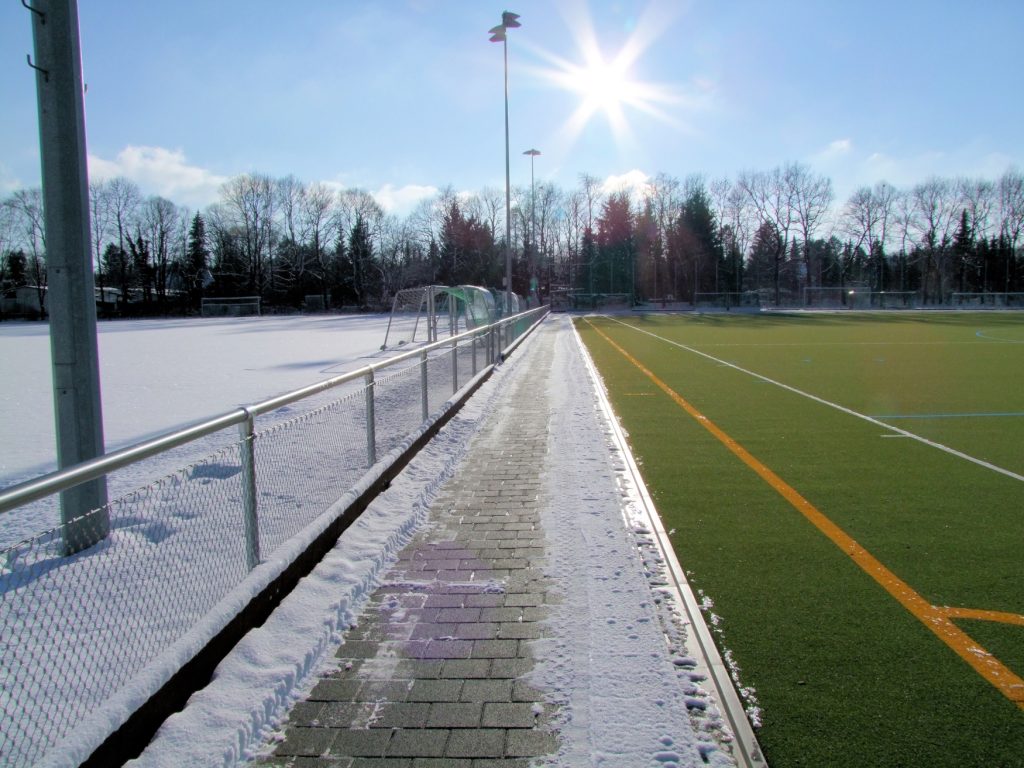
    A geothermal power plant in the south Bavarian region of Laufzorn has been supplying homes, businesses, schools and kindergartens in the municipality of Grünwald with renewable thermal energy since October 2011. An indoor swimming pool was added to the Grünwald leisure park in December 2012, followed by a heatable synthetic hockey pitch from Polytan in September 2015.
    What’s remarkable here is the fact that the swimming pool is heated by the return flow of the 120°C geothermal water from Laufzorn and it is actually possible to supply half the heating for the hockey turf from the “return flow of the return flow”.
    Located to the south of Munich, the Grünwald leisure park is set in rambling grounds dotted with trees and extends over an area of 120,000 m². The wide range of sport and leisure facilities is suitable for young and old, elite and amateur athletes alike. And the site is steeped in history for football fans: Sepp Herberger coached the winners of the 1954 World Cup in Sportschule Grünwald, which was founded in 1950.
    This modern facility has had a synthetic pitch since 1992. It underwent extensive renovation in 2003, but was again showing signs of age twelve years later.
    “The surface of the pitch had been badly affected by heavy use and frequent snow shovelling in winter,” says Jörn Verleger, the manager of Grünwald leisure park.
    “During renovation work, the municipality of Grünwald, which owns the facility, decided not only to install a turf heating system, but also to replace the dilapidated hockey hut with a modern new building, complete with an area for spectators and public toilets.”
    The 100 x 66 m synthetic playing field was mainly used by the members of the hockey and football sections of TSV Grünwald sports club – and if additional leasing to other private teams is taken into account, the pitch is used for more than 1,400 hours every year.
    Such intensive use calls for a high-quality and hardwearing synthetic turf system. The local authority opted for a Poligras Mega CoolPlus, an unfilled professional hockey turf from Polytan whose compact and even surface is conducive to fast and accurate play. The heating system beneath the synthetic turf comes from AST Eis- u. Solartechnik.
    A brine-conducted heating system has been installed and functions extremely efficiently owing to its low flow temperature (approx. 24°C), quick response times and a 50% reduction in thermal heat loss. The high efficiency can be attributed to the AST heating mats, which are located directly underneath the elastic layer. Similar commercially available piping systems are located around 100 mm deeper in the ground and therefore have considerably higher heat losses.
    An AST heating mat is 180 mm wide and consists of four adjacent flexible EPDM rubber tubes connected by fixed links. The heating mats are laid on a thin layer of asphalt in conformity with DIN standards and their individual tubes are connected to a collector pipe. The energy is provided by a fluid which is pumped through the piping mat system, thus releasing an even supply of heat into the surroundings. It is warmed up by a heat exchanger that transmits the energy from any heat source to the brine fill.
    With an unfilled hockey turf like the one in Grünwald leisure park, a mixture of quartz sand and gravel must be placed between the heating mats and the elastic layer in order to level out any differences in height between the individual layers. Completely level playing surfaces are essential for hockey pitches in particular in order to ensure that the ball does not “bounce”. AST synthetic turf heating systems are regulated by means of a heating control system and a slope sensor and have an approximate lifespan of 15-20 years. Maintenance costs are low.
    The heat for the turf in Grünwald leisure park is supplied by a Zortström distributor with different temperature zones. As well as the synthetic pitch, it also supplies the existing changing rooms at the ice-skating rink, the new hockey hut and a snow melt pit with thermal heat. Half of the energy (projection for the whole year) comes from a cooling system at the ice rink, whilst the other half comes from the 40°C return flow of the return flow of the geothermal energy used in the swimming pool.
    By using these two energy sources, therefore, the municipality incurs no additional energy costs for heating the turf. In a final cost-benefit calculation, this means that the enhanced lifespan of the synthetic turf, which is 5-10 years longer, offsets the additional costs of the turf heating system. There is also a hefty reduction in personnel and repair costs – and not only can the pitch be used more often during the winter months, it also offers improved playing qualities.

  • Eco-friendly rehabilitation of synthetic surfaces

    Eco-friendly rehabilitation of synthetic surfaces

    A time-saving and eco-friendly option for making running tracks that are showing their age as good as new again is to have the synthetic surface professionally re-topped. This entails laying a new wear layer on top of the existing installation – so there is no need to excavate and dispose of the old material.
    In its portfolio, Polytan has two re-topping products that can be installed on any existing surface: Rekortan M RT, the water-impermeable system coated in situ, and Spurtan WS RT, the structural system that is permeable to water. One is a PUR coating with strewn EPDM granules, the other a spray coating.
    Running tracks with elastic synthetic surfaces such as we know them today have been the only acceptable surface for athletics events at elite level since the Olympic Games in Mexico in 1968. The functional qualities they provide for sport, such as energy enhancement and shock absorbency, mean they are now part and parcel of modern sports facilities – whether the running tracks are for schoolchildren, amateur or professional athletes.
     
    Intensity of use and type of system determine the useful life
    The useful life of a synthetic surface generally varies between 10 and 30 years, depending on the intensity of use and the type of system that is in-stalled. In principle, a surface that is coated or poured in situ (also called a solid synthetic surface) is much more hard-wearing and long-lasting than a structured surface (sometimes referred to as a spray coating or spray surface).
    Since spray coatings have a thinner wear layer than products poured or coated in situ, they wear out much sooner due to the effect of spikes, for instance. In addition to abrasion, the running tracks harden over time and become brittle – an ageing process of synthetic floors that occurs relatively quickly in the case of prefabricated strips. Polytan’s product range includes only synthetic surfaces that are installed in situ in liquid form, allowing them to be optimally adapted to the local circumstances.
     
    The condition of the old surface is the decisive factor
    Whether re-topping makes sense will depend on the condition of the existing running track. This is determined in a defined test procedure in which variables such as shock absorption and tensile strength are analysed alongside the evenness of the surface and the general condition of the substrate.
    If the re-topped track is to be certified as meeting the requirements for inter-national competition laid down by the IAAF, the governing body of world athletics, the inspection is much more intensive than if the aim is merely to refresh the look of the track. For successful re-topping it is immaterial what method of construction was used for the initial installation, whether it was laid in situ or as prefabricated strips, or who the original manufacturer was: the cost of rehabilitation is determined only by its condition.
    If the substrate is suitable for re-topping, the old surface is first cleaned thoroughly and any damaged areas are improved. The next stage is – if necessary – to adapt the existing sports equipment, such as the sandpit for the long jump, to the higher level of the future surface. The third and final stage is the actual re-topping process. This is when a new wear layer is laid seamlessly on the existing old surface, optionally as a PUR coating with strewn EPDM granules or as a spray coating. Once hardened, the rehabilitated running track can no longer be distinguished from a new installation. 
    The Rekortan M RT (PUR coating) and Spurtan WS RT (spray coating) re-topping systems from Polytan can be used on tracks that are permeable to water as well as those that are impermeable. Both rehabilitation solutions have structured surfaces, are suitable for spikes and therefore offer the optimum base for professional applications.
    For more information visit www.polytan.de

  • Plastic tactics: how to keep infill out of the environment
    Plastic tactics: how to keep infill out of the environment

    As awareness of plastic pollution grows, it is more important than ever to handle machines that install, maintain and care for synthetic turf correctly to avoid discharge of filling granules into the environment.
     
    Installation
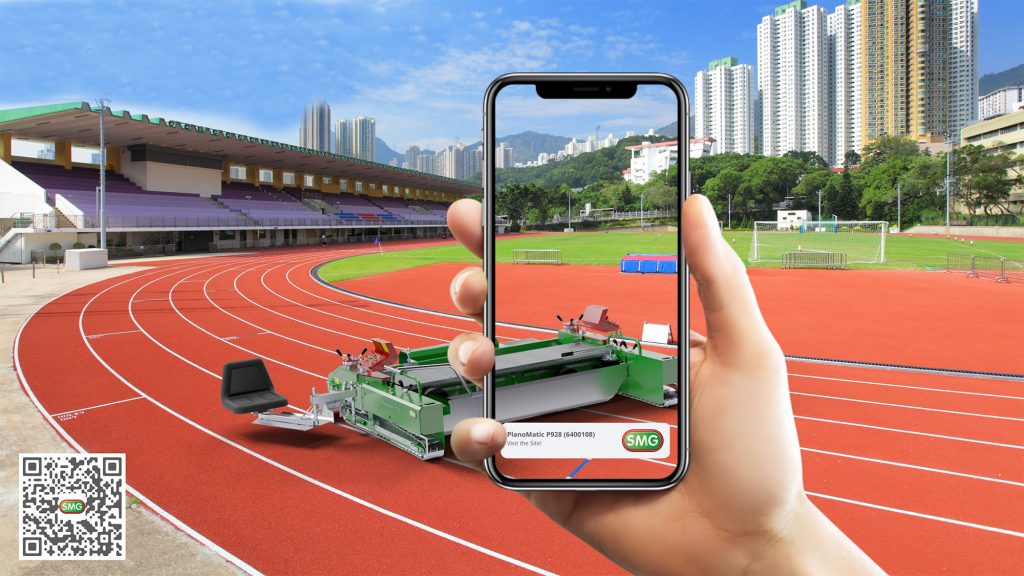
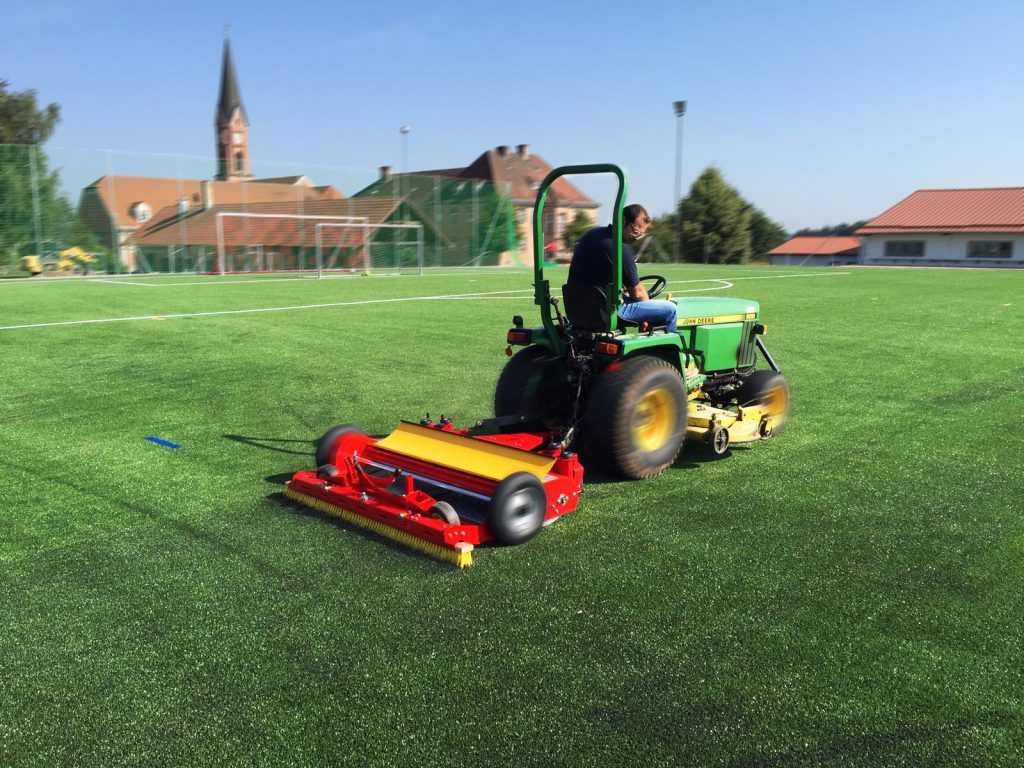
    Exact and precise installation is crucial, using machines with orbital oscillating brush systems that erect the artificial turf fibre while incorporating filling material, which can be dosed via outlet systems in the required kg/m2.
    This procedure ensures the infill material is filled to an even level, to support and stabilise artificial turf fibre while preventing any incorrectly applied filling material being discharged by environmental influences or during play.
    When installed correctly, there is no need to refill the system later, with the risk of overfilling that brings.
     
    Regular Maintenance
    SMG recommends a weekly and demand-based removal of coarse dirt, such as stones and leaves. This should be done using a rotary brush with an adjustable vibrating screen to receive overlying coarse dirt and the top layer of the filling material. Simultaneously, dirt and filling material should be separated, followed by metered return of the filling material on the artificial turf.
    A constant amount of infill material in the sieve is a decisive factor for returning it to areas that have become depleted by game activity.
    Regularly following our guidelines and the corresponding driving tactics ensures artificial turf fibre is supported at a uniform height by filling material, lengthens the service life of the artificial turf system and prevents discharge of filling granules into the environment.
     
    Advanced Maintenance: Decompaction
    Filling material should be loosened and levelled monthly using tow-behind devices with flexible and adjustable prongs to stabilise artificial turf fibres, keep them upright and prevent infill from being discharged into the environment. This also prevents compaction and drastically reduces or eliminates the amount of material for refilling.
    SMG guarantees a care process that ensures eroded polymer filling granules can be extracted and properly disposed of. Annual deep cleaning is carried out by with a rotary brush with a sieve function to clean even deeper layers of the filling material.
    The collected litter material is spread evenly after being separated from fine dust, microparticles, worn fibres and other contaminants using a filter element with a separation efficiency of more than 98 per cent at 4 micrometres.
     
    Repatriation
    Filling material can reach the side of the pitch through play operation, incorrect care or adverse weather. To prevent it from being carried into the environment, the filling material must be returned to the pitch using rotary brushes with a sieve function.
    A constant amount of infill material in the sieve insert is the deciding factor in returning infill material into the areas “unfilled” by the game activity. The sieve insert acts as a material reservoir during this care process. Alternatively, sweeping brushes can be used, but only if they are adjustable in their working width.
     
    For more information on our guidelines please contact SMG – we are looking forward to assisting you with details
    https://www.smg-gmbh.de/en/