Tag: sustainability

  • Plant power: how expos can safeguard urban futures

    Plant power: how expos can safeguard urban futures

    Host City: What is the main benefit for a city hosting an AIPH approved expo?
    Tim Briercliffe: AIPH approved expos are international spectacles with the ability to stimulate economic and social development and transform the international reputation of host cities. As much as to create a showcase for national and international attention, these expos are often staged as part of a development or redevelopment strategy of the host city.
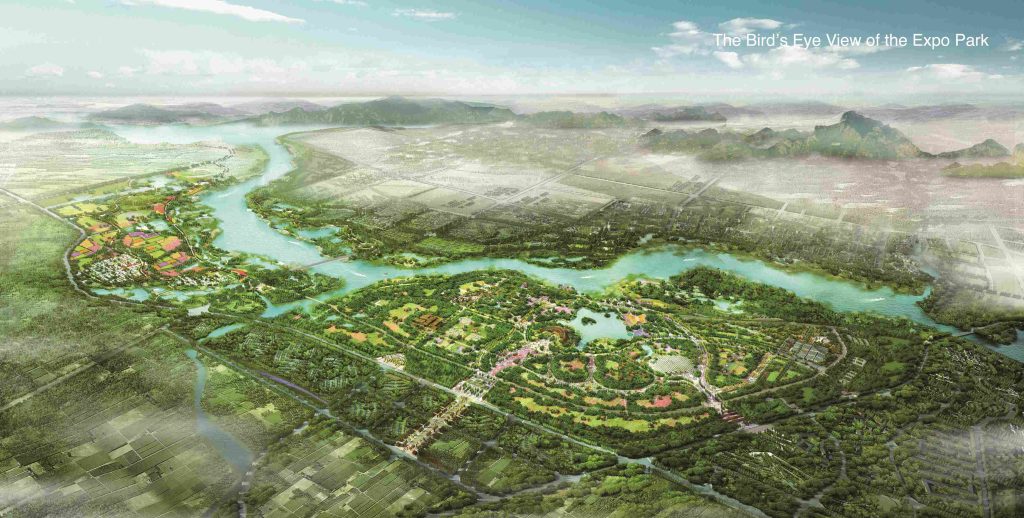
    Each expo lasts up to six months, sites range from 50 to over 500 hectares in size and they can attract as many as 16 million visitors. The legacy of an expo is long and far-reaching with benefits for business and trade, research and development, employment and education, the physical and mental health of citizens and social cohesion.
     
    Host City: What is the most important factor you are looking for in the hosts of your expos?
    Tim Briercliffe: AIPH partners with cities that share our vision of a healthier future for urban citizens. Alongside this vision, these cities need the commitment and dedication to make such a vision a reality.
    AIPH is the world’s champion for the power of plants and believes that our relationship with nature is fundamental to our future. The AIPH network provides the knowledge and expertise to support a city in creating better and cleaner urban environments and in gaining global recognition as a green city.
     
    What are your expectations of Host City 2019?
    Tim Briercliffe: Host City 2019 is a great opportunity to meet a community of visionary, entrepreneurial and innovative thinkers committed to the development or regeneration of their cities. Welcoming this community to the AIPH network helps us to advance our hopes for a world where the essential value of plants is recognised and reflected in every step forward for humanity.
     
    Tim Briercliffe is speaking at Host City 2019, the largest meeting of cities and sports, business and cultural events, on 26-27 November in Glassgow. Register here

  • How Glastonbury Festival got greener with Aggreko

    How Glastonbury Festival got greener with Aggreko

    [Source: Aggreko] To support its efforts to reduce its carbon footprint and pursuing more efficient ways of providing power, Aggreko, the world-leading provider of mobile modular power, temperature control and energy services, introduced a number of emission-reducing power solutions at this year’s Glastonbury Festival.
    Aggreko is proud to have been the exclusive power supplier for the festival since 2007, and in 2019 several locations at the festival were powered by hybrid thermal-solar generators, combined with battery storage systems and proprietary energy management software. This ensures maximum efficiency and minimise the carbon impact and together, these innovative systems saved over 200 metric tonnes of CO2 across the course of the festival, compared to the use of traditional diesel generators.
    Uniquely, the festival’s Green Fields HQ ran entirely on solar power for the duration of the festival, which when combined with the battery storage systems, provided a reliable power source during the hours of festival operation.
    In addition, this year saw the use of cleaner, healthier fuel deployed in Aggreko generators – Green D+, a special blend of Hydrotreated Vegetable Oil (HVO), purchased by Glastonbury directly. HVO fuel which is made to an international specification, is derived from a mix of 100 per cent used vegetable oils and waste fats. All carbon is removed in the production process resulting in a biofuel of higher consistency, quality and purity than other biofuels.
    Green D+ includes additives that produce a fuel that has several advantages over standard diesel, including a significant reduction in particulates, over 80 per cent saving on greenhouse gases, zero sulphur emissions and reduced noise pollution.
    By switching to this fuel, which works in all Aggreko diesel generators without modification, Aggreko achieved a C02 saving equivalent to the annual emissions of 45 family cars.
    Bill Egan, a Principle Engineer at Aggreko Events Services who has a been working with Glastonbury Festival for over 25 years, said: “Powering a major event like Glastonbury presents a huge challenge. Providing 25MW of low-carbon power with the reliability to ensure that there are no disappointments for the festival-goers is no mean feat.
    “Aggreko’s use of low carbon HVO fuel, combined with our innovative thermal, hybrid, storage and solar power solutions will ensure that everyone enjoys the festival without interruption, all the whilst supporting Glastonbury’s efforts to minimise its impact on the environment”.
    The festival took place from 26th – 30th June. It is the largest greenfield festival in the world, attended by around 175,000 people. The five-day festival near Pilton, Somerset, is regarded as a major event in British culture and raises millions of pounds for good causes.

  • Glasgow hailed as one of the world’s top five cities for sustainable business tourism

    Glasgow hailed as one of the world’s top five cities for sustainable business tourism

    [Source: Glasgow Convention Bureau] Glasgow has been recognised as one of the world’s top five cities for its commitment to sustainable business tourism.
    The Global Destination Sustainability Index (GDS-Index) published its 2019 rankings today (Thursday, October 31), with Scotland’s largest city climbing three places from joint-seventh to fourth.
    The announcement comes at the close of the 58th annual International Congress and Convention Association (ICCA) World Congress, which has been taking place in Houston, Texas this week.
    It’s a huge boost for Glasgow as the city prepares to host the United Nations’ 26th Conference of the Parties Climate Change Conference (COP26) next year.
    Governments and destinations around the world are responding to the global climate emergency and Glasgow’s ambitions include a pledge to become the UK’s first carbon neutral city by 2030. The Scottish Government has set a net zero emissions target for Scotland by 2045.
    The GDS Index was launched in 2016 and promotes responsible business tourism best practice.
    Compiled by global sustainability academics and policymakers, it ranks nearly 60 cities around the world based on four key criteria – environmental strategy and infrastructure; social sustainability performance; the strategy of the host city’s Convention Bureau; and industry supply chain support (from the likes of convention centres, meetings venues, hotels, restaurants and transport operators).
    To date, Glasgow remains the only UK city to feature in the Index, which also includes Sydney, Barcelona and Kyoto.
    Glasgow’s ranking recognises the city’s People Make Glasgow Greener campaign, which was launched by Glasgow Convention Bureau in 2017 and updated again this year.
    A key feature of the campaign is a toolkit identifying some of the city’s leading sustainable businesses – from hotels and restaurants to conference venues, transport operators and corporate entertainment providers. It’s geared at simplifying the process of organising a sustainable conference in Glasgow and helping meetings organisers to find the services they require from suppliers with similar green objectives.
    Glasgow’s ambition is to be at the forefront on climate action and we are determined to become the UK’s first carbon neutral city by 2030 and a world-leading centre for sustainable policy and innovation.
    Being named as one of the world’s top five sustainable conference and business events destinations by the Global Destination Sustainability Index shows the great strides that we are making in that respect.
    Glasgow is home to some of the world’s biggest energy companies and we’re internationally recognised as having one of the healthiest and most diverse energy industries globally; particularly in terms of low carbon industries, which has had a hugely positive impact on the volume of conferences that we’re attracting in these sectors.
    Glasgow hosted 25 energy, sustainability and carbon reduction related conferences in the 2018/19 financial year, boosting the city’s economy by nearly £8m.
    Aileen Crawford, Head of Conventions at Glasgow Convention Bureau said: “Today’s announcement is a fantastic achievement for Glasgow and it would not have been possible without strong partnership working and collaboration between the city’s tourism sector, academic and business communities, and the City Government.
    Kathleen Warden, Director of Conferences Sales at the SEC said: “This is fantastic news for the city and we are proud to play a key role in helping to position Glasgow as the world’s 4th most sustainable conference destination. At the same time, being named a finalist for the GDS-Index’s Leadership in Sustainability Award is testament to our ambitious goals as a city.
    “The SEC has been nominated to host COP26, which will put both our venue and the city on the global stage in terms of showcasing our green credentials. This is an incredibly important event for Glasgow, Scotland and the UK at a crucial time for governments across the world as they address climate change. We’re looking forward to working with partners across the city to build on our sustainability efforts and ensuring that we provide the best possible environment for world-class events.”
    Guy Bigwood, Managing Director of the GDS-Index said: “Glasgow as a meetings and events destination has made a significant jump in sustainability performance in 2019. We are delighted to see that a UK city has risen to number 4 in the Global rankings, and has a strong strategy to develop even further. Glasgow is in the first division of pioneering cities that is defining what sustainability leadership stands for.”

  • Leading the content revolution

    Leading the content revolution

    Host City 2019, the largest meeting of sports, business and cultural events, is delighted to be working with Strategic Partner and Silver Sponsor, the European Broadcasting Union (EBU) – the world’s leading alliance of public service media.
    We spoke with Franck Choquard, Head of Content & Servicing at Eurovision Sport, which is a division of the EBU. With contracts with 25 Federations representing 20 sports, Eurovision Sport’s coverage equates to 30,000+ hours broadcast from 200+ events a year, 75 per cent of which feature women-only or mixed events – including 30 European Championships and 30 World Championships.
     
    Host City: What do you see as the most pressing issues facing the broadcasting sector today?
    Franck Choquard: As for any other actor within the entertainment industry, the overall broadcast sector is today facing a “digital revolution” in the way the various audiences are consuming content.
    It is no longer possible to have one single linear TV approach to reach them all audiences,  we need to adapt our offering to the various communities we have – using the right platform (linear TV, OTT, social media etc…) with the right content.
    More than ever, within this increasingly fragmented offering, it is important for national broadcasters to understand that editorial enrichment and targeted content delivery are key drivers for success.
     
    Host City: How would you describe the main objectives of Eurovsion Sport’s digital strategy?
    Franck Choquard: Our content strategy (we prefer this terminology than using digital), is based around  two pillars:

    Offer European audiences free access to the best sporting content through our Members’ platforms, be it on linear TV or through innovative direct to fan (D2F) experiences – our Members being Europe’s leading public service media organisations
    Be the premium partner for International Federations and host cities, not only guaranteeing the widest possible audience free-to-air in Europe but also generating new and innovative business models that serve to increase their event / content value

     
    Host City: What kind of partnerships is Eurovision Sport establishing to develop this strategy?
    Franck Choquard: We are building partnerships within three dimensions to achieve this strategy:

    With our Members and Federations, working together to offer a shared promotion strategy and building common D2F (direct-to-fan) ecosystems, to better engage audience and generate additional value to all stakeholders
    With technology partners (such as Dazzl or Livelike) allowing us (and our members) to enrich fans’ engagement within their digital ecosystem
    With some of the key actors within the FAANG (Facebook, Amazon, Apple, Netflix and Alphabet) to amplify our reach and coordinate our various stakeholders’ messages

     
    Host City: What role do you think technology can play in reducing the footprint of major events?
    Franck Choquard: Technology has a key role to play in this regard. The virtualisation and possibilities that technology can develop in the near future should enable productions to have only essential staff on site (editorial, producers, journalists) while engineers and technicians will be able to operate remotely, reducing the need for working areas, power, etc. Remote operation and virtualisation will also allow the delivery of more content to publishers for them to enrich the offering to their communities.
     
    Host City: What are your expectations of Host City 2019?
    Franck Choquard: I’m looking forward to fruitful exchanges with peers and colleagues from the International Federations and Organising Committees etc. that will be present; it looks like a great line-up. It will be exciting to further discuss how the integrative approach and working better together can enable us not only to have a better common strategy to increase the value of our events, but also to build sustainable models for the future.
     
    The European Broadcasting Union is co-producing a session at Host City 2019 on “Building better digital and sustainability strategies” at 12:10 on 27th November

  • IOC launches Plastic Game Plan for Sport

    IOC launches Plastic Game Plan for Sport

    [Source: IOC]
    The International Olympic Committee (IOC) has launched a new guide to help the sports community address plastic pollution.
    The guide, entitled Plastic Game Plan for Sport, was published in collaboration with UN Environment and includes contributions from World Sailing. Referencing successful examples from across the sports world, it provides guidance to event organisers on creating an effective plan to reduce plastic waste. This includes key steps such as eliminating single-use plastic items, reducing the amount of plastic used, reusing plastic items and recycling.
    “Plastic pollution is one of the biggest challenges facing our environment today and sport – like any other industry – has an urgent responsibility to address it,” said Marie Sallois, IOC Director of Corporate and Sustainable Development. “The IOC’s Plastic Game Plan for Sport aims to provide sports organisations, event organisers, athletes and fans with clear, step-by-step guidance on how to eliminate plastic waste from their operations and everyday lives.”
    The guide’s recommendations include introducing reusable or compostable cups and tableware at events, providing water refill points, recycling bins and reducing the use of ‘hidden plastic’ such as merchandise, signage, branding and ticketing. In addition, the guide encourages event organisers to leverage their reach to raise awareness of plastic pollution. It also offers tips for athletes and fans on how to cut down their own plastic waste and inspire others to do the same.
    In line with Olympic Agenda 2020 – the strategic roadmap for the future of the Olympic Movement – the IOC has committed to driving sustainable practices across the International Sports Federations (IFs), National Olympic Committees (NOCs), and the wider sports community. The IOC itself is reducing waste at its headquarters and is working with suppliers to ensure materials used at its events are sourced responsibly.
    In June 2018, the IOC joined the UN Environment’s Clean Seas campaign to fight plastic pollution in the oceans, calling on the entire Olympic Movement to follow suit. Eleven IFs, four NOCs and three commercial partners have so far committed to the initiative, putting concrete measures in place to reduce plastic waste.
    In September 2019, the IOC supported the Big Plastic Pledge campaign, launched by Olympic sailing champion Hannah Mills. The campaign calls on athletes and fans to reduce their use of single-use plastic. Almost 200 elite athletes have signed the pledge so far, committing to reducing plastic use in their own lives and encouraging others to do the same.
    The Plastic Game Plan for Sport is the latest installment in the IOC’s ‘Sustainability Essentials’ series, which provides practical guidance on key aspects of sustainability for NOCs, IFs and other sports organisations. Previous guides in the series include Introduction to sustainability, Sports for climate action and Sustainable sourcing in sport.

  • Davos is not the only major event that can change the world

    Davos is not the only major event that can change the world

    The World Economic Forum (WEF) is a hugely influential global event. Although only 3,000 delegates are invited to the conference, 30,000 others are attracted to the Swiss resort of Davos every year to get involved in fringe activities. This takes it into the realms of the large-scale events showcased at Host City.
    And it’s not just scale that links WEF with the world’s biggest sports and cultural events – it is the scope and reach of the event’s content. The themes of WEF20 are all extremely pertinent to the stakeholders of major sports and cultural events.
    Take the first theme, “Healthy Futures”. A major objective of major sports events is for on-field performances to inspire people to be more active and improve public health. Major events can also have a catalytic effect on the healthcare sector – the standard of medical provision in Beijing improved as a result of hosting the Games in 2008, for example.
    The next question of “How to Save the Planet” will be as complex for the delegates flying into Davos as it is for the owners, hosts and organisers of major sports, business and cultural events. Many areas of business and society are rapidly increasing their focus on sustainability, and major events are no exception. It will be fascinating to see how the world’s most powerful business and government leaders at WEF20 set out their approach to this challenge. Large scale event organisers must also play a greater role in the rapid transition that is so urgently needed to prevent runaway climate change and environmental degradation.
    The third and related theme, “Better Business” focuses on how industries can “shift their time horizons, look beyond short-term profits, and transform themselves into sustainable and inclusive organisations.”
    It’s not just businesses that struggle to take this long view. Democratic governments cannot be certain of any power beyond the typical 5-year electoral cycle. In contrast, the timelines of major event organisers are extremely long – 13 years from bid to delivery, in the case of Los Angeles 2028 – and the aim of the organizing committees is not to generate profit.
    Major events can also be trailblazers for inclusion and equality – the 2021 Rugby League World Cup for example will be hosting women’s, disabled and men’s events concurrently for the first time. Perhaps global business leaders could learn something from such projects.
    Next, WEF20 takes a look “Beyond Geopolitics”, promoting the power of cross-border cooperation to tackle big global challenges. International cooperation is crucial to the success of major events, from knowledge transfer initiatives between past and future hosts to new initiatives such as Paris 2024’s agreement to support the Dakar 2022 Youth Olympic Games.
    And the prospect of multiple countries hosting major events is now becoming a reality. The 2026 World Cup takes place in USA, Canada and Mexico. The 2022 Commonwealth Games is primarily staged in Birmingham, UK, but India could host Shooting and Archery at the same time. While this possibility has arisen through sporting demands, could it pave the way for pan-global events that could help “save the planet” by localizing audiences?
    Leaders at Davos will also be grappling with how to deploy and develop “Tech for Good”. Robotics, AI, IoT and Data (RAID) are converging to disrupt all industries – and sports and entertainment is no exception. At worst, such technologies pose an existential threat to humanity; at best, they are revolutionizing the way sports and entertainment are experienced. In a world of esports, virtual influencers and OTT media consumption, what does this mean for our traditional communities of rights holders, broadcasters, stars and fans?
    Discussion about “Society and the Future of Work” at Davos will focus on the displacement and disruption of human labour by the Fourth Industrial Revolution, but also touches on the impact of technology on societies and communities. Sports and culture have a huge role to play in place-making and civic pride; it would be great to see this brought to the fore at WEF. The 15-hour working week envisioned by Keynes has not come to pass yet, but if it does, organized leisure will no doubt play an even greater role in what it means to be human.  
    Finally, delegates at Davos will visualise “Fairer Economies”. While they are not in a position to directly redistribute wealth, major events already play a massive role in rebalancing economies. The Games staged in East London, Glasgow and Birmingham – with some of the highest levels of deprivation in the UK – all bring a major local economic impact. The cities / capitals of culture Hull 2017 and Coventry 2021 inhabit similar socioeconomic spaces (look out for Bradford 2025!)
    I’m not suggesting that major sports, business and cultural events have any greater power to change the world than the government and business leaders converging in Davos. But it is interesting to note how pertinent the WEF themes are to Host City, and vice versa. If we can build a dialogue between our sector and the wider world of business and government perhaps we can help build a better world together. Now – where’s my invitation?

  • Aggreko commits to greener future

    Aggreko commits to greener future

    [Source: Aggreko] Aggreko has cemented its position as a green supplier of temporary power, heating and cooling solutions after being certified to the Carbon Trust Standard and achieving certification to ISO 50001:2018 international standard for energy management.
    By implementing ISO 50001, Aggreko has committed to reduce its energy consumption, minimise its carbon footprint and promote sustainable energy usage. This includes applying both internal and external guiding principles including the integration of energy reduction considerations and increasing fuel efficiency in our fleet and solutions offerings for its customers.
    Replacing the Carbon & Energy Management and Reduction Scheme (CEMARS), the Carbon Trust Standard is the world’s leading independent certification of an organisation’s achievements in managing and reducing carbon emissions. By accrediting Aggreko to the Standard, the Carbon Trust has independently recognised the company as taking a best practice approach to achieving real year-on-year reductions.
    As part of its commitment to both accrediting bodies, Aggreko will significantly reduce its power-related carbon emissions. With this pledge in mind, the company has also switched its electricity contract to 100% renewable electricity, with all annual electricity demand required to supply Aggreko’s Service Centres being generated by offshore wind generators.
    Aggreko is also reducing carbon and energy use internally by reviewing its vehicle fleet, and has already taken steps to increase energy efficiency and reduce emissions using vehicle tracking, driver training, more electric plug-in vehicles and work planning using technological innovations.
    Furthermore, the company provides generators that work with alternative greener fuels such as natural gas, biofuel and hydrotreated vegetable oil, or HVO. This includes providing remote monitoring technology on equipment to improve efficiency, regularly reviewing products to ensure compliance with latest emissions standards. It is also developing renewable energies including modular PV and hybrid solutions that consist of different technologies, batteries and modular solar panels.
    Chris Rason, UK Managing Director at Aggreko, said: “Delivering sustainable growth and limiting the impact our business has on the environment is extremely important for Aggreko. As a business, we have made a number of commitments and by implementing ISO 50001, and getting the Carbon Trust Standard, we will ensure that we continue to improve our energy efficiency.
    “The Carbon Trust Standard will allow us to monitor and manage our energy performance to help aid year-on-year reductions. Through verified environmental impact data, regulation compliance will be ensured, which in turn will help our customers. Working with the Carbon Trust closely will allow us to benchmark our performance and, perhaps most importantly, identify opportunities for improvement and implement these.”
    Chris Rason concluded: “Aggreko has a vision to be the greenest provider of temporary power equipment and our aim for the next year is to help customers become greener. As a business, we are taking active responsibility to limit the impact our business has on the environment and we look forward to seeing the positive changes these real commitments through certification will have.”
    For more information, please visit www.aggreko.com.

  • Climate conversation set to dominate first Global Sports Week Paris

    Climate conversation set to dominate first Global Sports Week Paris

    [Source: Global Sports Week] The role of sport in the climate emergency is set to dominate discussions at the first Global Sports Week Paris taking place tomorrow and Friday at the Carrousel du Louvre.
    The new annual gathering of the world sports economy is organised under the patronage of UNESCO and the high patronage of Emmanuel Macron, President of the French Republic.
    The event will bring together 1,500 delegates and more than 100 international media around an agenda focussed on the future of sport at the intersection of business and society.
    On the programme are issues ranging from sport’s role in driving gender equality to the impact of digital transformation on the industry’s core business model. Sports tech and social business also feature strongly.
    But climate considerations dominate the agenda for the first edition, with keynote contributions expected on the subject from F1 Executive Chairman and CEO Chase Carey, Ocean Race Director Richard Brisius and incoming Wimbledon CEO Sally Bolton, alongside athlete activists including big-wave surfing star Justine Dupont.
    Major sponsor brands including Dow, adidas and EDF are also expected to share their vision of a sustainable future, alongside media executives including Yannick Bollore, Chairman of the Havas Group and the Vivendi Supervisory Board.
    On Friday, Global Sports Week will be the stage for key carbon policy announcements from the All England Lawn Tennis Club (Wimbledon) and the French Football Federation in partnership with the French ministry of sport.
    French sports minister Roxana Maracineanu will host a meeting of her international counterparts on the sidelines of the summit.
    The agenda for Global Sports Week Paris has been significantly shaped by a group of 50 under-25s, drawn from 22 countries, and billed as representatives of a new global generation.
    Global Sports Week Chairman Lucien Boyer explained: “We believe it is crucial to understand the interests and expectations of the emerging consumer generation if sport is to continue to grow its influence and impact in the world.
    “On climate, we hear very clearly the young generation’s clamour for change. Sport itself faces tangible impacts, but it also has a great potential to contribute to solutions.
    “We hope Global Sports Week can be a place to put some new ideas into action.”
    Global Sports Week organisers confirmed details of the event’s own sustainability practices, which include no single-use plastics; zero waste; and the use of 100% recycled materials in the site build and overlay.
    Host City’s Editorial Director Ben Avison is attending and reporting on Global Sports Week – contact ben.avison@hostcity.com to arrange a meeting there

  • The chemistry of sustainable Games

    The chemistry of sustainable Games

    Dow has been a partner of the International Olympic Committee (IOC) since 2010, initially working on providing technologies and solutions for the Games.
    “Our products are everywhere and so they can also be enabling of and supporting the Games,” says Dr. Nicoletta Piccolrovazzi, Global Technology & Sustainability Director, Dow Olympic & Sports Solutions.
    “We wanted to understand how we could use this partnership to go beyond and to integrate more our experiences and expertise of sustainability. That’s why we became the Carbon Partner of the Sochi Games.
    “We are using sport to create an acceleration, to help us bring businesses to the table and to collaborate on CO2 reduction projects.”
    Following its first tenure as Carbon Partner for the Sochi 2014, Dow went on to become Carbon Partner of Rio 2016 – during which Host City ran a digital communications campaign with Dow. And then in 2017, Dow became Carbon Partner of the IOC.
    “We have taken this platform from a Games focus and a host country focus to now a global focus. It’s our global platform of collaboration on climate change that utilises our technologies, our customers’ technologies and engages the entire value chain on projects.”
    95 to 96 per cent of products are enabled by chemistry, much of which enables reductions in CO2. For instance, Dow’s products go into insulation.
    “What we have seen is the benefits that we deliver in terms of CO2 reductions from our products far outweigh the carbon footprint of when they are being manufactured. It’s a ratio of three or four to one of CO2 reduction benefits that we enable through our products.”
    Paris 2024 is already talking of reducing its carbon footprint by 50 per cent, and there is much work to be done to establish how to achieve this.
    “It’s really good that Paris focusses on how to reduce their emissions,” says Piccolrovazzi. “It’s very important for us to focus on understanding the impact and then reducing the emissions.
    “Every Games needs to define an effective mitigation strategy. That is still being developed by Paris. Every Games needs to do something that is relevant for their own emission reality.”
     
    5 million tonne CO2e reduction
    [Source: Dow] By 7 February 2020, the cumulative greenhouse gas (GHG) reductions from Dow’s carbon programs with Sochi 2014, Rio 2016 and the IOC had reached more than 5 million tonnes of carbon dioxide equivalent (CO2e), according to third-party verification by Environmental Resources Management (ERM). This compares to an amount of CO2 sequestered by 6.5 million acres of U.S. forests in one year.
    In 2019 alone, Dow’s carbon program with the IOC reduced 655,000 tonnes CO2e of greenhouse gas (GHG) emissions, the equivalent of 139,026 vehicles driven for one year. By 2026 – the end of the monitoring period agreed to by the IOC – the carbon benefits are expected to reach more than 7 million tonnes of CO2e.
    As a part of the carbon partnership program with the IOC, Dow announced several new projects in 2019 with collaborators, including PETRONAS Chemicals Group, the U.S. Green Building Council, the AIA International Region, Firestone Building Products and Restore the Earth Foundation. These greenhouse gas reduction projects are part of Dow’s Sustainable Future Program, which harnesses the power of sport and science to accelerate the adoption of more sustainable technologies across value chains and upgrade business-as-usual practices locally. The project portfolio has been developed to address a wide range of applications, such as high performance buildings and infrastructure, reforestation, improvements in packaging and industrial efficiency.
    “In line with our strong commitment to sustainability, the IOC measures its annual carbon footprint and implements various measures to reduce them. Thanks to our Official Carbon Partnership with Dow we have also been able to offset our unavoidable emissions for the period between 2017 and 2020,” said Marie Sallois, IOC director of corporate & sustainable development. “The results that Dow continues to deliver are now exceeding our operational emissions, creating a tangible, positive legacy.”
    With a joint vision of accelerating climate action across the Olympic Movement, Dow and the IOC also announced in 2019 a new program to encourage and incentivize International Sports Federations (IFs) and National Olympic Committees (NOCs) to measure, reduce and mitigate the carbon emissions related to their operations and events. As part of the program, carbon offsets are offered to IFs and NOCs that have joined the United Nations Framework Convention on Climate Change’s Sports for Climate Action Framework and implemented tangible action to reduce GHG emissions within their respective operations and events. Ten IFs benefitted from the program in 2019. In 2020, the initiative will be expanded to include submissions from NOCs in addition to IFs.
    For more information about Dow’s more than 35 years of support of the Olympic Movement and commitment to sustainability through sports, visit https://www.dow.com/en-us/sports/partnerships/olympics.

  • A wake-up call for international federations

    A wake-up call for international federations

    Featuring on the Olympic programme is still an incomparable way of capturing global attention, but sports will need more than this to hold attention and appeal in today’s crowded market.
    “There is a need for a more entrepreneurial approach from international federations,” said Tom Dielen, Secretary General, World Archery, opening the IF Summit. “Our role is different to private companies. We need to develop sports, not just make money, and there we need to be creative.
    “One highlight per year is not enough. You have to have event experiences for fans.”
    One way of making sports more experiential is to make entertainment a stronger component of the programme. Dielen cites the example of the Superbowl: “After the half time show half the audience left – you wonder if the half time show is the real show!”
    FIBA’s latest format places equal emphasis on entertainment. “3×3 Basketball has urban culture festivals with non-stop music,” said Ignacio Soriano, Head of Events and Partnerships at FIBA.
    This event is open to cities and private promoters as well as national federations, who traditionally lead on hosting championships.
    Sailing is another Olympic sport that is working more creatively with the private sector. World Sailing works with a number of “partner special events” – the Ocean Race, the Americas Cup, Sail GP, World Match Racing Tour, Star Sailors League and J Class.
    “The special events have to sign a charter that links with our sustainability charter,” said Scott Over, commercial director at World Sailing.
    “Sailing has a huge year this year – not just the Olympics, but also the first Offshore World Championships, a sport that may be included in Paris 2024, to be broadcast 24 hours a day for four days.”
    Following the success of Beach Volleyball, which has been in the Games programme since 1996, FIVB launched Snow Volleyball as an opportunity to get into the winter sports market.
    “Beach volleyball is influenced by the elements; we thought we could do that in winter,” said Nicolas Hyett, Technology and Innovation Manager at FIVB.
    Hockey is another sport that has a relatively new format, Hockey5s, created for the Youth Olympic Games in Nanjing in 2014. “New small formats are complementary to traditional ones,” said Hilary Atkinson, Olympic Games Director at FIH.
    Creative event owners also need to increase their reach in new regional markets. Alistair Gosling, CEO of Extreme International said, “Saudi Arabia is just starting to open up, and sports is a massive part of that transformation. Tourism and sport go hand in glove.”
    However, host destinations are increasingly at the mercy of health and environmental issues. “Contingency is the word of the day,” said Dielen. “The Rugby World Cup in Japan last year was a major lesson for federations in what to do when a match is cancelled.”
    Earlier this year, the Melbourne Open qualifying rounds were cancelled due to rain and air quality concerns amid the bushfires.
    “More and more this is a factor. And now of course the coronavirus is causing events to be cancelled or postponed.”
    Since the IF Summit, World Archery have announced that Shanghai will host the Hyundai Archery World Cup Final in the Autumn, instead of the Stage it was scheduled to host in May.
    Dielen said sustainability is another big topic facing event owners, citing the 2020 Youth Olympic Games in Lausanne as a great example of widespread use of public transport. “Although on the second Friday, children from all over the world including Greta Thunberg gave a climate strike, which closed the train station and had a negative impact on carbon footprint.”
    Financial sustainability is also a perennial and growing concern for event owners and organisers – and not just the IOC with its “New Norm” strategy.
    “We took a decision in 2018 to have conversations with venues to see how they can be strategic partnerships – turning it into more of a conversation,” said Matt Evans, Events Manager at World Rowing.  
    Alex Molina of Formula One said ,“We have the privilege of asking cities for a fee. Often this gets political – people say its’s better to spend the money on a hospital. But it attracts tourism, brings exposure to lesser known destinations – and brings economic impact.
    “We have a responsibility to incentivise kids to get into engineering and motorsports. You need to adjust your product to kids – we need to think in terms of entertainment and bring in more music.”
    Esports is competing massively for the attention of the next generation of fans. “We need to make participating actively as cool as esports”, said Atkinson.
    So how can IFs make their events more entertaining, sustainable, global and safe? “Governance is the key to helping with all these things,” said Dielen.