Uefa, football’s European governing body, will announce the host cities for the Euro 2020 tournament following a meeting on September 18 in Geneva, Switzerland.
The tournament will be staged in multiple cities across Europe, with widespread reports indicating that Wembley will be allocated the most prestigious package comprising the competition’s three biggest games.
England’s main rival for the top package had been Germany, but the latter is reportedly considering dropping its attempt to secure the top games at Euro 2020 in favour of launching a bid to host the Euro 2024 edition in its entirety.
Now Horne has suggested that England would be interested in following up hosting the finale of Euro 2020 by staging the full tournament in 2028 for the first time since 1996.
“We’re really confident with our bid,” Horne said, according to the Daily Mail newspaper.
“We know what the Germans have been saying. We know that they’re thinking about 2024, but nothing has been confirmed.
“I’m not going to dwell on their politics. I’m expecting that they’re not going to push very hard for 2020. They’ve made it very clear they want 2024.“I wouldn’t rule out looking at Euro 2028 for a full tournament bid.”
Wolfgang Niersbach, the head of the DFB, the sport’s governing body in Germany, said: “We still have the two options – to host the final rounds or four matches in the group stage. Our decision is open.
“We have a wonderful relationship with the England FA, but I am totally convinced that we will have both Wembley and Munich on the land map for Euro 2020.”
England lost out to Germany in bidding to host the 2006 Fifa World Cup and then crashed out in the first round of voting for the hosting rights to the 2018 World Cup, which was ultimately secured by Russia.
Germany’s anticipated bid for Euro 2024 is likely to be challenged by Turkey, which withdrew its bid for Euro 2020 games in April and announced that it would focus on the following edition of the event in 10 years’ time.
Tag: Uefa
-

England targets Euro 2028 as Wembley closes in on 2020 finale
-

Wembley to host Euro 2020 finale
The Football Association (FA) in England was awarded the hosting rights after its only rival, the German Football Association (DFB), withdrew its bid for Munich’s Allianz Arena to stage the tournament finale just before the vote.
Earlier this month, DFB general secretary Helmut Sandrock revealed that a deal had been discussed with the FA whereby the German bid for the final games of Euro 2020 would be scrapped if England agreed not to bid for Euro 2024.
Germany wants to host Euro 2024 in its entirety while England is interested in hosting the whole of Euro 2028 after Euro 2020 is staged in multiple countries across the continent.
Munich did secure a package of three Euro 2020 group games and one quarter-final alongside Baku (Azerbaijan), Rome (Italy) and Saint Petersburg (Russia).
Brussels (Belgium), Copenhagen (Denmark), Budapest (Hungary), Amsterdam (the Netherlands), Dublin (Ireland), Bucharest (Romania), Glasgow (Scotland) and Bilbao (Spain) were also awarded packages comprising three group games and one round-of-16 encounter.
Of the 19 Uefa member associations to have tabled bids, Belarus (Minsk), Bulgaria (Sofia), FYR Macedonia (Skopje), Israel (Jerusalem), Sweden (Stockholm) and Wales (Cardiff) failed to make the tournament’s final 13 host cities.
“This bidding process was open to more than 50 Uefa countries so for Wembley to be ultimately recognised in this way is testament to a lot of hard work behind the scenes,” FA chairman Greg Dyke said.
“We are proud of the FA’s bid and particularly its strong commitment to our ‘football for everyone’ goal. Making Uefa Euro 2020 a tournament that is open and inclusive was a huge focus.
“The bid was about working with Uefa to celebrate young people, develop our grassroots volunteers and demonstrate the determination for all England teams, men’s and women’s, to compete at the top level.
“This was recognised by the leaders of all three political parties, the Mayor of London, the Sports Minister and everyone who contributed in putting the bid together.
“Having seen the impact that a home Olympic Games had on young sportsmen and women in our country, I hope that Uefa Euro 2020 serves as a similar incentive for our most promising players to realise their full potential over the next six years.”
The next edition of the tournament in 2016 will herald a new era for the tournament, with France hosting 24 teams – up from the 16 that competed at Euro 2012, which was co-hosted by Poland and Ukraine. -

Euro 2016 host cities agree funding deal with Uefa
Half of the money is set to be released for immediate use, with the remaining €10m handed over when the tournament concludes. Uefa’s additional funding package will be used to develop new sports facilities close to the urban populations of the host cities. The funds will not be directed towards stadium development for Euro 2016, the cost of which is currently estimated to stand at €1.7bn.
A resolution to the contentious issue of host cities seeking additional financial support was reached at a meeting of the Euro 2016 steering group in Bordeaux. According to French newspaper L’Equipe, Uefa initially offered no additional funding as the cities aimed to secure €10m each.
Quoted on Uefa.com, Alain Juppé, Mayor of Bordeaux and president of the Club des sites – the host cities’ association – pointed out that an allocation of tickets for underprivileged youngsters will further enhance the social benefit of Euro 2016.
He said: “It is a gesture from Uefa following our request and is designed to facilitate the social acceptability of the event. The 10 cities are full of enthusiasm and approved this proposal unanimously. I wish to stress that beyond this €20m, Uefa will rent the stadiums throughout the competition and has decided to allocate 20,000 tickets to underprivileged young people. The help given will probably amount to around €50m.”
Uefa president Michel Platini was pleased to have reached a satisfactory conclusion to the dispute.
“Any potential misunderstandings have been resolved,” he said. “Everything is fine and we are all satisfied. I am very happy, particularly because not since 1998, when I was co-president of the organising committee of the (Fifa) World Cup in France, have we felt the love and desire that exists for Uefa Euro 2016.”
Lens, Lille, Lyon, Marseille, Nice, Paris, Saint-Denis, St-Etienne and Toulouse will join Bordeaux in hosting matches at Euro 2016 – the first edition of the tournament since Uefa decided to increase the number of teams at the finals from 16 to 24.
Uefa announced last month that Wembley Stadium in London will host the semi-final and final of Euro 2020 as part of a one-off staging model for the event. -

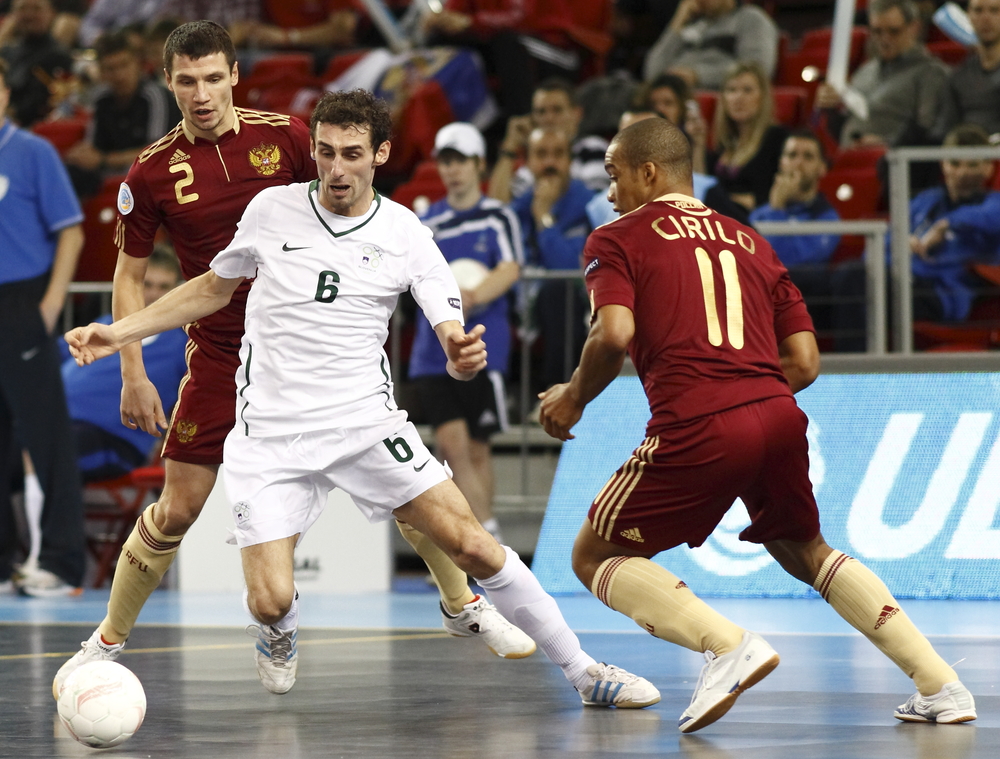
UEFA choses Slovenia to host Futsal EURO 2018
The UEFA Futsal EURO 2018 final tournament will take place in Slovenia, following a decision by the UEFA Executive Committee on Monday in Nyon, Switzerland.
The bid from the Football Association of Slovenia (NZS) was selected ahead of others from FYR Macedonia and Romania.
The venue for the tournament will be the 12,500-capacity Stožice Arena in the Slovenian capital of Ljubljana.
Slovenia hosted the UEFA European Under-17 Championship, but this will be the first time it has hosted the Futsal final tournament organised by Slovenia.
The UEFA Futsal EURO 2016 will take place in Belgrade from 2–13 February next year. Previous hosts of the tournament include Belgium (2014), Croatia (2012), Hungary (2010), Portugal (2007), Czech Republic (2005), Italy (2003), Russia (2001) and Spain (1999).
At the Executive Committee meeting, UEFA also appointed Sporting Clube de Portugal as host of the 2014/15 Futsal Cup finals.
Futsal is a form of five-a-side football played indoors on a hard surface.
Poland was selected to host the 2015–17 UEFA European Under-21 Championship final tournament.
The 2016/17 UEFA European Under-19 Championship final tournament was awarded to Georgia while Finland will host the 2017/18 UEFA European Under-19 Championship final tournament.
Croatia was selected to host the 2016/17 UEFA European Under-17 Championship final tournament, while England will host the 2017/18 UEFA European Under-17 Championship final tournament.
The 2016/17 UEFA European Women’s Under-19 Championship final tournament was awarded to Northern Ireland, while Switzerland will host the 2017/18 UEFA European Women’s Under-19 Championship final tournament.
The Czech Republic was awarded the 2016/17 UEFA European Women’s Under-17 Championship final tournament while the 2017/18 UEFA European Women’s Under-17 Championship final tournament goes to Lithuania.
The UEFA Executive Committee also received what it described as a “positive update” on the preparations for UEFA EURO 2016, which begins 500 days from now.
UEFA EURO 2016 takes place in ten venues across France between 10 June and 10 July 2016. -

Martin Kallen: How to kit out UEFA events
HOST CITY: Does the location of an event have a big impact on infrastructure requirements?
Martin Kallen: We would like it to be similar all the time – that would be easier for us, but wherever you go it’s different.
Of course we have our criteria and documents we provide to stadiums and organisers to ensure that they meet certain standards. The standards are getting more even.
However they are still different in terms of the size and quality of infrastructure. Some have better broadcasting facilities, better hospitality facilities or better technical facilities.
HOST CITY: How does France compare with Poland and Ukraine in terms of event infrastructure?
Martin Kallen: We have 10 stadiums in France, four of which are brand new, 1 existing Stade de France and five refurbished stadiums. If you go to Parc de Princes, they have rebuilt all the hospitality zones, business seats, kiosks, technical area and refreshed the sanitary areas. The remaining seats will be soon replaced.
Lyon is a completely new stadium. Lens is in principle a rebuild, with the construction of a new roof, hospitality and technical area, replacement of seats, etc. Saint-Etienne is a rebuild as well – it’s almost a new stadium on the old foundations.
Bordeaux is a new stadium and Toulouse made an upgrade of the existing facilities as seating area, kiosks and access control system.
If you compare this to Poland and Ukraine, most of the stadiums there were new buildings, with one or two exceptions.
In Poland, Poznan was a rebuild, but almost the whole stadium was rebuilt. All the other stadiums – Warsaw, Gdansk, Wroclaw – were new.
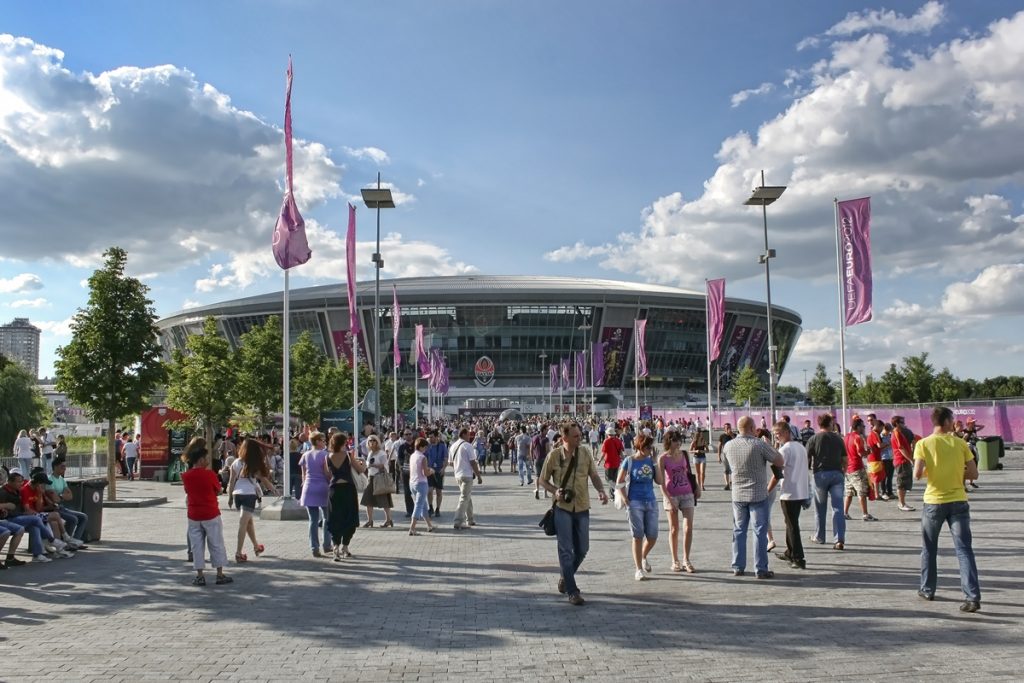
In Ukraine you had three new stadiums: Donetsk was finished two years earlier for the club FC Shakhtar Donetsk. Kharkiv was similar to Saint-Etienne, where they rebuilt the stadium on old foundations.
France is further ahead at this stage in terms of finishing – the infrastructure of most of the stadiums is now delivered. The last one Lyon, will be finished by the end of this year, whereas in Ukraine and Poland a lot of the stadiums were delivered in the last year and two close to the start of the tournament.
In terms of quality, a brand new stadium is much more modern than the one already existing. New stadiums in Ukraine and Poland are similar to the new stadiums in France.
It is difficult to compare a rebuilding with a new stadium. You always have some challenges because there is a link to the foundations of the stadium, access and so on. If they were built in the seventies, eighties, it’s not the same as today.
HOST CITY: What opportunities are there for event infrastructure suppliers in France?
Martin Kallen: On the overlay side, we are now doing the last tenders. All the suppliers have put their tenders in. It’s now coming almost to an end, because the work will start next year but the tendering process is taking place now.
On the stadium side, all the suppliers were chosen by the stadiums because, except Lyon, the last ones will be delivered by this summer.
HOST CITY: What are the main criteria in choosing a supplier for a UEFA event?
Martin Kallen: One is of course their knowledge – they need to have experience. Secondly, they need to have state of the art, products and services.
They also need to be sustainable. This means that what they are putting in also needs to be taken away and recycled, or ideally reused in a different form; and when it comes to waste management, that it’s not all going in the garbage – it needs to be sorted or treated. The more it can be reused, the better is the sustainability of the product.
What is also important is the price. It doesn’t always need to be the cheapest price, but it needs to be a good balance between quality and cost.
Taxes in different countries are always a challenge for suppliers, because they have to establish daughter companies, to recover VAT etc.
For us, the suppliers are very important for the events, as they are in principle specialists in many areas.
Through the Association of Global Event Suppliers (AGES), they can exchange their knowledge, information, issues, problems, challenges and best practice – this is a very good initiative.
HOST CITY: How will EURO 2020 differ in terms of event infrastructure?
Martin Kallen: The first big difference is that infrastructure in most of the countries is already ready.
We have only two locations where a new stadium will be built; one in Budapest and one in Brussels.
The other stadiums are already state of the art. We have to put on the EURO overlay; we will start working heavily with the stadium from approximatively 2018.
The overlay required for a big event is mainly for broadcasting and media facilities; then it’s hospitality, commercial facilities and all areas which will be either inside existing stadium premises or temporary facilities built outside. But it’s too early to give further information on that, because we have started the project not long time ago.
HOST CITY: What’s the biggest challenge for EURO 2020?
Martin Kallen: We have different challenges. The biggest one is surely to have a good EURO atmosphere in all the 13 countries as each one has 4 matches in only one host city of the country.
The other challenge is to ensure easy transport access. Or to have back to back matches in a host city, so fans can remain in the city until the next match – these are all important points to look at.
Of course you have 13 different countries with 13 different legislations, so you have to analyse how you can build a unified ticketing concept which is the same for a supporter in London, Munich and Baku.
HOST CITY: Will ticket prices be different in different countries?
Martin Kallen: That is a good question. That will be decided at a later stage, whether you can have a set price or a different price category that depends on the purchasing power of the people in the country to buy tickets. -

Glasgow unveils EURO 2020 host city logo
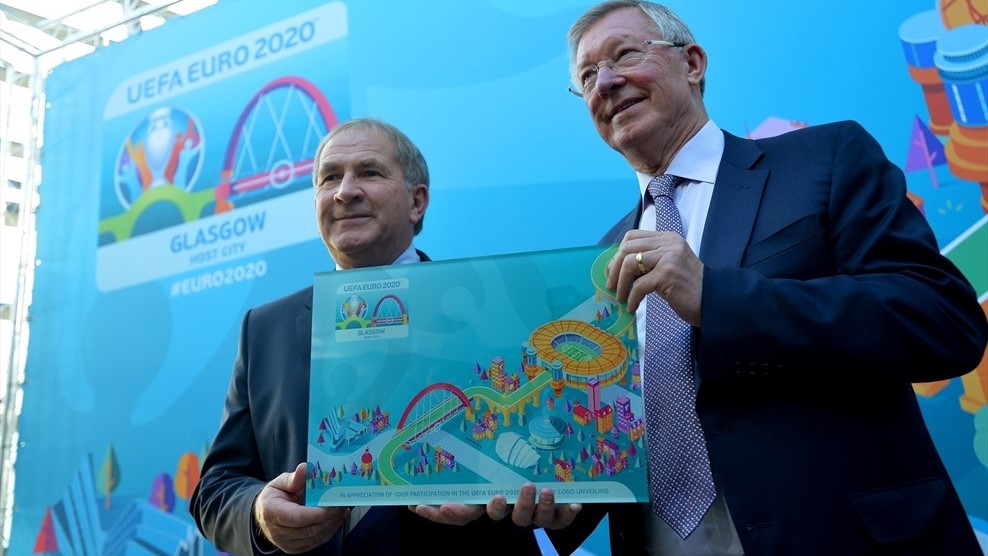
Football coaching legend Sir Alex Ferguson helped kick-off Glasgow’s UEFA EURO 2020 preparations at the official launch of the Host City branding in the Science Centre on the banks of the River Clyde on Tuesday.
“I was fortunate enough to play on that famous Hampden Park pitch as a young player, to watch the legendary Real Madrid side that came to Glasgow in 1960, and can look back fondly at cup final successes there as manager of Aberdeen,” said Sir Alex. “I look forward to Hampden being a key part of a historic UEFA EURO 2020.”
Glasgow is one of 13 cities that will play host to matches at UEFA EURO 2020 to commemorate the 60th anniversary of the championship.
The Scottish Football Association, Scottish Government, Glasgow City Council, Hampden Park Ltd and EventScotland are working in partnership to plan and deliver Glasgow and Scotland’s part in UEFA EURO 2020.
Stewart Regan, chief executive of the Scottish FA, said “People make Glasgow and Glasgow will make EURO 2020. Now as a UEFA EURO 2020 host city venue, Hampden Park will welcome new heroes to Glasgow and help create the next chapter in the long and illustrious history of our game.”
Hampden Park will play host to a Group Stage and a Round of 16 match for the championships.
Paul Bush OBE, VisitScotland’s Director of Events, said: “Scotland has demonstrated its capacity as the perfect stage for events on numerous magnificent occasions in recent years, and hosting these crucial UEFA EURO 2020 matches will build upon our sterling reputation as a world-leading host nation.
“We are delighted Hampden Park is set to play such a pivotal role during this landmark tournament, and look forward to further footballing history being made here in Scotland in 2020.”
Glasgow joins London, Rome, Baku and Bucharest in having revealed their host city logos, and ceremonies are scheduled to take place in the remaining cities – Amsterdam, Bilbao, Brussels, Budapest, Copenhagen, Dublin, Munich and St Petersburg – in the weeks to come.
“Glasgow enjoys a proud reputation as one of the world’s great footballing cities,” said Glasgow city council leader Frank McAveety. “The ‘Hampden Roar’ is legendary among visiting football fans from every nation. As a city, we recognise the value of football and major sporting events.”
The UEFA EURO 2020 visual identity sees each of the 13 city logos feature a single iconic bridge from the city in question – acting as a symbol of connection between the various venues. Glasgow’s logo incorporates the impressive Clyde Arc – affectionately known to Glaswegians as the Squinty Bridge – which spans the River Clyde.
In a message to Glasgow, UEFA President Aleksander ?eferin underlined the widely-held view that UEFA EURO 2020 would be “a unique and memorable tournament in a variety of different ways.”
“What better way could there be to celebrate football,” he added, “than to take the EURO final tournament for one single occasion to all four corners of the continent?”
Hampden Park hosted the classic 1960 European Cup final which saw Real Madrid beat Eintracht Frankfurt 7-3, and was the setting in 2002 for a wonder goal by Zinédine Zidane that gave Madrid UEFA Champions League success in the final against Bayer Leverkusen.
“This is a unique opportunity for Glasgow and Scotland to host matches as part of this prestigious championship,” said the Scottish government’s secretary for culture, tourism and external affairs, Fiona Hyslop. “It is likely to have a significant economic impact, not just for Glasgow, but for Scotland as a whole.” -

UEFA president ?eferin issues warning to the US and Britain
UEFA president Aleksander ?eferin has warned the United States and Great Britain that travel restrictions and immigration policies could have a negative effect on hosting future tournaments and finals.
The United States is one of the favourites to host the 2026 World Cup, but if President Donald Trump’s proposed travel restrictions are approved then it will “not help” the US bid.
?eferin, who is also a FIFA vice-president, told the New York Times: “It will be part of the evaluation, and I am sure it will not help the United States to get the World Cup.
“If players cannot come because of political decisions, or populist decisions, then the World Cup cannot be played there. It is true for the United States, but also for all the other countries that would like to organise a World Cup.
“It is the same for the fans, and the journalists, of course. It is the World Cup. They should be able to attend the event, whatever their nationality is. But let’s hope that it does not happen.”
The Slovenian also warned Britain that immigration policies after Brexit could affect the UK’s chances of hosting major European football finals.
“If ‘Brexit’ happens, everything changes,” said Ceferin. “But football was played before, and it will be played in the future. Now, with free movement in the European Union, it is much better.”
Last year Paris St-Germain defender Serge Aurier was denied entry to Britain to play in a Champions League match against Arsenal. Aurier had been convicted for assault and was appealing the conviction. This is a concern for ?eferin.
“I was very disappointed when Aurier, from P.S.G., was not allowed to enter England,” he said. “That will worsen when ‘Brexit’ happens, especially if the reasons were as formal. We could have a serious problem.
“But if we see that players cannot enter because they have any sort of procedure ongoing, then we will simply think if we should play our European matches there.
“Neymar and Lionel Messi both have procedures going on. This year, the Champions League final is in Cardiff. Imagine if they did not let them in?
“That is a big thing for us, if players from England can travel anywhere but players from other teams cannot travel to England. With free movement in Europe, it is much better.
“Even in 2020, if ‘Brexit’ has happened, then it can be a big problem for fans. That stays firm, and we will speak to the British government, and I am sure the English Football Association will help us.” -

UEFA, members and Premier League slam “so-called Super League”
UEFA, the administrative body for football in Europe, has denounced the agreement of twelve leading European football clubs to establish the Super League as a new mid-week competition.
AC Milan, Arsenal FC, Atlético de Madrid, Chelsea FC, FC Barcelona, FC Internazionale Milano, Juventus FC, Liverpool FC, Manchester City, Manchester United, Real Madrid CF and Tottenham Hotspur have all joined the planned Super League as Founding Clubs.
“UEFA, the English Football Association and the Premier League, the Royal Spanish Football Federation (RFEF) and LaLiga, and the Italian Football Federation (FIGC) and Lega Serie A have learned that a few English, Spanish and Italian clubs may be planning to announce their creation of a closed, so-called Super League”, said a statement.
“If this were to happen, we wish to reiterate that we – UEFA, the English FA, RFEF, FIGC, the Premier League, LaLiga, Lega Serie A, but also FIFA and all our member associations – will remain united in our efforts to stop this cynical project, a project that is founded on the self-interest of a few clubs at a time when society needs solidarity more than ever.
“We will consider all measures available to us, at all levels, both judicial and sporting in order to prevent this happening. Football is based on open competitions and sporting merit; it cannot be any other way.
“As previously announced by FIFA and the six Confederations, the clubs concerned will be banned from playing in any other competition at domestic, European or world level, and their players could be denied the opportunity to represent their national teams.
“We thank those clubs in other countries, especially the French and German clubs, who have refused to sign up to this. We call on all lovers of football, supporters and politicians, to join us in fighting against such a project if it were to be announced. This persistent self-interest of a few has been going on for too long. Enough is enough.”
Discussions with UEFA and FIFA
In their statement announcing the agreement, the founding clubs said: “Going forward, the Founding Clubs look forward to holding discussions with UEFA and FIFA to work together in partnership to deliver the best outcomes for the new League and for football as a whole.
“The formation of the Super League comes at a time when the global pandemic has accelerated the instability in the existing European football economic model. Further, for a number of years, the Founding Clubs have had the objective of improving the quality and intensity of existing European competitions throughout each season, and of creating a format for top clubs and players to compete on a regular basis.
“The pandemic has shown that a strategic vision and a sustainable commercial approach are required to enhance value and support for the benefit of the entire European football pyramid. In recent months extensive dialogue has taken place with football stakeholders regarding the future format of European competitions. The Founding Clubs believe the solutions proposed following these talks do not solve fundamental issues, including the need to provide higher-quality matches and additional financial resources for the overall football pyramid.”
The league aims to include three further clubs and to open “as soon as practicable”, eyeing an “August start”.
The development of the Super League, financed by JP Morgan, comes at a time of unprecedented private equity investment in sports events.
The UK government has said it will do everything it can to prevent English clubs participating. The plans have been widely criticised by fans and the wider footballing community. -

Nordic FAs confirm “ethics-enhancing” bid for Euro 2025
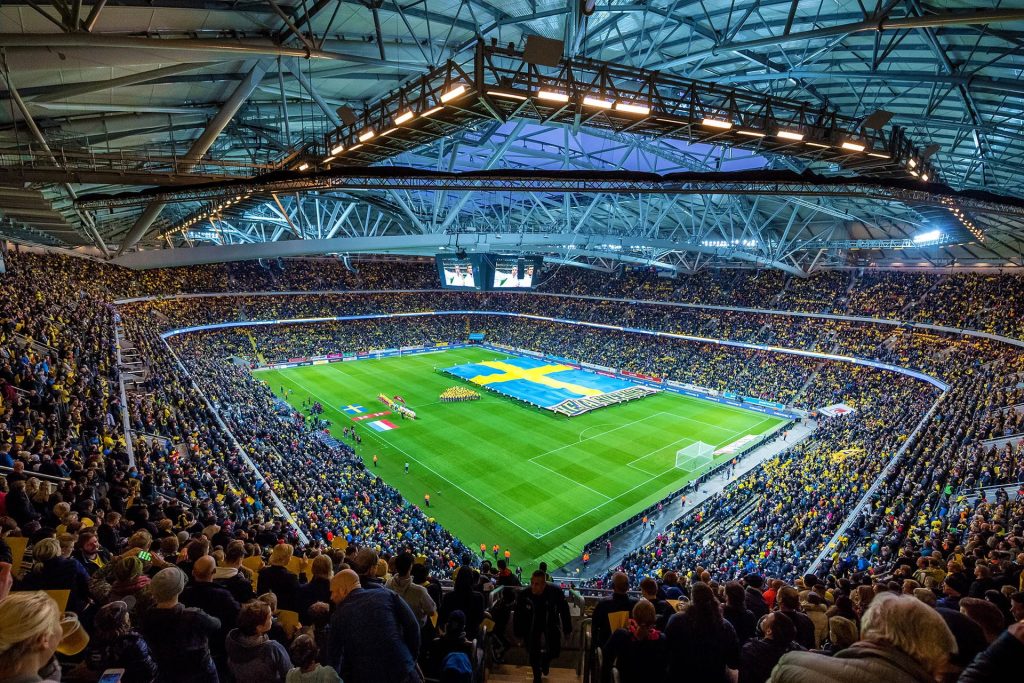
[Source: Nordic FAs] The Nordic countries bid for UEFA Women’s EURO 2025 with a strong vision of involving and developing women’s football. Nordic values and sustainable development are the core power of the joint bid.
The Nordic football associations have worked closely together for four years to make a joint bid for a major championship. Now Denmark, Finland, Norway, and Sweden have announced their preliminary bid for the UEFA Women’s EURO 2025 with support from the Faroe Islands and Iceland.
“Football is a powerful opportunity to make a change. Together with our Nordic allies we want to show the world through football we have a chance to enhance ethics, transparency and bright and diverse future of the sports”, says president of the Finnish Football Association, Ari Lahti.
In Denmark, they draw on experiences from EURO2020, where four matches were very successfully staged in Copenhagen.
In the last few years, the Nordic Football Associations have researched for stadiums, host cities, base camps, and other facilities to form the complete picture of how to develop the best possible host for the UEFA Women’s EURO 2025. This work will continue until October 2022 when a final bid should be submitted.
In December 2022, UEFA’s executive committee will announce the host of the UEFA Women’s EURO 2025. If awarded to the Nordic team, it will be a spectacular final at Friends Arena in Stockholm – the largest stadium in the Nordic region with room for 50,000 spectators.
Karl-Erik Nilsson, President of the Swedish Football Association says: “All Nordic football associations agrees about the importance of organizing major championships in our countries, and together we have great ambitions for the development of women’s football. We know that a UEFA Women’s Euro in the Nordic countries will strengthen the women’s football, and become an unforgettable experience for both players and supporters.”
Jesper Møller, President of the Danish Football Association says: “The Nordic bid for UEFA Women’s EURO 2025 is much more than a championship – it is a team work to ensure the continued development of women’s football for more diversity across our common, Nordic visions and values. With EURO 2020 in fresh memory, where Denmark showed its event potential, we will reuse and refine all the good experiences. With a joint Nordic bid, we will display not just Denmark but the entire Nordic approach to women’s football and innovative event management”
Lise Klaveness, President of Norway Football Association says: “UEFA Women’s EURO 2025 in Norway and the Nordic countries will be a celebration of inclusion, tolerance, and community for all football fans at the stadiums and events in the hosting cities. The spectacle of the finals will be an integrated part of our strategy to strengthen the position of women and girls on and off the pitch in Norwegian football. Great progress has been made in Norway and internationally in recent years developing the women’s game where we are proud to be a pioneer. A Nordic UEFA Women’s EURO 2025 tournament will be a powerful showcase for even greater impact and legacy.”