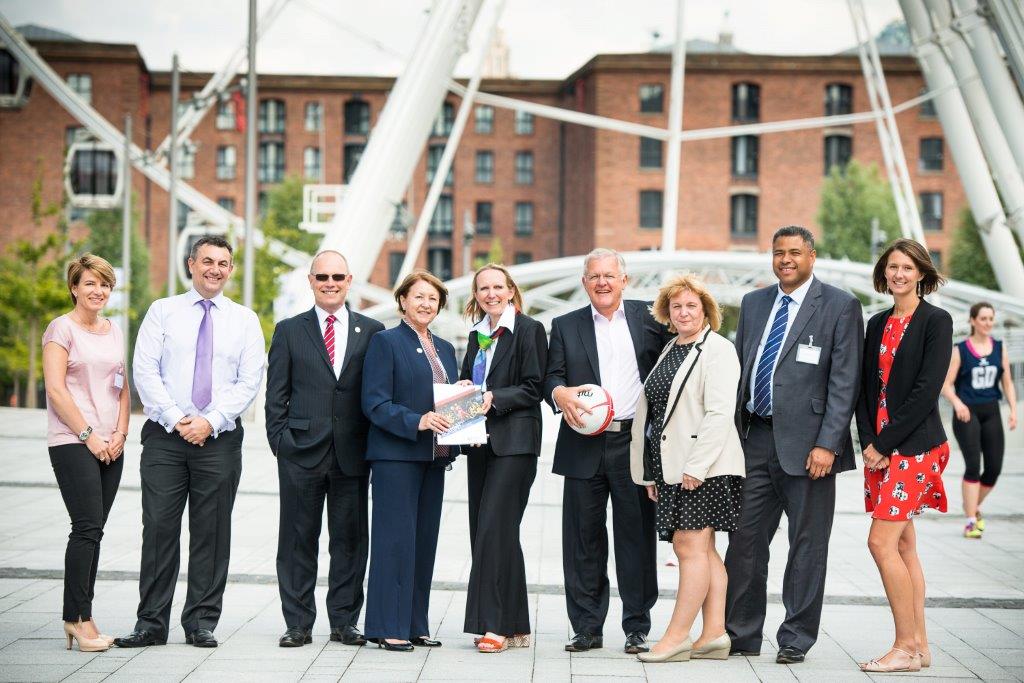
HOST CITY: How has the influence of women on sports administration developed throughout your career?
Liz Nicholl: I have held positions at national level in sport for over 30 years, and when I started out the industry was male-dominated and the voice of women in sport was rarely heard.
My breakthrough came as a young CEO of England Netball in the 1980s; my national leadership role placed me in an environment where I was able to see that I was just as good as the majority of individuals in similar, significant roles. I gained confidence from colleagues and I now say to others “Don’t hold yourself back. If someone you respect thinks you can do it, you can!”
Over the years I have seen some progress but it’s been slow. The need for diversity in leadership is now much more widely accepted in business. Change is happening in sport but it is slower and held back by tradition.
At a government level, ministers are more outspoken on equality matters and more people are listening. This national profile and debate is ensuring that the momentum is increasing but there is still a long way to go.
There are now more role models and more signs of change. Baroness Sue Campbell was Chair of UK Sport for over 10 years and now across the five UK, England, Scotland, Wales and Northern Ireland government agencies for sport, four or the five CEOs are women.
HOST CITY: How successful is the sports sector at boosting women’s representation at executive / senior management level?
Liz Nicholl: When I look across the cohort of CEOs and chairs of National Federations of sport, there are a relatively small number of women – but we are seeing a shift at board level.
There is an expectation placed on funded sports by UK Sport and Sport England that all sport boards should be made up of at least 25 per cent women by 2017. Currently over 90 per cent of the sports we fund have women Board members and the UK Sport Board is made up of 40 per cent women.
HOST CITY: What still needs to be done to make further progress?
Liz Nicholl: We need more women in coaching generally and especially at a high performance level. We are looking into what some of the barriers might be while at the same time providing and a programme to support athletes, with an emphasis on women athletes, transitioning into coaching.
The biggest challenge is the limited media coverage of women’s sport. Better, balanced media coverage would unlock enormous potential and sponsorship and could massively increase the momentum for positive change. We will be hosting the Women’s Hockey World Cup in 2018 and have ambitions for other events to shine the media light more specifically on women in sport.
Personally, as a woman working in an influential role within British sport, I know there is more I could be doing to keep this issue visible and to challenge where I see inappropriate inequalities and I am determined to do so.
Liz Nicholl OBE is the Chief Executive of UK Sport. To read the full interview, register to receive the next issue of HOST CITY magazine
Tag: UK
-

Tradition prevents women from fulfilling potential
-

City of lights
When in 2008 the northern English county of Durham and its small historic city became a unitary council – the fifth biggest in England – it was golden opportunity to build a new events and tourism strategy for the region.
“One of the things that became obvious was the need to change the narrative, both regionally, nationally and internationally about Durham, which was seen as a former industrial area,” George Garlick, Chief Executive of Durham County Council, told HOST CITY.
Durham put in a bid to be the UK’s first City of Culture in 2013 – a bold move for a city of less than 40,000 people. In the end, the title was awarded to Derry~Londonderry, but Durham decided to press on with its ambitious programme of cultural events anyway as a way of attracting visitors to the region.
It was through this work that the possibility of hosting the Lumiere festival came about, a huge light festival owned by a small and innovative arts events company called Artichoke.
“It was one of those fortuitous things. Artichoke were planning a major festival of light elsewhere in the UK and that fell through, and they’d got backing from the European Commission and Sky Arts at that stage,” says Garlick.
“So it was a fairly fully developed proposition, and on hearing that we were raising the flag for major events here in Durham, they came to see us and we said ‘yes, that sounds great’. In 2009, pretty much at the drop of a hat, the first Lumiere festival was put on.”
Durham has hosted Lumiere every other year since then, with the city investing GB£400,000 in the event for 2011 and 2013. These sums have been matched by the Arts Council, with additional funding from the European Commission and a significant amount of private sponsorship and a major grant from VisitEngland.
Lumiere had a huge impact, with 175,000 visitors coming to see the light festival in 2013. National newspapers published double page spreads on the event and the international broadcaster BBC World ran a one minute clip of the show on its rolling news coverage for 24 hours.
“It’s a really interesting balance of something that’s working for the local population, but also being attractive to people visiting for the first time,” says Helen Marriage, director of Artichoke. “Just over half the visitors that we count through our evaluation come from the immediate city, 17 per cent from the wider region and the rest from outside.”
The increase in tourism over the period that Durham has been hosting Lumiere is impressive. “VisitEngland said we were one of the fastest growing tourism areas over the last three years – we are up 150 per cent in Durham itself and nearly 20 per cent across the county,” says Garlick.
“The increase in the visitor economy in each of the last three years means a huge increase in employment. It’s not just the people who are actually employed for the festival – the major change is the structural change in Durham as a tourism destination.
“The festival actually generates GB£5 million directly in restaurant sales, overnight stays and so on in the local economy. We’ve seen a lot more people coming from both Europe and in particular America.”
Lumiere is a very successful flagship event, but it’s not the only contributor to Durham’s success. 2013 was a particularly big year for the city.
“We had the Ashes test between England and Australia at riverside stadium, where England won the Ashes to baying and excited crowds, which was terrific. We had the Lindisfarne Gospels exhibition, which came up from the British Library – 100,000 people bought every ticket available for the three months that it was on. We had cycling events, a brass festival – but Lumiere is the jewel in the crown.”
The good news continued in 2014, with Durham County Council being named local council of the year. “It’s a city and county that really punches above its weight,” says Marriage.
“It’s tempting to think that it’s an impoverished area with a decline of traditional industry, but that’s not the impression you get when you are here. It’s a place on the up and people are making it work – and events are really part of that culture.”
Durham’s long term strategy is hinged around Lumiere, but another important cultural event is the fast-growing Durham Book Festival. “The world heritage site between the cathedral, the castle and the university has a number of display venues, so there’s a programme worked out in advance for that,” says Garlick.
“In 2015 there will be a major exhibition of the Magna Cartas, which are in the cathedral’s ownership to coincide with the anniversary of the signing of the Magna Carta.”
In October 2015 the Rugby World Cup comes to St. James’ Park in Newcastle, just 15 minutes from Durham. “I would hope, as we’ve seen in many previous large events and when we saw the Olympics were on, we’ll see a lot of people visiting Durham,” says Garlick.
“Durham hotels traditionally pick up a lot of business from anything major that’s happening in Newcastle because it’s an attractive place to stay and a 15 minute train journey, so the Rugby World Cup will be really good for us.”
The next Lumiere festival takes place in November 2015. “We’ve recently agreed a package with the Arts Council, which will allow us to do it next year and in 2017,” says Garlick.
The city consulted with the local people and businesses before agreeing to host the event again. “The feedback has been overwhelmingly positive from the public, but particularly from businesses who think this is working really well in terms of hoisting Durham’s flag,” says Garlick.
“It’s a huge project that takes about 18 months to plan,” says Marriage. “So we are a year out and we are looking at all the logistics – traffic planning, crowd management, where the installations might go, technically what they might need.”
Helen Marriage was one of the speakers at HOST CITY Bid to Win conference on 28th October 2014, on a panel called “Bidding for the Right Event”, alongside the owner of a very different event, Peter Tindemans of Euroscience – which awards the EU City of Science.
“It was really fascinating to begin to think about what we do from the other end of the telescope,” says Marriage. “So hearing Peter Tindemans talk about the fact that he saw Euroscience as a property that he could get cities to bid for – that’s never the way we work, we are always trying to persuade people to let us do what we do.”
Lumiere also took place in Derry last year as part of the closing celebrations for the first UK City of Culture, and there are many other events that Artichoke produces. “We are working in London, Northern Ireland, we are looking at something in Wales. We are increasingly invited to do things internationally.
“But even if cities invite us, they don’t really get what it’s going to be like and all the compromises everyone is going to have to make. Very often an artist will say ‘I really want to make something here’, and we set about the process of persuading the authority that they want to fund it and that they can accommodate it. It’s always tough the first time you go into a place.”
For more information visit www.lumiere-festival.com
-

Liverpool to host 2019 Netball World Cup
The 2019 Netball World Cup will be hosted in Liverpool, England Netball announced yesterday.
“England put in a strong bid and we are confident that they will deliver an outstanding event in an excellent venue in the city of Liverpool,” said the Hon. Molly Rhone, OJ, CD, president of the International Netball Federation (INF), which owns the rights to the tournament.
“It is an exciting time for netball right now, which is growing at an unprecedented rate throughout the world. We look forward to seeing this growth continue to soar and to working with the organising committee in bringing the INF’s most important event to England in 2019.”
This will be the third time that England has hosted the competition in its 56-year history. Previous locations include Birmingham in 1995 and the very first staging of the tournament in Eastbourne, 1963.
“Having worked with Liverpool to host major global tournaments previously, we have a proven track record of being able to stage such a prestigious event and we look forward to welcoming the netball world to the North-West, said Joanna Adams, CEO of England Netball.
“On behalf of England Netball, I would like to thank all parties who worked with us on securing this bid.
“This is a massive tribute to the wonderful army of volunteers who have helped us to grow the game in our country. Without their support we would never have been in a position to bid for, let alone win, the rights to host a Netball World Cup.”
The 2019 Netball World Cup forms part of UK Sport’s Gold Event Series, which is investing around £40million of National Lottery funding to attract events to Great Britain.
“Through the Gold Event Series the UK is building an international reputation for staging world class major sporting events with its compelling mix of state-of-the-art facilities, great infrastructure and technical know-how as well as its army of experienced volunteers,” said Liz Nicholl, chief executive of UK Sport and a former Chief Executive of England Netball.
“Netball is thriving with unprecedented growth in participation, support from sponsors and exposure in the media. Add to this the Government’s strong commitment to promoting women’s sport, and I really do believe that Liverpool offers the perfect platform to help the International Netball Federation develop and grow this fantastic sport, not just in England but globally.”
The venue will be the ACC Liverpool, which hosted the World Netball Series in 2011. The World Heritage waterfront site includes the Echo Arena as the competition venue, the Exhibition Centre as the athlete training venue and the BT Convention Centre, which will host the INF Congress.
A new four-star Pullman hotel on the ACC Liverpool site, will be the official INF event hotel.
“The stunning ACC Liverpool will be the perfect stage for the event and we are looking forward to welcoming a global audience of competing nations and putting on a show the sport can be truly proud of,” said Joe Anderson, mayor of Liverpool.
-

Bernard Lapasset anticipates record-breaking Rugby World Cup
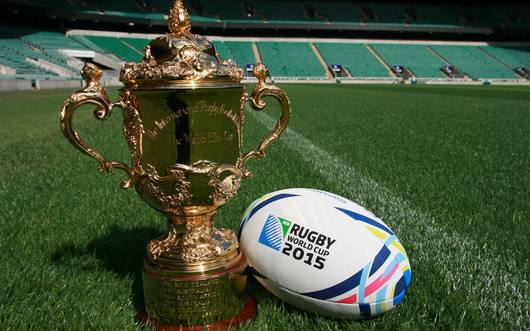
England 2015 is on track to be the most widely watched, attended and engaged Rugby World Cup ever, according to Bernard Lapasset, chairman of World Rugby and Rugby World Cup Ltd.
“With six months to go, Rugby World Cup 2015 is in record-breaking shape and we are confident of a very special event that will capture the imagination on and off the field,” he said.
“Even before England and Fiji meet in the opening match on 18 September, England 2015 will have raised the bar on several fronts, reflecting a sport that continues to grow at record pace around the world and the exceptional standard of organisation and delivery across all partners.
“The event has captured the imagination like no other and demand for tickets has been unprecedented. From public sales to the official travel and hospitality programmes, we are anticipating record numbers as fans from around the world join those across the UK in celebrating rugby and friendship.”
In addition to tickets sold directly via the rugby world cup website, more than 170,000 tickets have been sold in 60 nations through official travel agents. This is 50 per cent more than the total sold for New Zealand 2011 and already close to France 2007’s tally of 184,000.
50,000 hospitality packages have been sold, as compared to 35,000 for the 2011 tournament.
In total, 500,000 of the 3 million tickets available are expected to be sold to overseas fans.
“Across 44 days and 48 matches the Rugby World Cup 2015 story will be told in more nations than ever before: audiences in 207 territories will be inspired by new broadcast, social and digital innovations, while a record family of commercial partners will also project rugby to new audiences,” said Lapasset.
The sponsorship programme has already broken records, with six worldwide partners signed faster and at a higher value than ever before.
The revenues will be welcomed by World Rugby, which is in the process of investing heavily in the growth of the sport worldwide.
“All of this is great news for rugby worldwide as Rugby World Cup is the financial driving force behind the growth of the sport, underwriting £330 million of investment in rugby by 2016.”
The host nation also stands to benefit to the tune of GB£1bn, according to an economic impact study by EY, which is supplying financial services to the tournament.
Lapasset praised the organising committee and the national governing body, the RFU for their achievements.
“A tournament of this scale and stature cannot be delivered without a shared vision and strong partnership and I would like to thank England Rugby 2015 and the RFU for their continued focus on ensuring a superb event on and off the field.”
The RFU is investing GB£10m community clubs and GB£1m into coaching and refereeing courses. The RFU is also aiming to attract 5,000 volunteers in England.
Tournament Director Alan Gilpin said: “Players are at the heart of Rugby World Cup 2015 and the facilities in stadia, at the training venues or team bases will be of an exceptional standard. They will have everything they need to perform to their potential on the world’s greatest rugby stage.
“It will be the same for fans from the in-stadia experience to fan-zones, broadcast and social media and we look forward to welcoming everyone in joining us to celebrate what promises to be an unforgettable and very special Rugby World Cup.”
-

Debbie Jevans resigns as CEO of England Rugby 2015
The chief executive of England Rugby 2015 (ER2015), Debbie Jevans CBE, has resigned for “personal reasons”.
She has led the Rugby World Cup Organising Committee since October 2012, almost immediately following her role as head of sport at London 2012.
“This is the right decision for me to make at this time. I am immensely proud of the team and all that we have achieved in the time that I have been Chief Executive” Jevans said in a statement.
“Everything is in place to ensure that this is the best Rugby World Cup ever, and I am confident my team will deliver an exceptional tournament. The organisation is strong, there is a great team in place and I am really looking forward to watching the Rugby World Cup as a fan later this year.”
The 2015 Rugby World Cup is on track to break records for attendance and revenues. All aspects of tournament preparations are on or ahead of schedule, with over 1.9 million tickets sold to date.
She leaves a highly experienced event delivery Executive team in place, which will now report to Stephen Brown as the new Managing Director, who will work alongside ER2015 Chairman Andy Cosslett.
“On behalf of the ER2015 Board I would like to extend our enormous appreciation for all that Debbie has brought to the role,” said Cosslett. “Her legacy will be seen during and after the tournament is delivered, with a sporting event that I fully believe will be both memorable and inspiring, creating a step change in interest and participation for the game in this country.”
World Rugby Chairman Bernard Lapasset said “On behalf of World Rugby I would like to thank Debbie for her vision, dedication and leadership in implementing everything we need for an exceptional Rugby World Cup and wish her all the best for the future.
“England 2015 is in record-breaking shape with a strong and experienced organising committee in place, all stakeholders fully behind a shared vision and tournament delivery tracking ahead of schedule. We are confident that Rugby World Cup 2015 will be the biggest and best to date.”
-

Brighton to host Lib Dem 2016 conference
The Brighton Centre will host the autumn 2016 conference of Liberal Democrat party members.
The number of Liberal Democrat party members has shot up by a third, to reach more than 60,000, since the party’s heavy losses in the May 2015 general election, which left the party with just eight members of parliament.
Brighton hosted the Liberal Democrats in 2012 and 2013 and the Labour party in 2014 and 2015.
The governing Conservative Party is holding its 2016, 2018 and 2020 conferences in the Birmingham International Convention Centre (ICC), after Manchester Central hosted its 2015 conference. Conservative party membership is around 150,000, according to the latest estimates.
The Labour Party, which has the largest membership of more than 200,000, will hold its 2016 and 2018 conferences at ACC Liverpool.
The Scottish National Party, which now has the third largest representation in Westminster parliament after the Conservatives and Labour, is hosting its 2015 conference at the Aberdeen Exhibition and Conference Centre. SNP membership has grown 300 per cent since the Independence Referendum of September 2014, when Scotland narrowly voted against independence.
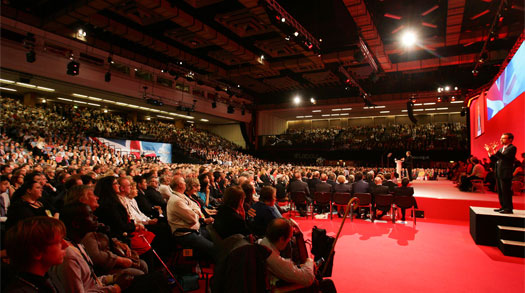
Lasting four to five days, party political conferences bring a significant economic boost to the host city. According to Birmingham ICC, 14,000 delegates attended the 2014 Conservative party conference, bringing an economic benefit of GB£17m to the local economy.
-

UK Sport backs GB to win at Rio with million-hour support
The English Institute of Sport, funded by UK Sport, will have provided 950,000 hours of support to more than 1,100 athletes between the London 2012 and Rio 2016 Olympic and Paralympic Games.
This amounts to more than 4,500 hours of support a week over the four year Olympic cycle, in a bid to help Team GB achieve success at the Olympic and Paralympic Games in Brazil.
The English Institute of Sport (EIS) is UK Sport’s science, medicine and technology arm, with 350 experts helping elite athletes improve performance in more than 30 Olympic and Paralympic sports.
UK Sport provided EIS with GB£59,775,973 of funding after London 2012, where the EIS had worked with 86 per cent of the GB athletes who had won a medal. UK Sport and the EIS have worked together to build a world-leading high performance system in a bid to deliver Team GB’s best ever away performance.
“With less than 100 days to go to the Olympics and 120 to go to the Paralympics, our National Lottery funded sports and athletes are in good shape,” said Liz Nicholl, CEO of UK Sport.
“I have every confidence that they, supported by the EIS, will inspire the nation with their performances in Rio this summer.
“The thousands of hours of world class scientific, medical and technological expertise provided by the EIS each week to our Olympic and Paralympic athletes is key to ensuring they are the best prepared British athletes ever.
“The EIS has been the ‘team behind the team’ since 2002, and our high performance system wouldn’t be where it is today without the impact of their talented team of experts.”
EIS services support both the physical and mental health and wellbeing of athletes and coaches with expertise provided across areas including biomechanics, performance analysis, performance lifestyle, performance pathways, performance nutrition, physiology, psychology, physiotherapy, medicine, research & innovation and strength and conditioning.
This support combines to help athletes and coaches across a number of areas including maximising competition performance, recovering from injury, identifying talent, enhancing physical and mental health and wellbeing and transitioning into new careers following retirement from elite sport.
“It is the vision of the EIS to be the world leading institute for sport and through the funding and support provided by UK Sport, our ambitious goal is within reach,” said Nigel Walker, National Director of the EIS.
“The high performance system we have in our country is the envy of many around the world and that is underpinned by our leading practitioners boasting over 1,100 years collective experience across 11 areas of expertise.
“We remain on track for huge success at Rio 2016 and thanks to ongoing support from UK Sport, the Government and National Lottery, planning for Tokyo 2020 is well advanced as we continue to showcase ‘What It Takes To Win’ on a global stage.”
Olympic diving medallist Tom Daley received support from the EIS Psychology team. “If you can handle the pressure cooker environment of an Olympic final psychologically, you have the power to go all the way and win!” he said. “The support I’ve received from the EIS in sports psychology has made me into the diver I am today.”
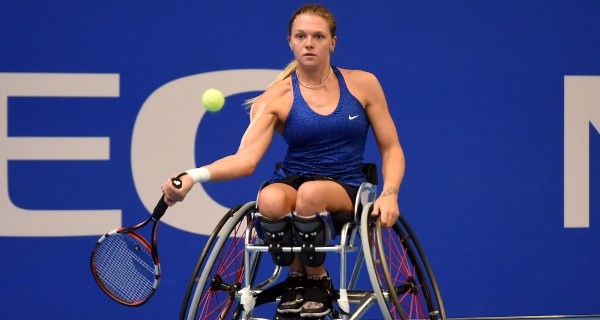
Paralympic wheelchair tennis medallist Jordanne Whiley MBE said: “The EIS leave no stone unturned when it comes to helping athletes prepare for competition. The support they provide both on and off the field of play helps increase confidence and allows me to perform at my very best.”
-

Four cities shortlisted for 2018 Great Exhibition of the North
Four candidates have been shortlisted from nine cities bidding to host the UK’s first Great Exhibition of the North in 2018.
The shortlisted bids from Blackpool, Bradford, Newcastle-Gateshead and Sheffield will be assessed by the Great Exhibition board before a final selection is made by government ministers, with the host city to be announced in the autumn.
The government is contributing GB£5m towards the exhibition and a further GB£15 million into a legacy fund to attract further cultural investment in the North.
Despite the change of government leadership since British voters narrowly elected to leave the European Union, the UK government is fully committed to the Great Exhibition of the North.
“The exhibition, which will run for at least two months, will showcase the great creative, cultural and design sectors across the whole of the North, and boost investment and tourism in the region,” said Matt Hancock, Minister of State for Digital and Culture.
“The Great Exhibition of the North is a unique opportunity to celebrate the creativity of Northern England and I am thrilled we received so many innovative bids.
“British arts and culture are among the finest in the world. I am determined we democratise the arts and celebrate the best in every part of our nation.
“What’s more, cultural investment can bring enormous benefits for communities – it drives regeneration, promotes tourism and increases life chances.
“The shortlisted bids show just what’s on offer and highlight that we have brilliant options for hosting the Great Exhibition of the North. Whichever is successful, this exhibition will leave an important legacy to benefit the whole country.”
The shortlist includes two Yorkshire cities, Bradford and Sheffield, as well as the Lancashire resort of Blackpool and Newcastle-Gateshead in the North East.
The destinations that did not make the shortlist were Halifax (West Yorkshire), Harrogate (North Yorkshire), Scunthorpe (Lincolnshire), St Helens (Lancashire) and Whitehaven (Cumbria).
“The quality of all nine submissions was incredibly strong and I’d like to congratulate the four towns and cities who have made it through to the final shortlist,” said Sir Gary Verity, Chair of the Great Exhibition of the North Board and Chief Executive of Welcome to Yorkshire.
“I and the Great Exhibition Board are very much looking forward to meeting the teams behind the four shortlisted bids to hear their exciting proposals in person. This is an incredible opportunity to really showcase the creativity and culture we have here in the North and I know whoever wins will thoroughly embrace that vision.
“The Department for Culture, Media and Sport will work with the bidders who were not shortlisted to ensure as many people enjoy and benefit from the exhibition as possible.”
-

UK PM announces Yorkshire bid for 2019 UCI Road World Championship
British Cycling, Welcome to Yorkshire and UK Sport have submitted a bid to the Union Cycliste Internationale (UCI) for Yorkshire to host the 2019 UCI Road World Championships.
Announcing the bid formally in the Yorkshire Post, Prime Minister Theresa May commented: “Yorkshire’s beauty was brilliantly shown off to the world by cycling events like the Tour de France and the fantastic Tour de Yorkshire, led by Sir Gary Verity.
“So today I can announce that we have backed a Yorkshire-led bid to bring cycling’s World Road Championships to Britain. This week, British Cycling’s bid to hold the event in Yorkshire was delivered to the sport’s governing body, the UCI.
“The government will underwrite the event and back it with £24m of investment so that we can get even more people to visit the region. Our backing will include £15 million for cycling infrastructure projects, to encourage even greater participation in the sport and continue the proud legacy that has seen our athletes excel at the Rio Games.”
Welcome to Yorkshire chief executive Sir Gary Verity added: “It would be an absolute honour to host the 2019 UCI Road World Championships.
“Yorkshire has everything a bike race could wish for. We can promise a gruelling but spectacular range of routes, huge crowds and the very warmest of welcomes.
“Yorkshire is ready to embrace the championships. We’ve turned the county yellow once before, and now we want to see it swathed with those coveted rainbow bands.”
The bid promises to not only deliver a world class cycle race but also a £15 million package of nationwide investment to further develop cycling facilities, inspiring the nation to get on bikes.
British Cycling’s president, Bob Howden, said: “The UCI 2019 Road World Championships should find its natural home in Britain and in Yorkshire. Britain has proved that when it gets behind major cycling events, it really does the nation proud. Not only would Yorkshire deliver a cycling event to rival the scenes we saw in 2014 (during the Tour de France Grand Depart), it promises to build on our fantastic legacy of getting more people to discover the joys of life on two wheels.
“Backed by substantial government investment, our bid promises not only to host the biggest UCI Road World Championships in history, it will secure new facilities across the country to ensure that even more people get to experience British Cycling programmes and opportunities to get on their bikes.
“This bid represents a chance to set a new standard for an international sporting event. A country-wide investment in facilities ensures the participation legacy is not an add-on but built into the bid from the start and means the benefits will be felt far beyond the host region and for far longer than the eight days of the championships.
“Working alongside UK Sport and Welcome to Yorkshire, we collectively stand ready to deliver both the event and the lasting legacy that will sit behind it.
“We have the experience of hosting top class world cycling events, we have the structures in place to support a continued boom in interest in cycling, and we’re more ready than ever to truly show the world how passionate Britain is about one of its favourite sports.” -

UK government helps sports sector go for gold in exporting expertise
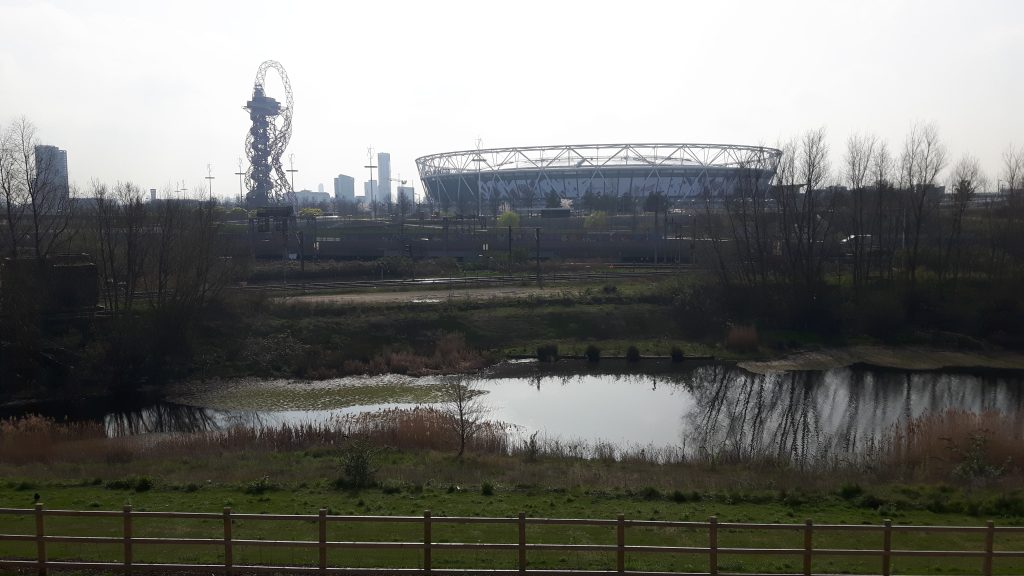
On Thursday 16 March the UK’s sports industry is teaming up with the Department for International Trade (DIT) to take advantage of future global sporting events, taking the success and expertise of the London 2012 Games overseas.
DIT’s annual Global Sports Projects Conference, in London, offers UK companies advice and shared insight into working overseas on sporting projects, and gives tips on best practice, potential pitfalls and the support available.
The UK has long established a worldwide reputation for organising first-class sporting events across the country and overseas. These events have helped to boost economic growth and in 2015, the sport sector contributed £35 billion to the UK economy, increasing by 2.2 per cent since 2014.
International Trade Minister Mark Garnier said: “From Wimbledon to the Grand National, the United Kingdom is renowned for its love of sport and we can use our first-class expertise to help deliver of some of the world’s most exciting major sporting events.
“It’s an open goal for UK companies as there is a global demand for UK goods and services across the sporting world. My department is committed to helping businesses realise their exporting potential and we even want more companies to take full advantage of the opportunities that open up to them.”
The UK has a major sports legacy and the London 2012 Olympic and Paralympic Games is widely recognised as one of the most successful Games in history. By 2020, it’s expected to have contributed between £28 billion and £41 billion to the UK economy.
Since 2012 the UK has successfully staged more than 70 major sporting events including the Glasgow 2014 Commonwealth Games and World Track Championships in 2016. The UK also hosted the most economically successful Rugby World Cup ever in 2015.
Last summer, DIT also directly helped over 40 companies secure business in excess of £150 million for Rio 2016. Looking ahead to future events, the UK has also secured the right to host over 20 Olympic and Paralympic events at European or World level, including 15 World and European Championships.
The Global Sports Projects Conference takes place at Plexal on the Queen Elizabeth Olympic Park where more than 140 businesses are expected to attend to hear about their exporting opportunities.
It’s a day of panel discussions, presentations and networking; with DIT offering specialist advice to helping UK companies export to their respective markets.
Businesses will be given expert help to capitalise on export opportunities for major sporting events like the Japan 2019 Rugby World Cup and the Tokyo 2020 Olympic & Paralympic Games and the growing football sector in China and India.