Blog

  • Plastic fantastic

    Plastic fantastic

    The German company Melos GmbH is one of the world’s leading producers of coloured synthetic and EPDM rubber granules. Granules from Melos GmbH are used in particular in running tracks in sports stadiums, as fall protection surfaces for children’s playgrounds, as infill granules on artificial turf pitches as well as for non-slip surfacing at swimming pools.

    Breaking records
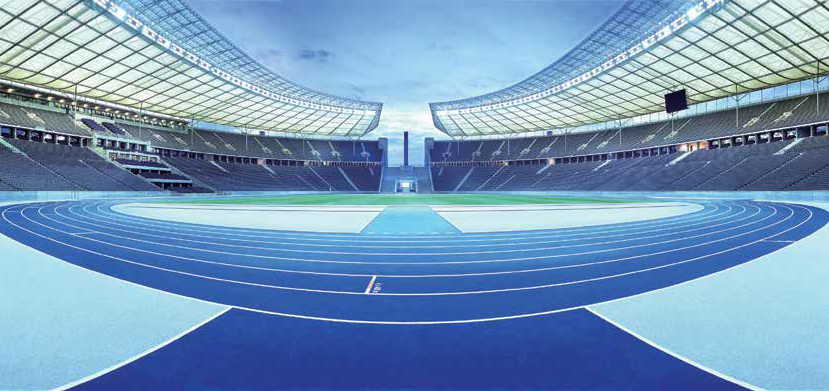
    Melos products have been used in many projects in recent years. The company’s portfolio includes both national and international installations, such as the running track at Berlin’s Olympic Stadium. The granule for this project was developed specially on request in the club colour of the German Bundesliga football + Hertha BSC Berlin, i.e. “Hertha Blue”. The track covers an area of approximately 9,200 m², of which around 5,250 m² is designed in the Hertha blue colour tone and adjacent areas of around 3,950 m² in grey. Around 40 tonnes of EPDM granules were used in the project.

    Melos granules enabled a new world record for then 22-yearold Usain Bolt from Jamaica, who ran the announced world record in the 100 metres discipline on the blue track. His strongest rival, Tyson Gay, got the shock of his life at the 12th IAAF World Championships in Berlin’s Olympic Stadium when Usain Bolt not only set a world record for the 100 m but also for the 200 m. Recording times of 9.58 and 19.19 seconds respectively, the fastest man in the world outran the competition on the blue granules supplied by Melos.

    Arabian light
    In addition to high colour stability, enormous abrasion resistance and strong resistance to weathering, Melos granules also impress with their excellent resistance to UV light. These factors led to Melos granules being chosen for another major project in 2009, when the world’s longest circular horse racecourse, measuring 2,400 m, was constructed in Meydan City, a new district of Dubai.

    Because of the considerable stress the horses endure during the race, it is all the more important that they receive special care beforehand and afterwards. For this reason, coloured EPDM granules from Melos were used to manufacture a floor covering fitted in a tunnel leading to the racecourse.

    To reduce noise, granulated material from Melos was even applied to the tunnel walls and coloured surfaces constructed with Melos granules were installed as a pre-race warm-up area for the thoroughbreds. Adjacent tracks as well as grooming and wash areas for the valuable horses were equipped with the resilient non-slip Melos granules.

    The medium-sized enterprise completed production and shipment of 500 tonnes of granules in just three months from the start of September to the end of November, with different grain sizes being mixed and then installed on site. This posed a real challenge, owing to the special requirement to supply a specially adapted blend of granule colours and properties. As well as a red granule for the outdoor surfaces, a blend made up of special shades of brown, beige and yellow was used for the tunnel and access passage to the arena.

    The state of Qatar also uses Melos for its construction works. The world’s largest installed area of 175,000m² was installed on the “Emir Walkway” as a personal project of the Emir of Qatar. The Emir Walkway is a multi-purpose track that runs 9 km on both sides of a road at a width of 9.75 m on each side. Melos produced and supplied round about 1,000 tonnes of material for this project in a turnaround time of just eleven weeks. Similar to the tunnel leading to the Meydan race court, the walkway was also fitted with a colour blend of granules made up in this case of brown, eggshell and beige.

    Cool head on hot days In addition to the many applications of the granules as floor covering, infill granules from Melos are used as a component of high-quality artificial turf systems for sports including football.

    Melos launched a new granule on the market in 2011, Infill Cool Plus, with the motto “Cool head on hot days”. The new material is based on the proven EPDM material group, but with special components that reduce heat absorption.

    FC Bayern Munich, the German football league championship record holder, opted for Infill Cool Plus in 2011. The Cool Plus effect, which encourages top performances by achieving low surface temperatures on hot summer days, convinced the football club to use the product in its modern training grounds.

    The Cool Plus effect can be demonstrated in a direct comparison with different infill granules. In an experiment conducted with long-term exposure under laboratory conditions, the surface temperature was reduced by 25 per cent by using the light-green Melos Infill Cool Plus, compared with SBR rubber granules.

    Long-term tests of Cool Plus – up to four hours of sunshine simulations in the irradiation chamber – also show reduced heat build-up and lower maximum temperature of the surface. This difference is palpable underfoot for the players and improves playing comfort considerably, as surface temperatures can reach up to 60°C in German summers.

    The in-house laboratory at Melos works continuously to deliver product innovations. Melos recently launched a new product on the market: Infill Bionic Fibre, which provides an economically attractive and sustainable alternative to traditional granules on artificial turf pitches. In comparison with other granules on the market, Infill Bionic Fibre is characterised in particular by its fibrous, irregular and near-natural structure.

    “Our new product is an especially resilient, durable, weatherproof, stable and near-natural infill material”, says Jörg Siekmann, Managing Director of Melos GmbH. “In addition, the material offers players a natural playing experience – almost like on natural turf. Pitch operators benefit from the low maintenance overhead and reduced use of resources.”

    Melos is constantly researching improvements to its infill granules in its in-house laboratory. The focus here is on sport functionality: in addition to the recommendation of the German Football Association (DFB), sports associations and sports physicians also support the view that the use of modern artificial turf pitches protects joints and ensures a high quality of play. The infill granule plays an important role in this respect, offering distinct quality differences that can impact health and playing performance.

    Jörg Siekmann says: “The soft and natural structure of “Infill Bionic Fibre” provides pleasant felling while running, gentler on the skin and increases natural playing performance. Even the DFB has commented positively on rubber-filled synthetic turf surfaces, stressing both the economic and sports-related functional benefits.

    The company has its entire product range reviewed regularly by independent institutes and certified in accordance with current standards in the areas of environment, energy and sustainability. Strict attention is paid in production and development to optimal properties in terms of the environment, utilization and health.

    The infill granules from Melos all feature basic properties such as weather resistance and durability. The quality of the products is reviewed on an ongoing basis and the granules are also ideally adapted with respect to human health and the environment. In terms of sportsrelated functional properties, such as traction and rotation, the players experience a playing performance that is comparable to a good natural grass pitch – but consistently stable under all climatic conditions.
  • A fine balancing act

    A fine balancing act

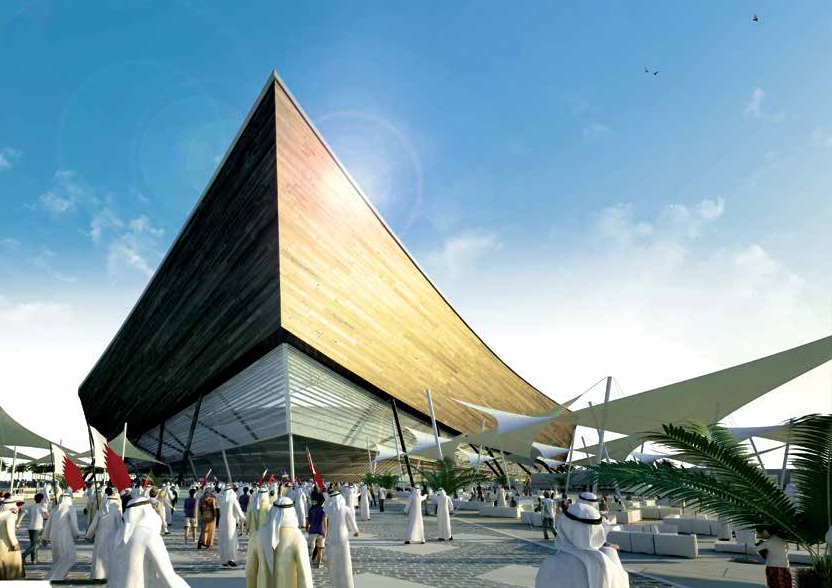
    HOST CITY: The entire Qatar 2022 project requires more construction work than any other sports event in history. How do you feel about the challenges ahead?

    Al Khater: The heavy lifting is not the stadiums; it is the rest of the infrastructure. We do not see it as a challenge – we see it as a significant amount of work.

    There is a fine balancing act and the next nine years are exactly like that. We are putting into place a decision-making process, up and down the supply chain, that is quick and efficient.

    HOST CITY: What are the most important criteria for selecting main contractors for the construction work?

    Al Khater: One of the most important attributes will be the ability to understand the local requirements and dynamics of major programmes within Qatar. Whilst there is such a large amount of activity taking place within a relatively short timescale, it is vital that our delivery contractors understand the landscape they will be operating in with the challenges and opportunities that this presents.

    Another attribute would be the open dialogue that we would expect throughout our supply chain and the early communication of risks and issues as well as the recommended options for resolution. We want to work closely with our partners within an approach that has a “no surprises” mentality.

  • Bubka calls for Olympic Truce on “terrible scenes” in Ukraine

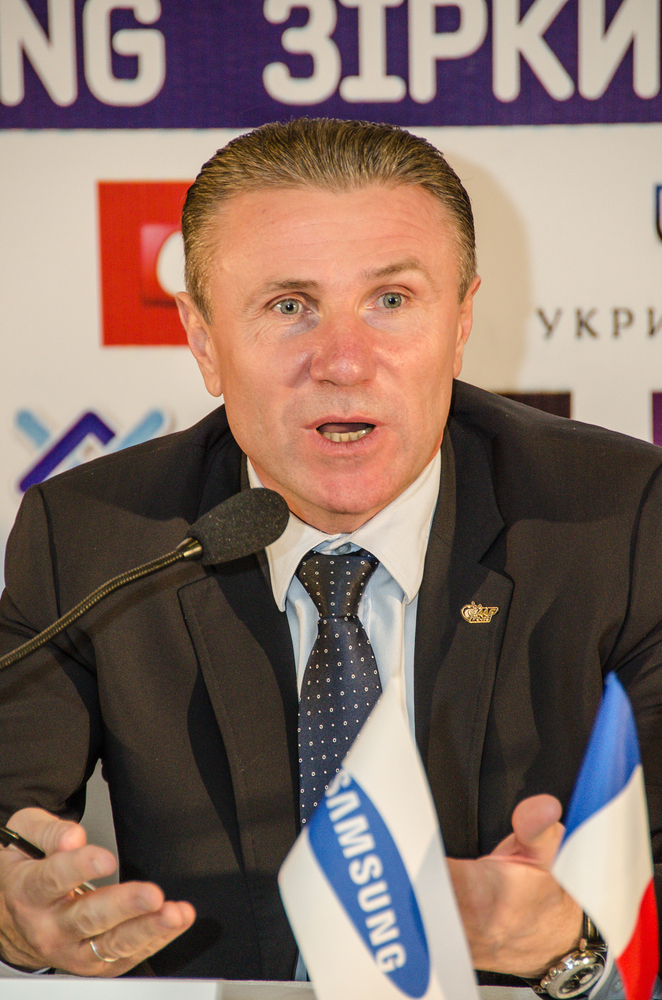
    Bubka calls for Olympic Truce on “terrible scenes” in Ukraine

    As violence between protesters and government forces escalated in Kiev, police stated on Thursday that protesters had taken over regional administration headquarters including Lviv, which is bidding to host the 2022 Winter Olympic Games.
    Speaking at a press conference in Sochi, IOC communications director Mark Adams said of the conflict, “Those are terrible scenes. The Olympic Truce is an important symbolic thing for us.”
    The Olympic Truce was established in antiquity between the host city state and its neighbours to ensure safe delivery of the Olympic Games. It was revived in 1993 by a UN resolution and in 1998 the IOC called upon all nations to observe the Truce.
    “I’m not sure it plays much part in what’s going on there [in Ukraine]. But clearly we hope the situation will be solved as quickly and with as little bloodshed as possible,” said Adams.
    As the ceasefire broke, Bubka tweeted: “I want to bring Olympic Truce to my country. Our athletes are competing hard in Sochi, but peacefully and with honor. Violence has no place in the world.”
    Bubka, whose 21-year-old pole vault world record was broken in the Ukrainian city of Donetsk on 16 February by Renaud Lavillenie, is a crucial figurehead of Lviv’s bid for the 2022 Games.
    He announced on his website: “I’m shocked by what is happening in my native country – especially because the violence is taking place during the Olympic Games – the world’s most peaceful and democratic event. 
    “I am once again urging all parties to stop the violence! There is no ‘their’ Ukraine, or ‘your’ Ukraine. It is OUR Ukraine. For the sake of the future of our kids let’s do everything possible to get back to negotiations and make a compromise.
    “I am now in Sochi and I know that our Olympic athletes who compete for the glory of Ukraine fully support me.”
    A total 45 athletes from the Ukraine travelled to Sochi 2014. However, BBC journalist Richard Conway tweeted on Thursday that up to half of these Olympians had returned home because of “unrest in their country.”
    Several media outlets reported that Ukrainian skier Bogdana Matsotka pulled out of the Games in protest at the use of force in Kiev. On Thursday, the Ukrainian Health Ministry said 28 people had died and 287 had been hospitalised during the standoff between police and protesters in Kiev. Ukraine’s Interior ministry confirmed that security forces had opened fire on protesters.
     
    Black armbands in the Olympic Village
    Meanwhile, a request from the Ukrainian Olympic Committee for their athletes to wear black armbands in memory of those killed was rejected by the IOC. 
    A statement on the Ukrainian Olympic Committee website said: “Sharing deep pain over the loss of fellow countrymen, the Ukrainian Olympic Committee appealed to the International Olympic Committee to allow Ukrainian athletes to wear black armbands as a sign of mourning, an expression of sorrow and sympathy.
    “The answer was received from the IOC that in accordance with the Olympic charter it is not possible to do this.”
    Instead, Ukrainian athletes attached black armbands to the national flags hanging from their balconies in the Olympic Village.
    IOC President Thomas Bach expressed his sympathy for the Ukraine and his admiration for its Olympians. “I would like to offer my condolences to those who have lost loved ones in these tragic events,” he said.
    “Our thoughts and sympathy are with the Ukrainian team at what must be a very difficult time. The way they have continued to represent their nation with great dignity is a credit to them and their country. 
    “Their presence here is a symbol that sport can build bridges and help to bring people from different backgrounds together in peace.”

  • Violent demonstration a “major concern” for Brazil World Cup

    Violent demonstration a “major concern” for Brazil World Cup

    Security at the 2014 World Cup was high on the agenda at FIFA’s National Teams Workshop in Florianopolis on Thursday, with Brazilian officials announcing the deployment of 170,000 security professionals to ensure the safe hosting of the event.

    The majority of these security personnel will come from the police and armed forces. Speaking at a FIFA press conference, Andrei Rodrigues, of the Brazilian Ministry of Justice’s special secretariat for security at major events (SESGE) said “150,000 public-security and armed-forces professionals will be involved, with SESGE investing BRL1.17b [USD 500m] and the Ministry of Defence some BRL708m [USD 300m].

    “These are resources deployed solely for the purposes of providing security to the population on an everyday basis.”

    In addition to this investment, the Local Organising Committee (LOC) announced that a further 20,000 workers from the private sector will be engaged in delivering event security. The LOC’s head of security Hilario Medeiros said “It is very clear that Brazil is ready in terms of its various organisations and private security, with some 20,000 men being trained in event security.”

    With the 2013 Confederations Cup having taken place amid scenes of serious civil unrest, the security secretariat is understandably worried about the potential for violence. Rodrigues said “We do have one major concern, which is not the fact that people might demonstrate, as they are just exercising their democratic right in doing so. Our concern is with any violence that occurs as part of those demonstrations.

    “The Confederations Cup was an example of that. There was one day in June when there were more than one million people on the streets and we had more than 50,000 officers working. Even so, the competition schedule was not affected, the demonstrations did not impact on the delegations and there were no injuries caused by the actions of the officers.”

    FIFA proud to be in Brazil
    FIFA’s director of security Ralf Mutschke denied that last year’s protests were directed at the sports federation. “We saw some social unrest and vandalism at the FIFA Confederations Cup in 2013, but that does not mean to say that we are going to reduce our presence, hide ourselves away or keep our symbols under cover.

    “We do not feel, in fact, that we are the main target of the demonstrators. Obviously the protests had something to do with the Confederations Cup and the fact that Brazil and the whole world was watching the competition. We don’t feel that we are the targets, though. Far from it: we are proud to be here in Brazil.”

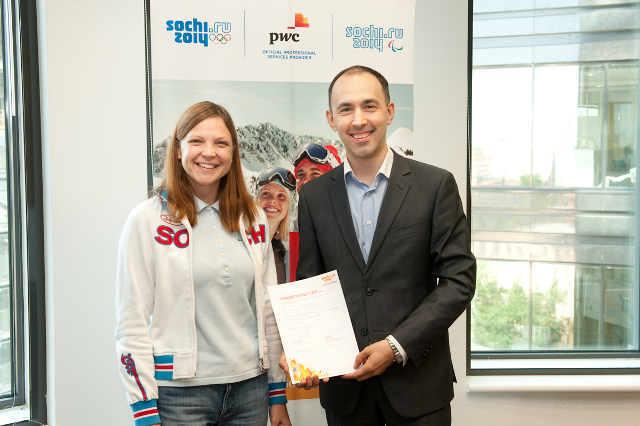
  • PwC renews SportAccord Convention gold partnership

    PwC renews SportAccord Convention gold partnership

    SportAccord Convention announced on Tuesday that PwC will be a Gold Partner of this year’s event, which takes place from 6-11 April 2014 in Belek/Antalya, Turkey. The agreement marks PwC’s second year as a Gold Partner. 
    “The first year of our partnership with SportAccord Convention was extremely successful and we are very pleased to be continuing as a Gold Partner in 2014,” said Robert Gruman, PwC Russia Advisory Leader, who heads PwC’s Global Sports Mega-Events Centre of Excellence.
    “SportAccord Convention provides us with networking opportunities and enhances our ability to build relationships with International Federations and the global sports movement.”
    PwC’s Sports Mega-Events Centre of Excellence comprises a network of professionals experienced in bringing value at all phases of the sports mega-events lifecycle. 
    For the Sochi 2014 Olympic and Paralympic Winter Games, PwC’s experts, in partnership with the Sochi Organising Committee, are carrying out over 200 projects in several key areas, from strategic and operational planning to supply chain management, from HR consulting to risk management. 
    “Our Gold Partnership with PwC has been of great value to us as an organisation and we are gratified to know that the feeling is mutual” said Nis Hatt, Managing Director of SportAccord Convention.
    “We are very pleased that the partnership is continuing and that we are able to provide a platform for PwC to meet its business objectives.”
    In 2013, PwC conducted the first Economic Impact Study of SportAccord Convention and estimated the direct and indirect impact of the event in Saint Petersburg, Russia at USD7.69 million.
     

  • SportAccord Convention signs Macau as Gold Partner

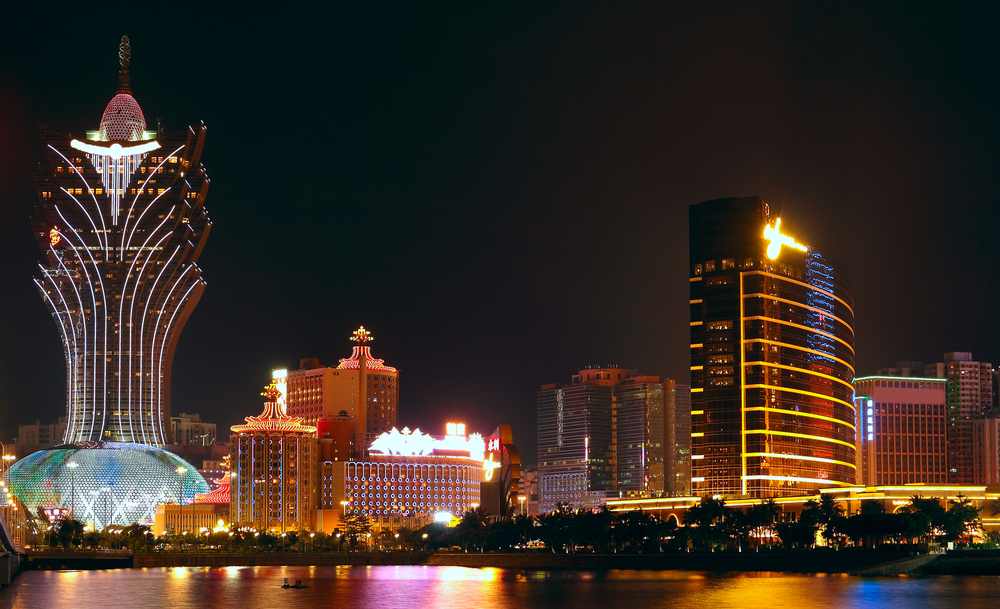
    SportAccord Convention signs Macau as Gold Partner

    The Macau Sport Development Board will once again be a Gold Partner of SportAccord Convention for this year’s edition taking place from 6-11 April 2014 at the Susesi Convention Centre in Belek/Antalya, Turkey. It is the seventh consecutive year that Macau’s National Organisation for Sports Development has been a Gold Partner of the Convention.
    “SportAccord Convention is a very important event for us,” said José Tavares, Acting President of Macau Sport Development Board. “It allows us to build relationships with International Sports Federations as well as providing us with a platform to communicate how we are promoting health, activity and well-being in Macau, using sports events as an inspiration for our population.”
    A few weeks after SportAccord Convention, Macau will again host thousands of athletes from home and abroad for the 11th Asian Dragon Boat Championships and the Macau International Dragon Boat Races from 30 May – 2 June 2014.
    “We are pleased to welcome our friends from Macau as Gold Partners once again,” said Nis Hatt, Managing Director of SportAccord Convention. “The Macau Sport Development Board represents Macau not only as a host destination for major events but also promotes the participation of athletes from Macau in major events around the world. In both ways, there is a great fit between their goals and the International Federations and Associations attending our Convention.”
    In its 12th edition this year, SportAccord Convention is a unique opportunity for international sporting leaders to engage with business, and features a dynamic exhibition as well as the annual general meetings of governing bodies of world sport. The event is held in a different location around the world each year.
    Belek/Antalya is a developing sports hub which recently hosted the 2013 World Archery Championships. In addition, the area will welcome in May the 2014 Turkish Airlines Ladies Golf Open which is part of the Ladies European Tour. 
    For more conference information, including a full list of confirmed speakers, visit www.sportaccordconvention.com

  • Qatar to invest $45bn in tourism beyond World Cup

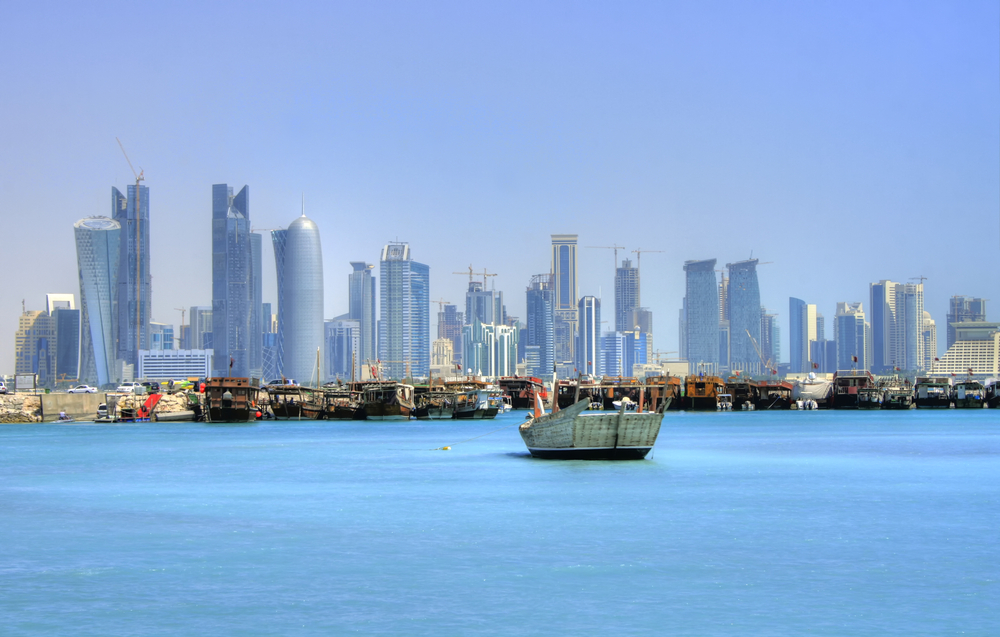
    Qatar to invest $45bn in tourism beyond World Cup

    Qatar aims to almost double tourism’s share of GDP over the next 16 years through investments from government and business. The bold vision was announced at the launch of the Qatar National Tourism Sector Strategy 2030 on Monday.
    “Our aim is to have the tourism industry contribute a total of 5.1 per cent of GDP by 2030, up from 2.6 per cent today,” said Hassan Al Ibrahim, director of strategy at the Qatar Tourism Authority. 
    “USD 40 to 45 billion of investments by the government and the private sector will make this vision a reality.”
    The FIFA World Cup in 2022 will be a phenomenal showcase for Qatar and the country is under pressure to deliver a legacy for the tourism and events sectors.
    “The strategy strives to fully capitalise on Qatar’s tourism potential and represents the aspirations of the Qatari people for the future of their country,” said His Excellency Issa bin Mohammed Al Mohannadi, chairman of the Qatar Tourism Authority.
    The strategy envisions Qatar as “a world class hub with deep cultural roots”, further placing the country on the world tourism map and allowing people from around the world to recognize and appreciate what it has to offer via its unique culture and heritage.
    “Tourism is a vital pillar in Qatar’s development efforts and a key driver of socio-economic growth in the country” said Al Mohannadi.
    1.2 million people visited Qatar in 2012, mainly from Saudi Arabia and other Gulf nations. The tourism authority is seeking to widen the range of markets of origin by setting up eight new satellite offices in key outbound markets, in addition to existing offices in London and Paris. 
    “Our target is to attract 7 million visitors to Qatar from all over the world by 2030,” said Al Ibrahim. 
    With a target of USD 10.7bn to be generated from tourism in 2030, the strategy places much greater emphasis on the private sector in the economy with an increased role for entrepreneurship and SMEs. 
    It is hoped that investments in infrastructure already underway will bring rewards. The new Doha Exhibition and Convention Centre (DECC), described by the tourism authority as a “game-changer for the MICE sector,” is scheduled to open in 2014. Also opening in 2014 is Hamad International Airport, which promises to become an important hub for transit passengers.

  • IOC hails “human legacy” of Sochi 2014

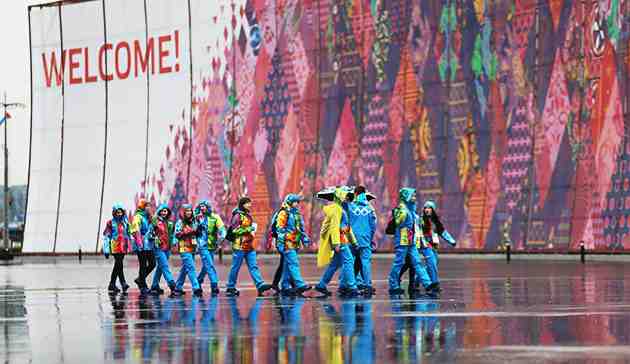
    IOC hails “human legacy” of Sochi 2014

    Sochi 2014 will create a significant “human” legacy of experience gained by those working to successfully deliver the Winter Games, according to leading figures in the IOC and the Organising Committee.
    “The Games will leave a tremendous human legacy,” said Jean-Claude Killy, Chairman of the IOC Coordination Commission for Sochi 2014 on Friday. 
    “The highly trained professionals and volunteers from the Games will no doubt play a key role in the success of the World Cup and other major sporting events that Russia will host in the future.”
    Sochi 2014 marks the first time that the Olympic Winter Games have been held in Russia and signals the first of many major sporting events being held in the country, with the inaugural Russian Grand Prix due to take place in Sochi in October 2014 and the FIFA World Cup coming to cities all over Russia – including Sochi – in 2018. 
    “There will be tremendous synergies for the country in a number of areas as it strives to put on these great sporting events,” said Killy.
     
    Olympic University
    Hosting the 2014 Olympic Winter Games has also led to the establishment of the Russian International Olympic University (RIOU), which opened in Sochi earlier this year to train the next generation of sports management professionals, catering to the demand in Russia and around the world for highly qualified specialists in the international sport industry. Topics of study will include venue management, event management, media management, governance and sport diplomacy, and talent management. 
    “Currently, not just in Russia but all over the world, there is a lack of qualified specialists in sports management,” said RIOU Rector Professor Lev Belousov. “RIOU’s task is to set up a mechanism for leading Russian and international practising specialists to pass on practical knowledge to students and to train a new generation of highly qualified sports managers in specialisms needed by the Olympic and Paralympic movement and by the international sports industry.” 
    During Sochi 2014, students participated in an observation programme allowing them to assess in detail the complex logistical operations behind the organisation of the Winter Games. “This is a once-in-a-lifetime opportunity,” said Aleksander Bryantsev, head of education at Sochi 2014. 
    IOC President Thomas Bach also hailed the success of the RIOU, saying “There will be many lasting legacies from Sochi 2014, including the RIOU. The Olympic Movement as a whole will benefit from the establishment of the university, as, of course, will Russian sport.”
    Dmitry Chernyshenko, President of the Sochi 2014 Organising Committee added “The Russian International Olympic University serves as an example of the significant lasting legacy for Russia after the Games have been hosted in Sochi,” he explains. “It will become the key centre for training a new generation of highly-qualified sports managers in Russia.”

  • Wembley Stadium strikes unprecedented brand partnership with EE

    Wembley Stadium strikes unprecedented brand partnership with EE

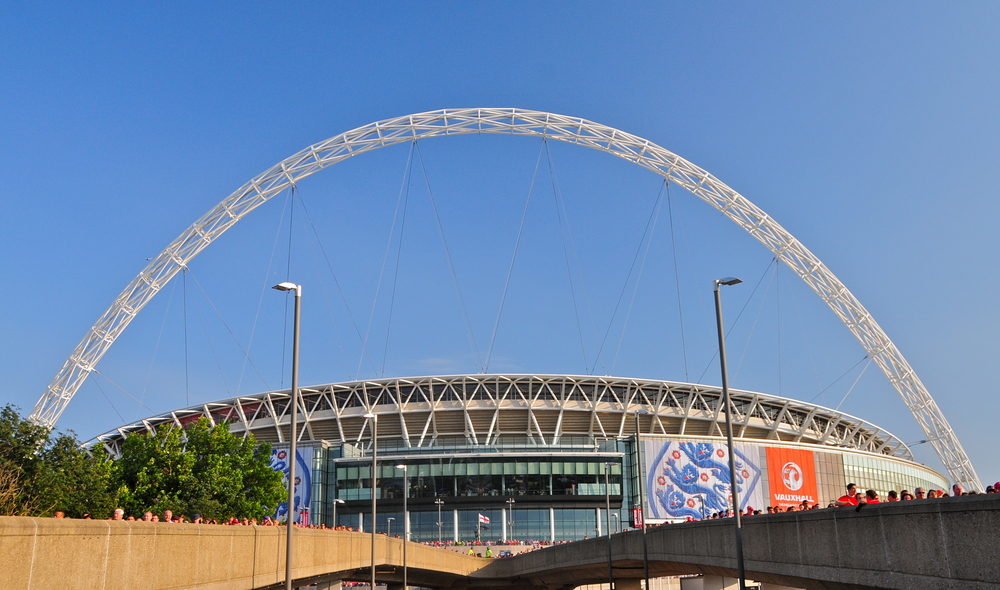
    England’s national stadium announced on Wednesday that advanced British digital communications company EE has become its lead partner.
    The partnership will run for six years, starting with immediate effect. The first event at the EE-sponsored stadium will be the Capital One Cup Final on March 2. 
    This is the first time Wembley – one of the biggest brands in football – has signed a lead brand partner in its 90-year history. The partnership will be represented by a new logo, but the world-renowned name of the stadium will remain unchanged.
    Wembley National Stadium Ltd said the partnership has been agreed on the basis of an ambition to make Wembley the most connected stadium in the world – ensuring it sits alongside the most technologically advanced stadiums across the globe for years to come. 
    Melvin Benn, chairman of Wembley said “As stadia around the world become increasingly more technologically advanced, EE is the perfect partner to assist us in fulfilling that goal, giving event owners and their fans the best possible and unforgettable shared experiences.”
    Wembley will benefit from multi-million pound investment in its technological infrastructure over the course of the six-year partnership to offer visitors the best possible experience. The deal also includes the launch of Wembley’s first bespoke app, which offers fans a dynamic feed of event content as well as stadium and travel information.
    Olaf Swantee, CEO at EE, said “Over the coming months, we will announce an exciting programme of upgrades and innovations to the existing infrastructure at Wembley that will ensure the stadium offers visitors a world class spectator experience for many years to come.”
    Future technological advancements to come from EE over the six-year deal include mobile ticketing solutions, enhanced mobile network access and high speed Wi-Fi available for all. EE customers will benefit from exclusive ticketing and marketing initiatives from late March.
    “I’m delighted that we have secured EE as Wembley Stadium Lead Partner,” said Peter Daire, FA Group head of sponsorship. “We have diligently taken our time, in collaboration with Wasserman, in sourcing a technology brand that shares our enthusiasm and commitment and EE will help to make the Wembley fan experience the best it can be.”
    The partnership adds to Wembley’s existing sponsorship agreements with Carlsberg, Betfred, Walkers, Coca-Cola, Mars and National Express.

  • Doha to host 2015 Asian Youth Athletics Championships

    Doha to host 2015 Asian Youth Athletics Championships

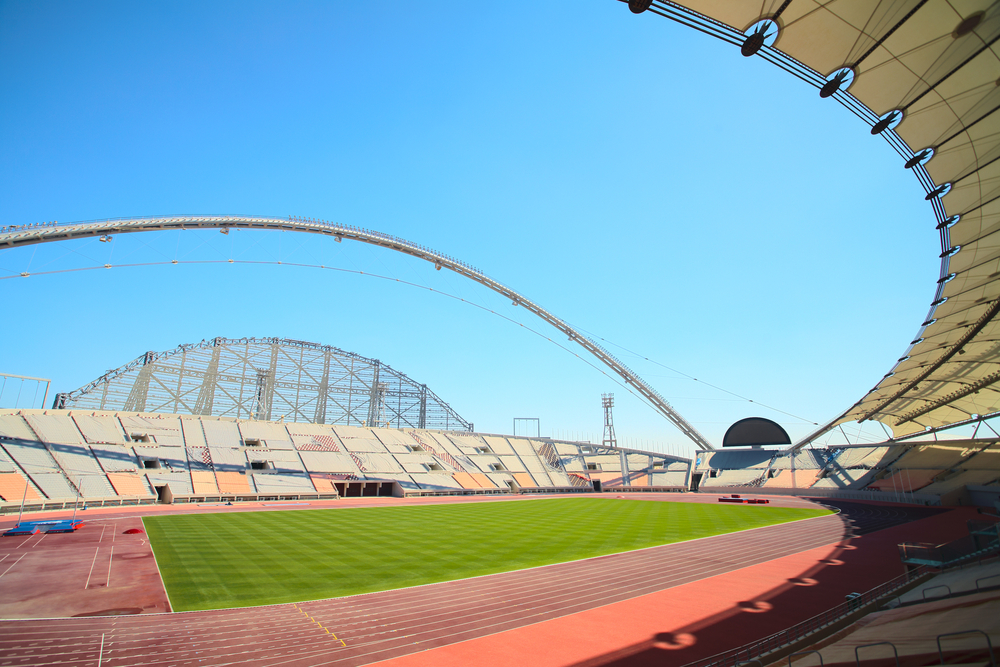
    The inaugural edition of the Asian Youth Athletic Championships will be hosted in Doha in 2015. The news, reported by the Gulf Times, was announced at the 78th council meeting of the Asian Athletics Association (AAA) in Doha. 
    Youth Athletics Championships are open to athletes aged 17 or under, unlike Junior Athletics Championships, which are open to participants aged 19 or younger.
    “Long-term planning and grass-root level development should be our focus and we need to find ways to encourage the youth. That’s why we have decided to have an Asian Youth Athletic Championships next year,” AAA President General Dahlan Jumaan al-Hamad told reporters at the close of the event on Sunday.
    The dates of the event have yet to be determined but it is likely to be hosted in May or June, as the IAAF World Athletics Championships take place in Beijing from 22-30 August. “It would be held before the World Championships so as to give our athletes the incentive to qualify,” Dahlan said. 
    The aim of the Asian Youth Athletics Championships is to boost the sport in the continent.
    “Asia should change. We need to improve. We need to raise our level. The continent should be at the pinnacle of everything. We are working towards it, and it involves a lot of hard work and commitment. But we are confident we shall reach there,” said Dahlan.
    In addition to the leaders of AAA member federations, the meeting was attended by former pole vault world champion and IAAF Vice-President Sergei Bubka.
    It was also announced that selection trials for the 2014 Youth Olympic Games (YOG) would be held in the Thailand capital of Bangkok from 21-22 May. The YOG takes place in the Chinese city of Nanjing in August 2014.
    The 2015 Asian Youth Athletics Championships event adds to Qatar’s growing programme of sports events. The Gulf nation will be hosting the World Men’s Handball Championship in January and February 2015. The UCI Road World Championships is scheduled to take place in 2016, with a potential shift from September to October due to the climate.