Category: Event Management

  • The moveable feast

    The moveable feast

    “Nothing had really been done on this scale before,” Tom Jones, principal of Populous, the practice that designed London 2012’s temporary venues, told delegates at International Sport Event Management Conference in London.

    “There was a significant amount of temporary venue work going on at golf championships, temporary music festivals and those sorts of things, but this was quite unique.”

    London 2012’s venue masterplan was not just unique; it was nothing short of revolutionary. Historically, the majority of Olympic Games venues would be built to last, but designed with the requirements of the short-term event in mind. This meant a relatively small amount of temporary overlay was required; it also resulted in a legacy of underused venues.

    London 2012 subverted this norm. Only six of London 2012’s venues were new and permanent. The remainder consisted of existing world-class venues like Wembley Stadium, Wimbledon and Lords, supplemented by more than 20 temporary venues.

    “We had a very high dependence on temporary structures because of the ‘no white elephants’ approach – not building where there was no legacy use,” explains James Bulley, CEO of Trivandi and former director of venues and infrastructure at the London Organising Committee of the Olympic and Paralympic Games (LOCOG).

    While this was clearly a revolution in terms of sustainability, it transferred huge responsibility onto the organising committee. “London delivered more temporary structures that Sydney, Athens and Beijing put together. That is a big shift; it puts massive onus on the organising committee to deliver substantial temporary structures.”

    LOCOG delivered more than 250,000 temporary seats for the London Games, all of which now have been taken down. A 23,000 seat arena was built in Greenwich Park for the equestrian events, plus a 15,000 seat arena in Horse Guards. The basketball arena in the Olympic Park was also completely temporary.

    While temporary overlay traditionally fell under the watch of the organising committee, it tended to be a much smaller project. Major infrastructure works would be handled by a separate authority, while the organising committee would focus primarily on selling tickets, running the sports events and overall operations.

    In the case of London 2012, the Olympic Delivery Authority (ODA) delivered the permanent structures, but LOCOG also had a major build on its hands. According to Bulley, “it became very much focused and dependent on the very high risk elements of delivering construction.”

    He questioned whether the split of work was reasonable. “We had the ODA delivering the permanent construction. Should they also have taken on the temporary construction? When you are looking at a city delivering immense infrastructure on this scale, whether that sits within the organising committee or outside it is something that should be thought through.”

    The temporary nature of the structures meant that they had to be built quickly, and the elements were not on LOCOG’s side in the weeks running up to London 2012. “One of the key challenges was delivering temporary structures in greenfield sites in torrential weather,” said Bulley.

    It wasn’t just the organising committee that was under strain. The temporary event commodity market was under pressure to deliver seats, tents, cabins, fences, temporary power supplies, barriers and much more.

    “Under extreme pressure, the event supplier commodity market had to deliver huge amounts of infrastructure, which it perhaps wasn’t geared up to do so at the volume at which we needed to do it.”

    Nonetheless, London 2012 raised the bar and the result is a faster, higher and stronger temporary infrastructure sector. Bulley points to advances in the seating industry in particular.

    “We put in new standards for designs, because the market couldn’t supply what we were looking to achieve. A lot of the seating in London 2012 was new; it was manufactured for the event. We set new standards for safety and comfort, for example the 800mm seat-row depth, rather than the 720mm which you sometimes see in temporary stands.”

    Jones adds: “We were keen to make the experience of going to a temporary venue as close as going to a permanent venue as possible, both in terms of comfort and quality.”

    London 2012 also pushed the envelope when it came to sports surfaces. “We worked incredibly hard with the governing bodies and sports surface companies to deliver the fastest possible tracks and highest quality fields of play,” said Bulley.

    Despite the large volumes and short timeframes, the local industry responded well to these demands. Bulley questions whether mega events in the immediate future will have the same resources to hand. “We had a very sophisticated event supply industry within Europe to tap into. For Brazil, it’s much more challenging.”

    The big scale-down
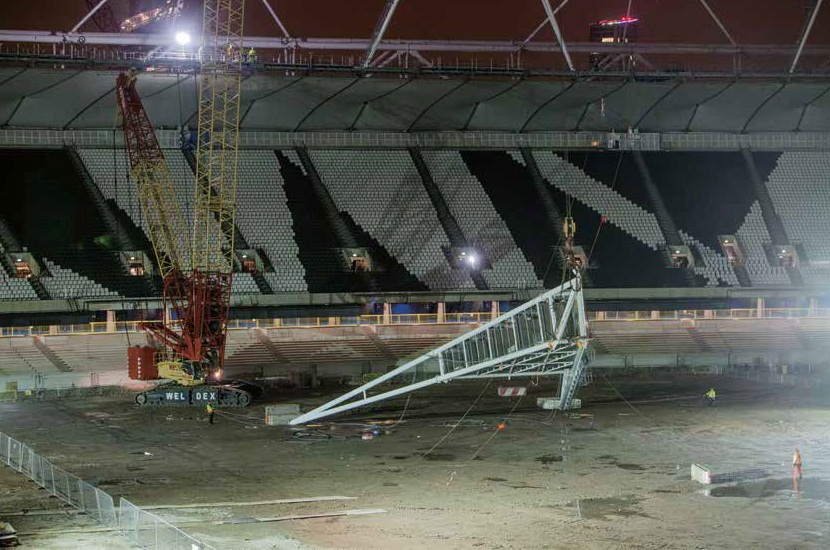
    Some of the permanent venues also had temporary aspects to them, with modular construction techniques being deployed to make them scalable. For example, the two “wings” that were plugged in to the aquatics centre to provide extra capacity during the Games are now being removed to leave the 1,500 to 2,000-seat community pool, in line with legacy plans.

    Jones said: “The reduction in size of the aquatic centre, the opening of the copper box have all pretty much followed plan. The Olympic stadium is clearly different.”

    The 80,000 seat stadium used in Games time was originally planned to be reduced to 25,000 seats, with a permanent athletics track. Bulley said: “We went to the market and said would a Premiership football club be prepared to take the stadium on? That was not the case at the time, so we followed the athletics legacy.”

    After much wrangling, the stadium has been determined as the home ground of West Ham United. Having a top flight football club as a tenant will help to ensure regular custom in the Queen Elizabeth Park, as the Olympic Park will be known. “If you can retain it as a large facility it’s a much preferable solution,” said Bulley.

    However, it does necessitate major changes. “We are managing to keep a significant amount of the structure,” said Jones. “When we were doing the original design we were trying to keep as much flexibility as possible. But clearly if the legacy use changes, then that is going to create challenges afterwards.”

    These challenges include removing seating in the lower tier and extending the roof. The promise of an athletics legacy is also being honoured alongside the West Ham tenancy. “As the Olympic stadium, it will have to serve other uses than football,” said Bulley.

    The revised designs for the stadium include a retractable lower tier that reveals will reveal the athletics track for events such as the World Athletics Championships, which the venue will host in 2017.
  • Violent demonstration a “major concern” for Brazil World Cup

    Violent demonstration a “major concern” for Brazil World Cup

    Security at the 2014 World Cup was high on the agenda at FIFA’s National Teams Workshop in Florianopolis on Thursday, with Brazilian officials announcing the deployment of 170,000 security professionals to ensure the safe hosting of the event.

    The majority of these security personnel will come from the police and armed forces. Speaking at a FIFA press conference, Andrei Rodrigues, of the Brazilian Ministry of Justice’s special secretariat for security at major events (SESGE) said “150,000 public-security and armed-forces professionals will be involved, with SESGE investing BRL1.17b [USD 500m] and the Ministry of Defence some BRL708m [USD 300m].

    “These are resources deployed solely for the purposes of providing security to the population on an everyday basis.”

    In addition to this investment, the Local Organising Committee (LOC) announced that a further 20,000 workers from the private sector will be engaged in delivering event security. The LOC’s head of security Hilario Medeiros said “It is very clear that Brazil is ready in terms of its various organisations and private security, with some 20,000 men being trained in event security.”

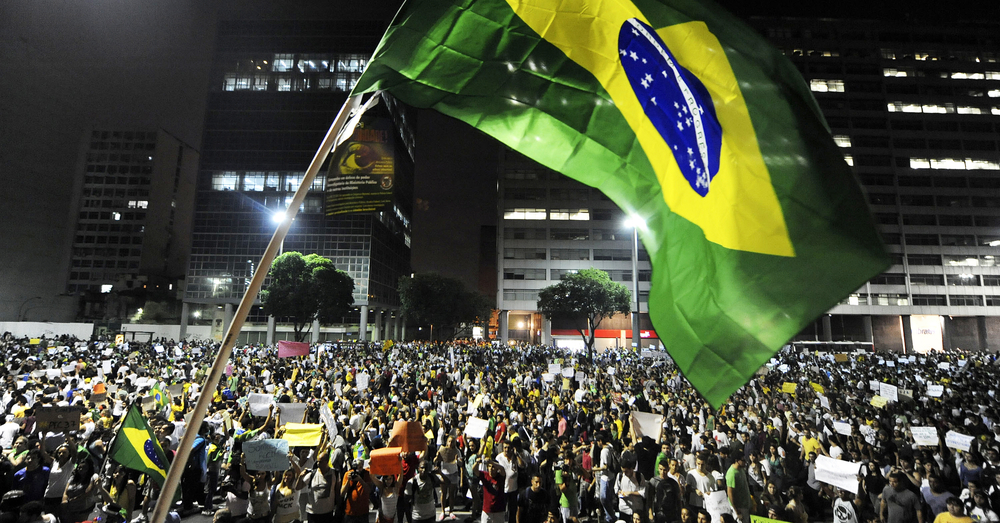
    With the 2013 Confederations Cup having taken place amid scenes of serious civil unrest, the security secretariat is understandably worried about the potential for violence. Rodrigues said “We do have one major concern, which is not the fact that people might demonstrate, as they are just exercising their democratic right in doing so. Our concern is with any violence that occurs as part of those demonstrations.

    “The Confederations Cup was an example of that. There was one day in June when there were more than one million people on the streets and we had more than 50,000 officers working. Even so, the competition schedule was not affected, the demonstrations did not impact on the delegations and there were no injuries caused by the actions of the officers.”

    FIFA proud to be in Brazil
    FIFA’s director of security Ralf Mutschke denied that last year’s protests were directed at the sports federation. “We saw some social unrest and vandalism at the FIFA Confederations Cup in 2013, but that does not mean to say that we are going to reduce our presence, hide ourselves away or keep our symbols under cover.

    “We do not feel, in fact, that we are the main target of the demonstrators. Obviously the protests had something to do with the Confederations Cup and the fact that Brazil and the whole world was watching the competition. We don’t feel that we are the targets, though. Far from it: we are proud to be here in Brazil.”

  • A fine balancing act

    A fine balancing act

    HOST CITY: The entire Qatar 2022 project requires more construction work than any other sports event in history. How do you feel about the challenges ahead?

    Al Khater: The heavy lifting is not the stadiums; it is the rest of the infrastructure. We do not see it as a challenge – we see it as a significant amount of work.

    There is a fine balancing act and the next nine years are exactly like that. We are putting into place a decision-making process, up and down the supply chain, that is quick and efficient.

    HOST CITY: What are the most important criteria for selecting main contractors for the construction work?

    Al Khater: One of the most important attributes will be the ability to understand the local requirements and dynamics of major programmes within Qatar. Whilst there is such a large amount of activity taking place within a relatively short timescale, it is vital that our delivery contractors understand the landscape they will be operating in with the challenges and opportunities that this presents.

    Another attribute would be the open dialogue that we would expect throughout our supply chain and the early communication of risks and issues as well as the recommended options for resolution. We want to work closely with our partners within an approach that has a “no surprises” mentality.

  • PwC renews SportAccord Convention gold partnership

    PwC renews SportAccord Convention gold partnership

    SportAccord Convention announced on Tuesday that PwC will be a Gold Partner of this year’s event, which takes place from 6-11 April 2014 in Belek/Antalya, Turkey. The agreement marks PwC’s second year as a Gold Partner. 
    “The first year of our partnership with SportAccord Convention was extremely successful and we are very pleased to be continuing as a Gold Partner in 2014,” said Robert Gruman, PwC Russia Advisory Leader, who heads PwC’s Global Sports Mega-Events Centre of Excellence.
    “SportAccord Convention provides us with networking opportunities and enhances our ability to build relationships with International Federations and the global sports movement.”
    PwC’s Sports Mega-Events Centre of Excellence comprises a network of professionals experienced in bringing value at all phases of the sports mega-events lifecycle. 
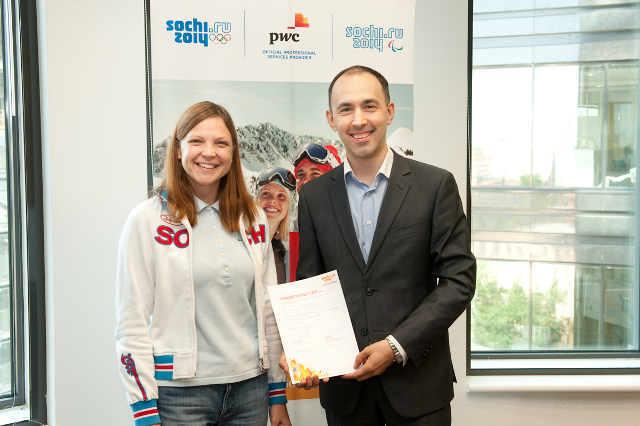
    For the Sochi 2014 Olympic and Paralympic Winter Games, PwC’s experts, in partnership with the Sochi Organising Committee, are carrying out over 200 projects in several key areas, from strategic and operational planning to supply chain management, from HR consulting to risk management. 
    “Our Gold Partnership with PwC has been of great value to us as an organisation and we are gratified to know that the feeling is mutual” said Nis Hatt, Managing Director of SportAccord Convention.
    “We are very pleased that the partnership is continuing and that we are able to provide a platform for PwC to meet its business objectives.”
    In 2013, PwC conducted the first Economic Impact Study of SportAccord Convention and estimated the direct and indirect impact of the event in Saint Petersburg, Russia at USD7.69 million.
     

  • IOC hails “human legacy” of Sochi 2014

    IOC hails “human legacy” of Sochi 2014

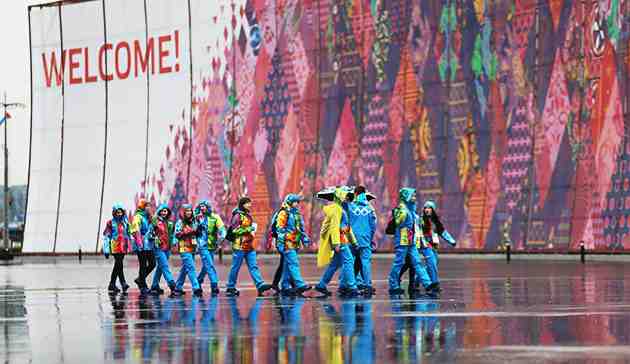
    Sochi 2014 will create a significant “human” legacy of experience gained by those working to successfully deliver the Winter Games, according to leading figures in the IOC and the Organising Committee.
    “The Games will leave a tremendous human legacy,” said Jean-Claude Killy, Chairman of the IOC Coordination Commission for Sochi 2014 on Friday. 
    “The highly trained professionals and volunteers from the Games will no doubt play a key role in the success of the World Cup and other major sporting events that Russia will host in the future.”
    Sochi 2014 marks the first time that the Olympic Winter Games have been held in Russia and signals the first of many major sporting events being held in the country, with the inaugural Russian Grand Prix due to take place in Sochi in October 2014 and the FIFA World Cup coming to cities all over Russia – including Sochi – in 2018. 
    “There will be tremendous synergies for the country in a number of areas as it strives to put on these great sporting events,” said Killy.
     
    Olympic University
    Hosting the 2014 Olympic Winter Games has also led to the establishment of the Russian International Olympic University (RIOU), which opened in Sochi earlier this year to train the next generation of sports management professionals, catering to the demand in Russia and around the world for highly qualified specialists in the international sport industry. Topics of study will include venue management, event management, media management, governance and sport diplomacy, and talent management. 
    “Currently, not just in Russia but all over the world, there is a lack of qualified specialists in sports management,” said RIOU Rector Professor Lev Belousov. “RIOU’s task is to set up a mechanism for leading Russian and international practising specialists to pass on practical knowledge to students and to train a new generation of highly qualified sports managers in specialisms needed by the Olympic and Paralympic movement and by the international sports industry.” 
    During Sochi 2014, students participated in an observation programme allowing them to assess in detail the complex logistical operations behind the organisation of the Winter Games. “This is a once-in-a-lifetime opportunity,” said Aleksander Bryantsev, head of education at Sochi 2014. 
    IOC President Thomas Bach also hailed the success of the RIOU, saying “There will be many lasting legacies from Sochi 2014, including the RIOU. The Olympic Movement as a whole will benefit from the establishment of the university, as, of course, will Russian sport.”
    Dmitry Chernyshenko, President of the Sochi 2014 Organising Committee added “The Russian International Olympic University serves as an example of the significant lasting legacy for Russia after the Games have been hosted in Sochi,” he explains. “It will become the key centre for training a new generation of highly-qualified sports managers in Russia.”

  • SPORTELAsia ends on a high

    SPORTELAsia ends on a high

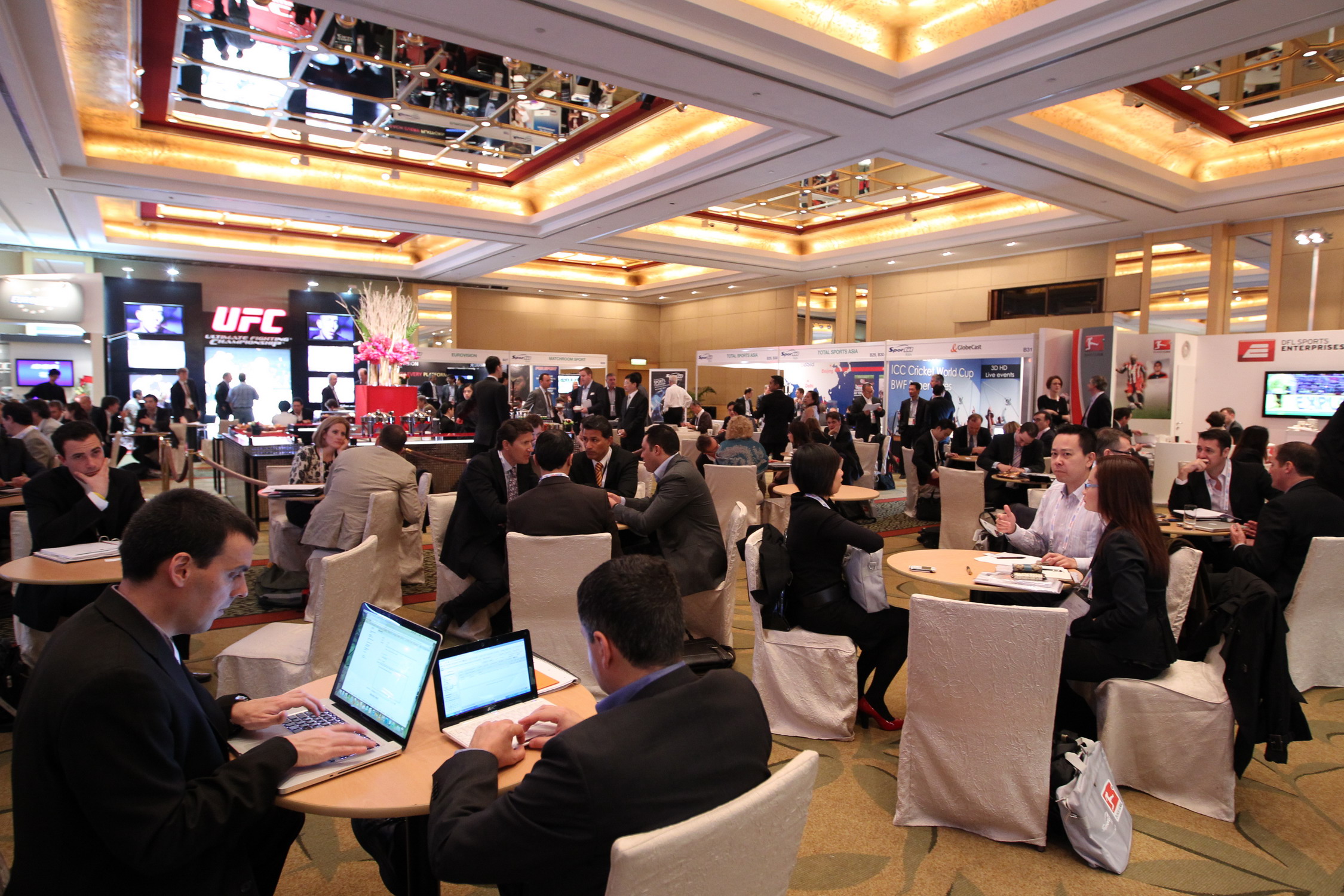
    At the conclusion of SPORTELAsia on Wednesday, the organisers announced a 12 per cent increase in the number of registered participants as compared to 2013. A total of 603 participants, representing 299 companies of 42 countries, participated in the 2014 Asian Convention.
    Ms. Amparo Di Fede, General Manager of SPORTEL said “All participants are extremely satisfied of the high quality and number of exhibitors, especially Asian. Among the new ones were SMIT, Kosmogo, LETV, PPTV, Super Sport Media and Slam Ball.
    “The loyalty of the global sports media community has grown strongly over the years and shows that SPORTEL continues to be their ‘must attend’ event”.
    The conference and panel programme was organised in collaboration with Sports Video Group and TV Sports Markets. A symposium was hosted in partnership with local agency Oceans Marketing entitled “Insight into the Chinese Sports Media Industry”.
    The next SPORTEL spring convention will return to Miami, where it was hosted in 2011. “Our community has anticipated and clearly chosen America for their next spring convention. SPORTELAmerica will once again welcome the international sports media community from 17 to 19 March 2015, at the JW Marriott in Miami, Florida.”
    The next SPORTEL event will be the 25th anniversary of SPORTELMonaco.  “The constant success of SPORTELMonaco conventions looks back on 25 years of dedication to our industry and to you, the SPORTEL community that has shared the same dedication and loyalty to us. We very much look forward to welcoming you once again in Monaco from Tuesday 7 to Friday 10 october 2014.”
    Registration for SPORTELMonaco opens on 2 April 2014.

  • Big names announced for Soccerex Asian Forum

    Big names announced for Soccerex Asian Forum

    Three leading figures in football have been added to the bill of the Soccerex Asian Forum, organised in partnership with the Asian Football Development Project (AFDP). 
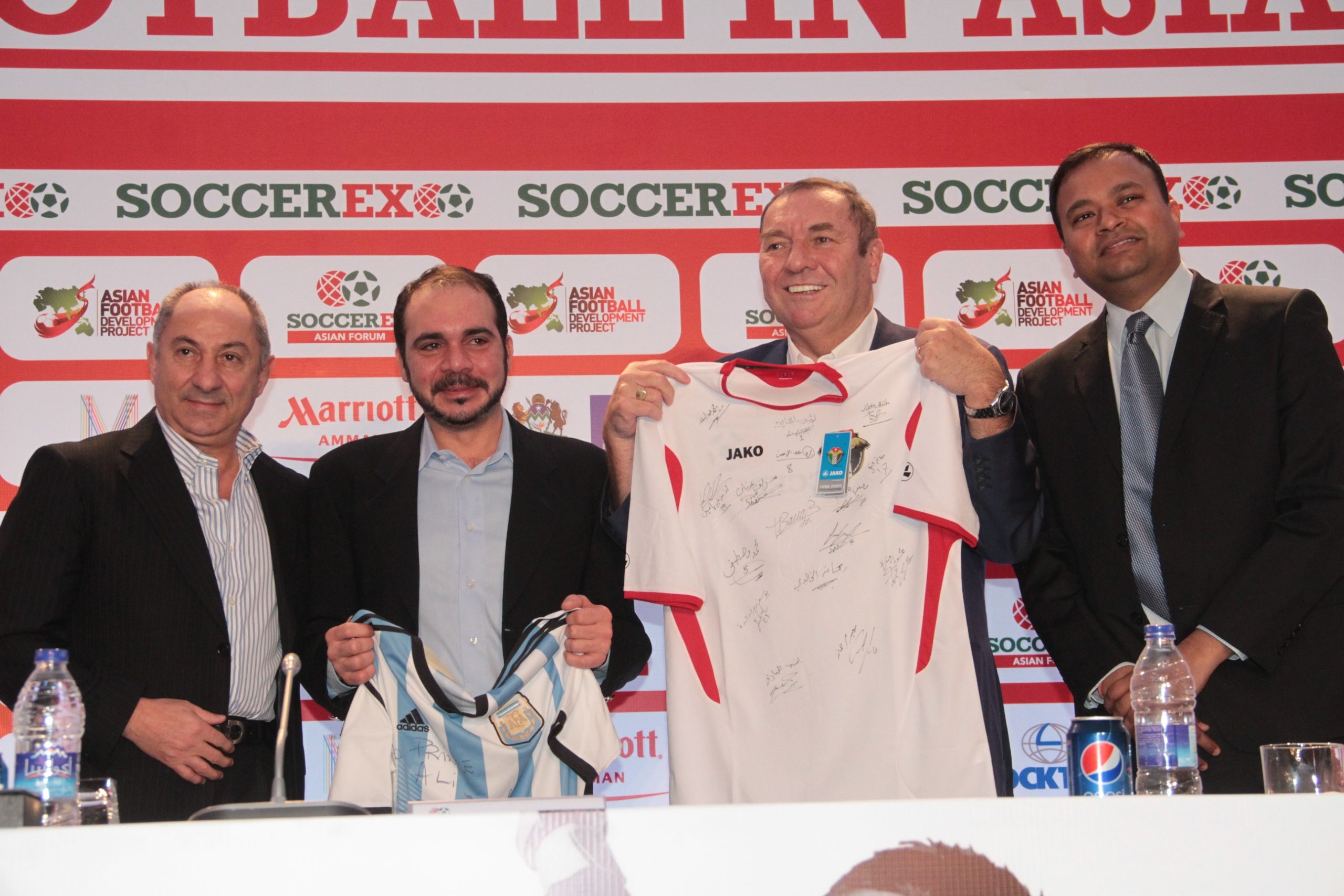
    Speaking alongside AFDP founder HRH Prince Ali Bin Hussein, Soccerex CEO Duncan Revie announced that Moya Dodd, AFC Vice President and FIFA Executive Committee Member will be playing a key role at the event. 
    Dodd will speak on the future of football in Asia and the development of women’s football. She will be joined at the event by Singapore FA General Secretary and AFC Executive Committee Member, Winston Lee.
    In addition to these two leading football administrators, Revie also confirmed that Argentinean football legend and World Cup winner Osvaldo Ardiles will be attending the event and sharing his vast football knowledge, including his experiences of playing and coaching in Asia and winning the World Cup.
    Mr Ardiles will join fellow football legends, Bryan Robson and John Barnes as part of a special panel discussion at the event.
    Also in attendance at the press conference was Sunando Dhar, CEO of I-League, who discussed the All Indian Football Federations involvement with the Soccerex Asian Forum, which will see General Secretary, Kushal Das participating in a panel discussion on commercial development within Asian football.
    It was also confirmed at the press conference that the Marriott Hotel Jordan Valley will be the official event hotel. Soccerex also announced a new global partnership with leading international law firm, Pinsent Masons.
    HRH Prince Ali Bin Al Hussein said “The Asian Forum is a platform for all the major Asian leagues, clubs and other stakeholders to get together and discuss the development of football across the continent; to share best practices in coaching development, stadia development, women’s football and most importantly for me, social development. Soccerex is the best platform for this.”
    Soccerex CEO Duncan Revie added “My thanks goes to his HRH, and to all those participating in this unique event, in this unique setting. We will be truly be bringing the world of football, not just Asia, to this wonderful country.”
    The Soccerex Asian Forum will take place on 13-14 May at the King Hussein Bin Talal Convention Centre by the Dead Sea in Jordan. The two day event, featuring a conference and exhibition, will bring together over 1000 senior decision makers from the football industry across Asia and the rest of the world, providing a platform for networking and knowledge sharing, with the aim of developing football throughout the continent.
    For further details about the Soccerex Asian Forum please go to www.soccerex.com/asia or contact Soccerex on +44 208 987 5522

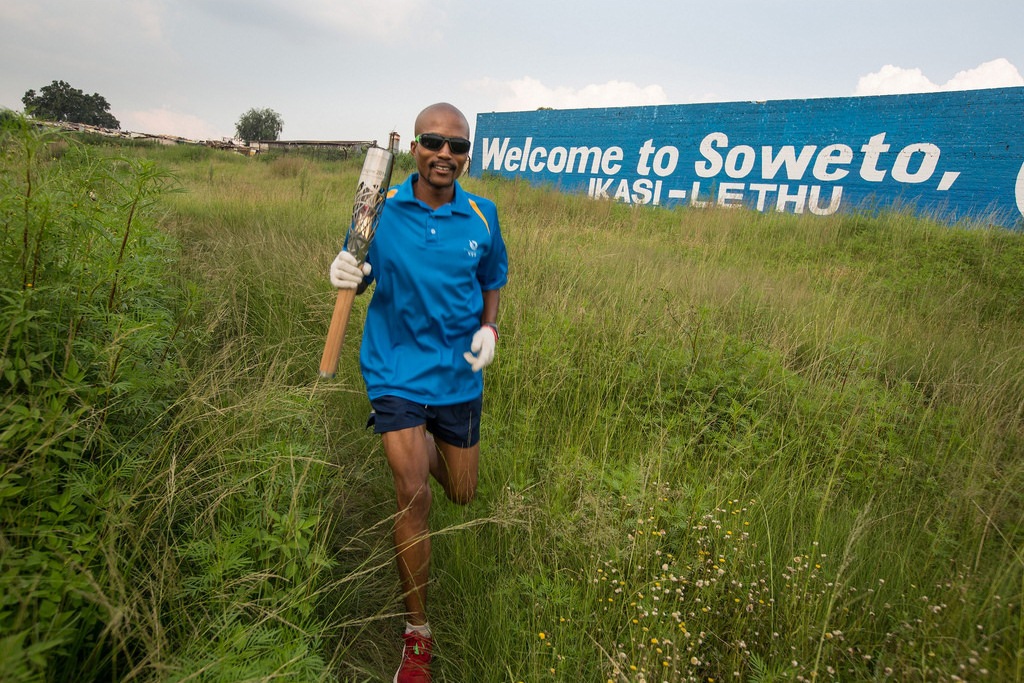
  • Mandela’s spirit to drive athletes at Glasgow 2014

    Mandela’s spirit to drive athletes at Glasgow 2014

    Team SA is hoping to make a historic impact at Glasgow 2014. 
    “As a nation, we are proud that on the five occasions that South Africa has competed to the Commonwealth Games since democracy, the medal tally has been very impressive,” said Tubby Reddy CEO of South African Sports Confederation and Olympic Committee (SASCOC).
    “The 2014 Commonwealth Games are no exception; we hope to win more medals as our athletes compete with the spirit of Tata Madiba in mind, that of a winning nation and empowering themselves through sport.”
    2014 is a big year for Glasgow and also for South Africa, which is celebrating 20 years since the end of apartheid and its return to the Commonwealth Games in 1994.
    South Africa competed at 11 of the 19 Commonwealth Games, from the original Games in 1930 to 1958. South Africa then withdrew from the British Commonwealth because of apartheid, but was later re-admitted and participated in the Games in 1994 – the year of Nelson Mandela’s election.
    “We would like firstly to take part in the Commonwealth Games,” Mandela said shortly after his inauguration, and Team SA did indeed attend the 1994 Victoria Commonwealth Games and each edition thereafter.
    “All credit goes to the late Madiba’s uniting spirit who believed sports can unite the world and redefine a country’s international image,” said SASCOC in a statement. “Sport’s power to change lives and move nations is often overstated and whilst imprisoned, Madiba supported international sports.”
     
    Freedom of Glasgow
    Nelson Mandela had a strong connection with Glasgow. In 1981, during his long period of imprisonment, Glasgow Council awarded Mandela the Freedom of the City. Some years after his release Mandela travelled to Glasgow to thank the city, saying “While we were physically denied our freedom in the country of our birth, a city 6,000 miles away, and as renowned as Glasgow, refused to accept the legitimacy of the apartheid system, and declared us to be free.”
    Speaking to HOST CITY on Friday, Glasgow’s Lord Provost Sadie Docherty said: “Glasgow is extremely proud to be part of the Nelson Mandela story. We were proud to be the first city in the world to honour him with a Freedom of the City award Nelson Mandela was a true political and moral icon. His lifelong quest to bring freedom, justice and equality to the people of South Africa cost him his own freedom for many years. The participation of the South African team in the Commonwealth Games is part of his legacy and I have no doubt the South African team will want to dedicate their performance to his memory.”
    The Commonwealth Games South Africa Chef De Mission, Patience Shikwambana attended the Chef De Mission Seminar in Glasgow from 28 January – 01 February. “The Commonwealth Games Association (CGA) is on track in their preparations for the Games. We visited some of the training facilities and competition venue facilities and they are of world class standard and it’s pleasing to note that our athletes should be happy to participate in such top of the range facilities.”

  • Delays and ambiguity could harm Rio 2016 delivery

    Delays and ambiguity could harm Rio 2016 delivery

    Major delays to Rio 2016 Olympic Games projects leave no room for further hold-ups, while responsibilities and funding for projects must be clarified to avoid problems in delivering the Games, the IOC said on Friday. 
    The Organising Committee president Carlos Nuzman admitted there is “not a minute to lose”.
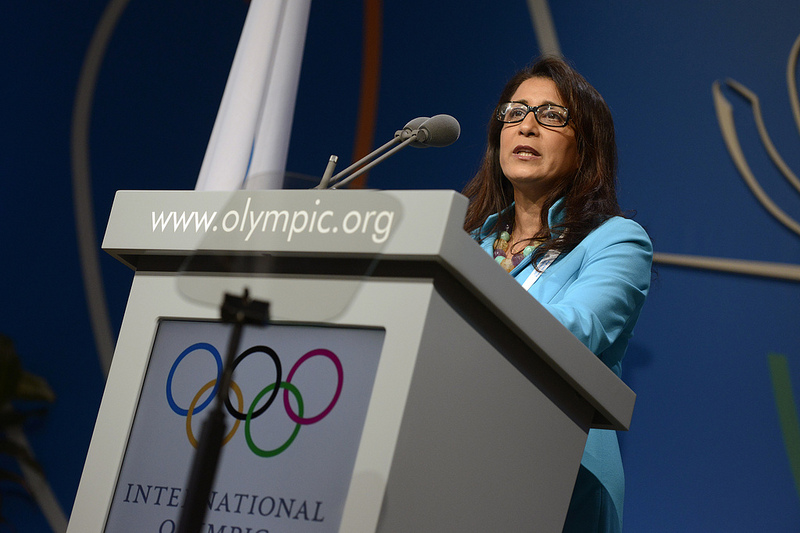
    At the conclusion of the IOC’s Coordination Commission visit, chair Nawal El Moutawakel said “The Rio 2016 Olympic Games have a great potential for being a very exciting event which leaves many legacies. But although progress is being made, each decision that is postponed and each subsequent delay will have a negative impact on delivery – total focus and dedication are therefore required.”
    In a strongly-worded public statement, the IOC said “Every second counts… The delivery timelines of some of the venues for test events and the Games have faced delays and now leave no margin for any further slippages.”
    Nuzman said “We enter this crucial phase of our journey without a minute to lose, and certain that our partners in government share this vision”.
    Rounding up a full day of site visits to the Barra and Deodoro clusters, the Coordination Commission made it clear that decisive action is required to avoid setbacks, saying “A number of important decisions remain to be made.”
    A crucial meeting between the federal authorities and key Games stakeholders has been called on 27th March in the Brazilian capital, Brasilia, where “it is expected that the responsibilities for each Games related project will be clarified along with the associated funding in order to avoid further significant delays in the delivery of the project.”
    The Coordination Commission did, however, acknowledge that the organising committee has made progress in a number of areas since its last visit in September 2013 and IOC President Bach’s visit in February 2014. 
    The overall venue masterplan has been finalised, the event’s “lifetime budget” has been validated and federal government efforts have been integrated under President Rousseff’s Chief of Staff, Aloizio Mercadante.
    The commission also commended city authorities for rapid progress since taking over responsibility for the second Olympic Park in Deodoro, where construction work has yet to begin.
    During its three day tour, the commission received updates from the organisers and their partners in areas such as athletes and National Olympic Committees (NOC) services, sport and international federations’ services, venues and infrastructure, accommodation, media operations, spectators, ticketing, transport, test events, marketing, and the Paralympic Games.
    The IOC visit overlapped with a tour of World Cup venues by FIFA officials, who are currently in Brazil. Many 2014 World Cup projects are behind schedule.
    The coordination commission’s next visit to Rio de Janeiro takes place in September 2014.
     

  • Brazil government fears for World Cup security

    Brazil government fears for World Cup security

    A secret report by the Brazilian government specifies security risks in half of Brazil’s 12 host cities. 
    The concerns outlined in the report, which is based on consultation with members of the public and was leaked to O Globo, include the risk of strikes and protest.
    Rio de Janeiro suffers from “a difficult relationship between public authorities and society”, the report says. And in Sao Paulo, a “potential problem” identified is a $25m budget cut for the military police.
    The government is also concerned that civil servants could strike in Belo Horizonte, which might “fuel protests”.  In the northeast, unrest between farm workers and indigenous groups is mentioned as another area of concern. 
    The report also says “opposition parties are attempting to wreck the image” of the Governor of Brasilia, Agnelo Queiroz. Concerns are also raised over the safety of teams and visitors, according to O Globo.
    President Dilma Rousseff’s office described the report as preliminary and inconclusive, saying that the information published in O Globo was neither official nor verified. 
    Brazil’s sports minister Aldo Rebelo has also played down such concerns. “The possibility of protest during the World Cup is very limited,” he told The Guardian on Monday. 
    “People are more interested in celebrating the World Cup. Peaceful protests are protected by the constitution. Violent protests are forbidden by law and they are matters for the police to deal with.”
    Nonetheless, Brazilian authorities will be keen to pre-empt and avoid any potential for further civil unrest, in the wake of the striking and protesting that took place in several cities during last year’s Confederations Cup.
    Security concerns are also highlighted by the announcement earlier this week that Brazil is to establish “no fly zones” of a 7km radius over each stadium on World Cup match days, despite major disruption to travel.