A secret report by the Brazilian government specifies security risks in half of Brazil’s 12 host cities.
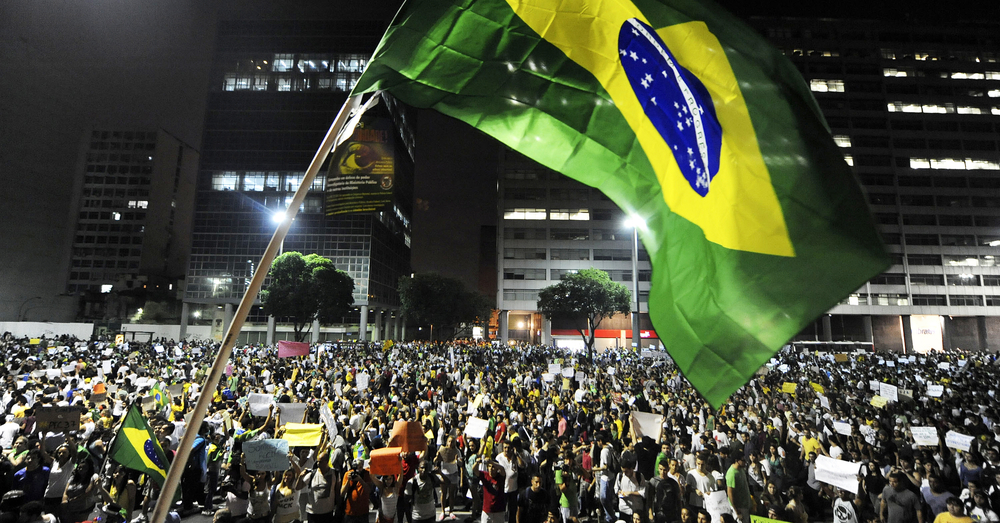
The concerns outlined in the report, which is based on consultation with members of the public and was leaked to O Globo, include the risk of strikes and protest.
Rio de Janeiro suffers from “a difficult relationship between public authorities and society”, the report says. And in Sao Paulo, a “potential problem” identified is a $25m budget cut for the military police.
The government is also concerned that civil servants could strike in Belo Horizonte, which might “fuel protests”. In the northeast, unrest between farm workers and indigenous groups is mentioned as another area of concern.
The report also says “opposition parties are attempting to wreck the image” of the Governor of Brasilia, Agnelo Queiroz. Concerns are also raised over the safety of teams and visitors, according to O Globo.
President Dilma Rousseff’s office described the report as preliminary and inconclusive, saying that the information published in O Globo was neither official nor verified.
Brazil’s sports minister Aldo Rebelo has also played down such concerns. “The possibility of protest during the World Cup is very limited,” he told The Guardian on Monday.
“People are more interested in celebrating the World Cup. Peaceful protests are protected by the constitution. Violent protests are forbidden by law and they are matters for the police to deal with.”
Nonetheless, Brazilian authorities will be keen to pre-empt and avoid any potential for further civil unrest, in the wake of the striking and protesting that took place in several cities during last year’s Confederations Cup.
Security concerns are also highlighted by the announcement earlier this week that Brazil is to establish “no fly zones” of a 7km radius over each stadium on World Cup match days, despite major disruption to travel.
Blog
-
Brazil government fears for World Cup security
-
World Cup worries send Valcke on mission to Brazil
Delays and uncertainty over World Cup stadiums have motivated FIFA secretary general Jerome Valcke to make a special visit to Rio de Janeiro from 24 to 27 March, bringing an early end to a technical tour of host cities that began on Thursday 20 March.
“Any envisaged on-site host city visits will be rescheduled to the next tour planned for the end of April,” said FIFA in a statement.
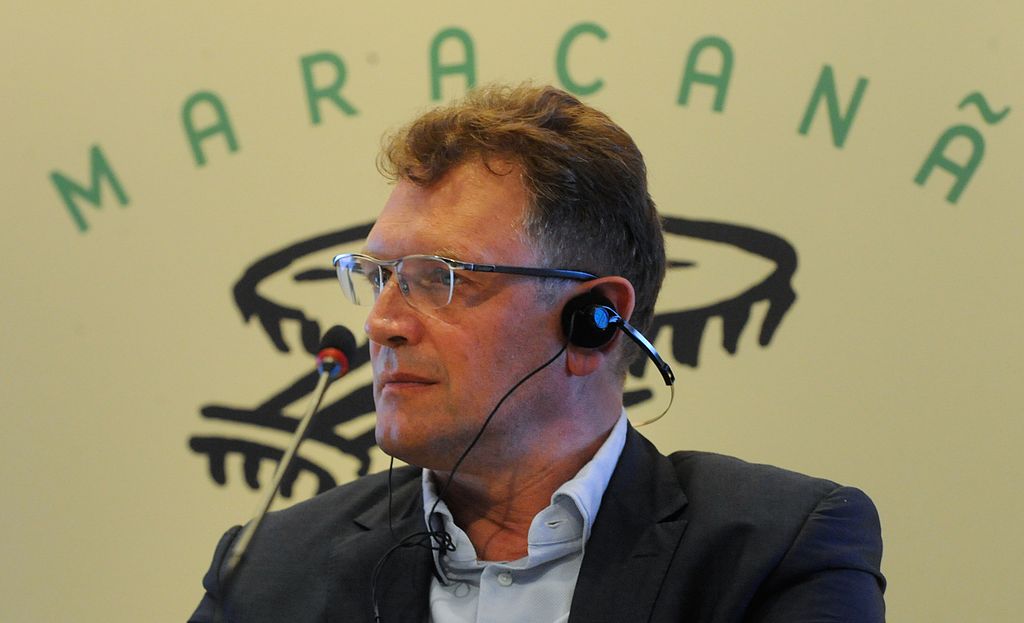
Concerned about overlay projects and three unfinished stadiums, Valcke is travelling to Rio de Janeiro for a series of meetings. The visit culminates in a board meeting of the Local Organising Committee (LOC) and media briefing at the Maracana Stadium.
“This is the last occasion for the organizers to take stock of the operational preparations before the respective FIFA World Cup installations begin to be implemented in all 12 host cities,” said FIFA.
The LOC is currently taking FIFA’s technical experts on a tour of stadiums in Sao Paulo, Porto Alegre, Curitiba, Cuiaba, Manaus and Natal – the six venues that did not feature in last year’s Confederations Cup. The tour was due to conclude in Natal on 26th March after a visit to Manaus on 24th March, but these two site visits now look set to be postponed to April.
“This inspection tour will be fundamental to consolidate operational plans and for each area to confirm the operations they have planned over the last few years,” said LOC Stadiums Operations Manager Tiago Paes.
The tour involves LOC and FIFA representatives from the areas of competition, press operations, broadcasting, protocol, communications, IT, spectator services, security, medical services, transport, catering, volunteers, hospitality and stadiums operations.
FIFA had originally requested that all venues be finished by December 2013, but three remain under construction. Itaquerao stadium in Sao Paulo and Curitiba’s Arena da Baixada are now unlikely to be finished until the middle of May – just a month before the opening match in Sao Paulo. Cuaiba’s Arena Pantanal is due to open in April.
The pitch at Manaus is also undergoing emergency repairs after the turf was damaged by excessive use of fertilizer. Manaus hosts England and Italy’s first World Cup fixture.
Valcke has reportedly voiced concerns about responsibility for temporary infrastructure. Local newspaper Estado de Sao Paulo said Valcke is concerned that some cities are refusing to pay for temporary items such as security equipment and temporary structures for media, volunteers and sponsors, causing delays to overlay works. -
Qatar to spend $50bn on infrastructure in 2014
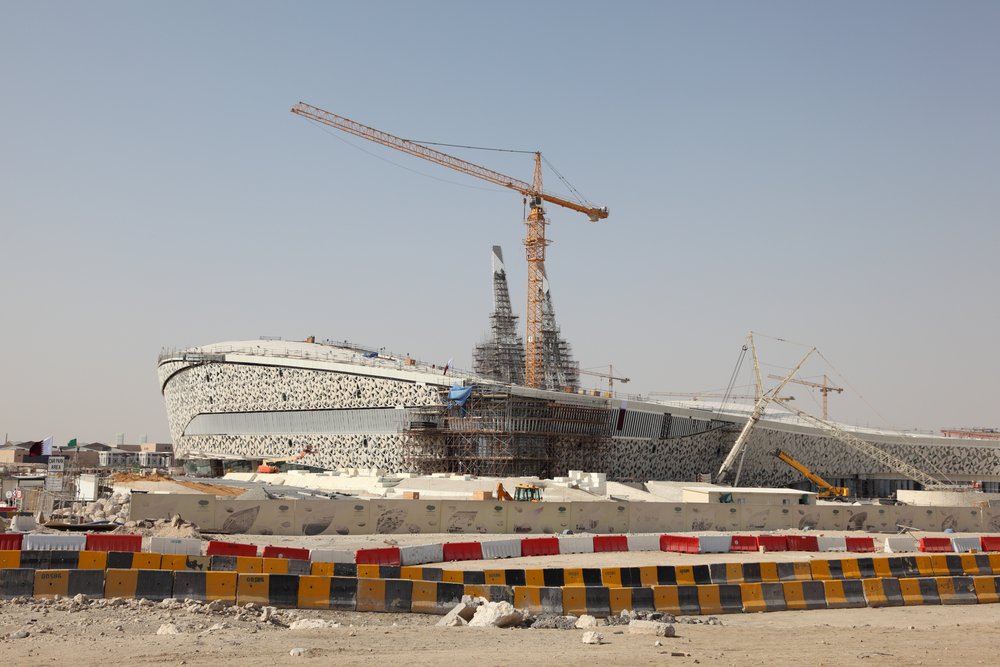
The Qatari government is set to sign up to $50bn in infrastructure contracts over the course of 2014, according to Sheikh Abdullah bin Saud al-Thani. This represents a massive escalation in construction activity as the 2022 FIFA World Cup draws nearer.
The contracts will include transport and energy projects. A tender for phase one of the Doha Metro has already been issued, according to unnamed sources speaking to Reuters, with a contract expected to be signed by the end of August.
The $50bn figure, announced by Sheikh Al-Thani at the Qatar Projects 2014 show organised by Meed Events, significantly exceeds previous estimates. Speaking a month before the event, Edmund O’ Sullivan, the chairman of Meed Events said contract awards for big infrastructure projects in Qatar in 2014 were “likely to hit $24bn”.
The recent upturn in spending follows a slow start to the world’s biggest infrastructure project.
According to Reuters, state spending rose by just 2.2 per cent in the year up to March 2013, while a government report projects state spending to rise by 11.6 per cent in 2014.
“Even with Qatar’s means and ambitions, the resources of time, space and human capital are not endless, especially when concentrated on a mere 10 per cent of its soil,” Tilman Engel, managing director of Sport Business Consulting International told HOST CITY.
Engel advised and directed the Qatar professional football league from 2007 to 2009, during their process of reorganisation and professionalisation in line with AFC and FIFA directives. “Given the enormity of both the World Cup and the National Vision 2030, it is no day too soon for Qatar to launch the projects key to make both visions work.”
Infrastructure projects in Qatar accelerated over the course of 2013, overtaking the UAE midway through the year with $12.2bn of contracts awarded, said O’Sullivan. “The bulk… came from the multi-billion-dollar tunnelling packages awarded as part of the Doha metro project.”
On winning the host city election for the 2022 World Cup in 2010, Qatar stated that it would spend $140bn on civic and sporting infrastructure. This figure was soon upgraded, with a report by Deloitte in September 2013 stating that Qatar plans to spend $140bn over the next five years on transport alone.
$200bn is due to be spent over the next 10 years on construction. A further $20bn is to be spent on tourism infrastructure to prepare for the influx of football fans, the Deloitte report said. Since then, an investment of $45bn into tourism by 2030 has been announced. -
AFC Asian Cup draw revealed
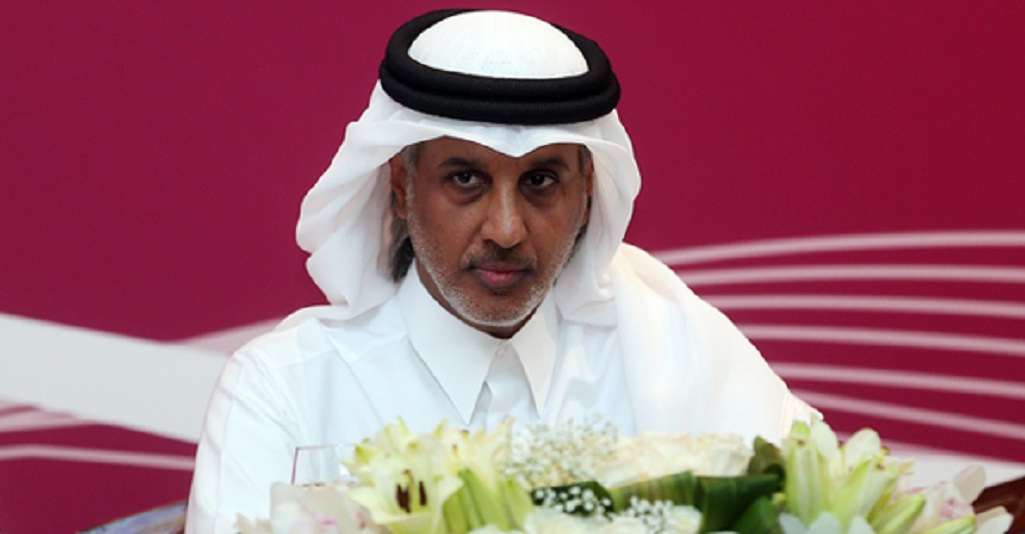
The AFC Asian Cup draw ceremony took place at the Sydney Opera House on Wednesday, attended by His Excellency Sheikh Hamad bin Khalifa bin Ahmad Al Thani, president of the Qatar Football Association (QFA).
Qatar was drawn with Iran, UAE and Bahrain in Group C, while hosts Australia face South Korea, Oman and Kuwait in Group A.
China was drawn with North Korea, Saudia Arabia and Uzbekistan in Group B. Group D is comprised of Japan, Jordan, Iraq and the AFC Challenge Cup 2014 winners.
On the eve of the draw, Sheikh Hamad confirmed his attendance at the Soccerex Asian Forum.
Soccerex CEO Duncan Revie said: “It’s a great honour to welcome Sheikh Hamad to the Asian Forum, with Qatar being an example of the rapid growth of football within Asia; we’re delighted to be able to offer our delegates the opportunity to network and do business with one of the most influential footballing administrators on the planet.”
Re-elected to another four-year term late last year, Sheikh Hamad was at the helm of the association when the country won the right to host the 2022 FIFA World Cup.
One of the central figures behind the development of the commercial aspect of the game in Asia, Sheikh Hamad oversaw a number of major sponsorship deals for the association as well as the Q-League, including agreements with Qatar Airways, QNB Group and Aamal.
Soccerex Asian Forum, organized in partnership with the Asian Football Development Project (AFDP), takes place on 13-14 May at the King Hussein Bin Talal Convention Centre, situated on the banks of The Dead Sea, Jordan.
For more information about AFC Asia Cup visit the www.afcasiancup.com
For further details about the Soccerex Asian Forum please contact Soccerex on +44 208 987 5522 or visit www.soccerex.com -
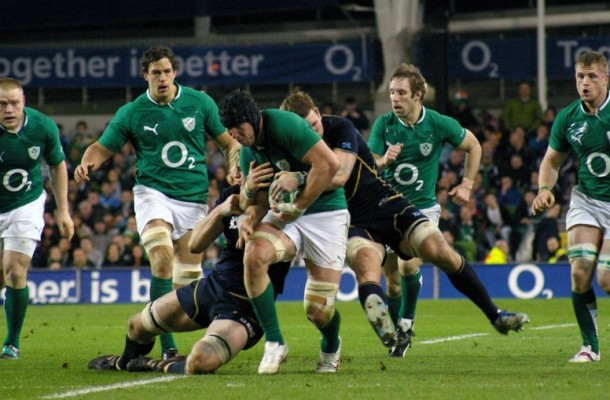
IRB delighted by interest in 2023 Rugby World Cup
The bidding process for the 2023 Rugby World Cup has yet to be announced but several countries have already expressed an interest, with key figures in Ireland and Argentina speaking out on the subject over the course of the week.
Leo Varadkar, Minister for Transport, Tourism and Sport said in an interview with Newstalk that hosting the World Cup would be an achievable target for Ireland, with “at least 50/50” chance of winning a bid.
“It’s probably the biggest thing that Ireland can do, as a small country. You could never really have the Olympics in Dublin; we wouldn’t be able to do the Euros, but we could do the Rugby World Cup.
“New Zealand, which has inferior infrastructure, fewer people and is further away from the big rugby markets did really well.”
Varadkar also stressed that an Irish Rugby World Cup would be a profitable one. “There is a cost of upgrading some of the stadiums… and you do have to pay the IRB a big fee to host it – somewhere in the region of EUR 120m. If we can get more people than came to New Zealand then we can bring in the region of EUR 200m in tax revenues.”
The International Rugby Board (IRB) has not yet set its fees and the bid process is not expected to be launched until later in the year. Nonetheless, countries are positioning themselves early to bid for the event.
Argentina’s IRB Council Representative Agustin Pichot confirmed in December 2013 that his country would bid for the 2023 event. England player Paul Tait is another longstanding proponent of an Argentinian Rugby World Cup as a way of internationalising the sport.
“With growth comes progress and for international rugby this has seen an increased awareness outside of the traditional strongholds,” Tait wrote on his blog this week. “The landscape will continue to evolve and having Argentina host Rugby World Cup 2023 would contribute to this by directly rewarding excellence and encouraging progress.”
Recent editions of the Rugby World Cup have loosely alternated between Southern and Northern hemispheres. The 2023 edition will follow two northern editions: England 2015 and Japan 2019.
Whether the IRB will consider a FIFA-style continental rotation policy remains to be seen. The Rugby World Cup is the IRB’s main breadwinner, accounting for more than 90 per cent of revenues.
And with the IRB investing more than £330m worldwide between 2009 and 2016, a solid financial return from the World Cup will be seen as a major priority to enable the development of the sport internationally – wherever the event is hosted.
Other nations interested in hosting the 2023 World Cup include South Africa, France, Australia and Italy.
“Enormous prestige”
Speaking to HOST CITY from the IRB’s Dublin headquarters, head of communications Dominic Rumbles said “We are delighted that there is such a strong level of initial interest in hosting Rugby World Cup 2023.”
“To see such interest before the tender process has been launched further underscores the enormous prestige of the Rugby World Cup brand in the global marketplace.”
Explaining why there is such interest, he said: “Increasingly, governments and local agencies are seeing the event as a strong economic, trade, tourism, profile and feel-good platform and a means to inspire young people to get active, which is great.”
This view is backed up by Varadkar. “The most important thing from a government point of view is participation,” he said.
“More people are participating in sport than in the past – it’s around 47 per cent now, which is a big improvement. There are health benefits, psychological benefits and there are social benefits, and that’s why governments get involved in sports.”
Speaking to delegates at a Bandon Rugby Football Club event on Thursday, MEP Sean Kelly said a Rugby World Cup bid is “an opportunity for Ireland and we should do all we can to seize it.
“It could be a hugely historical all-island event, with massive economic and tourism benefits.”
The former president of the Gaelic Athletic Association emphasised the strength of the country’s infrastructure – a key consideration in evaluating bids for major sports events.
“Ireland has excellent sporting facilities and proven ability to successfully host major sporting events, such as the Special Olympics,” said Kelly.
“Ireland could easily accommodate the 377,000 or more visitors that the Rugby World Cup would bring to the country.” -
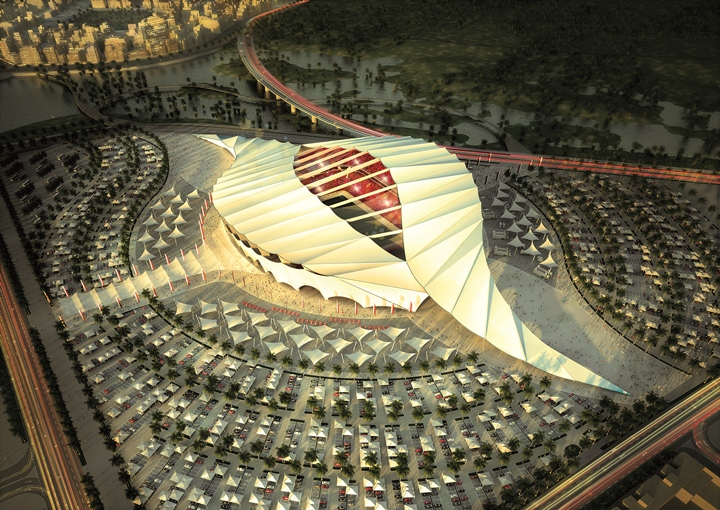
Qatar’s annual budget breaks records
The Emir of Qatar has approved the country’s biggest ever national budget, with expenditure on infrastructure scheduled to rise faster this year.
An unprecedented total annual expenditure of US$60bn, based on projected national revenues of US$62bn, was endorsed on Sunday by Emir Sheikh Tamim bin Hamad Al Thani. The spending plan for the 2014-2015 fiscal year is up 3.7 per cent on the previous year.
The increase in expenditure is accounted for by a major ramp-up of infrastructure projects prioritised for national development, which include venues for the 2022 FIFA World Cup.
The Minister of Finance, His Excellency Ali Sharif Al Emadi, announced that US$24bn has been allocated for key projects. This figure, 16 per cent higher than the US$20bn set aside for such works in the previous fiscal year, represents a major step change in the pace of infrastructure work.
Al Emadi also stated that spending on key projects would reach US$182.35bn over the next five years.
The investment is necessary to start construction of new stadiums for the 2022 World Cup, with work set to begin on stadiums in Al Khor, Al Rayyan, Al Whakra, Khalifa and Lusail.
Other areas of development include education, health and transportation. Qatar’s new airport was originally due to open in December 2012 but is not expected to start operating until the middle of 2014. -
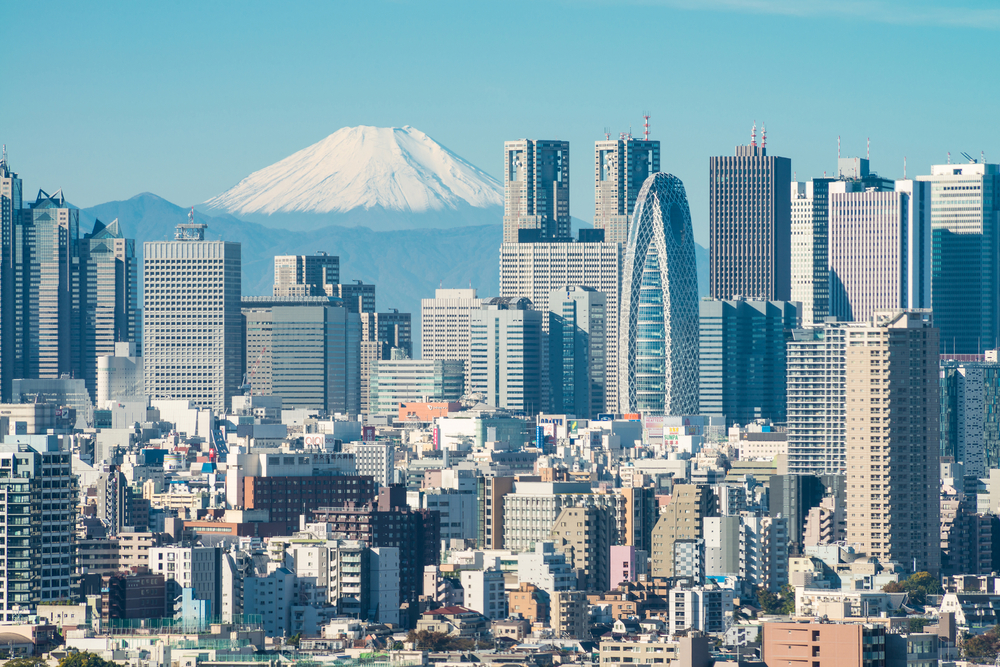
Olympic host Tokyo ranked world’s riskiest city
A ranking of cities under threat from natural disasters, “Mind the Risk” by reinsurance company Swiss Re, has placed Tokyo top of the list.
The International Olympic Committee nonetheless told HOST CITY that it stands by the findings of its Evaluation Commission, which highlighted Tokyo’s “well thought-out proposals for the successful planning and delivery of security operations, which would deliver safe and secure Games.”
Tokyo successfully dispelled safety concerns during its bid to host the 2020 Olympic and Paralympic Games. Speaking to IOC members during the bid presentation in September, Prime Minister Shinzo Abe described Tokyo as “one of the safest cities in the world.”
The IOC on Wednesday reaffirmed its confidence in Tokyo’s ability to respond to potential seismic events. “It goes without saying that we cannot predict natural disasters, but Tokyo is known for having some of the most comprehensive construction practices to help protect buildings against the effects of earthquakes,” an IOC spokesperson told HOST CITY.
“The local authorities are also very well prepared to handle these types of emergency situations and we have complete confidence in them, as the Evaluation Commission noted in its report.”
Matthias Weber, Swiss Re’s Group Chief Underwriting Officer said in the report: “We know from past events that physical prevention measures alone do not suffice to build a resilient city, since damage from the most severe catastrophes cannot be fully averted.
“An important part of resilience is how well urban societies are able to cope with the financial consequences of a disaster, which includes access to the requisite funding for relief, recovery and reconstruction.”
HOST CITY also contacted Tokyo 2020, which was unavailable for comment at time of writing.
Seven of the ten cities found to be at highest risk are in East Asia, due to their combination of high seismic activity and large populations.
Los Angeles, which is taking steps towards a highly anticipated bid to host the 2024 Olympic Games, has the seventh largest number of people at risk of natural disaster, according to the Swiss Re report. -
Rubgy wins popularity contest at World Games
The organisers of last year’s World Games, which was held in the Colombian city of Cali, have announced that Rugby Sevens was the event’s most popular sport.
The news is a boost to Rugby Sevens as it prepares to feature in the Olympic Games for Rio 2016 and Tokyo 2020.
Cali 2013 was Rugby Sevens’ fourth and final appearance in the World Games. The multi-sport event, held in each year that follows the Summer Olympic Games, includes sports that are not currently on the Olympic Programme.
The largest attendance out of all the sports events was recorded at the final of the Rugby Sevens tournament. 17,950 fans went to the Pascual Guerrero Stadium to watch South Africa and Argentina compete on 2 August.
IRB Chairman Bernard Lapasset said: “Rugby is excited to be at the top of this list and we are proud that we helped to make the World Games such a popular success.
“As we prepare to introduce Sevens to the Olympic Games summer programme at Rio de Janeiro in 2016, it is encouraging for us that we are proving to be a hit at other multi-sport events, especially given this was also in South America.”
South America is an important growth market for rugby.
The largest crowds of all were recorded for the flagship non-sports events, the opening and closing ceremonies, which each attracted 31,000 spectators.
A total of 408,198 tickets were sold for World Games events, with crowds averaging 76 per cent of venue capacity. The majority of events were virtually sold out, with 64 out of a total 106 events selling more than 97 per cent of tickets.
The next World Games takes place in the Polish city of Wroclaw in 2017. -
Laing O’Rourke to expand over-subscribed Etihad
Manchester City Football Club announced on Monday that ground engineering work on the Etihad Stadium is to begin immediately, with Laing O’Rourke as the construction partner.
The stadium, owned by Manchester City Council, was originally designed with 41,000 seats for the 2002 Commonwealth Games by ArupSport and built by Laing Construction. After the Games, the athletics track was removed and the seating reconfigured to 48,000 capacity for its tenants, Manchester City Football Club.
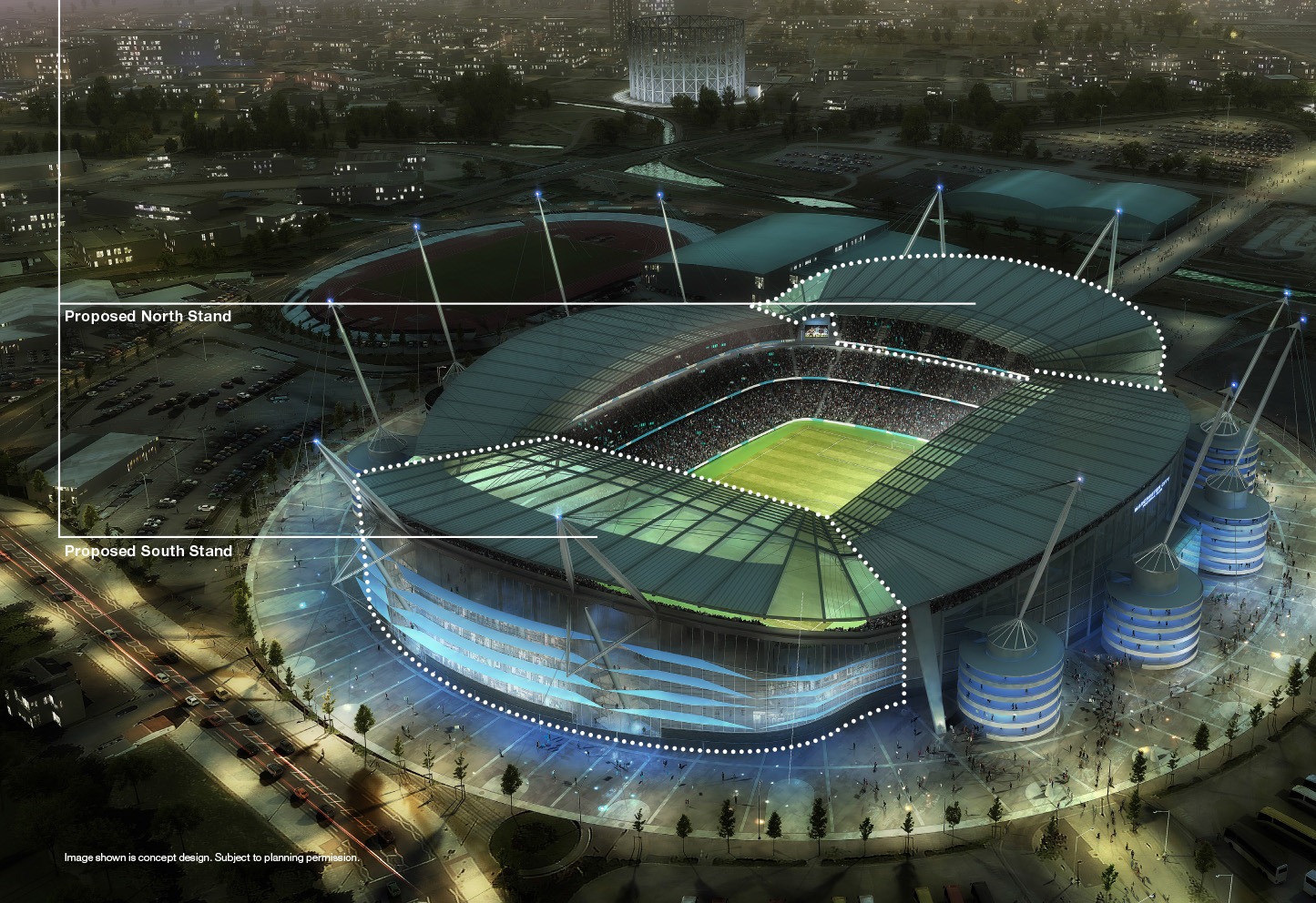
The stadium has been redesigned by sport architecture specialists Populous. The phase of expansion that begins on the South Stand this week will see capacity rise to 54,000 by the summer of 2015.
After hosting matches in the Rugby World Cup, which takes place from 18 September to 31 October 2015, the venue’s North Stand is scheduled for expansion to bring total capacity to 60,000.
“Manchester City Football Club strives to provide its supporters and visiting fans with one of the best possible matchday experiences in the Premier League and European football,” said Tom Glick, Chief Commercial Officer for Manchester City FC. “The success of this is demonstrated by games being sold out and rising demand from supporters for more season tickets, matchday tickets and premium seating.
“Expanding the stadium allows us to grow that offering as we constantly work towards excellence for every supporter that visits the Etihad Stadium.”
Minimal disruption
Realising these ambitious plans through a packed event schedule will be a major challenge. “Our brief from MCFC sought to minimise disruption to supporters during the construction phase of the project,” said Mike Trice, project director at Populous, the architectural firm overseeing the expansion. “Early engagement with Laing O’Rourke as MCFC’s construction partner has allowed us to develop our strategy to limit disturbance to the fans and the ongoing stadium operation.
“Construction of the upper tier requires new columns to run through the existing structure and concourse areas. The precise location of these columns was balanced against the size of plant that would be required to sink the foundation piles. Laing were able to quickly evaluate the space and program requirements and the availability of plant whilst we considered the spatial and layout implications. Through coordination with Laing we have been able to use the same columns to provide temporary support for the existing roof, this will allow it to be kept in place whist the works proceed behind the scenes.”
Laing O’Rourke, like Populous, worked on a number of venues for the London Olympic and Paralympic Games. Steve Coleby, Leader for Laing O’Rourke’s Construction UK business said: “Our team is known for delivering logistically complex engineering work, combining expertise from across the Laing O’Rourke Group and our specialist businesses.
“This, along with our use of the latest digital engineering technologies, will help us to deliver efficiently with minimal disruption during match days, concerts and other events hosted throughout the year.” -
12,000 volunteers selected for Grand Départ
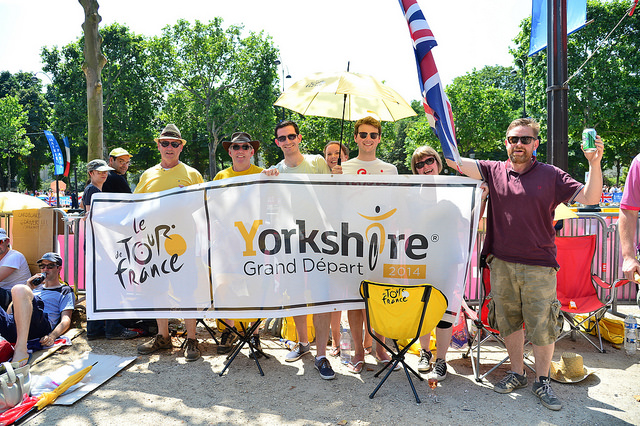
The first ever Tour Makers for the Tour de France in the UK have been selected, with 12,000 volunteers making it through the application process.
The Tour Makers will be the volunteer force that will welcome millions of visitors when the Tour de France Grand Départ begins in and races around Yorkshire for two days and a third stage from Cambridge to London.
Official applications have been now completed and almost 12,000 people have been named as successful applicants and will become a Tour Maker.
The Tour Maker project is a first in the history of the Tour de France’s Grand Départs.
Gary Verity, Chief Executive of Welcome to Yorkshire, the agency who led the winning bid to bring the Tour de France to Yorkshire and devised the Tour Maker idea, said: “The response since day one to the Tour Maker project has been unbelievable, with so many people wanting to be directly involved with this historic event.”
Volunteers will be allocated roles by the TDFHub2014Ltd, who are delivering the Tour Maker programme.
Nicky Roche, chief executive of TdFHUB2014 Ltd, which is managing the Tour Makers, said: “I’m delighted that we now have our 12,000 Tour Makers for Stages 1, 2 and 3. The team look forward to working with them and getting to know them over the next few months as they go through the training process.
“The standard of applications was incredibly high, and I know that come July we will have a team of incredible, talented Tour Makers ready to welcome the world to the Tour de France in the UK.”