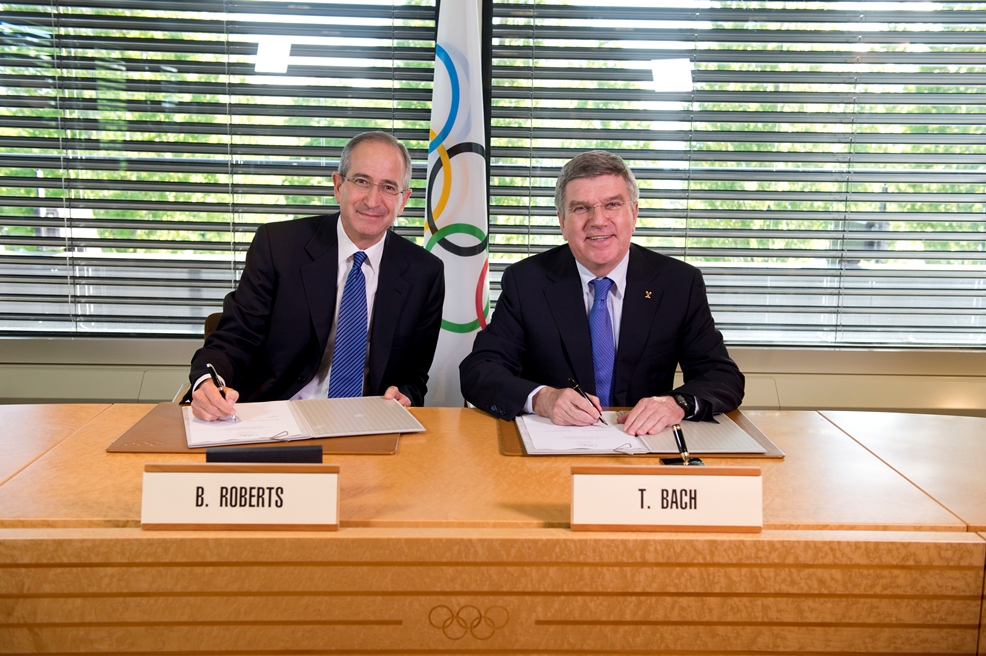
The International Olympic Committee (IOC) on Wednesday awarded NBCUniversal the US broadcast rights for the Olympic Games through to 2032.
The deal covers all media platforms, including free-to-air television, subscription television, internet and mobile. The agreement will run from 2021 to 2032, extending an agreement in 2011 which gave NBCU the right to broadcast the Olympic Games until 2020.
NBCU will now broadcast every Olympic Games and Youth Olympic Games through to 2032, regardless of which host cities are elected to host these events.
The deal is valued at US$ 7.65bn with an extra US$100m signing bonus that will be used to promote Olympism and the Olympic values between 2015 and 2020, the IOC said in a statement.
“This agreement is excellent news for the entire Olympic Movement as it helps to ensure its financial security in the long term, in particular future host cities of the Olympic Games, the athletes of the 204 National Olympic Committees and the International Sports Federations,” said IOC President Thomas Bach, who led the negotiations.
“The IOC has worked in close partnership with NBC for many decades, and we are thrilled we will continue to work with them through to 2032. NBC’s expertise in sports broadcasting, as well as their passion for the Olympic values, will mean we shall be able continue to offer first-class broadcast coverage of the Olympic Games to the widest possible American audience for many years to come.”
Steve Burke, CEO, NBCUniversal, said: “The Olympics are part of the fabric of our company, and we couldn’t be more excited that today’s announcement guarantees that this massively popular and profitable programming will continue to air every two years on the broadcast, cable, digital and mobile platforms of NBCUniversal for the next two decades.”
NBCU first broadcast the Olympic Games in Tokyo 1964. By 2032, it will have covered a total of 23 editions of the world’s biggest multisport event.
Blog
-
NBCU awarded Olympic broadcasting rights to 2032
-
Al Wakrah groundwork contract awarded to local firm HBK
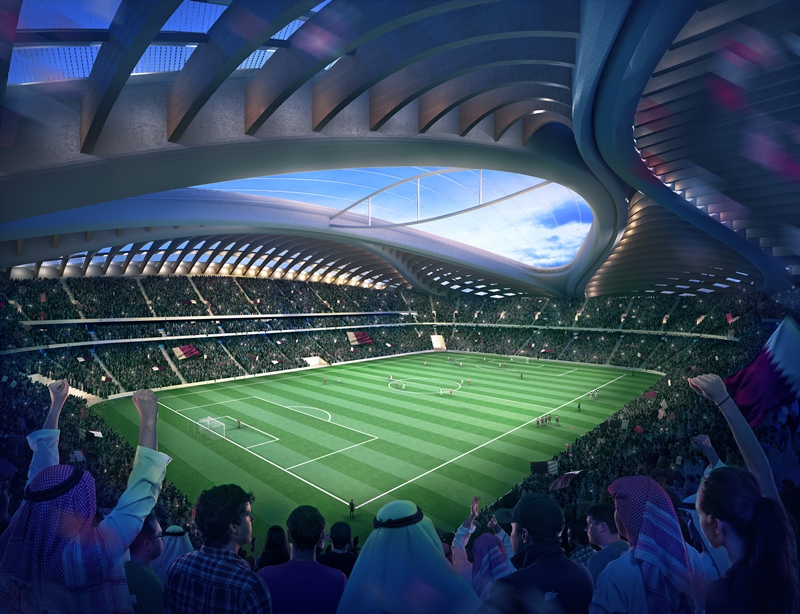
The Supreme Committee for Delivery & Legacy has awarded HBK Contracting Company the enabling works contract for Al Wakrah stadium, the first proposed host venue to be delivered ahead of the 2022 FIFA World Cup.
The contract was awarded through a tender process designed to attract Qatari contractors with local knowledge and proven capability in delivering the required services, as part of the Supreme Committee’s legacy initiative to develop the private sector.
The enabling works phase begins in May and is due for completion by around March 2015. During this period, HBK will deliver bulk earthworks including site clearance, excavation and disposal, fill, as well as underground services and stadium foundations. The foundation works will be marked by a ceremony in September.
The main construction company for the stadium will be announced at the end of 2014. The successful candidate for this tender will partner with a local business, in line with the Supreme Committee’s effort to boost the expansion of the Qatar economy.
“We are excited to announce the next stage of works for Al Wakrah Stadium and look forward to continued progress on the ground this year,” said Hassan Al Thawadi, Secretary General of the Supreme Committee for Delivery & Legacy. “The stadium and surrounding precinct will leave a social legacy in Al Wakrah and by appointing HBK, a Qatari company, we aim to also contribute to the economic legacy of the FIFA World Cup in Qatar.”
H.E. Sheikh Ali Bin Hamad K. Al-Thani, President of HBK, said: “We are honoured and excited to be appointed by the Supreme Committee as the contractor for this critical first phase of works on the road to the FIFA World Cup in 2022, and look forward to working closely with all stakeholders to help build the first World Cup in the Middle East and achieve our country’s ambitions. We thank the Supreme Committee for giving us this opportunity to be involved in this most celebrated journey.”
The 40,000-seat stadium, future home of Al Wakrah Sports Club, was the first of Qatar’s FIFA World Cup proposed venues to be revealed. The stadium will be surrounded by approximately 560,000 m2 (60-hectare) of legacy precinct with a new sports centre and community hub. The precinct will deliver a range of community facilities, including a park, mosque, school, hotel, wedding hall, vocational training centre and retail outlets.
Following the tournament, the stadium’s capacity will be reduced to 20,000 with the extra modular seats removed, re-configured and donated to countries in need of sporting infrastructure, in consultation with FIFA and the continental football confederations.
After an initial inspection during the tendering process of the facility where the HBK workers on the Al Wakrah project will be housed, HBK confirmed their commitment to adhere to the Supreme Committee’s Workers’ Welfare Standards, working closely with representatives of the Workers’ Welfare Committee to ensure that the health, safety and dignity of workers on the project are further protected.
Farah Al-Muftah, Chairwoman of the Workers’ Welfare Committee, said: “We started a dialogue with HBK on our expectation for workers welfare during the tendering process and we are encouraged by the company’s commitment to creating a healthy and safe environment for workers on the Al Wakrah Stadium project.”
-
Qatar stadium build steps up with major congress
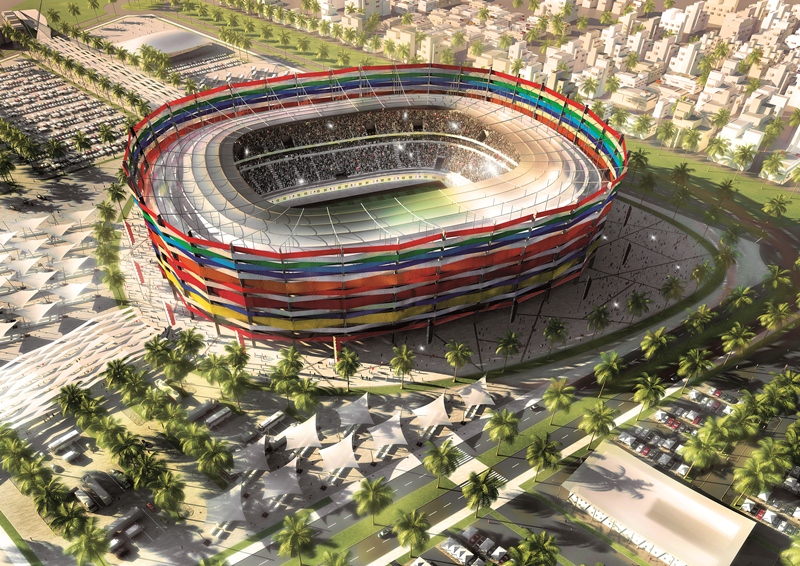
As Qatar’s preparations for the 2022 FIFA World Cup enter the construction phase, the World Stadium Congress brings architects, solutions providers and stadium operations consultants to Doha on 19th May 2014.
This year’s World Stadium Congress, organised by IQPC, will focus on stadium design, sustainability and construction challenges.
ASTAD Project Management’s H.E. Ali Bin Nasser Al Khalifa and SPOR SANAYI’s Yasar Meral will open the first day of the conference with keynotes on world-class sporting infrastructure.
H.E. Ali Bin Nasser will provide an insight into the highly anticipated FIFA World Cup in Qatar in a session titled “Delivering world-class infrastructure to support Qatar 2022.”
“Exceptional project management will play a critical role in the delivering a memorable mega-event,” said H.E. Ali Bin Nasser.
“We will draw from ASTAD’s significant experience building sports facilities in Qatar, but it is also important for senior stakeholders within the industry to share their expertise and knowledge so that we may identify solutions to common challenges and ensure continuous improvement in design and construction.”
Tariq Al Abudulla, General Manager of the Qatar Olympic Academy and Head of Technical Affairs at the Qatar Olympic Committee, will follow with a keynote address on Day Two, laying out the Qatar Olympic Academy’s unique Sport Venue Management programme.
Other speakers include Jon Sellins, head of business development consultancy at Wembley Stadium, who will draw from the Champions League Final 2013 to convey best practices in hosting and facilitating major sporting events.
Sustainability is the keyword at this year’s conference. “It is important to us that the lasting impact of our stadiums on the community is a positive one,” said Diogo Taddei, architecture manager at AECOM, Brazil.
“In designing the sporting and non-competition facilities for the Olympic and Paralympic Games in Rio de Janeiro, we took Rio’s and Brazil’s sporting ambitions into account and focused on the provision of a cost-efficient design for permanent and temporary venues. The legacy conversion plan cannot be overlooked.”
Dan Meis, global director of sport at Woods Bagot, will also discuss stadium legacy and community integration, showcasing AS Roma’s new €700m stadium as a mixed-use sports and entertainment destination.
“Given the number of stadiums that are being contemplated for the region, it is very important to discuss how we can ensure that these venues continue to benefit the community beyond the tournaments for which they were built,” he said.
The congress will also feature panels, case studies and roundtable discussions. Meis, Taddei, Mark Fenwick of RFA Irribarren Architects, and Markus Pfisterer, director of GMP Architekten, will sit on a panel on trends in stadium design.
J Parrish, Director of Global Sports, AECOM, UK, event chair Paul Hyett of HKS Architects will also feature in roundtable discussions, along with representatives from Honeywell and Grundfos.
This year’s World Stadium Congress will host a financial perspective for the first time. Nermine Nassif Girgis Ishak, Head of Corporate Banking at Al Khaliji Commercial Bank will deliver a talk entitled “Financing growth and capitalising on development opportunities,” an examination of opportunities in the Qatar projects market for local and international players.
-
HOST CITY partners with Casa da Russia for Brazil 2014 World Cup
Visitors to Casa da Russia – or House of Russia – will be able to enjoy reading HOST CITY magazine, which is renowned for its insights into the business of hosting major sporting events.
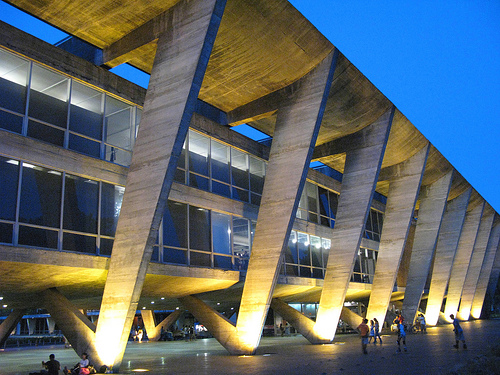
Casa da Russia will hosted in Rio de Janeiro’s Museum of Modern Art and operated by Eventica Communications.
“With facilities for media, government offices, hospitality lounges and a programme of events for Russian and international guests, the Casa da Russia will be Russia’s home from home at Brazil 2014, and will provide a perfect opportunity for Russia – the next host country of the FIFA World Cup – to showcase preparations and the host cities of Russia 2018,” Eventica said.
As part of the partnership, HOST CITY will also preview activities at Casa da Russia as part of its online news coverage of the 2014 Brazil World Cup.
During the World Cup, matches will be broadcast live on big screens. Casa da Russia also promises to host a Russian cultural extravaganza, with guest musicians, bands, DJs and artists participating in a month-long celebration of Russia.
Baltika has signed as the exclusive Beer Partner for Casa da Russia, following successful partnerships with Eventica over many years, including at the Russian Winter Festival in London’s Trafalgar Square from 2005 to 2008 and at Russia.Sochi.Park – the official Russian hospitality venues in London during the 2012 Olympic Games.
The accreditation process for the press centre at Casa da Russia is already open. In the first week of opening, the organisers Eventica Communications registered 160 Russian and British journalists from media including O Globo, TV Record Brasília, Sky Sports, Sportbox, Russia Today, Sport FM and many more.
For more information visit http://www.eventica.co.uk/?p=5817#more-5817 -
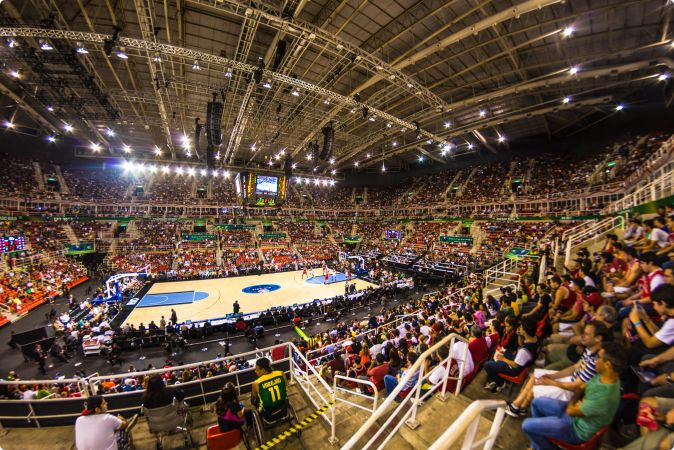
Rio 2016 organisers say 11 venues are ready
With more than two years to go until the Rio 2016 Olympic Games begin, 38 per cent of the competition venues are ready for the event, the organsing committee has announced amid widespread concern over construction progress.
Of the 29 permanent venues, 11 are operational, while eight require some renovation work and the other 10 will form part of the sporting legacy that is being constructed in the city. Eight temporary venues will also be used to host competitions.
Construction progress can be seen in the four Rio 2016 competition zones. While work on the Barra Olympic Park advances, with the conclusion of the foundations of Olympic Halls 1, 2 and 3, the Olympic Golf Course site is being irrigated in order to allow grass planting to begin.
At Lagoa Rodrigo de Freitas, the venue for rowing and canoe sprint, depth studies have been completed, while at Flamengo Park, the design of the integrated route for the athletics, road cycling and paracycling courses has started.
“We are advancing in the construction of competition venues for the Rio 2016 Games, with all of the basic and executive projects concluded or in the conclusion phase, and with foundation works in full flow. Even though they may not be highly visible, the preparative groundwork and foundation construction, that occurs underground, are extremely important for the final structure and often account for 20 per cent of the total volume of construction,” said Alexandre Techima, the Rio 2016 Infrastructure Integration Director.
In Deodoro, the tender process for the Games’ second largest venue cluster is underway, with construction scheduled to start in the second half of the year. Three existing competition venues– the National Shooting Centre, National Equestrian Centre and Modern Pentathlon Aquatics Centre – will be renovated, four new venues will become part of the important sporting legacy the Games will leave to the city, and two temporary venues will also be installed. At the same time, the legendary Maracanã Stadium is ready to stage matches at the FIFA World Cup, which kicks off next month.
Bid deadline for Temporary Arena extended
Rio 2016 has extended the deadline for suppliers interested in applying to participate in the project ‘C547 – Temporary Arena with Overlay’.
The bid is aimed at a company “specialized in temporary structures for supplying a Temporary Arena in turnkey mode, including all adjacent temporary structures.”
The new deadline is 24 May 24 2014, 12h Brasilia’s time.
Source: Rio 2016 -
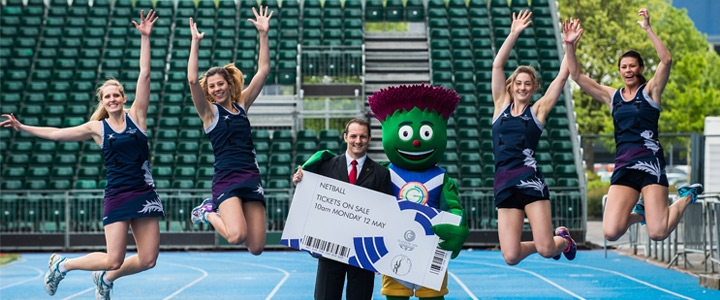
Glasgow 2014 to spread ticketing pressure with phased system
Tickets for the Glasgow 2014 Commonwealth Games will go back on sale on at 10 AM on Wednesday 21 May, the organising committee has announced.
The website crashed shortly after opening on Monday after a rush for remaining tickets for the Games. The site will now be reopened on Wednesday, with tickets being made available for different events over the course of three days as part of a “phased approach”.
With sports fans eager to grasp the remaining 50,000 or so tickets that remain, the organising committee has also introduced free postage and a freephone ticketing hotline to help relieve pressure on the website.
“While we sold more than 60,000 tickets through our ticketing website and hotline last week and saw the most incredible support and enthusiasm from the public, the experience of purchasing tickets was frustrating and unacceptable for some people,” said David Grevemberg, Chief Executive of Glasgow 2014.
“Over the past few days we’ve been working with our Official Ticketing Agent Ticketmaster with the aim of re-establishing a positive ticketing sales experience for the many thousands of people who want to be part of the Games.”
It is hoped that spreading sales over a number of days and platforms will help manage demand on the website.
The organising committee will announce which sports will be released for sale on which days early next week.
From Wednesday at 10 AM, customers will be able to buy from an initial batch of sports and Ceremonies, the organising committee said in a statement. Further tickets for further events will be available on Thursday and by Friday all remaining tickets will be on public sale. “With additional measures in place aimed at managing demand and the addition of free postage on all orders and a Freephone Ticketing Hotline, we aim to get back to the business of ensuring remaining tickets are sold and that thousands more people can begin to look forward to experiencing the excitement of the Games,” said Grevemberg.
Ticketmaster – Glasgow 2014’s Official Ticketing Agent – has been investigating and testing the performance issues experienced since the closure of the online ticketing sales platform.
Chris Edmonds, Chairman Ticketmaster UK said: “Our team has been working tirelessly to review, analyse and rectify the issues that were experienced on the site. Our priority remains to ensure that customers have the best possible experience when securing their tickets for the Games.” -

Qatar World Cup stadiums to be confirmed in 2015
The number of stadiums that will feature in the 2022 World Cup still hangs in the balance and will not be finalised until next year, according to Nasser Al Khater, executive director for marketing at the Supreme Committee for Delivery & Legacy.
It has been widely reported that Qatar plans to drastically scale down its ambitious venue plans for the 2022 World Cup. These reports were sparked by comments made by the Supreme Committee’s senior manager for projects at a conference on 23rd April, who stated that only eight stadiums would be used.
With the Supreme Committee having neither discounted this possibility nor given reasons why cutting back to eight stadiums might be an option, the international sports event community has come up with its own suggestions, with cost control being considered to be a possible motivation.
Addressing such “speculation”, Al Khater said “That’s not true actually.”
Speaking to delegates at Soccerex Asian Forum on Tuesday, he said “In our bid, as FIFA stipulates, we proposed a minimum of 12 and a maximum of 18.”
The minimum number of stadiums required by FIFA is eight and this figure remains a possibility.
“In 2015, will decide alongside FIFA how many need for the World Cup,” he said.
Al Khater was speaking in place of Hasan Al Thawadi, Secretary General of the Supreme Committee for Delivery & Legacy, who was unable to attend the event.
Al Khater also took the opportunity to set the record straight on reports of poor workers’ welfare on World Cup construction projects.
“Contrary to what international media says, there is no single injury or death on World Cup projects,” he said.
“However, from the very beginning we have taken the issue of workers’ welfare very seriously,”
Although civic infrastructure developments are progressing rapidly in Qatar, construction has not started on World Cup sites. Only one of the new stadiums, Al Wakrah, is under construction.
By the end of 2014, five World Cup stadiums will be under construction, Al Khater told delegates. -
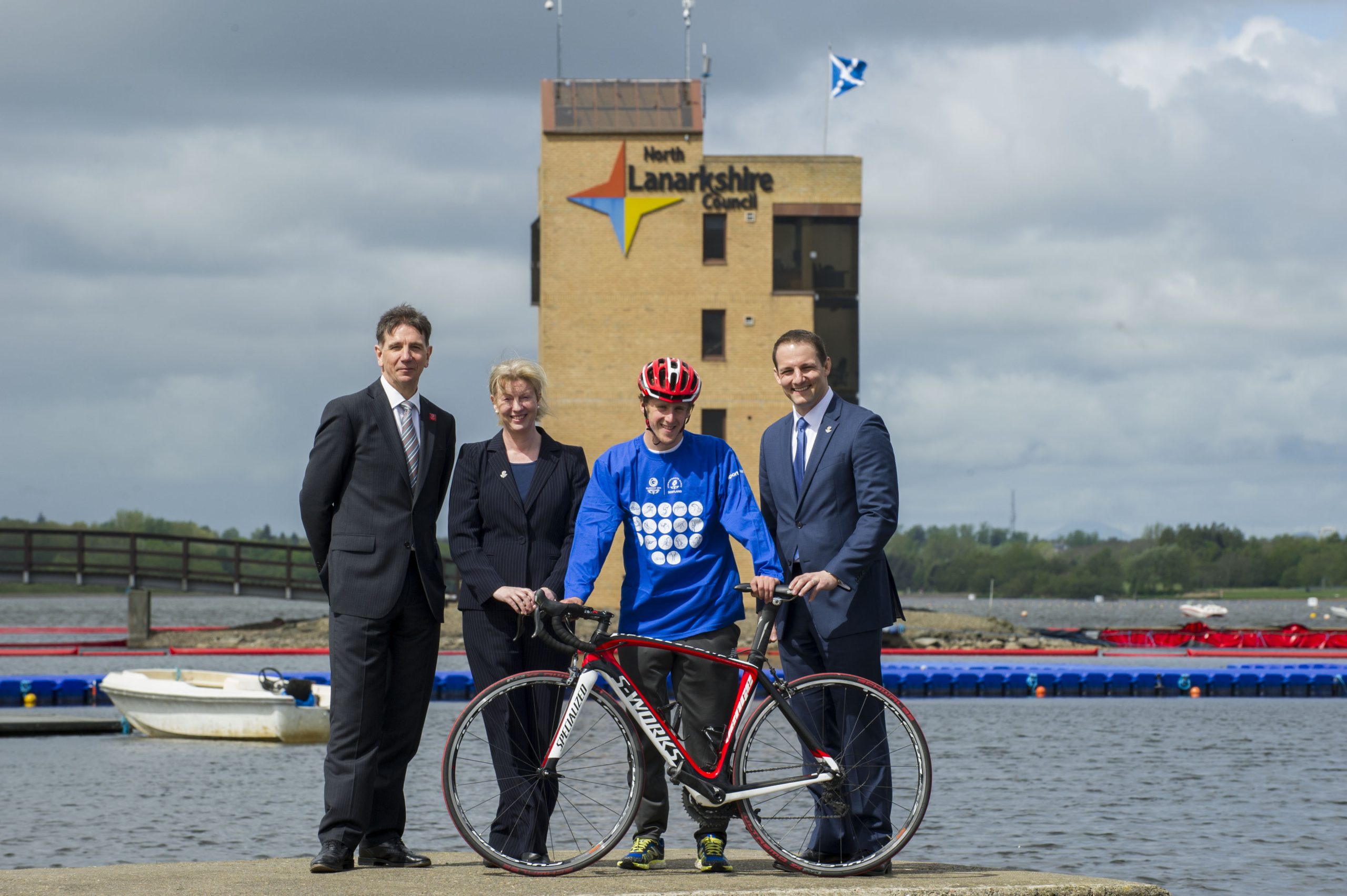
Glasgow 2014 ready to host Triathlon test
Environmental and infrastructure work at Strathclyde Loch, the host venue of the Commonwealth Games Triathlon event, has progressed to the point where Games organisers have announced that it will be ready to test on May 24th.
Glasgow 2014 is preparing the loch to comply with the standards set by the International Triathlon Union. The loch has in the past suffered from high levels of blue-green algae.
To prevent algae blooms from happening during the 2014 Commonwealth Games, a designated swim area has been created, separated from the main loch using a series of engineered physical barriers.
The separated area of water was then treated with Phoslock, a non-toxic phosphorous reducing chemical. This chemical treatment was also used to prepare the Serpentine Loch for the London 2012 Olympic Games Triathlon and Marathon Swim competitions.
In addition to the ongoing water treatment works, roads, paths and venue infrastructure are being upgraded to maintain Strathclyde Park’s status as one of Scotland’s premier watersports centres and a proven world-class Triathlon venue.
“I am truly excited at the prospect of world-class athletes striving for Gold and glory during the Games, which was the driving force for all the work done,” said Glasgow 2014 Chief Executive David Grevemberg.
“We are grateful to all our Partners and stakeholders, including the Scottish Government and North Lanarkshire Council, during a combined effort from all parties to prepare the Loch to international standards.
A company called Sniffer has played a major role in the works. “Sniffer has worked with all the partners to facilitate a practical and cost-effective approach to preparing the loch and wider area for the triathlon events within a tight timeframe,” said Ruth Wolstenholme, Managing Director Sniffer.
“We are very pleased with the progress and are confident that the events will be a great credit to Strathclyde Park and those who have worked to ensure their success.”
The Invitational Triathlon takes place at Strathclyde Country Park on Saturday 24 May. “The event will provide an opportunity to validate our Games Time policies and procedures to ensure we are in a position to deliver the best competition experience during the Glasgow 2014 Triathlon event,” said the Organsing Committee, which is hosting the test event.
During the Games, the Triathlon takes place on July 24 and July 26, with three medal events including the new Mixed Team Relay making its Commonwealth Games debut.
More than 100,000 extra tickets across all 17 sports, including Triathlon as well as both the Opening and Closing Ceremonies, will be available from 10 AM on Monday 12 May on a first-come, first-served basis.
-
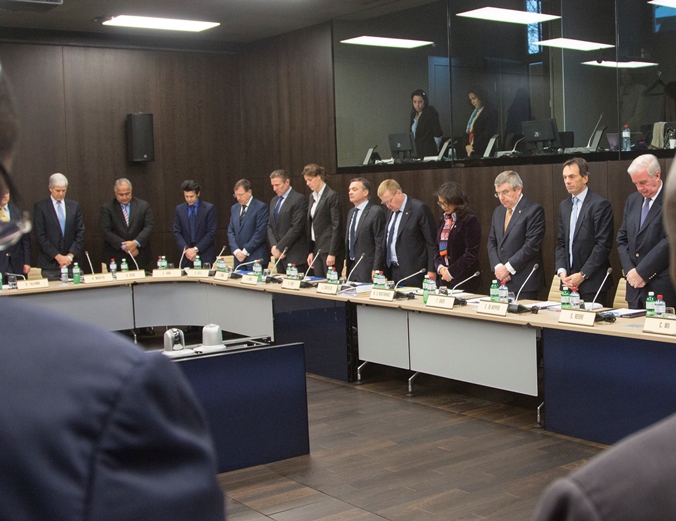
IOC reveals Agenda 2020 Working Groups
Thomas Bach, the president of the International Olympic Committee announced the membership on Thursday of 14 working groups that will develop “Olympic Agenda 2020” – the IOC’s roadmap for the future of the Olympic Movement.
Agenda 2020 centres on five themes: the uniqueness of the Olympic Games, athletes at the heart of the Olympic Movement, Olympism in action, the IOC’s role and IOC structure and organisation.
Each working group is to be chaired by an IOC member. John Coates, an outspoken critic of Rio’s preparations, is to head up the working group on bidding procedure. Sir Craig Reedie is to lead on good governance and autonomy.
The working groups include athletes and representatives of the International Federations and National Olympic Committees. A number of experts have also been appointed from outside the Olympic Movement, including representatives from leading international non-governmental and business organisations.
The aim of the working groups is to compile and discuss contributions to the Olympic Agenda 2020, which the IOC describes as a “strategic roadmap for the future of the Olympic Movement”. Many contributions to the debate of the future of the Olympic Movement have already been received from the Olympic Family and wider public via a call for feedback via email.
The working groups will first meet in June, close to Olympic Day, and their findings discussed at the Olympic Summit in July and at an Executive Board Meeting on 22-24th October in Lausanne. The resulting proposals for Olympic Agenda 2020 will then be presented to all IOC members for discussion at the IOC Extraordinary Session in Monaco on 8 and 9 December 2014.
The 14 Working Groups are: Bidding Procedure (Chair John D. Coates, AC); Sustainability and Legacy (Chair Prince Sovereign Albert II); Differentiation of the Olympic Games (Chair Sam Ramsamy); Procedure for the composition of the Olympic Programme (Chair Franco Carraro); Olympic Games Management (Chair Mario Pescante); Protecting Clean Athletes (Chair Claudia Bokel); Olympic TV Channel (Chair Thomas Bach); Olympism in action including Youth Strategy; (Chair Gerardo Werthein); Youth Olympic Games (Chair Ser Miang Ng); Culture Policy (Chair Lambis V. Nikolaou); Good governance and autonomy (Chair Craig Reedie); Ethics (Chair Youssoupha Ndiaye); Strategic review of sponsorship, licensing and merchandising (Chair Tsunekazu Takeda); IOC Membership (Chair The Grand Duke Henri of Luxemburg).
The complete list of Working Groups can be viewed here.
-
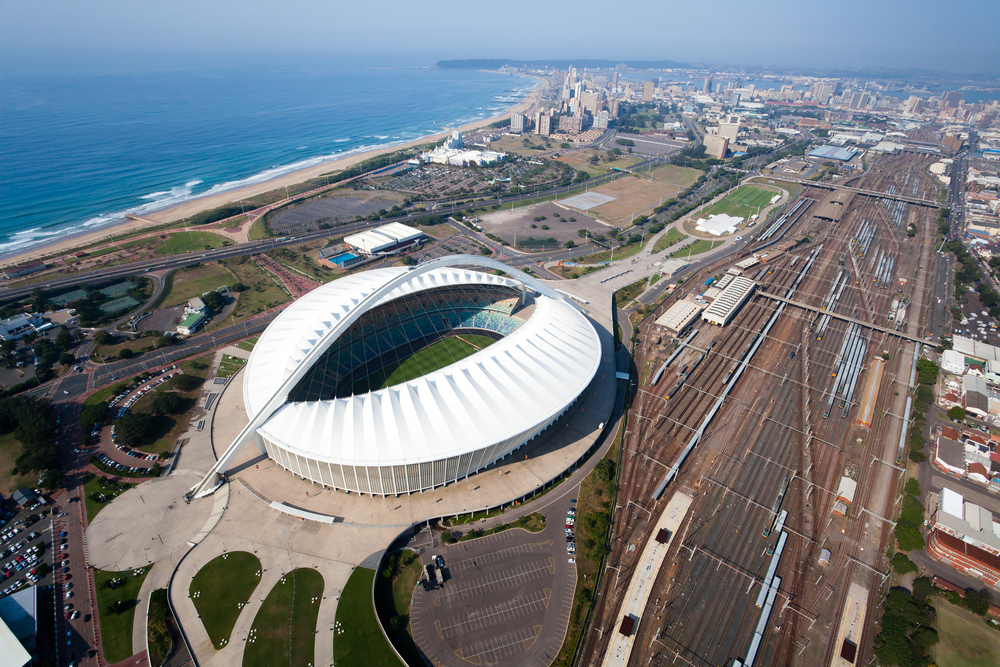
South Africa woos continent for 2022 Games support
Seeking support for its bid for the 2022 Commonwealth Games, the South African Sports Confederation and Olympic Committee (SASCOC) treated representatives from fellow African Commonwealth countries to dinner in Botswana on Sunday.
Representatives from 16 African Commonwealth Games Associations (CGAs) attended the dinner.
Africa holds great sway in the voting procedure: with 18 of the 70 CGAs, the continent is home to more Commonwealth Games Federation (CGF) members than any other region.
Tubby Reddy, CEO of SASCOC said in a statement “We do believe that with your support, our brothers and sisters of Africa, our bid will be successful, and to show the rest of the Commonwealth that it is indeed the African continent’s turn.”
Gideon Sam, President of SASCOC added “If there is any honesty in the world it’s Africa’s time. It’s been to Canada, it’s been to Australia, it’s been to England, it’s been to Scotland, it’s been to Asia but it’s never been to Africa. And we believe that it is our time. We have the infrastructure.”
The CGF does not employ a system of continental rotation for hosting the Games, but its constitution states: “The Commonwealth Games shall not be awarded in succession to countries in the same Region if countries from other Regions are making acceptable applications to act as hosts to the Commonwealth Games.”
In all its 22 editions, the Commonwealth Games has only been awarded three times to emerging cities outside Britain, Canada, Australia and New Zealand.
In a previous interview in the Spring issue of HOST CITY magazine, David Grevemberg, CEO of Glasgow 2014 said “Durban is emerging in some ways, but it’s got some regenerative aspects it could use the Games for – it’s hosted a World Cup competition.”
Discussing the future of the Commonwealth Games, Grevemberg said “One of the biggest challenges is to continue to make sure that the Games represent quality, quantity and universality.
“As the Commonwealth Games Federation moves forwards and future hosts come down, it’s about really making sure that the Games can manage all of that and perpetuate itself further by ensuring that it is continually relevant.”
Appealing to his African peers, Sam said “Hosting the World Cup gave the country vital experience and the necessary infrastructure which includes big stadiums, world class swimming pools, athletic tracks and cricket clubs to name but a few.
“We ask for your support as our fellow African counterparts so that we win this bid and host this prestigious event in South Africa.”
The Canadian city of Edmonton is also bidding for the Commonwealth Games in 2022. Formal bid proposals are due to be lodged in March 2015.
The host city will be elected at the Commonwealth Games Federation’s General Assembly in Auckland, New Zealand in September 2015, when the 70 CGF Members will vote by secret ballot.