1: Jiang Xiaoyu, Vice President, Beijing Olympic City Development Association
“In China, the popularity of ice and snow activities needs to be improved.
“In order to make China an ice and snow power we should not only focus on competitive events. Meanwhile we should also focus on cultivating the ice and snow culture, the popularity of ice and snow activities among the normal people. That’s the solid basis for the sustainable development of the ice and snow industry in China.
“So I really hope everyone can pay special attention to our 2022 Olympic Games but meanwhile focus on the ice and snow activities among the citizens to further spread the Olympic spirit.
“Tourism, sports, culture and health are regarded as the industries of happiness.”
2: Nasima Razmyar, Deputy Mayor, Helsinki
“Helsinki is sister city of Beijing and recently an action plan was signed between the two cities, extending the bond between the cities to include winter sports.
“We were very honoured to have President Xi visit Finland and meet our President in April 2017. The two Presidents made the joint declaration where both sides can cooperate in several areas. I was extremely happy that both presidents promoted the exchange in winter sports and cooperation in the organisation of the Olympic Games.
“This gives a very good basis to share also the urban city development between Beijing and Helsinki to support Beijing Winter Olympics 2022. We know that you will have a great Games in China in Beijing, but we are very happy of the friendship that Helsinki and Beijing has built over the years.
“Finland is world renowned for education. clean tech and winter sport. Finland ranks first in quality of primary education and has some of the cleanest air in the world. Education and clean technology are very important when discussing winter sports.
“Most Finns learn skiing, ice hockey, skating and other forms of winter sports in their childhood.
“I moved to Finland when I was eight years old. My first touch with winter was holding snow in my hand. When holding the snow, I asked my parents why does this feel like holding diamonds in my hand? It felt so pure and so unique.
“There are also special programmes like Schools on the Move which encourage students to have more physical activity during school and support learning during activity based methods.”
3: Mattis Raustøl, Minister Counsellor, Royal Norwegian Embassy in Beijing
“We take pride in our Olympic history; it’s a strong spirit in Norway. We are the country that has the most number of gold medals in [winter] Olympic history.
“Building a winter sports culture takes devotion, it takes time. It requires a broad-based perspective; you need to focus on the top elite athletes but you also need the base and grass roots level. The Norwegian sports model is based on a very strong volunteer culture; it’s focussed on education and sport in schools.
“It also reflects the connection we have with the outdoors, and particularly with snow and ice. Norway tops the happiness index – we are top of that happiness interest. We are able to make use of the outdoors all year, and have the equipment and infrastructure to experience outdoor living.”
4: Ingunn Trosholmen, Vice Mayor of Lillehammer, Norway
“We are a very small city in a very small country, yet we have hosted two Olympic Games – one in 1994 and the Youth Olympic Games in 2016.
“One thing that was very important was that we had snow every winter. In addition, we had the technology to produce snow and the knowledge of how to store it from one season to the next.
“Another crucial thing is the narratives that they bring from one generation to the next: we are skiers.
“Lillehammer’s coat of arms consists of a skier and alongside this beautiful picture of a skier is a courageous story of skiers saving our future king in 1206. Narratives like this create identity and fosters ski culture. The saying goes like this: we are born with skis attached to our feet.
“And I know for a fact that China has also a cultural heritage in skiing, because when we were looking for a cultural heritage in the glaciers up north in our county we found wooden skis from China. So we have been exchanging ski heritage for many years now.
“The nature surrounding our history of skiing is the foundation of Lillehammer’s identity as a winter destination.”
5: Peter Hirvell, CEO, Austria AST Eis-und Solartechnik
“It’s not enough to have the technology, it’s also important to get the people in there, especially children and families.
“The Vienna Ice Rink has 600,000 visitors per year. All children in Vienna from first grade in school or final year of kindergarten are invited one day to go free of charge to go skating. They then come back at the weekend with the whole family. So out of one child we have made four to five people experience ice skating and curling.
“Even at larger schools, it is very common to have an ice rink there.
“In Europe we have a tradition of sports clubs, where in every city there will be ski clubs and skate clubs who have programmes for children and also top athletes and retired people.”
6: Takatoshi Machida, Vice Mayor of Sapporo
“We were the first Olympic Games held in Asia in 1972. The Games aimed to make Sapporo into an international city. It is precisely because of the Games that we created the city.
“We developed a subway line that went from the city centre to the athletes’ village and the stadium, and the runway was extended to turn the airport into an international airport.
“There have been a lot of changes in terms of our environment as well. Until the 1960 the snow was black with pollution. However due to the Olympic Games we began to aim for a city free of pollution.”
7: Urs Eberhard, Deputy Director, Switzerland Tourism
“There is no other experience that feels so great as gliding on snow. It’s like flying without wings.”
8: Nick Sargent, President of SnowSports Industries USA
“Winter sports more than just a passion – it’s a lifestyle and culture that sits within everyone. We want to develop this culture beyond competitive sport, into the heart and soul of the people of China and here in Beijing.”
9: Yoshinori Otsuki, International Director of Nagano-ken County Culture Department
“The prefecture of Nagano is in the centre of Japan and close to the three major cities – Tokyo, Osaka and Nagoya.
“With a population about 2.1m, Nagano has the longest life expectancy for men and women in Japan and the world. For those wishing to live a long a happy retirement, by all means come to Nagano – you are welcome.
“In 1998 Nagano hosted the Winter Olympic Games. During the opening ceremony the president of the IOC Samaranch declared, you have presented to the world the best organisation in the history of the Winter Olympic Games.
“Some aspects of the legacy of the Games can be presented in financial terms. From an economical perspective, the infrastructure developments were of great benefit for Nagano. The bullet train, which opened in October 1997, shortly before the Nagano Olympics began, cut journey times from 180 minutes to as little as 80 minutes. The upgrade of the highway network progressed quickly and it is now accessible to almost all areas of Nagano within just 30 minutes
“Regarding the economic effect of the Nagano Olympics, 1.43 trillion yen was the cost of the freight train and highway network and event facilities came from public investment. This equates to roughly 10 times the prefecture’s annual public investment budget.
“But the benefits cannot all be expressed in financial terms. Our visibility has risen. Local pride and appreciation have increased and through the actions of the 32,000 volunteers present at the Olympics are volunteer culture has taken root.
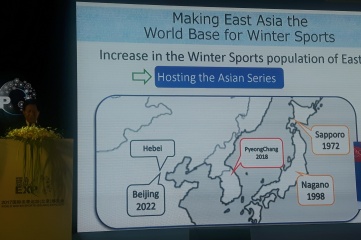
“Hosting the Winter Olympic Games rapidly increased the number of people participating in winter sports in north east Asia and also developed businesses in this industry.
“The number of people participating in snow sports in Nagano reached its peak in 1998 during the Olympics at 18 million people and sharply dropped over the following years to just 40 per cent of that figure in 2013, decreasing to 7.7 million. However, in recent years this decrease has stopped and, thanks to an increase in the number of international visitors, it has begun to show signs of recovery.
“I would suggest that Beijing, Hebei prefecture, PyeongChang, Sapporo and Nagano join together to host a new international tournament – the Asian Series of Skiing and Skating.”
10: Irina Gladkikh, Winter Sports Director, IOC
“At the IOC Sport Department, we have a very good tradition of receiving others who come to talk about their experience of the Olympic Games, on and off the field of play. They talk to us about their participation in the Games and shared with us their magical moments.
“Early this year we have the honour to receive Olympic medallists from China and world legends gymnast Li Ning and Chen Yongyan. Li Ning talked to us about the pride of being chosen to carry the torch during the opening ceremony of the Olympic Games in 2008. We watched a video of his performance and we all felt his emotions and excitement at this unforgettable moment. And we of course felt a pinch of insight to think what surprises the Opening Ceremony 2022 will bring to us.
“In June this year, Beijing’s commitment to support athletes was further underlined when it hosted the 8th athletes career programme forum with over 85 participants from more than 30 countries. The event was held successfully and our links with Chinese Olympic Committee got stronger.
“Beijing is also a truly unique Olympic city. In just four and half years it will become the first city to have hosted both summer and winter Olympic Games. This is very much supported by your incredible vision for 300 million people to be practicing winter sports in China. I personally find it incredible; these are amazing plans.”
This article, based on comments made at World Winter Sports Expo (WWSE) 2017 in Beijing, first appeared in the Winter issue of Host City magazine.
Blog
-
Ten ways to create winter sports hubs
-
Impacting humanity: The Special Olympics World Games
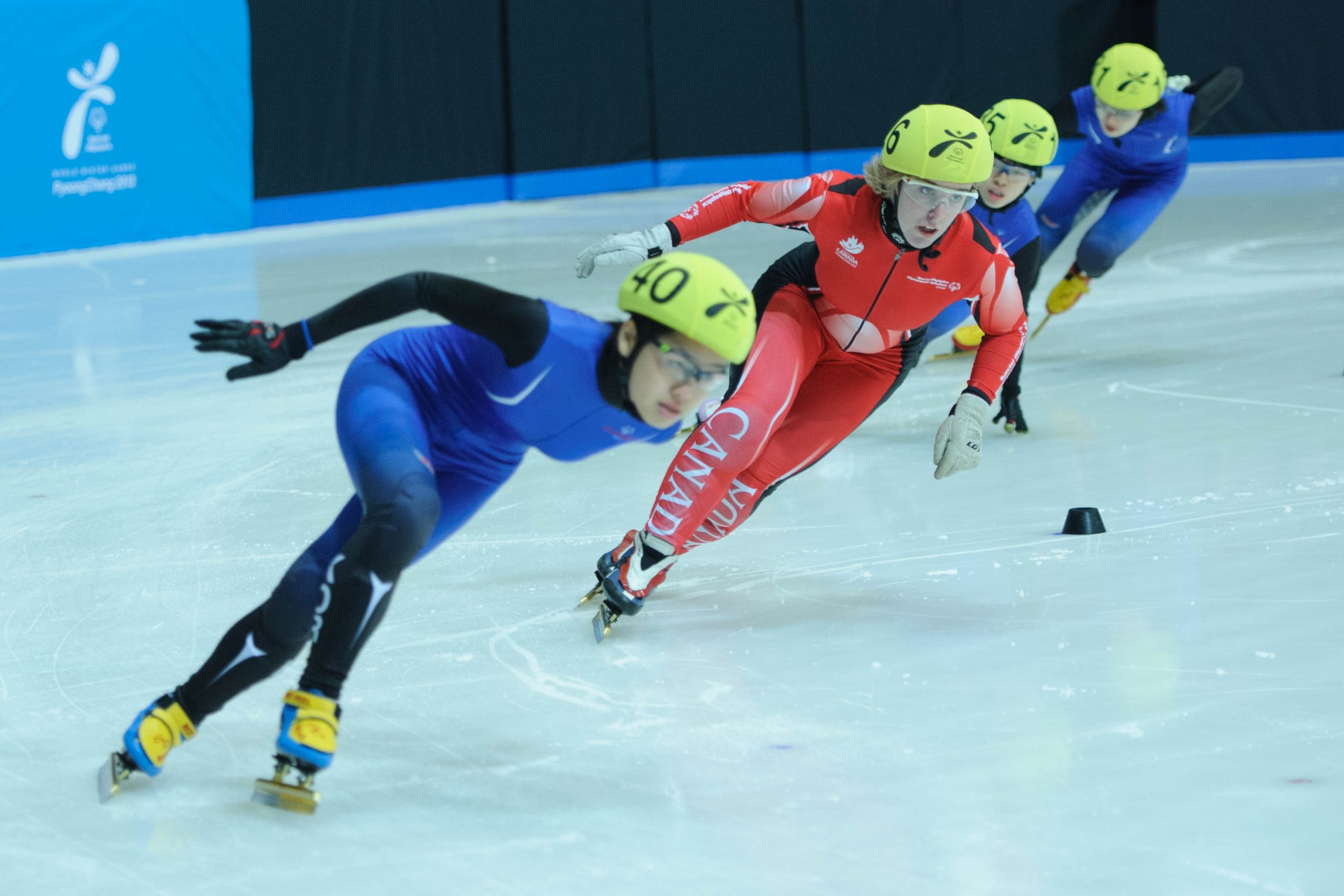
The Special Olympics World Games have changed a lot since they first began in Chicago, Illinois nearly 50 years ago. What started in 1968 as a one-day athletic event has expanded into a week-long empowering competition for thousands of athletes of all abilities. This ground-breaking movement for people with intellectual disabilities now spans the globe – every region, every continent – with more than five million athletes in more than 172 countries.
And, while local Special Olympics competitions happen every day around the world, it’s the World Games that leave the biggest and most inspiring legacy for the athletes who participate and, especially, the nations that host.
“No event has the social value and direct impact of the World Games,” said Lou Lauria, Special Olympics Global Chief of Games and Competition. “That’s because the Games are about more than sports. They’re about humanity.”
“Governments see how the Games have a positive impact that lasts long after the competition ends,” added Lauria. “We leave a legacy of inclusion and understanding that carries over into each community, plus in areas like education and health.”
At the most recent Special Olympics World Summer Games in Los Angeles, more than 6,200 athletes from 165 countries competed in 25 sports. With nearly 2,000 coaches, 10,000 volunteers and an estimated 500,000 spectators, the 2015 Games set records for participation and enthusiastic fans in the stands. Millions more tuned in remotely, watching the Games nightly on ESPN, ABC-TV, and networks in more than 190 countries around the world.
“This has been a seminal moment for our company,” said John Skipper, ESPN President and co-chairman of Disney Media Networks. “We are extremely proud of this work and our role. It has had a profound impact on our employees, and we cannot thank you enough for letting us work with you on this incredible event and bring it to fans across media and around the world.”
The excitement was magnified by high-profile corporate partners – including Coca-Cola, Microsoft, Bank of America and Toyota – whose video and commercial tie-ins starring Special Olympics athletes brought even more attention ahead of Games, during and afterwards. The LA2015 Games also broke social media records, racking up 20 billion impressions in multiple media worldwide.
Tim Shriver, chairman of Special Olympics International and son of founder Eunice Kennedy Shriver, says he’s seen first-hand how – for the cities, states and nations who host the Games – Special Olympics can positively transform their society. “From China to Greece, from Ireland to Korea and beyond, each host country that embraces these Games shows the world their recognition of the value of every human being.”
He adds, “We’ve seen over and over again how the World Games are proven to trigger positive societal changes in ending discrimination and breaking down fear of difference.” Shriver recalls how the 2007 World Summer Games in Shanghai marked a turning point in the country’s attitudes toward people with intellectual disabilities.
Similarly, the 2003 World Summer Games – the largest sporting or cultural event ever held in Ireland – united the country as never before during the Games, and left an indelible change in attitudes and understanding afterwards. “The spirit of the Special Olympics movement has a power that cannot be imagined until you come directly in contact with it,” said Bertie Ahern, Ireland’s prime minister (Taoiseach) during the 2003 Games.
The recent 2017 World Winter Games in Austria turned out to be more successful and popular than anyone had expected. The Opening Ceremony alone reached millions of viewers in more than 190 countries, marking the broadest reach ever for a World Winter Games Opening Ceremony. Smaller in scale than World Summer Games, the 2017 World Winter Games involved 2,600 athletes from 105 countries competing in nine sports.
“It was wonderful to see that we all can change the world to be a better and more inclusive place, when we treat each other respectfully and most importantly: have fun together,” said Austria’s Federal Minister of Social Affairs Alois Stöger.
With more than five million athletes worldwide, Special Olympics has come a long way since those 1968 Games at Soldier Field. The organization now includes Special Olympics Health programs, which help fill a crucial gap for people with intellectual disabilities, who often get inadequate health care – or none at all. There are also Athlete Leadership and Young Athletes programs, expanding all around the world.
While Special Olympics has always stood for inclusion, the goal for the next 50 years is to multiply the power of Unified Sports, which brings together people with intellectual disabilities and those without. For Tim Shriver, this means nothing less than a worldwide “Inclusion Revolution.”
“Every single Special Olympics event creates a unified culture that welcomes and values difference,” says Shriver. “Now we’re inviting people to #ChoosetoInclude – and they’re answering the call – in more than 170 countries around the globe. It’s how we’re building a better, more inclusive world, one volunteer, one coach, one country at a time. It’s the revolution everyone wants to join!”
The next World Games are set for March 2019 in Abu Dhabi, United Arab Emirates. UAE is breaking new ground as the first to host Special Olympics World Games in the Middle East/North Africa Region.
In addition to the World Games there are opportunities to host Special Olympics Regional Games and Special Olympics National Games in your own country.
This article, written by Special Olympics, first appeared in the Winter 2017 issue of Host City magazine. Learn more about the Special Olympics World Games by contacting Lou Lauria, Global Chief of Games and Competition at llauria@specialolympics.org. For information about Special Olympics, please visit www.specialolympics.org. -
SportAccord 2018 Media Partners and Press Deliver Excellent Coverage for Summit in Bangkok
BANGKOK, Thailand – SportAccord 2018 would like to thank its Media Partners and Press for the excellent coverage at this year’s World Sport & Business Summit in Bangkok, Thailand, and for their support in the lead-up to the event.
SportAccord receives media attention from top media outlets globally across all news platforms with content reaching around 190 countries and delivered in 40+ languages.
The 16th edition of SportAccord also saw significant support from sporting leaders including the Minister of Tourism and Sport, Thailand, H. E. Weerasak Kowsurat. The Minister hosted interviews with both Thai and International media, sharing Thailand’s vision and intentions as a Host nation and within the Asia Pacific region.
This year’s Principal Media Partners included SportsPro who brought two speakers to the SportAccord conference programme, as well as Sportcal and Yutang Sports who each hosted workshops at the event. Delegates heard exclusive news and insights from recent research findings at these workshops which were also livestreamed at SportAccord.
SportAccord 2018 also received support leading up to and during the Summit from Media Partners who included: AFP, Anadolu Agency, FrancsJeux, iSportconnect, SportAkademReklama, SportBusiness Group and SportsFeatures.com.
Jérôme Martin, Global Head of Marketing Sport at AFP also took part in the MediaAccord conference panel session: Millennials and the Media. Martin discussed how AFP is engaging the largest living generation through innovation, by delivering news content in different ways that appeals to millennials and catches their attention.
Journalists working on the ground in Bangkok at SportAccord 2018 as well as news desks around the world, delivered media coverage across various platforms including: print and digital (publications and newspapers), television, radio, video, podcasts, blogs and social media.
Watch SportAccord 2018 Bangkok on YouTube. Keep up-to-date via Twitter @sportaccord using #sportaccord, as well as LinkedIn and on Facebook. For images please visit Flickr.
For media enquiries, email the Media Relations Officer: jenny.edmondson@sportaccord.com -
China’s industrial revolution of sport
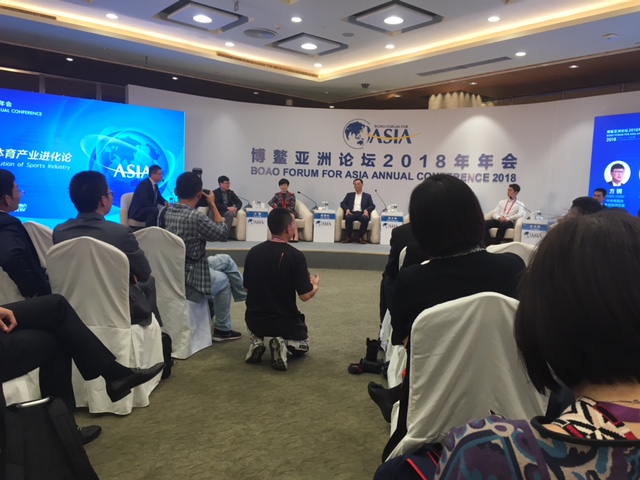
The Boao Forum for Asia takes place annually on the Chinese island of Hainan. This year’s event included a panel discussion on “Potential of the Sports Industry” with VIP speakers including Olympic champions, national sports association leaders, leading Chinese brands and media owners.
The panel opened with reflections on the leadership of the President Xi Jinping, under which sports has played an important part of the drive for healthier living and the development of China’s “soft power”.
Fang Gang, Director of CCTV’s sports channels said “Sport is part of national strategy for fitness and healthy living – sports has critical role in society.”
“Everybody is behind the national plan – it is substantial”, said Qian Jiannong, Senior Vice President, Fosun International.
The 2016-2020 National Fitness plan set ambitious targets for improving fitness and increasing sports participation by raising awareness of health and integrating exercise into everyday life.
Opening sports facilities for free to local people is an important aspect of the plan.
Alisports is using the Alibaba online retail platform to help achieve the 19th NPC goals by giving Ali credits as online incentive for users to exercise more.
“Sport is independent, something special and different,” said Zhang Dazhong, CEO of Alisports, whose project is laying foundations “to empower industries and provide services to national fitness.”
Alisports is also working with badminton, table tennis and tennis teams to improve performance.
He emphasised Alisports’ commitment to the empowerment process of sports, while also focussing on the enjoyment of sports.
Zhang Dazhong, CEO, Alisports said: “China must accumulate its own sports and not just buy international assets.”
Zeng Gang, Vice President of Suning Sports emphasised the importance of investment into education while also making it fun. “Sports is one part of entertainment… we try to promote enthusiasm and a positive feeling for sport”.
The ability to develop a sport is also linked to the availability of venues and equipment, which is one reason for the rapid growth of snooker in China. “Anyone can play in snooker halls,” pointed out Ju Cunguo, general manager of Daqing city’s Cultural Media Co., Ltd.
According to Rupert Hoogewerf, Chairman of the Hurun Report, motor sports, fitness and horse racing are increasing and leading demands in China for sport.
Digital boost for winter sports
China has its eyes on great success at the 2022 Winter Olympic Games, hosted in Beijing.
“Whilst there is pressure on for Beijing2022, all sportspeople can do is their best for their country,” said Li Yan, Chairwoman of the Chinese Skating Association.
Fang Gang said CCTV wants to showcase sport stars who can lead and inspire Chinese people and play sports. “The advantage of CCTV is that it is a national channel working for national good,” he said.
One such star is Wu Dajing, who has been incredibly busy ambassador for winter sports since PyeongChang 2018, where he became the first Chinese man to win Olympic short track gold.
According to Fang Gang, 20 million per minute watched Wu Dajing win his gold medal.
“I could not believe how many people were at the airport on my return. But my coach said it will only last for 40 days!” said Wu.
He said he wants to “make a contribution to Winter Games and promote speed skating and skiing.”
“Three years ago, nobody in South of China knew short track speed skating – they do now!”
Wu Dajing is asking for help from digital platforms to help promote Beijing2022.
While Alibaba is the biggest online retailer in China, the biggest communication platform is WeChat, owned by Tencent.
“Sports is so substantial” said Chen Juhong, Vice President of Tencent. “Wu Dajing made a huge impact.”
Tencent is also working with tennis, soccer, and baseball organisations to find out how data can be used in China.
“Tencent owners are very forward looking – there is no need to monetise data today,” he said. “We are looking for a win-win of Tencent working with people.”
Li Yan, Chairwoman of Chinese Skating Association was interested to find out how digital platforms can help their 60 national events. “Work with us… Do not let the sport get lost in data and size of market,” she asked.
Zhang Dazhong said Alibaba expects a doubling of winter sports sales and higher value per sale for winter sports, but stressed that more investment is needed in winter sports infrastructure.
Zeng Gang, Vice President of Suning Sports invited skaters to work more closely with Suning to promote stories about athletes, generate more content and get more engagement.
He also said that football in China needs to fulfil its potential. The Chinese Super League must find a home for football fans and “create a tie from fan to club”.
The Chinese Super League is working with English Premier League to learn how to customise and commercialise football in China, said Zeng.
Suning is considering offering new membership events for Chinese Super League.
It’s not just online where sales are growing; Suning has recently opened a sport store in Nanjing as it promotes a “hybrid offline-online model for sport.”
This article was based on a panel discussion at Boao Forum For Asia on 9 April 2018. For more detailed discussion on Sports development in China please attend Host City Asia in Beijing on 31 May 2018 -
Host City Asia welcomes record participation of Olympic International Federations
Host City Asia, taking place on 31 May in Beijing under the theme of “Investing in Events to Attract New Audiences”, is attracting rights holders of the world’s most popular major events, with a record number of Olympic International Federations (IFs) participating.
The leaders of Olympic IFs committed to attend include: Anders Besseberg, President, International Biathlon Union (IBU); Beng Choo Low, Secretary General, World Baseball Softball Confederation (WBSC); Luis Alexandre Pontes Rodrigues, Director for Asia and Oceania, Fédération Internationale de Volleyball (FIVB).
Other IFs confirmed to participate at senior level include World Skate, International Bobsleigh and Skeleton Federation (IBSF), International Federation of Sport Climbing (IFSC) and Union Internationale de Pentathlon Moderne (UIPM).
The leaders of other major sports events represented at Host City Asia include Erich Wolf, CEO, Red Bull Air Race and Victor Cui, International CEO, ONE Championship.
It’s not just sports events represented either; with a panel on “How cities can become hubs for entertainment and culture”, Host City Asia serves the diverse interests of event hosts from China, Asia and Oceania.
Delegates will also hear from and meet organisers of the biggest international mega events hosted in Asia between now and 2022.
China’s biggest corporations are also supporting Host City at senior level, with Dalian Wanda Group’s Chen Hailiang a recent addition to the agenda – and more Chinese brands set to follow.
Other international experts confirmed to speak at Host City Asia include David de Behr, Head of Global Events, Aggreko; Patrick Vadja, Senior Risk Advisor, Marsh and Jeff Ruffolo (Expert Advisor to Beijing 2008, Guangzhou 2010, Nanjing 2014 and Beijing 2022).
“The stage is set for our first conference in Asia to be a huge success,” said Ben Avison, Editorial and Conference Director at Host City.
“Host City conferences always attract fantastic speakers and after four years of growth in the UK it should be no surprise that our first conference in Asia is set to be another hit.
“We are particularly overwhelmed that our Beijing event is enjoying the greatest ever level of participation from International Federations and other major event rights holders and we are delighted to be able to present such a great opportunity to host cities across Asia.
“And given that the Host City brand started life as a magazine published in China in 2003, it is a great pleasure to bring Host City back to its origins in the great Olympic city of Beijing.”
The first Host City conference took place in London in 2014, followed by three successively greater conferences and exhibitions in Glasgow. Host City 2018 takes place in Glasgow on 20 and 21 November.
Host City Asia takes place in Beijing on 31 May. For more information about Host City Asia please visit http://www.hostcity.com/events/host-city-asia/ -
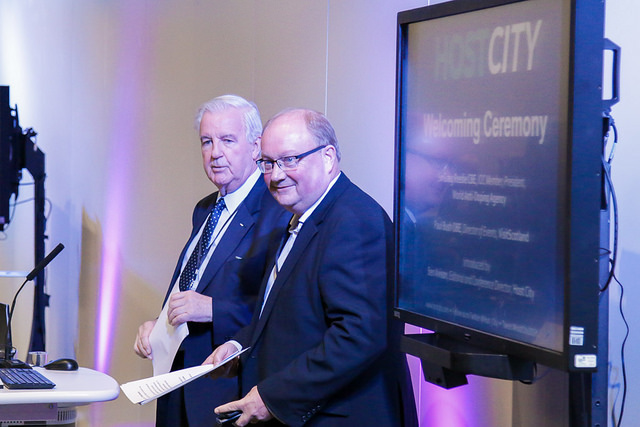
Sir Craig Reedie CBE and Paul Bush OBE announce Host City 2018 theme at SportAccord 2018
The fifth Host City conference and exhibition, Host City 2018, takes place in Glasgow on 20 to 21 November.
The theme of Host City 2018, “The Future of Major Events” was announced and discussed at SportAccord 2018 by Paul Bush OBE, Director of Events at VisitScotland and Sir Craig Reedie CBE, IOC member and President of the World Anti-Doping Agency (WADA).
In conversation with Ben Avison, Host City’s Editorial and Conference Director, the VIP speakers discussed what lies ahead for major events sector and gave a taste of items on the agenda for Host City 2018: the largest meeting of cities and sports, business and cultural events.
The discussion took place at Speakers Corner at 12:00 on Tuesday 17 April.
Looking ahead to the discussion, Paul Bush OBE, who leads EventScotland as part of his role as VisitScotland’s Director of Events, said: “We’re at an interesting juncture in the hosting and delivery of major events. The rapidly changing way audiences are engaging with events through the advancements in technology as well as the social and economic impacts on the host country makes the future of major events a hot topic for discussion.
“Major events can create an impact like no other. Articulating their special DNA and how they can provide a 360-degree perspective across sport, culture, health, education and tourism is something I look forward to discussing with the industry during the Speakers Corner session and in great depth at this year’s Host City conference in Glasgow. By continuing to evolve and innovate, the future of major events will continue to be a positive one.”
Ben Avison, Editorial and Conference Director said: “Host City always addresses the primary concerns of the major events hosting sector and this year’s theme, ‘The Future of Major Events’ is no exception.
“Across the world, demographics, economics and geopolitics are all changing in tandem with revolutions in technology that are transforming the landscape forever. Rights holders, hosts and organisers must all stay ahead of the game to ensure their major events are engaging and beneficial for future generations, and Host City conference and exhibition provides the ideal setting for this.”
After the VIP dialogue, attendees had the opportunity to share their thoughts and discuss how they can get involved in Host City 2018.
Host City speaker Sarah Lewis OBE, Secretary General of the International Ski Federation (FIS) and Association of International Olympic Winter Sports Federations (AIOWF) also looked ahead to Host City 2018, saying: “Stakeholders of major events all have the same goal to have highly successful events and consequently it is essential to connect and collaborate to fulfil these to the best extent. The platform offered by Host City assists to facilitate the process and also learn more about each other’s diverse needs”.
About Host City
Host City is the media and event of choice for cities, rights holders, organising committees and suppliers in their quest for best practice on hosting major events of all kinds.
First launched in 2003 as a bilingual magazine for the organisers of the 2008 Beijing Olympic Games, Host City now serves all stakeholders in international sports, business, cultural and events through magazines, website, conferences and exhibition.
Now in its fourth year of growth, Host City conference and exhibition is firmly established as the largest meeting of cities and sports, business and cultural events, renowned for the highest level of speakers, content and networking. Host City 2017 recorded its greatest participation more than 50 city representatives, 30 event owners, 20 organising committees, 15 media and two hundred delegates. Host City will be returning to Glasgow in November 2018 with a greatly increased exhibition.
The first Host City Asia event takes place in Beijing at the end of May 2018, bringing international event owners and Asian hosts together for high level discussion and networking.
Host City is the Official Event Development Partner of SportAccord 2018.
For more information contact ben.avison@hostcity.com (+44 7876 682072)
For information and industry news, visit www.hostcity.com
Follow Host City on Twitter @Host_City
EventScotland
EventScotland is working to make Scotland the perfect stage for events. By developing an exciting portfolio of sporting and cultural events EventScotland is helping to raise Scotland’s international profile and boost the economy by attracting more visitors. For further information about EventScotland, its funding programmes and latest event news visit www.EventScotland.org. Follow EventScotland on Twitter @EventScotNews.
EventScotland is a team within VisitScotland’s Events Directorate, the national tourism organisation which markets Scotland as a tourism destination across the world, gives support to the tourism industry and brings sustainable tourism growth to Scotland. For more information about VisitScotland see www.visitscotland.org or for consumer information on Scotland as a visitor destination see www.visitscotland.com. -
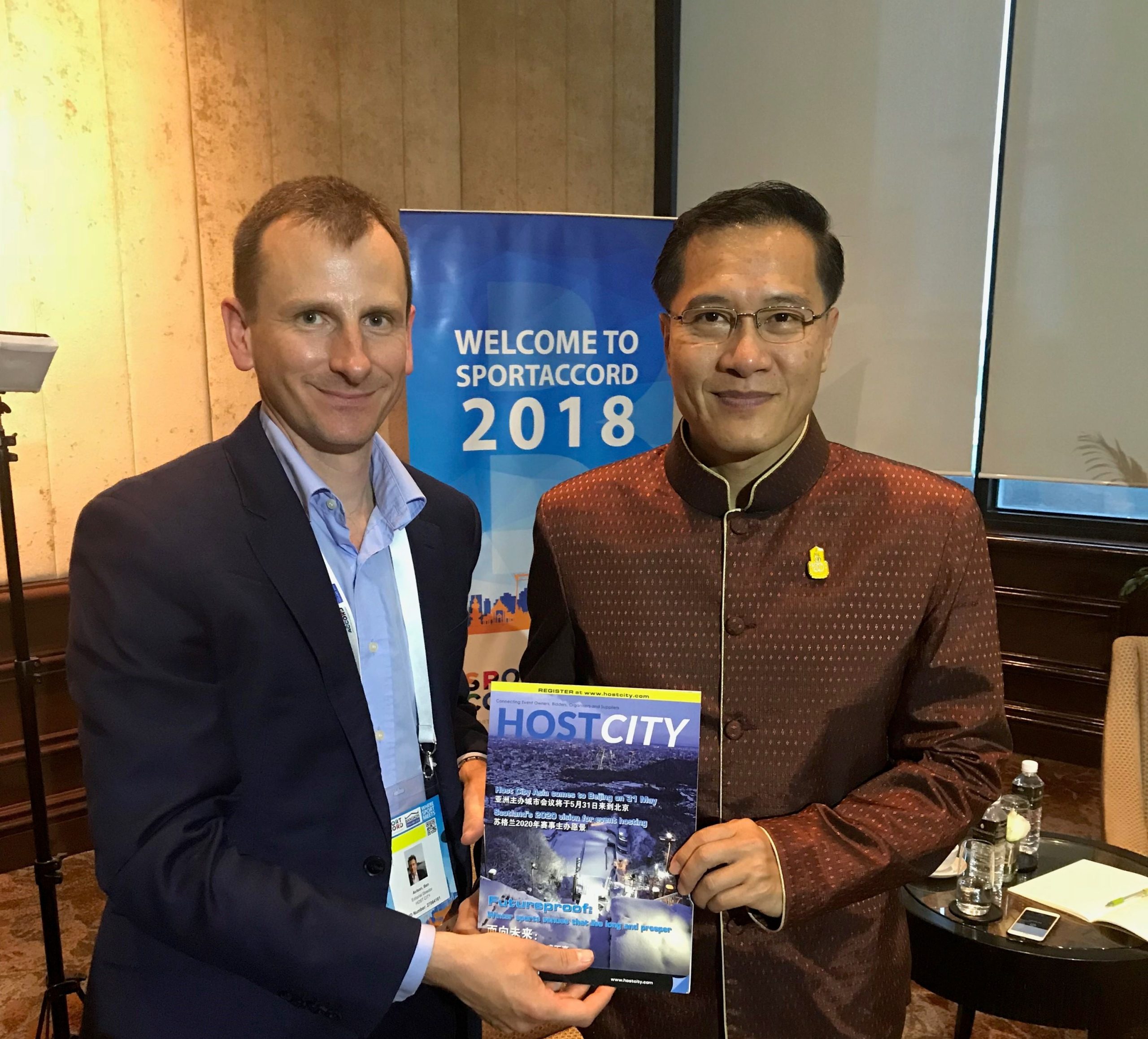
Thailand: hosting in harmony
Host City: What is the main aim of Thailand’s event hosting strategy – is it direct economic impact or wider societal benefits?
Weerasak Kowsurat: We never draw any international games to the country for economic purpose. This happens afterwards, when you see people coming to the city and spending money, but it is never placed there as the main objective of why we bid.
Every time we bid it is because we think that it is time to generate a spiritual atmosphere for the locals to attend and understand better about sports. It’s more on the social side.
It is not a stadium that makes the city that looks lively; it is the population, the people who, after the sports events happen, are inspired to do more activities – either economically, socially or culturally. And we find we have been very successful in that direction.
We don’t intend to always see people packing in a big major stadium somewhere – it happens naturally.
Host City: Do you have plans to build any major new venues?
Weerasak Kowsurat: We have decided to think a lot more seriously about whether there are requirements to build more sporting facilities, because we think that unless we have a better plan of how we are going to use those facilities after the mega event, then we would prefer to make use of what god gives. And you see that in the Tri-league – swimming, biking, running – this is happening more and more in Thailand and we are getting more international participants who want to come here, not only because they want to be at the championship but part of our society.
See, Thailand has been voted internationally as the friendliest country in the world for around ten consecutive years. It pleased a lot of people, including ourselves, that the scenery is nice but the better part is that the people are nice. They may not all be able to communicate in international languages, but the body language is so friendly that it absorbs almost any activity, either sports or non-sports.
Also the weather is so amenable to almost any kind of sport – except winter sports! Then we have all year round sporting activities happening all the time. We have been working with at least 600 run and ride events annually around the country. With a population of 70 million population, this means we have at least 1,000 attending each event around the country.
See, sporting is not about winning or losing. It is an activity that you do with others. That will help to mix diverse people, regionally, domestically and internationally.
Thailand received 35 million international visitors last year, including a million Americans. We have a great variety of people coming into the country. Sport events can be looked at as a way in the modern society for different people to mix together.
When you mix these kind of things together it will bring harmony: harmony for the guest and harmony for the host.
Host City: What kind of events are most important to Thailand – sports, business or cultural events?
Weerasak Kowsurat: We have 1.2 million MICE travellers coming to the country every year. But that is not the biggest portion of activities we have – the largest is people travelling for tourism generally.
Host City: Thailand has not hosted a major multisport event since the Asian Games in 1998. Are you still focusing on smaller championships or will you bid for mega events in the future?
Weerasak Kowsurat: We have been talking about the Youth Olympics, but it depends more on what we would like to achieve; and we need to consult more with our people and find out what they are most interested in.
Having all the big sport leaders coming into town at SportAccord gives us a chance to see the whole list of all sports available on the planet. Maybe it’s time for our generation to pick and choose what to try.
It’s not about competing to be the host city; it’s about what the people in the city want to do.
In Thailand, the sports facilities that already exist have room to grow; we don’t want them to sit idle. At the same time, we also have what god makes: we have very nice scenery, we have two oceans, we have mountains and plains; and the weather outside is so amenable to sport. So instead of throwing away billions of dollars building something in concrete, why don’t we get people to go out and be friendly in the local atmosphere.
Host City is Event Development Partner of SportAccord -
Yutang Sports partners with Host City Asia
Yutang Sports is partnered with Host City to support Asia’s largest meeting of sports, business and cultural events.
Under the theme of “Attracting New Audiences through Sports and Entertainment”, Host City Asia will bring together international event owners with Asian host cities, brands and investors at the five-star Four Seasons Hotel in Beijing on 31 May.
High level speakers include senior representatives (presidents, CEOs, secretary generals, directors and experts) of organising committees, sports federations, entertainment events, cities and corporates.
As Media Partner, Yutang Sports will be providing editorial coverage, in addition to wider marketing and sales support.
About Host City
Host City was first launched as a magazine in Beijing in 2003 for the organisers of the Olympic 2008 Games. Since then it has hosted four rapidly growing international conferences in the UK serving the international community of event owners, hosts, organisers and suppliers.
Host City is delighted to return to Beijing for Host City Asia with the participation of the Beijing Olympic City Development and the Beijing Organising Committee for the 2022 Olympic and Paralympic Games.
Phone +44 7876 682072 or visit www.hostcity.com
About Yutang Sports
Yutang Sports is a sports market intelligence and sports marketing company consisting of a sports industry media outlet and sports sponsorship agency. It provides editorial content, market analysis and sports marketing business services such as consultancy and sponsorship sales.
The media outlet provides the most up-to-date sports business news, media analysis and exclusive data reports on the Chinese sports industry in both Chinese and English languages. With millions of views in China per year, the company is considered one of the most important sports industry media outlets in China, one that provides regular services to corporate clients.
Yutang’s sports sponsorship agency helps international and domestic sports rights holders/events to partner with Chinese brands. The company has successfully facilitated partnerships between many sports events and Chinese brands such as Stankovic Continental Cup and Sunshine Insurance Group, Snooker players & K-boxing, Beijing Half Marathon and Rarone, driving development for both sports and sponsors.
Phone: +86 10 6715 0501 ext. 808 or visit http://en.ytsports.cn -
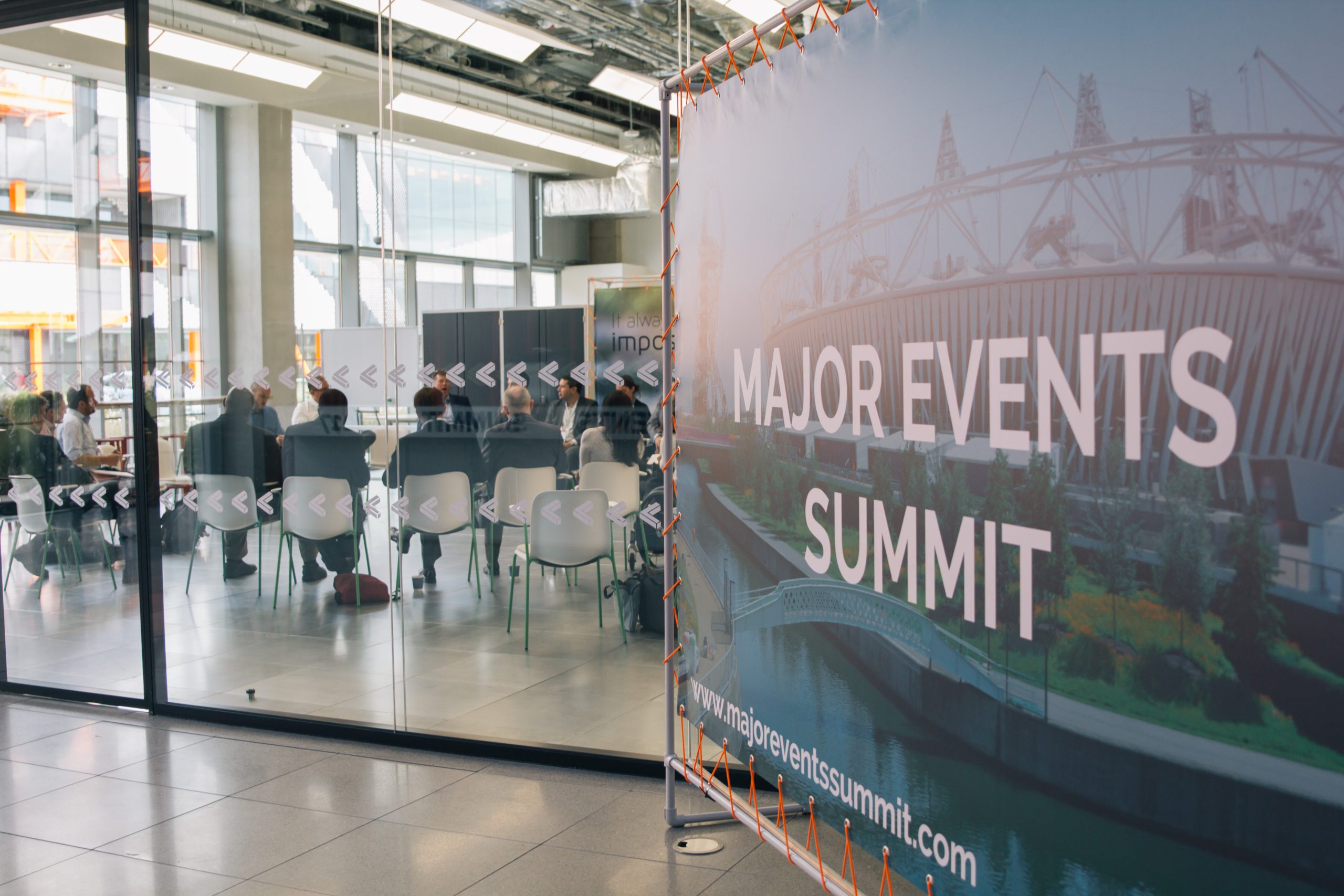
Largest gathering of international sport event organisers to attend the Major Events Summit at the International Business Festival in Liverpool
An unprecedented list of UK and International major sports events organisations will be sending senior representatives to Liverpool in June to share their plans, opportunities and challenges with commercial companies and learn from suppliers about what they can offer to help deliver these iconic events being planned out to 2024.
Over 27th – 28th June, Major Events International (MEI) will be delivering a multi-sector, business of sport Summit as part of the International Business Festival. This unique format will include representatives from the Pan American Games, Cricket and Rugby League World Cups, Invictus Games and other competition organisers at Olympic Games level. All of these agencies have key roles in shaping procurement for technology & fan engagement, temporary overlay, safety & security and a wide range of event services – all of which are key themes of the MEI Summit. They will also benefit from input made by senior representatives from the recent Rio 2016 Olympics, Commonwealth Games Gold Coast and European Games in Baku.
With UK hosting the Cricket World Cup 2019, Rugby League World Cup 2021, the Commonwealth Games 2022, and with significant investment in UK Venues and over 700 UK annual festivals, there will be plenty of content for those who are also interested in UK opportunities.
The key to this event is networking. There will be commercial companies attending looking for partners from Australia, USA, Brazil, Japan, China and India where significant events and growth in sport is catching the attention of a world-wide audience. The format focuses on identifying opportunities, collaborative relationships and knowledge exchange through workshops, panels and an opportunity to interact socially as part of an Awards Dinner at Liverpool Football Club.
There is no other multi-sector forum where such a range of organisations meet to brief opportunities and build relationships over 2 full days without the need to travel to each international or UK host City.
There are only a few days left to register your interest in attending this unique, invitation only, event of 120 attendees so please register your interest now
Call the MEI team on +44 (0) 20 7073 2661, or send an email to enquiries@majoreventsint.com or go to the MEI Summit website at https://www.majoreventssummit.com or register at www.internationalbusinessfestival.com -
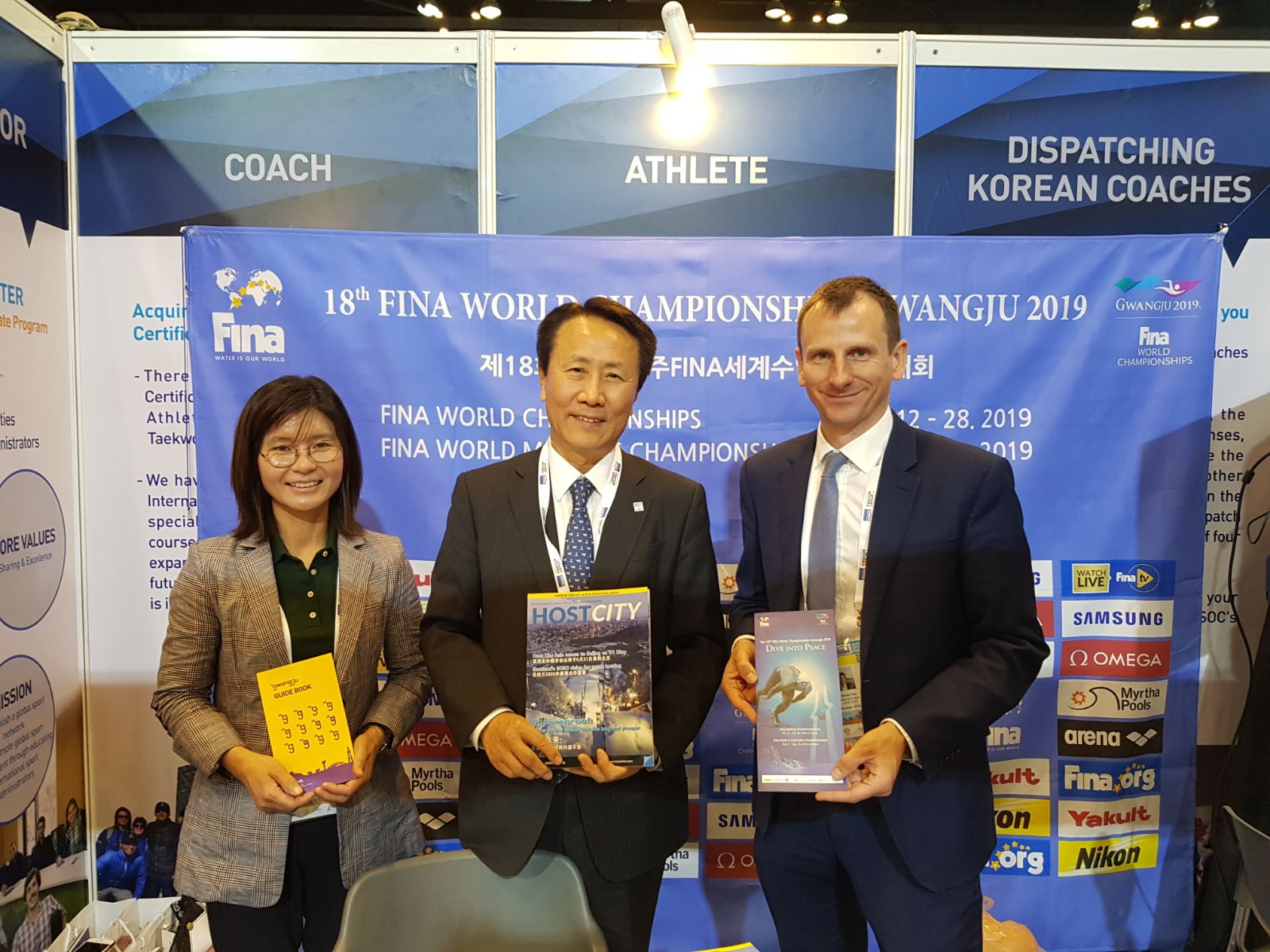
Gwangju promotes Korean unification and Industry 4.0 through sports
Host City: Why did Gwangju decide to bid for the 2019 FINA World Championships?
Dr Cho: The city of Gwangju had hosted a few major international sporting events, such as the FIFA World Cup quarter-final and the 2015 Universiade, so we wanted to build this image as the sports city of Korea.
As a legacy of the Universiade we had the international standard swimming pool. We wanted to utilise this venue but at the same time wanted to build further the city brand. So that’s why we decided to host this World Championships.
Host City: What impact do expect hosting the Championships will have on the city?
Dr Cho: We have a bigger vision than just impact on the city itself. Gwangju is the central city and the pillar of democracy, peace and human rights of South Korea. That’s why we wanted to let the spirit of Gwangju into the championships and chose our slogan “Diving into Peace”.
Through the Championships, all the initiatives will come together to create peace-building in the Korean peninsula, in South East Asia and further.
Host City: To what extent will the North and South Korean teams join during the Championships?
Dr Cho: There are three phases. The first one will be the participation of North Korea.
After that we are going to seek a joint ceremony, such as maybe marching together.
And after that, if the condition allows, we will try to create a unified team. All possibilities are open at the moment.
We had a unified ice hockey team at the PyeongChang Olympics, but I think we have more favourable conditions than that because we have even more preparation time to discuss creating a unified team. And also, there is a good atmosphere building between North and South Korea; so things are working very favourably for us.
Right now, we are not thinking specifically about what events we want to host. However, we want to strongly be positioned as the sports city of Korea; that is why after this we want to open our eyes and see what events are possible for us to bring to Gwangju.
Host City: Why is Gwangju focusing on sports specifically for its development?
Dr Cho: Firstly, Gwangju is the central cultural hub of Asia. When you talk about culture there are two major strands: one is art, the other is sport. Because of that, we think that when we bring sports events to Gwangju it’s going to create synergy with the arts, to really promote our city as the central hub of culture in Asia.
The second point is that we want to promote the value of the city, what we are good at, through sports. Because that is one of the easiest ways for us to really promote the merits and values that the city has.
The third point is that Gwangju is really building an industrial base for the fourth industrial revolution – for example, robotics, AI and IoT. We also want to promote that idea through sports.
Gwangju has a high concentration of energy industries. We want to create a revolution in renewable energies and our industries through sport.
At the same time, we have an automotive industry base in Gwangju. This industry is moving towards the fourth industrial revolution and we want to promote this idea through sports events.
Host City is Event Development Partner of SportAccord 2018