Grant funding for a new film and television studios, to be built on the site of the former High Melton campus of Doncaster College, has been agreed by the Sheffield City Region (SCR) Combined Authority (CA).
On 11 June, at the first meeting chaired by the new Mayor of the Sheffield City Region, Dan Jarvis, CA members agreed that £4.1m of Local Growth Fund (LGF) cash should go towards the project headed up by 360 Degrees Media.
The scheme incorporates a film and TV studios, a visual effects production facility, a film and TV training academy and a hotel and events business. It is projected to create around 220 direct new jobs, and potentially thousands more in the supply chain, while driving more than £60m of gross value added within SCR over the next 10 years.
Mayor Dan Jarvis said: “A creative investment on this scale is fantastic news for Doncaster and the wider region, and will add to the Sheffield City Region’s already-outstanding creative assets.
“As well as jobs at the 360 Degrees Media studios, the scheme can also create countless opportunities in the supply chain, drive economic growth and provide real-world training opportunities for our young people.
“But the benefits go both ways. Our region is a hotbed of creativity and is already driving forward excellence in the digital sector. So where better to base a new film and television studio that can tap into the talent we already have here, build upon it, and create a genuinely exciting and innovative scheme to put Doncaster on the digital map.”
Sir Nigel Knowles, chairman of the Sheffield City Region Local Enterprise Partnership, was instrumental in the decision by 360 Degrees Media to locate here.
He said: “LGF funding allows LEPs to drive forward economic growth across the country, helping to build a country that works for everyone.
“I am delighted that we were able to use this fund to secure the 360 Degrees Media investment for Sheffield City Region. This is further proof that, as a LEP, we work in a straightforward and practical way to bring in investment and make it easy for companies to do business here.
“I look forward to seeing this project delivered.”
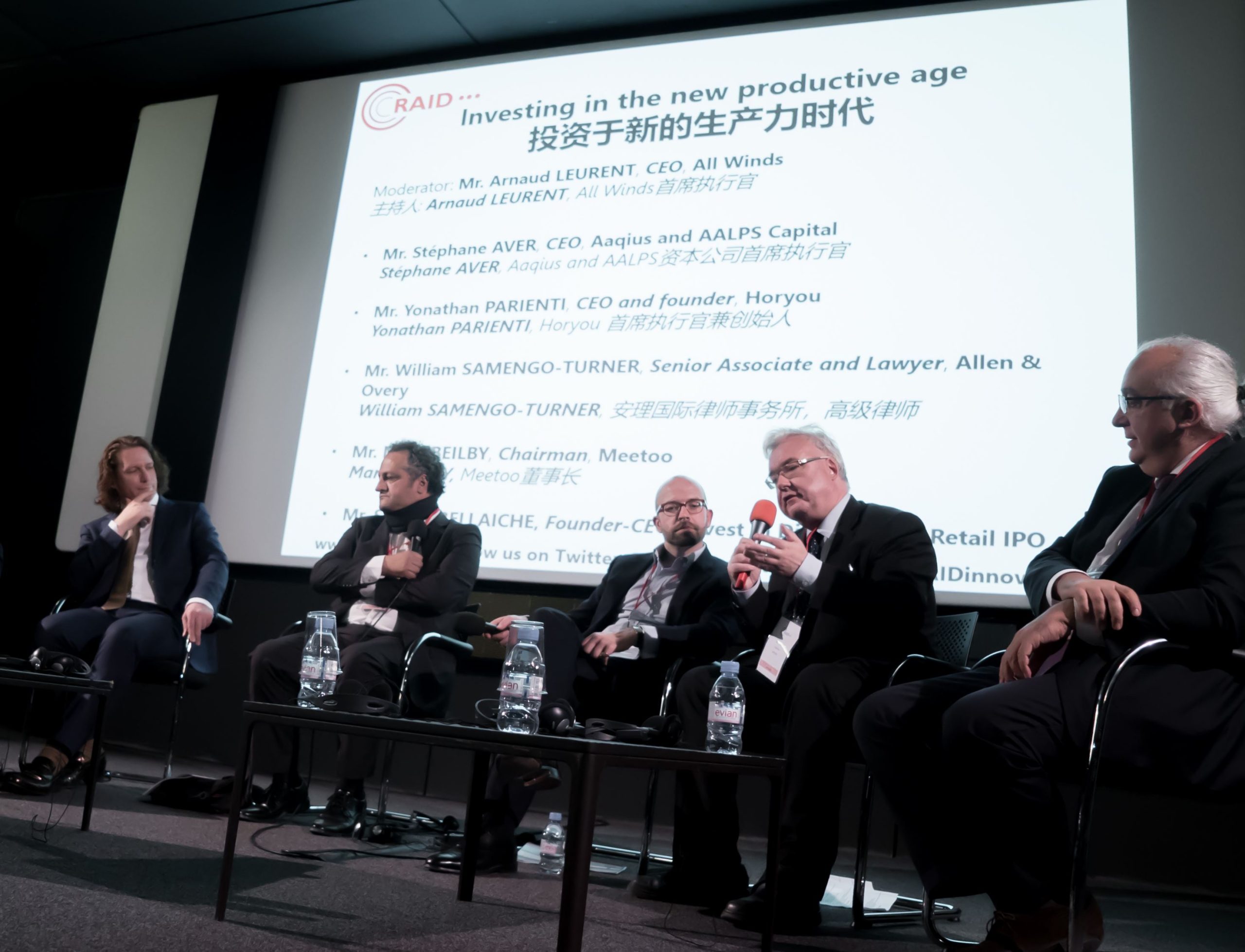
360 Degrees Media is managed and operated by media financiers Alistair Maclean-Clark and Mark Beilby, both of whom have more than 30 years’ experience in the sector.
Alistair Maclean-Clark, chief executive of 360 Degrees Media, said: “Ever since we first visited South Yorkshire we knew there was potential for a game-changing project here and we are delighted that the SCR, as well as Doncaster Council and DN Colleges Group, have backed our vision for High Melton.
“We want to pioneer a European first for media that brings together training, production, post-production and innovative tech on one site, offering film and television makers an end-to-end service and a creative ecosystem that will reinforce and help to build all the existing creative industries in South Yorkshire.”
The project has also been welcomed by the council and businesses in Doncaster.
Ros Jones, Mayor of Doncaster, said: “It is fantastic news for Doncaster that the College’s High Melton site is set to become the new home to this international film and TV studio. We have been happy to support the College in bringing this to Doncaster. This will create jobs and growth for Doncaster’s economy and encourage more young people to pursue a career in the Film and TV industry.
“During 2017, £1.6 billion was spent on UK film and TV projects. This shows this is a thriving industry which we are excited to welcome to the town. We are ambitious for Doncaster and fully support the creation of this new site that will create more than 220 jobs for the borough.”
Dan Fell, chief executive officer at Doncaster Chamber of Commerce, said: “The Chamber believes that the project has the potential to be as transformative for Doncaster as the Yorkshire Wildlife Park or Doncaster Sheffield Airport.
“Crucially, the scheme will do much to diversify Doncaster’s economy by attracting overseas investment and students, and by catalysing growth within the creative sector.
“This will make our economy more resilient whilst also engendering a dynamism and buzz about the area.”
Andy Tuscher, DN Colleges Group Chair of Governors, said: ““We are delighted with today’s decision, and we now eagerly await the transformation of High Melton into a world-class hub for media production, placing Doncaster at the heart of the UK’s media sector and directly benefiting our communities through local investment and employment.
“We are thrilled that this development will include an innovative partnership between 360 Degrees Media and Doncaster College to create a Film and TV Academy.
“Having direct access to these state-of-the-art facilities is going to create unparalleled opportunities for Doncaster College students and we are really excited about the employment opportunities this will open up for them, both locally and in the wider media industry.”
By 2021 Government will have invested over £12bn through the Local Growth Fund, allowing LEPs to use their local knowledge to get all areas of the country firing on all cylinders.
There are 38 LEPs covering the whole of England, which are investing LGF money in a wide range of projects including transport, skills, business support, broadband, innovation and flood defences.
Blog
-
£4.1m funding approved for new Yorkshire film and television studio
-
Soccerex will Partner with Concacaf for Football Business Convention in the United States
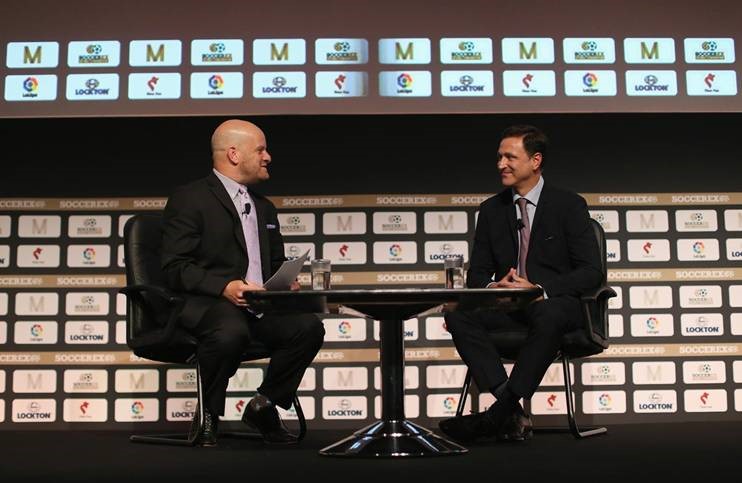
The Confederation of North, Central America and Caribbean Association Football (Concacaf) and Soccerex announced today a partnership to support Soccerex’s return to the U.S. for the second time since its founding, which will convene the international soccer community in Miami, Florida on November 15-16 to exchange strategies, insights and a vision of the world of football.
The partnership is an extension of an institutional supporter agreement that Concacaf signed in 2017 with Soccerex to provide further opportunities to engage with the global football community – and one of the sport’s most important regions in North and Central America, as well as the Caribbean. Under the collaboration framework for Soccerex USA, the Confederation will have a key role in the convention activities, including presentations of senior executives on the organization’s evolution and leading industry trends. All the 41 Member Associations from the region and key decision makers will be invited to the event.
In a new initiative for Soccerex USA this year, Soccerex have gathered an executive advisory board of regional experts and industry leaders, consisting of Concacaf General Secretary Philippe Moggio and representatives from both the U.S. Soccer Federation and Major League Soccer. The advisory board will ensure the conference programming and structure provides valuable and relevant insights to meet the needs of different sectors in the rapidly growing soccer market.
Philippe Moggio, who acts as the chief executive officer of the Confederation, has helped usher in a new era for the organization, pushing its vision and business operations to new levels of growth and professionalism. He brings to the board his global vision providing core advice through many years of experience at Concacaf and within the sports industry.
This is a crucial time for the Confederation following the historic win of Canada, Mexico and the United States to host the FIFA World Cup in 2026. In addition to the culmination of years of reforms and streamlined governance, the announcement of a new organizational identity – along with the expansion of clubs and national teams competitions.
“As a proud organization based in Miami, FL, Concacaf is thrilled to welcome Soccerex USA to a first-class sports and tourism destination. Hosting this industry platform on ‘home soil’ will draw key stakeholders and experts for a productive discussion on the business of football and to explore core areas to our ONE Concacaf Vision including the access to more opportunities to grow the game within our region and throughout the world,” said Concacaf General Secretary Philippe Moggio. “We look forward to working with the Soccerex team and its advisory board in supporting a successful edition of Soccerex USA.”
“It is a real pleasure to be working with Philippe and all the team at Concacaf. For us, to do an event in this region, it is essential we work with the right people and I am sure that with Concacaf’s support, we can deliver a vital business and development platform for Concacaf and all the nations they represent,” said Soccerex COO, Rita Revie.
Soccerex USA is sponsored by the London Football Exchange, the world’s first fully integrated soccer club stock exchange and marketplace and hosted in partnership with General American Capital Partners. The two-day event will take place at Miami’s iconic Marlin’s Park and will comprise an exhibition showcasing the latest soccer business, performance and technology innovations. It will include a program of structured and informal networking events to connect delegates from across the USA and the rest of the world and it will feature a market leading conference agenda, with international experts tacking topics such as league expansion, women’s soccer, youth development, eSports, stadia technology and investment.
In addition to Philippe Moggio, other members of the Advisory Board include Oscar Mayo, International Development Director, LaLiga, Mayi Cruz Blanco, former Head of Women’s Football Development, FIFA and David Dein, founding member of the English Premier League.
For more information on Soccerex USA, please go to www.soccerex.com/usa -

Glasgow 2018 welcomes CSM Live as Official Provider
[Source: Glasgow 2018] As the Official Provider of Event Look Services, CSM Live will help ensure that the Championships look fantastic and that the experience for fans, competitors and all involved will be one not to forget in a hurry. Their role will see them provide scoping, production, installation and project management of the event look and feel.
Glasgow 2018 European Championships will see some of the continent’s leading sports come together for one innovative multi-sport event which runs from 2 to 12 August. The event includes the existing European Championships for Aquatics, Cycling, Gymnastics, Rowing and Triathlon with a new Golf Team event.
CSM Live approach these Championships with vast experience, having delivered the Look Services, wayfinding and city dressing for the London 2012 Olympic Games and the 2014 Glasgow Commonwealth Games, amongst a number of other global sporting events.
Glasgow 2018 Championships Director Colin Hartley said:
“The Championships are nearly here and the atmosphere is building steadily in the run-up to the first event. The look and feel of the competition and the city branding are a big part of the experience for sports fans, spectators and visitors. We’re looking forward to working with CSM, and all our partners, to make this a vibrant and unforgettable experience”
Chief Executive Officer of CSM Live, Alastair Bewick said:
“We’re excited to be part of the inaugural European Championships, helping bring the event to life in Glasgow this August. It’s all set to be a fantastic new multi-sport event, and we’re looking forward to helping the fans connect with the Championships through the bold look and feel in the venues and across the city.”
CSM Live joins Strathmore, Atos, Gleneagles, Harper Macleod LLP, Avid, NVT, Aggreko, Glasgow Airport, GL events Field and Lawn Ltd., Arco, Adi.tv and Xerox as part of the Glasgow 2018 sponsor family. -
Host City Asia’s “complete success” helps events and cities attract new audiences
Host City Asia 2018 successfully concluded on May 31 at the Four Seasons Hotel in Beijing under the theme of “Attracting new audiences through sports and entertainment events”.
More than 120 representatives of cities and destinations, the Olympic Games, the Chinese government, international sports federations, organising committees and experts shared their strategies and explored the opportunities around hosting major events in Asia.
In his welcome address, Host City’s Editorial and Conference Director Ben Avison said “Although this is the first Host City Asia, it does feel very much like a homecoming.
“We launched Host City in Beijing in 2003, as a magazine bringing foreign expertise to the organisers of the 2008 Olympic Games – for which our CEO, Matthew Astill, received the Great Wall Friendship award from the Deputy Mayor of Beijing.
“And now, with Beijing being the first city to host not only the Summer but also the Winter Olympic Games, Host City returns to China with this valuable conference for Asia.
“As the IOC President Thomas Bach pointed out in his opening speech at the PyeongChang 2018 Olympic Games, we are now in an ‘Asian Olympic Era’.
“I would like to add that this is also an ‘Asian Era of Event Hosting’, more generally. Mega events are clearly the biggest way to attract new visitors or fans – but cities are interested in hosting a whole range of sports, business and cultural events, both large and small. Many Asian cities are developing extremely rapidly and using sports and culture to support their economic and social development.”
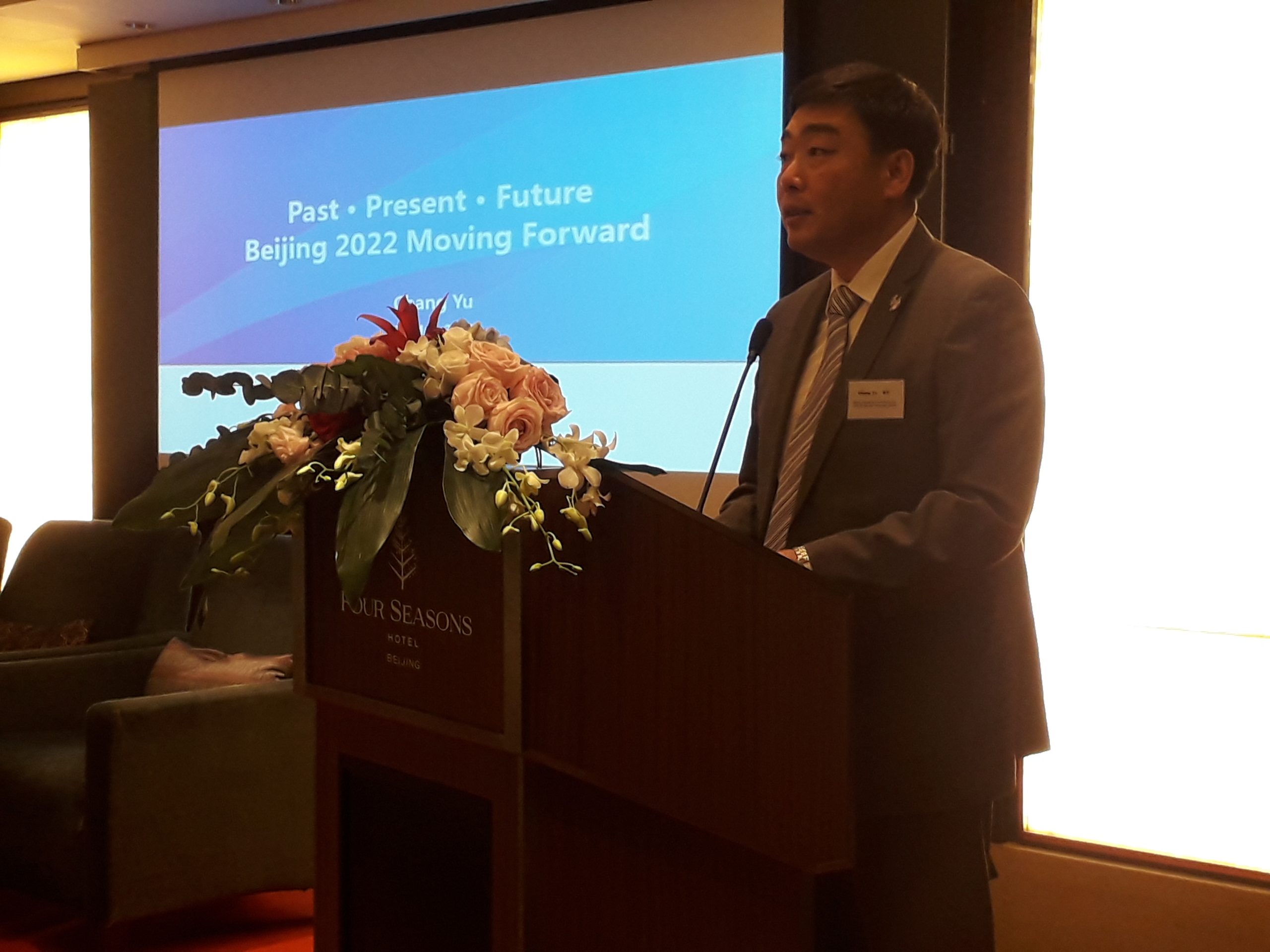
Chang Yu, Director General of Media and Communication Department of the Beijing Organising Committee for the 2022 Olympic and Paralympic Games, delivered an opening keynote address on the theme of “past, present and future”.
“I am very excited to be invited to participate in Host City Asia and have the opportunity to share the development of sports in China and Asia with fellow experts and industry peers,” he said.
“The Beijing Organising Committee for the 2022 Olympic and Paralympic Games looks forward to working together with everyone to create a wonderful and extraordinary Winter Olympics for the world in 2022. I wish Host City Asia a complete success.”
In his presentation on “Stimulating the Vitality of Olympic Legacy; Building a Model for Summer and Winter Olympics Legacy,” Fu Xiaohui, Secretary General of Beijing Olympic City Development Association (BODA) outlined China’s goal of encouraging 300 million people to participate in winter sports.
He also explained how BODA is building links with the cultural sector through the Beijing International Sports Film Week and Beijing Olympic Music Festival, while strengthening cooperation with the Belt and Road cities, Olympic cities, and international sports organizations to share China’s story with the world.
Stephen Ellison, Minister-Counsellor, British Embassy Beijing said: “Having this event here greatly reflects China and Asia`s rapid growth in the sports economy. Asian cities are currently dominating the global sports events calendar.
“UK sports are extremely popular in China; the Premier League, Wimbledon, World Snooker and Formula One are watched by hundreds of millions of people on TV and digital platforms here. UK sports are also physically here; World Snooker has events in five cities across China, Formula One in Shanghai, Clipper Race in Qingdao and Sanya and we believe there is still more potential.
“The UK has been proactively working with China on Beijing 2022 Winter Sports. In December 2016, UK and China singed an MOU on Winter Sports cooperation. The British Olympic Association and the British Paralympic Association were the first national teams to visit Beijing 2022’s three competition zones. Additionally, British architects Populous UK won the bid for the China new national high-speed skating Oval.
“The legacy of Beijing 2008 on sports, infrastructure and society has been huge and this will dovetail into Beijing 2022 with the establishment of growing winter sports economy. International expertise can continue to develop sports infrastructure in Asia.”
Hiromi Kawamura, Public Relations Secretary of Tokyo 2020 gave insightful update on how Tokyo is using the Games to fulfil Tokyo and Japan’s wider development goals.
Laszlo Vajda, Senior Operations Manager, Minsk 2019 European Games and Senior Expert, Beijing 2022 also shared his great experience of staging the world’s biggest and most complex events.
Other event hosts represented at Host City included Zong Zhenhua, Executive Vice Director, Gaoxin district of Zhangjiakou; Bai Jianhai, Director of Winter Sports Promotion Office, Zhangjiakou Government; Tony Nagamaiah, General Manager, Malaysia Major Events; Michael Baird, Strategic Advisor to the Commissioner for Greater China, State Government of Victoria, Australia; Vusi Mazibuko, General Manager, Moses Mabhida Stadium, Durban and Li Yidong, Director, Tanggangzi New Town Conference and Exhibition Centre, Anshan.
Sports federations were well represented by IF leaders including Beng Choo Low, Secretary General, World Baseball Softball Confederation and Kobinata Toru, Vice President Sport/ Events, International Federation of Sport Climbing and many more.
Kelvin Fang, Senior Media and Marketing Manager at FIBA ??China said: “Basketball is very popular in China, but FIBA ??hopes to host the World Cup in China to bring a richer heritage to the host city. FIBA’s goal is to allow basketball enthusiasts of all ages to participate in sports. Like 3×3 basketball, they will enter cities such as Beijing, Xi’an, and Chengdu. China is an important basketball market and more events will come in.
Luis Alexandre Pontes Rodrigues, Director of Asia and Oceania at FIVB said: “China is a market with great potential, and the FIVB can bring a lot of extra resources here. The FIVB is constantly looking to develop and to bring a wider audience participation. Nanjing will hold the finals of the World Women’s Volleyball League for many years. The FIVB hopes to make it a flagship event. Volleyball has a very good future in China and the FIVB must understand this market in depth.”
Jason Ferguson, President of the World Professional Snooker Association said: “The Chinese market plays a pivotal role in promoting the development of the snooker movement. The potential of the Chinese market lies in the development of small cities, which can increase their international visibility.”
Oleg Matytsin, President of the International University Sports Federation (FISU) said: “The sports world often thinks of new audiences as only being those in new places, perhaps where a rights holder has not yet hosted competitions. But new audiences must also be thought of as those young people who, each year, are arriving at the age where they will make decisions for themselves, where they will develop affinities and loyalties independently. These people are not just the future of one sport, or two sports, but the future of every sport.”
Exciting presentations were also delivered by Erich Wolf, Managing Director of Red Bull Air Race; Victor Cui, Director and International CEO, ONE Championships; and Benedikt Brandmeier, Head of Locations & Strategy, Drone Champions.
Yutang Sports played a central role in Host City Asia with their Co-Founder and Executive Director Li Jiang and International Business Development Director Zhang Tingting moderating VIP panel discussions.
The contribution of the private sector to the hosting of major events was well recognised with valuable contributions from: David de Behr, Head of Global Events, Aggreko; Patrick Vajda, Senior Risk Advisor, Sports & Events Practice, Marsh; Wu Lei, CEO, Kingdomway Sports; Karl Hawkins, CEO/President, Kehua Sports; Hailiang Chen, Director of Sport and Recreation, Wanda Cultural Tourism Planning & Research Institute; Anne Kelly, Chief Operating Officer, Shankai Sports; Shoto Xiaodong Zhu, Founder & Chairman, OCEANS Sports & Entertainment Marketing; and Nikki Wang, Head of Sports Business China, Deloitte; Mark Dreyer, Founder, China Sports Insider and Yang Binyuan, Head of Communications Greater China, Google. -
UK Sport targets double-figure medals at Beijing 2022 with £24m investment
[Source: UK Sport] UK Sport believes the range of medal possibilities for the Beijing Games currently sits between 5-12 Olympic and 7-11 Paralympic medals at the next Winter Games, which if achieved would at the very least sustain success from the PyeongChang Games this year but could also surpass those record-breaking achievements.
Based on assessed future medal potential, World Class Programme investment will be made into the three Olympic sports of Ski and Snowboard (up to £6.75 million) Skeleton (up to £7.2 million) and Curling (up to £6.35 million) and the Paralympic sport of Para Ski and Snowboard (up to £3.5 million).
In addition Short Track Speed Skating world champion Elise Christie will be offered innovative new Medal Support Plan investment given her significant and consistent world level success in the PyeongChang cycle. This investment approach has recently been directed to target medal success in the sports of Badminton, Climbing, Karate and Archery in Tokyo 2020.
Total National Lottery and taxpayer investment across the four years to Beijing will be around £24 million, compared with the £32 million investment in the PyeongChang Cycle. This will enable support for around 70 athletes who have the potential to win medals at the next or future Games.
Investment will be able to go further due in part to a planned voluntary integration between the British Ski and Snowboard and British Para Snowsport programmes, which will create efficiencies as well as enabling cutting-edge coaching and innovation to be shared between the squads.
The funded winter sports have pledged £3.4million of co-funding into their world class programmes, with the bulk of this coming from the booming popularity and commercial success of the Ski and Snowboard sector.
The application of UK Sport’s investment principles – which prioritises sports with clear future medal potential in order to maximise inspirational returns from public investment – means that the world class programmes of Bobsleigh, Figure Skating, Wheelchair Curling and Short Track Speed Skating will be transitioned off funding with the annual opportunity to make a case for support based on world-class level results if achieved thereafter.
UK Sport is committed to ensuring that the impact of its decisions on athletes, staff and sports are carefully and sensitively managed, and will therefore be working closely with all sports that will no longer be in receipt of – or in receipt of significantly reduced – investment on an appropriate transition plan for athletes and staff. A transition fund of circa £1.5 million will be available and plans for each sport to access this will be developed in partnership with the relevant home country sports institute. For example, the transition funding could enable athletes to compete through to world championship events in February/March 2019 for which they are already training.
UK Sport CEO Liz Nicholl said: “After a record-breaking PyeongChang 2018 which saw Team GB and ParalympicsGB hit their Olympic and Paralympic medal targets of 5 and 7 respectively, today marks an important step on the path to Beijing 2022 as we target further inspirational success at the Winter Games.
“We have been working in partnership with sports for more than a year to develop their Beijing strategies and I would like to thank them all for their professionalism during this process. While UK Sport would like to be able to invest in every Olympic and Paralympic sport our role is to prioritise within agreed resources in order to protect and enhance the medal potential within the system. We believe these strategic investments will deliver medal winning success to inspire the nation once again in Beijing in 2022.
“We fully understand the huge significance of our decisions and that they will impact on the hopes and dreams of the athletes, coaches and support staff that we are unable to invest in at this time. We are committed to managing this with appropriate care and will be working closely with those affected by these decisions to help support them in their transition.”
UK Sport has currently put out to public consultation the future funding strategy of elite sport in the country, which will come into effect following the Tokyo Summer Games from April 2021 and which will apply to the 2026 winter investment cycle after Beijing. All members of the public, stakeholders and partners are encouraged to have their say at www.uksport.gov.uk
Governing bodies being funded through to Beijing 2022 will also be expected to be compliant with the Code for Sports Governance as of October 2018. UK Sport is currently also conducting an options appraisal as to where the World Class Programme for Skeleton will be housed in the Beijing cycle.
[Source: UK Sport] -
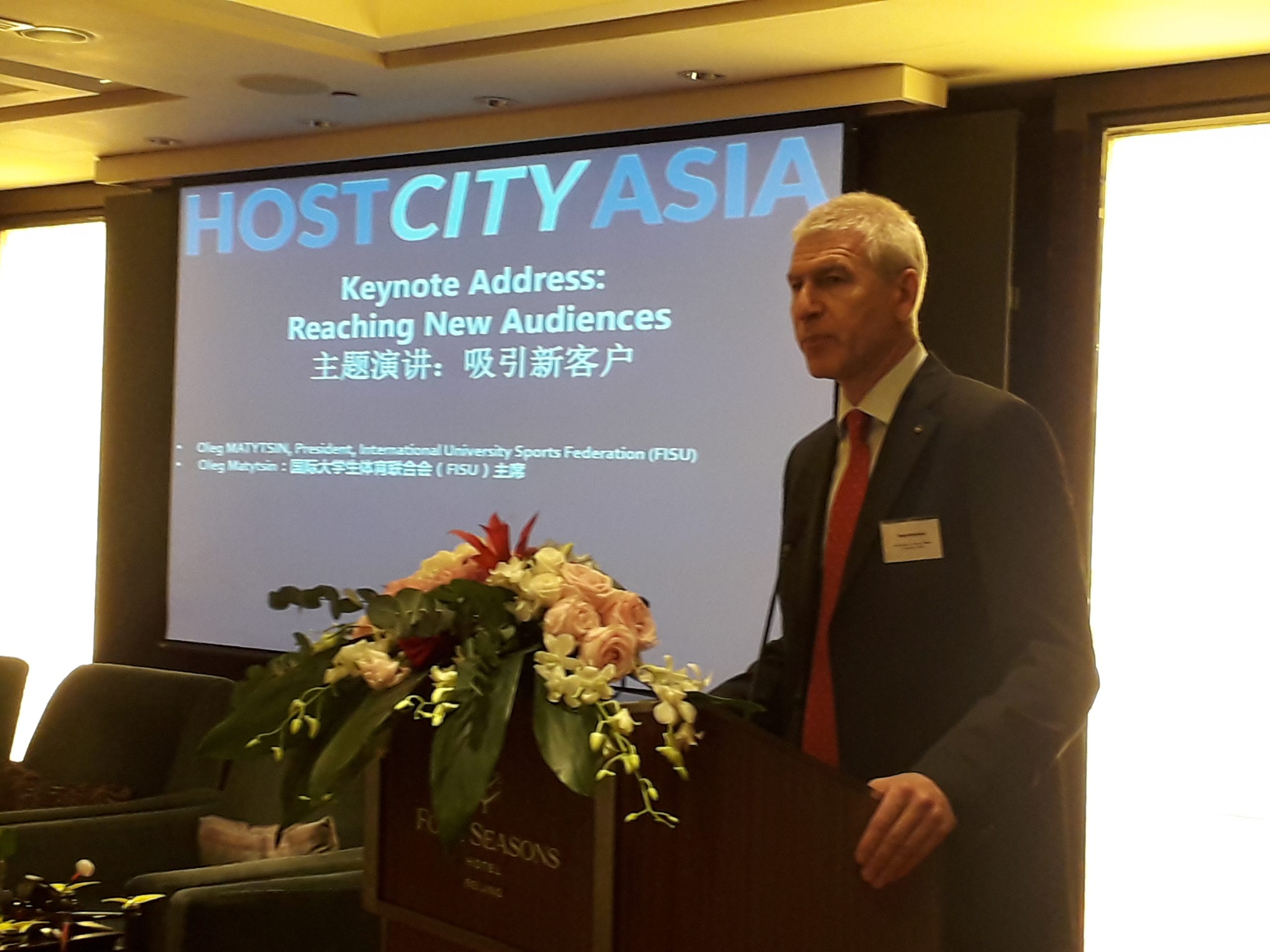
Reaching new audiences through the Universiade
FISU is the IOC-recognised partner of the Olympic Movement responsible for delivering international sport to millions of students from more than 26,000 campuses around the world, with the help of member federations in 174 countries.
Our vision is to help shape the leaders of tomorrow through their experiences of international university sport: either as spectators, as volunteers or as spectators. And the nature of University life is that every four years or so, our audience is completely new.
In fact, the sports world often thinks of new audiences as only being those in new places, perhaps where a rights holder has not yet hosted competitions. But I would challenge this approach.
New audiences must also be thought of as those young people who, each year, are arriving at the age where they will make decisions for themselves, where they will develop affinities and loyalties independently. These people are not just the future of one sport, or two sports, but the future of every sport. And every year, the universities of the world have an intake of potential players and potential fans that is measured in the millions.
FISU’s showcase events, the ones where we reach the biggest number of students each year, are the Winter and Summer Universiades. And the most recent editions of these were here in Asia: last year we were in Almaty for winter and Taipei for summer.
In the last ten years, there has been a lot of talk about opening up new audiences in Asia and especially here in China.
I am proud to say that FISU has been at the front of successful hosting in Asia for twenty years. Many of our friends here are already old friends. Years before even Beijing’s Olympic bid was successful, FISU was here preparing for the Beijing 2001 Universiade: the first major global multisport Games in China.
Even if China and Asia are not new audiences for us, they are very successful audiences and we are always happy to come back and even to discover new cities!
Our lessons in developing new audiences here have been very valuable to us. For FISU, our work here in China and in Asia has been about long-term investment. And our biggest investment is the one we make in people.
I cannot understate how important it is to invest time in building relationships and developing people. That’s why things like volunteer training are so important to us at FISU. Ten, twenty or even thirty years from now, there will be a student whose experience of volunteering at one of our events led to a career as a leader in business or in politics. And that student will remember just how much hosting one of our events can do for people and communities.
Leaders who have happy memories of the Universiade go all the way up to the IOC President, Thomas Bach. And while it is great for us to have leaders with a positive experience of the Universiade, it is also a great asset for our hosts. Here in China alone, there have been more than 50,000 volunteers with experience of the Universiades and World University Championships. That’s more than 50,000 young people with massively multicultural experience, with experience of successfully delivering huge projects and from learning from the best in the world as they do so.
Of course, it is no longer possible just to use a single tool to reach audiences, whether new or old. Today’s audiences are more fragmented than ever. Advertisers know this very well. They used to be able to count on TV to reach the big majority of their audiences. But now they have to combine efforts across many different channels. They have to follow closely the interests of their audiences and we do the same with our World University Championships. These FISU events, and we will have organised more than 350 of them by the end of this year, can be a perfect vehicle for new sports to develop and find new audiences of their own.
A perfect example is the World University American Football Championship that will bring something new to the nearly 20,000 students who attend Harbin University of Commerce next month. Taking those 20,000 students to experience a new sport and new cultures would not be affordable. But taking a new sport and new cultures to the students in Harbin who are expecting international careers can be a huge part of their education.
I would like to say that hosting events here in China has been a vital part of the way FISU is working on new ways to deliver international University sport, and to bring it to new audiences.
The World University League for 3×3 basketball that has been hosted annually by Huaqiao University is a great example of this.
3×3 basketball has been a great success, especially in Asia. It was first trialled in Macao, it first came to global attention at the Singapore Youth Olympic Games and the first Olympic champions will be crowned in Tokyo.
For us, 3×3 has been an opportunity to bring in not just a new sport but to adapt the model of international university competition.
Traditionally, teams have competed on behalf of their national university sports federations.
Now, however, we are providing opportunities for teams to compete on behalf of their individual universities.
Today’s young people seem to identify less and less with nationalism. Instead they appear to engage more with brands.
So at a time when universities have been looking to establish themselves as global brands, it has made a lot of sense to allow athletes to compete with the names of their universities on their shirts whether they are playing new sports or traditional sports.
We can already see this with eSports too. In 2014, Robert Morris university, not far from Chicago, became the first university to offer scholarships to players of League of Legends.
Tencent held the first International College Cup for League of Legends here just last year and students competed for their universities.
It is here in Asia that we have discovered new audiences for more traditional sports too, and I would encourage all rights holders to show some flexibility out of respect for their hosts. This approach certainly worked for us last year, when we added rollersports to the programme for the Universiade.
While bringing new sports and events to new athletes and new hosts, we’ve also been looking of course at new ways to bring our events to new audiences.
Everyone in this room will be aware of the changes in the way young people consume sport.
While live TV continues to be very important, there are so many new ways to reach audiences. It is critical to take advantage of them.
Digital streaming is something I know the panellists in the next discussion will want to talk about.
But to give you some examples, FISU has found huge success in streaming competitions online via social media. For us, to have more than 100,000 watching a single game of basketball online is a great step forward.
This year’s 3×3 World University League finals is one where we will be developing this approach further, with our own production teams and online broadcasting.
And as of next year, FISU will be looking to apply all that it has learned about engaging students as players, as volunteers and as fans at the first FISU University World Cup Football, which will take place in September in Jinjiang.
The FISU University World Cup Football hosting arrangement is potentially for seven annual editions, which shows this kind of long-term investment FISU is prepared to make in places and people. And I should add that we are always looking for new hosts in which to invest, new places where we can engage students around both traditional and new sports.
It is clear there is a great opportunity for the old and the new to learn from each other. And what better place to do this than in a place that combines tradition and innovation as well as China!
This speech was delivered at Host City Asia in Beijing on 31 May -
Race for the 2026 Winter Olympics
When the Austrian Olympic Committee abandoned the Graz 2026 Olympic campaign in early July, it came just weeks after voters in Switzerland rejected Sion’s bid in a referendum citing high costs – again raising concerns about the Olympic brand and bringing into question the IOC’s bidding procedure.
In April, the IOC was sitting pretty with a healthy field of seven candidates. But people power has now torpedoed two bids and some of the other five bidders are on shaky ground. Calgary in Canada, Erzurum in Turkey, Sapporo in Japan, Stockholm in Sweden and a possible Italian bid remain, with the IOC still to decide which of them to put through to the candidature phase in October – if they are all still standing.
Bidding issues
A series of withdrawals from the 2022 and 2024 Olympic bid contests triggered the IOC’s “Agenda 2020” revamp of its bidding procedure. But the messaging to potential Olympic cities around the globe about reducing Games costs – mainly by maximizing the use of existing and temporary facilities – is clearly still not getting through.
The demise of Graz 2026 underscored the issues. Failure to win public and political support for an Olympic project makes bidding a big financial gamble.
The Austrian Olympic Committee spelled out the problem. Despite proposing a Winter Games in line with Agenda 2020 and, latterly, the IOC’s ‘New Norm’ measures designed to further slash costs – along with a Graz 2026 feasibility study that outlined multiple benefits for the region – the bid was halted.
“Because of the political arguments currently taking place, the ÖOC greatly regrets that there has to date been no clear political backing, nor any corresponding support from the Styrian state government – something which the ÖOC regarded as essential, right from the start,” the committee said.
“Under these circumstances, a project of this scale is not viable, and certainly not internationally justifiable.”
Graz’s defeat, eight months after Innsbruck’s 2026 campaign was derailed by a referendum, was another blow for the IOC hot on the heels of Sion’s exit.
The IOC could doubtless do with fewer referendums bringing negative headlines for the Olympic brand, but officials would prefer a bid to be sunk now rather than the middle of next year, causing even more damage.
“The IOC fully understands the decision taken by the Austrian National Olympic Committee and respects their view that they do not wish to become part of a local political dispute since the Olympic Games should always be a unifying force,” the IOC commented on the collapse of Graz 2026.
Staying alive
By this time next year, it seems unlikely there will be five bids left battling for 2026 hosting rights. While the IOC would like a European 2026 host, IOC president Thomas Bach said recently he had no problem with a third Winter Games heading to Asia after PyeongChang and Beijing.
Sapporo, host of the 1972 Winter Olympics, is seen as a safe pair of hands if the other 2026 bidders fall by the wayside. Sapporo officials have wavered over whether to bid for the next winter edition or wait until 2030, but Bach’s remarks may persuade the city to stay in the contest.
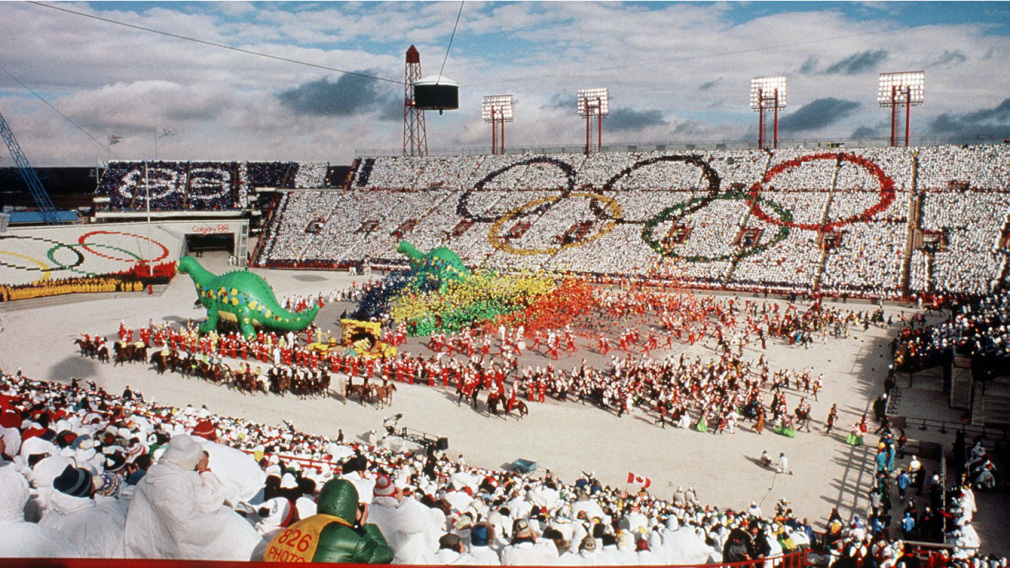
Calgary’s 2026 campaign, on thin ice a few months ago due to political concerns, received a boost in June when the Canadian Olympic Committee voted unanimously to support the bid from the 1988 Winter Games host city.
“This represents a very important and positive next step towards Calgary’s candidature for 2026,” said Canadian Olympic Committee president Tricia Smith. “We will continue to work with all the relevant stakeholders to build momentum to ensure an inspiring and responsible Olympic bid.”
In the coming months, the bid will launch a public engagement effort to convince city residents and the wider population of the benefits. But the Olympic bid may face a referendum in November, which could scupper Calgary’s aspirations.
The Italian Olympic Committee (CONI) is not rushing its decision on a candidate city. On 11 July, CONI’s executive board decided to submit a bid to the IOC – but it delayed the announcement on whether the city will be Milan, Turin, Cortina d’Ampezzo or a joint effort. An evaluation committee will assess the Olympic feasibility studies of the three contenders before presenting a report to CONI’s National Council. Italy’s candidate city will be chosen in August or September. The Italian government said in early July that it would support a 2026 bid under certain conditions. But political infighting may prove the bid’s undoing in the long run.
The eastern Turkish city of Erzurum is an unknown quantity. After a handful of failed attempts by Istanbul to host the Summer Olympics, it’s the country’s first push to land the winter version. Although largely unknown outside Olympic circles, the host of the 2011 World Universiade Winter Games and 2017 European Youth Olympic Winter Festival has some traction within the Olympic movement.
Back to Europe?
Stockholm appears favourite to secure the 2026 Olympics. The
Swedish bid has joined the other cities at IOC workshops and video conferences over recent months to enhance its Olympic plans. Bid officials say they’ve received good feedback from IOC executives and experts during the dialogue phase of the bidding process.
And Stockholm has struck a deal to use the Sigulda sliding track in Latvia for bobsleigh, skeleton and luge events, addressing one of the IOC’s biggest concerns about the bid.
Despite being on a firm footing, Sweden’s national elections in September may impact Stockholm’s bid. Government backing is necessary to pursue the city’s Olympic quest.
An October decision by the IOC executive board will determine which bids enter the one-year candidature phase, which concludes with the host city vote in September 2019. -
2018 European Championships venues lead the way
Billed as a new era in world sport, this summer’s multi-sport European Championships will elevate the profiles of host cities Glasgow and Berlin during an 11-day sporting extravaganza. The inaugural event will bring together the existing European Championships for athletics, aquatics, cycling, gymnastics, rowing and triathlon, while a new golf team championships will be held.
Around 4,500 athletes from 52 nations will take part in the championships, which are set to be held every four years after August’s event. And the UK’s biggest multi-sports event since the Glasgow 2014 Commonwealth Games is showcasing novel features in two of its venues.
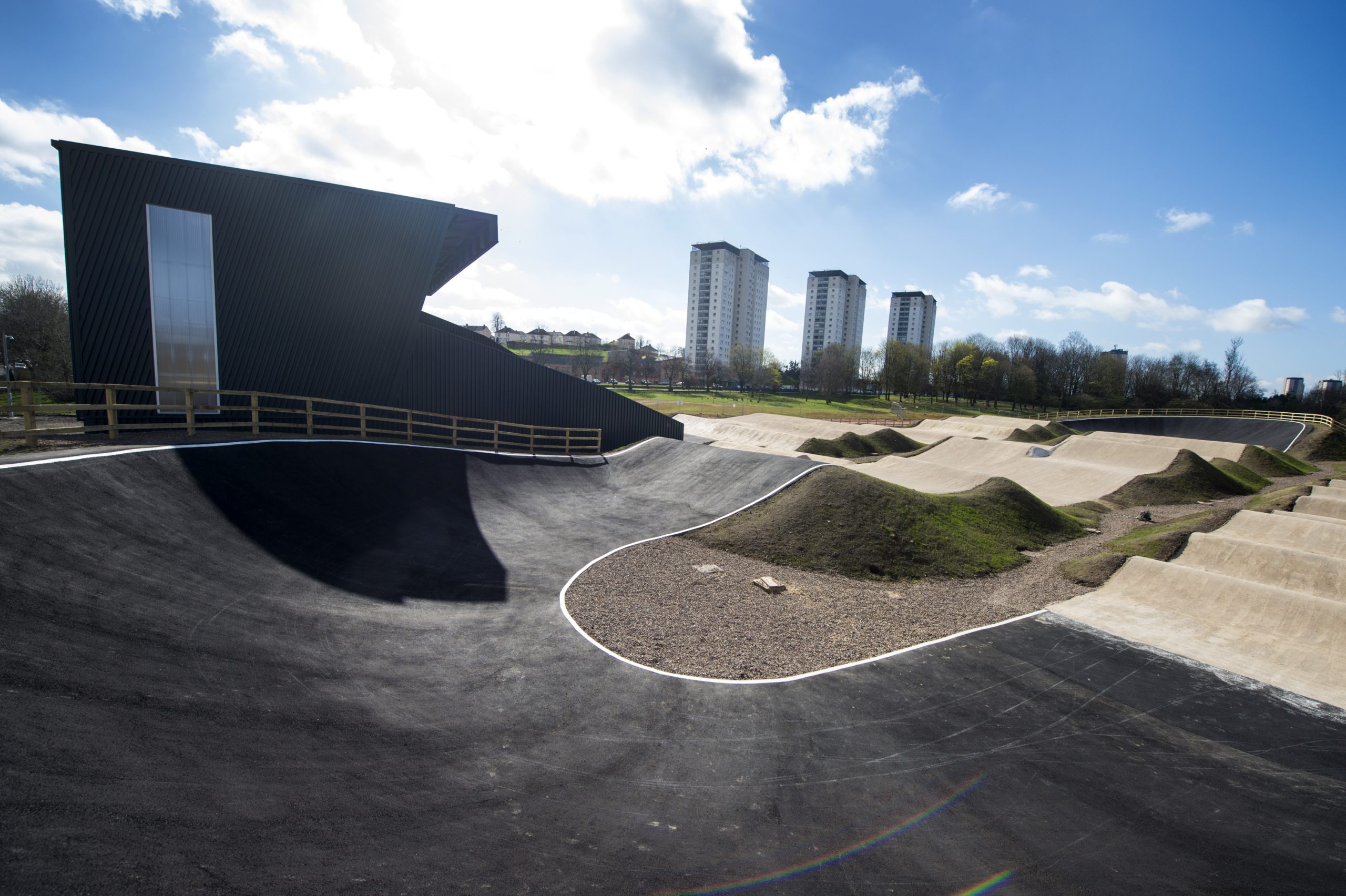
The Glasgow BMX Centre in Knightswood is the only permanent new venue constructed for the event. The first ever world and Olympic-standard BMX track for Scotland, built at a cost of £3.7 million, makes Glasgow the only city in the world with venues capable of hosting all four Olympic cycling discipline events (BMX, mountain biking, road and track) within its city boundary. All four disciplines are being staged as part of the European Cycling Championships.
The facility, completed in May 2018, features the only outdoor 8-metre ramp in the UK as well as a 5-metre starting ramp. Funded by Glasgow City Council, SportScotland, Glasgow 2018 and British Cycling, the venue is already open for use by the local community. After the championships, it will also be utilised for training by Western Titans BMX Club.
Colin Hartley, Glasgow 2018 championships director, said: “The exhilarating thrill ride that BMX will take us on in August is set to be spectacular, and we’ve got a fantastic venue for it.
“We commissioned the innovative Glasgow BMX Centre to be built especially for the championships and, in doing so, we brought Scotland its first and only world and Olympic-standard BMX track, with a legacy that will last for years to come.
“Witnessing the BMXers take to the track this August will definitely be a moment to remember.”
Swimming Pool Innovation
Home to the Glasgow 2018 Synchro Swimming European Championships, Scotstoun Sports Campus, located in the west end of Glasgow, is one of the busiest sport and leisure facilities in the city.
The campus accommodates both Scotstoun Stadium, home of the Glasgow Warriors, and Scotstoun Sports Centre. The centre is a Glasgow City Council-owned facility, featuring a 25m x 25m pool, gym, six squash courts, multipurpose sports hall, eight indoor tennis courts and the National Badminton Academy of Scotland. There are several outdoor football pitches and tennis courts.
In the wake of its successful hosting of the table tennis and squash events at the 2014 Commonwealth Games, Scotstoun Sports Campus was chosen to deliver the Glasgow 2018 European Synchronised Swimming Championships. It became an interesting and unique project.
The sport required a venue with a 20m x 25m x 3m competition pool as well as a training pool. Glasgow 2018 organisers thought outside the box and a decision was made to utilise Scotstoun by building an international standard synchronised swimming competition pool – in the indoor tennis centre.
The design team ensured all technical requirements were incorporated into the build, including the installation of a heating, ventilation and cooling system to regulate the temperature of the hall to 27 degrees.
The overlay included: excavation to create a level platform for pool filtration equipment and associated power overlay; construction of a platform to hold an HVAC unit that was craned into position over the building; and complete strip of all internal lighting to install temporary broadcast lighting, a competition PA system and screen rigging truss.
The work also involved construction of a 20m x 25m x 3m competition pool, installation of a 3.1m pool deck platform and two grandstands to accommodate spectators, athletes, sponsors and European federations’ guests, as well as installation of media and broadcast tribunes.
“We’ve got an excellent facility in Scotstoun, so it made perfect sense to build upon this in order to deliver a venue fit for our world-class synchronised swimmers,” said Glasgow 2018 director Hartley.
“Making the venue ready for the events was quite an interesting undertaking, and one we’ve really thrown ourselves into in order to make it as perfect as possible for both our athletes and attendees.
“Our grandstands will ensure everyone is able to see the show-stopping performances in this not-to-be-missed spectacular.”
For the first ever European Championships, a total of 12 venues across Scotland will be used. Glasgow hosts six sports – aquatics, cycling, golf, gymnastics, rowing and triathlon – while Berlin stages athletics at its Olympic Stadium, with the road races and race walking events held throughout the city.
More than 3,000 athletes will travel to Scotland as part of a total delegation of around 8,500 including officials, media and others. A further 1,500 athletes will compete in Berlin.
Festival 2018, an arts and culture programme, will complement the sporting competition in Glasgow and Scotland. “There is something on offer for everyone at Glasgow 2018, with elite sporting action and a unique cultural programme, and we want to see as many people as possible get out to enjoy the events whether that’s in George Square, Go Live at the Green or the sports venues,” said Scotland’s culture secretary Fiona Hyslop.
Organisers of the championships say it has a potential European TV audience of up to 1.03 billion. In a deal with the European Broadcast Union, its free-to-air members, including the BBC, will screen the event across the continent. -
Copenhagen to welcome ITS community in September
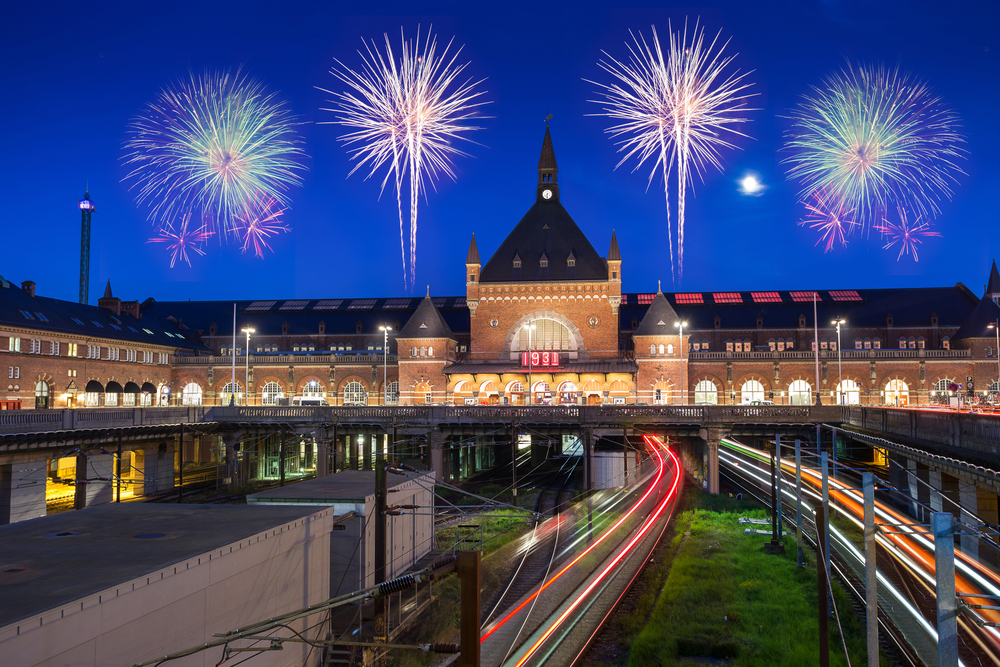
Copenhagen, with its long history as a vibrant Baltic maritime hub, is set to play host to the 25th Intelligent Transport Systems (ITS) World Congress. With “ITS – Quality of Life” as its main theme, this year’s Congress will explore how transport and mobility solutions can improve the quality of life in our cities by placing users and their needs at the heart of the mobility system. With this aim in mind, ITS experts from across the globe will converge in Copenhagen on 17-21 September to exchange best practices and advance the discussion on how to leverage smart mobility solutions to enhance people’s lives.
At this year’s Congress more than 10,000 participants from over 100 countries will discuss issues related to cybersecurity, resilience planning and smart transport solutions among many other themes. The ITS World Congress programme covers a range of interesting topics, from intelligent transport and the environment to the legal and safety aspects of cooperative, connected and automated mobility.
The 2018 ITS World Congress topics are:Mobility services from transport to mobility,
ITS and the environment,
Connected and automated transport,
Next generation goods delivery,
Satellite technology applied to mobility,
Transport networks evolution,Host topic:
Cross-border mobility solutions.
“This year we will put emphasis on creative thinking, interaction and dialogue through a variety of sessions. Attendees will have access to innovative ideas and concepts from experts presenting in more than 150 dynamic sessions. Our vision is to enhance the interaction between the speaker and the audience, and thereby increase knowledge and expertise shared between our delegates from around the world” – ERTICO – ITS Europe Congress Director, Didier Gorteman, confirms.
Featuring more than 200 sessions and workshops, an exhibition, numerous demonstrations and technical tours, as well as a series of networking opportunities, associated events and social functions, the Congress is an ideal opportunity to learn from peers and share knowledge about the latest technologies and policy developments from across the world. It is also an excellent forum for the forging of new partnerships, offering participants the opportunity to join forces to push for positive change in the mobility sector.
The ITS World Congress 2018 is organised by ERTICO-ITS EUROPE, a public-private partnership of 120 companies and organisations representing stakeholders in the intelligent transport ecosystem, in collaboration with the City of Copenhagen, the European Commission, ITS America and ITS Asia-Pacific. ERTICO believes that the Congress, by providing these stakeholders with a forum to share their experience and learn from each other, makes a key contribution towards ensuring that intelligent transport systems improve the quality of life in cities and better serve the needs of urban transport users.
“The topics of this year Congress cover the most relevant areas in today’s business and policy agendas and are in perfectly in line with our activities and priorities: Connected and Automated Driving, Urban Mobility, Clean Mobility, and Transport and Logistics. As organisers of the largest event on smart mobility and transport digitalisation, we work closely with our Partners to ensure that we drive forward our shared vision towards zero accidents, zero delays, fully informed people, and a reduced impact on the environment. The ITS Congress is a great channel for us to promote this vision as well as to meet our overseas colleagues, understand their current work, see what solutions they have already in place and what their plans for the future are.”, ERTICO – ITS Europe CEO, Jacob Bangsgaard
Sustainability in Action
Copenhagen is ideally suited to host the ITS World Congress. The city regularly ranks at the top of the world’s most liveable cities, thanks to its commitment to sustainability. The city’s green credentials are reflected in some impressive statistics – around 45% of Copenhageners cycle to work, pedalling a combined total of 1.4 million kilometres per day. In fact, there are more bicycles than people in Copenhagen and only 29% of the city’s households own a car. Copenhagen is working hard to become carbon-neutral by 2025, and the ITS World Congress will be an opportunity to learn about the technologies and policies they are using to help achieve this goal.
“The city fuses quality of life at local level with a global outlook. It is internationally renowned for its innovative approach to climate and the environment. It has a reputation as the world’s best city for cyclists. It is a living showcase for Danish architecture. But most of all, Copenhagen is a good place to be. None of this came about by chance. It is the result of years of planning and development based on the needs of Copenhageners,” Frank Jensen, Lord Mayor Copenhagen, said.
During the ITS World Congress 2018, Copenhagen’s streets and squares will be used to display innovative ITS demonstration projects showcasing the latest technical innovations. Also on show will be Danish transport solutions, research findings and technological expertise, as well as products and services from Danish companies, in the hope of encouraging growth in exports of green mobility solutions.
Lord Mayor Jensen added that the ITS World Congress 2018 is a lever to bring together international public and private partners in a close collaboration that will contribute to the advancement of worldwide future ITS solutions. “On a regional level, the goal is that the Congress should strengthen the potential of cross-border partnerships in Greater Copenhagen, and reinforce the wide-ranging alliance within the Nordic Region,” he said.
Spotlight on Multimodality
The 25th ITS World Congress is one of the culminating events in the European Year of Multimodal Transport, during which the European Commission is promoting ‘multimodality’ with a range of initiatives. Major advances are foreseen as a result of this initiative, such as new regulations on multimodal passenger rights and data. It is no coincidence, then, that the ITS Congress has as a clear focus on multimodality and how to forge a path towards truly seamless and effortless mobility and achieve a system that is more efficient, sustainable and user-friendly.
Within this context, a session at this year’s Congress will examine how Mobility as a Service (MaaS) pilots and projects are aligned with the new regulatory environment and whether the proposed regulation takes into account results from field trials conducted throughout Europe. Also at the Congress, the European Commission will provide an overview on the regulatory framework around the deployment of multimodality and will share the progress made in MaaS projects funded by the EC.
Shape the Discussion
For anybody interested in the latest trends in smart and integrated transport, the ITS World Congress represents an ideal opportunity to contribute to and shape this discussion, share knowledge and learn about the latest technologies and policy developments globally. The Congress is an ideal forum to network with like-minded enthusiasts and leading experts with a view to forging new partnerships and pushing forward the intelligent transport agenda.
The Congress programme will be complemented by a 25000 sqm exhibition with the participation of over 400 companies and organisations from all over the world, showcasing their intelligent transport and smart city technologies and solutions. The 2018 Congress will also launch the first-ever exhibition space dedicated to young ventures of smart mobility at an ITS World Congress. The Area-C Startup Connector is an exclusive space for start-ups, giving them the opportunity to present their latest innovations and meet with potential business partners.
Furthermore, delegates of the Congress will have the opportunity to go on various technical visits and view demonstrations of the latest state-of-the-art products and solutions for real-world mobility scenarios, providing answers to some of the world’s most pressing challenges, such as climate change, air quality, urbanisation, congestion and traffic safety.
By providing a forum for the exchange of ideas and best practices from around the globe, the ITS World Congress will make a significant contribution to the promotion of user-centric smart mobility solutions, both in Europe and internationally, supporting the event organiser ERTICO-ITS Europe in its efforts to improve the quality of transport systems for Europe’s citizens.
What are the ITS Congresses
ERTICO ITS Europe organises either an ITS World Congress or an ITS European Congress every year.
The ITS World Congress rotates between Europe, the Asia Pacific region and the Americas, returning to Europe every three years. The ITS European Congress is held in the years when there is not a World Congress taking place in Europe.
The Congresses provide the ideal opportunity for all stakeholders to come together, discuss and make the necessary contacts to move initiatives forward and to develop their business by exhibiting and demonstrating state of the art ITS solutions. The Congresses also showcase the latest ITS achievements from the city and region hosting the Congress, and can help increase awareness of ITS in the Host region itself.
The ITS Congresses (European and World) consist of three main areas; Congress programme (sessions and presentations of the latest developments in ITS), Demonstration (showcases of current ITS technology being developed and deployed throughout the world) and Exhibition (exhibition booths and dedicated sessions/events). Participating in these three areas offers a unique opportunity to show and explain the latest technologies and services, with a slightly different focus for each.
During the Congress, ERTICO Partners also have the opportunity to arrange more focused ancillary events before, during and after the Congress. ERTICO develops specific mobile applications, networking facilities, webinars, videos, interviews and articles on both topics in focus at the Congress but also on the different companies participating. This provides the ERTICO Partners with yet another means to promote their technologies and services.
www.itsineurope.com -
Peru celebrates one year to go until Lima 2019 in Lima’s Historic Centre
[Source: Lima 2019] Thousands of Peruvians today descended onto Lima’s Historic Centre to celebrate the one-year countdown until the Lima 2019 Pan American and Parapan American Games.
The event, organised by the Lima 2019 Organising Committee, together with the Peruvian Olympic Committee, Peruvian Paralympic Committee and Peruvian Institute of Sport, was held at Lima’s iconic Plaza de Armas.
Sporting demonstrations were setup across Lima’s Historic Centre in order to familiarise members of the public with sports and para-sports set to take place during the Games. These included basketball, wheelchair basketball, sitting volleyball, tennis, golf, archery, Para archery, football, five-a-side football and bowling.
A meet and great zone was also established for members of the public to engage with a selection of Peru’s top athletes and para-athletes who will take part in the Games next year.
The event was attended by a wide range of Peruvian sporting authorities including President of Lima 2019 Carlos Neuhaus and the Head of the Peruvian Sports Institute (IPD) Oscar Fernández.
The event culminated in the unveiling of a Lima 2019 clock which kickstarted the countdown to the biggest sorting festival ever to be held in Peru.
Addressing members of the public at the Plaza de Armas Lima 2019 President Carlos Neuhaus said:
“Today we celebrate an important milestone on our journey to hosting Peru’s largest ever sporting event. One year from now, the best athletes from the Americas will be in Peru competing in what will surely be the best ever Pan American Games and Parapan American Games.
“We are preparing the right Games for Peru and Panam Sports. Our Games will feature world-class and sustainable venues designed for maximum social and sporting legacy. We are building many of these venues in underserved neighbourhoods to ensure the legacy affects these communities. .
“The Parapan American Games will also create opportunities and improve accessibility for people with an impairment across Peru.”
In what was the biggest surprise of the day, a pre-recorded message from Peru’s record goal scorer and captain of the national football team, Paolo Guerrero was screened to members of the public at the Plaza de Armas.
“Hello friends. In one year Lima will host the biggest sporting event on the continent – the Pan American and Parapan American Games.
“As a Peruvian, I feel immensely proud as this is a great opportunity to prove that we can compete at the highest level, always in the spirit of fair play. The Games are also a great opportunity to build modern sporting infrastructure that will be left as a legacy for all of Peru.
“For that reason, I ask you to not put away your jerseys. Keep supporting us and together we can show the world that we can add commitment to our enthusiasm in order to achieve our dreams. Let’s all get ready for the Games.”