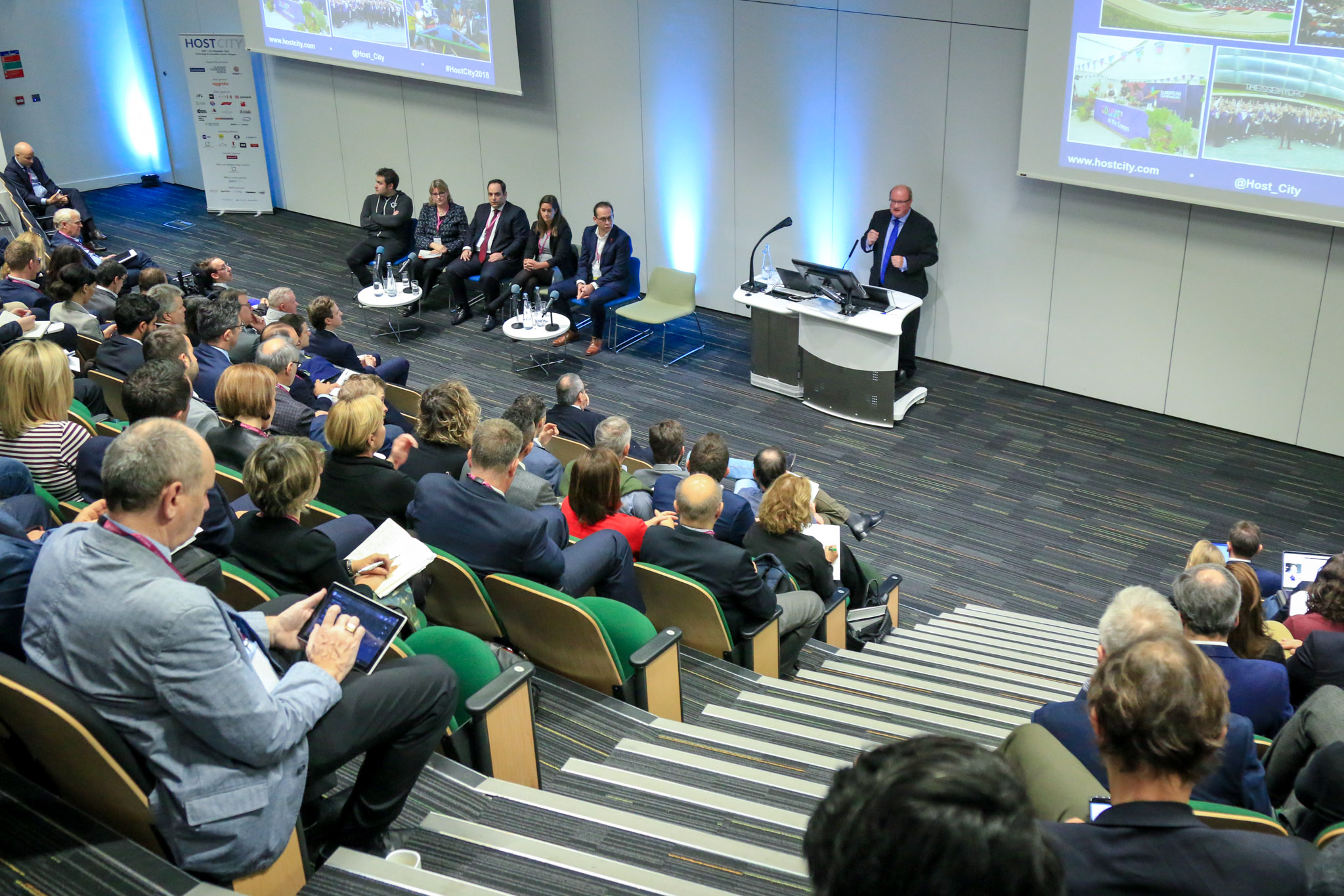
Opening the 2-day Host City 2018 conference, Paul Bush OBE, VisitScotland’s Director of Events, reflected on the busy year it has been for the global events and festivals sector as well as looking at the opportunities and challenges facing the industry going forward.
He said: “The last 12 months has seen a packed calendar of major events across the world, kicking off with the Winter Olympic and Paralympic Games, followed by the Gold Coast Commonwealth Games, the FIFA World Cup in Russia and most recently the Youth Olympic Games in Buenos Aires.
“It has also been pretty historic year for Scotland. We saw the opening of V&A Dundee, Scotland’s first ever dedicated design museum and the only other V&A museum anywhere in the world outside of London.
“We’ve also had our first themed year dedicated entirely to Scotland’s young people off the back of our bid to host the Youth Olympics that were recently held in Buenos Aires. As a legacy of that bid, and by putting our young people at the heart of Scottish society, the themed year has been one of the most successful things we’ve done.
“And one of the shining lights of the year was the inaugural European Championships with co-hosts Berlin. Those 11 days in Glasgow and Berlin were quite spectacular. There were many doubters and many doomsayers but it reached an estimated audience of 1.03 billion viewers and its success has created real momentum for the future that international federations need to look at.
“As a new event we didn’t have a manual on how the Championships should be delivered, giving us the opportunity to be innovative and find new ways of working. And while there were undoubtedly some challenges as we navigated our way down this new path with our co-host and the seven sports federations, overall the sector really responded, creating a delivery model that has caused real disruption within the events market.”
It is this delivery model that Paul believes we will see more of in the future.
“Already we’ve seen the 2026 FIFA World Cup awarded to the Unites States, Canada and Mexico as part of a joint bid and in 2020 the UEFA EURO 2020 will be hosted by 12 countries.
“In line with Agenda 2020, I think the International Olympic Committee need to be brave and give the Games to two or three countries. For me, it is the only way it will be sustainable in the future by spreading the benefit but also spreading and mitigating the risk.”
“Co-hosting across cities, regions or countries is an important trend for the future. It allows for more sustainable impact by using existing infrastructure as well as developing those social and cultural benefits across a much greater geographical area.
As well as new delivery models, technology was another area Paul believes will continue to have a big impact on major events in the future.
“Digital integration will also play a big part in the future of how major events are presented. We need to think how technology plays a part not only for the audience sitting in the stadium or concert hall but sitting at home whether that’s down the road from the venue or in a living room on the other side of the world.
“From augmented reality, live streaming to the availability of real-time data, all these tools are now at our fingertips to enhance the fan experience and drive greater engagement with an event.
“We’ve also seen the evolution of new events thanks to technology. The growth in esports and with it major live esport events, represents a massive opportunity for the sector. With an estimated 130 million competitive gamers who watch games online, and the huge growth market of esports, the alignment between traditional major events alongside an esport equivalent is massive.”
While it is an exciting time to be involved in the events and festivals industry, Paul strongly believes the sector still has more to do to ensure it articulates the short and long term legacy benefits if we are to continue to have meaningful impact.
“I know I said this at last year’s conference but I still believe we have a lot of work to do to truly showcase the impact hosting major events can have on a city and a country to our politicians.
“As an industry we can create impact across global governments like no other sector can. It is about ensuring a 360-degree holistic model approach to the planning and delivery of events, ensuring they are that are enshrined in policy whether its health, education, transport or sustainability. It is quite a change in mind-set moving forward.”
Concluding his opening remarks, Paul took a moment to remember two titans of the international sporting world – Mike Lee OBE and Patrick Baumann.
He said: “Their recent passing has come as a great shock to everyone. Over their careers they both made huge contributions towards the Olympic movement and they will be greatly missed.”
Host City is Europe’s largest meeting of cities and sports, business and cultural events, attracting a large number of senior representatives of cities and destinations from around the world, who are interested in sharing strategic and sustainable approaches to hosting the world’s greatest sports, cultural, business, science and entertainment events.
[Source: EventScotland]
Blog
-
A policy-led process is the future for major events
-
Host City 2018 builds “The Future of Major Events”
In a keynote address, International Olympic Committee Vice President Prof. Dr. Ugur Erdener said:
“We – the rights holders, hosts organisers, International Federations and all stakeholders –all have to respond to and meet the new needs of the changing world. We must re-evaluate the content and formats of our major events to ensure that they are engaging and beneficial for future generations.
“As long as measures are taken to ensure their sustainability through creating greater value for hosts and partners alike, and by cooperating and collaborating with the hosts throughout the planning and delivery of the event, aligning with government policies to deliver long-term transformational change within society, the future of major events will continue to be a positive one.”
In his welcome address, Paul Bush OBE, Director of Events at VisitScotland said:
“Looking ahead, I believe there are three key areas that will have an influence on the future of major events. Co-hosting events across cities, regions or countries is an important trend for the future as it will allow for more sustainable impact by using existing infrastructure as well as developing those social and cultural benefits across a much greater geographical area.
“Digital integration will also play a big part in the future of how major events are presented. From augmented reality, live streaming to the availability of real-time data, all these tools are now at our fingertips to enhance the fan experience and drive greater engagement with an event.
“And finally, it will be about ensuring a 360-degree holistic model approach to the planning and delivery of events, ensuring they are enshrined in policy whether it be health, education, transport or sustainability.”
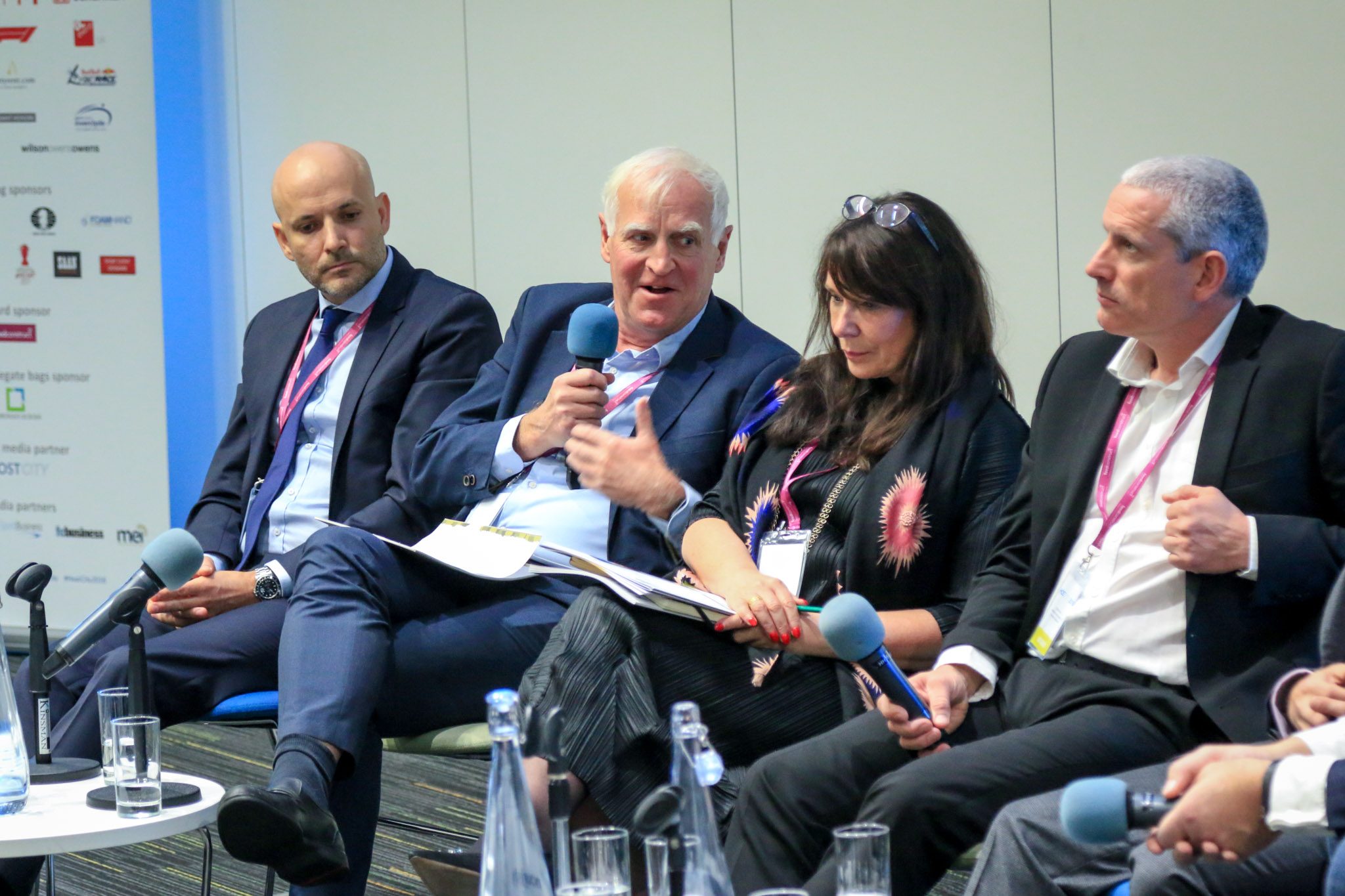
Speaking on the opening panel, Ansley O’Neal, Olympic Programme Commission Manager, International Olympic Committee said:
“One of the exciting things we are looking at in terms of how we put together the sports programme is not just the urbanization of sports, not just the way in which sports are delivered in the future, but how you continue to appeal to an audience all over the world when sports are becoming more topically relevant within different regions.
“We as a property are looking at a broader content perspective – really trying to drive what’s happening on the field but also outside the venues.”
Alban Dechelotte, Head of Sponsorships & Business Development EU Esport, Riot Games said: “We are the new kids on the block, the future is now for us. We are young, digital and international. 85 percent of our audience is below the age of 25.
“We are building the same governance as every federation; the only difference is that we own the sports, the leagues and the broadcast. For us the future is to go deeper, not broader; instead of trying to go global we go local; instead of trying to be agile we are trying to build the governance that will lead us for decades.”
Dimitri Kerkentzes, Deputy Secretary General, Bureau International des Expositions (BIE) said:
“The future for the Expo is really a question of being able to communicate the reasons why we want to have these events in these cities.
These are presence-based events – the only way to really experience it is to be present. That means a lot of infrastructure needs to be put in place, and we need to communicate to citizens why we are doing this. Are we just using the expo to catalyse it or are we seeing it as a benefit for the future of the region?”
Jon Dutton, Chief Executive, Rugby League World Cup 2021 said:
“The way we consume sport and entertainment is changing, therefore we have changed as organisers. We will stage our first ever Esports event during the World Cup to engage with Generation Z and millennials who wouldn’t normally engage with our tournament.
“Alongside the men’s competition we’ll run the women’s world cup, the wheelchair world cup and a masters tournament. And we will have a big cultural programme. We are going to deliver all this at a time when the world is changing in front of our eyes.”
Dr. Bridget McConnell CBE, Chief Executive, Glasgow Life said:
“Events, important in their own right, also have to be milestones in terms of the wider health, education, culture, sport agenda. Linking an event to other policies is a no-brainer – it helps the public understand why you are doing it.”
Neil Carney, Project Director for the 2022 Commonwealth Games, Birmingham City Council said:
“When we look to the future, it’s about a sense of partnership between organising committees, rights holders, host cities and suppliers. They are all competing with one another, so how do we create a safe space for those natural tensions? Events like this really do help with that – there are no other forums where we can have these conversations.”
David de Behr, Head of Sales Major Events, Aggreko Event Services said:
“Our role is to give federations and associations an alternative, to maybe change the concept. The ones which are in trouble are the multi-sports events. We have a lot of solutions to make them more sustainable, but we need to be part of the vision.”
Other speakers included top level representatives of Formula 1, National Olympic Committees, European Olympic Committees, Auckland, Victoria, UEFA, OECD, Eurovision Song Contest, GL events, AFL Architects, EBU, Cirque du Soleil, Coventry City Council, DF Concerts & Events, Rotterdam Ahoy, European Arenas Association, International SAMBO Federation, Nitro Circus, Red Bull Air Race, FIBA, UK Sport, World Archery, innsbruck-tirol sports, International Association of Event Hosts, London & Partners, Brno City and many more. -
Regional SportAccord to launch in Pan America
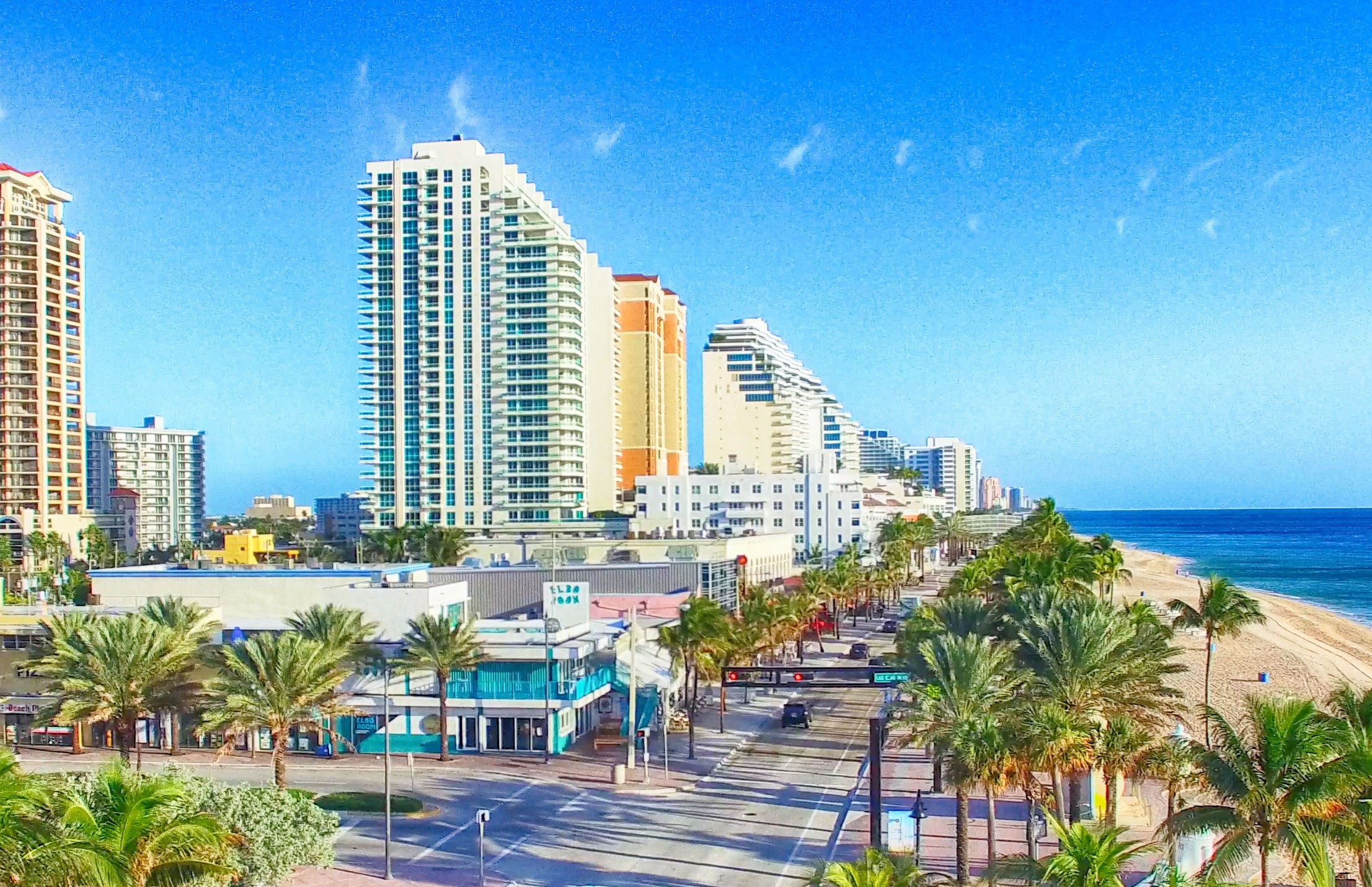
[Source: SportAccord] The 3-day event will enable international sports federations to gather with key players and stakeholders from the Pan American region to further develop their sport. The event will run from 10-12 December 2019 at the Greater Fort Lauderdale / Broward County Convention Center in Fort Lauderdale, USA.
Stacy Ritter, President and CEO, Greater Fort Lauderdale Convention & Visitors Bureau said:
“It is a privilege and honor to be the host destination of the inaugural Regional SportAccord Pan America conference to be held on the sunny shores of Greater Fort Lauderdale.
“It is an invaluable opportunity to provide an educational platform for the Americas continent with a business, professional, governmental and altruistic interest in how Olympic and non-Olympic sports function at the international level; while providing marketing opportunities to the future growth of sports in the Americas.”
Regional SportAccord Pan America is aimed at cities and regions, sports commissions, as well as industry sectors involved in marketing and sponsorship, media rights, finance, education and sports equipment manufacturers to name a few – represented at the highest levels.
Speaking about the new regional event, Francesco Ricci Bitti, Executive Committee Member of SportAccord and President of ASOIF said:
“The Regional SportAccord will bring a variety of prominent leaders in the world of sport together to form a platform that will enable Pan American delegates to gain a global perspective from the Olympic and non-Olympic movement.”
“Regional SportAccord provides the ideal platform to exchange practical ideas and helps to shape the future of sport. Being able to discuss challenges with leading experts, meet and network with key players, have direct access to conference presenters and get a deeper understanding of the trends that will affect sport in the years to come – all under one roof.”
Regional SportAccord Pan America will stage a conference and 2-day exhibition and host a variety of social events giving delegates many occasions to network and build relationships in one location.
Exclusive commercial partnerships are available for organisations who want to raise their visibility and presence at this inaugural event.
Stephan Fox, President of the International Federation of Muaythai Amateur (IFMA) and Vice President of GAISF said:
“The concept is a fantastic opportunity for international sports federations to grow their sport at national and grassroots levels, in regions that they may not be familiar with.
“This high-level gathering helps the international sports federations to link-up with key-players in Pan America who want to further develop the business of sport in the region and host international events. This is an exciting time for sport and these ambitions provide new opportunities and experiences for the sports community and Pan American citizens.” -
Queensland’s Tourism Industry Development Minister to Welcome Delegates to CityAccord 2019
[Source: SportAccord] SportAccord is delighted to unveil its Gold Coast CityAccord conference programme: Mindful Event Hosting – Respecting the Past with a View to the Future.
CityAccord is aimed at multiple event stakeholders including cities and regions, sponsors, international federations, organising committees, as well as industry.
Queensland’s Tourism Industry Development Minister Kate Jones will welcome delegates to CityAccord and commented why CityAccord would be an important part of SportAccord 2019 on the Gold Coast of Queensland.
“As the keynote speaker at CityAccord 2018 in Bangkok I know the importance of the conference and the opportunity it provides to speak directly to delegates.
“We are excited to host numerous great cities from around the world here on the Gold Coast in 2019 and look forward to sharing our experiences and expertise from developing Australia’s best events calendar and of course from hosting the Gold Coast 2018 Commonwealth Games.”
The CityAccord conference will include panel sessions covering: Innovative City/Event Ticketing Approaches and Sport Destination Cities Branding – What Works?! with Q&As following each session.
Nis Hatt, Managing Director of SportAccord said:
“CityAccord is always a popular event at SportAccord and attended by organisations who have a vested interest in sport. This year’s CityAccord conference programme promises to deliver some innovative ideas on increasing revenue streams, including how to capitalise on secondary ticket sales, as well as make the most of the myriad opportunities available to a city when hosting an elite sports event.
“It goes without saying, hosting SportAccord in Gold Coast is a great opportunity for organisations to learn how much Queensland has to offer.”
This year’s Co-Chairs for CityAccord are Mélanie Duparc, Secretary General, World Union of Olympic Cities, and David Simon, President of the Los Angeles Sports Council.
The Gold Coast edition of SportAccord will host over 50 conference sessions with around 100 international speakers and panellists taking part. The five conference streams include: The Summit, CityAccord, LawAccord, MediaAccord, and HealthAccord.
-
Transporting live entertainment productions across Europe
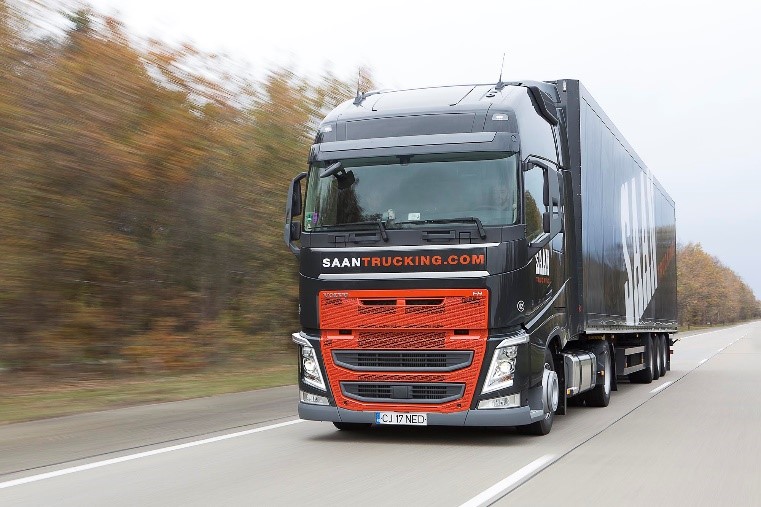
Saan Trucking is a young independent company that originated in 2012 from Royal Dutch Saan, a family-based company with a great history in logistic services.
For the last couple of years, many touring-shows and complicated logistic projects have been trusted to our expertise. We strive for quality and continuity, which results in long term partnerships with our clients, the allocation of extraordinary one-off projects and a growing market share in fast trucking services. Our focus lies on the road in front of us, but our view is beyond the horizon.
Saan Trucking makes sure that live entertainment can be truly live. Any time, any place in Europe. We offer custom-made transport solutions for live entertainment productions. Our strength is characterized by high quality service and our engagement with our customers all along the road. With a small committed team, we provide the best trucking service for the best price.
We do many different types of live entertainment trucking projects; family entertainment, one-off projects, some smaller orchestras, sports events, music performances.
Disney on Ice
As one of the most popular family-entertainment shows in the world, Disney on Ice has been around for many years. This special show casts more than 50 well-known Disney-stars, performing over 30 sing-alongs from the entertainment company.
The show “100 Years of Magic” was touring Europe in the winter-season 2016-2017, performing more than 250 shows in 31 cities within 6 months. For this show, Saan Trucking was chosen to arrange the transports within the continent, deploying 22 trailers on average and driving over half a million kilometres. The show includes two ice-sets that move separately to the other equipment. The result is a production that requires three separate planning and routing operations that need to be overseen.
Holland Heineken House
Holland Heineken House is the national home of the Dutch Olympic Committee and the overseas home to all the Dutch athletes, families, fans and sponsors during the Olympic Games. In 2014 Saan Trucking was granted the full logistics operation for building the Holland Heineken House in Sochi, Russia during the Olympic Winter games.
This logistics project took about five months and covered the whole operation from planning until the return of all equipment to all vendors. Due to safety regulations and driving bans as an effect of the Olympic Games, we faced a tight timeframe to get all the equipment into Sochi. The operation consisted of loading on various locations, transfer, parking and just-in-time delivery at the venue.
We executed the transfer of 19 trailers from the Netherlands to Sochi using two ferry transfers. The first from Germany to Latvia was used to reduce turnaround time and economic reasons. A 2,500 km drive brought us to the second ferry; this ferry was mandatory due to a driving ban for the route to Sochi. Together with all the extra safety regulations, this was the biggest challenge for this job.
Thanks to our experience and extending network in Russia we concluded this project with a quick return home. The Holland Heineken House is a typical example of a close cooperation with our client and our experience with a-typical one-off projects.
Volvo Ocean Race
The Volvo Ocean Race is the world’s premier offshore race which is held every three years since 1973. It belongs to the largest sailing events in the world and it is considered the toughest sailing competition for teams. For the 2014-2015 edition Saan Trucking supported the official logistics supplier GAC Pindar with extra coordination, storage and flexible transport service.
We supported the race in three different ways. First, we provided full coordination and storage of an extra mast and accessories in a strategic location in Amsterdam. The mast should be 24/7 available if it was to be used as a substitute on one of the boats of the race.
Secondly, we transported several supplies from suppliers of the Volvo Ocean Race in the Netherlands to the start of the race in Alicante, Spain. Therefore, we used 10 trailers to Alicante, collect containers, lift-offs and one of the chassis was provided by us at the suppliers. Finally, we provided the transport for several stopovers in Europa, from Lisbon to the finish in Gothenburg, Denmark. Because of the tight race schedule, the challenge was to provide all the equipment in time. Therefore, we combined ferry and road transport, most of the time overnight.
The Volvo Ocean Race is a typical example of a successful sports event collaboration between the client, Saan Trucking and a third party in logistics.
Our fleet consist of tractors, box, softside and flatbed trailers, both mega and standard. All our trailers are equipped with the necessary facilities such as e-tracks at various heights, ratchet straps and load-bars. Recently we have expanded our fleet with five new trucks, all branded in our company colours to match with our current fleet.
We believe it’s not only about the trucks on the road, it’s about the people who drive the trucks. Our dedicated drivers speak fluent English and are very experienced in handling any live entertainment production successfully. Our drivers think beyond transport and provide additional services on site where possible. We offer transport solutions suitable to your needs. We put great care in personal contact with our clients, therefore you can contact us 24/7 by email and phone. If necessary, even in the middle of the night. So please do not hesitate to contact us about the possibilities of supporting your live event.
This article was contributed by Saan Trucking. For more information visit www.saantrucking.com -
Transport as an event experience – Citec
Transport and mobility are part of the event experience, providing the first and leaving the last impression to all participants. It is with this in mind that Citec plans transport operations for some of the most interesting sport events worldwide.
The mobility concept and transport planning are key to the success of an event. Quite often, the complexity and interdependence of the transport plan and its operations are under-estimated: a complex set of ingredients to be mixed by experienced event transport delivery professionals.
Most recently, the Ryder Cup in France 2018 was a transport success for Citec. The latest appointments for Paris 2024 Summer Olympic Organizing Committee and UEFA Euro 2020 are further proof of Citec’s commitment and expertise.
The next European Ryder Cup in 2022 will be in Rome, and Citec has already started to work with the Italian Golf Federation to deliver a mobility plan by end of 2018 to initiate the work with public authorities.
The 42nd Ryder Cup France 2018
For the first time in 20 years, the Ryder Cup took place outside of the UK. The 2018 edition was held in Saint-Quentin-en-Yvelines, 25km south of Paris, from 25 to 30 September. A total amount of 250,000 spectators came during the event week, with a peak of 60,000 visitors a day being transported to Le Golf National venue.
“This was the first time the Ryder Cup was organised in close proximity to a big metropolitan area,” says Stefano Manelli, Director of Citec.
Citec delivered the mobility and event transport operational plan, with a four-year process to get all the public authorities, transport operators and other stakeholders working together towards a common goal.
The project was carried out in close cooperation with Ryder Cup Europe, PGA European Tour, French Golf Federation and the relevant transport local authorities, such as Ile de France Mobilités and Saint-Quentin-en-Yvelines. In the very last year, the Ryder Cup preparation was also seen as the best test towards Paris 2024 Olympic Games transport operations, where the Golf National venue will again host a worldwide mega event.
“We could implement a holistic approach to mobility; great added value was in being involved immediately after the bidding process was over and France was successfully chosen. The French Golf Federation and Ryder Cup Europe operational management strongly supported the transport project as well,” says Manelli.
Analysing demand
Among the most important planning tools was accurate transport demand, which helped considerably during operations, allowing the correct amount of resources to be allocated to each origin-destination. With reliable planning scenarios, the design of transport malls and parking areas was simplified and optimised, allowing cost reduction.
A study was carried out to predict when and where spectators were arriving from, based on ticket-holder surveys and revised venue capacity figures. This data made it possible to adjust the need for additional operations on the day from train-and-ride and park-and-ride.
Another element was to set the size of the venue to the size of transport capacity. The notion behind this is “Level of Service”.
“This was a real achievement. Most of the time, this makes the difference between a good and a bad service,” says Manelli.
The project’s final goal was to identify all areas within Ryder Cup official locations with specific transport operations such as road closures and restrictions, traffic management and temporary deviations. All activities connected to this project aimed to find the correct balance between Ryder Cup transport operations and the need to minimise impact on residents.
The whole plan represented a total surface of 500,000 m2 of transport operating areas. This could give an indication to future organisers on how many logistic resources and spaces are needed for such a big event.
Operational phase
A total fleet of 400 urban buses and coaches served the four park-and-ride (for a total capacity of 12,000 car spaces) and two official train stations in Saint-Quentin-en-Yvelines and Massy, operating four different RER lines (from/to Paris downtown), specially enhanced with 50 additional trains on the six days of operations (extra capacity of more than 100,000 passengers).
All flows reached two main temporary bus terminals on the edge of Le Golf National (East and West wing). Each terminal, specifically designed by Citec, managed up to 10,000 people per hour. During peak times, at the end of a competition day, each terminal was able to dispatch an average of 100 buses and 50 coaches.
1,000 people were directly involved in transport operations, including volunteers, drivers, parking stewards and operational managers, under the supervision of 12 Citec on-site managers coordinating transport, parking, traffic and security operations on their dedicated site.
The transition from planning to operations always requires deep and attentive work. The Citec on-site team was trained in the peculiarities of transport operations in two full-day training sessions. Site visits and liaison with the other providers were also part of the on-site training.
Contingency plans were also designed to face weather difficulties, overflows, bus breakdown and transport shortage.
Enzo Calabrò, operational project manager at Citec says: “European Tour declared that this edition was the ‘best transport ever for a Ryder Cup’ and we are extremely proud to have planned and delivered such successful transport operations for one of the most followed events worldwide!”.
Key learning
Transport planning and adopted solutions can be scaled up with regards to different levels of service, according to the needs of a specific event.
Transport can help to fit the venue to the scale of the area and adapt local supply to fit the event. Transport can offer innovative and pragmatic solutions to allow optimising the operational setup of the venue, especially now where most efforts are made on mega-events to keep these to a reasonable scale – not least according to the IOC’s “New Norm”. -

A strategic and practical view of safety for host cities
The success of any major tournament, and the reputation of the host city, is intrinsically linked to the safety of the venues. The UK is rightly seen as a beacon of excellence in sports grounds safety but it is true to say that this excellence has come at a heavy price: tragedies such as Hillsborough highlight how poor our sporting infrastructure and levels of safety management were.
Watching live sport is a thrilling experience and cities that are hosting major tournaments will want to be assured that the safety of all people within a venue is taken seriously. In this article we outline a strategic approach to safety and provide some detail on forthcoming guidance that will enable host cities to manage safety challenges in today’s world.
Strategic issues
Host cities should ensure, early in the development process, that they adopt an integrated approach to safety, security and service. What does this mean? It means that safety, security and customer services are recognised as interdependent and cannot be treated in isolation. Safety and security must never come at the cost of customer service.
Host cities will know that security and safety are critical factors; the attacks at the Stade de France in Paris, in November 2015 showed that major sporting venues and infrastructure are a target for terrorist activity. Furthermore, the 2017 attack at the Ariana Grande concert in Manchester, in which twenty-two were killed, demonstrated that whilst there is often vigilance and attention given to crowds entering a venue, there is often less attention paid on exit.
But what does customer service mean? It means ensuring that the experience of the visitor is also a priority and that safety and security do not come at the cost of a poor experience. Communicating effectively with spectators, for example on search regimes, will assist host cities to avoid crowd agitation.
One of the reasons that the London 2012 Olympics were so successful off the field was the presence of the volunteer ‘Games makers’ who were there to signpost and guide spectators around the Olympic Park and venue: a great example of an integrated approach.
Practical advice
The principles of an integrated approach are firmly embedded within the newly released 6th edition of the Guide to Safety at Sports Grounds. The Guide is used across the world by architects, stadium owners, host cities and venue managers to help design and refurbish stadium and operate major events in line with international best practice.
The Guide reflects today’s challenges. As examples of what is new compared to the previous 5th edition published in 2008, is guidance not only on evacuation in the event of an issue within the stadium, but also the principle of “exceptional egress” which may arise as a consequence of an external stimulus and may indeed involve internal movement or “invacuation” The full impact on the psychology of a large crowd in response to being held within a stadium is not yet known but we provide practical steps to take as this area continues to develop.
It also addresses the external factors that create interactions between the stadium, the spectators and the immediate environment, including local transport hubs (‘Zone Ex’). These external factors will be important for stadium owners and operators to consider as part of their overall event management strategy and integrated approach to safety.
In our work across the world advising on strategic safety challenges we often see stadiums that are built to a good standard, but deaths and serious injuries occur due to failings in safety management. It is hard to overestimate just what a positive impact a more strategic approach to safety management can have.
In summary, the safest venue is an empty venue, but nobody wants to see that. Adopting an integrated approach means not just recognising the skills and expertise from different parties in managing an event safely and being clear on the roles and responsibilities of each party, but in ensuring that each agency dovetails to provide a strategic approach to safety.
Further details on an integrated approach can be obtained via the Council of Europe. The Sports Grounds Safety Authority (SGSA), as the world’s leading authority on sports grounds safety, are standing members of the committee. We advise governments, host cities, tournament committees and venues on best practice in venue safety management. -
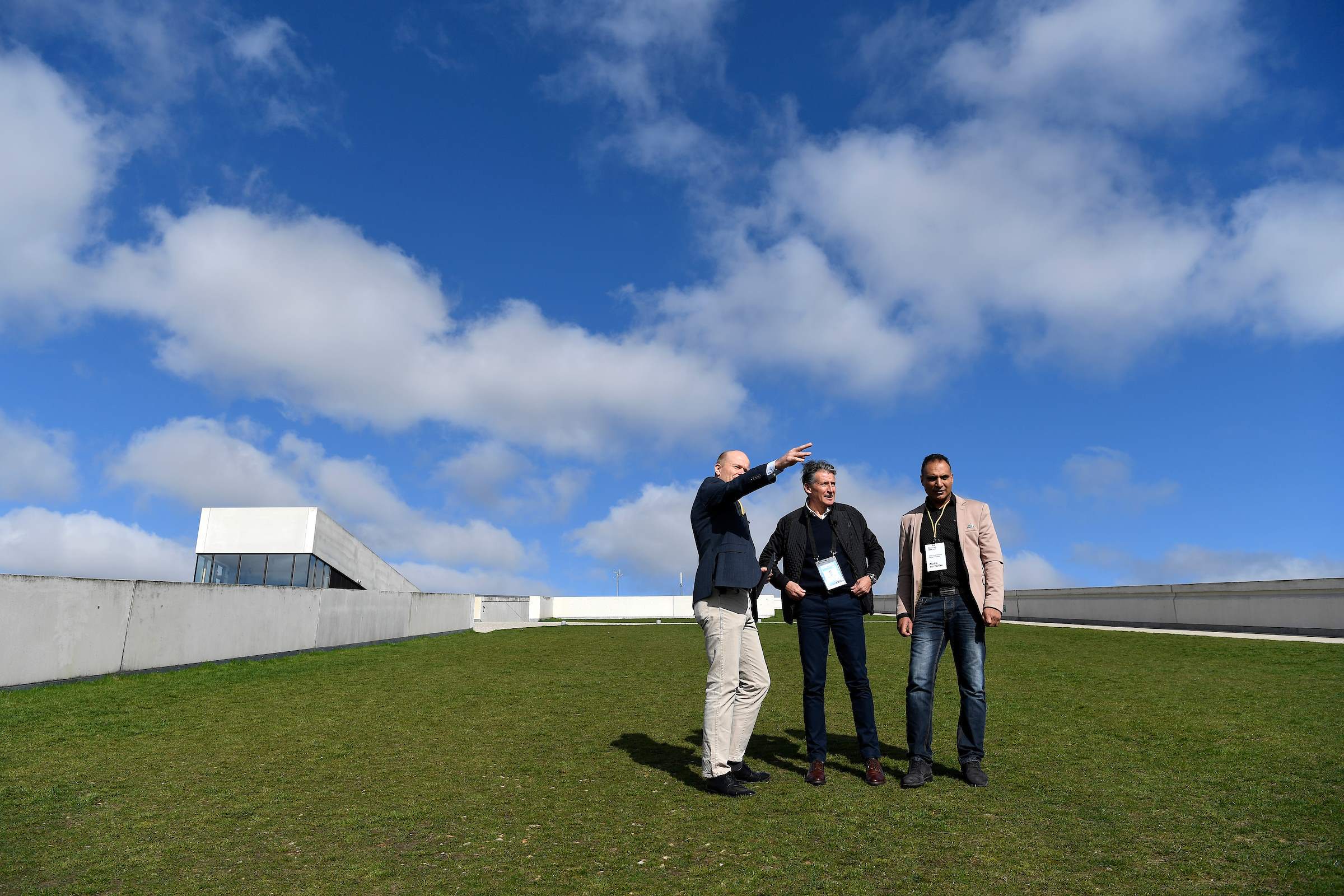
Denmark: a country with a view
What do you see when you scale the grass roof of the Museum of Moesgaard in Aarhus? You see the Danish landscape; you see part of the course of the upcoming IIAF World Cross Country Championships; and you see a country with a view. A view to great international sporting events.
Together with national federations and Sport Event Denmark, Aarhus has hosted a long list of major international sporting events.
Aarhus is just one of many active host cities within Denmark. Other Danish cities – Copenhagen, Herning an Odense – all played hosts to some of the greatest world championships this summer. The IIHF World Ice Hockey World Championship, The ITU MultiSport Festival and the Sailing World Championships were staged in Denmark in 2018 alone.
The Danish record of accomplishment was evaluated by IOC president Thomas Bach on his visit to the Sailing World Championships in Aarhus. “Denmark has proven to be a world-class organizer. No-one in the sporting world could have any doubts that Denmark could organize a fantastic Olympic Games, organizationally and logistically,” he said in an interview with Ritzau news agency.
Crossing cultures
Lars Lundov, CEO of Sport Event Denmark appreciates the compliments from the IOC-president, even if the Olympics are not on a Danish agenda.
“We have gained invaluable experiences through the staging of sporting events in Denmark. Sport Event Denmark as the national sporting event organization acts a knowledge bank and accounts for the future investments in bids for and organizing events for the international federations,” he explains, stressing that host cities and the national federations are vital in the collaboration.
In 2019, Denmark will host new events that will benefit from the experiences gained from the previous events staged in Denmark. The IAAF World Cross Country Championships is among those on the 2019 calendar.
The IAAF World Cross Country Championships is one of the world’s oldest running events. The event will be staged in March on Danish soil on and around the Museum of Moesgaard in Aarhus. The course will include running across the sloping grass roof of the museum.
The local organizers are currently developing an innovative concept for the event. The aim is to boost the championships to focus on cross-country running, nationally and internationally. In addition to the world championships, there are plans for supporting races for schoolchildren and a mass participation race.
The Danish vision has already attracted much attention from both the International Athletic Federation, IAAF and the international World of Running.
IAAF president Lord Sebastian Coe visited the innovative course and told the organizers: “It is really, really exciting because it will showcase our sport in an innovative, modern, exciting setting but also show that cross country is a tough sport, and it returns it to what I will describe as a traditional cross country course with the surrounding landscape.”
The view ahead of major international sporting events in Denmark is looking good as Danish host cities, together with Sport Event Denmark, keep bidding for more to fill the pipeline.
A selection of events in 2019
IHF Men’s World Handball Championship 2019
UCI CycloCross World Championships 2019
WCF World Women’s Curling Championship 2019
IAAF World Cross Country Championships 2019
Fact file: Sport Event Denmark
Sport Event Denmark is the national Danish sports event organization. Established and supported by the Danish Government. The objective is bidding for and hosting world-class sporting events in Denmark, for example World- and European Championships in different sports as well as major sports congresses. Sport Event Denmark works in close collaboration with the Danish host cities and the national governing bodies. Today Denmark is one of the leading countries in terms of hosting world-class sporting events (in top-15 globally according to SportCal).
#sporteventDK -
Aggreko awarded $200m contract to power Tokyo 2020 Olympics
[Source: Aggreko] Aggreko plc, the global leader in the rental of power, heating and cooling, is pleased to announce that its subsidiary Aggreko Events Services Japan Limited (‘AESJL’) has been awarded the supply contract in the category of ‘Temporary Electricity Generation’ by The Tokyo Organising Committee of the Olympic and Paralympic Games.
As part of the supply contract AESJL will provide temporary electricity (generation and distribution) systems to support the Tokyo 2020 Olympic and Paralympic Games. AESJL’s extended scope of supply includes temporary medium and low voltage power systems across 43 competition venues, the Athletes Village and the International Broadcast Centre, ensuring reliable power for all stakeholders in the venues and uninterrupted television broadcast to millions of viewers.
The value of the supply contract is expected to be in the region of $200m, and reinforces Aggreko’s confidence in its ability to achieve its mid-teens ROCE target in 2020.
Aggreko has a proven track record in supporting high profile events including this year’s PyeongChang Winter Olympics, Gold Coast Commonwealth Games, European Championships in Glasgow and Ryder Cup in France.
Chris Weston, Chief Executive Officer said: “We are delighted to have secured what is one of the most prestigious event contracts won by Aggreko. Our experienced team will support the Tokyo 2020 Organising Committee to ensure our role in the success of the 2020 Olympic and Paralympic Games is flawlessly delivered.” -

The futureproof venue is an innovation hub
The futureproof venue is a place that delivers total fan engagement and leverages technology to achieve this goal. Teams and properties need to think creatively about how to make their venues exciting today and relevant to their communities tomorrow.
To do this, questions around designing an experience that entices fans off the couch, keeps them safe, and engages them in a meaningful way should be considered early and often. Entertainment districts are rising to the challenge by creating spaces designed for multiple sports and events. Venues further strengthen their durability by enmeshing themselves in the city around them through mobility and connectivity initiatives.
If the fan is going to spend the time, money, and effort to get to the venue, they want to experience something they can’t be missed. They want to feel like they are part of something larger than themselves. Venues can deliver this by embracing their role as innovation hubs for emerging technology.
Acceleration of new technologies increases opportunity and risk
As a member of the PyeongChang Olympic Coordination Commission, our project began in 2011. In the 7-year span from kick-off to completion the world around us changed dramatically. Globally, internet access grew from 2 billion people in 2011 to 4 billion today.
This change was reflected in the 670 million people who watched the Games online, a 120 per cent increase from Sochi 2014. As applications on the Google Play store increased from 30,000 in 2010 to 3.5 million in 2018, mobile applications became the new way to access services such as ticketing and mobile ordering.
Behind the scenes, the evolution of cloud computing started to provide an easy to manage, scalable infrastructure resource which allowed companies to process large amounts of data. At the Sports Innovation Lab, we saw this change reflected in the proliferation of technology solutions. For the venues themselves, all of this change adds significant complexity but also provides opportunity to create differentiated and compelling technology-powered experiences that can wow fans.The rate of technology evolution presented challenges for the Organizing Committee of the Olympic Games (OCOG), as technology decisions are made three to five years before the first event begins. As available solutions changed between 2011 and 2018, so too did fan expectations: mobile ordering, contactless payments and high-speed connectivity became the norm (for social media and instant replays).
Despite these challenges, the 2018 Olympics was a presentation of today’s most exciting technologies, from 8K broadcasts and 5G connectivity to virtual reality. Staying abreast and ahead of the rapidly evolving technologies and fan expectations will be essential to the success of the Games in Tokyo, Beijing, Paris, and LA.
Smart venues rise to the challenge
To match pace with the rate of technology evolution, the futureproof venue must be an innovation hub where technology providers test their solutions. The pressure and opportunity for what we at the Sports Innovation Lab call a ‘Smart Venue’ continues to build. A Smart Venue removes hassle, creates memories and builds a technology platform for further innovation. We see a host of new solutions adding to the fan experience.
Technologies that remove hassle and create memories were on full display in PyeongChang. Many of the The Olympic Partners (TOPs) used the Games to demonstrate their technology capabilities on a global platform. I was able to see and hear about the future of 5G with Samsung, facial recognition with Alibaba, VR with Intel, self-driving cars with Toyota, robot assistants with Genie Talk, live athlete data used for performance and fan engagement from Omega, and contactless payments with Visa. Korea Telecom also developed a high-speed, low latency network to support mass video streaming and deliver Wi-Fi to 250,000 devices simultaneously. The Games provide one of the most visible platforms for global technology vendors, yet we also see new technologies being tested across venues on a daily basis.
Raising the innovation bar
In my final duties as a member of the International Olympic Committee, I awarded the 2018 USA Women’s Hockey Team their gold medals. Standing in the centre of the Gangneung Hockey Centre, the feeling was electric.
That energy traveled halfway around the world, where at 3 AM USA Hockey fans were watching via a 4K high-definition stream. This year’s Olympics demonstrated the opportunities and challenges live sports face in creating futureproof venues:The live experience is incomparable. No substitute will ever match the in-person live experience at a venue.
The remote experience is drastically improving. For those who cannot experience an event live, there are a growing number of digital alternatives.These two forces put an extreme amount of pressure on venues to make it easy and appealing for fans to attend live events, but it also creates a huge opportunity to improve access and engagement with sport. Venue operators will need to expand their innovation strategy for attracting foot-traffic and community value.
Some properties are rising to this challenge by adopting their identity as an innovation hub. The San Francisco 49ers have created an innovation centre to teach local school children about Science, Technology, Engineering, Art and Math at 49ersEDU. FC Barcelona has an Innovation lab to examine the future applications of athlete data. The Green Bay Packers partnered with Microsoft to create the TitletownTech where digital solutions are developed for new market challenges.
Building innovation hubs inside venues for future events, Local Organizing Committees and venue owners/operators must look beyond blueprints and budgets to create innovation centres that increase the technology IQ of the local community, and ultimately, future fan engagement.