Tag: Brazil

  • Violent demonstration a “major concern” for Brazil World Cup

    Violent demonstration a “major concern” for Brazil World Cup

    Security at the 2014 World Cup was high on the agenda at FIFA’s National Teams Workshop in Florianopolis on Thursday, with Brazilian officials announcing the deployment of 170,000 security professionals to ensure the safe hosting of the event.

    The majority of these security personnel will come from the police and armed forces. Speaking at a FIFA press conference, Andrei Rodrigues, of the Brazilian Ministry of Justice’s special secretariat for security at major events (SESGE) said “150,000 public-security and armed-forces professionals will be involved, with SESGE investing BRL1.17b [USD 500m] and the Ministry of Defence some BRL708m [USD 300m].

    “These are resources deployed solely for the purposes of providing security to the population on an everyday basis.”

    In addition to this investment, the Local Organising Committee (LOC) announced that a further 20,000 workers from the private sector will be engaged in delivering event security. The LOC’s head of security Hilario Medeiros said “It is very clear that Brazil is ready in terms of its various organisations and private security, with some 20,000 men being trained in event security.”

    With the 2013 Confederations Cup having taken place amid scenes of serious civil unrest, the security secretariat is understandably worried about the potential for violence. Rodrigues said “We do have one major concern, which is not the fact that people might demonstrate, as they are just exercising their democratic right in doing so. Our concern is with any violence that occurs as part of those demonstrations.

    “The Confederations Cup was an example of that. There was one day in June when there were more than one million people on the streets and we had more than 50,000 officers working. Even so, the competition schedule was not affected, the demonstrations did not impact on the delegations and there were no injuries caused by the actions of the officers.”

    FIFA proud to be in Brazil
    FIFA’s director of security Ralf Mutschke denied that last year’s protests were directed at the sports federation. “We saw some social unrest and vandalism at the FIFA Confederations Cup in 2013, but that does not mean to say that we are going to reduce our presence, hide ourselves away or keep our symbols under cover.

    “We do not feel, in fact, that we are the main target of the demonstrators. Obviously the protests had something to do with the Confederations Cup and the fact that Brazil and the whole world was watching the competition. We don’t feel that we are the targets, though. Far from it: we are proud to be here in Brazil.”

  • Delays and ambiguity could harm Rio 2016 delivery

    Delays and ambiguity could harm Rio 2016 delivery

    Major delays to Rio 2016 Olympic Games projects leave no room for further hold-ups, while responsibilities and funding for projects must be clarified to avoid problems in delivering the Games, the IOC said on Friday. 
    The Organising Committee president Carlos Nuzman admitted there is “not a minute to lose”.
    At the conclusion of the IOC’s Coordination Commission visit, chair Nawal El Moutawakel said “The Rio 2016 Olympic Games have a great potential for being a very exciting event which leaves many legacies. But although progress is being made, each decision that is postponed and each subsequent delay will have a negative impact on delivery – total focus and dedication are therefore required.”
    In a strongly-worded public statement, the IOC said “Every second counts… The delivery timelines of some of the venues for test events and the Games have faced delays and now leave no margin for any further slippages.”
    Nuzman said “We enter this crucial phase of our journey without a minute to lose, and certain that our partners in government share this vision”.
    Rounding up a full day of site visits to the Barra and Deodoro clusters, the Coordination Commission made it clear that decisive action is required to avoid setbacks, saying “A number of important decisions remain to be made.”
    A crucial meeting between the federal authorities and key Games stakeholders has been called on 27th March in the Brazilian capital, Brasilia, where “it is expected that the responsibilities for each Games related project will be clarified along with the associated funding in order to avoid further significant delays in the delivery of the project.”
    The Coordination Commission did, however, acknowledge that the organising committee has made progress in a number of areas since its last visit in September 2013 and IOC President Bach’s visit in February 2014. 
    The overall venue masterplan has been finalised, the event’s “lifetime budget” has been validated and federal government efforts have been integrated under President Rousseff’s Chief of Staff, Aloizio Mercadante.
    The commission also commended city authorities for rapid progress since taking over responsibility for the second Olympic Park in Deodoro, where construction work has yet to begin.
    During its three day tour, the commission received updates from the organisers and their partners in areas such as athletes and National Olympic Committees (NOC) services, sport and international federations’ services, venues and infrastructure, accommodation, media operations, spectators, ticketing, transport, test events, marketing, and the Paralympic Games.
    The IOC visit overlapped with a tour of World Cup venues by FIFA officials, who are currently in Brazil. Many 2014 World Cup projects are behind schedule.
    The coordination commission’s next visit to Rio de Janeiro takes place in September 2014.
     

  • World Cup worries send Valcke on mission to Brazil

    World Cup worries send Valcke on mission to Brazil

    Delays and uncertainty over World Cup stadiums have motivated FIFA secretary general Jerome Valcke to make a special visit to Rio de Janeiro  from 24 to 27 March, bringing an early end to a technical tour of host cities that began on Thursday 20 March.
    “Any envisaged on-site host city visits will be rescheduled to the next tour planned for the end of April,” said FIFA in a statement. 
    Concerned about overlay projects and three unfinished stadiums, Valcke is travelling to Rio de Janeiro for a series of meetings. The visit culminates in a board meeting of the Local Organising Committee (LOC) and media briefing at the Maracana Stadium.
    “This is the last occasion for the organizers to take stock of the operational preparations before the respective FIFA World Cup installations begin to be implemented in all 12 host cities,” said FIFA.
    The LOC is currently taking FIFA’s technical experts on a tour of stadiums in Sao Paulo, Porto Alegre, Curitiba, Cuiaba, Manaus and Natal – the six venues that did not feature in last year’s Confederations Cup. The tour was due to conclude in Natal on 26th March after a visit to Manaus on 24th March, but these two site visits now look set to be postponed to April.
    “This inspection tour will be fundamental to consolidate operational plans and for each area to confirm the operations they have planned over the last few years,” said LOC Stadiums Operations Manager Tiago Paes.
    The tour involves LOC and FIFA representatives from the areas of competition, press operations, broadcasting, protocol, communications, IT, spectator services, security, medical services, transport, catering, volunteers, hospitality and stadiums operations.
    FIFA had originally requested that all venues be finished by December 2013, but three remain under construction. Itaquerao stadium in Sao Paulo and Curitiba’s Arena da Baixada are now unlikely to be finished until the middle of May – just a month before the opening match in Sao Paulo. Cuaiba’s Arena Pantanal is due to open in April. 
    The pitch at Manaus is also undergoing emergency repairs after the turf was damaged by excessive use of fertilizer. Manaus hosts England and Italy’s first World Cup fixture.
    Valcke has reportedly voiced concerns about responsibility for temporary infrastructure. Local newspaper Estado de Sao Paulo said Valcke is concerned that some cities are refusing to pay for temporary items such as security equipment and temporary structures for media, volunteers and sponsors, causing delays to overlay works.

  • Brazil government fears for World Cup security

    Brazil government fears for World Cup security

    A secret report by the Brazilian government specifies security risks in half of Brazil’s 12 host cities. 
    The concerns outlined in the report, which is based on consultation with members of the public and was leaked to O Globo, include the risk of strikes and protest.
    Rio de Janeiro suffers from “a difficult relationship between public authorities and society”, the report says. And in Sao Paulo, a “potential problem” identified is a $25m budget cut for the military police.
    The government is also concerned that civil servants could strike in Belo Horizonte, which might “fuel protests”.  In the northeast, unrest between farm workers and indigenous groups is mentioned as another area of concern. 
    The report also says “opposition parties are attempting to wreck the image” of the Governor of Brasilia, Agnelo Queiroz. Concerns are also raised over the safety of teams and visitors, according to O Globo.
    President Dilma Rousseff’s office described the report as preliminary and inconclusive, saying that the information published in O Globo was neither official nor verified. 
    Brazil’s sports minister Aldo Rebelo has also played down such concerns. “The possibility of protest during the World Cup is very limited,” he told The Guardian on Monday. 
    “People are more interested in celebrating the World Cup. Peaceful protests are protected by the constitution. Violent protests are forbidden by law and they are matters for the police to deal with.”
    Nonetheless, Brazilian authorities will be keen to pre-empt and avoid any potential for further civil unrest, in the wake of the striking and protesting that took place in several cities during last year’s Confederations Cup.
    Security concerns are also highlighted by the announcement earlier this week that Brazil is to establish “no fly zones” of a 7km radius over each stadium on World Cup match days, despite major disruption to travel.

  • Valcke and Felli to discuss Brazil’s legacy in Lausanne

    Valcke and Felli to discuss Brazil’s legacy in Lausanne

    Gilbert Felli, the IOC Olympic Games executive director and Jérôme Valcke, the General Secretary of FIFA, are to share the stage with other major figures in sports events to discuss the legacy of the 2014 World Cup and the 2016 Olympic Games. 
    The conference, which is hosted by the International Centre for Sports Studies (CIES), takes place in French on 6 May at the Expo Beaulieu Lausanne. Other speakers include CIES director and IOC member Denis Oswald, lawyer and former IOC executive director François Carrard and sports architect Miranda Kiuri. 
    The meeting comes at a time when both Valcke and Felli have been closely scrutinising the progress of the FIFA 2014 World Cup and the 2016 Olympic and Paralympic Games. Both events are experiencing serious delays that have threatened to impact the successful delivery of Brazil’s mega-sports events. Any problems in event delivery would reflect badly on the host nation and have a knock-on effect on legacy plans. 
    “The results of such major sporting events are never guaranteed and therefore the legacy is always a theme of discussion, notably because of the costs incurred,” the CIES said in a news release on Thursday. 
    “It is true that some countries have been able to deal with legacy better than others and for this reason CIES has decided to host this round table and gather experts just before the FIFA World Cup and the 2016 Olympics. This conference will allow everyone to better understand this challenge and its related issues, as well as the real legacy to these two major Brazilian competitions.
    More information about the event  is available at http://www.cies.ch/cies/agenda/

  • São Paulo World Cup stadium faces tight deadlines

    São Paulo World Cup stadium faces tight deadlines

    FIFA secretary general Jerome Valcke met with key figures in delivering the World Cup in Brazil on Wednesday to establish a rigorous framework for completing outstanding infrastructure work around Itaquerão stadium.
    Construction works surrounding the stadium have to be completed be ready by 28 April, while temporary seating inside the stadium must be installed by 10 May, according to local media attending the meeting. A number of test events, starting on 28 April, will take place to ensure the readiness of the venue, which is also known as Arena Corinthians.
    Valcke surveyed Itaquerão on Tuesday with Sports Minister Aldo Rebelo and Ronaldo Nazario, board member of the Local Organising Committee. “There is still much work to do; it’s a race against time, but I can say that the opening match will take place here in the Corinthians stadium,” Valcke is reported to have said.
    At a meeting on Wednesday, the deadline for construction work outside the stadium, for which responsibility is shared between the municipal and the state government was set for 28 April. The deadline for completing temporary seating was set for 10 May. 
    A walkway that connects the subway station to the stadium will also be completed in May, according to Julius Semeghini, state secretary of planning and regional development.
    FIFA has also been monitoring road works around the stadium. According to local media, Rebelo said at the meeting “I had the opportunity to move around the vicinity of the stadium before entering to see the urban mobility works underway. I saw some completed, others in an advanced stage.”
    Some small events to test the structure of the stadium have been scheduled for the 26 April, 1 May and 10 May, before FIFA’s evaluation. “The important date is the FIFA test game on 17 or 18 May. We will able to find out if everything is working and we will still have a period of three weeks to solve problems,” Valcke  is reported to have said.
    50,000 people are expected to come to the FIFA test event. According to Semeghini, the event will serve to assess the functioning of the integrated command and control centre, the security strategy established for the World Cup host cities.

  • Rio Olympic spending rises as race begins

    Rio Olympic spending rises as race begins

    The mayor of Rio de Janeiro on Thursday announced opportunities for construction companies on the Deodoro Sports Complex, admitting there is no time to spare.
    Meanwhile, the Brazilian authorities have announced a US$10.8bn budget for civic infrastructure works, amid widespread concerns about the city’s readiness. Gilbert Felli, director of Olympic Games at the IOC, has introduced an unprecedented level of oversight over preparations.
    Speaking to Bloomberg News on Wednesday, Paes said “[The IOC’s] presence is very good, because we are going to show them we have no reason for concern.” 
    Construction work is now moving forwards quickly. The Mais Rio construction consortium announced on Thursday that a two-week-long strike at the Olympic Park was over. Speaking at a press conference, Paes said “The Olympic Park is going so well that even with the strike, we haven’t noticed a deviation [from the timeline].”
    The biggest concern is over the Deodoro Sports Complex. “We’re left without any time to lose in Deodoro; we can’t have any errors there,” said Paes. 
    The government of Rio de Janeiro formally invited companies to bid for construction work on Deodoro on Thursday. The work is being divided into two blocks. Contracts will be awarded to the lowest bidders and are expected to go for a total of US$358m of public funds. 
    Paes said “We ended up without time to burn, but the equipment is much simpler than at the Olympic Park.”
     
    Rugby sevens
    One of the sports to feature at the delayed Deodoro Sports Complex is rugby sevens, which will take place in a 20,000 temporary venue to be built nearer the time. 
    “Following a constructive meeting with the other sports in the Deodoro Zone and Rio 2016 at SportAccord last week, we believe that the location has the potential to deliver a vibrant festival hub and a great experience for athletes and fans,” a spokesperson for the International Rugby Board (IRB) told HOST CITY on Thursday.
    “However, for this to be achieved, it is essential that planning and preparations for the Zone and required infrastructure now move forward rapidly.
    “As a new sport on the programme, we do not get a second chance to make a first impression. It is important all involved maintain an on-going and fully collaborative dialogue regarding venue planning, schedule integration, logistics and overall fan experience and we will continue to do all we can to support Rio 2016 and the delivery of a spectacular and memorable debut for Rugby Sevens at the Games.”
    The IRB’s statement follows their chief executive Brett Gosper’s comments to the Daily Telegraph on Wednesday that “We’re more worried about actual infrastructure, public transport from other parts of Rio, to get teams and spectators out to that Deodoro Zone area.”
    Conscious that civic infrastructure also needs to be upgraded quickly, Brazilian authorities have announced an infrastructure budget for the Games of US$10.8bn. The budget is 25 per cent more than originally planned, accounting for a new fourth metro line and other new projects that have pushed costs up for the host city.
     

  • Brazil World Cup host cities hit by police strikes

    Brazil World Cup host cities hit by police strikes

    In a major blow to the organisers of the World Cup, police strikes have led to Salvador being run by armed forces. Meanwhile in Rio de Janeiro, federal police officers have threatened to strike during the World Cup. 
    The Brazilian government sent 5,000 troops to of Salvador on Wednesday after the world cup host city was hit by police strikes and civil unrest. According to the Defence ministry, the military operation was authorised by President Dilma Rousseff based on a request from the Jaques Wagner, governor of the state of Bahia.
    And on Sunday, a group of 300 people including federal police officers marched through Rio’s Avenida Atlântica carrying white elephants. “We have the same proposal colleagues of Brasilia and other states: Stopping during the World Cup,” said André Vaz de Mello, president of the federal police’s union.
    The workers include forensics professionals, crucial for security control at airports. Such strike action could paralyse the World Cup.
    Describing the World Cup as “an important moment for the country,” President Rousseff has committed the government to ensuring security during the World Cup in all host cities. 
    “The federal government will not agree with any kind of violence and we will not let the World Cup be contaminated,” she told a meeting of the council for economic and social development in Brasilia on Wednesday. “The armed forces will participate, we will use the Federal Police and the Federal Highway Police and we have partnerships with all state governors.”
    Meanwhile, construction workers continue to strike on Rio’s Olympic Park. The widespread strike action coincides with a period of intense scrutiny on the progress of these hugely important mega events.
     

  • Brazil 2014 World Cup visitors to offset carbon

    Brazil 2014 World Cup visitors to offset carbon

    Fans holding tickets for the World Cup in Brazil are being encouraged to offset the carbon emissions caused by their travel to the tournament.
    A programme launched by FIFA on Thursday allows successful ticket applicants to sign up on a carbon offsetting page on FIFA.com, where they can enter a prize draw to win two tickets for the World Cup final.
    FIFA is bearing the cost of the carbon offsetting; all that is required is a FIFA.com Club account and a successful ticket request reference ID.
    The owner of the flagship event of the world’s most popular sport will be keen to generate a positive legacy, given the problems Brazil is encountering in the construction and delivery phases.
    “FIFA takes its environmental responsibility very seriously,” said Federico Addiechi, FIFA’s head of corporate social responsibility.
    “As part of our two-fold strategy with the non-profit carbon management programme BP Target Neutral, FIFA and the Local Organising Committee will offset 100 per cent of their own operational emissions and through the campaign launched today, we are encouraging fans to neutralise the carbon emissions resulting from their travel to Brazil.
    “At the same time we use the FIFA World Cup as an opportunity to engage with millions of people and raise awareness of the environmental impact of our journeys and the ways to mitigate it.”
    In a press release, FIFA acknowledged that “staging a tournament of this scale inevitably has an impact on the environment. Offsetting is one way of limiting this impact.”
    The programme is supported by Cafu, the world’s only player to have appeared in three World Cup finals. “It just makes sense”, he said. “Supporting your team and supporting low carbon development in Brazil at the same time is a win-win for all. I am offsetting my travels related to the FIFA World Cup Brazil 2014 and encouraging everyone to do the same. It’s really easy to do and only takes a minute”.
    The emissions will be offset through a portfolio of low carbon projects in Brazil, chosen by BP Target Neutral. 
    “Each project is selected through a rigorous tender process and adhering to the standards set by the International Carbon Reduction and Offsetting Alliance with final selection made by an independent panel of environmental NGOs. The list of the exact offsetting projects selected, all of which result in social and economic benefits to local Brazilian communities, will be announced in June,” says FIFA.

  • HOST CITY partners with Casa da Russia for Brazil 2014 World Cup
    HOST CITY partners with Casa da Russia for Brazil 2014 World Cup

    Visitors to Casa da Russia – or House of Russia –  will be able to enjoy reading HOST CITY magazine, which is renowned for its insights into the business of hosting major sporting events. 
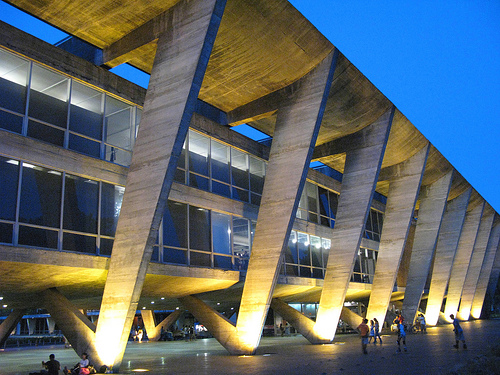
    Casa da Russia will hosted in Rio de Janeiro’s Museum of Modern Art and operated by Eventica Communications.
    “With facilities for media, government offices, hospitality lounges and a programme of events for Russian and international guests, the Casa da Russia will be Russia’s home from home at Brazil 2014, and will provide a perfect opportunity for Russia – the next host country of the FIFA World Cup – to showcase preparations and the host cities of Russia 2018,” Eventica said.
    As part of the partnership, HOST CITY will also preview activities at Casa da Russia as part of its online news coverage of the 2014 Brazil World Cup. 
    During the World Cup, matches will be broadcast live on big screens. Casa da Russia also promises to host a Russian cultural extravaganza, with guest musicians, bands, DJs and artists participating in a month-long celebration of Russia.
    Baltika has signed as the exclusive Beer Partner for Casa da Russia, following successful partnerships with Eventica over many years, including at the Russian Winter Festival in London’s Trafalgar Square from 2005 to 2008 and at Russia.Sochi.Park – the official Russian hospitality venues in London during the 2012 Olympic Games.
    The accreditation process for the press centre at Casa da Russia is already open. In the first week of opening, the organisers Eventica Communications registered 160 Russian and British journalists from media including O Globo, TV Record Brasília, Sky Sports, Sportbox, Russia Today, Sport FM and many more. 
    For more information visit http://www.eventica.co.uk/?p=5817#more-5817