Tag: Brazil

  • Brazil World Cup produces more solar power than many countries

    Brazil World Cup produces more solar power than many countries

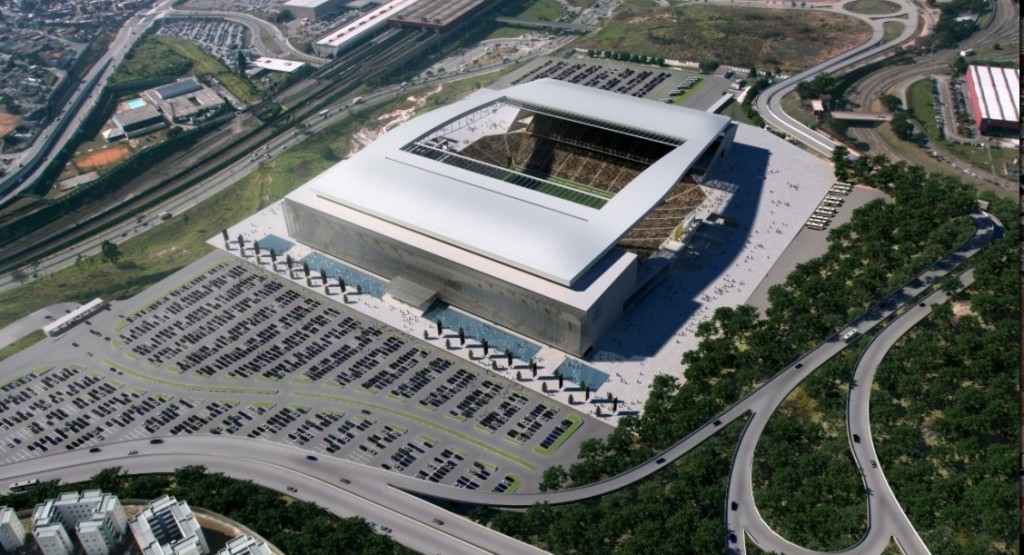
    The Estádio Nacional in Brasilia produces more solar energy than 11 countries competing in the 2014 FIFA World Cup, according to a report by UK non-governmental organisation Practical Action. 
    The solar production of Bosnia-Herzegovina, Croatia, Cameroon, Colombia, Costa Rica, Ecuador, Honduras, Iran, Ivory Coast and Uruguay all fall below the 2.5 MW capability of the stadium in Brazil’s capital. 
    Ghana’s national solar capacity matches that of the stadium, which will host seven matches during the world’s largest single sport event.
    Three other World Cup stadiums also have major solar power installations, the Mineirão in Belo Horizonte producing 1.4MW, the Itaipava Arena in Pernambuco producing 1MW and the rebuilt Maracanã in Rio de Janeiro producing 500KW. 
    These observations were reported by Practical Action on Wednesday, on the back of their new Poor Peoples’ Energy Outlook report.
    Simon Trace, CEO of Practical Action said: “The organisers and FIFA are to be congratulated for making a considerable financial investment and making this the greenest World Cup in history.”
    The Estádio Nacional in Brasilia cost US$640m stadium, making it one of the most expensive stadiums in history and starkly contrasting with the economic situation of many of the competing nations.
    “It is.. an indictment of the investment in renewable energy in the developing world that there are ten competing countries that do not even produce as much solar energy as a single World Cup stadium,” said Trace.
    “Currently more than one billion people live without access to reliable sources of energy. Without that, people cannot develop and there will always be a substantial proportion of the world’s population living in poverty.
    “Our report found that the only way of reaching the vast majority of these populations is not via traditional grid-based electrification as found in the west, but via smaller scale, renewable off-grid solutions such as solar, hydro and wind.
    “It is therefore vital that we follow the example set by the World Cup organisers and invest heavily in the new technology we are seeing used so well in Brazil.” 

  • Brazil must make the benefits of hosting clearer

    Brazil must make the benefits of hosting clearer

    Speaking to a select group of international media including HOST CITY on Wednesday, Brazil’s deputy sports minister Luis Fernandes said the federal government should have worked more closely with the local organising committee in the earlier stages of preparing for the World Cup. 
    The government also made the mistake of assuming that the Brazilian public would support the event and understand the benefits of hosting it, he said, acknowledging that these mistakes should not be repeated in the run up to the Olympic Games in 2016.
    “We should have communicated more strongly the benefits that the World Cup brings to the country,” Fernandes said.
    “I think basically we thought that the benefits were evident and that the World Cup addresses our main sport, which is football or soccer in the US, so that support and understanding of the benefits in the event would be almost automatic.
    “That’s something that we will have to communicate stronger for the Olympic Games.”
    The government should also have made it clearer that investments in civic infrastructure are not part of the cost of hosting the World Cup, Fernandes said. 
    “In a lot of infrastructure investments, which are not essential for the event, but which the Brazilian government decided to anticipate, were sometimes understood as costs of the World Cup. 
    “So, we’ve learned from that lesson and for the Olympic Games, we’re separating in our communications these two aspects. The matrix of responsibility will only include for the Olympic Games those investments that are specifically directed to the event, to the global sporting events.
    “All communication about separate investments in infrastructure that will spur national and regional development are in a different plan, which is a plan for anticipation and exploration of investments in public policy. So, that’s maybe a lesson we learned from the World Cup experience.”
    He also admitted that the federal government should have been more closely integrated with the local organising committee at an earlier stage.
    “We were only included in the board of the local organising committees of representation of the federal government a little bit more than two years ago. I think that if we had been included from the very beginning, the level of integration in World Cup preparation would have been greater, and that would have been better.”

  • Brazil is a victim of prejudice, says deputy sports minister

    Brazil is a victim of prejudice, says deputy sports minister

    The international media expresses prejudice within developed nations against the capacity of developing countries like Brazil to host global sports events, the country’s deputy sports minister said on Wednesday. 
    Speaking at a press conference in response to a question from HOST CITY about the severe delays in Brazil’s preparations to host mega events, Luis Fernandes said “In sectors of the public opinion of richer countries, there is prejudice directed against developing countries and their capacity to deliver major global sporting events such as the World Cup and the Olympic Games.
    “I’ll give you an example: We had a sad tragedy in the preparation for the World Cup in a city in Southern Brazil where there was a fire in a nightclub and in which a number of youngsters were killed. And sectors of the press, both international and national, took up that specific case to question Brazil’s capacity of organizing the World Cup and Olympic Games. 
    “When similar accidents occurred in the UK, in France, in Russia, in China before hosting major global events, the same questioning or the same scepticism was not directed against those countries; so that is a prejudiced point of view from our perspective.”
    HOST CITY asked if he thought that FIFA’s deadlines should be more lenient in certain countries where there may be a tendency for preparations to take longer. 
    “We are not happy with whatever delays exist,” Fernandes said. “It would have been better to have all World Cup stadiums delivered already by December 2013 so that we could, in sequence, test all aspects of operations of those stadiums throughout the first semester.
    “We had two stadiums that were delivered late and that had more acute problems of delays; those were the stadiums in São Paulo and Curitiba, so that put extra pressure on our organizational capacity because we had to make a number of tests in parallel that would have been held easier and in a more calm fashion if they could have been done in sequence.”
    Fernandes drew parallels with the Confederations Cup, preparations for which also ran behind schedule. “The same type of doubts or scepticism or prejudice also manifested itself with respect to the Confederations Cup, saying that Brazil wasn’t prepared to hold that event—and the event was a huge success.
    “We also had stadiums that unfortunately were delivered late, but the operation was a success. So we already showed the world that we can organize such a competition efficiently and with success, although maybe, personally, the operational cost of organizing such an event is greater due to certain delays. 
    “But our message is one of absolute confidence that we will have a spectacular World Cup here in Brazil starting two weeks on.”

  • Host city Belo Horizonte reveals fan fest plans

    Host city Belo Horizonte reveals fan fest plans

    The World Cup host city of Belo Horizonte has revealed plans for its fan fest, which will show matches and a programme of other world class entertainment for a live audience of up to 21,000 people for free.
    Belo Horizonte’s announcement is in sharp contrast to problems elsewhere in Brazil. 
    Providing a fan fest is a contractual obligation for all FIFA World Cup host cities. FIFA is still waiting for confirmation about whether the host city of Recife will be able to fulfil its obligation to provide a fan fest during the World Cup. Funding for the project has yet to be confirmed.
    Salvador might also have to break its obligation to provide a fan fest, for similar reasons. The Secretary of Ecopa Salvador, the municipal office responsible for World Cup activities there, admitted last week that fulfilling the Fan Fest depends on the outcome of continuing sponsorship negotiations.
    Belo Horizonte is hosting six World Cup matches, including a semi-final on 8th July. Its fan fest will be open on all match days in Belo Horizonte and every weekend during the World Cup. 
    The site, encompassing three pavilions and located in the city’s 16,000 sq m Expominas centre, will host more than 40 events during the World Cup tournament in a celebration of Brazilian music, entertainment and cuisine. 
    The programme will feature a selection of famous Brazilian musicians including Daniela Mercury, with at least one major national artist will perform every day. ABRASEL, Brazil’s association of bars and restaurants, has partnered with the fan fest to provide high quality catering including local specialities.
    The fan fest site will also host the media centre for accredited and non-accredited journalists, with 84 working stations, free wifi, televisions for transmission of the games and a direct view of the Belo Horizonte fan fest arena. 
    Work stations and leisure space will also be provided for all volunteers taking part in the World Cup project. Embassies and consulates of national teams competing in the tournament will also have a dedicated area onsite.
    “We have spent a lot of time looking at how we can deliver the best visitor experience for all of the football fans that will come to Belo Horizonte and we believe that they will have a fantastic time celebrating this festival of football at our FIFA fan fest,” said Camillo Fraga, Municipal Secretary for the 2014 FIFA World Cup Brazil – Host City, Belo Horizonte.
    “We have also invested in our local infrastructure to ensure that all of our visitors and residents will be able to move swiftly and safely from our fan fest site to the stadium and around our city. We cannot wait for this global football experience to start and welcoming fans from across the world to Belo Horizonte.”

  • Blatter warns against discrimination at Russia handover

    Blatter warns against discrimination at Russia handover

    The 2014 FIFA World Cup in Brazil was successful on many fronts, but president Sepp Blatter chose to highlight a “message of togetherness” after handing the tournament over to the next hosts, while president Vladimir Putin of Russia chose to praise the social impact of the World Cup.
    “FIFA’s World Cup in Brazil had a very special message to give – a message of togetherness and of connecting people, a message of peace and of anti-discrimination,” said Blatter after the ceremony at the Maracana Stadium on Sunday.
    “We have enjoyed a successful World Cup and we will have a legacy in this country. At the same time there is a responsibility for the next host country and I’m confident that Russia will take on this responsibility and also give us a wonderful World Cup to remember in 2018.” 
    During the ceremony inside the Maracana Stadium Putin said, “I want to congratulate President Rousseff on how the World Cup was organised. Football helps to solve social problems.”
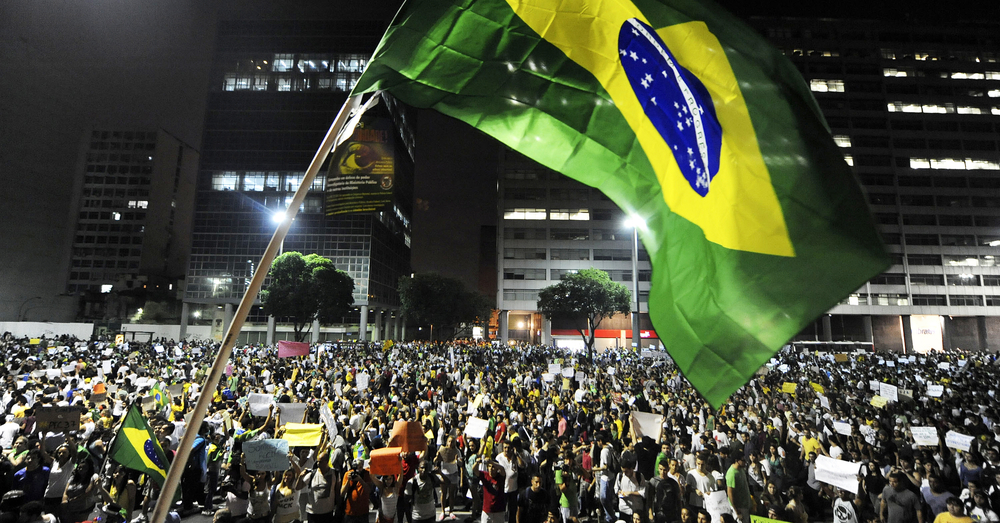
    Putin’s decision to focus on the social benefits of hosting the World Cup is notable, given the major protests within Brazilian society that dogged the country as it prepared to host the tournament. Whether hosting the World Cup will act as a catalyst for change in attitudes towards sexuality in Russia remains to be seen.
    “Our task is to create the best possible conditions for the coaches, players, experts and fans,” said Putin. 
    “I am grateful to President Blatter and his colleagues from FIFA for the honour to organise the World Cup. We will do all we can to organise the event on the highest level”.
    Russia has its work cut out over the next four years. Seven new venues need to be built but construction is being held up by an auditing process, according to the Moscow Times. 
    Over the course of 2014 around US$ 23bn is supposed to be spent on large scale infrastructure projects, including the World Cup venues, but only 6 per cent of this had been spent by the start of June. 
    Russia will be able to take heart from Brazil’s broad hosting successes, despite the scramble to finish venues on time.
    ”Brazil is very proud for once again having staged the biggest football celebration in the world,” said Brazilian president Dilma Rousseff.
    “In the last 30 days the world has been connected to Brazil, celebrating goals with a lot of emotion in the 12 host cities and making this the World Cup of World Cups. I am sure that everyone who came to Brazil, like tourists and delegations, will take back memories of our hospitality and joy, and we Brazilians also have unforgettable memories. 
    “I wish the Russian people great success in the organisation of the 2018 FIFA World Cup.”
    The first major milestone event for Russia 2018 will take place in July 2015 in Saint Petersburg when the qualifying pathway for FIFA’s member associations will be defined at the Preliminary Draw, FIFA said in a statment.

  • Will the marvellous city live up to its name?

    Will the marvellous city live up to its name?

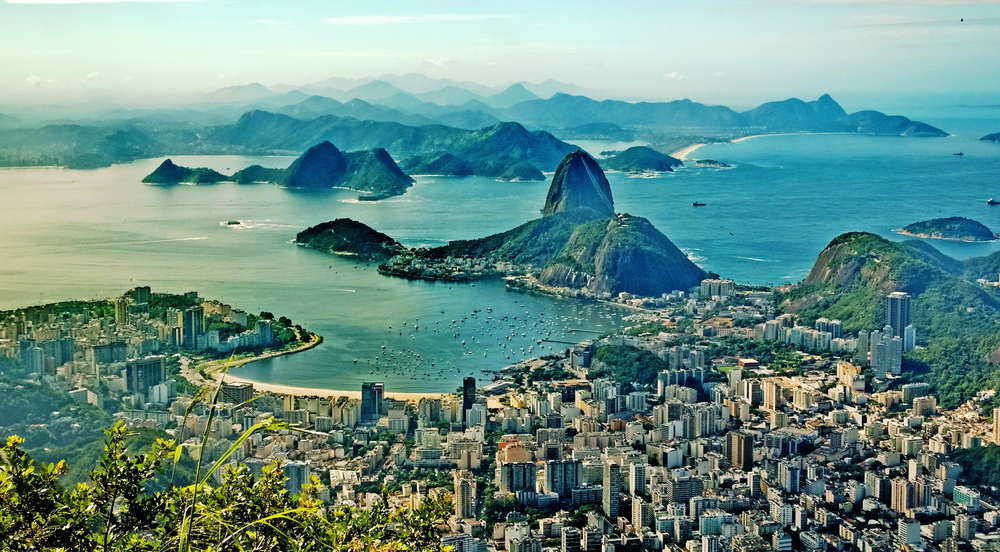
    Rio de Janeiro staged seven 2014 World Cup matches including the final, but the spotlight will shine even more brightly on the ‘Cidade Maravilhosa’ when it hosts the Olympic Games in 2016.
    Brazil had to overcome delays and doubts before staging a World Cup now destined to be remembered as more successful for the host nation off the pitch than on it.
    Now Rio is under pressure after International Olympic Committee (IOC) vice-president John Coates branded its preparations the “worst ever” in April.
    The city of Sugarloaf Mountain and Christ the Redeemer promises a spectacular setting but also has a reputation for traffic jams and violent crime.
    So, did football’s showpiece event leave a legacy for the first Olympics in South America and what challenges remain?
     
    Games Infrastructure
    The renovated 78,838-seater Maracanã Stadium will be used for the opening and closing ceremonies of the Olympics and Paralympics and football matches, including both the men’s and women’s finals. 
    The Games will take place across four venue clusters:
    •The Olympic Park in Barra da Tijuca (widely known as Barra) will host around 60 per cent of events, including track cycling, boxing, tennis, basketball and swimming, and feature the broadcast and press centres. Construction work at the site has recently been extended to 24 hours per day and work on three halls hosting indoor sports only began in August. Work on athletes’ housing in the Olympic Village is more advanced – with 31 17-storey towers already standing – and should be finished by the end of 2015.
    •Deodoro, the next biggest cluster, will host 11 events, including equestrian, shooting and rugby sevens, across nine venues in a poor area of Rio. Three venues used in the 2007 Pan-American Games and 2011 World Military Games just need renovations. However, work on a new arena, hockey centre, BMX centre and whitewater stadium only began in July after the IOC warned Deodoro was two years behind schedule and questioned Rio’s social legacy planning. Two temporary structures will also be created – the Rugby and Modern Pentathlon Arena and the Olympic Mountain Bike Park.
    •The Maracanã cluster. As well as the football stadium, this includes the João Havelange Olympic Stadium that was built in 2007 for the Pan American Games and will host the athletics. Currently undergoing roof repairs, it is due to close again next year so the capacity can be raised from 45,000 to 60,000.
    •Copacabana cluster. A temporary 12,000-seater stadium on Copacabana beach will host beach volleyball. In Flamengo Park, 3,800 spectators in temporary seating will be able to see road cycling and race walking. Nearby, Guanabara Bay will host the sailing, while a temporary 10,000-seat pontoon in Rodrigo de Freitas lagoon will ensure a great atmosphere at the rowing and canoeing finish zone.
     
    Transport rush
    While some cities benefited from several World Cup-related urban mobility projects, Rio saw only one – the Transcarioca bus rapid-transit (BRT) scheme connecting Barra to the international airport.
    World Cup match ticket-holders were allowed to take the underground to the Maracanã for free and the municipal government declared public holidays for Rio’s three weekday games.
    While the arrangements allowed fans to travel without problems, critics say the city came to a halt – something Rio cannot afford over 17 days of the Olympics.
    “It appears from the outside that the city functioned well but it was not working as normal,” said Christopher Gaffney, a visiting professor of architecture and urbanism at the Federal University of Niteroi.
    The Olympic clusters are considerable distances apart and traffic leaving Rio’s beach zones often slows to a crawl around tunnels through the mountains.
    Barra is about 25km west of central Rio, the Maracanã is 13km north of Copacabana and Ipanema, while Deodoro is still more distant from tourist hotspots and hotels.
    But four BRT schemes – all terminating in Barra – will help speed traffic by providing express lanes for air-conditioned, articulated buses holding 160 passengers or more.
    The first 56km BRT opened in 2012 and the 39km Transcarioca began operating in June – along with a new international airport departures area – and is expected to carry 320,000 people daily and cut journey times by 60 per cent.
    The 26km Transolímpica, due to open in January 2016, will link the competition centres in Barra and Deodoro and is expected to be used by 400,000 people per day. 
    Finally, the 32km Transbrasil will connect Deodoro to central Rio and could benefit 900,000 passengers daily. However, Transbrasil’s tender date has been delayed and although work could begin in October, transport experts question whether it will be ready for the Games.
    A new 16km underground line, a light rail transit service and revitalisation of Rio’s port will also ease congestion and benefit visitors.
    The underground’s Linha 4, due to open early in 2016, will have six new stations linking Ipanema to Barra, and should carry more than 300,000 people daily.
    A ride from Ipanema to Barra will take 15 minutes and central Rio to Barra will take 34 minutes.
     
    Tough tactics
    The Ministry of Justice’s Extraordinary Secretariat for the Security of Big Events (SESGE) co-ordinated arrangements for the World Cup and will do so for the Olympics too. 
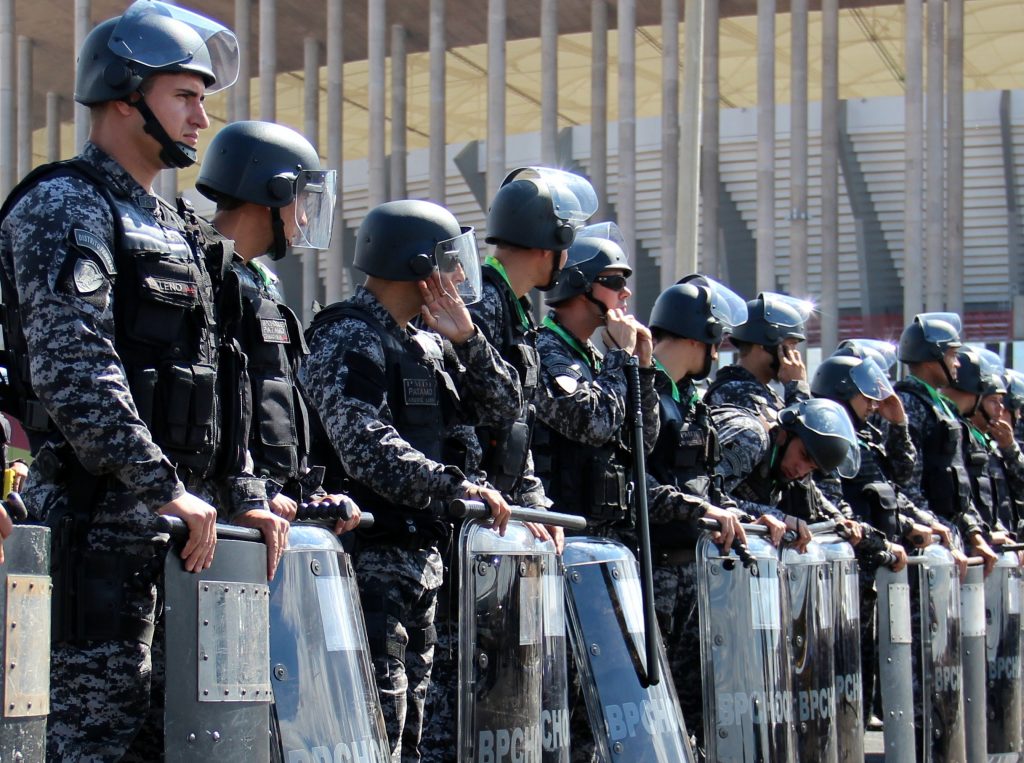
    Police averted the threat of large protests close to World Cup venues by establishing security perimeters 2km around the stadium.
    The tactic was condemned by civil rights groups and failed to prevent nearly 100 ticketless Chile fans breaking into the Maracanã ahead of a game against Spain.
    Police also used tear gas and batons against some demonstrators close to the cordon on the day of the final but the Brazilian government views World Cup security as a success given the fears of greater unrest.
    In early August Defence Minister Celso Amorim met top military officials in Brasilia to discuss issues for 2016 such as intelligence, disaster prevention and event access.
    Central to security planning has been the establishment of Police Pacification Units (UPPs) since 2008 in favelas previously controlled by drugs gangs. 
    Around 40 UPPs are now in operation with nearly 10,000 Military Police officers. At least two helicopters will transmit real-time video to a co-ordination centre in Deodoro during the Olympics.
    Dignitaries will be driven to events in a fleet of 36 armoured police sports utility vehicles with sirens and GPS systems.
    The threat of terrorism is considered low and there are no signs that major political protests are likely, but the security demands for the Olympics are still far greater than on any World Cup city.
    World Cup final day saw a record 25,787 security personnel deployed on Rio’s streets but Andrei Rodrigues, special secretary for security and safety at major events, says “several times” that figure will be called upon during the Olympics.
    This article was written by Robin Yapp, HOST CITY’s reporter in Brazil, and was first published in the Autumn issue of HOST CITY magazine

  • Brazil 2014 World Cup hailed as sustainability benchmark

    Brazil 2014 World Cup hailed as sustainability benchmark

    Sustainability is a relatively new concept to the FIFA World Cup, which has a significant impact on the environment, but last year’s tournament set new standards that will influence other future mega events, FIFA and Brazilian officials said on Tuesday.
    “Sustainability is something quite new in the organisation of the FIFA World Cup,” FIFA secretary general Jérôme Valcke said at the launch of a sustainability report on the 2014 World Cup.
    “Brazil learned a lot with the FIFA World Cup, Rio learned a lot for Rio 2016, but we also learned a lot and we will implement these learnings in 2018 in Russia in the 11 host cities and 12 stadiums.”
    The deputy sports minister of Brazil, Luis Fernandes added “The FIFA World Cup stadiums in Brazil became a benchmark for the world because they have all pursued sustainability certificates. 
    “Based in this experience, a sustainability certificate has become a requirement by FIFA in the future editions of the World Cup. This is a legacy to Brazil for the world.”
    Hosting the FIFA World Cup involves large transportation operations, catering for millions of spectators, managing waste as well as powering and broadcasting the event globally.
    “This has inevitably had an impact on both society and the environment in the host country,” said Federico Addiechi, FIFA’s Head of Corporate Social Responsibility. 
    “To us, sustainability is about how we do things and trying to find a balance between the social, economic and environmental aspects. It is also about minimising risks associated with the event and reducing the negative impact of it, while maximizing the positive one.”
    The 2014 World Cup in Brazil took place in 12 stadiums, seven of which were new and five of which were renovated. Eight of the stadiums integrated solar power in their designs. 
    Nonetheless, preparing for and hosting the 2014 FIFA World Cup is estimated to have produced 2,723,756 tonnes of CO2 equivalent.
    “Brazil is a developing country and we identified that the opportunity to host the FIFA World Cup was a historical window to leverage investments in infrastructure and services, which our country needed and still needs,” said Fernandes. 
    “Brazil today is recognized as a country that, in spite of the scepticism, delivered the FIFA World Cup with excellence and today we have infrastructure that improved the lives of Brazilians.”
    The venues were spread over all the major regions of the huge country. The 41,000 capacity Arena Amazonia, for instance, was built in the remote resort of Manaus. There is not a big footballing culture there and the only event since the World Cup to draw a capacity crowd was Boi, a local cultural festival. 
    “The FIFA World Cup left us memories of great football, but also a great responsibility. Brazil has now 12 modern arenas in all five regions,” said José Maria Marin, chairman of the Brazilian Football Confederaition (CBF) and 2014 local organising committee.
    “A challenge, but also an opportunity for clubs and cities to strengthen local football and offer a new entertainment option for the community beyond football matches.”
    Despite the challenges of utilising this new infrastructure, FIFA is working in Brazil to continue building even more venues in more regions of the country through a US$100m legacy fund. 
    “Brazil is already a giant in football, but we still need to develop infrastructure and this will be done by FIFA and CBF through the Legacy Fund,” said Fernandes. 
    According to FIFA, the main areas to benefit from the fund will be football infrastructure in the states that did not host World Cup matches (60 per cent), grassroots (15 per cent) and women’s football (15 per cent). 
    “For the Legacy Fund, we agreed it should go to developing women’s football, grassroots and to regions where there were no FIFA World Cup matches,” said Valcke.
    “On women’s football, there is potential to do more in Brazil. We work together with CBF so they can establish a dedicated structure for female football through the legacy fund,” said FIFA Director of Member Associations and Development, Thierry Regenass.
    “There should be good grassroots programmes. The idea is also to work in partnership with local government and other partners in order to publicise more women’s football and make it sustainable.”
    Valcke stressed that the awarding of contracts will be carefully monitored. “FIFA is supporting CBF in order to identify and make sure we are working in the right projects. We have a permanent audit system that monitors our member associations, certifying everything is under clear rules and regulations. 
    “Not a single pay will be made without FIFA having a look at the way it will be used and making sure we are part of the decision process.”