The Chinese Olympic Committee on Sunday confirmed the passing of IOC Honorary Member He Zhenliang.
An astute politician and diplomat, He played a pivotal role in returning China to the Olympic movement and also attracting the Olympic Games to Beijing. His great achievements earned him the moniker “Mr. Olympics” in China.
“The Olympic Movement has lost one of its most fervent ambassadors,” said IOC president Bach.
Before serving as IOC honorary member, He was IOC member from 1981 until 2010. He also served on the IOC executive board for three four-year periods and as IOC vice president from 1989 to 1993.
“China’s current major-member status in the IOC is inseparable from He’s hard work for decades,” Wei Jizhong, former secretary-general of the Chinese Olympic Committee told China Daily on Sunday.
He played a vital part in helping Beijing win the right to host the Summer Olympic Games as an executive on the Beijing 2000 and 2008 bid committees.
Jizhong recalled He’s disappointment when Beijing missed out on 2000 by just two votes, telling China Daily “He said he felt he had let his country and people down, while in fact he’d done what he could to the utmost.”
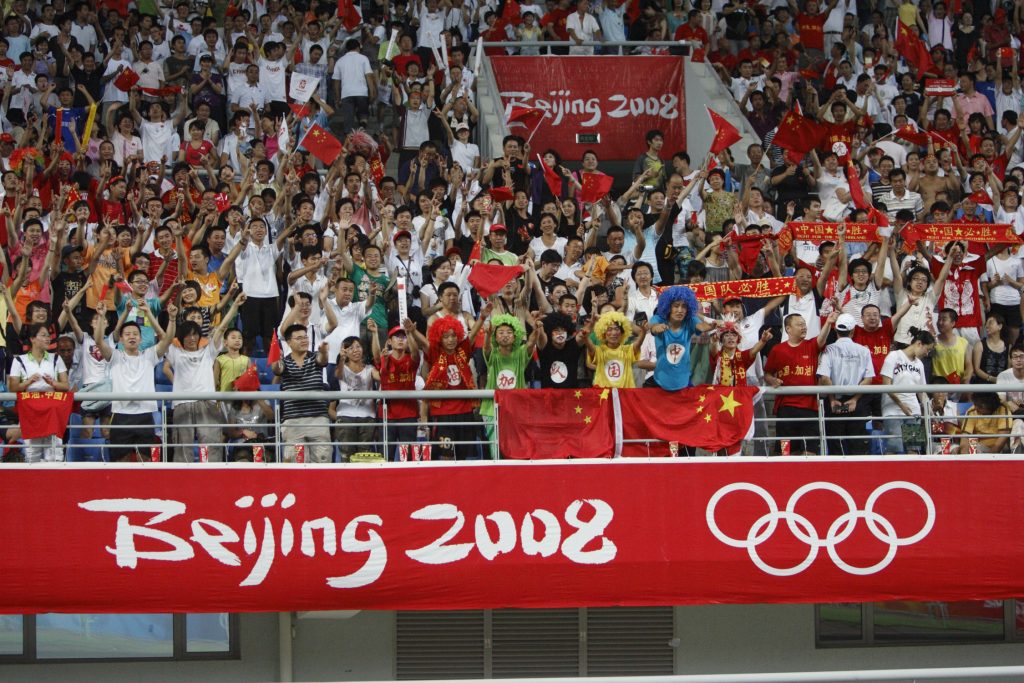
The highlight of He’s career came at the 112th IOC session when Beijing’s bid committee won the host city election for 2008 under his leadership.
In an interview with HOST CITY magazine published on the eve of the Olympic Games in 2008, He said: “The Olympic Games will help the world better understand China and vice versa.
“If we can achieve such a goal through the Olympic Games, then the Games will not only leave its mark in the development history of China, in particular it will shine as a significant milestone in our diplomatic history. It will also be a symbolic major event in the history of international relations.”
These goals were certainly achieved, with the Beijing Games showcasing China to the world at a time of unprecedented economic growth.
IOC president Thomas Bach said “He was a man of culture and art. He was a true advocate of the social values of sport and of our Movement and I would like to pay tribute to the passion and energy he deployed over the years to fulfil his mission as an IOC Member in China.
“He also helped our Movement better understand his country, its people and outstanding culture.”
Speaking to HOST CITY in 2008 about the impact of hosting the Games, He acknowledged the improvements to infrastructure and material wealth in Beijing, but said that more valuable benefit was the cultural impact of the humanistic values of Olympism in China.
“The Olympic Games bestows hope and enlightenment to the world,” he told HOST CITY. “We need to make concerted efforts to build a bridge of tolerance, understanding, respect and friendly coexistence across different places, races, religions and ideologies.”
A keen sportsman, Mr He enjoyed swimming, playing table tennis, tennis, football, basketball and golf. A champion of sport and Olympic values in school curricula, He told HOST CITY his long term aspiration was for a greater role for sports within education in China.
He’s other roles within the IOC included Chairman of the Cultural Commission (1995-1999), Chairman (2000-2009) and then Honorary Member (2009-2015) of the Commission for Culture and Olympic Education, Vice-Chairman of the Sport for All Commission (1985-1987), and member of a number of other Commissions including the IOC 2000 reforms.
He served as deputy secretary general of the Chinese Gymnastics Association, secretary general of the Chinese Table Tennis Association, deputy secretary general of the All-China Sports Federation and president of Chinese Olympic Committee.
The Beijing 2022 Olympic Winter Games Bid Committee also mourned He’s passing, praising his contributions to the Olympic Movement in China. The bid committee said it will endeavour to win the right to host the 2022 Games as a tribute to He.
Tag: China
-

He Zhenliang’s Olympic vision lives on
-

FINA Midea partnership boosts brands in China and Russia
FINA’s growing partnership with Chinese domestic appliance company Midea will run to 2017 and boost aquatics events in China, the international sports federation said on Thursday.
For Midea, the partnership brings access to the Russian market through FINA’s flagship event.
“We are very excited by the increased involvement of Midea and the sponsorship activation deployed for the World Championships in Kazan,” FINA Executive Director Cornel Marculescu said at a press conference in Russia.
“FINA is overall very satisfied with this agreement with Midea, a strong partner for the two biggest events in the aquatic calendar, the FINA World Championships and the FINA World Swimming Championships.
“Being a Chinese partner, this association will also enhance the popularity of these two events in a key market for FINA, where our six disciplines have a long standing tradition.”
FINA and Midea’s partnership for the FINA World Championships, the FINA World Swimming Championships (25m) and the World Record Programme was launched in 2010 and renewed in 2014.
The 16th FINA World Championships take place in Kazan, Russia, from July 24 – August 9, 2015.
Midea is using the event to launch their brand in Russia.
General Manager of Midea Russia, Mr. Alexey Obukhov, said: “Midea is certainly one of the biggest producers in the world, and while our launching product range here today appears modest in comparison to what we sell in other markets, today’s conference is also to give everyone a clear idea about the future for Midea in the Russian market.”
Midea, a Forbes 500 company headquartered in China, is a leader in developing and manufacturing domestic appliances. As well as Russia, the company has its sights on Argentina, Chile, Brazil, Canada, the US, Egypt, India, Russia, Belarus and Southeast Asian countries for future development.
-

8 Chinese cities to host 2019 FIBA World Cup
The world governing body for basketball announced on its YouTube channel on Friday that China will host the 2019 FIBA World Cup, after the country’s bid leader said basketball could become the world’s most popular sport.
China’s bid was selected ahead of a rival proposal from The Philippines.
The 2019 FIBA World Cup will incorporate more host cities than ever, FIBA said, with Beijing, Dongguan, Foshan, Guangzhou, Nanjing, Shenzhen, Suzhou and Wuhan all set to host games.
Beijing will host all games from the quarter finals to the final, in addition to some group games.
New venues will be built in Foshan and Suzhou to accommodate the tournament.
The decision will enable FIBA to build on a strong presence for the sport in China.
“At least 300 million people play basketball in China and if we host the 2019 FIBA Basketball World Cup, we can increase that participation,” said Zhang Jiandong, Vice Mayor of Beijing and Chairman of the China 2019 bid committee.
“China is the most populous country in the world and we can make basketball the most popular sport in the world. We believe that we can make the 2019 FIBA Basketball World Cup a complete success because of China’s economic stability, strong financial guarantee and the government’s complete support. We can make it a safe, most reliable and risk-free event.”
Basketball is already the most popular sport in The Philippines, according to Manuel V Pangilinan, President of the Philippines Basketball Association.
“Ninety percent of the population play, watch or follow the sport in one way or another,” he said. “It’s not just Filipinos in the Philippines that are passionate about the sport. It’s Filipinos all over the world. Football may be number one in many places around the world, but basketball is number one in the Philippines.”
Manny Pacquiao, Philippines Congressman and eight-time world boxing champion said “I am a boxer but I am here because I love basketball so that tells you the passion that Filipinos have for basketball. If we host the 2019 FIBA Basketball World Cup, we can show that passion to the world.”
Asked to compare enthusiasm for the sport between the two countries, Chinese basketball star Yao Ming said “You can’t say that one type of love is better than the other. Both are great. Both countries have a great passion for basketball, particularly for FIBA basketball.”
Gao Zhidan, Vice-President of the Chinese Olympic Committee said: “Basketball is very popular in China and if we host the 2019 FIBA Basketball World Cup, we can foresee a great rise in that popularity. This will have a great impact on the professional league (CBA) as well as the university league which is developing very fast. It will help with our aim to train more athletes and get a bigger pool of talented players.”
-

How Macau’s international marathon keeps growing
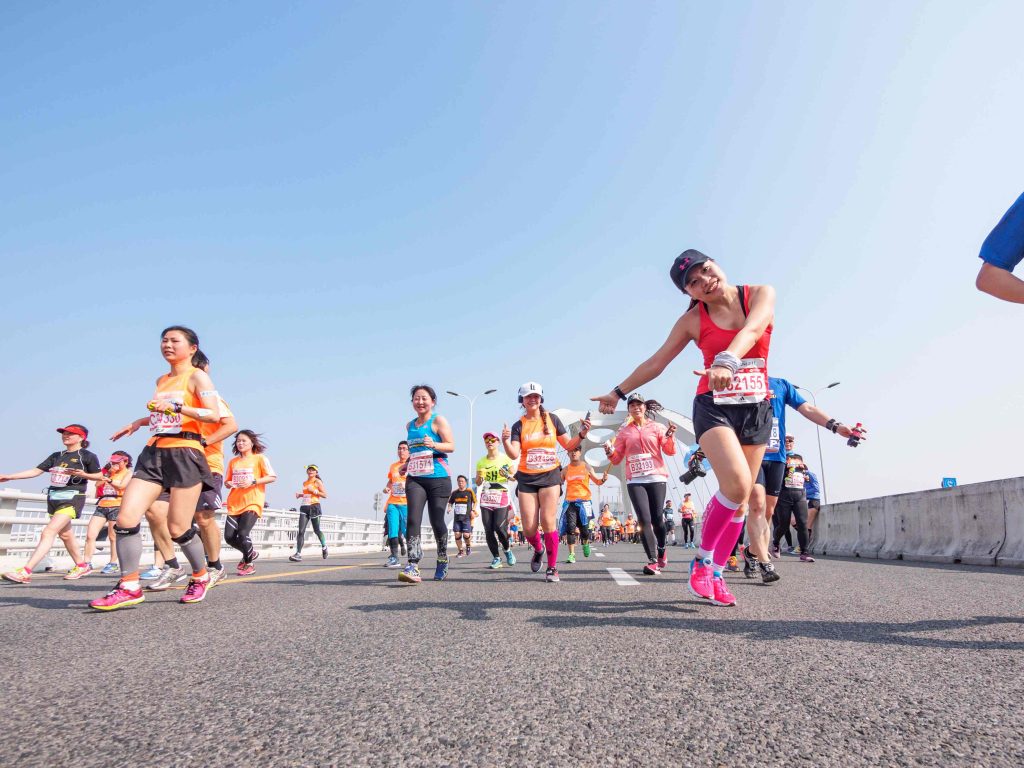
The Macau International Marathon has been successfully hosted for thirty three years with the aim of developing local sports, strengthening friendship between people from different parts of the world and promoting sport tourism in Macau.
“With a long history rooted in the community of the city, the Macau Galaxy Entertainment International Marathon has become one of the most popular sport events,” said Jose Tavares, President of Macau Sport Development Board of the Macau SAR Government.
“Through continuous enhancement, the event has been attracting long distance runners around the world, which raises the event profile and successfully attracts attention, locally and abroad.”
The 2015 Macau Galaxy Entertainment International Marathon took place on the Sunday 6th December 2015, organised by the Macao Sport Development Board and the General Association of Athletics of Macau.
“As the host of the event, we are dedicated to conduct welI-rounded preparation to welcome each and every participant with warm hospitality, as we believe that ideal conditions will optimise opportunities of better results,” said Tavares.
2015 marked the tenth anniversary of the inscription of the historic centre of Macau on the World Heritage List. The Macau International Marathon once again traversed the UNESCO world heritage site, passing through the A-Ma Temple.
The race started at the Olympic Sports Centre Stadium in Taipa and, for the first time, ran through the Hengqin campus of the University of Macau.
The event coincided with the “Parade through Macau, Latin City”, creating synergistic effects between the marathon, local tourism and culture.
“We are offering diversified programs and festive galas to sincerely welcome marathon lovers from different parts of the world,” said Alexis Tam Chon Weng, Secretary for Social Affairs and Culture of the Macau SAR Government.
“This year’s international marathon will integrate more cultural and tourism elements and provide a diversity of choices and wonderful experiences to participants and tourists.
“This not only demonstrates our friendliness and hospitality, but it also reflects the government’s determination to establish Macau as a ‘World Centre of Tourism and Leisure’.”
Global popularity
The Macau International Marathon continues to grow in size, with participants from 50 countries from around the world participating.
“The number of this year’s marathon runners has reached its new heights and this historical sport of long-distance running has been gaining more and more popularity around the world,” said Alexis Tam Chon Weng, Secretary for Social Affairs and Culture of the Macau SAR Government.
“Marathon, which signifies limits, difficulties and challenges, also stands for endeavour, perseverance and triumph. And all because of the difficulties, people can fully experience the spirits of sportsmanship like righteousness, courage, honour and happiness.”
In 2015, 8,000 athletes from 50 countries and regions participated, up from a quota of 6000 the previous year. The quota for the half marathon was full on the first day of registration while the general marathon was full on the second day of registration. Managing this growth is no small task.
“In order to cater to the needs of the rising number of running lovers, the organising committee has dedicated to create better conditions and overcome difficulties in increasing the registration quota,” said Ma Lao Hang, President of General Association of Athletics of Macau.
“All members from the General Association of Athletics of Macau, race judges and staff are committed to get every aspect of the event well prepared and provide the best conditions for all participants to create remarkable records.”
The Macau Galaxy Entertainment International Marathon is a truly global event, with former winners from Belarus, China, North Korea, Ethiopia, Hong Kong, Italy, Kenya, Poland, Portugal, South Africa, United Kingdom and Zimbabwe.
2015 was a good year for the Ukraine in Macau, with Vitaly Shafar and Olena Shurkhno winning the men’s and women’s general marathon respectively. The total prize money, awarded for the first ten finishing athletes in the different categories, amounts to US$187,000.
“With the number of participants being increased annually, better and better results have been made,” said Ma Lao Hang.
“The Macau International Marathon has always been an annual major event, we will move forward with all the participants to continue the long history of the Macau International Marathon and create legends for the sport development of Macau.”
-

China’s giant sports investments
China’s economic growth may have cooled down from its double digit rates of recent years but the country’s sports sector is powering ahead, both at home and abroad, with sports identified as a key area of economic development for the coming ten years.
Investing at home
Beijing is set to invest USB 1.5bn in hosting the Olympic Games in 2022, but this is a tiny fraction of the total domestic investments into sport China is set to make over the next decade.
China’s national plans for investing in sport are unprecedented. According to the General Administration of Sports (GAS), the sector in China is set to expand to US$1tr by 2025 – more than the value of the entire global sports industry at present.
While this goal may sound unrealistic, recent figures support such a projection. The GAS says China’s sports sector grew by US$55bn in 2012 to reach US$170bn in 2013. Official estimates suggest that China’s sports sector will expand by US$62bn in 2015. And by 2020, the sports sector is expected to reach US$456bn.
To achieve this sustained growth in sports, the government has recently issued 50 documents setting out a series of measures, focusing on tax incentives, land security, specialized funds, technology and research and development.
China outbound
It’s not just on home turf where China’s ambitions lie. With international reserves far outweighing any other nation, China is investing far and wide – and focusing on sports properties.
In a process dubbed “stadium diplomacy”, China has built and financed the construction of 37 venues in Africa, five in Asia (including Syria), eight in the Caribbean, six in the South Pacific and one in Central America (Costa Rica).
And over the last two years, Chinese investors and firms have bought into football clubs in England, France, the Netherlands, Spain and the Czech Republic.
In December 2015 it was announced that a consortium of Chinese investors – CMC (China Media Capital) Holdings and CITIC Capital – was to acquire a 13 per cent stake in City Football Group (CFG)
CFG, the holding company of Manchester City, Melbourne City and New York City football clubs that is wholly owned by Sheikh Mansour’s Abu Dhabi United Group (ADUG), is valued at approximately US$3bn.
CMC Holdings and CITIC Capital’s investment of US$400m in City Football Group demonstrates just how highly China values the power of investing in football overseas.
For football clubs, the opportunity of Chinese investment brings access into China’s rapidly growing sports sector. The Chinese market is a crucial target for global football brands to grow their fan base, not only because of the sheer size of the market but because of the growing interest in football there.
“The deal will create an unprecedented platform for the growth of CFG clubs and companies in China and internationally, borne out of CFG’s ability to provide a wealth of industry expertise and resources to the rapidly developing Chinese football industry,” Manchester City said in a statement.
“The capital from the share acquisition will be used by City Football Group to fund its China growth, further CFG international business expansion opportunities and further develop CFG infrastructure assets.”
China Media Capital, a public equity and venture capital firm investing in sectors including culture, technology, media and entertainment, also secured the US$1.3bn broadcast rights for the Chinese football league in 2014.
World Cup hosting hopes
It’s not just state-owned investors that are capitalising on the global football industry – Chinese private enterprises are also getting in on the act.
Since 2012, Huawei has signed sponsorship agreements with Spain’s Professional Football League (LFP) and club side Atlético Madrid, the Russian national soccer team, German clubs Borussia Dortmund and FC Schalke 04, Premier League side Arsenal FC, French champions Paris Saint-Germain and Dutch Eredivisie giants Ajax, among others.
And in December 2015, FIFA announced China’s Alibaba E-Auto as sponsor of the FIFA Club World Cup – the first new sponsor signed by FIFA in two years.
“We are delighted to welcome Alibaba E-Auto as Presenting Partner of the FIFA Club World Cup and are excited to be working closely with them to embark on a journey to reach fans across the world,” said FIFA Marketing Director Thierry Weil.
“We also hope to benefit from their innovation, and are looking forward to seeing what they can bring to the FIFA Club World Cup over the next eight years.”
The “internet car” brand is owned by Alibaba Group and operated with Shanghai Automotive Industry Cooperation (SAIC).
Daniel Zhang, Alibaba Group CEO said: “Sports is at the intersection of Alibaba Group’s strategic themes of health and happiness, and we look forward to adding new value for participants and consumers in the sports sector through data-driven Internet technology.
“Partnering with a major sporting event with a global audience such as FIFA Club World Cup is also an important part of Alibaba Group’s globalisation strategy for connecting China to the world.”
The partnership is also seen as a means of increase China’s stature within FIFA.
China is not yet a major force when it comes to playing football. The country has only qualified for the FIFA World Cup once, in 2002, and it currently sits at 84th position in the world ranking.
But it is hoped that all this investment into sports will help raise the standard of the game in China. And while the country isn’t yet among the best at playing the game, it certainly has a strong track record of hosting major events and a bid to host the World Cup would be welcomed by FIFA.
The host of the 2026 World Cup is due to be elected at the FIFA Congress in Kuala Lumpur in May 2017. For the first time, all FIFA’s 209 member associations will have a vote, instead of just the Executive Committee members.
The bidding process has not officially begun and bids are unlikely to be announced until the dust begins to settle on FIFA’s process of transition.
FIFA dropped its policy of continental rotation in the bidding phase for the 2018 and 2022 World Cups and the organisation decided not to vote on reintroducing the policy at its Congress in 2015.
If the policy were to be reintroduced, China would be out of the picture until 2030 – assuming Qatar retains its right to host the 2022 World Cup.
But as things stand, a bid from China for the 2026 World Cup is possible and would be strong competition to a bid from the USA. With the coming years set to be a time of renewal for FIFA, taking its flagship event into the world’s largest growth area would no doubt be an appealing prospect for the world’s football leaders.
This article first appeared in the Winter issue of Host City magazine. Register here. -

China’s e-brands buy into global sports
The worldwide rise of digital media is concurrent with the growth of the middle class – and nowhere is this more evident than in China. Millennials are consuming content primarily through digital media, and their appetite for sport is immense. China’s investments in sports and entertainment will be a key theme of Host City 2016, the largest meeting of cities and cross-sector events, which takes place in Glasgow on 21 and 22 November.
The distribution of sports content in China is being driven largely by internet companies. The long and growing list of online companies in China involved in the sports market includes Wanda Group, Tencent, Sina Sports, and PPTV. Two of the most recent and nimblest arrivals on the scene are Alisports and LeSports, the leaders of which shared their ideas with Host City at World Football Forum.
Alisports’ disruptive innovation
Alibaba Group amassed a US$200bn fortune primarily by connecting global buyers with the Chinese supply chain. But the company realised there was a large missing piece from its giant online jigsaw.
Wang Dong, Vice President of Alisports says, “In order to complete its ecosystem, sports is one of the elements initially they missed and they want to put this last puzzle piece right there to complete this whole situation.”
In December 2015, Alibaba’s newly formed “E-Auto” connected car brand signed an eight-year Presenting Partnership with the FIFA Club World Cup.
“This nine month old company signed a deal with the FIFA Club World Cup as really part of the way to make its presence felt,” Wang Dong tells Host City.
“By aggressively being involved in the world sports arena, the presence of China will be strongly felt.”
In April 2016, Alibaba Group launched its dedicated sports brand, Alisports, to tap into the growing market opportunity.
“I think the overall environment of the sports industry is getting stronger and stronger. And overall we see that, given the boost of economy of China and around the world, the sports industry is certainly a way to reach out more,” says Wang Dong.
Private sector investment in China is running in tandem with a massive government drive to boost sports. “I think that given that we have a very football-loving President Mr Xi, showing leadership there, all the elements are on the table – and this is a way to really find out more business opportunities.”
Alisports will use its online platform and connections not only to broadcast existing events but also to launch new innovative formats.
“We are acting as a service provider, with the eplatform for everybody to launch their business on. And also we do our own sports activities as well by operating events, by running events and by actually being closely in touch with associations around the world to, if you will, be a little bit disruptive, to create some new events, formats and leagues and regulations, to attract the younger crowd.
“It could be three-a-side or five-a-side street football or basketball – a bit different to the traditional leagues that include more people.”
LeSports – accessing users through sports
LeSports is the sports brand of China’s largest online video company LeEco, broadcasting online for mobile, for OTT (over-the-top) TV and laptop.
“LeSports is maybe the most ambitious sports company in China,” Ma Guoli, Deputy Chairman of LeSports tells Host City. “We are concentrating not only on the media but also events and products – everything related to sports.”
LeSports won the broadcasting rights in China for three matches of the International Champions Cup, including a match between Manchester United and Manchester City in the National “Bird’s Nest” Stadium on 25 July.
LeSports owns the online broadcasting rights in China to the qualifying rounds of 2018 World Cup. The company is also investing in businesses outside the People’s Republic of China, having bought the media rights in Hong Kong for the Premier League and the World Cup in 2018.
“We have our own platform in Hong Kong – so we telecast it ourselves and also sublicense some rights to local TV platforms. And we have subsidiaries in the US but we are just getting started there.”
More than 40 sports disciplines are broadcast on LeSports. “We’ve got a joint venture with Lagardere Sports Asia; for the future we would like to do more partnerships.
“In terms of investment, at the stage mostly we prefer to buy. To get a joint venture with an existing sport organisation is not easy. Because if you are the organiser you like to sell the rights – it’s better than to joint venture.”
Competition between digital platforms in China is strong, he says. “For the new media platform, a view means a user and a user means a potential consumer. The key point for the digital platform is to get more and more users. And they need media rights to get more users.”
Why digital is booming in China
Ma Guoli says China presents immediate opportunities for internet broadcasting that do not exist in the western world. “In Europe and the US, I believe traditional TV has no competition from online in the next ten years, mainly because they own many rights until 2030.
Digital media companies are growing much more quickly in China, Ma Guoli says, because there is no competition for TV from commercial broadcasters.
“In China we lost the opportunity to develop the pay TV business. It is such an important source of revenue for sports organisations.
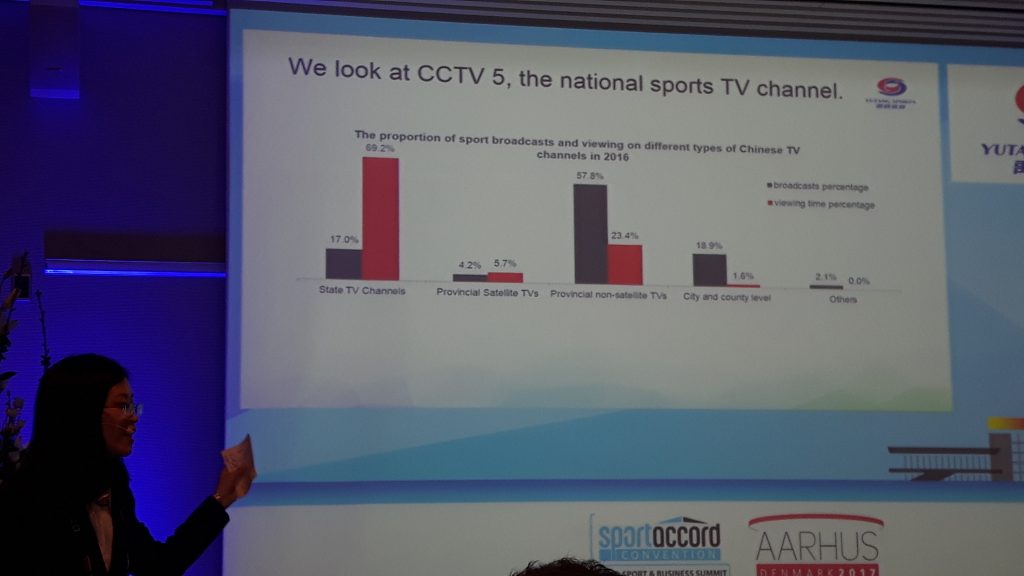
“Because in China there is only one TV network for sports, people need more – then online companies have a chance. If people want to watch golf but they can’t get it on traditional TV, now the online companies own rights.
“The technology is developing so quickly today, so new media platforms can provide more content to the people, who can then choose a platform to select an event that would like to watch. It’s a combination of traditional TV and new media platform – that’s the role that digital platforms play in China.
“And the technology is so good now; with the OTT TV set, the quality of the picture is better than cable TV.”
According to Cai Yanjiang, Director ABU Sports, Asia-Pacific Broadcasting Union, the rise of new media is an incentive for broadcasters to develop their own digital media broadcasting.
“CCTV started their new media before 2000, but unfortunately CNTV – the digital media platform for sports broadcasting – didn’t work very well. CCTV can develop to make better digital broadcasting of sports events on their own platforms,” he tells Host City.
The national broadcaster is aware of the changing consumer demands. Zhang Xing, Deputy Controller of CCTV Sports says, “We are seeing that the older generation of viewers still uses television sets, but younger views use their phones. We need to guarantee that we still broadcast events on TV but we need to give more importance to social media.”
Disruption across Asia
Of course, the phenomenon of digital media transformation is not restricted to China. “Disruption is happening everywhere,” says Cai Yanjiang.
“For me it is good when western companies rush into the Asia Pacific region with new technology and help broadcasters in a new way through the internet and internet plus – that is something that the Chinese broadcasters are adopting.
“And more and more internet companies are taking over the dominant role. In the past it was CCTV dominating, but it’s actually changing now in China. That will also happen in surrounding countries, in south Asia, it has already happened in Japan and Korea, where traditional TV is facing a great challenge from internet companies.
“So from my perspective, serving for the Asian broadcasting union, we’ve got a lot of underdeveloped nations and they don’t have enough facilities or logistic support and telecom standard won’t support them to do internet broadcasting at the moment.
“But they are building up, so I would advise our members, the broadcasters in Asia Pacific region, to go forward, to take up the new way of internet broadcasting, because we all know that digital is the trend in the broadcasting world – not only in football but in everything.
“That is good; that will set a model for our members in underdeveloped countries and state broadcasters to follow. That’s undergoing now in countries like Malaysia, Singapore and Thailand – everywhere they are developing new digital broadcasting solutions.”
However, Asian broadcasters need investment to undergo digital transformation. “What they don’t possess is funds, because in the past traditional television got government funding. Now they need to find a new way to develop their own digital broadcasting. At the same time, telecom companies and digital media companies – especially international ones – are trying to enter the market.
“There is huge potential for example in Myanmar, in the Philippines – everything is changing fast. So although at the moment it’s not really developed, but we can see in the future they have potential.
“In some countries traditional television and new media work together very well; in other countries they are trying to kill each other.”
According to Dong Wang of Alisports, digital media companies have the potential to overtake domestic broadcasters within five years.
“The faster the domestic broadcasters realise how important digital media and platforms are to them and their government and local companies, if they invest in digital media then they can win over in the future because they have government support.
“But if they are not doing anything on this, when the foreign investors, telecom companies or digital broadcasters enter the market, there will be no room for domestic broadcasters any more.
“It can be a great leap to transform from the traditional broadcasting way to the digital way. It will just take five years or so and the whole thing will be changed – so it’s like a race.”
The question is – who’s going to win? “It’s really hard to say. It depends on the vision and understanding of governments,” he says.
“Governments must support their own domestic broadcasters by setting up some regulations – even state laws to protect broadcasting. It’s quite important for the improvement of local companies. Otherwise they will be taken over by all those internationals.”
This article was based on exclusive interviews with Host City and panel discussions at World Football Forum 2016
-

Alisports and CSM connect with road running’s global growth
Alisports (Alibaba Sports Group) has launched World Online Running Alliance (WORA) to tap into the growing popularity of road running through Apps, associations, events, sponsors and operators. The alliance seeks to unite running fans by integrating these five different elements.
According to DaZhong Zhang, CEO of Alisports, WORA is both a ‘trend-setter and game-changer’.
Alisports has signed a contract with global sport and entertainment agency CSM, who will act as the global strategic partner of WORA. CSM says it will help bring more international events to China and assist WORA in becoming an international road running association.
Road running is growing in popularity in China. In 2015, 134 marathon and related events were registered with the Chinese Athletic Association, representing a 160 per cent growth on the previous year. 84 per cent of provinces held one or more of these events.
“It is this unquestioned popularity that Alisports is looking to seize upon through the implementation of WORA,” CSM says.
100 million running enthusiasts had already signed up in July and WORA’s ambition is to increase this by 50 per cent. Helping achieve this target are the group of members which includes running Apps like Codoon, The Joy Run, Ledongli Hupu Running, Tenmini, Run Again and iHeHa.
WORA aims to deliver the most effective platform by attracting sponsors, funding and resources, through which it can provide more technical servers and operators.
“All of this helps Alisports deliver on its long-term objective of making sports accessible and enjoyable for all,” says CSM.
A series of events called ‘WO.RUN’ (‘I Run’) began in July, aiming to integrate online and offline formats. More than 30 WO.RUN events are taking place across China, attended by 30 different Olympic champions including Ruolin Chen, Man Zhong and Liuyang Jiao.
Runners are able to log their runs online, either from one of the official events or a run of their own, and by doing so will be rewarded with points. These points will translate into savings on purchases made on Alibaba, which is China’s largest online retailer and the owner of Alisports.
-

Football rises within Asia’s giants
After decades of economic growth fuelled by exports, China is now concentrating on building domestic markets to sustain its economic growth. Sport has been identified as a particular area of potential, with $850m being invested in a programme of “Development of Sports Industry and Promoting Sports Consumption”.
Football is pivotal to this development programme. The Chinese Football Association has set targets for China to become a world football superpower by 2050 and President Xi Jinping has declared his ambition for the national team to win the World Cup.
The Prime Minister of India has also highlighted football as part of the National Vision. Just how far and fast can the development of football in India and China go, and how is it being achieved?
“What I perceive of those two countries is that there is clearly a much stronger interest in football. There is more dedication from the government,” Alexander Koch, Head of Corporate Communications at FIFA told delegates at World Football Forum.
“There is a much better focus from the FIFA side and we are working on interesting programmes on developing football.”
The growth of football in Asia is already bringing commercial rewards, with revenues from broadcasting international football in Asia on course to equal those from Europe.
“FIFA’s TV income for the 2018 World Cup will, for the first time, have more from outside Europe than in Europe,” he says. “Maybe in the long term we could think of getting one third from Europe and Africa, one third from Asia and one third from the two Americas.”
China and India may be geographical neighbours, but the world’s two most populous countries show contrasting approaches to development.
“It’s very dangerous to generalise,” says Mike Pfister, Senior Development Manager at FIFA. “An emerging market does not equal an emerging football market.
“India is vastly different to China, both in terms of development of football, the way it is structured as well as the opportunities and challenges for development.”
Indian renaissance
Way back in 1950, India was a regionally successful footballing nation that qualified for the World Cup, although they were unable to participate due to a lack of resources. But the 60s and 70s saw a marked decline in football development and it was not until 2005 that a permanent headquarters for India’s national football federation was established.
“There were no professional structures to develop football,” Mike Pfister says. “The first General Secretary came into FIFA in 2011. So in a way that’s a federation that’s just five years old!”
Peter Hutton, CEO of Eurosport was working for IMG when he moved to India in 1994 and found very little football on television. “I finally found an Indian football match on TV – the national cup final. It went to extra time, and the moment it went to penalties it cut off for the news and it didn’t come back! At that point you’ve got to think there’s an opportunity there.”
IMG launched the India’s first national league a year and a half later. “It didn’t follow all the dreams we had for it, but you tapped into the undeniable enthusiasm for football in India and you knew there was something there that could really grow, and it’s fantastic to see how it has grown in the last 20 years.”
The scale of India’s investment into football is incomparable to China’s. “We are behind in terms of investment; there is no comparison,” says Kushal Das, General Secretary at the All India Football Federation.
“But then that’s still the case for every industry – the investment levels in China have been significantly higher in every aspect. We don’t have that kind of money, that’s for sure – but we also don’t have a bubble.”
Outbound investment in sports
Chinese companies are rapidly investing in overseas sports and entertainment brands. Dalian Wanda alone has recently bought the Ironman triathlon, Infront Sports & Media, a 20 per cent stake in Atletico Madrid, worldwide sponsorship and licensing rights for FIBA events, US film studio Legendary Entertainment and North America’s second-largest cinema chain, AMC Entertainment.
Wanda became the first Chinese FIFA Partner in March 2016. In July it announced the launch of the “China Cup” international football tournament with the Chinese Football Association, the first edition of which will take place in Nanning in January 2017 between China and three major teams from Europe and the Americas.
Alisports – launched in 2015 by ecommerce giant Alibaba – has gained online broadcasting rights from World Rugby in exchange for investments in the development of rugby in China. China Everbright and Beijing Baofeng have bought a 65 per cent stake in Italian TV rights distributor MP & Silva. A Chinese consortium now owns 13 per cent of City Football Group, the owner of Manchester City and New York City football clubs.
India is not investing its way into the global sports market in the same way. “Indian corporates are not looking at investing in foreign clubs at the moment; it’s more about improving the standards of Indian football within India,” Sunando Dhar, CEO of I-League tells Host City.
“China’s paying huge amounts of money to bring foreign talent into China; I don’t think at the moment we can afford that kind of money in Indian football. We are trying to put a system in order first. Once that’s done, once the market becomes a little more advanced, maybe we can think of going global. At the moment we are trying to have a national feel to it.”
India’s sport industry is not outbound in the same way as its other more acquisitive industries, such as steel and automotive.
“The reason for that is that they are already developed in those industries. Football is still at a very nascent stage in India. We need to develop ourselves; that’s what we are trying to do now. Once we have done that – it may take five, ten, 15 or 20 years – once we do that we’ll think of the next plan.”
European football fever
Football is undoubtedly growing in popularity all over Asia. However, there is a concern that enthusiasm is focused on European rather than local teams.
“Growing markets are good for development if you can connect that with the passion that football can generate. However, what you also see quite often in these emerging football powers is a dichotomy of passion in football,” says Mike Pfister.
“You will find in South East Asia for example a great deal of football fans who are passionate about football – they will stay up until four in the morning to watch the Champions League final. But that is in stark contrast to their interest in local and national football teams.”
Peter Hutton says: “One of the sad things about South East Asia is that the Premier League is so prevalent and the local clubs struggle so much by comparison. I think India and China have the chance to do it a different way and really establish the strong basis for local clubs.
“The international leagues that broadcast into India and China have a fan base, a dedicated audience, but they don’t have that potential to engage so deeply with Chinese and Indian audiences. So the potential for local leagues is huge.”
However, the growing popularity of football in India is still mostly directed towards European football clubs, Sunando Dhar tells Host City.
“Football here is very popular. It’s maybe more popular than cricket in urban youth. But the thing is, football for most urban youth is the English Premier League, Bundesliga, La Liga, Serie A – so that’s what we are competing against.
“The European leagues to an extent are cannibalising Indian football – eating into it. That’s a tough battle to fight.
“So that’s why we are trying to put systems in place, trying to glamorise our sports, trying to bring big brand ambassadors into football – from cricket, from Bollywood – these are the two biggest industries people follow.
“And we have seen in season one and season two, bringing in players like Del Piero and Zico who not only bring their expertise on the field but also act as a brand ambassador for the game. That’s having an impact; people are coming to the stadiums, attendance is rising which is fantastic. We now need to create Indian stars.”
Hosting touring European clubs
The number of European football teams touring Asia continues to rise. There are many benefits for the hosts of these tours, says Paul Kam, Chairman of ProEvents Group, which promotes tours to Asia for European football clubs.
“There a number of benefits of overseas clubs coming to Asia,” he tells Host City. “Firstly for the local economy, it brings out all the benefits of job creation, it makes sure the city has better infrastructure – they have to maintain the stadium well to be able to host international events. These really put the country and the city on the football map.
“It also helps to improve football players’ conditions, their know-how and knowledge of looking after themselves as athletes. It also increases the popularity of the sport.”
The benefits for European clubs are clear. “They are able to secure more fans, so they may sell more shirts and they come here to get more fan base, which nowadays everybody is talking about – Manchester United is saying they have 600m fans all over the world. Where has that come from? It’s come from them reaching out to be face to face with the spectators.”
In the 25 years ProEvents has been in business, Kam has seen the growing trend of European clubs coming to Asia to compete against one another, instead of against local teams.
“There are many more matches coming up which are just purely foreign team versus foreign team. The trend is going to be there because people love football, from China’s point of view and from Asia’s point of view.
“The Premier League is by far the best league, in front of other leagues like La Liga and Serie A. So people love to see their players; they watch them on the TV every week – and now they can see it in front of them, so of course they will buy tickets.
“People come to watch an international event. If they buy a ticket to watch Barcelona versus Arsenal for example, they have expectations, they will see Messi, Neymar, Suarez, Giroud, Sanchez– they are the reason why they buy tickets to go and see the football match.”
The concern is that there is a missed opportunity for developing football in Asia if local players don’t have the chance to play alongside these big names.
“We always try to strike a balance. My theory is that they should play against local teams, which has much more meat in it because the locals will benefit, foreign teams will benefit – it’s a win-win thing. And then the local boys can improve.
“And what about Vietnam, Indonesia, Singapore for example? They are much lower down than China for example, but how do they improve if they don’t get a chance to play? In 2017 there will be a host of teams coming over to Asia to play against Asian teams, against other foreign teams.”
All-European matches also pose organisational challenges for their overseas hosts. “As a promoter, you have double costs. That means twice the security; twice the transportation, twice the food, flights and everything.
“If I can make the mathematics right it’s a good investment, but if the cost is too high then I personally would prefer to have a foreign team play against a local team.”
Grass roots development
The success of China and India’s football development programmes will depend on their ability to tap into talent all over the country. FIFA is working closely with the Chinese Football Association to build competence nationwide.
“It’s not a problem of spreading the support or making it more popular – the popularity is there. But if you look at where the big football hubs are in China, they are in coastal hubs around the economic powerhouses – Guangzhou and Shanghai,” says Mike Pfister.
“China needs to spread westward. The government’s ‘go west’ strategy still applies to football – going into the provinces again, tap into the 1.6bn people that you have. There is a lot of potential that is untapped there.
“Creativity is home-grown. Yes, you can bring in foreign coaches but you have to have your own physiognomy and philosophy. Money is important but passion is more so and this is needed to develop locally.”
Without major corporate outbound investment in sports brands and European clubs, India’s success will rely on building talent domestically.
“You can’t compare the Indian and the Chinese model. In India what we are doing at the moment is looking inward,” says Sunando Dhar.
“We are trying to improve our house, keep things simple, invest in grass roots development and hope clubs run their teams in a professional manner.”
Hosting and winning the World Cup
The ultimate aims for any footballing nation are to host and win the World Cup. At 152 in the FIFA world ranking, India has a long way to go, but the country is taking a major step forward by hosting the under 17 (U17) World Cup in 2017.
“One aspect of the U17 World Cup is to deliver FIFA-standard infrastructure,” says Kushal Das. “The challenge will be to have a very competitive Indian team, because we don’t have a system where it is developed from an early age.”
Whether India could one day host the men’s World Cup is a different question. “What India is doing next year with the U17 World Cup is an important step on that road. You certainly see the potential of the World Cup to change the perception of football in a country,” says Peter Hutton.
“I think that when you’ve got economies as big as India or China it’s got to be worth, from a FIFA perspective, considering that option.
“I think the sensible first move for India is to do the U17s. Let’s see how that works, let’s build an infrastructure that can support football – and then let’s keep an eye on what we can do in those sorts of markets. Because if we can genuinely make those markets football obsessed, football hungry and aware of their position in the world, then I think the potential is enormous.”
China, with a team ranked 81 in the world, is keen to host the World Cup within a generation. “They don’t have the patience to wait another 50 years,” says Ma Guoli, Deputy Chairman of LeSport – the sports arm of internet company LeEco, which owns the global broadcast rights to the Chinese Super League.
“There is definitely a bubble now; the question is how we can control this kind of investment to find the best team to work in Chinese football. I hope that there will be more and more professional people who really love football and know how to develop it in China. So 2030 is the right time for the World Cup in China.”
Whether China can reach its goal of winning the World Cup is another question. “It’s unrealistic. You can’t say from where they are now to say within the next ten or fifteen years they are going to win a World Cup – it’s not going to happen,” says former England footballer Mark Wright.
“That’s not being disrespectful, that’s just a fact. If you talk about 30 years when you start to educate children and then get the right people, coaches and education, certainly it’s possible to host a World Cup. But to actually go on and win one – this is a big ask and it will take a hell of a lot of hard work between now and 30 years’ time.”
This article first appeared in the Autumn 2016 issue of Host City magazine. It was based on exclusive interviews by Host City and panel discussions at World Football Forum 2016 -

International major event leaders debate future at Host City 2016 in Glasgow; Asian edition announced
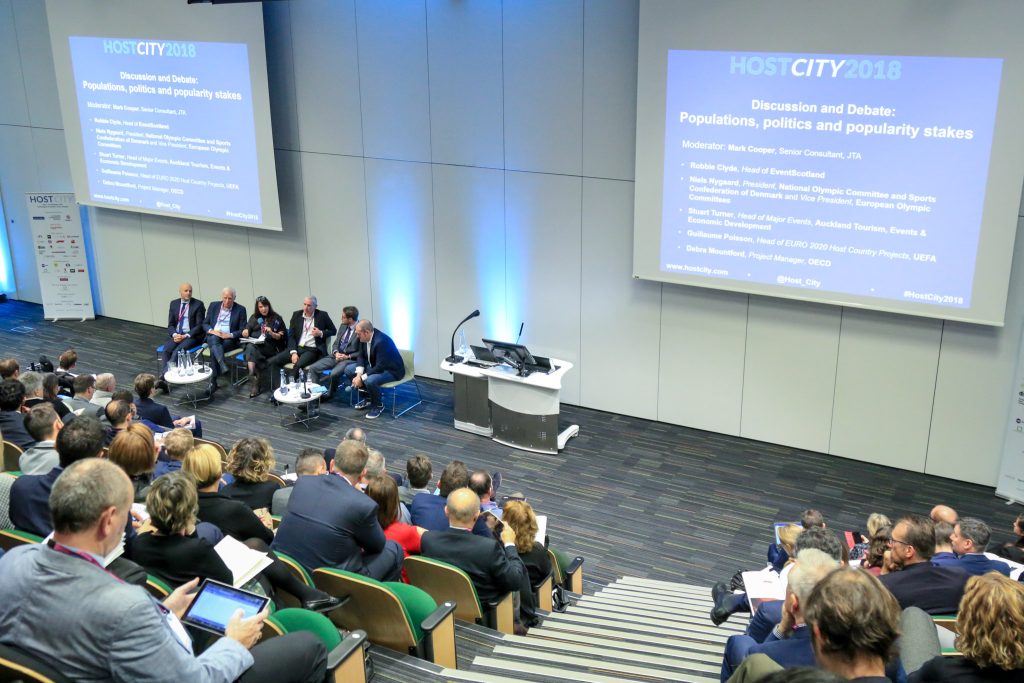
Leading figures from the world of sport governance and major event ownership convened in Glasgow on Monday and Tuesday for the Host City 2016 Exhibition and Conference to discuss how to attract and host secure and engaging sports, business and cultural events.
It was also announced that an additional “Host City Asia” event will take place in Beijing on 18 October 2017.
“In its third year, Host City conference and exhibition is firmly established as the leading international meeting of cities and sports, business and cultural events. We are delighted to see Host City continuing to grow in Glasgow, Scotland,” said Matthew Astill, CEO of Cavendish Group.
“In response to incredible market demand, we are pleased to launch an additional Host City Asia event in Beijing in 2017, where international event owners and suppliers will meet Chinese and Asian hosts and investors.”
Speaking at Host City 2016, Wang Dong, Vice President of Chinese sports media company Alisports: said “This is the spring of the Chinese sports industry… we want to get more people involved in the beauty of sport.”
Host City is the largest and fastest growing international meeting of its kind. At the third edition, the topics of future major events and integrity of sport were high on the agenda.
In his opening keynote address heading up a list of world-class speakers, Sir Craig Reedie CBE, IOC member and president of the World Anti-Doping Agency talked about how in an ever-more competitive field, hosting events is a “very active place” in contrast to the major multi sports events like the Olympic Games and the Commonwealth Games who, he said, have struggled to attract bid cities in recent years.
During the first panel discussion on the topic “What does future hold for major events?” Dimitri Kerkentzes, deputy secretary general, BIE (World Expos) said: “World Expos cannot be viewed from home. They must have participation and support from the public… We need to ensure that the event will benefit people from the host cities, and that it doesn’t leave white elephants behind.”
Simon Clegg CBE, Chief Operating Officer, World Expo Dubai 2020 highlighted the large ticket sale expectations and expansive physical set-up of World Expo Dubai 2020.
Francesco Ricci Bitti, President, ASOIF (Association of Summer Olympic International Federations) said: “The tangible and intangible impacts of sporting events on the community are very important.
“We need to be cautious about the fairness of the bidding process.”
He also commented that the level of flexibility afforded by the new bidding rules set out in IOC’s Agenda 2020 programme of reform needs to be carefully considered, saying “Changing venues from the bid book is taking it too far.”
Sarah Lewis, Secretary General of the international Ski Federation (FIS) and the Association of Olympic International Winter Federations (AOIWF) said: “It is necessary to maximize the usage of existing facilities that would change the focus on having compact events. Compact events are convenient but don’t offer the best legacy opportunities”. She said “multi-city and multi-country events may be the future”.
Paul Bush OBE, Director of Events, VisitScotland said: “The benefits of hosting major events are both hard and soft. The soft benefits, which you have to articulate very carefully, are becoming very important.
“The importance of transparency in the bidding process is crucial right now and is growing every year”.
The issue of good governance was further explored in the following panel session on “Has sport lost its integrity and how can it win confidence back?”
Dr. Bridget McConnell CBE, Chief Executive, Glasgow Life said: “A city’s values must shape and drive what you bid for and how you do it. If you lose public confidence in sport integrity you lose countries and cities bidding.”
When asked whether cities would turn their back on hosting events that can’t prove their integrity, she said “I can certainly say this of Glasgow. We would not want to be connected to any sport that had major controversy associated with it”.
Yves Le Lostecque, Head of Sport, European Commission said “In Europe we are defending values and we have to promote them. Integrity and governance are key parts of the EU mandate for sports. Our member states are keen to have the values maintained and we can help through policy cooperation and financial support.”
Adam Pengilly, IOC Member, VP of International affairs, International Bobsleigh & Skeleton Federation (IBSF) said: “Sport has an inherent value. The Games is loved all over the world… but sports politicians are sometimes lowly viewed.”
He also said “the perception of sport as a utopia needs to be changed. We need to be more realistic when looking at it”.
Risto Nieminen, President, Finnish Olympic Committee said: “We need to create standard for doping control that spans across all countries” and added “business and entertainment are not the basis of sport. Instead, inspiration, well-being, optimism, and happiness.”
Ignacio Packer, Secretary General of children’s rights charity Terre des Hommes said: “The sport sector is opening up increasingly to the human rights sector”. He also questioned the tendency to limit the definition of “success” in hosting events to financial outcomes. “We believe that success is about people”. Ignacio also commented on his participation at the Host City Conference saying “I like coming to Host City because I am not with usual colleagues. I learn a lot here.”
The delegates, which included several IOC members, were also addressed by senior figures involved in bidding for the 2024 Olympic Games from Budapest, Los Angeles and Paris.
The Host City brand began life in China in 2003 as a bilingual magazine for the Beijing Organising Committee of the Olympic Games. The Deputy Mayor of Beijing in 2009 presented the CEO of Cavendish Group with the “Great Wall Friendship” award in recognition of Host City’s role in bringing foreign technology content to China and creating an Olympic infrastructure partnership.
Cavendish Group is also known as the owner of the ICC (www.internationalcapitalconference.com ), China’s largest outbound investment event that is now in its seventh edition.
Host City’s Editorial and Conference Director Ben Avison said: “China is investing $850bn in sports by 2025 and is looking for global partners to develop its entertainment and cultural sectors. Host City Asia provides the platform to connect the international industry with this booming market.”
All the Host City 2016 Conference keynote addresses and plenary session content be streamed at www.hostcity.com/hc2016/audio – provided by sound-sharing platform audioBoom. -

China’s foreign minister visits IOC president, strengthening cooperation
The Foreign Minister of China, Wang Yi, met with International Olympic Committee (IOC) president Thomas Bach in Lausanne on December 11 to discuss how China can strengthen its cooperation with the global sports organisation.
On his visit to Switzerland Wang also met with the director-generals of the United Nations (UN) and the World Health Organisation (WHO), as well as the president of Switzerland.
According to China Daily, Wang told Bach, “China is willing to strengthen cooperation with the IOC while upholding the Olympic spirit.”
Wang also expressed his confidence in the Beijing and Zhangjiakou’s ability to stage the Winter Olympic Games in 2022, highlighting the success of the Beijing 2008 Olympic Games and the Nanjing 2014 Youth Olympic Games.
“With the all-out efforts of the Chinese people and the substantial help of the IOC, I am confident that the 2022 Winter Olympics will be another huge success,” he said.
According to Yutang Sports Marketing, Wang stressed the importance of sports in human and national development, recognising the great contributions the IOC has made to promoting global sports development and strengthening the friendship among people from different countries.
Bach reportedly said China’s plans for sports development are at one with the IOC’s, noting the tremendous contributions China has made to the IOC and expressing gratitude to China for its cooperation with the IOC.
The IOC also looks set to strengthen this cooperation beyond the hosting of the Winter Games. “The IOC will be a full helping hand in delivering a fruitful 2022 Winter Olympics, while expecting to team up on further cooperation with China,” Bach said.
In the meeting with UN Director General Michael Moller, Wang said “Against the backdrop that the global situation is continuously becoming more complicated, the role of the United Nations can only be strengthened instead of weakened.”
Margaret Chan, director-general of the World Health Organization, told Wang “China has set an excellent example in poverty alleviation and health undertakings, and I believe it will contribute more to improving global public health and sustainable development.”