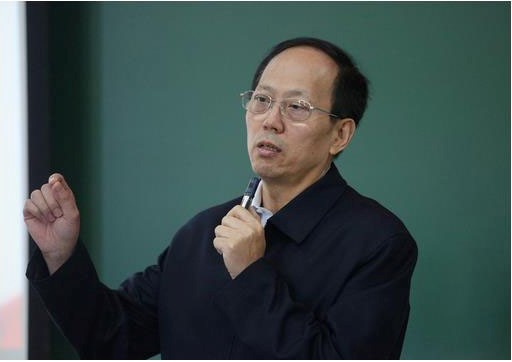
Gou Zhongwen, director of China’s General Administration of Sport, has been named president of the Chinese Olympic Committee (COC).
He succeeds Liu Peng, who has served as president of the COC since 2005 and is now honorary chairman.
The appointments were made at the COC session in Beijing at the end of 2016 and announced by state media agency Xinhua.
In November 2016, the 59-year-old Guo was appointed director of China’s General Administration of Sport following Liu’s retirement from this position at the age of 65. In April 2016 he was appointed deputy secretary of the Communist Party of China’s Beijing municipal committee.
In 2008, Guo was appointed vice-mayor of Beijing in 2008 responsible for education and technology. He also ran the leading group for Beijing’s campus soccer development.
He was deputy head of the Ministry of Industry and Information Technology from 2002.
Under Liu Peng’s leadership, China rose to prominence in several Olympic sports, including table tennis, badminton and diving, at three summer and three winter Olympic Games, topping the medal table at Beijing 2008.
Liu also played a lead role in Beijing’s successful bid to host the 2022 Winter Olympic and Paralympic Games.
Tag: China
-

Chinese Olympic Committee appoints new president
-

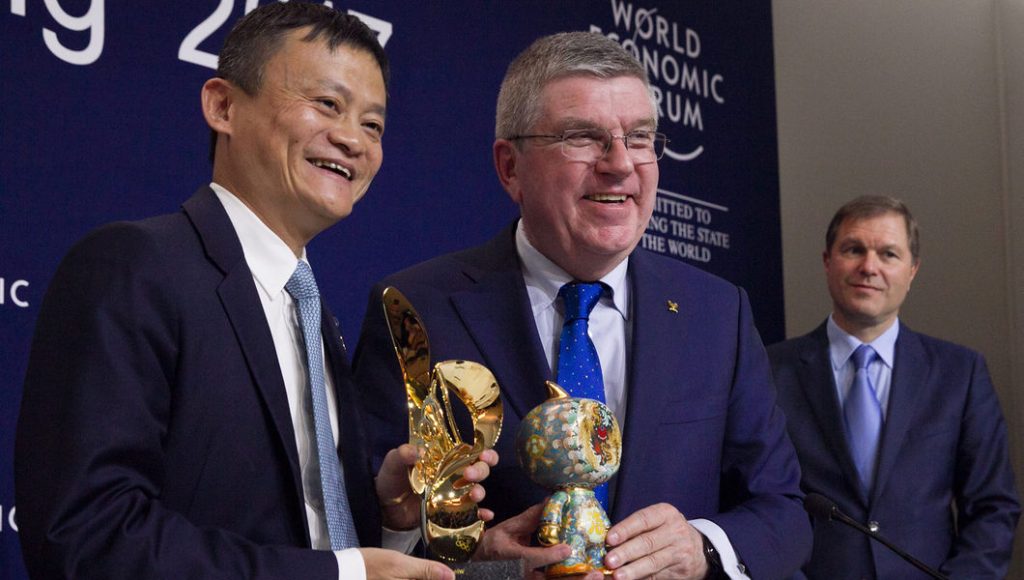
IOC signs Alibaba Group as Worldwide Olympic Partner in Davos
[SOURCE: IOC] The International Olympic Committee (IOC) and Alibaba Group on 19th January jointly announced a long-term partnership through 2028. Joining The Olympic Partner (TOP) worldwide sponsorship programme, Alibaba will become the official “Cloud Services” and “E-Commerce Platform Services” Partner, as well as a Founding Partner of the Olympic Channel.
The partnership was announced at the World Economic Forum in Davos, Switzerland, with IOC President Thomas Bach, Alibaba Group Founder and Executive Chairman Jack Ma and Alibaba Group Chief Executive Officer Daniel Zhang.
Thomas Bach, President of the IOC, said: “In this new digital world, Alibaba is uniquely positioned to help the IOC achieve a variety of key objectives outlined in Olympic Agenda 2020, while positively shaping the future of the Olympic Movement. This is a ground-breaking, innovative alliance, and will help drive efficiencies in the organisation of the Olympic Games through 2028, whilst also supporting the global development of digital opportunities including the Olympic Channel.”
“Alibaba’s partnership with the IOC is built on a foundation of shared values and a common vision for connecting the world and enriching people’s lives,” said Jack Ma, Founder and Executive Chairman of Alibaba Group. “We are proud to support Olympic Agenda 2020, using our innovations and technologies to help evolve the Olympic Games for the digital era.”
Through this partnership, Alibaba’s contributions to the Olympic Movement will include:
Best-in-class cloud computing infrastructure and cloud services to help the Olympic Games operate more efficiently, effectively and securely, including supporting big data analytics requirements;
The creation of a global e-commerce platform for Olympic stakeholders to engage and connect with fans seeking official Olympic licensed products manufactured by the Olympic parties’ official licensees, and selected sports products, on a worldwide basis; and
Leveraging Alibaba’s leading digital media technologies and know-how to develop and customise the Olympic Channel for a Chinese audience.
“Alibaba is proud to empower the International Olympic Committee in a game-changing digital transformation, while moving another step closer toward our goal to serve 2 billion consumers,” said Daniel Zhang, Chief Executive Officer of Alibaba Group. “We will leverage our experience in serving a young user base to help connect more young people to the Olympic Movement, helping to strengthen our brand through this historic partnership.”
Tsunekazu Takeda, the IOC’s Marketing Commission Chair, said: “We are delighted to be working in the long term with Alibaba for the benefit of the Olympic Movement. This strategic partnership underlines the global appeal of the Olympic values and opens an exciting new chapter in this digital age.”
Alibaba is the first company to make a long-term commitment to the IOC through 2028 and the first Chinese company to commit to the Olympic Winter Games Beijing 2022.
Alibaba will support the organisers of each edition of the Olympic Games, and the Olympic Movement around the world. These rights will include advertising and promotional use of Olympic marks and imagery from the Olympic Games as well as marks from the National Olympic Committees.
Alibaba’s global activation rights will include the Olympic Winter Games PyeongChang 2018, the Olympic Games Tokyo 2020, the Olympic Winter Games Beijing 2022 and the Olympic and Olympic Winter Games in 2024, 2026 and 2028 in cities yet to be selected by the IOC. -

CMC Capital Partners invests in Formula E
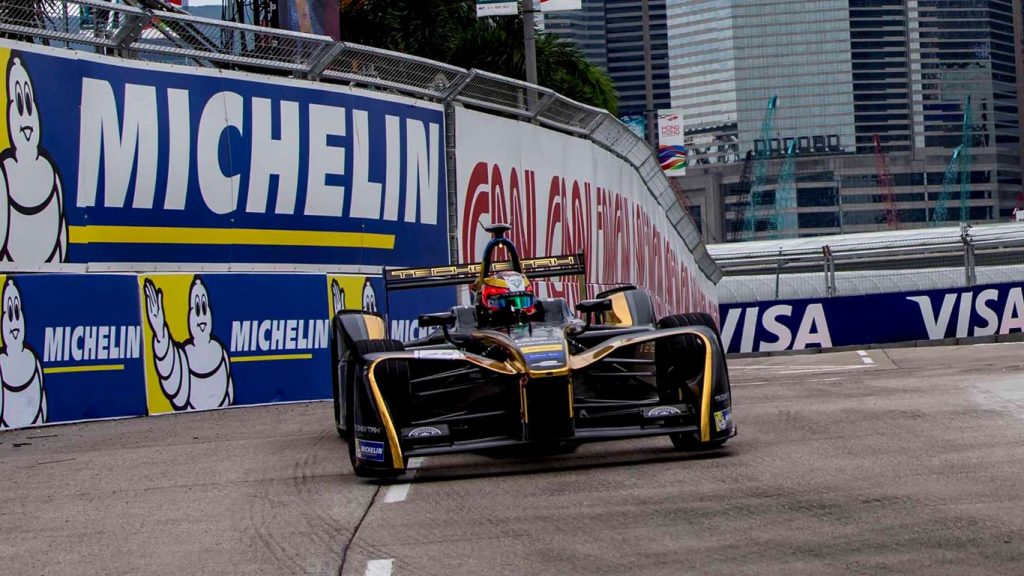
[Source: Formula E] Formula E Holdings has announced that CMC Capital Partners are to become a shareholder in the company, adding to the growing list of investors joining the electric street racing series.
The investment is led by CMC Capital Partners – China’s leading investor and operator in media and entertainment, sports, internet and mobile, and lifestyle sectors – whose consortium also includes SECA (a CMC portfolio company).
Alejandro Agag, Founder & CEO of Formula E, said: “We are excited to welcome CMC Capital Partners, led by Mr. Ruigang Li, to the increasing list of investors joining Formula E and the electric revolution. China is an important player in the potential of electric vehicle manufacturing and production, and this partnership reinforces our intentions to promote sustainable mobility across Asia and Mainland China. The opening round of each season has been hosted in this region – Beijing and Hong Kong – and we have teams and drivers such as TECHEETAH and Ma Qing Hua already competing in the series. We look forward to working closely with CMC Capital Partners, and continuing to grow the profile of Formula E in key territories across the globe.”
Ruigang Li, Founding Chairman of CMC, said: “The global automotive industry is now undergoing profound changes with the power source shifting to renewable energy from traditional petrochemical. China is playing a central role in promoting these changes with its vast auto market. The evolution of the auto industry has also brought historic opportunities for motorsports. Since its inauguration three years ago, Formula E has quickly evolved into a premium global sports IP under a first-class leadership, with remarkable progress in promoting sustainability, innovation, and market penetration of electric vehicles, as well as in media partnership, sponsorship and tourism. CMC has been focusing on investing in premium global and local sports IPs, and we look forward to working together with Formula E both in China and globally.” -

Alibaba president to deliver keynote at SportAccord Convention 2017 plenary conference “innovation in action”
[Source: SportAccord Convention] SportAccord Convention is delighted to confirm that Michael Evans, President of the Alibaba Group will be the Keynote for this year’s Plenary Conference, Innovation in Action at the 15th edition, to be held at the Aarhus Convention Center, Denmark from 2 – 7 April 2017.
The Keynote will begin on Wednesday, 5 April at 09:10 to 09:40 and take the format of a Fireside Chat with David Eades, Anchor and Journalist, BBC World. The session is entitled: Open Sesame: Unlocking the rich potential of new sporting horizons, and using innovation to drive sport to a new level of entertainment and fan engagement.
When Sydney hosted the Olympic Games in 2000, Alibaba was a Chinese start-up and not quite a year old. Fast forward 18 years and Alibaba has now grown into the world’s largest online and mobile commerce company. Alibaba is now expanding into media, entertainment and sport, recently forging an historic long-term partnership with the IOC through 2028, using technological innovation and know-how to contribute to the Olympic Movement.
As President, Michael Evans is responsible for leading and executing Alibaba Group’s international growth strategy. Commenting on Alibaba’s involvement in the SportAccord Convention, Evans said:
“We’re delighted to be taking part in the SportAccord Convention as this gives us an opportunity to share some of the key insights and innovative approach Alibaba is taking when it comes to sport and entertainment, the growth of the digital and mobile market, as well as the exciting potential of the Chinese market for sport.”
Panel sessions and case studies following the Keynote will include:Plenary Panel Session entitled: Innovation – A permanent change revolution, or an opportunity to reset your sport?
Innovation in the Business of Sport
IF Innovation in Action – International Orienteering Federation
Future Sports – Drone RacingNis Hatt, Managing Director of SportAccord Convention said, “We’re delighted Alibaba will open the Plenary Conference focused on Innovation in Action. With the increasing significance of sport in China in terms of fan engagement and business growth, there are significant opportunities to be had by everyone. Alibaba’s meteoric rise will most certainly have some bearing on what we hear during the Keynote.”
SportAccord Convention is the world’s premier and most exclusive annual event at the service of sport. It is focused on driving positive change internationally and dedicated to engaging and connecting; international sports federations, rights holders, organising committees, cities, press and media, businesses and other organisations involved in the development of sport.
The Convention is host to annual general meetings of governing bodies, and once again, will welcome a delegation from the International Olympic Committee. The 6-day Convention includes the Plenary Conference, City Forum, LawAccord, MediaAccord, the Exhibition, as well as the Opening Ceremony and Closing Event. -

eSports made medal sport for Hangzhou 2022 Asian Games
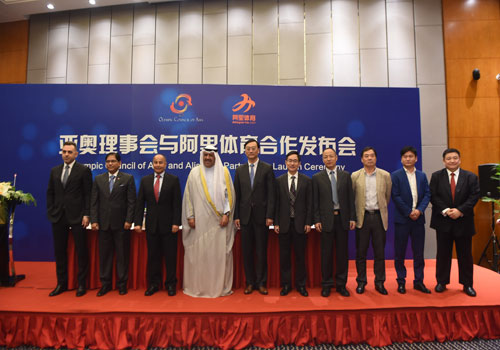
[Source: OCA] The Olympic Council of Asia and Alisports of China has announced a strategic partnership to bring the electronic sports video game phenomenon to the official sports programme of the 2022 Asian Games in Hangzhou, China.
eSports, which is enjoyed by millions of youngsters around Asia and the world, has already been added to the OCA’s 5th Asian Indoor and Martial Arts Games (AIMAG) in Ashgabat, Turkmenistan, this September as a demonstration sport.
It will also feature in next year’s 18th Asian Games in Jakarta and Palembang, Indonesia, again as a demonstration sport. By the time of the 19th Asian Games in 2022, however, eSports will become an official medal sport – reflecting the rapid development and popularity of this new form of sports participation among the youth.
Alisports, which was established in 2015 as the Alibaba Sports Group by the Chinese e-commerce giant Alibaba Group, will work closely with the OCA to develop the marketing of eSports.
The OCA President, HE Sheikh Ahmad Al Fahad Al Sabah, said: “The Olympic Council of Asia has constantly been committed to the heritage, development and improvement of Asian sports, and we are extremely pleased about the strategic partnership with Alisports.
“We look forward to further collaboration with Alisports in regards to digital sports concepts along with sporting events. We are sure that the extensive organising capabilities of Alisports, and their experience in e-sports, will assist the OCA in developing all sports.”
Alisports founder and CEO Mr. Zhang Dazhong said: “I would like to thank the Olympic Council of Asia for their faith in Alisports. Together we will work on providing the sponsors of the Asian Games with more opportunities and maximising the market value, so that the OCA enjoys optimum benefits and advantages.”
eSports to be contested at the 5th AIMAG this September include FIFA 2017, MOBA (Multiplayer Online Battle Arena) and RTA (Real Time Attack) gaming types.
[Source: OCA] -

China’s ‘gold mine’ sports industry presents huge opportunities
The boom in China’s sports industry presents huge potential for foreign investment, especially from the UK.
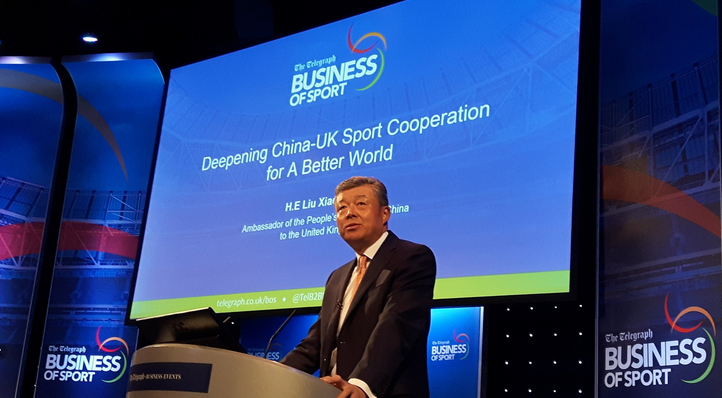
Speaking at the Telegraph Business of Sport conference in London, Liu Xiaoming, the ambassador of the People’s Republic of China to the UK, said that sport has become one of the country’s new economic highlights and a national strategy for business.
From sports events and venues to retail and sponsorship, China has major opportunities for collaboration said Liu.
“There’s no doubt China is a big sports nation, but China is not yet a strong sports nation,” he said. “There are challenges. But in the long run China’s sports sector has a huge market to offer.
“Many compare China’s sports industry to a huge gold mine.
“The sport sector is fast emerging as a new growth point. By 2020 the total output will exceed US$450 billion. All this indicates a growing demand for domestic and foreign investment. [China’s] sport industry is booming.
“[There is] great potential for China and the UK to collaborate in many aspects of the sports industry.”
When asked about China’s potential of hosting the 2030 FIFA World Cup, Liu added that it is a dream for the Asian superpower.
“Chinese people have three dreams for football,” he said. “Dream one is to be a champion of Asian Games. They want to see the Chinese team perform better.
“Second dream is to host the World Cup. Maybe not 2030 but looking down the road we hope Chinese will host the World Cup.
“Third dream is to win the World Cup.”
To discover more opportunities in China’s sports, business and cultural events market visit Host City Asia in Beijing on 18 October.
-

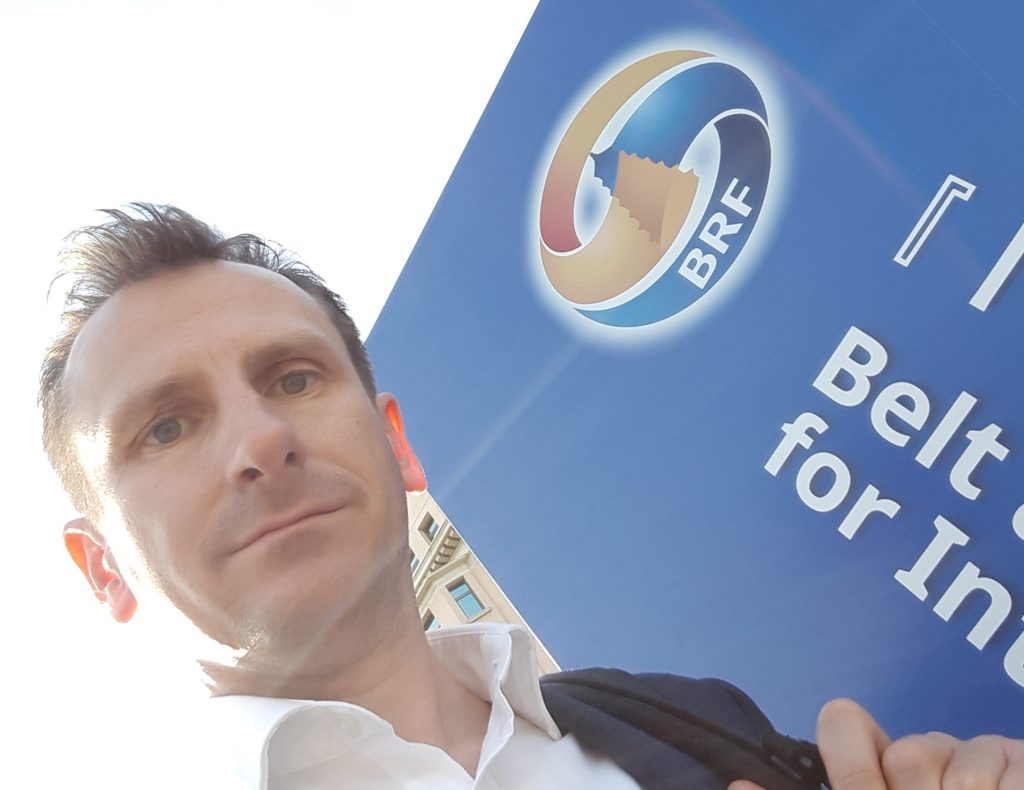
Belt and Road Forum showcases Beijing as driver of international trade
At a time when many western nations are grappling with protectionism and calling into question long established trading agreements, China has welcomed world leaders to its capital city to herald the dawn of a series of new trading relationships.
The theme of the conference – the Belt and Road Initiative – positions China as the driver of economic development worldwide.
“More than 2,000 years ago, our ancestors, driven by a desire for friendship, opened the overland and maritime Silk Roads and thus started a great era of exchanges among civilizations,” president Xi Jinping told delegates at the welcome banquet.
“We gather here to renew the Silk Road spirit and discuss the Belt and Road development for international cooperation. This is both a continuation of our shared legacy and a right choice for the future.”
Much like the Olympic Games – of which Beijing is the first city ever to be hosting both the Winter and Summer editions – political and economic summits are a means of putting the host nation at the centre of the geopolitical landscape.
According to president Xi, China has now signed cooperation agreements with more than 68 countries and international organisations.
State owned banks are to invest another $40bn to boost infrastructure, industrial capacity and financing along the new silk road, which now extends beyond Africa and Eastern Europe to South America.
United Nations secretary-general Antonio Guterres told China Daily: “The Belt and Road Initiative has immense potential… It can promote effective access to markets and new opportunities… It is rooted in a shared vision for global development.”
Contrast this with the UK’s imminent separation from 27 nations of the European Union, or US president Donald Trump’s protectionist rhetoric. As one Beijinger told me today: “Oh, you are from Britain, leaving the EU… this must be bad for business!”
Business is certainly good in China. The reason for my visit was not actually to attend the Belt and Road Forum, but to speak with VIPs from the city about Host City Asia, which takes place in Beijing on 18 October 2017. The opportunities in this sector are as great for organisations from overseas as they are for China.
The sun shone throughout the Belt and Road Forum. While Host City cannot guarantee blue skies, even in the city’s favourite “golden month” of October, one thing is for certain – the sports and entertainment sectors here are booming rapidly and China is loving sharing the limelight.
Host City Asia takes place in Beijing on 18 October 2017. Beijing will host the second Belt and Road Forum for International Cooperation in 2019. -

ICSS INSIGHT CEO tells World Football Forum: ‘Integrity vital for Chinese football to achieve long-term sustainable growth’
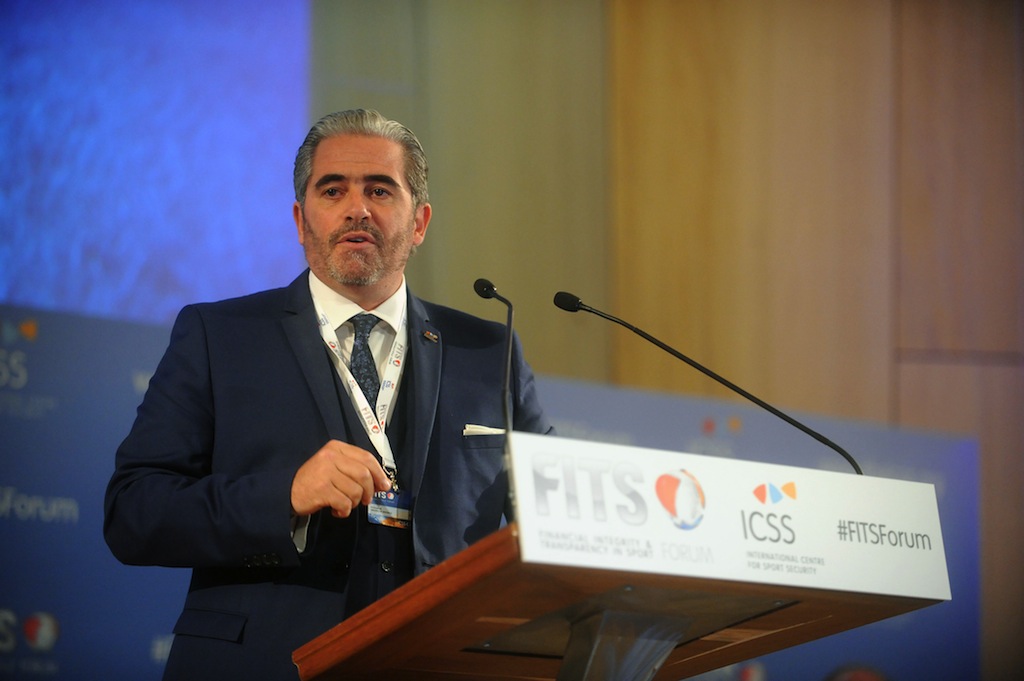
ICSS INSIGHT CEO Emanuel Macedo de Medeiros delivered a keynote address at the World Football Forum and highlighted the vital role that integrity and good governance can play in helping organisations across China and the wider football world achieve long-term and sustainable economic growth.
Speaking during the World Football Forum – which took place in Changsha, China – Medeiros shared his 25 years’ of experience and expertise as a sports lawyer and senior executive within European and world football with senior leaders and investors from the Chinese and global football marketplace.
Medeiros said: “Football, in China and around the world, has experienced unprecedented growth and commercial success over recent years. Clubs and leagues have become global brands; competitions are now broadcasted around the world, international recruitment and players’ transfers have increased exponentially.
“Whilst this incredible success should be celebrated and applauded, history has shown that there can be a dark side to the beautiful game. Developing and enforcing strong integrity policies is vital for the future of football in China and worldwide, to ensure its long-term development, commercial success and people’s trust and passion.”
During the keynote speech, he highlighted China’s vision to develop 50,000 youth academies by 2025 as one example of the exciting ambition to grow football in the country, as well as encouraging clubs, leagues, sponsors, as well as other organisations working within Chinese football, to join forces to ensure the highest standards and best practice is followed within their integrity, good governance and compliance regulation frameworks.
As a former CEO of the European Professional Football Leagues (EPFL), Medeiros also proposed a 7-point “Game Plan” for the future of world football. These recommendations included:
1. Reform football’s governance, at a national and international level, with implementation of the highest standards in terms of democracy, transparency, accountability and meaningful stakeholder representation.
2. Implement club licensing systems throughout all professional competitions, at national and international level, including appropriate sporting, legal, infrastructural and financial requirements.
3. Implement best practice for youth development of young players, covering holistically all areas of the process, including recruitment, training, education and protection of minors.
4. Carry out a comprehensive regulatory reform on club ownership, as a matter of priority, with introduction of effective due diligence and independent supervision.
5. Establish a ‘clearing house’ system, both at national and international level, to ensure effective financial integrity of sport/related financial transactions, such as players’ transfers fees and agents commissions.
6. Regulate and discipline the sports betting market and enhance international cooperation mechanisms, to effectively prevent and combat illegal betting and ensure the necessary protection of consumers (in particular, minors), the integrity of sporting competitions and football’s own economic viability.
7. Support the mission of SIGA (Sport Integrity Global Alliance) and its reform agenda, including the implementation of its core principles and universal standards on good governance, financial integrity and sports betting integrity.
He added: “The threats to the integrity of sport are big, global and increasingly sophisticated. At the ICSS, we are committed to safeguarding sport and sharing our knowledge and expertise with organisations around the world. Only through a global, holistic and multi-stakeholder approach can the sporting industry safeguard its reputation and in positive role in today’s society and economy.”
-

Exclusive: Hosting World Cup in China would boost football globally
Hosting the FIFA World Cup in China would bring benefits for football internationally and at home, even if the national team still has a long way to go to become strong team, according to Oceans Sports & Entertainment vice president Norman Liu.
“China has a big market in the world, in terms of the population of football fans,” he told Host City in Beijing. “So China could be the right destination for FIFA to promote the football sports worldwide.”
Liu has been in China’s sports industry for years, including working in the marketing department of the Beijing 2008 Olympic Games Organising Committee (BOCOG).
“Also in China we have so many companies that want to get involved in football and sports marketing. So commercially, China could be a great choice for world football.”
China hosted the Women’s World Cup in 1991 and 2007. The country also has experience of hosting the biggest events in the world, from the 2008 Olympic Games in Beijing to the 2014 Youth Olympic Games in Nanjing and the 2010 Asian Games in Guangzhou.
At least 10 cities are required to host World Cup matches, with co-hosting within the scope of the bidding rules.
On 14 May, (South) Korean Football Association president Chung Mong-gyu told national press that he would support a joint bid for the 2030 World Cup with China and Japan. But at the FIFA Congress in Bahrain on 10 and 11 May, a rule was upheld that states continents must wait two editions before hosting the World Cup again. Asia has the 2022 World Cup in Qatar.
So the soonest Asia could bid for the World Cup would be for 2034.
Earlier in the month Liu Xiaoming, China’s Ambassador to the UK, said hosting the World Cup is a “dream” for China beyond 2030.
Developing football in China
According to Norman Liu, hosting the FIFA World Cup would also help to develop the sport in China.
“Personally I saw there is a very big opportunity from the 2008 Beijing Olympic Games. Before the event few people went to stadiums to watch their home side games. After that, so many sports fans went to stadiums to watch their local club.
“You could not imagine before the Olympic Games so many fans going to the stadium to cheer for the home club. After 2008, people would go to the stadium on match days, on the weekend and on weekdays. So, I think the mega event changed people’s behaviour to consume sports.
“But I think if China hosts the World Cup that could be very good opportunity to be developed further in China.”
Increased participation is another potential benefit and China is working to improve the standard of play in the country. The Chinese Football Association’s recently published 2020 action plan includes targets for developing football in China, such as for the men’s team to be in top 70 by 2020 – up from their current FIFA ranking of 81st – and for China to finish in top eight of 2019 Women’s World Cup.
However, the qualification of the national team is not a criteria for hosting.
“Although our national team’s performance still has a big space to improve, the Chinese society have the desire and interest to host a worldwide tournament in China,” said Liu.
“Personally, I think hosting the World Cup will help China to develop football in China. Chinese fans never gave up hopes on their national team performing more and more in international tournaments and we hope our national team can be better than before, to be a qualified host.”
In the meantime, there is still a possibility China can qualify for Russia 2018. “It’s a small chance.” -

Events should be the centre of the Chinese sports industry
According to a report released by the Chinese National Sports Authority, China produced a total output of RMB 1.7tr (US$ 250bn) from its sports industry in the year 2015 alone.
As the report revealed, the result is mainly driven by manufacturing, sales, trading and rental of sports goods and related products, which accounts for 86.2% of the total. In other words, the sports-related goods industries are still the main sectors of the Chinese sports industry.
However, the nucleus of a sound sports industry should be its sports performance industry and not its sporting goods sector.
Deloitte found in 2015 that Dubai’s sporting industry was worth more than US$ 1.7bn, with investment in sporting events, sports venues and mass participation events accounting for US$ 709m of the city’s total gross events expenditure of US$ 1.14bn. In this regard, Dubai has a much healthier sports industry than China.
Then how can we change the status quo of the Chinese sports market?
Maybe we can start with the following aspects.
The Chinese Super League
The Chinese Super League (CSL), we can say, is the most popular and commercialised professional sports league in China. In recent years, powerful outfits such as Guangzhou Evergrande and Shanghai SIPG have become annual title favourites for the AFC Champions League.
More importantly, the arrival of international players like Tevez, Oscar, Hulk and Alex have enhanced the competitiveness and increased entertainment of Chinese clubs and fans as well as improving the international influence of the top-flight football league.
As such, the growth in attendance figures of the league have been remarkable. According to statistics released by CSL officials, the total stadium audience reached 5.8 million in 2016, averaging 24,159 for each game. At the same time, more than 284 million people watched the CSL on TV with the number of viewers streaming online increasing sharply. As of now, the football league is being broadcast in 96 countries and regions around the world.
The league has also been monetising its commercial value through sponsorships and partnerships. In May, the CSL Company sealed a five-year title sponsor-extension with the Chinese insurance firm Ping’an Group, which will see the firm pay RMB 1 bn to continue its title sponsorship through to 2022.
Meanwhile, the CSL has also signed up as partners with China Sports Media (CSM) in a five-year broadcast rights deal, worth RMB 8bn. Despite LeSports relinquishing its broadcast rights due to financial burdens, the new media rights for the 2017 CSL season were acquired by the Suning-backed PPTV Sports.
However, two new policies, recently introduced by the Chinese Football Association (CFA), have caused a stir in the Chinese football world. These new rules regulate the number of foreign players and require clubs to have for each match: at least one Chinese under-23 player in the starting XI; at least three U23 players in the 18-player squad; and the number of U23 players and the times they play no fewer than foreign players. The rules have also limited Chinese clubs’ investment in transfer windows by doubling transfer fees overnight.
The CFA said the new rules are aimed at promoting the development of youth players and training in the country, but some critics argue that this move, despite its good intention, is too premature for the Chinese football market. It remains to be seen whether this is the best way to balance commercial value and youth player development.
The Chinese Basketball Association
Although the Chinese Basketball Association is not as widely known as the CSL, the first-tier professional men’s basketball league in China has a remarkable fan base.
As reported in the Yutang Sports viewership report 2016, the league showed its popularity by having 7 CBA matches ranked in CCTV’s Top 10 basketball games list.
Even more importantly, China has been making recent progress in basketball reforms. With the establishment of the CBA Company, Yao Ming’s election as CBA President and the launch of the CBA Summer League the country is on track to separate its professionally-run basketball league from its traditional government-run system.
All these changes will help improve decision-making, enhance independence and transparency, as well as turn the CBA into a more professional and commercialised league in the international market.
However, beyond football and basketball, other sports leagues in China are not yet operated in a much professional level, such as badminton, table tennis and volleyball. They still need to be run more professionally and to attract more attention.
Marathon Running
Mass participation events, on the other hand, are developing at an unprecedented rate in China.
Take marathon running as an example. In 2016, 328 marathon-related events were approved by the Chinese Athletic Association, which is almost 1.5 times more than 2015 (134 events) and 14 times more than 2011 (22 events). Parallel to the increase in marathon events is a rise in number of participants, reaching 2.8 million last year, up 1.3 million from the previous year.
However, we should not only focus on the numbers but on how we can solve more tougher issues regarding how to carry out the national fitness programs. Some questions include: How can we balance policies and market demand? How can we make full use of sports venues? How can we promote the development of grass roots clubs? How can we make events more professional and motivate mass engagement and participation? And how can we provide more public sports resources to the public?
Policy Support for Mass Participation
Recently, a national plan was jointly released by nine Chinese departments on supporting social strengths for organising mass participation events such as marathons and bicycle races.
The plan describes that marathon runners and the times people run marathons should exceed five million and related consumption should be over RMB 20 bn; consumption related to bicycle races should also exceed RMB 20 bn.
As such, we can see the government is making more detailed guides in different disciplines/areas and grass roots/mass participation events are playing an important role in realising the larger national sport industry goal.
As a conclusion, a well-established sports industry cannot only be strong in the sporting goods sector. Improvements in the sport event market are needed to optimise the industrial structure.
This article was written by Gu Xin of Yutang Sports