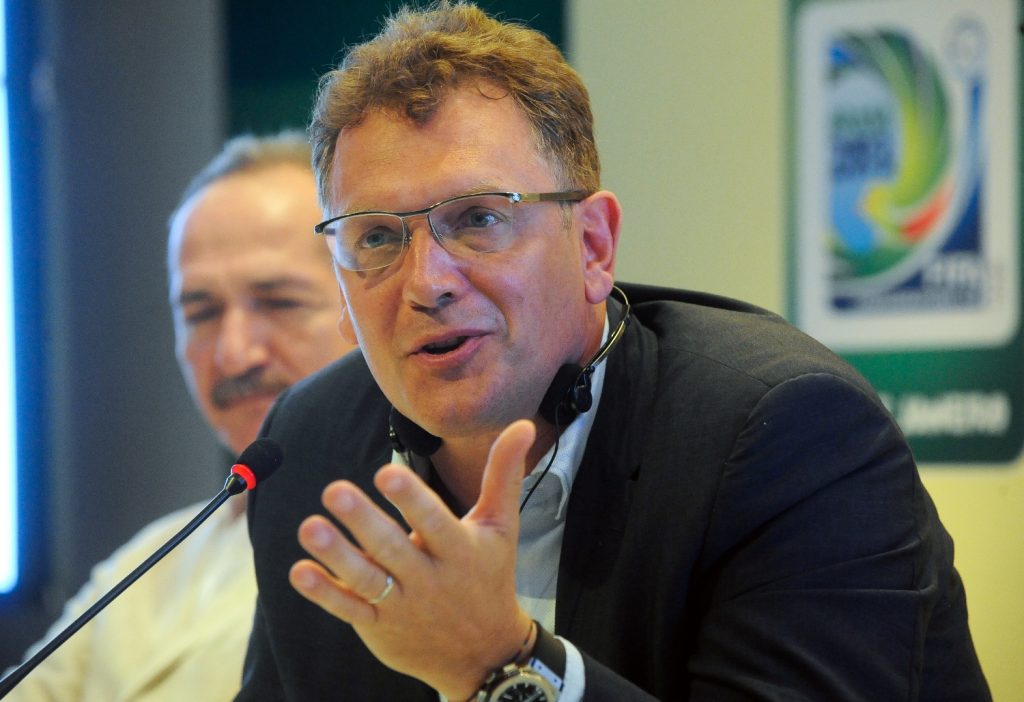
Delays and uncertainty over World Cup stadiums have motivated FIFA secretary general Jerome Valcke to make a special visit to Rio de Janeiro from 24 to 27 March, bringing an early end to a technical tour of host cities that began on Thursday 20 March.
“Any envisaged on-site host city visits will be rescheduled to the next tour planned for the end of April,” said FIFA in a statement.
Concerned about overlay projects and three unfinished stadiums, Valcke is travelling to Rio de Janeiro for a series of meetings. The visit culminates in a board meeting of the Local Organising Committee (LOC) and media briefing at the Maracana Stadium.
“This is the last occasion for the organizers to take stock of the operational preparations before the respective FIFA World Cup installations begin to be implemented in all 12 host cities,” said FIFA.
The LOC is currently taking FIFA’s technical experts on a tour of stadiums in Sao Paulo, Porto Alegre, Curitiba, Cuiaba, Manaus and Natal – the six venues that did not feature in last year’s Confederations Cup. The tour was due to conclude in Natal on 26th March after a visit to Manaus on 24th March, but these two site visits now look set to be postponed to April.
“This inspection tour will be fundamental to consolidate operational plans and for each area to confirm the operations they have planned over the last few years,” said LOC Stadiums Operations Manager Tiago Paes.
The tour involves LOC and FIFA representatives from the areas of competition, press operations, broadcasting, protocol, communications, IT, spectator services, security, medical services, transport, catering, volunteers, hospitality and stadiums operations.
FIFA had originally requested that all venues be finished by December 2013, but three remain under construction. Itaquerao stadium in Sao Paulo and Curitiba’s Arena da Baixada are now unlikely to be finished until the middle of May – just a month before the opening match in Sao Paulo. Cuaiba’s Arena Pantanal is due to open in April.
The pitch at Manaus is also undergoing emergency repairs after the turf was damaged by excessive use of fertilizer. Manaus hosts England and Italy’s first World Cup fixture.
Valcke has reportedly voiced concerns about responsibility for temporary infrastructure. Local newspaper Estado de Sao Paulo said Valcke is concerned that some cities are refusing to pay for temporary items such as security equipment and temporary structures for media, volunteers and sponsors, causing delays to overlay works.
Tag: fifa world cup
-

World Cup worries send Valcke on mission to Brazil
-

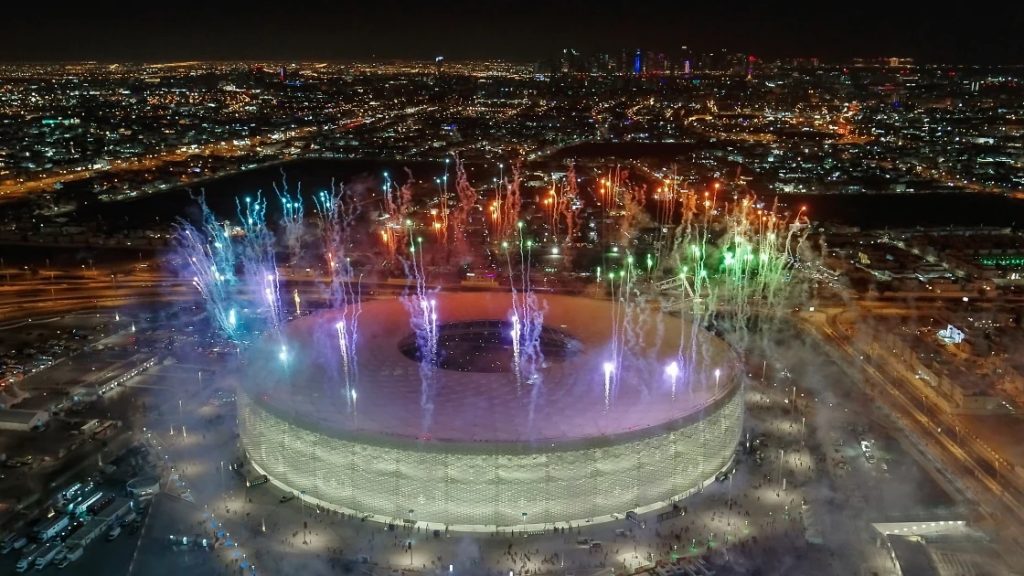
Qatar to spend $50bn on infrastructure in 2014
The Qatari government is set to sign up to $50bn in infrastructure contracts over the course of 2014, according to Sheikh Abdullah bin Saud al-Thani. This represents a massive escalation in construction activity as the 2022 FIFA World Cup draws nearer.
The contracts will include transport and energy projects. A tender for phase one of the Doha Metro has already been issued, according to unnamed sources speaking to Reuters, with a contract expected to be signed by the end of August.
The $50bn figure, announced by Sheikh Al-Thani at the Qatar Projects 2014 show organised by Meed Events, significantly exceeds previous estimates. Speaking a month before the event, Edmund O’ Sullivan, the chairman of Meed Events said contract awards for big infrastructure projects in Qatar in 2014 were “likely to hit $24bn”.
The recent upturn in spending follows a slow start to the world’s biggest infrastructure project.
According to Reuters, state spending rose by just 2.2 per cent in the year up to March 2013, while a government report projects state spending to rise by 11.6 per cent in 2014.
“Even with Qatar’s means and ambitions, the resources of time, space and human capital are not endless, especially when concentrated on a mere 10 per cent of its soil,” Tilman Engel, managing director of Sport Business Consulting International told HOST CITY.
Engel advised and directed the Qatar professional football league from 2007 to 2009, during their process of reorganisation and professionalisation in line with AFC and FIFA directives. “Given the enormity of both the World Cup and the National Vision 2030, it is no day too soon for Qatar to launch the projects key to make both visions work.”
Infrastructure projects in Qatar accelerated over the course of 2013, overtaking the UAE midway through the year with $12.2bn of contracts awarded, said O’Sullivan. “The bulk… came from the multi-billion-dollar tunnelling packages awarded as part of the Doha metro project.”
On winning the host city election for the 2022 World Cup in 2010, Qatar stated that it would spend $140bn on civic and sporting infrastructure. This figure was soon upgraded, with a report by Deloitte in September 2013 stating that Qatar plans to spend $140bn over the next five years on transport alone.
$200bn is due to be spent over the next 10 years on construction. A further $20bn is to be spent on tourism infrastructure to prepare for the influx of football fans, the Deloitte report said. Since then, an investment of $45bn into tourism by 2030 has been announced. -

Qatar’s annual budget breaks records
The Emir of Qatar has approved the country’s biggest ever national budget, with expenditure on infrastructure scheduled to rise faster this year.
An unprecedented total annual expenditure of US$60bn, based on projected national revenues of US$62bn, was endorsed on Sunday by Emir Sheikh Tamim bin Hamad Al Thani. The spending plan for the 2014-2015 fiscal year is up 3.7 per cent on the previous year.
The increase in expenditure is accounted for by a major ramp-up of infrastructure projects prioritised for national development, which include venues for the 2022 FIFA World Cup.
The Minister of Finance, His Excellency Ali Sharif Al Emadi, announced that US$24bn has been allocated for key projects. This figure, 16 per cent higher than the US$20bn set aside for such works in the previous fiscal year, represents a major step change in the pace of infrastructure work.
Al Emadi also stated that spending on key projects would reach US$182.35bn over the next five years.
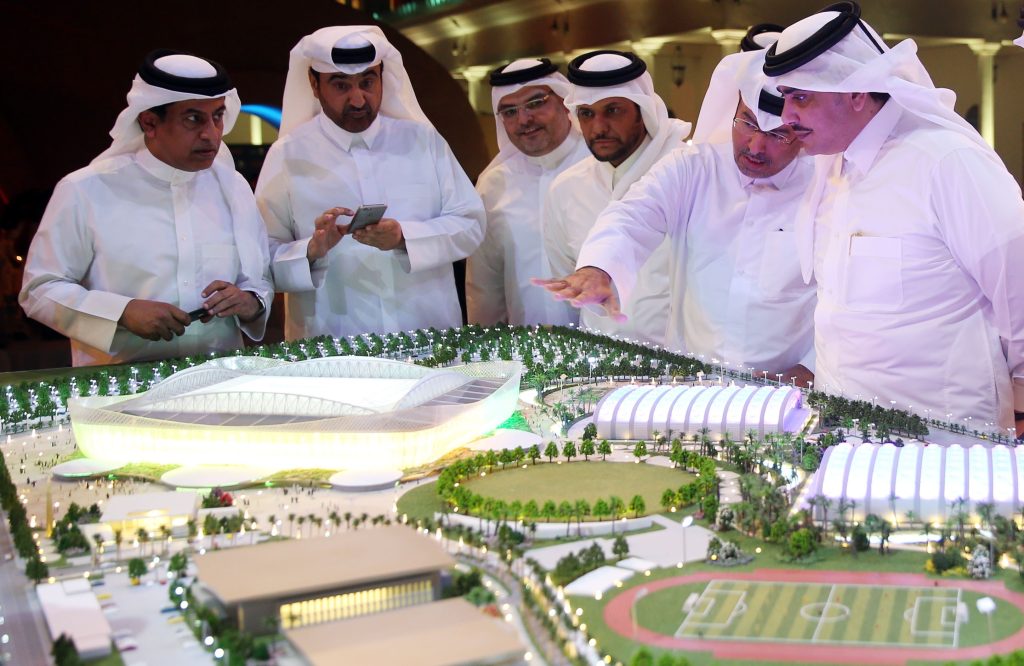
The investment is necessary to start construction of new stadiums for the 2022 World Cup, with work set to begin on stadiums in Al Khor, Al Rayyan, Al Whakra, Khalifa and Lusail.
Other areas of development include education, health and transportation. Qatar’s new airport was originally due to open in December 2012 but is not expected to start operating until the middle of 2014. -

Soccerex Asian Forum attracts 12 FA presidents
The presidents of 12 national football associations have so far confirmed their attendance at the Soccerex Asian Forum, which takes place on 13-14 May on the banks of the Dead Sea in Jordan.
These officials are the ultimate decision makers for football in major middle eastern, Asian and western markets. And with FIFA introducing new regulations on the selection of host cities for future world cups, they administrators will also have a say in some of the biggest decisions in world football.
Leading the list of FA presidents will be HRH Prince Ali Bin Al-Hussein, (Jordan), Sunil Gulati, (USA), H.E. Sheikh Hamad bin Khalifa Al Thani, (Qatar) and Chung Mong-gyu, (Korea), alongside FA presidents from the United Arab Emirates, Oman, Palestine, Yemen, Lebanon, Kyrgyz Republic, Papua New Guinea and the Honorary President for Norway. According to Soccerex, many more are expected to confirm shortly.
“The quality and quantity of the attendees singing up for the Forum is truly outstanding. As the key decision makers behind commercial and development projects for their own FAs as well as international matters such as future World Cup host selection, these presidents are amongst the most important footballing administrators on the planet,” said Duncan Revie, CEO of Soccerex.
Other senior representatives from Asia attending include AFC Vice-President and Football Federation Board Member Moya Dodd, All-India Football Federation General Secretary Kushal Das and Singapore FA General Secretary Winston Lee, as well as their counterparts from Turkmenistan and Bangladesh.
Other premier footballing institutions represented include FIFA, the Supreme Committee for Delivery and Legacy, The FA (UK), La Liga, Real Madrid, Liverpool, Manchester United, Barcelona, the Japan Football Association and Galatasaray.
Organised in partnership with the Asian Football Development Project (AFDP), the Forum is a unique platform for businesses looking to expand their network and to present themselves to these industry leaders.
Chaired by HRH Prince Ali Bin Al Hussein, the event brings together the leading figures from the world of Asian football as well as other international football experts to discuss the development of the game across Asia. The conference agenda will include a review of the opportunities for growth and the challenges facing Asian football.
For further details about the Soccerex Asian Forum please read the full conference programme or contact Soccerex on +44 208 987 5522 or enquiry@soccerex.com.
-

Qatar construction event attracts growth market exhibitors
As Qatar works towards the FIFA World Cup in 2022 and the Qatar National Vision 2030, international interest in the country continues to grow. This is reflected by Project Qatar 2014, to which 2,100 companies from 47 countries expected to attend.
A total of 24 countries are setting up international pavilions at Project Qatar 2014, the International Construction Technology & Building Materials Exhibition, which takes place on 12-15 May at the Qatar National Convention Centre.
Three of these countries – Indonesia, Palestine and Romania – are taking pavilions to the event for the first time, reflecting the desire of growing markets to get involved in the construction industry in Qatar.
More established countries taking international pavilions include major event hosts Austria, Canada, China, France, Germany, Greece, India, Italy, Korea, Spain, Turkey and the United Kingdom.
“The international pavilions have been fundamental to the success of Project Qatar, which has a long history of attracting many global exhibitors and visitors. The pavilions offer international exhibitors a central platform to showcase their expertise, products and services,” said Rawad Sleem, Project Manager, Project Qatar.
“The participation of all these international pavilions demonstrates their recognition of the importance and commercial value of partnering with Project Qatar 2014, positioning their nations in Qatar amongst key global leaders in a market experiencing world leading exponential growth in infrastructure, building and construction.”
Francois Sporrer, French Trade Commissioner, Director of UBIFRANCE Middle East said, “There are many construction and infrastructure projects in Qatar, in preparation for the FIFA World Cup in 2022. In 2014, US$40 billion are going to be invested in various projects in this booming market. Project Qatar 2014 is definitely the place to be which is why the French pavilion, organised by UBIFRANCE, will gather nearly 30 French companies offering various state of the art technologies and French know-how for the building industry. Some of these companies are already active in the Qatari market and a number of others are looking forward to Project Qatar 2014 to network with partners and distributors. -

Valcke and Felli to discuss Brazil’s legacy in Lausanne
Gilbert Felli, the IOC Olympic Games executive director and Jérôme Valcke, the General Secretary of FIFA, are to share the stage with other major figures in sports events to discuss the legacy of the 2014 World Cup and the 2016 Olympic Games.
The conference, which is hosted by the International Centre for Sports Studies (CIES), takes place in French on 6 May at the Expo Beaulieu Lausanne. Other speakers include CIES director and IOC member Denis Oswald, lawyer and former IOC executive director François Carrard and sports architect Miranda Kiuri.
The meeting comes at a time when both Valcke and Felli have been closely scrutinising the progress of the FIFA 2014 World Cup and the 2016 Olympic and Paralympic Games. Both events are experiencing serious delays that have threatened to impact the successful delivery of Brazil’s mega-sports events. Any problems in event delivery would reflect badly on the host nation and have a knock-on effect on legacy plans.
“The results of such major sporting events are never guaranteed and therefore the legacy is always a theme of discussion, notably because of the costs incurred,” the CIES said in a news release on Thursday.
“It is true that some countries have been able to deal with legacy better than others and for this reason CIES has decided to host this round table and gather experts just before the FIFA World Cup and the 2016 Olympics. This conference will allow everyone to better understand this challenge and its related issues, as well as the real legacy to these two major Brazilian competitions.
More information about the event is available at http://www.cies.ch/cies/agenda/ -

São Paulo World Cup stadium faces tight deadlines
FIFA secretary general Jerome Valcke met with key figures in delivering the World Cup in Brazil on Wednesday to establish a rigorous framework for completing outstanding infrastructure work around Itaquerão stadium.
Construction works surrounding the stadium have to be completed be ready by 28 April, while temporary seating inside the stadium must be installed by 10 May, according to local media attending the meeting. A number of test events, starting on 28 April, will take place to ensure the readiness of the venue, which is also known as Arena Corinthians.
Valcke surveyed Itaquerão on Tuesday with Sports Minister Aldo Rebelo and Ronaldo Nazario, board member of the Local Organising Committee. “There is still much work to do; it’s a race against time, but I can say that the opening match will take place here in the Corinthians stadium,” Valcke is reported to have said.
At a meeting on Wednesday, the deadline for construction work outside the stadium, for which responsibility is shared between the municipal and the state government was set for 28 April. The deadline for completing temporary seating was set for 10 May.
A walkway that connects the subway station to the stadium will also be completed in May, according to Julius Semeghini, state secretary of planning and regional development.
FIFA has also been monitoring road works around the stadium. According to local media, Rebelo said at the meeting “I had the opportunity to move around the vicinity of the stadium before entering to see the urban mobility works underway. I saw some completed, others in an advanced stage.”
Some small events to test the structure of the stadium have been scheduled for the 26 April, 1 May and 10 May, before FIFA’s evaluation. “The important date is the FIFA test game on 17 or 18 May. We will able to find out if everything is working and we will still have a period of three weeks to solve problems,” Valcke is reported to have said.
50,000 people are expected to come to the FIFA test event. According to Semeghini, the event will serve to assess the functioning of the integrated command and control centre, the security strategy established for the World Cup host cities. -

Qatar World Cup could be hosted in three cities
The number of host cities and venues scheduled to host World Cup matches in 2022 is under review and may not be confirmed until September, a spokesperson for the Supreme Committee Delivery and Legacy told HOST CITY.
“In due course, the final proposal for stadia will be submitted to the FIFA Executive Committee for approval. The requirement is a minimum of eight and a maximum of 12 stadia,” the Supreme Committee for Delivery and Legacy said in a statement emailed to HOST CITY.
Qatar’s World Cup bid originally proposed an event with 12 venues encompassing all seven municipalities in Qatar. Four venues were planned for Doha, three for Al Rayyan and five for each of the other municipalities.
One possible outcome of the review would be to only use four venues in Doha, three in Al Rayyan and one in Al Wakrah – where the first new stadium is for the World Cup is already being built. This would mean that just three of Qatar’s seven municipalities could host World Cup matches.
“Once a country is chosen as host, a review of the bid plans is made with the organisers to propose the final host cities and stadia projects, which then need to be approved by the FIFA Executive Committee,” the Committee’s statement said.
“For Qatar, the process of selecting the final proposed line-up of host venues is ongoing.”
Asked when the venue selection would take place, the spokesperson said “It is logical to assume that the decision by the FIFA Executive Committee will occur after the 2014 FIFA World Cup in Brazil. In comparison, Russia’s Host City Selection occurred on 29 September 2012.”
Russia’s bid for the 2018 World Cup originally proposed 16 stadiums in 14 host cities, which was reduced to 12 stadiums in 11 cities.
The spokesperson declined to comment on what factors might influence a decision to reduce the number of host cities. Possible reasons include the time and investment required for venue construction, coupled with the scale of civic infrastructure work scheduled for Qatar over the next decade.
The need to safeguard legacy use for all World Cup stadiums after 2022 is also likely to influence the review. -

Brazil World Cup host cities hit by police strikes
In a major blow to the organisers of the World Cup, police strikes have led to Salvador being run by armed forces. Meanwhile in Rio de Janeiro, federal police officers have threatened to strike during the World Cup.
The Brazilian government sent 5,000 troops to of Salvador on Wednesday after the world cup host city was hit by police strikes and civil unrest. According to the Defence ministry, the military operation was authorised by President Dilma Rousseff based on a request from the Jaques Wagner, governor of the state of Bahia.
And on Sunday, a group of 300 people including federal police officers marched through Rio’s Avenida Atlântica carrying white elephants. “We have the same proposal colleagues of Brasilia and other states: Stopping during the World Cup,” said André Vaz de Mello, president of the federal police’s union.
The workers include forensics professionals, crucial for security control at airports. Such strike action could paralyse the World Cup.
Describing the World Cup as “an important moment for the country,” President Rousseff has committed the government to ensuring security during the World Cup in all host cities.
“The federal government will not agree with any kind of violence and we will not let the World Cup be contaminated,” she told a meeting of the council for economic and social development in Brasilia on Wednesday. “The armed forces will participate, we will use the Federal Police and the Federal Highway Police and we have partnerships with all state governors.”
Meanwhile, construction workers continue to strike on Rio’s Olympic Park. The widespread strike action coincides with a period of intense scrutiny on the progress of these hugely important mega events.
-

Moscow ready to host the World Cup, says Mayor
Moscow’s urban systems could cope with hosting an event on the scale of the FIFA World Cup “tomorrow”, Sergei Sobyanin, Mayor of Moscow said on Saturday in an interview with TV channel Moscow 24. He also said that football infrastructure will need to be fully modernised before the city is ready to host.
The Mayor’s comments come just a few days after the revelation from his office, City Hall, that Moscow will spend US$8.1bn on preparing for the 2018 FIFA World Cup. This figure was four times as much as the US$2bn that the city’s top sports official Alexey Vorobyov said earlier in April would be spent on sporting and transport infrastructure.
The largest proportion of City Hall’s revised budget will be allocated to urban infrastructure indirectly associated with the event. Two thirds of the budget will go towards transport upgrades in Moscow, which currently experiences some of the heaviest traffic in the world.
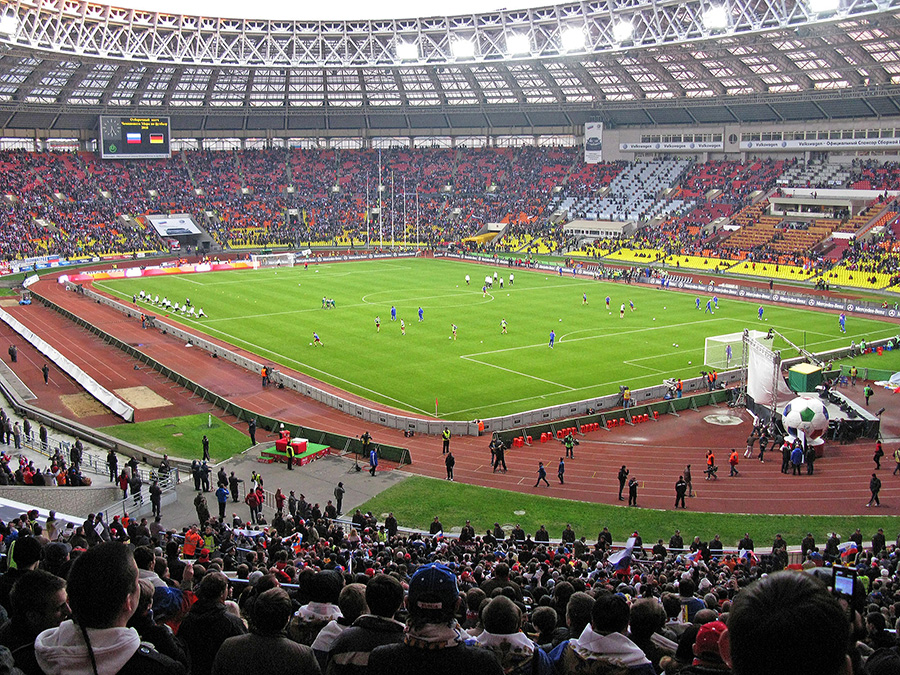
Eleven per cent of the spending will be spent on sports facilities, including the major task of redeveloping Luzhniki Stadium, which is Moscow’s biggest sporting infrastructure project.
“The works are fully under way,” said Sobyanin. “At the same time, training fields are being built and football infrastructure will become modern by then.”
Sobyanin confirmed that the new Otkrytie, or Spartak stadium will open this year, along with a new Spartak metro station. He also said the number of hotel rooms in Moscow is growing by 1,000 each year.
The successful hosting of the IAAF World Athletics Championships in 2013 is evidence of Moscow’s capacity to host mega events, he said. “In terms of number of teams this is the second most spectacular event after the Olympics.”