Russia, with a population of just over 140 million, spans continents. Its sheer scale, coupled with some harsh weather conditions and very large cities, provides plenty of challenges for transportation.
As Igor Levitin, Russian Minister of Transport put it, “Due to the geographical peculiarities of the Russian Federation and those of the territorial location of its production forces, transport has always been considered in Russia as a key economic sector providing for the country’s economic and political integrity.
“In some major cities such as Moscow, Saint Petersburg and Nizhny Novgorod, which are in a critical situation with regard to road congestion, a range of measures is underway aimed at increasing the capacity of the cities’ road network, limiting the use of personal vehicles and motivating the population to use public passenger transport.”
According to Vladimir Kryuchkov, CEO of ITS Russia, “The understanding is growing gradually that the limited access of personal and cargo vehicles to central parts of the cities and more tough parking policy are inevitable.”
In Moscow, the average traffic jam lasts 2.5 hours – the longest in the world. With 2.6 million cars in the city on a daily basis, a lack of parking space is also on the list of problems.
Speaking to the ITS Moscow conference in 2013, the city’s deputy head of transport, Tatiana Malashenkova announced plans to reduce the length of average journey times in the city to 50 minutes. This is to be achieved by reducing car journeys by 30 per cent and increasing public transport journeys by 40 per cent.
Malashenkova also highlighted the introduction of two park and ride schemes: one on the approach to the outer ring road for 80,000 cars and one between the outer ring road and the third ring road for 30,000 cars.
Global positioning
NIS, a Russian public-private company, has been tasked with developing and deploying a ERA-GLONASS GPS system throughout the Russia, which involves fitting GLONASS satellite navigation communication devices, or terminals, into all new vehicles sold in the country.
In the event of an accident, the terminal is automatically activated and transmits the vehicle location and other key information to an emergency response centre, allowing the swift intervention of the emergency services.
The ERA-GLONASS system will help to reduce the number of fatalities and injuries on Russia’s roads and boost the safety of both freight and passenger transport. In addition, NIS plans to develop commercial applications for GLONASS and create a mainstream market for navigation services and devices.
The communication carrier for the ERA-GLONASS system is 3G. This requires additional infrastructure to be provided to ensure that there is sufficient coverage, not only in cities but also across the Russian strategic road network. This will open up the possibility for additional ITS devices to be utilised in Russia.
Commercial vehicles are also being targeted for ITS deployment. A nationwide tolling system is in development for vehicles weighing more than 12 tonnes, again using the GLONASS GPS system.
In November 2013, NIS and Kapsch TrafficCom were among four companies that tendered for the project, which is being administered by the federal road agency, Rosavtodor and is scheduled to run for 13 years.
Russia and Europe
ERTICO and ITS Russia are working together to research, develop and deploy ITS technologies. A number of areas for cooperation have been highlighted, including a pilot of the “eCall” system, which enables crashed cars to call emergency services automatically.
Another area for cooperation is ITS for large events, particularly in the context of the FIFA World Cup in Russia in 2018. Another target is to improve traffic and traveller information for transport corridors, especially the Helsinki to St Petersburg corridor.
The “Smart Transport Corridor: Helsinki – St. Petersburg” project aims to create a continuous and interoperable intelligent transport service between Finland and Russia, while increasing the interoperability of services between the EU and Russia.
The aim is to improve commuter services, boost traffic safety and make traffic flow more smoothly, especially at the border. The project also aims to increase cooperation between Finnish and Russian private and public sector operators and facilitate the growth of business in the intelligent transport area.
Five pilot services are scheduled to get underway in 2014: a weather and road condition service; a traffic incident information service; traveller services in real-time; a public transport information service on the Allegro train; and automatic emergency calling using eCall/ERA Glonass.
These services are being implemented by a consortium founded by private companies and will be demonstrated in Helsinki at the ITS Europe Congress 2014.
Tag: fifa world cup
-

Russia’s road to smarter transport
-

Blatter takes high ground and aims for interplanetary World Cup
FIFA’s embattled president Sepp Blatter took the opportunity of addressing his organisation’s congress in Sao Paulo on Wednesday to speak up for integrity in football and highlight the universal reach of the sport.
Standing firm in the eye of a storm over alleged corruption, Blatter said “These are important times for FIFA.
“We must lead by example and we must listen to all voices; we must be responsible and upright in all that we do; we must do the right thing even if that comes at a cost.
“We must carry the flame of responsibility and honesty and always with respect. If not, we will be a traitor to this game we all love.”
Calling on FIFA’s members to unite against prejudice, he said “We can defeat it and we have to do it.
“Suspension and empty stadiums are not enough,” he said, warning that FIFA could expel, relegate or dock points from teams that are linked to discriminatory behaviour.
Blatter’s hard line rhetoric on discrimination echoes remarks he made to the Confederation of African Football on Monday, when he described the latest wave of allegations of corruption as a “storm against FIFA”.
His response to allegations made by the UK’s Sunday Times that FIFA Executive Committee members were bribed into voting was to say that the western media is prejudiced.
“Sadly there’s a great deal of discrimination and racism and this hurts me. It really makes me sad,” he told the Confederation of African Football on Monday.
This accusation riled the European football community further still, with UEFA executive committee members Michael van Praag and David Gill having called for Blatter’s resignation.
However, Blatter is expected to announce later in the FIFA Congress that he will not step down in 2015, as he once stated, but that he will stand for a fifth term as president.
“Football is not just a game; it is a multi-billion dollar business. I don’t know if that is good or not. It creates controversial situations and then some difficulties. In this changing world little is beyond the reach of politics and economics,” he said.
As for future of football, the boundaries are limitless. “We shall wonder if one day our game is played on another planet. Then we will have not only a World Cup we will have inter-planetary competitions. Why not?”
-

Soccerex heads for Barbados to support the Americas
On 21-22 October, the Lloyd Erskine Sandiford Centre on the tropical island of Barbados will be the venue of the Soccerex Americas Forum. The event promises to connect the leading administrators and business figures within the Americas with their global counterparts.
The confederation has plans for a Caribbean Premier League to emulate the success of Mexico’s Liga MX, which recorded the fourth highest average attendance of any professional league in the world, and the MLS, which is set to add four new franchises over the next three years.
“We are proud and privileged to be the host location for this year’s Soccerex Americas Forum,” said Petra Roach, interim president and CEO, Barbados Tourism Authority.
“As a nation of sporting enthusiasts, we take football very seriously, and thus are delighted to be able to facilitate an event whereby the beautiful game is at the core of the discourse.”
Major events will be an important focus of the conference programme, with the 2016 Copa America and a potential CONCACAF 2026 World Cup bid high on the agenda.
Sport tourism will also figure prominently, due to the region’s attractive climate and rich sporting culture. The conference programme will also cover league development and player development and retention.
The event will also feature a review of the 2014 FIFA World Cup, with a number of footballing legends appearing.
Soccerex CEO Duncan Revie said: “I am delighted that our first Americas Forum will be held in Barbados, a country with a huge sporting passion. It will provide a great location to start our time in the region and to continue our efforts of strengthening football business within the Americas. With all the beautiful island has to offer, there isn’t a better backdrop to do business.”
For further details about the Soccerex Americas Forum, please contact Soccerex on +44 208 987 5522 or email us on enquiry@soccerex.com. -

Respect cultural differences, Qatar 2022 implores
Qatar is looking forward to welcoming in the world in 2022 but international football fans must return this hospitality by respecting the culture of the host nation, a senior organiser told HOST CITY magazine.
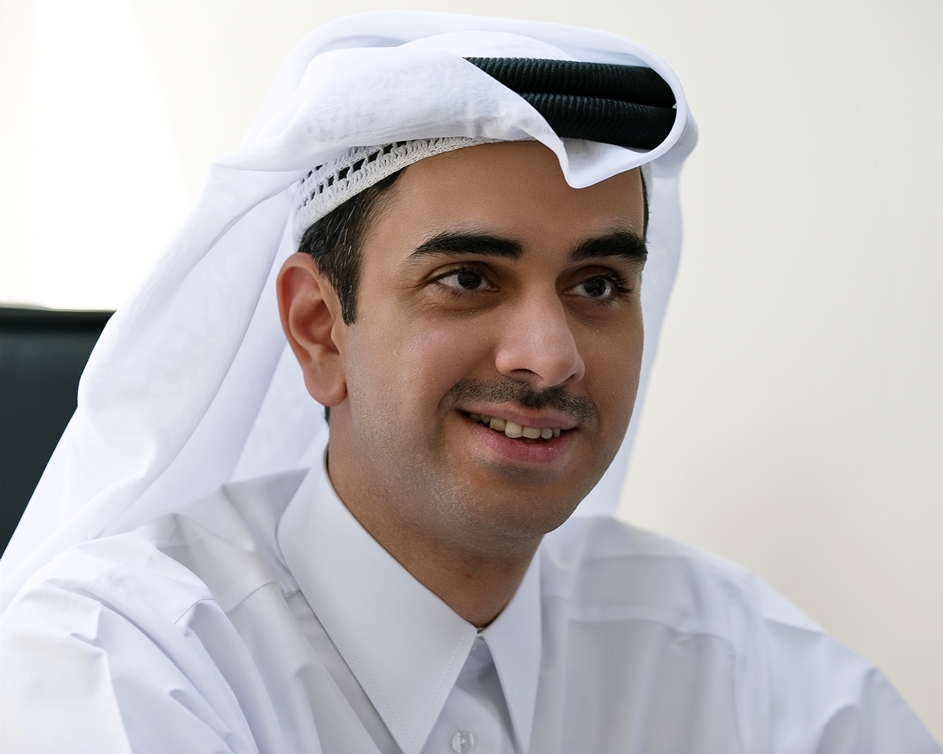
“2022 will be about bringing people together and if people give us a chance, we will prove this will be the World Cup that will change their hearts and minds,” said Yasir Al-Jamal, deputy general secretary of the Qatar 2022 Supreme Committee for Delivery and Legacy.
“Part of our culture has always been about showing people our hospitality. As a country we will be proud to do that and as a region with so much to offer, we will be proud to welcome the world.”
Drinking alcohol will be permitted during the World Cup but public displays of affection will be deemed inappropriate.
“Alcohol or public displays of affection are not part of our culture; however, hospitality most certainly is. In recognizing that, alcohol is available in Qatar and fans will be able to have a drink at the 2022 FIFA World Cup,” said Al-Jamal.
“Everyone has their beliefs and cultures. We welcome and respect that. All we ask is that other people do the same for us.”
In the exclusive interview, Al-Jamal points out that one of Qatar’s primary motivations in hosting the World Cup is to break down preconceptions about the Middle East.
“We always saw the tournament as the opportunity to build bridges between East and West,” he said.
“So often this part of the world is misunderstood. To utilise the power of football to alter people’s perceptions of the Middle East is something to be proud of.”
In the interview, Al-Jamal also discussed the issues of venue sustainability and temperature control.
To read the full interview with Al-Jamal and much more unique, exclusive content, register to receive the next issue of HOST CITY magazine.
-

Indian Super League to be launched in Manchester
Plans for the eagerly anticipated Indian Super League (ISL) and the 2017 U17 FIFA World Cup will be officially presented to the global football industry at the Soccerex Global Convention, held in Manchester on 6-10 September, after the confirmation that a senior Indian delegation will be attending.
The session will begin with Kushal Das, General Secretary of the All India Football Federation, delivering a standalone keynote speech, outlining the explosion of the game in India.
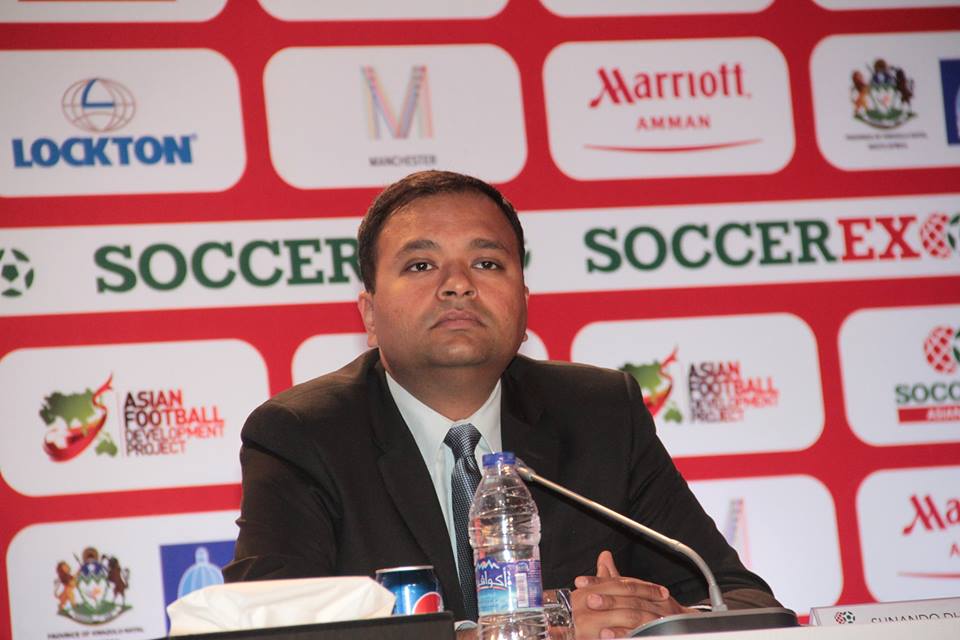
The panel, moderated by Sukhvinder Singh, will see I-League CEO Sunando Dhar, STAR Sports India President Nitin Kukreja, Delhi Dynamos Owner Sameer Manchanda, the Federation of Indian Chambers of Commerce and Industry Director Rajpal Singh and DSK Group Executive Director Shirish Kulkarni presenting the latest developments behind the two projects and the multiple business opportunities associated within Indian football, culminating in the release of the combined FICCI-AIFF-Libero Sports knowledge report.
Managed by IMG-Reliance, the ISL has attracted investment from India’s biggest companies and celebrities, with the likes of Sachin Tendulkar, Sourav Ganguly, DEN Network, PVP, John Abraham and Ranbir Kapoor becoming team owners, as well as partnerships with leading European giants such as Atlético Madrid and AFC Fiorentina.
The 2017 FIFA U-17 World Cup will be the first global football tournament hosted by “football’s sleeping giant” and will play a crucial role in developing youth football in India. With FIFA earmarking a potential US$38m investment for the tournament, there are numerous business opportunities for suppliers from across the football spectrum, to engage with the key decision makers from the AIFF to learn about the multiple commercial opportunities the tournament will create.
Das and the Indian delegation join a growing list of international industry leaders who will be speaking at the Global Convention including FIFA President Joseph Blatter, four-time Olympic gold medallist Michael Johnson, MLS Commissioner Don Garber, FIFA Vice-President Jim Boyce, La Liga President Javier Tebas, RFU CEO Ian Ritchie and England and Manchester United legend Sir Bobby Charlton.
The Convention kicks off with the Football Festival on 6-7 September, with the Conference starting on Monday 8 September. A major international exhibition and a programme of networking and social events complete the schedule for this world leading football business event.
Source: Soccerex. For more information about Soccerex please visit http://www.soccerex.com/global // call +44 (0)20 8987 5522 // email enquiry@soccerex.com
-

FIFA: We must counter damaging allegations
Three of FIFA’s most influential figures voiced concerns at Soccerex Global Convention about the media crisis that has engulfed football’s governing body in recent times, expressing a need for action to counter negative perceptions.
Quizzed by Soccerex consultant David Davies about the impact of the ongoing media allegations about FIFA’s affairs, in a panel discussion entitled “A Word from the Wise”, FIFA Executive Committee Member Michel D’Hooghe said “I think we must be very honest and say that this has been very damaging for the reputation of FIFA.
“Although FIFA does many good things, these things never appear in the media. It’s the bad things that give, for the moment, FIFA a bad reputation.”
And according to Jim Boyce, Vice President of FIFA, the press is not the only source of negative attacks. “We are not only talking about the English press – the FA have come out and made certain statements regarding FIFA” said the Northern Irish ExCo member.
“There is a perception that when England lost the bid, that’s when most of the adverse criticism started. Some of the criticism is entirely justified, but an awful lot is not entirely justified.
“There are a lot of good people in FIFA – they shouldn’t all be tarnished with the same image. I am proud to finish my career as being Vice President of FIFA.”
The challenge for FIFA is to communicate its positive contributions to the world. “I am not blaming the media; I think we have to blame ourselves,” said D’Hooghe.
“We need to have better communication of the good things that FIFA is doing. Do you hear about 20 centres for hope? Do you hear about restoration of sports facilities after the tsunami? 75 per cent of all FIFA funding goes back into infrastructure.
“Whoever is or will be president, this will be one of his first obligations: to restore confidence in FIFA, to prove to the world that FIFA wants to good for people all over the world. We are promoting football for health to youth in many countries.
Another major priority is to tackle the issue of transparency. “We are challenging transparency and integrity, to restore confidence in FIFA, to prove to people that FIFA wants to good,” said D’Hooghe.
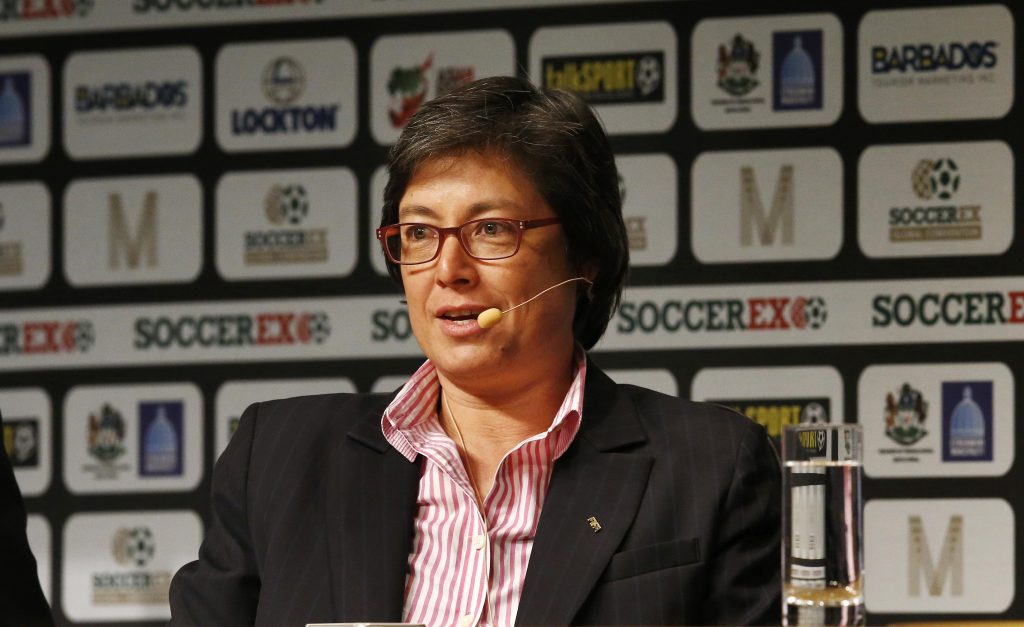
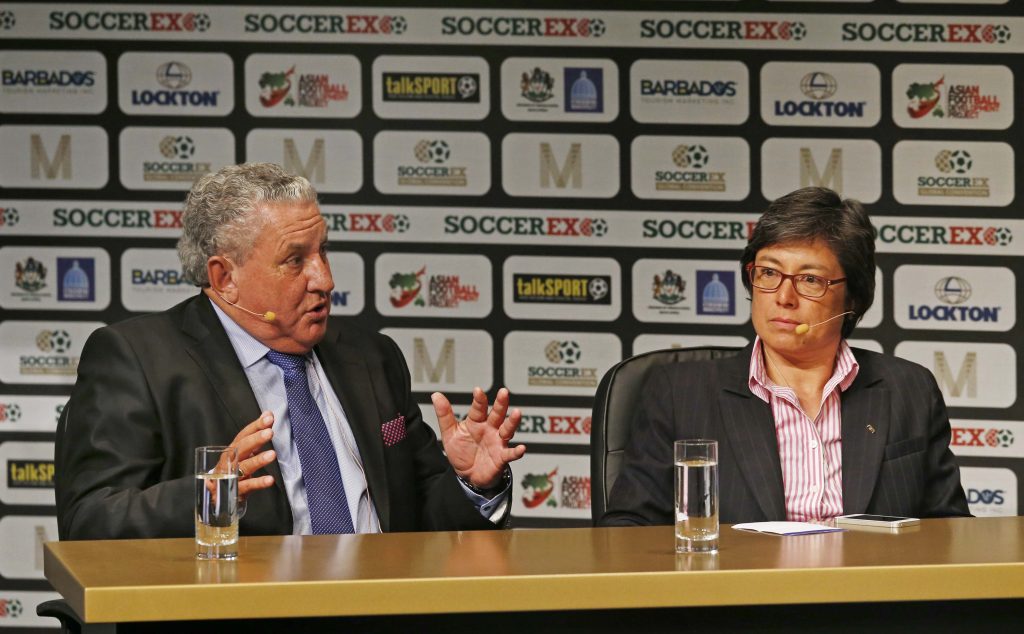
Also on the panel was Moya Dodd, who joined FIFA’s Executive Committee in 2013. “I get people asking me how it feels to be part of the problem now I’ve joined the FIFA ExCo,” she said. “It’s difficult for people from outside it to understand how it works.
“What’s important is that the leadership of any organisation at board level is independent from the day-to-day flow of interests that tend to make decision-making difficult.” -

Drop the secret ballot says FIFA ExCo Moya Dodd
The influential ExCo member Moya Dodd, told HOST CITY that FIFA needs to make its host city election process more transparent by removing the secrecy around voting.
And in the wake of Sepp Blatter’s confirmation that he will stand for a fifth term as FIFA president, more executive committee members have publicly backed suggestions that limits should be imposed on terms of office.
Asked by HOST CITY at Soccerex Global Convention whether increasing the number of people with the right to vote would improve perceptions of FIFA, Dodd said “The more important measure would be to make voting open.
“If people are answerable for how they voted, it’s visible, it’s clear who they supported, then there’s no suggestion that there are multiple promises for a single vote. I think it would do a lot to rid the process of those sort of suspicions, if it was open voting.”
FIFA’s 27 executive committee members currently have the right to vote on the issues that govern world football. Just 22 people were eligible to cast votes for the 2018 and 2022 FIFA World Cups, as compared to the 94 IOC members that elected the host city of the 2020 Olympic Games.
Another concern is that football’s world leaders are able to govern for an indefinite length of time. On Monday, FIFA’s 78-year old president Sepp Blatter confirmed in a video presentation to Soccerex Global Convention that he would stand for a historic fifth term.
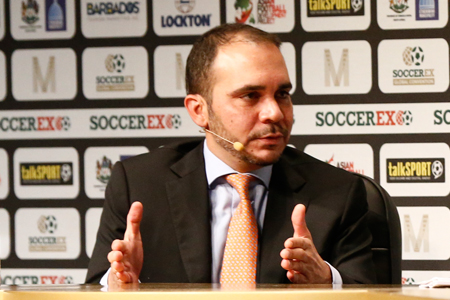
On the same day, FIFA Vice President Prince Ali Bin Al-Hussein told the press that he supports time limits on terms of office – while stressing that Blatter has every right to stand again under the current rules.
“The process of reform within FIFA needs to continue and eventually we should look at instigating term limits and maybe not just for the FIFA president but also for executive committee members as well, including myself,” Prince Ali said.
Speaking at Soccerex on Tuesday, Moya Dodd, who is vice president of the Asian Football Confederation as well as a FIFA ExCo member, said “In Asia we have a limit on age and terms. I think term limits are healthy. Age limits are discriminatory and not the best way to ensure turnover anyway.”
Jim Boyce, who at 70 is eight years younger than Sepp Blatter, said “I am in favour of an age limit and a time limit. I honestly feel that if someone has three terms – that’s 12 years – or an age of 75, then they have made a good contribution and it’s time for someone else to contribute.”
As well as the issues of age and tenure, FIFA is tackling a gender imbalance – a drive that began with Dodd’s appointment last year.
“It’s inevitable that more women become involved in the game and will be a strong part of the management of sporting enterprises,” said Dodd.
Uefa president Michel Platini has decided not to stand against Sepp Blatter and it is not clear who might challenge Sepp Blatter to the presidency. Michele D’Hooghe, FIFA ExCo Member, told delegates at Soccerex “Michel Platini gave a very positive message to the last meeting of the presidential general secretaries of FIFA in Monaco at end of August. He didn’t say ‘I don’t go for FIFA’; he said ‘I choose for UEFA’.”
To find out more about potential changes to bidding procedures for major events including the FIFA World Cup, register for HOST CITY: BID TO WIN, which takes place in London on 28th October 2014 -

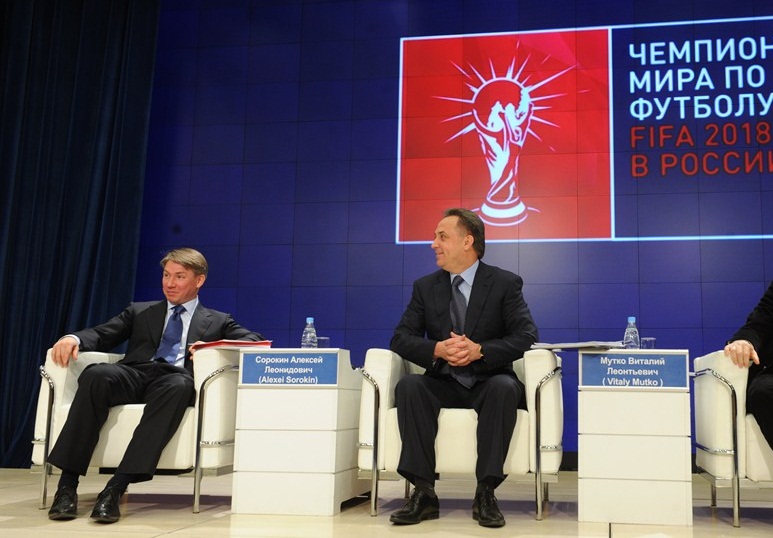
Russia World Cup can change perceptions – Sorokin
HOST CITY: How are preparations going in terms of the stadiums?
Alexei Sorokin: We’re had two ready for some time, Kazan and Sochi, and of course now we have Moscow Spartak which opened officially and the end of August and then staged its first game shortly afterwards. In the beginning of 2016 the St Petersburg stadium will also be ready. The rest are in different phases of construction.
HOST CITY: Can you tell us about opportunities for international contractors?
Alexei Sorokin: Foreign expertise was used in the design preparations. In some instances there has been a lot of consultancy from companies like Populous (England) and gmp (Germany). There is not a single stadium without some kind of foreign element.
The way we went about choosing was by public tender put out by the specific region. Different companies are being used for different aspects of design, so maybe one company for security, another for usability and so on.
HOST CITY: What about venue sustainability? How will you ensure legacy use for such large venues?
Alexei Sorokin: We don’t think the stadiums are that large. If you consider the population of the country, they are not overwhelmingly large. In some cases they will have demountable tribunes, in others they will stay at 45,000 seats, but the level of interest in football is enough to fill them to 80 per cent if not 100 per cent all the time.
We have strong assurances from the regional authorities that the need for such stadiums is there. The interest in football is of course not equal everywhere you go but that’s normal. There will be no white elephants for sure.
We’ve taken a lot of advice and the stadiums will all be designed in such a way that they are marketable for events other than football. If you look at Kazan, for instance, it will host aquatics in 2016. Every design has taken this concept into account. But we deliberately picked cities where clubs are playing in our Premier League, or at least are close to doing so. Several clubs in Russia jump back and forth. We have picked cities where people really go to watch football.
HOST CITY: But are they cities that can also attract the kind of non-footballing commercial entities?
Alexei Sorokin: The short answer is absolutely. Why do I say that? Because all but two of our cities have a population in excess of one million. There is a major need for a certain level of social life. They need a venue where people can get together.
HOST CITY: What will make 2018 stand out from other World Cups?
Alexei Sorokin: We hope to show a new country and the transition we have made in the last two decades; and to show how diverse Russia really is. We may be united by the same language but the regions are very different.
We certainly hope we can attract people to other regions than just the host cities because they are no less interesting. Some regions are dominated by religious culture or very historic. It will certainly be a discovery.
HOST CITY: Russia’s latest mega event was Sochi, but there was a lot of negative media surrounding so-called “anti-gay” laws. How do plan to avoid such adverse publicity?
Alexei Sorokin: I wouldn’t call it an anti-gay law. It’s a law against propaganda over homosexuality amongst children. I recommend to everyone to read the contents of the law and try to understand it before twisting its nature which is what many have largely done.
HOST CITY: Ever since you launched the bid, Russian football has been unable to eradicate racism. How harmful is this?
Alexei Sorokin: I would acknowledge that we have certain incidents and outbreaks of racism but not a dominating tendency. Many other countries also have incidents. I’m not saying that as a justification because it’s bad wherever it happens.
Our position is very strong. It’s part of our communication strategy, but it is not an overwhelming part of what we are doing in terms of organising the World Cup. But don’t get me wrong: it’s a very important subject to us and we are in constant discussions with the Russian Football Union, coming up with certain measures. We must make it unpopular and indecent to be involved in something like this.
HOST CITY: What are the most important observations you took away from Brazil?
Alexei Sorokin: It mostly lies in the field of atmosphere. The biggest impression for me was the atmosphere they managed to generate. You can’t just manufacture that as an organiser. It has to be natural.
The passion for the game was one of the true sentiments we brought back. We’ll struggle to match that, but every World Cup is different. We’d be wrong to try and copy them. Sometimes copying can be valid in terms of certain organisational patterns but in terms of overall climate, it has to be very distinct from all others.
HOST CITY: Is travelling an issue for you like it was in Brazil?
Alexei Sorokin: I truly don’t think so. You only spend a maximum two hours travelling from Moscow to the farthest venue away. I don’t think it’s that bad.
HOST CITY: What about the scale of the budget which caused such a backlash in Brazil?
Alexei Sorokin: We need to discern between what is spent on development of the various regions and the budget that is spent towards the event itself. In terms of the World Cup, the event budget is within appropriate limits. All the rest of it is about infrastructural development programmes which would have been spent anyway.
I won’t comment on what happened in Brazil but maybe it wasn’t explained enough, which we will try to do. These are investments into the lives of people including things like bringing hospitals that are close to stadiums up to certain standard. The World Cup will use them for a month but the people will use them for years thereafter.
HOST CITY: Everybody knows how tense the relationship is between Russia and the rest of the world right now. What impact could this have on your security plans and the perception of 2018?
Alexei Sorokin: Political situations tend to change. I don’t think it has any impact on our security because it’s always been a priority anyway. The World Cup is perhaps one of the ways of changing certain perceptions. That’s partly why our country decided to go for this. We are occasionally victims of old perceptions. Remember Euro 2012? There were some pretty negative perceptions beforehand but it went off well. The same applied to the Sochi winter Olympics. I wouldn’t spend much time thinking about perceptions.
HOST CITY: Finally, you currently have politicians everywhere calling for sanctions – and even a World Cup boycott – because of the situation in Ukraine. What’s your reaction?
Alexei Sorokin: Honestly the last thing I would do is comment on private opinions. It does not impact our work. Various people may have their opinions about where the World Cup should take place but it’s their opinion. If we paid too much attention to this it would be hard to organise the tournament.
Our focus is the World Cup. It will remain that way for another four years. We don’t feel any threat. We are organising the tournament together with FIFA. We need to keep the principle that was declared many years ago, that sport should be beyond politics.
This article first appeared in the Autumn issue of HOST CITY magazine. Register here. -

Qatar 2022 stadium design meets tough cooling targets
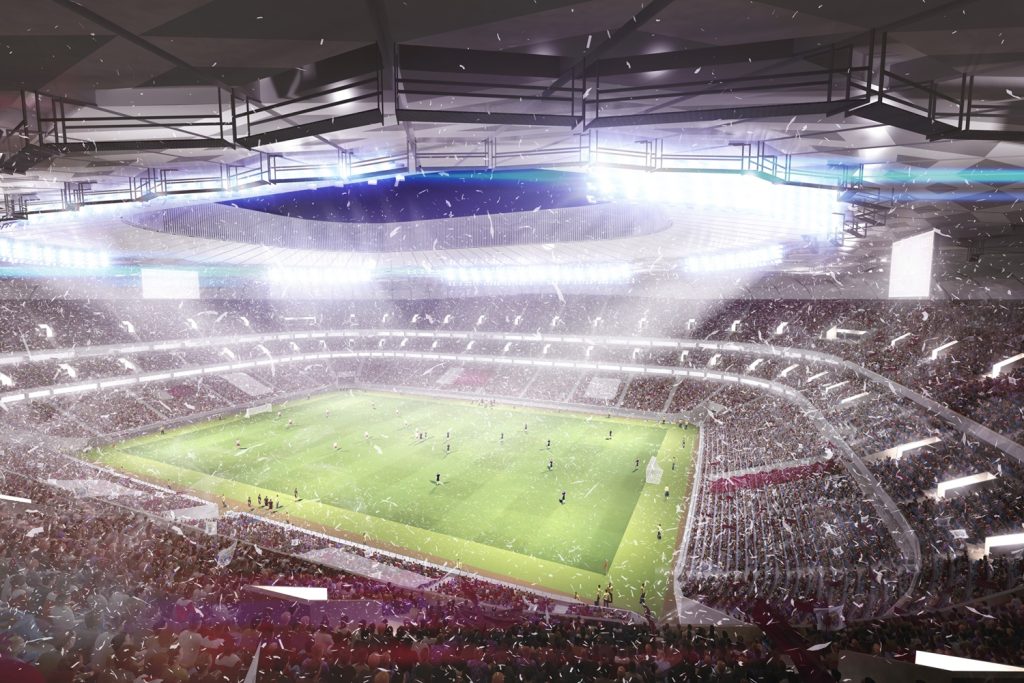
The organisers of the Qatar 2022 World Cup, unveiled the latest stadium design today, with details of the cooling technologies described by lead architect Mark Fenwick as a “challenge” to incorporate.
The Qatar Foundation Stadium is the fourth stadium design to be revealed by the Supreme Committee for Delivery & Legacy, who announced the plans on the anniversary of Qatar winning the right to host the 2022 FIFA World Cup.
The venue, based in Education City on the outskirts of Doha, will be combined with a Health and Wellness Precinct and educational programmes.
“Designing the Qatar Foundation Stadium was a unique challenge as it incorporates the innovative cooling technologies being developed by the Supreme Committee for Delivery & Legacy,” said Mark Fenwick, lead architect for RFA Fenwick Iribarren Architects.
According to the Supreme Committee, the design will create a comfortable environment for football. “Pitch and spectator terraces are cooled to the target temperatures; the players’ and spectators’ comfort levels will meet and exceed FIFA requirements and guidelines for safe play and spectating.”
The stadium is to be cooled using chilled water from the local air conditioning network combined with an innovative roof design.
The opening in the stadium roof is designed as a cavity, to act as a wind break and slow down the movement of hot air outside the roof. This process is passive and consumes no energy, helping to reduce the building’s overall energy consumption by reducing the amount of cool conditioned air escaping.
The active cooling system used by the stadium will take in chilled water from Education City’s existing district cooling network.
The high energy consumption of air conditioning will be further offset by photovoltaic and reflective technologies to produce energy for electricity and hot water. Photovoltaic and solar thermal panels are proposed to power the stadium, swimming pool and indoor pavilion.
According to the Supreme Committee, photovoltaic and solar thermal panels could be placed on the stadium roof.
The developers are aiming for a Gold Sustainability Building Certification in the US Building Council’s Leadership in Energy and Environmental Design (LEED) ratings system.
To attain this, at least 20 per cent of all materials used is proposed to come from sustainable sources. 50 per cent of all wood-based materials are to be procured from sustainable forestry sources, while 20 per cent of all materials are to be sourced regionally in a bid to reduce the carbon footprint of logistics.
The construction is being managed by Qatar Foundation’s Capital Projects Directorate, which is setting its own standards in workers’ welfare, based on the Supreme Committee’s recommendations.
“With the exception of the early works contractor, who was awarded prior to the release of the QF Mandatory Standards of Migrant Workers’ Welfare (QF Standards), all contractors and sub-contractors working on this project will be contractually required to comply with the QF Standards,” says the Supreme Committee.
“Both sets of standards—which are based on Qatari labour law and international best practices—establish minimum requirements that protect the rights of workers from recruitment to repatriation.
“The SC and QF Standards are very similar and only differ in terms of the accommodation specifications.”
The stadium is scheduled for completion in 2018 with a capacity of 40,000 seats to host matches up to and including the quarter-final stage of the World Cup in 2022. The stadium will be reconfigured to 15,000 seats after the World Cup.
The members-only Health & Wellness Precinct will incorporate medical clinics and sports facilities, football pitches, gymnasiums, tennis courts and facilities for non-traditional sports such as climbing as well healthy restaurants and cafes.
“Through innovative design, sustainably-sourced materials and the latest cooling and energy-efficient technology, the Qatar Foundation Stadium and Health & Wellness Precinct will not only allow us to host an amazing FIFA World Cup but also leave a genuine legacy in Qatar well beyond 2022,” said Ghanim Al Kuwari, Competition Venues Director at the Supreme Committee.
-

Italian stars back Qatar to succeed in 2022
Qatar has the economy and the infrastructural capability to host the FIFA World Cup, but needs to address the issue of the weather and impose its individuality to create an outstanding event in 2022, according to three of the biggest names in Italian football.
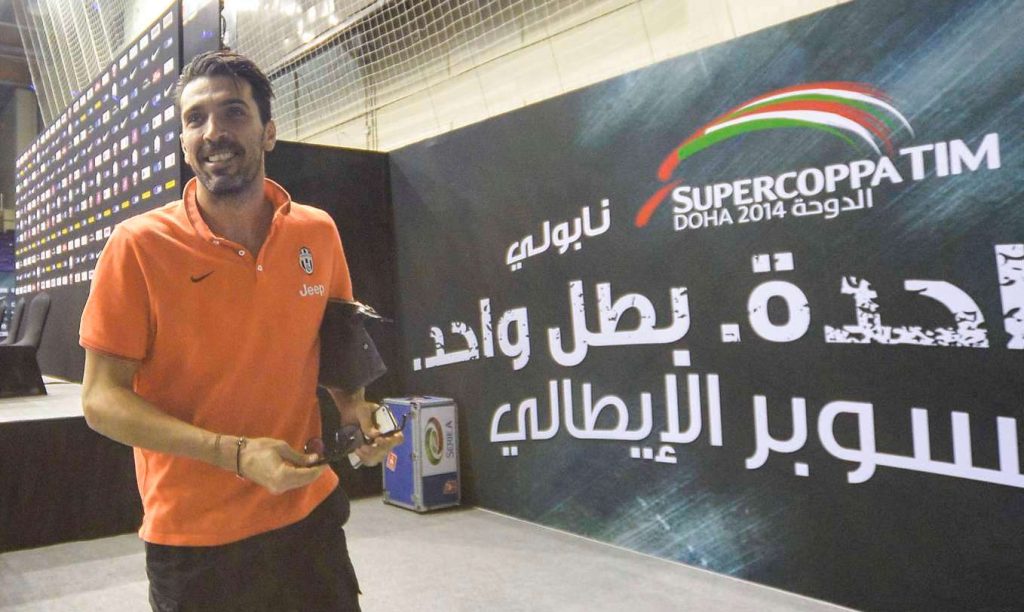
“The first feeling that Qatar gives is that this is a set of people who have everything. They have great potential to host an event of such high calibre,” Gianluigi Buffon, captain of Juventus said at a press conference before the Supercoppa match between Napoli and Juventus in Doha on Saturday.
“Considering the economic potential and facilities here, the World Cup will be a positive event for this country. They have all the ingredients to make it a successful event.”
Christian Maggio, the Napoli right back added “Since the first day of our arrival in Qatar we have been amazed by the infrastructure. It is beautiful. It is an indicator that this city wants to provide something extraordinary.
“Qatar will be ready for the World Cup. There is care taken about even the smallest of details. And definitely Qatar will be ready to host an international event of such a huge stature.”
This is not the first time a major international footballer has backed Qatar to host a world class event in 2022. In May 2014, Yaya Toure of Ivory Coast was impressed by a presentation by the Supreme Committee for Delivery & Legacy.
Napoli coach Rafael Benitez, who has reportedly been offered a role coaching Qatar’s national team, said “Working with football people here in Qatar is a great pleasure. They have the best of facilities. And utilizing these facilities is something that Napoli and other teams should think about.”
Buffon, who was for many years regarded as the best goalkeeper in the world, also spoke positively about the developing football culture in Qatar. “We were warmly received here. Many people, including myself, didn’t know that Juventus will have such a huge following in Qatar.”
Speaking at a time when Qatar’s right to host the World Cup is being called into question, he hinted that a non-judgemental attitude helps to build understanding. “If you don’t go about your life in a particular way then you don’t get the love of the people.”
Nonetheless, the host nation still needs to work on its footballing identity and communicate its vision to the world.
“In the years ahead of the event, Qatar should find ways to make the event more romantic,” said Buffon. “And I hope that it can be done and that will make the Qatar edition stand out from the rest of the world.”
The biggest issue Qatar faces in hosting the World Cup is the hardest to control. “Of course I think that we need to play in the right weather so that the players can have the best conditions to display their skills. And also for the fans. They tend to move from one place to another. So we expect there will be the question of weather.”