As violence between protesters and government forces escalated in Kiev, police stated on Thursday that protesters had taken over regional administration headquarters including Lviv, which is bidding to host the 2022 Winter Olympic Games.
Speaking at a press conference in Sochi, IOC communications director Mark Adams said of the conflict, “Those are terrible scenes. The Olympic Truce is an important symbolic thing for us.”
The Olympic Truce was established in antiquity between the host city state and its neighbours to ensure safe delivery of the Olympic Games. It was revived in 1993 by a UN resolution and in 1998 the IOC called upon all nations to observe the Truce.
“I’m not sure it plays much part in what’s going on there [in Ukraine]. But clearly we hope the situation will be solved as quickly and with as little bloodshed as possible,” said Adams.
As the ceasefire broke, Bubka tweeted: “I want to bring Olympic Truce to my country. Our athletes are competing hard in Sochi, but peacefully and with honor. Violence has no place in the world.”
Bubka, whose 21-year-old pole vault world record was broken in the Ukrainian city of Donetsk on 16 February by Renaud Lavillenie, is a crucial figurehead of Lviv’s bid for the 2022 Games.
He announced on his website: “I’m shocked by what is happening in my native country – especially because the violence is taking place during the Olympic Games – the world’s most peaceful and democratic event.
“I am once again urging all parties to stop the violence! There is no ‘their’ Ukraine, or ‘your’ Ukraine. It is OUR Ukraine. For the sake of the future of our kids let’s do everything possible to get back to negotiations and make a compromise.
“I am now in Sochi and I know that our Olympic athletes who compete for the glory of Ukraine fully support me.”
A total 45 athletes from the Ukraine travelled to Sochi 2014. However, BBC journalist Richard Conway tweeted on Thursday that up to half of these Olympians had returned home because of “unrest in their country.”
Several media outlets reported that Ukrainian skier Bogdana Matsotka pulled out of the Games in protest at the use of force in Kiev. On Thursday, the Ukrainian Health Ministry said 28 people had died and 287 had been hospitalised during the standoff between police and protesters in Kiev. Ukraine’s Interior ministry confirmed that security forces had opened fire on protesters.
Black armbands in the Olympic Village
Meanwhile, a request from the Ukrainian Olympic Committee for their athletes to wear black armbands in memory of those killed was rejected by the IOC.
A statement on the Ukrainian Olympic Committee website said: “Sharing deep pain over the loss of fellow countrymen, the Ukrainian Olympic Committee appealed to the International Olympic Committee to allow Ukrainian athletes to wear black armbands as a sign of mourning, an expression of sorrow and sympathy.
“The answer was received from the IOC that in accordance with the Olympic charter it is not possible to do this.”
Instead, Ukrainian athletes attached black armbands to the national flags hanging from their balconies in the Olympic Village.
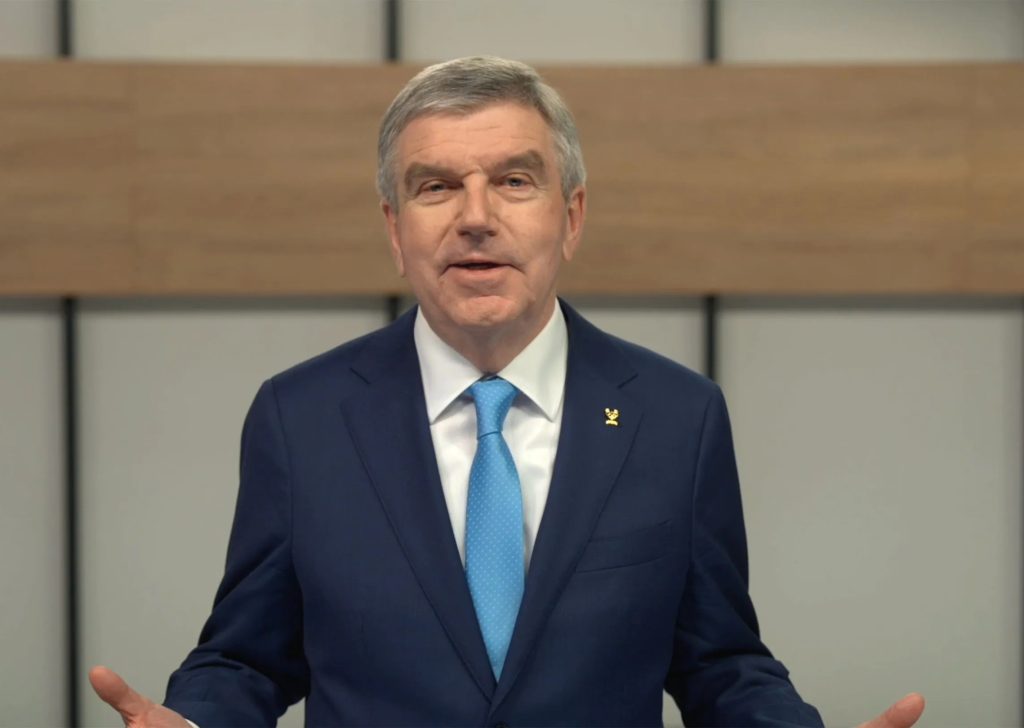
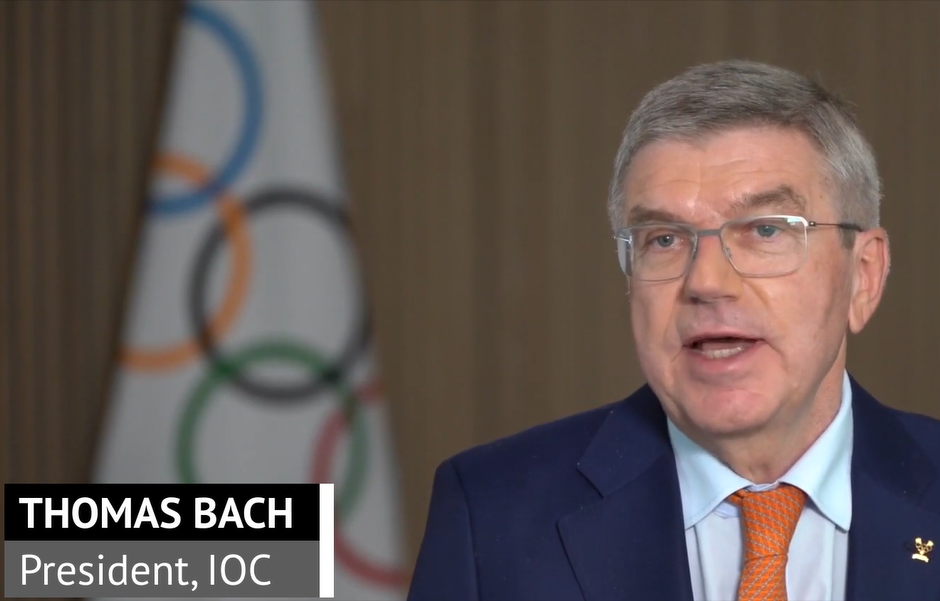
IOC President Thomas Bach expressed his sympathy for the Ukraine and his admiration for its Olympians. “I would like to offer my condolences to those who have lost loved ones in these tragic events,” he said.
“Our thoughts and sympathy are with the Ukrainian team at what must be a very difficult time. The way they have continued to represent their nation with great dignity is a credit to them and their country.
“Their presence here is a symbol that sport can build bridges and help to bring people from different backgrounds together in peace.”
Tag: IOC
-

Bubka calls for Olympic Truce on “terrible scenes” in Ukraine
-

2022 Games host must be “unique” – IOC
Five cities have submitted their application files for the Winter Olympic Games by the deadline of Friday 14 March. The IOC Executive Board has until 9 July to select the successful candidate cities.
While safety concerns have exerted a major influence on recent hosting decisions, individuality will the critical factor for future host cities, IOC Executive Board member Prof. Dr. Ugur Erdener told HOST CITY.
The pool of applicants – Krakow, Oslo and Almaty, Lviv and Beijing – presents a strong emphasis on growth markets, with only one Western European city and none from America. This is particularly notable given that the 2022 Winter Olympic Games will be preceded by two editions in new territories.
“There was a very successful organisation in Sochi and everybody was very happy being there,” Erdener told HOST CITY. “It was one of the very best Olympic Games organised. The next Winter Games will be held in PyeongChang, and now we have potential candidates from Europe and Asia again.
“We will have to see their applicant files, their projects and some of their explanations and then we can have some ideas. At the moment we don’t have any idea of the projects details, budget et cetera.”
Under the new leadership of Dr Thomas Bach and his revitalised top table, the IOC is keen to uphold the value of its flagship events. “The Olympic Games is the top priority for the IOC and the Olympic Movement,” Erdener said.
However, this does not necessarily give an established, known host like Oslo an advantage. The IOC will always be interested in something new to promote.
“It should be a unique activity; it is very important that all Winter, Summer and Youth Olympic Games should be unique – this is very important for the IOC,” said Erdener.
“We have to be more attractive, especially for TV – because TV is the most important factor for all kinds of sports facilities, especially for the Olympic Games.”
As President of the Turkish Olympic Committee, Erdener led Istanbul’s bid for the 2020 Olympic Games. “I congratulated my friends in the Tokyo team; it was a very fair competition and there was only one place for the winner for 2020.
“After having seen some delays in Rio 2016 project, probably some of our colleagues thought that a safe city would be better. As we all know, still there are some discussions about Rio project.”
IOC members will vote for the host city of the 2022 Olympic and Paralympic Winter Games during the IOC Session in Kuala Lumpur on 31 July 2015.
Prof. Dr. Erdener is also president of the World Archery Federation and president of the Organising Committee for SportAccord Convention, which takes place in Belek, Turkey from 6-10 April.
For the full exclusive interview with Prof. Dr. Erdener, register for HOST CITY and make sure you get the next issue. -

Delays and ambiguity could harm Rio 2016 delivery
Major delays to Rio 2016 Olympic Games projects leave no room for further hold-ups, while responsibilities and funding for projects must be clarified to avoid problems in delivering the Games, the IOC said on Friday.
The Organising Committee president Carlos Nuzman admitted there is “not a minute to lose”.
At the conclusion of the IOC’s Coordination Commission visit, chair Nawal El Moutawakel said “The Rio 2016 Olympic Games have a great potential for being a very exciting event which leaves many legacies. But although progress is being made, each decision that is postponed and each subsequent delay will have a negative impact on delivery – total focus and dedication are therefore required.”
In a strongly-worded public statement, the IOC said “Every second counts… The delivery timelines of some of the venues for test events and the Games have faced delays and now leave no margin for any further slippages.”
Nuzman said “We enter this crucial phase of our journey without a minute to lose, and certain that our partners in government share this vision”.
Rounding up a full day of site visits to the Barra and Deodoro clusters, the Coordination Commission made it clear that decisive action is required to avoid setbacks, saying “A number of important decisions remain to be made.”
A crucial meeting between the federal authorities and key Games stakeholders has been called on 27th March in the Brazilian capital, Brasilia, where “it is expected that the responsibilities for each Games related project will be clarified along with the associated funding in order to avoid further significant delays in the delivery of the project.”
The Coordination Commission did, however, acknowledge that the organising committee has made progress in a number of areas since its last visit in September 2013 and IOC President Bach’s visit in February 2014.
The overall venue masterplan has been finalised, the event’s “lifetime budget” has been validated and federal government efforts have been integrated under President Rousseff’s Chief of Staff, Aloizio Mercadante.
The commission also commended city authorities for rapid progress since taking over responsibility for the second Olympic Park in Deodoro, where construction work has yet to begin.
During its three day tour, the commission received updates from the organisers and their partners in areas such as athletes and National Olympic Committees (NOC) services, sport and international federations’ services, venues and infrastructure, accommodation, media operations, spectators, ticketing, transport, test events, marketing, and the Paralympic Games.
The IOC visit overlapped with a tour of World Cup venues by FIFA officials, who are currently in Brazil. Many 2014 World Cup projects are behind schedule.
The coordination commission’s next visit to Rio de Janeiro takes place in September 2014.
-

IOC impressed by Tokyo 2020 progress
The International Olympic Committee (IOC)’s coordination commission concluded its first visit to Tokyo on Friday, leaving with positive impressions of planning, personnel and infrastructure.
John Coates, chairman of the commission, said at the close of the meeting: “We have been very impressed with what we have seen this week during our visit.
“The current level of planning; the venue layout; the involvement and integration of the Government authorities at all levels; and the experience and diversity of the new Executive Board all leave us confident in Tokyo’s ability to deliver great Games for the athletes in 2020.”
The IOC delegation also included Vice-Chair Alex Gilady, IOC Olympic Games Executive Director Gilbert Felli, and Deputy Olympic Games Executive Director Christophe Dubi.
From 2 to 4 April, the group participated in the first IOC project review of the Games preparations and were updated on progress made since Tokyo was elected as the host city of the 2020 Olympic and Paralympic Games in September 2013.
The IOC executives were introduced to members of the new Tokyo 2020 executive board. The Commission was particularly pleased to see that a number of athletes and women are on the Board, representing the culture and diversity of Japan, the IOC said in a statement.
Coates said: “Since my last visit to Tokyo with IOC president Thomas Bach in November 2013, Tokyo 2020 has successfully undertaken a number of important steps on its seven-year Olympic journey. The establishment of the organising committee, the constitution of its executive board, the creation of a high-level advisory committee, and its participation in the observer programme for the Sochi 2014 Olympic Winter Games will all enable Tokyo to face the coming six and a half years with a high level of confidence thanks to this quick start.”
The Games organisers presented on a number of topics, including governance, legacy, sustainability, accommodation, finance, commercial matters, engagement, medical, athlete preparation, venues and infrastructure.
Venue visits
The delegation visited a number of the venue sites, including Yoyogi National Stadium, the Olympic Stadium, Nippon Budokan, Imperial Palace Garden, Tokyo International Forum, Kokugikan Arena, Odaiba Marine Park, Tokyo Big Sight, and viewed the sites of all the other future venues of the Tokyo Bay Zone.
The venue visit also included a trip to the site of the future Olympic Village, where the delegation was joined by Tokyo Governor Yoichi Masuzoe, Olympic champion Koji Murofushi, and a number of young Japanese rowers, including Olympian Haruna Sakakibara, who took part in the London 2012 Games.
Yoshiro Mori, chairman of Tokyo 2020 said: “We have just completed three days of meetings, and I am very pleased that we were able to hold a range of productive discussions. We now have a much clearer understanding of the direction required for us to take to deliver successful Games.”
The first full IOC coordination commission visit to Tokyo will be held from 25 to 27 June 2014. This will be the first of 10 Commission visits to the 2020 host city over its seven-year lifecycle.
“We will now work towards implementing the action plan that we have formulated together over the past three days, and we look forward to welcoming the members of the IOC Coordination Commission back to Tokyo this summer,” said Mori. -

IOC puts all energy into averting Rio2016 failure
The President of the IOC, Dr Thomas Bach, confirmed at SportAccord Convention on Thursday that a series of measures have immediately been put in place to safeguard the success of the Rio 2016 Olympic Games.
The IOC has asked leaders in Brazil to form a high-level decision making body to coordinate the delivery of the Games. The IOC is also going to appoint a local project manager, with task forces focusing on specific areas.
Gilbert Felli, Director of Olympic Games at the IOC will head up a more frequent schedule of visits, starting on Monday. International federations have also been asked to play a more hands-on role in monitoring progress.
“We know about these concerns because of the excellent work of our coordination commission, which had a visit to Rio not too long ago,” President Bach said at the SportAccord Convention in Belek. “We believe Rio can and will deliver excellent Olympic Games if the appropriate actions are taken.”
Leaders from within the IOC met with the Rio 2016 organising committee on Wednesday at SportAccord Convention. “We had a very constructive atmosphere with our partners in Rio,” said Bach. “We then decided some measures – how we can accelerate the works in Rio, how we can work even closer with the organising committee and the different levels of government.”
The organising committee has been asked to put in place a high-level decision making body representing different levels of government, communication between which is a particular area of concern.
“We will use our experience in organising Games to show how different levels of government can work better together; how seamless cooperation can be done; how can you then benefit from experience of previous organisers or experts.”
Bach cited Sochi as a good example. “We would enhance the collaboration with international federations and other key stakeholders in the way we had also done for Sochi, where we had dedicated project teams from different international federations going to Sochi on a regular basis.”
The three task forces to be established will focus on construction, operations and engaging population behind the Games. Mindful of recent protests directed towards the FIFA World Cup, Bach stressed that the benefits of hosting the Games would be communicated to the local population. “We have a very good message to send to the Cariocas because these Games will leave a great legacy for the city.”
Bach was keen to emphasise that the supervisory measures have not been enforced onto the Brazilian organisers. “We have informed the organisers and the major of Rio. The measures were very much welcomed. The strong commitment by the IOC to the success of these Games is very well appreciated by our Brazilian partners.
Gilbert Felli is due to meet with Mayor Eduardo Paes and the organising committee on Monday 14th April. “A couple of days later he will have his first assessment,” said Bach. “This is not a measure being imposed by the IOC; this measure has been appreciated by the Organising Committee and the mayor.”
Unwilling to apportion blame at this stage, Bach said: “This is about 2016 and we have to look to the future, and not start a blame game for the past. We need all our energy; we share their concerns to make the games a success.
“After the closing ceremony of the Olympic Games we can come back to this question of responsibility. But now we would not act in a responsible way if we were to look too much into the past.” -

IOC to make bidding process work better for cities
The International Olympic Committee is reviewing its bidding procedure, with a renewed emphasis on the social, environmental and developmental goals of the bidding city and its country, Gilbert Felli confirmed on Thursday.
Speaking at the SportAccord Convention in Belek, the IOC’s Director of Olympic Games said: “The idea is that we want to shift the focus a little bit, in a way that we encourage potential candidate cities to tell us how they see the Olympic Games fitting best in their social environment, their long term development plans, with regard to sports and general infrastructure, to environmental protection – to get more diversity into the bidding procedure.”
Felli’s comments expand on the “Olympic Agenda 2020”, a key theme of which is to communicate the value of bidding for and hosting the Olympic Games.
The current two-phase procedure is being reviewed “to make sure the IOC does not ask too much too soon”. Concerns have been raised that too much information is requested at the applicant phase, deterring potential applicants.
The reviewed process will also mean that information requested will be more focussed on the long term goals of the applicant, rather than on the event itself. “And in the end, to have it less a tender for a franchise and more an invitation to Olympic Games on the background of the culture and the perception of a sustainable development in the future host country,” said Felli.
Other proposals to broaden the appeal of bidding include reducing and controlling costs for bid cities, the possibility of joint bids from several cities in two or more countries, and reviewing the IOC’s requirements “to see how the Olympic Games could be awarded to cities in new territories and emerging economies”. -

IOC urges PyeongChang to stick to deadlines
The International Olympic Commission (IOC) Coordination Commission on Thursday completed its third inspection visit of PyeongChang, the host city of the 2018 Winter Olympic Games, concluding that progress was good but that work could not be allowed to slip behind schedule.
The Commission highlighted transport management, accommodation contracting and developing the Mountain Olympic Village as areas where timeframes are particularly “tight” for the PyeongChang Organising Committee of the Olympic Games (POCOG).
Venue construction, test events, marketing and Games services have also been identified as “key areas that require POCOG’s focus over the next six months,” the IOC said in a statement.
“We were able to see that a large amount has been accomplished by POCOG and its partners since our last visit in June 2013,” said Gunilla Lindberg, chair of the IOC coordination commission. “The 2018 Games are on the right track but it is clear that much work remains.”
POCOG President and CEO Jin-sun Kim said: “The eyes of the world are now on PyeongChang.
“This year is a big turning point for us. We must establish a solid framework. As I always stress, we have no time to practise and no time for trial and error. We will streamline our Master Schedule and set our priorities straight so that everything runs smoothly according to the timeline.”
The IOC said in a statement: “With timelines tight for the completion of accommodation contracting, the development of the Mountain Olympic Village and the transport management plan, the Coordination Commission encouraged POCOG to ensure that the appropriate focus and resources were dedicated to these important areas.”
Construction companies are being appointed for venues and some construction is underway. The commission “underlined the need for timelines to be carefully defined and adhered to, so as to avoid any impacts on test events.”
The IOC will undoubtedly be keen to avoid a situation like Rio 2016’s, where construction is critically behind schedule.
The commission also highlighted the need to prepare for the non-infrastructural aspects of test events, saying “the hiring and training of staff and volunteers should also begin in the near future”.
In the field of marketing, POCOG is in the process of finalising its first domestic partnership contract to build on progress so far.
“The awareness of the PyeongChang 2018 Olympic Winter Games has been strengthened by the success of PyeongChang House in Sochi, and the very innovative Closing Ceremony segment, which presented the 2018 Games to a worldwide audience of millions,” the IOC said. “The Commission encouraged the local organisers to continue to engage and promote their Games at this high level over the next four years both at home and abroad.”
The meetings in PyeongChang were attended by all levels of government. “The participation of the International Federations, the Korean Olympic and Paralympic Committees, and the Korean national winter sports federations was also very beneficial and allowed POCOG to engage in in-depth discussions on all topics related to the venues and sport,” said Lindberg.
“We are confident that POCOG and Korea will deliver great Games for the athletes in 2018.”
In June, PyeongChang will host the official IOC Debriefing of the Sochi 2014 Winter Games. The fourth Coordination Commission visit to PyeongChang will take place at the end of November 2014. -

Rio 2016 Olympic situation is “critical”
Preparations for the Rio 2016 Olympic and Paralympic Games are “the worst I have experienced” and “worse than Athens”, according to IOC Vice President John Coates.
“The situation is critical on the ground,” he said at an Olympic Forum in Sydney on Tuesday.
While the IOC is taking “unprecedented” action in an attempt to resolve “critical” construction delays, there is “no plan B” for the possibility of Rio not being ready to host the Games in 2016.
Coates has been involved in the Olympic movement for 20 years and has made six visits to Rio as a member of the IOC Coordination Commission, overseeing Rio’s preparations.
According to a statement from the Australian Olympic Committee, of which Coates is the president, IOC experts have been embedded in the organising committee, including construction project manager to ensure that works progress at the faster pace needed.
“The IOC has formed a special task force to try and speed up preparations,” said Coates.
The Rio 2016 organising committee has not responded directly to Coates’ comments, but it has said that it welcomes the intervention from the IOC.
“Very concerned”
“I’ve become very concerned, to be quite frank,” said Coates. “The last Coordination Commission visit earlier this month showed that they are really not ready in many, many ways.
“And then we followed that up with a meeting in Turkey two weeks ago when 18 of the federations said the organisers were not ready in respect of their venues, particularly in the case of the eight sports in the second Olympic Park at Deodoro. Really, construction hasn’t commenced there apart from a bit of ground clearance.”
Speaking on the BBC World Service on Tuesday night, Jefferson Puff, a BBC correspondent in Brazil said “If Deodoro was their only concern I think the IOC would be in heaven, because it’s so much more than that.
“The subway in the city was supposed to be extended, and that has been delayed. The bay in which some of the maritime competitions are supposed to take place is completely polluted. Critics say it will be very hard to clean it up in time.
“The budget for the Olympics is also a concern. You could argue that it’s basically a case of mismanagement of planning, of the money involved.”
“The challenges for sport leaders and team management is that they’re not getting answers to the questions when they go over,” said Coates.
“Can they use the car parks in the village for recovery centres? What will be the time to take from this venue to this venue? All of those things, they’re being fobbed off. No one is able to give answers at the moment.”
“No plan B”
Despite the very real possibility that Rio might not be ready in time, there has been no mention of any other cities that might be ready to host if necessary.
“The IOC has adopted a more hands on role. It is unprecedented for the IOC but there is no plan B. We are going to Rio,” Coates said. “From my experience it’s the worst that I have experienced but we just have to make it happen and that’s the IOC’s approach.
“You can’t walk away from this. And if this comes off, the first Games in the South American continent in the magical city in so many ways it will be a wonderful experience for the athletes.”
Comparisons have been drawn between Rio’s Olympic projects and Brazil’s last minute rush to host the 2014 World Cup, which starts on 12 June.
“I think maybe the organisers of the Olympics are actually betting with destiny, betting with the future – hoping that they can accomplish the same,” said Puff. “Only for the critics, the delays for the Olympics are bigger than for the World Cup already, so one could argue that the game they are playing is quite risky.” -

International Triathlon Union appoints Vero as communications partner
The International Triathlon Union [ITU], the sports federation that governs the Olympic sport of Triathlon, has hired Vero Communications to develop an international communications strategy, liaise with international sports media and promote the federation.
Vero will also help boost the ITU’s profile on social media platforms and work on a digital media strategy to increase public engagement worldwide.
“Since Triathlon joined the Olympic Programme at Sydney 2000, the sport has grown in popularity around the world,” said Marisol Casado, ITU President and IOC Member for Spain. “ITU is immensely proud of Triathlon’s Olympic and Paralympic status and we look forward to continuing the sport’s development internationally and engaging new participants and fans.
“With Vero’s proven expertise in international sport, combined with the work of the ITU team, we know we have a very strong group to help us grow our communications and engagement over the coming years.”
Vero, based in London and led by chairman Mike Lee OBE, works with a number of international sports federations as well as cities bidding for mega-events, including Rio 2016, PyeongChang 2018 and Qatar 2022.
“The federation has a real ambition to harness the appeal of Triathlon in existing markets and spread the message of the sport to new parts of the world,” said Lee. “ITU has a very positive story to tell and our role will be to help ensure that this story is communicated effectively to international sporting stakeholders, media and fans.”
-

NBCU awarded Olympic broadcasting rights to 2032
The International Olympic Committee (IOC) on Wednesday awarded NBCUniversal the US broadcast rights for the Olympic Games through to 2032.
The deal covers all media platforms, including free-to-air television, subscription television, internet and mobile. The agreement will run from 2021 to 2032, extending an agreement in 2011 which gave NBCU the right to broadcast the Olympic Games until 2020.
NBCU will now broadcast every Olympic Games and Youth Olympic Games through to 2032, regardless of which host cities are elected to host these events.
The deal is valued at US$ 7.65bn with an extra US$100m signing bonus that will be used to promote Olympism and the Olympic values between 2015 and 2020, the IOC said in a statement.
“This agreement is excellent news for the entire Olympic Movement as it helps to ensure its financial security in the long term, in particular future host cities of the Olympic Games, the athletes of the 204 National Olympic Committees and the International Sports Federations,” said IOC President Thomas Bach, who led the negotiations.
“The IOC has worked in close partnership with NBC for many decades, and we are thrilled we will continue to work with them through to 2032. NBC’s expertise in sports broadcasting, as well as their passion for the Olympic values, will mean we shall be able continue to offer first-class broadcast coverage of the Olympic Games to the widest possible American audience for many years to come.”
Steve Burke, CEO, NBCUniversal, said: “The Olympics are part of the fabric of our company, and we couldn’t be more excited that today’s announcement guarantees that this massively popular and profitable programming will continue to air every two years on the broadcast, cable, digital and mobile platforms of NBCUniversal for the next two decades.”
NBCU first broadcast the Olympic Games in Tokyo 1964. By 2032, it will have covered a total of 23 editions of the world’s biggest multisport event.