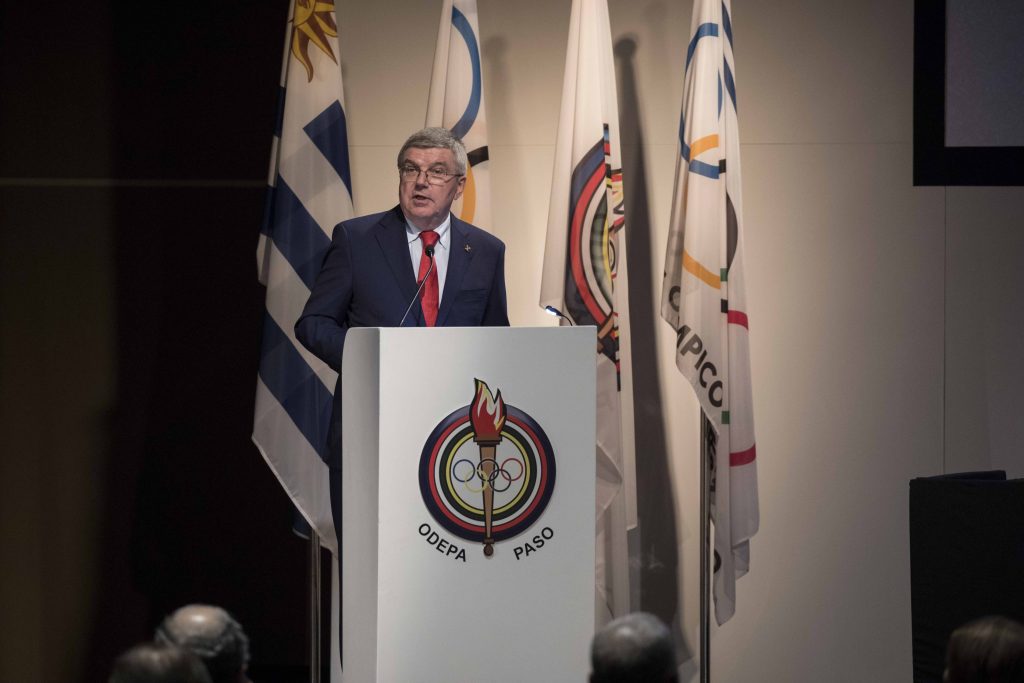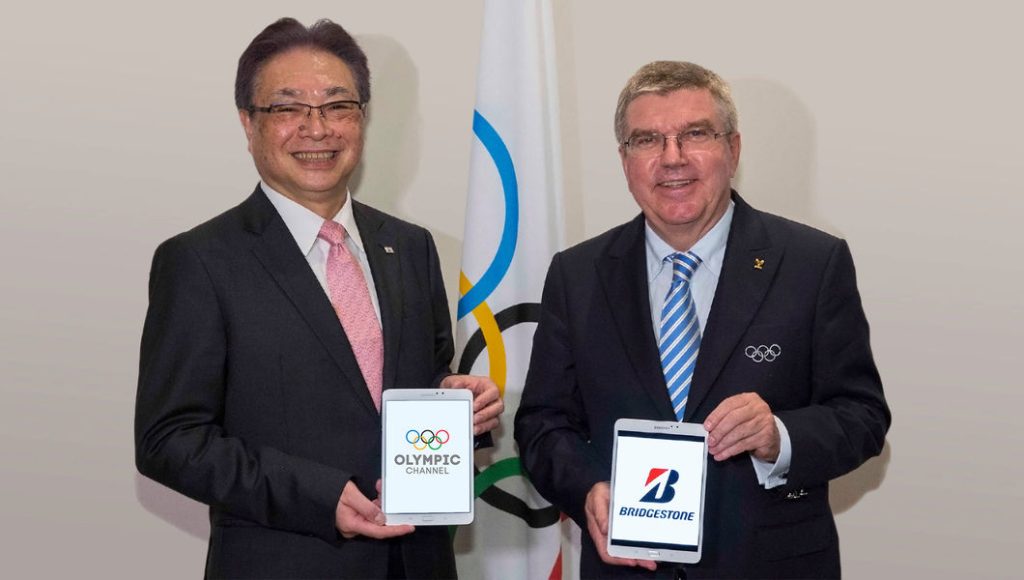
Thomas Bach, the president of the International Olympic Committee announced the membership on Thursday of 14 working groups that will develop “Olympic Agenda 2020” – the IOC’s roadmap for the future of the Olympic Movement.
Agenda 2020 centres on five themes: the uniqueness of the Olympic Games, athletes at the heart of the Olympic Movement, Olympism in action, the IOC’s role and IOC structure and organisation.
Each working group is to be chaired by an IOC member. John Coates, an outspoken critic of Rio’s preparations, is to head up the working group on bidding procedure. Sir Craig Reedie is to lead on good governance and autonomy.
The working groups include athletes and representatives of the International Federations and National Olympic Committees. A number of experts have also been appointed from outside the Olympic Movement, including representatives from leading international non-governmental and business organisations.
The aim of the working groups is to compile and discuss contributions to the Olympic Agenda 2020, which the IOC describes as a “strategic roadmap for the future of the Olympic Movement”. Many contributions to the debate of the future of the Olympic Movement have already been received from the Olympic Family and wider public via a call for feedback via email.
The working groups will first meet in June, close to Olympic Day, and their findings discussed at the Olympic Summit in July and at an Executive Board Meeting on 22-24th October in Lausanne. The resulting proposals for Olympic Agenda 2020 will then be presented to all IOC members for discussion at the IOC Extraordinary Session in Monaco on 8 and 9 December 2014.
The 14 Working Groups are: Bidding Procedure (Chair John D. Coates, AC); Sustainability and Legacy (Chair Prince Sovereign Albert II); Differentiation of the Olympic Games (Chair Sam Ramsamy); Procedure for the composition of the Olympic Programme (Chair Franco Carraro); Olympic Games Management (Chair Mario Pescante); Protecting Clean Athletes (Chair Claudia Bokel); Olympic TV Channel (Chair Thomas Bach); Olympism in action including Youth Strategy; (Chair Gerardo Werthein); Youth Olympic Games (Chair Ser Miang Ng); Culture Policy (Chair Lambis V. Nikolaou); Good governance and autonomy (Chair Craig Reedie); Ethics (Chair Youssoupha Ndiaye); Strategic review of sponsorship, licensing and merchandising (Chair Tsunekazu Takeda); IOC Membership (Chair The Grand Duke Henri of Luxemburg).
The complete list of Working Groups can be viewed here.
Tag: IOC
-

IOC reveals Agenda 2020 Working Groups
-

IOC signs Japan’s Bridgestone as Worldwide Partner
The world’s largest multi-sports rights holder has partnered with the world’s largest tyre and rubber company.
In an agreement through to 2024, The Bridgestone Corporation, headquartered in Tokyo, has joined The Olympic Partner (TOP) programme – the IOC’s small group of sponsors with exclusive marketing rights.
This is the first sponsorship agreement is the first to be signed under the watch of the IOC’s new marketing commission chairman, Tsunekazu Takeda.
“I am delighted that a leading Japanese company, Bridgestone, will become the 11th Worldwide TOP Partner and the second TOP Partner to commit through to 2024,” said, the IOC’s marketing commission chairman, who is also president of the Japanese Olympic Committee and vice president of the Tokyo 2020 Organising Committee.
“As the first Partner the IOC has signed under my Chairmanship of the Marketing Commission I am also personally very happy that we were able to make this global announcement in Tokyo,” said Takeda.
Alongside 10 other Worldwide TOP Partners including McDonalds, Coca Cola and Visa, Bridgestone will not only partner with the IOC but also all 204 National Olympic Committees and their Olympic teams.
The tyre manufacturer will also partner with the organisers of future Olympic Games, including the Rio 2016, PyeongChang 2018 and Tokyo 2020 Olympic Games, as well as the 2022 and 2024 Olympic Games – the host cities of which have yet to be elected.
Bridgestone will supply tyres and related services to support the transport operations at Games time, including the vehicles for the athletes, media and officials.
“The long-term, global support the TOP Programme provides is essential to the entire Olympic Movement, as well as to the staging and operations of each Games,” said Takeda.
As well as tyres, the product categories covered by the agreement include seismic isolation bearings and non-motorised bicycles. The company also manufactures industrial rubber and chemical products and sporting goods.
Bridgestone CEO and Chairman Masaaki Tsuya said, “As a global corporation, Bridgestone is excited to partner with the entire Olympic Movement, a group of organisations that not only brings together the world’s athletes at the greatest athletic festival, but also blends this celebration of sport with a spirit of service to community, social responsibility, a respect for diversity and a commitment to the fundamental principles of Olympism.”
As a Worldwide TOP Partner, Bridgestone will partner with the IOC and all 204 National Olympic Committees and their Olympic teams.
“The TOP programme is a truly global sponsorship programme, as it benefits all future Games organisers and all the National Olympic Committees and their athletes, ensuring that athletes from all over the world, and not just the largest countries, are able to compete at the Games,” said IOC President Thomas Bach.
“Indeed, the IOC redistributes over 90 per cent of its revenues to the wider sporting movement. Bridgestone is a global leader in its field, and we are delighted to welcome the company to the TOP programme and are excited about the long-term commitment they have shown to the Olympic Movement.”
-

IOC hails Tokyo 2020’s quick start and strong partnership
For the first time, Tokyo last week welcomed the International Olympic Committee’s Coordination Commission, which found that the city was on the right path towards hosting an excellent Olympic Games in 2020.
“The Organising Committee and its government partners have got off to a quick start and are putting in place solid foundations for the next six years of preparations,” said John Coates, the chairman the body of experts tasked with assessing and facilitating the city’s progress.
“We are very pleased with Tokyo 2020’s progress under the leadership of President Yoshiro Mori.”
In addition to chairing the Coordination Commission for Tokyo 2020, Coates is on the Coordination Commission for Rio 2016. His praise of Tokyo 2020 is in direct contrast with the concerns he raised over Rio 2016 in recent months.
Where delays have been described as “critical” in Rio, Tokyo is off to a “quick start”. And while Rio 2016 has been criticised for poor communication between different levels of government, Tokyo 2020 has benefited from good coordination within government.
“The close cooperation of all levels of government with Tokyo 2020 was clearly felt by the Commission, particularly following our meeting with Prime Minister Abe and with Governor Masuzoe’s participation in the visit,” said Coates.
“Their support for the Games, as well as the support of many high-profile Japanese personalities through the Tokyo 2020 Advisory Meeting, are greatly appreciated, and will stand the 2020 Games in good stead. Their commitment underlines that Tokyo 2020 is for all Japan, and is encouraging Japanese everywhere to get behind these Games and see how they can engage in helping Tokyo to welcome the world in 2020.”
Yoshiro Mori, President of Tokyo 2020 said “Even though our team consists of members of the sporting community, the Tokyo Metropolitan Government, the national government and various related organisations, I was able to gain a real sense that all members of the Organising Committee were pulling together in the same direction as a truly integrated unit. Over the next six years, the members of the Coordination Commission and the Organising Committee will work together as a united team, all sailing in the same boat towards a shared objective, and I believe we have got off to an excellent start.
“However, the members of the Commission did point out one or two things that need addressing. We will of course be incorporating all the advice we received into our preparations for the Games at the earliest opportunity.”
Venue review
The Commission visited many venues in the “Bay Zone” including the Velodrome, Gymnastic Centre, Tennis Park, Olympic Village, Tokyo Big Sight, Aquatics Centre, Wakasu Olympic Arena and Sea Forest venues. Twelve of Tokyo 2020’s venues are already existing, including four originally built for the 1964 Olympic Games.
The visit took place at a time when Tokyo 2020 has been reviewing the venue plans outlined in its bid, amid widespread speculation about the implications of this review. This review was sparked by the observations of the IOC Evaluation Commission, which monitored the city’s bid for the Games.
In a statement, the IOC said “The review will not affect the core principles of the bid. The objective is to refine the legacy and operational assumptions of Tokyo’s plans. The Tokyo organisers are looking to ensure that their Games leave a sustainable long-term legacy to the host city and its citizens. The review is being carried out in cooperation with all the key national and international stakeholders.
“The legacy vision and objectives are consistent with discussions around Olympic Agenda 2020, a process that will provide an ambitious strategic roadmap for the future of the Olympic Movement.”
Mori said “With regard to the review of our venue plan, I informed the Coordination Commission that, based on such aspects as the kind of legacy we will leave, the impact of the Games on the lives of Tokyo residents and the cost of construction and maintenance of the venues, the Organising Committee will examine all issues closely and collaborate with the IOC, the International Paralympic Committee (IPC), and both domestic and international sports federations, to ensure the success of the Games.”
-

IOC Vice President to speak at HOST CITY: BID TO WIN
After extensive consultation with several senior figures in the business of major events, cities and sports, HOST CITY has identified a demand for a forum that addresses three major concerns:
Cities are often on the fringes of the debate about bidding for and hosting major events
There is a pressing need to create a dialogue between cities and rights holders
The rights holders of sports, business and cultural events don’t have enough opportunities to meet with cities and each otherHOST CITY: BID TO WIN, which takes place in London on 28th October 2014, with a reception on 27th, will satisfy this demand.
Confirmed speakers include: Sir Craig Reedie, Vice-President, IOC; Hasan Arat, Executive Board Member, European Olympic Committee (EOC); Dimitri Kerkentzes, Counsellor and Chief of Staff, BIE, David Grevemberg, CEO designate, Commonwealth Games Federation (CGF), Mike Lee, Chairman, VERO; Peter Tindemans, Secretary-General, EuroScience; Janez Kocijan?i?, Vice President, International Ski Federation and Robert Datnow, Managing Director of The Sports Consultancy.
“Often, the subject of creating and maintaining long-term relationships between the federations and their public sector hosts is not fully explored,” Robert Datnow told HOST CITY.
“So, I am interested to see a conference which focuses equally on the perspective of host cities and rights holders which will I think create an invaluable dialogue on the relationship between the two, outside the context of any particular bid, which spans cultural, entertainment and business events as well as sport, where there are similar themes and much cross-industry best practice to share.”
Topics to be discussed include: Olympic Agenda 2020; evaluating bidding & hosting, insights into successful bids, infrastructure, transport & security strategies; campaigning to win, and winning for the future.
“As a speaker, I am hoping to be able share insights from working with some of the world’s most major events and rights holders, particularly on bid structures, themes and components which rights holders specifically look for from bids,” said Datnow.
“Cities, along with regional and national governments, are often not given the voice they deserve at the major conferences, and often cities do not speak with one voice about the issues of common interest and concern.
“Governments have much to say to rights holders on the subject of bidding for major sporting, cultural and entertainment events, as one of the greatest investors in events and as one of the most major long-term beneficiaries. They also have much in common. Rights holders too have much to learn from serial bidders and hosts of the world’s most major events.”
HOST CITY: BID TO WIN takes place in central London on 28th October, with a networking dinner on 27th October. Visit www.bidtowin-hostcity.net to register -

Global survey shows growing appeal of Olympic Games
A survey commissioned by the IOC has found that the awareness and appeal of the Olympic Games and the Olympic Winter Games was higher than any other sports or entertainment events surveyed.
The research, conducted by Kantar Media after Sochi 2014, took on board the views of 36,000 people in 16 countries.
Announcing the results, the IOC said in a statement that Sochi 2014 reached a broadcast audience of 2.1 billion people, up 13 per cent since Vancouver 2010. The individual broadcasters at Sochi totalled 250, more than twice as many than at Vancouver.
The proliferation of digital media has boosted the reach of the Winter Games, with the number of broadcasting hours doubling to 114,000 at 2014 as compared to 2010. Digital video views reached 1.4 billion, up 334 per cent from 2010.
Athletes and spectators surveyed at the Games in Sochi rated their enjoyment of the Games very highly, citing the standard of the sports competition, the quality of the venues and the atmosphere as factors contributing to their enjoyment.
The Olympic symbol remains the most widely recognised of brands surveyed, with 93 per cent of respondents showing awareness. This brand recognition showed little variation across regions, gender and age.
The values that people surveyed associated with the Olympic rings included global, inspirational, friendship, diversity, peace and excellence. In a further boost to brand integrity, the IOC was seen to be strong and strict on doping.
The survey also showed “widespread recognition that hosting an Olympic Games brings benefits to the host country” – a welcome finding as the IOC conducts its Agenda 2020 review into the appeal of the Olympic Games.
-

IOC members back new Agenda 2020 proposals
As part of the Olympic Agenda 2020, a “strategic roadmap for the future of the Olympic Movement”, the summit addressed a raft of potential reforms which are set for further deliberation at the Extraordinary IOC Session in December.
A reform to the Olympic Games bidding procedure was one of the proposals discussed at the summit. The alterations, which were broadly supported by the summit, place a new emphasis on the legacy aspects of host city bids and how that can be brought to the population of the city as well as the surrounding area.
Potential hosts would have to exhibit how the Games would be a part of the long-term development plan not only for the city, but for the whole region and would include scrutiny into the social and environmental aspects of the developments. The summit also supported the need for Olympic Movement stakeholders to remain open to adaptation on these issues.
According to the Agenda 2020 proposal the new bidding procedure would also give more flexibility to bid cities but there would be greater emphasis on what the bid process, and the resulting Games, would bring to the host and its citizens from the very beginning of the bid procedure. These reforms reflect a growing trend in the standards set for host city candidates to provide more sustainable and legacy driven bids that take into account the wider ramifications of their event.
Convened by IOC President Thomas Bach, the summit centred on the three major themes of sustainability, credibility and youth, as well as 14 other sub-themes.
As well as proposed changes to the bidding procedures the summit focused on a new methodology to the Olympic Programme. This alternative approach would provide an event-based, rather than a sport-based, composition to the programme, which could lead to a greater range of events than seen previously while continuing to restrict the number of athletes involved.
The establishment of an Olympics Television Channel was also considered, with the notion of promoting the Olympics and its values in between Games, as well as new measures to ensure the protection of clean athletes in conjunction with the World Anti-Doping Agency.
To find out more, register for HOST CITY: BID TO WIN conference on 28th October and get the inside track on Agenda 2020 reforms. -

NOCs call for overhaul of Olympic city bids
Austria, Germany, Sweden and Switzerland’s NOCs have submitted a paper to the International Olympic Committee (IOC) entitled “Olympic Agenda 2020: The Bid Experience”, which proposes a revolutionary change to the process of selecting host cities of the Olympic Games.
The paper briefly explains why all four nations have retracted bids to host Olympic Games in recent years, and sets out what could be done to make the prospect of bidding again more appealing.
The most bold suggestion is that the IOC Evaluation Commission’s findings should count directly towards the election of the host city. Currently, the host city is elected entirely by secret ballot by IOC members, after they have read the Evaluation Commission’s report, but this report does not directly count – only the votes do.
“The IOC could split the election into two equally weighted parts, one representing the technical evaluation with a ranking of all bid cities, and one representing the vote of the IOC members,” the NOCs’ paper states.
The IOC is currently undergoing a deep and wide review into all areas of its activities, with a major focus on bidding procedure. The findings of the “Agenda 2020” review will not be made public until November 2014 but the early appeal from these influential NOCs is a highly significant move.
All four committees have backed out of Olympic bids in recent years. The Austrian Olympic Committee was considering a bid of Vienna for the 2028 Olympic Games while the German, the Swedish and the Swiss Olympic Committees were looking into the possibility of bidding for the 2022 Olympic Winter Games.
“The striking element welding all four committees together is the fact that all above mentioned bids were not lost in the official bid process, but due to a lack in national or at least regional public or political support,” the paper states.
The NOCs of these established European nations spell out the concerns they have about bidding for the Olympic Games.
“Public and politics seemingly fear the high costs of bidding for and hosting the Games, especially in the aftermath of the increase of costs that was witnessed in Sochi as well as concerns relating to human rights and sustainability,” the NOCs said. “The situation is aggravated by the media picturing mistrust in the IOC.”
Another suggestion from NOCs is that the IOC’s role in financing the Olympic Games should be communicated more clearly to the public, pointing out that “the budget structure is quite confusing for uninvolved citizens.”
The letter is signed by: Dr. Peter Mennel, Secretary General, Austrian Olympic Committee; Dr. Michael Vesper, Director General, German Olympic Sports Confederation; Stefan Lindeberg, President, Swedish Olympic Committee; and Jörg Schild , President, Swiss Olympic Association.
The concerns of the paper are being addressed by the IOC’s Agenda 2020 Working Group on Bidding Procedure, of which Hasan Arat is a member. To find out more, register for HOST CITY: BID TO WIN conference and hear experts including Arat debating this hot topic on 28th October.
-

PyeongChang 2018 appoint former bid leader as permanent chief
Cho Yang-ho, chairman and CEO of South Korean conglomerate Hanjin Group and airline Korean Air, led PyeongChang’s bid for the 2018 Games and will be appointed as chief organiser at a general congress of the organising committee in the coming days.
POCOG appointed their vice-president Kim Jung-haeng as an interim leader following Jin-sun’s unexpected departure but have quickly found a new successor.
Yang-ho is the current president of the Korea Table Tennis Association and vice president of the Asian Table Tennis Union but his appointment has been criticised by some because of his lack of experience in sports administration.
Yang-ho said in a statement: “Now that I’ve agreed to take on the job as the chief organizer, I will dedicate myself to ensure a successful Winter Olympics in PyeongChang, relying on my experience as the top bid official.”
“Many people in and outside Korea recommended that I take this position and I also wanted to keep the promise I’d made with the International Olympic Committee to work for a successful Olympics here.”
Yang-ho will come into the job at a troubled point for the Games with results from an investigation by the South Korean Board of Audit and Inspection into the financing and management of the Games still pending. -

PyeongChang 2018 appoint chief following abrupt resignation
Following the unexpected resignation of PyeongChang 2018 Winter Olympic Organising Committee chief Jin-sun, the committee have appointed one of their six vice-presidents, Jung-haeng, to take charge in the interim. Jung-haeng will be briefed on the progress of the Games preparations on Thursday and will head the organisation until a permanent replacement can be found.
Kim Jin-sun left his post on Monday citing the need for new leadership. It was revealed yesterday that this had followed an investigation by the South Korean Board of Audit and Inspection into the financing and management of the Games, leading to speculation in the South Korean media that Jim-sun’s departure was not voluntary.
Jin-sun resigned in a speech to POCOG, saying: “PyeongChang 2018 is at a turning point for the latter half of its Games preparation, which requires more detailed planning and execution. At this critical juncture, I believe that PyeongChang 2018 needs new leadership and a stronger system that will effectively carry out various Games-related projects. And this is why I decided to resign as President of POCOG.”
Jin-sun was head of PyeongChang’s bidding committee on two failed bids for the 2010 and 2014 Winter Olympics and his position as chief of the 2018 Games was not meant to expire until October 2015
This all follows a troubled few months for the PyeongChang Games which have faced a slew of construction and sponsorship problems as well as the resignation of vice president and secretary general of the organising committee, Moon Dong-hoo, due to health concerns.
In May the IOC urged PyeongChang to focus on venue construction, test events, marketing and Games services due to tight timeframes. Gunilla Lindberg, chair of the IOC coordination commission, said: “The 2018 Games are on the right track but it is clear that much work remains.”
Following the resignation of Kim Jin-sun the IOC released a statement saying: “We have full confidence that these activities will be delivered by the POCOG team in a timely manner and using their existing processes. We continue to work closely with them on their preparations for the Games.”
-

Samsung extends Olympic partnership to 2020
Samsung has been a part of IOC Worldwide TOP Programme since the 1998 Nagano Winter Games and the extension means the South Korean firm will now feature as a supporter of the Rio de Janeiro, PyeongChang and Tokyo Games as well as the Youth Olympic Games through to 2020.
IOC President Thomas Bach said: “We are delighted to be able to continue our partnership with Samsung. The funding generated by the TOP Programme directly supports the staging of every Olympic Games, as well as every one of the National Olympic Committees, enabling athletes from all over the world to prepare for and compete at each Games.
Samsung will be the official Worldwide Olympic Partner in the Wireless Communication Equipment and Computing Equipment category and has previously provided the Olympic Games with its wireless communications platform and mobile phones, most recently at the Sochi 2014 Winter Games.
The expanded product category includes smartphones, tablets, laptops, personal computers and other computing equipment as well as desktop printers.
“Samsung also supports the operations of each Games by providing leading wireless telecommunications and technology equipment,” said Bach. “In addition, Samsung’s technologies and global marketing reach will engage fans around the world with the Olympic values and the Olympic Movement.”
Samsung said in a statement: “As mobile technologies have become an inseparable part of our daily lives, Samsung believes its continued support will play a significant role in bringing further innovation to the staging of the Olympic Games.”
The new deal means all of the existing Olympic TOP partners have committed to the programme through to 2020. Other companies to sign up to the IOC’s Worldwide TOP Programme include Coca-Cola, Atos and Panasonic who have similar deals, with each covering their own area of expertise.