Tag: IOC

  • Olympic movement mourns ANOC leader Mario Vázquez Raña

    Olympic movement mourns ANOC leader Mario Vázquez Raña

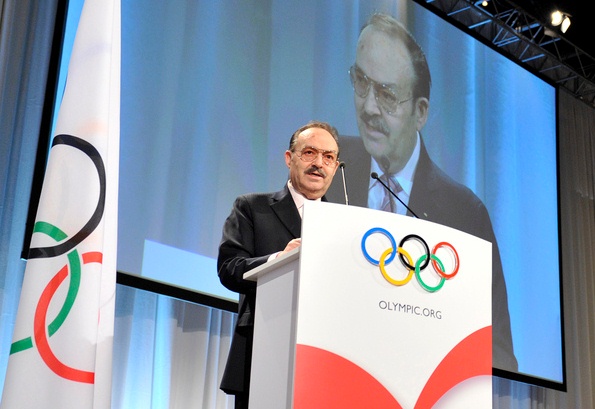
    Mario Vázquez Raña, former IOC member, president of the Association of National Olympic Committees (ANOC) and publisher, has died aged 82. 
    A member of the IOC from 1991 to 2012, Vázquez Raña played a central role in promoting sport and the Olympic Movement in his home nation of Mexico, the Americas and around the world. 
    “Mario Vázquez Raña dedicated a great part of his life to Olympic sport”, said IOC President Thomas Bach. “He served over decades with great commitment as President of PASO, even until his last moments.”
    He headed the Association of National Olympic Committees (ANOC) from 1979 to 2012, and was chairman of the Pan American Sports Organisation (PASO) from 1975 until his death – during which time he has also president and director of Latin America’s largest newspaper company, Organización Editorial Mexicana. 
    Vázquez Raña was also president and director general of Cartones Ponderosa from 2001-2015, owner of United Press International from 1985 to 1988 and president of the board of directors of the Hermanos Vázquez Company from 1960 to 1980. 
    A keen sportsman, Vázquez Raña participated in shooting competitions at the national and international level, going on to become president of the Mexican Shooting Federation (1969-1974) and the American Shooting Confederation (1973-1979). He was also vice-president of the Mexican Sports Confederation (1973-1976) and president of the Mexican National Olympic Committee (1974-2001).
    Vázquez Raña’s roles within the IOC included appointments as Executive Board member, Chairman of Olympic Solidarity (2002-2012) and president of the Organising Committee for the 114th IOC Session in Mexico City (2002). 
    He was also a member of a number of IOC Commissions: Olympic Movement (1990-1999); Preparation of the XII Olympic Congress (1990-1994); Apartheid and Olympism (1990-1992); IOC 2000 Executive Committee (1999); Marketing (2000); IOC 2000 Reform Follow-up (2002); and 2009 Congress (2009-2010).
    “He had outstanding merit within the Olympic Movement and we will always remember him as a great Olympic leader. The Olympic flag at the IOC headquarters in Lausanne will be flown at half-mast in his honour,” said president Bach. 
    The IOC also expressed its deepest sympathies to Mario Vázquez Raña’s family.

  • Host city selection is not political endorsement, says IOC president

    Host city selection is not political endorsement, says IOC president

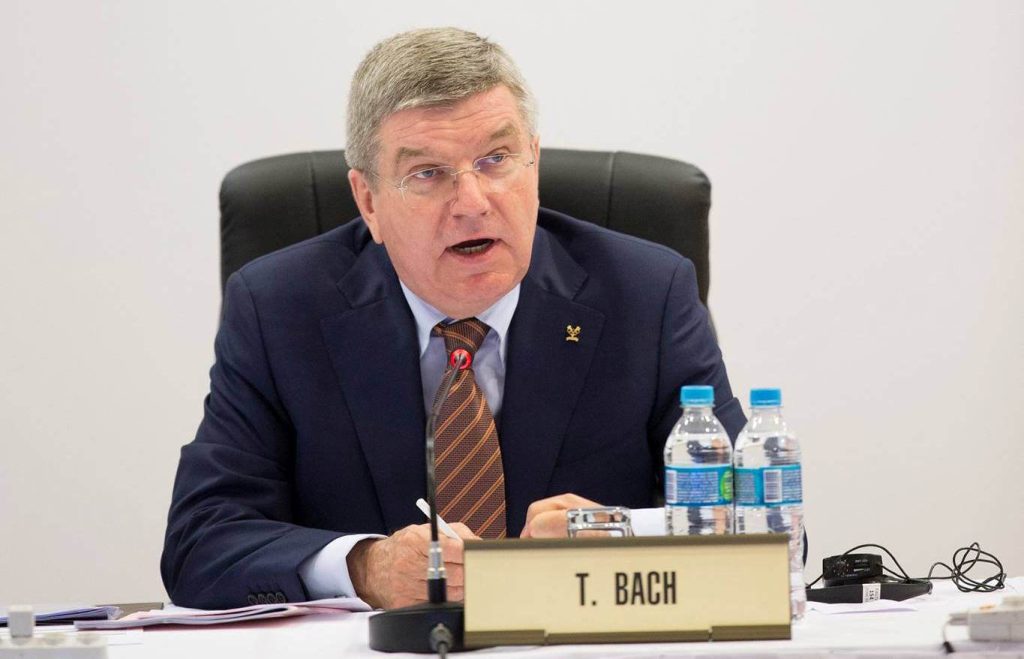
    In an address to the Danish National Olympic Committee (NOC) Congress on Thursday, IOC president Dr Thomas Bach made it clear that the choice of host city is not an endorsement of a country’s political system, because the IOC is politically neutral.
    He also explained how the Host City contract now prevents discrimination of athletes and binds the organisers of the Games to uphold international agreements applicable in the host country. 
    The theme of the NOC Congress was called “Can Sport Save the World?” 
    Bach said “Sport can neither save the world alone nor can it alone make the world a better and peaceful place. But sport has the power to contribute to a better harmonious and peaceful world.”
    Sport can do this through the universal law of fair play, he said. “Regardless of where we practice sport, regardless of who is playing sport, the rules are the same. They are recognized worldwide. They are based on a common ‘global ethic’ of fair-play, tolerance and friendship. 
    “This means in sport all people are equal. In order to be able to apply this universal law worldwide and to promote this global ethic sport must be politically neutral. If not, we could not ensure the equal treatment of all people without any kind of discrimination – sport would be torn apart by politics.
    “We have seen this in the past with some political boycotts which did not serve any good purpose. Furthermore, boycotts are a fundamental contradiction to the spirit of sport depriving it of the means to work for peace, mutual understanding and solidarity.
    “To be politically neutral does not mean to be apolitical. In fact in the past many people pretended falsely two things: Firstly, that sport has nothing to do with money. Secondly, that sport has nothing to do with politics.” 
    While remaining politically neutral, the IOC must consider the political implication of its decisions, Bach said. 
    “This is most obvious when it comes to choosing the venues for major sports events, above all for the biggest and most important of these, the Olympic Games. Because already a candidature for the Olympic Games draws the world’s attention to the candidate country. This is even more true for the host country with the additional economic implications and investments. 
    “Choosing a host city does not mean that the IOC necessarily agrees with the political and/or the legal system in the host country. It does not mean that we agree with the death penalty or with discrimination, just to give two examples.
    “It means however that in every country where we organize Olympic Games, we want to send the strong message of tolerance, respect and fair play. It means that we require compliance with all the values of the Olympic Charter for all participants at the Olympic Games.”
    Bach gave examples, such as how the IOC asked for and received assurances that Russia’s law prohibiting the public promotion of homosexual orientation would not apply to any of the participants of the Olympic Games. 
    He also cited how the IOC raised the issue unpaid migrant workers on the Olympic sites, leading to more than 500 companies being investigated and more than US$ 8m in unpaid wages being paid to 6175 workers. 
    In another example, he pointed out that the IOC made the internet fully accessible to all participants of the Youth Olympic Games in Nanjing. 
    Agenda 2020 has created a new clause in the Host City Contract that “the organization of the Games must comply with local, regional and national legislation and international agreements and protocols applicable in the host country with regard to planning, construction, protection of the environment, health and safety and labour laws.” 
    And through its Agenda 2020 review, the IOC has amended the Olympic Charter to state: “The enjoyment of the rights and freedoms set forth in this Olympic Charter shall be secured without discrimination of any kind such as race, colour, sex, sexual orientation, language, religion, political or other opinion, national or social origin, property, birth or other status.” 
    Bach said this language “mirrors the text of the United Nations Universal Declaration of Human Rights.” 
    “It is the responsibility of the IOC to ensure the application of the Olympic Charter at the Olympic Games. At the same time we must acknowledge that we have neither the mandate nor the capability to change the laws or the political system of a sovereign country.”
    The full text of the speech is available here.
     

  • Toyota to transport the Olympic Games to 2024

    Toyota to transport the Olympic Games to 2024

    The International Olympic Committee has confirmed that Toyota has joined The Olympic Partner (TOP) programme in a new “mobility” category. 
    The deal will see the Japanese company supply sustainable transport solutions through to the 2024 Games. 
    Toyota’s global rights begin in 2017 but the company’s sponsorship rights in Japan are effective immediately. 
    Toyota joins Bridgestone Group as the second Japanese headquartered multinational to sponsor the IOC since Tokyo was awarded the hosting rights to the 2020 Olympic Games in 2013.
    “Long-term partnerships are the backbone of our commercial programmes and they enable the financial security of the entire Olympic Movement,” said Tsunekazu Takeda, the IOC’s Marketing Commission Chairman, President of the Japanese Olympic Committee and Vice-President of the Tokyo 2020 Organising Committee. 
    The IOC’s twelve worldwide TOP partners also include McDonalds, Coca Cola and Visa.
    The value of the deal has not been disclosed but domestic Japanese media have cited a figure of US$835m (GB£565m).
    The mobility partnership will focus on sustainability, the central principle of the IOC’s Agenda 2020 programme of reform. 
    “It is the first time in the successful history of the TOP programme that we have had a mobility category, said IOC President Thomas Bach. 
    “It is in the spirit of the Olympic Agenda 2020 not just in terms of innovation but also in terms of sustainability in mobility.
    “Toyota is the world leader in its field and this partnership signifies a strong commitment to the future of the IOC and the Olympic Movement. Toyota and the IOC share the same values and we welcome Toyota Motor Corporation to the Olympic family.”
    Toyota will work with the Organising Committees through to 2024 to provide sustainable mobility solutions for hosting the Olympic Games and the legacy of the host cities.
    These solutions include intelligent transport systems, urban traffic systems and vehicle-to-vehicle communications systems.
    Toyota will also support the Olympic movement through its global promotional reach.
     

  • Governments pledge US$6.45m to anti-doping fund

    Governments pledge US$6.45m to anti-doping fund

    Twelve world governments have pledged US$6.45m towards an anti-doping fund set up by the International Olympic Committee (IOC), which is matching funds with the aim of creating a joint fund of US$20m.
    The fund was set in motion by the IOC’s Olympic Agenda 2020 and will be administered by the World Anti-Doping Agency. 
    The world governments that responded to a call to match the IOC funding are China, France, Ivory Coast, Japan, New Zealand, Peru, Qatar, Saudi Arabia, South Korea, Turkey, the US and Sweden.
    The donations mean that the fund will have a starting budget of almost US$13 million. 
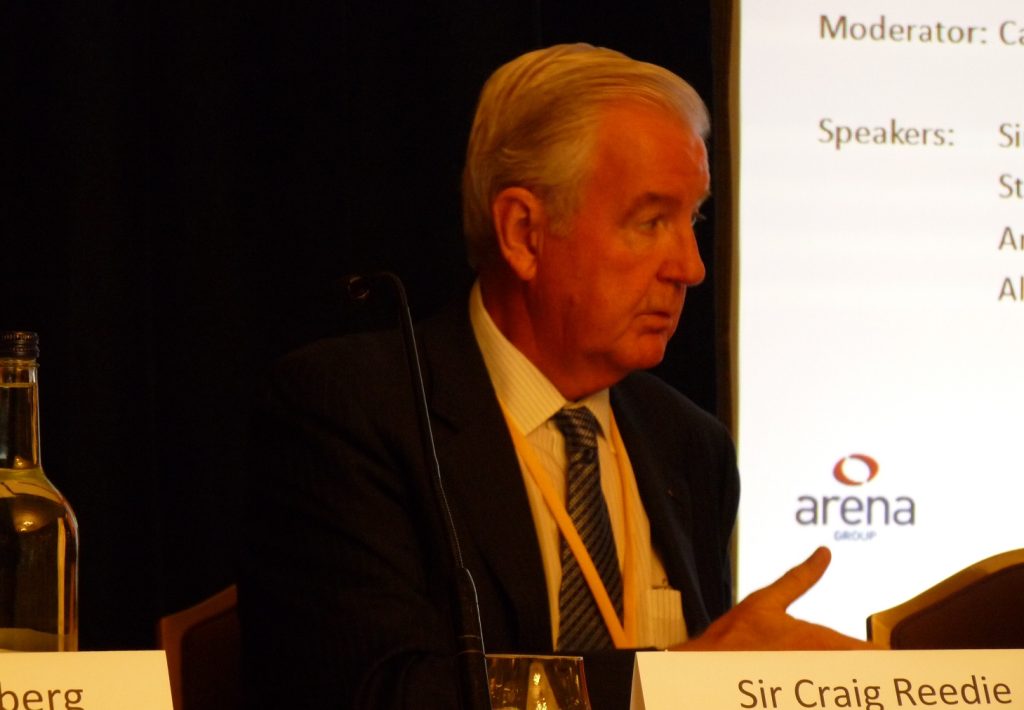
    “WADA is very pleased with the financial commitments that this partnership has generated for the fight against doping in sport”, said WADA president and IOC vice president Sir Craig Reedie.
    “The fund allocated by the IOC has received the commitment of governments of the world to contribute a total of US$ 6,452,296. The funds will provide a tremendous boost to WADA in their efforts to carry out innovative, anti-doping research focussed on protecting the clean athletes.”
    The 12 governments have committed to pay WADA in full by 31 March 2016.  
    As a separate fund for research in the fight against doping, the IOC will also administer the balance of US$3.55m remaining from the full US$10m it approved as part of Olympic Agenda 2020.
    These funds will be allocated to researchers involved in athlete-centred projects in science and society. Four applications from researchers in Spain and Australia have already been selected. 
    “With Olympic Agenda 2020, we are changing the philosophy with regard to the credibility of sports competitions and of athletes,” said IOC president Thomas Bach. 
    “We must consider every cent in the fight against doping as an investment in the future of Olympic sport, not as an expense. This fund clearly shows that we support innovative anti-doping research that will lead to better protection of the clean athletes.”
    Sir Craig Reedie was a keynote speaker at HOST CITY Bid to Win in October 2014, where Agenda 2020 was discussed before its unanimous adoption by the IOC. 
    Integrity in events will be a key theme of HOST CITY 2015. 

  • IOC president talks with China’s foreign minister

    IOC president talks with China’s foreign minister

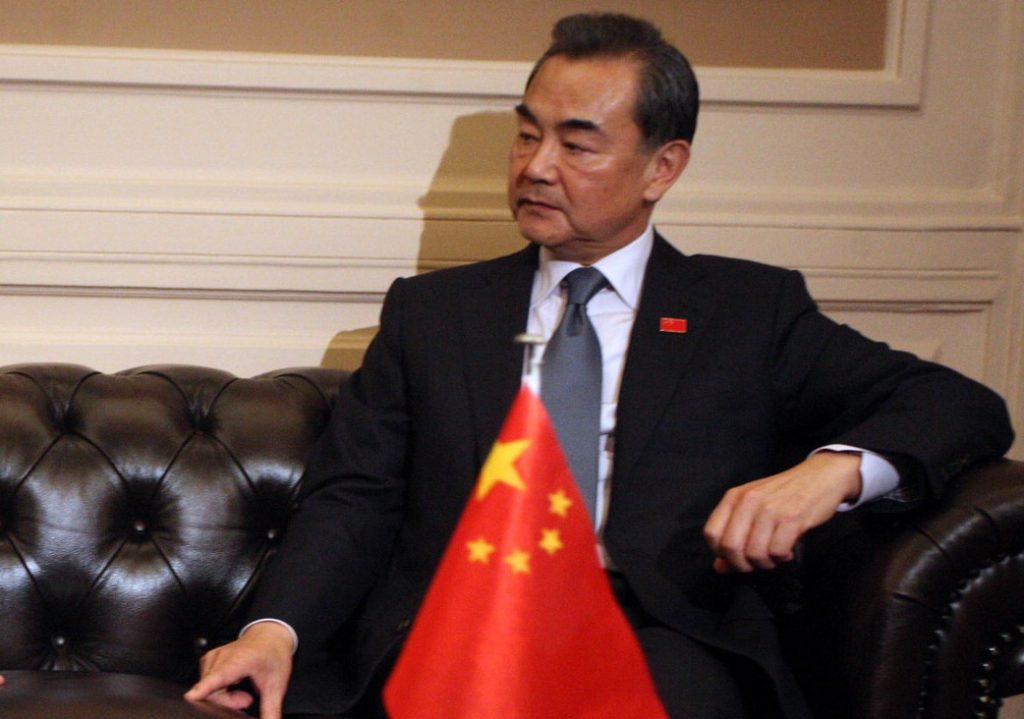
    On a diplomatic trip to Switzerland, China’s foreign minister Wang Yi met with IOC president Thomas Bach on Monday and underlined the government’s commitment to the Winter Olympic Games in 2022. 
    Joined by IOC vice-president Yu Zaiqing, president Bach praised the China’s development of sport in and its leadership on the role of sport in development internationally. 
    “China has a real vision about the importance of sport for education, for social cohesion and for international representation,” said Bach. 
    “I would like to thank again President Xi for not only promoting the role of sport in China but also for supporting the mention of sport within the sustainable development goals (SDGs) of the United Nations.”
    The UN Member States are expected to use the SDGs as goals and targets to frame their agendas and political policies over the next 15 years.
    Bach also praised the “outstanding development of sport” in China under the leadership of president Xi Jinping.
    The meeting took place in the Olympic Museum in Lausanne, shortly after the IOC Evaluation Commission’s inspection of Beijing’s bid to host the 2022 Winter Olympic Games. 
    Wang reiterated that the Chinese government is fully supportive of the bid, assuring the IOC that all commitments made during the bidding phase would be implemented.
    He was in Lausanne for negotiations on Iran’s nuclear programme, along with Sergey Lavrov, Russia’s minister of foreign affairs, with whom Bach discussed Russia’s contribution to the UN SDGs and his upcoming visit to Sochi at the end of April. 
    Bach also met with Germany’s foreign minister, Dr Frank-Walter Steinmeier and discussed  the bidding procedure for the 2024 Olympic Games. 

  • IOC president Bach ripostes to SportAccord president Vizer

    IOC president Bach ripostes to SportAccord president Vizer

    IOC president Thomas Bach has responded to SportAccord president Marius Vizer’s attack by dismissing his views as personal and not representative of Olympic sports federations.
    President Bach also said consultation with SportAccord on matters concerning the Olympic Games was not necessary, as the IOC collaborates closely with Olympic sports federations directly.
    “Mr Vizer: thank you very much for your open words which you have been expressing here,” Bach said, addressing SportAccord Convention after Vizer’s confrontational opening speech. 
    “Also I have to say that following the many discussions I had with many of your colleagues, be it the Olympic summer federations, be it the Olympic winter federations, be it the IOC recognized federations, and the many contributions they made to the discussions on Olympic Agenda 2020, my impression is a little bit that the opinion you have is exclusively yours. Because these people have made constructive proposals which has resulted in even closer collaboration between the IOC and international federations.”
    Bach said: “When you say that the IOC and SportAccord have to cooperate in order to have a new model for the Olympic Games, for the organisation and for the generation and distribution of the money then I have to say very clearly, “No.” For different reasons. 
    “First of all our partners are the Olympic Federations. They are doing the effort. And whenever we have an issue with them, whenever there are ideas we are discussing with them. 
    “And the same applies to the recognized federations. Whenever a recognized federation has an idea, they know very well that the doors in Lausanne are open and that they are enjoying our support in many ways. And if there are issues that are common to the recognized federations then we speak to the president of the IOC recognized federations. They are recognized by the IOC as are the National Olympic Committees, which are our direct partners.”
    SportAccord is the umbrella group for both Olympic and non-Olympic sports federations.
    “We prefer to address all the issues in a direct open dialogue as stipulated by Olympic Agenda 2020 and as is being practiced inside the IOC where we are openly discussing and preparing all the discussions and decisions with the representatives of the international federations,” said Bach. 
    “There the international federations have two seats in the IOC Executive Board and whenever you have a question, because you said you were surprised by some of the decisions, I can only offer that you speak with the representatives of the international federations in the IOC Executive Board and they can fully inform you and advise you what is going on. 
    “And then you will learn that in the IOC there is an open dialogue, not only among the Members of the IOC EB but we also have as some of you may remember open discussions in the IOC Session in the presence of everybody.”
    In his speech, Vizer had accused the IOC of a lack of transparency. 
    “It was about one year ago here in Sochi when we had such a Session where all the questions by all the stakeholders were openly discussed,” said Bach. “Afterwards many of you contributed to this Olympic Agenda 2020. We received around 40,000 submissions and I thank you all for these contributions. 
    “In fact nobody who wanted to listen, and nobody who wanted to hear, and nobody who wanted to understand, and nobody who wanted to have some sort of good will, could have missed this discussion and could be surprised by any of the decisions we are taking, including the Olympic channel, which was mentioned here.”
    Vizer also said the launch of the Olympic TV channel had not been developed in a transparent manner. 
    “About the Olympic channel, you could have already read about it in my brochure for campaigning to become IOC President about two and a half years ago,” Bach responded. 
    “This is not to mention the first time I proposed it was back in 1994, but for this you are way too young to have followed, this is only for elderly people like me to have some nostalgic feeling to come back to this. 
    “And this Olympic channel is an offer to you and has been discussed again with the international federations and has been discussed with the National Olympic Committees (NOCs) who play an extremely important role.”
    The IFs, NOCs and national federations cannot be considered in isolation, Bach said. 
    “It is just not right to create a discrepancy between the Olympic Movement, the NOCs and the National Federations. Because they are your members, they are your constituents and at the same time they are the constituents of the NOCs.”
    Like all the international federations, SportAccord is recognized by the IOC. 
    “As an IOC recognized federation you are a full member of this Olympic Movement and you have of course access to the Olympic channel,” said Bach. 
    “This is why are offering you workshops here for you to discuss how this can be done in the very best way and how you can really tap this great potential and how you can ensure that your sport and athletes are enjoying worldwide presence through this channel and how in this way you can grow your sport and make it more popular.  And you can promote the values we all share.”
    Bach raised further points in his speech, which ran on for longer than the five minutes he had been allocated. 
    “I was invited to give a five-minute welcome speech but I’ve been a little bit longer as I had a lot to tell you after this friendly welcome I enjoyed here.”
    Addressing the audience primarily made up of international sports federations, he said “Our doors are open to each and every one of you. We are making this offer of cooperation and support to each and every one of you. I thank you for having taken it already in the last one year and a half and having contributed to this effort of open dialogue and concerted action within the sport movement.”
     

  • SportAccord president slams IOC over events
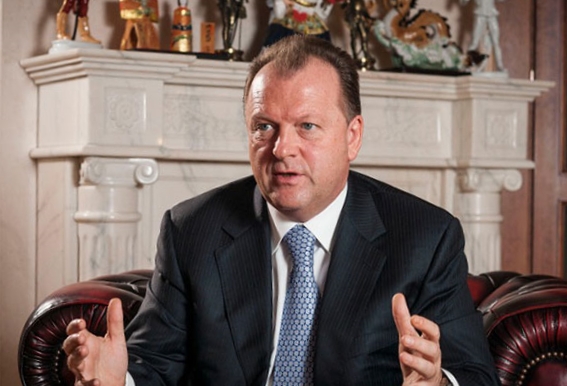
    SportAccord president slams IOC over events

    Marius Vizer, the president of SportAccord, the umbrella group of international sports federations, has directly criticised IOC president Thomas Bach and his programme of reform, Agenda 2020. 
    Agenda 2020 was unanimously approved by IOC members in December 2014, but Vizer said the reforms are not in the interests of sports and international federations. 
    He criticized the IOC’s decision to launch the new Olympic TV channel, which he said was taken without consultation or transparency. 
    Speaking at SportAccord Convention in Sochi on Monday, Vizer also complained that the IOC is preventing the launch of new multi-sports Games event. 
    “After becoming SportAccord President, I always tried to develop a constructive collaboration with the IOC and with President Bach. A collaboration based on respect towards the Olympic Movement, its members and the values in which I believe. Unfortunately, it never became reality,” Vizer said. 
    “I made a number of proposals in favour and for the benefit of IFs and SportAccord but we have never received a positive reaction. Mr. President, stop blocking the SportAccord strategy in its mission to identify and organize conventions and multi-sport games. 
    “Do not try to create a theory around which sports are and are not eligible for multi-sport games. Do not try to impose upon the organizers of SportAccord events guidelines on how to distribute funds generated and earned by ourselves. Do not interfere in the autonomy of the sport organizations.”
    The primary feature of Agenda 2020 is its reform of the bidding procedure for Olympic Games, which has been changed to reduce the cost of bidding to make it more appealing to cities. 
    One of the changes brought in was to prevent bidding cities from presenting at SportAccord Convention. “The voting for potential host cities of the Olympic Games is compromised,” said Vizer. 
    “Key stakeholders are excluded from making informed decisions when selecting Olympic host cities: the bid cities cannot present their candidatures at SportAccord Convention to all stakeholders, IOC members cannot visit bid cities and during the IOC Session, when the vote takes place, IF presidents – who are organizers of the Olympic Games, are obliged to leave the room.”
    Vizer said the interests of the international federations (IFs), which SportAccord represents, were not properly addressed.
    “The Agenda 2020 hardly brings any real benefit to sport, to IFs, or athletes. It did not bring about more clear criteria, rules and principles,” he said.
    Vizer singled out recommendations 9 and 10 of Agenda 2020 as leading to “a destabilizing of the Olympic sports”. 
    Recommendation 9 manages the scale of the Summer Olympic Games by limiting accreditations to 10,500 athletes competing in 310 events, and the winter Games to 2,900 athletes and 100 events. 
    Recommendation 10 sets out to structure the Olympic programme around events rather than sports. The IFs are to be involved in regular reviews of the programme and organising committees will be able to suggest adding one or more sports to the programme, but the IOC retains ultimate decision making power over which sports and IFs to include in the programme. 
    “We must protect the Olympic sports and disciplines currently in the Olympic programme and at the same time we must encourage and support the new sports and disciplines who want to join,” said Vizer.
    He also described recommendation 19, to launch an Olympic TV channel as “very surprising”. 
    “The IOC Members voted in December 2014, in the IOC Session, unilaterally, without a clear business plan, a commercialization plan and project, to reduce the dividends to International Federations in order to establish the Olympic channel. Leaving from the premise that the Olympic Movement has the assets, any business project in the world needs a business plan, investors, professional partners, breakeven points, strategy, consultation with stakeholders – International Federations and to generate a benefit for all stakeholders. Only after the decision it appears that a plan is in process. 
    “At the same time, the cost of more than 450 million dollars to establish a digital channel seems exaggerated. Do consult us as stakeholders of the Olympic Movement regarding all the proposals, contracts and partnerships that are being signed and make them transparent!”
    Vizer took over as president of SportAccord in May 2013, before which he was president of the International Judo Federation. He is faces no challenger in the presidential election due to take place at the SportAccord Convention.
    Read the full transcript of the speech here.

  • IOC president welcomes World Archery Excellence Centre
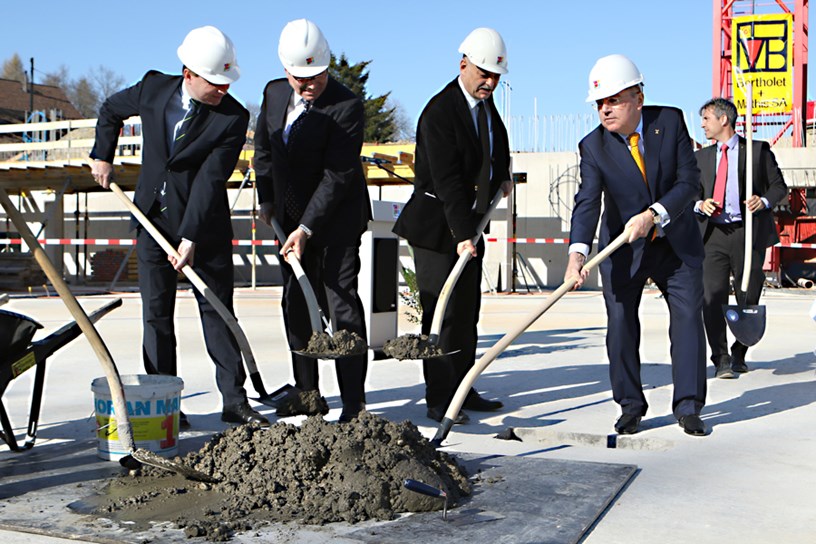
    IOC president welcomes World Archery Excellence Centre

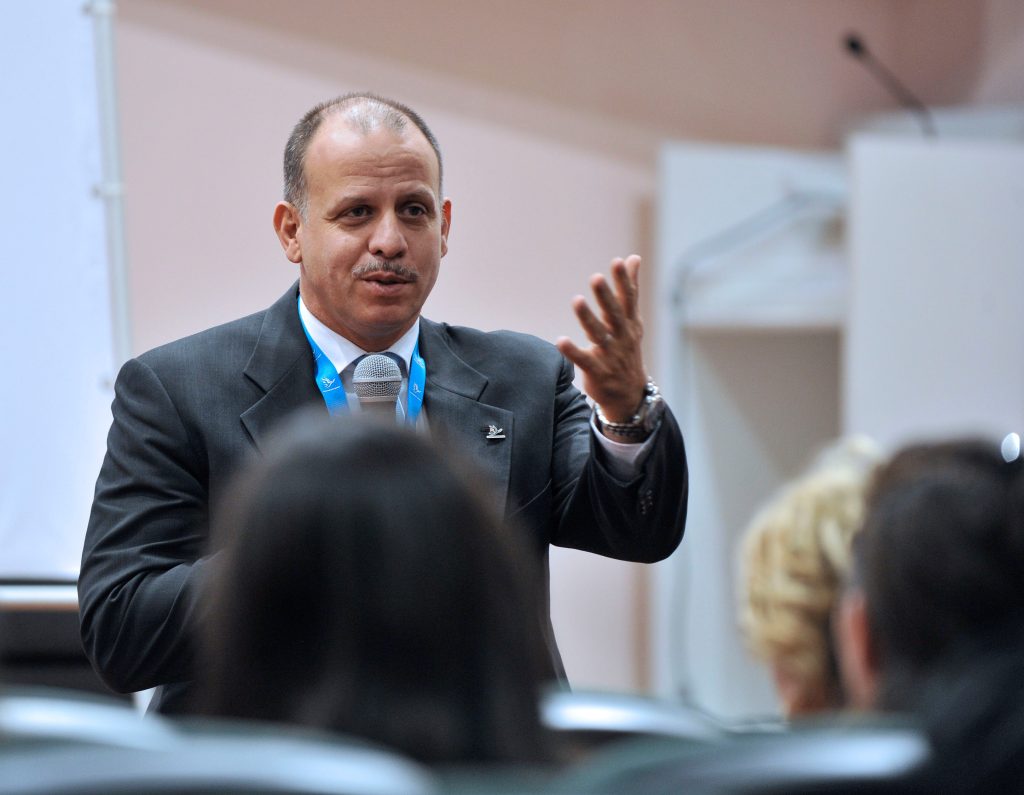
    World Archery president and IOC vice president Prof Dr Ugur Erdener laid the first stone of the World Archery Excellence Centre in the Olympic Capital of Lausanne today. 
    The development was welcomed by IOC president Dr Thomas Bach, who said “Archery is one of the most ancient sports, but it has also been an innovator throughout its history and that is shown here at this centre once more.
    “We are looking forward to see many future Olympians and Olympic and Youth Olympic Champions prepare here for Buenos Aires, Tokyo and beyond, and if work on the Centre keeps on progressing at this pace, even for Rio.”
    The centre is set to become a hub for the development of Olympic, elite and recreational archery worldwide. Construction is set to be completed next year, with the centre opening its doors after the Rio 2016 Olympic and Paralympic Games.
    The World Archery Excellence Centre’s design and operational plan is environmentally friendly. The Centre will be heated by geothermal wells, will feature extensive solar panelling and has been designed to maximise the effect of natural light inside the building. 
    “This is a historic moment for archery,” said Erdener. 
    “We are very grateful for the support of the Canton of Vaud, the city of Lausanne, IOC president Dr Thomas Bach, the board of FIDTA and everyone else who made this project possible.
    “Over the last few years we have seen a dramatic increase in participation and global recognition in our sport. There is still much work to do and as an organisation and a sport we constantly aim to innovate, evolve and development.
    “Vital to this mission is the World Archery Excellence Centre: a hub, cornerstone and a state-of-the-art example of archery’s drive to always improve. We are confident that this new facility will help us build on the momentum archery has built over the past few years, serve our development goals and move towards a future where everyone has the opportunity to make the sport of archery their elite or recreational activity of choice.”
    Facilities at the world-class venue will include indoor and outdoor ranges for international athletes to train for major international, multisport and World Archery events – including future Olympiads – and a state-of-the-art gym. The Centre will also host theoretical and practical courses for the sport’s technical officials and coaches in its conference and meeting rooms.
    The elite facilities will also be used for training camps for young people from the local community and as an outreach centre for archery in the area. The Excellence Centre’s offices will be dedicated to conceiving innovative ideas to develop the sport from grassroots through to elite around the world.
     

  • SportAccord president’s views are not ours, say Olympic IFs

    SportAccord president’s views are not ours, say Olympic IFs

    The leaders of 17 international Olympic sports federations have signed a letter saying statements made by SportAccord president Marius Vizer yesterday do not represent their views.
    The International Association of Athletics Federations (IAAF), International Shooting Sports Federation (ISSF) and World Archery went so far as announce that they are leaving SportAccord.
    In his opening speech at SportAccord Convention in Sochi on Monday, Vizer criticised the IOC for not acting in the interests of sports federations. IOC president Thomas Bach then denounced this criticism and the leaders of 17 Olympic sports federations have been quick to rally behind him. 
    The presidents of the international federations for sports including swimming (FINA), modern pentathlon (UIPM), triathlon (ITU), archery (WA), equestrian (FIE), football (FIFA), badminton (BWF), athletics (IAAF), shooting (ISSF) and hockey (FIH), cycling (UCI), volleyball (FIV), World Rugby and World Archery co-signed the letter which stated that Vizer’s views do not represent those of international federations. 
    “We the undersigned members of the SportAccord Association are expressing to the SportAccord leadership our disagreement on the opinions expressed this morning by the SportAccord president during the opening speech, which do not reflect the views of the international federations,” the letter said.
    “We also express our strong support to the International Olympic Committee and to the Olympic Agenda 2020, which has been adopted under the leadership of the IOC president Thomas Bach in consultation and agreement with all the international federations.”
    The signatories, from just under half of all the 35 Olympic sport federations, represent some of the most influential names in world sports, including Sepp Blatter, president of FIFA and IOC member; Ugur Erdener, president of World Archery and an IOC board member; Bernard Lapasset, the president of World Rugby who ran against Vizer for SportAccord presidency in 2013; and Lamine Diack, president of IAAF.
    In a letter sent to Vizer yesterday, the secretary general of World Archery, Tom Dielen said: “We hereby declare that the World Archery Executive Committee based on what happened this morning at the General Assembly took the decision to suspend our membership of Sportaccord until further notice with immediate effect. 
    “We will put this on the agenda of our next Executive Board in July 2015 for a final “decision. 
    “We will discuss with Sportaccord – DFSU unit on what this means with our current contract but in the interest of both organisations, we suggest that the contract is ended at the end of this year.”
    Amid the turmoil, Vizer was re-elected unopposed as president of SportAccord. In an address to the SportAccord Convention, Russian president Vladimir Putin congratulated Vizer, saying “Russia has worked very well with SportAccord and we are happy that the election has taken place in our sports capital.
    “Sochi has given us the platform to organize big events and exhibitions. I hope that you will have a chance to enjoy all that is on offer,” president Putin told delegates.”
    In a call to heal the rift between the IOC and SportAccord, Putin said: “Let me emphasise that the support of SportAccord and IOC means a lot to us. We will continue to work together and promote peace and sport. I am convinced that the sports movement should be united and not divided by contradictions.”
    It was also confirmed that the SportAccord Convention will take place again in Sochi next year. Vizer said “I thank all stakeholders for participating in the Convention this year. Next year we hope to organise logistics better with chartered flights for participants from European destinations.” 

  • 2024 Olympic bid consultants register welcomed

    2024 Olympic bid consultants register welcomed

    The International Committee on Thursday launched a Register of Consultants representing cities bidding for the 2024 Olympic Games. 
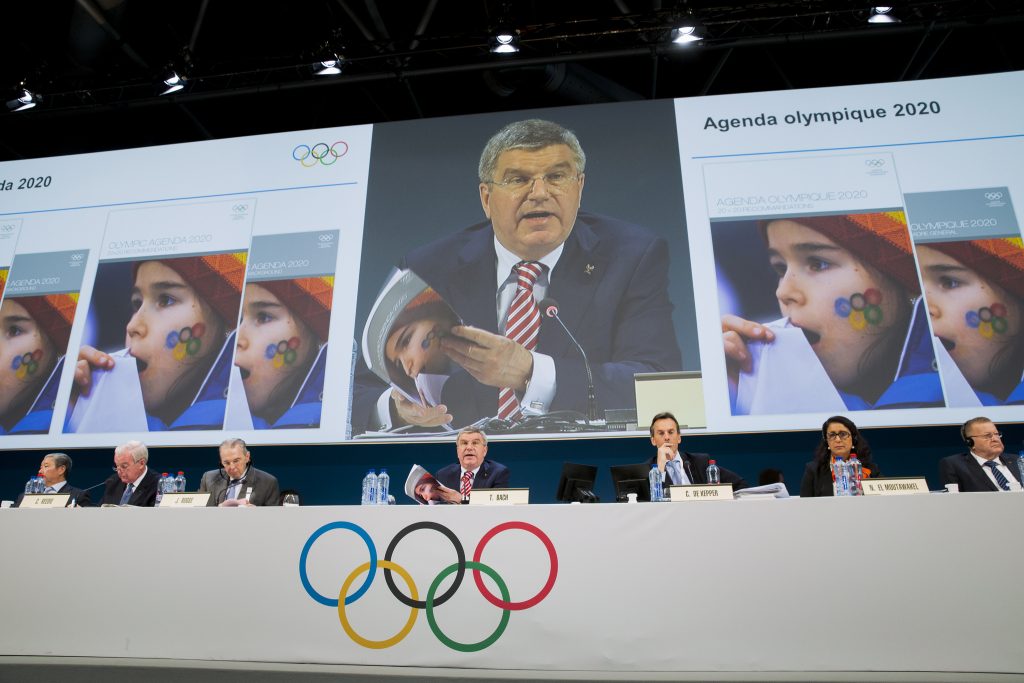
    The register was one of the recommendations of Olympic Agenda  2020, the “strategic roadmap for the Olympic Movement” initiated by IOC president Thomas Bach and unanimously approved by IOC members last year. 
    The news was welcomed by Mike Lee OBE, chairman of Vero Communications, who has been involved in a number of successful Olympic bids including London 2012, Rio 2016, PyeongChang 2018 and Buenos Aires 2018. 
    “I think the idea of a register and codes of ethics and conduct are a very good way forward; we are very pleased to see that.” he told HOST CITY. 
    “Like others, we will be making an application to be on that register and I think it’s a healthy development and it’s something which the business in sport in general should embrace. 
    “Certainly you see it in other walks of life – it’s been around in the public affairs industry in many countries, so it’s a good thing and all part of increasing the opening and transparency of the bidding process.”
    According to the IOC, all consultants wishing to participate in or support a candidature for the Olympic Games must be entered in the IOC’s Register of Consultants list for the city concerned.
    Entry in the Register is a prerequisite for providing any service and/or signing any service contract by the National Olympic Committee (NOC) and/or the city.
    The Register and Rules of Conduct form part of Olympic Agenda 2020’s Recommendation 3, which aims to reduce the cost of bidding for the Olympic Games, stating: “The IOC to create and monitor a register of consultants/lobbyists eligible to work for a bid city. Formal acceptance of the IOC Code of Ethics and Code of Conduct by such consultants/lobbyists as a prerequisite for listing in the register.”
    The IOC considers a consultant to be any individual or company not linked by an employment contract to the NOC, the city or the bidding committee, and which/who participates in or supports a candidature by providing consultancy or similar services in any way and at any time.
    The register will be published on www.olympic.org