Tag: IOC

  • Host City: Bid to Win to put spotlight on bidding for major events

    Host City: Bid to Win to put spotlight on bidding for major events

    Host City: Bid to Win, a conference which will be held at the St James’ Court, A Taj Hotel, London on 28 October 2014, is set to bring together experts and decision makers to explore the challenges and benefits of bidding for major global events. At a time when the bidding process for events has never been more highly scrutinised, Host City: Bid to Win promises place further expert insight into the heart of the ongoing debate. 
    The conference will examine engaging themes central to the debate including the IOC’s proposed Agenda 2020 reforms and emerging trends in the bidding for and hosting of large-scale, multi-sport and cultural events.   
    Keynote speaker Sir Craig Reedie, International Olympic Committee (IOC) Vice-President, believes there has never been a more important time for rights holders to engage with cities.
    Speaking about Host City: Bid to Win, he said: “I am supporting Host City: Bid to Win as it is a great opportunity to get rights holders and cities together debating the key issues. Rights holders and cities are both seeking new ways to showcase their unique qualities, attract new audiences and enhance their reputations – I’m looking forward to sharing insights and opinions with experts from across the global landscape.”
    Mario Andrada, Rio 2016 Director of Communications, said: “Host City: Bid to Win will be a great arena for debate on major event bidding and hosting. I am looking forward to sharing my experiences and insights into the bid and delivery of Rio 2016 and this is a great opportunity to connect, learn and share ideas about how cities and countries can truly benefit from hosting a major sports event.”
    Sir Martin Sorrell, founder and CEO of marketing communications giant WPP and an advisor to the IOC sees the conference as an important platform for furthering the debate on major event hosting in the current climate. 
    “We clearly need to articulate more effectively the tangible, intangible and legacy benefits of sporting, cultural and business events.” Sorrell said.
    Alexander Koch, Corporate Communications Manager at FIFA, said: “This is an important time for all stakeholders involved in bidding and hosting and I’m looking forward to what should be an engaging debate between bidding cities and rights holders at Host City: Bid to Win.”
    Host City: Bid to Win will host various structured and informal networking opportunities, as well as a series of thought provoking panel sessions on what cities need to do to win sporting, cultural and business events. 
    Topics to be covered include: 
    •How Event Owners and Cities Can Benefit From Improving Their Dialogue
    •Emerging Trends in Large Scale Events
    •Olympic Agenda 2020: Overview of Proposed Changes to the Bidding Process
    •Attracting International Events to Cities
    •Bidding for the Right Event
    •Evaluating Bidding & Hosting
    •Successes and Failures
    •Meeting the Evaluation Criteria: Planning, Infrastructure, Transport & Security Strategies
    •Campaigning to Win the Bid
    •Beyond the Bid: Winning for the Future 
    For further information on the engaging panel sessions and other top class speakers confirmed for Host City: Bid to Win, please visit: http://www.bidtowin-hostcity.net/
    Join the conversation on social media by using the #HostCity hashtag.
    For media enquiries, please contact: Robert Fawdon, VERO Communications, rfawdon@verocom.co.uk, m: +44 (0)7769 216649, t: +44 (0)20 7812 6589

  • Almaty chasing private investment for Olympic Games bid

    Almaty chasing private investment for Olympic Games bid

    The Tengrinews website said Kazakhstan’s Vice-Minister of Culture and Sport, Tastanbekov Yesentai, cited the example of this year’s winter Olympics in Sochi, where the Russia authorities successfully implemented a mixed funding model and also pointed towards Tokyo’s projected revenues for the 2020 summer Olympics as arguments in favour of his government’s approach.
    Yesentai said: “Russia has used a mixed model at the Olympics in Sochi. Their income made $10bn (€7.9bn). Japan has officially declared that it would be able to earn $30bn from hosting the Tokyo Summer Olympic Games in 2020.
    “We also want to stick to the mixed model of financial management, in which the share of state involvement would be 33 per cent and the rest will be raised by investors. In that case we will be able to hold the Olympics in 2022 at a proper level.”
    Concerns regarding state financing for hosting the 2022 winter Olympics have become a central theme of what is now a sparse bidding process.
    Almaty and Beijing are the only two cities left in the running after Oslo withdrew from the race at the start of this month. The Norwegian government decided against providing the required financial support to host the multi-sport event due to prohibitive projected costs.
    Oslo was the latest in a long line of cities to end a bid, following Stockholm in Sweden, Krakow in Poland and Lviv in Ukraine, while bids from St. Moritz in Switzerland and Munich in Germany were scrapped after public referendums.
    Meanwhile, Kazakh Olympic Committee vice-president Pavel Novikov has rejected calls for Almaty to share Olympic hosting rights with Astana, acknowledging Olympic bidding rules that the Games must be awarded to a single city.
    The International Olympic Committee will select the host city for the 2022 Games on July 31, 2015.

  • IOC seeks more inclusive approach to Olympic bid process

    IOC seeks more inclusive approach to Olympic bid process

    Bach wants the often criticised bidding framework to be transformed into an “invitation for discussions and partnership” as opposed to a generic tender process.
    Recent struggles with the selection process for the 2022 winter Olympic Games have cast the current method in an unfavourable light.
    Only Beijing, China and the Kazakh city of Almaty remain as candidates after Oslo this month became the latest potential host to drop out the running. Norway’s government opted out of providing the necessary financial support to host the multi-sport showpiece amid concern over prohibitive costs.
    Oslo followed Lviv in Ukraine, Krakow in Poland and Stockholm in Sweden by pulling out of the race for the 2022 winter Olympics, while public referendums put paid to bids from Munich in Germany and St Moritz in Switzerland.
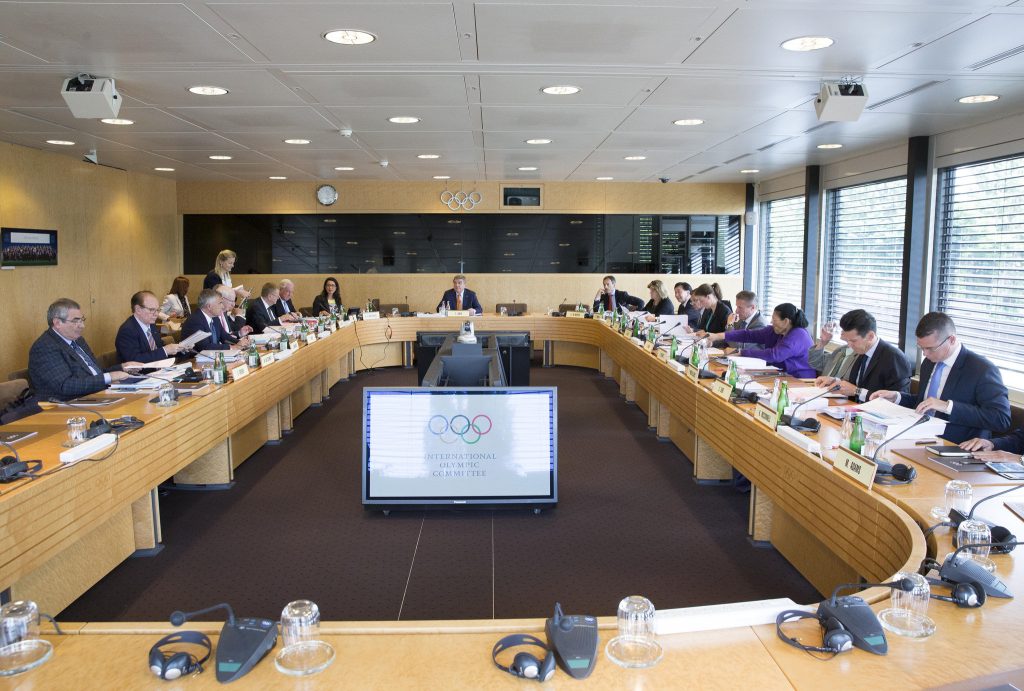
    At its two-day meeting in Montreux, Switzerland, the IOC executive finalised proposals that its full membership will vote on this December in Monaco. 
    As quoted by the Associated Press news agency, Bach said: “What we did in the past was send out a paper at a certain point in time saying, ‘If you want to bid for the games, here are the conditions you have to fulfil, so you better tick all the boxes in the questionnaire because otherwise you have no chance.
    “In the future, we want to invite potential bidding cities to study how Olympic Games would fit best into their social, sports, economic and ecological environments, then present this plan to us. Then we are ready to discuss and give our advice rather than just judge what has been presented to us.”
    One measure rejected under Agenda 2020 was the reinstatement of member visits to candidate cities, which were barred in light of the 1999 vote-buying scandal that marred Salt Lake City’s successful bid for the 2002 winter Olympics.
    In other news, Israeli company International Security & Defence Systems (ISDS) claims it has secured the contract to plan and coordinate security arrangements at the Rio 2016 Games under a deal worth $2.2bn (€1.7bn).
    ISDS vice-president Ron Shafran told IsraelDefense magazine of the firm’s tie-up with the local organising committee. ISDS has previous Olympic experience at Barcelona 1992 and Sydney 2000, while it also worked on the 2010 Fifa World Cup in South Africa.
    IOC Vice President Sir Craig Reedie will discuss bidding procedure with other rights holders and cities at HOST CITY: Bid to Win in London on 28th October. Register at www.bidtowin-hostcity.net

  • Olympic bidding process is too long, say bid leaders

    Olympic bidding process is too long, say bid leaders

    Members of the panel “Bidding Processes Under Review” at Host City: Bid to Win in London on Tuesday highlighted the first stage of the bidding process for the Olympic Games as being too long and raising expectations and costs at too early a stage.
    “It is the first process that needs to be reduced and then six months before the decision the bid should be formally placed,” said Stefan Lindeberg, president of the Swedish Olympic Committee.
    Stockholm dropped its bid for the 2022 Winter Olympic in January 2014 when senior politicians and city officials baulked at the rising estimated cost of hosting the games.
    “The bid process has become an expensive competition and not because of the IOC requirements but because the bidding process is too long,” said Antonio Fernandez Arimany, director general, International Triathlon Union and former bid leader of Madrid 2016. 
    “The bidding process is too long and you spend the maximum resources on that bid – this could be reviewed,” he said.
    The panel included Sir Craig Reedie, vice president of the International Olympic Committee. “It is possible to revise the bidding process, but is difficult to tell cities what they may and may not do and then enforce this, because if the city is determined to win a prize they will go beyond what the IOC requires,” he said.
    “The value of the prize is so enormous.”
    Members of the panel identified non-organising committee costs, such as civic infrastructure projects that are often associated with a Games bid, as a source of unwelcome spikes in expenses. These infrastructure projects often bring benefits beyond the Games.
     “It seems to me the IOC faces a communication gap,” said Reedie.
    “We seem to find it impossible to get anyone to understand that there are two separate budgets; one for the organising committee and one for the non-organising committee.
    “The organising committee [of London 2012] made a modest surplus but the non-organising committee cost is the result of the Games being used as a catalyst to develop the host city.”
    The cost of hosting the Games has come under unprecedented scrutiny since revelations about Sochi’s expenditure on infrastructure projects associated with hosting the Games. 
    “At no time did we invite Sochi in Russia to make a USD 51bn contribution,” said Reedie.
    The bidding procedure for the Olympic Games is currently under review, through the IOC’s Olympic Agenda 2020 initiative. 40 recommendation have been made to the IOC Executive Board. The recommendations will be presented, discussed and voted upon by IOC members at the 127th IOC session in Monaco on 8 and 9 December.
    Host City: Bid to Win was held in London on 28 October 2014 and acted as a unique dialogue platform between cities and rights holders.

  • IOC won’t force good governance on sports federations

    IOC won’t force good governance on sports federations

    The IOC announced on Tuesday that, as part of its Agenda 2020 recommendations, all organisations belonging to the Olympic Movement should “accept and comply with the Basic Universal Principles of Good Governance of the Olympic and Sports Movement.”
    At the IRB World Rugby Confex in London on Tuesday, HOST CITY asked IOC vice president Sir Craig Reedie about the feasibility of such a wide-reaching project. 
    “The reason why the IOC tries to impose on every stakeholder in the Olympic movement the Principles of Good Governance is that sport has a constant demand to be autonomous. It wants to be left alone to run its own rules, and the only way that it will ever be able to maintain the request for autonomy is to have good governance,” Reedie explained. 
    “International Federations are effectively independent contractors, and nobody is suggesting for a minute that you would make that a condition of being a sport in the programme of the Games, but as a matter of relatively easy conviction it is not difficult to persuade an International Federation that they should have the same principles as the IOC has. We would anticipate and hope that International Federations would follow that.”
    Agenda 2020 recommends that organisations should be responsible for self-evaluation and sending information through to the IOC. 
    Asked by HOST CITY if this might create prohibitive administrative costs, Susan Ahern, head of legal and legislative affairs at World Rugby said, “Not expensive if you are used to running your organisation in a fair, balanced and transparent way. 
    “The IRB may be an International Federation but we have a corporate structure that supports that – you are bound by company law, audits and so on. We have all those elements in place that any corporate would.”
    Agenda 2020 recommends that the Principles of Good Governance should be “updated periodically, emphasising the necessity for transparency, integrity and opposition to any form of corruption.”
    Ahern said “Certainly it’s an area where you want to continually strive to be as good as you can be, and it’s an area that’s being looked at by the IRB on a constant basis.”

  • Multi-host Olympics allowed as Agenda 2020 approved early

    Multi-host Olympics allowed as Agenda 2020 approved early

    A day ahead of schedule, members of the International Olympic Committee approved all 40 Olympic Agenda 2020 recommendations at the 127th IOC Session in Monaco on Monday. 
    96 of the IOC’s full membership of 104 were in attendance to vote on the recommendations. IOC president Bach, who instigated Olympic Agenda 2020 shortly after taking to the helm in 2013, praised the members in approving this “strategic roadmap for the Olympic movement”.
    Two days had been allowed for the approval process, but all recommendations were approved on Monday, with no votes against and no abstentions. At the close of Monday’s meeting, members gave their unanimous support for the entire set of recommendations in an “en bloc” vote.
    “The speed at which Olympic Agenda 2020 was approved showed the great support and determination of the members to make it happen”, president Bach said at a press conference. “It was a very, very positive surprise. But it followed over a year of constructive discussions.”
    The changes that will now be put into action include allowing multi-host Games, lowering the cost of bidding for the Games, an age limit on IOC membership and the launch of an Olympic TV channel. Host City contracts will also be made public and will now include clauses on worker’s rights, environmental protection and discrimination on sexuality.
    Limiting the age of IOC membership to 70 will have an impact on a number of IOC members. FIFA president Sepp Blatter, for instance, will now have to relinquish his IOC membership in two years’ time.
    “Some of the recommendations were not easy for certain members to swallow. Some may have hoped for no recommendation or a different recommendation on a specific issue,” said Bach.
    “So it was encouraging that regardless of their individual interests or positions, they were determined to make Olympic Agenda 2020 a success. Speaking of the members, I have a great deal of respect for them to do this.”
    The first recommendation approved relates to reducing the cost and boosting the appeal of bidding. Future bids will now be able to incorporate venues in more than one city and potentially than one country. 
    This would enable countries with suitable venues in more than one city to avoid investing heavily in new sports infrastructure, which is often met with large-scale public opposition.
    The changes were also greeted with approval from a contender for the 2022 Olympic Games. 
    “Since the start of the 2022 Bid process, the Beijing 2022 Bid Committee has been paying close attention to all developments related to the Olympic Agenda 2020 and strongly supports all its recommendations,” said Madame Wang Hui, spokesperson for Beijing’s bid for the 2022 Winter Olympic Games. 
    “We highly appreciate the IOC’s approach and will work to implement these reforms.”
     

  • NOC leaders call for equal rights in IOC

    NOC leaders call for equal rights in IOC

    The unanimous support for the IOC’s Agenda 2020 programme of reform was remarkable, signalling a new era for the modern Olympic Games.
    But according to Janez Kocijan?i?, President of Slovenia’s NOC and Vice President of the International Skiing Federation, who was at the IOC Session when Agenda 2020 was adopted a week ago, there was one important stone unturned.
    “It is an agenda full of reforms, although in many respects the IOC remains as it was – not only the highest authority of world sport but also a self-electing body,” Kocijan?i? told HOST CITY.
    “What some people expected, a greater role of NOCs and sport federations, didn’t happen. Out of 205 recognised NOCs, only one third of them are represented, and that’s not enough.”
    The number of International Federations (IFs) represented in IOC membership is also limited, said Kocijan?i?. “There are many representatives of Olympic sports who are not there and who feel a certain discrimination.
    “One of the strongest ideas of the international Olympic movement was the fight against discrimination. This should also bring the idea that all sports and all countries should be equal.”
    All NOCs are members of the Association of National Olympic Committees (ANOC), which already works closely with the IOC. 
    “This ANOC structure, which is similar to all other international organisations – the UN, UNESCO, the World Health Organisation and the International Labour Organisation – should step by step be implemented in the IOC, so all countries would be represented. And all the Olympic sports presidents or representatives should be there as well,” said Kocijan?i?.
    Rule 16 of the Olympic Charter states that the NOCs and IFs can each have up to 15 IOC members. But Sweden’s National Olympic Committee (NOC) President Stefan Lindeberg says these limits were set a number of years ago and could now be increased.
    “This is not a big problem, as I see it now, to move forward in broadening the IOC. ANOC is getting stronger. Together with the IOC, we shape the future.” 
    Lindeberg led Sweden’s bid to host the 2022 Olympic Games until it was abandoned due to a lack of political support. He then teamed up with the leaders of three other NOCs to publish a paper that exerted a powerful influence on the IOC’s Agenda 2020 discussions. 
    “The NOCs had a strong voice on Agenda 2020. When we were working with Germany and Switzerland and Austria, we really felt that that had an impact on it, or at least came to the same conclusion that Agenda 2020 did.
    “We are big winter nations – if we can’t take the Games, that’s a really big warning bell.”
    These interviews were conducted the day after the IOC members voted unanimously to implement Agenda 2020. Kocijan?i? and Lindeberg were also speakers at HOST CITY Bid to Win conference
     

  • He Zhenliang’s Olympic vision lives on

    He Zhenliang’s Olympic vision lives on

    The Chinese Olympic Committee on Sunday confirmed the passing of IOC Honorary Member He Zhenliang.
    An astute politician and diplomat, He played a pivotal role in returning China to the Olympic movement and also attracting the Olympic Games to Beijing. His great achievements earned him the moniker “Mr. Olympics” in China.
    “The Olympic Movement has lost one of its most fervent ambassadors,” said IOC president Bach.
    Before serving as IOC honorary member, He was IOC member from 1981 until 2010. He also served on the IOC executive board for three four-year periods and as IOC vice president from 1989 to 1993.
    “China’s current major-member status in the IOC is inseparable from He’s hard work for decades,” Wei Jizhong, former secretary-general of the Chinese Olympic Committee told China Daily on Sunday. 
    He played a vital part in helping Beijing win the right to host the Summer Olympic Games as an executive on the Beijing 2000 and 2008 bid committees.
    Jizhong recalled He’s disappointment when Beijing missed out on 2000 by just two votes, telling China Daily “He said he felt he had let his country and people down, while in fact he’d done what he could to the utmost.”
    The highlight of He’s career came at the 112th IOC session when Beijing’s bid committee won the host city election for 2008 under his leadership. 
    In an interview with HOST CITY magazine published on the eve of the Olympic Games in 2008, He said: “The Olympic Games will help the world better understand China and vice versa. 
    “If we can achieve such a goal through the Olympic Games, then the Games will not only leave its mark in the development history of China, in particular it will shine as a significant milestone in our diplomatic history. It will also be a symbolic major event in the history of international relations.”
    These goals were certainly achieved, with the Beijing Games showcasing China to the world at a time of unprecedented economic growth.
    IOC president Thomas Bach said “He was a man of culture and art. He was a true advocate of the social values of sport and of our Movement and I would like to pay tribute to the passion and energy he deployed over the years to fulfil his mission as an IOC Member in China. 
    “He also helped our Movement better understand his country, its people and outstanding culture.”
    Speaking to HOST CITY in 2008 about the impact of hosting the Games, He acknowledged the improvements to infrastructure and material wealth in Beijing, but said that more valuable benefit was the cultural impact of the humanistic values of Olympism in China. 
    “The Olympic Games bestows hope and enlightenment to the world,” he told HOST CITY. “We need to make concerted efforts to build a bridge of tolerance, understanding, respect and friendly coexistence across different places, races, religions and ideologies.”
    A keen sportsman, Mr He enjoyed swimming, playing table tennis, tennis, football, basketball and golf. A champion of sport and Olympic values in school curricula, He told HOST CITY his long term aspiration was for a greater role for sports within education in China. 
    He’s other roles within the IOC included Chairman of the Cultural Commission (1995-1999), Chairman (2000-2009) and then Honorary Member  (2009-2015) of the Commission for Culture and Olympic Education, Vice-Chairman of the Sport for All Commission (1985-1987), and member of a number of other Commissions including the IOC 2000 reforms. 
    He served as deputy secretary general of the Chinese Gymnastics Association, secretary general of the Chinese Table Tennis Association, deputy secretary general of the All-China Sports Federation and president of Chinese Olympic Committee.
    The Beijing 2022 Olympic Winter Games Bid Committee also mourned He’s passing, praising his contributions to the Olympic Movement in China. The bid committee said it will endeavour to win the right to host the 2022 Games as a tribute to He.
     

  • IOC opens new invitation phase for 2024 Games bids

    IOC opens new invitation phase for 2024 Games bids

    The International Olympic Committee has launched its reformed bidding procedure with a new invitation phase, during which National Olympic Committees can discuss their plans “at their earliest convenience” before the application deadline of 15 September.
    This new consultative approach, launched four weeks after the adoption of Agenda 2020, will help NOCs to ascertain the viability of bidding for the Games before committing in full. 
    These early discussions with the IOC have the potential to reducing the cost of bidding and organising the Games for cities – one of the key aims of Agenda 2020.
    The concept of “shaping the bid process as an invitation” has been central to the Agenda 2020 review right from its inception. 
    Another key aim of Agenda 2020 with regard to bidding process is to strengthen the evaluation of bid cities to more clearly highlight key opportunities and risks.
    Until now, the bidding process for the Olympic Games has been split into two phases – the “applicant” and “candidature” phases, which will now follow the invitation phase. 
    In the applicant phase, cities send in an application file which is studied by an IOC working group, who assess the bid for the IOC executive board. If approved by the board, the bid then progresses to the candidature phase, which requires much more detailed plans in the form of a candidature file and site visits. 
    Interested NOCs and cities will now be able to receive “various levels of assistance and feedback” between now and the 15 September deadline for officially committing to a bid. 
    “Bidding for the Games is not a tender for a franchise, and there is no one-size-fits-all solution,” the IOC said in a statement.
    “The bid process is about making proposals and offering solutions that will deliver excellent Games, with no compromise on the field of play for the athletes while also meeting the needs of the city and region to ensure the Games leave a positive, long-term, sustainable legacy.”
    Cities considering bidding for the Games are encouraged to place greater emphasis on the use of existing, temporary and demountable venues.
    During the invitation phase, the IOC will inform interested parties of the “core requirements” necessary to organise the Games in order “to assist interested cities and their NOCs to develop a project that best meets each city’s unique long-term development needs.” 
    The IOC also expressed its satisfaction with the “strong interest” in hosting the 2024 Olympic Games, with the NOCs of Germany, Italy and the United States already indicating their intention to bid.

  • Generations For Peace soars up to 32 in NGO world ranking

    Generations For Peace soars up to 32 in NGO world ranking

    Generations For Peace, a charity that uses sport to promote peace, has been ranked 32nd in the “Top 500 NGOs” list for 2015. 
    The NGO, founded by IOC member for Jordan Prince Feisal Al Hussein, has climbed 62 places since the last ranking in 2014, making it the second fastest riser on the 2015 list. 
    The ranking, published by third sector media company Global Geneva, also places Generations For Peace second highest of any peace-building charity on the list.
    NGOs are evaluated on their innovation, impact and sustainability. 
    “Generations For Peace has walked the walk in a very, very short period of time. We were just so impressed,” said Jean-Christophe Nothias, Editor of the ‘Top 500 NGOs’ list.
    “Many NGOs previously ranked have gone down the ladder. Generations For Peace has moved up, from #94 to #32; the second-biggest progress of all. 
    “This ranking recognises Generations For Peace’s management, relative size, expansion and impact, and the overall philosophy of the very local anchoring approach.”
    HRH Prince Feisal Al Hussein, Founder and Chairman of Generations For Peace said “I am extremely proud that the impact of our programmes in Jordan and around the world is receiving such global recognition. 
    “This outstanding ranking has been achieved through the extraordinary dedication of our Generations For Peace volunteers, inspiring and leading change through their efforts to promote peace, tolerance and respect in their own communities. And their success is shared by all our partners who are supporting us every step of the way.”
    Generation For Peace also cited its strong relationships with key partners including the Olympic Movement, United Nations agencies (UNICEF and UNESCO), governmental donors including the Norwegian Ministry of Foreign Affairs, the U.S. Department of State and USAID as well as commercial partners like Samsung as a key factor in achieving this ranking.
    Since its launch in 2007, Generations For Peace has trained and mentored more than 8,500 volunteer leaders of youth in 50 countries in the Middle East, Africa, Asia, and Europe, with programmes impacting more than 216,000 children, youth and adults. 
     “Less than eight years after being founded, it is moments like this which help us to recognise how far Generations For Peace has come,” said Sarah Kabbani, Co-Founder and President of Generations For Peace.
    “This recognition motivates us all – our staff, our volunteers and our partners – to build on our success and expand our reach to more communities, in response to growing global demand for our programmes.”