Tokyo 2020’s 39-year old Executive Board member and Olympian, Koji Murofushi, has been appointed Sport Director of the organising committee.
The position of Sport Director is a crucial role within the organising committee and one that requires the experience of a top athlete.
“I’ve had the honour of competing in four Summer Olympic Games from Sydney 2000 to London 2012 and I know what it takes to make a great Olympic experience for athletes,” said Murofushi.
“In 2020, we will host the entire world and I want to create an environment at the Tokyo Games that will enable athletes to compete and perform to the peak of their abilities. I am 100 per cent committed to making these Games the best ever,” said Murofushi.
Murofushi won gold in Athens 2004 and bronze at London 2012 Games. Earlier in June, he won his 20th successive hammer throw title at the national athletics championship.
Tokyo 2020 is making efforts to actively involve athletes at all levels of its preparations for the Olympic and Paralympic Games in 2020. He was appointed as a member of the TOKYO 2020 Executive Board last January.
Appointing the 39-year old will also help the hosts of the 2020 Olympic Games to deflect criticism that its leadership has not yet represented younger people sufficiently.
The appointment will be particularly welcome to Murofushi, given that he missed out on the opportunity to join the IOC Athletes’ Commission in 2012. Despite ruling against Murofushi’s appeal against claims of excessive lobbying, the Court of Arbitration for Sport said Murofushi’s “reputation and sportsmanship were intact.”
“I am delighted and flattered to have been chosen as the TOKYO 2020 Sports Director,” he said. “I want to contribute to organising an athlete-focused Games that will deliver a long-term legacy and benefit for the sporting community in Japan and beyond.”
Tag: Olympic Games
-

Tokyo 2020 makes Koji Murofushi Sports Director
-

IOC hails Tokyo 2020’s quick start and strong partnership
For the first time, Tokyo last week welcomed the International Olympic Committee’s Coordination Commission, which found that the city was on the right path towards hosting an excellent Olympic Games in 2020.
“The Organising Committee and its government partners have got off to a quick start and are putting in place solid foundations for the next six years of preparations,” said John Coates, the chairman the body of experts tasked with assessing and facilitating the city’s progress.
“We are very pleased with Tokyo 2020’s progress under the leadership of President Yoshiro Mori.”
In addition to chairing the Coordination Commission for Tokyo 2020, Coates is on the Coordination Commission for Rio 2016. His praise of Tokyo 2020 is in direct contrast with the concerns he raised over Rio 2016 in recent months.
Where delays have been described as “critical” in Rio, Tokyo is off to a “quick start”. And while Rio 2016 has been criticised for poor communication between different levels of government, Tokyo 2020 has benefited from good coordination within government.
“The close cooperation of all levels of government with Tokyo 2020 was clearly felt by the Commission, particularly following our meeting with Prime Minister Abe and with Governor Masuzoe’s participation in the visit,” said Coates.
“Their support for the Games, as well as the support of many high-profile Japanese personalities through the Tokyo 2020 Advisory Meeting, are greatly appreciated, and will stand the 2020 Games in good stead. Their commitment underlines that Tokyo 2020 is for all Japan, and is encouraging Japanese everywhere to get behind these Games and see how they can engage in helping Tokyo to welcome the world in 2020.”
Yoshiro Mori, President of Tokyo 2020 said “Even though our team consists of members of the sporting community, the Tokyo Metropolitan Government, the national government and various related organisations, I was able to gain a real sense that all members of the Organising Committee were pulling together in the same direction as a truly integrated unit. Over the next six years, the members of the Coordination Commission and the Organising Committee will work together as a united team, all sailing in the same boat towards a shared objective, and I believe we have got off to an excellent start.
“However, the members of the Commission did point out one or two things that need addressing. We will of course be incorporating all the advice we received into our preparations for the Games at the earliest opportunity.”
Venue review
The Commission visited many venues in the “Bay Zone” including the Velodrome, Gymnastic Centre, Tennis Park, Olympic Village, Tokyo Big Sight, Aquatics Centre, Wakasu Olympic Arena and Sea Forest venues. Twelve of Tokyo 2020’s venues are already existing, including four originally built for the 1964 Olympic Games.
The visit took place at a time when Tokyo 2020 has been reviewing the venue plans outlined in its bid, amid widespread speculation about the implications of this review. This review was sparked by the observations of the IOC Evaluation Commission, which monitored the city’s bid for the Games.
In a statement, the IOC said “The review will not affect the core principles of the bid. The objective is to refine the legacy and operational assumptions of Tokyo’s plans. The Tokyo organisers are looking to ensure that their Games leave a sustainable long-term legacy to the host city and its citizens. The review is being carried out in cooperation with all the key national and international stakeholders.
“The legacy vision and objectives are consistent with discussions around Olympic Agenda 2020, a process that will provide an ambitious strategic roadmap for the future of the Olympic Movement.”
Mori said “With regard to the review of our venue plan, I informed the Coordination Commission that, based on such aspects as the kind of legacy we will leave, the impact of the Games on the lives of Tokyo residents and the cost of construction and maintenance of the venues, the Organising Committee will examine all issues closely and collaborate with the IOC, the International Paralympic Committee (IPC), and both domestic and international sports federations, to ensure the success of the Games.”
-

NOCs call for overhaul of Olympic city bids
Austria, Germany, Sweden and Switzerland’s NOCs have submitted a paper to the International Olympic Committee (IOC) entitled “Olympic Agenda 2020: The Bid Experience”, which proposes a revolutionary change to the process of selecting host cities of the Olympic Games.
The paper briefly explains why all four nations have retracted bids to host Olympic Games in recent years, and sets out what could be done to make the prospect of bidding again more appealing.
The most bold suggestion is that the IOC Evaluation Commission’s findings should count directly towards the election of the host city. Currently, the host city is elected entirely by secret ballot by IOC members, after they have read the Evaluation Commission’s report, but this report does not directly count – only the votes do.
“The IOC could split the election into two equally weighted parts, one representing the technical evaluation with a ranking of all bid cities, and one representing the vote of the IOC members,” the NOCs’ paper states.
The IOC is currently undergoing a deep and wide review into all areas of its activities, with a major focus on bidding procedure. The findings of the “Agenda 2020” review will not be made public until November 2014 but the early appeal from these influential NOCs is a highly significant move.
All four committees have backed out of Olympic bids in recent years. The Austrian Olympic Committee was considering a bid of Vienna for the 2028 Olympic Games while the German, the Swedish and the Swiss Olympic Committees were looking into the possibility of bidding for the 2022 Olympic Winter Games.
“The striking element welding all four committees together is the fact that all above mentioned bids were not lost in the official bid process, but due to a lack in national or at least regional public or political support,” the paper states.
The NOCs of these established European nations spell out the concerns they have about bidding for the Olympic Games.
“Public and politics seemingly fear the high costs of bidding for and hosting the Games, especially in the aftermath of the increase of costs that was witnessed in Sochi as well as concerns relating to human rights and sustainability,” the NOCs said. “The situation is aggravated by the media picturing mistrust in the IOC.”
Another suggestion from NOCs is that the IOC’s role in financing the Olympic Games should be communicated more clearly to the public, pointing out that “the budget structure is quite confusing for uninvolved citizens.”
The letter is signed by: Dr. Peter Mennel, Secretary General, Austrian Olympic Committee; Dr. Michael Vesper, Director General, German Olympic Sports Confederation; Stefan Lindeberg, President, Swedish Olympic Committee; and Jörg Schild , President, Swiss Olympic Association.
The concerns of the paper are being addressed by the IOC’s Agenda 2020 Working Group on Bidding Procedure, of which Hasan Arat is a member. To find out more, register for HOST CITY: BID TO WIN conference and hear experts including Arat debating this hot topic on 28th October.
-

Budget a “real concern” for Rio 2016
The scale of Rio 2016’s infrastructure projects is immense and partnership with experienced suppliers from London 2012 will be crucial for success – but budgets must be carefully monitored.
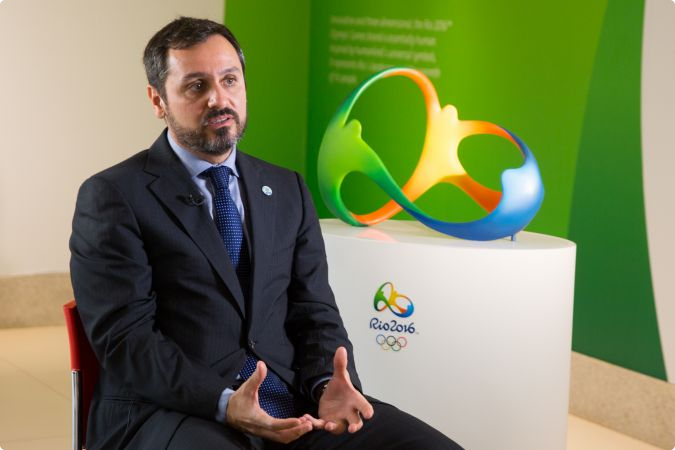
This was the message given by Rio 2016’s head of procurement, Fernando Cotrim, in an exclusive interview with HOST CITY at the South American Sport Events Seminar, organised by UK Trade and Investment during the Commonwealth Games in Glasgow.
“If you consider that you have the greatest combination of needs in terms of materials and services in one event, you can imagine the size of challenge,” Cotrim told HOST CITY. “We are looking for around 2,500 suppliers to be in place for 2016.”
Cotrim’s major area of focus is temporary construction. “The hardest part is to get the right suppliers at the right time and to build a temporary and sustainable supply chain, he said.
“That’s the challenge – the temporary part is the most important.”
London 2012 has set the template of a mega event where the majority of infrastructure is temporary. “We are taking a similar approach. Probably around 60 per cent of constructions will be temporary.”
Not only is the concept similar to London 2012; Rio 2016 is targeting the same companies. “We will use similar suppliers. The ideal for us is to bring the same suppliers but they come to Brazil, partner with local companies and help our country to grow in this business.”
Cotrim cited Arena Group, who provided temporary venues for London 2012 and Glasgow 2014, as an example of a company with expertise in this area. Other notable suppliers include ES Global, also present at the UKTI event.
Asked what his biggest concern was, Cotrim replied “Always to be monitoring – to have the best suppliers and to stay on budget. That’s a real concern. What we’ve learned from other Games is that if you don’t manage the budget you can go to infinity.
“So you have to be very cautious about the budget. We are always seeking innovative solutions, but at the same time low cost and sustainable.”
Rio 2016 has been under fire for severe delays to its construction projects, particularly the Deodoro Park cluster of venues. Cotrim says the tide of opinion is changing in the wake of a largely successful FIFA World Cup.
“What people saw, what the media saw in the World Cup changed this mindset. Deodoro was a concern, but the suppliers are starting to work and so I think this mindset has changed a little bit. The last comment from the IOC is that we have got back on track and we are in a good shape.”
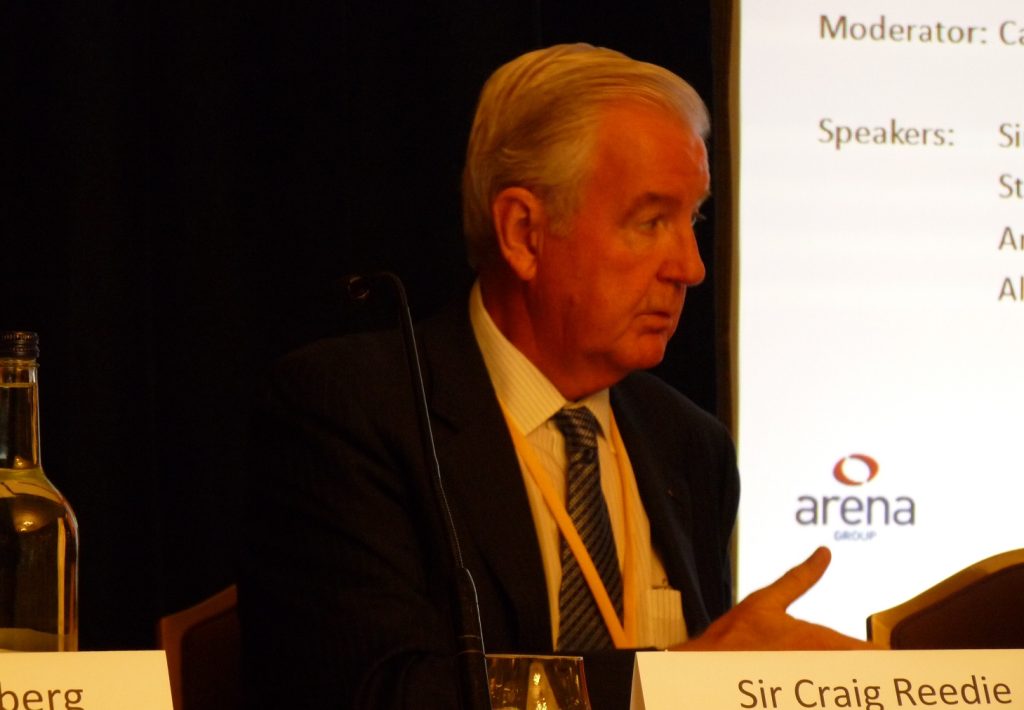
However, the IOC is still keeping a very watchful eye on Rio 2016 projects. IOC Vice President Craig Reedie confirmed to HOST CITY that the IOC’s head of Olympic Games, Gilbert Felli, will be focused 100 per cent on ensuring a successful Games in 2016. -

Rio’s transformation will be best ever – Nuzman
As venue construction finally starts to shift up a gear in Rio, the president of the Rio 2016 organising committee has pointed out that the wider developments in the city will have a bigger impact on Rio than any other Olympic city in history.
Speaking on the two year countdown to the Games, Carlos Nuzman said “The Games will leave a huge legacy for both Rio and Brazil, and are starting to take shape. No other host city will have had such big transformational benefits from the Games as Rio.”
Carlos Nuzman is the latest of many distinguished speakers confirmed to speak at HOST CITY’s Bid to Win conference on 28th October in London, where he will give an exclusive presentation.
The civic developments include a massive facelift of the historic port area, major transport upgrades, sanitation improvements, anti-flood measures as well as new educational facilities. These projects are being accelerated through 27 government initiatives in the areas of infrastructure, the environment and social improvement.
The future of the Olympic sports facilities are also being taken into consideration as part of the legacy plans. The Olympic Park’s three sports halls – the Maria Lenk Aquatic Centre, the Rio Olympic Velodrome and the Olympic Tennis Centre – will remain in use after the Games, collectively forming Brazil’s first Olympic Training Centre (OTC) for high-performance athletes.
The fourth Olympic hall, which will host handball matches during the Games – will be repurposed into four schools. “Converting the Rio 2016 handball arena into four schools after the Games is an excellent example of Rio’s commitment to ensuring the 2016 Games leave tangible benefits for the local community,” said Nuzman.
“The ‘nomadic architecture’ concept defined by our government partners is a first for the Games and we are proud that 2,000 Brazilian schoolchildren will benefit from it for many years to come.”
Transport overhaul
Sports events in 2016 will take place in widely dispersed areas in Rio. The Maracanã stadium is 13km north of Copacabana and Ipanema; the Barra Olympic Park is about 25km west of central Rio; while the Deodoro cluster is in a similarly distant part of town with little in the way of hospitality services.
Barra is already connected to the international airport via the Transcarioca BRT, which was built in time for World Cup, complementing another BRT service to Barra that opened in 2012.
A 32km Transbrasil bus rapid-transit (BRT) scheme will connect Deodoro to central Rio, benefitting 900,000 passengers daily. However, Transbrasil’s tender date has been delayed and work will not start until October at earliest.
A new 26km Transolímpica, due to open in January 2016, will link the competition centres in Barra and Deodoro and is expected to be used by 400,000 people per day.
The major transport upgrades also include the creation of a light rail transit (LRT) service in the city centre and the extension of the underground metro system. A new 16km underground line, Linha 4, is due to open early in 2016, linking central Rio to Barra with a predicted journey time of 34 minutes.
To find out more, attend HOST CITY: Bid to Win (www.bidtowin-hostcity.net) and experience the exclusive update from Rio 2016 President Carlos Nuzman -

Samsung extends Olympic partnership to 2020
Samsung has been a part of IOC Worldwide TOP Programme since the 1998 Nagano Winter Games and the extension means the South Korean firm will now feature as a supporter of the Rio de Janeiro, PyeongChang and Tokyo Games as well as the Youth Olympic Games through to 2020.
IOC President Thomas Bach said: “We are delighted to be able to continue our partnership with Samsung. The funding generated by the TOP Programme directly supports the staging of every Olympic Games, as well as every one of the National Olympic Committees, enabling athletes from all over the world to prepare for and compete at each Games.
Samsung will be the official Worldwide Olympic Partner in the Wireless Communication Equipment and Computing Equipment category and has previously provided the Olympic Games with its wireless communications platform and mobile phones, most recently at the Sochi 2014 Winter Games.
The expanded product category includes smartphones, tablets, laptops, personal computers and other computing equipment as well as desktop printers.
“Samsung also supports the operations of each Games by providing leading wireless telecommunications and technology equipment,” said Bach. “In addition, Samsung’s technologies and global marketing reach will engage fans around the world with the Olympic values and the Olympic Movement.”
Samsung said in a statement: “As mobile technologies have become an inseparable part of our daily lives, Samsung believes its continued support will play a significant role in bringing further innovation to the staging of the Olympic Games.”
The new deal means all of the existing Olympic TOP partners have committed to the programme through to 2020. Other companies to sign up to the IOC’s Worldwide TOP Programme include Coca-Cola, Atos and Panasonic who have similar deals, with each covering their own area of expertise.
-

Nanjing 2014 excludes 3 athletes over Ebola fears
Three more young athletes from West Africa will not be able to compete in the Nanjing Youth Olympic Games due to the perceived risk of transmission of Ebola, it emerged on Friday.
Nigeria and Sierra Leone have already pulled out of the Games, citing discrimination and warnings from Chinese authorities.
“Based on health authority guidelines it has been decided that athletes from affected areas will not compete in combat sports,” the IOC said in a “joint communique” with the organising committee.
It was also decided that no athletes from the region would compete in aquatics, based on “the inability to completely exclude the risk of potential infection”.
According to the joint communique, two athletes in combat sports and one swimmer will be unable to compete. According to the Nanjing 2014 website, Liberia’s Momodu Sombai was due to compete in swimming, alongside Alhoussene Sylla of Guinea. Mamadama Bangoura, also of Guinea, was set to compete in Judo.
The remaining West African athletes will be “subject to regular temperature and physical assessment throughout the period.”
On Wednesday it emerged that Nigeria and Sierra Leone were withdrawing their entire teams from the Youth Olympic Games.
“Nigerian athletes were quarantined, isolated and barred from training alongside athletes from other countries since they arrived the competition venue over news of Ebola virus in Nigeria. Following this discrimination, we have resolved to pull out from the Games,” said Gbenga Elegbeleye, director general of the National Sports Commission.
According to Patrick Coker, the president of the National Olympic Committee of Sierra Leone, their Chinese Embassy had warned them that they “might find themselves in a troubled and awkward situation once they get to China’s port of entry.”
But according to the IOC, no teams have been excluded from the Games. “The organizing committee has made it clear that all delegations are welcome to the Games and each country is free to take their own decision on attendance,” the joint communique said.
“We regret that due to this issue some young athletes may have suffered twice, both from the anguish caused by the outbreak in their home countries and by not being able to compete in the Youth Olympic Games.”
The IOC and organising committee will invite the athletes to compete at a future event in Nanjing “to experience the welcoming atmosphere and spirit of the city and Jiangsu province.”
They have also offered to include the national flags of the affected countries in the opening ceremony, which takes place on Saturday 16th December and promises to be as spectacular as Beijing’s in 2008. -

Tokyo 2020 organisers propose venue relocation
The organising committee has informed the IOC of possible revisions to the locations of some of the Games venues and organisers are considering moving certain venues into locations in the Greater Tokyo area, some as far as an hour’s drive from the city centre.
The original Tokyo bid promised a compact Games with the majority of the venues located within a five mile radius of the Olympic village, far more condensed than many recent Games. Only the shooting, modern pentathlon and football events were originally planned to be held outside of the five mile Olympic village zone.
The new plans could see some venues being moved out as far away as the city of Saitama which could result in some considerable transportation headaches. However, organisers have insisted that the revised plans would be made possible with improved transport infrastructure whilst still cutting costs. The IOC has previously praised Tokyo’s venue layout and have been impressed by the city’s progress.
The cost of the Games has been a cause of contention amongst Tokyo’s citizens with protests being held against the new 80,000 seated stadium which will replace the current National Stadium.
Tokyo governor Yoichi Masuzoe has had to defend the new plans and told a press conference at the Foreign Correspondents’ Club of Japan that he has a responsibility to Tokyo taxpayers.
“How can I persuade the taxpayers to pay this kind of money? We are working with the IOC and the various sports federations to make the Games sustainable. Legacy is very important. If you abolish everything after the Games who can accept that?” said Masuzoe.
-

Rio 2016 appoints Eventim as ticketing provider
The company was selected following an international tender process.
Under its partnership with Rio 2016, Eventim will provide a ticketing platform for Brazilian and international customers. The company has previous Olympic experience having served the 2006 and 2014 winter Games, in Turin, Italy and Sochi, Russia, respectively.
Rio 2016 runs from August 5-21, with the Paralympic Games following from September 7-18. A total of nine million tickets are expected to be issued across the event’s sporting programme.
Eventim said: “In its partnership with Rio 2016, Eventim will continue to contribute to the Olympic and Paralympic movement by providing a robust, state-of-the-art ticketing platform, building on those which have been delivered for Torino 2006 and Sochi 2014 and embracing technological and operational know-how.
“Through their cooperation, Eventim and Rio 2016 shall ensure the delivery of a fair and transparent system for the distribution of tickets for Brazilian and international customers.”
Rio 2016 last month marked the two-year countdown to the opening of the Olympic Games by vowing that the delays and cost overruns which hit preparations for the 2014 Fifa World Cup will not be repeated.
Brazil’s staging of the World Cup was widely judged to be a major success, but the build-up saw significant delays in the delivery of stadia and price increases in preparing the venues.
This led to fears over Rio 2016, but local organising committee chief executive, Sidney Levy, told the Bloomberg news agency: “The time has come for the Brazilian people to deliver something on time, on budget, with full transparency. We can always fail, but that’s what we are willing to do.”
Rio 2016 said construction across the four competition zones stood at 55 per cent completion on August 5.
In advance of his presentation at HOST CITY: Bid to Win, Carlos Nuzman says Rio’s regeneration will outshine that of any previous host city.
For more information about attending HOST CITY: Bid to Win, visit www.bidtowin-hostcity.net -

Berlin and Hamburg outline compact visions for Olympic bids
Under the capital city’s proposals, Berlin would utilise its Olympiastadion – the centrepiece when it last hosted the Games in 1936. Elsewhere, plans focus on the use of land at the still-operational Tegel airport, which will close down when Berlin’s new international airport opens.
Tefel is about a 15-minute drive from the north-west of Berlin city centre, while land at the centrally located and defunct Tempelhof airport would be used alongside a selection of existing sports venues.
Hamburg’s proposal focuses on the Kleiner Grasbrook area, roughly a 10-minute walking distance from the city centre. A newly-built Olympic stadium would be downsized to a 20,000 capacity after the Games and the Athlete’s Village would serve to address Hamburg’s housing shortage.
DOSB president Alfons Hörmann said that the decision to pursue the Olympic Games would have to accommodate any possible bid by the German Football Association (DFB) to host the Uefa Euro 2024 national team championship.
“Following the discussion process we will decide if we apply with Berlin or Hamburg and, where appropriate, at what time for the Olympic Games,” he said. “This will be done in close coordination with our affiliates, for example because of the possible application of the DFB for the European Championship in 2024. It is important to again be aware that we are at the beginning of a long process, whose clear aim is to bring the Olympic Games to Germany. But the crucial prerequisite for this is clear approval of the affected citizens and all social groups.”
A bid from Germany would join a potentially strong field for the 2024 Olympic Games, with Paris, Rome, Baku, Doha, Dubai and Istanbul primed to enter the race alongside a South African bid. The US Olympic Committee is set to put forward one of Boston, Los Angeles, San Francisco or Washington D.C. from its candidate cities.
Munich hosted Germany’s last summer Olympics in 1972, with Berlin having previously hosted in 1936. Berlin entered a bid for the 2000 Games, but was eliminated in the second round of voting with Sydney eventually awarded the event. Hamburg had put itself forward for the 2012 Games only for Leipzig to be chosen as Germany’s candidate. Leipzig was then defeated as the event went to London.
The DOSB has yet to announce a deadline over a decision on which city to back or if Germany will target the 2024 Games or the next edition in 2028.