Tag: Rio 2016

  • The chemistry behind the Rio 2016 Olympics

    The chemistry behind the Rio 2016 Olympics

    As the world convenes in Brazil for the excitement of the Rio 2016 Olympic Games, The Dow Chemical Company (NYSE: Dow), the Official Chemistry Company of the Olympic Games and Official Carbon Partner of Rio 2016, is proud to provide innovative, science-based solutions for one of the most respected and prestigious global events. Celebrating 60 years of presence in the region, Dow is involved in more than 20 projects connected to the Games, spanning from field-of-play technologies to venue construction, transportation, city infrastructure, and carbon mitigation.
    “With our knowledge and broad portfolio of solutions, Dow is demonstrating how science can power the world of sports,” said Louis A. Vega, Dow global vice president of Olympic & Sports Solutions. “Our technologies are present in all key competition clusters for the Rio 2016 Games, as well as the city’s extended infrastructure. As the Official Chemistry Company of the Olympic Games, we are able to address the needs of organizers, athletes, media and spectators in order to help make the Rio 2016 Games a success.”
    With solutions incorporated throughout numerous Olympic venues, Dow is proud to mark 60 years of operation in Brazil and further expand its business in a highly strategic and important region.
    Field-of-Play Technologies

    Rio 2016’s hockey competition at the Deodoro Park is being played on a high performance innovative synthetic turf system which uses DOWLEX™ linear low density polyethylene resins in the yarns as well as Dow’s polyurethanes technologies for the backing of the carpet.
    Dow Plastic resins were utilized in the pipes from the draining and irrigation system underneath the natural grass pitch of Maracanã stadium, venue of the Opening and Closing ceremonies and key football matches. Additionally, Dow technologies were used in flooring applications and waterproofing systems for concrete and metal structures within the stadium.

    Athletes’ Village

    Construction chemicals and paints formulated with coating technologies from Dow were used in buildings in the Athletes’ Village to provide beautiful, long-lasting protection and finishing.
    The 28 modular water tanks will help provide a reliable water supply system for athletes, coaches, officials and referees participating in the Games were manufactured with resins from Dow’s Propylene Glycol.
    More sustainable waterborne acrylic epoxy road markings were applied on bike lanes inside and around the Village in the neighborhood of Barra da Tijuca, as well as at the iconic Copacabana beach.
    Athletes from 200+ countries competing in Rio will sleep on comfortable, mattresses made with polyurethane technology from Dow.

    Olympic Park

    Dow Wire and Cable technologies provide protection and durability to the energy and data cables installed at venues including the Olympic Tennis Centre, Olympic Aquatics Stadium and the Main Press Centre/International Broadcast Centre (MPC/IBC) complex, where media tell the stories of Rio 2016 to billions of fans.
    The IBC building also features Dow technologies in the Exterior Insulation and Finishing Systems (EIFS) panels of the building façade. This innovative system enabled completion of the façade in 30 days, while standard technologies take up to six months to be installed.

    Infrastructure solutions in and around Rio

    The roof at the city’s novel Museum of Tomorrow (Museu do Amanhã) is protected with 100% acrylic resin to provide waterproofing and exterior durability to this iconic structure. In addition, the reflective roof helps keep the building up to five degrees cooler.
    Flooring solutions and polyurethane insulation panels from Dow were utilized in the major renovation that took place at Viracopos International Airport in Campinas, São Paulo, one of the main cargo transportation hubs for the Games.
    On the most important road connecting Rio to São Paulo, Rodovia Presidente Dutra, road marking solutions based on Dow’s FASTRACK™ coatings technologies provide reliable pavement markings.
    DLP™ and WALOCEL™ solutions for adhesive mortar were utilized in some of Rio’s new hotels, as well as in the Olympic Park and Athletes’ Village.

    “From infrastructure solutions to an innovative carbon mitigation program, we are excited to showcase our technologies in Brazil and share our successes with our customers and partners on a global stage,” said Fabian Gil, president of Dow Latin America. “Rio 2016 marks the 60th anniversary of Dow Brazil and also inaugurates a new chapter of meaningful collaborations and business success for the Company across the region.”

    This article was contributed by Dow. For more information on their artificial turf at the Rio 2016 Olympic Games, visit www.dow.com/artificialturfsolutions/rio

  • No regrets over hosting Games in Rio despite problems, says IOC President

    No regrets over hosting Games in Rio despite problems, says IOC President

    The light the Olympic Games casts on the host city can be harsh. Anyone who wasn’t already familiar with Rio’s issues with security, economics and the environment now has a much clearer picture. But such global attention is a good thing for the city in the long run, according to the International Olympic Committee.
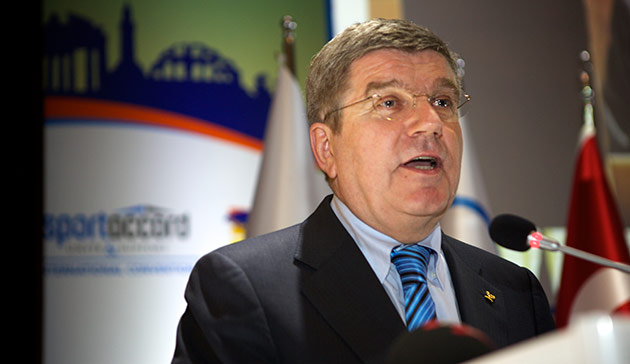
    “These Games did not take place in a bubble. We chose a city that has its problems, which has a reality with many challenges,” IOC President Thomas Bach told a press conference on 20 August, the penultimate day of the Games.
    “The Rio 2016 Games took place within this context, which was positive as it allowed us to show that sport can help to address problems and bring people together. There are no regrets whatsoever,” he said.
    Bach cited advances in sports, education and urban mobility as great benefits for the future of the city. Rio has a rejuvenated Port Area, a new Olympic Training Centre, a new leisure area in Deodoro, new BRT lines, a subway, a VLT, new roads, more hotels, and a City Operations Centre.
    In recognition of these advances, he awarded the Olympic Order, the highest honour of the Olympic Movement, to Rio Mayor Eduardo Paes on 22 August.
    The tourism industry could also continue to benefit from the Games. An estimated 500,000 overseas visitors came to Rio during the Olympic Games, 88 per cent of whom intend to come back to Brazil, according to a survey carried out by the ministry of tourism. To accommodate this influx, the number of hotel rooms has increased from 20,000 to 50,000, according to the Brazilian Hotel Industry Association.
    Speaking at the closing ceremony on 21 August, Bach said: “These Olympic Games are leaving a unique legacy for generations to come. History will talk about a Rio de Janeiro before and a much better Rio de Janeiro after the Olympic Games.”
    However, preparations for the Games took place amid a backdrop of economic and political crisis and the city during Games-time presented a tough environment. The impact of Rio 2016’s budgetary issues is now being felt by the International Paralympic Committee, which is facing the scenario of several national teams not being able participate as a result.
    “Clearly Brazil is in a far different position now to the one that it was in October 2009 when it won the right to stage the Games,” IPC President Sir Philip Craven said on 19 August.
    “The current economic and political climate has made preparations extremely challenging, especially for the Rio 2016 Organising Committee who we have partnered with for the last seven years.
    “This situation is difficult for everyone involved and, on top of bringing in extra revenues and making cuts, we need to sell more tickets.”
    But at the press conference, Bach was optimistic about attendance at the Paralympic Games. “At London 2012, ticket sales began slowly, but later picked up a lot. I hope the same will happen here.”

  • 2016 IPC Academy Campus opens in Rio

    2016 IPC Academy Campus opens in Rio

    The 2016 IPC Academy Campus is now officially underway in Rio de Janeiro, Brazil. Over the next two weeks it will welcome over 500 representatives from the Organising Committees of the forthcoming Olympic and Paralympic Games in PyeongChang, Tokyo and Beijing alongside observers from Candidate Cities, other major events, International Federations, government entities and leading commercial partners.
    Delivered by the IPC Academy – the educational division created in 2009 as a partnership between the International Paralympic Committee (IPC) and the World Academy of Sport (WAoS) – the 2016 IPC Academy Campus (4-17 September) is a unique event-based learning initiative that gives stakeholders of major sports events the chance to learn from their peers during the Paralympic Games. The IPC Academy Campus features an Observers’ Programme, Games Experience Programme, Inclusion Summit and a Closing Cocktail Reception.
    The Observers’ Programme is now underway with observers already experiencing what goes on behind the scenes during a run through of the Opening Ceremony for the Paralympic Games. Over the next two weeks, representatives from the IPC and Rio 2016 will be sharing their knowledge and experience through a series of venue visits, roundtable discussions and operational observation visits facilitated by programme leads from the IPC Academy, utilising WAoS Event Learning Methodologies. From Logistics, Marketing, Technology, Media Experience & Operations though to Transport, Medical & Anti-Doping and Arrivals & Departures among other areas, delegates will be able to experience first-hand how the Paralympics Games works in operations mode and garner invaluable learnings for their own major events and organisations.
    “I am looking forward to seeing all participants with all their different backgrounds come together to share their sports experiences but also to learn from each other and create a unique atmosphere in Rio de Janeiro,” says Xavier Gonzalez, Chief Executive Officer of the IPC.
    “Different types of programme activities will ensure that diverse individual needs will be met and that the benefits of observation will be maximised. The variety of themes have also been significantly increased throughout the years. This is the third edition of Campus and it now includes 15 days of action and a total of 80 different activities for Event Organisers.”
    The aim of the Observers’ Programme is for observers’ to:
    •           Provide the opportunity to meet experienced OCOG Functional Managers, ‘client owners’ and venue general managers and to benefit from their expertise.
    •           Allow the observation of Games functions, processes and staff in Games mode.
    •           Understand the physical Games environment.
    •           Benefit from commentary and analysis by Paralympic Games’ functional specialists (IPC Staff & Advisors).
    •           Highlight Paralympic distinctive elements in the presentation and operations of the Paralympic Games.
    The Observers Programme is tailored to the needs of Organising Committees of Olympic and Paralympic Games and other major event organisers. The Games Experience Programme meanwhile features event learnings for governments and those within the supply chain of major event delivery and the Inclusion Summit showcases the remarkable work that the Paralympics can create towards a more inclusive and harmonious society.
    “Each of these programmes provides unique learning opportunities and it is within this context that we have created the IPC Academy Campus 2016 for us all to learn and share experiences throughout these Paralympic Games,” says Gonzalez.
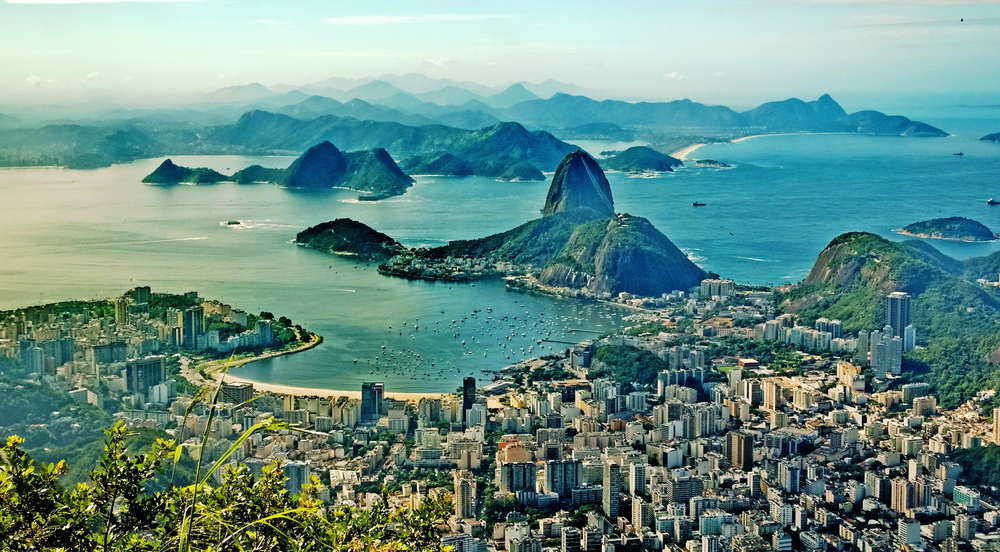
    Looking ahead to the Games themselves, he adds: “Rio will provide a perfect backdrop for the Games with its stunning landmarks, from Sugar Loaf Mountain to Christ the Redeemer, the Lago and much more. I also hope that the Brazilians will create a special atmosphere, cheering on their athletes in the city and in the venues.”
     
    About IPC Academy Campus
    The IPC Academy Campus is taking place in Rio de Janeiro between 4-17 September 2016.
    Its Event Partners include the Adecco Group and the UK’s Department for International Trade. Its Media Partners are Sportcal (Intelligence Partner), Major Events International (Digest Partner), Around the Rings (Online Partner), Host City (Magazine Partner) and AXS Chat (Social Media Partner).
    For further information about the the IPC Academy Campus, please visit www.ipcacademycampus.com or contact Claire Bennett, Project Coordinator, World Academy of Sport cbennett@worldacademysport.com. Tweets can be shared using: #CampusRio2016  and/or #inclusionsummit

  • Logistics for winners

    Logistics for winners

    By the time the time the athletes on the track hear the starting pistol, the team from DB SCHENKERsportsevents has already completed most of its work. The logistics experts are organisation specialists for major sports events. They begin their preparations long in advance, developing logistics plans for management committees, associations, hospitality firms, sponsors, and service providers.
    DB Schenker is the leading name in international sports and events logistics. Its partners come from every sporting discipline – football, winter games, sailing, athletics, motorsport and a lot more besides. Around the globe, DB SCHENKERsportsevents employs some 150 people who put their expertise at their customers’ disposal, combining precision logistics with a passion for sporting pursuits of all stripes.
     
    Always on the ball
    In sports terms, 2016 was a superlative year. DB SCHENKERsportsevents toured the planet as it delivered logistics services at the Olympics and Paralympics in Rio, the UEFA EURO tournament in France, and a host of big-name tracks for the Formula One season.
    These major events required months of preparations, which covered everything from long-distance planning to on-site services, and which were then followed up by the necessary activities following the events’ conclusion.
     
    An Olympian task
    From delivering canoes for the competition itself to champagne for the party afterwards, the German team at DB SCHENKERsportsevents dispatched over 1,030 shipping containers of material to Rio. They contained essential provisions for the Olympic Village, the German national team, the house that served as their residence during the Games, as well as for the opening and closing celebrations and the VIP catering service organised for every stadium.
    “As long ago as September 2015, i.e. almost a full year before the Games, one of our team was already in Rio to coordinate and oversee our planning activities on-site,” Christian Schultze, SVP at DB SCHENKERsportsevents.
    “The most intense period for us was just before the Games, and then the whole team was involved. The Olympics and Paralympics represent a challenge, but it’s one that we enjoy taking on time and again.”
    The Olympic Village has accommodated some 17,000 athletes during the course of the Olympic and Paralympic Games. DB Schenker sent some 940 containers of material to Rio to equip the village, which is often described as the “heart” of the Games. At no other sporting event do so many world-class athletes live in such close proximity, and the village is designed to provide every possible service from accommodation and catering to training facilities and platforms for meetings and events.
    Similarly, the German house served as a place where athletes and figures from the worlds of sport, politics, business and the media could congregate. DB SCHENKERsportsevents had 100 per cent responsibility for all logistics activities at the site. As the exclusive logistics partner for the German house at Rio 2016, DB SCHENKERsportsevents planned and performed everything connected with the logistics pertaining to this traditional hub for meetings and mingling at the event.
    As the official logistics partner of the Olympic teams from Austria, Norway, Portugal and Switzerland, DB Schenker made use of its respective national offices to make sure that the athletes’ equipment made it to Rio on time. Similarly, DB Schenker staff in China, Japan and South Korea played a role in transporting television equipment from these countries, while employees in Singapore organised the transportation of the Singaporean sailing team’s boats and other equipment.
    Following the end of the Rio Olympic and Paralympic Games, the work of DB SCHENKERsportsevents continues. Once the television broadcasts stopped and after the last athletes embarked on their homeward journeys, the logistics specialists spent about two months working on returning and forwarding the items sent to Brazil for the Games.
     
    A race between racing events
    DB SCHENKERsportsevents is also responsible for the pan-European logistics needs of the MERCEDES AMG PETRONAS Formula One™ Team, which relies on the experts for support between Formula One races. Whenever an event is held somewhere in Europe, DB SCHENKERsportsevents is in the thick of things.
    Sometimes, races are just one week apart, a week during which the racing team needs to have a new home built for them at their next destination. When the MERCEDES AMG PETRONAS drivers, cars, mechanics and other team members arrive for the new racing challenge, their motorhome needs to be ready and waiting for them.
    In other words, everything has to be dismantled, loaded and transported to the next destination in the shortest time possible. It’s the logistics provider’s very own race between races. The moment the equipment arrives, 18 experts set to work in several shifts to complete the motorhome’s construction in around 36 hours. Every step of this process has to run completely according to plan so that the construction team can hand over the keys on time.

  • Olympic overlay and procurement, from Rio to Tokyo

    Olympic overlay and procurement, from Rio to Tokyo

    At this year’s Annual Event of the Association of Global Events Suppliers (AGES) in March 2017 in Basel, Daniel Cordey, Chairman of AGES moderated a panel discussion featuring: Gilbert Felli, IOC’s Senior Olympic Games Advisor; Masamitsu Isaka, Senior Director, Tokyo Organising Committee of the Olympic and Paralympic Games (TOCOG); Paul Jouanneau, Director of Installation Centralised Services, Rio Organising Committee of the Olympic and Paralympic Games (Rio2016); Jeff Keas, Senior Event Architect / Senior Principal at Populous; and Hans Verhoeven, CEO of MTD and deputy chairman of the Association of Global Event Suppliers (AGES).
    AGES shared with Host City some of the panellists’ comments.
     
    Daniel Cordey: What were your personal ups and downs as the Director of Centralised Services, including the overlay for the Rio 2016 Games?
    Paul Jouanneau: To summarise my feelings, I would say I felt:
    Despair to have so much do to do and so little time and few people when joining the organiser. This resulted in a huge learning curve.
    Fear of failure due to the quantity of crucial decisions to be done in a such a short time, while staying optimistic.
    Proud of the achievements, even though there is still a way to go to finalise all deals because of the finance gap.
     
    Daniel Cordey: How can you describe your experiences as the senior IOC advisor for the Rio 2016 Games, or in other terms, what were your major challenges?
    Gilbert Felli: The experience from Rio was that altogether there was a low understanding about the requirements for temporary infrastructure for an event such as the Olympic Games. However, the bigger challenge was the fact that we never had a finalised responsibility matrix between the different partners for the delivery of this temporary infrastructure. Not only was this matrix not clear on every subject but, many times, agreements that had been reached between parties were completely reversed a few weeks later. This gave an uncertainty for the Organising Committee and the delivery partners on what they had to deliver and who would finance it. This delayed decisions and put both the organisers (OCOG) budget and the operation plans at risk.
     
    Daniel Cordey: You mentioned that the constant transfer of responsibilities between the stakeholders affected the delivery of the infrastructure. Can you specify?
    Paul Jouanneau: Sure, as example: by the end of 2014, City Hall required Rio2016 to assume the execution of International Broadcast Centre’s HVAC and Energy and Electrical power and outlets. This scope was never forecast and no team available. The tender process restarted from scratch to comply with Rio2016 Governance.
    At a certain point Maracana and Copacabana Clusters overlays were to be supplied trough City Hall and federal government respectively. The decision took close to six months, was negative and implied in a huge delay in project and construction.
     
    Daniel Cordey: The use of temporary infrastructures is promoted through the IOC Agenda 2020 to reduce costs and to avoid so-called “white elephants”. Do host cities know how to deal with temporary infrastructures?
    Gilbert Felli: Let me reassess that the IOC had always clearly stated, during the bid process or as soon as the Games were awarded, that venues with no legacies should be constructed in a temporary manner. However, this message was never clearly understood by all partners, both from the Olympic Family and the local organisers.
    On the organisers’ side, there was always an optimistic view on possible future legacies of the venues. Agenda 2020 finally clarified the IOC position both within the Olympic Family and with the organisers. Following this clarification, the IOC will have to be more proactive in the future with assisting organisers in managing all the temporary infrastructure delivery process.
     
    Daniel Cordey: You deplored the lack of inventory of certain overlay items and too little cooperation between the national and the international supply chain. What went wrong?
    Paul Jouanneau: The cooperation between local and international supplier occurred but not on long-term perspective as it would be expected. Cooperation seemed to happened just by necessity. Somehow, the difficult economic and political situation contributed to that approach.
     
    Daniel Cordey: From a global supplier’s point of view, how could the cooperation between local and global suppliers be triggered?
    Hans Verhoeven: Local involvement is important to close international deals. The format for this can change per commodity supplier and per country. It can go from joint ventures with local companies or just supplying equipment to a local supplier or hiring a local representative and offer to set up a local company with local purchasing of equipment and hiring local employees. My experience is that the event supplier must always have a local component in their offer. The more local content in your offer, the more chance to close the deal.
     
    Daniel Cordey: What would you wish the organiser to change or improve in the procurement process?
    Hans Verhoeven: Procurement should start earlier (about two years ahead of the Games), the procurement process itself talking with the international event suppliers even earlier. Experienced overlay suppliers can provide valuable inputs to the Overlay team with workshops and other means. This helps them with the design and budget processes. Also, specialised suppliers can help the organiser with feasibility studies and value engineering. With clear and practice orientated information the procurement process and quality of tender documents can be improved. Another point would be to have contracts with a rate card to enable the process in closing early contracts at least one year in advance.
     
    Daniel Cordey: You are often involved in the Venue Development and Planning process for Olympic Games. What do you focus on when consulting, or supervising local design companies, in particular when it comes to temporary infrastructure?
    Jeff Keas: We get involved at different timelines in the life of a major event including the bid phase and after a city has won the rights to host a major event.  After a city has won, we work on both permanent facility design (masterplans, stadia, arenas, etc.) as well as temporary or overlay design. When working with an organising committee on the overlay design Populous looks at major events from what I would describe as a holistic approach – meaning strategy and program management, design, procurement, delivery/site management and operations. 
    The overlay design is a reflection on the operations.  The design should reflect the procurement and delivery strategy.  And the overall program management strategy will impact the overlay process.
    Many of our clients are new to major event planning and overlay so we inform them about overlay and the overall overlay process.  We advise on cost efficient methods but also look for opportunities to raise the level of design.  We focus on the experiential side while also looking for opportunities to generate revenue for our clients.
     
    Daniel Cordey: You visited Rio as the responsible of procurement of the next Olympic Games. What were your key learnings with respect to the procurement of overlays when visiting the Rio 2016 Games?
    Masamitsu Isaka: I learned a lot from Rio2016. I have visited Rio and by visiting the actual place of the Games, I have gained a lot of information such as the scale for the Games and had the opportunities to contact global companies.
    Firstly, I learned the importance of speed and timing. Specifically, it is important to evaluate and make decisions at an appropriate timing in order to prevent costs rising. For that purpose, I also learned that it is important to exchange information with enterprises who have experiences and knowledge, like AGES members.
    The second one is the balance of price and quality. The third one is the difficulty of handling after Games.
    It is difficult to procure a large scale of commodities, but I learned that dealing with them after the Games is also difficult. Thus, we need to think about after the Games at the time of procurement. For that purpose, we would like to rent and lease as much as possible.
    Finally, I learned about the importance of the proper use of turnkey and commodity base, with regard to the procurement method.
    In Japan there are few transactions with international suppliers in terms of overlay, thus we need to deepen mutual understanding.
     
    Daniel Cordey: How do you expect the global event suppliers to prepare for the Tokyo 2020 Games?
    Masamitsu Isaka: I believe that cooperation and input from global event suppliers with abundant experiences and knowledge is necessary for the success of the Games. Not only introducing past achievements, but to make suggestions on what AGES and its members can do for Tokyo 2020. Therefore, we invite you to deepen the understanding of our culture and customs and to offer competitive services, which we will truly need.
     

    Panellists’ Biographies

    Gilbert Felli, IOC’s Senior Olympic Games Advisor, Former Olympic Games Executive Director and Honorary Member of AGES. Gilbert was based in Rio during the last two years, holding the key role of liaison contact between the Rio 2016 OC, Brasilian authorities and IOC.
    Masamitsu Isaka, Senior Director, Tokyo Organising Committee of the Olympic and Paralympic Games (TOCOG). He joined TOCOG in January 2015 as the Senior Director of Procurement.
    Paul Jouanneau, Director of Installation Centralised Services, Rio Organising Committee of the Olympic and Paralympic Games (Rio2016). Paul joined Rio2016 in January 2014 as responsible for the Venues and Infrastructure Department (VED), which included overlay.
    Jeff Keas, Senior Event Architect / Senior Principal at Populous, Denver. Jeff has worked on several major events including seven Olympic and Paralympic Games and two FIFA World Cups. He was the project design lead for London 2012 and now provides design services for the 2020 Olympic and Paralympic Games in Tokyo.
    Hans Verhoeven, CEO of MTD and deputy chairman of AGES. MTD is a full-service organisation with turn-key solutions for the installation of temporary water infrastructures and water treatment with a large Olympic Games experience.
    Daniel Cordey, Chairman of the Association of Global Event Suppliers (AGES). Previously Daniel was at the helm of a global event supplier for more than 2 decades. He also managed many major events projects.