Tag: Rio 2016

  • Olympics immune to Petrobras crisis says Rio 2016

    Olympics immune to Petrobras crisis says Rio 2016

    The 2016 Olympic Games will not be affected by the economic slump or the scandal engulfing Brazil’s government and its national oil company, according to organising committee’s communications director Mario Andrada.
    Construction projects for the Games, which takes place in Rio de Janeiro in August 2016, are back on track and will not be held up, despite the worrying prospect that some contractors may be linked to the scandal, Andrada said in an exclusive interview with HOST CITY.
    He also said the state government needs to be mobilised to clean up the sailing venue in Guanabara Bay in time.
    Brazil’s economy was booming when Rio de Janeiro was awarded the hosting rights in 2009 but the economy failed to grow in 2014 and remains depressed.
    The country’s problems are compounded by the fact that several politicians and companies have been implicated in bribery issues relating to national oil producer, Petrobras.
    “Brazil is going through a political and an economic crisis,” Andrada said. 
    “Petrobras has very complicated issues to manage. Some of the top Brazilian companies have been affected by this because they have been involved in corruption scandal.
    “That’s worrying on our side because of the construction work on the Olympic Games.”
    While the organising committee is not itself implicated in the scandal – “We are not connected to these allegations in any way, shape or form” – any contractors found to be connected to the Petrobras scandal will be taken off Olympic projects. 
    The organisers of the Games have prepared for this by ensuring that venue construction projects are contracted to more than one company.
    “Each of the venues is being delivered by two or more construction companies. So if one of them is facing trouble through the Petrobras scandal due to lack of finance, the other companies are able to carry on.
    “So far we have been able to be immune to this situation because the construction system guarantees that one of the companies hired for the job will do the job.”
    Rio 2016 came under fire last year for a seriously delayed start to venue construction work but it is now on track. 
    “It’s not easy to sail through stormy waters, but we have been able to keep the pace,” said Andrada. 
    The International Olympic Committee’s coordination commission visited Rio de Janeiro in February and gave an overall positive assessment but identified areas of concern, such as the sailing venue. 
    “It was a very favourable visit but we have an issue in Guanabara Bay where the sailing competitions will take place,” said Andrada.
    “We need to be more effective in cleaning the bay and helping the government to clean the bay. 
    “It’s a matter of mobilising the government. It’s a huge project that involves 12 counties around the bay, so it can only be carried out by the state government.
    “The point is to help them to get technicians and experts to work together.”
    The test event for sailing starts on 15th August 2015. 
    “We still have time to clean it up and to make sure the field of play will be totally clean. Everybody needs to push in the right direction.” 
    Construction work on the Olympic Park in Barra has made huge strides since the IOC voiced concerns a year ago, Andrada said, with the work clearly visible above ground. 
    “There is a huge amount of things to do but everything is moving in the way we want it to. We are cautiously optimistic but confident.”
    Despite the economic slowdown, the organising committee is managing to operate with completely private finance. 
    “We are still running the organising committee with private money. This will probably be the first Olympic Games in history where the organising committee did all its work without public funding.
    “I believe the Games are the good news for Brazil in the middle of the Petrobras scandal and all the political issues.” 
    Mario Andrada was a VIP speaker at HOST CITY Bid to Win and is set to speak again at HOST CITY 2015: The Largest Meeting of Cities, Sports, Business and Cultural Events. Book your place now by contacting adam.soroka@cavendishgroup.co.uk

  • Turf technology put to test in Rio

    Turf technology put to test in Rio

    The stage for hockey’s most anticipated competition is set. Four men’s and four women’s national teams gathered at the Deodoro Olympic Park, in Rio de Janeiro, from November 24th through the 28th for the test event called “Aquece Rio” – the most important technical rehearsal for the Rio 2016 Olympic Games.
    The Dow Chemical Company is contributing with its resins to ensure a world?class, high?performing surface for the Olympic hockey tournament in Rio. Dow is a Worldwide Olympic Partner and the Official Chemistry Partner of the Olympic Games.
    The warm-up also marked the unveiling of an important component of Rio 2016’s “Look of the Games” visual identity: the colours of the field?of?play, a much?anticipated feature since the success of London 2012’s Riverbank Arena and its eye?catching blue and pink pitch.
    For Rio, the Rio 2016 Organizing Committee and the International Hockey Federation (FIH) decided for a blue pitch with green sidelines – a colour pattern that matches Rio 2016’s visual identity and reflects the vivid spirit of the first?ever Brazilian Olympic Games.
     
    World?class playing conditions
    Rio 2016’s hockey competition will be played on an innovative synthetic turf system which uses Dow’s linear low density “DOWLEX” Polyethylene Resins in the yarn component as well as Dow’s polyurethanes technologies. The system is designed to deliver enhanced durability for increased pitch life, and a higher?performing and consistent field?of?play throughout the busy Olympic competition schedule.
    Colourability is a key attribute of the yarn component, enabling customised aesthetics and design for the playing surface.
    The playing performance and quality of the pitch were a primary concern when developing the hockey turf system for Rio 2016. The tufted samples were inspected by the Rio 2016’s Venues Management and Look of the Games teams, as well as the FIH and the Olympic Broadcast Service (OBS), to ensure the selected colours met the specific requirements for players, officials, spectators and broadcasters alike.
    “We are thrilled that Dow’s solutions and experience in supplying materials for world?class playing surfaces are setting the stage for one of the world’s most anticipated competitions in Rio,” said Nathan Wiker, global marketing director for Dow Packaging & Specialty Plastics.
    “Hockey is a fast game. The colours of the pitch will allow the spectators in the stadium and on television to follow the action more clearly because of the deeper contrast between the ball and the pitch.”
    The Olympic hockey competition is scheduled to take place at the Olympic Hockey Centre in the Deodoro Olympic Park from August 6 to 19, 2016. It will feature the 12 best men and women’s teams from around the globe. The complex will include two competition pitches and one warm?up area.
     
    This article was contributed by Dow. For more information on their artificial turf at the Rio 2016 Olympic Games, visit www.dow.com/artificialturfsolutions/rio 

  • Atos signs contract with Finnish Olympic Committee

    Atos signs contract with Finnish Olympic Committee

    Atos, the Worldwide IT Partner of the Olympic Games since 1989, has signed a contract with the Finnish Olympic Committee (FOC) that includes IT services, sponsorship of local triathlete and joint marketing initiatives until 2018. 
    The Olympic Games is one of the world’s biggest IT-projects, its scope bringing special challenges to IT management systems and infrastructure. Atos has been a key technology provider for the Olympic Movement since 1989, when it provided services to the Barcelona 1992 Organising Committee, and is now delivering IT for the upcoming Rio 2016 and PyeongChang 2018 Olympic Games.
    “It’s great to see how the international player Atos implements the IT during the Olympic Games in Rio. We will utilize this know-how also in Finland in our own IT-projects of the Finnish Olympic team,” said Ville Köngäs, Client Manager at the Finnish Olympic Committee.
    “We pursue to reach a point where our own performance in IT-related issues will raise into a totally new level enabled by Atos.”
    As part of the cooperation, audiences will be able to follow the sporting life and competition preparations of ITU Long Distance Triathlon World Championship silver-medalist Kaisa Lehtonen through social media channels. She will also participate in the upcoming Olympic events.
    “It is great to be part of the cooperation with the Finnish Olympic Committee and Atos,” said Lehoten.  
    “Through the cooperation I can see from a vantage point the big role technology has also on our athletes’ work; and on the other hand let people follow my daily life as an athlete.
    “The cooperation enables me to prepare determinedly to the upcoming competitions and helps me on my way to be part of the ultimate top of the world athletes.”
    Atos provides consulting & systems integration services, managed services & BPO, cloud operations, big data & cyber-security solutions, as well as transactional services through Worldline, the European leader in the payments and transactional services industry.
    The Group works with clients across a number of other business sectors including defence, financial services, health, manufacturing, media, utilities, public sector, retail, telecommunications and transportation.
    Harri Saikkonen, Managing Director of Atos in Finland said “It is fantastic to start a local cooperation with the Finnish Olympic Committee. Being successful in sports and business has many common elements. Gold-medal achievements and succeeding in international arenas requires from companies an unconditional work ethic, at the same level as top athletes when preparing for competitions. 
    “Like FOC fosters the blue-and-white performance of the athletes, we at Atos commit ourselves to empower the performance of Finnish companies into internationally 

  • “Brazil is prepared,” promises Rio 2016 security chief

    “Brazil is prepared,” promises Rio 2016 security chief

    The challenges for guaranteeing safety at the Rio 2016 Olympic and Paralympic Games, the biggest sporting event on the planet, are plentiful, with around 15,000 athletes representing 206 countries and the majority of action concentrated in just one city. 
    However, certain aspects receive special attention from the Brazilian Federal Government, as revealed by Andrei Rodrigues, special safety secretary at the Ministry for Justice for major events.
    “We have implemented the Integrated Anti-Terrorism Centre, a specific body of police, law enforcement and intelligence, to increase the exchange of information, training and knowledge,” he told rio2016.com. “Police from several countries are working with us, mutual cooperation between countries is vital.”
    In 2015, Brazil sent around 100 police officers abroad to learn about the best practices at large international events, including the Boston and Berlin marathons, the IAAF World Athletics Championships in Beijing, the Baku 2015 European Games, the Tour de France and the UN General Assembly.
    “We’re going to bring 10,000 officers from the National Force to Rio. And we’ll have almost 5,000 federal police officers from other parts of Brazil,” he said.
    Rodrigues is in charge of a body of over 47,000 Brazilian security professionals who will work intensely during August and September. Added to this will be 38,000 members of the armed services, meaning the security operations around the Rio 2016 Games will be the largest in Brazilian history. Thus, Rodrigues maintains full confidence in Rio de Janeiro remaining free from terrorist attacks.
    “Brazil is prepared. We have hosted a series of events which have not taken place in any other place, which has allowed us to advance and progress with each step taken”
    The vision of the Brazilian Government also involves efforts to make Rio de Janeiro safer as a whole, not only the areas surrounding the Olympic venues. “We cannot think about staging the Games if the city as a whole isn’t safe,” said Rodrigues. “A very large effort is underway to maintain safety on a daily basis.”
    With attention focused on Rio de Janeiro, the government promises to be attentive to security in other cities and regions (and not only the football co-host cities). 
    “There will probably be an increase in tourism in other places. The Games will signify reinforcement in security, wherever that may be,” Rodrigues said.
     
    Source: rio2016.com
     

  • Rio can deliver great Games, with hard work – IOC

    Rio can deliver great Games, with hard work – IOC

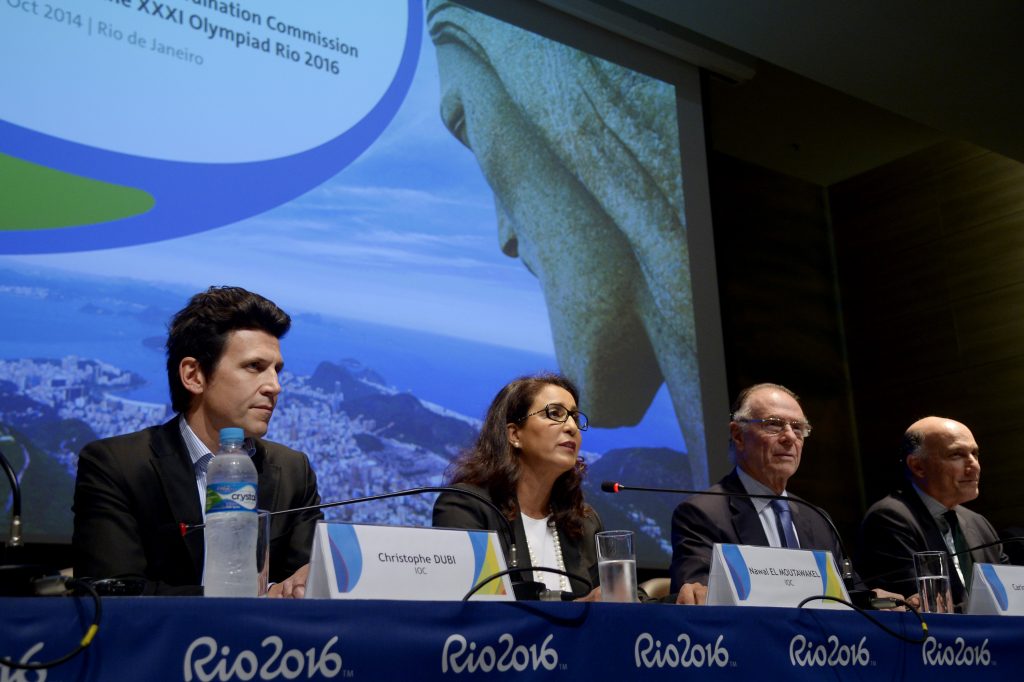
    The International Olympic Committee (IOC) has backed Rio de Janeiro to deliver a successful Olympic Games in August. 
    At the close of its final Coordination Commission visit to the host city, the IOC said the Rio 2016 organising committee is set to resolve “thousands of details” to produce a “great Games”.
    “As we enter the final 114 days until the opening of the Olympic Games Rio 2016, and despite the complex political and economic context, we are confident that Brazil and the Brazilians are on track to deliver successful Olympic Games with an outstanding legacy,” said IOC Coordination Commission Chair Nawal El Moutawakel.
    “The last stretch is always the hardest. During the operational phase that we are entering now, there are thousands of details still to manage, and their timely resolution will make the difference between average Games and great Games. The Rio 2016 team is ready to rise to this challenge and deliver Olympic and Paralympic Games that will reflect Brazilians’ warmth, hospitality and passion for sports. We believe that Rio 2016 will make the host nation proud.”
    Preparations for the Rio 2016 Olympic Games, which begin on 5 August 2016, have been beset by organisational problems that have threatened to derail the massive project. 
    But in a statement, the IOC said many of the venues are now finished, with the venues 98% complete overall; that 33 test events had been successfully completed with positive feedback from the competing athletes; and that popular backing for the Games remains strong, with over 70% support in Rio de Janeiro – demonstrating that the majority of local citizens see the Games as a positive element in the development of their city and country.
    Brazil’s economy was booming when Rio was awarded the Games, but the country is now in the grip of recession. 
    “Thanks to the solidarity and support from the IOC, International Federations, and National Olympic Committees during this difficult time for Brazil, we will be ready,” said Rio 2016 President Carlos Arthur Nuzman. 
    “We will not be complacent in the last mile. We know that we still have important elements to finalise before the Opening Ceremony on 5 August. We are working hard with all of our partners on each of these points and we are more confident than ever that Brazilians will deliver great Games.”
    The IOC cited a number of lasting benefits that will result from Rio hosting the Games, such as improved public transport, better waste management, better city operations, job training, state-of-the-art sports facilities and new schools.
    “The strong support from the local authorities, as well as the partnership and solidarity shown by the IOC, International Federations, National Olympic Committees, and other Olympic partners, in line with Olympic Agenda 2020, has been invaluable to the Rio organisers, as they finalise their preparations. I’d like to thank all of those involved for their hard work and dedication to this project,” said El Moutawakel.
     

  • UK Sport backs GB to win at Rio with million-hour support

    UK Sport backs GB to win at Rio with million-hour support

    The English Institute of Sport, funded by UK Sport, will have provided 950,000 hours of support to more than 1,100 athletes between the London 2012 and Rio 2016 Olympic and Paralympic Games.  
    This amounts to more than 4,500 hours of support a week over the four year Olympic cycle, in a bid to help Team GB achieve success at the Olympic and Paralympic Games in Brazil.
    The English Institute of Sport (EIS) is UK Sport’s science, medicine and technology arm, with 350 experts helping elite athletes improve performance in more than 30 Olympic and Paralympic sports.
    UK Sport provided EIS with GB£59,775,973 of funding after London 2012, where the EIS had worked with 86 per cent of the GB athletes who had won a medal. UK Sport and the EIS have worked together to build a world-leading high performance system in a bid to deliver Team GB’s best ever away performance.
    “With less than 100 days to go to the Olympics and 120 to go to the Paralympics, our National Lottery funded sports and athletes are in good shape,” said Liz Nicholl, CEO of UK Sport.
    “I have every confidence that they, supported by the EIS, will inspire the nation with their performances in Rio this summer. 
    “The thousands of hours of world class scientific, medical and technological expertise provided by the EIS each week to our Olympic and Paralympic athletes is key to ensuring they are the best prepared British athletes ever.
    “The EIS has been the ‘team behind the team’ since 2002, and our high performance system wouldn’t be where it is today without the impact of their talented team of experts.”
    EIS services support both the physical and mental health and wellbeing of athletes and coaches with expertise provided across areas including biomechanics, performance analysis, performance lifestyle, performance pathways, performance nutrition, physiology, psychology, physiotherapy, medicine, research & innovation and strength and conditioning.
    This support combines to help athletes and coaches across a number of areas including maximising competition performance, recovering from injury, identifying talent, enhancing physical and mental health and wellbeing and transitioning into new careers following retirement from elite sport. 
    “It is the vision of the EIS to be the world leading institute for sport and through the funding and support provided by UK Sport, our ambitious goal is within reach,” said Nigel Walker, National Director of the EIS.
    “The high performance system we have in our country is the envy of many around the world and that is underpinned by our leading practitioners boasting over 1,100 years collective experience across 11 areas of expertise. 
    “We remain on track for huge success at Rio 2016 and thanks to ongoing support from UK Sport, the Government and National Lottery, planning for Tokyo 2020 is well advanced as we continue to showcase ‘What It Takes To Win’ on a global stage.”
    Olympic diving medallist Tom Daley received support from the EIS Psychology team. “If you can handle the pressure cooker environment of an Olympic final psychologically, you have the power to go all the way and win!” he said. “The support I’ve received from the EIS in sports psychology has made me into the diver I am today.”
    Paralympic wheelchair tennis medallist Jordanne Whiley MBE said: “The EIS leave no stone unturned when it comes to helping athletes prepare for competition. The support they provide both on and off the field of play helps increase confidence and allows me to perform at my very best.” 
     

  • Rio set to repeat London’s legacy success, says AECOM

    Rio set to repeat London’s legacy success, says AECOM

    With just two months to go until the opening ceremony of the Rio 2016 Olympic and Paralympic Games, the host city is “on the cusp” of reaping the same legacy benefits enjoyed by London, according to AECOM, the company behind both cities’ Olympic masterplans.
    “Despite Brazil’s current economic and political challenges, the guiding principle has always been for the Games to serve Rio and boost its development, improving the quality of life for all its citizens,” said Bill Hanway, Global Sports Leader at AECOM.
    Rio is aiming to stage the world’s best value Olympic Games by reducing public cost through partnership with the private sector, and by delivering a simple and sustainable venue plan that applies many of the legacy planning strategies of the London 2012 Games. 
    According to the IOC, 75 per cent of capital expenditure relating to London’s preparations for hosting the 2012 Olympic Games was invested in transport and utilities infrastructure, land and water clean-up, public open spaces, new homes, and permanent sports and leisure facilities. 
    A similar approach has been adopted in Rio. The Games is boosting the development of public transport, with Linha 4 of the metro to Barra, the site of the Olympic Park, due to be completed just in time for the Games. 
    Power and data facilities installed to cater for 20,000 journalists from the international media will make the Olympic Park one of the best connected districts in Rio.
    “The Games are a catalyst for changing not only the city, but the aspirations of future generations. As with London, our approach is to take a long-term view that sees the Games as a milestone in the ongoing legacy programme,” said Hanway.
    “The Games and the success of the event are the primary focus, but also serve as a driver for the future. It’s an opportunity to invest in underdeveloped areas and significantly upgrade transport and infrastructure. Rio is now on the cusp of reaping the legacy benefits.”
    Parallel lines: Games and legacy masterplanning
    For the London 2012 Games, AECOM delivered masterplanning, landscape architecture, engineering and sustainability services. Working closely with its partners at Rio’s Municipal Olympic Company (EOM), AECOM has reprised these roles in Rio with additional responsibility for the preliminary design of the Barra Olympic Park’s sports arenas and detailed design of the International Broadcast Centre.
    AECOM’s masterplan for Rio covers a 20-year period, with three distinct phases: preparation for the event; a transitional phase; and the long-term legacy. All phases were planned in parallel to smooth the transition between modes. AECOM points to the layout of roads and the capacity of utilities in the Barra Park, which were designed to cater for the planned residential, educational, commercial and sporting legacy.
    The deconstruction and repurposing of temporary structures will take between five and seven years to complete after the Games. And in the legacy phase, more than three-quarters of the site will become a new neighbourhood. 
    Just under a quarter of the Barra site will be occupied by permanent sports facilities, which in legacy mode will provide elite training facilities for the Brazilian Olympic team as well as a sports high school for future Olympians. 
    AECOM delivered preliminary designs for six new sports venues: the new velodrome, Olympic Aquatics Stadium and Tennis Centre, as well as three adjoining Carioca Arenas that will host basketball, judo, taekwondo and wrestling competitions.
    The velodrome will remain a cycling venue, the tennis centre will be adapted to host tournaments, and the Carioca Arenas will become a Sports Academy School and multi-sport training facility. The Olympic Aquatics Stadium will be rebuilt as two smaller community pools.
    AECOM was also tasked with delivering the strategy for reusable, temporary structures that could be moved and rebuilt as community facilities and schools after the Games.
    Venues including the Handball Arena and Olympic Aquatics Stadium employ efficient, highly standardised designs based on modular, stacked and repeated bolted steel structures to ease dismantling and reassembly. This “nomadic architecture” approach will allow the Handball Arena to be transformed after the Games into four new primary schools across the city.
    AECOM also provided full architectural services for the International Broadcast Centre, which meets strict environmental and sustainability standards while also fulfilling broadcasters’ needs in terms of power and data connectivity, acoustics and temperature control.
    The Olympic Park is designed for more than 150,000 spectators to move safely and freely on peak days during the Games. After the Games, the focus will switch to turning the site into parkland, with AECOM’s landscape design strategy transforming large spectator areas into a new linear park for the community.
     

  • Ten refugees to compete at Rio 2016 under Olympic flag

    Ten refugees to compete at Rio 2016 under Olympic flag

    Ten refugee athletes will take part in the Olympic Games Rio 2016 this summer in the first ever Refugee Olympic Team (ROT), the International Olympic Committee announced on 3 June. 
    Rami Anis, Yiech Pur Biel, James Chiengjiek, Yonas Kinde, Anjelina Lohalith, Rose Lokonyen, Paulo Lokoro, Yolande Mabika, Yusra Mardini and Popole Misenga will march with the Olympic flag immediately before host nation Brazil during the Opening Ceremony. 
    “These refugees have no home, no team, no flag, no national anthem. We will offer them a home in the Olympic Village together with all the athletes of the word. The Olympic anthem will be played in their honour and the Olympic flag will lead them into the Olympic Stadium,” said IOC President Thomas Bach.
    ”This will be a symbol of hope for all the refugees in our world, and will make the world better aware of the magnitude of this crisis. It is also a signal to the international community that refugees are our fellow human beings and are an enrichment to society. These refugee athletes will show the world that despite the unimaginable tragedies that they have faced, anyone can contribute to society through their talent, skills and strength of the human spirit.”
    As part of the IOC’s pledge to aid potential elite athletes affected by the worldwide refugee crisis, NOCs around the world were asked to identify any refugee athlete with the potential to qualify for the Olympic Games Rio 2016. Such candidates could then receive funding from Olympic Solidarity to assist with their preparations and qualification efforts.
    Forty-three promising candidates were initially identified. Selection of the ten athletes was based on consultation with their host National Olympic Committees (NOCs), International Federations, the UNHCR and the NOCs of their countries of origin. Nomination criteria included sporting level, official refugee status verified by the United Nations, and personal situation and background. 
    Five of the athletes originate from South Sudan, two from Syria, two from the Democratic Republic of the Congo and one from Ethiopia. Five are hosted by the National Olympic Committee of Kenya, two by Brazil, one by Germany, one by Luxembourg and one by Belgium. 
    Six of the athletes will compete in athletics running events, two in swimming and two in judo.
    Like all teams at the Olympic Games, the ROT will have its own entourage to meet all the required technical needs of the athletes. Olympian and former marathon world record-holder Tegla Loroupe (Kenya) was named the team’s Chef de Mission, while Isabela Mazão (Brazil), who was proposed by the UNHCR, will act as the Deputy Chef de Mission. They will lead a crew of five coaches and five other team officials.
    The team will be housed in the Olympic Village like all the other teams and will get its own welcome ceremony at the Olympic Village, like all other teams. Team uniforms will be provided by the IOC.
    For all official representations of the team (including possible medal ceremonies), the Olympic flag will be raised and the Olympic Anthem will be played. 
    A proper doping control process will be introduced through the World Anti-Doping Agency (WADA). Olympic Solidarity will cover preparation, travel and other participation expenses for the team and will continue to support the athletes of the team after the Olympic Games.
    The IOC will also continue to support the refugee athletes after the Games.
    Through Olympic Solidarity and its Olympic Scholarships for Athletes programme, the IOC aims to help smaller NOCs prepare and qualify their athletes for the Olympic Games. The IOC’s priority is to focus primarily on athletes who need the assistance the most and to place them on an equal footing with their competitors from more developed regions of the world. In the lead-up to London 2012, for example, 1,264 Olympic scholarships were allocated to athletes from 171 NOCs in 21 sports. 657 ‘scholars’ eventually took part in the Games. They won a total of 72 medals.
    Following the approval of Olympic Agenda 2020, the IOC’s strategic roadmap for the future of the Olympic Movement, and in light of the current global refugee crisis, the IOC also created a special fund of USD 2 million to develop relief projects through sport in collaboration with NOCs around the world. Over 15 NOCs have already made use of this fund.
    The IOC already works with a number of United Nations agencies to help refugees around the world. For the last 20 years, the IOC and UNHCR in particular have been using sport to support healing and development among young refugees in many camps and settlements around the world. They have consequently seen thousands of refugees benefit from sports programmes and equipment donated by the IOC.
    The biographies of all athletes and their entourage are available here.
     

  • Handball Arena will be made into schools in Rio

    Handball Arena will be made into schools in Rio

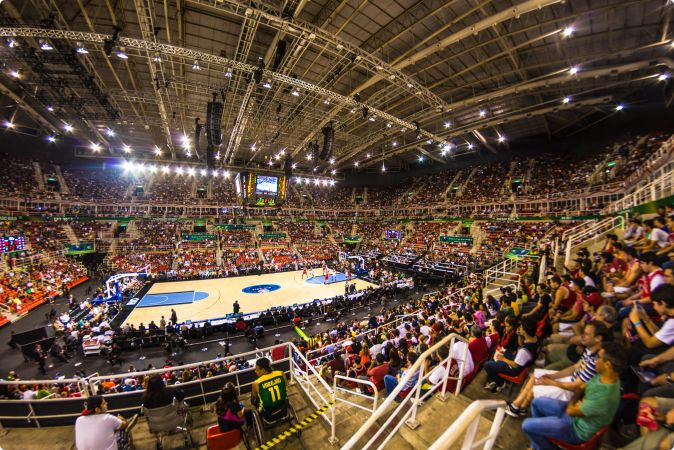
    During the Rio 2016 Olympic and Paralympic Games the Future Arena will host the handball events and be packed with 12,000 spectators. When the Games are over its structure will be dismantled and used in the construction of four state schools for two thousand children in the city of Rio de Janeiro. 
    Three schools will be constructed in Barra da Tijuca and one in Maracanã – each accommodating 500 students – as part of a US$77m legacy project.
    The brief for the handball arena was to build something that would contribute to the city of Rio beyond the 2016 Olympic Games. A first for the Olympics, the venue will make use of an innovative technique called “nomadic architecture”, thus ensuring that even a temporary structure can leave a lasting legacy. 
    The arena will be dismantled and the components transported to four separate locations to be rebuilt into state schools. The main elements that will be reused are the roof, rainscreen cladding, main structural steel elements and disabled ramps, which will form the shells of the four schools. The open nature of the rainscreen and external ramp that create the distinctive architecture of the arena will be recognisable in the new schools. 
    UK-based firm AndArchitects led by Rio-based practice Lopes, Santos & Ferreira Gomes provided the design for the handball arena. AndArchitects’ experience with six temporary buildings at London 2012 helped them jointly win the bid for this ground-breaking project. 
    Careful thought was given to what materials and systems of construction would allow this transition with minimal wasted material. The schools were designed simultaneously with the arena. The grid for the floor plates and the roof were all designed from the outset for both buildings so that the panels on the façade and on the floor and roof could be easily relocated in order for the modules to work for both buildings.
    After the Games, once the arena has been converted into schools, the students will be reminded of their schools’ role in the Olympic Games. One idea that is being reviewed is that the names of the stars of the Brazilian team are engraved onto the cladding of the building and these names will remain on the walls of the classroom to inspire students. 
     

  • The UK’s special Olympic relationship with Brazil

    The UK’s special Olympic relationship with Brazil

    What is the Department for International Trade responsible for?
    “We are a UK government department working with businesses based in the United Kingdom to ensure their success in international markets, and encourage the best overseas companies to look to the UK as their global partner of choice. Trade and Investment has never been more important to the country’s economic prospects. We help UK companies of all sizes to grow their businesses through international trade by offering expert advice and practical support through a range of programmes. We also connect businesses to the world’s top commercial opportunities and drive targeted campaigns centred around them.”
    Why is the major sports event sector a key focus for you?
    “The budgets for the world’s Top 50 major sporting events between 2016 and 2025 are estimated to be worth a total £230 billion. With 30% of procurement made internationally, this creates a potential export market of nearly £70 billion for UK companies. Obviously the Olympic Games is a key focus for the companies we work with, but we have been encouraging them to remember that there are also opportunities to explore around the Paralympics which we feel don’t always get the exposure they deserve.”
    Have UK companies been particularly successful in securing business at Rio 2016?
    “The special relationship that exists between countries that host back-to-back Olympic and Paralympic Games, and enhanced through a yearly UK-Brazil dialogue which has taken place since 2012, has led to 40 UK companies winning contracts worth so far in excess of £150m from the Rio 2016 Olympic and Paralympic Games. Some of the areas where UK companies have been successful include: Architectural and design consultancy, Olympic Park Masterplan, Venue design consultancy, Security consultancy, Engineering and sustainability consultancy, Audio and video operations, Temporary structures and event overlay consultancy, Cost Consultancy, Temporary Kitchens.”
    What is the Department for International Trade’s history with the IPC Academy Campus?
    “The UK government has  been involved with the IPC Academy Campus since the London 2012 Paralympics where we sponsored and hosted the Inclusion Summit which was a great success. Apart from the insightful programme and networking, it was an opportunity for us to make the event venue – Lancaster House – accessible for people with physical impairments for the first time ever through the fitting of wheelchair ramps for example. For Sochi 2014, we sponsored the Closing Cocktail Reception at the Campus.”
    What will you be sponsoring specifically at the 2016 IPC Academy Campus in Rio?
    “As was the case in Sochi, we will be sponsoring the Closing Cocktail Reception. This will bring proceedings of the 2016 IPC Academy Campus to a close on the relaxed roof terrace surroundings of the British House at the Shopping Metropolitano Barra. The reception will offer networking opportunities for all IPC Academy Campus participants and act as a ‘graduation ceremony’ for the Campus. Approximately 400-500 people will come together to celebrate the success of the Campus and will be the biggest event-learning gathering of major sport event organisers and their stakeholders ever held in the world. It really is a unique opportunity to rub shoulders with a wide range of people from the major events industry who have attended the Campus and also with industry people from Brazil and the UK who we will be inviting.”
    Are you pleased with the engagement you have had from UK companies for the Paralympics and the Campus?
    “Yes, definitely. We are bringing over a delegation of UK companies who are a mixture of ones familiar with the industry and others who are keen to explore new opportunities that may be linked to the Paralympics or other major events. In the coming weeks we will be working with them to ensure they get the most out of the trip and the opportunities that come within the unique environment of the Campus.”
    What is your advice to organisations attending the IPC Academy Campus for the first time?
    “What was great about the last Campus was being asked to stand up at the beginning of the Games Experience Programme and to go and speak to five new people that we had never met before. That was a great ice breaker and really got people integrating. Often people attend events like these and spend the whole time speaking to people they know already and that can be a wasted opportunity to not only to make new friends of course, but also to source new business opportunities. My advice for anyone attending Campus is to make the most of networking with the wide variety of people there and also to learn what you can from the experts who will be hosting the various elements.”
    This interview was conducted by the World Academy of Sport (WAoS). Delivered by the IPC Academy – the International Paralympic Committee’s educational division created in 2009 as a partnership between the IPC and the WAoS – the 2016 IPC Academy Campus is a unique event-based learning initiative that will include an Observers’ Programme, Games Experience Programme, Inclusion Summit and Closing Cocktail Reception. The IPC Academy Campus will give stakeholders of major sports events the chance to learn from their peers during the Paralympic Games.
    The IPC Academy Campus takes place in Rio de Janeiro between 6-17 September 2016. Its Event Partners include the Adecco Group and the UK’s Department for International Trade. Its Media Partners are Sportcal (Intelligence Partner), Major Events International (Digest Partner), Around the Rings (Online Partner), Host City (Magazine Partner) and AXS Chat (Social Media Partner). For further information about the the IPC Academy Campus, please visit www.ipcacademycampus.com or contact Claire Bennett, Project Coordinator, World Academy of Sport cbennett@worldacademysport.com.