Tag: Sports Development

  • Events should be the centre of the Chinese sports industry

    Events should be the centre of the Chinese sports industry

    According to a report released by the Chinese National Sports Authority, China produced a total output of RMB 1.7tr (US$ 250bn) from its sports industry in the year 2015 alone.
    As the report revealed, the result is mainly driven by manufacturing, sales, trading and rental of sports goods and related products, which accounts for 86.2% of the total. In other words, the sports-related goods industries are still the main sectors of the Chinese sports industry.
    However, the nucleus of a sound sports industry should be its sports performance industry and not its sporting goods sector.
    Deloitte found in 2015 that Dubai’s sporting industry was worth more than US$ 1.7bn, with investment in sporting events, sports venues and mass participation events accounting for US$ 709m of the city’s total gross events expenditure of US$ 1.14bn. In this regard, Dubai has a much healthier sports industry than China.
    Then how can we change the status quo of the Chinese sports market?
    Maybe we can start with the following aspects.
     
    The Chinese Super League
    The Chinese Super League (CSL), we can say, is the most popular and commercialised professional sports league in China. In recent years, powerful outfits such as Guangzhou Evergrande and Shanghai SIPG have become annual title favourites for the AFC Champions League.
    More importantly, the arrival of international players like Tevez, Oscar, Hulk and Alex have enhanced the competitiveness and increased entertainment of Chinese clubs and fans as well as improving the international influence of the top-flight football league.
    As such, the growth in attendance figures of the league have been remarkable. According to statistics released by CSL officials, the total stadium audience reached 5.8 million in 2016, averaging 24,159 for each game. At the same time, more than 284 million people watched the CSL on TV with the number of viewers streaming online increasing sharply. As of now, the football league is being broadcast in 96 countries and regions around the world.
    The league has also been monetising its commercial value through sponsorships and partnerships. In May, the CSL Company sealed a five-year title sponsor-extension with the Chinese insurance firm Ping’an Group, which will see the firm pay RMB 1 bn to continue its title sponsorship through to 2022.
    Meanwhile, the CSL has also signed up as partners with China Sports Media (CSM) in a five-year broadcast rights deal, worth RMB 8bn. Despite LeSports relinquishing its broadcast rights due to financial burdens, the new media rights for the 2017 CSL season were acquired by the Suning-backed PPTV Sports.
    However, two new policies, recently introduced by the Chinese Football Association (CFA), have caused a stir in the Chinese football world. These new rules regulate the number of foreign players and require clubs to have for each match: at least one Chinese under-23 player in the starting XI; at least three U23 players in the 18-player squad; and the number of U23 players and the times they play no fewer than foreign players. The rules have also limited Chinese clubs’ investment in transfer windows by doubling transfer fees overnight.
    The CFA said the new rules are aimed at promoting the development of youth players and training in the country, but some critics argue that this move, despite its good intention, is too premature for the Chinese football market. It remains to be seen whether this is the best way to balance commercial value and youth player development.
     
    The Chinese Basketball Association
    Although the Chinese Basketball Association is not as widely known as the CSL, the first-tier professional men’s basketball league in China has a remarkable fan base.
    As reported in the Yutang Sports viewership report 2016, the league showed its popularity by having 7 CBA matches ranked in CCTV’s Top 10 basketball games list.
    Even more importantly, China has been making recent progress in basketball reforms. With the establishment of the CBA Company, Yao Ming’s election as CBA President and the launch of the CBA Summer League the country is on track to separate its professionally-run basketball league from its traditional government-run system.
    All these changes will help improve decision-making, enhance independence and transparency, as well as turn the CBA into a more professional and commercialised league in the international market.
    However, beyond football and basketball, other sports leagues in China are not yet operated in a much professional level, such as badminton, table tennis and volleyball. They still need to be run more professionally and to attract more attention.
     
    Marathon Running
    Mass participation events, on the other hand, are developing at an unprecedented rate in China.
    Take marathon running as an example. In 2016, 328 marathon-related events were approved by the Chinese Athletic Association, which is almost 1.5 times more than 2015 (134 events) and 14 times more than 2011 (22 events). Parallel to the increase in marathon events is a rise in number of participants, reaching 2.8 million last year, up 1.3 million from the previous year.
    However, we should not only focus on the numbers but on how we can solve more tougher issues regarding how to carry out the national fitness programs. Some questions include: How can we balance policies and market demand? How can we make full use of sports venues? How can we promote the development of grass roots clubs? How can we make events more professional and motivate mass engagement and participation? And how can we provide more public sports resources to the public?
     
    Policy Support for Mass Participation
    Recently, a national plan was jointly released by nine Chinese departments on supporting social strengths for organising mass participation events such as marathons and bicycle races.
    The plan describes that marathon runners and the times people run marathons should exceed five million and related consumption should be over RMB 20 bn; consumption related to bicycle races should also exceed RMB 20 bn.
    As such, we can see the government is making more detailed guides in different disciplines/areas and grass roots/mass participation events are playing an important role in realising the larger national sport industry goal.
    As a conclusion, a well-established sports industry cannot only be strong in the sporting goods sector. Improvements in the sport event market are needed to optimise the industrial structure.
     
    This article was written by Gu Xin of Yutang Sports

  • Interview: The secrets of FIVB’s global success

    Interview: The secrets of FIVB’s global success

    Host City: Volleyball is extremely popular internationally – but where in the world is it the most popular?
    Mario Medeiros: Both volleyball and beach volleyball have huge appeal in nations all over the world, including China, USA, Brazil, Russia, Japan, Poland, Thailand, Italy, Turkey, Germany, France and many others. If we talk about China, for example, the women’s national volleyball team are current Olympic champions. During the final at Rio 2016, between China and Serbia, China’s main TV channel, CCTV, recorded one of its highest-ever viewer ratings for an Olympic Games event. The IOC data report on the Games also proves volleyball’s popularity in China, noting that more than one billion viewer hours of the total recorded for volleyball at Rio 2016 came from China. And to further highlight the overall popularity of indoor and beach volleyball worldwide, I am happy to confirm that volleyball (indoor and beach combined) was the most popular sport at the Rio 2016 Olympic Games in terms of the accumulated number of viewer hours, reaching more than 2.6 billion hours. This figure is equivalent to every single person in the world (approximately 7.5 billion people) watching 20 minutes of volleyball. This is a huge number! 
    But the popularity of our competitions goes well beyond the Olympic Games. At the 2017 FIVB Beach Volleyball World Championships in Vienna this summer, the stadium was packed every day, where a total of 170,000 spectators came to enjoy the high-class beach volleyball experience. We are also proud of our annual events, for example this year’s World League Group 1 Finals were in Curitiba, Brazil – the home of volleyball – where more than 23,000 fans filled the Arena da Baixada football stadium, which hosted matches during the 2014 FIFA World Cup.
    Volleyball is one of the most-practiced sports in schools and universities in some of our key markets, such as the USA and China. It provides solid values of team spirit and discipline which reflects the professional development and education of each individual in life. At the same time volleyball is a non-contact sport that could be played in different environments by people of different ages. This all contributes to its global popularity.
    Host City: Where do you see the greatest opportunity for future growth and commercial potential?
    Mario Medeiros: Part of what is so exciting for us at the FIVB is that while we have grown significantly over recent years we know there is so much potential for further growth all around the world. In terms of individual countries with huge potential, I would point to China and the USA. Both countries have been responding positively to the new momentum of the FIVB, as we build on our current successes and look to the future with the creation of the New Volleyball League – the new annual competition that we plan to launch next year. Both countries are not only at the top of the world GDP rankings but have strong volleyball teams which we expect to challenge for titles in the future.
    The creation of the New Volleyball League is part of the leadership plan formulated by FIVB President, Dr Ary S. Graça. The plan focuses around the Nucleus Project, the aim of which is to concentrate our vision and investment on the key markets around the world, according to GDP rankings. We believe that these nations are crucial to raising the relevance of volleyball around the world, which will then in turn help smaller volleyball nations through greater funding and opportunities for hosting. 
     
    Host City: What formats of the sport are creating the highest level of interest?
    Mario Medeiros: Of course, each country and National Federation within the FIVB Family has different interests and goals to achieve but we have been pleased to see great interest from our key stakeholders in the New Volleyball League. With this event, we plan to revolutionise our annual national team competitions. The new event will be composed of a two-tier league: The New Volleyball League, made up of 12 core permanent teams and four challenger teams, as well as a secondary Challenger League.
    Participating teams, selected according to a number of criteria including their technical seeding and commercial potential, will play against one another in a round robin format. The New Volleyball League and the Challenger League will feature a promotion and relegation system ensuring volleyball remains one of the most competitive sports in the world for both genders.
    The FIVB for the first time, together with IMG, will regulate content production and distribution to guarantee the highest quality and consistency of the output fans around the world will consume from its events throughout the season. The FIVB will also highlight world class performances from teams and individuals throughout the season.
     
    Host City: How important was the introduction of beach volleyball into the Olympic programme to widening the appeal of volleyball?
    Mario Medeiros: The introduction of beach volleyball into the Olympic programme was a historic turning point for our sport and the Olympic Games. Beach volleyball was introduced in 1996, during the Atlanta Games, and brought to the Olympic Movement a new format of competition, with speed, fashion, fan engagement and sport entertainment. Of course, the initial decision, taken by the IOC Executive Board in September 1993, to include beach volleyball on the Olympic programme provided the opportunity for beach volleyball athletes to pursue their dream of becoming Olympians and, ultimately, Olympic Champions.
    If we look at the numbers from the IOC’s data report regarding the Rio 2016 Olympic Games, 99.9% of all the tickets available for beach volleyball were sold – that number speaks for itself. The great sporting action, spectacular sea front setting and amazing technology and sport presentation created the perfect beach party atmosphere and established beach volleyball as one of the most in-demand sports at Rio 2016.
    The FIVB has a great relationship with the International Olympic Committee, and President Thomas Bach attended this year’s FIVB Beach Volleyball World Championships in Vienna. He was amazed by the atmosphere created by athletes and audience, with the help of cutting-edge technology and sports presentation.
     
    Host City: Asian cities have hosted several FIVB events recently. How would you describe these experiences and what are your expectations of future events in Asia?
    Mario Medeiros: Hosting events in Asia is spectacular for the FIVB. We have a strong fan base on the continent, with impressive ticket sales resulting in packed stadiums and cheering crowds for the FIVB’s most prestigious events, as well as high exposure for our sponsors and relevant TV partners across Asia.
    In August, Nanjing, China hosted the FIVB 2017 Women’s World Grand Prix Group 1 Finals, with six teams showcasing world-class performances over five days of competition. The organization also involved around 2,000 staff and 312 volunteers, but it was a fantastic spectacle. We enjoyed enormous success in ticketing and merchandise sales, but also saw great results in terms of media coverage and TV ratings, as CCTV5 reported consistently high viewing figures on the nationwide-broadcasted matches. Six out of the top ten highest rated shows broadcast on this network during the entire period of the FIVB 2017 Women’s World Grand Prix Group 1 Finals were volleyball matches, including the number one broadcast programme.
    The FIVB continues to invest in technology, innovation and sports presentation. We have introduced the Challenge system as we believe that the match should be decided by athletes and not the referees. The system was introduced to the Olympic Games in 2016 and we had more than 30% successful challenges in both indoor and beach volleyball. With just one point being able to change the podium, the Challenge System brings more credibility and fairness to our sport.
    The FIVB’s new standard for sports presentation moves fan entertainment to engagement, establishing the narrative of the game, as well as educating and engaging the audience. With the help of the extensive sports presentation team, composed of DJs, MCs, announcers, lighting technicians, producers, giant screen operators and others, we would like the audience to celebrate the game with some truly sensory experience through sound effects, loud music, big screens and lights.
    We also want fans to be physically active in the way they celebrate the great moments of the game. We want fans to imitate volleyball actions, like the block or the spike. That’s an important message: move your body and be healthy.
    Asian countries like China, Japan, South Korea and Thailand have been supporting these introductions and are delivering great events with new features in place. A volleyball match has become more than just a game. It has become a show, with spectators being active game participants, like actors on the stage. Therefore, the goal of the FIVB is to work together with the National Federations to deliver successful events across Asia and get fans more involved in sports, educating them throughout the match and ensuring they take home fantastic memories.
     
    This interview was first published in the Winter 2017 edition of Host City magazine.

  • Interview: “Beijing 2022 is a great foundation for sports development in China”

    Interview: “Beijing 2022 is a great foundation for sports development in China”

    Host City: what role can China’s cities play in terms of getting citizens involved in sport?
    Yang Yang: In cities, they are encouraging people to participate in sports. After Beijing won the bid, the education bureau from Beijing launched the policy encouraging every student to participate in one snow sport or ice sport. That has become a very major programme in the education system.
    I live in Shanghai, so I have my skating club and I work with 26 schools. Through this programme their P.E. classes come from Monday to Friday in the morning and afternoon, at which time the club would otherwise be nearly empty. Since Beijing won the bid, that’s the way we are reaching the goal of 300 million people in China to participate.
     
    Host City: How important is sports infrastructure in China reaching this goal?
    Yang Yang: It’s very important that we need infrastructure; we need to build ice rinks, we need to build snow venues, which is on the way.
    I was involved in the bidding committee. At that time, we barely found 13 rinks in Beijing, even including small ones. But now the number is going to be 72 in the next three years. I believe there will one day be more than a hundred rinks in Beijing.
     
    Host City: And is the number of Championship events increasing in China?
    As the host city of the 2022 Olympic Games we will have lots of test events, starting from 2020. Then all kind of winter sports will come to China before the Games. Of course, we also have some traditional events. For example, we have hosted the short track World Cup for 17 years in China – in Harbin and Changchun – and the last five to seven years in Shanghai. We have a Cup of China Figure Skating Grand Prix hosted every year in Beijing as well.
    On top of that the new sports are also coming as well.
     
    Host City: As an Olympic medallist, what do you think Beijing 2022 will do to develop your sport?
    Yang Yang: China has so far won nine gold medals in short speed skating, but this is not enough. We hope Beijing 2022 is an opportunity to increase our standing.
    Beijing 2022 is a great foundation for sports development in China that is market oriented.
     
    This interview took place at WWSE and first appeared in the Winter 2017 edition of Host City magazine

  • Championing the development of snow sports

    Championing the development of snow sports

    “There are two different pathways to develop sport. One is to create successful heroes – athletes like Yang Yang, who you had the honour of interviewing just now – and they will inspire youngsters, kids, the media, sponsors to create a lot of interest in the sport.
    “The other way is mass participation, through activity. We are working on both solutions, both opportunities at FIS. On the one side organising competitions here in China, which will continue right through with the big progression plan to the 2022 Olympic winter games and long afterwards. This is having a great effort from the Chinese sports authorities to build up new champions to have a lot of success. That will inspire more youngsters, activity and participants.
    “On the other side we have developed programmes to get into snow sports. For nearly 10 years the ‘Bring Children to the Snow’ programme has created a lot of interest in China, as well and “Snow Kids” activity and with the annual ‘Snow Day’ since 2012. And now here together with the WWSE in Beijing we will launch the ‘Get Into Snow Sport China’. This is an entrants level course designed to for people to be able to really begin being familiar with snow, learning the basics, enjoying having fun and making friends with snow sports. That’s what it’s all about.
    “We are working with the Chinese Ski Association, with Beijing Sport University, with the institutions here in China and commercial partner Alisports to be able to market a course all over the country and create a lot of interest and really make it happen. So there are two ways; champions and getting kids started who have perhaps never seen snow before.
    “The goal for the next generation is to have many happy and health new sports participants and, we hope, champions at future events.”
     
    New events at Beijing 2022
    “There are many opportunities to include new events. The philosophy of the IOC however is to ensure that the Games remain manageable, that there is not an over-explosion of new facilities required, so that can be many different countries and regions that are capable of hosting the Olympic Winter Games also in the future. So within the six FIS disciplines, we have an excellent blend of traditional sports and young sports and we are able to develop and adapt the disciplines and the events on the programme as society changes, as also the different opportunities – technology, skill, equipment, facilities – and this is exactly what we are doing.
    “For Beijing 2022 we are looking at different opportunities. In ski jumping for example, like “friends from Biathlon”, we have a mixed team event for the ski jumping with ladies and men in one team – it’s part of the World Championships since many years. We are also proposing the inclusion of Nordic combined for ladies, which is also an activity we have within FIS, not yet at Olympic level. It will be on the programme of the Youth Olympic Games in Lausanne in 2020.
    “We are looking to add to the Big Air competition for snowboards, which will be at this fantastic new venue in Shougang in Beijing. Not only snowboard but also to have Ski Big Air, like we have in the World Cup. And, on proposal of Chinese Ski Association and Chinese Olympic Committee, they will also submit a bid to have mixed team aerials.
    “So there are some interesting opportunities across the difference disciplines within FIS that the IOC will be asked to evaluate and to consider if they will bring additional value to the Olympic Winter Games.”
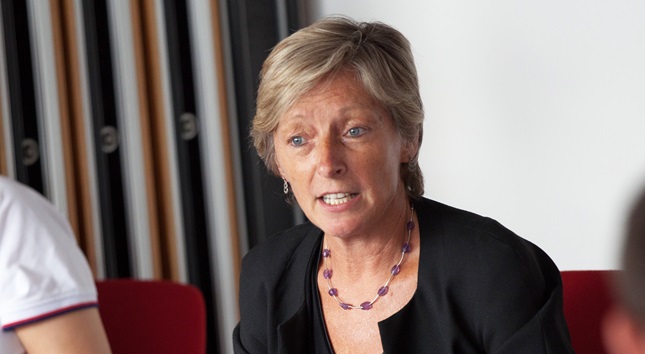
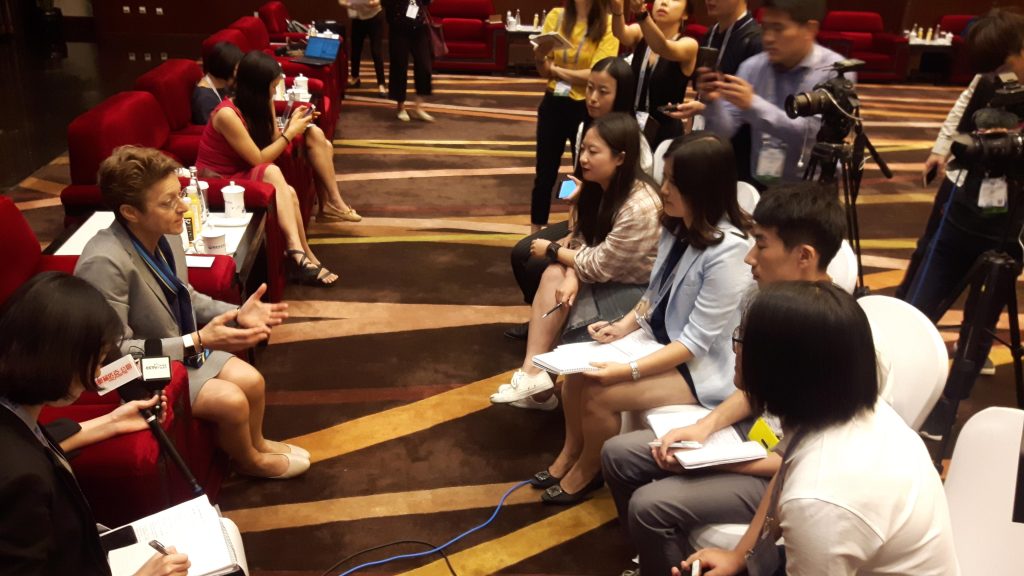
    This article, composed of statements Sarah Lewis OBE made to the press at World Winter Sports Expo in Beijing, first appeared in the Winter 2017 issue of Host City magazine

  • China’s industrial revolution of sport

    China’s industrial revolution of sport

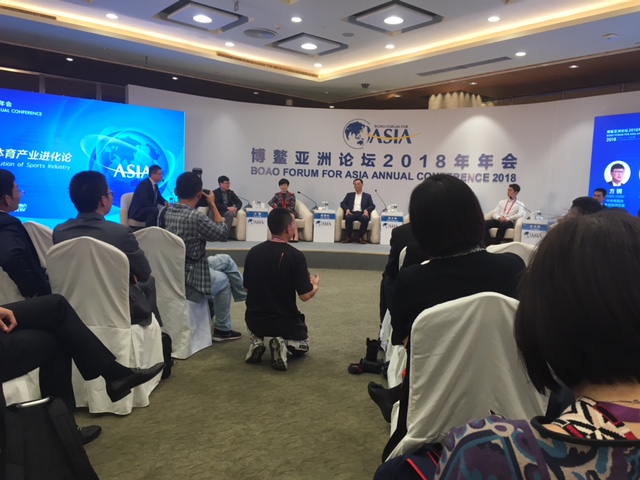
    The Boao Forum for Asia takes place annually on the Chinese island of Hainan. This year’s event included a panel discussion on “Potential of the Sports Industry” with VIP speakers including Olympic champions, national sports association leaders, leading Chinese brands and media owners.
    The panel opened with reflections on the leadership of the President Xi Jinping, under which sports has played an important part of the drive for healthier living and the development of China’s “soft power”.
    Fang Gang, Director of CCTV’s sports channels said “Sport is part of national strategy for fitness and healthy living – sports has critical role in society.”
    “Everybody is behind the national plan – it is substantial”, said Qian Jiannong, Senior Vice President, Fosun International.
    The 2016-2020 National Fitness plan set ambitious targets for improving fitness and increasing sports participation by raising awareness of health and integrating exercise into everyday life.
    Opening sports facilities for free to local people is an important aspect of the plan.
    Alisports is using the Alibaba online retail platform to help achieve the 19th NPC goals by giving Ali credits as online incentive for users to exercise more.
    “Sport is independent, something special and different,” said Zhang Dazhong, CEO of Alisports, whose project is laying foundations “to empower industries and provide services to national fitness.”
    Alisports is also working with badminton, table tennis and tennis teams to improve performance.
    He emphasised Alisports’ commitment to the empowerment process of sports, while also focussing on the enjoyment of sports.
    Zhang Dazhong, CEO, Alisports said: “China must accumulate its own sports and not just buy international assets.”
    Zeng Gang, Vice President of Suning Sports emphasised the importance of investment into education while also making it fun. “Sports is one part of entertainment… we try to promote enthusiasm and a positive feeling for sport”.
    The ability to develop a sport is also linked to the availability of venues and equipment, which is one reason for the rapid growth of snooker in China. “Anyone can play in snooker halls,” pointed out Ju Cunguo, general manager of Daqing city’s Cultural Media Co., Ltd.
    According to Rupert Hoogewerf, Chairman of the Hurun Report, motor sports, fitness and horse racing are increasing and leading demands in China for sport.
     
    Digital boost for winter sports
    China has its eyes on great success at the 2022 Winter Olympic Games, hosted in Beijing.
    “Whilst there is pressure on for Beijing2022, all sportspeople can do is their best for their country,” said Li Yan, Chairwoman of the Chinese Skating Association.
    Fang Gang said CCTV wants to showcase sport stars who can lead and inspire Chinese people and play sports. “The advantage of CCTV is that it is a national channel working for national good,” he said.
    One such star is Wu Dajing, who has been incredibly busy ambassador for winter sports since PyeongChang 2018, where he became the first Chinese man to win Olympic short track gold.
    According to Fang Gang, 20 million per minute watched Wu Dajing win his gold medal.
    “I could not believe how many people were at the airport on my return. But my coach said it will only last for 40 days!” said Wu.
    He said he wants to “make a contribution to Winter Games and promote speed skating and skiing.”
    “Three years ago, nobody in South of China knew short track speed skating – they do now!”
    Wu Dajing is asking for help from digital platforms to help promote Beijing2022.
    While Alibaba is the biggest online retailer in China, the biggest communication platform is WeChat, owned by Tencent.
    “Sports is so substantial” said Chen Juhong, Vice President of Tencent. “Wu Dajing made a huge impact.”
    Tencent is also working with tennis, soccer, and baseball organisations to find out how data can be used in China.
    “Tencent owners are very forward looking – there is no need to monetise data today,” he said.  “We are looking for a win-win of Tencent working with people.”
    Li Yan, Chairwoman of Chinese Skating Association was interested to find out how digital platforms can help their 60 national events. “Work with us… Do not let the sport get lost in data and size of market,” she asked.
    Zhang Dazhong said Alibaba expects a doubling of winter sports sales and higher value per sale for winter sports, but stressed that more investment is needed in winter sports infrastructure.
    Zeng Gang, Vice President of Suning Sports invited skaters to work more closely with Suning to promote stories about athletes, generate more content and get more engagement.
    He also said that football in China needs to fulfil its potential. The Chinese Super League must find a home for football fans and “create a tie from fan to club”.
    The Chinese Super League is working with English Premier League to learn how to customise and commercialise football in China, said Zeng.
    Suning is considering offering new membership events for Chinese Super League.
    It’s not just online where sales are growing; Suning has recently opened a sport store in Nanjing as it promotes a “hybrid offline-online model for sport.”
    This article was based on a panel discussion at Boao Forum For Asia on 9 April 2018. For more detailed discussion on Sports development in China please attend Host City Asia in Beijing on 31 May 2018

  • UK Sport targets double-figure medals at Beijing 2022 with £24m investment

    UK Sport targets double-figure medals at Beijing 2022 with £24m investment

    [Source: UK Sport] UK Sport believes the range of medal possibilities for the Beijing Games currently sits between 5-12 Olympic and 7-11 Paralympic medals at the next Winter Games, which if achieved would at the very least sustain success from the PyeongChang Games this year but could also surpass those record-breaking achievements.
    Based on assessed future medal potential, World Class Programme investment will be made into the three Olympic sports of Ski and Snowboard (up to £6.75 million) Skeleton (up to £7.2 million) and Curling (up to £6.35 million) and the Paralympic sport of Para Ski and Snowboard (up to £3.5 million).
    In addition Short Track Speed Skating world champion Elise Christie will be offered innovative new Medal Support Plan investment given her significant and consistent world level success in the PyeongChang cycle. This investment approach has recently been directed to target medal success in the sports of Badminton, Climbing, Karate and Archery in Tokyo 2020. 
    Total National Lottery and taxpayer investment across the four years to Beijing will be around £24 million, compared with the £32 million investment in the PyeongChang Cycle. This will enable support for around 70 athletes who have the potential to win medals at the next or future Games.
    Investment will be able to go further due in part to a planned voluntary integration between the British Ski and Snowboard and British Para Snowsport programmes, which will create efficiencies as well as enabling cutting-edge coaching and innovation to be shared between the squads.
    The funded winter sports have pledged £3.4million of co-funding into their world class programmes, with the bulk of this coming from the booming popularity and commercial success of the Ski and Snowboard sector.
    The application of UK Sport’s investment principles – which prioritises sports with clear future medal potential in order to maximise inspirational returns from public investment – means that the world class programmes of Bobsleigh, Figure Skating, Wheelchair Curling and Short Track Speed Skating will be transitioned off funding with the annual opportunity to make a case for support based on world-class level results if achieved thereafter.
    UK Sport is committed to ensuring that the impact of its decisions on athletes, staff and sports are carefully and sensitively managed, and will therefore be working closely with all sports that will no longer be in receipt of – or in receipt of significantly reduced – investment on an appropriate transition plan for athletes and staff. A transition fund of circa £1.5 million will be available and plans for each sport to access this will be developed in partnership with the relevant home country sports institute. For example, the transition funding could enable athletes to compete through to world championship events in February/March 2019 for which they are already training.
    UK Sport CEO Liz Nicholl said: “After a record-breaking PyeongChang 2018 which saw Team GB and ParalympicsGB hit their Olympic and Paralympic medal targets of 5 and 7 respectively, today marks an important step on the path to Beijing 2022 as we target further inspirational success at the Winter Games.
    “We have been working in partnership with sports for more than a year to develop their Beijing strategies and I would like to thank them all for their professionalism during this process. While UK Sport would like to be able to invest in every Olympic and Paralympic sport our role is to prioritise within agreed resources in order to protect and enhance the medal potential within the system. We believe these strategic investments will deliver medal winning success to inspire the nation once again in Beijing in 2022.
    “We fully understand the huge significance of our decisions and that they will impact on the hopes and dreams of the athletes, coaches and support staff that we are unable to invest in at this time. We are committed to managing this with appropriate care and will be working closely with those affected by these decisions to help support them in their transition.”
    UK Sport has currently put out to public consultation the future funding strategy of elite sport in the country, which will come into effect following the Tokyo Summer Games from April 2021 and which will apply to the 2026 winter investment cycle after Beijing. All members of the public, stakeholders and partners are encouraged to have their say at www.uksport.gov.uk
    Governing bodies being funded through to Beijing 2022 will also be expected to be compliant with the Code for Sports Governance as of October 2018. UK Sport is currently also conducting an options appraisal as to where the World Class Programme for Skeleton will be housed in the Beijing cycle.
    [Source: UK Sport]

  • Bayern talent factory with sports surfaces from Polytan

    Bayern talent factory with sports surfaces from Polytan

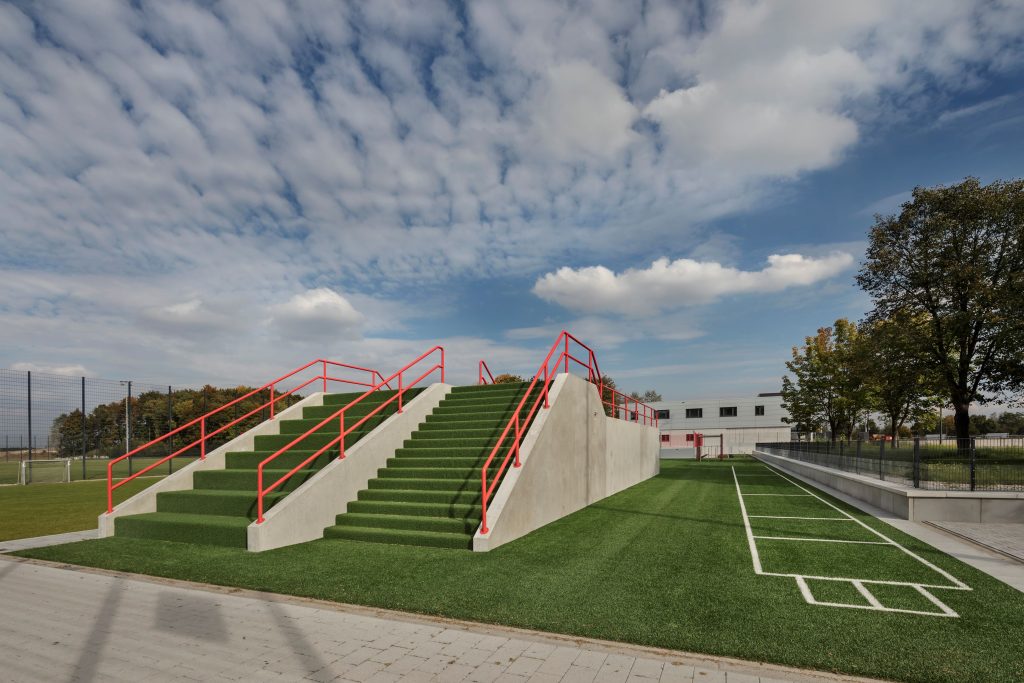
    A 70 million euro state-of-the-art football academy has been built on the site of a former barracks within sight of the Allianz Arena in the north of Munich. Polytan was in on the action as the fitter of choice: the Burgheim-based sports surface specialist laid around 22,000 square metres of synthetic turf and synthetic surfaces outside – with 20,000 square metres consisting of the LigaTurf RS Pro II CoolPlus premium synthetic turf system with top quality Infill Bionic Fibre infill granules.
    Great importance is attached to the development of young talent in Munich: the ultra-modern sports facilities on the club’s 30-hectare site include a sports hall, a ground with three stands for 2,500 spectators, a basketball court, a beach soccer pitch, fitness/technique/coordination areas, mini pitches, a circular track and seven full-size pitches. This unique offering is rounded off by the academy for 35 talented junior players, the club house, a cafeteria, a medical practice and much more besides.
    At the request of the German record-holders, sports surface systems from Polytan were installed over an area of around 22,000 square metres on the open-air site, with synthetic turf from Polytan being laid on two full-size pitches, two mini pitches and the fitness/technique/coordination area. In addition, Polytan synthetic surfaces were the ideal choice for the basketball court and the circular track: the basketball court was fitted out with the hard-wearing PolyPlay S all-round surface, while the Rekortan M professional sports surfacing system ensures that the running track is suitable for competitions. Both areas have been laid in classic brick red, the usual colour of choice in professional facilities used for competitive events.
    When it came to the synthetic turf, FC Bayern Munich opted for the LigaTurf RS Pro II CoolPlus system with Infill Bionic Fibre infill granules, which currently represents state-of-the-art technology in professional football.
    Polytan had already been awarded the contract for the synthetic pitches at the training ground on Säbener Strasse by the German record-holders back in 2009 and 2011. Thomas Hanke, the Sales Director for Germany at Poly- tan, attributes the fact that the club has again opted for premium products by the Burgheim-based sports surface specialist to the continuous advances in its systems.
    “In combination with the elastic base layer, which provides for long-lasting, optimum force reduction, the LigaTurf RS Pro II CoolPlus synthetic turf system is ideal for the high demands placed on it by FC Bayern Munich. The highly resilient smooth filaments are similar to real blades of grass and yet they provide consistently good playing qualities, even when the weather is cold and wet. There is no need to close the pitches, and the turf heating system means that training sessions can run continuously, even if temperatures fall below freezing or there is a bit of snow.”
    The state-of-the-art Infill Bionic Fibre granules contribute to even better playing qualities and help to reduce the risk of injury to players. The EPDM granules are of an irregular shape, in contrast to the angular, smooth-cut form of conventional infill. The result is a softer and naturally springy surface.
    Thomas Hanke emphasises yet another advantage: “The organic structure of the infill granules reduces what is known as ‘splash’, when material sprays up in other words, and duelling and tackling are possible to almost the same extent as on real grass.”
    Furthermore, stalks of grass in two shades of green and the green infill granules give the turf a fresh, natural look which lasts all year round. The playing field is prevented from heating up excessively on hot summer days by Polytan’s patented CoolPlus technology, which incorporates UV-reflective pigments into the filaments.
     
    This article first appeared in the Summer 2018 Issue of Host City magazine

  • SAMBO’s Olympic goal

    SAMBO’s Olympic goal

    Host City: How is SAMBO spreading geographically today from its Soviet origins 80 years ago?
    Vasily Shestakov: Nowadays SAMBO is a sport that is spread on five continents with 4.5 million passionate and engaged participants. The sport grew dramatically over the last two decades to encompass 88 full member federations and more than 30 candidate countries. This is the result of extensive interest in martial arts in general, but thanks foremost to the strong commitment of the International SAMBO Federation and its strategy and vision to become the Olympic recognised sport.  
     
    Host City: What are your priorities when looking for a host city and how do you go about selecting/attracting a host?
    Vasily Shestakov: More than 30 major SAMBO competitions are held annually at the international level under the auspices of FIAS. The FIAS Competition calendar is composed of traditional events, which are historically organised in the same city for a number of years, such as the World Cup in Moscow and the chain of the Presidents Cups, traditionally hosted in the UK.
    Moreover, we organise annual World Championships in different age categories in collaboration with our member federations, through the official bidding process opening at least three years before the events. However, we see the importance of exploring further opportunities to engage with host cities directly, as this is an important change in organisation of events globally.
     
    Host City: What are the main benefits of hosting the SAMBO championships?
    Vasily Shestakov: International SAMBO events give host cities opportunities related to tourism. The average number of participants in the international events is about 1,000 people, which together with the fans gives us about 3,000 people attending the event. This provides the host city with opportunities to generate income for hotels, restaurants, transport, touristic attractions etc.
    Moreover, FIAS is strongly engaged in promoting the sustainable management of its events, with opportunities to build legacy in three pillars: economical, environmental and social. So, for host cities that would like to organise sports events with these values, SAMBO events could be the option.
     
    Host City: How does Sambo differ from other forms of (mixed) martial arts?
    Vasily Shestakov: SAMBO is the unique synthesis of various techniques and martial arts from around the world. It is an original system of physical and spiritual education of person, in which many nations of the world recognize their sporting styles and traditions.
     
    Host City: What does the future hold for SAMBO?
    Vasily Shestakov: This year marks the 80th anniversary of SAMBO and it is due to be another thrilling year for the sport. Most importantly, we are hoping to continue with the excellent growth we have seen in recent years: making SAMBO more accessible to people all over the world. While SAMBO is still not recognised by the International Olympic Committee, we are very much looking forward to working extensively on our recognition and believe that in a short period we can reach our goal.
     
    Michal Buchel, CEO of FIAS is giving a presentation on “Building recognition and participation” at Host City 2018 in Glasgow on 20-21 November

  • Serving big in Asia

    Serving big in Asia

    The international volleyball federation (FIVB) has made no secret of its ambitious global growth plans by targeting Asia. In recent months, FIVB president Ary Graça spoke about the untapped potential for indoor volleyball and beach volleyball in China and other parts of the continent.
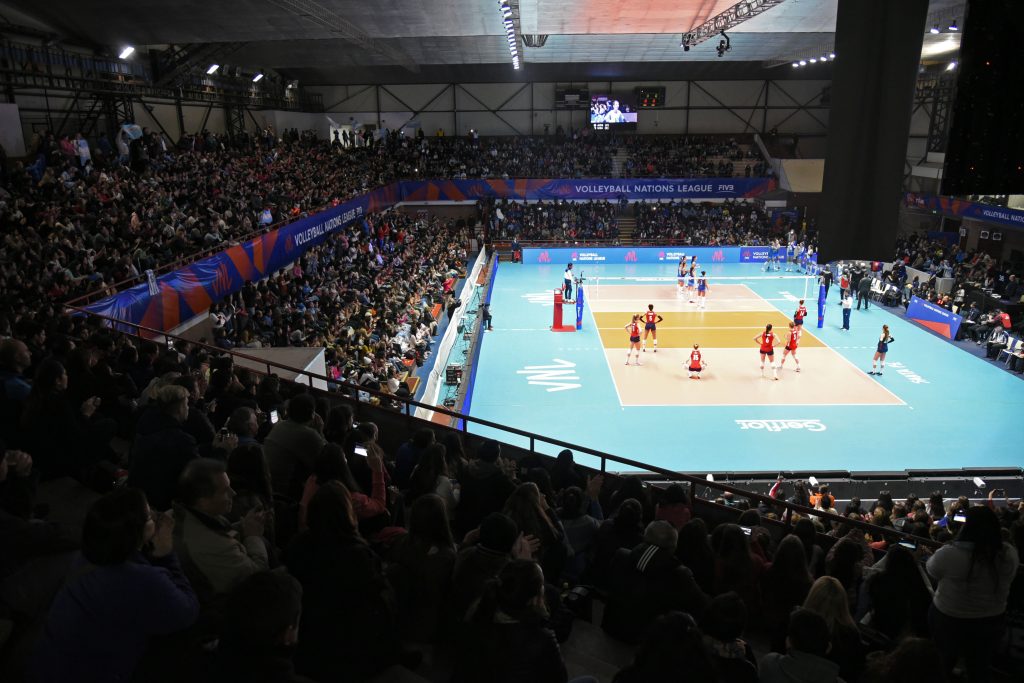
    The FIVB’s inaugural Volleyball Nations League is billed as “a pivotal moment” for the sport by Graça. He has said it’s “the most important competition in the FIVB’s history and will revolutionise how volleyball is presented; making it more fan-centric and placing our fans, both inside and outside the stadium, at the very heart of the action”.
    A joint project between the FIVB, IMG and 21 national federations – the Volleyball Nations League concluded with the men’s finals in Lille and the women’s finals in Nanjing in July.
    Luis Alexandre Rodrigues is driving forward the FIVB’s Asian growth plans from a newly-opened office in Beijing. Setting out the goals, he says the federation is keen to maintain “the momentum that the sport is going in with the Chinese team and of course with the world championships in Japan in September and October and to try to attract more partners interested in working with us”.
    “We believe that the future is here that’s why it’s our first office outside Switzerland,” he explains. “We are here to learn with the region and by the time we get more experience for sure we will be holding hands with the other federations we have and promoters as well to deliver what we know best… good events.”
    China is ranked number 1 in women’s volleyball. They have won a major international volleyball title in each of the last three years – 2015 FIVB World Cup winners, 2016 Rio Olympic title and 2017 FIVB World Grand Champions Cup champions.
    Along with Nanjing, Asian cities involved in hosting the competition included Hong Kong, Macau, Bangkok, Osaka and Melbourne.
    “We hopefully can engage much more with the region and do what we do in terms of delivering the best events possible,” said Rodrigues.
    The Chinese government is investing huge amounts in sport, football in particular, but volleyball is also benefiting from more funding.
    “When you see that volleyball is today the only collective sport in which China has such big results, like being world and Olympic champion on the women’s side, it’s something that the government for sure is foreseeing… and they will push as much as they can to make it even better,” Rodrigues said.
    “And I think it’s the time to focus as well on the men’s side and make the team shine. They have a very, very strong, tall and good generation, they have hired an international coach and I think they have a good project for the future.”
    Rodrigues said the growing profile of the Volleyball Nations League and finals in Nanjing are giving the sport momentum before the world championships spread around six Japanese host cities in September and October: “It’s occupied our time in Asia this year and we are very, very happy to do so. We see this as a good opportunity and we will do much more.”
    Luis Alexandre Pontes spoke at Host City Asia. This article first appeared in the Summer issue of Host City magazine 

  • Exclusive: China shows “unparalleled drive and commitment” to Olympics and winter sports

    Exclusive: China shows “unparalleled drive and commitment” to Olympics and winter sports

    Sarah Lewis, Secretary General of the International Ski Federation (FIS) updated Host City about developments in China immediately following meetings with the IOC Coordination Commission and Beijing 2022 Olympic Games Organising Committee.
    “The drive and commitment in China is unparalleled, not just to organise outstanding Games, but to develop winter sports as a mainstream sporting activity, recreation and industry,” she told Host City.
    China’s winter sports push has led to a major expansion of sports facilities, with 742 ski resorts and 596 ice rinks by the end of 2018, according to an IOC statement. The Beijing 2022 Organising Committee has cited a 16 per cent year-on-year growth of the winter sports industry in China to USD 53.6 billion in 2018, creating 1.5 million jobs to date.
    The number of events being hosted is growing accordingly, with 8.15 million people taking part in 4,401 district level, municipal and national level winter sports events in Beijing alone during the 2018-2019 season.
    “Beijing 2022 is delivering on its vision to engage 300 million people in winter sports, and we can see real benefits resulting from the various actions that are being undertaken across the country,” IOC Coordination Commission Chair Juan Antonio Samaranch said. “We have heard about some impressive developments that exemplify the vision for winter sports in China in terms of mass participation, elite sport and tourism. This progress is very encouraging for the long-term future of winter sport, both in China and internationally.”
    The first test event for the Beijing 2022 Winter Olympic Games will be the FIS Alpine Skiing World Cup (Downhill & Super G), taking place on 15 and 16 February 2020, as part of a programme of 19 Olympic test events and 5 Paralympic test events. A local organising committee called “Experience Beijing” has been formed for the test events, with venue teams already moving to the Yanqing region and working closely with the FIS to host a successful competition.
    Zhang Jiandong, Vice-Mayor of Beijing and Executive Vice-President of Beijing 2022, said that, with the first test event scheduled for February 2020, Games preparations had entered a new phase, with the focus shifting to operational readiness, and that the Organising Committee would step up work in all areas. “We will work closely with the relevant government offices to promote winter sports and attract more people, especially young people, to take part,” he added.
     
    Strategic cooperation with Sina Sports
    The IOC Coordination Commission visit to Beijing was immediately preceded by the signing of a strategic cooperation between FIS and Sina Sports for the promotion of snow sports in China.
    “Our new partnership with Sina Sports complements the Get Into Snow Sports (GISS)-China programme focusing on beginner level,” Sarah Lewis told Host City.
    The partners will also cooperate on the Sina Alpine Ski Cup mass participation skiing competition series in China, which will be officially endorsed by FIS. A “FIS Destination” will also be installed on Sina’s Weibo media platform, one of the biggest social media platforms in China, featuring coverage of FIS events and promoting FIS activities in China such as Get Into Snow Sports.
    The Sina Alpine Ski Cup, created and initiated two years ago by Sina Sports, has quickly become the largest mass participation ski event in China. It will be the first such Alpine Skiing series to receive official FIS endorsement and will its organisation will be supported by the Chinese Ski Association. FIS anticipates the event will quadruple in size for the upcoming season.
    The Get Into Snow Sports (GISS)-China grass roots beginner courses are being executed through FIS’s educational entity, FIS Academy, and in partnership with the Chinese Ski Association to complement their recreational and ski instructor programmes.
    The FIS media channels on Weibo will feature various coverage of FIS events, promoted by Sina Sports alongside the Sina Alpine Ski Cup.
    The reach and track record of Sina Sports is evidenced by sports events that they have already developed with 3×3 basketball and futsal.
    “Sina Sports is delighted to be entering into this cooperation with FIS and receiving the first-ever mass participation skiing event endorsement from FIS. We are proud to support FIS initiatives in China, including official competition events as well as the Get Into Snow Sports (GISS)-China program, in order to jointly promote winter sports in anticipation of the Beijing 2022 Winter Olympics”, said Sam Li, Head of International Business Strategy for Sina Sports.
     
    Sarah Lewis OBE is speaking at Host City 2019, the largest meeting of cities and sports, business and cultural events, on 26-27 November in Glasgow