Tag: temporary construction

  • The moveable feast

    The moveable feast

    “Nothing had really been done on this scale before,” Tom Jones, principal of Populous, the practice that designed London 2012’s temporary venues, told delegates at International Sport Event Management Conference in London.

    “There was a significant amount of temporary venue work going on at golf championships, temporary music festivals and those sorts of things, but this was quite unique.”

    London 2012’s venue masterplan was not just unique; it was nothing short of revolutionary. Historically, the majority of Olympic Games venues would be built to last, but designed with the requirements of the short-term event in mind. This meant a relatively small amount of temporary overlay was required; it also resulted in a legacy of underused venues.

    London 2012 subverted this norm. Only six of London 2012’s venues were new and permanent. The remainder consisted of existing world-class venues like Wembley Stadium, Wimbledon and Lords, supplemented by more than 20 temporary venues.

    “We had a very high dependence on temporary structures because of the ‘no white elephants’ approach – not building where there was no legacy use,” explains James Bulley, CEO of Trivandi and former director of venues and infrastructure at the London Organising Committee of the Olympic and Paralympic Games (LOCOG).

    While this was clearly a revolution in terms of sustainability, it transferred huge responsibility onto the organising committee. “London delivered more temporary structures that Sydney, Athens and Beijing put together. That is a big shift; it puts massive onus on the organising committee to deliver substantial temporary structures.”

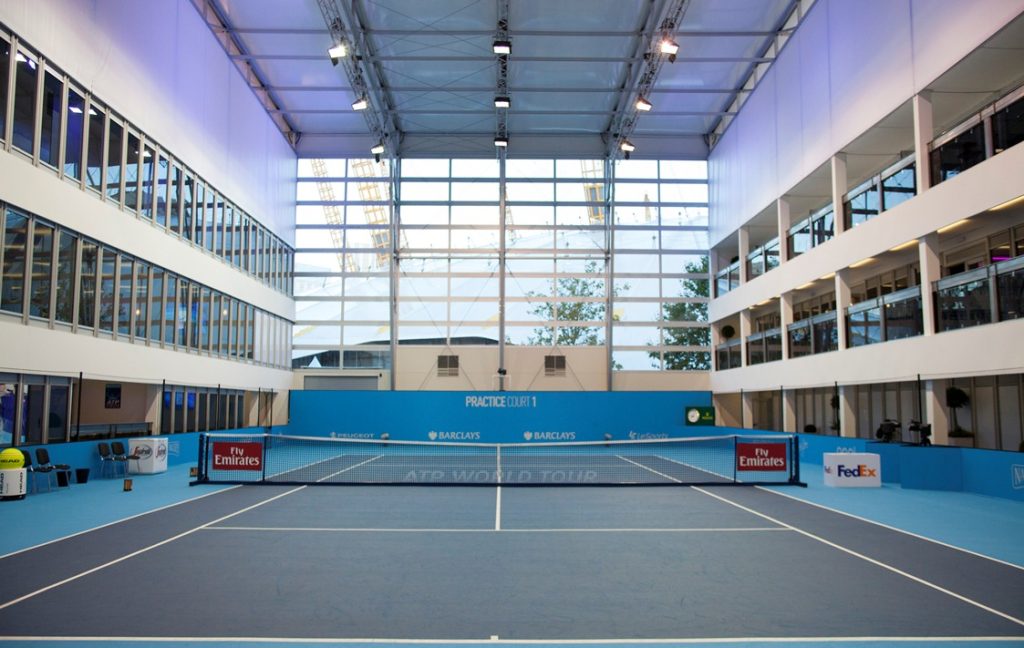
    LOCOG delivered more than 250,000 temporary seats for the London Games, all of which now have been taken down. A 23,000 seat arena was built in Greenwich Park for the equestrian events, plus a 15,000 seat arena in Horse Guards. The basketball arena in the Olympic Park was also completely temporary.

    While temporary overlay traditionally fell under the watch of the organising committee, it tended to be a much smaller project. Major infrastructure works would be handled by a separate authority, while the organising committee would focus primarily on selling tickets, running the sports events and overall operations.

    In the case of London 2012, the Olympic Delivery Authority (ODA) delivered the permanent structures, but LOCOG also had a major build on its hands. According to Bulley, “it became very much focused and dependent on the very high risk elements of delivering construction.”

    He questioned whether the split of work was reasonable. “We had the ODA delivering the permanent construction. Should they also have taken on the temporary construction? When you are looking at a city delivering immense infrastructure on this scale, whether that sits within the organising committee or outside it is something that should be thought through.”

    The temporary nature of the structures meant that they had to be built quickly, and the elements were not on LOCOG’s side in the weeks running up to London 2012. “One of the key challenges was delivering temporary structures in greenfield sites in torrential weather,” said Bulley.

    It wasn’t just the organising committee that was under strain. The temporary event commodity market was under pressure to deliver seats, tents, cabins, fences, temporary power supplies, barriers and much more.

    “Under extreme pressure, the event supplier commodity market had to deliver huge amounts of infrastructure, which it perhaps wasn’t geared up to do so at the volume at which we needed to do it.”

    Nonetheless, London 2012 raised the bar and the result is a faster, higher and stronger temporary infrastructure sector. Bulley points to advances in the seating industry in particular.

    “We put in new standards for designs, because the market couldn’t supply what we were looking to achieve. A lot of the seating in London 2012 was new; it was manufactured for the event. We set new standards for safety and comfort, for example the 800mm seat-row depth, rather than the 720mm which you sometimes see in temporary stands.”

    Jones adds: “We were keen to make the experience of going to a temporary venue as close as going to a permanent venue as possible, both in terms of comfort and quality.”

    London 2012 also pushed the envelope when it came to sports surfaces. “We worked incredibly hard with the governing bodies and sports surface companies to deliver the fastest possible tracks and highest quality fields of play,” said Bulley.

    Despite the large volumes and short timeframes, the local industry responded well to these demands. Bulley questions whether mega events in the immediate future will have the same resources to hand. “We had a very sophisticated event supply industry within Europe to tap into. For Brazil, it’s much more challenging.”

    The big scale-down
    Some of the permanent venues also had temporary aspects to them, with modular construction techniques being deployed to make them scalable. For example, the two “wings” that were plugged in to the aquatics centre to provide extra capacity during the Games are now being removed to leave the 1,500 to 2,000-seat community pool, in line with legacy plans.

    Jones said: “The reduction in size of the aquatic centre, the opening of the copper box have all pretty much followed plan. The Olympic stadium is clearly different.”

    The 80,000 seat stadium used in Games time was originally planned to be reduced to 25,000 seats, with a permanent athletics track. Bulley said: “We went to the market and said would a Premiership football club be prepared to take the stadium on? That was not the case at the time, so we followed the athletics legacy.”

    After much wrangling, the stadium has been determined as the home ground of West Ham United. Having a top flight football club as a tenant will help to ensure regular custom in the Queen Elizabeth Park, as the Olympic Park will be known. “If you can retain it as a large facility it’s a much preferable solution,” said Bulley.

    However, it does necessitate major changes. “We are managing to keep a significant amount of the structure,” said Jones. “When we were doing the original design we were trying to keep as much flexibility as possible. But clearly if the legacy use changes, then that is going to create challenges afterwards.”

    These challenges include removing seating in the lower tier and extending the roof. The promise of an athletics legacy is also being honoured alongside the West Ham tenancy. “As the Olympic stadium, it will have to serve other uses than football,” said Bulley.

    The revised designs for the stadium include a retractable lower tier that reveals will reveal the athletics track for events such as the World Athletics Championships, which the venue will host in 2017.

  • World Cup worries send Valcke on mission to Brazil

    World Cup worries send Valcke on mission to Brazil

    Delays and uncertainty over World Cup stadiums have motivated FIFA secretary general Jerome Valcke to make a special visit to Rio de Janeiro  from 24 to 27 March, bringing an early end to a technical tour of host cities that began on Thursday 20 March.
    “Any envisaged on-site host city visits will be rescheduled to the next tour planned for the end of April,” said FIFA in a statement. 
    Concerned about overlay projects and three unfinished stadiums, Valcke is travelling to Rio de Janeiro for a series of meetings. The visit culminates in a board meeting of the Local Organising Committee (LOC) and media briefing at the Maracana Stadium.
    “This is the last occasion for the organizers to take stock of the operational preparations before the respective FIFA World Cup installations begin to be implemented in all 12 host cities,” said FIFA.
    The LOC is currently taking FIFA’s technical experts on a tour of stadiums in Sao Paulo, Porto Alegre, Curitiba, Cuiaba, Manaus and Natal – the six venues that did not feature in last year’s Confederations Cup. The tour was due to conclude in Natal on 26th March after a visit to Manaus on 24th March, but these two site visits now look set to be postponed to April.
    “This inspection tour will be fundamental to consolidate operational plans and for each area to confirm the operations they have planned over the last few years,” said LOC Stadiums Operations Manager Tiago Paes.
    The tour involves LOC and FIFA representatives from the areas of competition, press operations, broadcasting, protocol, communications, IT, spectator services, security, medical services, transport, catering, volunteers, hospitality and stadiums operations.
    FIFA had originally requested that all venues be finished by December 2013, but three remain under construction. Itaquerao stadium in Sao Paulo and Curitiba’s Arena da Baixada are now unlikely to be finished until the middle of May – just a month before the opening match in Sao Paulo. Cuaiba’s Arena Pantanal is due to open in April. 
    The pitch at Manaus is also undergoing emergency repairs after the turf was damaged by excessive use of fertilizer. Manaus hosts England and Italy’s first World Cup fixture.
    Valcke has reportedly voiced concerns about responsibility for temporary infrastructure. Local newspaper Estado de Sao Paulo said Valcke is concerned that some cities are refusing to pay for temporary items such as security equipment and temporary structures for media, volunteers and sponsors, causing delays to overlay works.

  • Arena Group reveals scope of Glasgow 2014 overlay works

    Arena Group reveals scope of Glasgow 2014 overlay works

    The official Overlay and Temporary Structures Provider to Glasgow 2014 has revealed that it is working closely with the Organising Committee to design and install more than 230 structures covering an area exceeding 20,800 m2.
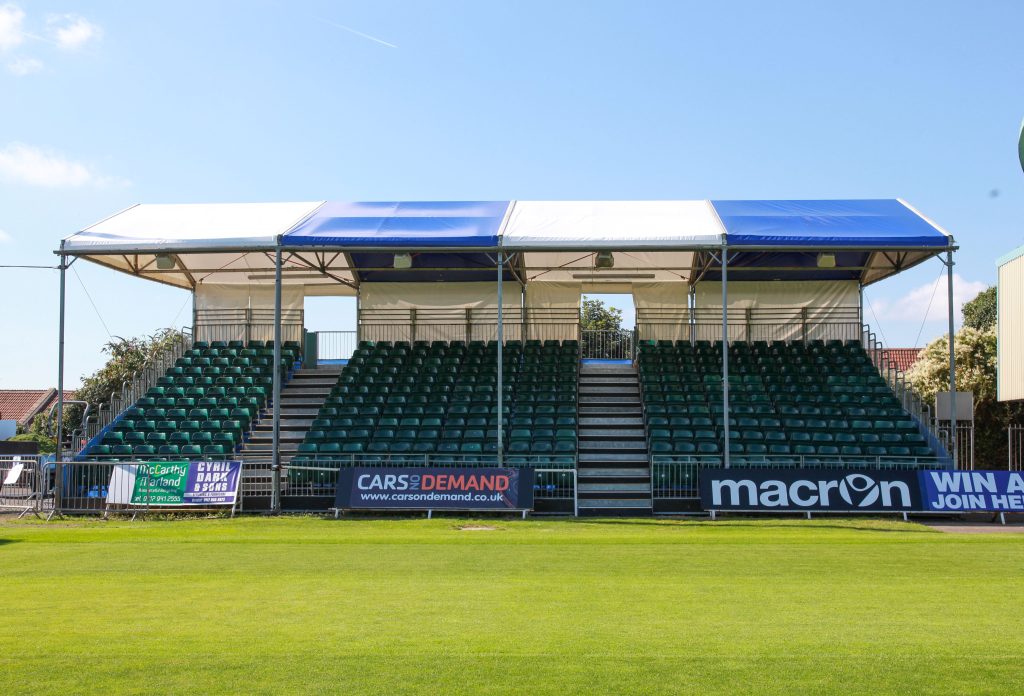
    As Glasgow 2014’s Exclusive Temporary Seating Provider, the Arena Seating team has been tasked with delivering every single temporary seat at the Games, around 22,000 in total across 10 venues. The seating team will also be installing camera platforms, wheelchair access platforms, press positions and commentator platforms.
    Dave Withey, sales and marketing director, Arena UK & Europe, said “We’ve been collaborating closely with the Glasgow 2014 overlay team to design temporary solutions which make the most of each venue, providing the space and infrastructure they require, without permanent construction.”
    The temporary infrastructure project that will be finished first is the official merchandise shop in a Glasgow City Centre location. Arena Group will start building this at the beginning of June.
    At the Sir Chris Hoy Velodrome, Arena Group will be supplementing the existing 2,000 seats within the venue with an additional 1,700.  Arena Group will face the challenge of creating perfect sight lines for a challenging sloped field of play, using its trademark “clearview” system.
    Contours will also be a challenge at the new Cathkin Braes Mountain Bike Trails venue, where Arena Group will be providing VIP seating at the finish line and structures for athletes, officials and security, all designed to fit against the slopes of Cathkin Braes and provide stunning views of the city. 
    The clearview system will also be deployed at the Kelvingrove Lawn Bowls Centre, where Arena Group will create a temporary seating stadium and Arena Structures will provide the press, sponsor, security and doping tents.
    At the Scottish Exhibition and Conference Centre Precinct (SECC) Arena Group will work with the venue and Glasgow 2014 supplying the seats for Gymnastics, Boxing, Judo, Netball, Wrestling and Weightlifting/Powerlifting.
    On the East coast, Arena Group is solely responsible for all temporary seating and structures at the Barry Buddon Shooting Range. Edinburgh’s Royal Commonwealth Pool, built for the 1970 Commonwealth Games, will be kitted out with structures for the security, athletes and officials. 
    Scotstoun Sports Campus will host both the Squash and Table Tennis competitions, with Arena Group providing structures to the venue and seating stands for the table tennis and existing squash courts.
    Arena Group will also create temporary grandstands across three courts at the new Glasgow National Hockey Centre and provide grandstands and all supporting tentage for the triathlon events at Strathclyde Loch. 
    For Glasgow’s Tollcross Swimming Pool, Arena Group has created a bespoke temporary seating system carefully designed to the fit the confines of the venue’s mezzanine level.
    “We have a strong legacy of working within the city and neighbouring Edinburgh, and know many of the venues extremely well, such as the SECC where we have a relationship spanning over 20 years. This knowledge and experience has been extremely useful, enabling us to deliver designs quickly and to spec,” said Withey.
    “These designs are now almost finalised and we’re looking forward to being back in Glasgow to start the installation. We’re one step closer to helping deliver one of the best Commonwealth Games in history.”
     

  • Back to the future: designing for the main event and beyond

    Back to the future: designing for the main event and beyond

    At the recent Olympic Winter Games in Sochi, the opening and closing ceremonies dazzled audiences around the world. Spectacular, theatrical and hugely sophisticated, they exemplified the fact that, although a competition may have several venues, the main stadium remains the focal point of every major event. But how can a stadium meet the huge technical demands of these events, and their capacity criteria, while still being able to adapt for a long-term legacy once the main event has finished?
    The solution lies in the integration of the permanent and temporary. It’s only by including temporary structures and seating in the initial design that buildings gain the flexibility they need to adapt to a changing set of needs. In Sochi, for example, we incorporated temporary seating that will allow the Olympic Stadium to expand to accommodate the 45,000 seats required for the 2018 FIFA World Cup, before reducing to a final legacy capacity of 25,000 for the local football team.
    Similarly, the Incheon Stadium, which will host the 2014 Asian Games, is a 70,000 seat stadium that will reduce to 30,000 seats, thanks to our design that has one permanent seating stand and three temporary ones, destined to become park landscaping for the city’s residents and visitors to enjoy once the temporary structures are removed.
    This flexible approach has its roots in Populous’ design for Sydney’s Olympic Stadium, now the ANZ stadium, where an initial capacity of 110,000 seats was reduced to 83,000 after the Games by removing the end stands and reconfiguring the roof. By the London Olympics in 2012, our thinking had evolved to focus on design as a whole, rather than construction. We broke the Stadium down into its constituent parts to explore how a building could be planned from the outset to transform itself and be fit for a long-term legacy – and the result is a multi-purpose Stadium of 60,000 seats (reduced from an Olympic capacity of 80,000) that is capable of hosting IRB World Cup Rugby and Premier League football as well as concerts and other events.
    Designing in this way has inherent challenges: namely, ensuring that at each stage of its evolution the building has architectural merit – during the event itself, when the focus of the world’s media is on the stadium; and afterwards, when visitors and residents must appreciate and use it as part of the city’s fabric. In addition, although the end goal of the design is the same – to reduce in scale after the main event – this can’t be achieved by a ‘one size fits all’ approach. Each stadium has unique requirements and these must be reflected in innovative design solutions.
    At Populous, our understanding of a stadium’s cultural significance means that we’re constantly devising innovative ways to balance the cultural and technical needs of the main event with the social responsibility of designing buildings that have a long-term legacy. It’s a journey that, for us, began in Sydney in 2000 and will, we are sure, continue to challenge and fascinate far into this century and beyond.
    This article was written by Populous principals Ben Vickery and Tom Jones

  • Glasgow 2014’s new running track revealed

    Glasgow 2014’s new running track revealed

    Glasgow 2014 has marked the milestone of 100 days to go until the start of the Commonwealth Games by painting a giant “100” on the pitch of Hampden Park stadium.
    Scotland’s national football stadium is in the process of being transformed into an athletics venue for the duration of the Games. Arial footage released today shows that the venue’s transformation is virtually complete. 
    To attain the width required for the track and field events, as specified by IAAF standards, the ground had to be raised by almost 1.9m using a revolutionary technique. A deck weighing over 1,000 tonnes was made using 6,000 steel posts and 1,200 panels. A further 16,000 tonnes of stone, tar and rubber are now being placed on top of the deck. 
    Hampden will be the centrepiece of the Games, with more than a thousand athletes competing in more than 48 events in seven days of competition. The venue will also host the closing ceremony, when Glasgow 2014 will hand the Commonwealth flag over to the Gold Coast, hosts of the 2018 Commonwealth Games. 
    The new aerial shot also shows Lesser Hampden, which has had a new pavilion built to provide athletes with warm-up facilities.
     “It is now just 100 days to go until the start of the Glasgow 2014 Commonwealth Games, the biggest sporting and cultural festival Scotland has ever hosted and the UK’s next big sporting occasion,” said Lord Smith of Kelvin, KT, Chairman of Glasgow 2014.
    “We are entering the home straight now and these last 100 days are our opportunity to do the final work necessary to ensure that we deliver an outstanding Games for Glasgow, Scotland and the Commonwealth.” 
    Glasgow 2014, the XX Commonwealth Games, takes place from 23 July to 3 August when 4500 athletes will compete in 17 sports, with 1,000,000 tickets on sale. To find out more, read the exclusive interview with Chief Executive David Grevemberg in the next issue of HOST CITY magazine.
     

  • Rio 2016 organisers say 11 venues are ready

    Rio 2016 organisers say 11 venues are ready

    With more than two years to go until the Rio 2016 Olympic Games begin, 38 per cent of the competition venues are ready for the event, the organsing committee has announced amid widespread concern over construction progress. 
    Of the 29 permanent venues, 11 are operational, while eight require some renovation work and the other 10 will form part of the sporting legacy that is being constructed in the city. Eight temporary venues will also be used to host competitions.
    Construction progress can be seen in the four Rio 2016 competition zones. While work on the Barra Olympic Park advances, with the conclusion of the foundations of Olympic Halls 1, 2 and 3, the Olympic Golf Course site is being irrigated in order to allow grass planting to begin.
    At Lagoa Rodrigo de Freitas, the venue for rowing and canoe sprint, depth studies have been completed, while at Flamengo Park, the design of the integrated route for the athletics, road cycling and paracycling courses has started.
    “We are advancing in the construction of competition venues for the Rio 2016 Games, with all of the basic and executive projects concluded or in the conclusion phase, and with foundation works in full flow. Even though they may not be highly visible, the preparative groundwork and foundation construction, that occurs underground, are extremely important for the final structure and often account for 20 per cent of the total volume of construction,” said Alexandre Techima, the Rio 2016 Infrastructure Integration Director.
    In Deodoro, the tender process for the Games’ second largest venue cluster is underway, with construction scheduled to start in the second half of the year. Three existing competition venues– the National Shooting Centre, National Equestrian Centre and Modern Pentathlon Aquatics Centre – will be renovated, four new venues will become part of the important sporting legacy the Games will leave to the city, and two temporary venues will also be installed. At the same time, the legendary Maracanã Stadium is ready to stage matches at the FIFA World Cup, which kicks off next month.
     
    Bid deadline for Temporary Arena extended
    Rio 2016 has extended the deadline for suppliers interested in applying to participate in the project ‘C547 – Temporary Arena with Overlay’.
    The bid is aimed at a company “specialized in temporary structures for supplying a Temporary Arena in turnkey mode, including all adjacent temporary structures.”
    The new deadline is 24 May 24 2014, 12h Brasilia’s time.
     
    Source: Rio 2016

  • Glastonbury Festival secures 10-year hosting license

    Glastonbury Festival secures 10-year hosting license

    The Glastonbury Festival has secured a new premises licence that will enable it to continue to hold the event at Worthy Farm, Pilton, Somerset, until 2024.
    The new application received only a few representations, of which all concerns were satisfied by the deadline. In the past, Glastonbury Festival’s licences have been subject to scrutiny in a public hearing because of objections from the public or concerns from those with an interest in the safety of the event such as the police, fire or ambulance services.
    As one of the world’s largest cultural events without any permanent infrastructure, Glastonbury Festival requires large amounts of temporary event infrastructure and seasonal operational expertise. 
    Ensuring safety at the music festival will fall under the watch of Nigel Hunt, building control manager at Mendip District Council and interim head of the proposed Somerset Building Control Partnership.
    “This is an enormous festival and no one can afford to be complacent – we will continue to work with the organisers to ensure this remains one of the safest events anywhere, and if we have any doubts about this we will take action,” said Mr Hunt. 
    “Thankfully, this year everything went without a hitch and my team did a superb job as ever.”
    His structures monitoring team, which already has many years of Glastonbury Festival experience, is responsible for all temporary structures including the Avalon Inn, the Irish Piano Bar and the new BBC studio in The Park, as well as all the stages and platforms.
    Building control teams are involved as part of the licensing team at sporting and cultural events. 
    “This is my second year working at Glastonbury and I still can’t believe the size and scale of the festival, the amount of work that goes on behind the scenes and the number of miles the building control team have to walk every day on their shifts,” said local authority building control (LABC) director of training Anna Thompson, who attended this year’s festival as part of the structures monitoring team for Mendip District Council.
     

  • 2014 Ryder Cup turns to Aggreko for power

    2014 Ryder Cup turns to Aggreko for power

    The contract to provide temporary power to the 2014 Ryder Cup has been awarded to Aggreko. 
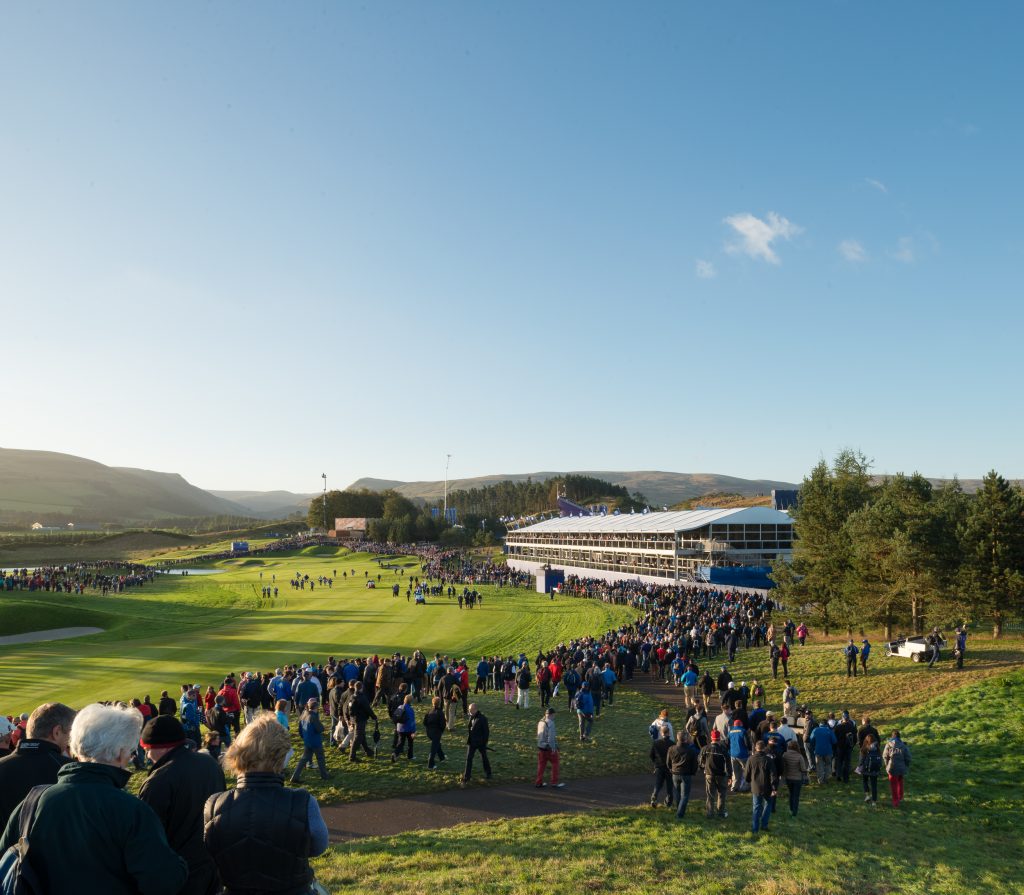
    The leading lessor or power and temperature control solutions will provide 17 MW of power and back-up support on location at Gleneagles. 
    Aggreko will also air-condition the media centre, hospitality units, tented village and other temporary infrastructure.
    In total, Aggreko will be helping to power and cool around 40 different major temporary structures at the Gleneagles site.
    The 2014 Ryder Cup will deploy Aggreko’s especially quiet TwinPack generators, which will minimise sound emissions from power production in and around the golf course.
    An half a billion homes in 183 countries worldwide are expected to watch the event. As technical power is crucial for broadcasting, Aggreko will use around 600 distribution boards to connect and feed power supplies around the course. 
    “Aggreko has vast experience of providing temporary power and temperature control solutions at golf tournaments,” said Angus Cockburn, interim CEO of Aggreko, which has its headquarters in nearby Glasgow.
    “Doing so at The 2014 Ryder Cup, which is on our doorstep and is perhaps higher profile than any previous tournament is a great privilege.”
    Other major sports events that Aggreko has provided services for include nine Olympic and Paralympic Games, five FIFA World Cups, four Ryder Cups in Europe and the XX Commonwealth Games.
    “Aggreko is yet another global business with firm Scottish roots to join us at The 2014 Ryder Cup,” said Edward Kitson, match director of the 2014 Ryder Cup. “Their expertise and experience at previous sporting events, both at golf tournaments and others with international broadcast power requirements, will be invaluable.”
    The 2014 Ryder Cup takes place at The Gleneagles Hotel, Auchterarder, Perthshire, Scotland from 26-28 September, 2014.
     

  • Arena Group’s export growth hits Sunday Times list

    Arena Group’s export growth hits Sunday Times list

    A company that provided took its temporary seating solutions from London 2012 to the Brazil 2014 World Cup is one of the UK’s top exporters, according to research conducted by Richard Branson’s Fast Track agency for the Sunday Times. 
    Arena Group began showcasing its innovative temporary seating systems in HOST CITY magazine in the run-up to London 2012, where it built the Populous-designed beach volleyball arena and provided seating for the weightlifting, boxing, fencing, table tennis and judo events. 
    For the Brazil 2014 World Cup, Arena Group supplied two 9,000+ seat demountable grandstands for the Arena do Sao Paulo – the largest temporary structures in Brazil. Through a local partnership, it also installed seats for Salvador’s World Cup stadium.
    “The ranking is testament to the vision that we’ve had for the company since long before the London 2012 Olympics; to become a trusted, global provider of event overlay services and the highest quality temporary event infrastructure,” said Greg Lawless, CEO of Arena Group. 
    “This international growth has been a fundamental part of the group’s strategic plan, and we have made acquisitions which have positioned us to secure contracts for the next generation of major international sporting events.”
    Arena Group’s  two year average international sales growth reached 54 per cent, with international sales reaching £10.5m in 2012. The company is also the official overlay and temporary structures provider to Glasgow 2014.
    HOST CITY has been profiling London 2012’s quiet revolution in the temporary overlay for many years, through interviews with the organising committee and its key suppliers in this area, including Arena Group and Populous.
    “We would like to congratulate Arena Group on making the upper reaches of the International Track 200,”said Ben Avison, editor of HOST CITY magazine.
    “It has been gratifying to see these temporary seating solutions being taken up by the organisers of the 2014 World Cup and we look forward to seeing this positive trend continue in future sustainable mega events.” 

  • Budget a “real concern” for Rio 2016

    Budget a “real concern” for Rio 2016

    The scale of Rio 2016’s infrastructure projects is immense and partnership with experienced suppliers from London 2012 will be crucial for success – but budgets must be carefully monitored. 
    This was the message given by Rio 2016’s head of procurement, Fernando Cotrim, in an exclusive interview with HOST CITY at the South American Sport Events Seminar, organised by UK Trade and Investment during the Commonwealth Games in Glasgow.
    “If you consider that you have the greatest combination of needs in terms of materials and services in one event, you can imagine the size of challenge,” Cotrim told HOST CITY. “We are looking for around 2,500 suppliers to be in place for 2016.”
    Cotrim’s major area of focus is temporary construction. “The hardest part is to get the right suppliers at the right time and to build a temporary and sustainable supply chain, he said.
    “That’s the challenge – the temporary part is the most important.”
    London 2012 has set the template of a mega event where the majority of infrastructure is temporary. “We are taking a similar approach. Probably around 60 per cent of constructions will be temporary.”
    Not only is the concept similar to London 2012; Rio 2016 is targeting the same companies. “We will use similar suppliers. The ideal for us is to bring the same suppliers but they come to Brazil, partner with local companies and help our country to grow in this business.”
    Cotrim cited Arena Group, who provided temporary venues for London 2012 and Glasgow 2014, as an example of a company with expertise in this area. Other notable suppliers include ES Global, also present at the UKTI event.
    Asked what his biggest concern was, Cotrim replied “Always to be monitoring – to have the best suppliers and to stay on budget. That’s a real concern. What we’ve learned from other Games is that if you don’t manage the budget you can go to infinity.
    “So you have to be very cautious about the budget. We are always seeking innovative solutions, but at the same time low cost and sustainable.”
    Rio 2016 has been under fire for severe delays to its construction projects, particularly the Deodoro Park cluster of venues. Cotrim says the tide of opinion is changing in the wake of a largely successful FIFA World Cup. 
    “What people saw, what the media saw in the World Cup changed this mindset. Deodoro was a concern, but the suppliers are starting to work and so I think this mindset has changed a little bit. The last comment from the IOC is that we have got back on track and we are in a good shape.”
    However, the IOC is still keeping a very watchful eye on Rio 2016 projects. IOC Vice President Craig Reedie confirmed to HOST CITY that the IOC’s head of Olympic Games, Gilbert Felli, will be focused 100 per cent on ensuring a successful Games in 2016.